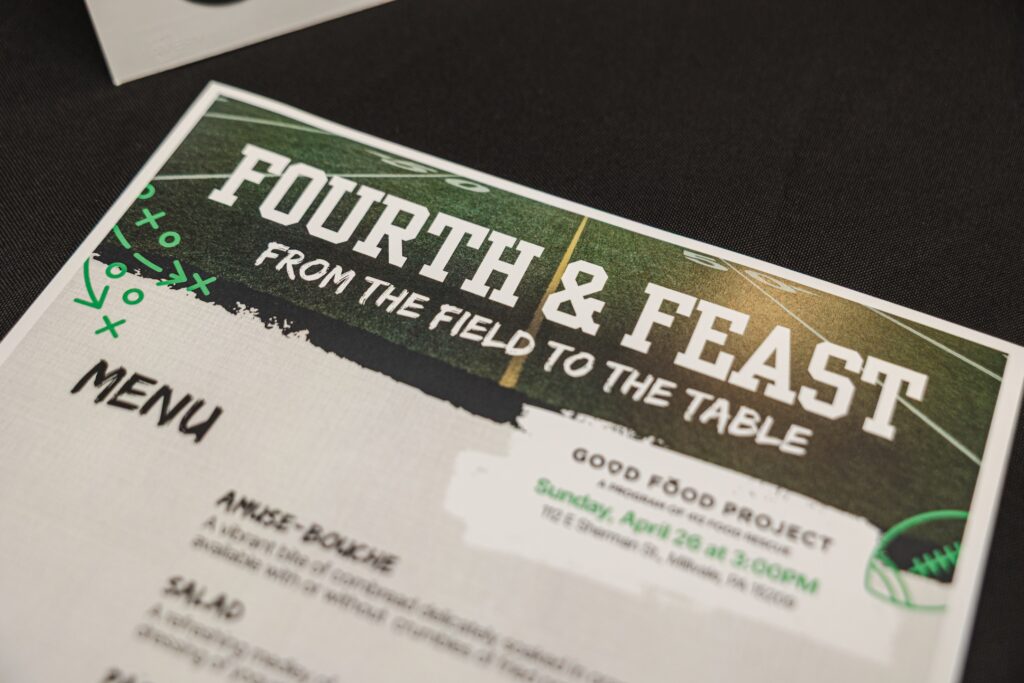
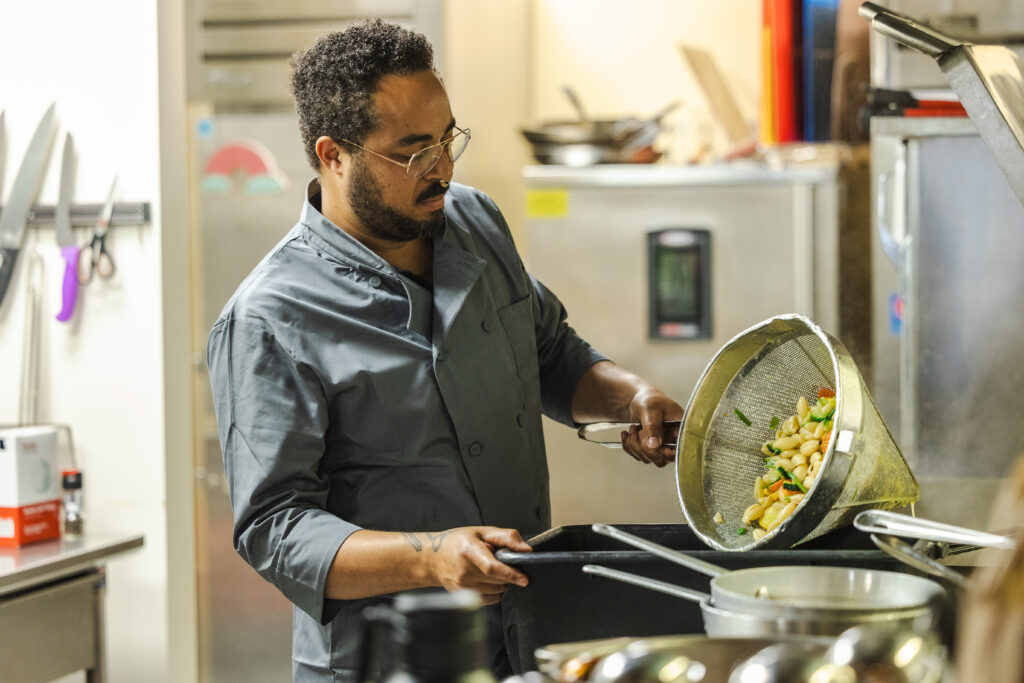
As the city was redding up around “tahn” post NFL Draft, a group of invited guests gathered for a family-style dinner, Fourth & Feast: From the Field to the Table, held inside the Good Food Project kitchen in Millvale. The purpose? To learn more about 412 Food Rescue, the work they do, and their roll in rescuing the extra food left over from the Draft that would otherwise go bad. After a chance to meet the staff and mingle with other guests, invitees gathered around tables soon to be filled with rescued ingredients transformed into vibrant dishes—literal proof of what 412 Food Rescue stands for.
412 Food Rescue: Turning Pittsburgh’s Food Waste Into Community Care
As attendees enjoyed each course, all prepared from rescued food, they listened to a fireside chat focused on food insecurity, food waste, and one of Pittsburgh’s biggest recent opportunities—and challenges—the NFL Draft.
The panel consisted of moderator Natalie Bencivenga, a socially conscious, award-winning independent journalist and entrepreneur, and featured Alyssa Cholodofsky, CEO of 412 Food Rescue, and Chefs Jamilka Borges and Dianne DeStefano, co-owners of Lilith, a highly regarded restaurant located in Shadyside.

In a city known for its grit, resilience, and strong sense of neighborhood pride, 412 Food Rescue has become one of Pittsburgh’s most impactful answers to food insecurity and food waste. At its core, the organization operates on a simple but powerful belief: good food should feed people—not landfills.
“We want people to get something they’re going to enjoy, that they’re going to eat, that’s going to be flavorful,” Alyssa Cholodofsky explains. “Our philosophy is about the dignity of the meal.”
That philosophy is what led to the creation of the Good Food Project, an initiative focused not just on rescuing food, but transforming surplus ingredients into balanced, nutritious meals. Guided by USDA MyPlate principles, meals include protein, vegetables, and flavor—because dignity means more than simply providing calories.
Every course at the event reflected that mission.
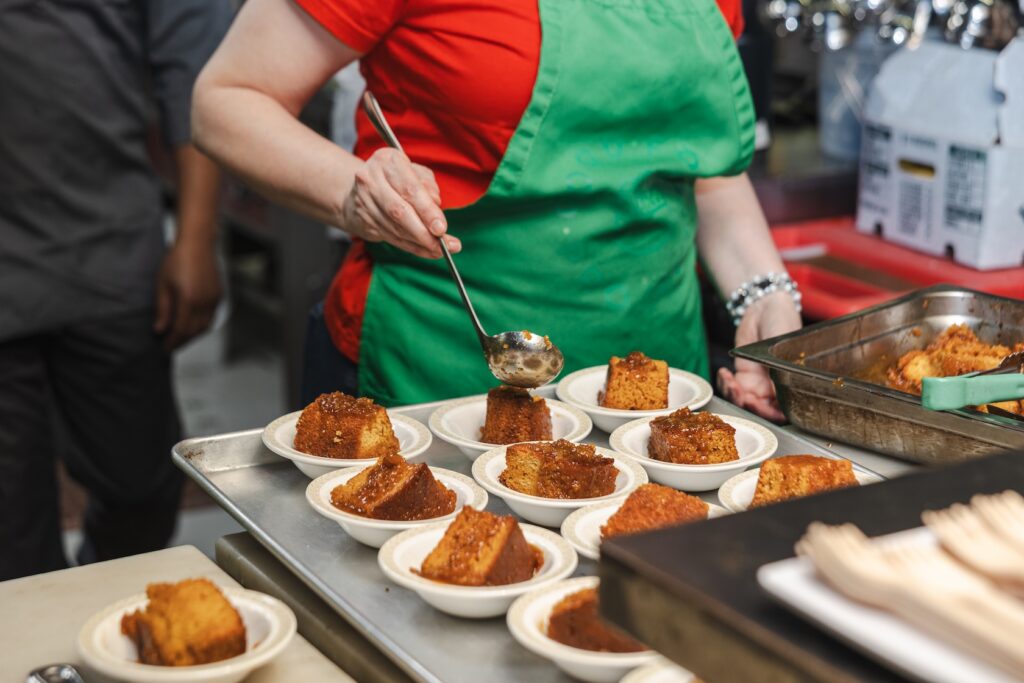
Guests began with an amuse-bouche of cornbread delicately soaked in orange and clove syrup, available with or without fried prosciutto crumbles, followed by a cucumber and celery salad in a cool yogurt-dill dressing. A shell pasta primavera tossed with spring vegetables celebrated the season, while the main course—a comforting cabbage and chicken soup—delivered warmth and nourishment. Dessert, a subtly sweet rice pudding with hints of almond, was a take-away reminder of the gathering’s purpose.
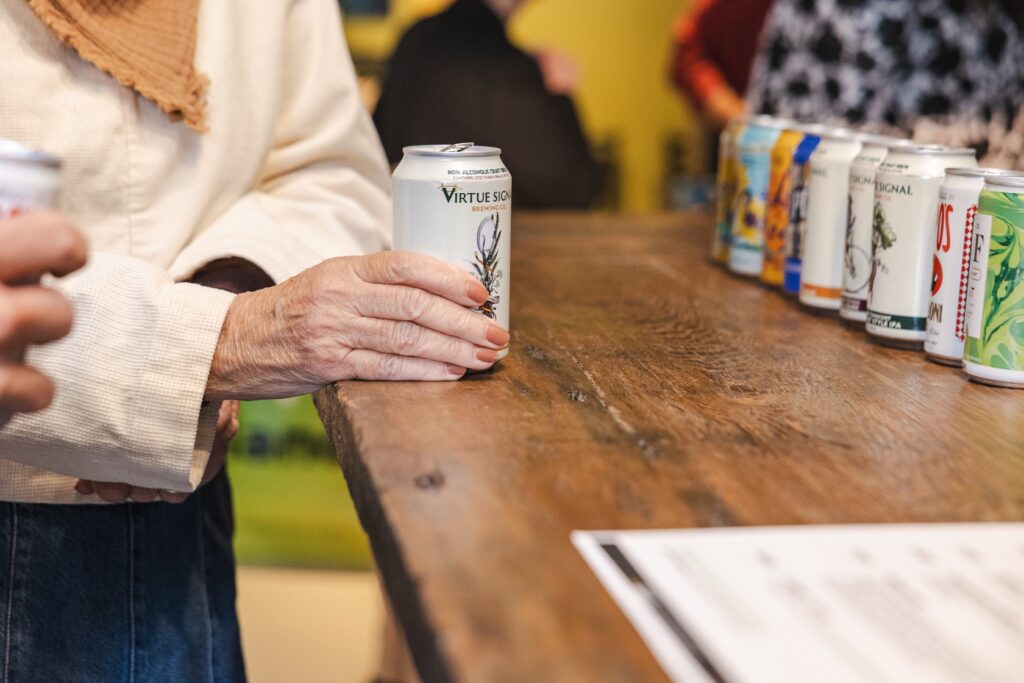
Sparkling water, soda, spirit-free cocktails, and genuine craft non-alcoholic beer donated by Virtue Signal Brewing Co. rounded out the meal.
“It’s not just about feeding people—it’s about feeding them well,” Jamilka Borges says. “Food nourishes people. If we build better systems around that, we can stop so much unnecessary waste before it starts.”
The NFL Draft and the Unexpected Waste Problem
During Pittsburgh’s recent NFL Draft festivities, 412 Food Rescue found itself preparing for what was expected to be an overwhelming influx of visitors—and food.
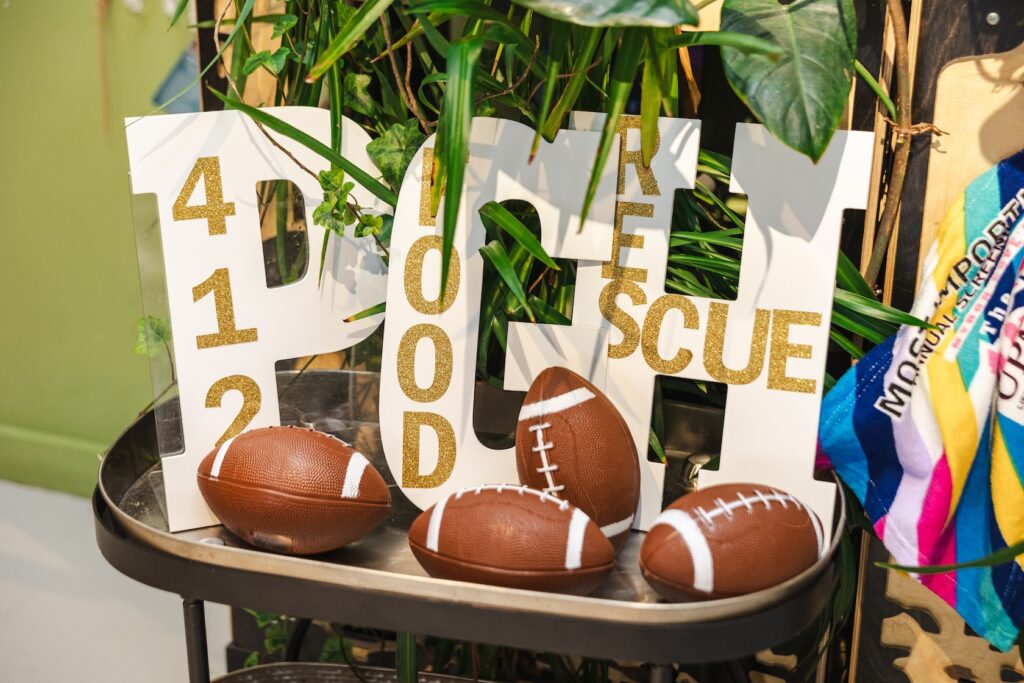
Restaurants stocked up. Bakers prepped extra inventory. Food trucks, sports venues, and hospitality groups all anticipated massive crowds. But the crowds didn’t materialize the way many expected. Instead, many local restaurants experienced one of their slowest weekends in recent memory.
Some well-known restaurants reportedly had zero reservations for the weekend. Others operated at just a fraction of normal business. One bakery in Market Square prepared large amounts of extra food and ended up doing only about a quarter of its usual business.
The result: significant food waste.
“It broke my heart,” Bencivenga says. “Restaurants bought extra food expecting a huge weekend, and then so much of it ended up getting thrown away. That’s devastating when so many people are still going hungry.”
That’s exactly where 412 Food Rescue stepped in.
Ready to Scale Up
With support from Visit Pittsburgh and funding from The Heinz Endowments, 412 Food Rescue had spent months preparing for the possibility of excess food during Draft weekend.
Their team expanded operations, rented an additional truck, and even deployed a “street team” downtown. Teams were sent to educate restaurants and vendors about how to donate surplus food quickly and safely.
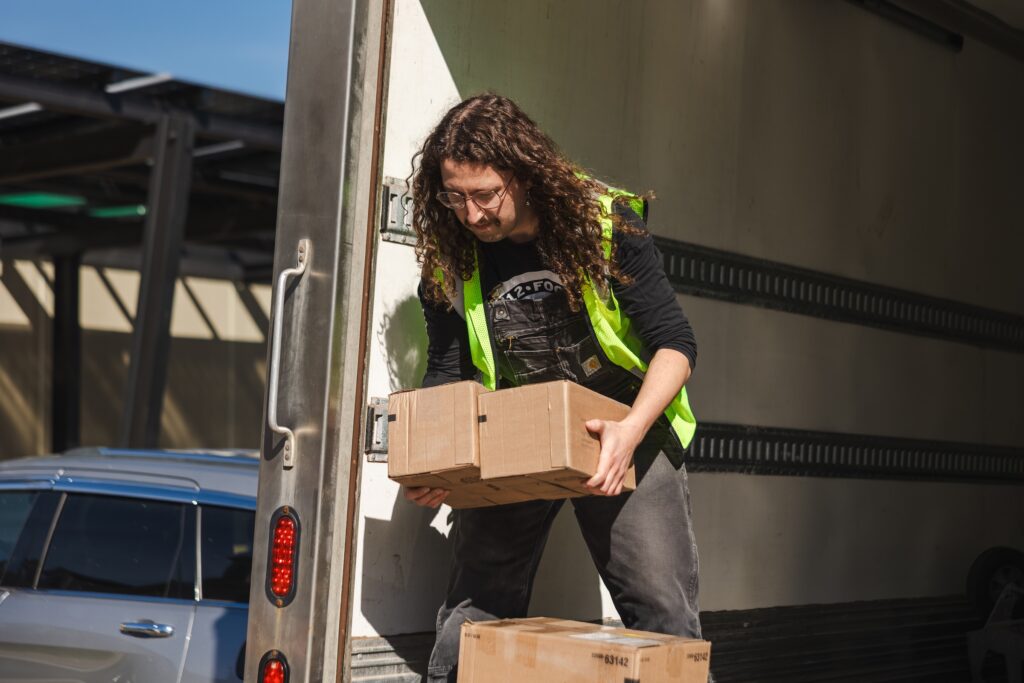
“We can scale up and scale down,” Cholodofsky explains. “Whether it’s a couple prepared meals from a convenience store or a pallet of food from the Strip District, we can do all of that—and we can do it quickly.”
Because much of the food being rescued is fresh or prepared, speed is everything. Their volunteers and drivers work fast to move food from donor to nonprofit partner before it goes to waste.
As of today, 412 Food Rescue has already rescued 26,085 pounds of food from NFL Draft-related events. An estimated goal of 60,000 pounds will be rescued by the time Draft rescues are complete.
That includes 12 total rescues from four donor partners, distributed to five nonprofit organizations across the region. Eight 412 Food Rescue volunteers have assisted operations, moving food quickly and efficiently.
But, it Goes Beyond Just Food Rescue
While food rescue is central to the mission, 412 Food Rescue sees itself as one part of a much larger solution. Food rescue works alongside food banks and food pantries. They help bridge immediate gaps while larger systemic issues—like food access, poverty, and policy reform—are addressed.
“There’s no single solution,” Cholodofsky says. “Food rescue is one piece of the puzzle.”
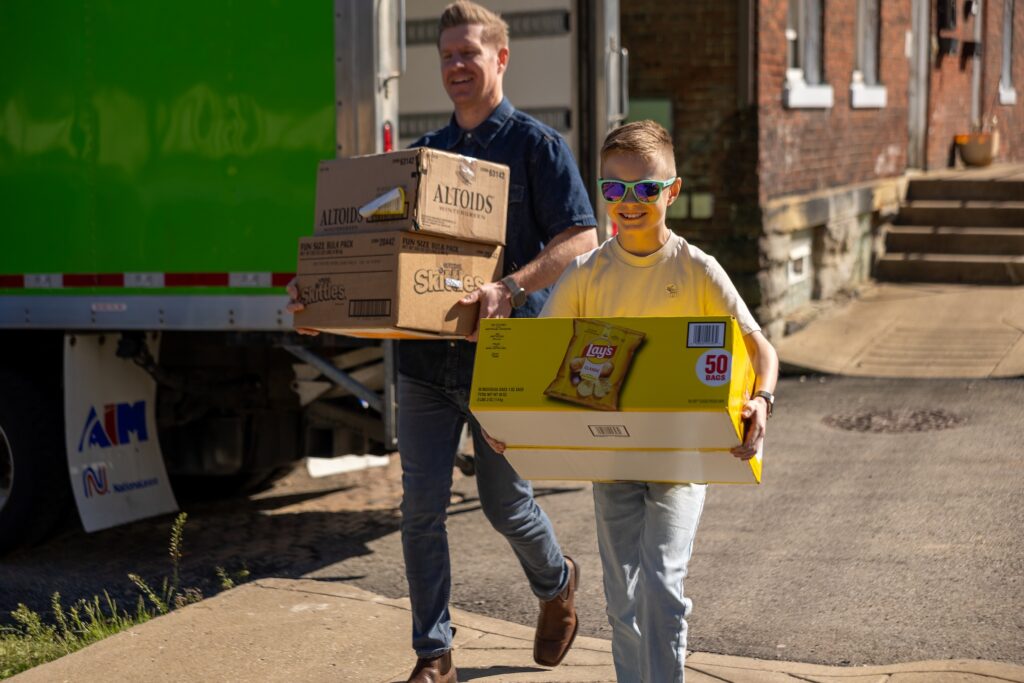
The organization also advocates for policy improvements that make food donation easier and safer for businesses. One major breakthrough has been Bill Emerson Good Samaritan Food Donation Act. The act protects restaurants, grocery stores, and food donors from liability when donating food in good faith.
“That was a huge breakthrough,” she says. “It helps our work tremendously because people are often nervous about donating food.”
Jamilka and Dianne agreed that they believe many kitchens still hesitate simply because they don’t know what to do.
“A lot of operators are afraid of donating food because they think they’ll get in trouble,” Dianne DeStefano says. “Sometimes it feels easier to throw something away than make the phone call—but that’s exactly where education and support matter most.”
Jamilka emphasized the importance of chefs understanding more about programs available. She mentioned that donation planning should be built into major events from the start.
“There should be a plan before the event even happens,” DeStefano says. “Food donation shouldn’t be an afterthought.
Why Pittsburgh Works
There’s something uniquely Pittsburgh about the success of 412 Food Rescue.
As a neighborhood-driven, working-class city, Pittsburgh has a natural aversion to waste—especially food waste.
“People don’t want to see food wasted at home, in restaurants, or at venues,” Cholodofsky says. “That mindset matters.”
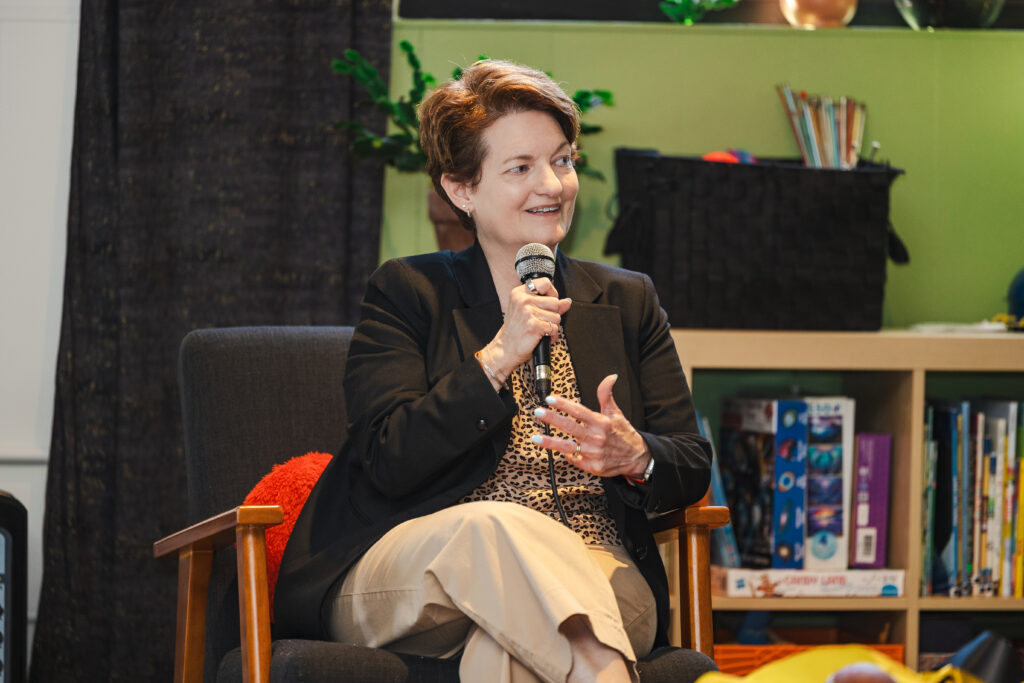
“Pittsburgh has a lot going on, but we don’t always have a lot of self-esteem around what we’re doing,” she says. Natalie Bencivenga noted that Pittsburgh often underestimates itself. “Watching this organization blossom and now expand to other cities—it proves that what starts here can have a much bigger impact.”
The organization was founded by two Pittsburgh women, Leah Lizarondo and Giselle Fetterman. They recognized both the problem and the opportunity. What began over a decade ago with spreadsheets and Facebook messages evolved into the innovative Food Rescue Hero app, a technology platform that connects volunteers with available food rescues in real time.
That local innovation has since scaled far beyond Pittsburgh.
Today, Food Rescue Hero is licensed in 22 cities across the U.S., as well as in Canada and South Africa—proof that a Pittsburgh-born solution can address a global issue.
“The problems we’re facing are not just Pittsburgh problems,” Cholodofsky says. “Food waste and food insecurity are national and global issues.”
Fighting the “SNAP Gap”
One of the most important realities 412 Food Rescue addresses is what many call the “SNAP gap.”
Nearly half of all food-insecure people in Allegheny County do not qualify for SNAP benefits. These are often working individuals—sometimes holding multiple jobs—who still cannot consistently afford groceries.
The term often used is ALICE: Asset Limited, Income Constrained, Employed.
These are people who may be financially stable one month and struggling the next.
“When grocery prices rise, but rent and utilities stay the same, groceries are often the only place people can cut back,” Cholodofsky explains.
Organizations like 412 Food Rescue help fill that gap, ensuring that people can still access fresh, quality food without shame.
A Community Responsibility
One of the biggest challenges, panelists noted, is education.
Many restaurants still hesitate to donate food. They fear liability, don’t know the process, or assume it creates more work for already overburdened kitchen staff.
In reality, food donation can be simple—and transformative.
“Food is meant to feed people,” Cholodofsky says. “It is terrible to waste it.”
Bencivenga stressed that solving food insecurity requires community-wide participation.
“I bet you probably know someone who is food insecure and just isn’t talking about it,” she says. “These programs allow people to live with dignity. It takes all of us—in our homes, our businesses, and our communities—to make a dent in this issue.”
Food With Dignity
As guests finished their meals, the point became clear: the meal prepared with rescued ingredients was delicious and nutritious. And it proved the mission. Food rescue is not about leftovers.
It is about dignity.
It is about making sure food fulfills its purpose.
And in Pittsburgh, 412 Food Rescue is making sure it does.
Story by Star Laliberte
Photography by Tyler Newpol for 412 Food Rescue
Subscribe to TABLE Magazine’s print edition.