It’s obvious that a great deal of very thoughtful work went into RealTime Arts’ Equitable Dinners series. Yet the most profound moment I experienced felt remarkably simple: As I looked around a table I shared with 10 audience members, I thought, “When was the last time I had a genuine conversation with this many strangers?”
In the course of my job, I enjoy the chance to interview interesting people … but usually only one or two at a time, and an interview isn’t precisely an open conversation. At many events, I’m addressing large groups, but it’s not a back-and-forth. When, then, have I sat down with 10 people — whom I had never met — and spoken openly?
I can’t think of the last time that’s happened. And making it happen, particularly with some vital and universal topics on the agenda, is a remarkable feat by RealTime Arts. Perhaps even a radical one.
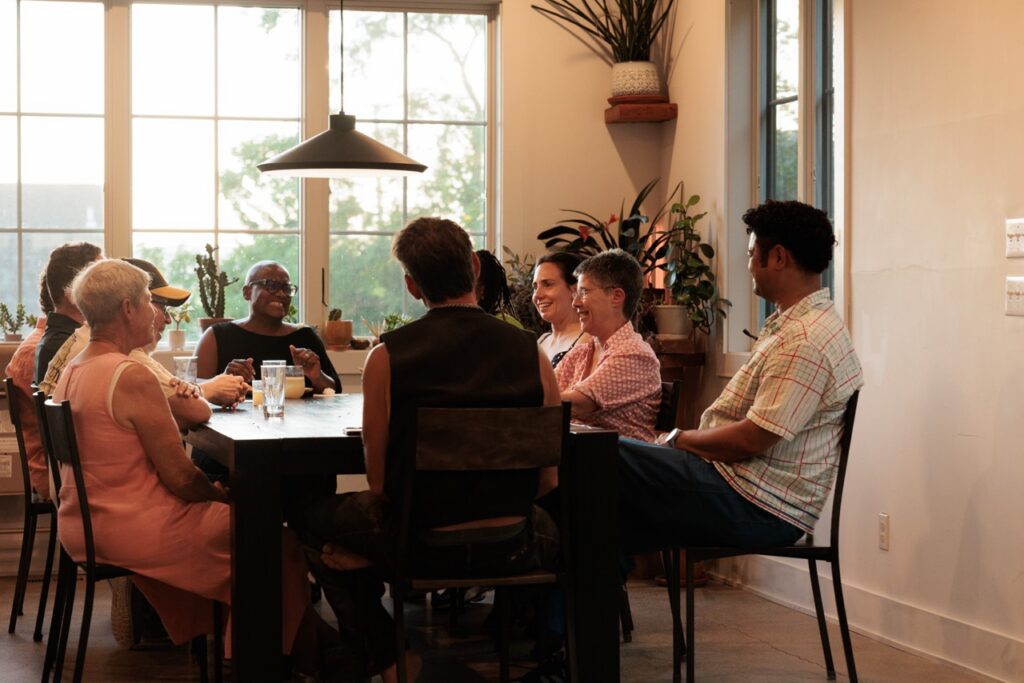
Dining and Discussion at We Hold These Truths: American Potluck, a Part of RealTime Arts’ Equitable Dinners Series
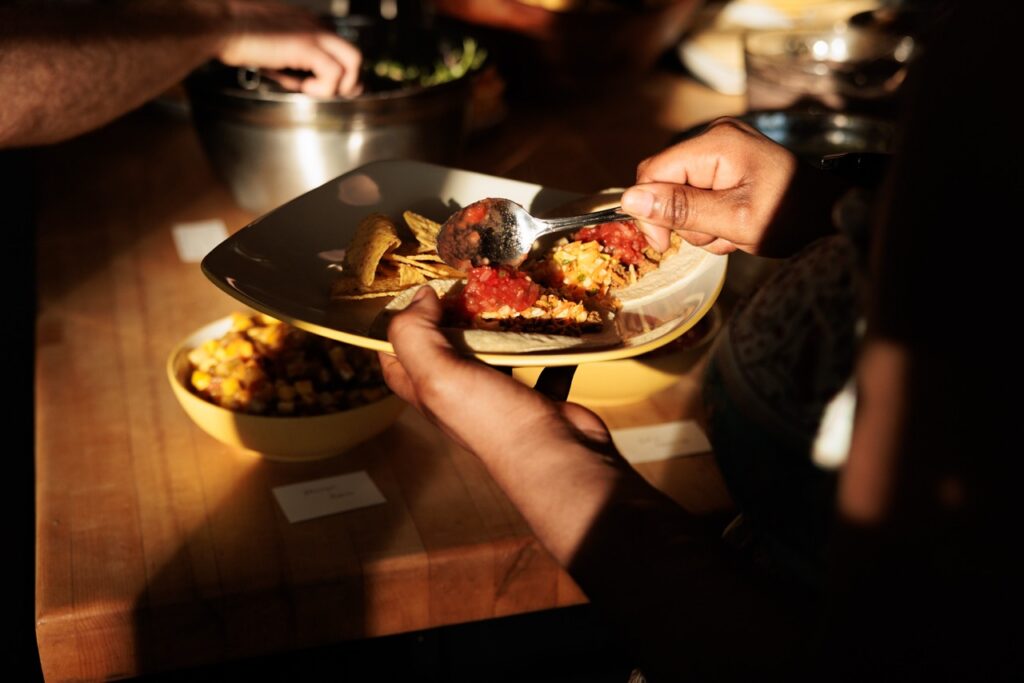
At We Hold These Truths: American Potluck, the name for this year’s Equitable Dinners series, RealTime Arts first presents a short play (about 15 minutes long), before inviting the audience to fill plates at a potluck-style meal. (Hosts and other folks behind the scenes provide the food; you don’t need to bring a dish.) The audience is then encouraged to sit down with strangers — if you came with someone else, you’re asked (but not required) to separate — to get to know one another over dinner. After the plates have been cleared, a facilitator begins an open discussion of the themes brought out by the work: food, history, American identity and the politics of health.
It’s a model developed by Atlanta’s Out of Hand Theater and applied by groups around the country. In the hands of RealTime Arts — this show was written by Molly Rice and directed by Rusty Thelin, the company’s co-founders — it’s a format that collapses the geographic and demographic factors that often keep us from talking openly with one another.
The tone is set early by Malika Cleckley, the only actress in the short play. Deftly grabbing the audience’s attention, Cleckley makes a simple phone call — with an offscreen relative, the silent partner in this dialogue — riveting. She’s a gifted young performer, compelling and intriguing, and she brings careful and engrossing life to Rice’s script.
Finding Hidden Theater, All Around Town
As her performance hangs in the air, the food arrives — and in both meal and show, the location plays a role. The performance I attended was at NavusHouse, a North Side home used as housing for traveling arts and a small performance space (as well as a private home); most of the evening was spent in a beautiful backyard, where carefully curated greenery separated us from a street sloping up past the house.
Pears hung from a delicate tree between the seating and the road. It was hard not to draw a metaphor: food and intentional growth separating us from the city beyond.
Remaining performances of We Hold These Truths will be held at Millvale’s Food + Energy Hub and at a location in Point Breeze; those spaces, undoubtedly, will enter into dialogue with the material, just as NavusHouse did.
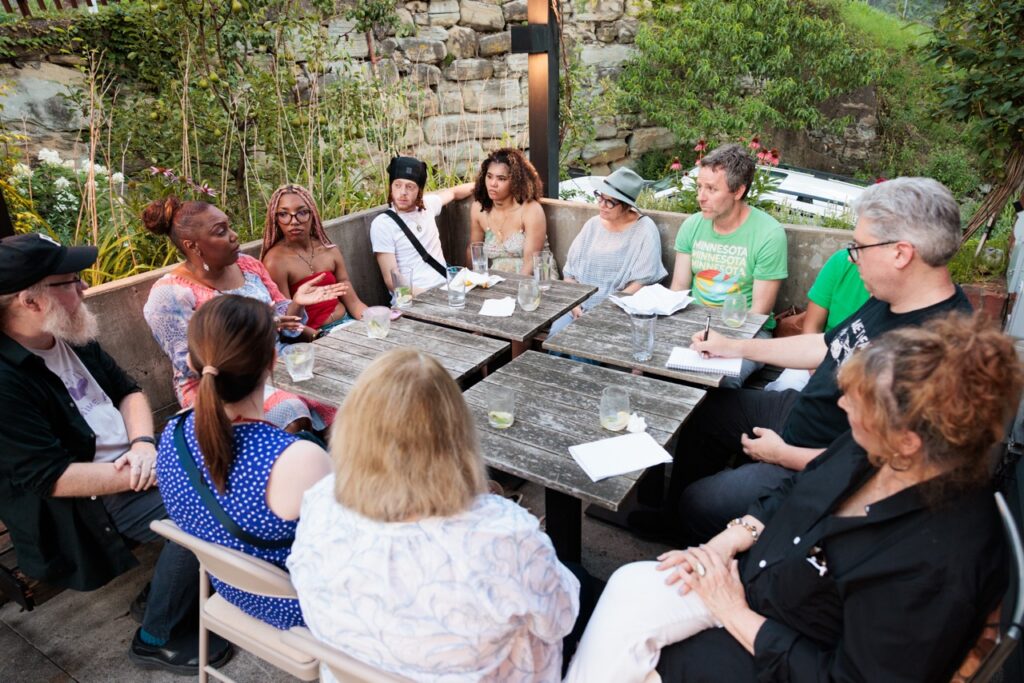
Talking With One Another — and Listening
The conversation, though, speaks the loudest. Over a spirited and lively hour, we talked about the show — but mostly talked about our own relationships with food and the way that we felt disconnected from our own sustenance (the pears and nearby tomato plants notwithstanding). A long conversation about food banks and their ubiquity among many communities broke out; the universal impact of higher grocery prices brought the disparate attendees together. One guest recommended an app that offers healthy alternatives to common snack-food tables; five more grabbed their phones to download it.
That’s the radical part: In an era where information about food and health is often dominated by biased parties, here were 10 real people offering one another thought and advice. The whole evening was illuminating; the conversation rose to become something essential. This isn’t simply an act of theater; it’s community building.
Story by Sean Collier
Photos by Dominique Murray
Subscribe to TABLE Magazine‘s print edition.