A group of nonprofit leaders including Hello Neighbor and other community builders gathered to discuss how Pittsburgh could become a more welcoming city for new immigrants and residents. Read to the end to learn how to “Be Like Tom.”
How Pittsburgh Can Become a More Welcoming City for New Immigrants
There is a relationship between a city’s economic success and the growth or decline of its population, but it’s a nuanced connection. Population growth isn’t always positive, and decline isn’t always negative.
One important metric is “productivity,” or how much economic value each worker creates. On that note at least, the research is in: Immigrants can be particularly geographically responsive to economic opportunity. A 2016 study published in the American Economic Journal: Applied Economics, for example, found that low-skilled Mexican-born immigrants responded much more strongly than similarly skilled native-born workers to changes in local labor demand, moving away from harder-hit metro areas toward stronger labor markets.
It should concern Pittsburghers invested in their city’s future, then, that the Steel City’s immigration rate is rather low compared to the national average as well as its peer cities. The net international migration to Pittsburgh is barely sufficient to offset the region’s natural population decrease, as deaths outnumber births. (Another quick nuance, here: The city is experiencing modest population growth currently, but the broader metropolitan area is not.)
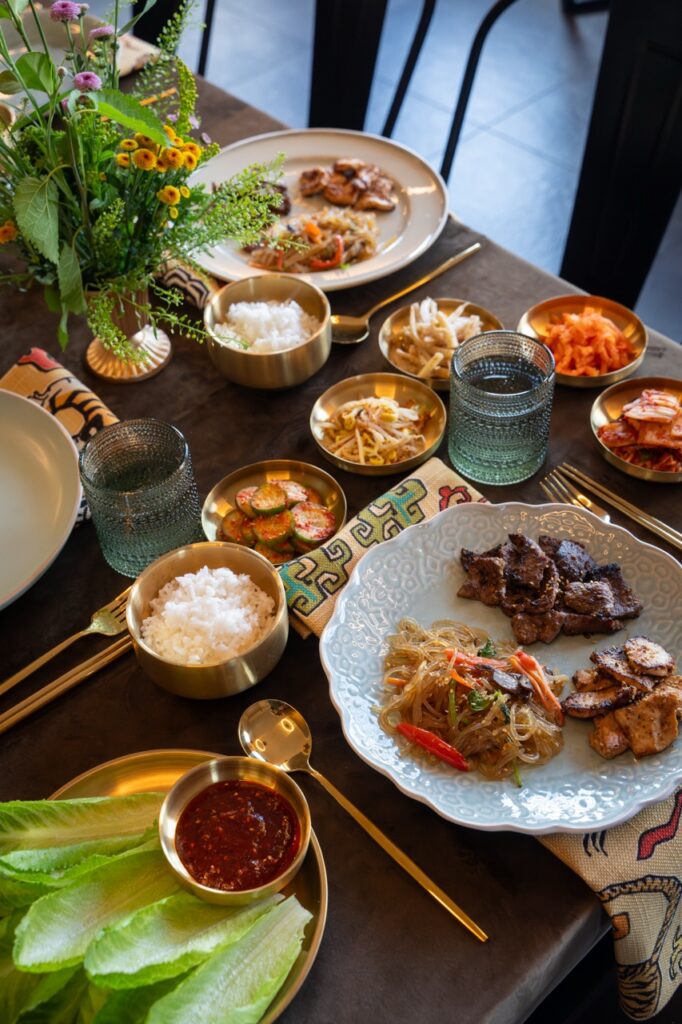
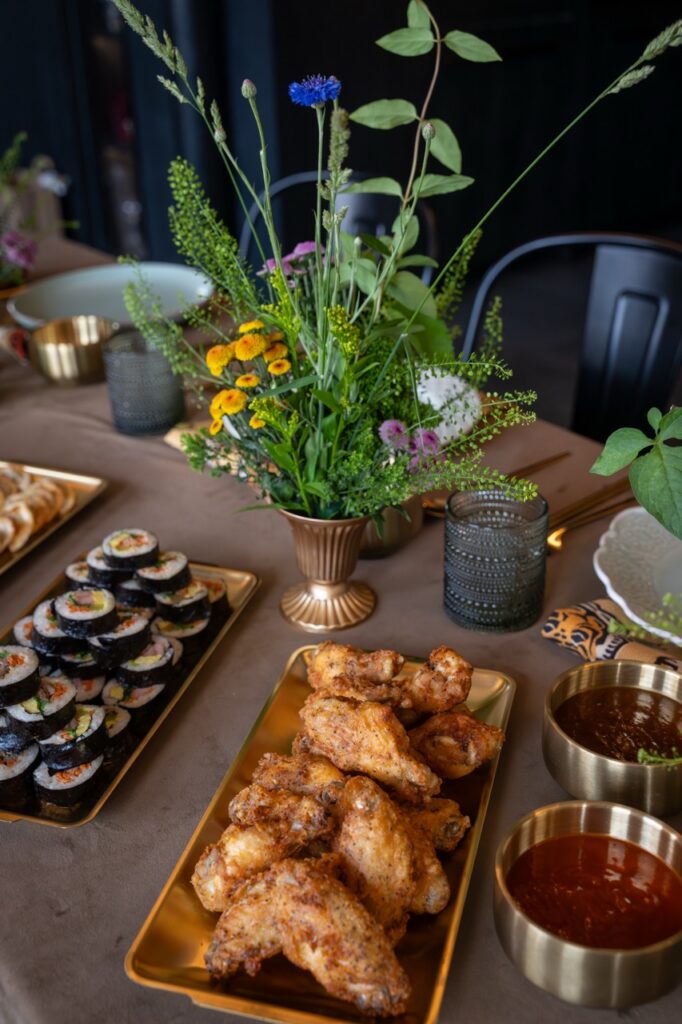
by Kye-Won was enjoyed by all.

to create a gorgeous table.
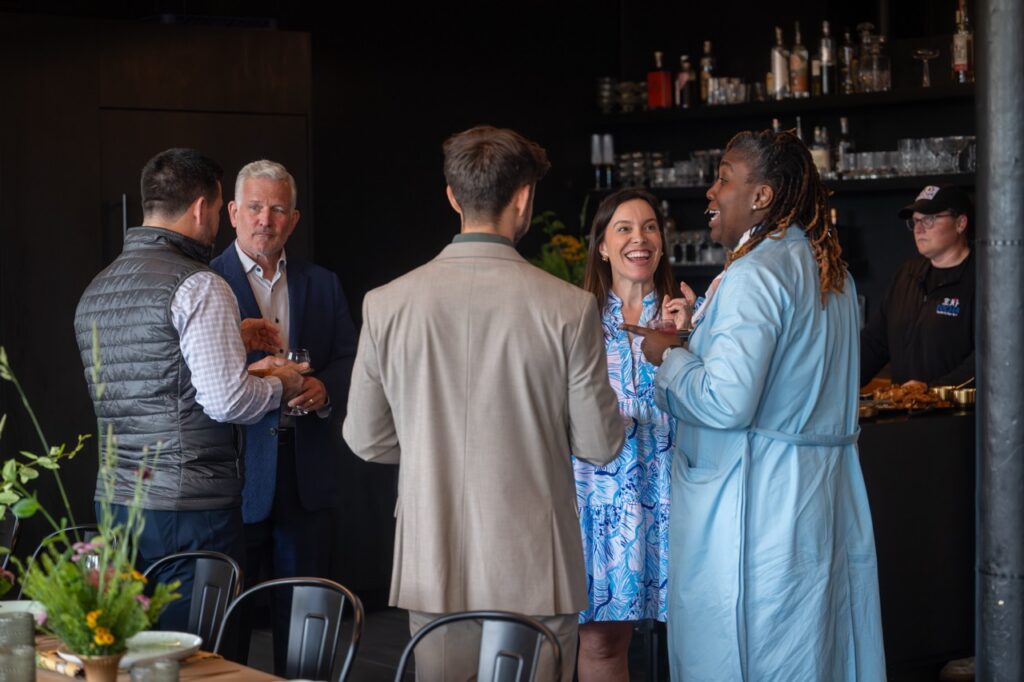
Reynold, co-host Sloan Davidson, and Pittsburgh Tomorrow’s Feyisola Akintola.
A Fall in Pittsburgh’s Immigration Rates
“I think we all share in the idea that we need all the energy and culture and work that new Pittsburghers bring,” said Keith Recker, editor in chief of TABLE Magazine. New Census numbers released in March found that international migration into the Pittsburgh region fell dramatically, however. Fewer than 2,900 immigrants moved to the region from abroad, down from nearly 6,300 the year before and more than 7,500 two years earlier.
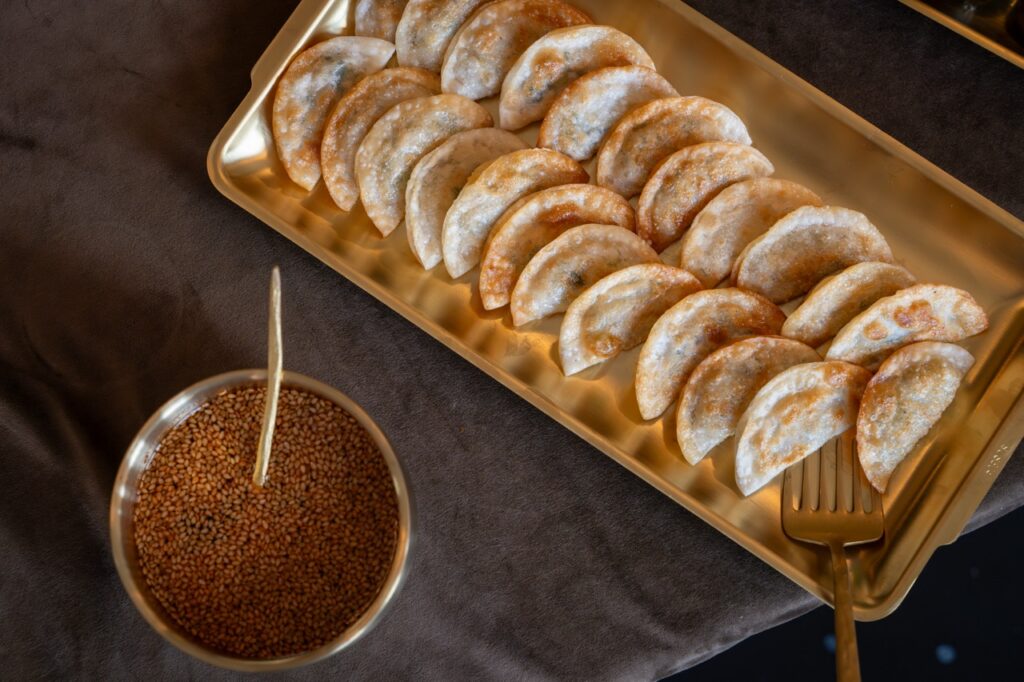
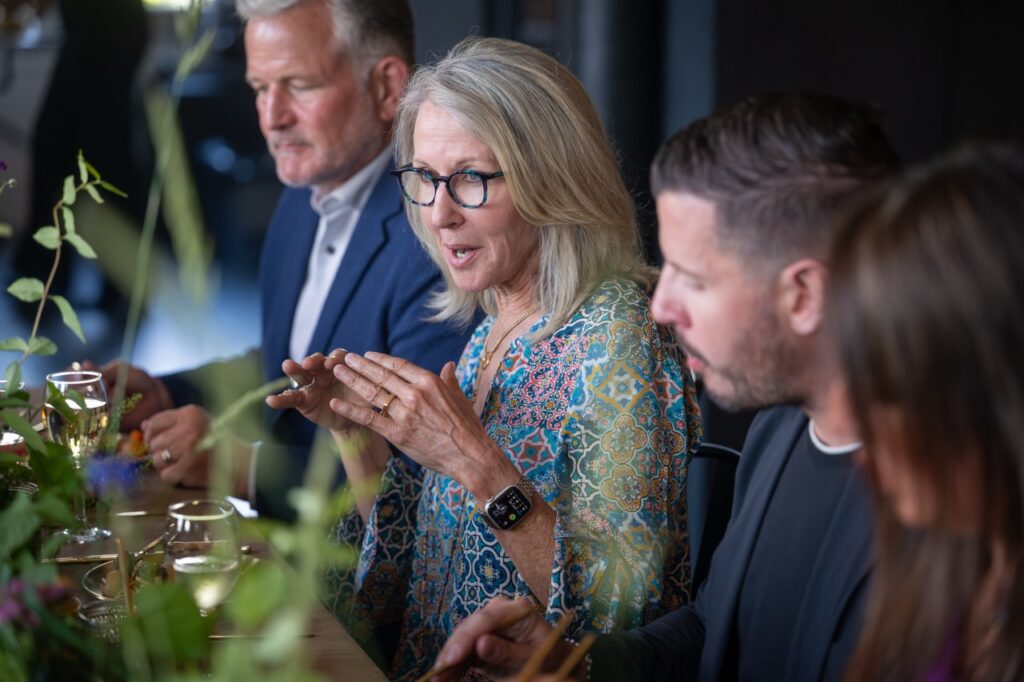
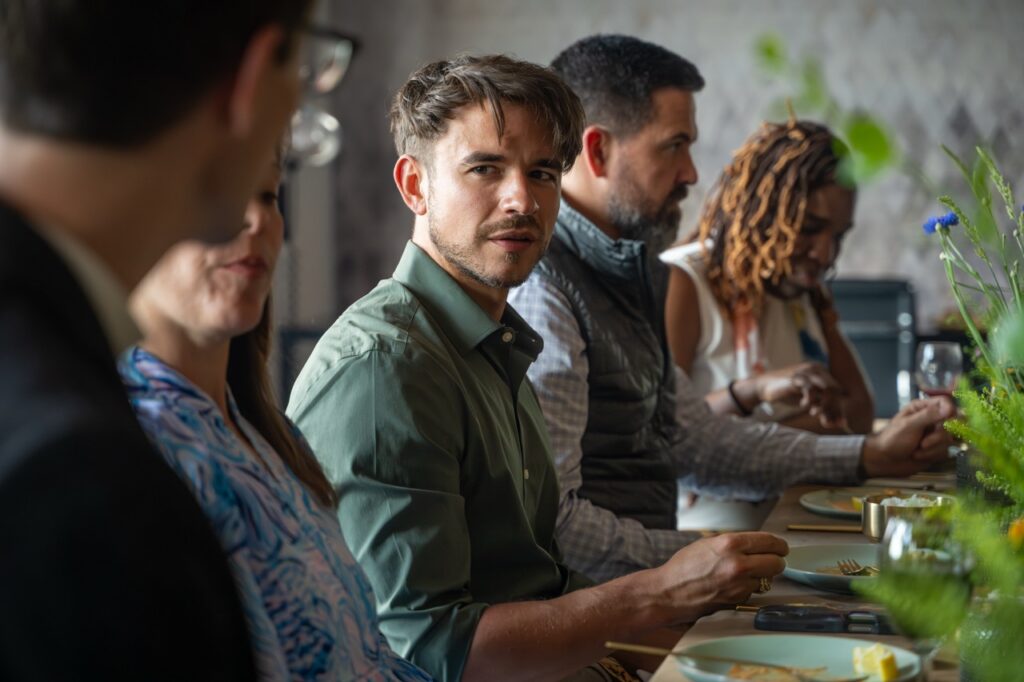
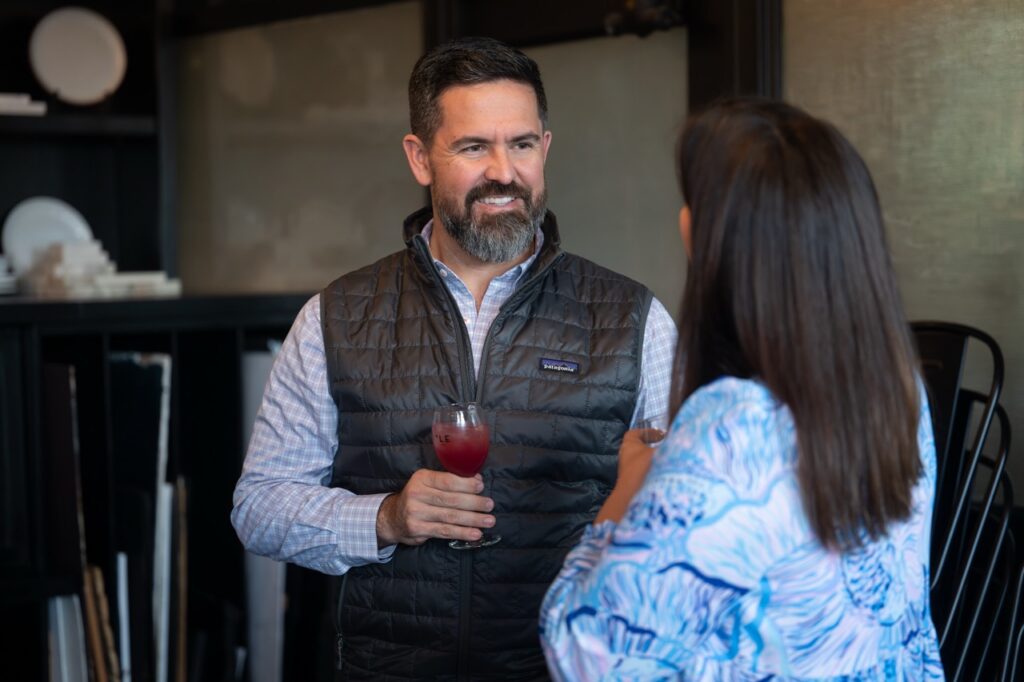
The stats don’t tell the full story, of course, about why the area isn’t attracting new immigrants. To bring a human element into the discourse, TABLE Magazine convened an intimate dinner prepared by Kye-Won Doyle, chef and owner of the Korean restaurant POCHA in West Saxonburg. Attendees included civic leaders from organizations like Pittsburgh Tomorrow, Hello Neighbor, and the Pittsburgh Metropolitan Area Hispanic Chamber of Commerce, as well as representatives from Pittsburgh’s immigrant communities. The conversation ranged from exploring the economic argument for working to increase the population to a discussion of the onus of responsibility for making the city a more welcoming place, noting that there is often a conflation between documented and undocumented immigration.
Why Would Immigrants Come to Pittsburgh?
The term immigrant comes with baggage these days, noted Feyisola Akintola of Pittsburgh Tomorrow. “Anyone that’s moving to this region is a newcomer and important to population growth, but data does show us that immigrants are among the largest contributors to economic growth,” she said.
One of the most visible populations of international residents is the city’s student population, which largely tends to leave the city after completing their studies, according to data from the Economic Innovation Group.
“Whether it’s a student that’s here, whether someone is starting a business, it always starts and ends with economics,” said Melanie Marie Boyer, CEO of the Pittsburgh Metropolitan Area Hispanic Chamber of Commerce. “I think that Pittsburgh offers one of the best opportunities for the American dream,” she added.
So, what is currently attracting new immigration? Boyer noted the city’s affordability and economic opportunities.
Gerardo Interiano, senior vice president of Government Relations and Public Affairs at the self-driving car company Aurora, arrived in the U.S. from El Salvador several decades ago and settled in Pittsburgh with his family seven years ago. “We had the opportunity to go here, or to Washington, D.C., or to California, and we chose Pittsburgh,” he said, noting that the decision came down to both economic opportunity and the city’s amenities like its museums, parks, and schools.
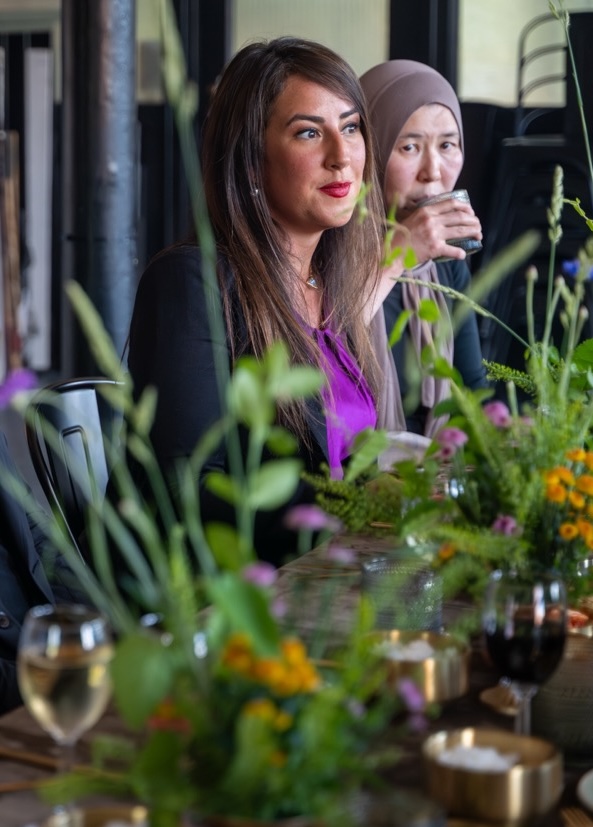

mother.
Job Opportunities
“We have almost 1,000 employees here in Pittsburgh; we’re constantly hiring people to move to Pittsburgh,” Interiano said, noting that companies like Aurora actively recruit from CMU and Pitt. Graduating engineers and mid-career engineers alike have numerous options in larger metro areas, he said, adding, “We have to go convince these young engineers who are thinking about starting a family that this is a great place to be able to do that.”
Raihan Izimbetova, who came to the U.S. from Uzbekistan, is a senior program manager at Partner4Work Pittsburgh, an organization that helps bridge gaps between job seekers and employers with career services and youth programs. She said that new immigrants can provide critical skills in a city’s labor force that can help a business remain locally rooted rather than turning to outsourcing.
“You need to have people who come in and complement the workforce with skills that are not readily available in your own local area,” said Izimbetova, who has lived in Pittsburgh for 20 years.
Red Flags & Cultural Barriers for Immigrants
One of the most immediate issues facing foreign-born transplants is the language barrier, and churches and religious organizations are often on the front lines of welcoming new international residents, particularly refugees.
The Rev. Daniel Behrens, a missionary in residence at the Church of the Ascension in Oakland, recalled helping a study group that included individuals from Kazakhstan, Belarus, Ukraine, China, and Iran, all sitting in a circle together and being amazed at the increasing diversity of the city. “That’s not the Pittsburgh I grew up in, but it is the Pittsburgh I want to live in now,” he said. But it’s difficult to advertise English courses to non-native speakers, he added. People tend to hear about the church’s program by word of mouth.
“The rap about Pittsburgh is that it is ‘friendly,’ but not welcoming,” said Tracy Certo, founder of the media outlet NEXTpittsburgh and current board chair of Local Matters TK, the majority owner of the newly relaunched alt-weekly publication Pittsburgh City Paper. “People will smile and talk to you, but they won’t invite you for coffee,” Certo said. “They’re too busy visiting their families, because people are really rooted here. This is a great quality, but the downside is there’s not always enough room to welcome new people into a community.”
Pittsburgh Tomorrow’s Akintola said that similarly, she has heard from many newcomers to the city that it can be difficult to find their communities, whether that’s a community born of shared interests or shared nationality and culture. “I’ve heard it can take one to three years in Pittsburgh just for you to connect,” she said. “Sometimes people don’t have that patience, and they move to Atlanta or New York, somewhere with more diversity, instead.”
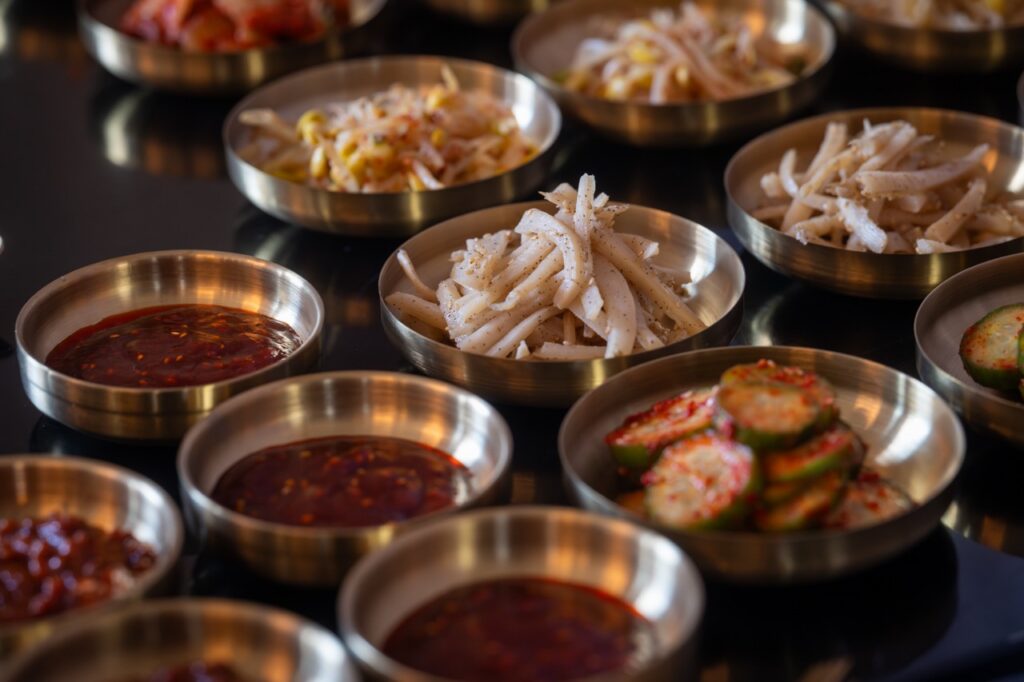
by Kye-Won Doyle.
Shared Responsibilities
One common community crossroads identified by the table was restaurants and specialty grocery stores. “People tend to find restaurants or grocery stores with foods they are familiar with,” said Izimbetova, noting that these spaces tend to draw a blend of cultures looking for both comfort and the opportunity to try something new.
Another proposed solution was institutional and grassroots welcoming committees to help newcomers connect with the communities they’re seeking as well as the services available to help them with their transition.
“We have to have the education for the rest of the community to be more front-facing,” Boyer said. “I think that sometimes people feel threatened who are existing when they feel that other groups are coming in, because they don’t understand, and as humans, we are wired to be afraid of what doesn’t look like us. It’s in our DNA.”
Communication That Flows Both Ways
Others, however, argued that it is more incumbent on those moving to the city to seek out services and community and that it is available for those willing to put in the effort.
“We have a responsibility as the business and cultural institutions of finding ways to welcome others, yes, but there’s also a responsibility that the newcomers and the immigrants have, to get involved in the communities and to go create those opportunities,” Interiano said. “I think that we have to stop assuming, particularly as immigrants, right, that somebody else is going to open the door for us.”
Still, Interiano added that there are policy changes that could make an immediate difference in the city’s ability to attract newcomers, including immigrants—for example, offering a path to residency or citizenship for Ph.D. students who graduate from area universities.
Some organizations are doing just that. Sloane Davidson, founder and CEO of Hello Neighbor, an organization that supports refugees and immigrants, said that her company has sponsored visas for graduating students and international candidates to work there. “It took an investment, but it was worth it,” she said. “There are people who want to stay and build a life here, but we make it so hard, sometimes.”
guests.
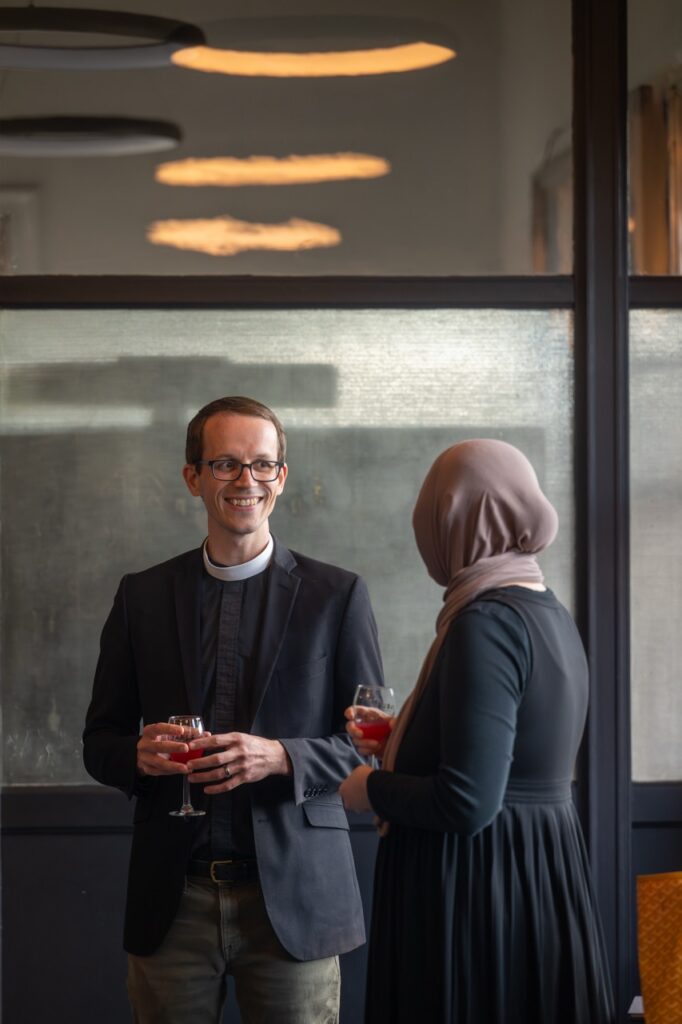
Behrens and Raihan
Izimbetova.
Be Like Tom When It Comes to Welcoming Immigrants
Working with companies to sponsor visas and other residency programs is one way to make the city more welcoming. Other options the table suggested are more grassroots, like making deliberate choices to purchase from immigrant- and refugee-owned businesses. And then, there is the simple act of kindness of taking the time to listen to someone’s story.
“What does it take to develop community here? Basically, I think we need to slow down and be curious about others, especially if someone is struggling,” said Rev. Behrens.
Ebtehal Badawi, a Saudi-born Pittsburgh artist and art wellness director, agreed and related a story about an aging neighbor.
“I got a knock at my door one night, and there was one of my neighbors. His name is Tom, and he told me he’d never seen someone who looks like me,” she said.
Badawi and Tom became close friends, sharing the fruit of their gardens with one another and learning from each other. When Tom passed away, his daughter gave Badawi one of his plants in honor of their friendship.
“You know, sometimes people surprise you,” she said. “Here’s this older guy who opened his heart to me, who helped me feel like I belong. That made such a difference. We all need a Tom.”
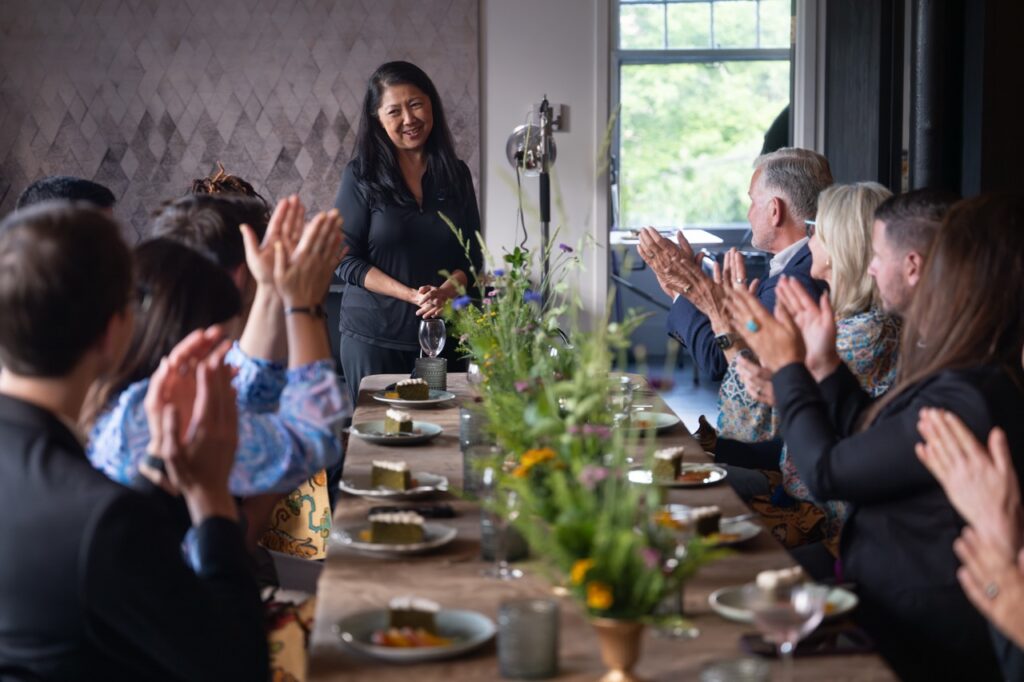
well-deserved
appreciation for the
delicious Korean
meal she prepared
for the group.
Who Was at the Table
- Sloan Davidson – Hello Neighbor
- Feyisola Akintola – Pittsburgh Tomorrow
- Melanie Marie Boyer – Pittsburgh Metropolitan Area Hispanic Chamber of Commerce
- Raihan Izimbetova – Partner4Work
- Tracy Certo – Local Matters TK
- Rev. Daniel Behrens – Church of the Ascension
- Gerardo Interiano – Aurora
- Ebtehal Badawi – Pittsburgh Builds Bridges
- Keith Recker & Justin Matase – TABLE Magazine
- Kye-Won Doyle – POCHA
Explore our guide to multicultural dining in Pittsburgh to find local immigrant-owned eateries around Pittsburgh.
Read These Other Pittsburgh Features from TABLE:
- Community News: Read the latest Pittsburgh Community News
- Dining Guide: Explore the complete TABLE Pittsburgh Restaurant Guide
- Going Out: Discover Things to Do and Explore Pittsburgh Neighborhoods
Story by Jeremy Reynolds
Photography by Justin Merriman
Dinner Prepared by Chef Kye-Won Doyle of POCHA
Subscribe to TABLE Magazine’s print edition