Home Blog

How to Renovate Overlooked Spaces Into Stylish, Valuable Rooms

0
A luxurious basement lounge designed by Seashal Belldina featuring deep green color-washed walls, a gold ceiling, jewel-tone velvet seating, and a modern bar.
A gorgeous basement renovation by Interiors by Seashal.

Basements, foyers, and laundry rooms can be renovation goldmines. Local realtors and designers help us gauge each space’s potential and guide us into balancing everyday joy with future resale value. Is your next project worth the work? Read on for some expert perspectives.

Is the Work Worth It to Renovate Overlooked Spaces?

The most transformative home renovation projects often happen in the most overlooked spaces: basements, foyers, and laundry rooms. These workhorse areas quietly shape how a home feels and functions day-to-day, yet they’re easy to ignore. They’re also easy to overdo. Is it more important to elevate your own daily life or to appeal to future buyers? Can you do both? We asked four experienced realtors and several local designers how to read a space’s true potential, avoid common renovation missteps, and strike that sweet spot between personal delight and smart resale value.

Basements Matter!

Veteran Pittsburgh Howard Hanna realtor Roz Neiman says that basements are the most important home renovation: “I hear over and over before a showing: Is the basement finished? Is the basement finished? I would add that basement game rooms take first place. They provide flexibility for the next homeowners to make the space their own, as it’s more of a blank slate and can become multipurpose.”

Donna Tidwell, a Berkshire Hathaway broker with followings in Western Pennsylvania and Florida, agrees that flexibility in a basement renovation is key. “Buyers respond best to spaces that feel multi-purpose rather than overly specialized. Comfortable family rooms, casual entertaining areas…or a lounge area with a full bathroom tend to work extremely well.”

A sleek, full-scale basement bar featuring black cabinetry, a dark marble countertop, patterned swivel barstools, and a pool table in a renovated entertainment space.
Basement Renovation by Interiors by Seashal

Interior Designer Seashal Belldina notes, “Our clients are business owners with four young children who truly love to entertain, so their basement needed to perform on every level.” “We designed a full-scale bar along with a pool table, poker table, and a custom lounge tailored for movie nights. A separate kids’ playroom allows the adults to host friends, family, and clients without compromise. I color-washed the space in a rich, deep green, layered with jewel-tone accents and a gold ceiling. The result is a sophisticated, immersive retreat that feels both elevated and livable.”

Allison Pochapin of Compass Realty recommends that you assess your basement honestly before deciding it’s eligible for a renovation. “Trying to fully finish a basement that doesn’t lend itself to extended use—because of low ceilings, moisture issues, or limited light—can be a poor investment. Walk-out basements are especially appealing, offering natural light and usable space at or near ground level,” she counsels. If you decide your basement is a worthy target for a refresh, she sounds a note of sanity: “Buyers respond best to basements that feel like a natural extension of the home rather than a novelty.”

Do Bars, Wine Cellars, and Pantries Add Value?

As an amenity for parties and cocktail hours, built-in bars get high marks. Tidwell says that “wet bars and small kitchenette areas are popular.” Interior designer Kristina Conway of Bespoke Kitchens and Baths agrees. “I’ve seen a remarkable surge in demand for beautifully designed basement bars, driven by the desire to stay in and gather at home. People need meaningful spaces for connection.”

A sleek, modern basement wine cellar and bar area featuring black cabinetry, dark quartz countertops, and a glass-enclosed walk-in wine room with custom wood shelving.
A properly engineered wine cellar balances precision climate control with architectural beauty, preserving collections while transforming bottles into a curated display by DB Design Center

Neiman advises caution, however, before spending hard-earned dough on a pricy, climate-controlled wine cellar. “They’re at the bottom of my list. Some people are wine aficionados, and some people just can’t relate to it. It’s very personal,” she says. “It may not pay off in a resale context.” Broker Heather Edmondson, who works with Keller Williams, is even less optimistic about wine cellars, unless your home is in the multi-million dollar luxury category: “Some buyers might see it as a waste of space.”

A modern basement seating area featuring a modern black fireplace, a rustic stone accent wall, and a tan swivel chair with velvet pillows.
By DB Design Center

A pantry replete with shelves and drawers designed for efficient and pleasing-to-the-eye storage, however, is a home run. Pochapin waxes enthusiastic here: “A well-designed pantry—or butler’s pantry—reads as both practical and aspirational. While butler’s pantries may feel like a trend, their function is timeless: better organization, improved flow, and easier entertaining.” Conway agrees. “Generous concealed storage allows everything to stay organized and within reach–exactly the kind of upgrade that real estate professionals recognize as lifestyle-enhancing and adding value to the property.”

A modern home bar and kitchenette featuring navy blue cabinetry with gold hardware, a neutral hexagon tile backsplash, and a built-in stainless steel microwave.
By Bespoke Kitchens and Baths

Interior designer Colleen Simonds is in accord here. “A well-designed butler’s pantry holds quantities of household essentials, and doubles as part of the entertaining area. It’s not ‘back of the house’ anymore – it’s functional and beautiful and needs the same amount of style as other kitchen and kitchen-adjacent spaces.”

A vibrant butler's pantry designed by Colleen Simonds featuring a floral wallpapered ceiling, bold burgundy subway tile, marble countertops, and a child reaching into a glass-front refrigerator.
By Colleen Simonds

What about Mud Rooms and Laundry Rooms?

Because mud rooms and laundry rooms address the daily functional needs of families, paying attention to them can pay off in both quality of life and resale value.

A well-organized laundry room and mudroom featuring light wood cabinetry, a stacked dark gray washer and dryer, a built-in bench, a desk area, and a patterned tile floor.
By California Closets

“Clients want spaces that simplify daily routines, reduce clutter, and blend with the rest of the home’s aesthetic. They love mudrooms and laundry areas because these high traffic spaces can be transformed into beautifully organized command centers. With the right mix of cabinetry, seating, and work surfaces, a chaotic drop zone becomes a calm, efficient flow between outdoor activities and daily home life. Current favorite features for us include ergonomic folding counters for sorting and folding laundry, as well as hooks and valet rods that help families maintain order even on the busiest days,” comments Alexa Fries, Marketing Manager of California Closets’ Pittsburgh team.

A stylish basement laundry room renovation featuring a modern washer and dryer set, cabinetry, and patterned tile floor.
By Babb and Mack

“Well-designed laundry rooms and mudrooms carry significant weight, particularly when they are treated as intentional spaces that are beautifully adorned rather than utilitarian afterthoughts,” adds Liza Barry Christ, a Sewickley-based broker with Piatt Sotheby’s.

Should Colors and Materials be Classic or Personal?

A well-organized mudroom in a renovated basement featuring mustard yellow board and batten walls, brass hooks, rustic woven baskets, and dark wood doors.
For more on this “lower level” renovation by Babb & Mack Design Co., click here.

Should you design your renovation to suit yourself or the tastes of an eventual buyer? Pochapin suggests a cautious approach: “The most successful homes strike a balance between timeless structure and personal expression. Homeowners should enjoy their homes while also making informed decisions that will age well.”

Because neutrals are very much in fashion right now, the choice between trendy and enduring may not be complicated. “Clean lines, warm whites, natural stone, and quality wood tones provide longevity and broad appeal,” says Tidwell.

Echoing Oscar Wilde’s aphorism to maintain moderation in all things, including moderation, Liza Christ counsels a “middle path” when it comes to neutrals. “From a resale perspective, the goal is not to strip a home of personality, but to make thoughtful, enduring choices. The strongest resale results come from getting the permanent finishes right — the elements that define the home and are costly to change, including flooring, millwork, cabinetry, stone, tile, and high-quality windows and doors. When executed well, these elements should feel timeless, but timeless does not mean static. Great design balances longevity with a sense of relevance and style.”

Roz Neiman’s decades of perspective give rise to a somewhat freer vision. “I think it’s 50/50 in what I see in the marketplace these days. Half will choose to go for what’s better for resale, and the others go the other way, saying “this is my space and want it to feel like that.”

Story by Keith Recker
Principal Photography by Dave Bryce and Erin Kelly

Subscribe to TABLE Magazine’s print edition.

‘Hedwig and the Angry Inch’ Returns to Pittsburgh Starring Treasure Treasure

0
Performer Treasure Treasure as Hedwig in the City Theatre production of "Hedwig and the Angry Inch," wearing a voluminous blonde wig and a colorful, frayed denim patchwork outfit.

Treasure Treasure stars in Hedwig’s triumphant return to Pittsburgh — and she’s taking the band downtown.

Hedwig and the Angry Inch Rocks Pittsburgh Again Starring Treasure Treasure

The audacious musical Hedwig and the Angry Inch begins with a confrontational introduction: “Ladies and gentlemen, whether you like it or not: Hedwig!”

The title character, a drag-coded punk rocker with a defiant streak, then conquers the stage with the show opener, Tear Me Down. The song is a statement of intent: No circumstances, no societal rejection, and certainly no audience can stop Hedwig.

Hedwig and the Angry Inch, produced by City Theatre from May 2-June 7 at the Greer Cabaret Theater, was created by multi-hyphenate artist John Cameron Mitchell (who wrote the show and created the character) and Stephen Trask (who wrote the music and lyrics). Hedwig first prowled stages at punk and drag clubs, then off-Broadway; a movie and a Broadway run followed.

An All-Out Show-Stopper in Pittsburgh

Now, Hedwig returns to Pittsburgh to command — nay, demand — attention at the Greer Cabaret Theater. Staged as a rock concert, Hedwig and the Angry Inch recounts its star’s journey from East Berlin to glam-rock obscurity. Having endured a botched gender-transition surgery to flee her country, Hedwig has since been used and rejected by a young rock idol. Now, she’s leading her deadpan band, the Angry Inch, to play in dives and restaurants.

The sleek lines and curated cocktails of the Greer bear little resemblance to the Jane Street Theatre, a misfit venue in New York’s Meatpacking District and the first home of the show. So: How did Hedwig get to the Greer?

“There’s something about great art that has relevance no matter where you stage it,” says Clare Drobot, artistic director of City Theatre. “I think our audiences love our South Side home, but the Greer is such a dynamic venue … It really does feel like a chance to open us up to new audiences. We hear so often that City Theatre is the best-kept secret on the South Side; we don’t want to be a best-kept secret!”

A Start in 2003, A Return in 2026

City Theatre first staged Hedwig and the Angry Inch in 2003. Anthony Rapp, best known for originating the role of Mark Cohen in Rent, played Hedwig. Drobot says she hears again and again from patrons who recall attending.

A dramatic close-up of Treasure Treasure as Hedwig, featuring heavy glitter eye makeup, bold red lipstick, and an oversized blonde wig with feathered layers.
Treasure Treasure and Robert Ramirez

“City doesn’t [generally] do reimaginings or restagings,” she adds. “If you’re going to revisit a production, having an opportunity to do it in a new venue felt really exciting artistically.” (Drobot adds that this production was conceived alongside Monteze Freeland, her former co-artistic director; Freeland left City Theatre in 2025.)

Treasure Treasure Embodies Hedwig

Stepping into the ostentatious heels worn by Mitchell and Rapp — not to mention luminaries such as Neil Patrick Harris, Michael C. Hall, and Taye Diggs — is no easy task. Fortunately, performer, playwright, and artist Treasure Treasure has the right mindset.

“I’ve always felt that, whatever crowd I’m in front of, it’s life and death,” Treasure says. “Something kicks in and I will survive — I’m being thrown out to the wolves and I will survive … Sometimes, it’s surrender; a moment emerges and it’s like, ‘We’re on a journey together now.’”

Treasure, who memorably played Hamlet in 2023 for Quantum Theatre, worked with Trask at the Atlantic Theater Company. A longtime fan of the show, she feels “like I was always supposed to do it. And I don’t entirely know why; I’m still finding it.

“We are all in transition. Not only [in terms of] gender, but our identities are shifting all the time; you can’t pin a human being down. You can’t build a wall. There is no binary; there is no clear separation … That is nature, to accept that you cannot tear me down because I am constantly in transit.”

Why Hedwig Still Matters Today

The character of Hedwig, as Mitchell put it in 2014, “[is] a gender of one, and that is accidentally so beautiful.” Director Robert Ramirez says the character has always been vitally relevant — but carries added resonance in 2026.

“Right now, this time that we’re living in politically, socially, I think queer art is really important … I think it’s important to stay loud and to stay clear about what matters to you.” Ramirez, the head of Carnegie Mellon’s School of Drama, has “been in love with this show for quite some time,” having seen the original off-Broadway run.

Hedwig and the Angry Inch has not endured solely for its cultural commentary, Ramirez stresses: It’s exceptionally entertaining, as funny as it is moving. You can’t deny its power strictly as a piece of drama — or the power of the music in and of itself.”

Story by Sean Collier
Photography by Laura Petrilla

Subscribe to TABLE Magazine’s print edition.

Blending Fantasy Into Interior Design with Michelle Gage

0
A whimsical dining room featuring a Designers Guild forest landscape mural, two orange and white cats near the doorway to a blush pink kitchen, and a wooden piano.

Interior Designer Michelle Gage creates a magical, fantasy-inspired design scheme for a young family in Squirrel Hill.

Inside Michelle Gage’s Fantasy-Inspired Interior Design

A sophisticated dining room designed by Michelle Gage featuring a vibrant Designers Guild forest mural, an emerald green Julian Chichester buffet, and a gold geometric chandelier.

A solid work relationship between designer and homeowners is often the result of being on the same page from the get-go. So it was encouraging when Gage realized early on that she and her clients were definitely in sync. During a virtual consultation in the middle of COVID, they were discussing a possible color for the kitchen cabinets, and everyone said—at nearly the exact same time—“blush pink.” (Fast forward: those cabinets are now in Benjamin Moore Monticello Rose.)

A breakfast nook featuring a custom purple velvet channel-tufted banquette, Ferrick Mason floral wallpaper, and a marble-topped pedestal table.

Adding a Touch of Magic

In addition to the hue, the homeowners love fantasy, sci fi, mythical worlds, Lord of the Rings, and the like—worlds with a magical feel to them. “The one thing that our firm really tries to do is make sure that the homes look like the client,” says Gage. “It was fun taking cues from them.”

The fantasy theme gets subtle nods in wallpaper prints and textile patterns throughout the home. The wife of the couple is also a professed linen snob, and wanted to make sure all the textiles used in the house were really gorgeous. “The upholstery we brought in was really supple and yummy,” says Gage. She and her children also love to bake, so the kitchen was designed with that in mind. It’s not a huge room, and thus a tall order to make ample room for baking needs. It’s not only highly functional, but has a lot of storage, some snuck in. At the back of the room, Gage also added a custom purple velvet banquette (with a channel-tufted back), near a window facing the backyard. The charming wallpaper is from Ferrick Mason, the window treatments from Radish Moon.

Interior designer Michelle Gage standing in a light blue living room featuring a gallery wall of fine art, an orange velvet armchair, and a modern glass chandelier.

Something for Every Moment

Gage divided the main living area, which is both large and long, into sections. On one side is a cozy fireplace area and on the other a place where the family can enjoy games and puzzles. On the gaming side, a large burl coffee table from Made Goods is intentionally quite sturdy to allow the energetic daughter to dance on it. “It’s a gorgeous piece of furniture, but it can also hold up to real life. They have kids who are creative and like to express themselves, and we didn’t want to limit that in the space,” says Gage.

A bright, modern kitchen designed by Michelle Gage featuring blush pink cabinets, a white tiled range hood, gold hardware, and dark stone flooring.

The green sofa is the client’s own, and the accent chairs are from Highland House. While the group agreed on most everything, the couple didn’t love the first chandelier Gage showed them, stating that they were looking for something “more geometric and less arabesque”, so she selected one in metal and glass that ended up working perfectly.

A stylish home entryway featuring Svenskt Tenn clover-patterned wallpaper, a staircase with a vintage-style runner, and a floral-inspired Visual Comfort pendant light.

Starting with the Walls and Moving Inward

The dining room wallpaper, from Designers Guild, was chosen to match the clients’ personalities.“The cats swat at the birds in the mural because they are unable to tell that it’s not real life.” The chandelier is also from Visual Comfort. The drapery fabric, a botanical print that complements the landscape depicted in the wallpaper, is from Walter G, an Australian fabric house, in an ochre block print. The boldly colored buffet is from Julian Chichester.

Letting Unique Details Shine

A whimsical bedroom corner featuring a scalloped blue and white floral headboard, a gray textured nightstand, and bold aubergine Iksel cornflower wallpaper.

Large-scale, Japanese cornflower wallpaper from Iksel turns the primary bedroom into a lush and intimate space, the aubergine background and explosion of warm, caramel-colored foliage both warm and artistic. Another piece from Julian Chichester, the vanity, adds an unexpected dash of contrasting color. The custom bed was designed in-house and fabricated in Philadelphia then shipped to Pittsburgh. Wherever possible, local labor (the general contractor and wallpaper installer) was used.

A stylish library or gaming nook featuring teal built-in bookshelves, a round marble-top pedestal table, and a red velvet chair.

The bright and welcoming entryway has clovers and shamrocks climbing the walls—the paper is from Svenskt Tenn—lending an enchanted forest feel. (The homeowners have dubbed the house the Forest Home.) Although there is a lot of nature outside, it made sense to also have that woodsy sensibility cross over into the interiors. The unusual overhead light fixture is again from Visual Comfort. And while the rug and carpeting look charmingly time-worn, they are actually new, adding a bit of faded grandeur to the mix. 

A vibrant powder room designed by Michelle Gage featuring orange themed wallpaper, a fluted marble pedestal sink with brass fixtures, and bold blue window trim.

Placed throughout the home is a collection of artwork that is a mix of the owners’ own and fourteen pieces, all originals, that Gage sourced in Paris. Some sit in a frame and some do not, and Gage was methodical about placement, even making an art map to determine the best position for each. (The unframed kitten portrait over the banquette area is everyone’s favorite.) Giving her free rein to obtain such personal items on their behalf was further proof of the special relationship between Gage and the owners. “Not every client is that trusting.”

Story by Stephen Treffinger
Photography by Erin Kelly

Subscribe to TABLE Magazine’s print edition.

Puerto Rican Canoas (Stuffed Plantains)

0
Plantains full of a meat filling beside a grapefruit slice and rice.

Have you ever tried Puerto Rican Canoas? Golden, caramelized plantains house a savory, rich filling in this classic and traditional dish. Usually made with sweet ripe plantains (not blackened) split and stuffed with picadillo (a spiced ground meat mixture), Canoas strike a perfect balance between sweet and savory, soft and hearty. The dish reflects the island’s culinary heritage, where different cultural Spanish, African, and Taíno influences come together in comforting ways. Talk about a perfect family dinner or even a dish for celebrations like holiday meals.

The Importance of Plantains

When making Canoas, and many other Puerto Rican recipes, plantains define the dish. In Puerto Rico, ripe plantains are essential due to their sweetness, soft texture, and accessibility around the island. When you bake them, they become tender and even lightly caramelized, creating the perfect contrast to the savory filling inside Canoas.

Beyond function, they bring balance to each dish. The sweetness of the plantain offsets the richness of the filling. It helps to capture the sweet-and-savory interplay that is central to Puerto Rican cuisine and often seen in the country’s most popular dishes.

Print
clock clock iconcutlery cutlery iconflag flag iconfolder folder iconinstagram instagram iconpinterest pinterest iconfacebook facebook iconprint print iconsquares squares iconheart heart iconheart solid heart solid icon
Plantains full of a meat filling beside a grapefruit slice and rice.

Puerto Rican Canoas (Stuffed Plantains)


  • Author: Jamilka Borges

Description

A Puerto Rican staple using plantains as a canoe for a filling of beef, veggies, and delicious seasonings.


Ingredients

Scale

6 ripe, not blackened plantains (bake for 35 minutes in their skin for preparation)

For the filling:

  • 2 tbsp grapeseed oil
  • 1 lb ground beef
  • 1 onion, minced
  • 3 gloves garlic, minced
  • ½ cup minced red bell, minced
  • 1/2 cup chopped cilantro
  • 2 tsp adobo
  • 2 tsp oregano
  • 1 cup diced tomatoes
  • ¼ cup tomato paste
  • 2 tbsp vinegar
  • 1 envelope sazón
  • 2 bay leaves
  • Juice and zest of 2 limes
  • Salt to taste


Instructions

  1. In a big sautéed pan(or Dutch oven), sautéed onions, peppers and garlic for 5 minutes, add beef and all seasonings (adobo, oregano, sazon), brown and break clumps.
  2. Add tomato paste and chopped tomatoes, caramelized for 5-7 minutes.
  3. Deglaze with vinegar and add the bay leaf and lime juice and zest.
  4. Let cook for another 15 minutes and finish with the fresh cilantro.
  5. Assemble the canoas by cutting the middle top of the plantains and filling them with the meat. You can top with cheese if desired.

Recipe and Styling by Jamilka Borges
Photography by Dave Bryce

Subscribe to TABLE Magazine’s print edition.

Red Snapper with Taro Root Smash and Salsas

0
A white plate with leaves every where and a red snapper laying on the plate with taro root smash and salsas.

Looking for a new Red Snapper recipe that embraces the brightness of this fish? Inspired by Caribbean flavors, this Red Snapper dish brings together crisp-skinned fish, earthy taro root, and two vibrant salsas for a plate that feels both shore-like and refined. The snapper uses a simple preparation to let its delicate flavor shine. Then, a taro root smash adds heftiness and nuttiness on top.

Another element that elevates this dish are the salsas. One is a salsa criolla, with a tangy bite and depth. The other is a fresh, herb-driven salsa verde. Together, they create a recipe that you’ll come back to whenever you wish to cook yourself something special.

A person presents a white plate with a green banana leaf and a red snapper on top of that.

What is Taro Root?

Taro root is a starchy tropical stem that is an important ingredient across the Caribbean, Asia, and the Pacific for centuries. It has a rough brown exterior and pale, almost purple-speckled interior. Whenever you use taro in a dish, it develops a nutty flavor along with a soft, creamy texture.

It’s important to note that you have to cook taro before eating. Taro root contains naturally occurring compounds that can cause irritation when eaten raw.

Print
clock clock iconcutlery cutlery iconflag flag iconfolder folder iconinstagram instagram iconpinterest pinterest iconfacebook facebook iconprint print iconsquares squares iconheart heart iconheart solid heart solid icon
A white plate with leaves every where and a red snapper laying on the plate with taro root smash and salsas.

Red Snapper with Taro Root Smash and Salsas


  • Author: Jamilka Borges

Description

Dress up your red snapper the way it’s intended.


Ingredients

Scale
  • 1.5 lb whole snapper, scaled and gutted

For the taro root smash:

  • 2 large taro root
  • 4 small shallots (sliced)
  • ¼ cup cloves garlic
  • ~2 qt cream

For salsa criolla:

  • 2 white onion (short julienne)
  • 2 red bell peppers (short julienne)
  • 3 pt grape/cherry tomatoes
  • ¼ cup garlic (minced)
  • 2 packets sazon seasoning
  • 1 cup orange juice

For the salsa verde:

  • 4 cup parsley
  • 4 cup cilantro
  • 6 cloves garlic (minced)
  • 1 tsp cayenne
  • ½ cup red wine vinegar
  • 1 ½ cup evoo
  • Salt


Instructions

  1. Season the snapper with salt and pepper and a pinch of cumin, sear on cast iron skillet and bake in oven for 11 minutes.
  2. Serve with salsa criolla, salsa verde and taro root

For the taro root smash:

  1. Cut outer layer off of taro root and dice.
  2. Sauté shallots and garlic with oil or butter.
  3. Add taro and then cover with cream.
  4. Season with salt.
  5. Allow to cook down until taro is soft and then blend with hand blender.

For the salsa criolla:

  1. Sauté all in olive oil except for the tomatoes, cook down.
  2. Add 2 packets sazon seasoning, 1 cup orange juice, and the tomatoes and cooking until tomatoes burst.

For the salsa verde:

  1. Blend all except oil in food processor and slowly add in oil.
  2. Season to taste.

Recipe and Styling by Jamilka Borges
Photography by Dave Bryce

Subscribe to TABLE Magazine’s print edition.

From Past to Present Design Trends That Never Fade

0
A sophisticated living room featuring the Hickory Chair Marquesa sectional with tuxedo arms and an American Ash base, accented by a chocolate and ivory color palette and 20th-century Italian design influences.

History and good design go hand in hand. Using classic colors, materials, and handmade objects makes a home feel warm, beautiful, and lasting.

Brown Sugar

Classic neutrals are not trendy, which is exactly what has made them a trend in our risk-averse style universe. We always crave change, however, so they’re getting sweeter and moving into chocolate, cocoa, and vanilla tones.

Today’s Home

A sophisticated living room featuring the Hickory Chair Marquesa sectional with tuxedo arms and an American Ash base, accented by a chocolate and ivory color palette and 20th-century Italian design influences.

Hickory Chair’s Marquesa sectional anchors this eternally appealing room with the cool vibe of 20th century Italian design. A relaxed profile finished with classy tuxedo arms rests on an American Ash plinth base. The feeling is continued in a sexily modern wing chair and a Klismos-inspired side chair. Rendered in deep chocolate and ivory, the setting invites deep relaxation.

Louis Anthony

A luxury platinum ring from Louis Anthony Jewelers featuring a large, radiant-cut natural brown diamond center stone accented by two kite-shaped white diamonds.

This dazzling natural brown diamond intrigues us with its earthy beauty. Set in platinum and accented with white diamonds, the ring suggests that Mother Nature knows best when it comes to color and shine.

Feathers

A rustic table setting featuring a Chilewich Dahlia lace placemat, a hand-thrown ceramic plate, and Kim Seybert dip-dyed napkins tied with natural twine and dried flowers.

The Dahlia placemat by Chilewich gleams with classic beauty. Joined by dip-dyed napkins from Kim Seybert, it becomes especially sensual in its appeal. Available at Feathers.

Weisshouse

A deep chocolate brown glazed ceramic bowl from Weisshouse, featuring a distinctive twisted rope-style trim around the exterior and filled with dried botanicals.

A twist of trim draws the eye. Deliciously worked clay and a sumptuous brown glaze combine in a bowl you will keep forever.

The Good Stuff

Financial markets suggest that, in troubled times, investors seek safety in quality. The same goes for home furnishings! Noble choices in materials, finishes, and accessories reassure with stable voices and enduring appeal.

James Mohn Design

Interior design mood board by James Mohn featuring Holland and Sherry tweeds, Le Gracieux printed cottons, verdigris bronze vases, and Samuel and Sons trims for a Norman chateau-style renovation.

Architect and interior designer James Mohn shares with TABLE a glimpse of a dining and family room he’s putting together as part of a substantial reimagining of a 1929 Ingham and Boyd house built in the style of a Norman chateau. Verdigris bronze vases and dark wood finishes bring an intensity to otherwise classic choices of Holland and Sherry Chilean tweeds, Venetian-inspired printed cottons from Le Gracieux, and trims from Samuel and Sons. The intricate marquetry floors of the room are by Peiser Floors. Important depth comes into the picture from a 19th century marble mantlepiece from England and a delicious antique Chinese rug from Doris Leslie Blau. As always, Mohn quietly seasons his work with found objects and art. “Every well-thought-out room needs the warmth and tactility of the handmade. Time-worn hints of history take us somewhere important. Together, all the details lead to a sensuous, layered experience for the eye and the hand.”

Orr’s Jewelers

A luxury men’s watch collection from Orr’s Jewelers featuring Breitling, Cartier, Panerai, and IWC timepieces in a green velvet-lined leather display box beside a bottle of Johnnie Walker Double Black.

A fine watch celebrates traditional craftsmanship and technological precision. There’s no men’s style stamen more reassuring than that! Shown here, clockwise from top left: Breitling Chronomat 42 NFL Steelers Edition, Oris Big Crown Pointer Date, Cartier Santos de Cartier, Panerai Submersible Luna Rossa, Jaeger-LeCoultre Reverso Classic Small Seconds, Bell & Ross BR03 Skeleton Lum Ceramic, IWC Pilot’s Watch 41 Mercedes-AMG PETRONAS F1 Edition, Tudor Black Bay Chrono, Breitling B01 Chronograph 43 Navitimer, and IWC Ingeniuer Automatic 40.

Chelsea Textiles

A roll of Chelsea Textiles Havisham fabric in seafoam, featuring a distressed floral print on a cotton and hemp blend to evoke a vintage, Dickensian aesthetic.

Havisham fabric from Chelsea Textiles is another example of faded grandeur, this time evoking Lady Havisham’s Dickensian country residence. The printed fabric is designed to appear naturally distressed in places, making it look as if it might have been done decades—or centuries—ago. This cotton and hemp blend comes in teal, seafoam, and fern.

DWR

Modern living room featuring the DWR Atlason Composed Modular Sofa in cream melange, styled with a green Verner Panton Flowerpot lamp and minimalist Icelandic design elements.

The Atlason Composed Modular Sofa and Sectional is a new DWR gem by Icelandic designer Hlynur Atlason. Its various configurations connect and expand your seating options as far as your room and imagination will go. Visit DWR’s new showroom in the Strip District to see it in person.

Tile and Designs

A bathroom wall featuring Frondere Aqua subway tiles in a serene blue-green hue, showcasing a handmade crackle glaze finish and a subtle three-dimensional textured surface.

Open up new depths in your bath or kitchen with Frondere Aqua’s serene blue-green hue and crackle glaze finish. Each tile features a subtle three-dimensional surface and a handmade look.

History Lessons

Rooted in the past, knowledge, craft, and memory combine to grow the next generation of design.

De Gournay

A bedroom wall covered in de Gournay's Rose Antiqued Badminton chinoiserie wallcovering, featuring hand-painted birds and flowers on tarnished silver-gilded paper.

Rose Antiqued hand-painted Badminton chinoiserie on tarnished silver-gilded paper is an investment-grade wallcovering. But the look of faded grandeur is showing up everywhere in hotels and interior design, offering up the comforting and reassuring patinas of the past. This hand-painted beauty is newly launched. Its antiqued finish on a metallic ground was “inspired by the unexpectedly beautiful tarnish that a client’s panels acquired when she stored them in a humid attic.”

Studebaker Metals

Handcrafted Studebaker Metals brass cocktail strainer with a hammered finish, displayed on a dark wood table next to a crystal mixing glass and a pink cocktail with cucumber garnishes.

This Pittsburgh-made artisanal cocktail strainer is made with a very basic set of hand-tools: a shear, a punch, and a few hammers and stakes. The skill of the maker brings it all together into an heirloom quality object that your grandchildren will marvel at decades in the future.

Today’s Home

A whimsical English country-style living room featuring the Taylor King Collette banquet, Beauchamp chair, and Taylor Made sectional with a layered mix of floral patterns, stripes, and velvet textures.

Taylor King’s Collette banquet, Beauchamp chair, and Taylor Made sectional offer an updated take on English country style…with touch of modern whimsy. Florals, stripes, velvet, fringe, and pleats are layered together in a time-tested formula but in colors and patterns right for today.

Eddie Maestri

An interior design mood board by Eddie Maestri featuring vintage French flea market finds, architectural sketches of Château de Gudanes, and luxury textiles from Schumacher and de Le Cuona.

Details carefully noted while on a trip to France, including a stay at Château de Gudanes in the French Pyrenees, left designer Eddie Maestri with myriad lasting impressions: the way light softened stone, how rooms felt layered but never heavy, how nothing tried too hard. The mood board he shares with TABLE captures the mood of restraint, proportion, warmth, and a sense of lived-in elegance. The mix reflects the process of his studio, which includes studying details and collecting moments, and allowing them to make their way naturally into architecture and interiors.

Photos at upper left and right were taken by Maestri at the Château. They are visual notes of his time there. Sketches were quick drawings of the rooms and other details that caught his attention. Dried items were gathered near his office in Texas, organic shapes and colors that reminded him of his time in France. Other objects, like old keys, a framed chateau print, and a vintage oil portrait, come from his visits to French flea markets. Fabrics and materials come from Rosemary Hallgarten, Jane Clayton and Company, Schumacher, and de Le Cuona.

Artisanal Urges

When talented hands turn to fine materials, products that last a lifetime are often the outcome.

Danny Mankin

A creative mood board by Danny Mankin featuring a collection of vintage books, personal sketches, gold jewelry, and varied fabric textures laid out on a burlap surface.

When we asked TABLE Contributing Editor Danny Mankin to share a selection of materials and objects that inspire him, he appeared with a treasure trove of textures, objects old and new, personal sketches, books, bits of jewelry, and more. They telegraphed important messages to ponder when diving into a creative project. Or life. Defining who you are is an act of constant discovery: you need to fall in love with the mysteries of what crosses your path and look for ways to layer their virtues into your vision. And, perhaps most important: Everything and everyone is a text to be pondered, which means hasty rejection and harshess have no place in a tender vision for living. Thank you, Danny. His Instagram feed is a testament to his journey.

Antiquarian Shop

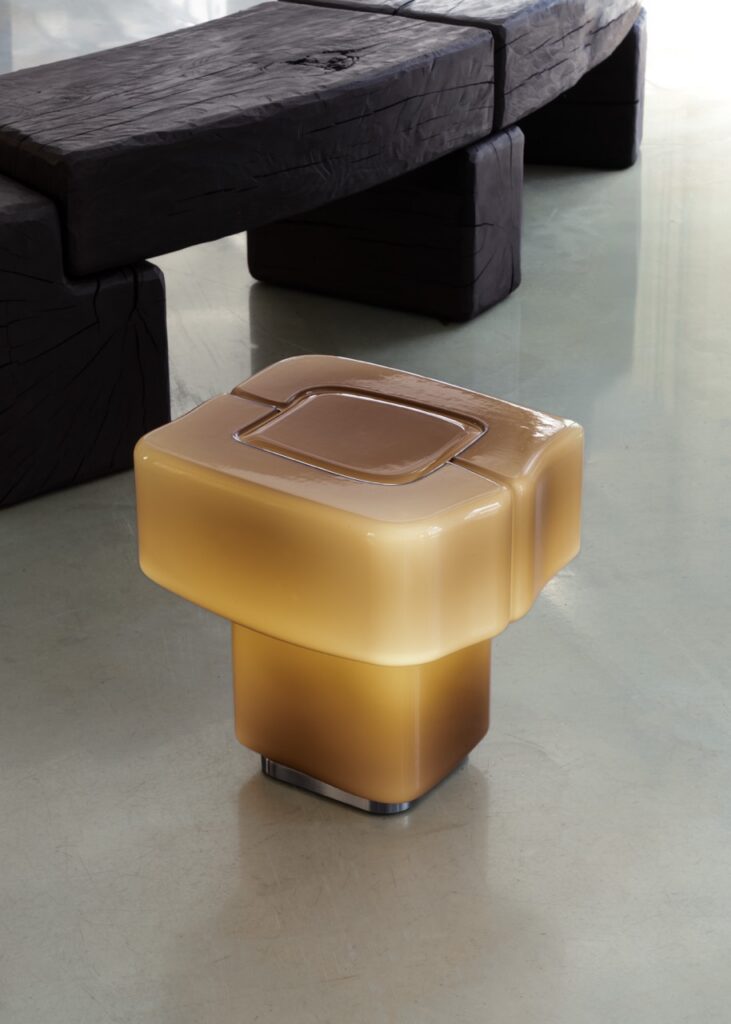
The Made Goods Bea Stool in a gold-toned glazed ceramic, featuring a sculptural hourglass shape with an intricate perforated pattern for indoor or outdoor use.

The Bea Stool, offered in three colors, serves as flexible pull-up seating or as a water-safe end table. Indoors or outdoors.

Rosemary Hallgarten

A Rosemary Hallgarten Antoinette rug in a soft neutral palette, styled in the historic and atmospheric Ashby Manor to showcase the Country Manor collection's blend of modern design and classic textures.

Designer Hallgarten wanted to honor the past but look towards the future with her new Country Manor collection, photographing the sleek, modern pieces in Great Britain’s atmospheric Ashby Manor. The pieces are executed in classic fabrics and skins including silk, mohair, alpaca, and shearling, in warm in colors like deep cognac, soft camel, oxblood, and vintage green.

Brenda Friday Design

Handcrafted Michael Noelle Soigné Tote in cream leather with an orange interior, styled on a wooden stool next to an orange armchair and a glass of champagne.

North Carolina’s Michael Noelle designs and hand-makes unique cigar pouches and handbags. Their Soigné Tote, both practical and beautiful, is ready to be your “go everywhere” bag.

Elitis

An artisan's hands meticulously weaving a textured Elitis wall covering that combines raffia, linen, and wool in an intricate, abstract pattern inspired by the Japanese concept of yūgen.

Shown as part of Déco Off during Paris Design Week earlier this year, this wall covering mixes raffia, linen, and wool. They are combined in a repeating pattern inspired by the Japanese concept of yūgen, which roughly translates as subtle grace or beauty, something not immediately obvious. The company calls it “a dialogue between emptiness and fullness through airy abstract patterns, faux plains with intricate textures, and playful knots.”

Florals for Spring

Groundbreaking. Yes, Miranda Priestley, we know: seasonal florals are hardly new. But some ideas endure for a reason: they seduce us with appealing color, pattern, and nostalgia.

Splurge

Two white porcelain Splurge vases with gold rims and hand-painted pink cherry blossom designs, one tall and one short, holding fresh pink tulips.

A potent sign of spring, cherry blossoms last just a moment. Prolong their message of freshness and renewal with a gorgeous porcelain vase.

Sourabh Gupta

Handmade paper flowers by artist Sourabh Gupta, featuring delicate pink and yellow blossoms with intricate stems and green leaves in rustic clay pots.

Inventive artist Sourabh Gupta makes his handmade flowers in a workshop in East Harlem. All manner of raw materials (including paper towels, toilet paper, crepe paper, and more) come into play in the pursuit of perfect texture, color, and form. Discover his much-sought-after work on Instagram.

Antiquarian Shop

Two Julian Chichester ceramic Fairy lamps from Antiquarian Shop, featuring intricate handmade floral textures and colorful pleated shades in pink and yellow patterns.

Handmade floral elements make up the surface of Julian Chichester’s ceramic Fairy lamps. Shown here with printed shades in petal colors, they come in two heights. Create your own side table or nightstand garden! Available at Antiquarian Shop.

Asian Influences

An antique Chinese cinnabar lacquer tray from Asian Influences featuring a deeply carved central peony flower design, floral banding at the rim, and a brass edge.

An antique Chinese cinnabar lacquer tray brings a hit of life and color to any room. This one has a carved central design of peony flowers, floral banding at the rim, and brass edging.

Jennifer Janeway Designs

A coastal-inspired design by Jennifer Janeway Designs featuring coral Thibaut Paper Rattan wall covering, Phillip Jeffries Fable wallpaper in Sepia Garden, and sky blue accents.

Fair weather is here in shades of sky blue, coral, and sandy beaches. Designer Jennifer Janeway’s dreamily uplifting take on comfortable living is spot on. The coral wall covering is Thibaut Paper Rattan, and the lovely bird pattern is Phillip Jeffries Fable in Sepia Garden. Fabrics are all from Thibaut.

The Eye Must Travel

Famous Vogue editor Diana Vreeland said this truism decades ago. We need to refresh our eyes with new ideas in order to feel alive.

Elaine Yan Ling Ng

Designer and artist Elaine Yan Ling Ng, founder of The Fabrick Lab, blends traditional craftsmanship with technological innovation. Reverie Skin upholstery fabric is a collaboration with fashion designer Katerin Theys, developed at Ng’s Kwai Hing studio and knitting labs in Dongguan in Southern China. It is made from paper, copper, and lurex.

Splash

Leo Sea Grey mosaic tile pattern by Splash, featuring a handcrafted leopard spot design in natural stone tesserae, styled with a black and gold globe and a geometric mirror.

The Leo Sea Grey mosaic tile pattern captures the awesome beauty of a leopard’s spots in meticulously handcrafted natural stone tesserae. Also available in a Moca colorway, this pattern invites the eye to travel to safari country…without leaving home. Available at Splash.

Brenda Friday Design

A luxury throw pillow by Brenda Friday Design featuring Schumacher’s Birds of Paradise fabric in Chestnut, with intricate embroidered birds and floral motifs and a fringed trim.

Juts one benefit of working with an interior design professional is access to a deep library of fantastic textile patterns. Here, Brenda Friday enlivens a client’s home with throw pillows made of Schumacher’s Birds of Paradise fabric in a Chestnut colorway.

Henne

Nanis Ivy necklace in 18k yellow gold featuring hand-engraved millerighe beads and a diamond clasp, available at Henne Jewelers.

The Ivy necklace of hand-engraved gold beads with a diamond clasp comes from Italian designer Nanis. Made from 18k yellow gold, it shows the brand’s signature millerighe— meaning “thousand stripes”—hand-engraving technique. It gives each bead a gorgeously textured finish.

Jennie Bishop

A vibrant interior design mood board by Jennie Bishop featuring a Taylor Swift-inspired palette with mint green fabrics, disco balls, Samuel & Sons tassels, and Chanel lipstick in Coco Flash.

Designer Jennie Bishop’s layered visual narrative takes up the hopeful energy of Taylor Swift’s The Life of a Showgirl. Bishop curates a thoughtful bringing together of found objects and personal pieces evoking emotion, vibrancy, and Swift’s ability to weave a compelling musical story. The palette was drawn from the album art—mint green fabrics, silver tones, and vibrant oranges—as well as the pop of champagne corks. Mirrored disco balls echo the sparkling costume Swift wears in the debut music video, while an ode to her signature red lip color anchors everything. Among the many inspiring objects Bishop shares with TABLE are a silky Samuel & Sons key tassel, a Chanel lipstick in Coco Flash, OPI Red Hot Rio nail polish, and two fabrics from Prelle.

Story by Keith Recker and Stephen Treffinger
Styling by Keith Recker
Principal photography by Dave Bryce

Subscribe to TABLE Magazine’s print edition.

French Modern Art Comes to the Frick Pittsburgh in New Exhibit

0
A somber oil painting by Jules Breton depicting a woman in profile wearing a traditional white headpiece and dark clothing while holding a lit candle.
Jules Breton (French, 1827–1906). The End of the Working Day, 1886–87.Oil on canvas, 33 1/16 x 47 1/4 in. (84 x 120 cm). Brooklyn Museum, Gift of Mrs. Edward S. Harkness, 35.867.

A revolutionary wave of artistic creativity began in France in the 19th century, documented in a new show at The Frick Pittsburgh. Dawn Reid Brean, the museum’s chief curator and director of collections, previews the exhibit and describes how this wave arrived in Gilded Age Pittsburgh.

The French Moderns Exhibition at The Frick Pittsburgh

Visitors arriving at The Frick Pittsburgh expect to see Italian Renaissance paintings and formal portraiture from the 18th century. But this summer, they will also encounter the shimmering brushwork of Renoir and the vivid colors of Henri Matisse—a surprise twist in the museum’s usual narrative.

The French Moderns: Matisse / Renoir / Degas exhibition offers a grand tour of the major artistic movements spanning the nineteenth- and twentieth centuries, from the Realism of Gustave Courbet to the Surrealism of Yves Tanguy. All the works in the exhibition are drawn from the Brooklyn Museum’s renowned collection. By the early 1900s, Brooklyn’s visionary curators and trustees were acquiring contemporary art by such artists as Henri Fantin-Latour and Paul Cezanne, forming the cornerstone of a collection that now includes iconic paintings by Edgar Degas and sculpture by Auguste Rodin.

A still life oil painting by Pierre-Auguste Renoir featuring a blue and white patterned teacup on a saucer alongside two yellow peaches and three green figs on a white tablecloth.

Pierre-Auguste Renoir (French, 1841–1919). The Vineyards at Cagnes, 1908. Oil on canvas, 18 1/4 x 21 3/4 in. (46.4 x 55.2 cm). Brooklyn Museum, Gift of Colonel and Mrs. Edgar W. Garbisch, 51.219. Photo: Brooklyn Museum.

The Relationship Between The Frick Pittsburgh and Modern Art

At first glance, The Frick Pittsburgh may seem an unlikely home for French Moderns. Helen Clay Frick detested modern art, to the extent that she once wrote, “50 years from now how many of the Impressionists and Post-Impressionists will still be thought of as anything but trash.” Yet the exhibition reveals unexpected and compelling ties between Frick’s collection and the rise of modern art.

Her father, Henry Clay Frick, collected with a conservative eye, favoring established schools over modern movements. He tended to follow the prevailing tastes of the day, which leaned toward the Barbizon School and French academic painters. Several of the nineteenth century artists represented in French Moderns are artists whose work was acquired by Frick including Camille Corot, Jean-Francois Millet, Jules Breton, and William Bouguereau.

A Barbizon school oil painting by Jean-François Millet depicting a young woman leaning on her staff while tending a flock of sheep in a misty, open field.

Jean-François Millet (French, 1814–1875). Shepherd Tending His Flock, early 1860s. Oil on canvas, 32 3/16 x 39 9/16 in.(81.8 x 100.5 cm). Brooklyn Museum, Bequest of William H.Herriman, 21.31. Photo: Brooklyn Museum.

To contemporary eyes, Corot, Millet, and Breton may appear traditional, but in their own time they laid crucial groundwork for the Impressionists’ radical experimentation with light, atmosphere, open-air technique, and subjects drawn from everyday life. The Barbizon School of Painters favored a more realistic approach to nature, often painting en plein air. Their loose brushwork and close attention to atmosphere and light inspired Impressionist painters like Claude Monet, Camille Pissarro, and Berthe Morisot.

Continuing a Legacy

At the turn of the twentieth century, Pittsburgh was an internationally recognized center for the arts. Its industrialists were active collectors, patronizing local galleries as well as dealers in New York, Paris, and London. National and international firms used Pittsburgh galleries, like J.J. Gillespie and Company, as entry points into the region’s thriving market. M. Knoedler & Company even opened a Pittsburgh branch in 1897, directed by a young Charles Carstairs, who catered to industrialists eager to assemble collections that signaled wealth and cultural sophistication. Across the city, newly built mansions housed private galleries that displayed these ambitious collections.

A French Academic oil painting by William-Adolphe Bouguereau depicting a young woman in traditional dress holding a small child in her arms.

William Bouguereau (French, 1825–1905). The Elder Sister, reduction, circa 1864. Oil on panel, 21 7/8 x 17 15/16 in. (55.6x 45.6 cm). Brooklyn Museum, Bequest of William H.Herriman, 21.99. Photo: Brooklyn Museum.

Although Impressionism was not the dominant taste among Pittsburgh collectors, the annual exhibitions at Carnegie Institute (now known as the Carnegie International), which started in 1896, introduced modernism to the city remarkably early. Carnegie’s oft-quoted goal was to bring “the old masters of tomorrow” to Pittsburgh. The early exhibitions circulated works by Monet, Degas, Sisley, Pissarro, and others long before they were widely accepted.

An Impressionist landscape painting by Alfred Sisley featuring slender, bare trees along a riverbank with a red-roofed house and rolling hills under a blue, cloudy sky.

Alfred Sisley (British, active France, 1839–1899). Flood at Moret, 1879. Oil on canvas, 21 1/4 x 28 1/4 in. (54 x 71.8 cm). Brooklyn Museum, Bequest of A. Augustus Healy, 21.54. (Photo: Brooklyn Museum).

Credit to the Old Masters of the Art World

Impressionism found a more receptive audience in American collectors than in Europe and Britain. Though Frick did not share the level of enthusiasm of some of his contemporaries for Impressionist work (most notably, Louisine and Henry Havemeyer in New York City and Bertha Honore Palmer in Chicago who were among the earliest collectors to bring Impressionist art to America), he did buy paintings by Monet, Degas, and Renoir. He maintained a lifelong interest in Impressionism and contemporary art, even as he became known for his astounding collection of “Old Masters.”

An Admiration for Monet

The Frick Pittsburgh’s Monet (on loan to the de Young Museum’s presentation of Monet and Venice in San Francisco from March 21–July 26, 2026) appeared in the fifth annual exhibition at the Carnegie Institute in 1900. It was most likely lent by gallerist Paul Durand-Ruel, who had initially sold the painting to Bertha Palmer. More than two decades after it was first painted, Monet had reached a certain level of acceptance on the international art market. It is possible Frick first saw the painting at the International. It was on view from November 1900 to January of 1901 and the receipt lists a purchase date of March 1901.

An Impressionist landscape painting by Camille Pissarro depicting a sun-dappled dirt path winding through lush green trees toward a cluster of white village houses in the distance.
Camille Pissarro (French, 1830–1903). The Climb, Rue de la Côte-du-Jalet, Pontoise, 1875. Oil on canvas, 21 1/4 x 25 7/8 in. (54 x 65.7 cm). Brooklyn Museum, Purchased with funds given by Dikran G. Kelekian, 22.60. (Photo: Brooklyn Museum).

Interestingly, Banks of the Seine at Lavacourt is the second Monet Frick purchased. The first, noted simply as Argenteuil, was bought in 1895 from the New York dealer L. Crist Delmonico. Frick later traded it to Knoedler in 1909 as credit toward the purchase of a 17th-century Dutch landscape by Aelbert Cuyp. But Banks on the Seine at Lavacourt remained in the collection, a glittering anomaly in Frick’s collecting purchases from the period even as his taste shifted more decisively toward the so-called “Old Masters.” He bought his first Vermeer painting just a few months later. Lavacourt, at $3,000, was a bargain compared to the Vermeer’s $26,000 price tag.

An Impressionist oil painting by Claude Monet featuring shimmering water reflections of a riverside village under a pale, hazy sky.

Claude Monet (French, 1840–1926). Bords de la Seine à Lavacourt (Banks of the Seine at Lavacourt), 1879. Oil on canvas. Purchased March 2, 1901 by Henry Clay Frick.

Modern Art Has Always Been in Pittsburgh

French Moderns doesn’t simply bring modern art into the Frick—it reveals the threads of modernism already present in Pittsburgh’s collecting history. It reframes the Frick family’s position in the broader art world, illuminates Pittsburgh’s longstanding engagement with modern art, and reveals how taste evolves from conservative to canonical.

What once seemed radical—Impressionism, plein-air landscapes, loose brushwork—is now among the most beloved art in the world. As visitors move through French Moderns, they trace not only the evolution of French painting, but also the evolution of taste itself, in Pittsburgh and beyond.

Story by Dawn R. Brean and Bella Hanley
Featured Photo Courtesy of Brooklyn Museum

Subscribe to TABLE Magazine’s print edition.

Black Boot Builders Renovates a Fox Chapel Farmhouse for Modernity

0
A "White Hot Reno" kitchen in a Fox Chapel farmhouse featuring hand-distressed white oak beams, a BlueStar range, and a glossy Walker Zanger chevron tile backsplash.

A rambling Fox Chapel farmhouse becomes a “white hot reno” with high-end details, a devotion to craft, and a lot of TLC from Black Boot Builders.

A Fox Chapel Farmhouse Gets a White Hot Update from Black Boot Builders

Architects Paul Shea and Lisa Simone, who are married, have known Dave Short and Zia Marinzel of Black Boot Builders, also married, for a while, but the couples hadn’t worked together until a kitchen renovation of a venerable Fox Chapel farmhouse. Shea & Simone, Carnegie Mellon grads who love to travel and take their inspiration from art, set out to retain the authenticity of the home, which had grown “organically” over generations. But they also wanted to invite light in, connect the interior with the picturesque landscape, and add a contemporary vibe.

A sleek, modern kitchen renovation in a Fox Chapel farmhouse featuring custom blue cabinetry with brushed brass hardware, natural wood drawers, and a large window overlooking the landscape.

They opened up a large space, using oak beams to configure squares and rectangles instead of walls to organize and define the kitchen, while providing a clear sight line to the family room and dining area. Color choices, along with an unusual blend of textures and materials—brushed brass, copper and polished nickel hardware from Rejuvenation, sit side-by-side in the kitchen, for example, along with both natural white oak and painted cabinets from The Kitchen Gallery— “reference the house, which is more traditional, but also bring them forward to today,” Paul says.

A bright dining area in a Fox Chapel farmhouse featuring white modern chairs, a light wood floor, and a light blue brick fireplace decorated with colorful artwork.

Crafting a Specific Style

Dave and Zia, who both have backgrounds in construction and design, started out as house flippers before launching Black Boot in 2018. They name each project. This one they dubbed “White Hot Reno,” Zia says, because of the white in the hand-distressed beams, wide-plank oak floors, work areas, and radius range hood, along with the white-hot heat needed for the finishes the architects selected. “We just knew the materials on their project would be stunning,” she says.

A renovated Fox Chapel farmhouse kitchen featuring natural white oak cabinets with brushed brass hardware, a vintage-style area rug, and Kolbe Vista Luxe windows overlooking a picturesque landscape.

The kitchen is beautiful but practical. A long, narrow, oval island is the centerpiece. Its white oak surface sits atop a deep blue stainless-steel base and engages with an offset pub table. The island’s Caesarstone counter and the nearby bar’s quartzite top, both white, have striking dark veining that mirrors the bluish gray of the painted cabinetry. A BlueStar 60-inch range extends the color. A rippled white wall of Walker Zanger glossy vertical triangle chevron tile from Tile and Designs reflects the light.

A contemporary wet bar in a Fox Chapel farmhouse featuring deep blue subway tile, grey cabinetry with copper hardware, a copper sink, and a built-in wine cooler.

Black Boot Builders Focus on Functionality and Beauty

Another striking feature is the floor-to-ceiling glass corner created with Kolbe VistaLuxe windows. Large plants thrive in natural light, doubling as a window treatment, and a sturdy tile floor allows for carefree potting and watering. Handcrafted Phillip Jeffries wall-covering, used sparingly, softens the transition from the kitchen to the rest of the house. From a practical standpoint, the best new addition may be the pantry, which Lisa says holds as much as 20 feet of cabinetry.

A contemporary breakfast bar in a Fox Chapel farmhouse featuring a light wood countertop, a colorful geometric pattern barstool, and a sliding gray patterned pantry door under exposed oak beams.

Typically, the architect recommends the builder to the client, and the builder defers to the architect. For Black Boot, that meant following architectural drawings filled with “super high-end finicky details that involved a lot of time and craft to bring to life,” Zia says, adding: “That speaks to the quality of the design work.” Shea and Simone in turn applaud the contractor’s attention to detail. “Their building really rose to the occasion,” says Paul. “Really exceptional craftsmanship.”

Of course, the opinion that counts is that of the homeowners who lived through the year-long project. “The client was thrilled with the outcome,” says Dave. No one’s arguing.

A bright indoor plant corner in a Fox Chapel farmhouse renovation featuring floor-to-ceiling Kolbe Vista Luxe windows, a large sculptural vase, and lush greenery.

The Materials

Story by Susan Fleming Morgans
Photography by Dave Bryce

Subscribe to TABLE Magazine’s print edition.

Pittsburgh Events: Your Guide to April 13-19

0
A woman stretches in a white outfit while sitting on a bench in front of sunny windows.

The city’s weather is shifting between rain showers and sunny, hot days but we have the perfect solution to either. Events throughout Pittsburgh from April 13-19 take you into new realms, inviting you to step outside of your comfort zone. Try your hand at a new skill such as gardening or yoga, feast on some of the most delicious drinks and food Pittsburgh has to offer, or slip into the theater to see a life-changing performance. You’re just a click and a step away from the best week of the year yet.

Pittsburgh Events Happening April 13-19

Houseplant Care & Propagation Workshop
Photo From Grow Pittsburgh

Houseplant Care & Propagation Workshop

April 14, Grow Pittsburgh

Do all your houseplants seem to die as if you have the opposite of a green thumb? Learn how to keep your indoor plants happy and thriving alongside Grow Pittsburgh. You can email instructor Vee ahead of time with your plant photos and questions to address at the workshop. Plus, you’ll learn how to properly propagate in a hands-on activity that you’ll get to take home to start your own collection.

An above shot of three large slices of pizza on a wooden cutting board.
Pizza from Benny Fierro | Styling by Anna Franklin | Photography by Dave Bryce

Yinz Know the Rules – Pizza Networking Event

April 16, The Library on Carson

Think you know what the best pizza in the ‘Burgh is? Come find out and chomp on some slices for a good cause. Sample slices from some of Pittsburgh’s top spots and cast your vote for your favorite, all while networking with local professionals and business owners. Each ticket goes towards the Young Adult Survivors United (YASU), a nonprofit empowering young adults impacted by cancer.

From Garden to Glass: The Crafting of Botanical Cocktail Mixers
Photo From Wood Stove Kitchen

From Garden to Glass: The Crafting of Botanical Cocktail Mixers

April 16, Edgeworth Club

Sewickley Civic Garden Council invites you to taste a hint of nature’s beauty as you learn to mix botanical beverages. Steve Zyck of Wood Stove Kitchen explains how he turns botanicals into delicious, unique cocktail and mocktail bases that you can mimic at home. Every ticket includes  appetizers and two complimentary cocktails or mocktails for snacking and sipping during the workshop.

A woman stretches in a white outfit while sitting on a bench in front of sunny windows.
Photo From Anna M. Maynard for Erin Koewe

Grappling

April 16-17, New Hazlett Theater

Choreographer Erin Koewe introduces you to a new world through dance. Grappling invites audiences into a queer, zero-gravity world where dance, family, and pop reign. This innovative dance-theater performance with bold visuals blends humor, joy, and cosmic imagination to explore themes of love, labor, and time. 

Sacred Wings: A Mindful Yoga & Wildlife Encounter
Photo From Patrick Hendry

Sacred Wings: A Mindful Yoga & Wildlife Encounter

April 18, Steel Goat Marketplace

Take an opportunity for a deep breath among Mother Earth. This experience blends gentle yoga, wildlife education, and mindful connection in the presence of a live bird ambassador. Learn all about both the human nervous system and the importance of wildlife as you slow down, soften, and remember what true relaxation is all about.

Story by Kylie Thomas
Featured Photo Courtesy of Anna M. Maynard

Subscribe to TABLE Magazine‘s print edition.
Easter Crack (Saltine Cracker Toffee)

0
A tray of Easter Crack with half mini chocolate eggs everywhere, eggs above the tray and flowers below it.

During Christmas time, you may see layers of saltine crackers, brown sugar, butter, and chocolate chips that make a salty-sweet dessert that some call Crack for it’s delicious addictiveness. But, this dessert recipe doesn’t have to be just for December, you can actually tweak the recipe to make it a staple for any holiday or occasion, even just because. With Easter coming up, it’s the perfect time to make Crack more spring-like with the use of white chocolate, milk chocolate foil eggs, pistachios, as well as dried berries. Feel free to get creative and add in any other Easter treats you enjoy like jelly beans, peeps, or even other candies.

A purple table with small bowls of ingredients like saltine crackers, mini eggs, dried berries, and pistachios.

Where Did the Dessert Crack Come From?

The dessert that you know as Christmas Crack or simply Crack roots itself in centuries of confectionery evolution. Its foundation of a thin, buttery toffee topped with chocolate traces back to classic European candy-making traditions. As sugar became more widely available in the 18th and 19th centuries, thanks to expanding trade and refined processing, home cooks began experimenting with easy, shelf-stable sweets. With the premiere of Saltines in 1876, Southerns would use the cracker as a base for various treats, leading then to the dessert we love today.

Print
clock clock iconcutlery cutlery iconflag flag iconfolder folder iconinstagram instagram iconpinterest pinterest iconfacebook facebook iconprint print iconsquares squares iconheart heart iconheart solid heart solid icon
A tray of Easter Crack with half mini chocolate eggs everywhere, eggs above the tray and flowers below it.

Easter Crack (Saltine Cracker Toffee)


  • Author: Star Laliberte

Description

Turn Christmas Crack into an Easter-worthy treat!


Ingredients

Scale


Instructions

  1. Preheat oven to 350 degrees F.
  2. Cover a rimmed baking sheet with parchment paper (make sure the parchment is covering up the sides).
  3. Cover sheet pan with 48 (or more) saltine crackers.
  4. Melt the butter and brown sugar in a medium sauce pan to make a toffee. Stirring with a wooden spoon, bring to a boil for 5 minutes or until it is completely mixed and bubbly.
  5. Pour the toffee carefully over the arranged Saltines and spread as evenly as possible with a rubber spatula
  6. Place sheet pan in the preheated oven for 4-5 minutes until the toffee mixture is bubbly.
  7. Remove from the oven and set aside to cool for 20 minutes
  8. Using a double boiler method, melt the white chocolate.
  9. Pour the melted white chocolate over the sugar mixture.
  10. Using a spatula, smooth the white chocolate over the surface of the hardened toffee layer
  11. Scatter mini eggs, chopped pistachios, dried cranberries, freeze-dried fruits and sprinkles over the melted white chocolate.
  12. Place the cookie sheet in the refrigerator to cool for 2-3 hours or overnight.
  13. Remove from the refrigerator and break the Easter Crack into pieces or cut with a knife if you prefer more uniform pieces.

Looking for another simple Easter treat? Try these adorable bite-sized Chocolate Pretzel Bunny Treats.

Recipe and Styling by Star Laliberte
Photography by Dave Bryce

Subscribe to TABLE Magazine’s print edition.