A revolutionary wave of artistic creativity began in France in the 19th century, documented in a new show at The Frick Pittsburgh. Dawn Reid Brean, the museum’s chief curator and director of collections, previews the exhibit and describes how this wave arrived in Gilded Age Pittsburgh.
The French Moderns Exhibition at The Frick Pittsburgh
Visitors arriving at The Frick Pittsburgh expect to see Italian Renaissance paintings and formal portraiture from the 18th century. But this summer, they will also encounter the shimmering brushwork of Renoir and the vivid colors of Henri Matisse—a surprise twist in the museum’s usual narrative.
The French Moderns: Matisse / Renoir / Degas exhibition offers a grand tour of the major artistic movements spanning the nineteenth- and twentieth centuries, from the Realism of Gustave Courbet to the Surrealism of Yves Tanguy. All the works in the exhibition are drawn from the Brooklyn Museum’s renowned collection. By the early 1900s, Brooklyn’s visionary curators and trustees were acquiring contemporary art by such artists as Henri Fantin-Latour and Paul Cezanne, forming the cornerstone of a collection that now includes iconic paintings by Edgar Degas and sculpture by Auguste Rodin.
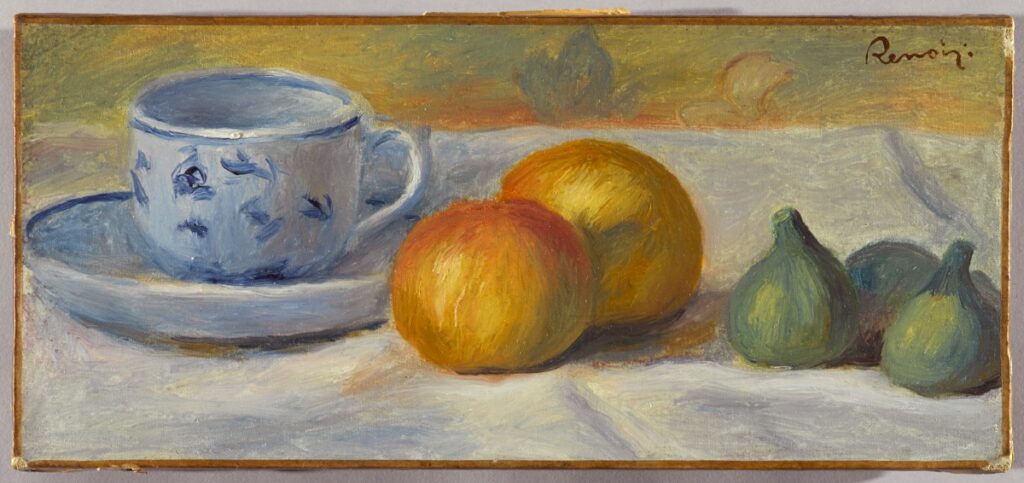
Pierre-Auguste Renoir (French, 1841–1919). The Vineyards at Cagnes, 1908. Oil on canvas, 18 1/4 x 21 3/4 in. (46.4 x 55.2 cm). Brooklyn Museum, Gift of Colonel and Mrs. Edgar W. Garbisch, 51.219. Photo: Brooklyn Museum.
The Relationship Between The Frick Pittsburgh and Modern Art
At first glance, The Frick Pittsburgh may seem an unlikely home for French Moderns. Helen Clay Frick detested modern art, to the extent that she once wrote, “50 years from now how many of the Impressionists and Post-Impressionists will still be thought of as anything but trash.” Yet the exhibition reveals unexpected and compelling ties between Frick’s collection and the rise of modern art.
Her father, Henry Clay Frick, collected with a conservative eye, favoring established schools over modern movements. He tended to follow the prevailing tastes of the day, which leaned toward the Barbizon School and French academic painters. Several of the nineteenth century artists represented in French Moderns are artists whose work was acquired by Frick including Camille Corot, Jean-Francois Millet, Jules Breton, and William Bouguereau.
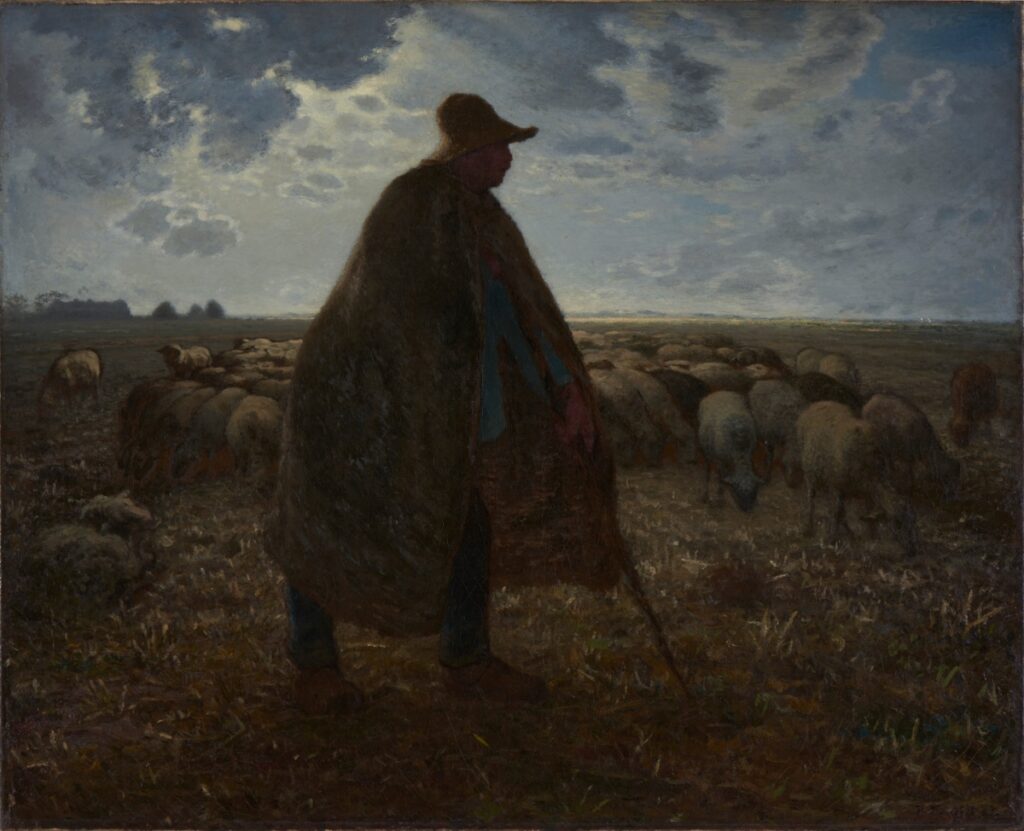
Jean-François Millet (French, 1814–1875). Shepherd Tending His Flock, early 1860s. Oil on canvas, 32 3/16 x 39 9/16 in.(81.8 x 100.5 cm). Brooklyn Museum, Bequest of William H.Herriman, 21.31. Photo: Brooklyn Museum.
To contemporary eyes, Corot, Millet, and Breton may appear traditional, but in their own time they laid crucial groundwork for the Impressionists’ radical experimentation with light, atmosphere, open-air technique, and subjects drawn from everyday life. The Barbizon School of Painters favored a more realistic approach to nature, often painting en plein air. Their loose brushwork and close attention to atmosphere and light inspired Impressionist painters like Claude Monet, Camille Pissarro, and Berthe Morisot.
Continuing a Legacy
At the turn of the twentieth century, Pittsburgh was an internationally recognized center for the arts. Its industrialists were active collectors, patronizing local galleries as well as dealers in New York, Paris, and London. National and international firms used Pittsburgh galleries, like J.J. Gillespie and Company, as entry points into the region’s thriving market. M. Knoedler & Company even opened a Pittsburgh branch in 1897, directed by a young Charles Carstairs, who catered to industrialists eager to assemble collections that signaled wealth and cultural sophistication. Across the city, newly built mansions housed private galleries that displayed these ambitious collections.
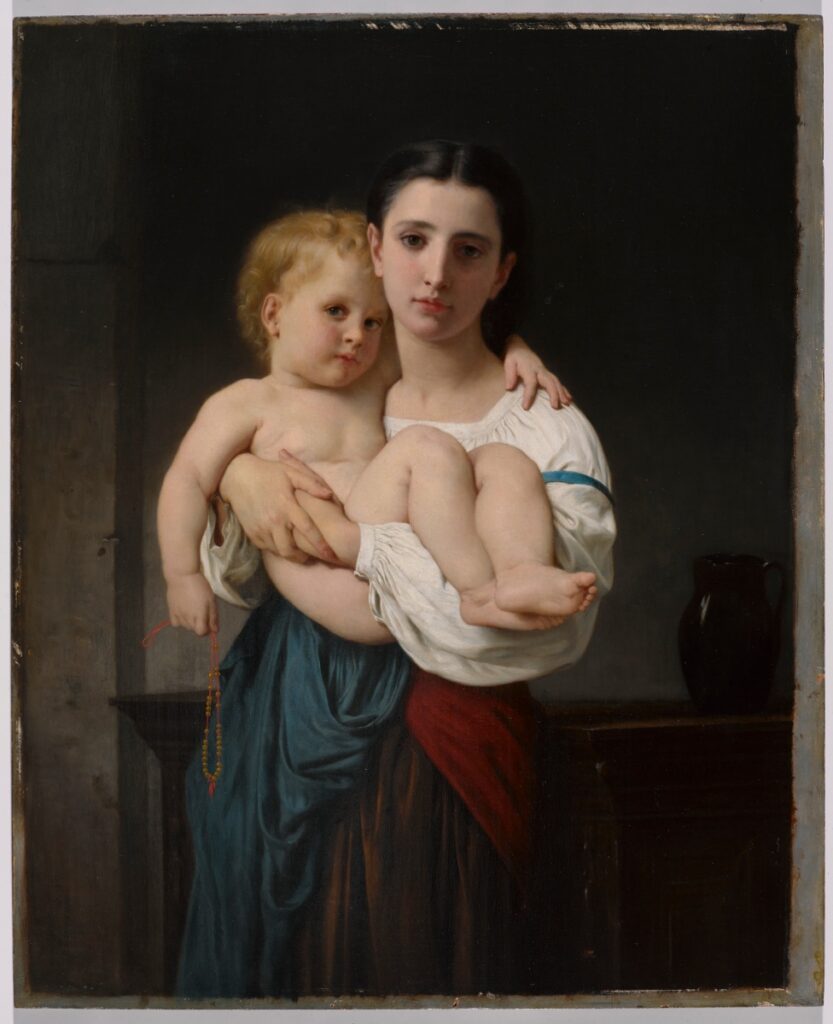
William Bouguereau (French, 1825–1905). The Elder Sister, reduction, circa 1864. Oil on panel, 21 7/8 x 17 15/16 in. (55.6x 45.6 cm). Brooklyn Museum, Bequest of William H.Herriman, 21.99. Photo: Brooklyn Museum.
Although Impressionism was not the dominant taste among Pittsburgh collectors, the annual exhibitions at Carnegie Institute (now known as the Carnegie International), which started in 1896, introduced modernism to the city remarkably early. Carnegie’s oft-quoted goal was to bring “the old masters of tomorrow” to Pittsburgh. The early exhibitions circulated works by Monet, Degas, Sisley, Pissarro, and others long before they were widely accepted.
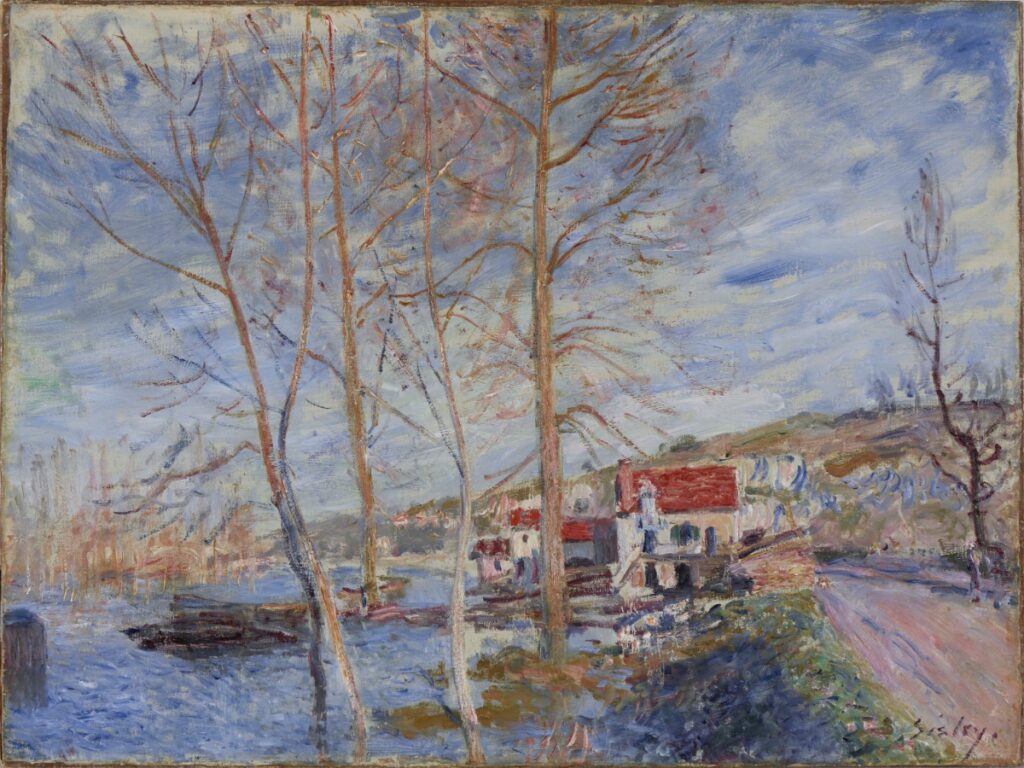
Alfred Sisley (British, active France, 1839–1899). Flood at Moret, 1879. Oil on canvas, 21 1/4 x 28 1/4 in. (54 x 71.8 cm). Brooklyn Museum, Bequest of A. Augustus Healy, 21.54. (Photo: Brooklyn Museum).
Credit to the Old Masters of the Art World
Impressionism found a more receptive audience in American collectors than in Europe and Britain. Though Frick did not share the level of enthusiasm of some of his contemporaries for Impressionist work (most notably, Louisine and Henry Havemeyer in New York City and Bertha Honore Palmer in Chicago who were among the earliest collectors to bring Impressionist art to America), he did buy paintings by Monet, Degas, and Renoir. He maintained a lifelong interest in Impressionism and contemporary art, even as he became known for his astounding collection of “Old Masters.”
An Admiration for Monet
The Frick Pittsburgh’s Monet (on loan to the de Young Museum’s presentation of Monet and Venice in San Francisco from March 21–July 26, 2026) appeared in the fifth annual exhibition at the Carnegie Institute in 1900. It was most likely lent by gallerist Paul Durand-Ruel, who had initially sold the painting to Bertha Palmer. More than two decades after it was first painted, Monet had reached a certain level of acceptance on the international art market. It is possible Frick first saw the painting at the International. It was on view from November 1900 to January of 1901 and the receipt lists a purchase date of March 1901.
Interestingly, Banks of the Seine at Lavacourt is the second Monet Frick purchased. The first, noted simply as Argenteuil, was bought in 1895 from the New York dealer L. Crist Delmonico. Frick later traded it to Knoedler in 1909 as credit toward the purchase of a 17th-century Dutch landscape by Aelbert Cuyp. But Banks on the Seine at Lavacourt remained in the collection, a glittering anomaly in Frick’s collecting purchases from the period even as his taste shifted more decisively toward the so-called “Old Masters.” He bought his first Vermeer painting just a few months later. Lavacourt, at $3,000, was a bargain compared to the Vermeer’s $26,000 price tag.
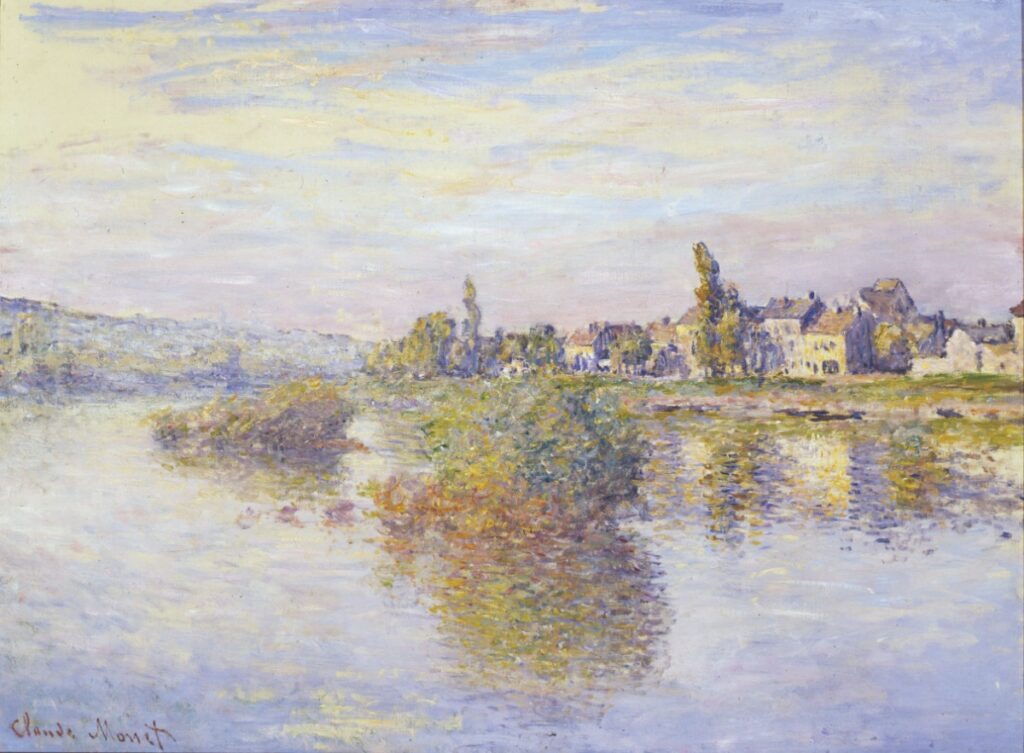
Claude Monet (French, 1840–1926). Bords de la Seine à Lavacourt (Banks of the Seine at Lavacourt), 1879. Oil on canvas. Purchased March 2, 1901 by Henry Clay Frick.
Modern Art Has Always Been in Pittsburgh
French Moderns doesn’t simply bring modern art into the Frick—it reveals the threads of modernism already present in Pittsburgh’s collecting history. It reframes the Frick family’s position in the broader art world, illuminates Pittsburgh’s longstanding engagement with modern art, and reveals how taste evolves from conservative to canonical.
What once seemed radical—Impressionism, plein-air landscapes, loose brushwork—is now among the most beloved art in the world. As visitors move through French Moderns, they trace not only the evolution of French painting, but also the evolution of taste itself, in Pittsburgh and beyond.
Story by Dawn R. Brean and Bella Hanley
Featured Photo Courtesy of Brooklyn Museum
Subscribe to TABLE Magazine’s print edition.