Whenever you head to view the artists of the 59th Carnegie International, take a look for Ginger Brooks Takahashi’s exhibit.
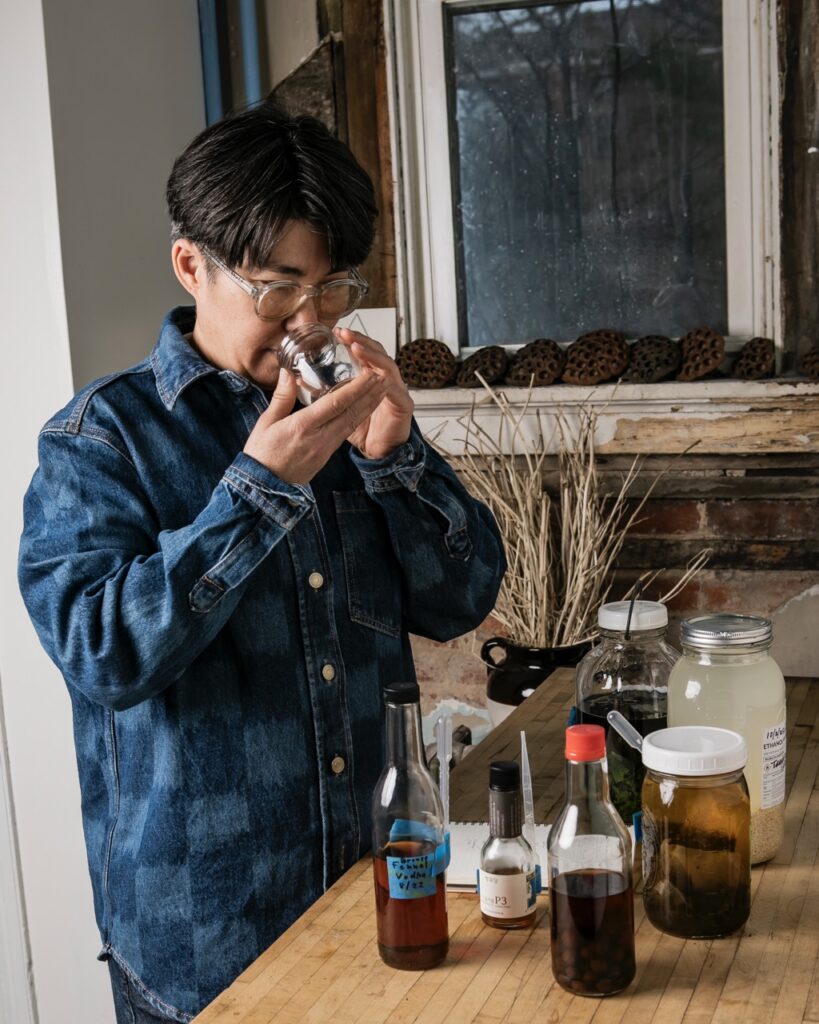
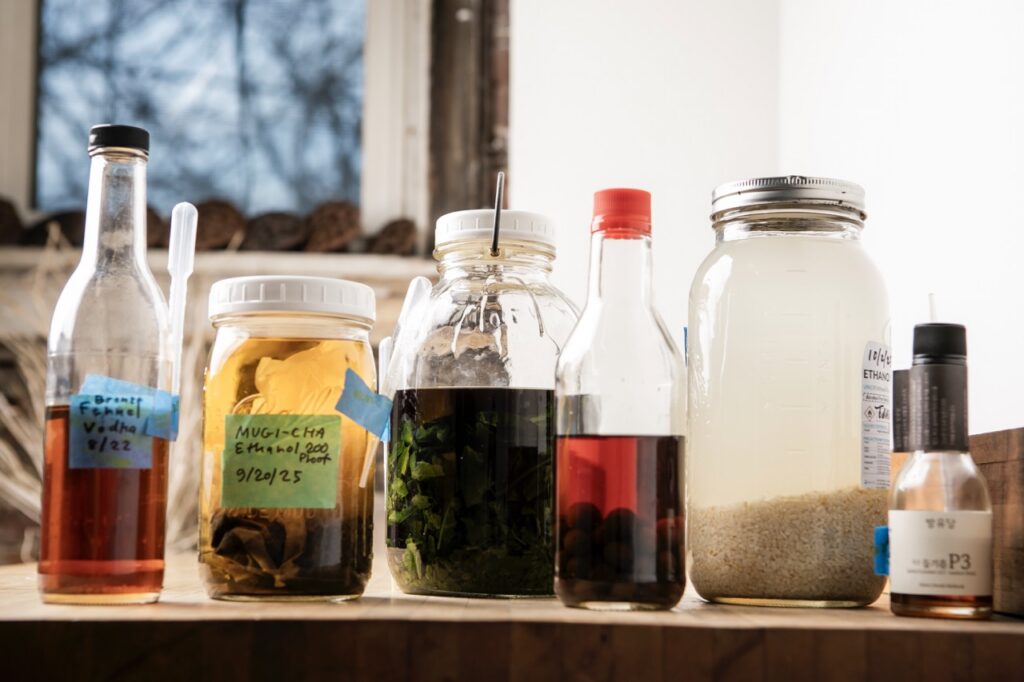
The air in Ginger Brooks Takahashi’s studio carries a faint vegetal sweetness. The scent, drawn from the seeds of Perilla frutescens, is difficult to pin down: I discern notes that recall toasted sesame oil, damp soil after rain, or the sharp edge of a leaf crushed between fingers. As preparations intensify for the 59th Carnegie International, opening May 2026, Brooks Takahashi is testing scent distillations and thinking about how a living plant might tell a much larger story.
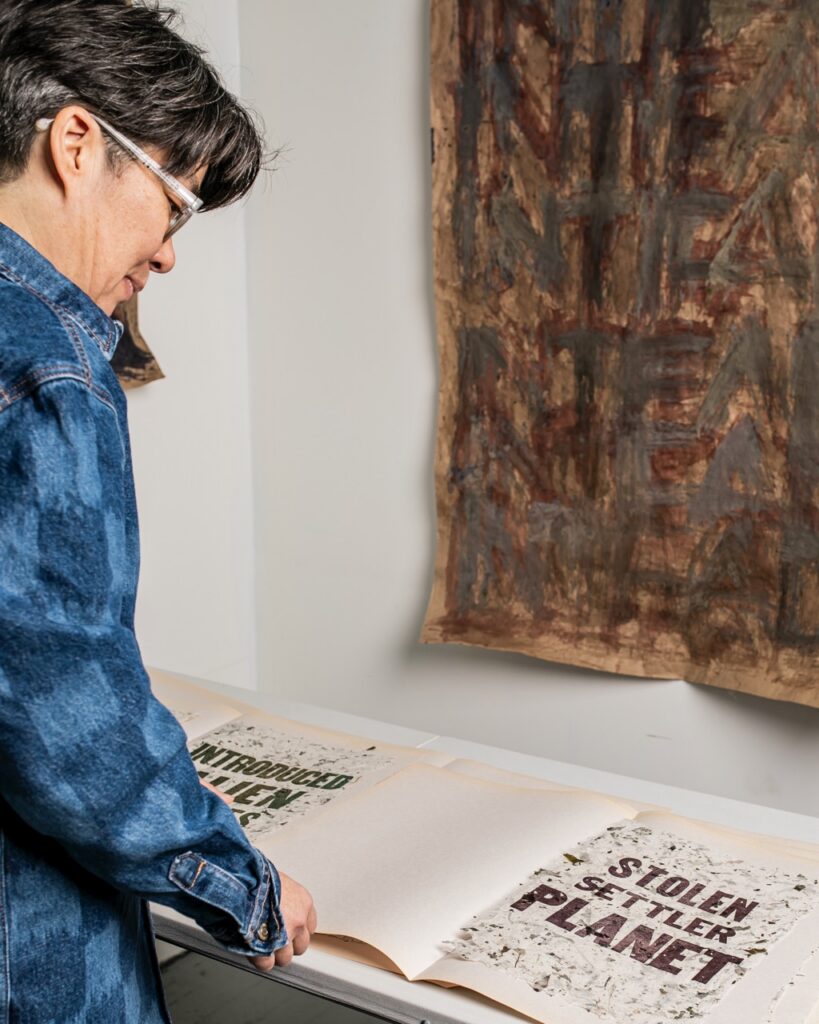
Ginger Brooks Takahashi Creates an Indoors-Outdoors Exhibition for the Carnegie International
Brooks Takahashi’s contribution to the exhibition, Perilla Peoples Garden, will unfold both outdoors and indoors. Beginning in May, a garden of Perilla frutescens—known as shiso in Japanese and kkaennip in Korean—will take root on the Forbes Avenue side of Carnegie Museum of Art, occupying the former site of Yvan Pestalozzi’s Lozziwurm. When the exhibition opens, the plants will be just at the start of their growing season. By late summer, they’ll be lush and fully grown; by early fall, their seeds will be harvested. The work changes with time, insisting on return.
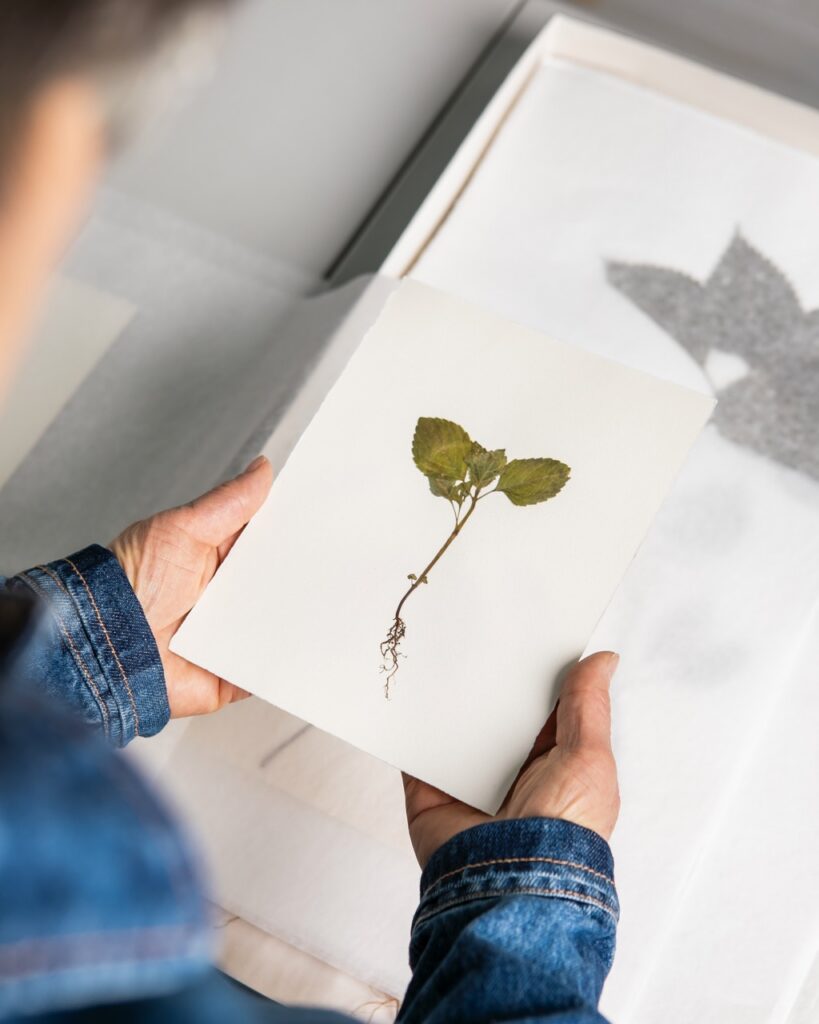
“I grew up with perilla,” Brooks Takahashi says, noting that no matter how often her family moved, there was always space reserved for it in their garden. Her interest lies in perilla’s movement across continents and cultures, and in how diasporic communities relate to it differently. Shared between Japanese and Korean cuisines, the plant carries what she calls an “irreplaceable flavor” anchored in memory.
Something Different Behind Closed Doors
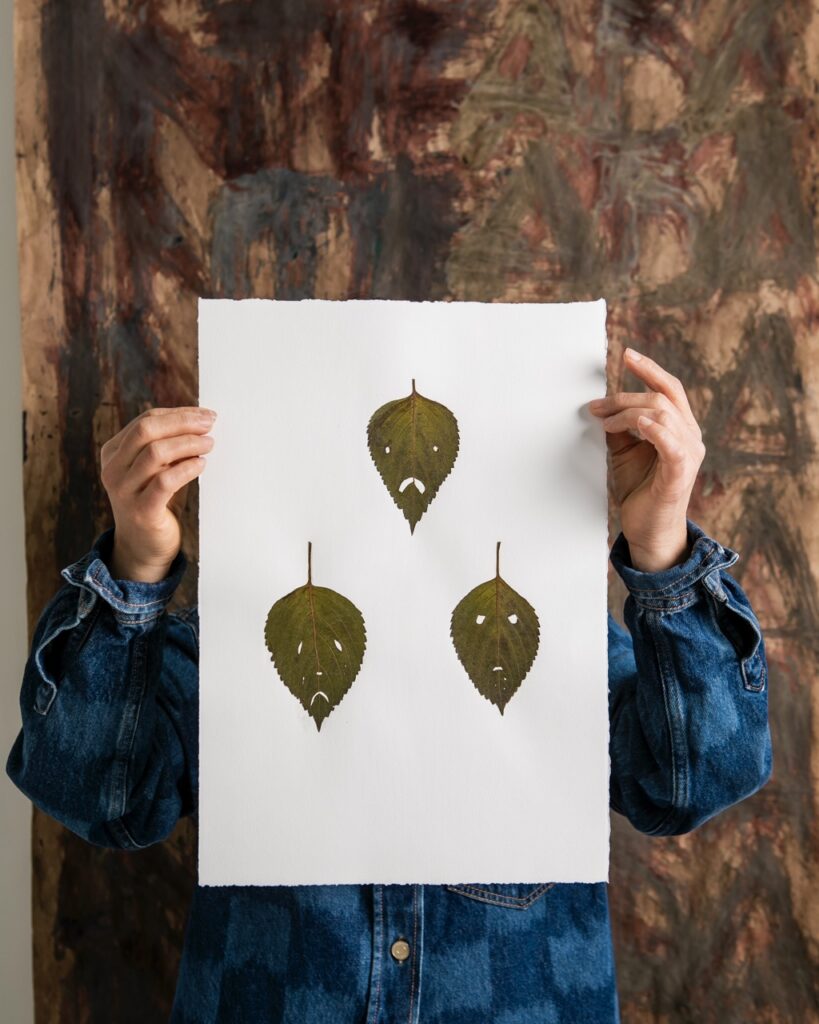
Inside the museum, Perilla Peoples Garden takes on a different register. Brooks Takahashi has been working closely with herbarium sheets from Carnegie Museum of Natural History, encountering specimens grown in China, Japan, and even Pittsburgh, despite the plant not being native to the region. Some samples are more than a century old. Notably absent, she points out, are specimens from Korea, an omission that shaped her reading of the collection.
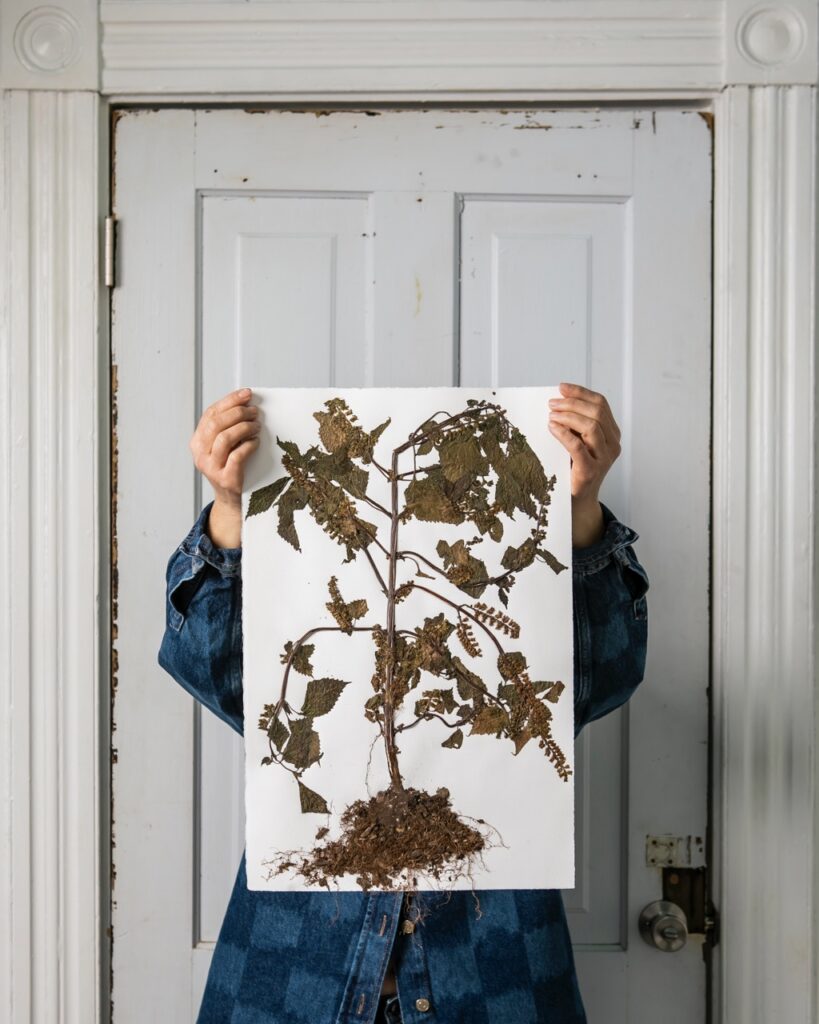
Inspired by these materials, Brooks Takahashi is producing a series of works on paper that hover between categories: part print, part collage, part something else entirely. Running handmade sheets through a letterpress, she adheres fragments of text drawn from inflammatory rhetoric around migration and immigration. The language deliberately aligns with how certain plants are marked as “invasive.” In Pennsylvania, perilla carries that classification. “I’m interested in exploring those edges,” the artist says.
How Brooks Takahashi Creates a Multi-sensory Experience
Sound and scent further complicate the experience. Audio recordings—interviews with seed savers, farmers, and others with close relationships to the plant—will weave through the gallery while the perilla distillations infuse the space. Encountered through scent and sound, the exhibit will unfold gradually and unevenly for each visitor.
Community has long been central to Brooks Takahashi’s practice, and Perilla Peoples Garden extends that commitment. Her studio is on the first floor of (___) [Blankspace], a Wilkinsburg project space run by artist Joey Behrens, with a print shop that has supported her ongoing material experiments. She also points to her work with the Neighborhood Print Shop at the Braddock Carnegie Library and with General Sisters as formative sites where making is inseparable from community.
Food-based workshops scheduled throughout the installation’s run further extend this emphasis on gathering. Liz Park, the Richard Armstrong Curator of Contemporary Art at Carnegie Museum of Art and Kathe and Jim Patrinos Co-Curator of the 59th Carnegie International, notes that these moments echo the exhibition’s broader commitment to occasions to think carefully about how people come together and how artworks “find their own publics.” For Park, Brooks Takahashi’s project offers a space for rest as well as connection.
Cultural Impact at the Core
The project also brushes up against histories that remain underexamined, including the colonial relationship between Japan and Korea. For the artist, these questions are shaped by family history and also by years of teaching and research that continue to unfold through her practice. “Through making the work, I am doing the research,” she says.
More than a decade in the making, Perilla Peoples Garden brings Takahashi’s longstanding interests—land, memory, migration, and embodied knowledge—into sharp focus. That it will unfold in Pittsburgh, where she lives and works, feels especially meaningful. As the perilla grows, so too does an invitation: to slow down, to gather, and to consider how histories, much like plants, take root in unexpected places.
Story by Shawn Simmons
Photography by Laura Petrilla
Subscribe to TABLE Magazine‘s print edition.