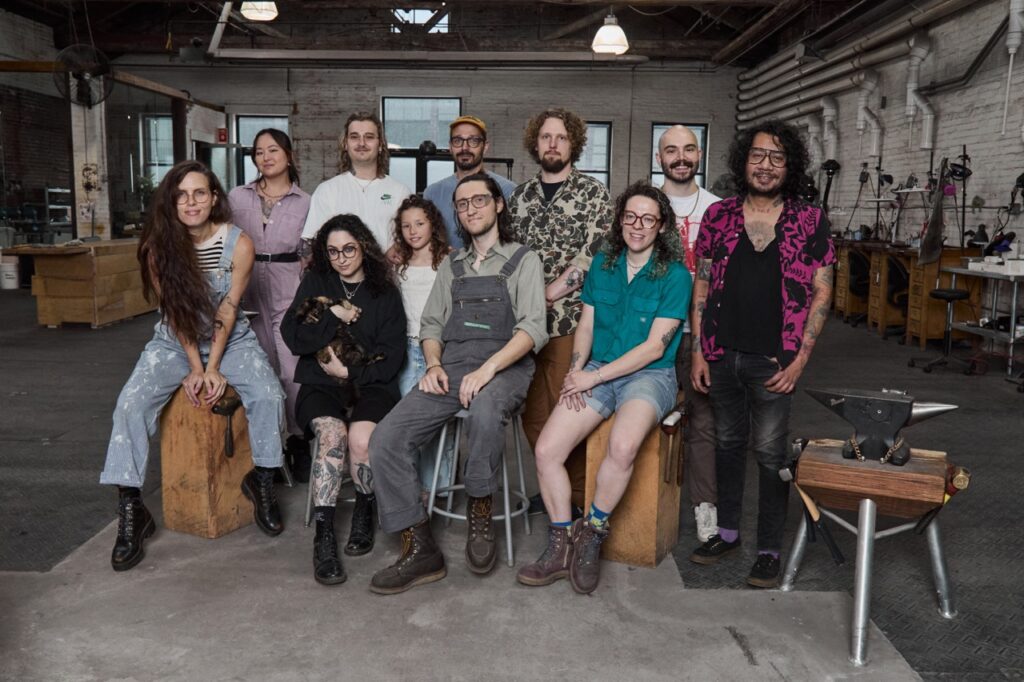
Strolling through the showroom at Studebaker Metals, sounds from the adjacent workshop arise: the clang of a hammer striking copper. A hissing torch softening sterling silver. Scrapes of a metal file. Pops from punches piercing through brass plates.
Studebaker Metals in Pittsburgh’s Strip District Keeps Old-World Craft Alive
These sounds of metal striking metal, of goods forged by hand, once so familiar, have largely fallen silent in Pittsburgh. Studebaker Metals, located in the Strip District under the 31st Street Bridge, is a welcome source of din.
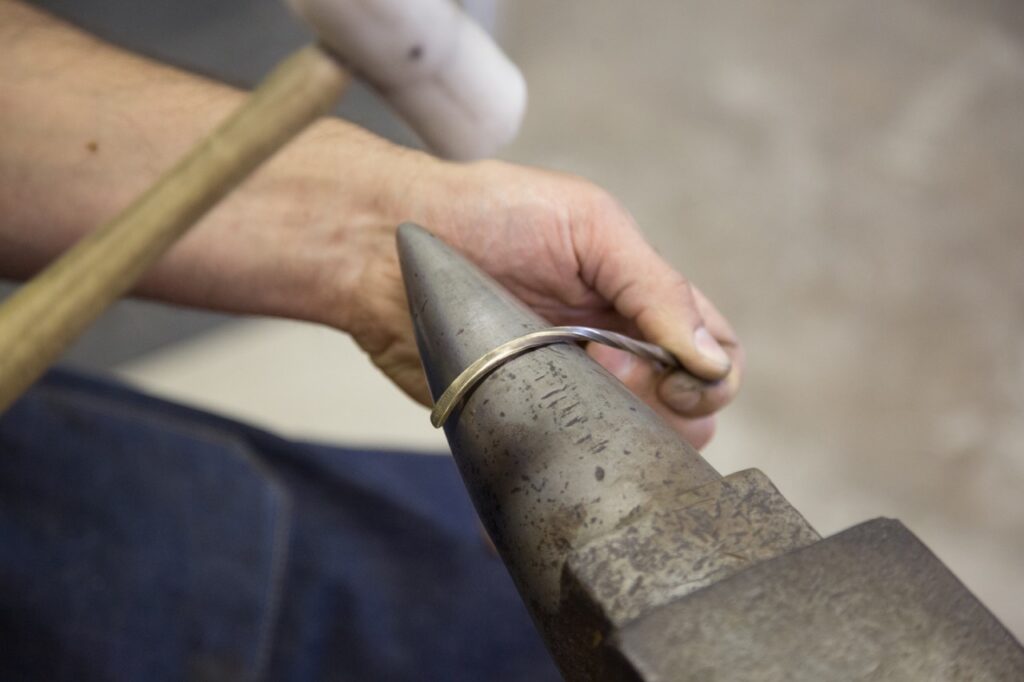
“Over the past century there has been a huge shift in the way we relate to the objects around us,” says Michael Studebaker, “but the story of humans working with metal has been unfolding for thousands of years.”
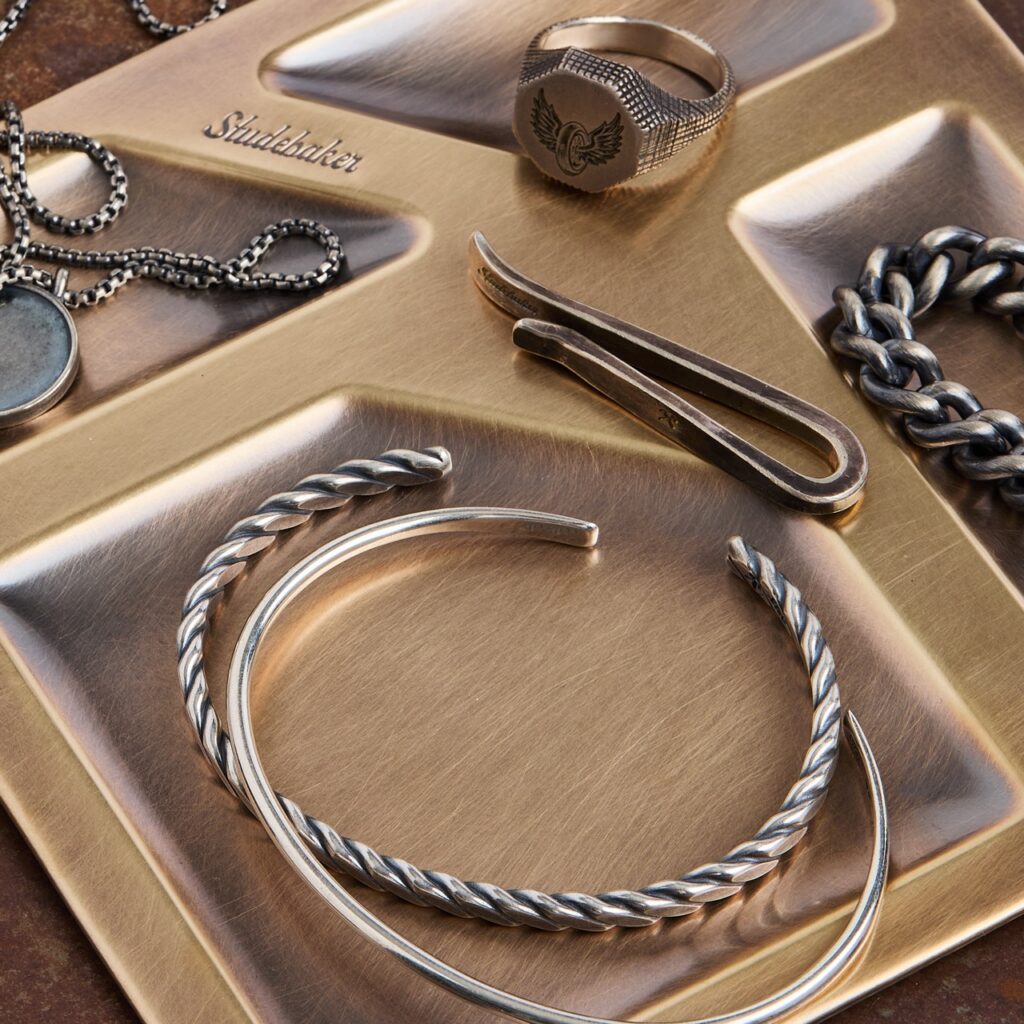
Visitors to the Studebaker showroom can learn a bit more of this metals love story in the pieces turned out by the 5-person artisan team, such as cuff bracelets, signet rings, heavy curb-chain necklaces, and earrings. There are heirloom-quality barware sets. Workshop keyholders can slip easily onto belts. Wearables come in a variety of metals, weights, as well as cuts, from a refined solid-gold cuff in rose or yellow gold to a thick Thompson cuff in brass or copper.
Artisans shepherd each piece from start to finish. “There’s no assembly-line strategy,” says Studebaker.
Shopping in Person is an Experience
The retail shop features a floor-to-ceiling glass wall, offering views into the workspace. It is a physical metaphor of how Studebaker and his team, which also includes co-founder and marketing guru, Alyssa Catalano, view their process — they embrace transparency; they seek to share their story.
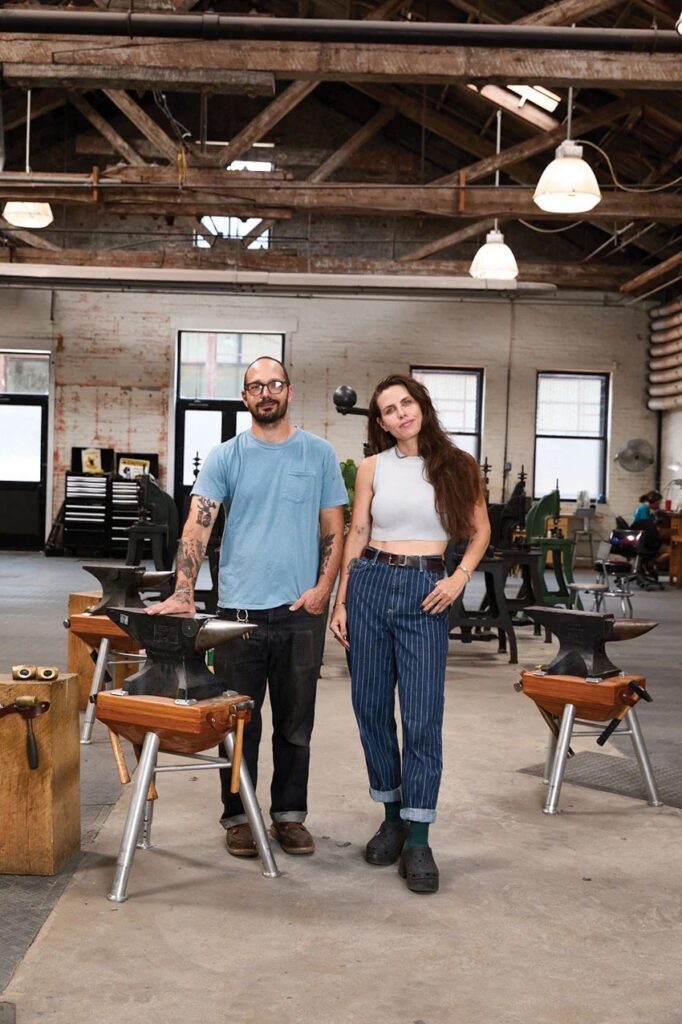
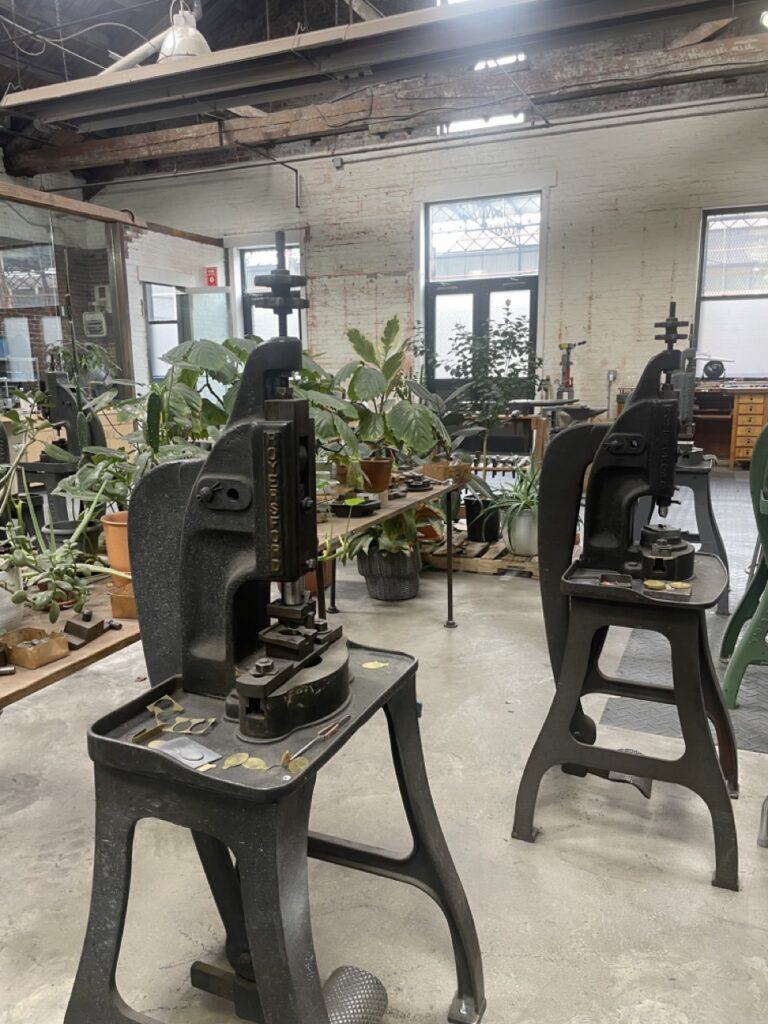
Workers built the warehouse in 1903 for Crucible Steel. Ceilings soar upwards of 40 feet; dozens of anvils, bench sanders, tool benches, rolling mills, presses, hand tools, as well as sanders — many dating back to the 19th and 20th centuries — fill the industrial space, with a balance of a robust array of plants. Coils of solid brass, copper, and stainless steel hang from nails.
When Studebaker first worked with metal, decades ago, he recalls saying to himself, This feels like magic. But it is not the magic of wands and illusions, it is the magic of attention and technique.
All About the Details
“Slow is fast” was a mantra of my jewelry professor,” says Studebaker, who earned a degree in metalsmithing at the University of the Arts in Philadelphia. “She would repeat this as she walked the rows of benches, reminding us that nothing is slower than making a mistake.”
“An analog ethos is about being rooted and present in the physical spaces we occupy,” he says. “It’s about giving ourselves permission to slow down and enjoy the present moment without the constant buzz of elsewhere.”
“It narrows our focus to what is with us in real life.”
His appreciation as well as his training in the alchemy of metalwork continued after college, working as a mount maker for medieval metal objects at the Philadelphia Museum. A mount is “a structural build, but small, delicate, and it has to be thoughtful and designed, so that it disappears,” he explains.
This work honed his appreciation for minimalism, a spirit that is evident in Studebaker Metals’ most popular styles, the keychain and cuff bracelets.
The Barware Collection at Studebaker Metals
When the team looked to expand their signature offerings, the Barware Collection was born. This unusually elegant set consists of a bar spoon, bottle opener, cocktail picks, and a cocktail strainer.
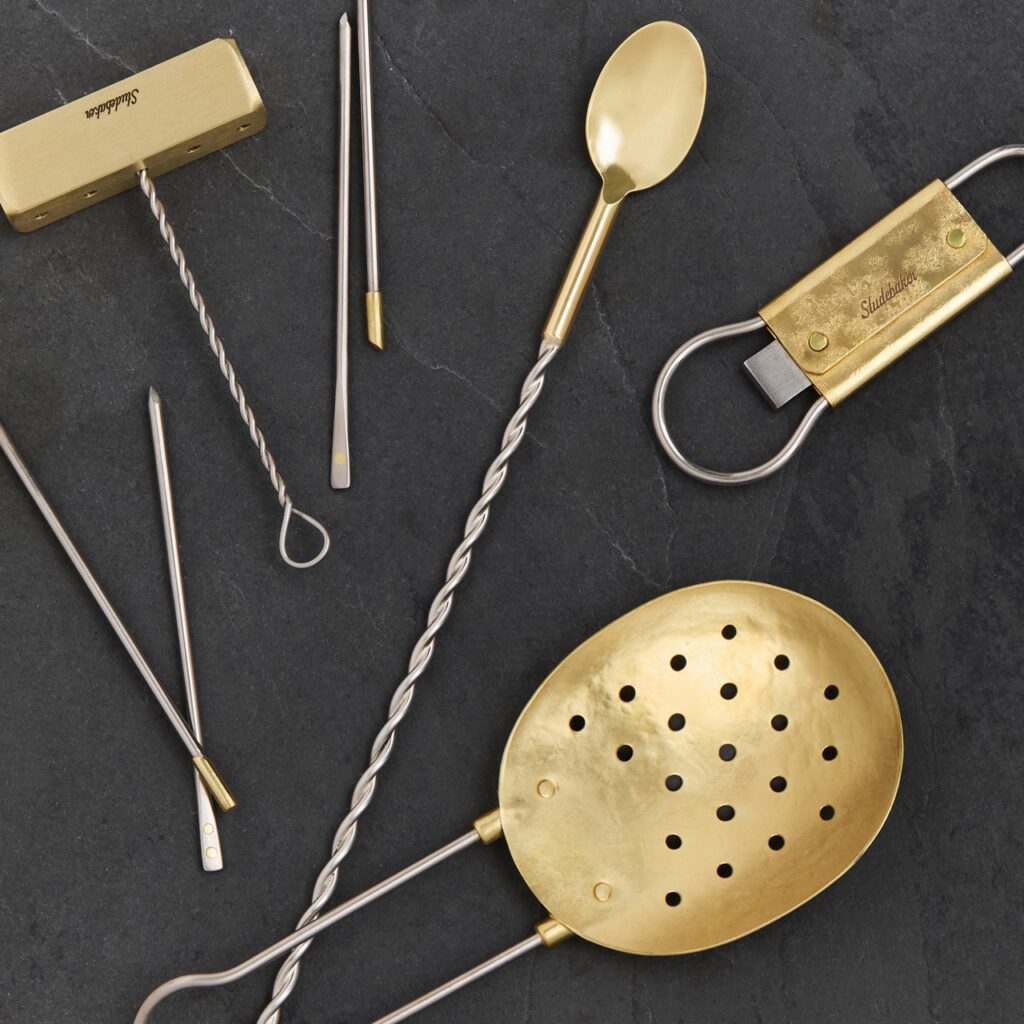
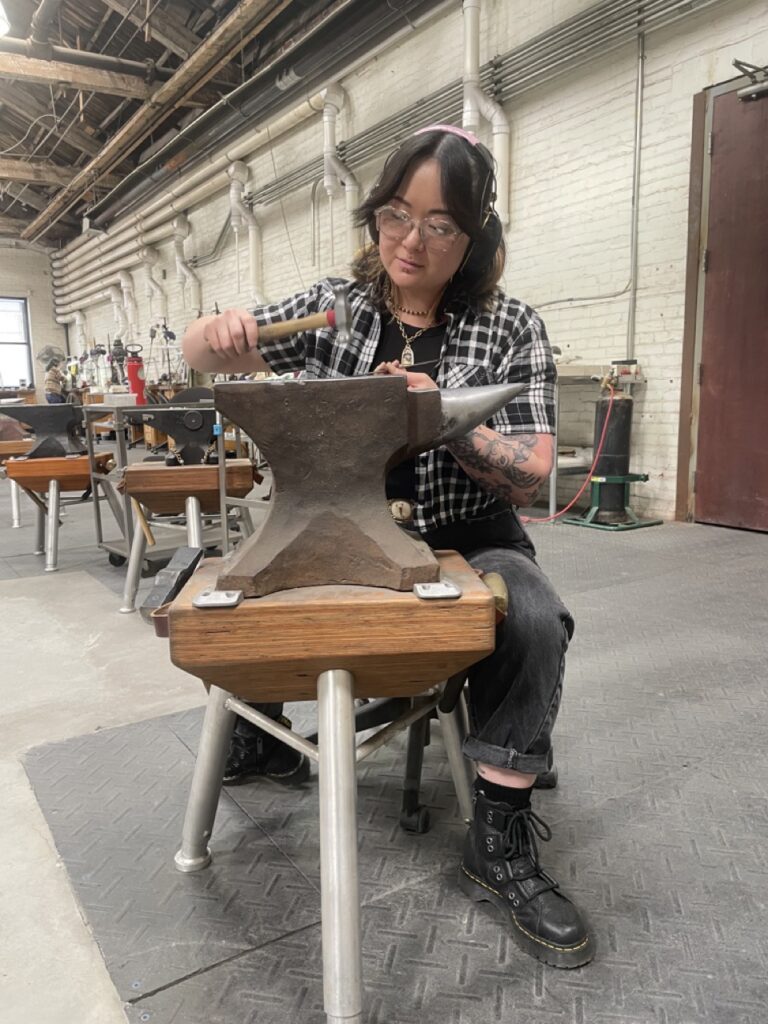
The latter gets its shape from a very basic set of hand-tools: a shear, a punch, a few hammers, as well as stakes. (Stakes are the forms over which makers hammer sheet metal to change its shape).
“This type of smithing, where sheet metal is worked directly by hand, is very labor intensive and has very little presence in our industrialized world,” he says.
The retail store sells other goods that reflect Studebaker’s and Catalano’s sensibilities.
Everything Has Its Purpose
One best seller is the Japanese-made Toyo steel toolboxes, just like the tool box your grandfather had in the garage, he says — if you grandfather’s toolbox happened to be pink, green, purple, or yellow. “You won’t ever ruin this toolbox. You only ever give it character.”
Other items include hand-dipped incense cones from Kentucky, a rack of vintage jeans, Nameless Earth roll-on scents, and Wish You Were Here bergamot and amber soy candles from Ambush Candle Co.
Full-grain, bi-fold leather wallets, in spring green or brown, come from a Swissvale leather worker, which you can also pair with a Studebaker-made brass wallet leash.
“Growing up in Pittsburgh, you cannot help but to have a respect and reverence for the steel mill industry here. It’s baked into your cultural sense of identity,” he says.
“To be able to directly participate in metal craft, I feel I am honoring that.”
An Expansive Future for Studebaker Metals
In just a dozen years, Studebaker has grown the business from a tool bench in his father’s basement to a sprawling warehouse and a vibrant online space, has achieved a life’s goal.
“I wanted to be creative, have interesting and novel ideas, play with different materials, and collect tools.”
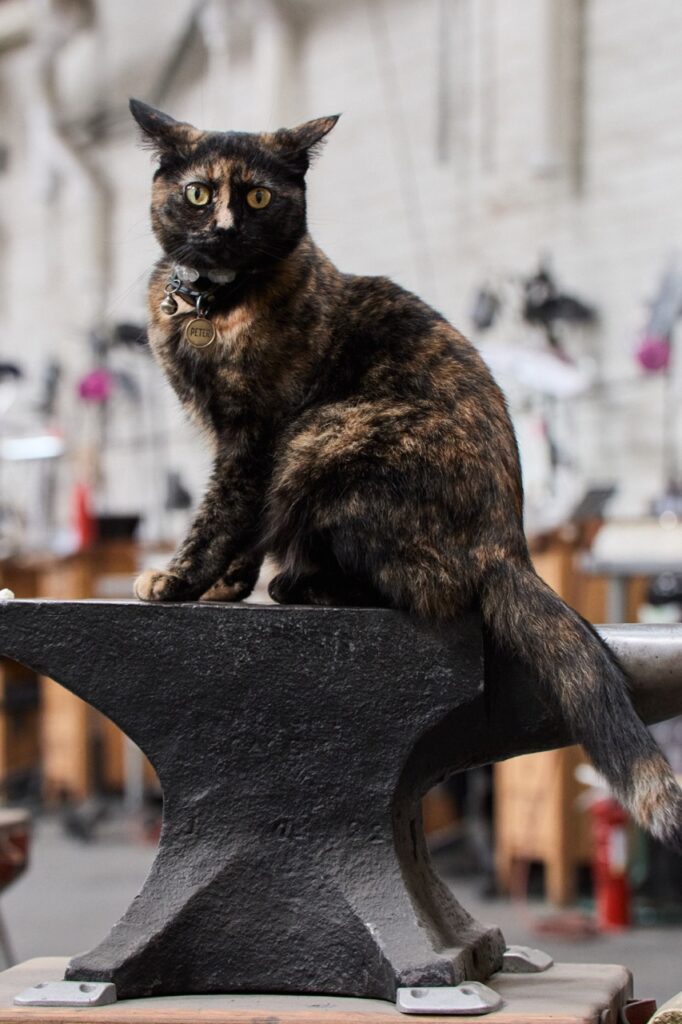
And, now, visitors can learn to play with materials, too, as Studebaker now offers metalworking classes several times a month.
“As a metal nerd, I’m motivated by a desire to preserve and honor the heritage of metalcraft,” he says. “The privilege of receiving this technical knowledge comes with a responsibility to share and perpetuate it.”
Story by Lauri Gravina
Photos Courtesy of Studebaker Metals and Lauri Gravina
Subscribe to TABLE Magazine’s print edition.