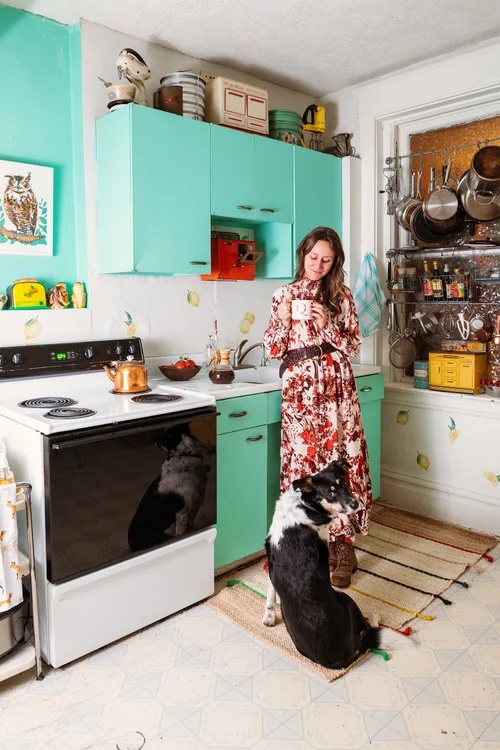
Long-time TABLE contributor Quelcy Kogel turned the end of the year into a fresh start and an affirmation of growth and forward movement, and she began the process at home.
With the a new year upon us, a symbolic “fresh” start, I found myself, like many, in an introspective state. Perhaps it was the effect of the calendar change, or perhaps it was wanting to make sense of a tough season of stretching myself too thin. Either way, cozied under the blanket of dark, winter nights, I spent a lot of time reflecting. I reviewed a decade of photos and social media posts. I journaled the heartbreaks, the milestones, and the lessons learned. On top of that, I reevaluated my relationships, my work, my values, as well as the backdrop for the whole decade – my home.
Designing a Home Using the KonMari Method
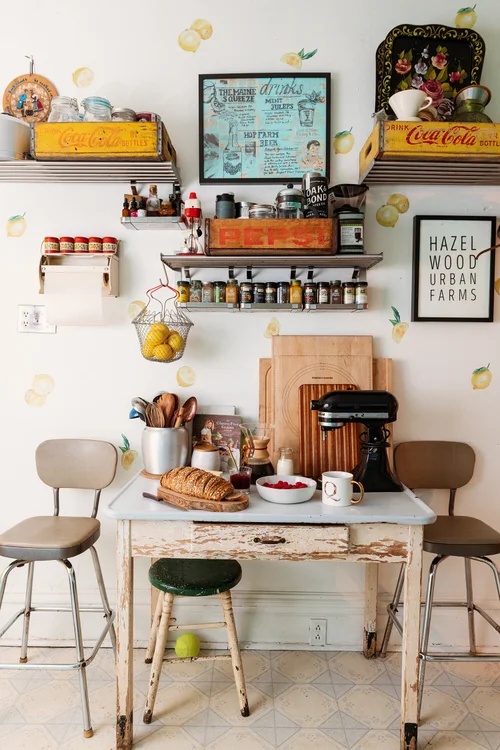
I felt my priorities shifting, and my home needed to reflect that growth. So, like a caterpillar, I spun myself into a protective cocoon in an effort to re-emerge with more clarity and a new look. Painting walls, investing in a new couch, updating light fixtures, and truly refining my style became the sort of obsessive project that kept me burning the midnight oil in my Polish Hill rental. I wasn’t just making design choices. I was making life choices. Here I was practicing the mantra I had put in place for the new decade: less to have more.
I didn’t mean less in the very Instagrammable sense of the word – a muted wall, a fiddle leaf fern, a sharp shadow, and only a hint of furniture in sight. I meant “less” as a lens, as a means of evaluation to have more energy, more focus, more fullfilment, and more calm. After all, I do love things. I love flea markets, antique shops, and also surrounding myself with storied objects.
Making a Fresh Start
As a food and prop stylist, there’s a certain justification for my maximalist leanings. My apartment is like Mary Poppins’ magical carpet bag. An art director will make a request, I can root around and reemerge with a piece to fill a space and round out a composition. Yet, the line between “necessity” and overwhelming was becoming blurry, so I somewhat subconsciously revisited Marie Kondo, the now-household name behind the book, The Life-Changing Magic of Tidying Up.
Her “KonMari” brand of minimalism asks the simple yet profound question, “Does this [object] spark joy?” Minimalism is about living with less, but Marie’s method champions living with what you cherish. It’s a process for honoring the person you are becoming, not the person you were in the past, and it looks different for everyone.
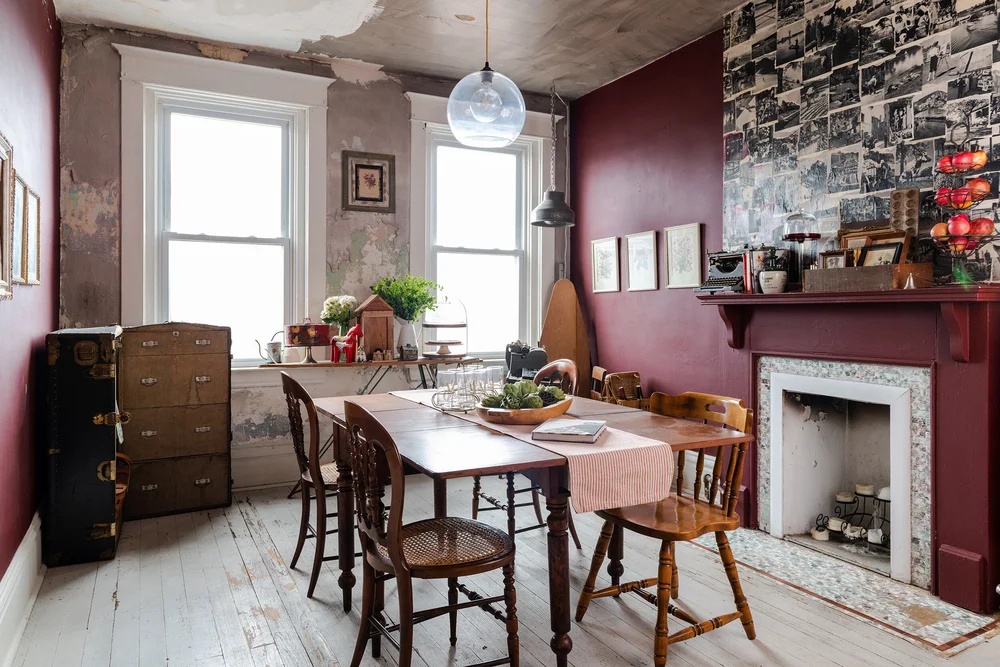
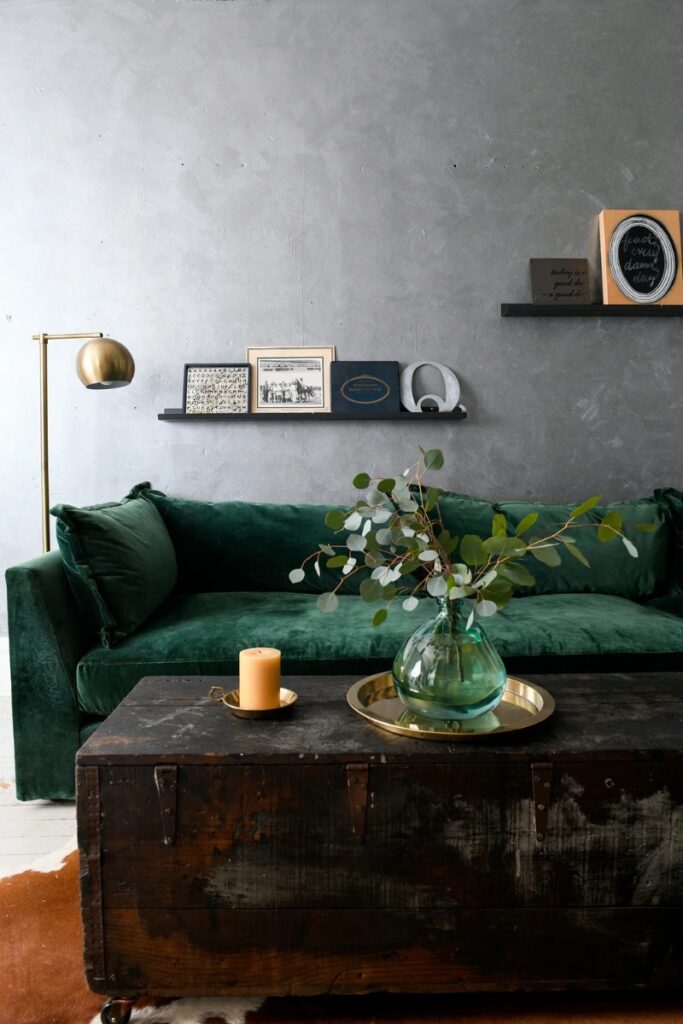
Personalizing the method even more, I like to evaluate in terms of, “is this [object, opportunity, relationship, etc] a ‘hell yeah!’ or a ‘hell no?’” In this way, I can protect my energy for what truly brings me joy and fulfils my purpose. It may start with a forest green, velvet sectional, but this philosophy extends to life and makes strides toward sustainability too.
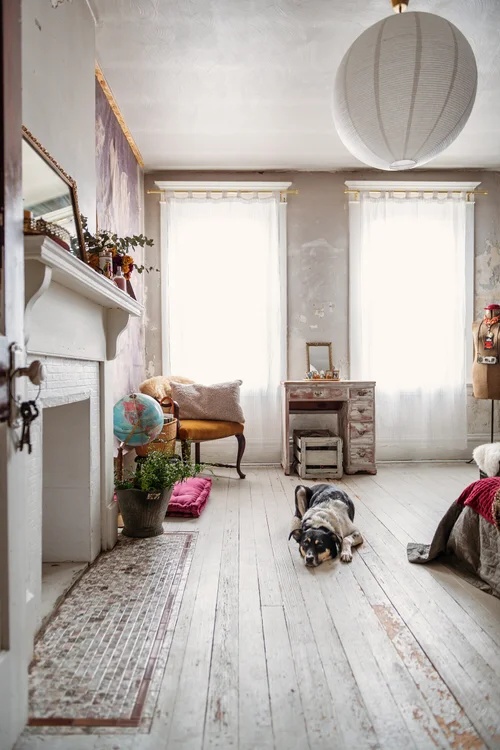
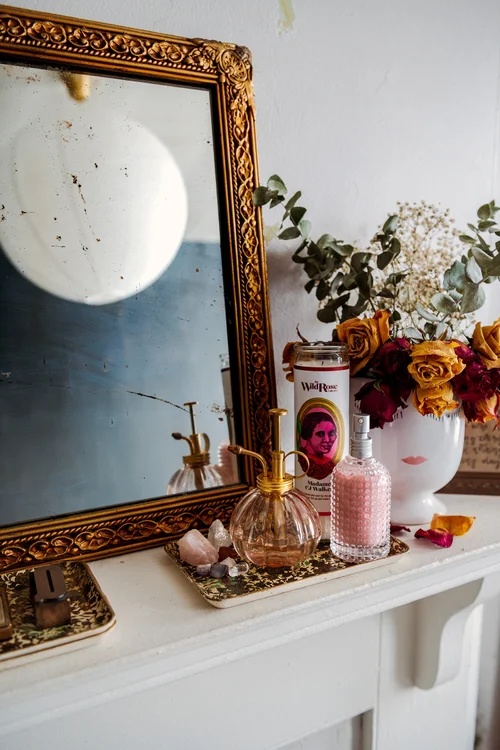
“This process of honing the home is not about living with less. It’s about living with what you cherish. It’s about honoring the person you are becoming, not the person you were in the past, and it looks different for everyone.”
Continuing to Live by the KonMari Method
Following the KonMari method, if we truly respect the objects we amass, we desire for them to be valued. This means investing in more quality pieces that will grow with us, not buying into trends for trends’ sake. For my style, that means aged, vintage pieces. I debated newer coffee tables, but my gut landed on paying a little more for an antique wooden trunk from Rustfarm (via Etsy). Picking up the trunk led to a beautiful exchange, a shared appreciation, and a piece that brings me joy every time I use it. (It helped that the owner had two Aussies. Herding dogs always bring me joy.)
Valuing objects also means releasing them to someone who will value them rather than hoarding them in an unseen corner or trashing them. I’m a huge proponent of Goodwill and Construction Junction, and feel so fortunate to have a resource in Pittsburgh Center for Creative Reuse, which is now a near daily errand for me. In short, buy less, buy better.
Story by Quelcy Kogel
Photography by Erin Kelly
Subscribe to TABLE Magazine’s print edition.