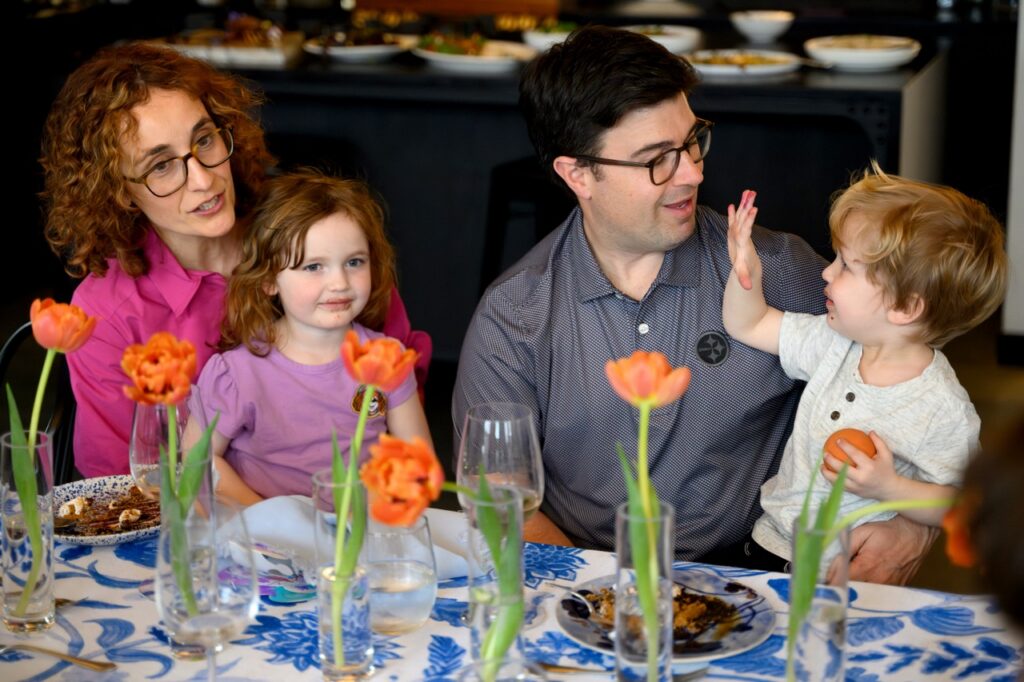
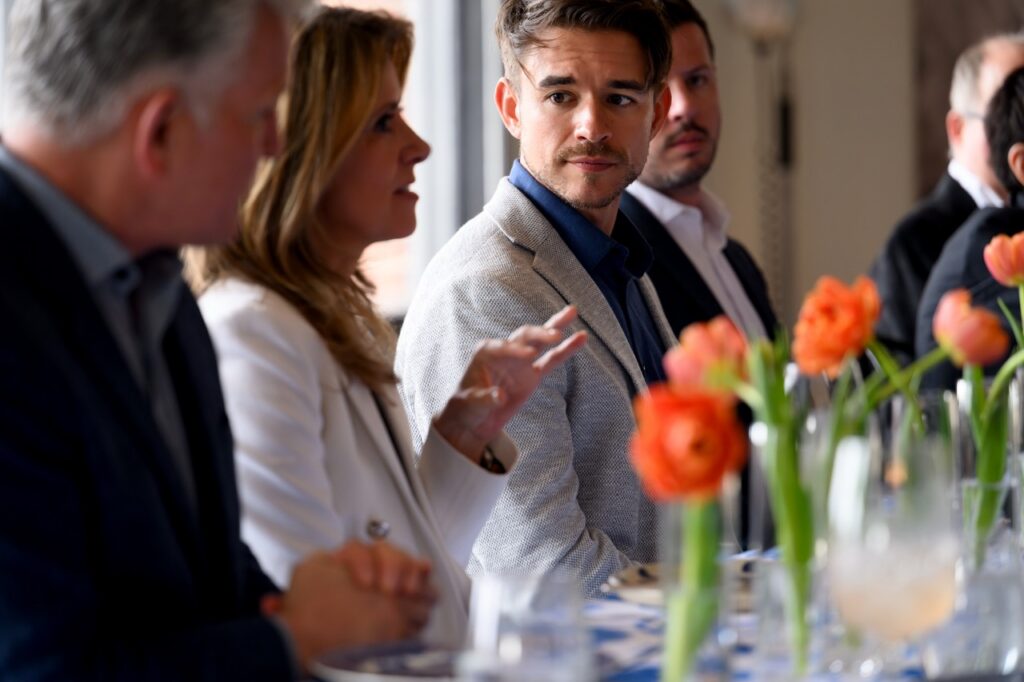
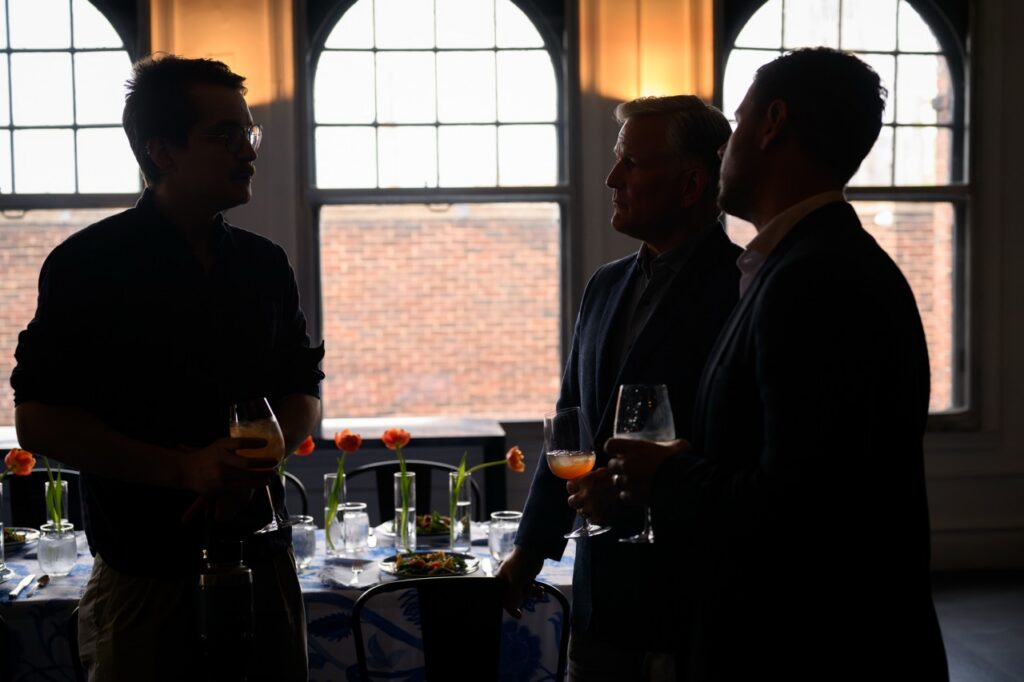
Mayor Corey O’Connor, his wife Katie O’Connor, and several leaders of organizations with youth programming gathered to discuss the city’s strengths and opportunities when it comes to family-friendly policy.
Why Families Are Returning to Pittsburgh, According to Mayor Corey O’Connor
The numbers are in, and they are positive: Pittsburgh does indeed have a boomerang rate just slightly higher than the national average of about 28%. According to a 2025 study by the Federal Reserve Bank of Cleveland, 29.3% of Pittsburgh natives who strike out on their own from the Steel City wind up returning to settle down and raise their families, though this is a weaker rate than nearby cities like Cleveland or Cincinnati.
What brings people back? There are measurable reasons, like low cost of living and affordable real estate. There are the sports teams and high-quality cultural offerings that can compete with those of much larger cities, as well. But then, there are also intangible factors that tie in to the core of the city’s identity, things like the unique cultural identities of Pittsburgh’s neighborhoods, strong civic and private support for youth programming, and the gravitational pull of tight-knit communities, the likes of which are more often found in smaller metropolitan areas than in sprawling urban environments.
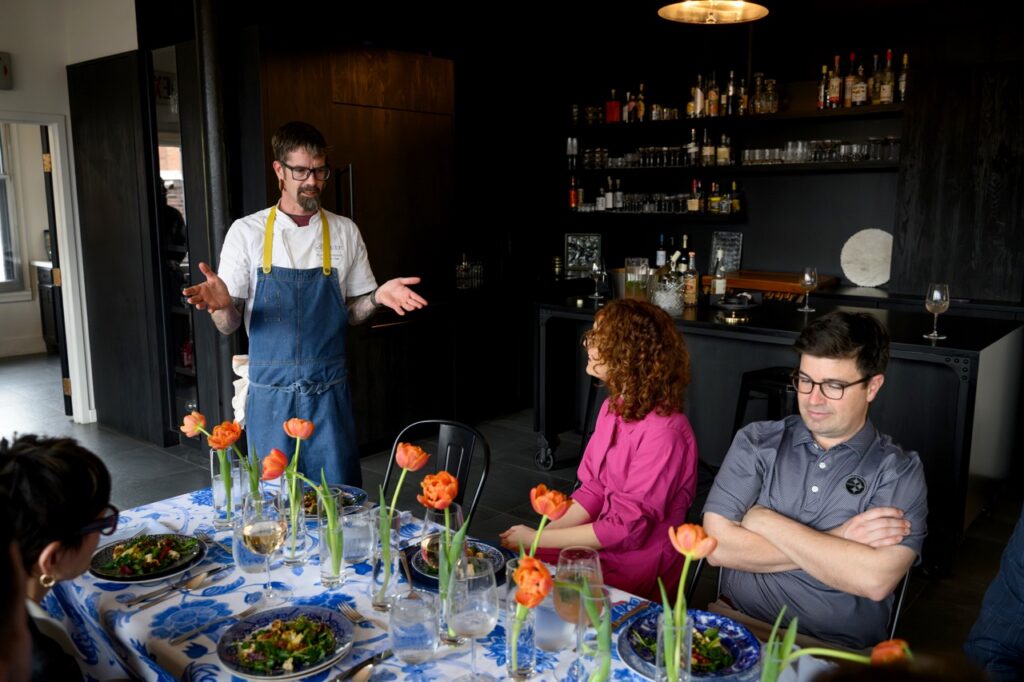
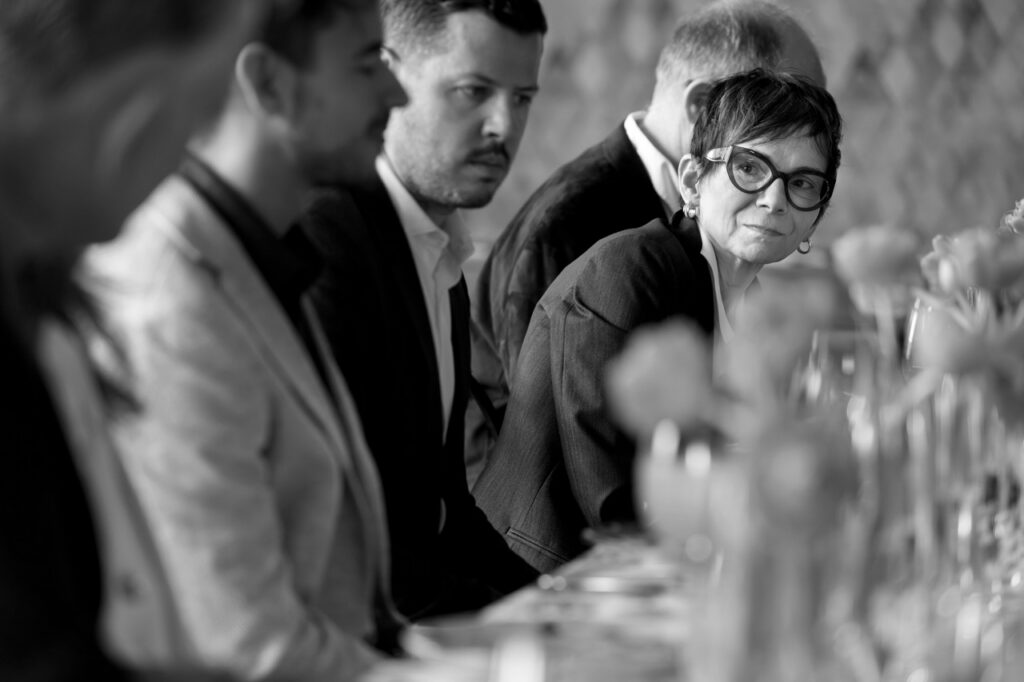
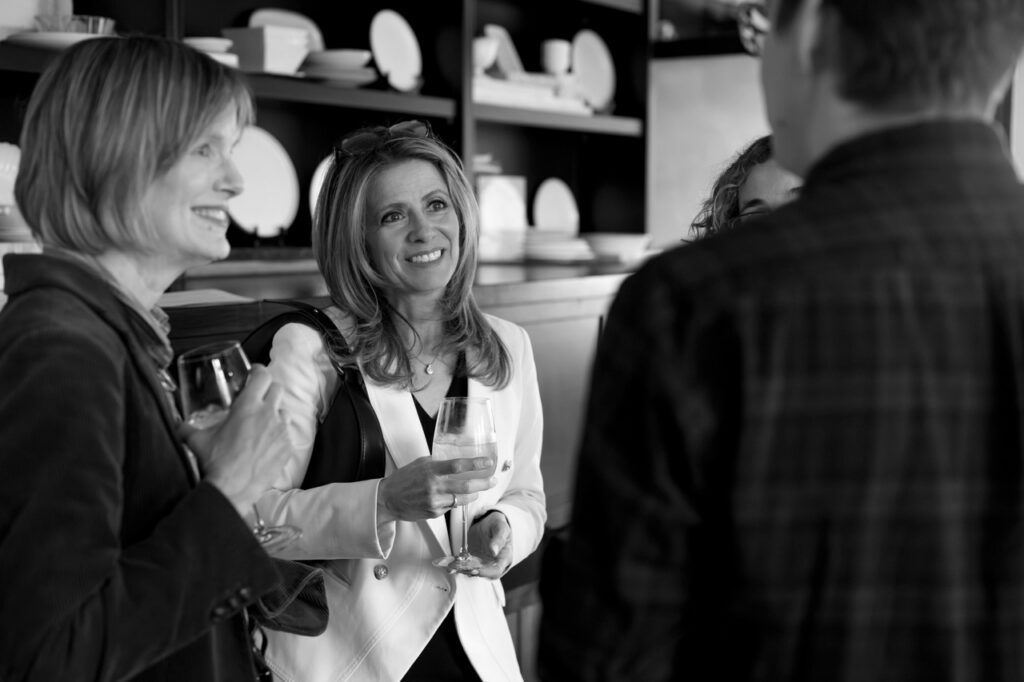
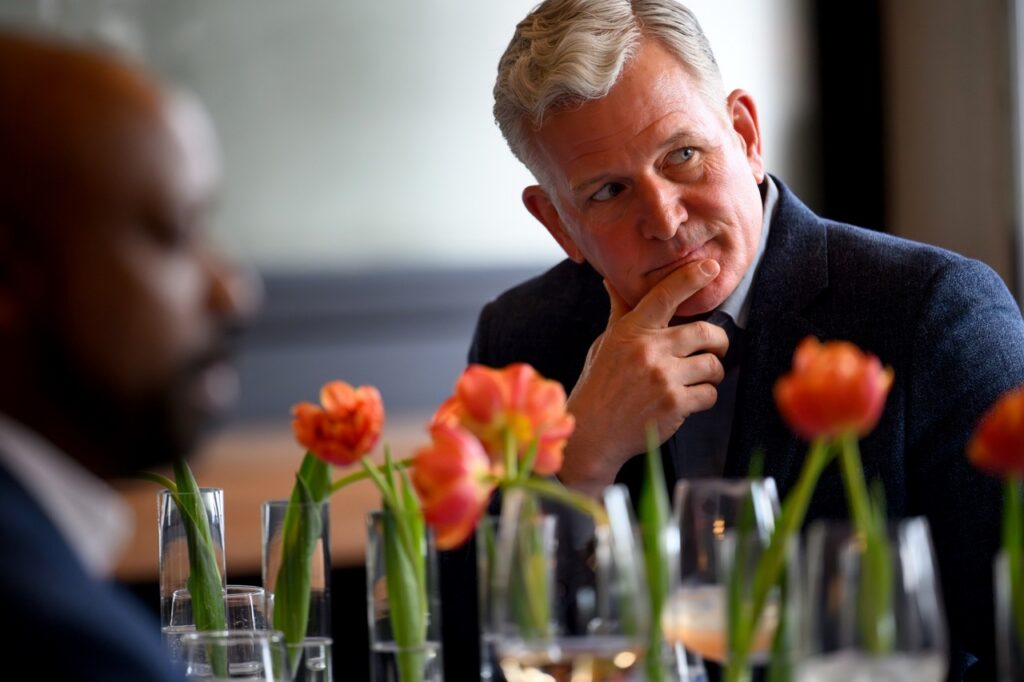
“My mom was born and raised in her house — she never left,” said Pittsburgh Mayor Corey O’Connor, seated around a dinner table at TABLE Magazine’s headquarters in Shadyside in late March. “And [it’s still in the family]. That’s the Pittsburgh story.” Mayor O’Connor, his wife Katie, and several other city leaders in children’s programming, healthcare, and workforce development shared a meal prepared by Chef Kevin Hermann of Bistro To Go to discuss the Steel City’s strengths as well as opportunities for improvement in the city’s relationship with families with children. The O’Connor’s two young children were present at the dinner, underlining the conversation with laughter and an occasional, high-pitched interjection.
How Partnerships Can Strengthen the City
Much of the remainder of the discussion centered around schools and public-private partnerships, and the consensus around the table was that the City of Pittsburgh offers a strong variety of programming for children of all ages through its schools and nonprofits. There are pre-K partnerships between Pittsburgh Public Schools and local nonprofit organizations, including the Children’s Museum of Pittsburgh. And as children age, there are numerous support programs for children and families that take kids all the way through college applications and/or vocational training for a good-paying job. Nevertheless, hurdles remain, including the ability of the city and organizations to get the word out about programs.
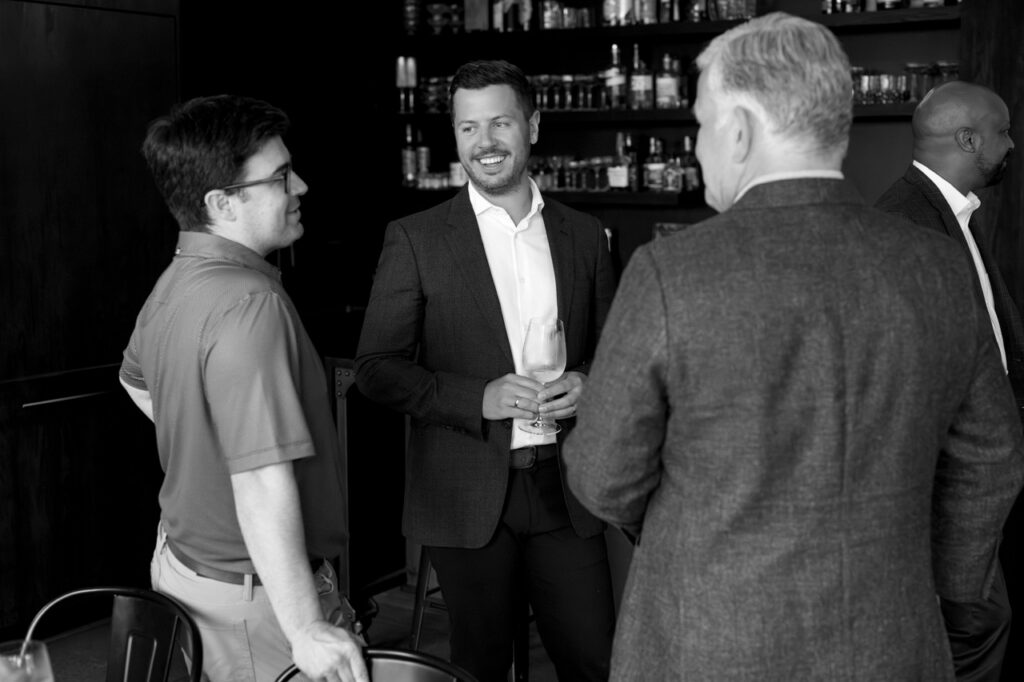
“We’re up against a lot of competition for people’s attention, and we’re finding communications challenging because sometimes we’re communicating to the parent, sometimes we’re communicating to the child, and that is turning into more and more of a science,” said Rob Cherry, CEO of Partner4Work, a workforce development nonprofit currently expanding its youth offerings.
Aside from communications, Mayor O’Connor said that the city’s relationship with the Pittsburgh Public Schools needs to evolve so that both entities can better serve the region’s children and parents. And, finally, like other urban areas around the country, the city continuously loses population — especially young families — to the suburbs, a shift driven primarily by parents seeking better schools and more favorable tax rates.
Shared Responsibilities and Tech Education
Pittsburgh Public Schools and more than a dozen partnering organizations, including the Children’s Museum, do offer pre-K programs for students ages 3-5, but space is limited, and admission is currently based on eligibility and a lottery system. There are also childcare programs for children younger than 3 for income-eligible families, but again, space is limited. “Actually, the Children’s Museum might be one of the only museums to host public school pre-K classrooms, nationwide,” said Jane Werner, executive director at the Children’s Museum of Pittsburgh, explaining that the museum’s direct partnership with the Pittsburgh Public Schools was trailblazing on a national level.
Pittsburgh’s literacy rate tracks relatively closely to other cities of Pittsburgh’s size and demographics, Katie O’Connor noted. But it has been dropping in recent years. According to Pennsylvania Department of Education data, only 44% of Pittsburgh third graders read at a “proficient” level at the end of the 2024-2025 school year, a little below the state’s overall rate of 48.6%.
The city’s nonprofits aren’t alone in supporting early childhood education. Duolingo, for example, pledged $1 million a year in donations to support childhood development in 2023. In 2025, the company supported 15 local childcare programs and distributed more than $750,000 in scholarships to families outside of eligibility for existing programs. “It felt like this went a little unnoticed, but it’s a very important thing,” said Katie O’Connor. “Giving that child a book… To me, there’s no more powerful thing you can give a child. You change the course of their life. And I think Pittsburgh Public is a key part of this story, as well.”
Care Doesn’t Stop After Early Childhood
Later, as children enter elementary and middle school, the school system and the city’s responsibility for their caretaking grows, said Mayor O’Connor, who noted that the city currently has little to no say in school policy, which is set by the school board. He also said that he is working to develop a collegial partnership with Pittsburgh Public Schools Superintendent Dr. Wayne Walters as a step toward better collaboration. “At 3 o’clock, when school’s over, I become responsible for your kids until 9 a.m. when they get back, and I’m responsible for every weekend, every holiday, every summer, which is why we should have a voice in that room,” Mayor O’Connor said.
This is no easy feat. Groups of kids have regularly made the news in downtown Pittsburgh and other neighborhoods for unruly afterschool behavior, a challenge hardly unique to the Steel City but one that leaders think stronger after-school programming could help solve.
Supportive Programs
Cherry points to programs like Partner4Work in helping youth focus their time and energy on career-building and emphasizing the need for public-private partnerships for workforce development programs. Over dinner, Mayor O’Connor also shared that the R.K. Mellon Foundation had pledged $1 million in funding to help Partner4Work expand its youth employment initiatives from summers to year-round, with Cherry adding that he hopes that as city and state leaders continue to discuss Pittsburgh as a hub for AI and robotics, “we should have places and spaces where our young people get a leg up on that, get exposed to it fairly early.”
Others, including AnneMarie Lyons, executive administrator of the University of Pittsburgh Physicians Department of Obstetrics, Gynecology, and Women’s Health, agreed that AI and tech should be top-of-mind for educational and workforce development leaders. “In sonography tech, AI exists right now that we could learn to use to scan a uterus in 30 minutes,” Lyons said, explaining that she hopes to see training programs for youth and the workforce to help train the next generation of technicians. “That’s important to me, because techs are hard to find, and the tech education programs are closing. That innovation [in AI] is good when you can’t staff certain fields or industries for whatever reason.”
Suburban Flight and School Choice
In December, Pittsburgh Public Schools approved a $731 million budget for 2026 that included a 2% tax hike, another potential push for families to depart the city for the suburbs in this current period of declining enrollment. “We don’t have any say in that plan, but it’s going to affect how, when parents get their kids to middle school, they tend to go to the suburbs, and we lose population, so it’s got to be a better connection. And they go to the suburbs for a number of reasons, but schools are the main reason,” Mayor O’Connor said, noting that some city governments around the country are beginning to “take over” or become involved in school policy. “Now, we’re nowhere near doing that, but there is talk about merging schools, and we don’t have any say in that plan, either,” he said.
Guests also discussed their personal decisions about whether and where students will attend public or private school, with a variety of views represented. Cherry’s children attend private school, while Werner’s two children attended Pittsburgh Public Schools. “We were so committed to public schools, but at the end of it all, you wonder if you made the right choice,” Werner said. “Both of my sons attended Pittsburgh Public Schools — they have been able to handle any situation that we find ourselves in at any time in any country, because of their experience there. It was the real world,” she added, nodding to her son, Sam, seated next to her.

How You Can Do Your Part
To make a difference in Pittsburgh’s youth culture, regardless of where they attend school, leaders encourage readers to attend school board meetings and to help get the word out about community programs in their areas. They highlighted the area’s growing number of senior residents as a particularly powerful voting bloc in the city’s children’s policy. “I think that real innovation comes with unlikely partners,” Werner said. “I keep thinking about the AARP — they’re the folks who vote, and they vote on kids’ issues as well, right? We actually allow adults into the museum without kids, because being around kids is healthy for them, too, in terms of social connection and cognition.”
Readers looking to support area youth organizations and programming can also donate to, or volunteer at, the organizations listed below.
“Be present and get involved. As trite as it sounds, the kids are the future,” Werner said.
What We Talked About
- Pittsburgh’s boomerang rate
- Creative pre-K options
- The city’s relationship with Pittsburgh Public Schools
- Youth workforce development
- AI and tech training
- Public vs. private education
- How to get involved
Youth Programs in Our Area
Consider supporting Pittsburgh’s youth by giving to or volunteering with one of these local organizations.
- Manchester Youth Development Center
- The Legacy Arts Project
- Allegheny County Department of Human Services
- The Pittsburgh Promise
- KidsVoice
- The Children’s Institute of Pittsburgh
- Gwen’s Girls
- Education Leading to Employment and Career Training (ELECT)
- Cafe Momentum Pittsburgh
- Partner4Work
- All About the Youth Community Center
- Union Project
- Children’s Museum of Pittsburgh
- Kamin Science Center
- University Child Development Center
- The Kingsley Association
- Pittsburgh Parks Conservancy
- MCG Youth
- Pittsburgh Youth Symphony Orchestra
- Three Rivers Young Peoples Orchestra



What We Ate
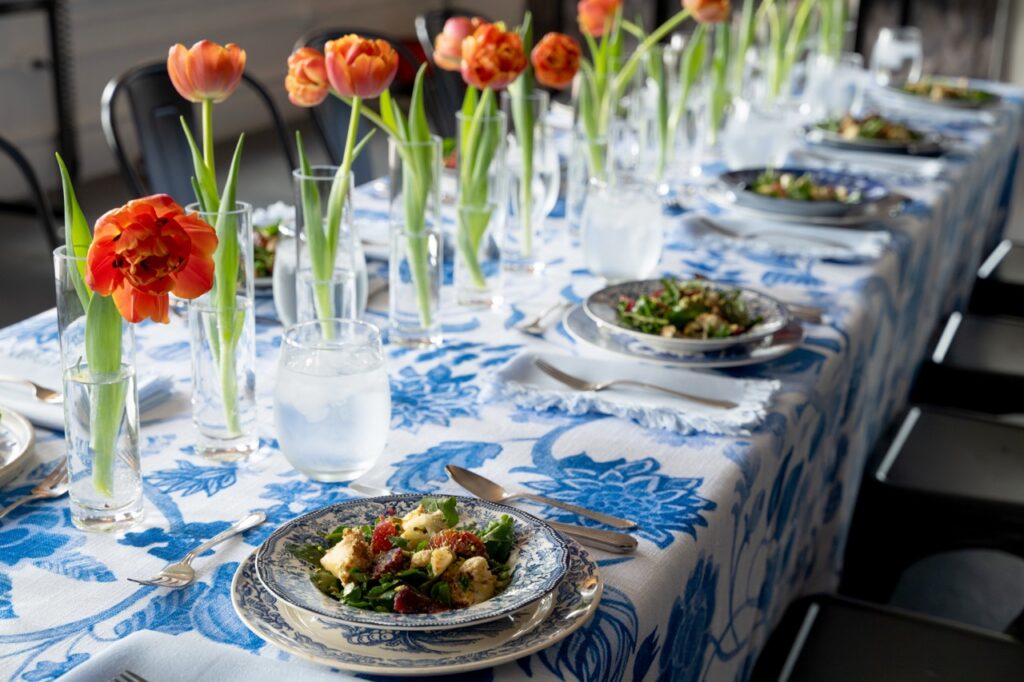
- Smoked Beef Short Ribs: Pickled Golden Pepper Salad
- Char Grilled Shrimp: Turkish Spiced Shrimp, Cilantro, Coriander Cream, Lime, Roasted Cipollini Onions & Roasted Beets
- Parmesan Polenta: Roasted Shallot, Rosemary, Parmesan & Butter
- Charred Asparagus: Smoked Carrot Puree, Almond, Fresh Herbs, Lemon Crème
- Roasted Corn Hash: Corn, Yukon Potatoes, Pepper, Sweet Onion
- “Camp Fire” Smores Tart: Graham Cracker Crust, Chocolate Crème, Toasted Marshmallow, Caramel, Chocolate Crumb
Story by Jeremy Reynolds
Photography by Justin Merriman
Food by Chef Kevin Hermann, Bistro to Go and 408 Heirloom
Subscribe to TABLE Magazine’s print edition.