How an extraordinary book, written by a determined mother, became the blueprint for a modern documentary fighting to preserve the soul of a historic Black Sewickley community that most of Pennsylvania has forgotten. This is Their Story.
Sewickley’s Black History Comes Alive in the Book Turned Documentary Film Their Story
For generations, a massive chapter of Sewickley, Pennsylvania’s history seemed omitted from the history books. Much like with most of Black American history, white authors of the late nineteenth and early twentieth centuries relegated the quiet borough’s Black population to brief paragraphs or single chapters. There is a vibrant history that those authors only scratched the surface of. The resilient and deeply foundational narrative of Sewickley’s Black community was passed down primarily through oral tradition. Today, that narrative is taking its rightful, permanent place in the American historical canon through a monumental filmmaking endeavor titled Their Story.
Sparking Inspiration in a Book
The documentary is a labor of love that officially began in 1980 when lifelong Sewickley resident Bettie Cole was motivated by the lack of an integrated history. Cole spent 20 years conducting interviews with more than 100 Sewickley residents, Black and white, to capture eyewitness accounts of the community’s development.
When Cole finished her manuscript in 1999, it totaled over 700 pages and featured more than 80 rare photographs and illustrations. Major publishing houses didn’t recognize the value of what Cole was offering. At 75 years old, living on a fixed retirement income, she mortgaged her own home to self-publish 1,000 copies of the book, titled Their Story: The History of Black African-Americans in Sewickley and Edgeworth. Her determination as well as bravery paid off almost immediately, with her initial print run sold out within six months.
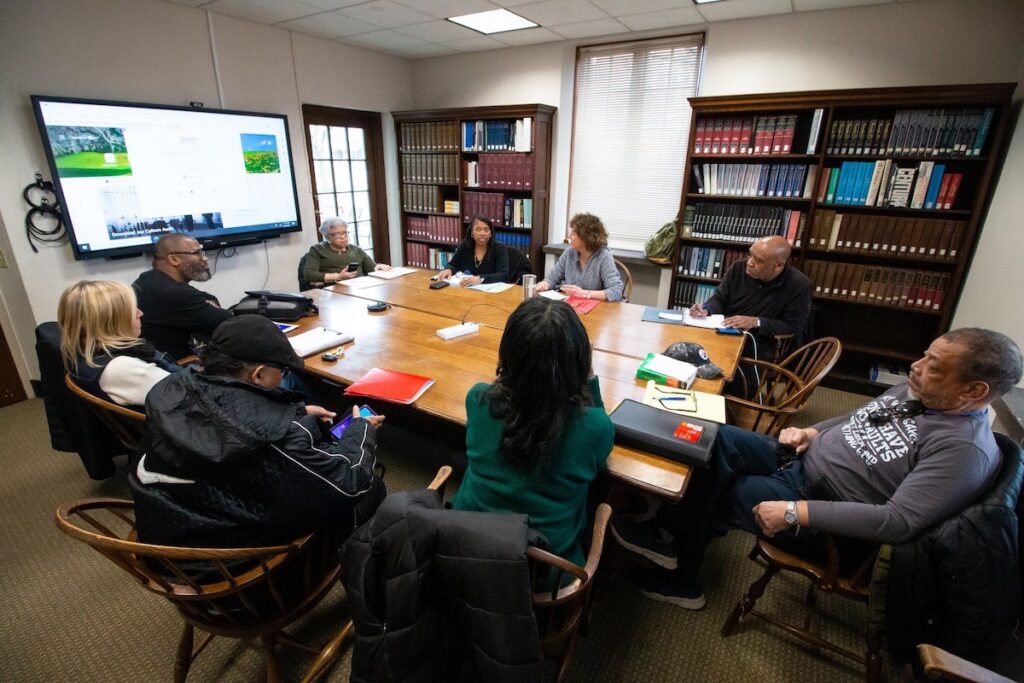
Following Betty Cole’s passing in 2016, her daughter, Gwen Strickland, determined to continue what her mother had started. She now co-chairs the documentary project alongside community advocate Stratton Nash. Stratton Nash, who serves as president of the Daniel B. Matthews Historical Society, an African American preservation organization founded in 1967, spearheaded a massive effort to protect the town’s ancestral archives. After moving back to Sewickley in 2018, Nash fulfilled a promise to a community elder by digitizing over a thousand physical photos.
From Exploration to Documentation
To showcase these newly archived treasures, Nash organized an impromptu Black History Month presentation in 2022, projecting the localized images in a local theater. Between Cole’s book and the new photo archive, community member Susan Kaminski recognized how valuable these accounts were. She suggested they take all of that rich history and content and turn it into a documentary.
A committee was formed, and they found a natural fit in director Dr. Rueben Brock, a tenured professor of psychology at PennWest University and a Washington, PA native. Dr. Brock’s entry into filmmaking began as a way to “pass the time” while the world was shut down during the COVID-19 pandemic. “I had more time than I was used to,” Dr. Brock recalled. “I decided, you know what, I’m gonna really dive into learning filmmaking.”
His first feature-length documentary, Black Pittsburgh, was born of a fascination after reading a 2019 report that labeled Pittsburgh the worst major city in which to live for Black Americans. When Dr. Brock was first approached about Their Story, he genuinely wondered, “Are there Black people in Sewickley?” Like many in the greater Pittsburgh area, he was completely unaware of the town’s historic Black presence.
What Exactly is the Lesson?
Stratton Nash notes that the film’s overarching theme is “unusually cooperative and collaborative coexistence” during a time of tension and strife. It was an environment of unique unity where Black as well as white families lived right next to each other in a fashion that was entirely rare for mid-century America. Dr. Brock contextualizes this as a distinct “quasi-equality” rather than true societal equity.
The film does not shy away from the insidious systemic prejudices that existed alongside this surface-level peace. In one of the interviews filmed, resident John Tucker recalls being 16 years old and witnessing a cross burning on a local cemetery hill, only to walk into a local ice cream parlor moments later to find a group of Klansmen eating in full garb.
Through these raw accounts, the film demonstrates the careful balance the Black community had to maintain. While navigating real dangers, they built an extraordinary infrastructure of self-reliance. “In the 1940s, there were 50 Black entrepreneurs on the main street businesses,” comments Strickland. “They couldn’t go into the movies. They couldn’t go into the restaurants. Really, they couldn’t go into anything. So they got their own.”
Forming Community Through Filmmaking
This spirit of collaboration has mirrored itself in the production of this documentary. Major contributions have poured in from prominent local names, including the Nevin family, a production grant from Gary and Carol Schurmans, and foundational executive sponsorship from the Dungy Family Foundation, established by NFL legend Tony Dungy and his wife Lauren, who grew up in the borough.
As the film undergoes its final audio mixing and score production—following a highly successful rough-cut preview screening on March 1—its ultimate purpose comes into sharp focus. The committee’s long-term goal is to broadcast Their Story on PBS and integrate it directly into regional school curricula alongside Betty Cole’s reprinted book. It serves as an educational blueprint, reminding future generations that their current civil rights and prosperity come from the resourcefulness of an extraordinary community.
Story by Kahmeela Adams-Friedson
Photos Courtesy of Their Story
Subscribe to TABLE Magazine’s print edition.