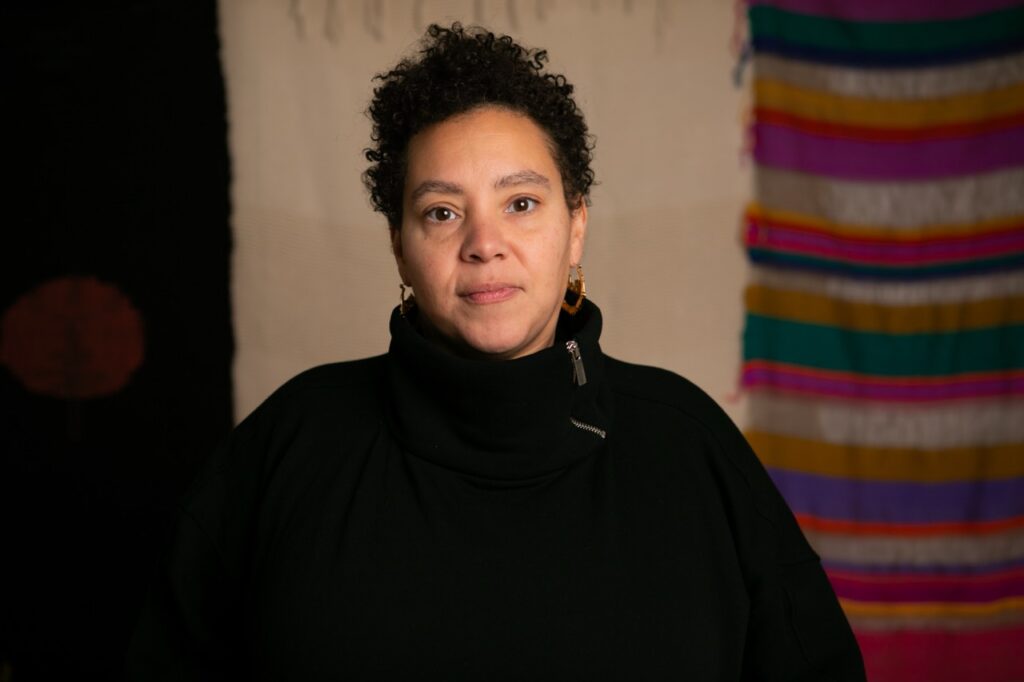
Native Pittsburgher and artist Alisha B. Wormsley’s socially engaged work practice embraces a range of mediums while staying rooted in community.
Artist Alisha B. Wormsley Creates to Enact Social Change
Alisha B. Wormsley’s work is shaped by movement, but it begins with staying put. Her studio space in Pittsburgh’s Cultural District also serves as the primary site for Sibyls Shrine, the residency and collective she founded for Black artists who mother. The space supports making, gathering, and rest as interconnected forms of labor. For Wormsley, this proximity is essential.
Although she grew up in the Pittsburgh area, Wormsley left immediately after high school, moving between New York, the Bay Area, and Cuba before returning to New York for a decade. There, she worked as an educator across several institutions including the Romare Bearden Foundation and the Studio Museum in Harlem, committed to building a life as an artist. When she returned to Pittsburgh fifteen years ago for a residency at the Andy Warhol Museum, it was not out of nostalgia, but the possibility of building something enduring. “Rooting yourself in a socially engaged practice means actually being here,” she says. Place, for Wormsley, is not a backdrop. It is a responsibility.
That ethic runs through a socially engaged body of work that moves fluidly across installation, film, textile, and public art, to name just a few. Her ongoing project There Are Black People In The Future has appeared in museums and public sites internationally while also functioning as a grant-giving platform that supports conversations around displacement and gentrification. The project exemplifies Wormsley’s approach: art that circulates widely while remaining accountable to specific communities. She has no interest in projects that arrive, extract, and leave. Staying allows for consequence.
Drawing From Her Roots
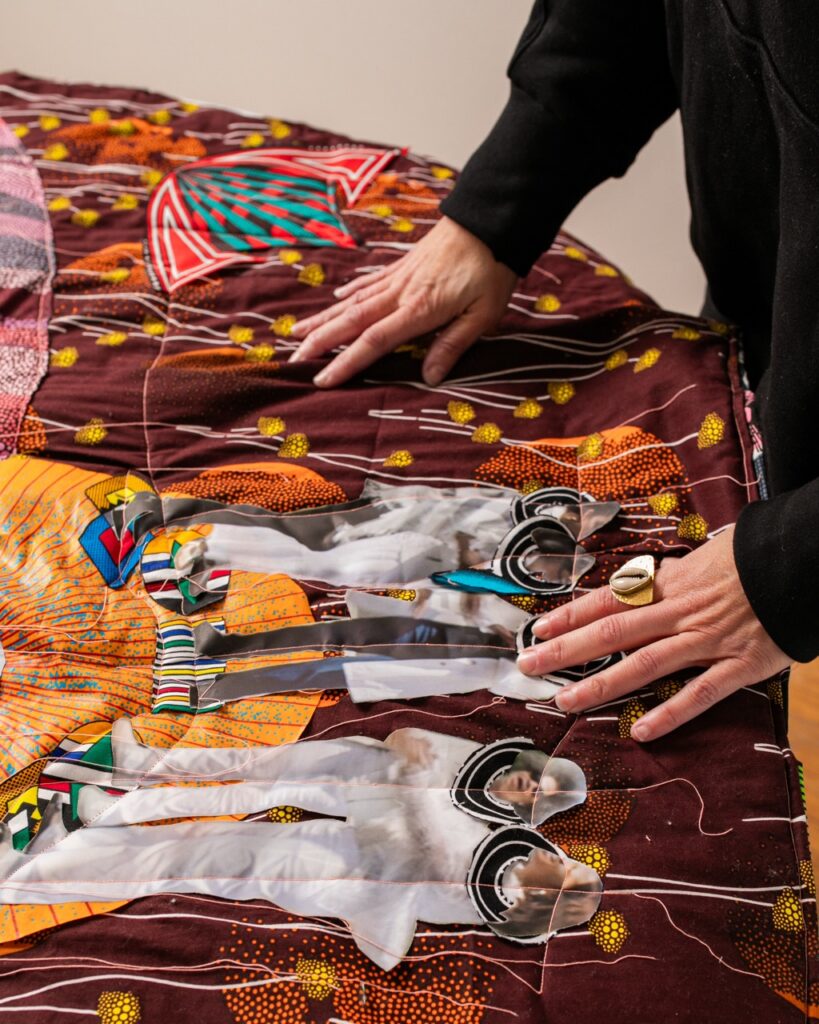
Her work draws from ancestral and speculative frameworks at once. Quilts, tapestries, and glass vessels operate as access points to an archive that understands Black femmes as agents of transmission, care, and continuity. Weaving recurs throughout her practice, both materially and conceptually. Wormsley describes it as an origin point for circuitry, a way of imagining the world brought into being through interlacing.
Medium choice emerges through experimentation rather than prescription. Wormsley explores and rearranges materials until a form asserts itself. She traces this impulse back to her parents, whose skill at fixing and reconfiguring shaped her from the start. That adaptability extends into her role as an educator at Carnegie Mellon University. Faced with intensifying censorship and students searching for new modes of expression, Wormsley understands teaching as inseparable from the ways she shows up in her community. “I’m a very holistic person,” she says. “All of these elements are a part of my practice.”
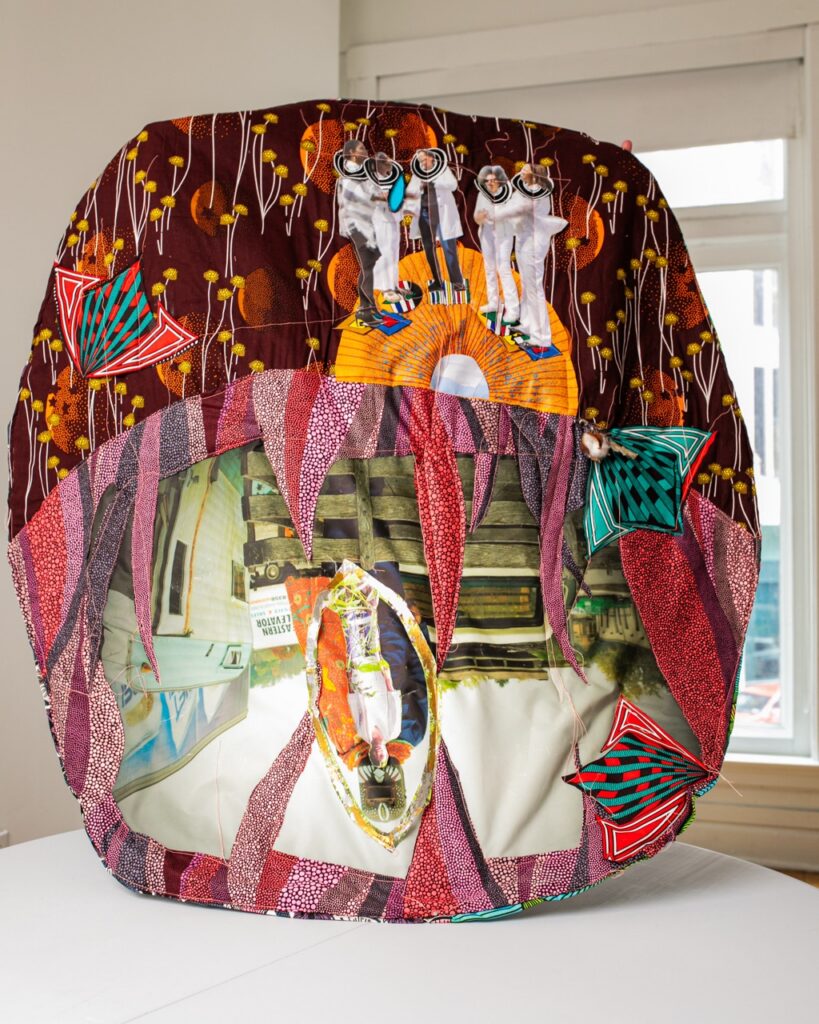
Current projects, including a forthcoming Boston chapter of Cosmologyscape, a collaborative installation exploring cosmology, place, and Indigenous and Black futurity developed with Suzanne Kite, extend this worldview into new registers. Wormsley’s work resists rushing toward resolution. It builds frameworks that can hold people, ideas, and futures in common. Above all, it is grounded in the conviction that imagining what comes next begins with where—and how—one chooses to remain.
Story by Shawn Simmons
Photography by Laura Petrilla
Subscribe to TABLE Magazine’s print edition.