Filipino cuisine is having a well-deserved moment, and there’s no better way to explore it than by cooking it yourself. These six Filipino recipes offer an introduction to the bold, comforting, and layered flavors that define Filipino food. Between recipes for breakfast, dinners, or something for snack time, this collection covers the full spectrum of a Filipino table.
These recipes come from Pittsburgh’s Chef Rafe Vencio of Amboy, whose cooking is rooted in Filipino tradition from his childhood in the Philippines. His goal is to bring those Filipino specialities to a wider audience by showcasing how delicious and simple they can be to make. Dive into his recipes below and be sure to serve them to your whole table of loved ones as Filipino cuisine is meant to be shared.
Filipino Recipes to Taste Authentic Cultural Cuisine at Home
Ukoy (Filipino Fritters)
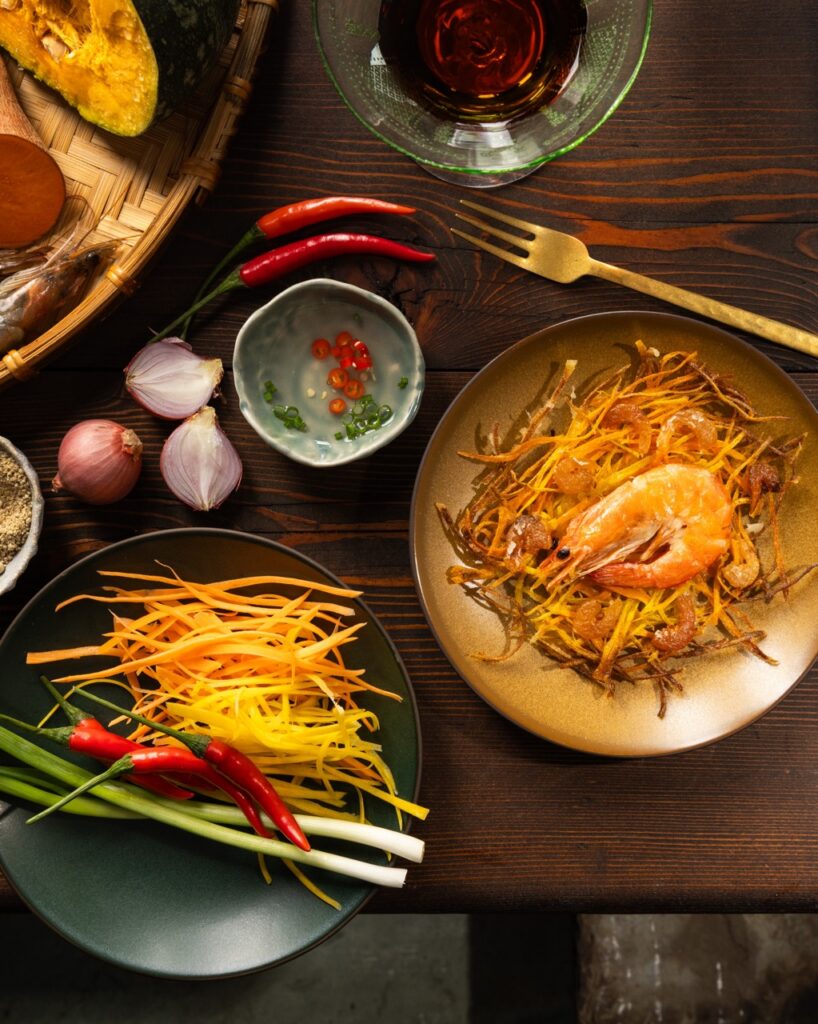
Ukoy is a regional specialty, and the ingredients vary a little depending on where in the Philippines. Squash and kamote (sweet potatoes) are staples with other variations adding bean sprouts, carrots, as well as taro root. Shrimp is also a common ingredient, and the variety and size depend on the region’s specialty. This particular recipe uses dried shrimp, which you can find at any Asian grocery. But fresh shrimp can also be substituted or omitted to make the recipe vegan. Vinegar is the best accompaniment for this and is excellent as a snack.
Tortang Talong (Eggplant Omelet)
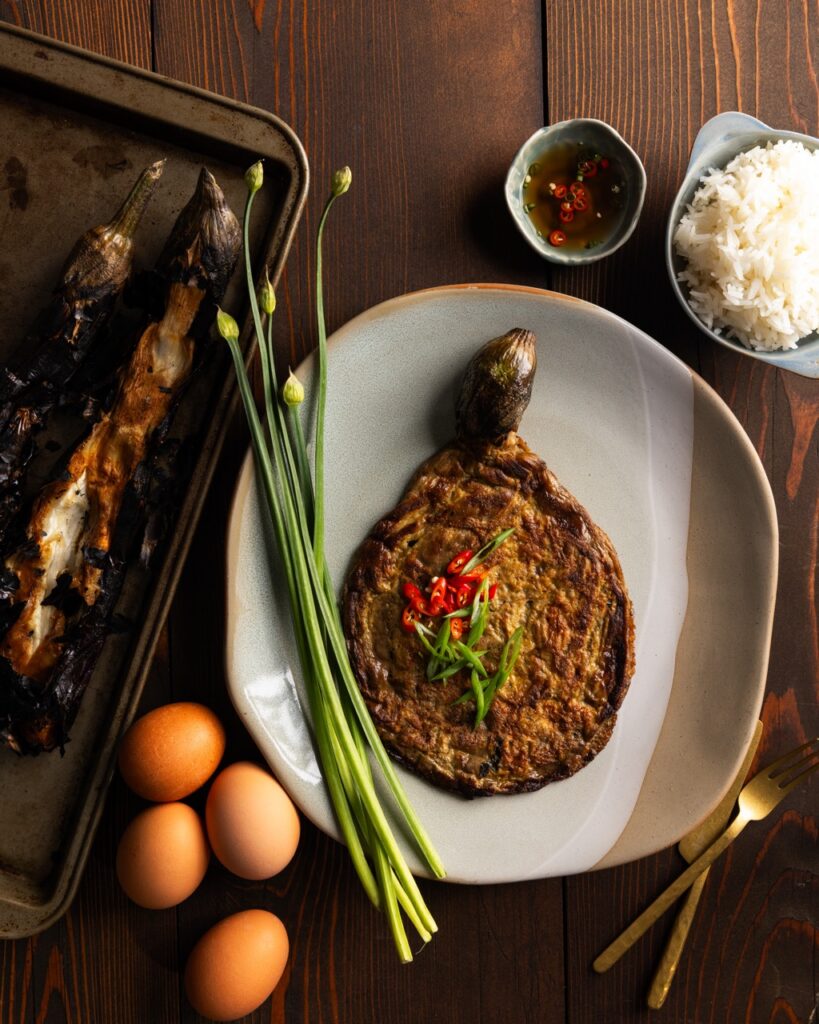
Commonly called Torta in its shorter name, this is widely popular in all parts of the Philippines. The simple version only uses eggs, but some variations include cooked ground meat or crab meat for a heartier dish. Patis (fish sauce) is the first choice for condiment, but banana ketchup is also another Filipino favorite. Best served with hot white rice and accompaniment to fish and seafoods.
Palitaw (Filipino Chewy Rice Cakes)
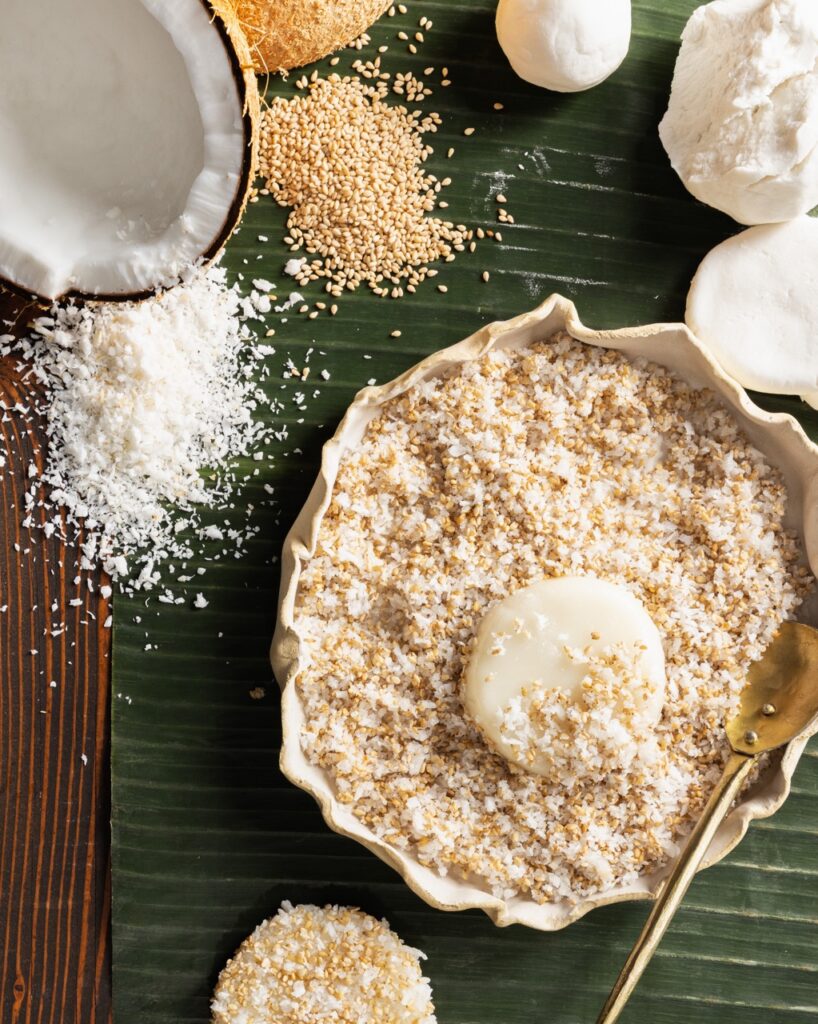
Rice cakes in the Philippines comes in many variations, this recipe is a boiled version that is easy to make at home. This is a widely popular snack found everywhere in the Philippines. There are some variations to this recipe like toasting the coconut, but it can vary depending on the region. The texture is like the Japanese mochi.
Ginataang Munggo (Mung Bean Porridge)
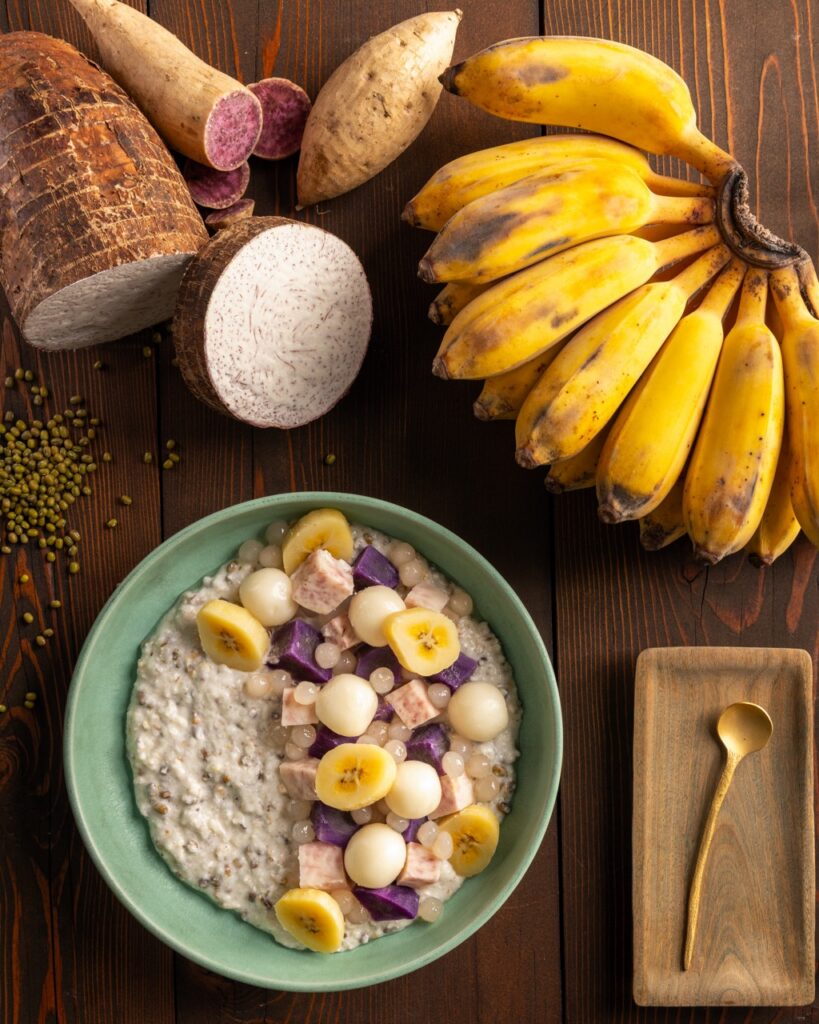
The simple version of this recipe only uses mung beans and glutinous rice, but other root vegetables like taro root and sweet potatoes with saba (also called Thai banana, short and stubby) and jackfruit are optional. Typically enjoyed as an afternoon snack or dessert.
Arroz Caldo (Chicken & Rice Porridge)
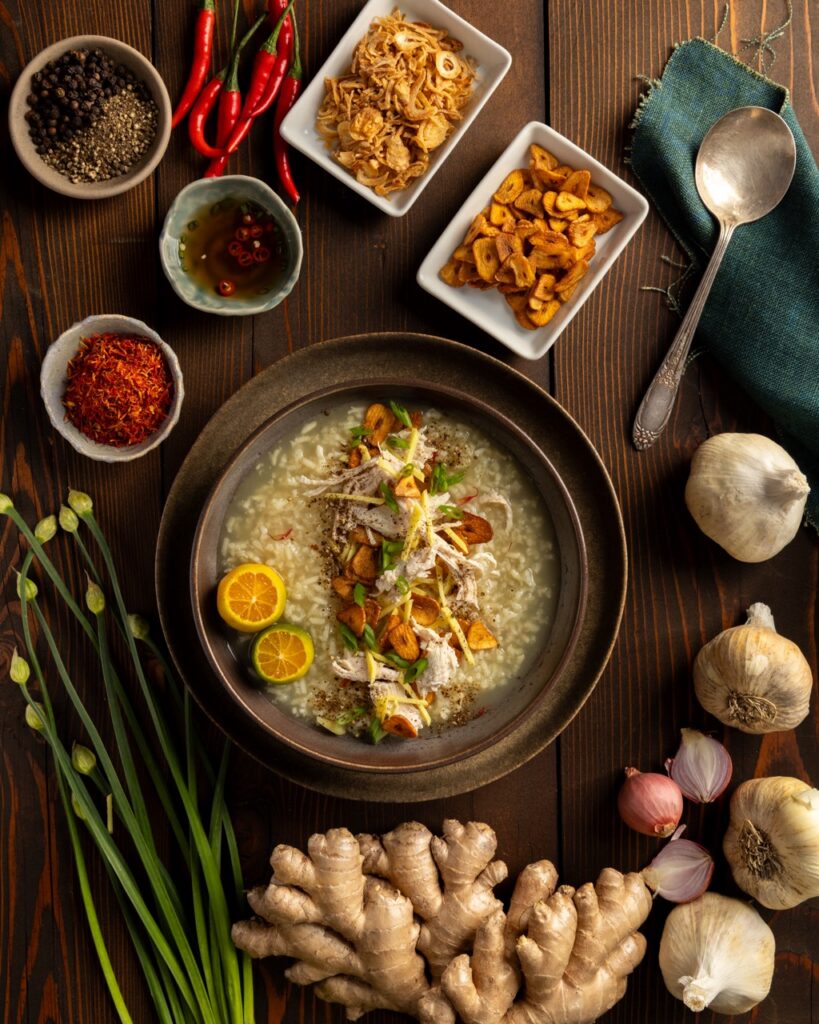
Arroz Caldo translates to rice porridge, which is a Spanish influence, there are some variations depending on which ingredients are used. This dish is a popular snack even though it’s more like a meal, and common remedy for the sick.
Kinilaw na Hipon (Filipino Ceviche)
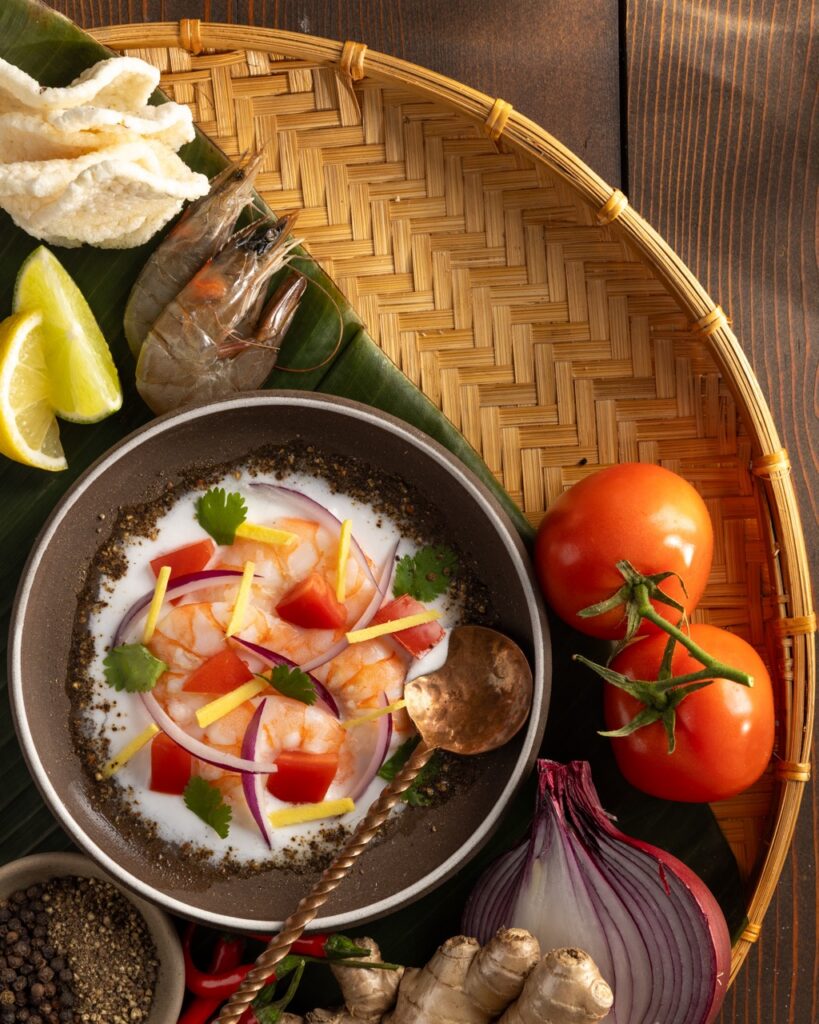
Similar to the Spanish Ceviche, the addition of coconut milk adds sweetness and balances the acidity well. Traditionally made with Calamansi, a citrus endemic to the Philippines, a combination of lemons and limes works as a good substitute. Other types of fish like tuna works well with this recipe, any fresh seafoods and shellfish can also be used. Tapioca crackers are an excellent accompaniment to this dish, but you can also use tortilla chips or other cracker/chips of your preference.
Interested in other cultural cuisine recipes? Check out Veda’s introduction to Indian recipes.
Recipe and Styling by Rafe Vencio
Photography by Dave Bryce
Subscribe to TABLE Magazine’s print edition.