On November 14, 20 and 22, the Pittsburgh Opera elegantly brings Greek myth (back) to life in the historic Byham Theater with Gluck’s Orpheus and Eurydice.
Orpheus and Eurydice Is a Not-So-Tragic Greek Tragedy
A staple of Classical opera repertoire, Orpheus and Eurydice was written by Christoph Willibald Ritter von Gluck (say that five times fast!) and premiered in 1762 in Vienna — in the presence of Habsburg Empress Maria Theresa, no less. Originally set to an Italian libretto by another fancy-named gentleman, Ranieri de’ Calzabigi (I’m not sure I can say that even one time), it was later adapted to French text by Pierre-Louis Moline and became popular among Parisian operagoers.
Nearly a century after its premiere, it was revised yet again in 1859 by none other than Hector Berlioz to accommodate the vocal trends of his day. It is the evolution of these trends that I find most fascinating, as the part of Orpheus was originally performed by a castrato (a man who sings in the soprano range), later adapted for high tenor and subsequently for the female mezzo-soprano voice. It is common in opera for women to perform male roles (typically adolescents or young men), a practice known as “the trouser part” or “pants role.”
The story is of course taken from the Ancient Greek myth of Orpheus and Eurydice. Fans of Broadway will know the story, at least in part, thanks to the popular musical Hadestown, which adapts some aspects with 21st-century flair.
How the Opera Differs
The opera tells the tale of Orpheus, who is the greatest musician in all the land. Shortly after marrying his beloved Eurydice, she succumbs to a snakebite and dies. Overcome with grief, Orpheus journeys to the underworld and is given the chance to resurrect her on the condition that he does not look at nor speak to her until they have returned to the land of the living. In the traditional telling, he can’t handle the task, sealing her fate. The operagoers of the 18th century, however, favored more cheerful outcomes, so — and be warned, there are spoilers ahead — in Gluck’s retelling, rather than being spirited back to Elysium, the gods see fit to bring Eurydice back to life and everyone lives happily ever after!
Along similar lines, Gluck’s beautiful and charming music was written in response to the more challenging and complicated music and plotlines of the Italian opera seria, which dominated the artform in his day. Hardly a dumbing down, Gluck presents his work with an attitude that less is more — and the signature noble simplicity of what would become known as his reform style of operas.
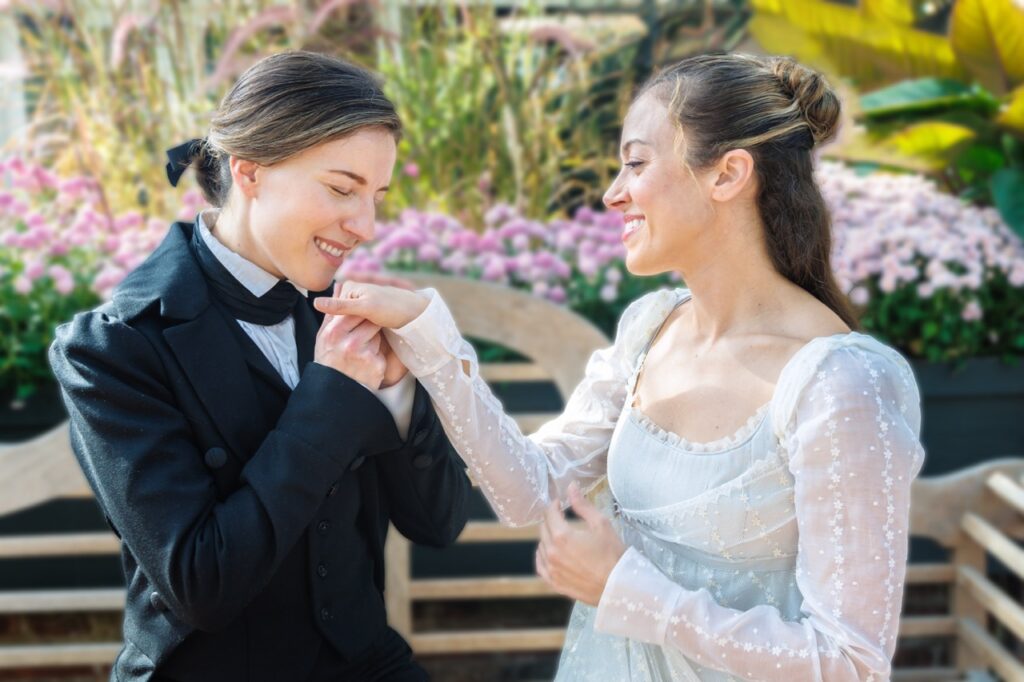
The Pittsburgh Opera Delights in the Cozy Byham Theater
A tightknit cast features mezzo-soprano Stephanie Doche as Orpheus, soprano Lauren Snouffer (in her Pittsburgh Opera debut) as Eurydice and Pittsburgh Opera Resident Artist Léa Nayak as Amour (also known as Cupid in Greek mythology). The singers make short work of expressing the beauty of Gluck’s score. Antony Walker’s skillful music direction brings effervescent energy to the orchestra and ties everything together beautifully.
Director José Maria Condemi makes his Pittsburgh Opera debut with a thoughtful and straightforward production. The setpieces are reminiscent of Greek Antiquity, viewed through the lens of a Baroque folly (whimsical garden features that were popular in the 17th and 18th centuries).
I was particularly enthralled by the descent into the underworld, enhanced by striking lighting, spooky mist and a fantastic depiction of the Furies tormenting Orpheus — sung by the excellent Pittsburgh Opera Chorus, enshrouded in black cowls. A particularly fun costuming note comes via Nayak’s Amour, who first glides upon the stage astride a golden bicycle, clothed in sequins and wrapped in a golden crepe-foil boa to fabulous effect. It’s definitely the fashion I’d like to see on trend on Mount Olympus.
The intimate setting of the Byham Theater additionally pulls you into the fantasy with its colorful murals and Classical sconces enwreathing the proscenium stage.
I was fortunate enough to attend the dress rehearsal along with a large group of music and drama students from Carnegie Mellon; the young audience members were repeatedly roused to thunderous applause by the skill of the performers. Whether it’s your first time to the opera or you’ve been planning your trip downtown since the announcement of the season, Orpheus and Eurydice will prove a worthwhile excursion.
Know Before You Go
Orpheus and Eurydice runs for three performances: 7 p.m. on Saturday, November 14; 7 pm. On Friday, November 20; and a 2 p.m. matinee on Sunday, November 22. The shows are at the Byham Theater in Downtown’s Cultural District — so don’t go to the Benedum by mistake! The Byham is located at 101 6th Street right next door to the Atterbury Hotel (formerly The Renaissance).
My preferred parking is in the Ft. Duquesne and 6th Street Garage, located directly across the street from the Byham. Other nearby options include the Theater Square parking structure and the 6th & Penn Garage across from Heinz Hall.
The production runs about 2 hours, including a single intermission.
Make a Night of It!
Get Downtown early and treat yourself to dinner nearby before strolling down to the Byham for your night at the opera. For simple, tasty bites and brews, I’m a fan of The Eagle. Just a few blocks away (tucked inside the Kimpton Hotel) is The Commoner; if you can snag a spot at the bar, the popular Gaucho is a fantastic option. If you prefer a little heat on your food, you can never go wrong with Nicky’s Thai Kitchen on Penn Avenue.
If you’re feeling thirsty or peckish after the show, I always suggest stopping by Con Alma to see who’s playing — and don’t forget to tip the band!
Plus there are plenty more restaurants and bars to explore Downtown.
Looking for more performances? Check out our guide to Pittsburgh’s arts, culture, and entertainment scene for plays, musicals, concerts, operas, ballets, and much more.
About the Author
Christian Kriegeskotte is a composer, conductor, and concert producer whose career in the performing arts spans over 20 years. Born and raised in New York, he is a graduate of Carnegie Mellon University School of Music. His career began in Hollywood, where he worked on films and television shows including Star Wars: Revenge of the Sith, Stephen Spielberg’s War of the Worlds, The Simpsons and Family Guy. Currently based in Pittsburgh, Kriegeskotte’s music has been performed by major ensembles including the Pittsburgh, Toronto, Las Cruces, and Houston Symphony Orchestras, River City Brass, eighth blackbird and the American Composers Orchestra.
Photos by David Bachman Photography
Subscribe to TABLE Magazine’s print edition.