Photographer and adventurer Matt Dayak explores some of the most vertical in-between spaces of Pittsburgh: the city steps.
Exploring the Beauty of Pittsburgh’s City Steps and Staircases
People will do just about anything to avoid stairs. They’ll wait for an elevator to go up a single floor or choose the escalator every time. But in Pittsburgh, stairs are different. Here, they’re stitched into the fabric of the city, rising between streets, cutting through hillsides, and connecting places that some roads barely reach. Most of these steps can be avoided. But maybe they shouldn’t be.
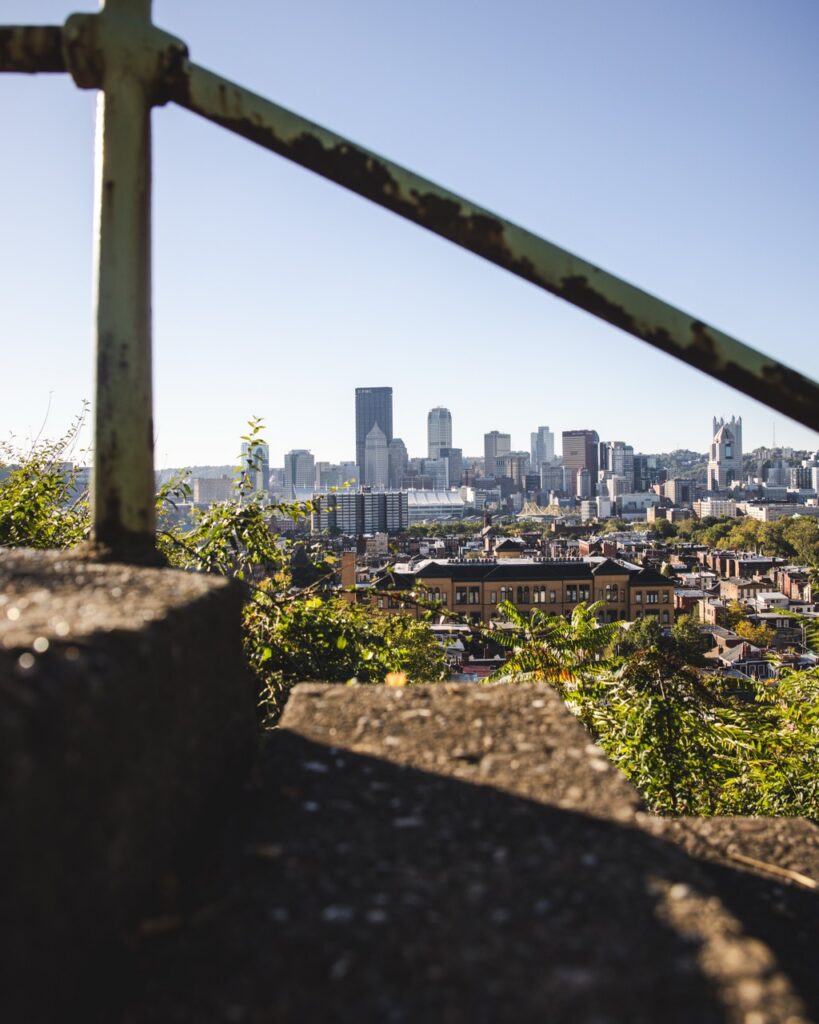
It’s hard not to think about the history built into these steps. At one time, they were essential. Steelworkers, students, and residents used them every day to move through a city carved into hillsides. With over 700 staircases, Pittsburgh has more public steps than any other city in the country. Built during a time when walking was essential, the steps functioned like free public transit. They weren’t designed for walkability. They were built to make the city work.
Some still echo with the footsteps of steelworkers from over a century ago. I walk them now too, not for a paycheck, but for perspective.
Why Take Pittsburgh’s Public Staircases?
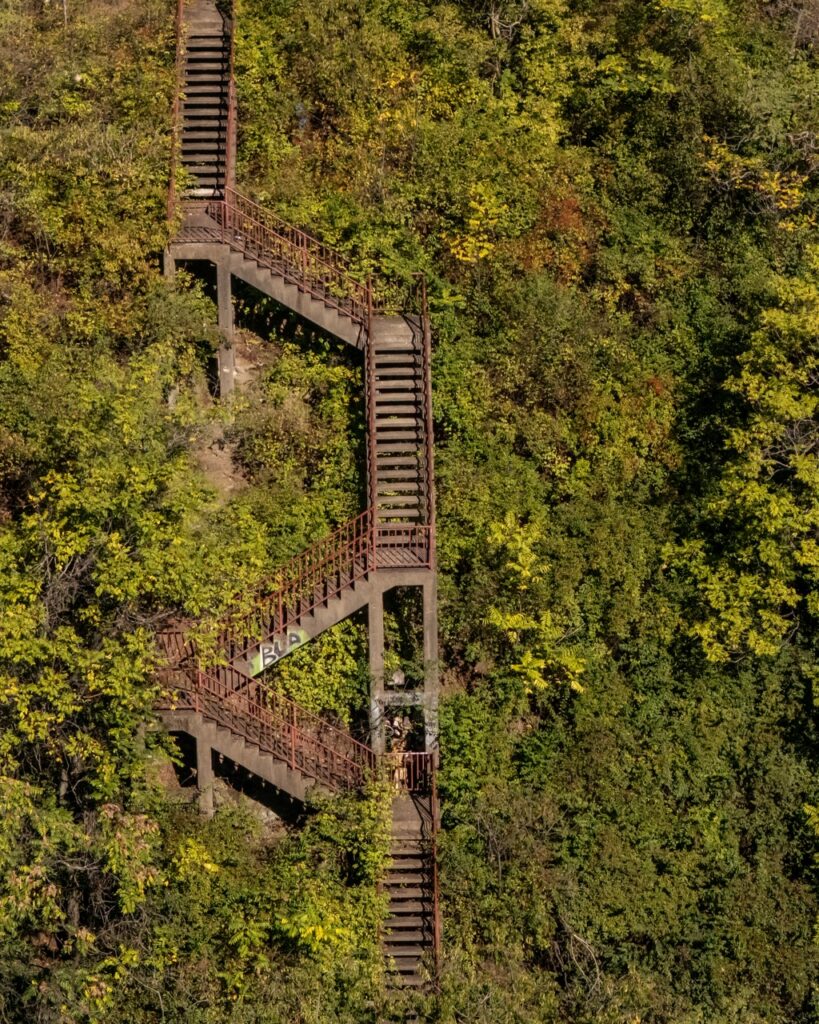
Today, many of our city’s steps sit quietly. Some are crumbling, overgrown, or forgotten. In a city with dramatic elevation changes, rising more than 660 feet from river level to the hilltops, these staircases remain both relics of the past and hidden assets of the present. As fewer people rely on public transportation or walking, the steps have faded from everyday life. Some staircases even appear on maps as official city streets. They’re part of Pittsburgh’s strange patchwork of “paper streets,” which were planned and mapped but never built. Technically, they’re still viewed as a street but that doesn’t help your Uber Eats driver trying to find your house before your Massaman curry gets cold.
In a city with aging bridges, pothole-riddled roads, and limited budgets, it’s fair to ask where the public money should go. Some argue that funding should be prioritized for infrastructure that serves more people, more often. That’s a valid point. But for others, including stairway advocates, urban hikers, and longtime residents, the steps are more than just concrete. They are part of the city’s identity, and history. Losing them would mean more than just losing a shortcut. But the steps are still here.
A Way of Transportation
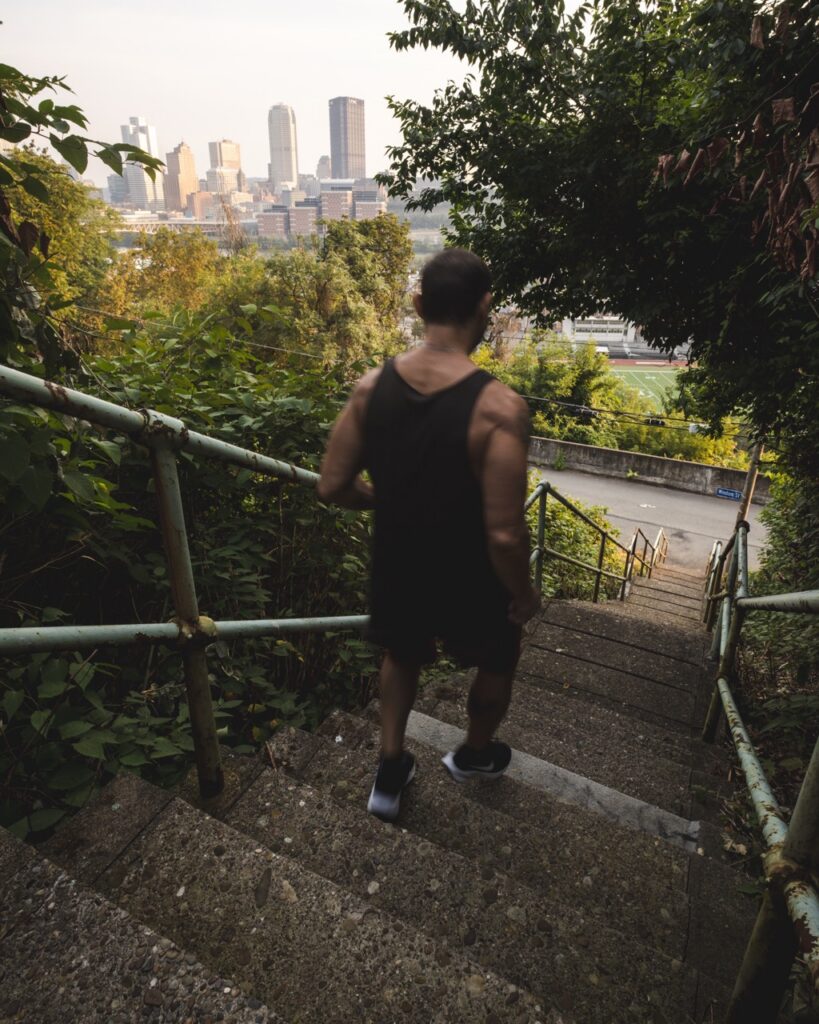
For some of us, they’re still part of the daily routine. Not just for getting somewhere, but for training, exploring, and staying connected to the wild geography that makes Pittsburgh what it is. In some neighborhoods, these staircases are still a practical part of daily life. They connect people to bus stops, grocery stores, schools, and jobs. That use matters, and it’s part of why they’re worth keeping.
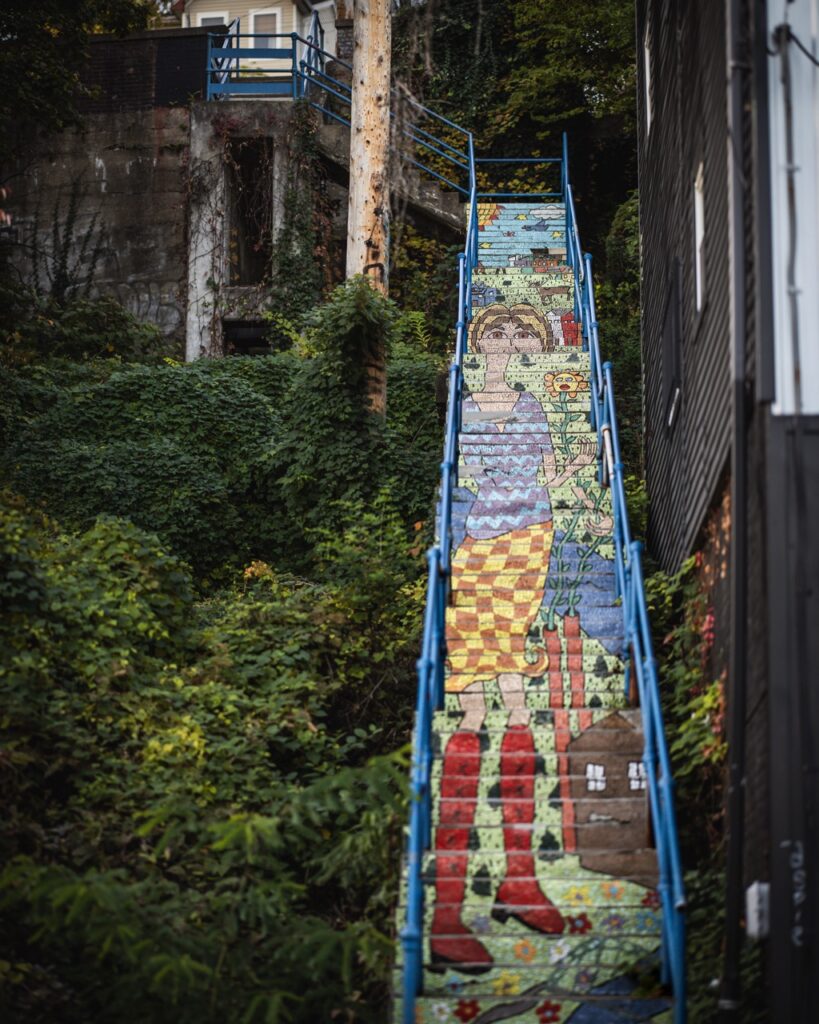
I use the steps in a different way than many people who rely on them every day. For me, the steps have become a way to stay active and explore the city both alone and with friends. I use them to train for hiking trips and mountain summits, but it’s not just about preparing for something else. Being on the steps lets me experience Pittsburgh in a slower, more connected way. I’ll often plan a route that strings together multiple sets of stairs and ends at a small business, maybe a neighborhood bakery, a coffee shop, or a killer spot for lunch. It’s exercise, but it’s also a way to support local places and see parts of the city I wouldn’t otherwise pass through.
There’s no single reason to climb these stairs. Some people do it because they have to. Others, because they want to. But no matter why you’re on them, the steps pull you into the city in a way most things don’t. They slow you down. They make you look around. And somewhere between the bottom and the top, Pittsburgh feels different.
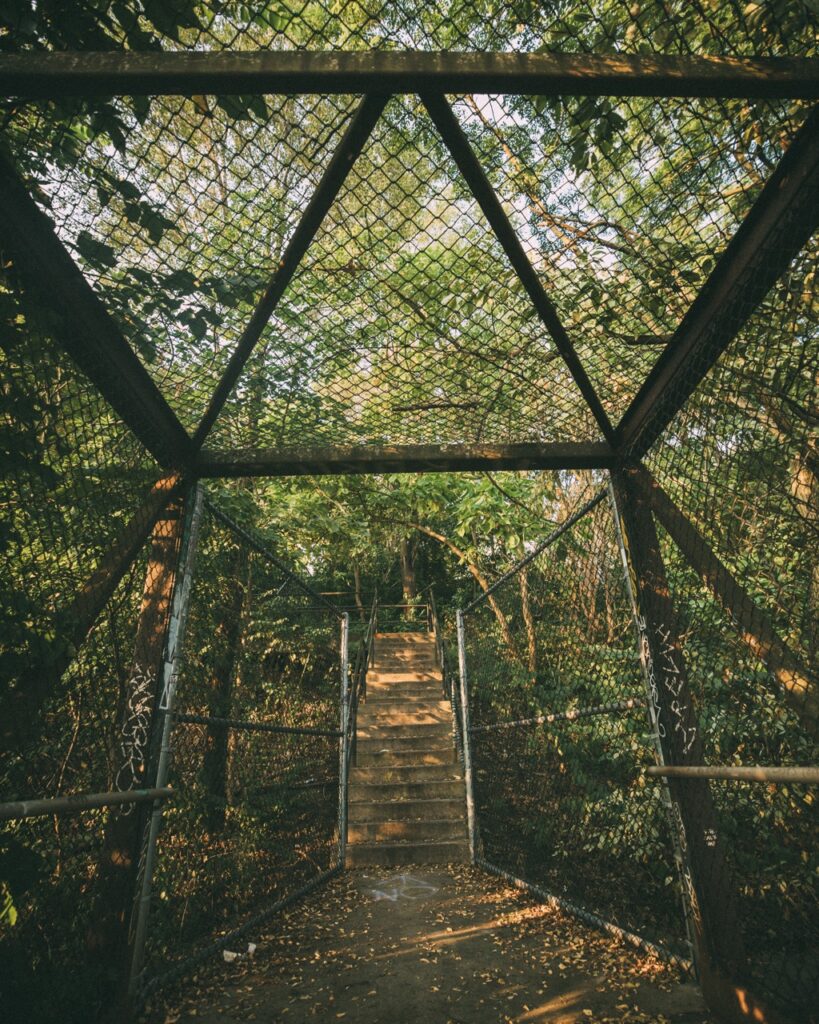
Where to Climb Pittsburgh’s City Steps
Rising Main Steps
These are in Fineview, at the end of Howard Street, right next to the Parkway. They might be my favorite. You need to see them to believe them. They’re incredibly long, with close to 400 steps. They’re also in rough shape. Some sections are leaning, and in one spot, a green garden hose has been tied up to replace a missing railing.
Jacob St. Steps
In my neighborhood of Brookline, there’s a short set of steps at the end of Brookline Boulevard. They’re not dramatic, but I like how they cut through a small patch of woods. It feels like a little escape tucked into the city.
South Side Slopes
In the South Side Slopes, there is not just one set of stairs. There’s a spiderweb of them. There are well over 2,000 individual steps winding through the neighborhood, connecting streets, alleyways, and hillside homes. You can start at the set on 18th Street, right where the hill begins to rise. From there, finding your way through the rest becomes its own kind of adventure.
Story and Photography by Matt Dayak
Subscribe to TABLE Magazine’s print edition.