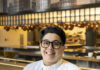
On The Oaklander Hotel’s 10th floor, Spirits & Tales introduces guests to a new face: Executive Chef Andrew Alvarez. A longtime professional in the culinary industry with 15 years under his belt, he’s now getting his chance at full creative control over a restaurant’s menu.
After his tenure as Executive Chef at Gaucho Parrilla Argentina, as well as time on the leadership teams for The Vandal, Hotel Monaco Pittsburgh, Bistro 19, and Sweetwater Center of the Arts, Spirits & Tales starts a new chapter for Chef Alvarez. It’s one he hopes to fill with as much diversity as possible, drawing from different parts of Pittsburgh’s cultural melting pot, whether that’s his own Filipino American background or another influence within the community.
We got to speak with Chef Alvarez about his new position and how his plan for a seasonal, rotating menu breathes new life into Spirits & Tales.
Meet Spirits & Tales’ New Executive Chef Andrew Alvarez
TABLE Magazine: What are you most looking forward to in your new position at Spirits & Tales, and how do you see this experience differing from your past roles?
Chef Andrew Alvarez: I haven’t worked at a restaurant where I have (more or less) free rein on the menu concept that will also impact In Room Dining and Banquets. Because of that, my ambition to represent Pittsburgh’s diversity while also balancing a unified menu will be an exciting challenge. We’re also well into the culinary exploration on, “What is fine dining?” and “What is quality dining?” in Pittsburgh. Do we need to have a $115 plate lined with a 200 thread count linen napkin to convey a great dining experience? Or, is that communicated through attentive service, intentional food, and a well informed staff to convey the menu? I have an incredible dining room, so we’re already starting with great bones. So, what can I do to build off of this? That’s my current “philosophical” question to communicate through the menu, staff training, etc.
TM: With your Filipino background, will you bring any of those influences onto the menu?
Chef Alvarez: If it makes sense! The world should know about lumpia, chicken adobo, kare kare, and halo halo. Jolibee should be a staple in every state. But, there are a couple of very talented Filipino chefs and organizations that are bringing that representation to the city and are far more talented than I will ever be.
TM: What atmosphere are you looking to create at Spirits & Tales? Can you describe your perfect experience for our readers?
Chef Alvarez: I want to create an environment that isn’t pretentious. Despite working in fine dining for the first half of my career, I never really felt like I “belonged” in those dining rooms. Something about it felt stuffy and I couldn’t relax. I want everyone to feel welcome and emphasize that everyone deserves to have a great dining experience with great food.
A perfect experience would involve great dishes and drinks that inspire as much thought and conversation as went into creating them. Like, “Wow, this Filipino dish is so good, I wish there was more Filipino representation in Pittsburgh.” And then, cue me saying, “Actually, the Filipino American Association of Pittsburgh and the Philippine-American Performing Arts of Greater Pittsburgh have been around since I was 10 years old, let alone the Filipinos in the hospitality and medical workforce”.
TM: How do you plan to incorporate the bar program into the menu?
Chef Alvarez: I have always found wine tasting menus to be very Eurocentric. One of my favorite conversations I’ve had with a sommelier at a Cincinnati restaurant was about which wines you would pair with fast food. Another example is with the growing interest in cuisines from the expanding middle class around the world and exploring which wines pair well with those foods. Apparently rosés, Champagnes, and sparkling wines have been great go-to options. If I’m going to have fun food, ideally, I would have drinks to compliment that fun.
TM: What’s special about being a chef in Pittsburgh?
Chef Alvarez: From a career perspective, seeing the Pittsburgh palate evolve from the ’70s Euro dining standards to being more open minded and accepting of different flavor profiles has been great and validating in a lot of ways. I’ve worked in restaurants where “spicy” was a negative, even during a time when restaurants like Pusadee’s, Nicky’s, and Taj Mahal were already Pittsburgh staples in the 2010s. A lot of it comes down to the chef committing and believing in their dish. In that, if it happens to be spicy, pairings that are unusual, ingredients that aren’t commonly used, and you execute it well, you objectively have a great dish. As long as it’s within your brand, then you have to stand by your conviction.
There’s a misnomer that Pittsburghers have basic palates or are unadventurous, but my time at Sweetwater Center of the Arts as the Culinary Coordinator continuously proved that wrong. Every month we had a date night where you and your partner, along with three other couples, would cook a four-course menu with each couple taking on one of the courses. The catch is, I never released the menu and they wouldn’t find out until they got to class. Plus, I purposely chose recipes that were not “safe” and technical.
99% of my classes merited positive/glowing reviews. My favorite commentary was, “I would never have ordered this on a menu, but now I have to find restaurants that serve this.” I had people coming from Beaver County, West Virginia, Allentown, San Bernardino, Sharpsburg, and what I got from the feedback was that Pittsburghers are more open minded than they have ever been.
It’s on me and my team to deliver them a menu and experience that represents us and our brand. And, if my brand is representing Pittsburgh in its (apparently unknown) diversity and beauty, then how much more special can it get?
Story by Kylie Thomas
Photo From Spirits & Tales
Subscribe to TABLE Magazine‘s print edition.