Addoley Dzegede often identifies as a textile artist, though her practice continues to expand from that base through inquiry rather than medium. What holds her body of work together is a sustained attention to the histories remembered by and through materials, and what they continue to disclose through use.
Addoley Dzegede Showcases the Art of Textiles
Addoley Dzegede’s work unfolds through close attention to material histories and the ways they travel. Through processes of batik, weaving, dye, and print, the Ghanaian-American artist works with textile processes that already carry cultural and economic weight, allowing those histories to remain active within the work. Her work brings personal memory into contact with histories embedded in cloth.
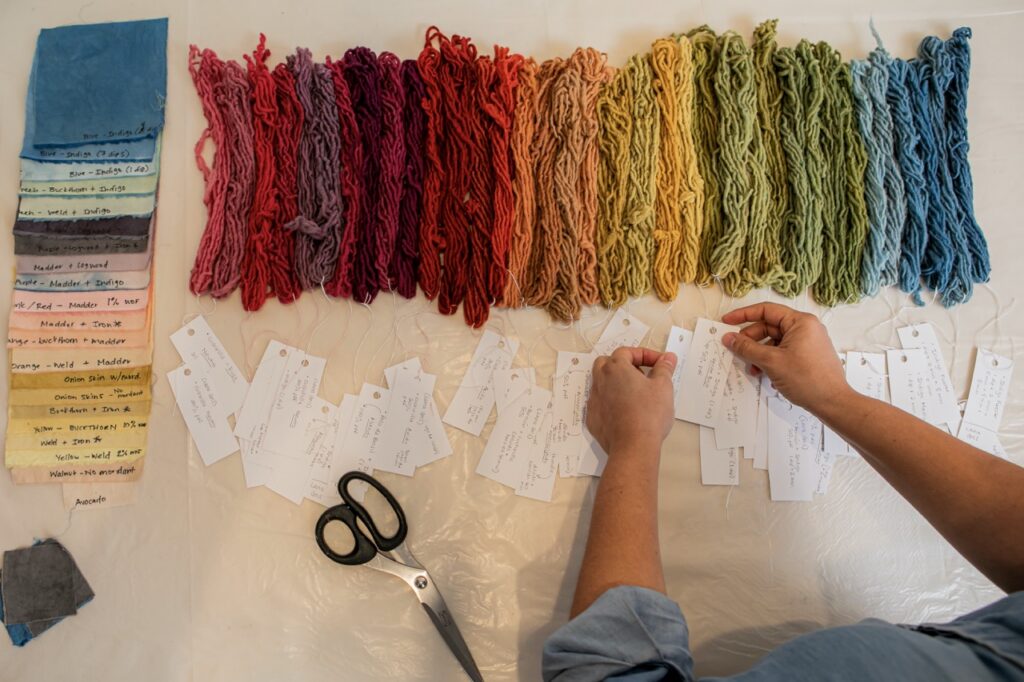
Pittsburgh audiences recently encountered Dzegede’s work through Nearing Each Other at the Carnegie Museum of Art, where her series Family Album brought together batik portraits drawn from her father’s photographs. The figures emerge through wax-resist dyeing, a technique now closely associated with Ghanaian textiles but shaped by colonial trade routes that carried industrialized craft processes between Indonesia, West Africa, and the Netherlands. In Dzegede’s hands, batik becomes a way to hold layered histories. Family stories surface alongside larger questions about authenticity, inheritance, and how materials come to signify place.
Dzegede arrived in Pittsburgh in 2020, with subsequent years shaped by fellowships and residencies that extended her practice across multiple sites, including a Fulbright fellowship in Rotterdam as an artist-researcher at the Piet Zwart Institute. Since returning full-time in mid-2023, she has continued to work across geographies, bringing that experience into a studio practice grounded in sustained, labor-intensive processes.
Her practice continues to push those questions through technical rigor. The technically complex “warp paintings” in her studio draw from weaving traditions associated with kente cloth, reinforcing blocks of color through tightly controlled structures. Color, for Dzegede, is never neutral. Increasingly, her research has expanded to include the chemical histories of dyes, tracing connections between industrial pigments and extractive colonial practices, as well how chemical components developed for synthetic dyes were later adapted for use in chemical weapons. The research allows material histories to collide, their tensions made visible in the work.
Collaboration Can Lead to New Ideas
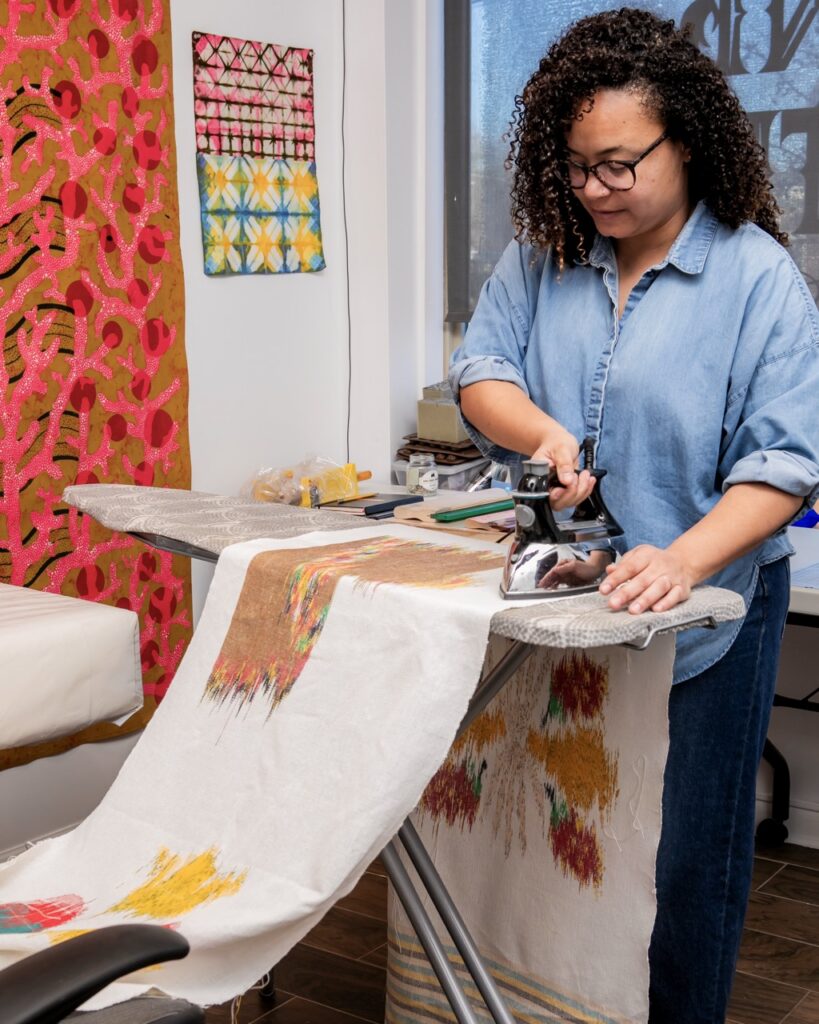
Working with others creates space for the artist to move beyond the boundaries of her individual studio practice. Dzegede is one half of LAB-D, her ongoing partnership with artist Lyndon Barrois Jr. Their forthcoming exhibition Twofold presents parallel responses to shared visual prompts drawn from museum collections, each artist working at an agreed scale while allowing difference to remain visible. “We’re interested in seeing what things look like from two perspectives,” she notes. The exchange depends on a level of trust and attentiveness shaped over time.
That openness extends into other shared platforms, including Ask Addoley + Anna, an advice podcast for emerging artists produced with artist Anna Ihle, and her ongoing mentorship with artists in the Brew House Arts residency program. Dzegede describes collaboration as freeing, a way to explore ideas still in formation. Recent work includes an oral history project with her father in Ghana, unfolding through video and pointing toward new modes of documentation.
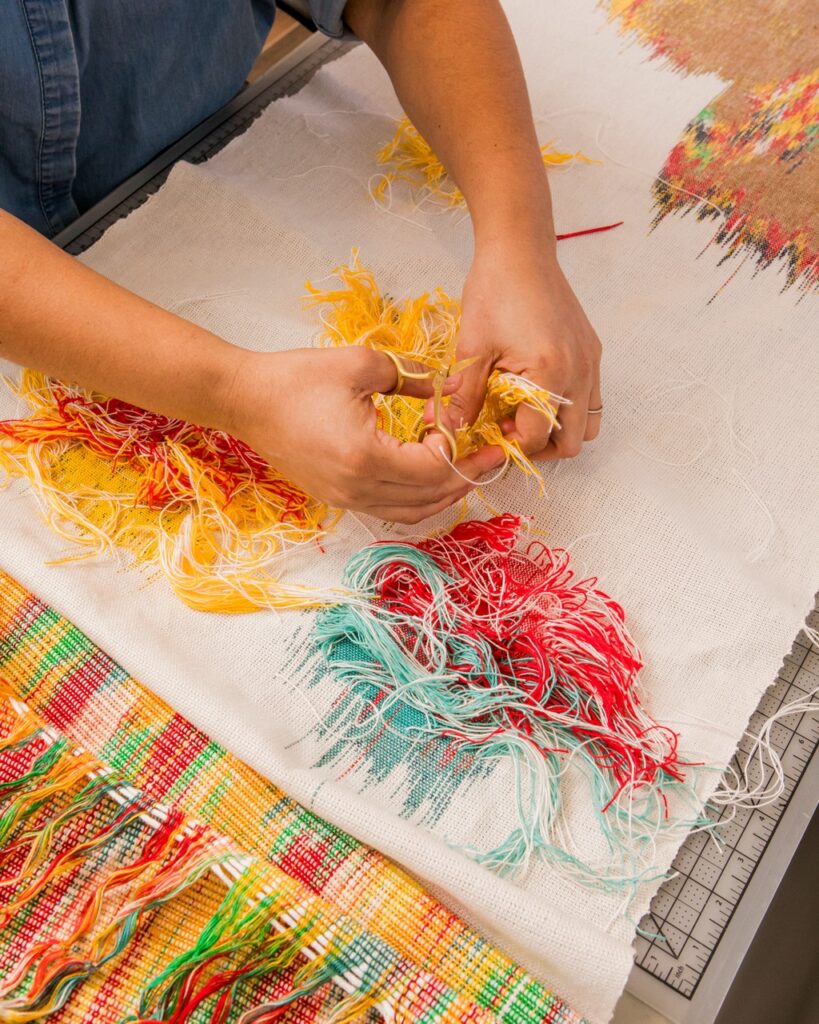
While Dzegede often identifies as a textile artist, her practice continues to expand through inquiry rather than medium. What holds it together is a sustained attention to what materials remember, and what they continue to disclose through use.
Story by Shawn Simmons
Photography by Laura Petrilla
Subscribe to TABLE Magazine’s print edition.