To gift a homemade pie is a lovely expression of gratitude.
This spring, my partner Dylan and I entered the circus that is the real estate market, and, to cut to the chase, we bought our dream house! Everything in my being said that this was the house for us, and I don’t believe we would have it today if not for our realtor, Catherine McConnell.
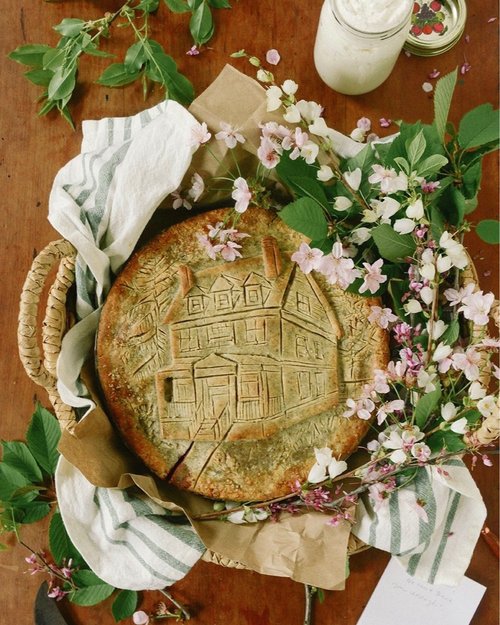
She understood what we wanted, and she was sympathetic to how unfair and exhausting the market can be. Pro tip: if your friend has their heart set on a place, don’t say, “If this doesn’t work out, your dream house is surely out there.” It’s better to say, “this totally sucks, and I’m here for you.” Extra pro tip: bring pizza! It’s going to be an emotional journey. When it came time to thank Catherine for her part in our dream, I expressed my gratitude in my favorite way: through butter and flour. I made a pie with our Perry Hilltop house on the crust and baked it with love. You don’t have to carve your dream house into the crust to make this pie, but I do hope you use this recipe to thank someone special in your life. A simple pie crust topper will do. Stay tuned, as I hope to be sharing more developments from my dream house, where things are currently in boxes and a little dusty.
WHOLE GRAIN, GLUTEN-FREE BERRY PIE RECIPE
Yield: An 11-inch pie
This recipe yields enough pie crust for a 9-inch pie with a full top crust, or a 10-12 -inch pie with a decorative top crust. The pie shown is an 11-inch pan. The crust recipe comes from one of my favorite cookbooks, Alternative Baker by Alanna Taylor-Tobin.
Ingredients
For the crust:
1 cup (160 g) white rice flour
1/2 cup (50 g) GF oat flour
¾ cup (90 g) buckwheat flour
1/2 cup (60 g) cornstarch
¼ cup (26 g) tapioca starch/flour
¼ cup + 1 Tbsp (30 g) finely ground chia seeds (I grind mine in a coffee grinder)
1 teaspoon fine sea salt
16 Tbsp (2 sticks) cold, unsalted butter
1 Tbsp apple cider vinegar, chilled
1 cup ice water
For the filling:
7 cups (1.3 kg) mixed berries (hulled & chopped)
1/2 cup (77 g) coconut sugar1
/3 cup (113 g) honey
1/4 cup (28 g) cornstarch
2 Tbsps balsamic vinegar
1 teaspoon vanilla extract
1/4 teaspoon kosher salt
1/4 teaspoon ground cinnamon
1/8 teaspoon finely ground black pepper
Assembly
Egg wash or cream/milk
Make the dough:
In a large bowl, combine the rice, oat, buckwheat flour, cornstarch, tapioca flour, ground chia seed, and salt. Scatter the butter pieces over the top. Use a pastry blender or your fingers to incorporate the butter until the mixture resembles gravel, with lots of butter chunks the size of large peas.
Drizzle the apple cider vinegar over the flour mixture, then drizzle the ice water 1 tablespoon at a time, tossing the dough with a rubber spatula to moisten evenly. Add just enough water for the dough to hold together when you give it a squeeze, and add it directly to the dry floury bits that like to hang out on the bottom of the bowl; you may need up to 8 tablespoons of water, total.
Use the “fraisage method” to form the dough:
Dump the dough onto the counter. Grab a handful of dough, place it on the counter, put the heel of your hand on the dough, and push it away from you, scraping it across the surface several inches. Use a bench scraper to scrape the dough off the counter and place it back in the bowl. Repeat with the remaining dough. It should only take a minute or two to complete this process.
Gather all of the dough, then divide into two equal portions. Roll each portion into a ball. Wrap each loosely in plastic wrap or a beeswax wrap, and flatten it into a disc shape. Chill the dough until firm, 30-60 minutes.
Note: If your dough has chilled for a while and cracks when you go to roll it, let it warm up a bit; this will make it easier to work with.
Roll the dough:
On a lightly floured surface, roll each ball of chilled dough into a rough square that is about 1/4″ thick. Fold it in thirds like you’re folding a letter, then in thirds again, so the dough is a small, layered rectangle. Gently press to flatten it slightly, and chill for another 30 minutes.
Shape the dough:
Remove one dough ball from the fridge, unwrap it, and place it on a lightly floured surface. Roll the dough into a circle. You want the diameter of the circle to be about 2 inches bigger than the diameter of your pie plate. Dust the dough lightly with oat flour as needed, rotating and flipping it to prevent it from sticking.
Ease the dough into a glass pie plate, fit it into the corners, and trim the overhang. Prick the bottom of the crust all over with the tines of a fork. Chill the crust for 20 minutes, then freeze it for at least 20 minutes, until solid.
Prepare the filling:
Combine all the ingredients in a large mixing bowl, and stir until cornstarch dissolves.
To assemble:
Transfer the filling to the pie, and keep chilled while you design your top crust. Alternatively, you can roll the dough similar to the base, and cover the pie completely. When adhering top crust to the edges, you can use an egg wash, heavy cream or milk to help the dough adhere. Chill the completed pie while the oven preheats.
To bake:
Preheat the oven to 425°F. Bake the pie on a baking sheet for 20 minutes. Reduce the oven temperature to 375°F, and continue to bake for 40-50 minutes more, until the crust is golden and the berry filling bubbles in the center. If the crust starts to brown too quickly, cover the pie with aluminum foil to prevent excessive browning.Remove from baking sheet to a wire rack; cool 1 hour before serving.
Enjoy!
RECIPE, STORY, STYLING, AND PHOTOGRAPHY BY QUELCY KOGEL
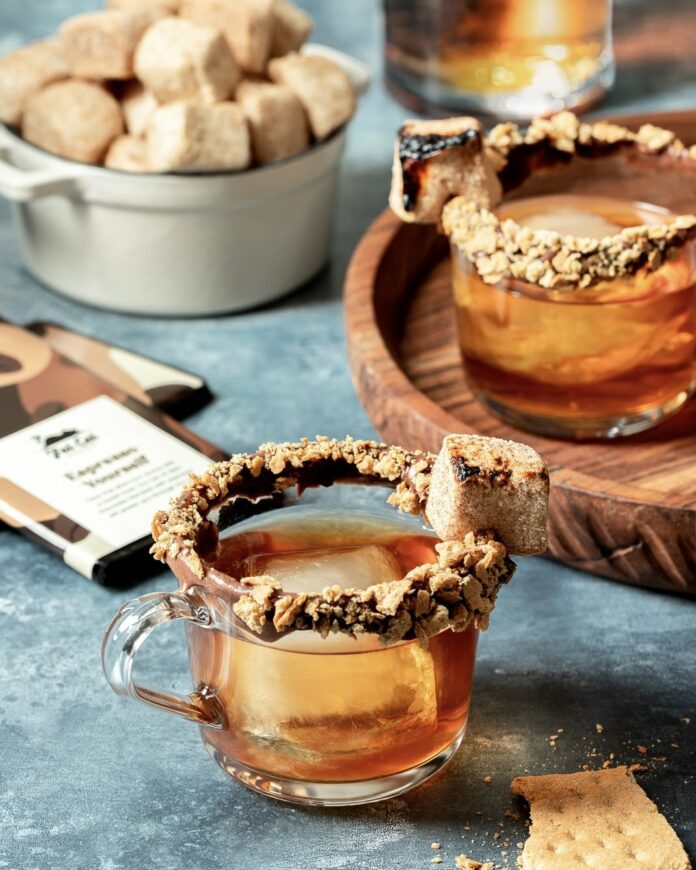
A proper summertime fireside hang includes s’mores. Get a little gooey with this cocktail version.
It’s not summer until you’ve sat around a fire, absorbing the comforting smell of the smoke into your clothing, watching the sparks from a newly added log, and conversing long into the night. It’s not a proper summertime fireside hang without the classic fireside food: s’mores. Whether you’re six or 86, you’re never too old to be excited to squish an oozing, roasted marshmallow and chocolate bar between two graham crackers.
If you are, however, over the age of 21, then I have a summertime cocktail for you. Capture the joy of a fireside hang with the smoky and oaky flavors of whiskey. A classic old fashioned becomes a sip of summer with a deconstructed s’more. Pro tip: the chocolate-hazelnut spread that works so well to garnish this drink also works really well in your s’more too. A chocolaty spread goes on smooth and only improves with heat. However, if you’re a chocolate bar loyalist, try the Espresso Yourself bar from Fat Cat Chocolates.
So bon appétit andcheers to summertime, to firesideswith friends, and channeling childhood wonders.
Some Flavor Upgrades: My own enthusiasm for s’mores rekindled when I discovered the brand Smashmallow. They’re corn-syrup and preservative free, and they come in fun flavors like Cinnamon Churro (featured in the photo), toasted vanilla, cookie dough, and mint chocolate chip. Collect ‘em all! When it comes to the cocktail, I recommend Wigle’s organic molé bitters for some extra cocktail complexity.
A fresh and spicy salsa brings this easy-to-make baked dish to life!
The first ingredient of a great summer party is people! That’s why TABLE was so excited when Marvista Design + Build decided to invite their favorite clients to a summer soiree at their Squirrel Hill showroom, alongside sponsors Cambria Stone, Tisdel Sub Zero Wolf, Don’s Appliances, and TABLE Magazine.
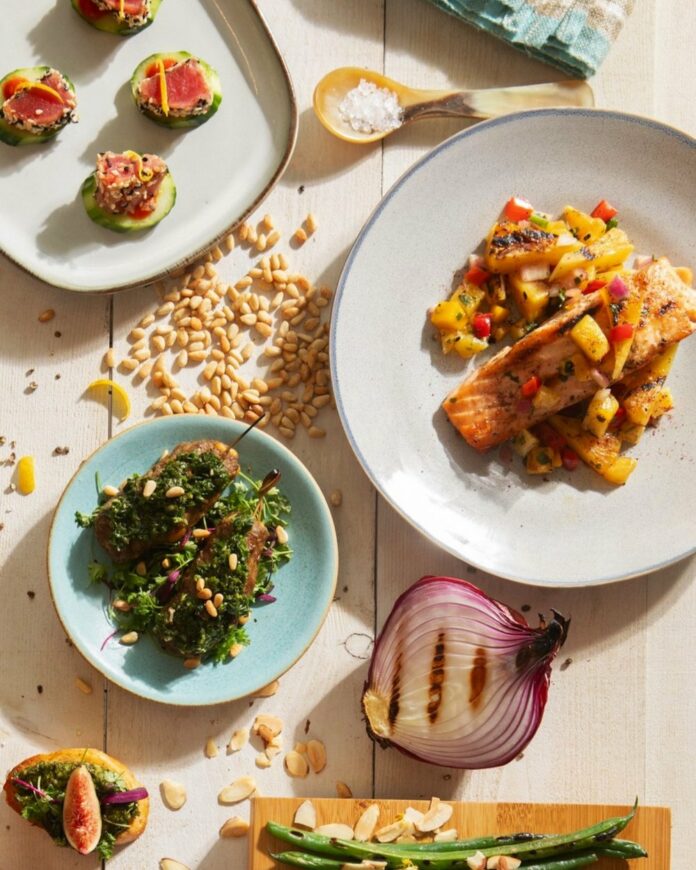
Chef Brandie Lamb journeyed to Pittsburgh from her Cincinnati home, bringing her expertise as a Tisdel SubZero Wolf chef to the proceedings. She joined forces with Pittsburgh caterer Elegant Edge’s owner Judah Cowen to develop a light, bright Kosher menu.
Just before the guests gathered, Chef Brandie showed us how each dish was made. Photographer Dave Bryce and our publisher Justin Matase captured the deliciousness…and the party came alive just after.
Enjoy these dishes at a summer gathering of your own design!
SALMON WITH PINEAPPLE MANGO SALSA RECIPE
Ingredients
For the salsa
4 grilled pineapple slices
1 diced mango
½ chopped red onion
Chopped jalapeño (to taste)
Chopped cilantro (to taste)
Lime juice from 1 lime
Salt
Lemon juice from one lemon
For the salmon
2 lb Jail Island salmon
Salt
Pepper
1/2 tsp Garlic powder
1/4 tsp Chili powder (or more if you prefer a spicier taste)
1/2 tsp Mustard powder
Grill pineapple slices, then dice.
Chop and dice mango, onions, jalapeño, cilantro, lime juice, and salt, and mix. Let sit for 30 minutes.
While salsa is resting, drizzle lemon juice on salmon and season with salt, pepper, garlic, chili, and mustard powders. Massage the spices in gently.
Bake at 350 degrees for 20 minutes or until fully cooked.
Place a liberal serving of pineapple mango salsa on the side and serve.
Photography by Dave Bryce / Styling by Justin Matase / Venue by Marvista Design + Build
Try other great summer dishes from our party at Marvista Design + Build:
A crowd-pleasing side dish, especially when farm-fresh green beans are in season.
The first ingredient of a great summer party is people! That’s why TABLE was so excited when Marvista Design + Build decided to invite their favorite clients to a summer soiree at their Squirrel Hill showroom, alongside sponsors Cambria Stone, Tisdel Sub Zero Wolf, Don’s Appliances, and TABLE Magazine.
Chef Brandie Lamb journeyed to Pittsburgh from her Cincinnati home, bringing her expertise as a Tisdel SubZero Wolf chef to the proceedings. She joined forces with Pittsburgh caterer Elegant Edge’s owner Judah Cowen to develop a light, bright Kosher menu.
Just before the guests gathered, Chef Brandie showed us how each dish was made. Photographer Dave Bryce and our publisher Justin Matase captured the deliciousness…and the party came alive just after.
Enjoy these dishes at a summer gathering of your own design!
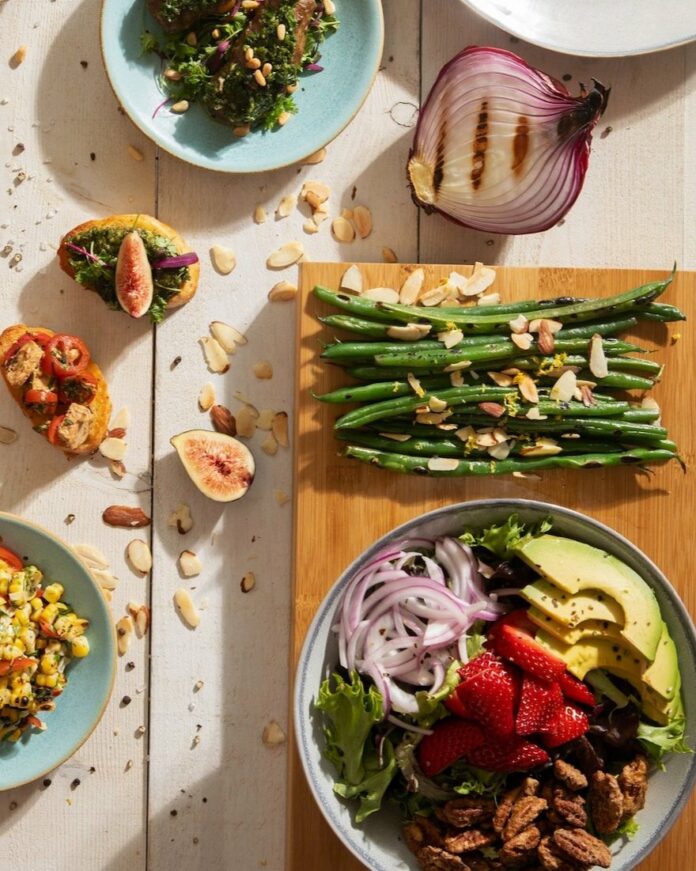
GREEN BEANS WITH SHALLOTS & ALMONDS RECIPE
2 lb green beans
1 tbsp olive oil
5 shallots
Salt
Pepper
¼ cup brown sugar
1 tbsp lemon juice
Toasted almonds
Blanch green beans lightly, then flash on a hot grill for grill marks and flavor.
Heat oil in a pan, add sliced shallots. Stir on high heat till brown.
Add salt, pepper, and brown sugar and cook until caramelized.
Mix green beans with shallots, olive oil, and lemon juice.
Garnish with toasted almonds.
Photography by Dave Bryce / Styling by Justin Matase / Venue by Marvista Design + Build
Try more great summer dishes from our party at Marvista Design + Build:
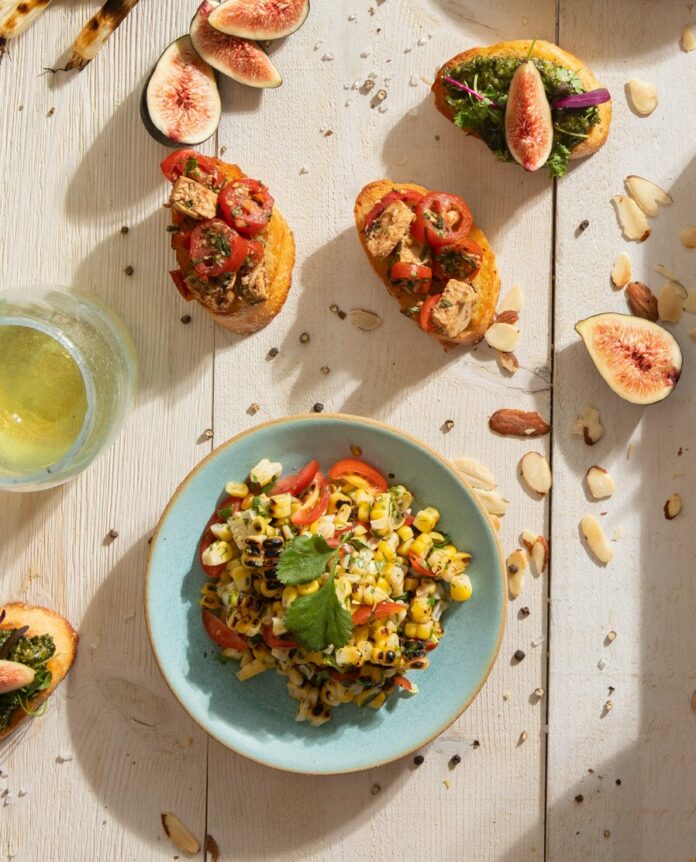
When the corn is as high as an elephant’s eye, you make corn salad!
The first ingredient of a great summer party is people! That’s why TABLE was so excited when Marvista Design + Build decided to invite their favorite clients to a summer soiree at their Squirrel Hill showroom, alongside sponsors Cambria Stone, Tisdel Sub Zero Wolf, Don’s Appliances, and TABLE Magazine.
Chef Brandie Lamb journeyed to Pittsburgh from her Cincinnati home, bringing her expertise as a Tisdel SubZero Wolf chef to the proceedings. She joined forces with Pittsburgh caterer Elegant Edge’s owner Judah Cowen to develop a light, bright Kosher menu.
Just before the guests gathered, Chef Brandie showed us how each dish was made. Photographer Dave Bryce and our publisher Justin Matase captured the deliciousness…and the party came alive just after.
Enjoy these dishes at a summer gathering of your own design!
GRILLED SWEET CORN SALAD RECIPE
4 ears sweet corn
2 chopped shallots
1 tbsp lime juice
1 tbsp olive oil
1 chopped Fresno pepper
1 tsp chopped cilantro
1 tsp salt
1 tsp pepper
Boil corn for 5 minutes, then grill for flavor until done. Cut the corn off the cobs.
While corn is still warm, combine all the remaining ingredients together and pour over corn. Mix again until fully coated.
Photography by Dave Bryce / Styling by Justin Matase / Venue by Marvista Design + Build
Try more great dishes from our summer party at Marvista Design +Build:
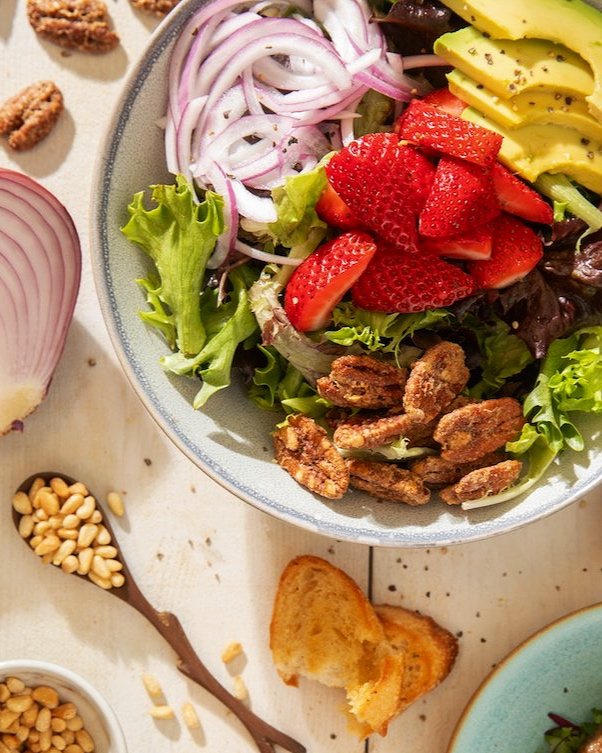
“Fresh fresh fresh” is the best way to describe this refreshing salad.
The first ingredient of a great summer party is people! That’s why TABLE was so excited when Marvista Design + Build decided to invite their favorite clients to a summer soiree at their Squirrel Hill showroom, alongside sponsors Cambria Stone, Tisdel Sub Zero Wolf, Don’s Appliances, and TABLE Magazine.
Chef Brandie Lamb journeyed to Pittsburgh from her Cincinnati home, bringing her expertise as a Tisdel SubZero Wolf chef to the proceedings. She joined forces with Pittsburgh caterer Elegant Edge’s owner Judah Cowen to develop a light, bright Kosher menu.
Just before the guests gathered, Chef Brandie showed us how each dish was made. Photographer Dave Bryce and our publisher Justin Matase captured the deliciousness…and the party came alive just after.
Enjoy these dishes at a summer gathering of your own design!
STRAWBERRY PECAN SALAD
Ingredients
3 cups green spring mix
¼ cup candied pecans
½ cup quartered strawberries
1/4 cup sliced red onion
1/4 cup sliced avocado
1 sliced avocado
1/3 cup balsamic vinaigrette
Instructions
Add all ingredients and mix gently.
Photography by Dave Bryce / Styling by Justin Matase / Venue by Marvista Design + Build
Try more great summer dishes from our party at Marvista Design + Build:
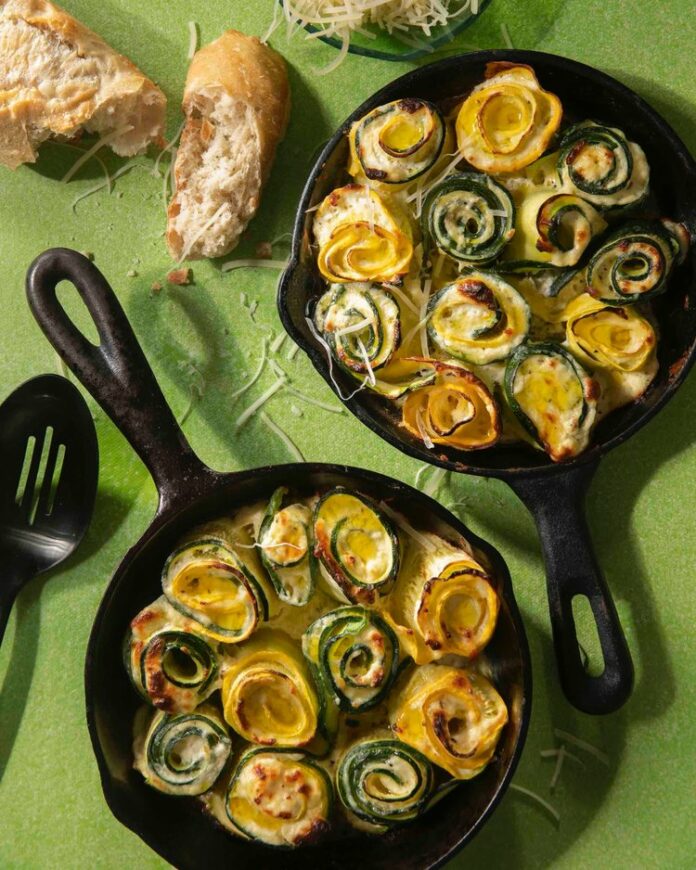
Peak summer squash season is coming — here’s a delicious way to enjoy the bounty.
That overabundant, peak-harvest moment of summer always brings zucchini and summer squash into the limelight. What do we do with it all!? Here’s a lovely, elegant idea that takes no time or trouble once you slice Shenot Farm‘s produce and sprinkle the dish with Blackberry Meadows Farm bacon. It’s downright delicious.
SUMMER SQUASH ROLL-UPS RECIPE
INGREDIENTS
1 zucchini
1 yellow squash
1 tsp salt
1 cup ricotta cheese
½ cup grated Parmesan
1 egg
1 tbsp freshly chopped parsley
1 tsp black pepper
1 tsp garlic powder
3-4 strips of bacon, fried crisp and crumbled, optional
INSTRUCTIONS
Using a mandolin, thinly slice zucchini and squash lengthwise into long ribbons. Place into a Ziplock back with 1 teaspoon salt and let sit for 20 minutes (this will allow the squash to become pliable and will keep the pieces from breaking while rolling up).
In a bowl, evenly mix the remaining ingredients. Line up each ribbon of squash flat on a plate, spread 1 tablespoon of filling evenly over each ribbon, roll up, and place in a baking pan. Sprinkle with extra Parmesan.
Broil for 10-12 minutes until the filling is cooked through and the tops start to brown, then serve.
STORY BY KEITH RECKER / PHOTOGRAPHY BY DAVE BRYCE / RECIPE AND STYLING BY ANNA CALABRESE
Across Pennsylvania, 59,000 farms are responsible for almost $136 billion in direct and indirect economic activity, as well as 579,000 jobs. Just 2% of the state’s population works not only to create enormous dollar impact, but also nourishing food and a way of life that is central to our very identity. Is the beauty of well-managed farmland and healthy farm produce just a byproduct of all the above? We don’t think so.
Challenges for Family Farms in Pennsylvania
And yet this essential part of Pennsylvania life is challenged. There are twice as many farmers over 65 as there are under 35. Farm acreage declined 5% between 2012 and 2017. That’s 400,000 acres that went to other purposes – often because population growth is driving the value of land upward, and farmers feel financial pressure to sell. Not to mention the battle to make a living when costs go up and profitability can seem a bridge too far.
What Can We Do?
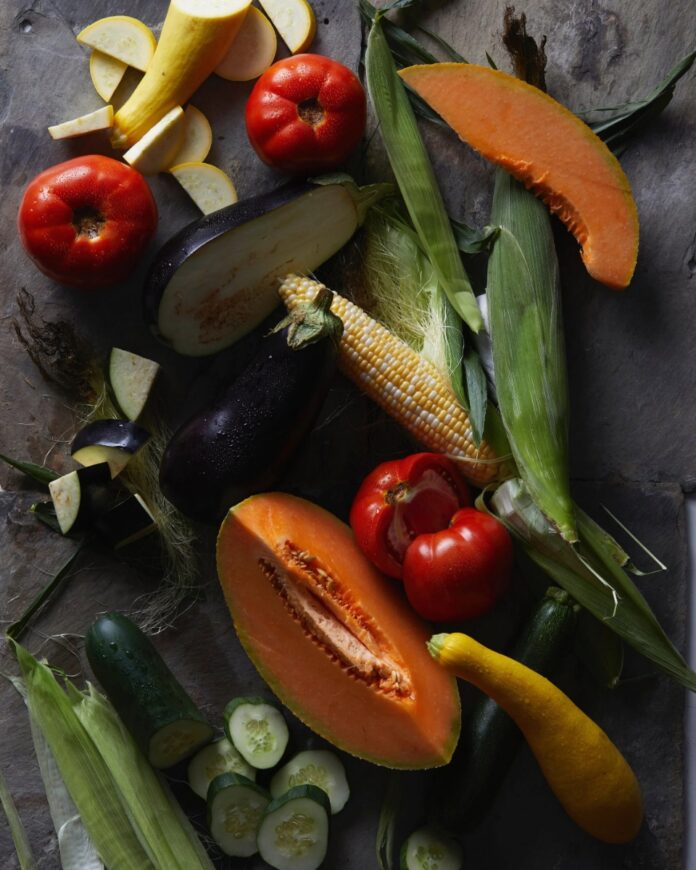
Let’s put our feet in the street this summer and head out to purchase fresh fruits and vegetables from family farms and farmers’ markets. Tell your friends how delicious the offerings are. Take them with you next time you go. Every purchase helps keep a family business healthy. While you’re at it, a word of appreciation would help, too!
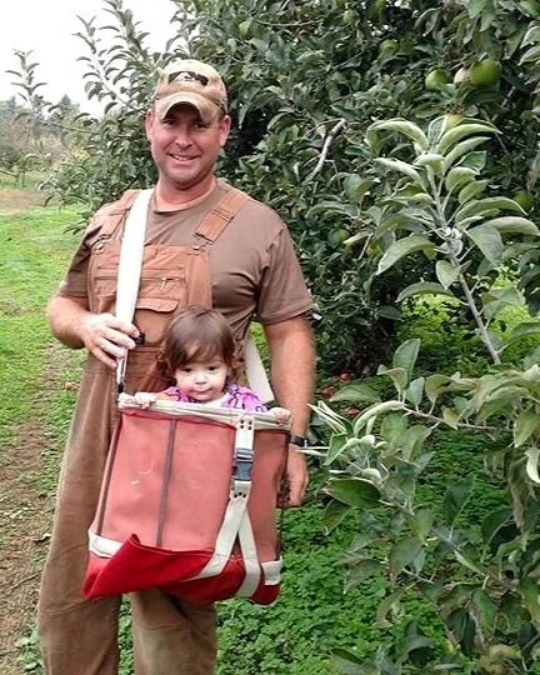
Pennsylvania harvests over 400 million pounds of apples each year – putting it in the top five apple-growing states across the nation. The highest concentration of orchards sits in Pennsylvania’s south-central region, but apples are grown commercially in every county. The apples that make it to farm stands are a small portion of overall sales, but an important one. When an orchard owner gets apples directly into your hands, the sale is often the most profitable he or she will make.
There’s a temptation to see apple growing as simple: plant the tree, harvest the fruit. But there’s a lot more to it. In order to fill your bushel with beautiful, nourishing, delicious apples, farmers need to master integrated pest and pollinator management to combat all manner of diseases and predators. Sometimes they introduce competitive insects like lady bugs. Sometimes they place pheromone-laden decoys to trap apple-munching insects and reduce their numbers. Occasionally they spray a clay compound onto fruit in the very early stages of formation to create a deterrent micro-barrier, which gradually comes off with rain and standard washing prior to market.
Growing interest in heirloom apples bred for flavor rather than appearance inspires many local farms, such as Norman’s Orchard in Tarentum, to add heritage varieties each year. These efforts help keep the region’s apple offerings healthy and diverse.
The Ark of Taste
The Slow Food organization’s Ark of Taste project, an effort to catalog heritage foodstuffs around the world, lists only seven vegetables from Pennsylvania. Three of them are peppers: Fish Pepper, Hinkelhatz, and Martin’s Carrot Pepper. While these rarities might be hard to find at local farm stands, dozens of peppers flourish in fields and gardens across the state and there is no lack of variety around Pittsburgh. Trax Farms in Library grows several varieties including Hungarian, Gypsy, Green Bell, and Red Bell. McConnell’s Farm in Aliquippa adds the beautiful Flamingo pepper to this list, which emerges a luminous ivory-yellow color, and matures into beautiful orange-red.
Adams and Franklin counties in south-central Pennsylvania are famous for their peaches and plums – a reputation that started in the late 19th century. Some say it’s the soil that makes great stone fruits. Some say it’s the rarity of spring frosts, and guaranteed hot, humid summers. Whatever the reason, farm stands around Chambersburg and Gettysburg welcome visitors from far and wide, helping to make Pennsylvania the country’s fourth largest peach producers. Dwight Mickey, owner of Schatzer’s Fruit Market in Chambersburg, is known for his selection of authentically local stone fruits. Cavan Patterson, co-founder of Wild Purveyors, says that an Indian Blood plum he bought there “was the most delicious I’ve had in my entire life.”
Right here in our backyard, Shenot Farm in Wexford harnesses their rich soil and all the sunshine they can get to grow fifteen varieties of peaches, nectarines, and a few plums, too.
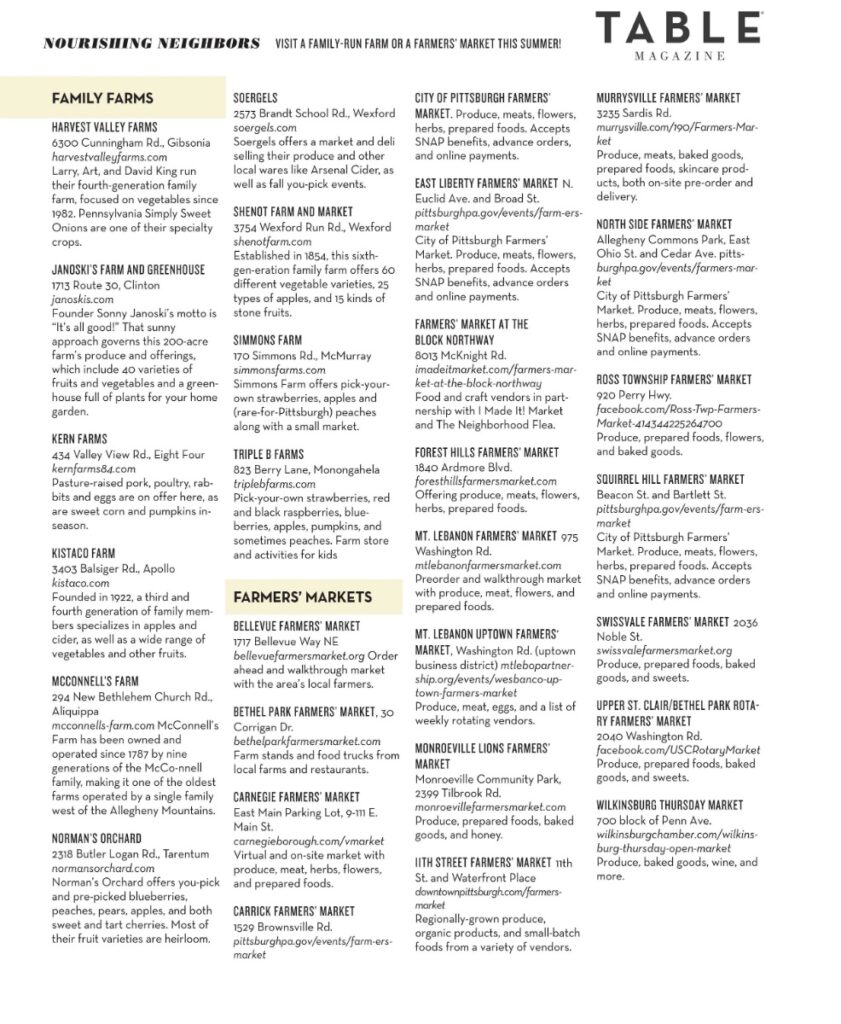
Looking to visit a family-run farm or farmers’ market this summer? Check out our printable list of local growers in the Western Pennsylvania region.
Story by Keith Recker Photography by Adam Milliron
So many things that were taken for granted in a pre-Covid-19 world are now being viewed as luxuries from another time. Feeling more distant and luxurious than ever is the idea of sitting indoors at a restaurant–sans mask–and enjoying a meal with friends, complete with libations.
How the Local Farmer Impacts Your Dinner Table
This major shift in everyday living has altered so many livelihoods thanks to shutdowns, partial shutdowns, and interruptions in food distribution and supply chains. Local farms who depend on restaurants for much of their income are reeling. How does our region continue to feed communities? Who is buying locally sourced produce, dairy, and meat? Can local farms fill the void that disrupted supply chains created due to the pandemic?
There is a way forward, but it will take all of us to activate.
“It’s like coming back home, so to speak,” said Don Kretschmann, co-owner of Kretschmann Farm, which focuses on organic, local produce and community sponsored agriculture (CSA) delivered to your doorstep. As they analyzed their practices in providing wholesale goods to grocery stores and regional suppliers in March when the pandemic began hitting food supply chains hard in the Pittsburgh region, they became inundated with requests for CSA subscriptions.
“People are reevaluating,” he said. “I look at it like a family. When push comes to shove, you can count on your local food producers. Hopefully that will stick around and people will realize that long after this crisis,” he added.
Becky Kretschmann, Don’s partner in both life and on the farm, notes that people had not seen empty shelves at the grocery stores or a backorder of items normally available. While some stocked up in fear, others faced another challenge.
Can a CSA Help?
“Yes, we’ve seen an uptick in people signing up for our CSA boxes, but some have had to cut back on their normal amount. They feel like they have to really watch their money. You can’t cut back on rent or mortgage, but you can cut back on food. This issue is multi-pronged. You have the consumer who can’t afford the amount of food like they did in the past, and you have the suppliers with no restaurants to provide produce to. It really changes how people look at this entire infrastructure,” she said.
Because they are a local provider of fresh produce, they have created a system within their CSA distribution to assist families and those who suddenly find themselves unable to afford produce.
Beyond Your Own Table
“Most farmers give to food banks, are pretty generous and give whatever they can. We’ve always looked to ourselves as serving the communities with good foods and don’t look at it as a business,” Becky said.
They have instituted a program that allows their community members to sign up if they lose their job or can’t afford produce. Others can donate CSA boxes to those in need. “When was the last time you walked into a grocery store and they floated you if you came up short?” Don asked.
Covid-19 has exposed the fact that many people were teetering on the brink of financial ruin, and that national supply chains were unequipped to deal with something like a pandemic, which in turn wiped out crops and caused waste in vast quantities around the country.
Farmer Calvin McConnell has seen history repeat itself, reflecting on how his family farm, which dates back to possibly 1787, made it through the Spanish Flu of 1918 and now this. “We hunker down. It’s stubbornness that has seen us through the hard times, and it will get us through these times, too,” he said. The difference now, he sees, is how people are shopping for their food.
A Shift in the Consumer
“People used to shop seasonally. Load up on produce, freeze them, can them… but now everything is about convenience. You can get whatever you want, whenever you want it, so people are just not as educated as to what farmers have to do to get food to the consumers,” he said. McConnells’ Farm & Market, with delicious peaches, always focuses on the direct to consumer market and he worries that as time progresses, more local farms could close.
“There is this quote by farmer Victor Davis Hanson on our chalkboard that reads: ‘The family farm in America has all but vanished. And with it we are losing centuries of social and civic wisdom imparted by the agrarian life…’ ” When we lose local farms, we lose whole communities,” he said.
And education is key. Chris Kubiak, of Timber Wolf orchard in Mercer County will start selling Westsylvania Cider soon and agrees that if we continue to lose farmland, the collective knowledge of farming practices, history and cultural ties to our land and communities will also degrade.
“That is the human aspect,” he said. “But from an environmental perspective, farms provide green space and habitats to wildlife. If we lose habitats, we lose birds, we lose pollinators, we lose multifaceted parts of our communities. We must support our local providers of produce, dairy, meat, cider… all of it,” said Kubiak.
Sustainability in the Long Run
Unpacking meat from plastic wrappers, picking out strawberries from a store bin instead of a farm stand changes the ways in which we relate to our environment, to one another and to food.
“If there ever was a sign to go local, this was it,” said Cavan Patterson, owner of Wild Purveyors, founded in 2009. Wild Purveyors supplies Pittsburgh’s restaurant industry and grocers with wild, exotic, and seasonal foods, in addition to regionally sourced foods from exceptional farmers and outstanding producers.
Normally, factories produce goods at the point of origin, which sits at distributors for days or weeks before they send it out to possibly another distributor before actually hitting the grocery stores. “We cut out ninety percent of that,” said Patterson. “I think there is inherently less potential for disruption this way. I’d love to see a world in which our model was instituted across the country. Instead of major chains and factory farms, you’d have small, regional distributors which can help provide fresher, more nutritious foods,” he said.
Jason Oddo, owner of Bitter Ends Farm Co., also noted the dangers of relying on a national food supply chain. “The first thing you notice about the national and homogenous food industry is that it has no preference or doesn’t care about the area you live in. Capitalism does what is best for business,” he said.
Where Do We Go From Here?
For example, this year there is a statewide sweet corn shortage. “People are losing their minds. When Covid-19 happened, the industry depended on migrant labor and the farms had no one to pick it. So it’s not available. It really does impact us. The effect can’t really be felt until something we depend on disappears,” he said.
He echoed the sentiment of other local farmers, stressing the importance of buying from farmers’ markets, locally owned grocers that work specifically with local farms, as well as visiting and interacting with local farms in your region.
Besides committing to purchasing produce from local farms, Desiree Sirois, co-founder and co-owner of Fallen Aspen Farm believes that Americans have to rethink how they interact with the food supply chain entirely.
“Americans want fast, cheap and easy. When it comes to food, we often rationalize why we spend less, but really, it costs us more to engage with the system this way,” she said.
Be Your Own Farmer
She suggests growing your own vegetables if you can, and purchasing meat as a delicacy, not a staple. “I know we run a livestock farm, and I know other farmers may not like it when I say this, but Americans need to eat less meat.” Think quality, not quantity. “If you do feel the need to eat meat, take that seriously and respect it. Purchase from a place that respects animals. I got into this type of farming because I feel really strongly about that,” she added.
She also recognizes that “farming has been traditionally a white man’s world.” If we want to save local farms, we must support all types of people from all walks of life to reconnect to the land and provide aid for local farmers to thrive, including help with grant writing and networking opportunities to learn from one another.
“I can count on one hand how many women I know that farm. I know even less Black and brown farmers. We need to not only educate ourselves about our food systems, but also encourage more people to grow food and become a part of the solution from the ground up.”
Please support our region’s farms by visiting, asking questions, and buying their goods.
Lamb Fest 2021 was a delicious day for lamb lovers and connoisseurs of good flavor, including dishes of these special Lamb Sloppy Joes. Seven of our nine teams shared their recipes to try at home for TABLE readers.
The chef teams who competed for the top prize at TABLE Magazine’s Lamb Fest 2021 brought their experience, imagination, and talents to SouthSide Works in October. The results were the nine fantastic variations on deliciousness. Each entry was unique in its flavor profile, in its textures, and in its presentation. It was a tough choice, but hundreds of attendees voted for their taste buds. Guest Judge Hal B. Klein supervised the count and announced the verdict. And the rest is lamb history.
Team Average Joes at Our Lamb Fest
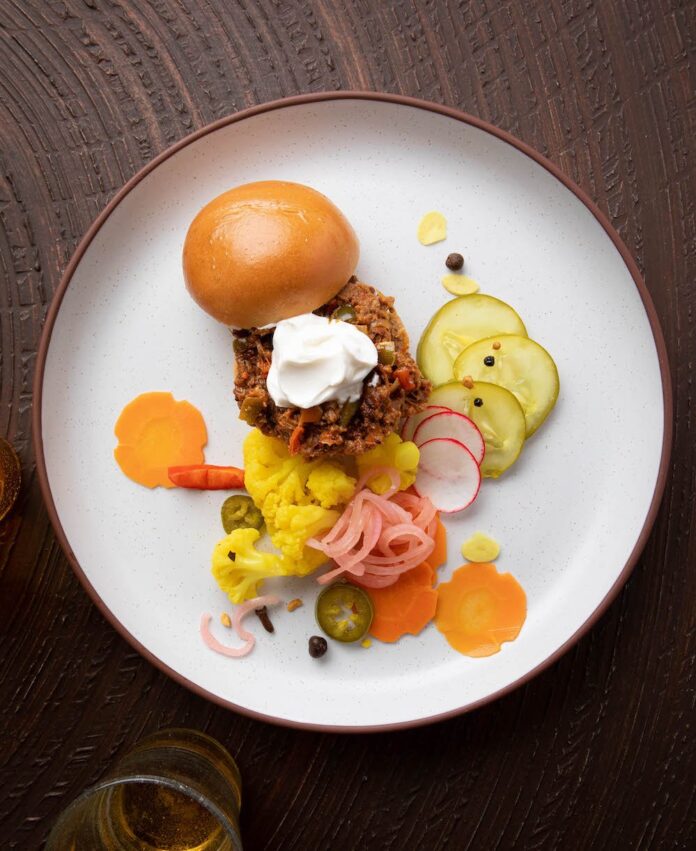
Speckled Egg founders Jacqueline and Nathan Schoedel met up with R.C. Carter and free agent Patrick Duffy to create a luscious mouthful of savory lamb sloppy joes finished perfectly with luxurious creme fraiche and served on a tiny bun from Mediterra. The team rounded out this delicious picture with the sharpness of homemade pickled vegetables. This is a dish anyone can try, and succeed with, at home.
A more decadent sloppy joe that you won’t mind getting messy for.
Ingredients
Scale
For the creme fraiche:
1 pt heavy cream
2 tbsp buttermilk
For the lamb mixture:
1 lb ground lamb
Salt and pepper
1 yellow onion, diced
1 red bell pepper, diced
3 garlic cloves, minced
1 tbsp tomato paste
1/2 cup white wine
1 cup Heinz ketchup
1/2 cup Worcestershire sauce
1/4 cup yellow mustard
5 dashes Tabasco
2 tbsp brown sugar
2 tbsp smoked paprika
1 tbsp cumin
2 tbsp chili powder
1 tbsp coriander
1 tsp allspice
1/2 tsp cinnamon
Instructions
Mix heavy cream and buttermilk in a non-reactive container (Tupperware works well).
Cover and let sit overnight at room temperature for at least 12 hours. Refrigerate.
Heat a large sauté pan over medium-high heat. Add ground lamb and season with salt and pepper. While the lamb is cooking, break up the lamb into smaller pieces.
When fully cooked, remove the lamb from the pan and set aside.
Return pan to heat; add onions and peppers. Season with salt and pepper. Saute for a few minutes until fragrant. Add garlic and when the garlic becomes fragrant, add tomato paste, and stir frequently. Cook until tomato paste starts to darken, about 3 minutes.
Deglaze the pan with white wine scraping the bottom of the pan. Reduce the white wine by half.
Return the lamb to the pan and add the remaining ingredients and salt and pepper to taste.
Stir often, bring to a boil, and then down to a simmer. Cook on the lowest setting for a half hour. Taste and re-season if necessary.
Assemble sandwiches by adding sloppy joe mix to a bun and top with creme fraiche.
if ( unit && ( ‘metric’ === unit || ‘usc’ === unit ) ) {
document.querySelector( ‘.tasty-recipes-convert-button[data-unit-type=”‘ + unit + ‘”]’ ).click();
}
Recipe by Jacqueline Schoedel, Nathan Schoedel, R.C. Carter, and Patrick Duffy
Story by Keith Recker
Photography by Laura Petrilla
Styling by Ana Kelly