Home Blog Page 53

From Past to Present: Shop Design Trends That Never Fade in Pittsburgh

0
A creative mood board by Danny Mankin featuring a collection of vintage books, personal sketches, gold jewelry, and varied fabric textures laid out on a burlap surface.

One of the best things about shopping design trends in Pittsburgh is that each product you purchase comes with in quality and design that holds up throughout the years. These trends in colors like classic neutrals or such as the use of artisan craftsmanship can turn your home or closet into something welcoming for years to come.

Classic Neutrals

A rustic table setting featuring a Chilewich Dahlia lace placemat, a hand-thrown ceramic plate, and Kim Seybert dip-dyed napkins tied with natural twine and dried flowers.

Classic neutrals are not trendy, which is exactly what has made them a trend in our risk-averse style universe. We always crave change, however, so they’re getting sweeter and moving into chocolate, cocoa, and vanilla tones.

Premium Craftsmanship

Interior design mood board by James Mohn featuring Holland and Sherry tweeds, Le Gracieux printed cottons, verdigris bronze vases, and Samuel and Sons trims for a Norman chateau-style renovation.
Designed by James Mohn Design

Financial markets suggest that, in troubled times, investors seek safety in quality. The same goes for home furnishings! Noble choices in materials, finishes, and accessories reassure with stable voices and enduring appeal.

Classic Design and Modern Living

An interior design mood board by Eddie Maestri featuring vintage French flea market finds, architectural sketches of Château de Gudanes, and luxury textiles from Schumacher and de Le Cuona.
Designed by Eddie Maestri

Rooted in the past, knowledge, craft, and memory combine to grow the next generation of design.

Artisan Crafted

A creative mood board by Danny Mankin featuring a collection of vintage books, personal sketches, gold jewelry, and varied fabric textures laid out on a burlap surface.
Designed by Danny Mankin

When talented hands turn to fine materials, products that last a lifetime are often the outcome.

Florals for Spring

A coastal-inspired design by Jennifer Janeway Designs featuring coral Thibaut Paper Rattan wall covering, Phillip Jeffries Fable wallpaper in Sepia Garden, and sky blue accents.
Designed by Jennifer Janeway Designs

Groundbreaking. Yes, Miranda Priestley, we know: seasonal florals are hardly new. But some ideas endure for a reason: they seduce us with appealing color, pattern, and nostalgia.

Fresh Ideas for the Eye

A vibrant interior design mood board by Jennie Bishop featuring a Taylor Swift-inspired palette with mint green fabrics, disco balls, Samuel & Sons tassels, and Chanel lipstick in Coco Flash.
Designed by Jennie Bishop

Famous Vogue editor Diana Vreeland said this truism decades ago. We need to refresh our eyes with new ideas in order to feel alive.

Story by Keith Recker and Stephen Treffinger
Styling by Keith Recker
Principal Photography by Dave Bryce

Subscribe to TABLE Magazine’s print edition.

Dive Into the French Moderns Exhibition at The Frick Pittsburgh

0
A French Academic oil painting by William-Adolphe Bouguereau depicting a young woman in traditional dress holding a small child in her arms.
William Bouguereau (French, 1825–1905). The Elder Sister, reduction, circa 1864. Oil on panel, 21 7/8 x 17 15/16 in. (55.6x 45.6 cm). Brooklyn Museum, Bequest of William H.Herriman, 21.99. Photo: Brooklyn Museum.

French Moderns showcases more than 50 works by Matisse, Renoir, Degas, Rodin, and other disruptors whose creative rebellion challenged tradition and paved the way for modern art as we know it. Chief curator Dawn Reid Brean shares how these trailblazing works—and the movement behind them—made their way from Paris to Pittsburgh.

The French Moderns Exhibition at The Frick Pittsburgh

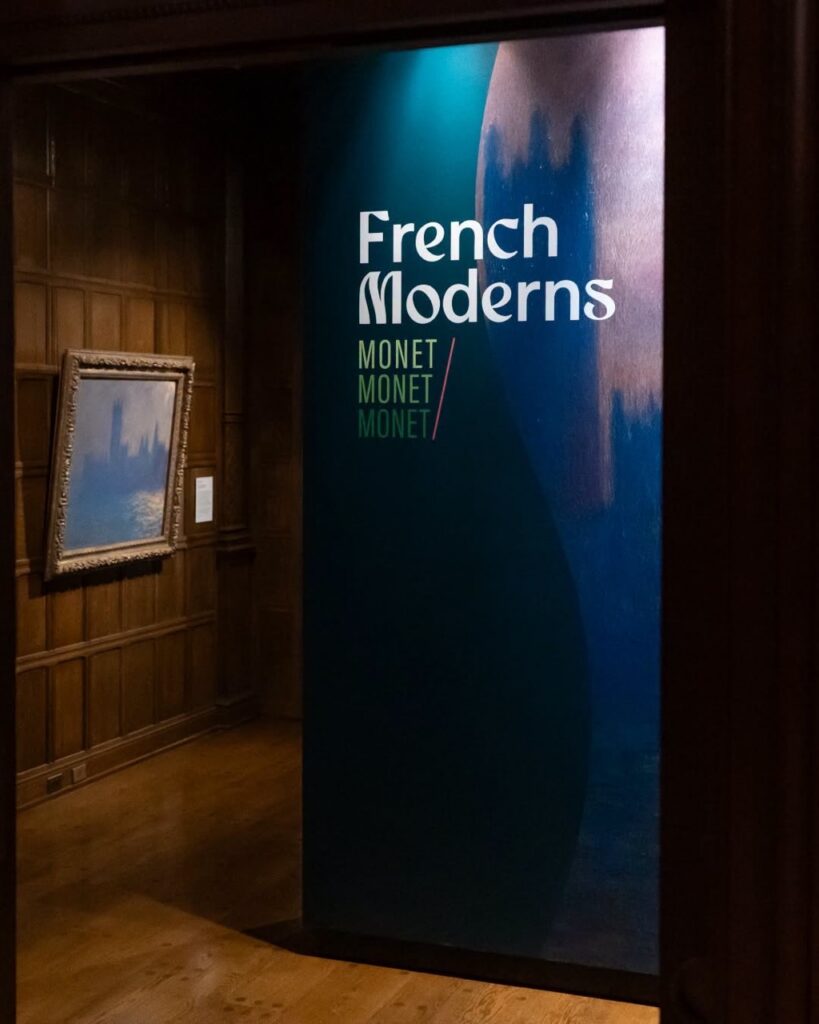
Visitors arriving at The Frick Pittsburgh expect to see Italian Renaissance paintings and formal portraiture from the 18th century. But this summer, they will also encounter the shimmering brushwork of Renoir and the vivid colors of Henri Matisse—a surprise twist in the museum’s usual narrative.

The French Moderns: Matisse / Renoir / Degas exhibition offers a grand tour of the major artistic movements spanning the nineteenth- and twentieth centuries, from the Realism of Gustave Courbet to the Surrealism of Yves Tanguy. All the works in the exhibition are drawn from the Brooklyn Museum’s renowned collection. By the early 1900s, Brooklyn’s visionary curators and trustees were acquiring contemporary art by such artists as Henri Fantin-Latour and Paul Cezanne, forming the cornerstone of a collection that now includes iconic paintings by Edgar Degas and sculpture by Auguste Rodin.

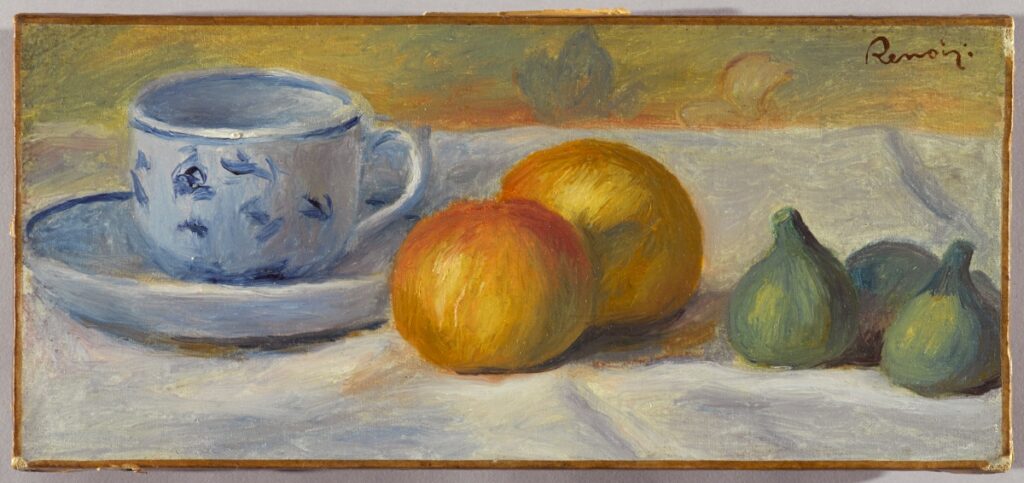
A still life oil painting by Pierre-Auguste Renoir featuring a blue and white patterned teacup on a saucer alongside two yellow peaches and three green figs on a white tablecloth.

Pierre-Auguste Renoir (French, 1841–1919). The Vineyards at Cagnes, 1908. Oil on canvas, 18 1/4 x 21 3/4 in. (46.4 x 55.2 cm). Brooklyn Museum, Gift of Colonel and Mrs. Edgar W. Garbisch, 51.219. Photo: Brooklyn Museum.

The Relationship Between The Frick Pittsburgh and Modern Art

At first glance, The Frick Pittsburgh may seem an unlikely home for French Moderns. Helen Clay Frick detested modern art, to the extent that she once wrote, “50 years from now how many of the Impressionists and Post-Impressionists will still be thought of as anything but trash.” Yet the exhibition reveals unexpected and compelling ties between Frick’s collection and the rise of modern art.

Her father, Henry Clay Frick, collected with a conservative eye, favoring established schools over modern movements. He tended to follow the prevailing tastes of the day, which leaned toward the Barbizon School and French academic painters. Several of the nineteenth century artists represented in French Moderns are artists whose work was acquired by Frick including Camille Corot, Jean-Francois Millet, Jules Breton, and William Bouguereau.

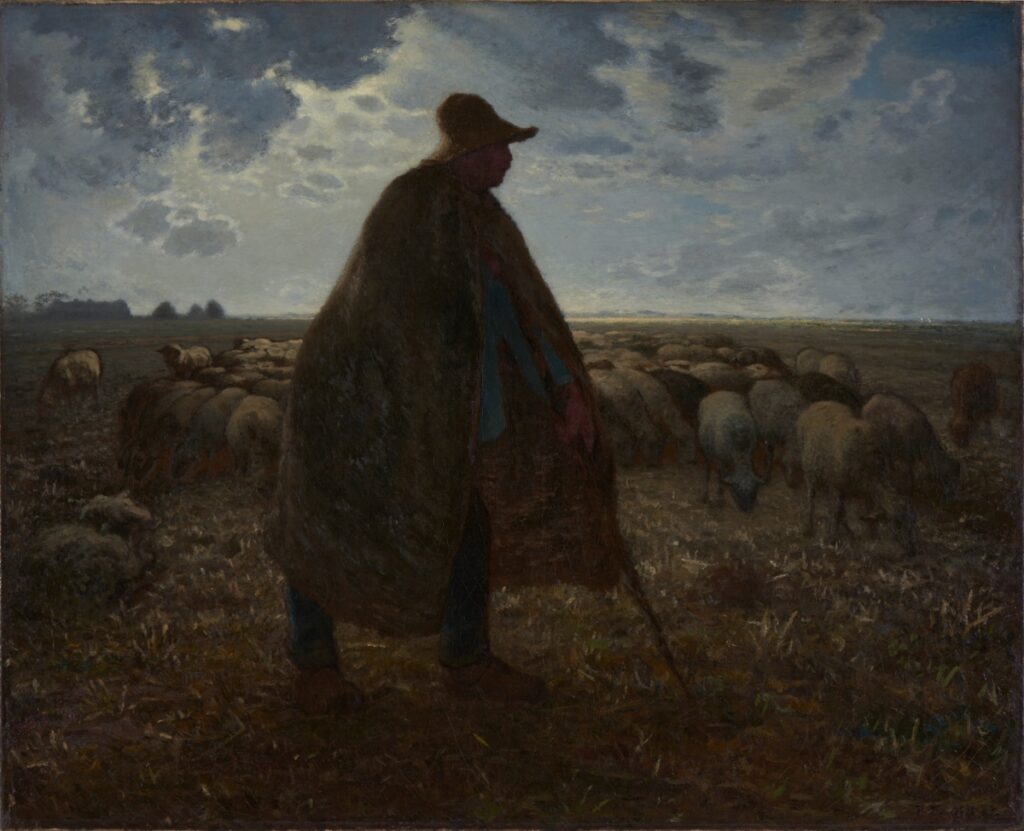
A Barbizon school oil painting by Jean-François Millet depicting a young woman leaning on her staff while tending a flock of sheep in a misty, open field.

Jean-François Millet (French, 1814–1875). Shepherd Tending His Flock, early 1860s. Oil on canvas, 32 3/16 x 39 9/16 in.(81.8 x 100.5 cm). Brooklyn Museum, Bequest of William H.Herriman, 21.31. Photo: Brooklyn Museum.

To contemporary eyes, Corot, Millet, and Breton may appear traditional, but in their own time they laid crucial groundwork for the Impressionists’ radical experimentation with light, atmosphere, open-air technique, and subjects drawn from everyday life. The Barbizon School of Painters favored a more realistic approach to nature, often painting en plein air. Their loose brushwork and close attention to atmosphere and light inspired Impressionist painters like Claude Monet, Camille Pissarro, and Berthe Morisot.

Continuing a Legacy

At the turn of the twentieth century, Pittsburgh was an internationally recognized center for the arts. Its industrialists were active collectors, patronizing local galleries as well as dealers in New York, Paris, and London. National and international firms used Pittsburgh galleries, like J.J. Gillespie and Company, as entry points into the region’s thriving market. M. Knoedler & Company even opened a Pittsburgh branch in 1897, directed by a young Charles Carstairs, who catered to industrialists eager to assemble collections that signaled wealth and cultural sophistication. Across the city, newly built mansions housed private galleries that displayed these ambitious collections.

A somber oil painting by Jules Breton depicting a woman in profile wearing a traditional white headpiece and dark clothing while holding a lit candle.
Jules Breton (French, 1827–1906). The End of the Working Day, 1886–87.Oil on canvas, 33 1/16 x 47 1/4 in. (84 x 120 cm). Brooklyn Museum, Gift of Mrs. Edward S. Harkness, 35.867.

William Bouguereau (French, 1825–1905). The Elder Sister, reduction, circa 1864. Oil on panel, 21 7/8 x 17 15/16 in. (55.6x 45.6 cm). Brooklyn Museum, Bequest of William H.Herriman, 21.99. Photo: Brooklyn Museum.

Although Impressionism was not the dominant taste among Pittsburgh collectors, the annual exhibitions at Carnegie Institute (now known as the Carnegie International), which started in 1896, introduced modernism to the city remarkably early. Carnegie’s oft-quoted goal was to bring “the old masters of tomorrow” to Pittsburgh. The early exhibitions circulated works by Monet, Degas, Sisley, Pissarro, and others long before they were widely accepted.

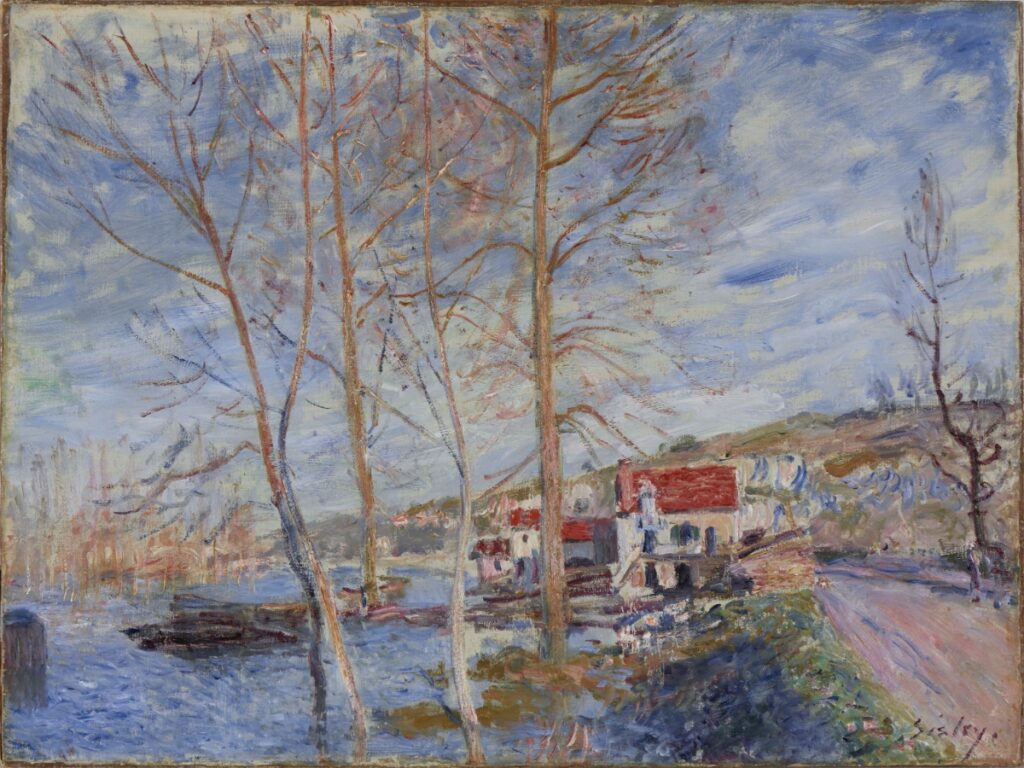
An Impressionist landscape painting by Alfred Sisley featuring slender, bare trees along a riverbank with a red-roofed house and rolling hills under a blue, cloudy sky.

Alfred Sisley (British, active France, 1839–1899). Flood at Moret, 1879. Oil on canvas, 21 1/4 x 28 1/4 in. (54 x 71.8 cm). Brooklyn Museum, Bequest of A. Augustus Healy, 21.54. (Photo: Brooklyn Museum).

Credit to the Old Masters of the Art World

Impressionism found a more receptive audience in American collectors than in Europe and Britain. Though Frick did not share the level of enthusiasm of some of his contemporaries for Impressionist work (most notably, Louisine and Henry Havemeyer in New York City and Bertha Honore Palmer in Chicago who were among the earliest collectors to bring Impressionist art to America), he did buy paintings by Monet, Degas, and Renoir. He maintained a lifelong interest in Impressionism and contemporary art, even as he became known for his astounding collection of “Old Masters.”

An Admiration for Monet

The Frick Pittsburgh’s Monet (on loan to the de Young Museum’s presentation of Monet and Venice in San Francisco from March 21–July 26, 2026) appeared in the fifth annual exhibition at the Carnegie Institute in 1900. It was most likely lent by gallerist Paul Durand-Ruel, who had initially sold the painting to Bertha Palmer. More than two decades after it was first painted, Monet had reached a certain level of acceptance on the international art market. It is possible Frick first saw the painting at the International. It was on view from November 1900 to January of 1901 and the receipt lists a purchase date of March 1901.

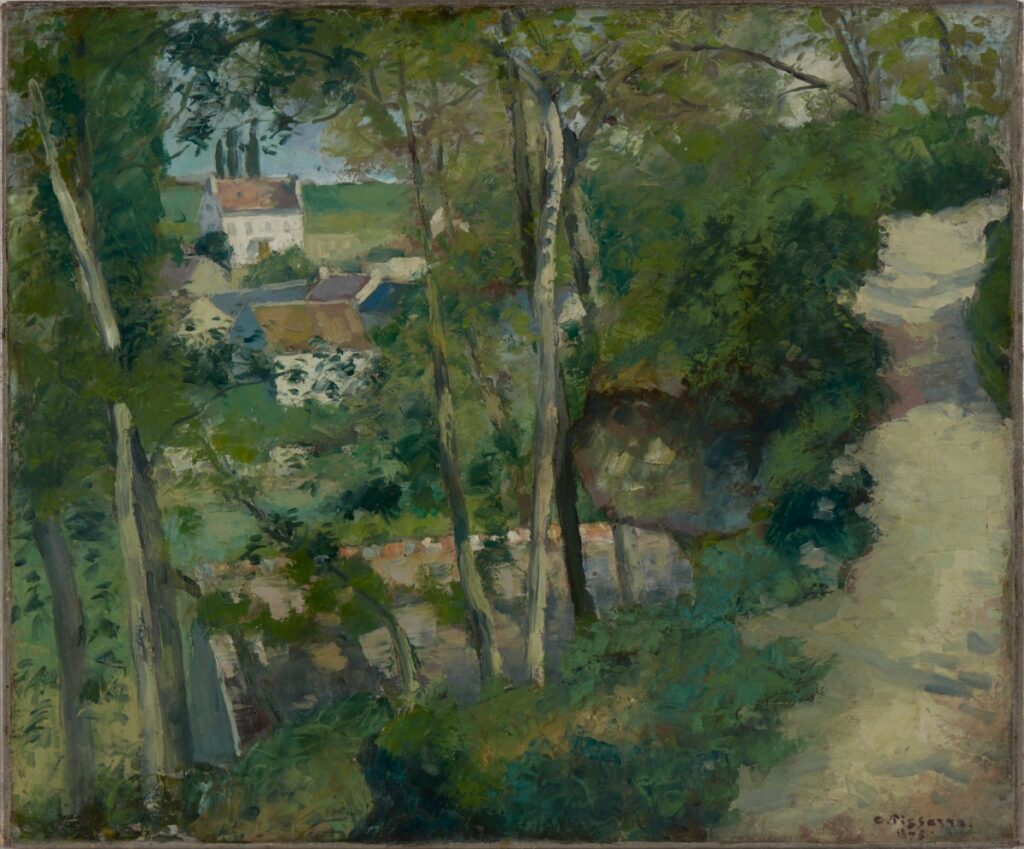
An Impressionist landscape painting by Camille Pissarro depicting a sun-dappled dirt path winding through lush green trees toward a cluster of white village houses in the distance.
Camille Pissarro (French, 1830–1903). The Climb, Rue de la Côte-du-Jalet, Pontoise, 1875. Oil on canvas, 21 1/4 x 25 7/8 in. (54 x 65.7 cm). Brooklyn Museum, Purchased with funds given by Dikran G. Kelekian, 22.60. (Photo: Brooklyn Museum).

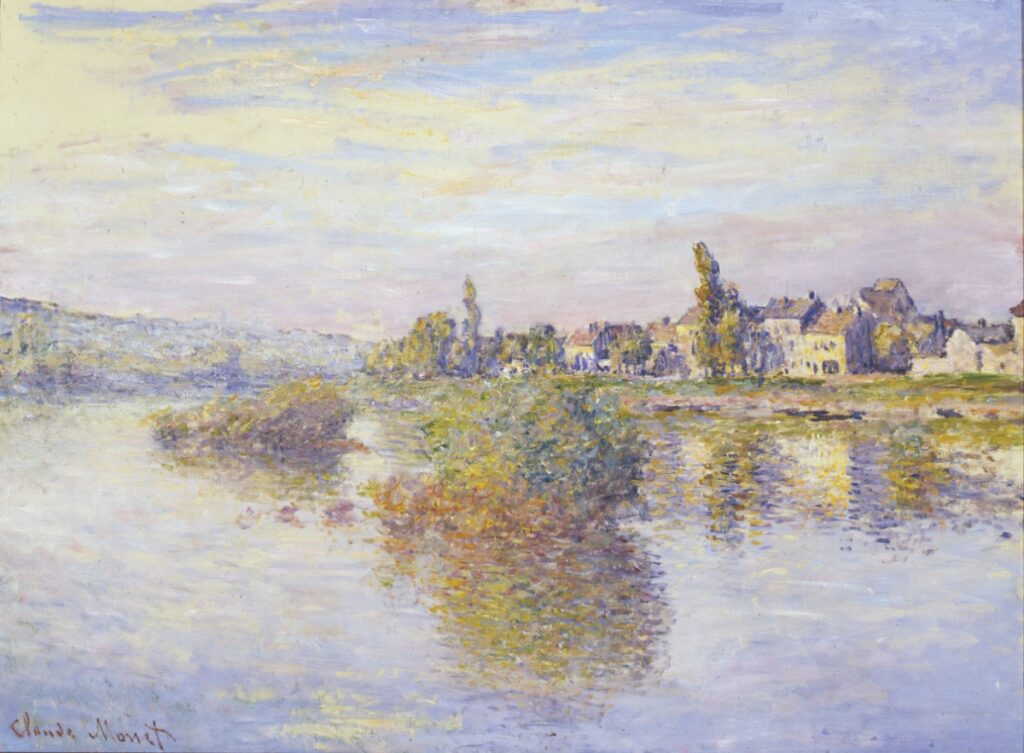
Interestingly, Banks of the Seine at Lavacourt is the second Monet Frick purchased. The first, noted simply as Argenteuil, was bought in 1895 from the New York dealer L. Crist Delmonico. Frick later traded it to Knoedler in 1909 as credit toward the purchase of a 17th-century Dutch landscape by Aelbert Cuyp. But Banks on the Seine at Lavacourt remained in the collection, a glittering anomaly in Frick’s collecting purchases from the period even as his taste shifted more decisively toward the so-called “Old Masters.” He bought his first Vermeer painting just a few months later. Lavacourt, at $3,000, was a bargain compared to the Vermeer’s $26,000 price tag.

An Impressionist oil painting by Claude Monet featuring shimmering water reflections of a riverside village under a pale, hazy sky.

Claude Monet (French, 1840–1926). Bords de la Seine à Lavacourt (Banks of the Seine at Lavacourt), 1879. Oil on canvas. Purchased March 2, 1901 by Henry Clay Frick.

Modern Art Has Always Been in Pittsburgh

French Moderns doesn’t simply bring modern art into the Frick—it reveals the threads of modernism already present in Pittsburgh’s collecting history. It reframes the Frick family’s position in the broader art world, illuminates Pittsburgh’s longstanding engagement with modern art, and reveals how taste evolves from conservative to canonical.

What once seemed radical—Impressionism, plein-air landscapes, loose brushwork—is now among the most beloved art in the world. As visitors move through French Moderns, they trace not only the evolution of French painting, but also the evolution of taste itself, in Pittsburgh and beyond.

New to the French Moderns Exhibit: Additional Monet Paintings

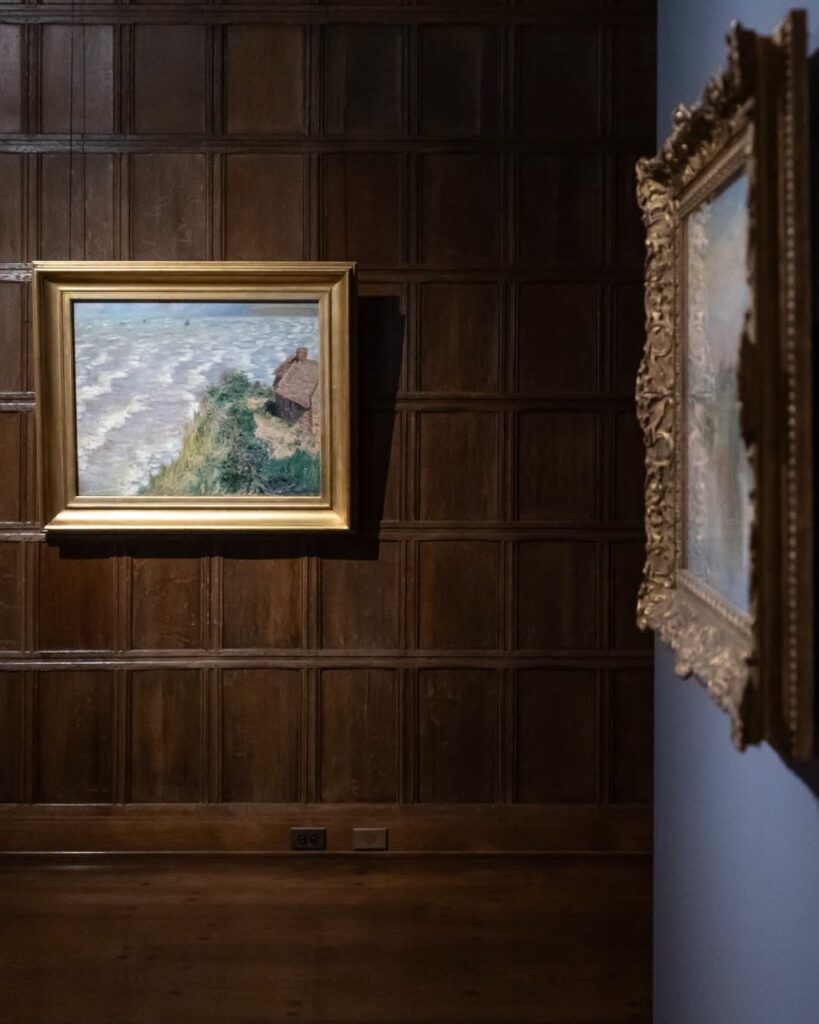
Thanks to a happy and lucky travel change, the Frick Pittsburgh adds three Claude Monet to the French Moderns collection. As Monet’s paintings travel back to the East Coast from the Monet and Venice exhibition organized by the Brooklyn Museum and the Fine Arts Museums of San Francisco, the Frick was asked if they wanted to display the pieces. On view August 7 through October 11, these three paintings, Houses of Parliament, Sunlight Effect, Rising Tide at Pourville, and Banks of the Seine at Lavacourt showcase distinct moments in Monet’s life. Learn about the paintings below.

What Monet Paintings are Coming to the Frick?

Banks of the Seine at Lavacourt

Henry Frick himself bought this painting, and it was the only Monet he and his family lived with. Frick appreciated so-called Old Master paintings whose value had been unquestionably proven over time. Impressionism was newfangled in Frick’s day, and investing in it was not a sure thing. His daughter Helen was not a fan, saying that “50 years from now how many of the Impressionists and Post-Impressionists will still be thought of as anything but trash.” Given the fact that the painting stayed in the family long after Henry’s passing, she may have softened her assessment. Nonetheless, she did not collect Impressionist works on her own.

Houses of Parliament, Sunlight Effect

Monet spent a few months in London across three trips between 1899 and 1901. The smog and fog, and a quality of light new to Monet, intrigued him and he painted almost 100 varying views of the Thames. As he often did, he contemplated a single view across a whole day, observing the changes in light and color and texture as the sun moved across the sky. Comparing his various versions of a building or a vista reveal much about how we see and how light changes what we see. He can inspire us to look more closely and to linger long enough to see the changing beauty of the world around us.

Rising Tide at Pourville

This one was painted in 1882, almost 20 years before the London painting. Overall, it hews more accurately to nature. But a close examination of the way the paint delivers this rather realistic interpretation reveals the multiple layers of work, and the dynamic brushstrokes, that were the foundation of Monet’s work. The scene is soothing in its beachy beauty. The brushstrokes are thrilling in the way they challenge the rules of the academic style that preceded the Impressionists. There is a sense of revolution in this lovely work.

Story by Dawn R. Brean and Bella Hanley
Featured Photo Courtesy of Brooklyn Museum

Subscribe to TABLE Magazine’s print edition.

Black Boot Builders Renovates a Fox Chapel Farmhouse for Modernity

0
A "White Hot Reno" kitchen in a Fox Chapel farmhouse featuring hand-distressed white oak beams, a BlueStar range, and a glossy Walker Zanger chevron tile backsplash.

A rambling Fox Chapel farmhouse becomes a “white hot reno” with high-end details, a devotion to craft, and a lot of TLC from Black Boot Builders.

A Fox Chapel Farmhouse Gets a White Hot Update from Black Boot Builders

Architects Paul Shea and Lisa Simone, who are married, have known Dave Short and Zia Marinzel of Black Boot Builders, also married, for a while, but the couples hadn’t worked together until a kitchen renovation of a venerable Fox Chapel farmhouse. Shea & Simone, Carnegie Mellon grads who love to travel and take their inspiration from art, set out to retain the authenticity of the home, which had grown “organically” over generations. But they also wanted to invite light in, connect the interior with the picturesque landscape, and add a contemporary vibe.

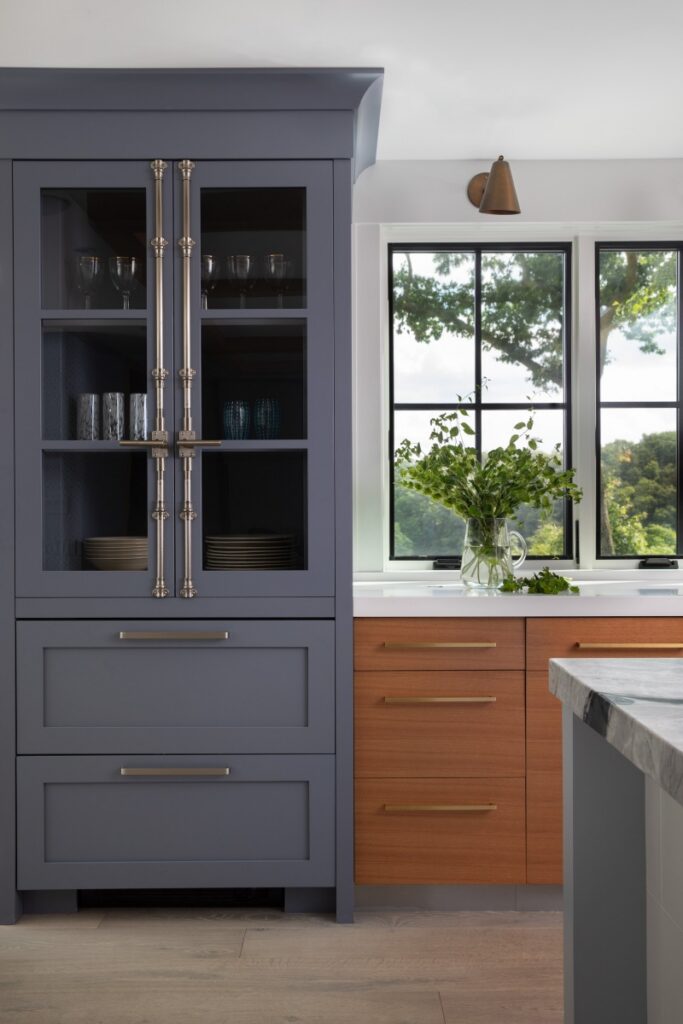
A sleek, modern kitchen renovation in a Fox Chapel farmhouse featuring custom blue cabinetry with brushed brass hardware, natural wood drawers, and a large window overlooking the landscape.

They opened up a large space, using oak beams to configure squares and rectangles instead of walls to organize and define the kitchen, while providing a clear sight line to the family room and dining area. Color choices, along with an unusual blend of textures and materials—brushed brass, copper and polished nickel hardware from Rejuvenation, sit side-by-side in the kitchen, for example, along with both natural white oak and painted cabinets from The Kitchen Gallery— “reference the house, which is more traditional, but also bring them forward to today,” Paul says.

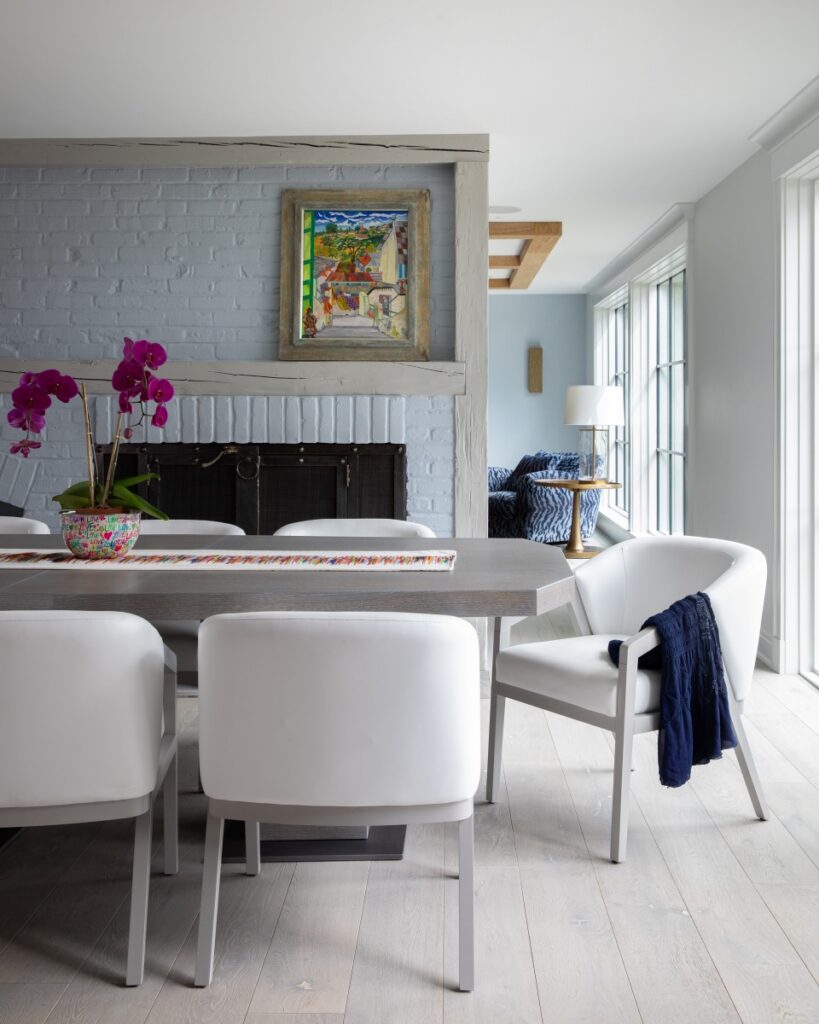
A bright dining area in a Fox Chapel farmhouse featuring white modern chairs, a light wood floor, and a light blue brick fireplace decorated with colorful artwork.

Crafting a Specific Style

Dave and Zia, who both have backgrounds in construction and design, started out as house flippers before launching Black Boot in 2018. They name each project. This one they dubbed “White Hot Reno,” Zia says, because of the white in the hand-distressed beams, wide-plank oak floors, work areas, and radius range hood, along with the white-hot heat needed for the finishes the architects selected. “We just knew the materials on their project would be stunning,” she says.

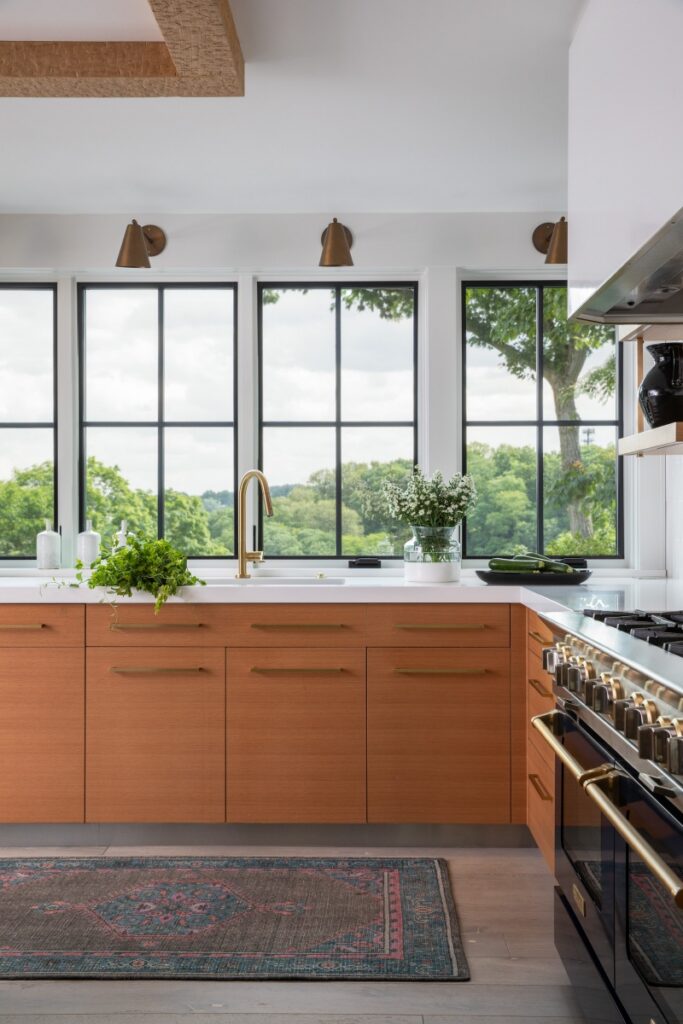
A renovated Fox Chapel farmhouse kitchen featuring natural white oak cabinets with brushed brass hardware, a vintage-style area rug, and Kolbe Vista Luxe windows overlooking a picturesque landscape.

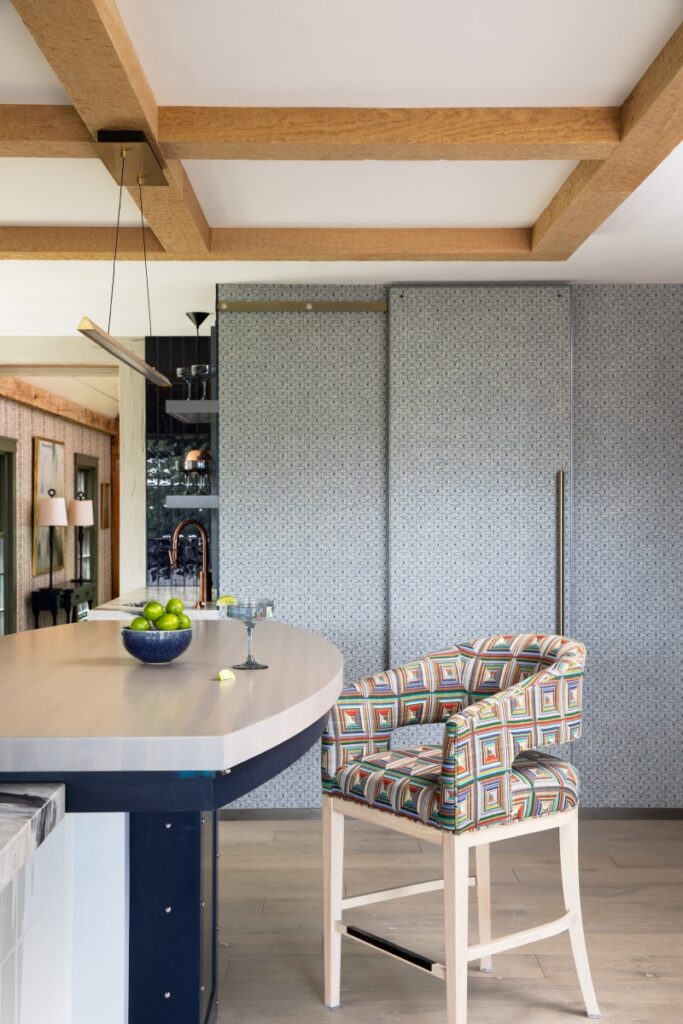
The kitchen is beautiful but practical. A long, narrow, oval island is the centerpiece. Its white oak surface sits atop a deep blue stainless-steel base and engages with an offset pub table. The island’s Caesarstone counter and the nearby bar’s quartzite top, both white, have striking dark veining that mirrors the bluish gray of the painted cabinetry. A BlueStar 60-inch range extends the color. A rippled white wall of Walker Zanger glossy vertical triangle chevron tile from Tile and Designs reflects the light.

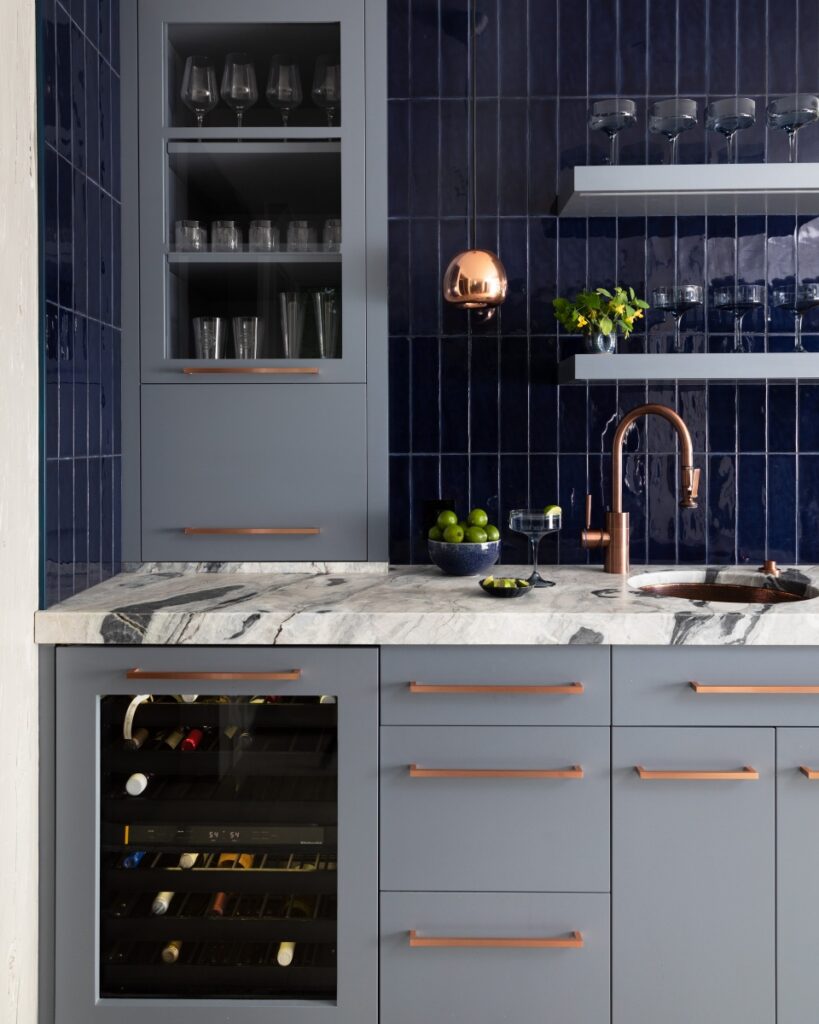
A contemporary wet bar in a Fox Chapel farmhouse featuring deep blue subway tile, grey cabinetry with copper hardware, a copper sink, and a built-in wine cooler.

Black Boot Builders Focus on Functionality and Beauty

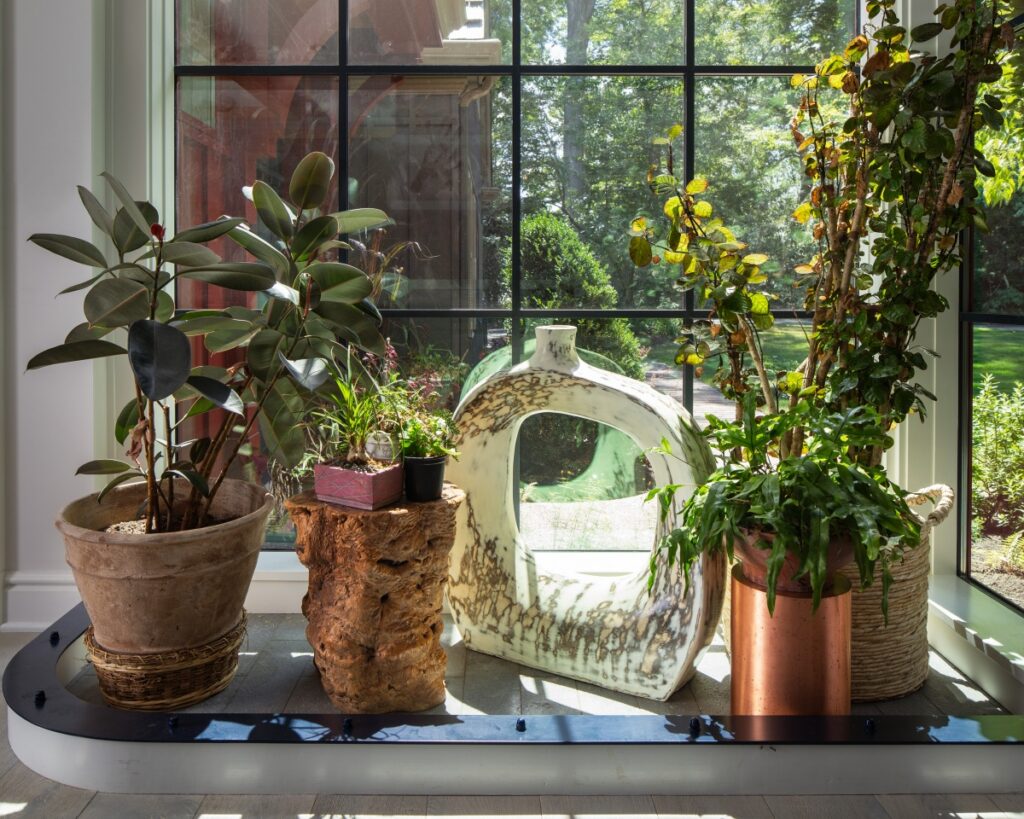
Another striking feature is the floor-to-ceiling glass corner created with Kolbe VistaLuxe windows. Large plants thrive in natural light, doubling as a window treatment, and a sturdy tile floor allows for carefree potting and watering. Handcrafted Phillip Jeffries wall-covering, used sparingly, softens the transition from the kitchen to the rest of the house. From a practical standpoint, the best new addition may be the pantry, which Lisa says holds as much as 20 feet of cabinetry.

A contemporary breakfast bar in a Fox Chapel farmhouse featuring a light wood countertop, a colorful geometric pattern barstool, and a sliding gray patterned pantry door under exposed oak beams.

Typically, the architect recommends the builder to the client, and the builder defers to the architect. For Black Boot, that meant following architectural drawings filled with “super high-end finicky details that involved a lot of time and craft to bring to life,” Zia says, adding: “That speaks to the quality of the design work.” Shea and Simone in turn applaud the contractor’s attention to detail. “Their building really rose to the occasion,” says Paul. “Really exceptional craftsmanship.”

Of course, the opinion that counts is that of the homeowners who lived through the year-long project. “The client was thrilled with the outcome,” says Dave. No one’s arguing.

A bright indoor plant corner in a Fox Chapel farmhouse renovation featuring floor-to-ceiling Kolbe Vista Luxe windows, a large sculptural vase, and lush greenery.

The Materials

Story by Susan Fleming Morgans
Photography by Dave Bryce

Subscribe to TABLE Magazine’s print edition.

Pittsburgh Events: Your Guide to April 13-19

0
A woman stretches in a white outfit while sitting on a bench in front of sunny windows.

The city’s weather is shifting between rain showers and sunny, hot days but we have the perfect solution to either. Events throughout Pittsburgh from April 13-19 take you into new realms, inviting you to step outside of your comfort zone. Try your hand at a new skill such as gardening or yoga, feast on some of the most delicious drinks and food Pittsburgh has to offer, or slip into the theater to see a life-changing performance. You’re just a click and a step away from the best week of the year yet.

Pittsburgh Events Happening April 13-19

Houseplant Care & Propagation Workshop
Photo From Grow Pittsburgh

Houseplant Care & Propagation Workshop

April 14, Grow Pittsburgh

Do all your houseplants seem to die as if you have the opposite of a green thumb? Learn how to keep your indoor plants happy and thriving alongside Grow Pittsburgh. You can email instructor Vee ahead of time with your plant photos and questions to address at the workshop. Plus, you’ll learn how to properly propagate in a hands-on activity that you’ll get to take home to start your own collection.

An above shot of three large slices of pizza on a wooden cutting board.
Pizza from Benny Fierro | Styling by Anna Franklin | Photography by Dave Bryce

Yinz Know the Rules – Pizza Networking Event

April 16, The Library on Carson

Think you know what the best pizza in the ‘Burgh is? Come find out and chomp on some slices for a good cause. Sample slices from some of Pittsburgh’s top spots and cast your vote for your favorite, all while networking with local professionals and business owners. Each ticket goes towards the Young Adult Survivors United (YASU), a nonprofit empowering young adults impacted by cancer.

From Garden to Glass: The Crafting of Botanical Cocktail Mixers
Photo From Wood Stove Kitchen

From Garden to Glass: The Crafting of Botanical Cocktail Mixers

April 16, Edgeworth Club

Sewickley Civic Garden Council invites you to taste a hint of nature’s beauty as you learn to mix botanical beverages. Steve Zyck of Wood Stove Kitchen explains how he turns botanicals into delicious, unique cocktail and mocktail bases that you can mimic at home. Every ticket includes  appetizers and two complimentary cocktails or mocktails for snacking and sipping during the workshop.

A woman stretches in a white outfit while sitting on a bench in front of sunny windows.
Photo From Anna M. Maynard for Erin Koewe

Grappling

April 16-17, New Hazlett Theater

Choreographer Erin Koewe introduces you to a new world through dance. Grappling invites audiences into a queer, zero-gravity world where dance, family, and pop reign. This innovative dance-theater performance with bold visuals blends humor, joy, and cosmic imagination to explore themes of love, labor, and time. 

Sacred Wings: A Mindful Yoga & Wildlife Encounter
Photo From Patrick Hendry

Sacred Wings: A Mindful Yoga & Wildlife Encounter

April 18, Steel Goat Marketplace

Take an opportunity for a deep breath among Mother Earth. This experience blends gentle yoga, wildlife education, and mindful connection in the presence of a live bird ambassador. Learn all about both the human nervous system and the importance of wildlife as you slow down, soften, and remember what true relaxation is all about.

Story by Kylie Thomas
Featured Photo Courtesy of Anna M. Maynard

Subscribe to TABLE Magazine‘s print edition.

Easter Crack (Saltine Cracker Toffee)

0
A tray of Easter Crack with half mini chocolate eggs everywhere, eggs above the tray and flowers below it.

During Christmas time, you may see layers of saltine crackers, brown sugar, butter, and chocolate chips that make a salty-sweet dessert that some call Crack for it’s delicious addictiveness. But, this dessert recipe doesn’t have to be just for December, you can actually tweak the recipe to make it a staple for any holiday or occasion, even just because. With Easter coming up, it’s the perfect time to make Crack more spring-like with the use of white chocolate, milk chocolate foil eggs, pistachios, as well as dried berries. Feel free to get creative and add in any other Easter treats you enjoy like jelly beans, peeps, or even other candies.

A purple table with small bowls of ingredients like saltine crackers, mini eggs, dried berries, and pistachios.

Where Did the Dessert Crack Come From?

The dessert that you know as Christmas Crack or simply Crack roots itself in centuries of confectionery evolution. Its foundation of a thin, buttery toffee topped with chocolate traces back to classic European candy-making traditions. As sugar became more widely available in the 18th and 19th centuries, thanks to expanding trade and refined processing, home cooks began experimenting with easy, shelf-stable sweets. With the premiere of Saltines in 1876, Southerns would use the cracker as a base for various treats, leading then to the dessert we love today.

Print
clock clock iconcutlery cutlery iconflag flag iconfolder folder iconinstagram instagram iconpinterest pinterest iconfacebook facebook iconprint print iconsquares squares iconheart heart iconheart solid heart solid icon
A tray of Easter Crack with half mini chocolate eggs everywhere, eggs above the tray and flowers below it.

Easter Crack (Saltine Cracker Toffee)


  • Author: Star Laliberte

Description

Turn Christmas Crack into an Easter-worthy treat!


Ingredients

Scale


Instructions

  1. Preheat oven to 350 degrees F.
  2. Cover a rimmed baking sheet with parchment paper (make sure the parchment is covering up the sides).
  3. Cover sheet pan with 48 (or more) saltine crackers.
  4. Melt the butter and brown sugar in a medium sauce pan to make a toffee. Stirring with a wooden spoon, bring to a boil for 5 minutes or until it is completely mixed and bubbly.
  5. Pour the toffee carefully over the arranged Saltines and spread as evenly as possible with a rubber spatula
  6. Place sheet pan in the preheated oven for 4-5 minutes until the toffee mixture is bubbly.
  7. Remove from the oven and set aside to cool for 20 minutes
  8. Using a double boiler method, melt the white chocolate.
  9. Pour the melted white chocolate over the sugar mixture.
  10. Using a spatula, smooth the white chocolate over the surface of the hardened toffee layer
  11. Scatter mini eggs, chopped pistachios, dried cranberries, freeze-dried fruits and sprinkles over the melted white chocolate.
  12. Place the cookie sheet in the refrigerator to cool for 2-3 hours or overnight.
  13. Remove from the refrigerator and break the Easter Crack into pieces or cut with a knife if you prefer more uniform pieces.

Looking for another simple Easter treat? Try these adorable bite-sized Chocolate Pretzel Bunny Treats.

Recipe and Styling by Star Laliberte
Photography by Dave Bryce

Subscribe to TABLE Magazine’s print edition.

6 Pittsburgh Speakeasies Worth Finding

0
The inside of a Pittsburgh speakeasy with a lowkey bar and booth seating along the wall.

While some are more clandestine than others, each of the six Pittsburgh speakeasies on this list offer great cocktails and unmatched atmosphere. Whether you’re looking in a hotel basement, an alley or underneath a bicycle shop, it’s time for a cocktail.

Speakeasies Around Pittsburgh

Acacia

2108 East Carson Street, South Side

Acacia has been located in the middle of East Carson Street for nearly 15 years — yet you’ll still probably walk right by it, even if you’re looking for it. That may be by design. The more revelous element that flocks to the South Side on the weekends isn’t likely to notice the cozy, two-room speakeasy sitting beyond an anonymous doorway. For those more interested in great cocktails and inviting atmosphere than drink specials, however, Acacia is worth finding. (If you’re looking: It’s between Buddy’s Brews on Carson and La Dolce Vita.)

Born out of bygone cocktail haven Embury in 2012, Acacia is a collision of modern mixology and prohibition-era craft. You’ll never go wrong ordering one of the house favorites — an old fashioned, a Manhattan, a Last Word — but trust the feature offerings to provide a remarkable experience. If the Practical Magic is on the menu during your visit, order it; it’s a rum-forward cocktail that makes great use of angostura amaro. You’ll drain your glass and nibble on the coconut shavings that top the drink. (You’ll also be feeling it; Acacia is not shy about drinks that pack a punch.)

The no-frills nature of the decor doesn’t reduce the easygoing, (figuratively) underground atmosphere of Acacia; no wonder, then, that it fills up as soon as the doors open, often seeing a rush of eager patrons within the first 30 minutes of service. — Sean Collier

Cellars Speakeasy

2400 Smallman Street, Strip District

This one isn’t exactly a secret; its sign is all over the Smallman Street building it calls home. The surprising part is simply that there’s a high-end bar and restaurant located directly underneath a bicycle shop. While Pro Bike + Run sells gear and bicycles overhead, you’ll descend into a subterranean haven that feels … well, very underground. Between the exposed concrete walls and the timeless, climateless nature of Cellars Speakeasy, you won’t know — or care — much about the world overhead. It’s a bunker of comfort — and, should you bring any worries down here, the cocktail menu can help you forget them.

Order off of the whimsical menu promising a “journey through time itself,” with drinks inspired by moments in history. I tried a drink dubbed Do You Have a Flag?, featuring “colonial liquors and pen-inspired rebellion” — in practice, that means Brugal 1888 rum, Courvoisier, fig and walnut bitters. It’s a bracing beverage that recalls an Old Fashioned with exceptional smoothness. Cellars also offers cocktail and liquor flights and seasonal selections, so plan to experiment. (Those seeking something a bit gentler should consult the smart, locally-focused draft list.)

While many speakeasies don’t offer food at all, Cellars has a full menu, making it more than just a spot for one late-night cocktail; this is a speakeasy that can easily be the main event of a night out. — Sean Collier

Commerce Bar

Rear of 128 S. Highland Ave., East Liberty

Tucked into a narrow alley in East Liberty, Commerce Bar feels like a place you’re lucky to stumble into. It’s the kind of place that doesn’t bother with reservations — because part of the charm is the chance of discovery. Inside, the space is airy but intimate; it’s stylish without trying too hard. This is a place equally suited for a first date (that you hope turns into a second) or a long-overdue night out with the girls (if they appreciate a well-made drink). The fun yet precise menu shifts with the seasons.

There’s a whole host of inventively-named cocktails, including N’at Kat’s Nectar, which balances Drumshanbo Orange Gin, Cointreau and orange juice with ube-infused Coco Lopez. It’s sweet, tart, and a little unexpected. The Threat Level Midnight brings depth with Smith & Cross rum and Amaro Nonino, while the Just What The Doctor Ordered layers Rittenhouse rye with house-made ginger syrup and lemon. They’re each beautifully created.

Commerce Bar also offers mocktails (at least two on the regular menu, though if you ask the bartender, they’re usually willing to improvise to your tastes) and a thoughtful wine list. The details, like house-made syrups and creative garnishes, are the whole point. — Emily Catalano

The Confidant

Rear of 4517 Butler Street, Lawrenceville

Slip behind The Goldmark and you’ll find it — or rather, you might. There’s no sign for The Confidant, The Goldmark’s hidden speakeasy-style bar, just a quiet stretch of Eden Way between 45th and 46th Streets and a green light that acts as an invitation. If you miss it, The Goldmark crew will nudge you in the right direction, but finding it is part of its charm. Inside, the space feels like a well-kept secret. It’s dark without being gloomy and intimate without feeling overly crowded. There are a few distinct drinking areas that give the space shape, but the real anchor is the bar, where every drink feels deliberate.

The bartender isn’t just mixing your drinks, he’s curating your night. The cocktail list is playful but incredibly polished. Favorites include the Caliente Amor, which balances the heat of whiskey with citrus and a jalapeno kick. The Ura Vida (basil-infused vodka, elderflower, cucumber and lime) is crisp and herbaceous. The truly excellent Confidant Espresso Martini, spiked with hazelnut and vanilla, is a rich indulgence. Even the Pepperoncini Shot (vodka cut with brine) is a pleasant surprise, with some distinctly Italian-sandwich notes. And you shouldn’t overlook their mocktails.

The Wild Blackberry Mule, with house-made blackberry syrup, lime, honey and ginger beer, is such a good alternative to imbibing that you won’t be missing a thing. The Confidant is a big reward — for those who know where to look. — Emily Catalano

Co-Sign

Floor 4, 145 E. Eighth Ave., Homestead

There’s a certain thrill in being let in on a secret. At Co-Sign Speakeasy, tucked inside Homestead’s historic Bank on 8th building, that feeling starts before you take your first sip. Located in the same building that houses an axe-throwing spot and escape rooms, you’ll find a quieter, dimly-lit world behind the secret doors. Lined with dark wood (and distinctly Prohibition-era vibes), Co-Sign promises a fun night out — and carefully-crafted cocktails. The space is cozy and intimate, which is part of its charm.

Reservations are strongly encouraged, especially on weekends, when walk-ins may find themselves waiting as staff thoughtfully stagger seating to keep the experience unhurried and personal. Behind the bar, talented bartenders treat drinks like storytelling. Classic cocktails really shine here — including their bright and balanced daiquiri and a silky French martini — but house favorites are worth a look, too. The Pain Killer offers a tropical take, with spiced rum, coconut rum, coconut cream, pineapple and a dusting of nutmeg; the margarita is bright and bold.

Even the mocktails hold their own: The Mango Tango is sunshine in a glass with a playful mix of mango, pineapple and orange juices (plus ginger beer), while the Speakeasy Lemonade layers blueberry and lavender with a soft floral finish. But the real magic? It’s off-menu. Strike up a conversation with your bartender, and you might just find out an extra secret or two that the space holds. — Emily Catalano

The Speakeasy

Omni William Penn Hotel, 530 William Penn Place, Downtown 

If the name is somewhat straightforward, that’s the point: This is exactly the type of faux-secret, refined cocktail bar you’d imagine when picturing a 21st-century speakeasy. While it doesn’t quite date back to the roaring ’20s, the Speakeasy — located on the underground floor of the Omni William Penn Hotel — predates most of the other bars on this list, having first pulled back its velvet rope in 2012. (There’s a literal velvet rope, though it’s purely for show; the Speakeasy is open to the public.)

Located in the same spot a literal speakeasy occupied during Prohibition, this dimly lit and inviting space lies just feet from the front door … if you know where to look. Enter from William Penn Place, but instead of heading up the short flight of stairs toward the main concourse of the hotel, duck down the other staircase and head for the basement — then hang an immediate left, where you’ll find check-in for the Speakeasy. You’ll be greeted by a pleasant din of laughter and conversation and handed a carefully curated menu. The traditional cocktail menu combines modern ingredients with throwback names (Bathtub Gin, for example, adds amaro and Campari to Bluecoat American Dry), while the classic cocktails are exemplars of old recipes.

A short list of wines and bourbons (and a trio of light fare — olives, chips and charcuterie) accompany the cocktails. Don’t be surprised if the hours get away from you; this isn’t a place you’ll want to leave. — Sean Collier

Story by Emily Catalano and Sean Collier
Photo From Co-Sign

Subscribe to TABLE Magazine’s print edition.

Collier’s Cuts: Zazie Beetz Takes on Dark Forces in ‘They Will Kill You’

0
A woman covered in blood carries a torch.
A graphic rating of 2 1/2 out of 5 stars with a picture for They Will Kill You.

Well-heeled Satanists are big right now. A week after Samara Weaving squared off against the demonic upper crust in Ready or Not: Here I Come, Zazie Beetz is facing her own squadron of bedevilled adversaries in the well-named actioner They Will Kill You.

Does They Will Kill You Live Up to Modern Horror Standards?

In fact, They Will Kill You is remarkably similar to Ready or Not: Here I Come. Both are extravagantly gory, action-first stories about estranged (and troubled) sisters forced to engage in a vicious battle of survival with a wealthy, Satanic cabal lurking within an ornate stone building.

Seriously — that’s the plot of both movies. You’d think one or the other would’ve at least delayed release for a few months.

The main way They Will Kill You is different from last week’s picture is in its tone; director Kirill Sokolov has a frenetic, overly stylized approach to filmmaking. (It’s reductive to say it’s an imitation of Quentin Tarantino … but it’s an imitation of Quentin Tarantino, from head to toe. Emphasis on the latter.) There are memorable sequences in They Will Kill You, but they often seem to be assembled by accident. Throughout the relatively short feature, Sokolov throws a hodgepodge of musical styles, camera tricks, sound effects and visual flourishes at the viewer. Occasionally, some of these punches land — frequently, they don’t.

A woman holding a lighter peaks through windowsill blinds.
Zazie Beetz in Warner Bros. Pictures’ They Will Kill You

Zazie Beetz Can’t Make Sense of It, But She Can Punch Through It

It’s a relief, then, that the highly charismatic and fully determined Zazie Beetz is on hand to lasso the mayhem. While They Will Kill You is ultimately a bad movie, no one told Beetz that; she approaches every scene with fury and flair.

Less notable are the roster of character actors who they drag in to oppose Beetz. Patricia Arquette appears to be here solely for the paycheck (and it can’t have been all that great of a paycheck), seemingly trying on different accents throughout the film to amuse herself. Heather Graham occasionally puts a modicum of effort in but does not have much to work with. Tom Felton is clearly just happy to be employed.

They Will Kill You is busy, but it’s remarkably light on substance. The plot barely moves, the effects are awkward and the logical gaps are bountiful. By the time the talking pig head starts rattling off the intricacies of demonic contract law — not an exaggeration — you’ll have checked out. Our heroine may be able to fend off an army of immortal foes, but even she doesn’t have the strength to defeat a script this weak.

Documentaries in the Cinema, Narrative Features at Home

If you prefer your potential world-enders a bit more (sadly) plausible than a high-rise full of Satanists, there’s a documentary for you. The AI Doc: Or How I Became an Apocaloptimist follows Oscar-winning filmmaker Daniel Roher as he grills experts and futurists for hope amid the dire noise surrounding Artificial Intelligence. Everything Everywhere All at Once directors Daniel Kwan and Jonathan Wang serve as producers.

A thorough and lively music doc is also making its way to cinemas at the moment. Billy Preston: That’s the Way God Planned It explores the musical triumphs and personal struggles of its subject, who reached the heights of stardom in the 1960s and ’70s before fighting demons (but, always, still making music) throughout the rest of the century. Collaborators including Ringo Starr and Mick Jagger testify about Preston’s unmatched musicianship.

A pair of action flicks hit streaming this week. On Prime, Pretty Lethal follows a ballet troupe forced into combat; Uma Thurman, Maddie Ziegler, Avantika Vandanapu and Millicent Simmonds star. On Hulu, meanwhile, gangsters get stuck with a time machine in Mike & Nick & Nick & Alice, featuring Vince Vaughn, James Marsden and Keith David.

Story by Sean Collier
Photos by Graham Bartholomew/Warner Bros. Pictures

Subscribe to TABLE Magazine’s print edition.

12 Unique Recipes for Radishes in the Spring

0
Roasted Radishes & Farro with Mint Lime Vinaigrette sits on a green plate with a gold fork positioned to the left. A farro dish

Article updated March 16, 2026

Radishes don’t have to be boring! These little red orbs, often an afterthought, are bursting with potential. Their crisp bite, subtle peppery kick, and their vibrant color make radishes a culinary chameleon, transforming in surprising and delicious ways. Think of creamy egg salads recipes, savory roastings, crunchy salads, and much more. Get ready to explore the delightful versatility of this under-appreciated vegetable. 

When Do Radishes Peak in Season?

Radishes actually have two different seasonal peaks with one in the spring and one in the fall. That’s because these little gems grow best in cooler weather that keeps the soil from getting too warm. Springtime is the best time though since most popular varieties like the Cherry Belle radish go into season. About three to four weeks after planting, radishes grow best from April to June for a crisp and mild flavor. Sometimes the fall season will bring bigger radishes like the Daikon radish that’s sweet and crunchy.

Unique Recipes That Use Radishes

Roasted Radishes with Garlic Scape Butter

An aerial shot of a plate of Roasted Radishes with Garlic Scape Butter

The sweetness that roasting brings out in radishes is not to be missed. These little crispy wonders are paired with a Garlic Scape Butter that’s full of big flavors. Though if you don’t have any garlic scapes available, you can always replace this ingredient with garlic and scallion.

Modern Tzimmes

Roasted root vegetables served in a large grey bowl with a dried fruit sauce.

A side dish that works with any type of protein, Modern Tzimmes are root vegetables doused in a dried fruit sauce. It’s a little sweet and savory with the flavors of apricots, dates, citrus, brown sugar, and honey breaking through.

Lemon Za’atar Salad

Fresh Lemon Za'atar Salad with Crispy Focaccia Croutons and Colorful Vegetables

Za’atar is a spice blend that adds a tangy touch to your traditional salad. In our Lemon Za’atar Salad, colorful radishes are cut into small match-stick pieces along with a preserved lemon dressing. Finished with your other favorite salad toppings this may just become a lunch staple. 

Roasted Radishes and Farro with Mint Lime Vinaigrette

Roasted Radishes & Farro with Mint Lime Vinaigrette sits on a green plate with a gold fork positioned to the left. A farro dish

Farro might not be the first thing that you think of when you hear radishes but they actually make a beautiful pairing. The nutty flavor and intricate texture make a great addition, especially when tossed in a Mint Lime Vinaigrette. 

Green Goddess Egg Salad

A green bowl holds a Green Goddess Egg Salad with dyed eggs to the right of the bowl.

This is not your basic egg salad. Instead, it uses parsley, dill, and chives to make a Green Goddess Egg Salad. This soft, creamy mixture over a bed of fresh-cut radishes is the perfect combination of textures.

Roasted Radish Salad

A white bowl full of a Roasted Radish Salad topped with a sprig of dill and featuring more plates, a napkin, and small bowls of seasoning nearby.

Let yourself take a leap towards making radishes a picnic food with our Roasted Radish Salad. It features a dijon mustard dressing that soaks crunchy radishes which we coat in a mix of seasonings. It’s simple to make and gives you a refreshing, summertime lunch.

Spring Chicken with Fava Shoot Pesto

A green plate on a green surface plates spring chicken with a fava shoot pesto and half-cut radishes.

This young Spring Chicken showcases tender, tasty protein in a crispy skin. Along the way, fresh pesto and roasted radishes make their way into the process, bringing in their variously herbaceous, garlicky, and bittersweet flavors. Talk about springtime on a plate.

Beef Bulgogi Bowls

A beef bulgogi bowl with rice, cucumbers, radishes, carrots, and beef.

While you could dress up your Beef Bulgogi Bowls with whatever your heart desires, trust us, you’ll want to include thinly slices radishes. Not only is the nutrition a plus but the slight bite to radishes lets you break up the flavors and enjoy them all at once.

Springtime Succotash

A big teal bowl of springtime vegetable succotash using radishes and various green sprouts as a green onion sits to the left of the bowl.

Tossing together all your seasonal favorites can make a Springtime Succotash that’s perfect early in the day or later in the evening at dinnertime. Part of the charm of this particularly recipe is the addition of fresh fiddlehead ferns, radishes, and chive flowers.

Escabeche Mexicana

A dark plate with toast topped with bright pink and orange escabeche (pickled carrots and radishes) and dark green kale, with two small bowls on the side.

Escabeche here simply means fresh veggies that marinate in vinegar and spices. Here we use carrots, radishes, and jalapeños alongside herbs and spices like peppercorns and thyme for a crisp, tangy pickle. Try this Escabeche Mexicana on your next sandwich or alongside a homemade pot roast.

Ada’s Cold Beet Soup with Cucumber, Radishes, and Egg

A bowl of pink soup staged over a black background

As the weather starts to heat up, a cold soup can be the perfect lunchtime accompaniment. Ada’s Cold Beet Soup is not only stunning in color but in nutrition too. Besides the beets it’s full of Persian cucumbers, yogurt, radishes, fresh dill, chives, and a delicately cooked egg on top.

Pickled Radish Martini

Pickled Radish Martini sits in a martini glass, light pink in color, with a lemon peel and radish acting as a garnish.

We couldn’t celebrate our love for radishes without a cocktail accomplice. While radish pickling liquid may not sound like it belongs in a cocktail, the balance of tangy and sweet brings about unexpected brilliance. Add in Boyd & Blair Cucumber Vodka and dry vermouth for a perfected Pickled Radish Martini.

Story by Kylie Thomas

Subscribe to TABLE Magazine‘s print edition.

South Hills and Beyond: Pittsburgh Guide for a Relaxed Weekend

0
A group of diverse children smiling and posing on a playground slide in front of a house in South Park, Pennsylvania.

From charming main streets with zero chance of gridlock to rolling meadows, the South Hills and beyond offer a way to enjoy the Draft weekend on your own terms. Think leisurely brunches instead of long security lines, back-road drives instead of congestion, and patios where the Draft is on—but with plenty of elbow room.

Head to the South Hills of Pittsburgh and Beyond for Great Eats, Breathtaking Performances, and More

Places to Eat

Waffles INCaffeinated

155 McMurray Road, Upper St. Clair

Avoid the lines at popular chains along Route 19 and grab breakfast (or breakfast for dinner) at this squeaky-clean spot just a couple minutes off the main drag. A big menu features plain or fancy waffles along with any kind of eggs, meats or other breakfast faves. Surprise! French toast has the fewest calories.

The exterior of The Saloon of Mt. Lebanon on Washington Road, featuring a bright red storefront, open garage-style windows with indoor seating, and an American flag out front.
The Saloon of Mt. Lebanon

The Saloon of Mt. Lebanon

622 Washington Road, Mt. Lebanon

Watch the draft and grab a beer and a bite. The basic bar food is decent, but the friendly staff and patrons are the real attraction. You might not resonate with the draft picks, but you’ll love the rapport at the bar. Or grab a booth for the family.

Iovino’s Neighborhood Brasserie

306 Beverly Road, Mt. Lebanon

Chef Jeff and Carol Iovino have created an upscale, welcoming space with comfy seats at the bar or around tables. Their elevated comfort food combines customer favorites and Jeff’s artisanal specials. There are seven rotating craft beers and four wines on tap. No reservations, so plan to eat early-ish if you don’t like to wait.

Leo Greta

301 West Main Street, Carnegie

Known for simple, fresh Italian cuisine, with everything—pasta, sauces, gnocchi, meatballs—made from scratch. Many recipes are family favorites of classically trained chef Greg Alauzen, who grew up in the Chartiers Valley. Cocktails, beer and wine are available by the glass, with a happy hour on Fridays. After dinner, stop at Leo Greta Bakery and Dessert Bar next door and enjoy crème brulée or tiramisu.

Performances to Catch

Rowhouse Cinema—Hollywood

1449 Potomac Avenue, Dormont

See a new release or a classic film at Dormont’s 99-year-old movie house, recently reinvented and reopened. Located in the heart of the business district, the venue also offers special events and a film club. And a plus? Its neighbor at 1426 is the popular Moonlit Burgers.

Hollywood Casino at the Meadows

210 Racetrack Road, Washington

Watch harness racing, enjoy live bands or check out the high rollers at Hollywood Casino at the Meadows. Play a few slots and if you win, grab a track-side table at the casino’s posh Bistecca Steakhouse and wine bar.

Where to Have Fun

Top Golf

400 Presto-Sygan Road, Bridgeville

This is a great place for kids and grownups to practice. You can bring your own clubs or use complimentary rental clubs. There’s a pro shop. You can order food. And you can watch the draft while your partner drives. Each climate- controlled bay has HDTV.

A group of diverse children smiling and posing on a playground slide in front of a house in South Park, Pennsylvania.

Boyce Mayview Park Walking Trails

1571 Mayview Road, Upper St. Clair

There are several trails at this park, which houses the community’s recreation center, ballfields, playgrounds and other amenities. Hikers give the 2.4- mile Boyce Mayview Loop high ratings for its beautiful views and diverse wildlife. It is kid-friendly and dogs on leash are welcome, but it can be tricky on a wet and muddy day. If it’s a nice day, pack a picnic lunch.

AMF Mt. Lebanon Lanes

1601 Washington Road, Mt. Lebanon

Reserve one of this family-friendly bowling spot’s 52 lanes online. You can opt for a package that includes shoe rental and a pizza party with drinks—lemonade, margaritas, or whatever suits your group. Or order chicken tenders, a burger or a quesadilla in the lounge, where you can sneak away for a beer and watch the draft.

Sites to See

Andy Warhol’s Grave

St. John the Baptist Byzantine Cemetery ,1066 Connor Road, Bethel Park

Hidden in plain sight in this tiny cemetery, you’ll easily find Andy Warhol’s tombstone bedecked with tributes from fans—Campbells Soup cans, wigs, perfume. Warhol, a Pittsburgh native who was buried here in 1987 next to his parents, Andrej and Julia Warhola, did not want any engraving on his stone, except perhaps the word “figment.” He did not get his wish. But he would have appreciated his grave as a work of art.

Biscon standing in a wooded enclosure at the South Park Game Preserve in Allegheny County.
South Park Bison

South Park

2027 Buffalo Drive, South Park

A few miles along Library Road from Warhol’s resting place is South Park, with its 2,000 acres of tree-lined roads, picnic groves, a wave pool, BMX track, playgrounds, skating rink, dog park—and the game preserve home to a duckpond, a few peacocks and—ta-da!—a herd of bison, which have roamed there in an enclosure for more than 100 years.

Rolling green hills and meadows at South Park Golf Course in Pittsburgh’s South Hills during a bright, sunny day.
South Park Golf Course

Woodville Plantation

1375 Washington Pike, Bridgeville

Located just off I-79, Woodville, home to General John Neville and site of a key skirmish in the 1790s Whiskey Rebellion, is a National Historic Landmark. View the house, garden, chicken coop and back oven, along with an interpretive cabin that shows how enslaved people lived on the estate, and a reconstructed barn for a glimpse of 18th century life. Self-tour the grounds anytime or take a guided interior tour Sundays from 1-4.

Story by Susan Fleming Morgans

Subscribe to TABLE Magazine’s print edition.

Your Guide for Food, Wine, and Fun North of Pittsburgh

0
A person in a "City of Champyinz" t-shirt bowling on a neon-lit blue lane at AMF Mt. Lebanon Lanes.
Zone 28

Align your compass with the north star for a weekend of wine tastings, woodland walks, game nights, and restorative afternoons — all comfortably removed from the Draft’s Downtown frenzy. North of Pittsburgh there are places that invite languid afternoons. There’s a glass of wine with a view of vines. A guided walk through an eccentric historic home. And quiet forest paths alive with birdsong, or even a spa reset.

A Trip North of Pittsburgh

Where to Eat

A large Mediterranean mezze platter from AVVA in Aspinwall featuring grilled lamb chops, chicken skewers, and kofte served with fresh greens and red onion.
AVVA

AVVA

235 Commercial Avenue, Aspinwall

What happens when a modern Mediterranean menu lands in one of Aspinwall’s most recognizable spots? You get AVVA. Opened in the former Luke & Mike’s space, AVVA leans into shareable mezze and crowd-friendly plates like baked shrimp and hearty mains built for groups. And don’t sleep on brunch, where çılbır, menemen, and sujuk-stuffed omelets make this one of Aspinwall’s strongest daytime moves.

Chengdu Gourmet 2

4768 McKnight Road, Ross Township

Prepare to have your taste buds jolted by fearless Sichuan heat at Chengdu Gourmet 2 on McKnight Road. The North Hills outpost was founded by chef Wei Zhu, a multiple James Beard Best Chef: Mid-Atlantic semifinalist. He is known for bringing deeply authentic Sichuan flavors to Pittsburgh. Enjoy numbing, tingly mapo tofu, rich dan dan noodles, and a strong lineup of cold appetizers that reward heat seekers and skeptics alike.

Polska Laska

1100 N Canal Street, Sharpsburg

If you want real-deal pierogi without gimmicks, Polska Laska is for you. What started as a pandemic-era pierogi project is now one of the most comforting lunch spots in Sharpsburg, serving handmade dumplings, haluski, cabbage rolls, and soups that taste like someone’s grandmother has been cooking all morning. Arrive hungry!

Il Pizzaiolo Warrendale

701 Warrendale Village Drive, Warrendale

Il Pizzaiolo does its best work by keeping things beautifully simple. The Warrendale location turns out wood-fired Neapolitan pizzas made with long-fermented dough, San Marzano D.O.P. tomatoes, and fresh mozzarella prepared in-house. Classics like the Margherita and Diavola anchor the menu, alongside straightforward pastas made with imported Italian maccheroni and a handful of salads to round out the table.

Where to Sip

Pittsburgh Brewing Company

150 Ferry Street, Creighton

If downtown feels like one long tailgate, head upriver. The Creighton brewery’s cavernous and beautifully restored indoor space, big screens, and easy parking make it a solid refuge. It’s ideal for low-key watch parties, enjoying crisp Iron City pours, and skipping the Draft chaos without giving up the game entirely.

Narcisi Winery

4578 Gibsonia Rd, Gibsonia

This family-run winery feels like the closest thing Pittsburgh has to a Tuscan daydream. The winery pours its own reds, whites, rosés, and fruit wines alongside an Italian-leaning menu of wood-fired pizzas, pastas, and desserts. Book a tasting or tour, split a bottle with friends, and hang out on the lawn or patio while live music rolls through. Cín cín!

The Wine Cave

3141 Harts Run Rd, Allison Park

Set below street level in Allison Park, The Wine Cave is a subterranean wine bar. Its low ceilings and dim lighting focus your attention on the glass in your hand! Bella Terra Vineyards wines lead the list, alongside curated domestic and international selections. Charcuterie boards and jumbo lump crab cakes round out the menu, while patio seating and reservable private cabins extend the experience beyond the cave itself.

Where to Have Fun

A person in a "City of Champyinz" t-shirt bowling on a neon-lit blue lane at AMF Mt. Lebanon Lanes.
Zone 28

Zone 28

2525 Freeport Rd, Harmarville

A sprawling entertainment complex perfect for when you’re in “choose your own fun” mode. You’ll find 33 bowling lanes, a giant arcade with 75+ games, a laser tag arena, and a couple of escape rooms to wander through with friends. Add a casual sit-down at the on-site Rail House Restaurant or drinks at the End Zone Sports Bar.

Bocce House of Pittsburgh

641 Alpha Drive, Suite B, O’Hara Township

This new O’Hara Township bocce destination pairs six regulation indoor courts with a full bar, Italian-inspired bites, and lounge seating for drinks between games. Whether you’re rolling with friends, hitting a mini league match, or just unwinding with wine, beer, or a cigar in the designated lounge, it’s a fun and buzzy alternative to downtown crowds.

Beechwood Farms Nature Reserve

614 Dorseyville Road East, Fox Chapel

Craving some time in nature? This 134-acre Audubon reserve has about 3.5 to 5 miles of walking trails through woodlands, meadows, ponds, and wetlands — great for short hikes, birdwatching, or just stretching your legs. Free trails are open dawn to dusk year-round, with scenic spots and peaceful views that feel worlds away from town.

Bayernhof Museum

225 St. Charles Place, O’Hara Township

A one-of-a-kind escape from Draft weekend noise, this quirky mansion-turned-museum sits on a hill overlooking the Allegheny and is packed with one of the world’s most unique collections of self-playing musical instruments, music boxes, and automata. Guided tours are by appointment only and typically run about two to two-and-a-half hours.

Fox Chapel Day Spa

1366 Old Freeport Road, Fox Chapel

A suburban luxe reset that’s about more than just a basic rubdown. You can book classic massages, choose from a broad facial menu, and add energizing or detoxing body treatments. They also offer manicures, pedicures, waxing, and specialty wraps, so your escape can be a full afternoon of pampering.

Story by Aakanksha Agarwal

Subscribe to TABLE Magazine’s print edition.

Don't Miss