Home Blog Page 97

The 19 Best Fall Festivals in Pittsburgh

0
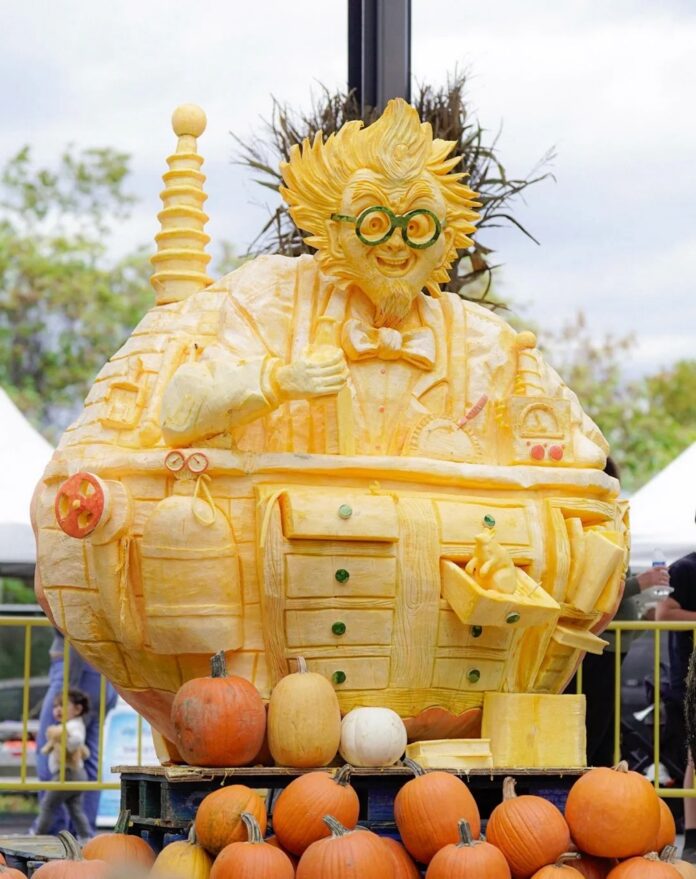
Pittsburgh fall festival: Giant cheese sculpture of a mad scientist.

In Pittsburgh and Western Pennsylvania, we don’t just do fall—we overdo it. The entire month is loaded with autumn-themed activities, but the first Saturday in October is completely unhinged. If you’ve got the stamina, watch a molten iron pour at the Carrie Blast Furnace, see apples crushed on a 1907 cider press in Delmont, catch a steam engine show in Portersville, and hang out in Mars with the best high school mascot in the country. Then, keep the fall fun going with our guide to things to do around Pittsburgh.

Stop by These 19 Pittsburgh Fall Festivals
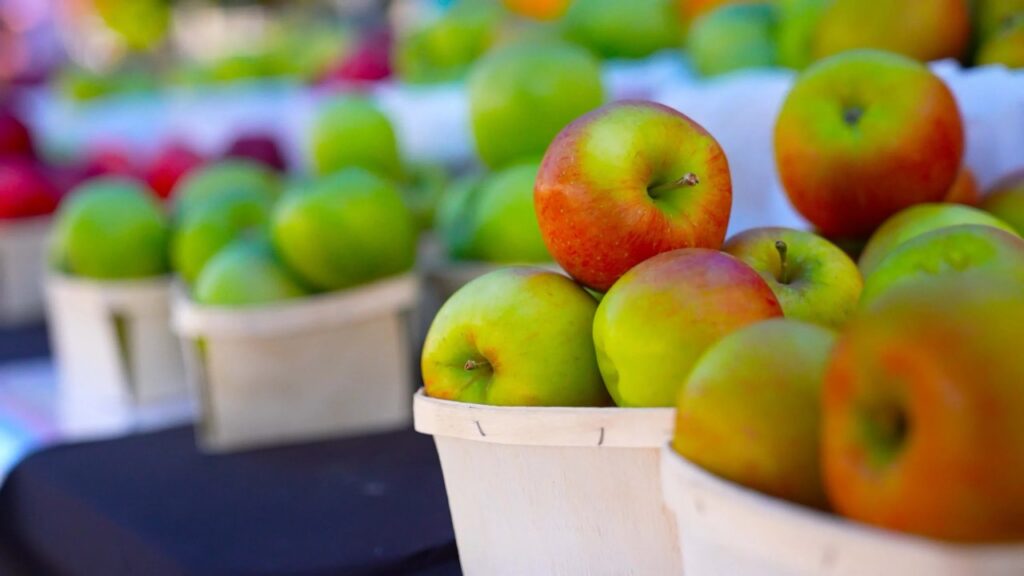
Apples at a Pittsburgh fall festival, ready for harvest and enjoyment.
Photo From Franklin Applefest

Franklin Applefest

October 2–3  |  Franklin

The Victorian town of Franklin draws over 100,000 visitors for Applefest. About 90 minutes north of the city in Venango County, Franklin’s apple-forward festival is one of the largest in the region. Expect more than 300 arts and crafts and food vendors, as well as live music, a 5K, and a pie contest.
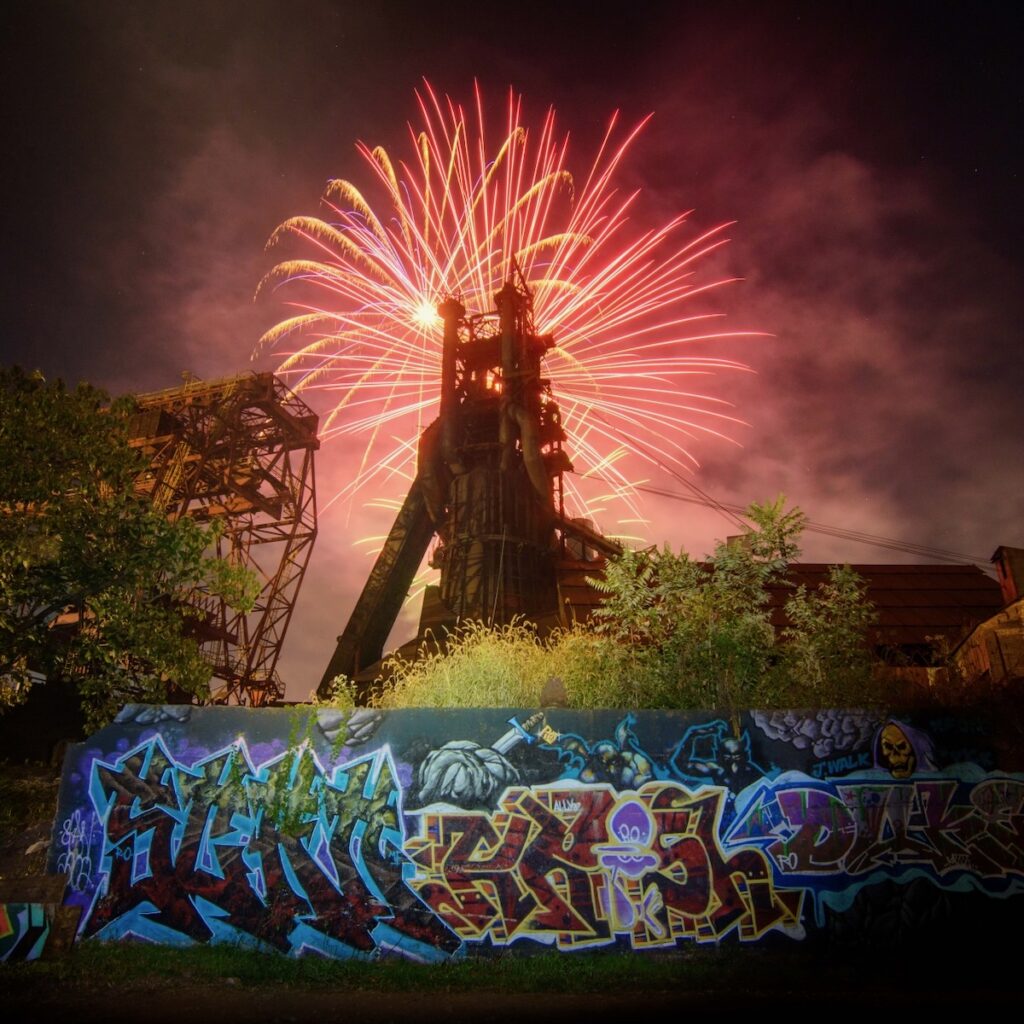
Festival of Combustion: Fireworks explode over abandoned industrial site with graffiti.
Photo From Festival of Combustion

Festival of Combustion

October 3  |  Rankin

From 3 p.m. to 9 p.m., Rivers of Steel takes over the Carrie Blast Furnaces, a National Historic Landmark and one of the last pre-WWII iron-making sites in the country. Now celebrating its 10th anniversary, the festival centers around an all-day iron pour, with molten metal flowing from a furnace into molds that festivalgoers can help carve. Attendees can also catch blacksmithing, glassblowing with the Pittsburgh Glass Center, welding, power hammer forging, ceramics, a heritage craft tent with whiskey tasting, live music, food trucks, and self-paced tours of the furnaces themselves. After dark, there’s a glowing ceramic reveal, and the night closes with fireworks over the stacks. Closed-toe shoes are required.
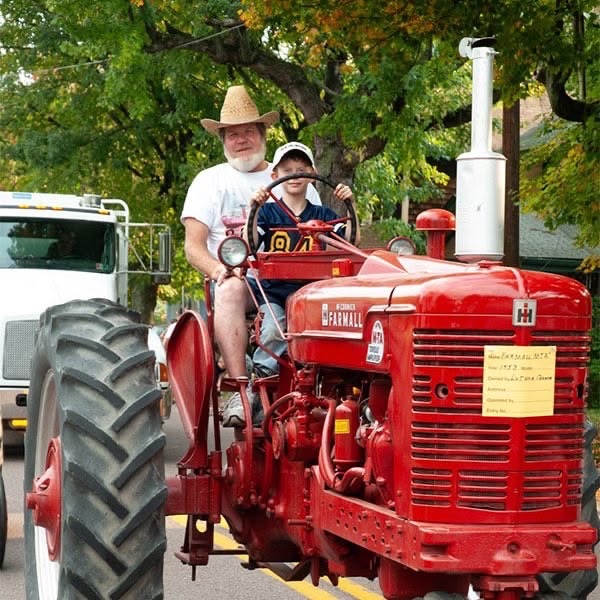
Man and boy on red vintage tractor at a Pittsburgh fall festival
Photo From Confluence PumpkinFest

Confluence PumpkinFest

October 2–4  |  Confluence

The Laurel Highlands are a particularly magical place to spend a day in the fall, so combine a visit with the Confluence PumpkinFest in Confluence. This small town along the Great Allegheny Passage in Somerset County hosts a festival featuring pumpkin contests, a pumpkin queen pageant, a 5K, classic cars, and a parade.
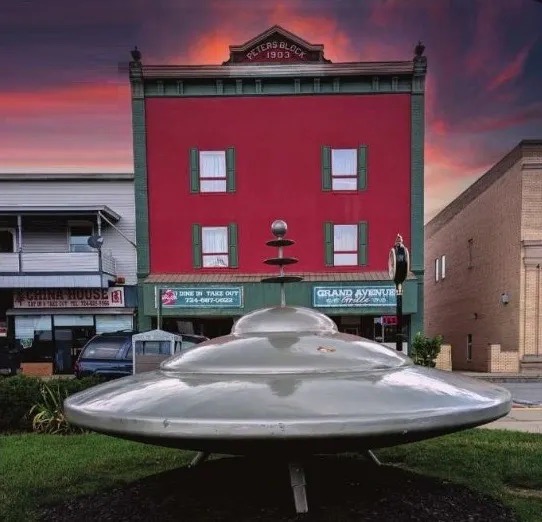
UFO sculpture outside Peters Block building, Pittsburgh
Photo From Mars Applefest

Mars Applefest

October 3  |  Mars

A record number of vendors—more than 200—and close to 10,000 visitors will descend on the borough for its one-day celebration of autumn and apples. The day kicks off with an apple pancake breakfast at the Masonic Lodge, then it’s a nonstop afternoon of classic festival foods like funnel cakes and corn dogs, crafts, games, and a mega book sale at the Mars Public Library. Make sure to snap photos beside the town’s famous flying saucer sculpture and with the Mars Fightin’ Planet—the Mars High School mascot, which was recently voted the number-one high school mascot in the country.
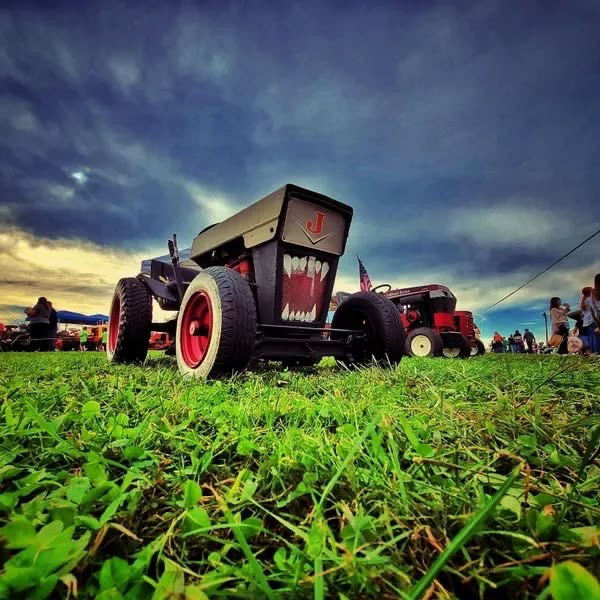
Customized tractor with monster face at a Pittsburgh fall festival event.
Photo From Delmont Apple ‘n Arts Festival

Delmont Apple ‘n Arts Festival

October 3–4  |  Shields Farm, Delmont

Shields Farm in Delmont hosts over a hundred craft, art, and food vendors, plus antique equipment displays and fresh-pressed cider made on an historic 1907 press. The cider press is the big draw, because watching apples turn into cider on 100-year-old equipment is one of the best ways to celebrate the season.
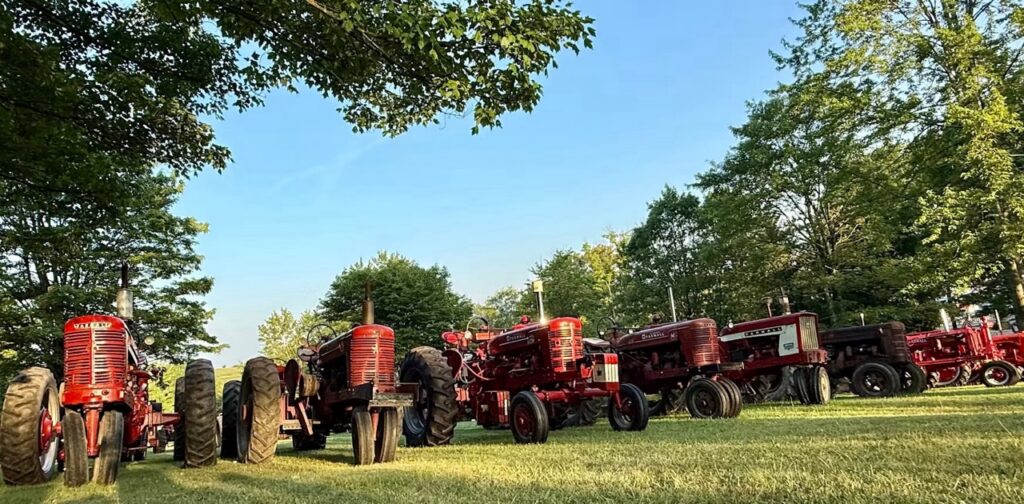
Red vintage tractors lined up at a Pittsburgh fall festival.
Photo From Portersville Steam Show

Fall Apple Fest at the Portersville Steam Show

October 3  |  Portersville

An apple festival with a serious appreciation for old machinery, the Portersville Steam Show is dedicated to preserving and demonstrating the steam engines, antique tractors, gas engines, and other equipment that powered an earlier era of American agriculture and industry. At the Fall Apple Fest, watch apples become fresh cider and apple butter, then explore the vintage village, sawmill, blacksmith shop, and machine shops. There are also train rides, farm animals, an antique car rally, kids’ pedal-tractor pulls, Amish doughnuts, and plenty of sweet apple treats.
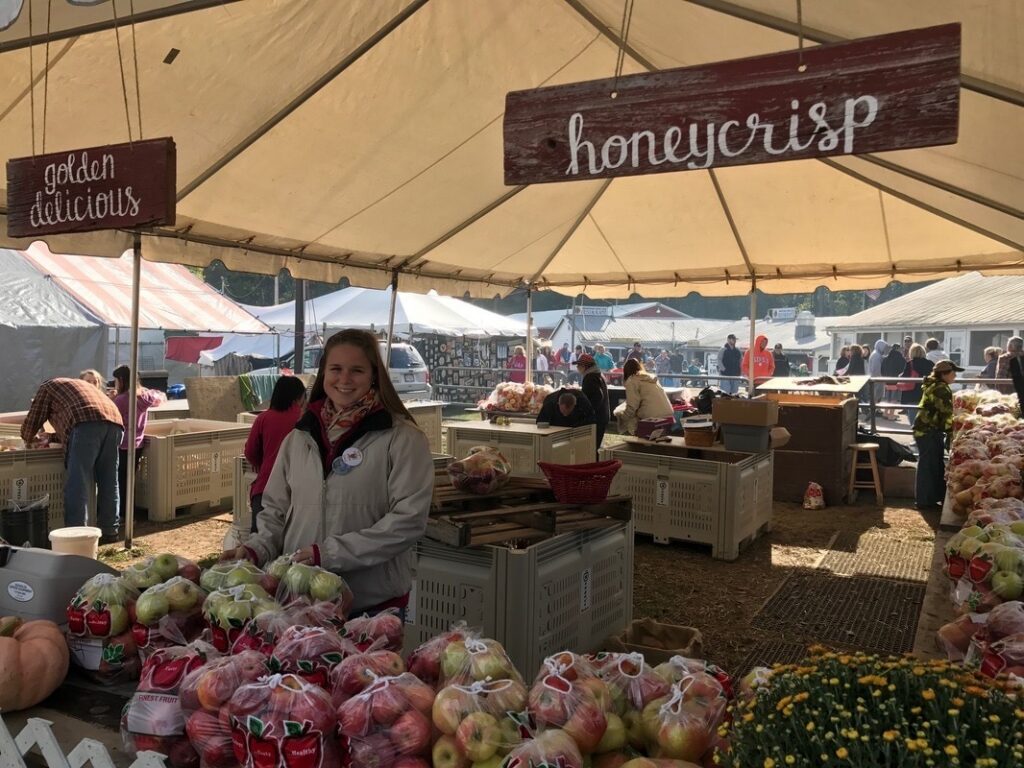
Woman at a Pittsburgh fall festival apple stand selling Honeycrisp apples
Photo From National Apple Harvest Festival

National Apple Harvest Festival

October 3–4, 10–11  |  Arendtsville

Roughly ten miles northwest of Gettysburg and three and a half hours east of Pittsburgh sits the South Mountain Fairgrounds in Arendtsville. Since 1965, the grounds have drawn visitors for arts and crafts dealers, craftspeople’s demonstrations, contests, food stands, orchard bus tours, antique cars, steam engine displays, a petting zoo, and the crowning of the Pennsylvania Apple Queen. Gates open at 8 a.m. on festival days, rain or shine. If you make the trip, the Gettysburg battlefield is just a short drive, and worth a day of its own.
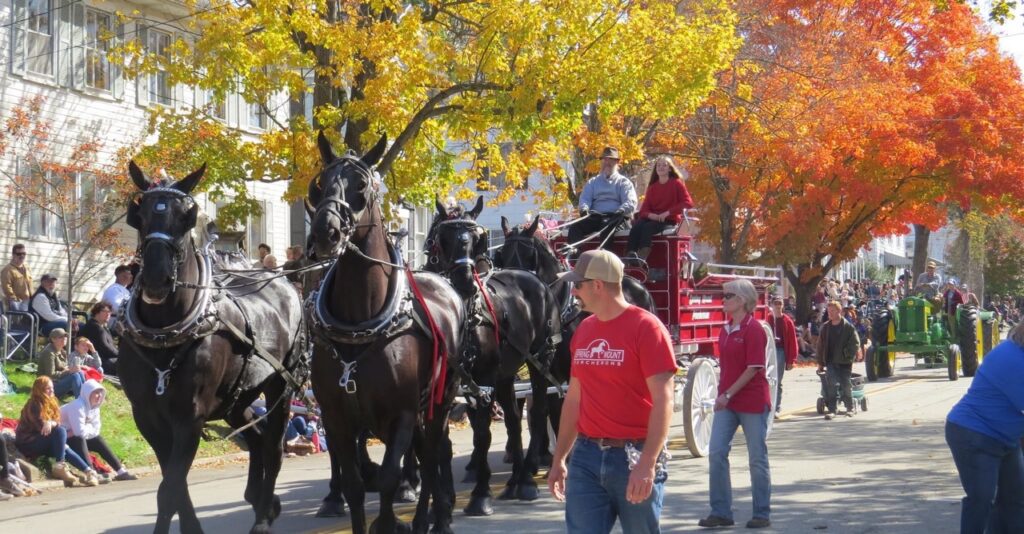
Horse-drawn carriage in a Pittsburgh fall festival parade with autumn leaves
Photo From Fort Ligonier Days

Fort Ligonier Days

October 9–11  |  Ligonier

Ligonier hosts Pennsylvania’s best-known fall festival to commemorate the October 12, 1758, attack on Fort Ligonier. During the event, the historic site runs battle demonstrations, artillery firings, and encampments with 150 reenactors, with Sutlers Row on the museum lawn featuring 18th-century artisans. Along with the history, the town also hosts juried crafts, food vendors—make sure to try the raspberry pie—local spirits, live music, a grand parade, and a 5K, with fireworks on Saturday night. 

Fort Ligonier’s museum is worth a stop, too: Its George Washington Gallery displays the pair of flintlock saddle pistols that the Marquis de Lafayette presented to Washington during the Revolutionary War. The collection also includes Washington’s handwritten account of the November 1758 Friendly Fire Incident near the fort, along with artifacts recovered from the recently-identified battlefield.
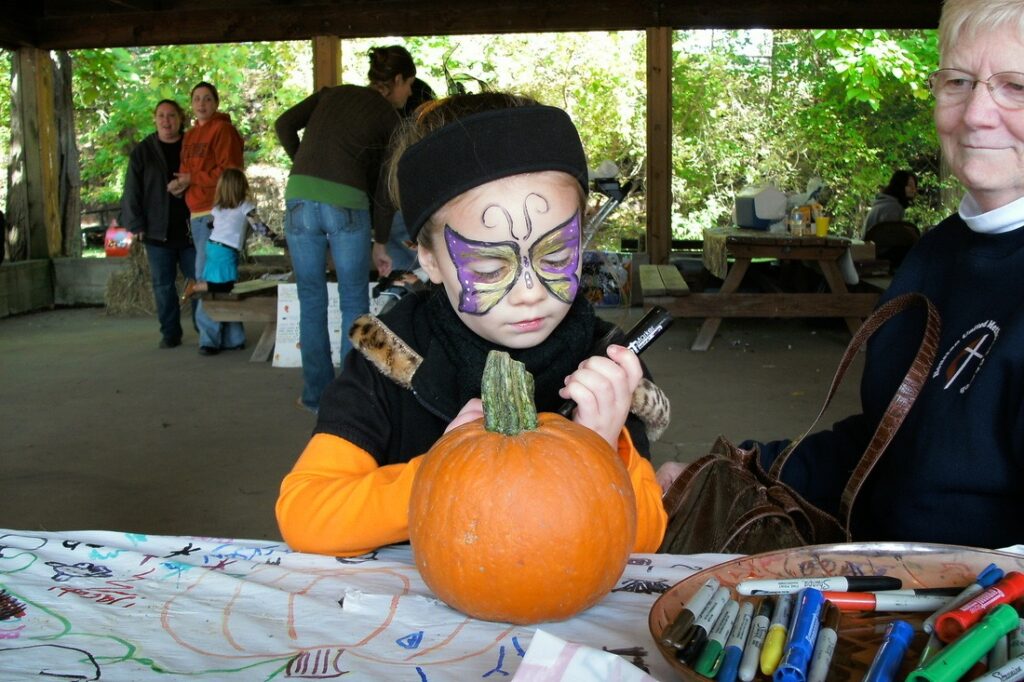
Child with butterfly face paint at a Pittsburgh fall festival event.
Photo From Houston Pumpkin Festival

Houston Pumpkin Festival

October 9–11  |  Houston

About 20 miles south of Pittsburgh, the Houston Pumpkin Festival is a Washington County institution, with more than 175 food and craft vendors, entertainment, children’s activities, best-scarecrow contest, and a parade.
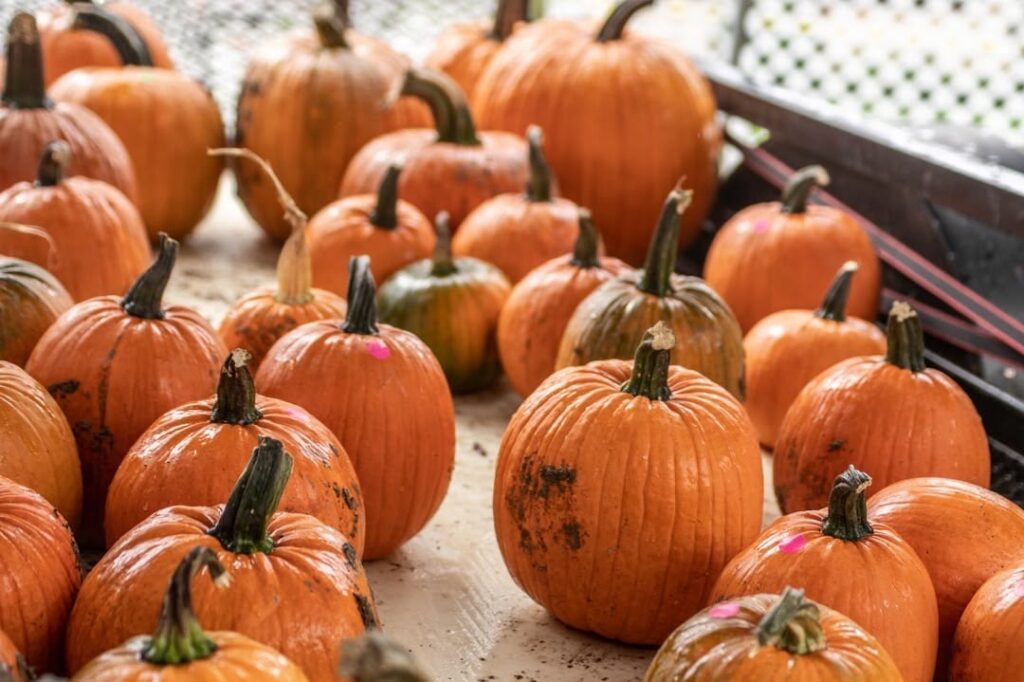
A colorful display of pumpkins at a Pittsburgh fall festival.
Photo From Zelienople Country Fall Festival

Zelienople Country Fall Festival

October 9–11  |  Zelienople

Zelie, as the locals call it, hosts two days of music on Main Street, plus vendors, pumpkin and costume contests, chainsaw carving, a petting zoo, free horse-drawn wagon rides, historic encampments and demonstrations, as well as paranormal ghost walks through three of the town’s towers. Make it a family event or go adults-only and do a self-guided tasting tour of some of Z-town’s top-notch breweries, including ShuBrew, Lolev, and Burgh’ers—all within two blocks—as well as Union Brothers in nearby Harmony.
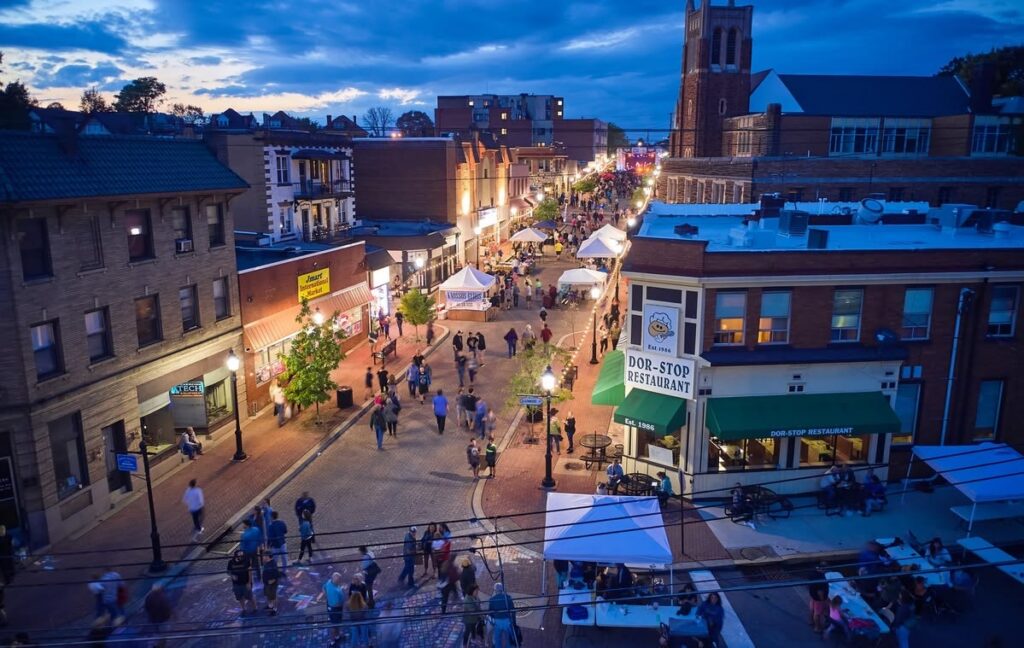
Nighttime view of a Pittsburgh fall festival with food vendors and crowds
Photo From Dormont Street & Music Festival

Dormont Street & Music Festival

October 10  |  Dormont

You can enjoy three stages, 18 bands, and more than 60 vendors—plus food, arts, and crafts—on a closed-off street in a walkable South Hills neighborhood you can reach on the T. The best part, besides the easy access: It’s totally free.
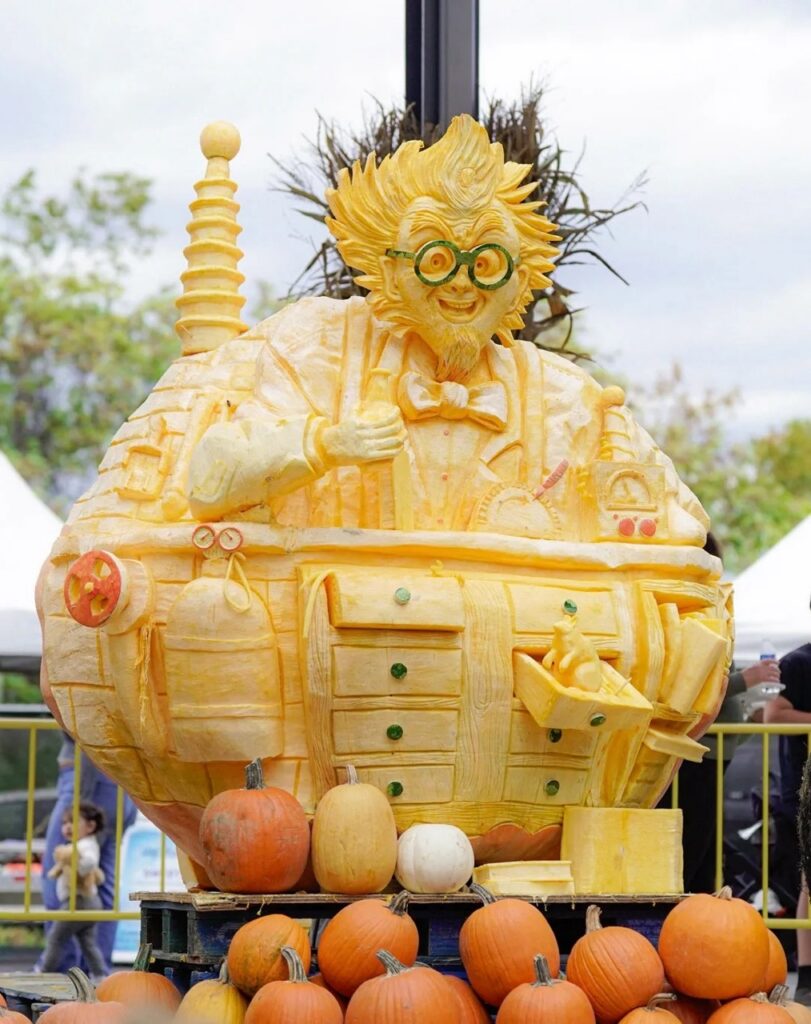
Pittsburgh fall festival: Giant cheese sculpture of a mad scientist.
Photo From Pittsburgh Monster Pumpkins Festival

Pittsburgh Monster Pumpkins Festival

October 17–18  |  Strip District

At the city’s signature pumpkin event, the headliners are the Atlantic Giants, competition-level pumpkins that weigh more than a ton, and the pumpkin drop, which is exactly as satisfying as it sounds. Carving, carriage rides, glassblowing, and a 5K round out a schedule of family-friendly events.
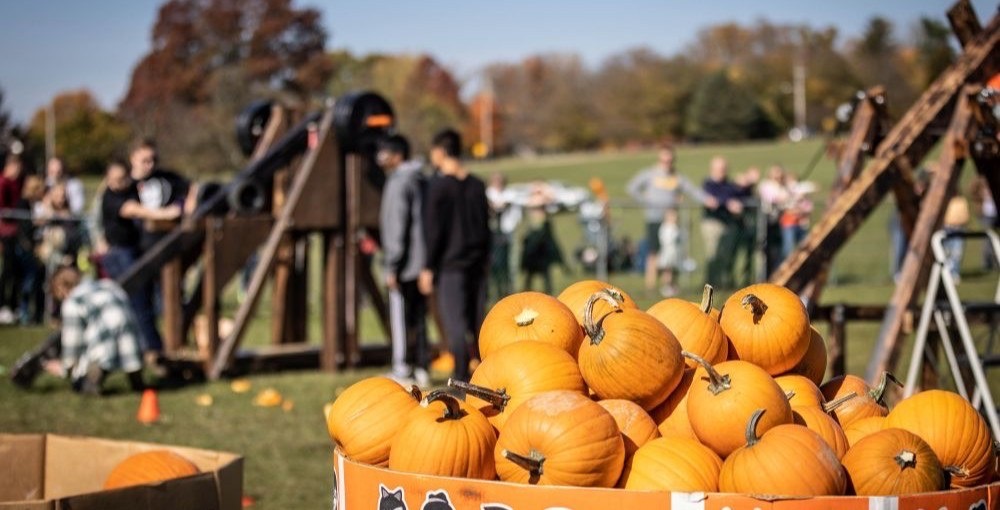
Pumpkins at a Pittsburgh fall festival with people in the background
Photo From Allegheny County Parks

Punkin Chunkin

October 17  |  Hartwood Acres

How far can a trebuchet launch a pumpkin? More than 150 feet, if SHARP—the Sarah Heinz Advanced Robotics Program at Sarah Heinz House—is involved. The youth robotics program brings its full-size wooden trebuchet to Hartwood Acres to see just how airborne the autumnal gourds can get. Stick around for crafts, games, face painting, interactive storytelling, cookie decorating, and a farmers market.

Pittsburgh Playhouse Fall Fest

October 23–November 1  |  Downtown

A free, multi-day downtown street festival with food, drinks, games, vendors, and arts and crafts, built around Boo’s Halloween House Party, a family Halloween musical. Fall Fest includes pumpkin painting and activities on Forbes Avenue, while Boo’s Halloween House Party takes place inside the Playhouse. The fest runs through November 1 and is the most indoor-friendly option on our list, so head over if the weather is rainy.

Ligonier Pumpkin & Spice Festival

October 24  |  Ligonier

This is Ligonier’s second festival of the season, but it’s absolutely first-tier: a strolling-and-tasting event, it features restaurants, bakeries, and other local businesses serving fall-flavored food and drinks. And make sure to check out the pumpkin-decorating contest at the town’s bandstand.
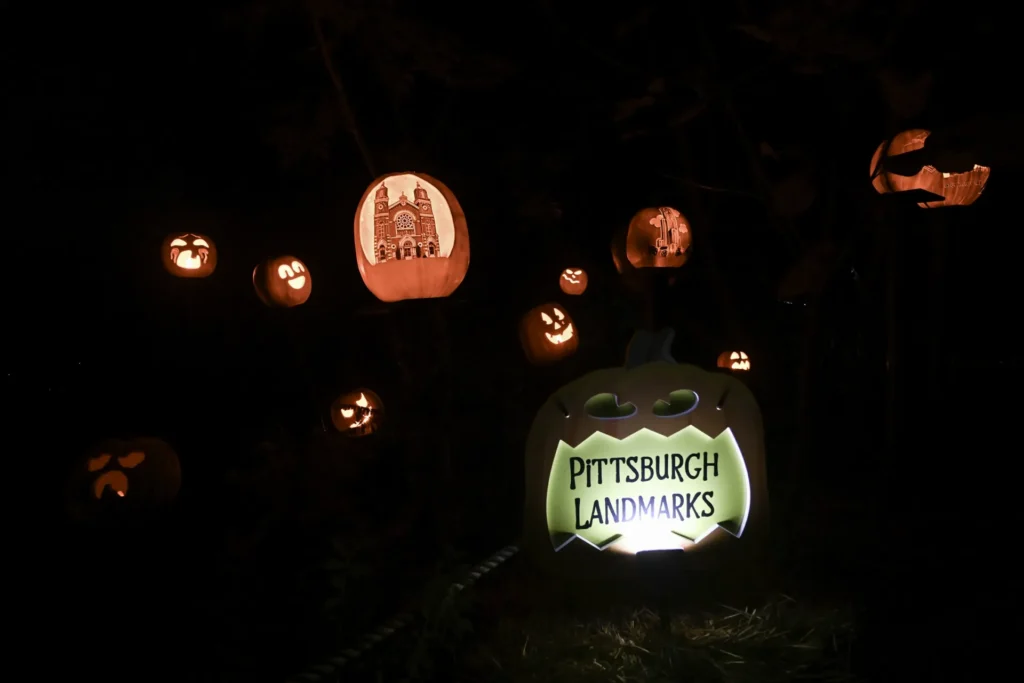
Pittsburgh Landmarks jack o'lantern display at night, with carved pumpkins.
Photo From Pittsburgh Zoo & Aquarium

Jack O’Lantern Extravaganza

October 2–November 1  |  Pittsburgh Zoo & Aquarium, Highland Park

On select nights, walk a trail through the Pittsburgh Zoo that features more than 3,500 hand-carved jack o’lanterns, with themed sections built around zoo animals, Pittsburgh figures, cryptids, and pop culture. The finale is a 650-foot Living Wall of pumpkins synchronized to a light and sound show. Thursday nights include a 21+ tent with mixology classes and comedy. Don’t forget to stop by and see the zoo’s new lion cub in her habitat too!

Topiary animal and turtle display at a Pittsburgh fall festival
Photo From Phipps Conservatory

Phipps Fall Flower Show: Alice’s Adventures in Autumn

October 10–November 1  |  Oakland

Phipps has been mounting chrysanthemum shows since 1894, making this the longest-running fall flower show in the country. This year’s celebration carries the Alice in Wonderland theme over from the summer show and reworks it for autumn, pairing the Wonderland scenes with mums in an absurd range of shapes and sizes, plus a few spooky additions.
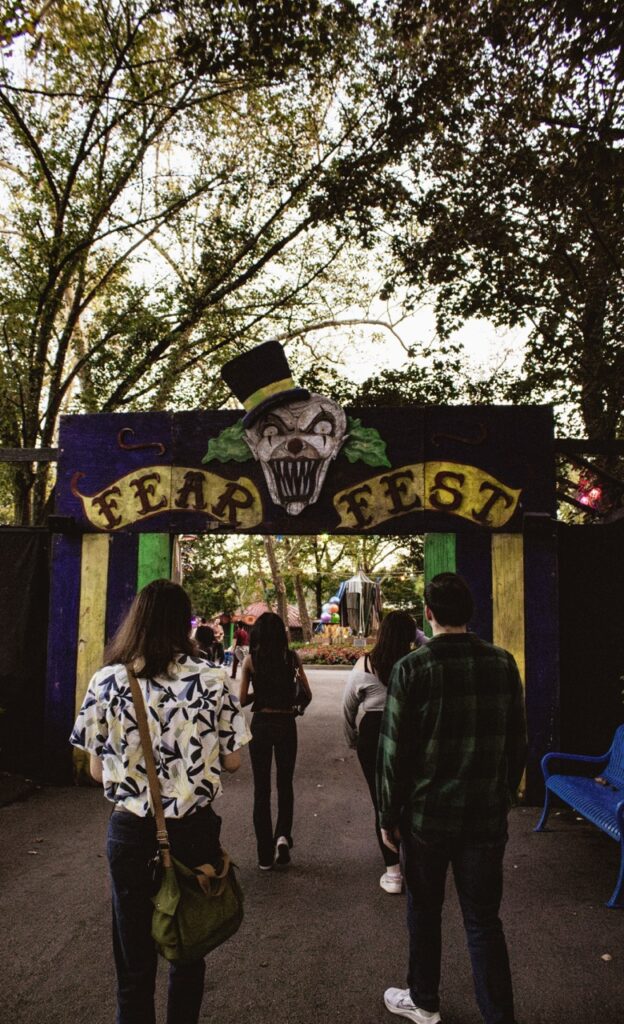
A group of people walking through a Fear Fest clown sign.
Photo by Kylie Thomas

Kennywood Phantom Fall Fest

Through November 1  |  West Mifflin

Get dahn to Kennywood on select weekend afternoons through November 1 for family fun: more than 30 rides under the foliage, as well as trick-or-treating and food. After 6 p.m., the park hands itself over to seven haunted houses and four scare zones, with the big coasters running in the dark. Both halves are included in one admission, but parental discretion is advised after dark.
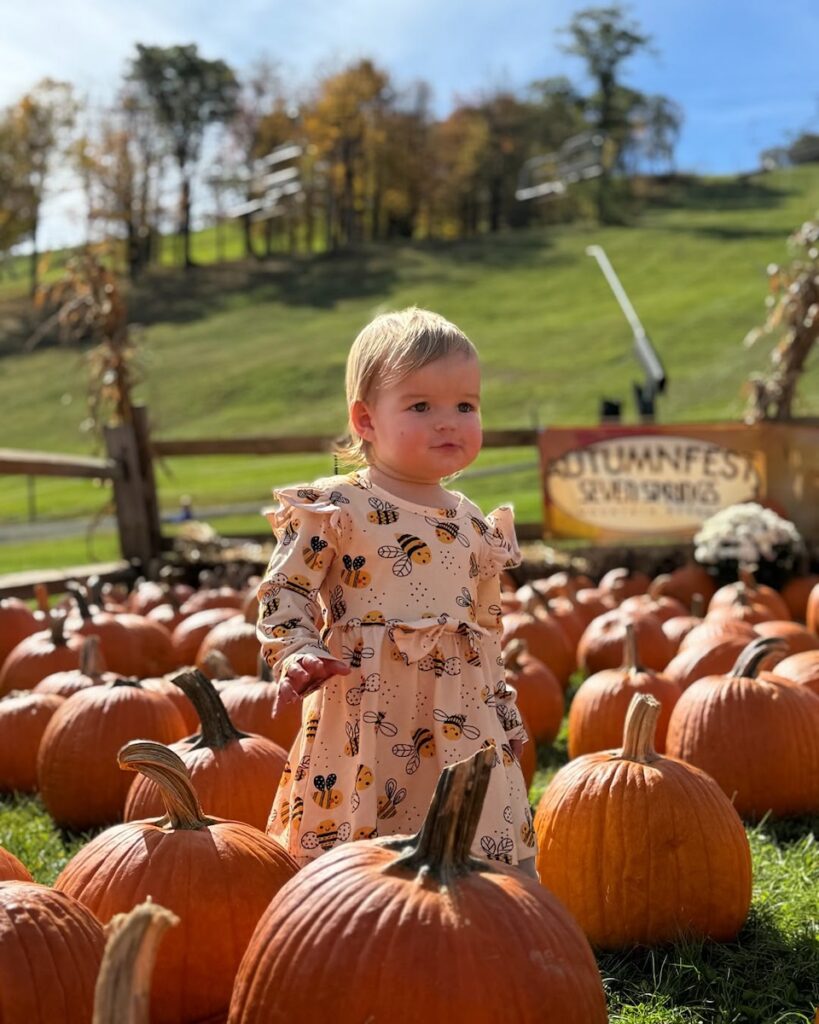
Toddler in bee dress at pumpkin patch, Pittsburgh fall festival
Photo From Seven Springs

Seven Springs Autumnfest

October 3–4, 10–11, 17-18  |  Seven Springs

Seven Springs Autumnfest is an easy excuse to head into the Laurel Highlands for fall foliage and mountain views. Take a scenic chairlift ride, listen to live music, wander through the haze maze and pumpkin patch, explore the resort’s outdoor activities, then warm up with the Autumnfest Buffet at the Slopeside Dining Room. The All-Day Adventure Pass bundles access to more than 11 activities, including the Alpine Slide, rock wall, and paddleboarding. Or make a weekend of it and stay overnight at the resort.

About the Author

Kenny Gould is a writer and the founder of Hop Culture, a digital magazine focused on the beer industry. In addition to writing about food and beverages, he’s also the author of several fiction books, including the bestselling fantasy The Castle of 1,000 Doors. He holds a BA from Duke University, an MFA from Chatham University, and an MBA from NYU Stern. To learn more about Kenny, visit his website or follow him on Instagram at @thekennygould.

Featured Image From Pittsburgh Monster Pumpkins Festival

Subscribe to TABLE Magazine‘s print edition.

Get Scared with 10 Haunted Attractions Near Pittsburgh

0
A clown in striped pants on stilts stands outside in front of red lights.

While there are many treats to Halloween, it’s the tricks that make the holiday so memorable. Tricks by scary actors leave us screaming, jumping, and running away, then laughing and happy after the encounter. It’s these moments that make haunted houses and hayrides a part of our annual ghoul-a-bration. Get your heart rate pumping and embrace your fears by visiting one of these haunted attractions near Pittsburgh. 

10 Haunted Attractions Near Pittsburgh

Demon House

Monongahela 

This haunted house is literally haunted after being built on an ancient burial ground. You’ll get the vibe, for sure, as you experience Demon House and explore the grounds of the McCue Family Estate with terrifying scenes at every turn. The tour starts at dusk and travels through the stone mansion. Campfires, concessions, and an outdoor movie theater are available outside the tour.

Hundred Acres Manor

Bethel Park

Pittsburgh’s largest and scariest haunted house according to residents takes place at Hundred Acres Manor. Explore the immersive grounds of this manor through five haunted house sections, a midway full of games, the Scream Bar, the Maze, Not-So-Scary Wagon Rides, and the Enigma Project 5 Minute Escape Room. Needless to say you’ll be leaving without a scream left in your body.

Castle Blood

Monessen

If you’re looking for something other than the classic haunted house, try the theatrical Castle Blood. This 100-year old funeral home tour takes you through a game that challenges guests to solve a mystery while taking in scares. Each tour changes characters so you can come back again and experience the same great suspense in a new way.

Haunted Hills Hayride

North Versailles

A haunted hayride gives you a scenic ride with scares along the way as you travel into the deep, dark woods. It’s an excellent chance to cuddle up to a loved one and see the reactions of those around you. Or, if you’d prefer to walk, this location also has a Valley of Darkness Haunted Walking Trail. This trail will give you another eerie forest experience closer to the action. 

The Haunted Mine

Tarentum

Venture through the real Tour-Ed Mine in true Halloween fashion. Search with the families of those who disappeared in the mine a decade ago. You’ll find all the creatures those who’ve gone this way before had to face. How deep into the mine you can go? Not only is this experience frightening, but getting a look in at the mine is a bonus. 

Phantom Fall Fest at Kennywood

West Mifflin

Get all-day park access to Kennywood and take in the decorations all around the park during the day. Then, after the sun goes down, the creatures come out to play with six haunted houses (featuring their latest house, Detached) and four scare zones to keep you busy all night. The park also has an extra haunted attraction this year as an add on option. With this option you’ll get to explore their Noah’s Ark ride completely in the dark. Just be careful where you step, you never know who you’ll run into on the ark…

Lonesome Valley Farms

Greensburg

You’ll have two different opportunities to take in frights at Lonesome Valley Farms. The first is their Haunted Hayride which just as you start to get comfortable, gets you out of your seat with a walking trail during the journey. Your other scare-zone is their Slotter Farmhouse & Barn which is more of your traditional haunted house. And just in case you get a little too scared, you can cool down with the non-haunted Get Lost Corn Maze.

Cheeseman Fright Farm

Portersville

After you’ve spent the day picking pumpkins at Cheeseman Farm, stick around for their Fright Farm experience. Whether you’re looking for a haunted hayride, creepy corn maze, or scary walk-though attraction, they have it all. Not to mention, with over 100 scare actors walking the grounds, you’re sure to have your heart pumpking from beginning to end.

Freddy’s Haunts

Aliquippa

After 32 years of haunting, Freddy’s Haunts has Halloween and scaring down to a science. The haunted trail here is over a half-mile of old-school fun. Then, when you’ve braved the trail, head over to the midway for vendors and games along with live entertainment and bonfires nightly.

Portals of Fear

West Mifflin

Besides Kennywood, Portals of Fear is another immersive haunted attraction over in West Mifflin. At Portals of Fear, the demon Rulos can open portals in time, allowing him to take over the entirety of this institute. The professional actors and special effects at this house take it above others you’ve seen. It’s dark, it’s chilling, and it’ll have you running for the exit.

Story by Kylie Thomas
Photo Courtesy of Demon House Haunted Attraction

Subscribe to TABLE‘s print edition

The 20 Best Pumpkin Patches Around Pittsburgh

0
Child carrying a large pumpkin at a Pittsburgh pumpkin patch.

For a city surrounded by hills and old farm country, Pittsburgh has an unusually deep bench of farms selling directly to the public, and in autumn they pull out all the stops. We rounded up 20 worth the drive, from small family farms with a few acres of pumpkins to sprawling agricultural operations with fields of them. Most charge admission, with activities like hayrides and corn mazes costing extra. Weekends offer the full slate of activities, but weekdays are often quieter if all you want is a pumpkin and some cider.

Because these are usually family-run farms, dates and hours can change, so always check the farm’s website and social media before you go. And, after you have your harvest of pumpkins, head home to make our pumpkin recipes and fill your table with something delicious.

Pumpkin Patches North of Pittsburgh

Red tractor in a Pittsburgh pumpkin patch with corn stalks.
Photo From Soergel Orchards

Soergel Orchards

September 19–November 1 | Wexford

Admission: Free, activities priced separately 

The big Wexford fall destination returns with tractor rides, pumpkin, apple, and flower picking, games, food, and cider. Friday-night hayrides to the pumpkin patch are also part of the fall lineup. A word to the wise: this event gets crowded—it’s not unusual to see busloads of college students and church groups arriving. Go early in the season and early in the day if you can, and wear sensible shoes after it rains, because the paths can get muddy.

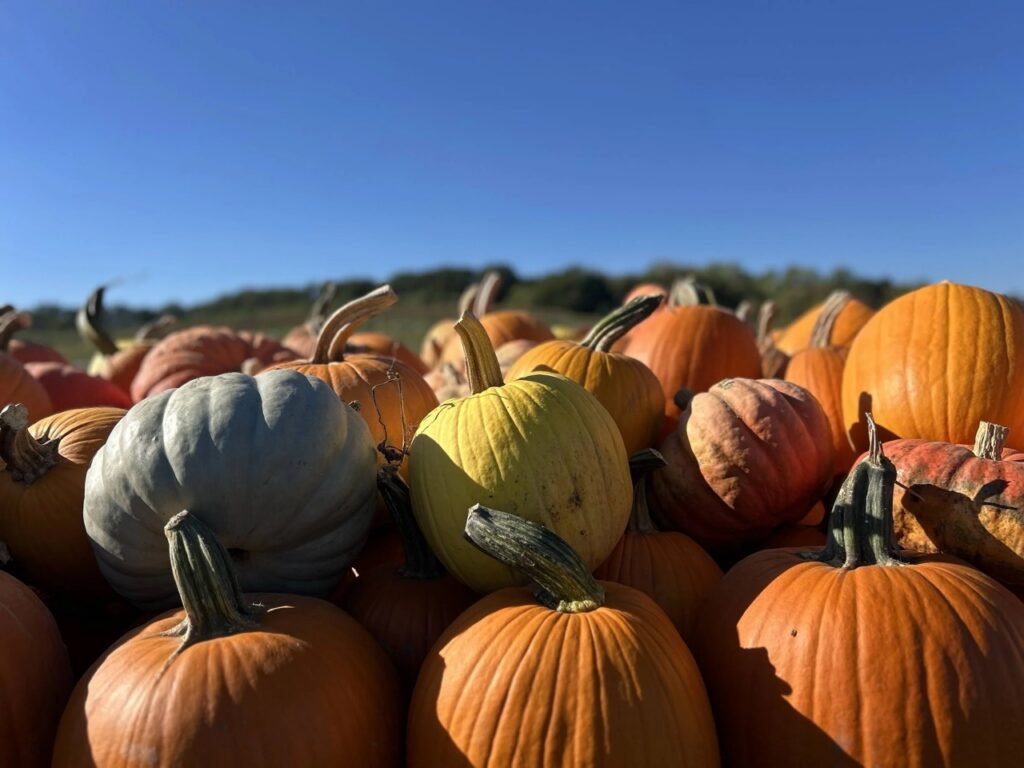
Assortment of pumpkins at a Pittsburgh pumpkin patch under a clear blue sky.
Photo From Shenot Farm & Market

Shenot Farm & Market

September 26–October 31 | Wexford

Admission: $5 for hayrides 

Since 1854, six generations of Shenots have been farming in the Wexford area. The pumpkin patch is accessible via two paths: a hayride or a scenic walking trail that’s friendly to strollers and wagons. Along with the pumpkins, corn stalks, straw bales, gourds, and decorative corn can also be purchased at the market. Make sure to visit the Fudge Room before you leave.

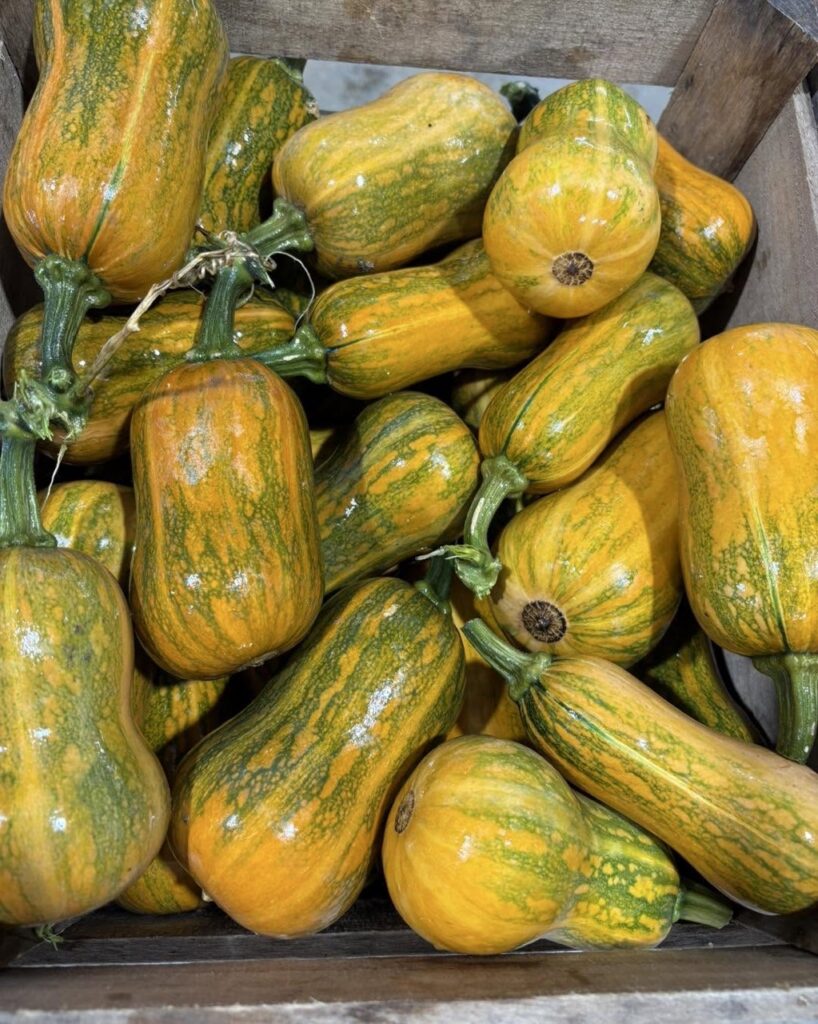
A pile of fresh, striped butternut squash, perfect for fall recipes.
Photo From Harvest Valley Farms

Harvest Valley Farms

October Weekends | Valencia

Admission: Free, activities priced separately 

This fourth-generation farm twenty miles north of Pittsburgh grows over 160 varieties of fruits and vegetables, and offers a fantastic low-key alternative to some of the bigger pumpkin destinations. The fall festival features live music, hayrides, a pumpkin patch, cornstalk maze, farm animals, face painting, food from Mars Farmhouse Café, and beer from Conny Creek Brewing. Closed on October 31.

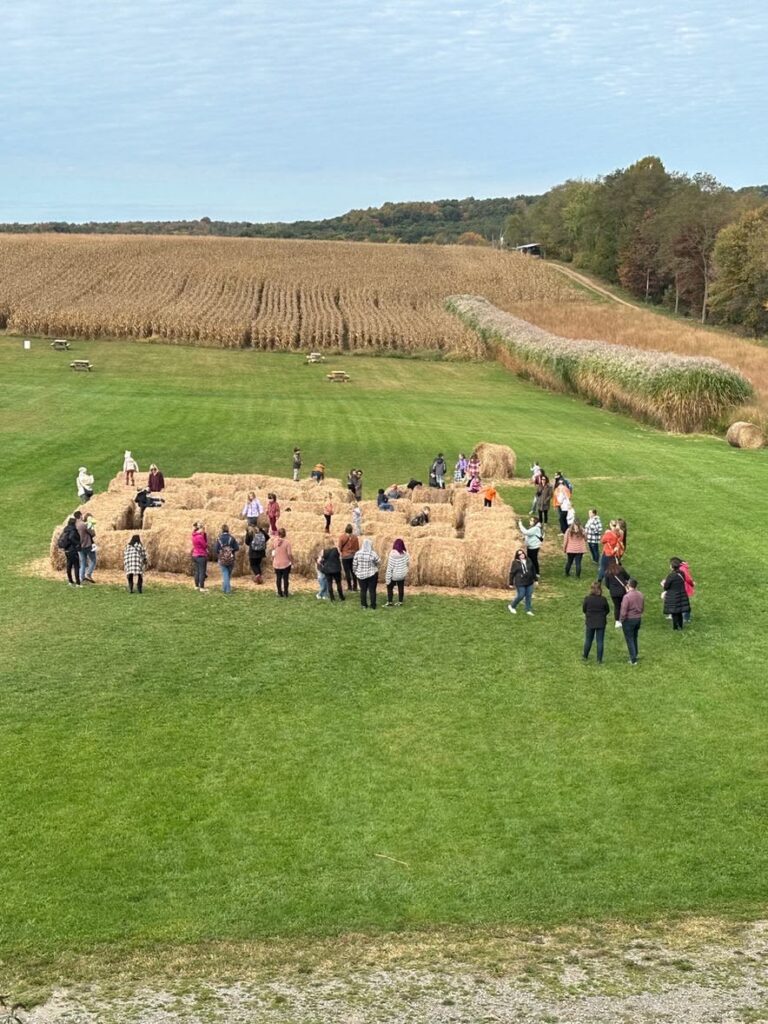
People explore a hay bale maze at a Pittsburgh pumpkin patch in autumn.
Photo From Cheeseman Farm

Cheeseman Farm

October weekends | Portersville

Admission: Free, $5 for hayrides, children 2 and under are free

Cheeseman Farm holds a pumpkin festival with all the classic fall attractions, but it’s the  nighttime activities that set it apart: After dark, the destination turns into Cheeseman’s Fright Farm, which includes a haunted hayride, haunted corn maze, and walk-through attractions.

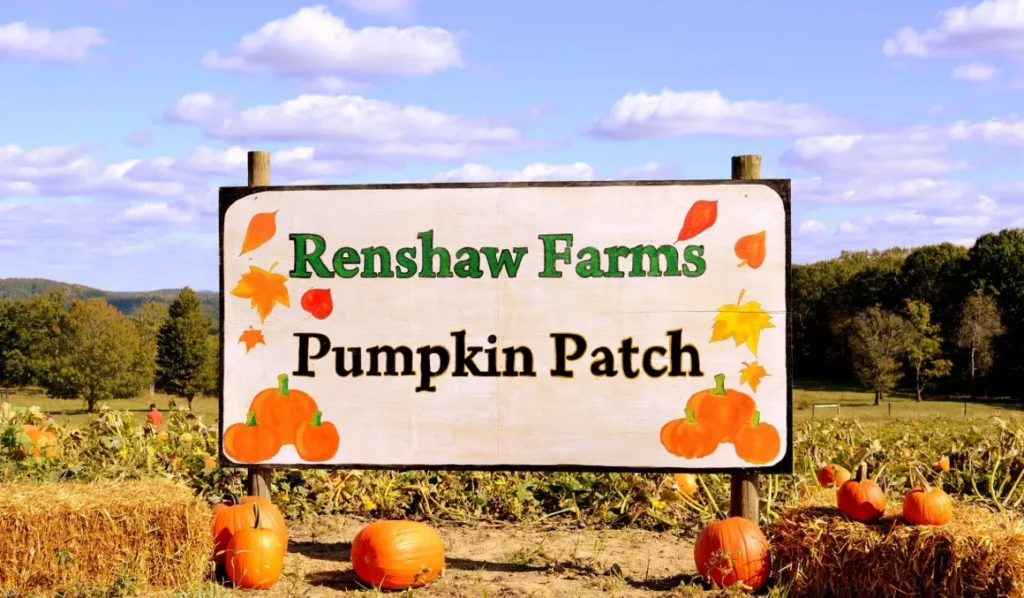
Renshaw Farms pumpkin patch sign with pumpkins and hay bales, a Pittsburgh area attraction.
Photo From Renshaw Family Farms

Renshaw Family Farms: Pumpkin Fest

September 19–October 31 | Freeport

Admission: $8, children 3 and under are free, some activities priced separately  

Renshaw packs a lot into the admission price: hayrides, a corn maze, corn pit, two pedal tracks, bounce pillow, animal park, giant rope spider web, hay-bale mountain and slides, nine-hole mini golf, zip lines, tractor-tire mountain, pumpkin bowling—and more. There’s also a country store stocked with fall baked goods, plus a cafeteria-style restaurant, snack shack, ice cream stand, and donut shop.

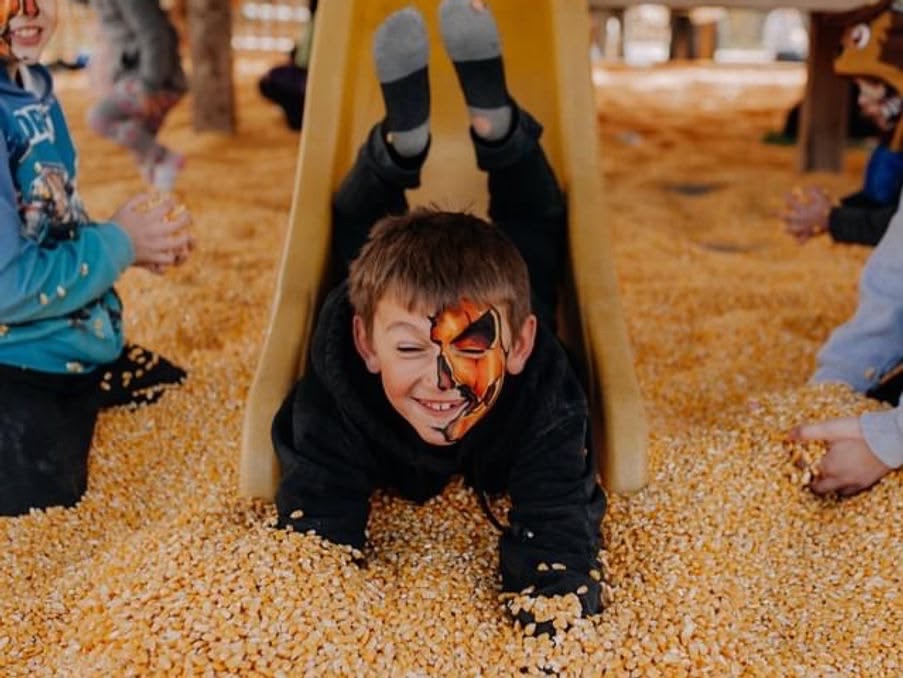
Boy with pumpkin face paint slides into corn pit at a Pittsburgh pumpkin patch.
Photo From Freedom Farms

Freedom Farms Fall Fest

October Weekends | Valencia

Admission: $10, children 3 and under are free

Freedom Farms hosts Fall Fest, a full farm-day experience with hayrides, a pumpkin patch, corn maze, animal barn, tire graveyard, petting zoo, and pick-your-own flowers. Adults will also enjoy the farm-to-fork kitchen and beer from local vendors, including Grist House Craft Brewery.

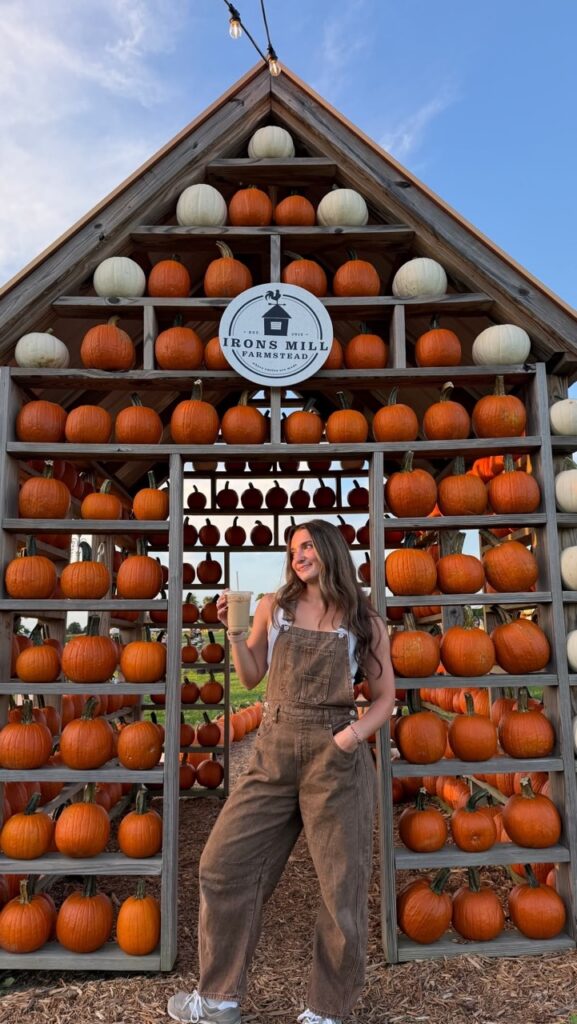
Woman in overalls at Irons Mill Farmstead pumpkin patch near Pittsburgh.
Photo From Irons Mill Farmstead

Irons Mill Farmstead

August 29–November 1 | New Wilmington

Admission: $16–$27, depending on the day

USA Today named Irons Mill one of the country’s 10 best pumpkin patches, and the 150-acre farm an hour north of Pittsburgh earns the title and then some. Like a kid’s ultimate autumn farm fantasy, it boasts more than 40 attractions—including a corn pit, barnyard animal encounters, zip lines, hay bale castles, an obstacle course, and a pumpkin village—plus a 10-acre corn maze shaped like Dolly Parton. Weekends bring pig and duck races and all-age dance parties, along with more than 10 on-site eateries, including a 1950s-style diner, scoop shop, and adult bar serving hard cider.

Kids ride cow-themed train through sunflower field at Pittsburgh pumpkin patch.
Photo From Coolspring Ranch

Coolspring Ranch

September 11–November 1 | Mercer County

Admission: $15-$33 depending on activities purchased, children 2 and under are free 

Owned by brothers John and David McCullough, Coolspring Ranch is a working Angus cattle farm, which explains why this pumpkin patch an hour and 15 minutes north of Pittsburgh includes a mechanical bull and burgers at the Cattlemen’s Grille eatery made with the ranch’s own beef. What started out as a simple corn maze is now in its 22nd season, with a 12-acre corn maze, a mega slide, hay mountain, pony rides, pumpkin blasters, pedal-tractor races, goats for petting, and hayrides. Not to be missed: apple-cider slushies and the apple-and-donut sundaes.

Assortment of colorful gourds and pumpkins, perfect for fall decor in Pittsburgh.
Photo From Yeck’s

Yeck’s Pumpkins and Hayrides

Through October 31 | Freedom

Admission: Free, $5 for hayrides, cash only 

A classic, low-key pumpkin patch, Yeck’s features a kids’ corn maze, a hay tunnel, trikes, a granary play building, farm animals to visit, and weekend hayrides. The farm also stocks pumpkins, gourds, cornstalks, straw, and mums, plus cider and Amish baked goods.

Pumpkin Patches West of Pittsburgh

Close-up of bright orange pumpkins, perfect for Pittsburgh pumpkin patches.
Photo From Janoski’s Farm

Janoski’s Pumpkinland

October 3–25 | Clinton

Admission: $13, children under 2 are free, some activities priced separately

Family-owned and operated since 1954, Janoski’s hosts an annual Pumpkinland with hayrides, corn mazes, a haunted barn, petting zoo, corn pit, straw maze, and playground. Pack your own lunch or visit the on-site food vendors.

Fall harvest display with scarecrow, pumpkins, gourds, and mums at a Pittsburgh pumpkin patch.
Photo From Hozak Farms

Hozak Farms

October weekends | Clinton

Admission: Free, $4 for hayrides, some activities priced separately 

Located ten miles west of the Pittsburgh airport, Hozak is the rare farm with no general admission fee, which makes it an ideal low-commitment pumpkin patch. The Fall Festival brings scenic hayrides through the woods, pumpkin painting, face painting, farm animals, and refreshments.

Pumpkin Patches East of Pittsburgh

A Pittsburgh pumpkin patch with shelves full of pumpkins in a barn.
Photo From Reeger’s Farm

Reeger’s Farm

October 3–25 | Shelocta

Admission: $2 for hayrides and the barnyard, $5 for the corn maze, cash only

A century-old farm that was once a grain and beef operation, Reeger’s celebrates harvest season old-school style: hayrides to the pumpkin patch, a barnyard of farm animals, a corn maze, a corn cannon aimed at a bullseye, food trucks, and a farm market.

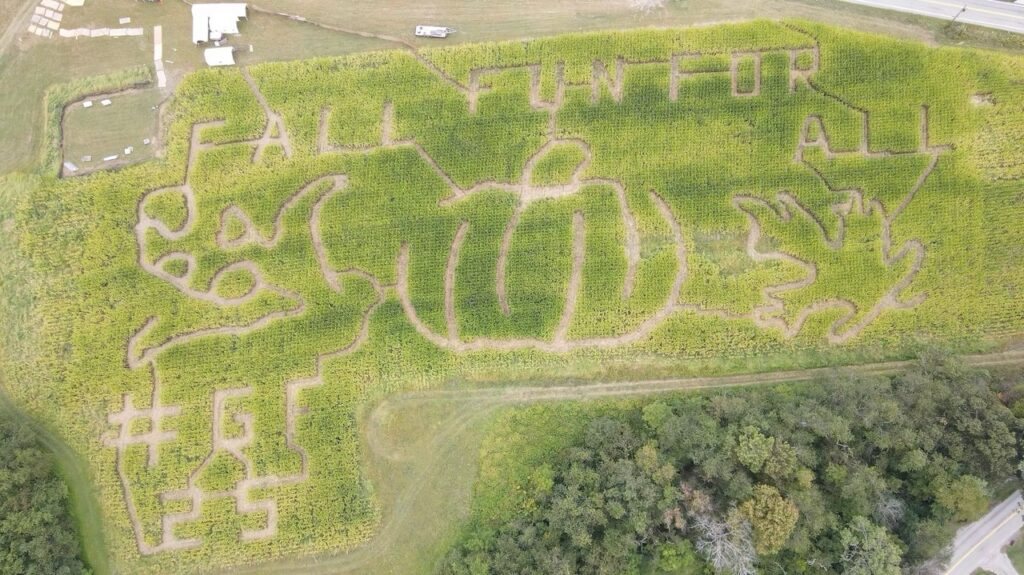
Aerial view of a corn maze in a Pittsburgh pumpkin patch with "Fall Fun For All" text.
Photo From Gearhard Farms

Gearhard Farms

September 11–November 1 | Murrysville

Admission: $10 for the corn maze, $7 for a hayride, $15 for a corn maze and hayride combo, children 4 and under are free

Older than the United States, Gearhard Farms dates to 1769, when Robert Hays purchased around 340 acres in what is now Murrysville. Today, the 150-acre family farm has a small  pumpkin patch, hayrides through the countryside, and pumpkins, gourds, and other fall decor for sale. The corn maze, a 27-year-old tradition, is a big draw: the design changes each year, and 20 trivia questions and 10 hidden animal pictures await along the paths.

Pumpkin Patches South of Pittsburgh

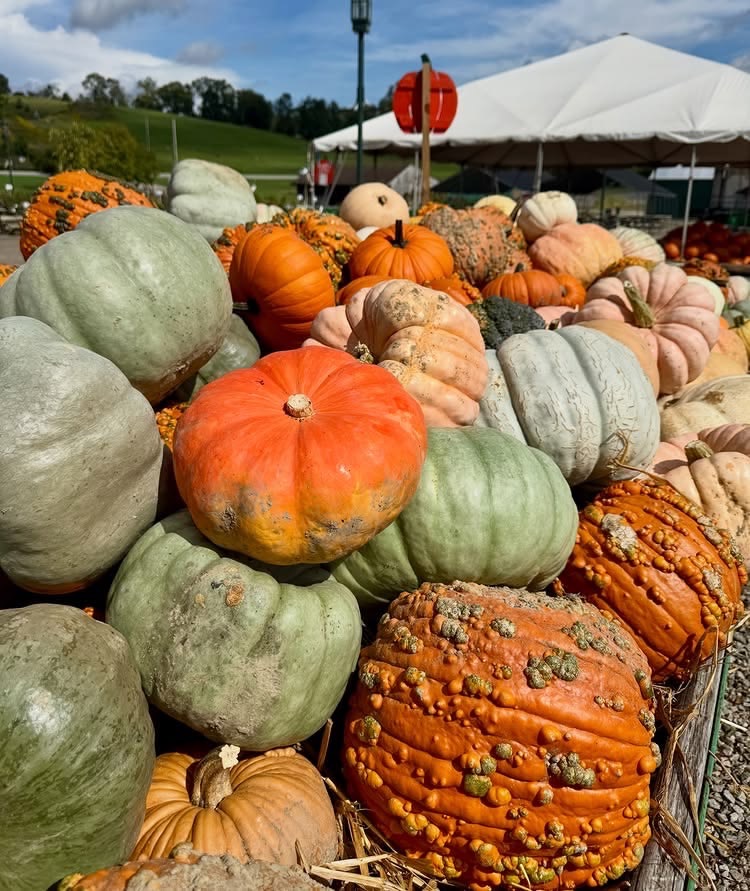
Colorful pumpkins and gourds at a Pittsburgh pumpkin patch.
Photo From Trax Farms

Trax Farms

September 19–October 23 | Finleyville

Admission: Free, $12-$14 for hayrides

The South Hills fall staple offers hayrides, a three-acre corn maze, pumpkin patch, farm food, and a market worth an hour on its own. The farm also hosts Hops & Hayrides for those looking to add a little beer to their pumpkin picking. If you wait until the last minute to purchase your pumpkins, note that Trax usually maintains a steady supply until late October.   

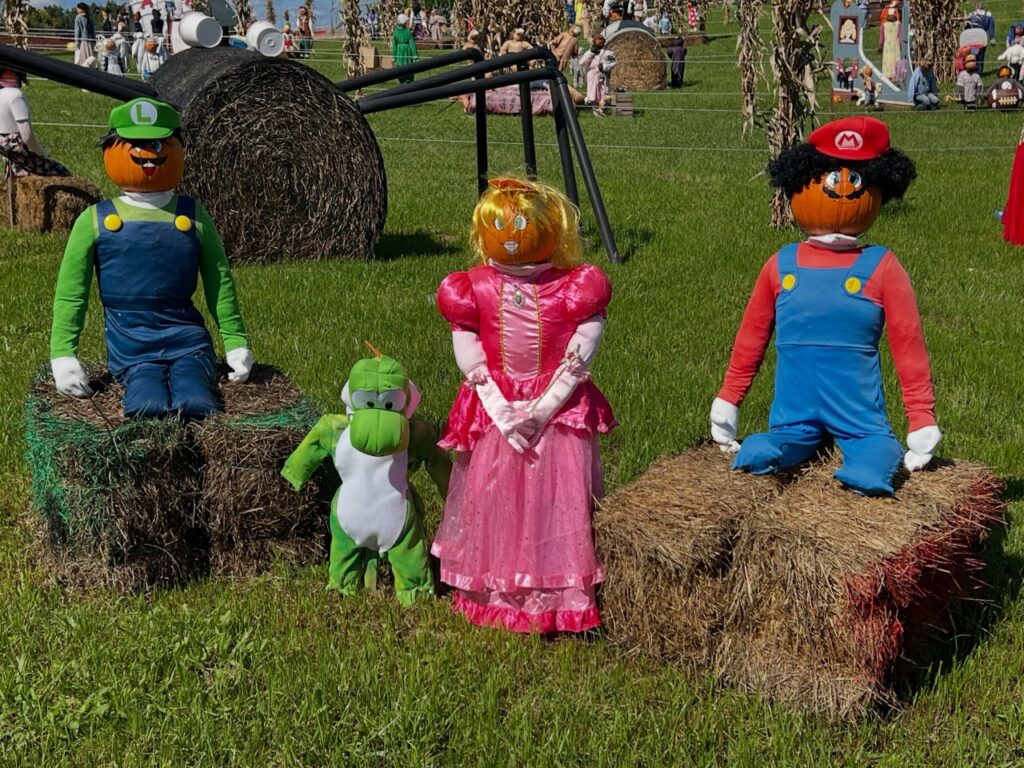
Mario, Luigi, and Princess Peach pumpkin figures at a Pittsburgh pumpkin patch.
Photo From Triple B Farms

Triple B Farms

September 12–November 1 | Monongahela

Admission: $18, children 2 and under are free 

Located on the aptly named Berry Lane in Monongahela, Triple B opens its fall season with family-friendly attractions like hayrides, two corn mazes, the Big Boo Barn, giant slides, farm animals, a rope maze, and pick-your-own pumpkins and flowers. Select weekends include Build Your Own Scarecrow workshops, for a $40 fee. 

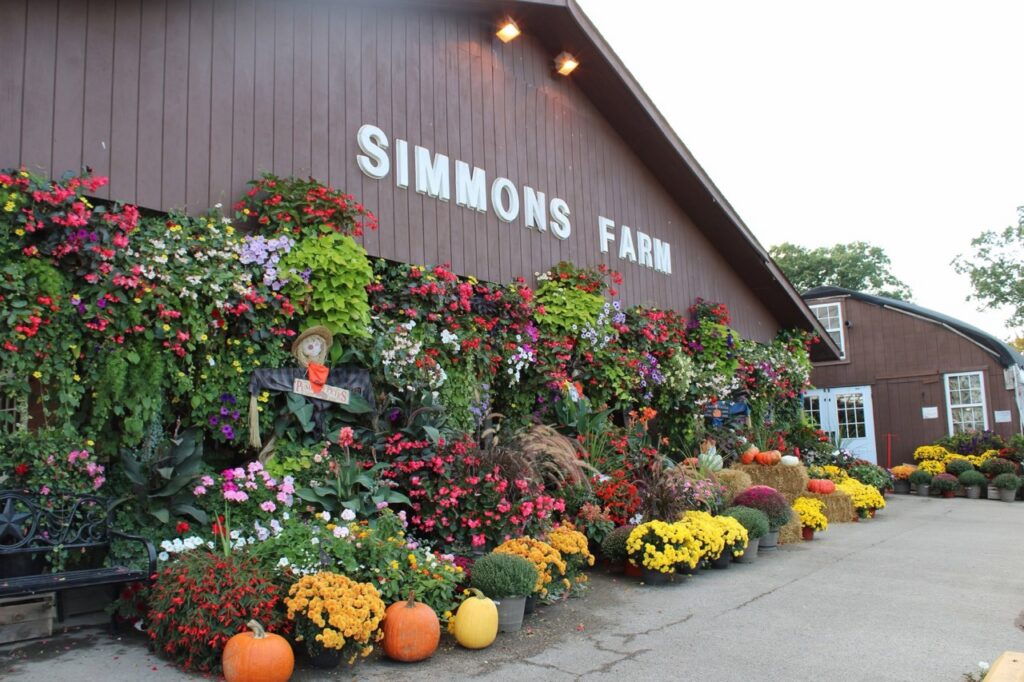
Simmons Farm sign with abundant fall flowers and pumpkins, a Pittsburgh pumpkin patch.
Photo From Simmons Farm

Simmons Farm

September 12–November 1 | McMurray

Admission: $19-$24 for fall activities and hayride, children 33 inches tall and under are free

One of the largest operations on this list, Simmons has a five-acre pumpkin field, a two-acre and a four-acre corn maze, an apple rock labyrinth, a hillside mega slide, a farm combine slide, hay maze, petting zoo, pedal-car drag race, human hamster wheel, rubber duck racing, and a long list of yard games. Fair warning: plan accordingly if you’re visiting after rainy weather, because the fields can get muddy.

Kids play in a corn pit at a Pittsburgh pumpkin patch attraction.
Photo From The SpringHouse

The SpringHouse

September 26–October 31 | North Strabane Township

A third-generation dairy farm turns into a full-on fall playground at The SpringHouse, with a large corn maze, hay-bale mountain, tube slides, potato pelter, hamster wheel, giant cornhole, tug-of-war, farm-style ping-pong, pumpkin games, a kiddie corn maze, and tractor-drawn hayrides to the pumpkin patch. The food is also a big draw: the farm’s country market and restaurant serve up fall comfort food including smoked brisket, chicken and gravy over biscuits, homemade cakes, from-scratch pies, and other seasonal treats.

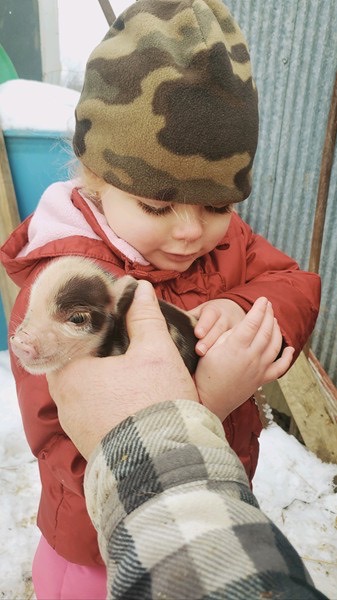
Child in a beanie holding a baby piglet, a cute farm animal
Photo From Geary Farm

Geary Farm

October 10–11 | McDonald 

Admission: $5, children 10 and under are free

Now home to the eighth generation of the Geary family, this 200-year-old farm spent most of its modern history as a dairy operation. Its two-day Harvest Happenings features a pumpkin patch, pumpkin painting, bounce houses, live music, food trucks, and local vendors, with the farm’s livestock—goats, cattle, miniature horses, pigs, and donkeys—adding an authentic agricultural spin to the festivities.

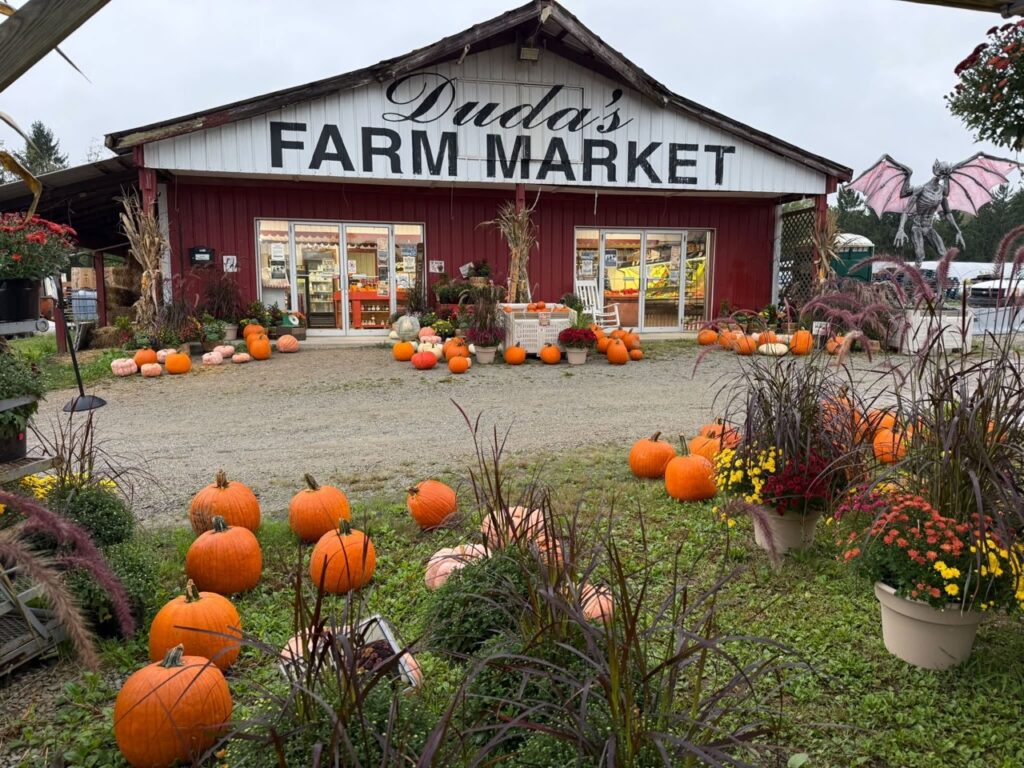
Duda's Farm Market pumpkin patch near Pittsburgh, featuring pumpkins and mums.
Photo From Duda’s Farm

Duda’s Farm

September 19–November 1 | Brownsville

Admission: $15-$20, children 2 and under are free

Duda’s has been growing produce in southwestern Pennsylvania for close to 35 years,  with more than 25 varieties of fruits and vegetables sold at its farm market and roadside stands. There will be a hayride to the pumpkin patch, plus a corn maze, walk-through animal barn, tube slides, playground, corn pit, bonfire, and picnic area. Hayrides run Friday afternoons and all day Saturday and Sunday. Admission includes the hayride, one pumpkin, corn-stalk mazes, animal barn, tube slide, and kids’ activities.

A Pumpkin Patch in Downtown Pittsburgh

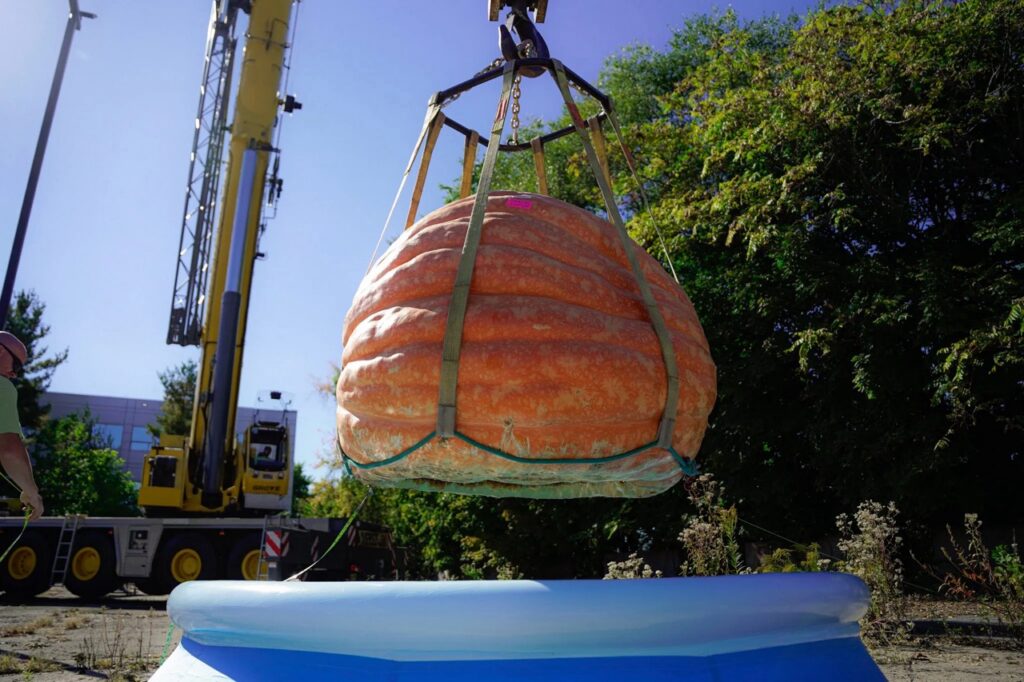
Giant pumpkin lifted by crane over inflatable pool, near Pittsburgh pumpkin patches.
Photo From Pittsburgh Monster Pumpkins Festival

Pittsburgh Monster Pumpkins Festival

October 17–18 | Strip District

Not technically a pumpkin patch, but a free,  over-the-top pumpkin extravaganza. The two-day festival takes over The Stacks at 3 Crossings with gargantuan Atlantic Giant pumpkins—which can weigh more than a ton—live pumpkin carving and glass blowing, food and craft vendors, and horse-drawn carriage rides. There are plenty of activities for the kids, including face painting, a pedal-tractor pull, and costumed characters. There’s also the festival’s signature pumpkin drop, in which a 2,000-plus-pound pumpkin is lifted more than 200 feet by a crane before plunging into a 10-foot-wide inflatable pool—and it happens twice each day.

Keep the fall fun going by heading to these apple orchards around Pittsburgh and then whip up one of our nine apple cider recipes at home.

About the Author

Kenny Gould is a writer and the founder of Hop Culture, a digital magazine focused on the beer industry. In addition to writing about food and beverages, he’s also the author of several fiction books, including the bestselling fantasy The Castle of 1,000 Doors. He holds a BA from Duke University, an MFA from Chatham University, and an MBA from NYU Stern. To learn more about Kenny, visit his website or follow him on Instagram at @thekennygould.

Featured Photo by Katie Long

Subscribe to TABLE Magazine‘s print edition.
An Unforgettable Rosh Hashanah Meal with Sephardic Cooking

0
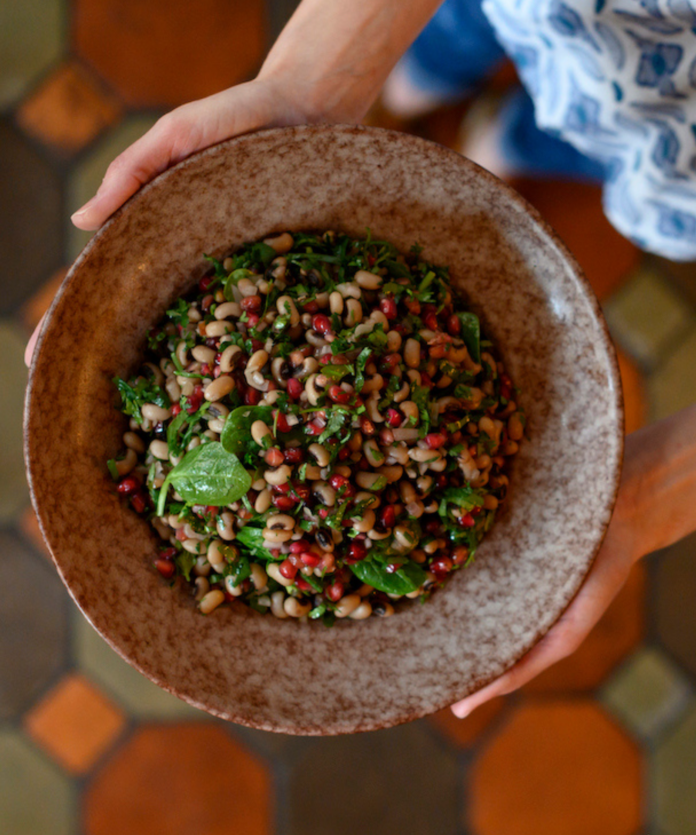
A pair of hands holds a black eyed pea salad, as part of a Sephardic Rosh Hashanah Menu

French Medieval Historian Hélène Jawhara Piñer invited Pittsburgh’s Chef Justin Severino and Philadelphia’s Chef Mike Solomonov to join her in creating a magnificent Rosh Hashanah meal, starting with the centuries-old recipes of her carefully researched cookbook, Sephardi: Cooking the History.

At first taste, Hélène Jawhara Piñer’s Sephardic cooking will make you close your eyes. Tender lamb, sweet golden raisins, a fresh kick of mint, and a burst of pomegranate will invite you to savor each layered bite without interruption.

Then, Hélène will invite you to open your eyes more fully. You come to see how each forkful has centuries of significance behind it. You learn to see how her ancestors preserved their history and religion through ingredients and techniques.

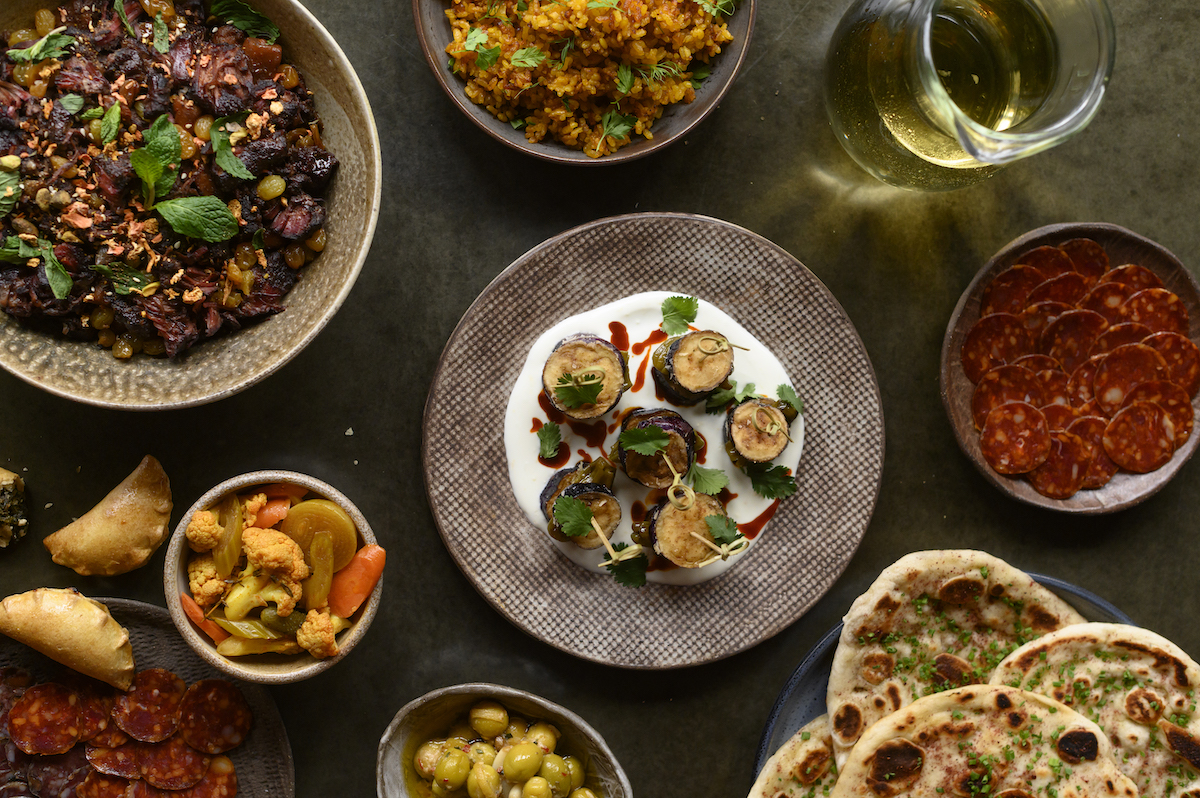
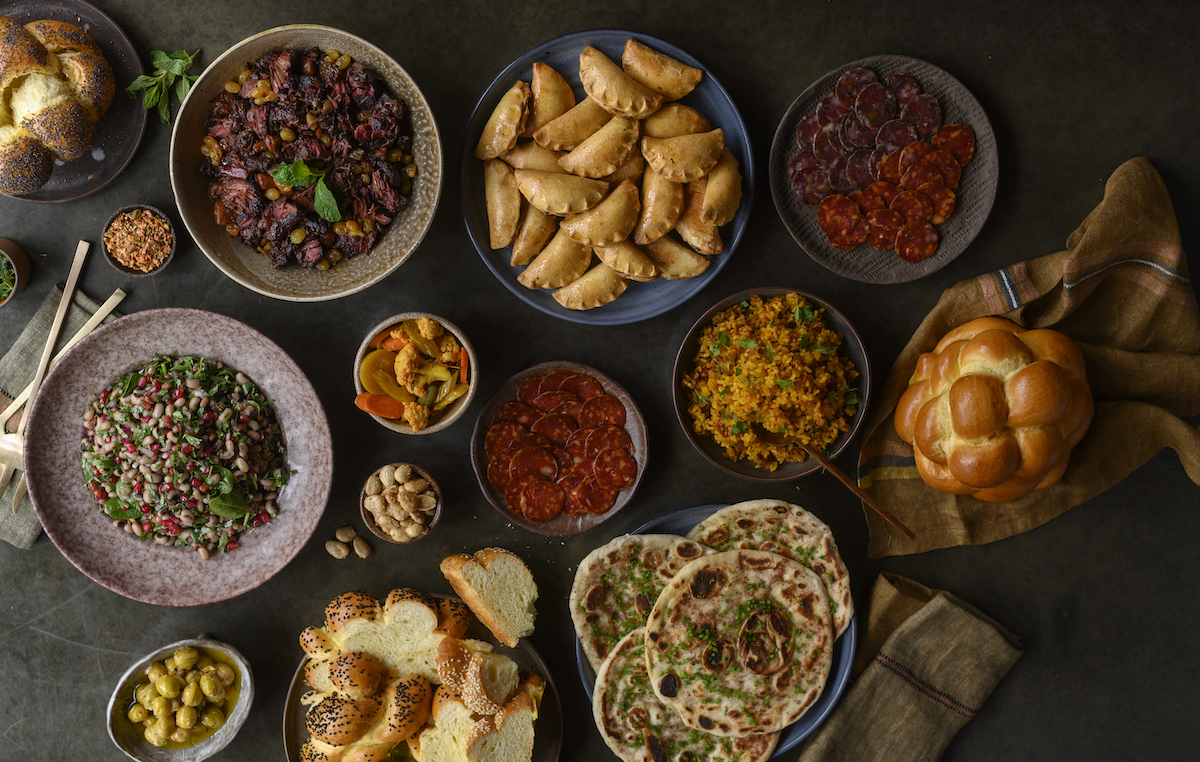
A spread of sephardic food for Rosh Hashanah

History is Hélène’s secret ingredient. She says, “For me, a dish tastes differently when you know where it comes from. Its history makes each bite more intense, more delicious.”

As both a chef and a world-renowned medieval historian, Hélène is uniquely positioned to tell the story of the Sephardim. The name refers to the Jews of the Iberian diaspora.

For those of you far removed from AP European History class, here’s a refresher for context: In 1492, the Catholic monarchs issued the Alhambra Decree, ordering the Jews to convert, accept expulsion, or face persecution. Each choice had major repercussions, which Hélène explores through the lens of food. This research culminated in her cookbook, Sephardi: Cooking The History. Recipes of the Jews of Spain and the Diaspora, from the 13th Century to Today.

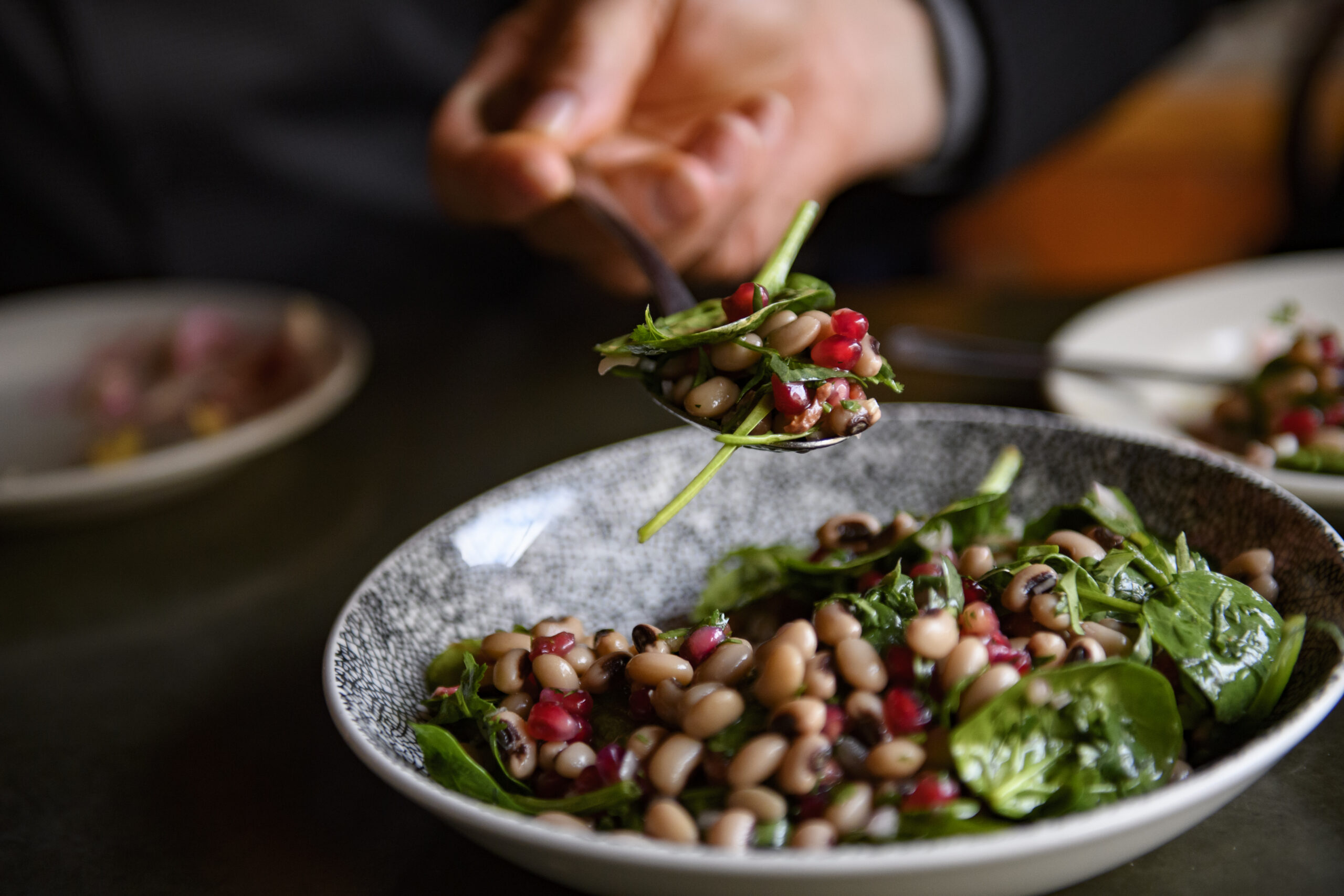
A white hand holding a spoonful of Black-Eyed Pea salad

Sephardic Cooking and its Unique History

Her research is rife with double-edged swords. The prejudice that tasked the Spanish courts to closely monitor those who practiced Judaism in secret, also provides a rich historical resource about their customs. Hélène wrote, “Food and Jewish holidays are interwoven. In Jewish culture, talking about food means talking about licit and illicit foods.” Hélène compared the Inquisition documents with research on agricultural and medicinal practices to piece together a Sephardi story. Through her recipes, the stories and the lessons continue.

In the spirit of the adaptation, evolution, and transmission of Jewish cuisine, she also added her own mark on the book, pulling inspiration from the many bakers on her mother’s side, the simplicity of her paternal grandmother’s cooking, and the wide array of tips culled from traveling to the far reaches of the diaspora for her research: São Paulo, Casablanca, and Tel Aviv to name a few.

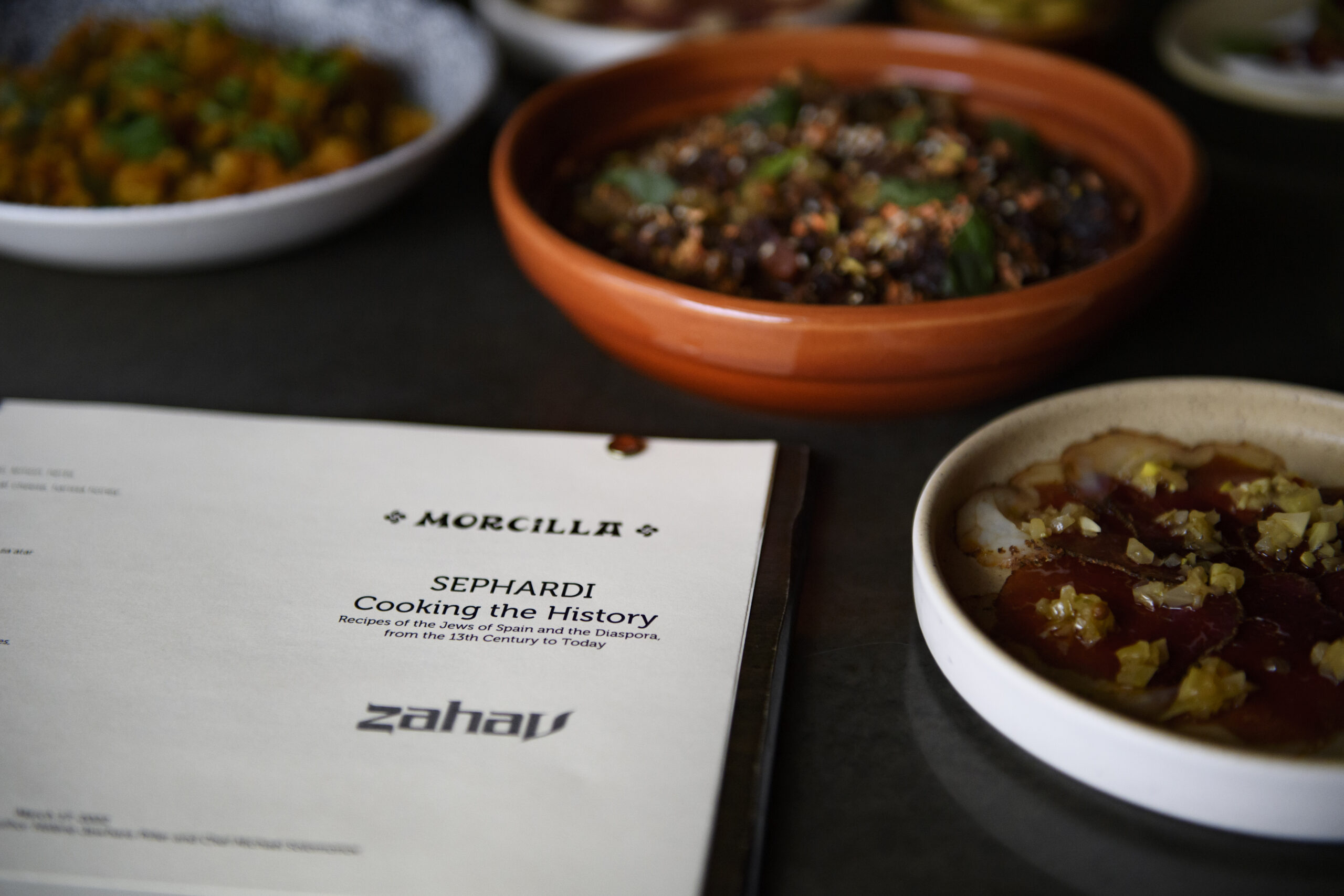
A menu and two plates of sephardic food

Pittsburgh’s Chef Justin Severino and Philadelphia’s Chef Mike Solomonov joined Hélène Jawhara Piñer to create a magnificent Rosh Hashanah meal utilizing recipes from her cookbook.

Around the World with Sephardic Recipes

Hélène’s travels also brought her to Pittsburgh, where she invited chefs Justin Severino and Mike Solomonov to collaborate, to interpret her recipes, and to add their own touches: Morcilla’s penchant for cured meats, a chef’s idea to pair the sweetness of carrot juice and a dehydrated carrot-pulp dukkah with the traditional saffron rice, a slice or two of perfectly golden, round challah from Zahav. The result was a celebration of history, collaboration, and adaptation.

As Rosh Hashanah draws near, many will gather for their own celebratory meals in honor of the Jewish New Year. There will be religious services, introspection, and festive meals steeped in rituals and tradition. Whether you add these recipes to your religious gatherings or use them as a way to better understand a culture beyond your own, I urge you to make Sephardi Cooking a part of this holiday season. Helene’s body of work is an invitation for reverence and creativity. It is an invitation to close your eyes and savor something delicious and open your eyes to the lessons of history and the resilience of a people. Both invitations are quite beautiful.

A spread of Sephardic food for Rosh Hashanah

Recipes Pictured Above by Hélène Jawhara Piñer with Chef Justin Severino and Chef Mike Solomonov

A Sephardic Rosh Hashanah Menu

First course

Sujuk
Marcona almonds

Basturma
Spicy fennel relish

Manzanilla Olives
Roasted garlic, lemon, herbs

Cordovan Fried Eggplant
Padron pepper conserva, whipped goat cheese, harissa honey

Second Course

Black-Eyed Pea Salad
Pomegranate, cilantro, spinach, lemon

Andalusian Eggplant Croquettes
Roasted eggplant, Idiazabal cheese, black olive labneh, za’atar

Beet Conserva
Smoked goat cheese tahini, saffron maple

Vadouvan Matza

Third course

Andalusian Lamb Stew
Braised Elysian Fields lamb shoulder, pomegranate, molasses, golden raisins, pistachio and carrot dukkah, mint

Crispy Carrot & Saffron Rice

Garlic & Sumac Naan Cooked a la Plancha

Fourth Course

Pomegranate Rose & Blood Orange Sorbet Halva

Warm Mint Tea
Meyer lemon, lemongrass

Recipes by Hélène Jawhara Piñer
Story and Styling by Quelcy T. Kogel
Photography by Jeff Swensen

Subscribe to TABLE Magazine’s print edition.

Kristen Palmer’s Nutritious and Delicious Recipes

0
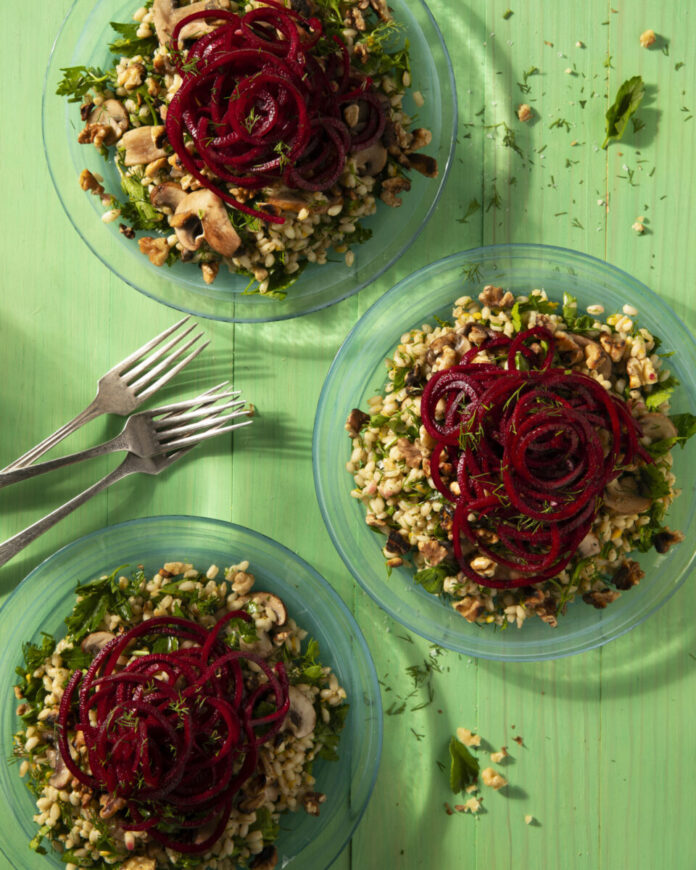
Three clear plates hold Barley Salad with Walnuts and Beets on a green background

Kristen Palmer is a Pittsburgh-based chef and contributor to TABLE Magazine. She brings a nutritious and health-conscious approach to her recipes. A graduate of New York’s Natural Gourmet Institute, she focuses on creating dishes that are not only flavorful but also nutrient-dense and beneficial for the body. Her culinary philosophy centers on making every calorie count by using wholesome whole grains, fresh vegetables, and lean proteins. Having also worked as a private chef for the Pittsburgh Ballet, she has experience crafting dishes that support an active and healthy lifestyle. Her recipes, such as Braised Duck Leg in Green Chile with Cumin-Infused Roasted Carrots or Barley Salad with Walnuts and Beet Ribbons, showcase her skill in blending formal culinary techniques with a focus on supportive, body-beneficial foods. Try making some of her nutritious recipes below to bring a healthy attitude into your life. 

Kristen Palmer Nutrient-Dense Recipes

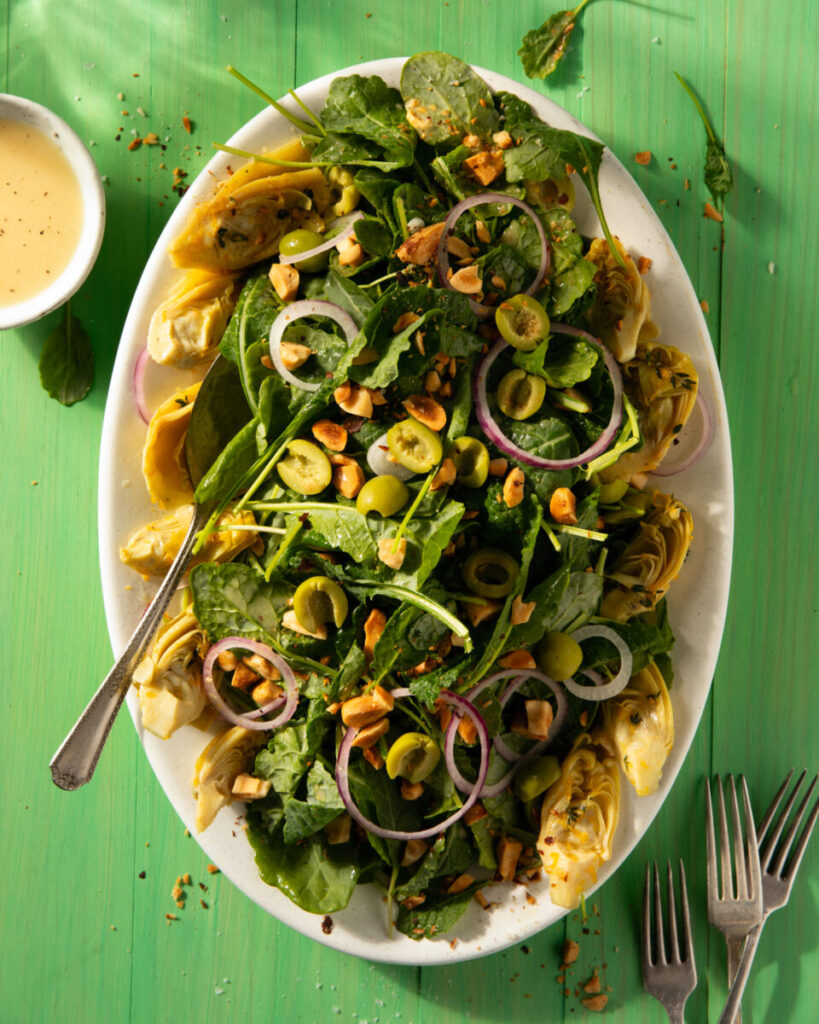
Baby Kale Salad with Citrus-Marinated Artichoke Hearts

Baby Kale Salad with Citrus-Marinated Artichoke Hearts and Lemon Vinaigrette on a white plate with a fork in the salad and a container of dressing to the left.

Appealingly light and bright, this baby kale salad is also satisfying. The citrus in this salad is known for its energizing qualities, encouraging renewal and growth. Artichokes also have detoxifying and tonifying properties that aid in liver function, and they are one of the highest fiber vegetables.

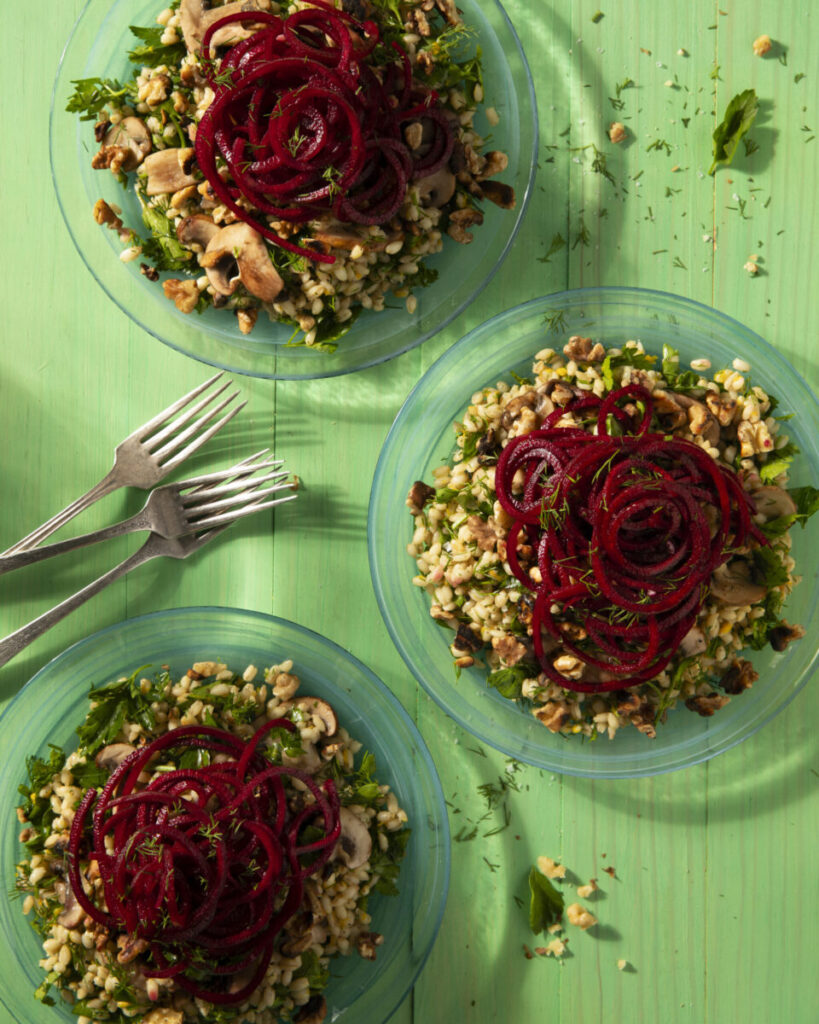
Barley Salad with Walnuts and Beet Ribbons

Three clear plates hold Barley Salad with Walnuts and Beets on a green background

The salad’s pearl barley has the bran removed. As a result, it cooks faster and has a milder flavor than its counterparts in the grain family. Barley’s high fiber and magnesium make it a great grain to get things moving, plus its chewy bite and nutty flavor will keep you coming back for more

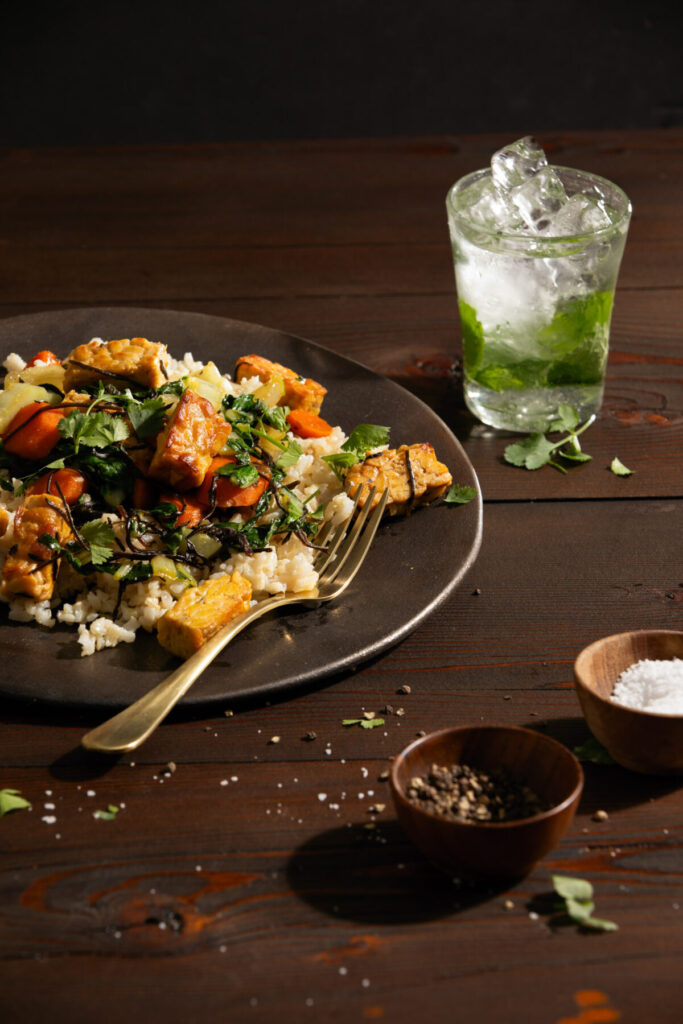
Tempeh and Bok Choy Stir Fry

A grey plate sits off to the left side of the frame with a grains and greens, a gold fork sits on the right side of the plate. To the right of the frame is a green beverage in a glass. Tempeh & Bok Choy Stir Fry recipe

This simple vegan dish is full of strengthening minerals, nutrients, and detoxifying ingredients. Sea vegetables are full of nutrients. They help replenish the system, and detoxify it, too. Bok choy on the other hand, a Chinese cabbage, is high in fiber and helps in flushing and rejuvenating our digestive system. A quick stir-fry is all it takes to make this nourishing meal. 

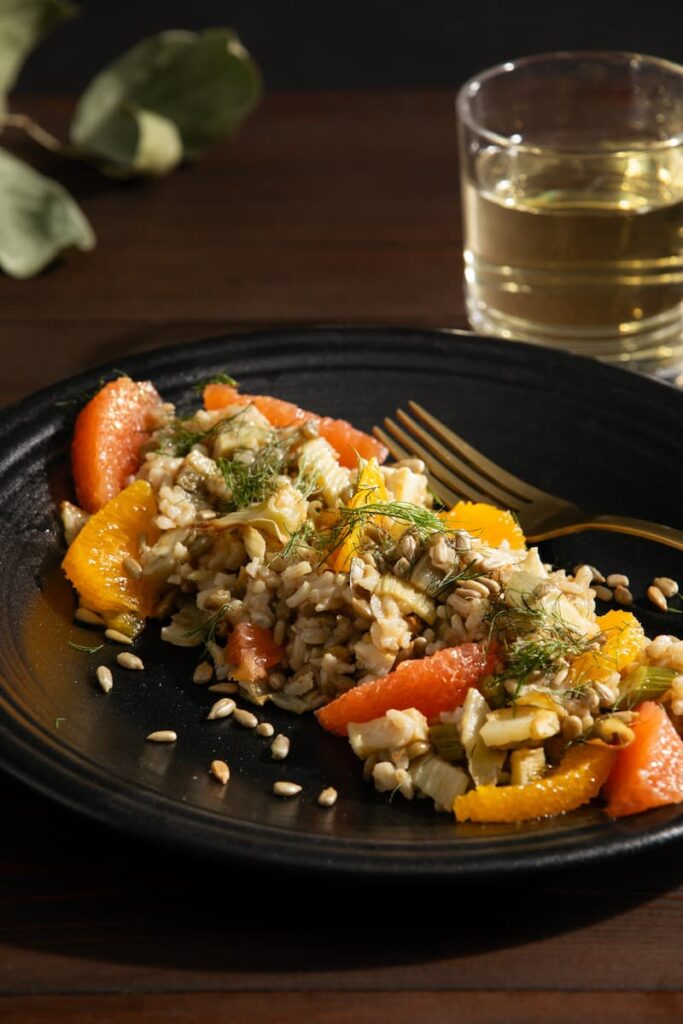
Brown Rice and Lentil Salad with Citrus & Roasted Fennel

Brown Rice and Lentil Salad with Citrus & Roasted Fennel served in a black plate with a steel fork

Lentils are a high quality, plant-based source of protein but lack some essential amino acids. By pairing them with rice, you get the full scope of amino acids. Fennel, like lentils, often goes unnoticed or underused but has amazing health benefits. In Eastern medicine it is eaten to tonify the kidneys and improve circulation. Like citrus, it also supports the immune system and is a source of fiber and folate.

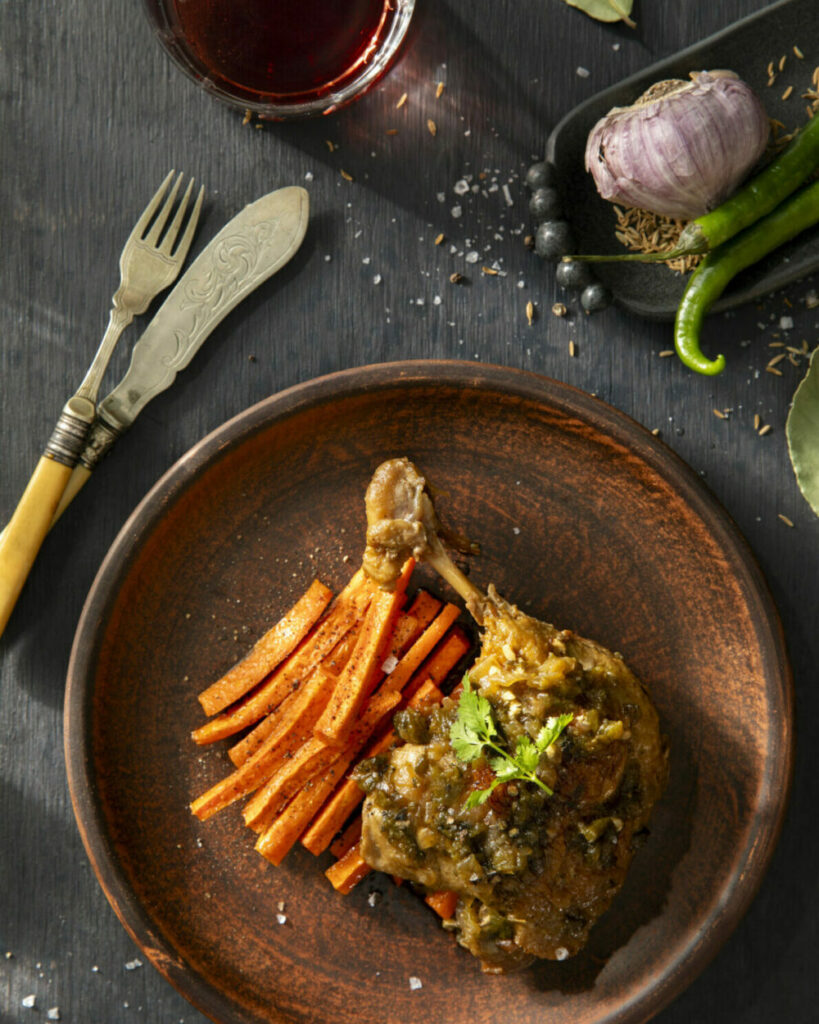
Braised Duck Leg in Green Chile with Cumin-Infused Roasted Carrots

Plated braised duck leg in green chiles and roasted cumin carrot strips topped with parsley.

Duck is a tender, juicy protein that can elevate any dish with a nutty-tasting fattiness. For this Braised Duck Leg recipe, we pair roasted green chiles with cumin, coriander, oregano, and a dash of lime. This blend balances acid, salt, and spice to make any home chef a pro in the kitchen.

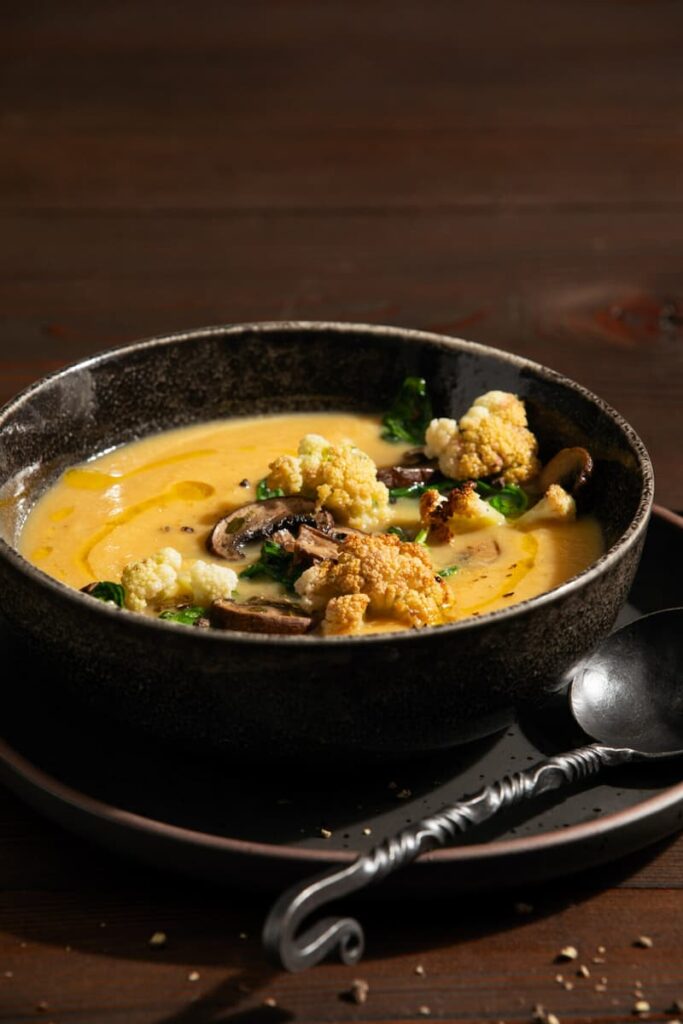
Roasted Cauliflower Soup with Mushrooms and Spinach

Roasted Cauliflower Soup

Incorporating cauliflower into your meals can add a ton of health benefits while also being delicious. It contains antioxidants like sulforaphane, which may help reduce inflammation and lower the risk of chronic diseases. In this recipe, roasting and puréeing the cauliflower and rutabaga brings depth of flavor, and creaminess. To keep it vegan, the small amount of butter in the recipe can be eliminated or swapped.

Recipes by Kristen Palmer

Subscribe to TABLE Magazine’s print edition.

Exploring Pennsylvania’s Native Plants

0
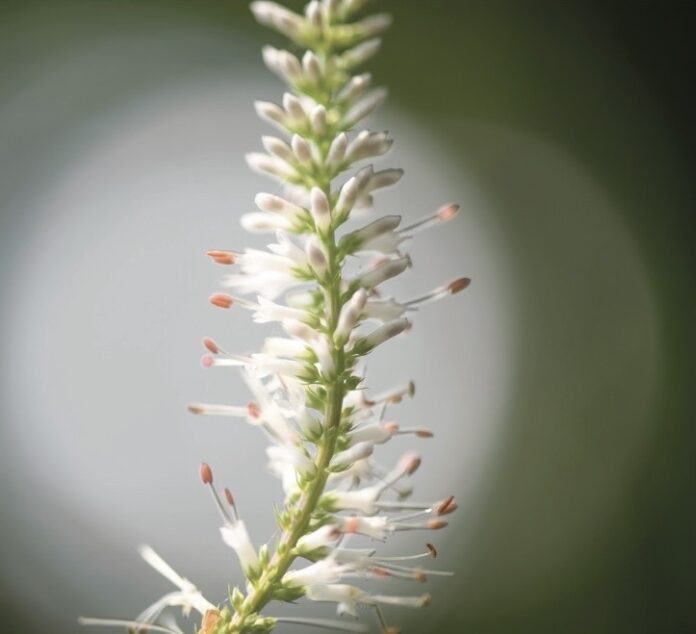
Explore Pennsylvania's native Culver's Root (Veronicastrum virginicum) plant and many more.
Culver's Root (Veronicastrum virginicum)

I have a black thumb. And I can tell you from experience that there’s nothing as soul-crushing as getting a little bit of dirt under my nails, only to see whatever I put into the ground tease me for a few weeks before ending up in plant triage.

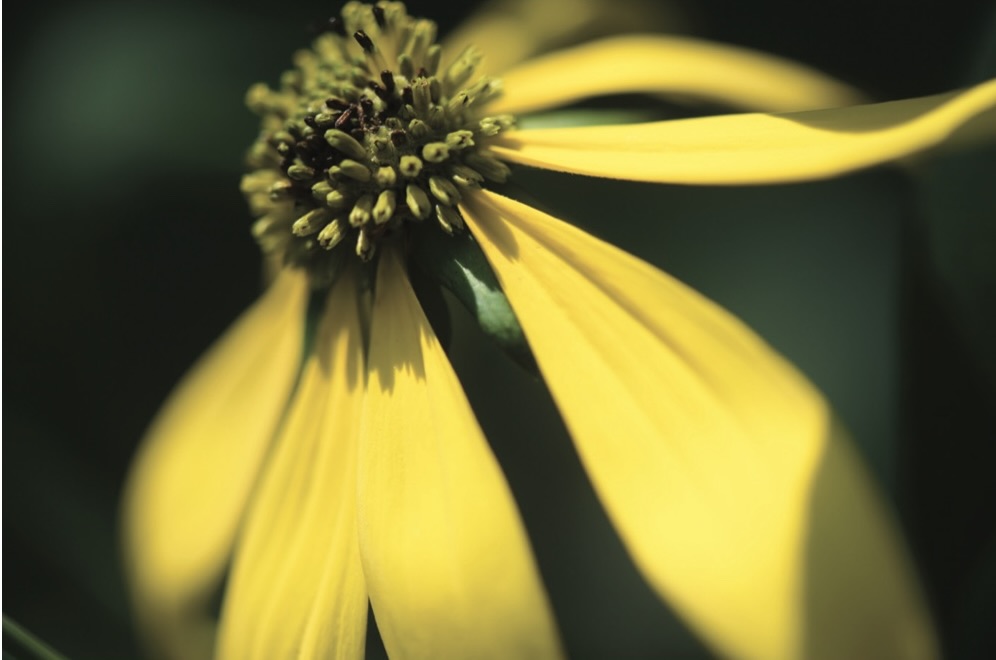
Green-headed Coneflower

Green-headed Coneflower (Rudbeckia laciniata)

However, the idea of cultivating species that are native to our little Appalachian corner of the world has percolated a fresh optimism. There’s something wildly romantic about growing the same seeds that God decided to scatter here on the very earth under our feet. A compelling narrative takes root in seeing the same flora that our ancestors saw when they first set foot here. Fostering the ecosystem that belongs here cultivates a healthy sense of purpose.

The Pennsylvania Native Plant Society homepage tells me that there are more than 1,600 plants native to Allegheny County alone. These include the Sapindaceae (black maple, sycamore, sugar maple), Poaceae (perennial grasses like black bent and redtop), Brassicaceae (tower mustard, mouse- ear cress), and Apocynaceae (green milkweed, purple milkweed). These species battle diseases, control erosion, and tolerate drought more effectively. They’re tuned in to the local weather, soil, insects, and just about everything else this ecosystem throws their way.

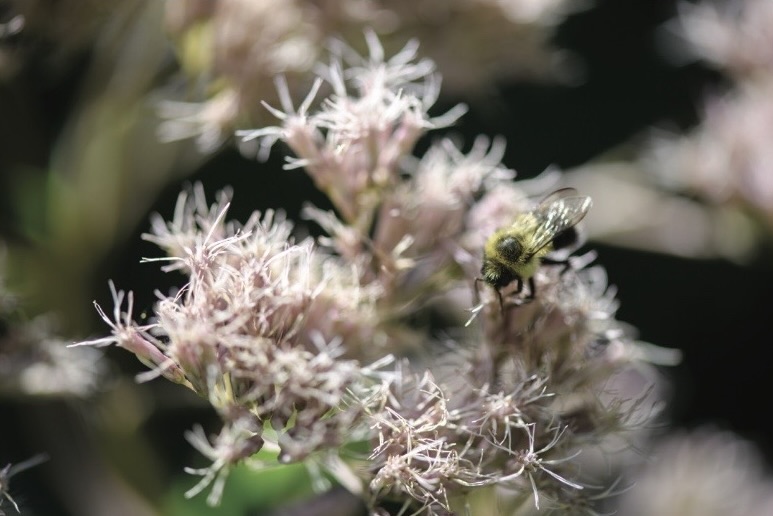
Joe-Pye Weed

Joe-Pye Weed (Eupatorium fistulosus)

Low Maintenance, High Reward

Native plants also contribute more to the local ecosystem. “For example,” the website reads, “An oak tree can support over 500 species of moths and butterflies, amongst other insects. A Bradford Pear (a common ornamental non-native) supports fewer than 100.”

But the clincher is that they’re beautiful, as you can see from Jeff Swensen’s gorgeous pictures. With minimal fuss, they bloom their heads off. And since they’ll get minimal attention from me, maybe my I’m entering a “green thumb” phase of life.

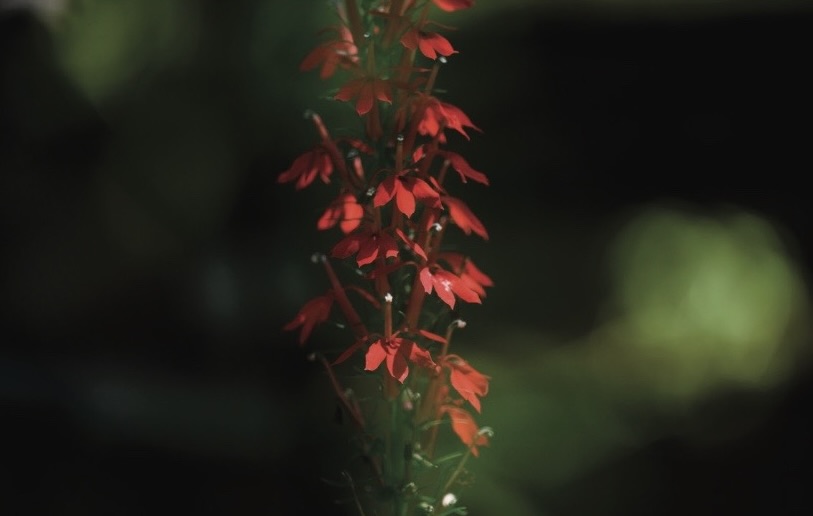
Cardinal Flower

Cardinal Flower (Lobelia cardinalis)

Going native gives a boost to the local ecosystem by creating a stronger link in the long chain of living things contained in the biome that belongs here. Next time you are outside getting that garden in transition for the seasons, think about what native seeds, flowers and plants you could use to contribute to a lively and useful Pennsylvanian ecosystem.

Story by Kate Benz
Photography by Jeff Swensen

Subscribe to TABLE Magazine’s print edition.

Yvonne Hennigan’s Five Seasonal Pasta Dishes

0
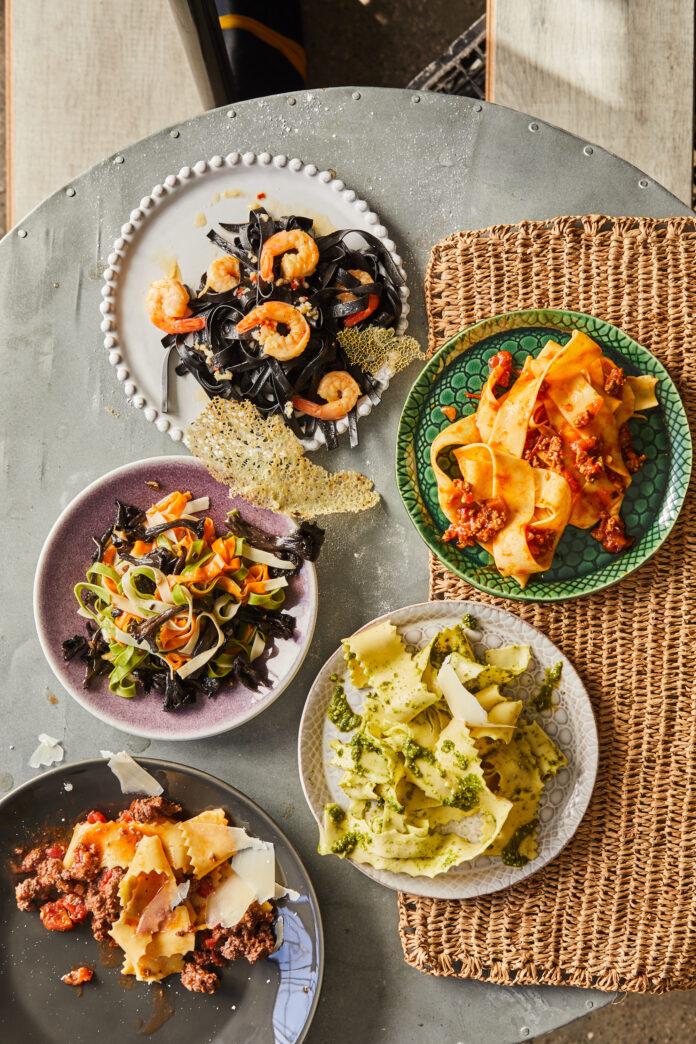
Yvonne Hennigan’s Five Seasonal Pasta Dishes
For Yvonne Hennigan of Handmade Pasta by Yvonne, it’s about making meals and memories

There is chive pasta, hot red pepper pasta, lemon pasta, spinach pasta, black squid ink pasta, tomato basil, plain white. Fifteen flavors. Fresh everything, no artificial anything, and no preservatives. Every noodle kneaded by hand.

“My mom made pasta all the time,” says Handmade Pasta by Yvonne Owner Yvonne Hennigan. “Hand-rolled, hand-cut. I always gravitated to it.”

She and her husband Jim have sold 31,000 bags of pasta since 2015, when they opened a brick and mortar shop on Babcock Boulevard in the North Hills. They have been traveling back and forth to Italy for 20 years and lived there for six while she was headmistress at the Marymount International School in Rome, during which she attended professional cooking schools in the northern and southern regions. “I also learned a lot from my friends and their mothers just by being in their homes.”

In addition, her beginner and advanced pasta-making classes are held at the shop every Friday from 5 p.m. to 9 p.m., and usually sell out weeks in advance. “I love teaching, but I like to think I’m creating memories here, too. So many people will say, ‘Oh, this reminds me of my nonna.” 

Pappardelle al Cinghiale

Luckily, you won’t have to wait to sample some of her favorite recipes. “These pasta dishes are classics. Fundamentally, Italian recipes in general are driven by simplicity and fresh ingredients that attack the palette with these wonderful flavors.” Even better? “You don’t have to be a master chef to reproduce them,” Yvonne says encouragingly. 

Print
clock clock iconcutlery cutlery iconflag flag iconfolder folder iconinstagram instagram iconpinterest pinterest iconfacebook facebook iconprint print iconsquares squares iconheart heart iconheart solid heart solid icon
Yvonne Hennigan’s Five Seasonal Pasta Dishes

Pappardelle al Cinghiale (Pappardelle with Wild Boar)


  • Author: Yvonne Hennigan

Description

A recipe from the Tuscany region in Maremma, a coastal area in west central Italy.


Ingredients

Scale
  • 1 lb. wild boar meat (cut into 2 ½ inch cubes)
  • 1 ½ cups of good red wine (Barolo)
  • ½ onion chopped
  • 1 tbsp. juniper berries
  • ½ tsp. black peppercorns
  • 2 bay leaves
  • 1 fresh rosemary sprig
  • 3 tbsp. extra-virgin olive oil
  • 3 tbsp. all-purpose white flour
  • 10 oz. plum tomatoes, peeled and chopped


Instructions

  1. To prepare the ragu, place meat in a deep glass bowl. Add the wine, onion, juniper berries, peppercorns, bay leaves, and rosemary.
  2. Cover and place in the refrigerator for 12 hours.
  3. Strain the meat mixture and reserve the marinade.
  4. Dry the meat well with absorbent paper towels. In a medium-size, shallow saucepan over moderate heat, warm the olive oil.
  5. Add the meat and brown on all sides, about 10 minutes.
  6. Sprinkle the meat with the flour and stir well.
  7. Add the tomatoes and marinade and stir well, scraping any brown bits on the pan bottom.
  8. Bring to a boil over high heat.
  9. Reduce the heat to very low, cover and simmer gently until almost all the liquid has been absorbed, about 2 hours.
  10. Remove the meat from the pan with a slotted spoon and chop coarsely.
  11. Return the chopped meat to the pan, stir well, season with salt and simmer to blend.
  12. Place the ragu in a large serving bowl. In a large 6-to 12-quart pot (do not use the strainer of a pasta pot), bring at least 6 quarts of water to a rapid boil.
  13. Add a large handful of salt to the boiling water.
  14. Add the pappardelle pasta to the boiling water and time for exactly 2 minutes! Do NOT strain the pasta.
  15. Use the tongs to remove the dripping pasta from the boiling water one scoop at a time and place in the serving bowl on top of the ragu.

    PASTA
    10 oz. bag of pappardelle from Handmade Pasta by Yvonne

  16. Gently toss the pasta with the ragu after each additional tong full of pasta. If necessary, add a tbsp. of the hot reserved pasta water to loosen the mixture.
  17. Serve immediately.

    Serves 3 to 4

Multicolor Fettuccine with Black Trumpet Mushroom Sauce

Fresh black trumpet chanterelle mushrooms are found in the woods of North America from June to November. When cleaning the black trumpet, care must be taken. They are to be gently bushed with a mushroom brush. If necessary, dip them quickly in cool water, gently shake, and immediately place on a paper towel.

In relation, these mushrooms can be purchased at St. James Sewickley Farm Market (Sewickley, PA) at Gray Farms mushroom stand. Saturday mornings during the summer season is the market’s most popular.

Print
clock clock iconcutlery cutlery iconflag flag iconfolder folder iconinstagram instagram iconpinterest pinterest iconfacebook facebook iconprint print iconsquares squares iconheart heart iconheart solid heart solid icon
Yvonne Hennigan’s Five Seasonal Pasta Dishes

Multicolor Fettuccine with Black Trumpet Mushroom Sauce


  • Author: Yvonne Hennigan

Ingredients

Scale
  • 1 tbsp. extra-virgin olive oil
  • 3 tbsp. butter
  • 1 large garlic clove, minced
  • 2 medium fresh green onions cut 2 inches from white end.  Julienne cut the 2-inch into long slivers
  • ½ cup chicken broth
  • 4 oz. fresh black trumpet chanterelle mushrooms, gently cleaned with a mushroom brush
  • ½ cup good white wine
  • Salt
  • 2 oz. white fettucine pasta from Handmade Pasta by Yvonne
  • 2 oz. spinach fettucine pasta from Handmade Pasta by Yvonne
  • 2 oz. tomato fettucine pasta from Handmade Pasta by Yvonne
  • 1 piece of Parmesan cheese


Instructions

In Advance:

  1. In a 6-to 12-quart pot, bring 6 quarts of water to a boil, reduce heat and cover with lid and keep simmering.

Preparation:

  1. In a 12-inch skillet, heat the olive oil on low-medium heat.
  2. Add the butter to a simmer. Add the garlic and sauté for 1 minute.
  3. Add the onions and sauté for 1 minute.
  4. Add the chicken broth and simmer for a few minutes.
  5. Add the mushrooms and sauté for 5 minutes, gently turning.
  6. Add the wine and simmer for a few minutes.
  7. Add a pinch of salt.

Pasta:

  1. Bring the pasta water to a rapid boil.
  2. Add a handful of salt.
  3. Add all three bags of colored pasta to the pot and turn with tongs.
  4. Place the skillet with mushrooms beside the pasta pot.
  5. Cook pasta for 2 minutes exactly. Do NOT drain the pasta.
  6. Remove the pasta with tongs one scoop at a time and add to the skillet.
  7. Gently turn the pasta with the mushrooms until all the pasta is in the skillet and coated.
  8. Place the finished pasta mushrooms into a large serving bowl.
  9. Grate the Parmesan cheese on top of the finished dish as desired.

    Serves 3


Squid Ink Pasta with Shrimp and Frico

Black squid ink, or cuttlefish ink pasta, is believed to have originated from Sicily but is found in many coastal regions of Italy. The ink is from the squid or cuttlefish that seafood manufacturers extract from the cephalopod’s ink sacs that are located between its gills. The black ink gives the pasta its black color. Seafood dishes best complement black pasta’s natural, aquatic flavor.

Additionally, frico comes from the most northeastern region of Italy, Friuli-Venezia-Giulia. Frico, also known as a cheese crisp,is made with Montasio cheese, a hard cow’s milk cheese from this region. This recipe makes about 10 small or 3 large crisps, depending on the size.

Print
clock clock iconcutlery cutlery iconflag flag iconfolder folder iconinstagram instagram iconpinterest pinterest iconfacebook facebook iconprint print iconsquares squares iconheart heart iconheart solid heart solid icon
Yvonne Hennigan’s Five Seasonal Pasta Dishes

Squid Ink Pasta with Shrimp and Frico


  • Author: Yvonne Hennigan

Ingredients

Scale

Squid Ink Pasta:

Shrimp:

  • 10 raw large shrimp shelled, cleaned and deveined
  • 1 tbsp. of minced garlic
  • 2 tsp. hot red pepper flakes
  • ¾ cup of extra-virgin lemon olive oil
  • ¼ cup fresh lemon juice
  • ½ cup good white wine

Frico:

  •  8 oz. Montasio cheese, grated
  • 1 tsp. butter


Instructions

To Prepare Squid Ink Pasta:

  1. In a 6-to 12-quart pot, bring six quarts of water to a boil. Place lid on keep simmering until ready to use.
  2. Place the pasta pot of boiling water onto the stovetop, setting the 12-inch skillet next to it.
  3. Add a handful of salt to the boiling pasta water.
  4. Place the ½ lb. of squid ink pasta into the boiling water.
  5. After 4 minutes, remove the dripping black pasta one scoop at a time from the pot with tongs and place it in the skillet with the shrimp and sauce, gently turning with the tongs. Complete this action until all the pasta is in the skillet and all ingredients are coated.
  6. Transfer the pasta and shrimp to a large pasta bowl.
  7. Drizzle some lemon olive oil on top and serve immediately. (Grated cheese is not recommended with seafood because it may overpower the delicate taste of the seafood.)  

To Prepare Shrimp:

  1. Combine all ingredients in large bowl. 
  2. Marinate the shrimp for at least 1 hour.
  3. In a 12-inch skillet, place marinade and shrimp on low to low-medium heat.
  4. Sauté until marinade sauce is reduced and shrimp is pink.

To Prepare Frico: 

  1. Heat the butter in a medium, nonstick frying pan over medium heat until melted and coating the bottom of the pan.
  2. Divide the grated cheese into even amounts for either 10 small or 3 large crisps.
  3. Sprinkle the cheese in a circular shape.
  4. Shake the pan to evenly distribute the cheese. Be sure to keep the layer of cheese thin so that it becomes crispy rather than chewy.
  5. Let the cheese fry over medium heat for about 4 minutes or until edges set and the color becomes golden.
  6. Use a spatula to carefully remove the frico from the pan.
  7. Work quickly because the cheese will set in shape quickly.
  8. Place the frico on deli or parchment paper.
  9. Let dry for a few minutes before serving as an accompaniment.

    Serves 3 to 4


Bolognese Sauce (Ragu)

Furthermore, bolognese sauce originated in the region of Emilia-Romagna from the small town of Imola, 21 miles southeast of Bologna. The recipe first appeared in an Italian cookbook in 1891.

Print
clock clock iconcutlery cutlery iconflag flag iconfolder folder iconinstagram instagram iconpinterest pinterest iconfacebook facebook iconprint print iconsquares squares iconheart heart iconheart solid heart solid icon
Yvonne Hennigan’s Five Seasonal Pasta Dishes

Bolognese Sauce (Ragu)


  • Author: Yvonne Hennigan

Ingredients

Scale
  • 1 tbsp. vegetable oil
  • 3 tbsp. butter
  • ½ cup onion
  • 2/3 cup chopped celery
  • 2/3 cup chopped carrot
  • ¾ pound ground chuck (80% fat)
  • Salt
  • Black pepper, freshly ground
  • 1 cup whole milk
  • Whole nutmeg
  • 1 cup dry white wine
  • 1 ½ cup canned Italian imported plum tomatoes, cut up, with their juices
  • 1 ½ lb. (24 oz) of fettuccini pasta from Handmade Pasta by Yvonne
  • Freshly grated Parmigiano-Reggiano cheese at the table


Instructions

  1. Place oil, butter and chopped onion in a 5-quart enameled cast iron pot and turn the heat to medium.
  2. Cook and stir the onion until it has become translucent, then add the chopped celery and carrot.
  3. Cook for about 2 minutes, stirring the vegetables to coat them well. (In Italian, the combination of onion, celery and carrot is called soffritto, which means “to fry slowly.”)
  4. Add the ground beef to the vegetables, add a large pinch of salt, and add a few grindings of pepper.
  5. Crumble the meat in the pot with a sharp edge spatula, stir well, and cook until the beef has lost its raw, red color.
  6. Add the milk and let it simmer gently, stirring frequently, until it has simmered away completely. 
  7. Add a tiny grating (about 1/8 tsp.) of nutmeg and stir.
  8. Add the wine, let it simmer until it has evaporated, then add the tomatoes and stir through to coat all the ingredients well.
  9. When the tomatoes begin to bubble, turn the heat down so the sauce cooks at a tiny simmer, with just a few bubbles breaking through to the surface.
  10. Cook for 3 hours, stirring occasionally. If the ragu begins to dry out, add 1/2 cup of water when necessary to keep it from sticking. However, no water must be left in the bottom of the pot when the ragu is finished. Keep ragu warm and covered while preparing the pasta.
  11. In a large 6- to 12-quart pot (do not use the strainer of a pasta pot), bring at least 6 quarts of water to a rapid boil.
  12. Add a large handful of salt to the boiling water.
  13. Add the fettuccini pasta to the boiling water and time for exactly 2 minutes!
  14. Place the ragu in a large serving bowl when you add the pasta to the water. Do NOT strain the pasta.
  15. Using tongs remove the dripping pasta from the boiling water one scoop at a time and place in the serving bowl on top of the ragu.
  16. Gently toss the pasta with the ragu after each additional tong full of pasta. If necessary, add 1 tbsp. of the hot reserved pasta water to loosen the mixture.
  17. Serve immediately with freshly grated Parmesan cheese on the side. (Adapted from Marcella Hazan)

Serves 6

Pesto alla Genovese

Liguria is one of the 20 regions located on the coast of the Liguria Sea in northeast Italy. Genoa is the capital of Liguria and is famous for their basil leaf. Genovese Pesto originated from this town in the 16th century. The word pesto comes from the Genovese word pestâ, which means, “to grind basil leaves with other ingredients.”

Print
clock clock iconcutlery cutlery iconflag flag iconfolder folder iconinstagram instagram iconpinterest pinterest iconfacebook facebook iconprint print iconsquares squares iconheart heart iconheart solid heart solid icon
Yvonne Hennigan’s Five Seasonal Pasta Dishes

Pesto alla Genovese


  • Author: Yvonne Hennigan

Ingredients

Scale

Pesto

  • 2 cups packed basil leaves
  • ¾ – 1 cup Parmesan-Reggiano cheese
  • ¼ – ½ cup Pecorino Romano cheese
  • 1 tsp. sea salt
  • ¼ cup pine nuts
  • 1 to 2 cloves of peeled garlic
  • ½ cup extra virgin olive oil

Pasta


Instructions

To prepare the pesto:

  1. Combine all the ingredients, except the olive oil, in a food processor and process until ingredients are combined.
  2. With the machine running, slowly drizzle in the olive oil.
  3. Continue processing until the mixture is well blended but still has some texture, pausing to scrape down the sides as necessary.
  4. Add a pinch of salt and pulse a few times to incorporate.
  5. The pesto can be used immediately or frozen in small containers to use later. Do NOT place frozen pesto in the microwave to thaw! Thaw at room temperature.
  6. Place about 2 tbsp. of pesto in a serving bowl.

Preparing the pasta:

  1. In a large 6- to 12-quart pot (do not use the strainer of a pasta pot) bring at least 6 quarts of water to a rapid boil.
  2. Add a large handful of salt to the boiling water.
  3. Add the 8 oz. of pappardelle pasta to the boiling water and time for exactly 2 minutes. When finished do NOT strain the pasta.
  4. Using tongs, remove the dripping pasta from the boiling water one scoop at a time and place in the serving bowl on top of the pesto.
  5. Gently toss the pasta with the pesto after each additional tong full of pasta.
  6. More pesto may be added as desired. If necessary, add a small amount of the hot reserved pasta water to loosen the mixture. A small amount olive oil may also be added.
  7. Serve immediately with freshly grated Parmesan cheese on the side.

    Serves 3 to 4

Story by Kate Benz
Recipes by Yvonne Hennigan

Subscribe to TABLE Magazine’s print edition.

Top Spots for Viewing Fall Foliage in Pittsburgh

0
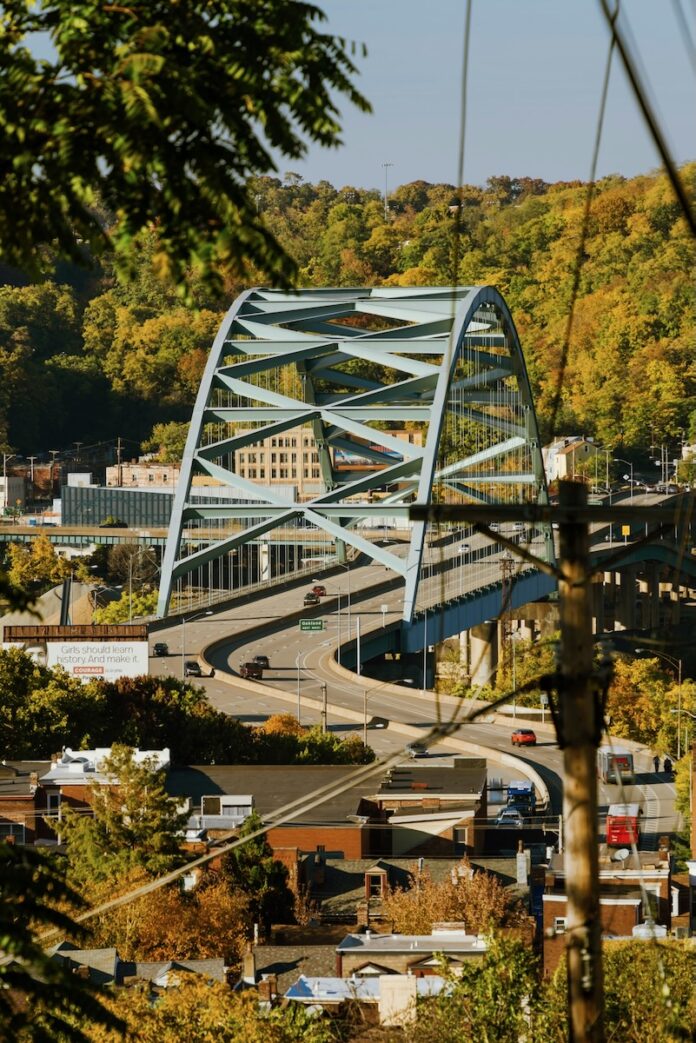
Colorful trees turning in the fall season to a yellow color around a bridge in Pittsburgh.

Pittsburgh’s unique landscape of rolling hills and winding rivers transforms into a breathtaking canvas of red, orange, and gold whenever autumn hits. With plenty of parks and green spaces, the Steel City is truly paradise for leaf-peeping. The city’s secluded woodland trails as well as open air spaces provide some of the best places to immerse yourself in the vibrant beauty of fall. Check out these specific spots for watching the leaves change when the leaves hit their peak in mid-October.

Where to View the Changing Fall Foliage of Pittsburgh

Point State Park

It wouldn’t be fall in Pittsburgh without a visit to Point State Park. At the point of Downtown’s triangle shape, you’ll find a stunning juxtaposition of nature and also industry. Here, the vibrant autumn colors of the trees are framed by the city’s buildings as well as the Allegheny, Monongahela, and Ohio Rivers. Plus, it’s one of the few spots you can get a clear view of the trees among Mount Washington. It’s a beautiful site to see patterns of green, gold, red, and brown speckled throughout the hill. 

Schenley Park

As one of Pittsburgh’s largest and most beloved green spaces, Schenley Park provides a vast and varied landscape for fall foliage. No matter what type of landscape you’re looking for, you’ll find it. Explore miles of winding trails, open fields, as well as numerous vantage points offering a new perspective with every turn. You can also enjoy the rich colors from a stroll along the golf course or hike to a higher elevation for a panoramic view of the entire park to see the true vastness of autumn in Pittsburgh. 

Frick Park

Often called Pittsburgh’s “woodland park,” Frick Park offers a rugged and intimate fall foliage adventure that you can truly dive into. The deep ravines, and natural streams, as well as an extensive trail system, make you feel a world away from the city. Here, you’ll walk through a dense, colorful canopy of leaves overhead. Lose yourself in its picture-perfect picnic spots and then take a quick trip to Blue Slide Park after for a ride down the famous Mac Miller slide. 

Pittsburgh Botanic Garden

The Pittsburgh Botanic Garden presents a curated and tranquil environment to appreciate the season’s colors. With a diverse collection of trees and plants thoughtfully arranged across its grounds, the garden provides a unique and varied display of autumn hues. You can wander through different themed gardens, making for a sophisticated as well as beautiful leaf-peeping experience.

McConnells Mill State Park

If you’re down for a short drive away from the city to see a truly dramatic autumn display, then McConnells Mill State Park is unmatched. The fall foliage here is set against the backdrop of a rocky gorge, a rushing creek, and a historic gristmill. The vibrant colors of the trees litter the steep cliffs and reflect in the water to present a breathtaking scene that feels both wild and timeless. Not to mention there’s so much to see you’ll want to make a whole day of it. 

North Park

North Park’s gorgeous, glistening lake is the main attraction for fall viewing. Its stunning reflections double the beauty of the season and look like a Bob Ross painting come to life. The park’s numerous trails wind through colorful forest as well, but a leisurely stroll around the lake’s perimeter provides an opportunity to see a sight that’s just as beautiful without the long walk. It’s a peaceful and picturesque spot for family photos or a quiet afternoon reading by the lake.

The Cascades in South Park

The Cascades in South Park make for a hidden gem. Here, the vibrant colors pair with the soothing sound of rushing water. This unique spot features a man-made waterfall and a series of gentle cascades, all surrounded by a beautiful canopy of autumn leaves. It’s an ideal location for a tranquil hike or a moment of quiet reflection as the water runs down the Cascades. 

Emerald View Park

For the most spectacular city views from high above that aren’t overwhelmed by tourists, Emerald View Park on Mount Washington is the place to be. The park provides a panorama view of the three rivers as well as downtown Pittsburgh, with the brilliant fall foliage of the park itself serving as a foreground. The view of the city’s iconic bridges and architecture framed by autumn colors is an unforgettable sight for a picnic or evening stargazing. 

Story by Kylie Thomas
Photo Courtesy of Zhen Yao

Subscribe to TABLE Magazine‘s print edition.
Pittsburgh Events: Your Guide to October 6-12

0
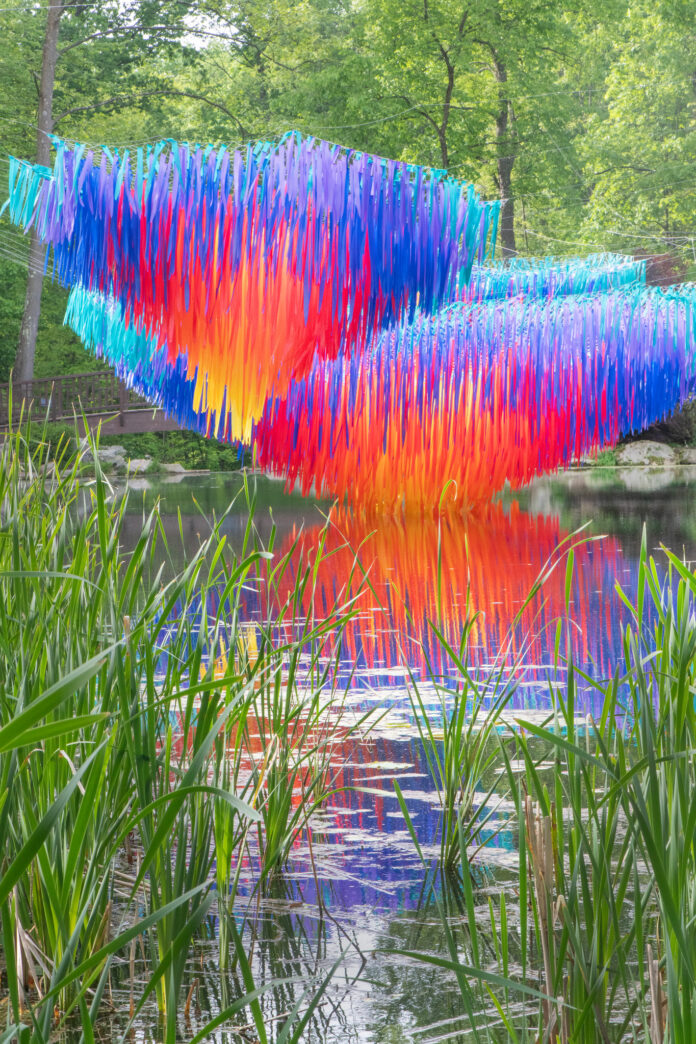
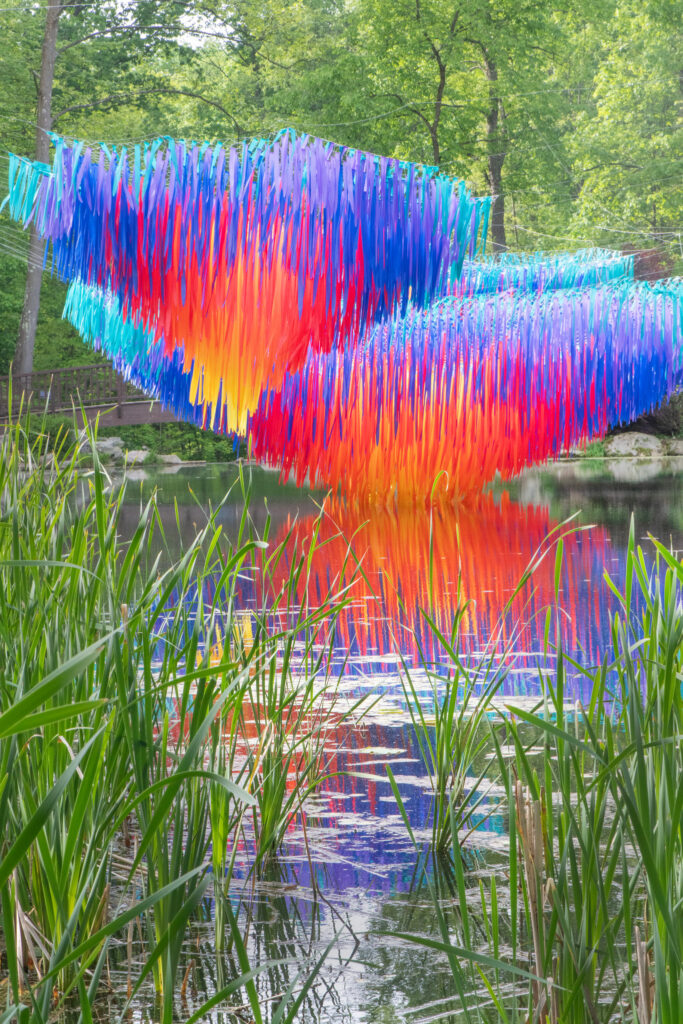
A Garden Conversation, art in the pond

As that cool autumn crisp air arrives, the craving to leave our homes and experience the fall season takes over. Thankfully, Pittsburgh is kicking up the city’s events schedule from the week of October 6-12. For those who feel like tapping into their creative side, live performances await. Though there are days of learning ahead too for history and nature buffs. Even if none of this tickles your fancy, we’re sure a beer in the park could make up for it. It’s all coming up this next week in the Steel City. 

Pittsburgh Events Happening October 6-12

Ailey II: The Next Generation of Dance
Photo Courtesy of Ailey II

Ailey II: The Next Generation of Dance

October 7, August Wilson African American Cultural Center

One of the top dance companies in the world will be coming to Pittsburgh this fall and you won’t want to miss your opportunity to see their enchanting movement. Ailey II merges the best early-career dancers coming up on the scene with the creative vision of established, seasoned talent. Celebrate these diverse pioneers at the August Wilson Center this fall.

Six at the Benedum
Photo Courtesy of Six

Six at the Benedum

October 7-12, Benedum Center

A history lesson is a lot more fun with bedazzled outfits and pop hits. You’ll walk out of the Broadway smash hit Six with a much deeper knowledge of Henry VIII’s wives, and some banging tunes stuck in your head. Check out these Queens as they tell you their stories of how their marriage with this historical figure went. It’s empowering, educational, and above all fun as you get to know the real story!

A Garden Conversation, art in the pond
Photo Courtesy of Pittsburgh Botanic Garden

A Garden Conversation

October 9, Pittsburgh Botanic Garden

Through presentations and panel discussions, guests will examine the four interpretive themes that inform all of the work Pittsburgh Botanic Garden does: Brady Crytzer covering History of the Land, Matt Sarver on Conservation & Restoration, Dr. Mark Miller discussing Botany & Horticulture, and Doug Jones speaking about how Nature Nurtures. Plus, enjoy complimentary food and drinks before the presentations begin. 

Fort Ligonier Days 2025
Photo Courtesy of Fort Ligonier Days

Fort Ligonier Days 2025

October 10-12, Fort Ligonier

For three days, the Revolutionary War era is back. The picturesque Laurel Highlands go back in time for a weekend every fall for this local favorite. Learn the local history while sipping on local spirits, or, for the athletes out there, participate in the yearly 5K. No matter what you decide to do, you won’t want to miss the battle reenactments and historical demonstrations. 

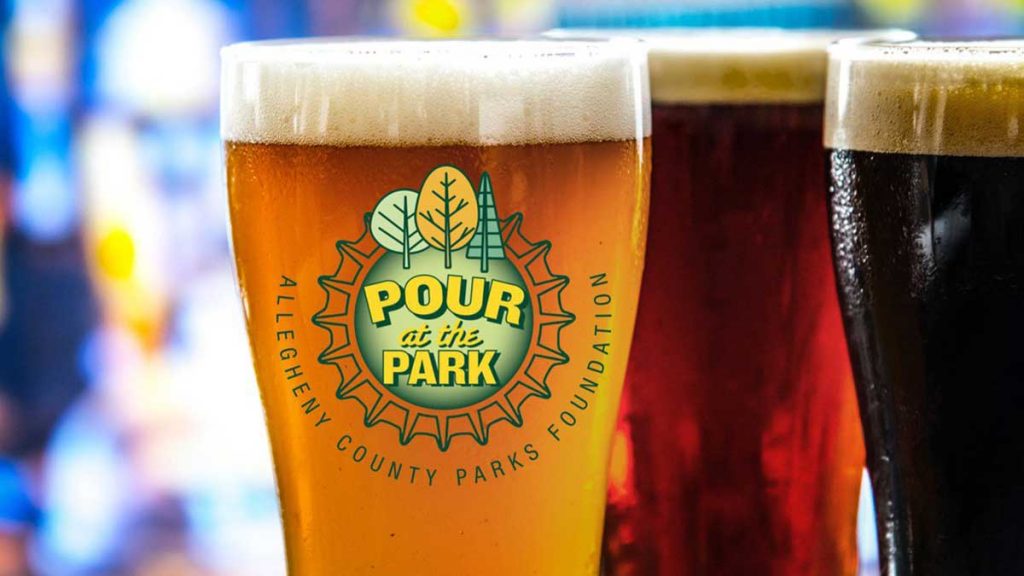
Beer glasses for Pour at the Park in Pittsburgh.
Photo Courtesy of Pour at the Park

Pour at the Park

October 11, North Park Lodge

Pour at the Park returns to offer a lively evening of tastings, food, and entertainment. Presented by Peoples Gas, the event features beer, wine, spirits, and nonalcoholic beverages alongside local food trucks. Listen to live music from the Alter Egos as you take the kids to discovery activities hosted by Coach Dave of CDG Sports. Guests can also enjoy a raffle and join in a public tree planting earlier in the day at 1 p.m. All proceeds benefit the Allegheny County Parks Foundation’s work to maintain and enhance all nine county parks.

Story by Kylie Thomas
Featured Photo Courtesy of Pittsburgh Botanic Garden

Subscribe to TABLE Magazine‘s print edition.
Café Momentum’s Chef Shares His Favorite Pittsburgh Breakfast Spots

0
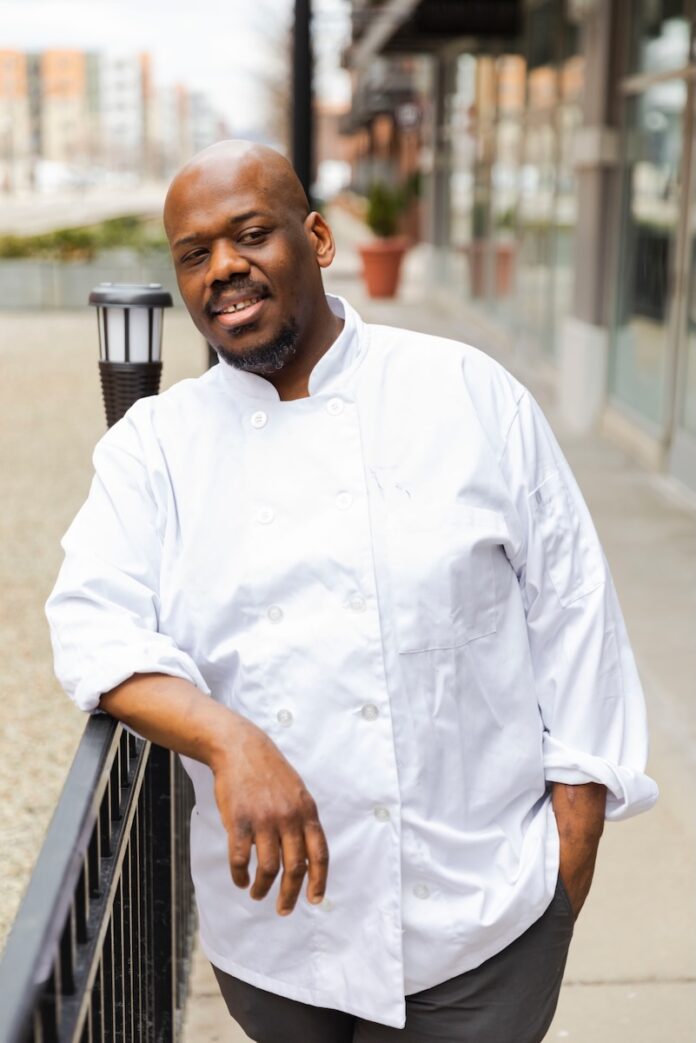
Chef Robert Carter at Pittsburgh breakfast spot Cafe Momentum leans against a railing in a white chef's coat.

As the saying goes, the early bird gets the worm! And every early bird we know needs breakfast. Café Momentum’s Chef Robert Carter helps the early risers among us by sharing his Pittsburgh breakfast recommendations.

Chef Robert’s Best Breakfast Spots in Pittsburgh

Lincoln’s P&G Diner

I really enjoy the unique pancakes at Pamela’s, and my favorite place to have them is in Millvale at Lincoln’s P&G Diner. I always have to get the Big Lincoln. That includes two eggs, your choice of breakfast meat; Lyonnaise potatoes, and a short stack of Pamela’s pancakes. As a black coffee drinker, the bottomless refills are also much appreciated. The working Lincoln Pharmacy is an added bonus to the experience.

Nancy’s Revival

Pittsburgh’s bikeability is something my family and I truly appreciate, and we often take advantage of the trails at Frick Park in the morning. After a refreshing ride, we frequently head to Nancy’s Revival in Wilkinsburg. It’s our go-to spot for delicious biscuits and gravy, which are truly outstanding.

61B Café

Another favorite is 61B Café. When I lived in Swissvale, I stopped at 61B Cafe for a quick espresso and a breakfast sandwich. I’d always get the breakfast sandwich on a croissant, and their toasted bagel with extra cream cheese was also a regular order.

Check out lunch recommendations from The Speckled Egg’s Chef Nathan Schoedel.

Story and Photo by Chef Robert Carter, Café Momentum

Subscribe to TABLE Magazine‘s print edition.
Don't Miss