Peak chile season is a thing in the southwest and with it comes an abundance of green and red chile recipes. It’s so much thing that in new Mexico, you get asked how: red, green, or “Christmas,” the diplomatic way of saying you’re indecisive but still open to cult membership. Editor-at-Large Gabe Gomez is thoughtfully green in both his answer to that question and in the recipes he shares here with TABLE readers.
Gabe Gomez Cooks Up Five Green Chile Recipes to Channel Southwestern Energy at Home
To arrive in New Mexico is to walk straight into a cult. Not a sinister one with robes and incantations, though there’s a fair bit of smoke involved: the kind of smoke you find at a farmer’s market during chile season. In New Mexico, chile isn’t an ingredient. It’s a flag, a faith, a stamp on your palate. And there’s no polite opt-out. I grew up in El Paso, just down the road, and somehow, we missed the full brunt of the chile religion. Maybe it’s because we were wedged between Mexico, with its tractor beam of tacos al pastor and menudo that could stop traffic, and New Mexico, where chile had already ascended to sainthood. We had chile in the food, sure. But it was garnish, not gospel.
How Chile Season Became Such a Big Deal in New Mexico
For the true believers, though, the harvest was a holy season. You made the pilgrimage to La Union, where Chope’s Restaurant turned out chile rellenos that could make you question your faith, and their bar next door taught you other lessons entirely. And among the self appointed chile intellectuals, the purists, the weekend philosophers, arguments broke out like street brawls. Hatch? Please. Lemitar green chile is the real deal. Superior in every way. Which, for the record, is absolutely true.
Chile has been in New Mexico for centuries, long before the conquistadors arrived to put their names on everything. This stuff is heritage and invention, seed and story, a way to tether yourself to this particular patch of land. But the real question isn’t red or green. It’s why. Why is chile such a big deal? Flavor? Absolutely. Marketing? Definitely. Terroir? If you’re an evangelist. But it feels more like folklore than farming. Myth pressed into flesh. As said in John Ford’s The Man Who Shot Liberty Valance, “when the legend becomes fact, you print the legend.” The logical conclusion to this apotheosis is a smothering of everything in some sort of chile.
So, Why Use Green Chile Anyways?
But here’s the kicker to the cult of chile. It’s not merely magnetic in its rituals; not just protean in its application. It’s promiscuous. It’ll sidle up to your breakfast eggs like an old friend, then slip into fine dining like it belongs there, because it does. It’s never just about the heat; it’s about character, the way it bends to the cook’s will but still leaves its fingerprints behind.
From the outside, chile can seem fetishized in New Mexico. Yet when you linger, as required of any pilgrim, you begin to see it differently. When you taste carefully, it’s clear that chile here is not about gatekeeping or dominance. It is about belonging. To cook with it is to join a dialogue already centuries in progress. Join me in this back and forth. Add your voice to the conversation.
This menu is a meditation on how a single ingredient can adapt, converse, and evolve. Each course is a variation: chile as memory, as counterpoint, as a bridge between cultures, and as a whisper in the final act. What it’s not is green chile as novelty. It is a dialogue between restraint and boldness, tradition and reinvention, the familiar and the unexpected.
Green Chile Corn Madeleines with Smoked Honey Butter
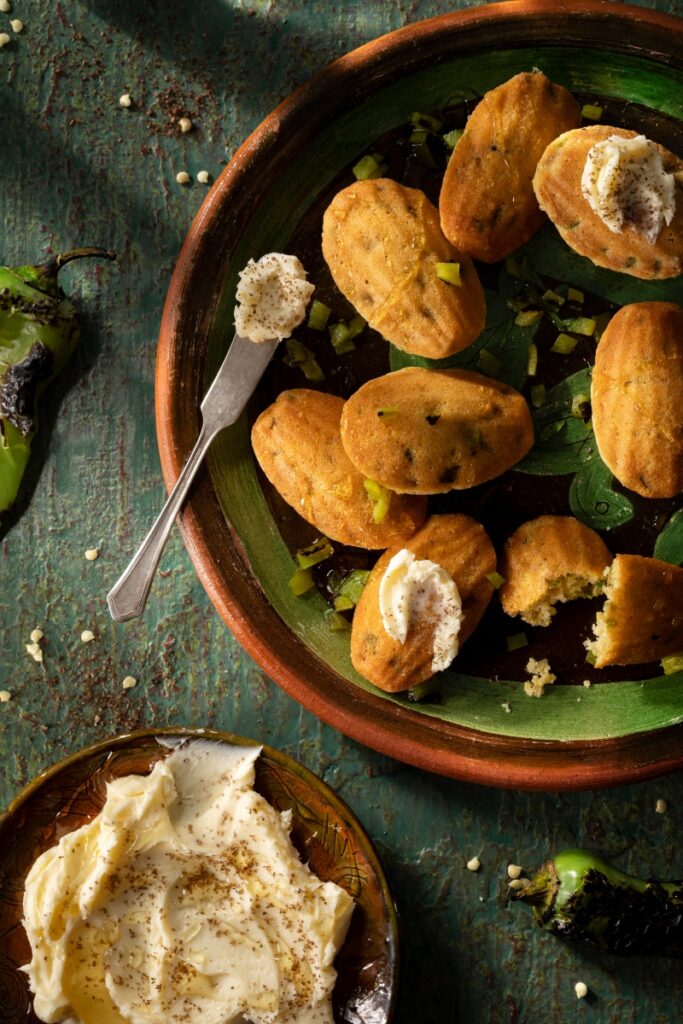
Wine Pairing: Albariño: bright, citrusy, a minerality that cuts through richness.
Begin this green chile journey with a delicate madeleine that pairs perfectly with a glass of Albariño. Both the madeleine and the wine impart a delicate sweetness that does not overpower the subtle vegetal flavors imparted by corn and grapes, respectively, not to mention the intriguing complexity of green chiles.
Mussels en Papillote With Green Chile

Wine Pairing: Vermentino: citrus, sea spray, and a faint herbal bitterness. An elegant match to mussels and fennel.
Just like green chiles, saffron and fennel can come on strong or, in the right hands, recede gently into the background like a phalanx of stringed instruments in a symphony. With this recipe, the steamy environment established by an envelope of parchment paper melds and mellows all the flavors into perfect harmony.
Green Chile Granita With Lime and Cilantro Blossoms
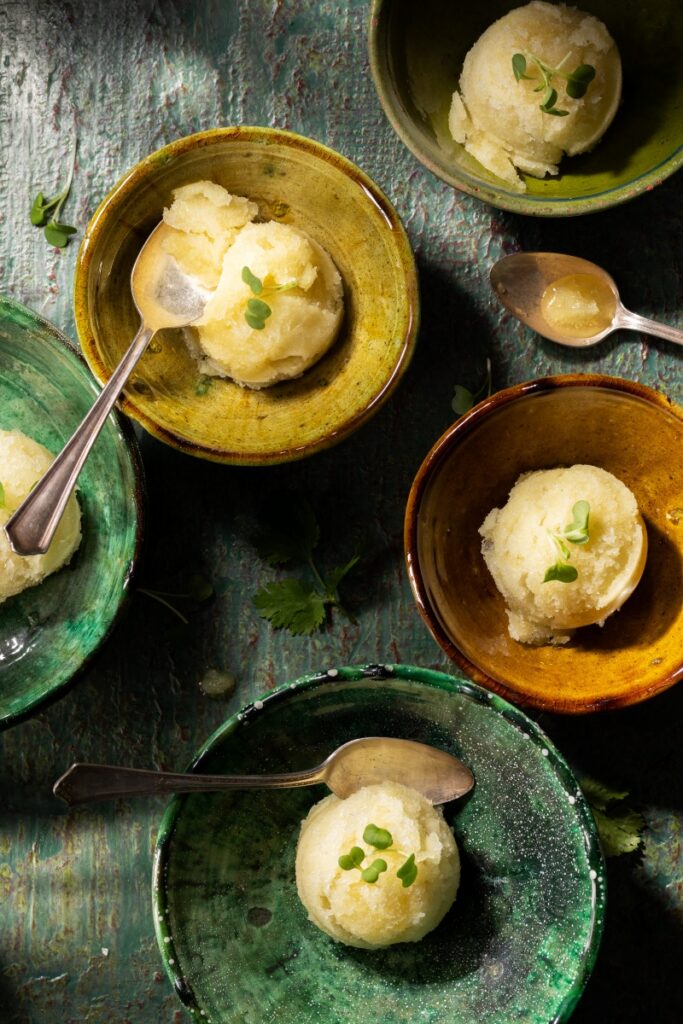
A classic French or English dinner menu offers a cleansing dose of citrus sorbet to clear the palate for the next course. This light as air granita does the job perfectly…memorably. Green chile responds well to the brusque flavor profile of lime, and the iciness of the dish sets off a pleasing surprise for the palate.
Lamb Loin With Green Chile Harissa

Wine Pairing: Grenache: juicy, spicy, and just bright enough to keep up with the heat.
Green chile harissa sounds a fresh and novel flavor note in this very original composition. The flavor of lamb welcomes the salty acidity of preserved lemons and the grounding earthiness of chickpea purée. A drizzle of green chile harissa adds an assertive brightness to the dish. Make extra: you’ll find yourself wanting to add it to all your dinnertime proteins.
Vanilla Panna Cotta With Espresso Green Chile Caramel
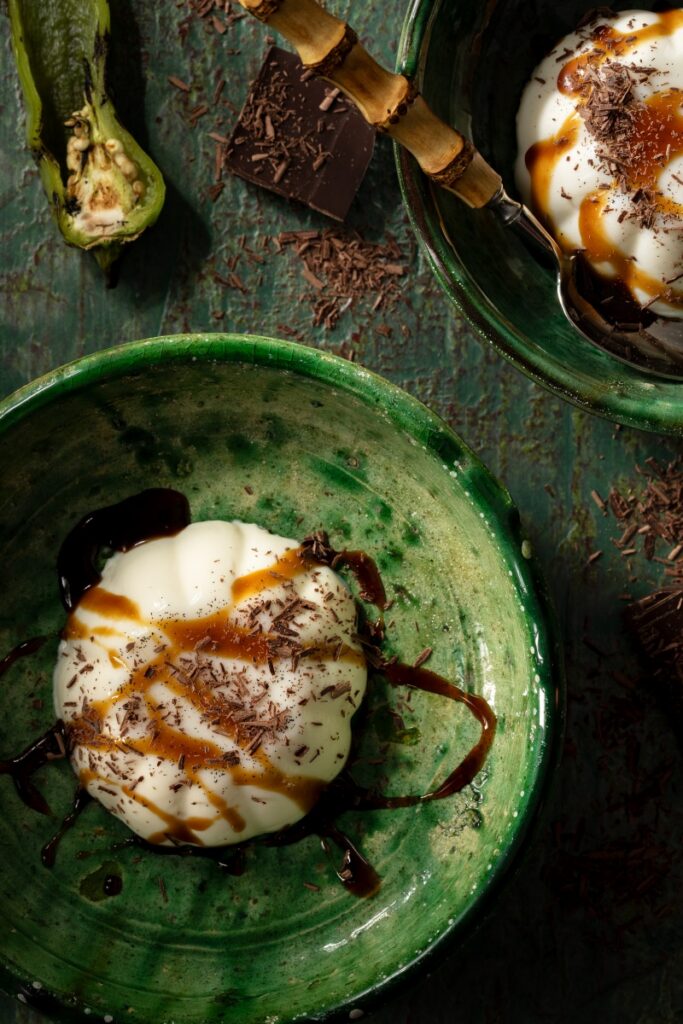
Pairing: Amaro Montenegro on the rocks: herbal, bittersweet, perfect for an affair you shouldn’t have.
The gloriously silky texture of panna cotta takes on a new dimension with a drizzle of Espresso Green Chile Caramel and a sprinkle of freshly shaved chocolate. This final bite will finish the meal with a traditional touch of sweetness, but in a way that keeps the passion for green chile alive and well on the palate. A sip of Amaro Montenegro will deepen the sensation.
Still hungry? Check out Gabe Gomez’ other recipes.
About the Recipe Author
Gabe Gomez is Editor at Large for TABLE Magazine New Mexico and Managing Director of Marketing and Communications at the University of New Mexico Foundation. An award-winning poet and adjunct professor at UNM Anderson School of Management, he writes at the intersection of food, culture, and community.
About the Stylist
Anna Calabrese Franklin is TABLE Magazine’s food stylist and recipe developer, shaping the visual and culinary identity behind TABLE’s recipes and restaurant features. A Pittsburgh native, Anna graduated from the Indiana University of Pennsylvania Academy of Culinary Arts, where she trained in classical and contemporary techniques before spending many years cooking in restaurant kitchens and photo studios around the city.
About the Photographer
Dave Bryce is TABLE Magazine’s contributing architecture, interiors, and food photographer, based in Pittsburgh. He photographed Fallingwater: Living With and In Art (Rizzoli, 2025) and regularly shoots for Pittsburgh Magazine and American Farmhouse Style, working with architects, interior designers, and hospitality brands. See more at davebrycephotography.com.
Subscribe to TABLE Magazine‘s print edition.