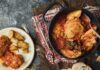
Cider-glazed pork tenderloin is a fall dinner that lets the season do the work: fresh apple cider reduced into a honey-thick glaze, brushed over pork, and roasted with Honeycrisp apples, sweet onion, and mini purple potatoes. It’s a recipe that sends you straight to the farmers market, and it takes only three steps.
The simple glaze makes this a perfect weeknight dinner, but it’s also good enough for a special Sunday meal or a small Thanksgiving. Pork tenderloin roasts in about 20 minutes, so it makes a smart turkey alternative for a table of four to six: no brining, no basting marathon, and the oven is free for pie long before guests arrive. As it roasts, the pork’s juices drip into the apples and potatoes, so the main and the side finish in the same pan.
Nearly everything here can come from a local farm. Look for fresh cider and Honeycrisp apples at orchards and cider mills, mini purple potatoes and sweet onions at fall farmers’ markets, and fresh sage from a market herb stall. Many markets also sell pork from local farms, so ask about a tenderloin.
What apples and potatoes are best for roasting?
Choose firm apples that hold their shape in a hot oven. Honeycrisp is ideal. Developed at the University of Minnesota and released in 1991, it was nearly discarded before horticulturist David Bedford rescued it from the reject pile, and it became Minnesota’s state fruit in 2006. Its crisp, juicy, sweet-tart flesh softens without collapsing. Pink Lady, Braeburn, and Jonagold are good stand-ins; skip McIntosh, which turns to sauce.
Purple potatoes belong to the same species as russets, but they carry more anthocyanins, the pigments behind their vivid color and slightly nutty, earthy flavor. Their firm texture makes them great for roasting. Baby Yukon Golds, red potatoes, or fingerlings work, too; just cut them to a similar size so they cook evenly.
How do you make an apple cider glaze for pork?
Combine the cider, brown sugar, bay leaf, and sage in a small saucepan, bring it to a boil, then simmer and stir until it has reduced to about half a cup and coats the back of a spoon like honey, 12 to 15 minutes. Fresh, unfiltered cider gives the deepest flavor, but any plain cider works, and unsweetened apple juice will do in a pinch, though the glaze will taste a little less tangy.
The glaze thickens as it cools. If it gets too stiff to brush, warm it with a spoonful of cider. Brush it on every five minutes while the pork roasts, and save a few spoonfuls for drizzling over the slices. For more ways to use a jug of cider, see our apple cider recipes.
Can I use pork loin instead of tenderloin?
Yes, but plan for a longer roast. A 2- to 2½-pound boneless pork loin is much thicker than a tenderloin, so it needs 45 minutes to an hour at 400 degrees. Put it in the pan with the potatoes from the start, add the apples and onion for the last 25 minutes so they don’t turn to mush, and brush with glaze every 10 minutes. Pull it at 145 degrees and rest it for 10 minutes before slicing.
Tips for success
- Give the potatoes a head start. Halved mini potatoes need longer to cook than the pork, so roast them for 15 minutes before adding the apples, onion, and tenderloin.
- Trim the silverskin. The thin, shiny membrane on the tenderloin makes the meat curl as it cooks.
- Pat the pork dry. A dry surface browns better and helps the glaze cling.
- Use a thermometer. Pork is done at 145 degrees. Rest it for three to five minutes before slicing, and it will stay juicy and slightly pink.
- Watch the glaze. Sugary glazes can scorch. If the bottom of the pan starts to darken, add a splash of cider or water.
- Make ahead and store. Make the glaze up to three days ahead and refrigerate it. Store leftovers in an airtight container in the refrigerator for up to three days.
What can I serve with cider-glazed pork tenderloin?
With apples and potatoes already in the pan, all you need is something green: a shaved Brussels sprouts salad, sautéed kale, or roasted green beans. Warm bread and salted butter soak up the pan juices. For a Thanksgiving spread, add stuffing and a cranberry relish. A dry hard cider, a German Riesling, or a light Pinot Noir echoes the apple notes in the glaze.
Looking for more? Bake our Apple Cider Pumpkin Bread and Vegan Apple Cider Muffins, explore our Apple Recipes to Embrace the Fall Season, or swap the tenderloin for Seared Pork Chops with Cranberry-Bourbon Sauce.
Planning a holiday without the bird? See all nine of our turkey substitutes, and browse TABLE‘s Mains and Fall recipes.
Print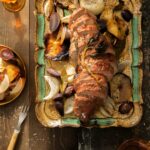
Cider-Glazed Pork Tenderloin with Roasted Apples and Purple Potatoes
- Total Time: 1 hour
- Yield: 6 servings 1x
- Diet: Gluten Free
Description
Pork tenderloin brushed with a honey-thick apple cider and sage glaze and roasted over Honeycrisp apples, sweet onion, and purple potatoes for an easy one-pan fall dinner.
Ingredients
For the glaze
- 2 cups apple cider
- ¼ cup brown sugar, packed
- 1 bay leaf
- 3 sprigs fresh sage
For the pork tenderloin
- 2 cups mini purple potatoes, halved
- 2 tbsp olive oil, divided
- Salt and pepper to taste
- 1 Honeycrisp apple, cored and sliced
- 1 sweet onion, sliced
- 1 pork tenderloin (about 1½ lb), silverskin trimmed
Instructions
1. Preheat the oven to 400 degrees. In a small saucepan, combine the cider, brown sugar, bay leaf, and sage. Bring to a boil over medium-high heat, then simmer, stirring occasionally, until reduced to about ½ cup and as thick as honey, 12-15 minutes. Discard the bay leaf and sage and set the glaze aside.
2. Spread the potatoes in a roasting pan, drizzle with 1 tablespoon olive oil, and season with salt and pepper. Roast 15 minutes.
3. Add the apple and onion to the pan, drizzle with the remaining 1 tablespoon oil, season, and toss. Pat the pork dry, season with salt and pepper, and set it on top of the produce.
4. Brush the tenderloin with glaze and roast 20-25 minutes, brushing with glaze every 5 minutes, until an instant-read thermometer in the thickest part reads 145 degrees.
5. Rest the pork 3-5 minutes, then slice. Spoon the pan juices and any remaining glaze over the slices and serve hot with the apples, onions, and potatoes.
Notes
Make ahead: Refrigerate the glaze up to 3 days; warm it gently before brushing.
Pork loin: Use a 2-2½ lb boneless loin, roast 45-60 minutes, and add the apples and onion for the last 25 minutes.
Storage: Refrigerate leftovers in an airtight container up to 3 days.
- Prep Time: 15 minutes
- Cook Time: 45 minutes
- Category: Main Course
- Method: Roasting
- Cuisine: American
Nutrition
- Serving Size: 4 oz pork with apples and potatoes
- Calories: 310 per serving
About the Recipe Author
Anna Franklin is TABLE Magazine’s food stylist and recipe developer. A Pittsburgh native and graduate of the Indiana University of Pennsylvania Academy of Culinary Arts, she spent many years cooking in restaurant kitchens and photo studios before moving into food styling. Anna tests, plates, and styles the recipes and restaurant features in TABLE’s print and digital editions, working alongside photographers Dave Bryce and Laura Petrilla. She is also the founder of Bazaaa Sauce, a Pittsburgh hot sauce microbrand. Read more of her work at TABLE.
About the Stylist
Keith Recker is Editor in Chief and Co-Owner of TABLE Magazine. A color and trend forecaster for nearly 20 years, his clients have included Pantone, WGSN, Stylus, and the Color Association of the United States. He is the author of three books on color, including Deep Color: The Shades That Shape Our Souls and True Colors: World Masters of Natural Dyes and Pigments, and co-founder of the Open Source Colour Association. Read more of his work here or contact him at keith@tablemagazine.com.
About the Photographer
Dave Bryce is TABLE Magazine’s contributing architecture, interiors, and food photographer, based in Pittsburgh. He photographed Fallingwater: Living With and In Art (Rizzoli, 2025) and regularly shoots for Pittsburgh Magazine and American Farmhouse Style, working with architects, interior designers, and hospitality brands. See more at davebrycephotography.com.
Subscribe to TABLE Magazine’s print edition.