If you’ve ever sat down to watch the Night of the Living Dead or simply grew up in the city of Pittsburgh, you probably know the name George A. Romero well. But, what you might not know is that on top of his iconic filmography, Romero also authored a number of novels thanks to the assistance of modern horror and fiction author, Daniel Kraus. After Romero’s passing in 2017, his wife Suzanne and manager called on Kraus to complete manuscripts left over from Romero, gifting the world with one of the greatest zombie novels of all time, The Living Dead.
How Daniel Kraus Finished George A. Romero’s Novels With Some Help From Pittsburgh
As a Pulitzer Prize-winning author who has also worked with Guillermo del Toro on the novel The Shape of Water, Kraus’ contact with Suzanne was one he’d been waiting for since he was a little kid.
“I was introduced to it [horror] at around five years old, with Night of the Living Dead, which was on TV a lot, and The Twilight Zone, which I watched more or less weekly with my mom,” explains Kraus. “Those two really interested me and scared me to some degree. But mostly they sort of unnerved me—not in a way that scared me off. It was more intrigue.”
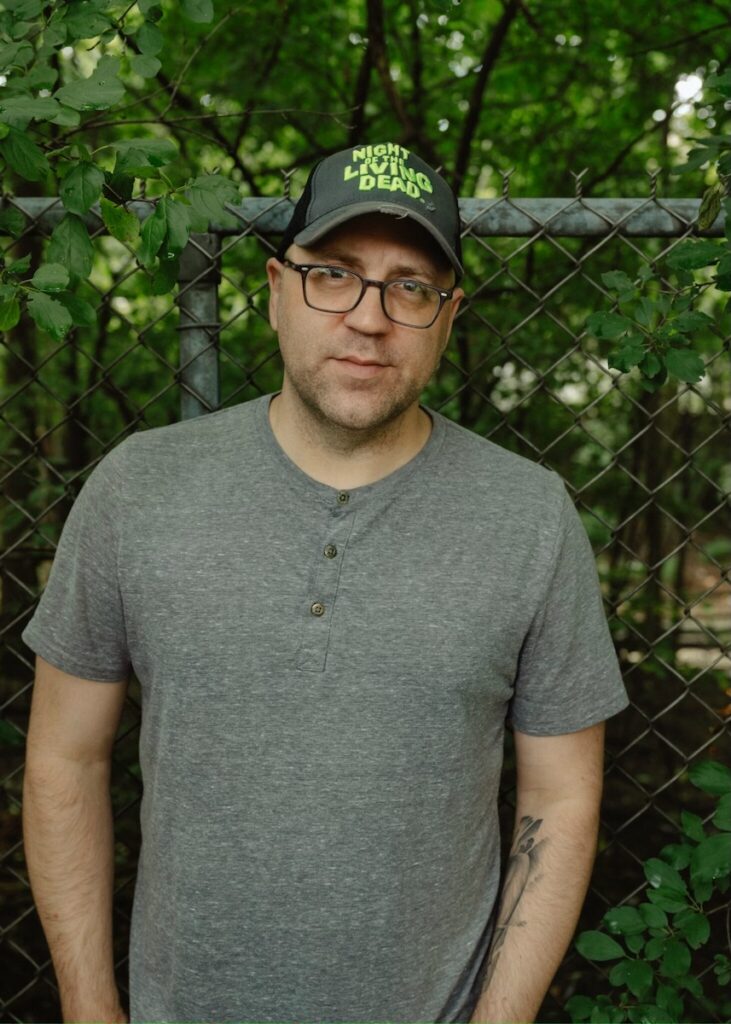
After years of catching scenes on television and seeing boxes at the video store for Dawn of the Dead, Day of the Dead, and other Romero projects, Kraus began to officially consider himself a Romero fan in high school. It wasn’t until much later that The Living Dead came into his hands, a story that Romero has spent nearly a decade working on and still had much of the story missing. With no co-author to talk to, how does one even begin to write a novel that’s already half-written? Thankfully, the University of Pittsburgh’s University Library System’s George A. Romero Collection was a life saver.
Exploring The George A. Romero Archival Collection at Pitt
“By the time I started working on that book, it was the exact same time the library was getting all Romero’s materials in,” says Kraus. “So I went to the library, and the collection wasn’t even cataloged yet, everything was in boxes. I’ve been in the archive several times now since then for various reasons and they’ve always been very, very helpful.”
As Kraus spent more time in Pittsburgh to visit the archives or even just speak at book festivals, he started to realize the scope of Romero’s connection to the city and how deeply his films impacted the community here.
“I love Pittsburgh,” says Kraus. “If I were cast out of Chicago like a criminal, I would probably move to Pittsburgh. Everyone here’s got a Romero story. Every time I’m in an Uber or speaking with someone, they’ll tell me how their mom was friends with Judith O’Dea or Kyra Schon was their teacher. There are other places that other horror filmmakers are from, but I don’t think any of them really embraced their persons as much as Pittsburgh embraced Romero.”
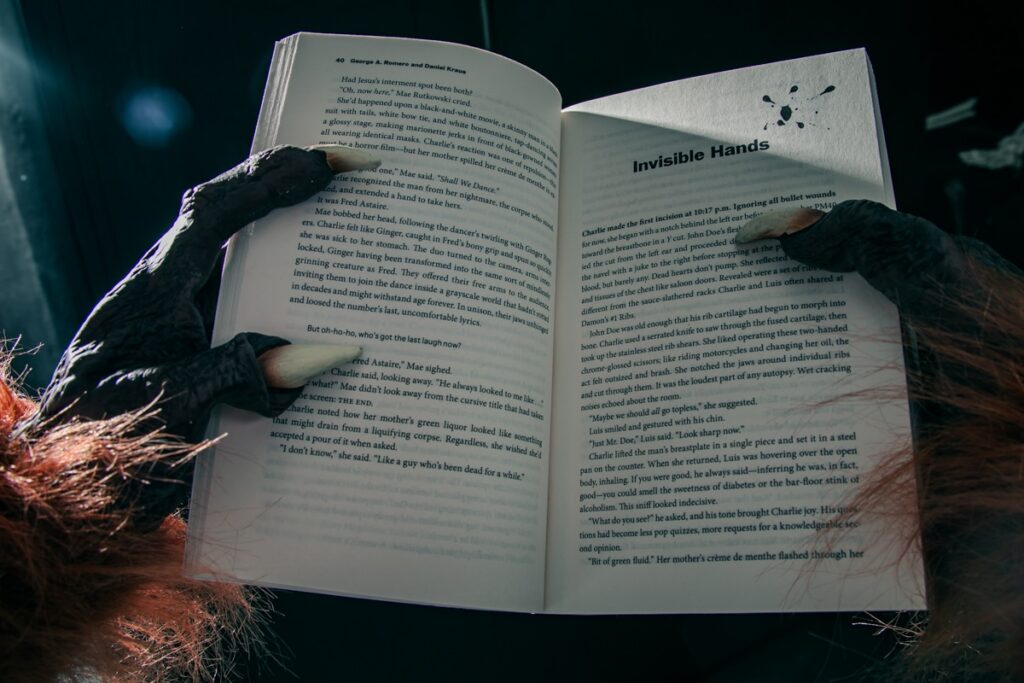
Even with an archive at his disposal and time in the city, crafting The Living Dead as well as his other Romero co-authored novel, Pay the Piper, was no small feat. In fact, Kraus even acknowledges the two as the hardest books he’s ever written. Because the University of Pittsburgh’s collection was so new, Kraus was actually the first person outside the library staff to dive into the unsorted boxes of Romero’s loose drafts and notes.
Crafting The Living Dead With Limited Resources
“I was so cognizant that we had a finite amount of pages from Romero and I didn’t want to lose any of that,” explains Kraus. “In the case of The Living Dead, I would sometimes move sections, paragraphs, sentences, or even hundreds of pages. I would do anything I could to save bits. Even if I had a section or a chapter that made no sense and just didn’t work, I would try to find some way to make it work.”
Piecing together that literary puzzle from raw archives was only half the battle. The real psychological weight came from honoring a legend’s voice without losing his own along the way.
“You also don’t have the person to bounce off or a living collaborator,” explains Kraus. “So, there was always that sort of gut check of ‘is this okay?’ with the knowledge that it was a collaboration, not ghostwriting. It was always going to be a meeting of both of us and some creation of a third voice that wasn’t entirely him or me.”
That dedication to unearthing lost artifacts and breathing new life into forgotten pages mirrors how Kraus views the broader landscape of horror literature today. For Kraus, the heart of the genre doesn’t live in giant blockbuster releases, but in the gritty, independent corners where creators take genuine risks.
Kraus’ Vision for the Future Horror
“The small presses are filled with wonderful new ideas from all sorts of different new voices and perspectives,” says Kraus. “The lower the budget of the movie and the more obscure the press, the more excited I get because it feels like finding diamonds in the rough. It brings back that feeling of being at the video store in the 1980s and just looking through all the boxes. If I could wish for anything, it’s that some of those get shepherded into the mainstream.”
Though Kraus does admit that a small, selfish part of him wishes he could keep these gems to himself. And frankly, we can’t blame him, we’d love to keep Daniel Kraus to ourselves but the world deserves to know his creativity.
Keep exploring Pittsburgh’s literary world with these books from the city’s horror and thriller authors. Or, check out what else is spooky in the city with our guide to Halloween in Pittsburgh.
About the Author
Kylie Thomas is TABLE Magazine’s Online Editor, covering Pittsburgh food, drink, and going out, including the Things to Do in Pittsburgh column. A Point Park University graduate, her work has also appeared on The Takeout, QBurgh, and Empire Extreme. She also runs the photography business Photos by Ky.
About the Photographer
Laura Petrilla is a Pittsburgh-based editorial and commercial photographer contributing to TABLE Magazine, covering food, people, and places. Her work has appeared in Pittsburgh Magazine, and for the past five years she has photographed still lifes and models for Peyote Bird Designs. See more at laurapetrilla.com.
Subscribe to TABLE Magazine‘s print edition.