Nine years after renovating her Pittsburgh home, interior designer Colleen Simonds sat down with TABLE Editor-in-Chief Keith Recker to take stock of what’s changed, what she still loves, and what she’s learned about making decorating choices that stand the test of time.
Pittsburgh Interior Designer Colleen Simonds’ Decorating Secrets
Design Tips for the Life You Actually Live
KEITH RECKER (KR): I wanted to have a conversation about the beautiful house you live in. The pictures you’re sharing with us are of the house at the perfect moment of its unveiling a few years ago. You’ve been living in the house with your husband and two sons for nine years. How is it different?
Colleen Simonds: All the inhabitants are larger. Which, honestly, is a big difference when I think about my kids being three and five moving in there, and now they’re 12 and 14. That little-kid house is an adult house now.
KR: How does that express itself visually?
Colleen Simonds: First of all, it’s messier. Then, it’s all about people taking up space in different ways. A six-foot-one teenager wants a boxing gym in the basement, not a toddler’s toy cars.
KR: Did you design a boxing gym?
Colleen Simonds: No. Zero design. Zero. I got the equipment and that’s it. I never go down there, so who even knows what it looks like?
Making a Home Office Your Own
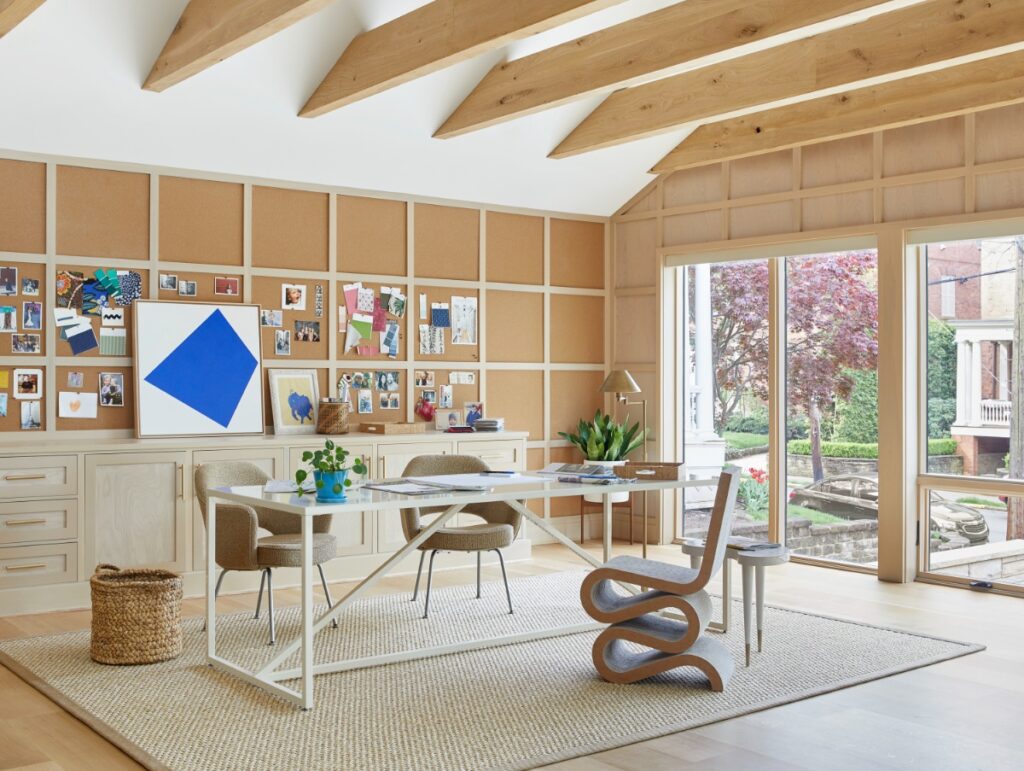
KR: Well, I know of one recent change. You have an office on Ellsworth Avenue. How is your home office space looking now?
Colleen Simonds: It’s still my office, except that I have it to myself again. I used to have desks in there for my people, but it’s still as much of a mess as it always was. Anyone would think nothing had changed at all. I still have my piles of swatches and samples everywhere. And it is 100% my happy place. I’ve just reclaimed it a little bit.
KR: How is working on your own home different from working for clients?
Colleen Simonds: It is different in every possible way. It’s easier to surprise and delight clients because they haven’t seen all the things I’ve seen. Part of my job is to show them those things, and there’s a huge element of delight in that. But it’s harder to surprise and delight me, because it’s my job to have an encyclopedic knowledge of all this stuff. When you see a lot, a hazard of the job is that you get a little dulled to the surprise.
Finding Delight in Design
KR: So how do you delight yourself?
Colleen Simonds: I will always have endless delight in the combination of things. There are always new things coming out, and I love nothing more than getting a big box of new samples from a showroom. A project is a new opportunity to see some fun new stuff, and think how can I combine that with something else and make it exciting?
It’s hard to pick for yourself, but I don’t change my mind that much. I’m not a designer who likes something one year and then two years from now I’m going to be totally sick of it. Things I love are things I always love. I do not tire of them.
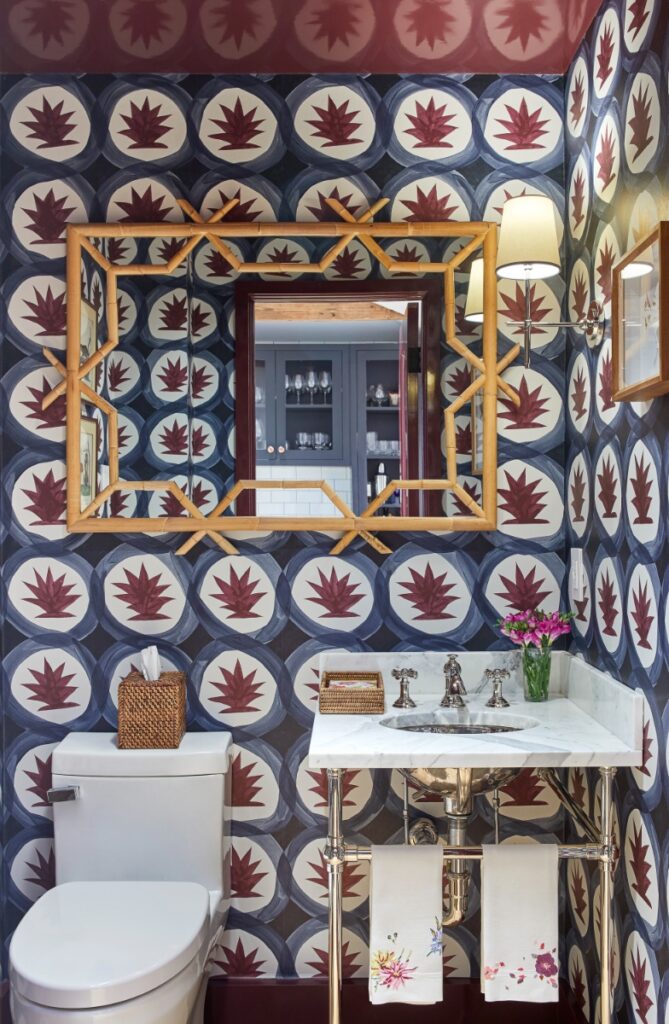
KR: You haven’t even replaced a bit of wallpaper?
Colleen Simonds: No. Nothing, nothing. Nothing. So really, it’s just the kids that change.
How to Incorporate Color Into Your Home
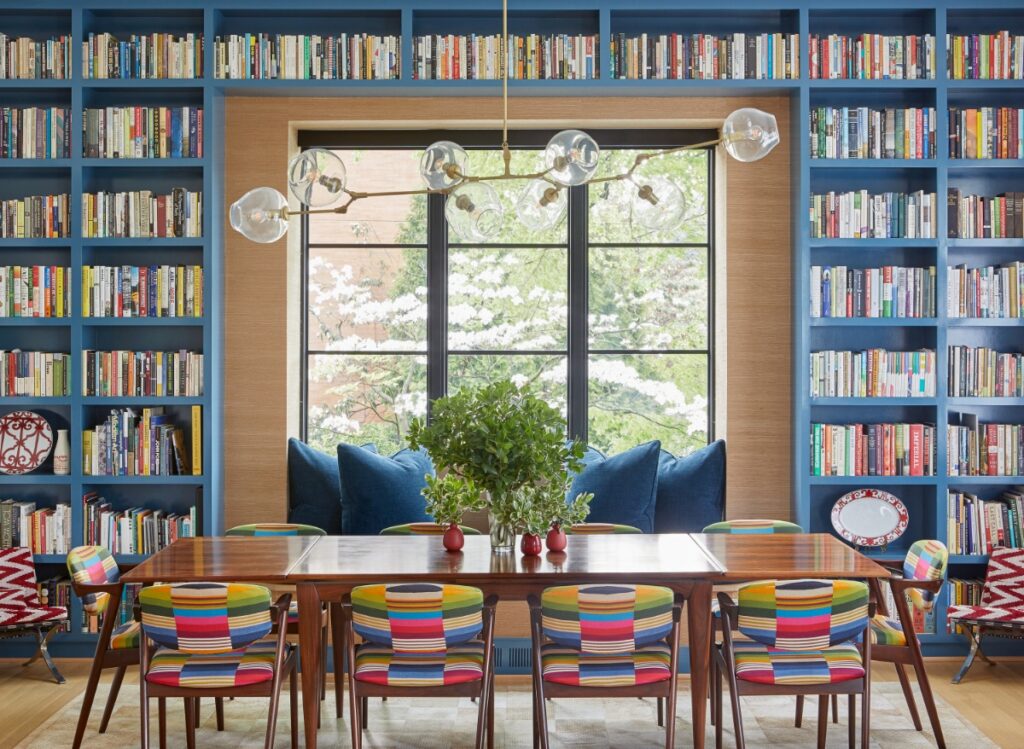
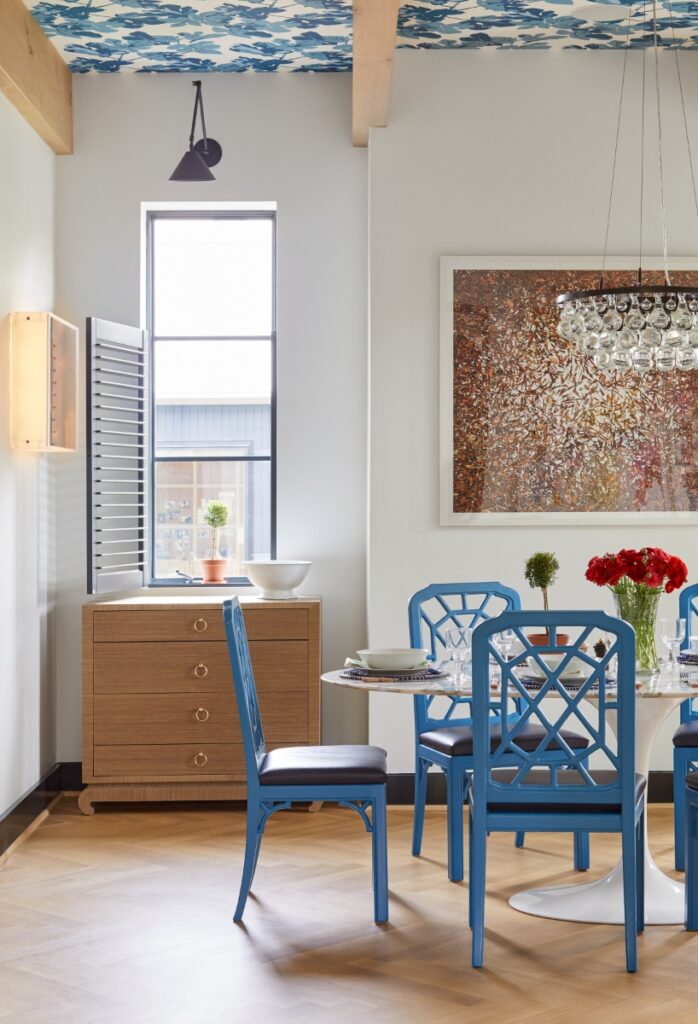
KR: When I think back to your house, you have a very stable color palette that you make very dynamic through your choices of pattern, so there’s stability and dynamism happening at the same time. That’s probably why you can’t get tired of it, because they’re colors you really love.
Colleen Simonds: Yes. Balanced by the stimulation level I wanted. It all plays out well.
KR: What about the other people who live in your house? With a client, they’ve interviewed you. They’ve chosen you. You’re showing up. These family clients… they didn’t exactly interview you. So, what’s that like? Do they have any say in the choices?
Colleen Simonds: No. I guess they don’t. Although now I do have teenagers bugging me that they want boring white walls and stuff like that. But I haven’t given in to any of that yet. I think they know that I’m going to make most— all? —the choices now. And I don’t get a lot of complaints.
Become a Noticer
KR: What’s the blend of professional and personal perspective that you bring to your own house? As a professional, you could think, “I need balance of pattern, balance of color, functionality.” But you’re also a person with strong opinions. How does your professional side accommodate you wanting what you want?
Colleen Simonds: How do I do that? Maybe I don’t. Both impulses might just be too enmeshed at this point to even separate them. I’ve had a long career in interior design and fashion before that. Many years of being an editor, a chooser, a picker, a shopper. I am good at it at this point. It’s second nature.
KR: You can’t help yourself.
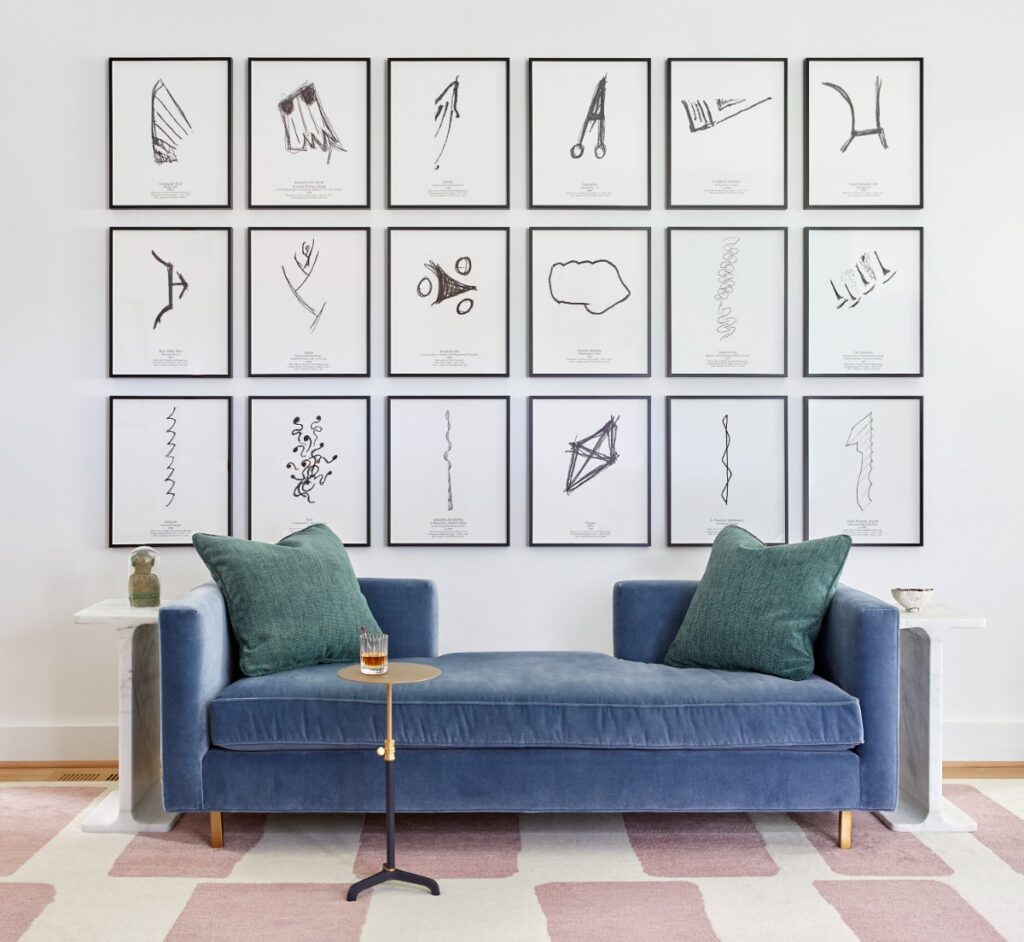
Colleen Simonds: I can’t help it. I’m a big noticer. I feel like “noticer” should be a word. You’ve got to pay attention to what’s around you.
Design for How You Want to Feel
KR: How can the rest of us get better at this?
Colleen Simonds: If you’re interested in how spaces make you feel, then you have to observe those environments and spaces, and ask yourself, What is it about this space that makes me feel X or Y? What is it about this that I like or don’t like? When I went to that person’s house, why did I feel like that? What is it about those spaces that imparts that feeling? If you’re going to create a great space for yourself, you need to listen to yourself. I think people have instincts, and you need to give yourself a chance to hear those come through.
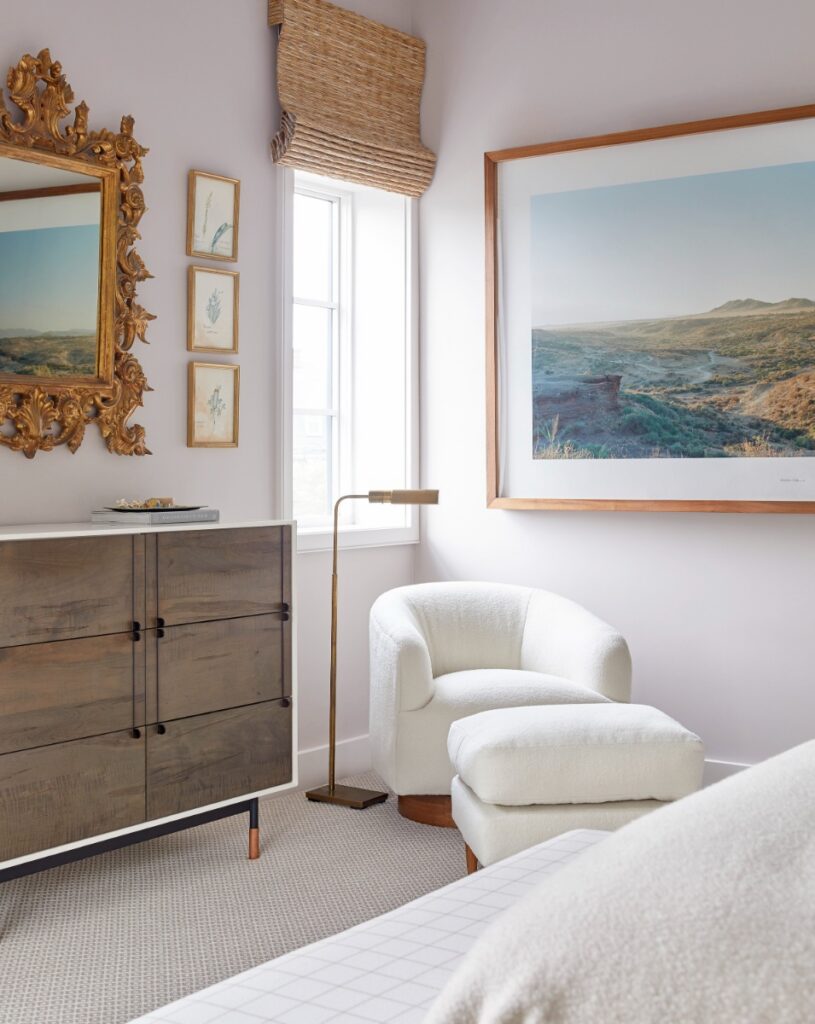
A good example is my sister’s house. Her big, old, beautifully renovated home in Buffalo had absolutely zero color, and that was really because of her husband. We’re talking black, gray, zero color. She lived that way for a long time. Sadly, her husband died, and that was terrible.
So, all of a sudden, we’re in a new stage. I remember lying in her bed, in her bedroom, in this very dark time—and I said, “This can’t look like this anymore. I really want to do this for you, because now more than ever, you need a space that is going to bring you comfort and some element of joy, some sense of comfort. What’s your favorite color?”
In one second, she answered, “Green.” In my head, I had the room designed in ten minutes. Today, she has an absolutely beautiful bedroom with all these beautiful green fabrics and wallpaper.
The point is that she answered in one second. She knew all along. So go with your gut instinct. If you say, God, every time I see something green, I love the way it makes me feel, then work it. Find a way to trust yourself and live with things that you inherently love.
Think of Decorating Like Fashion
KR: Sometimes the outfits you feel most attractive in can give you insight into your tastes.
Colleen Simonds: One hundred percent. If you’re designing an outfit, you can design a room. You’re putting all these elements together to create some expression of who you are or how you want to feel. It’s all the same.
Choose What You’ll Still Love Years From Now
KR: What else do you want people to know about making their houses nourishing, helpful, and beautiful?
Colleen Simonds: I think comfort is essential to everyone. At whatever stage of life, or whatever degree of fanciness we’re talking about—or not fanciness—I think that’s important to everybody. Your space—your house, your bedroom, whatever it is—should feel like a safe place. A place you want to come back to. A place you enjoy being in. Whatever that means for you, I think that’s important at every level.
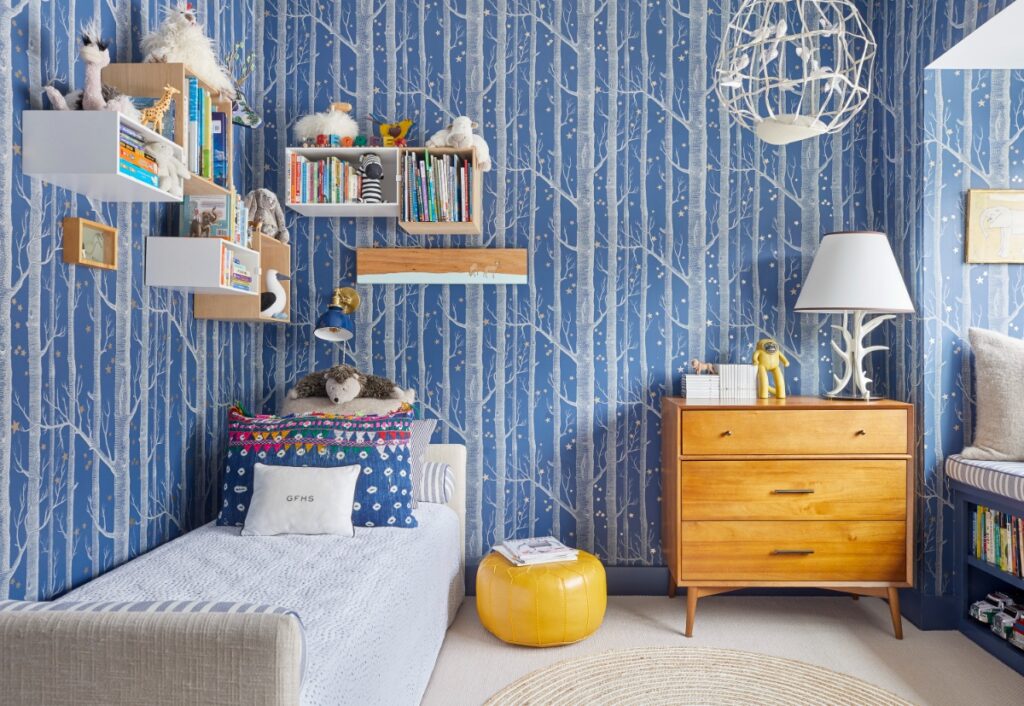
Personally, of course I’m biased, but I do feel like color matters. Take a walk on the wild side. See how it makes you feel. Paint is such a small, easy, cheap way to do that. Open the full fan deck. Choose something that lights you up a little bit. The worst possible thing that happens is you don’t like the color, and you paint over it. It’s easy to undo.
It Can Be That Simple
After I moved into my first New York City apartment, I thought, you know what? I feel like this room wants to be Hermès orange. I had never painted anything. But one Saturday morning I walked around the corner to the hardware store on Bleecker Street. I left the store with the paint, walked home, and slapped it on the wall. No prep. Crappy paint job. And guess what? I did it. And the rest is history. It can be that simple.
KR: I love that advice! One last question about your house. If you had to start over and design this house again, what would you do differently?
Colleen Simonds: I think as I get older, I find myself craving a little more. There are a couple of spaces I’d like to make a little warmer. But I’m talking about a tiny bit of fine tuning. And maybe I’d have an ice maker. I think I might like one of those.
Discover more of Colleen Simonds interior design work or learn more about interior design in Pittsburgh.
About the Interviewer
Keith Recker is Editor-in-Chief and Co-Owner of TABLE Magazine. A color and trend forecaster for nearly 20 years, his clients have included Pantone, WGSN, Stylus, and the Color Association of the United States. He is the author of three books on color, including Deep Color: The Shades That Shape Our Souls and True Colors: World Masters of Natural Dyes and Pigments, and PANTONE: The Twentieth Century in Color. He is co-founder of the Open Source Colour Association, a new organization devoted to inclusive and transparent color forecasting. Earlier in his career, he was a vice president of home merchandising at Saks Fifth Avenue, Bloomingdale’s and Gump’s San Francisco. Listen to his podcast appearances at The Color Authority and EcoFashion Hub.
Read more of his work here or contact him at keith@tablemagazine.com. Follow him on Instagram as @TheChromosapien.
Photography by Emily Gilbert
Subscribe to TABLE Magazine‘s print edition.