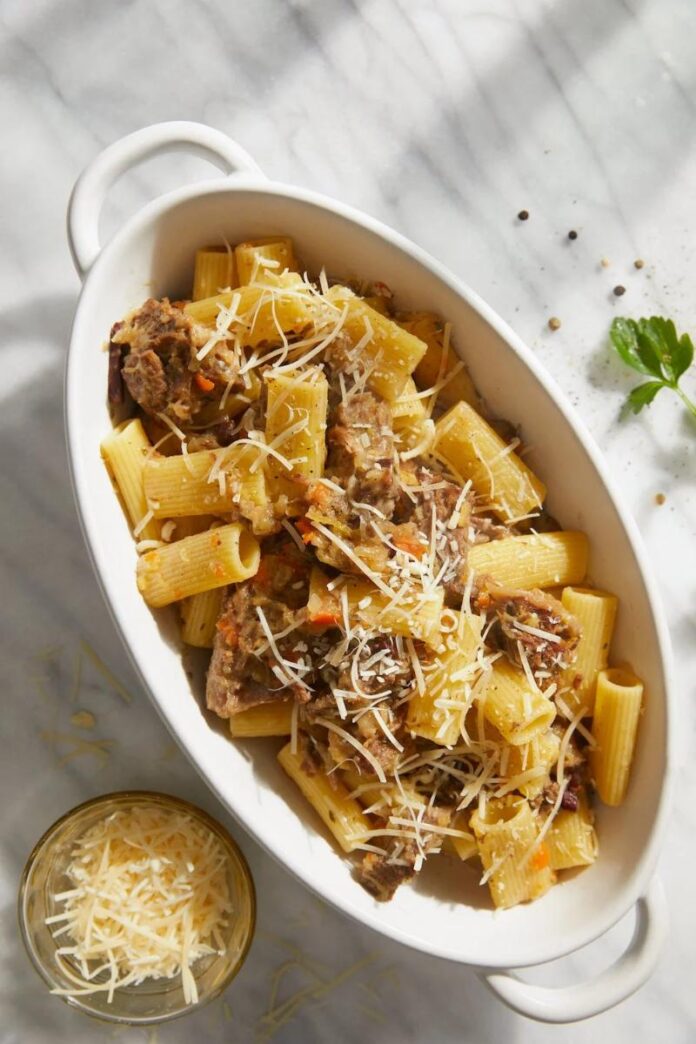
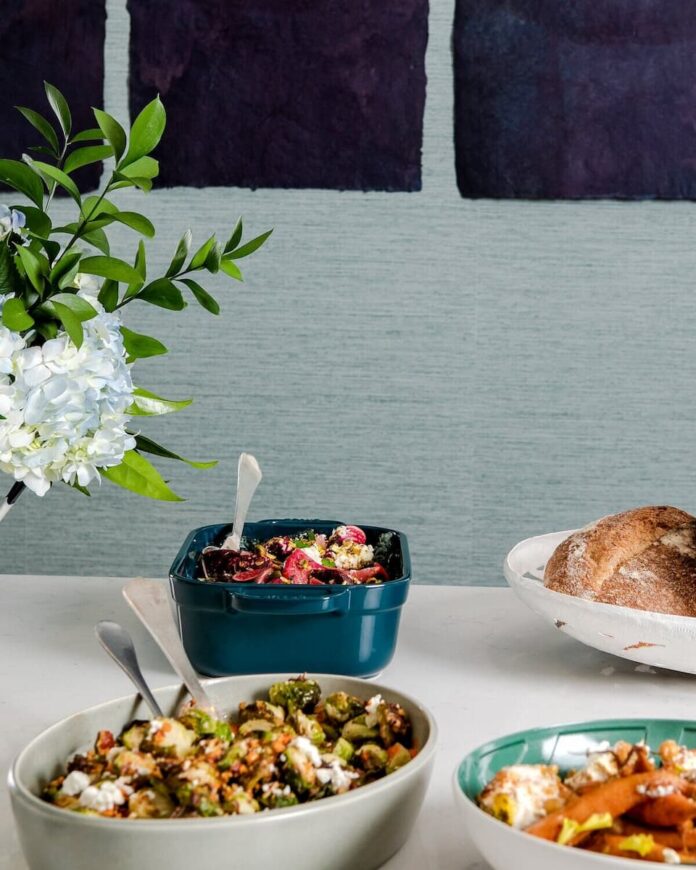
The beginning to our Genovese Classico sounds cliché: it was indeed a dark and stormy night. Our soggy start notwithstanding, the ending was nonetheless fantastic because we had our first plate of this deeply traditional Neapolitan dish.
Genovese Classico Recipe
We may think of pizzas and nonna-made ragus when we think of Naples, but Genovese Classico pre-dates the 16th-century arrival of the tomato in Italy. Its primary ingredients are ancient: beef, pancetta, onion, wine, carrots and herbs. The secret to a successful Genovese rests with the cook, it’s patience. The best recipes often involve slow and steady braising, and this dish is no exception.
Try your hand at this oh-so-satisfying recipe. You will love it as much as we did on that dark and stormy night in Naples.
Add olive oil to a large pot. When hot, add cubed pancetta, Saute until the edges are slightly golden. Add onions, carrots, and celery. Lower the heat and let the mixture cook until the onions are translucent. Stir occasionally.
Add half the wine, bay leaves, thyme, and lemon zest—season with salt and pepper. Stir to combine. Nestle the chuck roast into the mixture so that it is submerged.
Cover and let simmer over very low flame for about 3 hours. Stir occasionally. Add wine if the liquid evaporates and the mixture looks too dry. When the meat is fork-tender, remove it from the pot and set it aside. Let the onion mixture continue to cook until it has jam consistency. Add lemon juice. Turn up the flame. Stirring frequently, caramelize the mix to a deeper golden brown. Lower the flame.
Pull the beef into bite-size chunks with a fork. Add to mixture and let warm again slowly. Taste the sauce: you can add salt, pepper, or a little extra lemon juice to taste.
Toss with al dente ziti or rigatoni cooked in well-salted water. Sprinkle with freshly grated pecorino cheese.
Notes
Hint: If you prepare the sauce the day before your meal. and let it sit overnight in the refrigerator, it is even better.
Recipe and Styling by Keith Recker Photography by Dave Bryce
It’s crazy to think that July is already over, leading us into August and inevitably back into the school year. But, the summer is not over quite yet and the city of Pittsburgh is just heating up with its event schedule. From July 28-August 3, take your turn relaxing with a glass of wine, healing your inner self, let your creativity shine, or take in historic views. The important part is getting out of the house to make those last moments of the season worth it.
As summer heats up, cool down with Patio Pounders, a relaxed wine tasting event dedicated to easy-drinking, sunshine-friendly wines. This laid-back gathering offers five, three-ounce pours of carefully curated, crisp, and refreshing wines perfect for any summer occasion. Guests will enjoy a guided tasting and wine education led by Barsotti Wines, delicious food pairings, and the opportunity to purchase their favorite bottles to take home.
Awaken Pittsburgh invites you to their Mindful Connections for teams and organizations series. This interactive session, led by Executive Director Stephanie Romero, introduces mindfulness techniques specifically designed to enhance focus, clarity, and productivity in the workplace. Discover how cultivating mental sharpness can reduce distractions and lead to improved performance and overall well-being when it comes to your job.
Unleash your creativity at a unique open-air workshop in Downtown Pittsburgh’s Mellon Square. Attendees are invited to transform vintage vinyl records into personalized vision boards or artistic keepsakes. You’ll be provided a wide array of scrapbook materials, papers, and embellishments to craft meaningful pieces that reflect your aspirations or memories. Guests are also welcome to bring their own photos or mementos to incorporate too.
Witness history unfold at the Battle of Bushy Run Anniversary Reenactment! This large-scale reenactment, brings to life the conflict between Native American warriors and British soldiers during Pontiac’s War in August 1763. Explore 18th-century military camps, a Native American village, and a sutler trade area. Enjoy historical demonstrations, live music, and a children’s area, offering a unique glimpse into frontier life for all ages.
Discover the elegance of Pittsburgh’s Manchester neighborhood, the city’s largest historic district, known for its stunning turn-of-the-century Victorian homes. Join the Manchester Historic Society for an exclusive tour where you can explore beautifully preserved residences with intricate woodwork, soaring ceilings, and timeless design. Plus, marvel at their lush, manicured gardens and enchanting outdoor spaces that tell the story of the era.
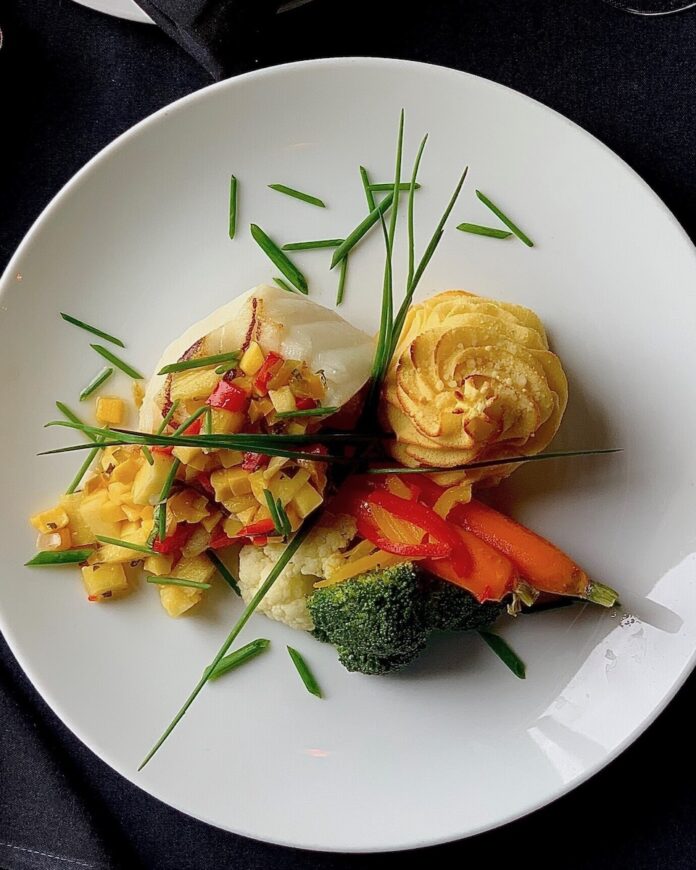
Mount Washington’s LeMont, a Pittsburgh institution, stands mighty with over 60 years of service. In honor of so many successful years, Chef Robert Vargo shares his recipe for Chilean Sea bass with Pineapple Mango Chutney. The rich, buttery notes of the sea bass are perfectly complemented by the sweet and tangy tropical chutney.
The History of LeMont in Pittsburgh
LeMont in Pittsburgh first opened its doors in 1960 on the site of the Grandview Theatre. Founded by restaurateur James Blandi Sr., its initial space consisted of two rooms and 130 seats. Due to its popularity, additions and renovations enhanced the space to hold more customers and display the iconic decor in 1970 and then again in 1980. Blandi Sr. also left his culinary mark by inventing two beloved Pittsburgh dishes: the Turkey Devonshire Sandwich and the Pecan Ball ice cream dessert. In 1999, Edward B. and Anna Dunlap took the restaurant into a new chapter, acquiring LeMont and investing significantly in renovations, expanding the bar and dining areas in 2005. The Dunlap family continues its legacy, maintaining LeMont’s reputation for elegant table-side dining and classic dishes like Chilean Sea Bass below.
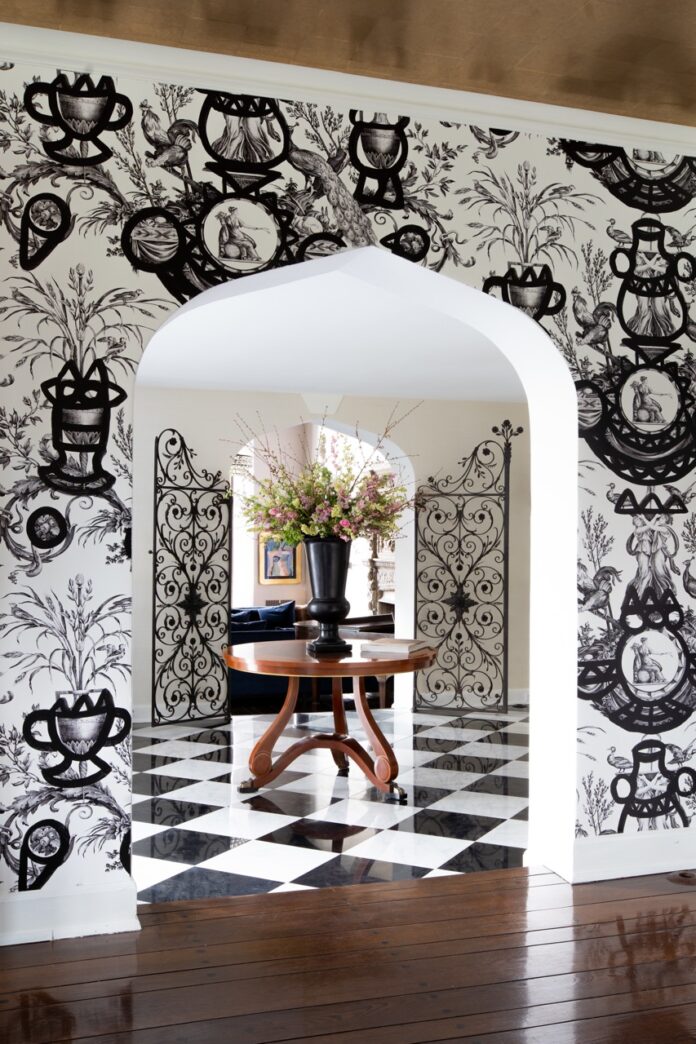
Wallpaper from Pierre Frey accentuates a black and white scheme at the center of the house.
A well-designed home will reflect the family who lives in it more so than the person who designed it. For interior designer Brenda Friday, achieving a unique identity for each family’s home she designs is an important part of the process. “I really try incredibly hard to find pieces that are really purposeful to that family and the house,” says Brenda. “I don’t want people walking in and saying “Oh Brenda Friday was here.”
Brenda Friday’s Commitment to Uniquely Personal Design
For one of her projects, the Fox Chapel home of Dave and Joanie Fuhrer, Brenda sought to turn the 1929 Tudor home into a cool, comfortable space that the family could actually live in and enjoy. She has redone the kitchen, dining room, entryway, and family room, with plans in place to do the patio space and the upstairs at another time. Each room has its own identity with pops of color, intricate wallpapers, eye-catching light fixtures, as well as a careful curation of art.
Left: Over the staircase, a chandelier from Ochre. Right: A gorgeous settee and mirror adjacent to the stair.
Bringing a Vision to Life No Matter the Means
And when Brenda says she gives homes unique pieces, she means it. “Any time I can’t find what I’m looking for, I just make it,” she adds. For the living room, there is a floor-to-ceiling cabinet and shelving structure custom-made by cabinet-maker Mike Lucci, who also created the bar in the living room, as well as the cabinets in the kitchen and butler’s pantry. At the bar sits luscious pink velvet stools all the way from Portugal.
Left: A floral design by Anne Dixon brings the entry hall to life. Right: The built-in cabinetry was built by Mike Lucci.
“That was a really hard search to find just the right bar stool because I wanted something sexy in there to even out all of the hard architecture,” says Friday. In the living room, a large space with 18-foot ceilings, Friday wanted to emulate “a cool cocktail lounge in London,” something elegant but still comfortable. Contrasting the pink stools is a set of cobalt couches, all of which are offset by leopard-print window shades. It’s not a room anyone would walk into and think “the people who live here have no personality.”
Brenda Friday’s Creative Spirit
In an era of design where minimalism has blossomed like a weed, Brenda’s designs are refreshing. Instead of white and beige interiors that feel like a cold museum, her rooms have bursts of color and life, reminding you that homes are for living and enjoying in. In the kitchen of the Fox Chapel Tudor, white walls are offset by forest green cabinets and an eclectic window-shade print from Christian Lacroix. “Even the most modern kitchens have a tendency to feel like a black-and-white film. Modern life isn’t meant to be played out in greyscale,” states Brenda on her website.
If the walls in this Fox Chapel home could talk, they would do so with charisma; many of the walls have a statement piece of art, a statement wallpaper, or both. Much like her affinity for color, Brenda goes for bold prints, like in the dining room where a wallpaper from French company Pierre Frey combines 18th century illustrations with modern abstract shapes. One of many unique lighting fixtures in the home completes the room. When designing the breakfast room, Friday used a whimsical, bright yellow wallpaper as the starting point for the cheerful, yet cozy room.
Lush color and material choices bring the living room to vivid life.
Pittsburgh’s Worldwide Decor Destination
Sourcing pieces from around the country, and the world, is another central part of Brenda’s design process, whether it be Portuguese stools, or a painting by Pittsburgh’s own Mia Tarducci. “I don’t want any of my pieces or rooms to feel [repetitive] or anything that’s typical,” says Friday. “I like it to be a little different, a little edgy, a little out-of-the-norm but still functional.”
Shoppe B on Butler Street in Lawrenceville is Friday’s personal creative space. It houses Brenda’s design studio in the back, while the front retail space showcases small furniture, art, and other pieces. Clients can pursue potential pieces in person and Lawrenceville shoppers can take home decor, too.
Story by Hannah Lynn Styling and Interior Design by Brenda Friday Photography by Joey Kennedy
Sometimes a couple with conflicting wishes will come to a beautiful compromise. So it was for interior designer Abigail Foster and her husband when it came time to move out of his bachelor pad and into their own home. (They had two toddlers at the time.) “He’s from the suburbs and wanted to stay there, I’m from the city and wanted to stay there,” she says.
They found a sort of gentleman’s farm on an acre of land in the middle of Pittsburgh. It’s one of the oldest houses in the area. It was, in many ways, the best of both worlds. The original structure was a mansion, no longer there, that was built in the 1880s and torn down in the 1930s, replaced by a simple Colonial next to a carriage barn. Oddly, the original had no proper kitchen, so they built one to connect the two structures. It was, incidentally, her first large-scale personal kitchen project.
Compromising When It Comes to Designing Your Home
You can’t see the home from the street, but you drive up between two houses and it suddenly appears. Do they use it as it was in the past, a working farm? “My little flower beds would never be called farming, although I do have a very large basil patch and do a lot of pesto making.” The couple is lucky enough to have a place in the actual country from which comes a bounty of produce that Foster makes into sauces, jams, and jellies, most of which she gives away.
There is a separate butler’s pantry, but that is used more for entertaining than for storing the fruits of her labor. Drinks, the glassware, and the better china are kept there, across from the dining room, through swinging doors. The kitchen itself is more on the family side of the house, and acts more as a workhorse, with the pantry as a place to pause so things can be served in a more gracious manner.
Planning Out What’s Important
The family eats together every night, a meal almost always cooked by Foster, plus breakfasts and lunches. A lot of food is prepared there every day. She also takes on big projects like making toffee for everyone she knows at Christmas. The island is often covered with sheet pans and mixers or canning supplies for several days at a stretch. They also host Christmas dinner and frequently have friends and family over. It’s a real working kitchen. Her husband does not cook much. “He’s really good at making me a drink, though.” He does grill, however, and they put in a Dutch door that leads to the barbecuing area, through which things can be handed back and forth for convenience.
An original plan had the kitchen being much larger, extending further out into the yard and with two islands. But after several rounds with her architect, they decided on something less expansive. “I didn’t want to wear roller skates every time I had to make a meal. I wanted a smaller, more compact kitchen that I could really cook in,” she says. She also didn’t envision it as a central hangout. It’s more of a cook’s kitchen in the proportions that made the most sense for day-to-day use. “I think most prolific home cooks would agree that you want a workspace where you can walk to everything in just a few steps”. After they eat, the family tends to go elsewhere in the house. “We’re in there a lot, but it’s not where I want everyone to be all the time.
Abigail Foster’s Family-Conscious Idea
Foster isn’t a fan of open layouts, either, but sees their utility because of the children, who are now school age. The kitchen opens up to a hallway she calls “the command center,” where there’s a desk, shelves for her cookbooks, etc. The hallway, in turn, opens to a paneled room where the family hangs out. It’s a large and somewhat formal-looking space, so the kitchen needed to speak to that and couldn’t be ultra-modern with lots of stainless steel.
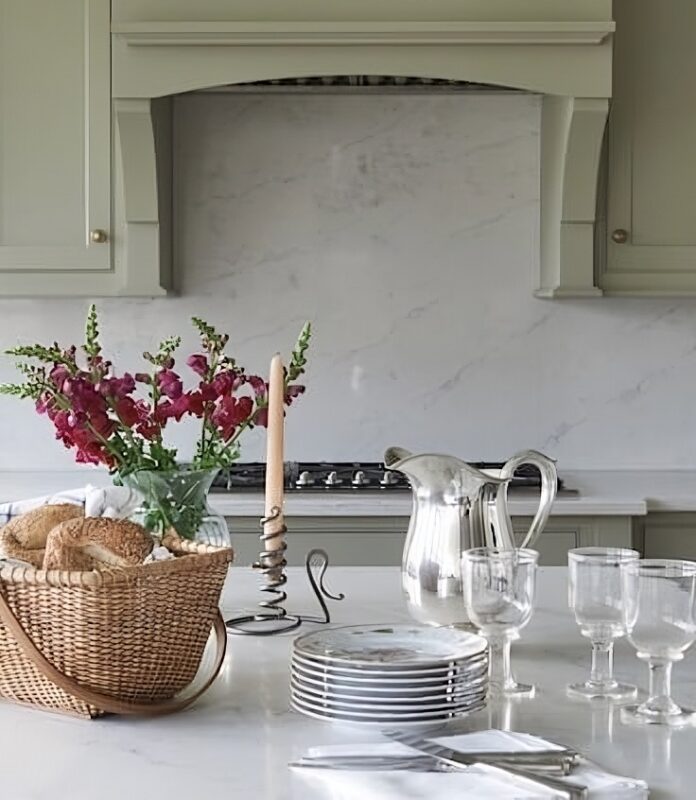
The palette, built around a soothing green, was inspired by English kitchens that Foster really loves, and she thinks of it as a timeless choice—and different from typical white. The color also plays off of the lush foliage in the backyard that can be seen through the windows, which breaks down the indoor-outdoor barrier. “It’s really an enveloping color.” Like many who live in Pittsburgh, she also took into consideration the winter gloom. She says the green wraps around you and makes it feel cozy, a great spot to have some tea.
Thinking of the Future First
Foster had the counters, backsplash, and island made of quartz, opting not to use marble for functional as well as aesthetic reasons. “I love natural stone, but I also love my children, and didn’t want to be after them all the time about what they put down on the counter.” Single slabs were employed for similar reasons. “I cook so much, and I don’t want to spend all my time cleaning grout lines.”
Foster chose a suite from of appliances by Thermador because they were well-priced and offered an excellent panel system, allowing her to hide some of the bigger units. She is especially enamored of the range because it is both powerful and can go really low for simmering. Some of that country produce gets dehydrated in the oven, too. “It also has styling that melts into the background. It sits quietly there, doing its job beautifully.”
Although the project was all new construction, she did incorporate a piece of the old barn into the decor—a weathervane in the shape of a horse now lives on the windowsill. (She was afraid it might get damaged when they were re-doing the roof, where it used to sit.) “I really wanted it inside the house because it’s a nice connection to the history of our home.”
Chef Aniceto Sousa’s rejuvenating kale and beet salad adds life to a fall table.
Our Roasted Beets Salad with Whipped Goat Cheese, Kale & Pistachio Salsa Verde is autumn on a plate. Earthy, sweet, creamy, and herbaceous…it offers the best of the season. Chef Aniceto Sousa of Mediterra Café transforms humble seasonal ingredients into a dish that feels both rejuvenating and indulgent. It’s perfect for brightening up a cool-weather table. The deep, jewel-toned beets bring natural sweetness. The kale adds a hearty crunch. The whipped goat cheese offers a luscious, tangy base that ties it all together.
Roasted Beets Salad Recipe
What makes this salad truly sing is the pistachio salsa verde—a fragrant, zesty blend of fresh herbs, citrus, and toasted nuts that adds a burst of freshness to every bite. It’s a celebration of contrasts: warm and cool, creamy and crisp, sweet and savory. The result is a salad that’s as beautiful to look at as it is satisfying to eat.
Whether served as a starter for a dinner party or as the centerpiece of a light lunch, this dish delivers layers of flavor and texture that keep you coming back for more. It’s proof that fall salads can be just as exciting as summer ones—especially when they’re built on bold flavors, seasonal produce, and a touch of chef-inspired flair.
Put all ingredients in a stand mixer with the paddle attachment on medium speed and mix all the ingredients for about 45 seconds to a minute.
The goat cheese should be light and creamy.
For the roasted beets:
Preheat oven to 350 degrees.
After washing and scrubbing any dirt off the beets place them in a roasting pan. Coat the beets with 2 tbsp olive oil and season with salt, pepper, and thyme.
Pour about an inch of water in the bottom of the roasting pan, enough to touch the bottom of the beets.
Cover with foil and roast for about an hour, until the beets are tender. Allow the beets to cool to about room temperature before peeling, then cut into bite-size pieces and marinate in the fridge with orange juice and remaining olive oil until ready to eat salad.
For the pistachio salsa verde:
Chiffonade all the herbs and cover with just enough olive oil, to prevent oxidation.
Stir in the rest of the ingredients and taste to check seasoning. Feel free to use any combination of herbs you’d like.
To assemble:
Place a spoonful of whipped goat cheese on the bottom of a plate or shallow bowl. Place a handful of kale on top of the cheese.
Place some beets around on top of the kale. Drizzle the Pistachio Salsa Verde atop the salad and season lightly with kosher salt and fresh black pepper.
Recipes by Aniceto Sousa Photography by Laura Petrilla Styling by Lauren Piasecki
Farm-to-table food holds a double allure. First, the flavors and textures of food fresh from a local farm are, without a doubt, better than anything we can buy at a grocery chain. Second, every purchase helps small, family-run farms survive and thrive. Purchases made directly from farm stands and farmers’ markets have a huge economic impact!
Take the recipes of chef and food stylist Veda Sankaran to your local farmers’ market. You’ll find the ingredients you need. And then head back to your kitchen to create a fantastic meal for people you love
Red Wine-Braised Lamb Shanks and Inspired Vegetables Recipe
The deep, slow-cooked flavors of Red Wine-Braised Lamb Shanks with figs and apricots are perfect for that first chilly autumn evening. We’re fans of Pure Bred Lamb.
Winter Greens with Bacon and Shredded Coconut turn the classic idea of braised greens into an intercontinental adventure. Head over to Blackberry Meadows for the bacon.
Parsnips from Who Cooks for You Farm will convert parsnip skeptics into impassioned fans with Veda’s Roasted Parsnip Mash with Black Garlic Puree.
The sweetness of fresh kernels from Triple B Farms elevates the crisp, layered flavors of Fennel Corn Salad.
10 small shallots, peeled and sliced in half lengthwise
2 tsp salt
¼ cup diced tomatoes
1 tbsp apple cider vinegar
1 tbsp honey
¾ tsp black pepper
13 dried Turkish apricots (8 sliced into thirds and 5 whole)
10 dried Turkish figs (5 sliced into ¼-inch pieces and 5 whole)
2 cups good-quality dry red wine like Cabernet Sauvignon
2 cups chicken broth10 oz package crimini mushrooms, thickly sliced
For spice blend:
2 tbsp coriander seeds
2 tsp black peppercorns
1 tsp fennel seeds
2-inch piece cinnamon stick
3 cloves
Instructions
For spice blend:
Dry roast all ingredients in a skillet until fragrant, then cool, and grind into a fine powder using a spice or coffee grinder.
For the lamb:
Preheat the oven to 325 degrees.
Remove all packaging on the shanks, rinse, and pat dry. Leave the twine wrapped around the shanks as it holds the meat together. Cut and discard the twine after cooking.
Heat a heavy-bottomed Dutch oven large enough to hold the shanks and pour enough olive oil to liberally coat the bottom.
Rub 3/4 of the spice blend on all sides of the shanks, reserving the remaining to add with the onions.
Sear 2 shanks at a time, approximately 3 minutes a side. Remove and sear the last 2, adding more olive oil if necessary.
After removing the shanks from the pot, add the bay leaves followed by the chopped onions, whole garlic cloves, and shallots. Sprinkle a teaspoon of salt and stir. Once the onions start to become lightly golden, sprinkle the remaining spice blend and stir again.
After a minute, add in the diced tomatoes and cook for two minutes. Then pour in the apple cider vinegar and honey along with the black pepper and remaining teaspoon of salt.
Place the sliced apricots and figs in the pot with the other ingredients and cook for another 2 minutes.
Pour in the wine and chicken broth and stir to combine. Place the whole apricots and figs in at this time and bring to a boil. Once the braising liquid is boiling, turn off the heat and place the seared lamb shanks back into the pot making sure that the liquid is covering at least ½-3/4 of the sides of the meat. Cover tightly with a lid and place in the center rack of a 325-degree preheated oven.
Slow-braise in the oven for 2 hours then open and place the sliced mushrooms around the shanks, stirring carefully to submerge them in the braising liquid, Cover and cook for at least 1 more hour or until meat is falling off the bone.
Remove the shanks and then place the Dutch oven on top of the stove to boil, stirring so as to not burn the bottom. Continue heating the braising liquid until it thickens to the consistency of a sauce. When ready to serve, pour the thickened sauce over the shanks.
Wash the parsnips and cut off the thick ends, then cut into 5-inch pieces.
Bring a pot of water to boil and add in the parsnips. Cook for approximately 20 minutes. Drain and let sit for 5 minutes.
Preheat the oven to 400 degrees.
While you are waiting for the oven to come to temperature, peel the skin off the parsnips, cut in half and remove the woody cores with a sharp knife. Then cut into 1 ½-pieces. Toss the parsnips with enough oil to lightly coat and place on a parchment-lined baking sheet.
Roast in the oven for about another 20-25 minutes, turning the parsnips half way through. You want the parsnips to be soft enough to blend in the food processor, so adjust the timing accordingly.
After removing the parsnips, place them in the bowl of a food processor along with all the black garlic and pulse 2-3 times. Then add in the warmed cream and softened butter with a sprinkle of fine salt and blend until the parsnips are pureed and creamy. Add additional cream or half and half as needed to achieve the correct consistency.
Garnish with a sprinkle of Maldon salt and finely chopped chives.
Trim and thinly slice the fennel bulb using a mandolin.
For the corn, steam or boil the corn first. Then if you have a gas stove, insert a metal skewer into the cob and hold the corn and rotate over the flame to evenly roast. Once cool enough to handle, use a sharp knife to remove the kernels.
Whisk together the ingredients for the dressing and adjust to your tastes. If you like a more vinegary dressing, add more apple cider vinegar. If you like it more sweet, add more honey.
To assemble, toss the arugula, fennel, corn, and pumpkin seeds together with the dressing.
Notes
*You can purchase the mustard tarragon seasoning from www.spicewallabrand.com. If you need to substitute, stir together a mixture of mustard powder, dried tarragon, black pepper, garlic powder, and a pinch of salt.
This recipe is my take on combining two different Souths: the southern United States with the use of bacon, vinegar, and mustard; and the South of India with the use of mustard seeds and coconut.
Ingredients
Scale
1 bunch Swiss chard
1 bunch red chard
4 slices of bacon
Rendered bacon fat
Olive oil
¼ tsp mustard seeds
1 tbsp apple cider vinegar
½ tsp Dijon mustard
1 ½ tbsp shredded unsweetened coconut
Salt and black pepper
Instructions
To prepare the chard, wash thoroughly and cut off the stems up to where they meet the leaves. Blanch in boiling water for 2 minutes, place in an ice water bath for 2 minutes, and then remove and set aside.
Cook the bacon slices in a skillet until crispy. Remove and finely chop the bacon. Reserve the rendered bacon fat in a heatproof container.
Heat a skillet and add 1-2 tablespoons of the rendered bacon fat with about a tablespoon of olive oil. Once hot, sprinkle in the mustard seeds and wait for them to start and then slow down popping. At that time, stir in the apple cider vinegar and Dijon mustard. Immediately toss in the blanched greens, using tongs to quickly turn and coat them.
Add the grated coconut and finely diced bacon along with a sprinkle of salt and pepper and toss again with the tongs.
We love farm-to-table freshness from dawn to dusk. Four seasons a year. Day in and day out. Our wonderful recipe creator, chef and food stylist Veda Sankaran, channeled our “buy fresh, buy local” passion into a collection of farm-driven recipes perfect for harvest season. Let’s get out there and savor the next two months of farmers’ markets and farmstands.
Kimshuka and Tartines Recipe
Kimshuka fuses North African shakshuka with East Asian spices and oils. This blending of cultures makes for a lively breakfast dish, or an adventuresome entrée. Try it with fresh eggs from Kern Family Farm.
Golden Milk-Poached Pear Tartine combines earthy turmeric and sunny Dillner Family Farm pears with memorable results.
Sparks will fly when you try Veda’s South Indian Heirloom Tomato and Pimento Cheese Tartine, a meeting point of fresh, juicy, cheesy, and aromatic. The tomatoes are from Dream Thyme Farm.
Chop up all your edible greens and make a light and healthy Winter Green Gremolata and Garlic Lemon Ricotta Tartine. Go organic with your greens at Cherry Valley Organics.
Anchovy kombu packets, as well as most of the other ingredients for this recipe, can be purchased at any Korean grocery store. For Pittsburgh natives, Sambok in the Strip, as well as New Young’s Oriental Grocery Store in Squirrel Hill, are good options.
Ingredients
Scale
For the broth:
4 ½ cups water
1 anchovy kombu packet
For the chili oil:
2 tbsp rice bran oil or other neutral oil
1 tbsp sesame oil
2 tbsp gochugaru
2 tbsp gochujang
For the kimshuka:
1 tbsp rice bran oil
½ cup finely chopped onion
4 scallions thinly sliced, white and green parts divided
2 tsp garlic, finely chopped
½ cup pork belly or bacon, diced
2 cups kimchi, roughly chopped and juices reserved for later
1 tbsp Korean soy sauce
4 large shiitake mushrooms, rehydrated and thinly sliced
Sprinkle of ajinomoto or MSG (optional)
1 bunch enoki mushrooms, ends cut off
Salt and black pepper
Sesame oil, to taste
Sesame seeds, for garnish
Instructions
First, boil the water for the broth and add the anchovy kombu packet. Boil for about 3 minutes, then remove and discard the packet. Strain the broth and set aside.
Pour boiling water over the dried shiitake mushroom caps and let sit for 10 minutes.
To make the chili oil, heat the rice bran and sesame oils on medium heat until it reaches around 350 degrees. Be careful the oil doesn’t get too hot as that can burn the spices. Once the oil is hot enough, pour it over the gochugaru and gochujang. Stir and set aside to use later.
Heat a large deep skillet and add a tablespoon of rice bran oil. Once the oil is hot, place in the chopped onions, white parts of the scallions, garlic, and a sprinkle of salt. Sauté for two minutes or until onions begin to get lightly golden.
Add in the diced pork belly or bacon and cook for a minute, until it begins to cook through. At that stage, stir in the kimchi, soy sauce, and half the finely chopped green parts of the scallions.
After another minute, add in the gochugaru-gochujang spice paste with the oil and within a minute, pour in the broth so that the spice paste doesn’t burn. Stir to mix everything, add in the sliced shiitake mushrooms along with a sprinkle or two of the ajinomoto and simmer together. Pour a little of the kimchi juice in at this time.
After about 10 minutes, taste and adjust salt and spice accordingly and place in the enoki mushrooms and simmer for another 5 minutes. Once all the flavors combine, sprinkle some black pepper and pour a little sesame oil on top. Then break your eggs over the kimshuka, cover, and cook on medium heat until eggs are poached. Garnish with chopped scallions and sesame seeds and serve with some grilled bread.
The Indian ingredients for this recipe can be found at any Indian market. Rajbhog in Cranberry or Patel Brothers in Monroeville are two options in the Pittsburgh area
Ingredients
Scale
2 tbsp olive oil
1/2 tsp mustard seeds
1 serrano green chili, finely chopped
25 curry leaves, thinly sliced
A few shakes of asafoetida (hing powder)
3 large garlic cloves, crushed
1 medium red onion, sliced thinly into half moons
1/8–¼ tsp salt
1 tsp dark brown sugar
1/4 tsp tamarind paste
Pimento cheese
Slice of good bread
3 heirloom tomatoes, sliced
Curry powder
Instructions
Heat a pan and add about 2 tablespoons of olive oil.
Once the oil is heated, add the mustard seeds. When the mustard seeds slow down popping, add the green chilies and the curry leaves.
Then add a few pinches of asafoetida, the crushed garlic, and onions. Sprinkle a little salt, and cook on medium heat until onions soften and start changing color.
Then sprinkle the brown sugar and add the tamarind paste. Cook on low heat until the onions caramelize. Set aside.
To assemble, spread pimento cheese on a hearty slice of bread, place a thin layer of the onion- curry-leaf mixture over the cheese, then top with the sliced heirloom tomatoes and finish with a sprinkle of curry powder.
Heat a large pot of water. While waiting for the water to boil, wash and cut the stems off the greens. If the ribs of the kale are thick, make sure to slice off the thick parts when trimming it.
Prepare an ice bath. Drop the beet greens into the boiling water for 2 minutes. Then transfer to the ice bath, remove, squeeze out as much of the water as you can and roughly chop. Bring the water back to a boil and repeat the steps with the dinosaur kale.
Chop the garlic. Then place the anchovy fillets on top of the garlic and use a pestle to smash the two together.
Add the chopped greens, the smashed garlic anchovy, the walnuts, lime juice and zest, olive oil, salt, and black pepper into the bowl of a food processor. Pulse until everything is coarsely chopped. Adjust seasonings as needed.
Stir together the ricotta, lemon juice and zest, minced garlic, and salt and pepper.
To assemble the tartine, spread the ricotta mixture on a piece of hearty bread and then top with the Winter Greens Gremolata.
Wondering where to get those all-important back to school shopping staples in Pittsburgh? From trendy boutiques and well-known retail chains to unique local stores, TABLE’s curated list highlights the top locations where you can find everything from stylish clothing and footwear to essential school supplies. Dive into our guide and discover the perfect places to make this back to school season a success.
5425 Walnut Street in Shadyside and 417 Beaver St in Sewickley
The Picket Fence has designer back to school clothing plus cute, sometimes locally sourced gifts and curated accessories for the home. You can also visit them at their Sewickley location, which they opened last year. At both shops you can look forward to browsing their women’s section too and maybe take home something for yourself.
You’ve probably walked past this shoe shop during your time in Squirrel Hill on Forbes Avenue. Little’s has a plethora of footwear options for adults, but, true to its name, it’s also a great source for shoes for the littler members of your family. With the wide variety at Little’s, you’ll be able to find both the all-purpose sneakers and a pair for Picture Day.
This North Side boutique isn’t just a great Pittsburgh back to school shopping spot for ages 0-8: it also supports a good cause. The Nest helps young moms who might need some extra help through the funds they make. It also accepts donations, so if you have a kid that’s grown out of some outfits, consider giving them to this store to pass them on.
If you’re looking to avoid the craziness of Walmart and Target for back to school supplies, Artists & Craftsman Supply is the way to go. The Squirrel Hill art supply business has the pencils, paper, pens, and notebooks galore. Plus, you can also your kid’s creativity with the wide array of art supplies available while you wait for school to start.
Blick has the biggest selection of stationery and art supplies around. They have plenty of mechanical pencils and graphite pencils, but also a wide range of erasers. Don’t skimp on the erasers—mistakes happen! It’s important to teach kids that you don’t have to be perfect, but it’s how you fix those mistakes that counts, so use the best eraser possible. This store also has daily deals that you can take advantage of each time you stop in.
Various locations: Homestead, South Hills Village, Monroeville
Sometimes, simple is best for back to school shopping. Some kids just want a simple t-shirt and basketball shorts from one of their favorite sports brans. Dick’s Sporting Goods is a one-stop shop for some of the comfiest, most durable back to school staples. It’s also a great spot for student athletes who need a little more than the basics.
Periwinkle Fox focuses on classic, quality pieces in a multitude of sizes and styles. It offers an opportunity to teach kids about responsible consumption through its mission of eco-friendly clothing and sustainability. There’s also a kids’ corner where the little ones can play while you shop. It’s the most relaxing shopping experience possible!
Have a ton of outgrown kids clothes in great condition sitting in bags? Take them into Dandelion Kids and pick up cash or store credit. Then, shop around their store to take home nearly new baby and kids clothes as well as new art kits, accessory, and more. You can even browse their selection and buy online without ever leaving your couch.
638 Allegheny River Blvd in Oakmont and 1500 Village Run Rd #311 in Wexford
Have your kiddo looking on-trend with modern, quality picks at Precious and Posh’s baby and children’s boutique. Here you’ll find unique pieces from producers all around the world. Try brands like Angel Dear, Magnetic Me, and Posh Peanut or simply shop by category instead.
Peach season runs from July to September, so make use of these peach recipes while the goodness lasts! Head to your local markets and grocery stores to find the farm-fresh stone fruit that makes summer so special. Maybe you enjoy them baked into a decadent dessert. Or maybe you’d rather serve them sliced up in a refreshing salad, or blended into a scrumptious cocktail. To peach their own, after all! Whatever you prefer, you’ll find no shortage of peach recipes here to satisfy your cravings.
Let peaches and prosecco help make your summer a delicious one. Our Peach Bellini Tart is decadent, with a dense tart base and not-too-sweet peaches lining the top. This tart does take a bit of time to make but the product is so worth the wait that you’ll be making it for every picnic.
Who doesn’t love salsa? This kid-friendly recipe is a delicious way to get your kids in the kitchen. The sweet and spicy flavors of the peach and corn salsa are not only deliciously enjoyed as a snack atop tortilla chips, but are also great condiments with grilled fish, chicken, or pork.
One bite of this Peach and Ricotta Pizza, and you’ll be hooked. The unique combination of flavors is both sweet and savory. Juicy peaches add a refreshing twist to the creamy ricotta cheese, while the crispy crust complements the soft texture of the toppings. Impress with this recipe at your next summer gathering.
We take advantage of round, donut peaches to craft a plate full of Peach Donuts. These donuts are soft and fluffy, packed full of peach flavor. Plus, a sweet glaze on top recreates the donut you know and love with a fruity twist.
Late summer peaches, blended with fresh mint and the nutty warmth of bourbon whiskey, take the stage. Leveled out with a smooth, sweet vanilla simple syrup, this peach bourbon cocktail brings out the best flavors of summer and fall, making it perfect for between-season drinking.
A beautiful way to celebrate one of summer’s favorite fruits in a simple yet luxurious way is our Grilled Peaches with Mascarpone and Honey recipe. Once peach season passes, feel free to try grilled plums…or pineapple. Or create your own mix of fruits.
Need a quick and easy dinner option that won’t leave a mess in the kitchen? Our Simple Pork Chops and Peaches take just a sheet pan to make a juicy, succulent product. You’ll even learn to make your own delicious balsamic and orange juice dressing to drizzle over top.
Who knew quinoa could be so good? We did! That’s why we pair it with diced, fresh peaches, chickpeas, cucumber, and red onion for maximum deliciousness. You can even add your own customizations to this salad such as grilled chicken, feta cheese, or your other favorite veggies.
Combine farm-fresh berries and peaches with this easy, crowd-pleasing flatbread recipe. Along with chèvre cheese and prosciutto, feel free to sprinkle in a fresh blackberry or blueberry, too.
Brighten your usual salmon dish with the addition of sweet roasted peaches and a savory tomato sauce. You’ll get the most flavor out of this beloved seafood when you let the peaches infuse into the salmon. It may just become your new weeknight dinner go-to.
Crumbly buttermilk biscuit chunks are layered into this colorful summer salad. Sink your teeth into bites of juicy peaches, radicchio, baby arugula, English cucumber, shredded ricotta salata, and a red wine vinegar dressing.
Who doesn’t love pulled pork at a summer cookout? Upgrade your pork game with a sweet BBQ peach sauce that adds a little kick of spices. Needless to say, you’re never going back to your old recipe.
The combination of naturally sweet peaches and hot honey is simply meant to be. Our Editor-in-Chief Keith Recker makes an Easy Hot Honey Peach Galette that turns anyone into a professional baker.
Gazpacho in the summertime whenever peaches are ripe and ready is a treat for any hot day. Fresh cantaloupe and juicy peaches blend with savory elements of garlic, shallot, balsamic, and chili flakes.
A cocktail that utilizes farm-grown produce basks in a flavorful outcome. This smash uses peaches and blackberries from your local market as well as your favorite bourbon and ginger beer.
For cocktail and mocktail lovers alike, this Peach Basil Bellini can be made with sparkling white wine or sparkling mineral water. Plus, you’ll learn to craft a basil simple syrup that you can use in other beverages.
Restaurant picks, tested recipes, design and things to do, from a locally owned team that lives here.
Solve the mysteries of Pittsburgh!
Are you wondering where to eat? What to drink? What to do? TABLE Magazine dives into restaurants and bars, chooses the best events and things to do, and shows you where to shop. You’ll get to know the ‘Burgh in ways you never imagined.