Home Blog Page 145

Sarde in Saor

0
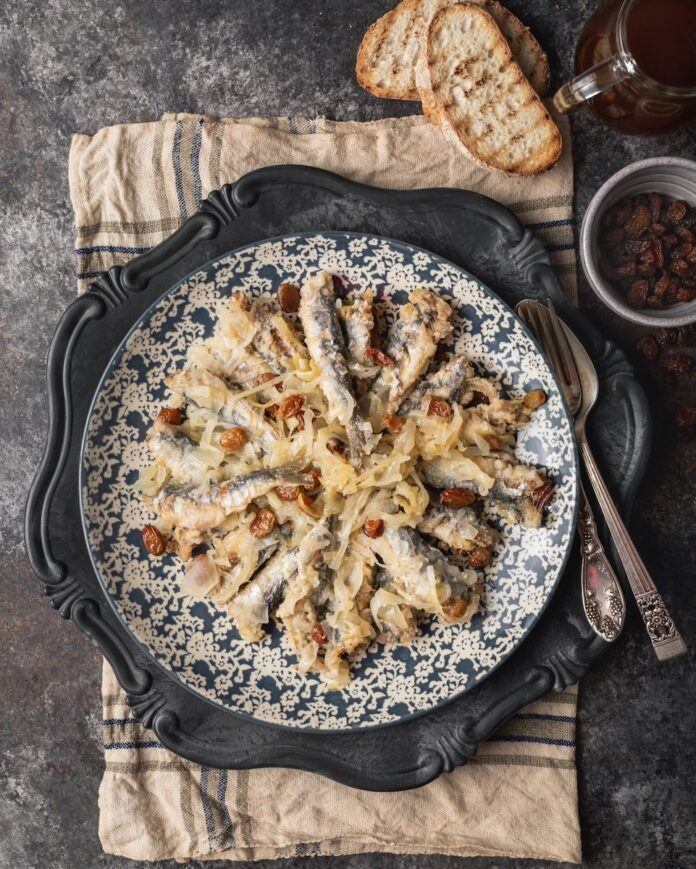
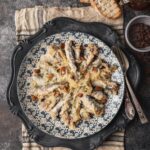
Sarde in Saor on a porcelain plate set on a rustic table.

During a recent visit to her Italian hometown, TABLE Magazine contributor Sara Ghedina spent some time in the kitchen. She brought back dishes like this Sarde in Saor. In the dialect of Venice, saor means “taste,” as in savor, so it translates to “sardines in taste.” It lives up to its name, given how flavorful the end result is. The term indicates specific seasoning – based on vinegar, onions and other sweet and sour elements – that the fishermen invented to preserve their fish, in the absence of refrigerators. It is an ancient practice in Venetian cuisine, which people now use for shellfish and vegetables as well.

What is Sarde in Saor?

Sarde in saor is a deeply traditional recipe for marinated sardines from Italy’s Veneto region. It’s traditionally for the Festa del Redentore in the middle of July (one of the most popular Venice festivals, with magnificent fireworks that are reflected in Saint Mark’s Basin), but you can find them year-round in local restaurants and wine bars. For a full Venetian experience, serve this characteristic appetizer with a glass of chilled Pinot Grigio or Prosecco. Even if you’re just cooking at home, indulge in a taste of Venice.

Print
clock clock iconcutlery cutlery iconflag flag iconfolder folder iconinstagram instagram iconpinterest pinterest iconfacebook facebook iconprint print iconsquares squares iconheart heart iconheart solid heart solid icon
Sarde in Saor on a porcelain plate set on a rustic table.

Sarde in Saor


  • Author: Sara Ghedina

Ingredients

Scale
  • 2 lb whole sardines, gutted, scaled, and heads removed
  • 1 cup flour
  • Sunflower oil, for frying
  • 4 to 5 tbsp extra-virgin olive oil
  • 3 lb yellow onions, thinly sliced
  • 4 bay leaves
  • 1 cup white wine vinegar
  • 3/4 cup raisins
  • 1/4 cup pine nuts
  • Salt and pepper, to taste


Instructions

  1. Rinse the sardines under cold water and pat them dry with paper towel. Place flour in a large bowl, add the sardines, and toss to dust evenly. Shake off any excess.
  2. Heat sunflower oil in a medium frying pan, and fry the sardines in batches, a few minutes on each side, until they are crisp on the outside. Drain and transfer to a plate covered with paper towel. Season with salt and repeat with the remaining sardines, working in batche
  3.  Meanwhile, heat olive oil in a large saucepan, add onions, bay leaves and vinegar, season with salt and pepper, cover the pan and cook at low heat stirring often, until onions are soft and translucent, about 40 to 45 minutes.
  4. Arrange a thin layer of onion in a large glass bowl. Sprinkle with some raisins and pine nuts and cover with a layer of sardines. Repeat in layers until you have used all the ingredients, finishing with a layer of onions, raisins and pine nuts. Pour on top any cooking liquid that is left from the onion.
  5.  Let cool down, then cover with plastic and place in the refrigerator to marinate for at least 24 hours, but even better for 48 hours or longer.
  6. Serve them as an appetizer with a slice of grilled polenta. Keep marinated sardines in the refrigerator but remember to take them out a few hours before serving, as they should be eaten at room temperature.

Story & Photography by Sara Ghedina

Subscribe to TABLE Magazine‘s print edition.
Handmade Orecchiette Pasta with Pork Boscaiola

0
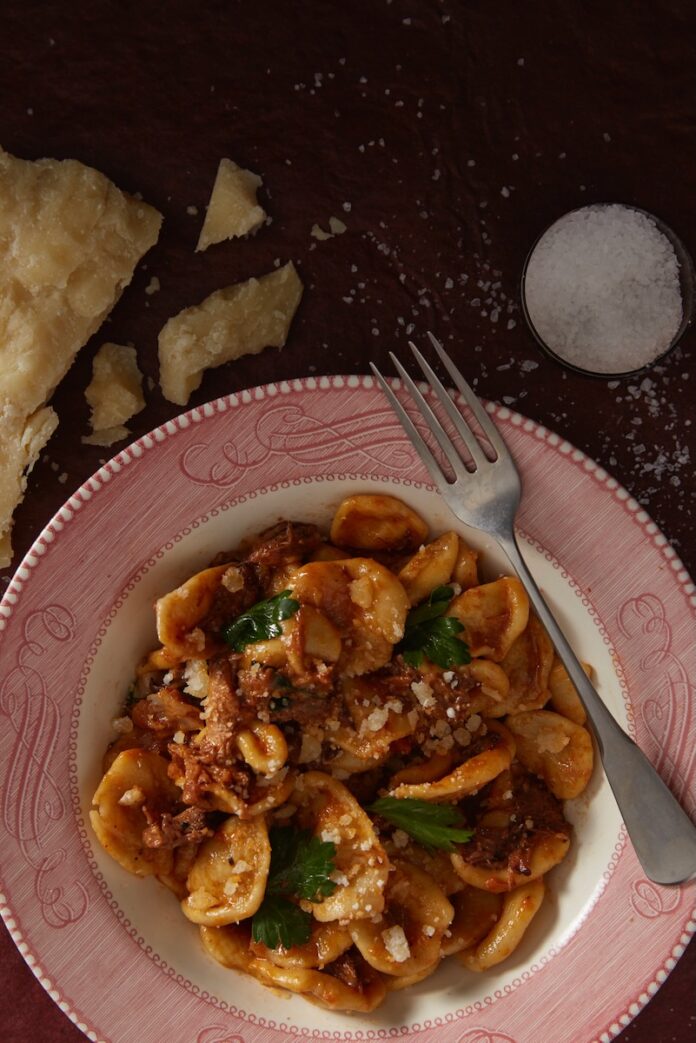
A plate of handmade orecchiette pasta with a meat sauce.

This orecchiette pasta recipe combines the rustic comforts of Italian cooking with an upscale plating and mouthwatering pork boscaiola sauce. The sauce (which gets its name from the Italian word for “woodcutter’s wife” combines fresh foraged mushrooms, pork, autumn vegetables, and cream, making a hearty companion for fresh, handmade orecchiette cooked al dente. Hear Chef Fiore Moletz share more about this recipe below:

What is Orecchiette Pasta?

Orecchiette hails from the southern Italian region of Puglia, where this pasta reigns supreme.

The simple recipe of flour, water and salt, makes this an important element of la cucina povera. The phrase means “poor cooking,” and refers to the frugal genius of Italians making the most of what they had at hand — and in the process, creating one of the world’s great cooking traditions .

The name translates to “little ears,” which describes its shape and its ability to hold onto a hearty sauce, which makes this pasta shape very versatile. Even the richest marinara will still combine well with orecchiette.

Print
clock clock iconcutlery cutlery iconflag flag iconfolder folder iconinstagram instagram iconpinterest pinterest iconfacebook facebook iconprint print iconsquares squares iconheart heart iconheart solid heart solid icon
A plate of handmade orecchiette pasta with a meat sauce.

Handmade Orecchiette Pasta with Pork Boscaiola


  • Author: Fiore Moletz

Description

A rustic Italian recipe.


Ingredients

Scale

For the pasta:

  • 1 cup semolina
  • 1 cup flour
  • 1 cup water

For the boscaiola sauce:

  • 1/4 cup cannola oil
  • 1/4 cup butter
  • 2 lbs. pork butt or shoulder cut into large chunks
  • 25 grams dried porcini mushrooms
  • 150 grams red cooking wine
  • 285 grams diced white onions (1 large onion)
  • 170 grams diced carrots (1 large carrot)
  • 170 grams diced celery ( 2–3 stalks)
  • 30 g minced garlic
  • 930 grams of milled or ground san Marzano tomatoes
  • 500 grams chicken stock
  • 300 g heavy cream
  • 1 orange halved


Instructions

For the pasta:

  1. Start with equal parts flour, semolina and water. (1 cup of each will make 4 servings)
  2. Combine both flours and create a bowl shape on a clean, smooth working surface. Slowly add the water and knead together until a dough forms.
  3. Roll flat with a rolling pin, and cut into small pieces, and use a knife to pull them to shape. This particular step is easier to learn by watching than by reading, so please see above video for full instructions.

For the boscaiola sauce:

  1. Wash the mushrooms well through a strainer, then soak in the red wine before beginning to cook.
  2. Season pork liberally with salt and pepper. Heat butter and oil in large pot on medium high heat. Sear pork on both sides, then remove.
  3. Turn heat to medium and add onions, saute for 2 minutes, then add carrots and celery and season with salt. Cook veg until browned, not burnt. Add garlic and brown, but DO NOT BURN. Once garlic is browned, add tomatoes and cook down until the liquid from the tomatoes is gone, and tomatoes are beginning to stick to pot.
  4. Add wine/mushrooms, and cook down by half. Add stock & seared pork. Add orange halves. NO SEEDS. Bring to a boil, then cover and place in 350 F oven to braise for 2-3 hours.
  5. After 2 hours, check doneness of pork, if not tender continue to braise in 30 minute intervals until tender. If there is a lot of liquid, remove lid and leave in oven for 15 minutes. Once tender, leave at room temp until cool enough to handle. Then break up meat with hands, removing undesired parts. Mix in heavy cream until incorporated.

Recipe by Fiore Moletz
Photography by Dave Bryce

Subscribe to TABLE Magazine‘s print edition.
Swordfish with Pork Belly

0
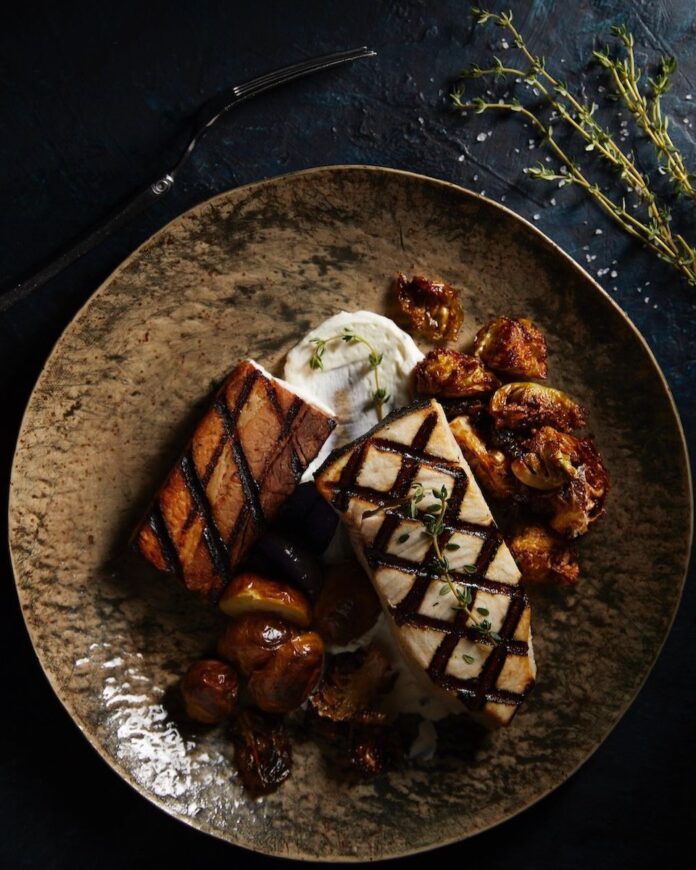
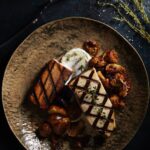
A swordfish with pork belly dish on a black plate.

Glenn and Lisa Hawley have been at the helm of Off The Hook since 2013, with an outlook as fresh and vigorous today as it was on the first day. Off the Hook is just outside of Pittsburgh, but sources its ingredients from all over the world. Glenn is, by his own admission, never satisfied. He keeps the menu and plating at a high level. And, of course, the service has to be attentive, knowledgeable, and professional. Executive Sous Chef Sean Karpuzi shared one of his freshest gems, Swordfish with Pork Belly, with TABLE.

Health Benefits of Swordfish

Known for its impressive size and quirky appearance in the ocean, swordfish is a versatile and luxurious fish. The fish’s dense, steak-like texture makes it ideal for grilling, and it holds up well to marinades and seasonings. But beyond its great taste, swordfish also has a variety of health benefits. Because of its nutrient density and low-calorie profile, swordfish is an excellent option for those looking to maintain a balanced diet. It’s a perfect choice for a healthy dinner that provides essential nutrients without the added fats found in many other protein sources. Combining it with pork belly means that the best elements of both can shine.

Print
clock clock iconcutlery cutlery iconflag flag iconfolder folder iconinstagram instagram iconpinterest pinterest iconfacebook facebook iconprint print iconsquares squares iconheart heart iconheart solid heart solid icon
A swordfish with pork belly dish on a black plate.

Swordfish with Pork Belly


  • Author: Sean Karpuzi

Description

A delicious fish dish.


Ingredients

Scale
  • 2 oz pork belly (brined 1 day before)
  • 2 oz goat cheese
  • ¼ cup heavy cream
  • 5 thyme sprigs
  • 6 oz fingerling potatoes
  • 4 oz Brussels sprouts
  • 8 oz center-cut swordfish


Instructions

For the pork belly brine: 

  1. Brine pork belly in 1 cup apple cider vinegar, ¼ cup sugar, and ¼ cup salt. Leave submerged overnight and remove from brine in the morning.
  2. Smoke pork belly with applewood chips for 2 hours.</li>

For the swordfish:

  1. In a mixer place the goat cheese, heavy cream and thyme, mix at a slow speed for 5 minutes, and then gradually pick up the speed until it’s a smooth mousse consistency. Set aside cheese mixture until plating.</li>
  2. Cut fingerling potatoes in half
  3. Lightly toss potatoes in vegetable oil and lightly season with kosher salt.
  4. Place potatoes on sheet tray and cook in oven for 25 minutes at 400 degrees.
  5. Brussels Sprouts (two options): Finely julienne and flash-fried or cut in half and bake for 25 minutes at 400 degrees.
  6. Cut 1-inch strip of pork belly and char-grill lightly for flavor and to heat.
  7. Lightly season swordfish with salt and pepper to taste and char-grill for approximately 4 minutes on each side at medium temperature.
  8. Plate the goat cheese, spread across the bottom of the plate, add fingerling potatoes and Brussels sprouts, top with swordfish, and finish with pork belly.

Recipe by Sean Karpuzi
Styling by Keith Recker
Photography by Dave Bryce

Subscribe to TABLE Magazine’s print edition.

Tuscan Clam Soup

0
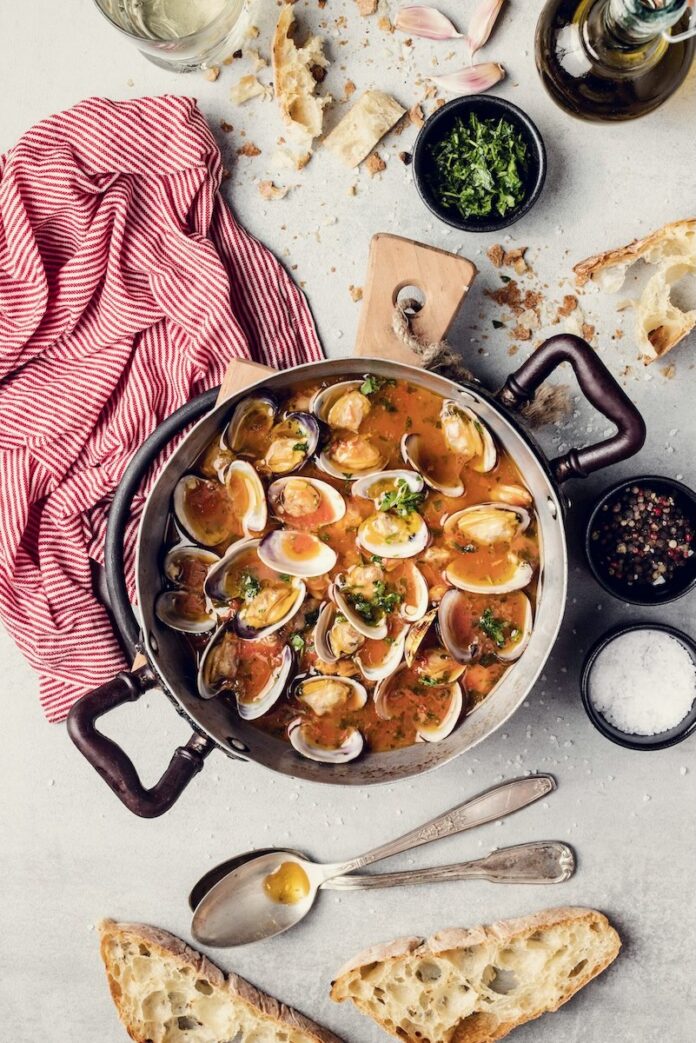
Tuscan clam soup in a pot.

Eat! It’s good for you! Anybody with an Italian grandmother has heard this in the kitchen, at the dining table, and across a picnic blanket. Sara Ghedina, TABLE Magazine’s correspondent from Italy’s Veneto region, offers up some delicious, summery fish dishes, like this Tuscan Clam Soup, that are good for you. So, eat!

The History of Tuscan Clam Soup

The Italian name for this soup is cacciucco. It’s a rich Tuscan fish dish that likely came to being as a way for fishermen to use smaller, less valuable fish, then evolving into a staple dish in coastal areas like Livorno. Seafood is plentiful in the coastal regions in the north of Italy, so combining many different kinds into one soup is a great way to use all of it at once.

Print
clock clock iconcutlery cutlery iconflag flag iconfolder folder iconinstagram instagram iconpinterest pinterest iconfacebook facebook iconprint print iconsquares squares iconheart heart iconheart solid heart solid icon
Tuscan clam soup in a pot.

Tuscan Clam Soup


  • Author: Sara Ghedina

Ingredients

Scale
  • 3 lb fresh clams, in-shell
  • 3 tbsp tomato sauce
  • 1/4 cup + 2 tbsp extra-virgin olive oil
  • 4 garlic cloves
  • 1/4 cup chopped flat-leaf parsley
  • 1/4 cup dry white wine
  • Salt and freshly ground black pepper, to taste
  • 4 slices of country bread


Instructions

  1. In a large bowl of cold water and sea salt, let clams soak for 2 hours to purge sand. Scrub under cold running water and then rinse a few times until water runs clear.
  2. Place them in large pot covered with a lid and cook over medium-low heat for about 2-3 minutes until open. Shell all but a few and set aside. Strain cooking liquid and stir in tomato sauce until dissolved.
  3. Heat 1/4 cup extra-virgin olive oil in a large pan, add 3 whole garlic cloves and cook until golden. Discard garlic, add shelled clams, minced parsley, clam/tomato liquid, white wine, salt and black pepper, and cook at medium heat for 5-6 minutes.
  4. Meanwhile, drizzle 1 tablespoon olive oil over the bread slices, and toast them in the oven at 350 degrees for 6-7 minutes. While hot, rub with the remaining garlic clove and set aside.
  5. Divide the soup into 4 bowls, add the reserved whole clams, drizzle with 1 tablespoon extra-virgin olive oil and serve with a slice of toasted bread.

Recipe & Photography by Sara Ghedina

Subscribe to TABLE Magazine‘s print edition.
Lemon Artichoke and Triple Tomato Hummus Two Ways

0
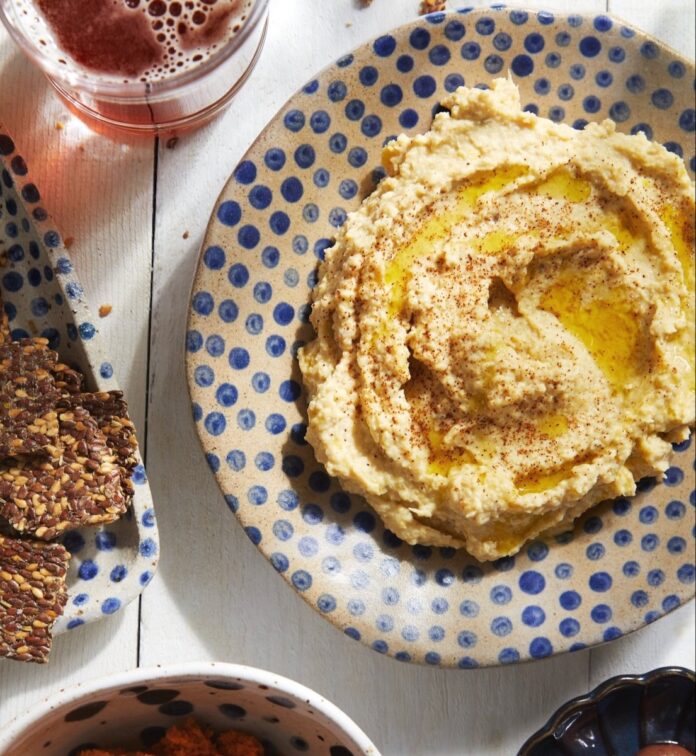
A lemon artichoke hummus sits in a polka dot blue and white bowl on a white picnic table.

Hummus is one of our favorite dishes because it is delicious, easy to make, and very versatile. There are hundreds of ways to prepare a batch but here are two of our favorites for a great appetizer or afternoon snack.

How Do Chickpeas Turn Into Hummus?

It may be confusing how little chickpeas can transform into a smooth, creamy hummus spread without any dairy. The blending process using a food processor is what breaks down cooked chickpeas for the base. When you then add in tahini, a paste made from ground sesame seeds, and olive oil, the high-speed blending breaks down the chickpeas further and emulsifies the fats from the tahini and olive oil at the same time.

Print
clock clock iconcutlery cutlery iconflag flag iconfolder folder iconinstagram instagram iconpinterest pinterest iconfacebook facebook iconprint print iconsquares squares iconheart heart iconheart solid heart solid icon
A lemon artichoke hummus sits in a polka dot blue and white bowl on a white picnic table.

Lemon Artichoke Hummus


  • Author: Keith Recker

Description

Artichokes and chickpeas become the best of friends.


Ingredients

Scale
  • 3 cloves garlic, peeled
  • 1 ½ cups chickpeas (canned or cooked)
  • ½ tsp salt
  • 2 tbsp lemon zest
  • 3 tbsp fresh lemon juice
  • 3 tbsp tahini
  • 1/3 cup Liokareas Lemon Olive Oil
  • 1 ½ cup preserved artichoke hearts (packed in water, drained)
  • 1/8 tsp ground cumin
  • 1/8 tsp cayenne


Instructions

  1. Place all ingredients except artichoke hearts in food processor. Blend until smooth and well-combined.
  2. Add artichoke hearts and pulse until desired smoothness is achieved. Some like this recipe smooth, others chunky.
Print
clock clock iconcutlery cutlery iconflag flag iconfolder folder iconinstagram instagram iconpinterest pinterest iconfacebook facebook iconprint print iconsquares squares iconheart heart iconheart solid heart solid icon
An orange tomato hummus sits in a polka dot and white bowl on a picnic table below another bowl of hummus and a plate of wheat crisps.

Triple Tomato Hummus


  • Author: Keith Recker

Description

Tomato paste and cherry tomatoes contribute to this savory hummus.


Ingredients

Scale
  • 2 cloves garlic, peeled
  • 1 ½ cups chickpeas (canned or cooked)
  • ¼ tsp salt
  • 3 tbsp tomato paste
  • ½ cup cherry tomatoes
  • 1/3 cup Liokareas Sundried Tomato Olive Oil
  • 1 tbsp tahini
  • ¼ tsp harissa (or more to taste)
  • ¼ tsp fresh thyme or oregano


Instructions

  1. Place all ingredients in a food processor. Blend until smooth and well-combined.
  2. Sprinkle with salt before serving. The flavors blossom best if left in the refrigerator overnight.
  3. Add cayenne pepper for a spicier version.

Recipes by Keith Recker
Photography by Dave Bryce

Subscribe to TABLE Magazine’s print edition.

Sangre Sunset

0
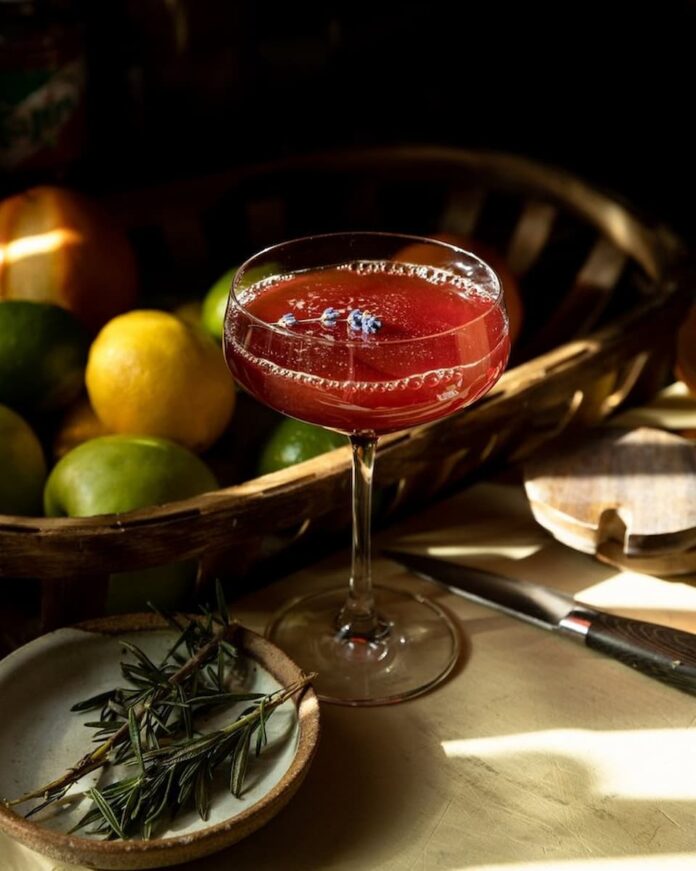
Sangre Sunset cocktail sits red in a coupe glass with a toothpick of blueberries floating on top.

The gradual rise and fall of Bishop’s Lodge Road, as it winds towards Tesuque, is as sensual and lyrical as a road can be. The views of the Jemez to the left and the Sangre de Cristos to the right only add to the pleasure. So does the knowledge that one will shortly turn off onto the drive of the Auberge at Bishop’s Lodge for a drink and a nibble at SkyFire, the Auberge’s bar, and restaurant. Completing our work on this debut issue of TABLE Magazine New Mexico has been a journey, and we’re looking forward to a libation.

More on the Sangre Sunset

One of us chooses the Sangre Sunset, a concoction of blueberry lavender vodka, aperol, lime, vermouth rosso, and also grapefruit juice. Another one of us sips at the delicate smokiness of Ilegàl Mezcal with one cube and a slice of orange. The others go for a margarita variation and a prickly pear Collins. Yes, we take a sip from each other’s drinks. Though, we are each happiest with the one we chose for ourselves. Yes, we are very happy indeed to be in this lovely bar, celebrating something wonderful and toasting what we hope is a future as vibrant and bright as the sunset sky over SkyFire’s terrace. Here’s to a great summer for everyone.

Print
clock clock iconcutlery cutlery iconflag flag iconfolder folder iconinstagram instagram iconpinterest pinterest iconfacebook facebook iconprint print iconsquares squares iconheart heart iconheart solid heart solid icon
Sangre Sunset cocktail sits red in a coupe glass with a toothpick of blueberries floating on top.

Sangre Sunset Cocktail Recipe


  • Author: Bishop’s Lodge

Description

Tangy, sweet, and a bit botanical.


Ingredients

Scale
  • 3/2 oz of blueberry lavender vodka
  • 3/4 oz of Aperol
  • 3/4 oz sweet vermouth
  • 3/4 oz grapefruit juice
  • 1/4 oz lime juice
  • Optional spring of lavender garnish


Instructions

  1. Mix all ingredients in a shaker with ice and strain into a coupe glass.

Dark and Handsome (Rum Moscow Mule)

0
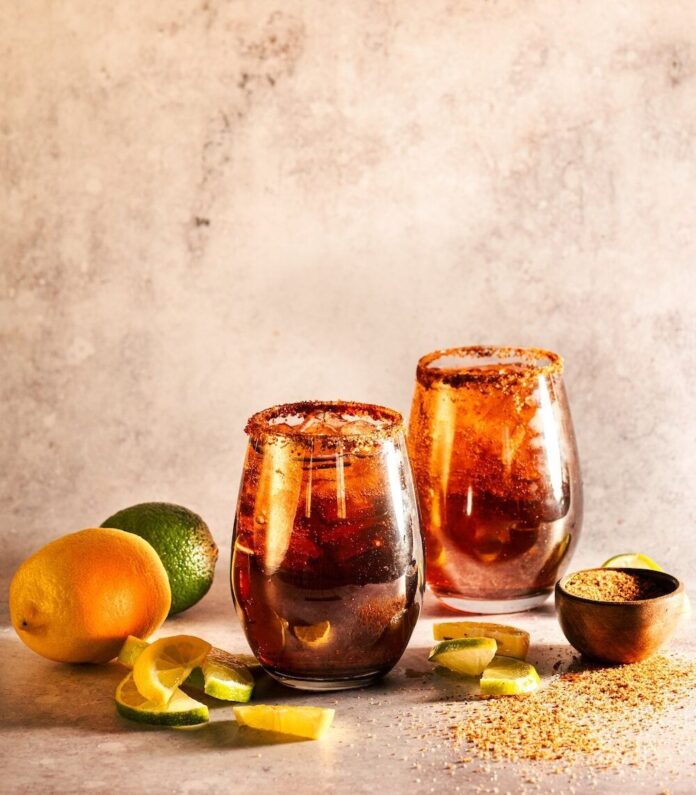
Two Dark and Handsome Rum Moscow Mules sit in front of a painted brown background with Tajin rims and a lime and orange sitting next to the glasses.

We’ve reinvented a classic Dark & Stormy into a Dark & Handsome (Rum Moscow Mule) with some help from Vara Anejo Rum and a Tajín salted lip for that extra spice in your life.

A great way to learn about a place and their culture is to enjoy its local spirits. It’s incredible what this Rum Moscow Mule cocktail can do to enliven the senses. Not to mention this recipe is perfectly mixed for the heat of summer, expressing the flavors and magic of New Mexico.

What’s So Special About Vara Anejo Rum?

Vara Anejo Rum gets its luscious taste through a their production process. This process starts with the careful refinement of a rich but also balanced dark molasses. Then, artisanal distilling perfects the science of ensures a precise proprietary aging process. The resulting spirit has a smooth character with hints of caramelized sugar and also sweet vanilla. Its forwardness in a sandalwood spiciness layers with wood spice, caramelized sugar, and roasted nuts. It all makes this elevated rum the best pick for making a Rum Moscow Mule since it blends well with the lime and ginger beer.

Print
clock clock iconcutlery cutlery iconflag flag iconfolder folder iconinstagram instagram iconpinterest pinterest iconfacebook facebook iconprint print iconsquares squares iconheart heart iconheart solid heart solid icon
Two Dark and Handsome Rum Moscow Mules sit in front of a painted brown background with Tajin rims and a lime and orange sitting next to the glasses.

Dark and Handsome (Rum Moscow Mule)


  • Author: Gabe Gomez

Description

The Dark and Stormy is about to get an upgrade.


Ingredients

Scale


Instructions

  1. Season glass rim with Tajin.
  2. Add ice and ingredients then gently stir.

Recipe by Gabe Gomez
Photography by Tira Howard

Subscribe to TABLE Magazine’s print edition.

Grilled Flank Steak & Pesto with Veggies

0
Grilled Flank Steak & Pesto with Asparagus, Campari Tomatoes, and Fingerling Potatoes

If you’re looking to treat you and your family or partner to an all-out weekend dinner then our Grilled Flank Steak & Pesto with Veggies is here to save the day. Tender, juicy grilled flank steak meets a homemade, nutty pesto but that’s not where the party ends. We also add roasted asparagus, perfectly cooked Campari tomatoes, and crispy fingerling potatoes so both your plate and stomach end up full.

What is Different About Flank Steak?

Flank steak stands out as a versatile cut of beef from the abdominal muscles of the cow. Unlike the cuts that come from the loin or rib areas, flank steak carries a robust, beefy taste. You’ll also see a grain running down through the meat. This grain is actually the key to how it should be prepared and sliced. Most of the time, you’ll want to go against the grain to coax along the tenderness.

Flank steak can be a bit tougher than other prime cuts but it really comes into its own when marinated to tenderize the muscle fibers. It also helps to cook the steak quickly over high heat, such as grilling or pan-searing. The way it absorbs marinades and its satisfying chew both contribute to why it works so well with our pesto sauce and veggies.

Print
clock clock iconcutlery cutlery iconflag flag iconfolder folder iconinstagram instagram iconpinterest pinterest iconfacebook facebook iconprint print iconsquares squares iconheart heart iconheart solid heart solid icon
Grilled Flank Steak & Pesto with Asparagus, Campari Tomatoes, and Fingerling Potatoes

Grilled Flank Steak & Pesto with Veggies


  • Author: Leslie Chavez

Description

This recipe is a must for whenever grilling season comes around.


Ingredients

Scale
  • 1 ½ lb flank steak
  • 1 tsp kosher salt
  • 1 tsp pepper, freshly cracked
  • 2 tsp granulated garlic
  • Zest of 1 lemon

For the pesto:

  • 1/2 cup toasted pine nuts
  • 2 tbsp lemon juice
  • 1 garlic clove
  • 1/4 tsp kosher salt
  • Freshly ground black pepper
  • 2 cups basil leaves
  • 1/4 cup olive oil, more for a smoother pesto
  • 1/4 cup grated Parmesan cheese

For the asparagus and roasted Campari tomatoes:

  • 1 bunch of asparagus
  • Olive oil
  • Kosher salt
  • Freshly ground black pepper
  • Campari tomatoes
  • Garlic
  • Chopped herbs of choice

For the roasted fingerling potatoes:

  • 1 lb fingerling potatoes
  • 4 slices thick-cut bacon
  • 4 tbsp chopped chives
  • Olive oil
  • Salt and pepper


Instructions

  1. Lay flank steak out flat and trim off any extra fat or silver skin. Generously season the steak with salt and pepper.
  2. Grill for 5 minutes on each side for a medium-rare steak.
  3. Let the steak rest for 5 minutes then slice against the grain.
  4. Since flank steak has very little fat and connective tissues, it can become tough when cooked too long at low temperatures. For perfect tender juicy flank steak, grill it hot and fast!

For the pesto:

  • Lay flank steak out flat and trim off any extra fat or silver skin. Generously season the steak with salt and pepper.
  • Grill for 5 minutes on each side for a medium-rare steak.
  • Let the steak rest for 5 minutes then slice against the grain.
  • Since flank steak has very little fat and connective tissues, it can become tough when cooked too long at low temperatures. For perfect tender juicy flank steak, grill it hot and fast!

For the asparagus and roasted Campari tomatoes:

  1. Coat asparagus with olive oil. Add salt and pepper. Roast at 400 degrees for 8-10 minutes, until you see some char.
  2. Quarter Campari tomatoes. Mince garlic. Toss with olive oil, salt and pepper. Roast with asparagus.
  3. Plate with chopped fresh herbs of your choice, preferably sage, basil, and thyme.

For the roasted fingerling potatoes:

  1. Cut fingerling potatoes in half lengthwise. Coat with olive oil and toss with kosher salt, and freshly ground black pepper.
  2. Roast in a 400-degree oven for 30 minutes.
  3. While potatoes are cooking, cut bacon into small pieces and sauté in a frying pan until crispy. When potatoes are ready, remove them from the oven.
  4. Add chopped chives and crispy bacon. Serve.

Recipe by Leslie Chavez of Open Kitchen Santa Fe
Photography Gabriella Marks
Styling by Robert Nachman

Subscribe to TABLE Magazine’s print edition.

Deconstructed Tofu Banh Mi

0
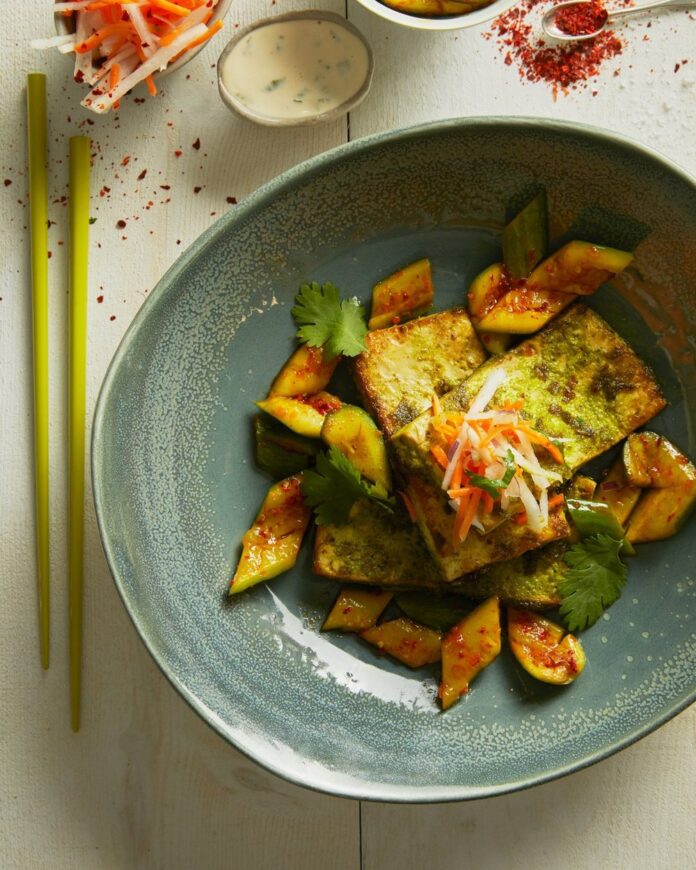
a blue bowl filled with Deconstructed Tofu Bahn Mi on top of a table.
Enjoy the vibrant flavors of Deconstructed Tofu Bahn Mi - a vegetarian twist on the classic Vietnamese street food.

The Banh Mi sandwich is the iconic street food from Vietnam. Here it is reimagined by chef and TABLE contributor, Veda Sankaran, as a delicious vegetarian dish in the form of tofu banh mi.

The History of Banh Mi

Banh Mi has a surprising history, tied to colonial resistance in Vietnam. When the French colonized Vietnam, they brought the baguette with them, along with other dishes like pâté. Up until the 1950s, the sandwiches skewed more towards traditional French ingredients. But after the Vietnamese people fought back against the French presence, their sandwiches changed, too, incorporating more local flavors. Now, banh mi is popular all over the world, particularly in places with large Southeast Asian populations. However, in Vietnam itself tofu banh mi is somewhat uncommon, but is often a snack during Buddhist festivals when people are abstaining from meat.

Print
clock clock iconcutlery cutlery iconflag flag iconfolder folder iconinstagram instagram iconpinterest pinterest iconfacebook facebook iconprint print iconsquares squares iconheart heart iconheart solid heart solid icon
a blue bowl filled with Deconstructed Tofu Bahn Mi on top of a table.

Deconstructed Tofu Banh Mi


  • Author: Veda Sankaran

Description

This tofu banh mi is a delicious vegetarian recipe.


Ingredients

Scale

For the tofu marinade: 

  • 4 large cloves of garlic smashed
  • ½ cup chopped cilantro including stems
  • 1 tsp black peppercorn crushed
  • 1 tsp coriander
  • ⅓ cup thinly sliced lemongrass
  • 1½ tbsp Palm or brown sugar
  • 2 tsp soy sauce
  • 3 tbsp oil
  • 1 block extra firm tofu

For the pickled daikon and carrots:

  • 1 ½ cups daikon, peeled and julienned
  • 1 ½ cups shredded or peeled and julienned carrot
  • ¾ cup water
  • 2 tbsp sugar
  • 1 tsp salt
  • ¼ cup brown rice vinegar

Ingredients for chili oil:

  • 3 tbsp neutral oil
  • 1 tbsp Szechuan chili flakes
  • 1 tbsp gochugaru

For the smashed cucumbers:

  • 7 Persian cucumbers (14 oz) sliced lengthwise in half
  • 2 tbsp soy sauce
  • 2 tbsp sesame oil
  • 3 tsp brown rice vinegar
  • 4 large cloves of garlic grated or finely minced
  • 1 tsp sugar
  • 2 tbsp chili oil with the pepper flakes


Instructions

  1. To make the marinade for the tofu, blend all the marinade ingredients together until smooth. Slice the tofu into ½” – ¾” steaks. Spread the marinade on all sides and place in a closed container and refrigerate for a few hours or preferably overnight. When ready to assemble the dish, heat a skillet and coat with some neutral oil. Cook each of the tofu steaks on medium heat for a few minutes per side, until cooked through and lightly browned.
  2. To make the pickled daikon and carrots, dissolve the sugar and salt into the water. Stir in the vinegar. Pour this over the julienned daikon and carrot. Place in a tightly sealed container in the refrigerator until ready to use.
  3. To make the chili oil, Stir together the gochugaru and the Szechuan chili flakes in a heat safe bowl. Heat the oil until it reaches around 350 degrees. You want the oil hot enough, but not so much as to burn the chili flakes. Once hot enough, pour the oil over the chili flakes, stir, and let sit to infuse. Once cool, you can place it in a tightly sealed container at room temperature for about 2 weeks. It will keep longer in the refrigerator.
  4. To make the smashed cucumbers, salt the halved Persian cucumbers and let sit cut side down on a paper towel lined baking sheet. This is so you will have crispy and not watery cucumbers. After about 20 minutes, smash the cucumbers by using a rolling pin, flat side of a cleaver, or or even a meat tenderizer. Be careful to hit it only once or twice, with just enough force to crack the skin and slightly flatten.
  5. Stir together all the ingredients for the sauce, adjusting the chili oil so as to get your preferred heat level. Once you are ready to assemble the dish, pour the sauce over the smashed cucumbers and toss to evenly coat.
  6.  To assemble the dish, plate the smashed cucumbers, add a few tofu steaks, and top with the pickled daikon carrots.

Recipe by Veda Sankaran
Photography by Dave Bryce

Subscribe to TABLE Magazine‘s print edition.
Mussels in Broth

0
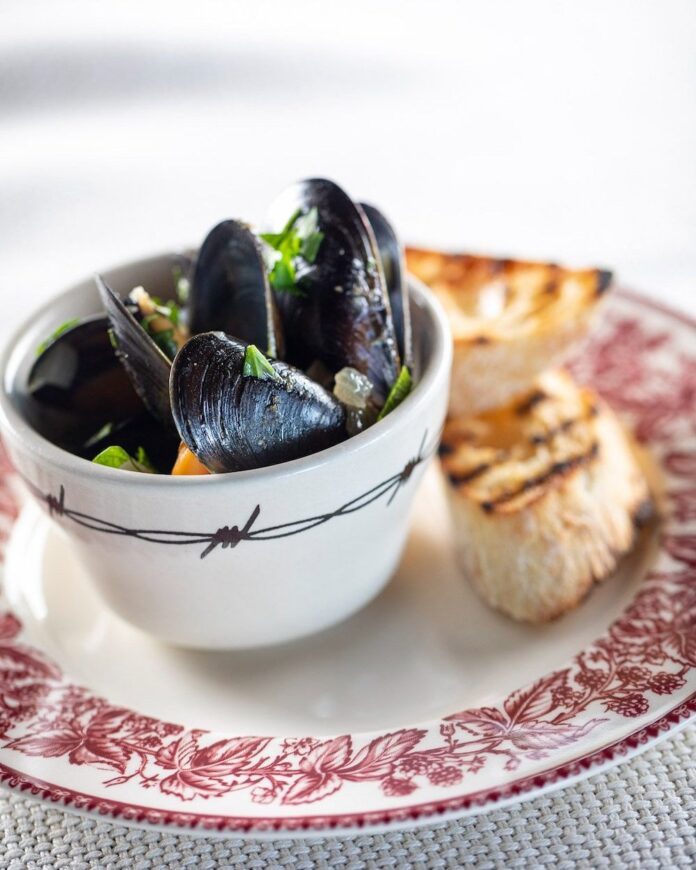
A small bowl hols Mussels in a broth that sit on a plate with two pieces of toasted baguette beside the bowl.

This Mussels in Broth recipe creates a warming dish that infuses this shellfish with spices and dry white wine. Try it with a few pieces of baguettes and you’ll find your next meal delightfully care of. To make this recipe, Blame Her Ranch hosted TABLE Magazine New Mexico for an incredible dinner party under the stars. Chef Leslie Chavez created superb dishes for the occasion that were enjoyed with a selection of Gruet wines and beverages from Leaf & Hive.

What’s the Difference Between Mussels, Clams, and Oysters?

Mussels, clams, and oysters, while all bivalve mollusks, are still distinct in their appearance and flavor. Mussels usually have more of an elongated, dark blue or black shells and attach to surfaces using their strong threads. Clams on the other hand are rounder in their shell shape and burrow in sand or mud, meaning a saltier, chewier texture. Oysters, with their rough, irregular shells, have a briny and sometimes creamy flavor. These differences are the reason why we choose to use mussels with our broth. Their texture is tender while maintaining a sweet, briny flavor too.

Print
clock clock iconcutlery cutlery iconflag flag iconfolder folder iconinstagram instagram iconpinterest pinterest iconfacebook facebook iconprint print iconsquares squares iconheart heart iconheart solid heart solid icon
A small bowl hols Mussels in a broth that sit on a plate with two pieces of toasted baguette beside the bowl.

Mussels in Broth


  • Author: Leslie Chavez

Description

A warm and savory broth with perfectly tender mussels.


Ingredients

Scale
  • 2 tbsp butter
  • 3 small shallots, thinly sliced
  • 4 garlic cloves, finely chopped
  • 2 cups low-sodium chicken stock
  • 1 cup dry white wine
  • 4 lb mussels, cleaned
  • Splash of heavy cream
  • 1/2 cup fresh parsley, roughly chopped
  • Salt and freshly ground black pepper
  • Lemon wedges, for serving
  • 2 baguettes, warmed for serving


Instructions

  1. Melt butter in a large pot with a lid over medium heat. When the butter begins to bubble, stir in the shallots and garlic. Cook until softened, about 5 minutes.
  2. Add the chicken stock, white wine, and mussels, and then give them a good toss. Cover the pot with its lid and cook until all the mussels have opened, 8-12 minutes. If any mussels do not open, discard them.
  3. Remove the pot from the heat, then stir in the cream and parsley. Taste, then add more salt and  pepper to taste.
  4. Cut the baguettes lengthwise and toast.  Rub the toast with a garlic clove for some lovely garlic flavor. Serve in big bowls with lemon wedges and bread to sop up the broth.

Recipes Leslie Chavez
Styling by Robert Nachman
Photography Gabriella Marks

Subscribe to TABLE Magazine’s print edition.

Don't Miss