Home Blog Page 23

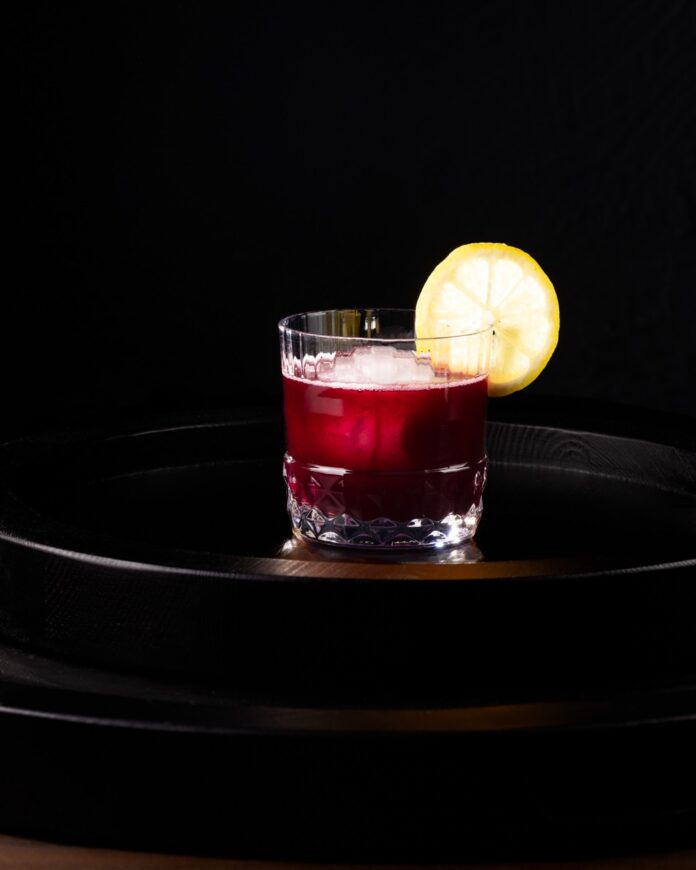
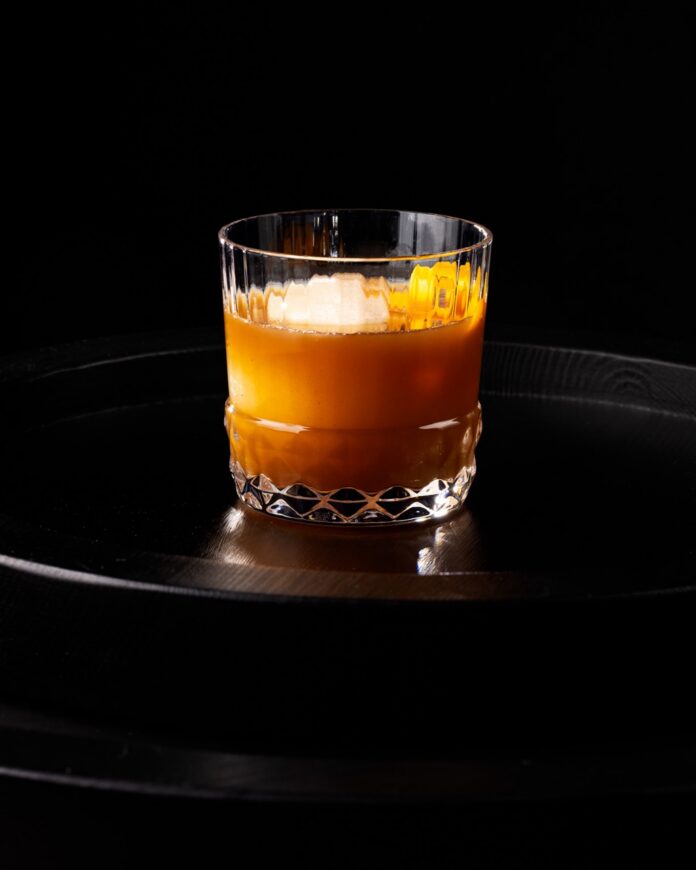
Naked in Manhattan Cocktail for Chappell Roan

0
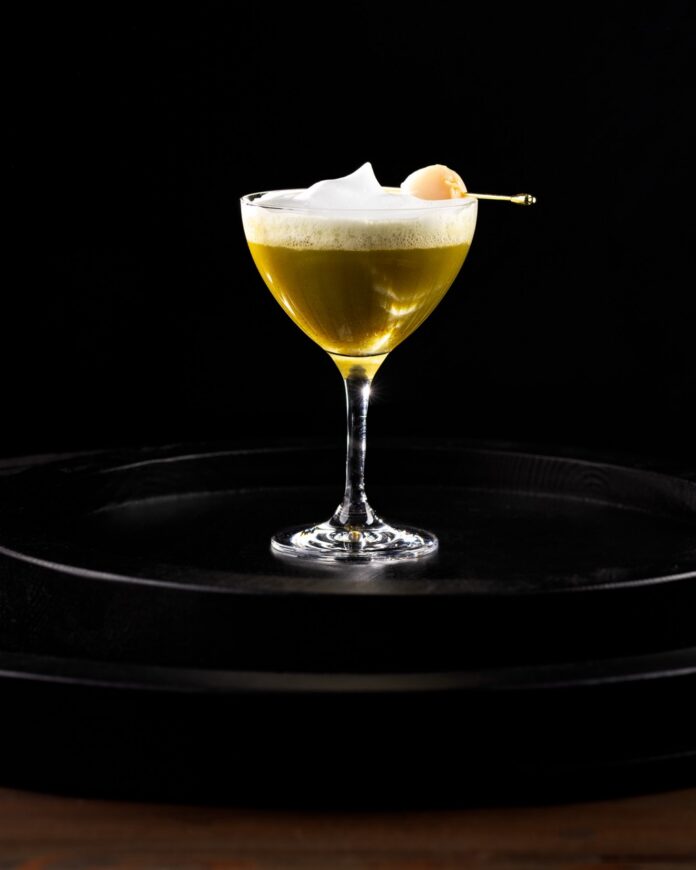
A cocktail in am amber color sits in a tall glass on a table in the evening light.

We know you want it, baby, you can have it, Naked in Manhattan! Bold, smoky, and unapologetically extra—Naked in Manhattan is a cocktail that captures Chappell Roan in a glass. This drink struts in style with mezcal’s sultry smoke, the rich sweetness of Cocchi Torino Vermouth, and the herbal draw of yellow chartreuse, all finished with a bit of stunning red Maraschino liqueur. Think of each sip as an invitation to try something new, try something more, and let all your inhibitions go—just the way Chappell intended.

An amber cocktail sits against a dimly lit wall as a woman's hand pushes it forward.
Print
clock clock iconcutlery cutlery iconflag flag iconfolder folder iconinstagram instagram iconpinterest pinterest iconfacebook facebook iconprint print iconsquares squares iconheart heart iconheart solid heart solid icon
A cocktail in am amber color sits in a tall glass on a table in the evening light.

Naked in Manhattan Cocktail for Chappell Roan


  • Author: Kayla Kobialka and the Andra Hem Team

Description

If you don’t try, then it’s your loss!


Ingredients

Scale


Instructions

  1. Combine all ingredients in a mixing glass with ice and stir until chilled.
  2. Rinse a Nick and Nora glass with Elisir Novasalus.
  3. Strain cocktail into Nick and Nora glass.
  4. Garnish with an Amarena cherry.

Do you also have a crush on Regina George? Then couple our Naked in Manhattan with our Regina George Mean Girls Cocktail in her signature pink style!

Recipe and Drink by Kayla Kobialka and the Andra Hem Team
Photo Courtesy of Neal Santos

Subscribe to TABLE Magazine‘s print edition.

Throw a Colorful Cocktail Watch Party for the Premiere of ‘Bridgerton’ Season Four

0
Two champagne flutes of a dark purple Lord & Lady Bridgerton cocktail with a lemon peel twist garnish, butterfly pea flowers below, and a bottle of champagne pouring into the background glass. It's all set against a blue floral background.

The ton is abuzz once more, and the return of Bridgerton season four calls for a celebration as vibrant and dramatic as the show itself. What better way to mark the premiere than by gathering friends for a colorful cocktail watch party filled with stunning drinks and indulgent treats that feature a touch of Regency-inspired flair? We promise each recipe below has Lady Whistledown’s approval, which means that you can host an evening worthy of the Queen. After all, the most intense drama is best enjoyed in good company.

Colorful Cocktail Recipes for a Bridgerton Season Four Watch Party

Lord & Lady Bridgerton Cocktail

Two champagne flutes of a dark purple Lord & Lady Bridgerton cocktail with a lemon peel twist garnish, butterfly pea flowers below, and a bottle of champagne pouring into the background glass. It's all set against a blue floral background.

Our Lord & Lady Bridgerton Cocktail makes for a mix between afternoon tea and a party. Lord Bergamot Tea leads the way here steeped in dried butterfly pea flowers. Then we layer Empress 1908 Indigo Gin, lemon, and a topping of Perrier Jouet Champagne Grand Brut for a beverage high society just must gossip about.

Aloe & Apple White No-Groni

ALOE & APPLE WHITE NO-GRONI greenery in the background

Skipping the alcohol? No problem! This mocktail version of a negroni features the coolness of aloe and tart shrub of apple. The herbal notes of the Seedlip Garden 108 gin replacement perfectly complement the various elements at play.

Aperol Sour

An above shot of two Aperol sour cocktails, light red in color, garnished by lemon slices.

The beautiful sun that always seems shining in Bridgerton makes us crave a cocktail that’s meant for the summer. An Aperol Sour adds a splash of gin to your zesty Aperol and bright lemon for a beverage that glimmers. Plus it’s a way to make sure you’re wide awake for the steamy scenes bound to ensue.

Matcha Mule

Two glasses hold a Matcha Mule with a lime wheel and sprig of mint on top of the glasses all on a white background.

We’re just saying, if Daphne, Francesca, Eloise, and the rest of the Bridgerton girls existed in 2026, they would definitely be in on the match craze. Using matcha powder in a classic Moscow mule adds a subtle umami profile that meshes with the heat of the ginger. Mix up our Matcha Banana Bread on the side and make it a true matcha feast!

The Fitzgerald Cocktail

Two pink Fitzgerald gin cocktails garnished with red currants and lemon slices on a white wooden surface.

Pretty in pink, this elegant gin drink that feels right at home in any Bridgerton-inspired soirée. Shaken with gin, fresh lemon juice, simple syrup, and a few aromatic dashes of Angostura bitters, indulge in a bit of subtle spice and sophistication. Talk about the perfect way to set the mood for the regency-era.

All Hearts Cocktail

Glasses of a red cocktail garnished with a blood orange slice, surrounded by strawberries, oranges, and mandarin orange slices on a white surface.

We’re red with passion for this All Hearts Cocktail. A refreshing blend of vodka, strawberry puree, and lemon juice, meets bubbly Prosecco for a touch of effervescent romance. Smooth and fruit-forward, its ruby hue makes it an ideal celebratory drink when your favorite ship becomes canon.

Snowbirds, A Festive Coconut Cocktail

A champagne flute on a black background, topped off with coconut flakes and surrounded by festive decor

Like two Snowbirds nestled together, this cocktail brings a wave of comfort with nostalgic and familiar flavors. It’s a creamy, dreamy mix of coconut rum, cream of coconut, and fresh lime that’s shaken and served over ice for a smooth sip. Plus a bit of the tropical in the winter season is always a welcome reminder of the warmth to come.

Snacks to Accompany Your Watch Party

Bridgerton Teatime Pecan Balls

A green plate full of Pecan Balls stacked in a tower as some sit open with yellow cake on the table.

Don’t go through your watch party without a succulent snack to nibble on during the most nerve-wracking of moments. These Teatime Pecan Balls tossed in powdered sugar gift you a buttery bite every time. Not to mention the salty pecans the embed in this deliciously crumbly cookie.

Lady Whistledown’s Bridgerton Snickerdoodles

Cookies in green and pink sugars spread over a table and plate.

These warm and soft Snickerdoodles are made special with pastel sugars that dust on top of each golden round. Infused with bright orange zest and ginger even if you’re not serving these cookies at a cocktail party, we recommend at least having them with your favorite cuppa.

Story by Kylie Thomas

Subscribe to TABLE Magazine’s print edition.
Top Jewelry for Valentine’s Day Gifting

0
A pink bead necklace and gold heart locket sit on a red table.

Valentine’s Day is the perfect excuse to celebrate love with jewelry that dazzles and delights. Sparkling diamonds mingle with vibrant gemstones, playful hearts, and celestial-inspired motifs, creating pieces that feel personal, luxurious, and unforgettable. Whether marking a new romance, a lifelong partnership, or simply indulging yourself, this season’s hottest jewelry trends offer statement-making sparkle and timeless elegance in every design. The best part? You can find every piece locally at these Pittsburgh jewelers.

Two gold heart chains lay on an orange background.

Caesar’s Designs Heart Pendants

Fall in love with both timelessness and trending with these heart‑shaped diamond pendants. Each features a bezel‑set natural heart diamond cradled in warm 14K yellow gold, marrying classic elegance with modern sophistication. Caesar’s Designs offers these on 16‑ and 18‑inch chains for versatile wear and a a luxurious expression of affection. They’re the perfect way to say “you have my heart” in brilliant sparkle.

A stack of gold and pink bangles.

Louis Anthony Penny Preville’s Bracelet Stack

This Penny Preville bracelet stack from Louis Anthony is pure jewelry artistry. Crafted with the impeccable heirloom quality that has made the designer famous for over half a century, the stack pairs 18K gold with brilliant natural diamonds and vibrant sapphires in a dazzling array of colors. Whether worn together or layered with favorites, this stack will be treasured for years to come.

A dainty gold necklace hands over a red table.

Suma Jewelry Co. Mesa Ring and Triangular Diamond Bezel Necklace

Hand-carved and cast into metal, the Mesa Ring is an original Suma Jewelry Co. design inspired by organic form and quiet strength. Flush set with three lab-grown diamonds, it’s sculptural, subtle, and made to be worn every day. Pair it with the Bezel Necklace that showcases your love with a triangular lab-grown diamond, hand-set in a 14k gold bezel and suspended from a delicate chain. Clean lines, quiet luxury, and modern heirloom energy.

A woman holds various chain necklaces on her hand.

Orr’s Jewelers Pendant Necklaces

Celebrate your beloved’s uniqueness with a curated collection of celestial-inspired necklaces perfect for Valentine’s Day. The Moon Quartz and Diamond Pendant from SYNA glows with serene elegance, while Sorellina’s Crescent Moon Inlay Pendant dazzles with onyx, emeralds, and diamonds. The Evil Eye Blue Sapphire Pendant from SYNA offers meaningful sparkle, and the Penny Preville Open Round Link Necklace adds versatile, refined texture. Then, layer with the Crescent Diamond Moon or Starburst Diamond Enhancers for a personalized, luminous look.

A pink bead necklace and gold heart locket sit on a red table.

Henne Jewelers Necklaces and Earring Set

Add a bit of fun to your jewelry collection with these standout pieces from Henne Jewelers. The Shy Creation Kate Collection Heart Necklace pairs a matte 14K yellow gold puffed diamond heart pendant with a chic 18-inch paperclip chain. Complementing it perfectly are heart dangle and hoop earrings. For a splash of color as well as versatility, the Anne Sportun 18K yellow gold beaded wrap bracelet (or necklace) mixes multi-colored pink rubies with a single gold hexagon bead. Feel free to wear any of these pieces solo, too.

Brooks Diamonds Earrings and Ring Set

Elevate your everyday with this trio from Brooks Diamonds. The Teardrop Hoop Earrings in 14K yellow gold feature an inside/outside teardrop silhouette encrusted with .91 ctw of diamonds. For a more whimsical touch, the Fluted Design Dangle Earrings showcase a marquise‑inspired shape with intricate fluted detailing. Catching the light at every monet are .35 ctw of diamond accents. The Floral Bead Set Band offers delicate openwork as well as bead‑set diamonds (.25 ctw) in a charming floral motif.

While you’re here, grab a Valentine’s Day dinner reservation for the most romantic night of the year before the best of the best fill up!

Story by Kylie Thomas
Styling by Keith Recker
Photos by Dave Bryce

Subscribe to TABLE Magazine’s print edition.

Leave Pittsburgh and Avoid the Chaos of the NFL Draft at These Destinations

0
A waterfall in Allegheny park with trees in the background.

This April’s NFL Draft will bring hundreds of thousands of visitors and millions of dollars to Pittsburgh. While the multi-day event is a boon for the city, not every resident will want to navigate crowds, road closures and packed reservations. For Pittsburghers inclined to trade crowds for less crowded coastlines, forests or culture destinations, these spots offer a well-timed respite. (And you can still watch the draft online or on tv.)

Escape to These Destinations and Avoid the NFL Draft Craziness in Pittsburgh

The Allegheny parks forest with a river running through it.
Photo by Alisen Downs

Allegheny National Forest 

Just hours from Pittsburgh, the state’s only national forest spans more than 500,000 acres of hardwoods, water and wilderness. The sprawling wilderness in the state’s northwestern corner offers one of the East Coast’s most under-the-radar escapes and a true off-the-grid respite. 

Accommodations range from lake-adjacent cabins and understated vacation homes near the reservoir to refined accommodations such as The Lodge at Glendorn in nearby Bradford, along with charming inns in Warren. By late April, trails are open, the reservoir welcomes paddlers and daylight stretches into evening. 

The Longhouse National Scenic Byway offers a natural introduction, tracing a 36-mile loop along the Kinzua Creek arm of the reservoir. From there, days are best spent hiking shaded trails like Minister Creek, reading beside the water or drifting across the lake. Boat-access campgrounds such as Pine Grove and Morrison allow travelers to arrive by water, leaving road noise behind entirely. For a brief counterpoint, the Kinzua Sky Walk rises above the gorge, a moment of vertical drama before returning to the forest’s defining luxury: stillness. 

The dock in Seattle with restaurants and buildings in view.
Photo by Sean Pavone

Seattle 

An easy nonstop or one-stop flight from Pittsburgh — often with some of the shortest itineraries via Alaska Airlines — brings you to Seattle, where the city’s most striking quality is how seamlessly it holds urban life and landscape in the same frame: salt water at its feet, mountains on the horizon, forests threaded through daily life.  

Stay downtown at the Thompson Seattle, where floor-to-ceiling windows look out over Pike Place and Elliott Bay, and begin the evening at The Nest, the hotel’s rooftop bar, for cocktails with ferry traffic gliding below. Visit famous Pike Place Market early before crowds arrive, then take a trip to the top of the Space Needle, which clarifies the city’s relationship to water and wilderness in a single sweep. Just beneath it, Chihuly Garden and Glass adds a luminous, distinctly Pacific Northwest counterpoint. 

Seattle’s dining scene reflects its global outlook without excess. Serious Pie remains a benchmark for wood-fired pizza, while spots like Din Tai Fung (soup dumplings), Revel (Korean-influenced plates) and Maneki (a historic Japanese institution) underscore the city’s long-standing international palate. There are plenty of outdoor adventures to be had, as well; walk the loop at Green Lake, ferry across to Bainbridge Island or explore the bluffs of Discovery Park. Close out your evenings with drinks at Seattle’s growing cluster of urban wineries, including Structure Cellars, Browne Family Vineyards or Cairdeas, where Washington wine is poured in its place of origin. 

The government building on the downtown streets of Philadelphia under a blue sky
Photo by Leo SERRAT

Philadelphia 

If Pittsburgh’s charm lies in its neighborhoods, Philadelphia turns that idea up to eleven. Less than five hours east, the city layers American history, neighborhood life and food culture into a walkable, lived-in whole. 

A single day can include cobblestone walks around Independence Hall, an unhurried afternoon eating through Reading Terminal Market and a quiet escape into the wooded trails of Wissahickon Valley Park before dinner. 

Old City’s brick townhouses and pocket museums give way to the grand sweep of the Benjamin Franklin Parkway, where the Philadelphia Museum of Art, the Barnes Foundation and the Franklin Institute line a tree-framed boulevard. Inside Reading Terminal, DiNic’s roast pork, Amish baked goods and steaming bowls of pho share space beneath an iron-and-glass roof, while Chinatown’s bakeries and noodle shops spill just beyond its doors. 

The beach full of umbrellas and blue waters at Turks and Caicos.
Photo by Meg von Haartman

Turks and Caicos 

By April, Pittsburgh is edging toward spring; Turks and Caicos is already in the throes of tropical summer.  

The journey is straightforward, roughly a six- to seven-hour travel day from Pittsburgh (typically with a single connection through Miami, Charlotte or Atlanta) to Providenciales, the island that anchors most first-time visits. 

April hits a rare sweet spot: dry, sunlit days, steady trade winds and a thinning of peak-season crowds. Grace Bay Beach remains the centerpiece, its pale sand and shallow, shimmering water ideal for morning swims and long walks. Snorkeling requires little planning at Bight Reef and Smith’s Reef, both accessible from shore, while half-day catamaran sails drift toward uninhabited cays for sandbar swims and freshly prepared conch ceviche. 

Evenings favor simplicity — grilled seafood, open-air dining and the convivial ease of a weekly fish fry. Grace Bay Club and The Shore Club offer restrained, oceanfront luxury, while Beaches Turks & Caicos provides a seamless option for families. 

Bourbon street in New Orleans busy with customers walking down the street.
Photo by Kristina Volgenau

New Orleans 

New Orleans is an easy city to settle into, with easy nonstop flight options from Pittsburgh. In the French Quarter, wrought-iron balconies frame quiet courtyards and Creole townhouses just steps from the Mississippi River, while Uptown’s oak-canopied streets remain anchored by streetcar lines. 

Staying in the Quarter (or nearby Marigny) places Jackson Square, Crescent Park and the music clubs of Frenchmen Street within walking distance. Days begin with cafe au lait and beignets, stretch into long lunches of gumbo or oyster po’boys and end in candlelit dining rooms shaped by Gulf seafood and deep-rooted culinary traditions. 

Between meals, historic cemeteries, streetcar rides and the galleries of the Bywater and St. Claude corridor offer an unforced sense of discovery. 

Story by Aakanksha Agarwal
Photo Courtesy of USDA Forest Service and K. Creek

Subscribe to TABLE Magazine‘s print edition.
What Happens After Dry January on February 1?

0
A series of non-alcoholic beverage cans from Dry January on an orange background.

Spoiler alert: there’s no graduation ceremony when Dry January ends.   

February rolls around with a simple calendar flip and you’re left without a roadmap on what happens next. Suddenly, there goes the structure. It’s just you, a night out and a pause as your inner voice asks, “now what?”  

What Do You Do When Dry January Ends on February 1?

You’re not alone in asking it. According to the Adult Non-Alcoholic Beverage Association Industry Statistics Report, one in five Americans participates in Dry January each year. And that same study showed that more than 70 percent of challenge completers reported developing better long-term drinking habits afterward.   

For many people, there’s a heightened awareness going into February; Dry January changed something.   

Maybe your sleep improved (research by The Sleep Foundation suggests the majority of participants sleep better when they don’t drink). Maybe your mental health improved (doctors suggest alcohol amplifies anxiety, irritability and depression). Or maybe you reaped a few physical benefits (research has shown participants are likely to lose weight, decrease blood pressure and liver fat).  

Why Stop?

If you’re happy with your results, February doesn’t have to be a complete return; there can be a transition.  

Perhaps that means continuing to dip your toes into the non-alcoholic world. The good news is that the non-alcoholic beverage market is experiencing rapid growth, according to reports by Mordor Intelligence.   

Tables sit against windows while walls sit in bright orange.

An Uptick in the Non-Alcoholic Marketplace

And with growth comes more opportunities for connection, like at Oakland’s new pop-up SAD BAR, a bright, uplifting alternative for Pittsburgh’s greyest winter weeks. The name is a play on both Seasonal Affective Disorder and Sans Alcohol Drinks. Located at 3701 Forbes Avenue, the space blends elevated zero-proof cocktails with warm-spectrum lighting and Vitamin D lamps to create a mood-boosting environment for those seeking an alternative.  

Two lawn chairs sit amongst orange walls and plants.

“We have seen an influx of people who are visiting to experience what it feels like to be in a space that feels like a cocktail lounge or bar, but isn’t centered around alcohol,” said Bethany Paolo, the bar’s communications director. “It’s a space that feels exciting to both sides of the aisle — built for anyone abstaining entirely but welcoming to those exploring.”  

Other Non-Alcoholic Options Throughout Pittsburgh

Elsewhere, at any of Richard Deshantz’ concepts throughout the city, you’ll find thoughtful non-alcoholic options on the menu as well.  

“I think the Ginger Pineapple No-Jito at Coop De Ville might be the most approachable,” said Brian Maxwell, Director of Beverage for the Richard Deshantz Restaurant Group. “You get the feeling of having a cocktail, but there aren’t any spirit alternatives or any other booze-specific flavors someone might be trying to avoid altogether.”  

Three Sad Bar coasters sit on a white table.

How to Ease Back Into Drinking After Dry January

If you decide to jump back into drinking come February, an emerging trend called Zebra Striping—where individuals alternate between alcoholic and non-alcoholic drinks— may help you avoid common pitfalls like bingeing.   

“I have noticed a lot of guests working in N/A drinks between their alcoholic choices as a way to pace themselves,” Maxwell said.   

Victoria Miller, a bartender at Cork Harbor Pub in Pittsburgh’s Lawrenceville neighborhood, has seen this trend firsthand as well.   

“Alternating with non-alcoholic options is a fantastic way to still indulge without suddenly losing control,” Miller said.

Pittsburgh Bars Lending a Hand When Dry January Ends

Cork Harbor Pub boasts a plethora of non-alcoholic drinks alongside their alcoholic counterparts, but there’s also a third option: low-ABV beverages. These drinks are lower in alcohol volume, giving guests that same experience, while keeping their blood-alcohol level in check. At Cork Harbor Pub, Miller suggests Smithwick’s Red Ale, which is only 3.8 percent ABV.   

“For mixed drinks, getting a single shot in a tall glass is a popular option for people not wanting to drink too fast,” Miller said. “You can even take it a step further by ordering a separate drink on the side like Club Soda or Diet Coke to sip on with your mixed drink.”  

Remember, February 1 isn’t merely a finish line. It’s the moment you get to decide what the next version of your relationship with alcohol looks like, and you can take that one choice and one evening at a time.  

Two orange lawn chairs sit on a fake green patch.

In case you choose to keep your Dry January promise going, check out our recipes for ways to mix up from your regular mocktail. Or, if you’re choosing to slowly reintroduce alcohol back into your life, indulge in a recipe that’s on the lighter side with a Hot Toddy.

About the Author

Katrina Tomacchio is a Pittsburgh-based restaurateur and writer, widely known as Pittsburgh’s Mocktail Queen for her role in shaping thoughtful, non-alcoholic beverage culture. She stopped drinking nearly six years ago and is the author of Going in Dry, a sober-curious book that blends personal insight with practical guidance for building a rich, connected life with less alcohol. Find the book on Amazon, and find her on Instagram @thenortheastginger.

Story by Katrina Tomacchio
Photos Courtesy of Cody Baker for SAD BAR

Black History is Pittsburgh’s Future with Pastors Cynthia and John Wallace

0
Cynthia and John Wallace together in white outfits with smiles on their faces.

At one time, the rhythmic clatter of the Pittsburgh Courier’s printing presses and the energetic swing of legendary jazz artists in the Hill District carried the pulse of Pittsburgh. Pittsburgh defines itself mainly by the steel, smoke, and iron of it all. But that’s only half of the picture. Black history in Pittsburgh isn’t a separate, tucked-away chapter of our story, it’s the foundation.

In addition to the significant number of international immigrants who came to this city, there was also a large population of Southern Black people who participated in the Great Migration. With the first wave occurring between 1914 and 1945, Black families moved North in search of better opportunities and found them. They found refuge and thrived in neighborhoods like the Hill District. Among this group of new Pittsburghers were a number of Black Americans who contributed to this city of innovators by taking “innovation” to a global scale.

A Historic Start for the Black Community

In the 1940s, the Pittsburgh Courier, one of the first Black newspapers to publish both national and local editions, launched the “Double V” campaign, a civil rights movement to secure a “double victory” for Black Americans fighting in WWII. “Victory over fascism abroad and victory over racism/segregation at home.” This helped spark a national movement for civil rights that changed the course of American history. 

In the late 1960s, a group of medically trained Black men from the Hill District formed Freedom House Ambulance Service. Before them, if you had a medical emergency, your best bet was getting a ride in a cop car. Thanks to those men, the modern paramedic was born. This type of progressive thinking became the very soul of the Steel City. Once we understand the many major contributions made by the Black community to this city, we can honor our past while better navigating our future.

Pastors Cynthia and John Wallace on Black History and Pittsburgh’s Future

Cynthia Wallace has a theory on why these contributions are often missing from the Steel City conversation. The Bible Center Church Executive Pastor and Executive Director of the Oasis Project believes that Pittsburgh’s history of segregated neighborhoods is the cause of so many oral histories being siloed.  “I don’t know that we hear as much about what African Americans have done because of that,” Cynthia commented. She continued, “We hear about Andrew Carnegie and all of those that made Pittsburgh famous for steel, but it was really on the backs and the shoulders and the hands of African-Americans who did that work. That isn’t often recognized.”

A woman stands against a brown wall with a flannel on.
Cynthia Wallace

Investing in Pittsburgh’s Future Through Proper Education

While parts of this country are questioning the importance of making Black history a part of our children’s education, or even a part of adult education through information on display at museums and historic sites, it’s dire that we no longer rely on others to tell our stories. We are in danger of having stories of Black triumph, innovation, artistry, and contributions whitewashed and diminished. John Wallace, Senior Pastor at Bible Center Church and Vice Provost for Faculty Advancement at the University of Pittsburgh, cites the obvious problem as “the attack on telling the accurate history of African people in America.” The loss or distortion of history affects the way we view ourselves.  As a community, we must be vigilant in countering negative narratives and in ensuring that we educate young people to be able to envision themselves as leaders and innovators. 

John Wallace sits in a black suit and tie against a black background.
John Wallace

John went on to say, “We as a community have to make sure that our children are educated and given the truth about our nation’s history.” The legacy of innovation in Pittsburgh’s Black community is strong and extends far beyond February. 

The Black History of Pittsburgh Stands Today

Although much of the physical landscape has changed in Pittsburgh’s historically Black neighborhoods, such as East Liberty, the Hill District, and Homewood, you can still find history as you walk the streets. 

In the Hill District, the August Wilson House stands as a living monument to the literary giant’s art and life. Across the river in Homestead, the Negro League legends come to mind every time we cross the Homestead Grays Bridge. Thanks to photographer Charles “Teenie” Harris, who captured over 80,000 images of Black life, we have a visual record of Black life on display at The Carnegie Museum of Art. From the glamour of the Crawford Grill to the quiet dignity of a family Sunday dinner, these memories became the blueprints for a community that has always known how to build its own greatness.

“We’re not only sharing what past generations have gone through, endured, accomplished, but we encourage our young people that their story is valuable,” Cynthia explained. “Talk to people so that your story is not lost because that’s the only way that we are in control of our narrative.”

What Steps Come Next to Preserve Black History?

Preserving Black history in Pittsburgh demands an active, year-round investment in the community’s strength. To truly honor the legacy of our pioneers that came before us, we must support the “modern-day firsts” by moving beyond symbolic gestures and into tangible support. It means patronizing Black-owned businesses like Everyday Cafe, supporting the Greenwood Plan’s mission to empower Black entrepreneurs, and visiting the August Wilson African American Cultural Center with an open mind and a willingness to learn. 

There is also major importance in creating your own history through the arts. Cynthia encourages everyone to “chronicle history and to leave that artifact” as well as taking time to record and preserve the stories of our elders. If we don’t support the people actively making history today, we risk leaving the legacy of Black Pittsburgh to someone who doesn’t respect the beauty in it. It’s not just “Black” history. It’s “American” history.

Learn more about what Black History Month means to the city of Pittsburgh here!

Story by Kahmeela Adams
Photo Courtesy of Cynthia and John Wallace

Subscribe to TABLE Magazine‘s print edition.

What Does Black History Month Mean to Pittsburgh?

0
A group of people standing around each other at a party.

Black History Month still matters in 2026. Possibly more than ever.

What Does Black History Month Mean to Pittsburgh?

In Pittsburgh, Black History Month is far more than a calendar event. In the Hill District, East Liberty, the Strip, inside kitchens, music studios, theaters, and media offices, Black Pittsburghers have shaped the city’s cultural, economic, and social fabric. For these people, the month is an opportunity to reflect, celebrate, and, most importantly to prepare for the future.

Preserving History

In Pittsburgh, we’re especially lucky to have establishments like the Kelly Strayhorn Theater and August Wilson African American Cultural Center that uplift the Black community and showcase Black history.

A woman in a long red jacket stands in front of a building.
Janis Burley Wilson, CEO, August Wilson African American Cultural Center | Photo by Joey Kennedy

For Janis Burley Wilson, president and CEO of the August Wilson African American Cultural Center, Black History Month is inseparable from August Wilson’s mission of storytelling. “Our mission is to preserve and protect our stories and give a stage for artists to share their journey,” she says. “August Wilson took on the momentous task of telling the stories, amplifying the voices, struggles and triumphs of Black people as they traversed the peaks and valleys of this American life throughout the 20th century. The lessons in the American Century Cycle resonate today, especially now.”

Wilson emphasizes that Pittsburgh’s Black community has contributed not just to art but to the city’s broader cultural landscape as a whole.

A man stands in a white shirt and black jacket.
Perry Ivery, General Manager, The Oaklander

The Black community has been integral to the evolution of hospitality services in the Pittsburgh area. Perry Ivery, General Manager of The Oaklander Hotel, recalls the Ellis Hotel in the Hill District, a key stop on The Negro Motorist Green Book. “The Ellis was a cultural hub where Black artists and visitors felt at home, making it an important landmark in Pittsburgh’s African American heritage,” Ivery explains. “It offered safe accommodations when many others would not, welcoming in Jackie Robinson, Ella Fitzgerald, Duke Ellington, Miles Davis, Nina Simone, and Ray Charles, among others.”

What Can You Learn From Black History Month?

Black History Month is also a chance to correct misconceptions and celebrate accurate representation. Perry Ivery specifically recalls teachers and family members who introduced him to Black history, including his great-great-uncle, Raymond Kemp, the first African American player for the Pittsburgh Steelers. “Those lessons shaped my understanding and appreciation of our history from a young age.” It’s something anyone can take into their life no matter their race.

A group of 1HOOD Media members in black and yellow jackets on a bridge.
1Hood Media Team | Photo by Emmai Alaquiva

Jasmine Green, creative director at 1Hood Media, highlights media representation as a cornerstone of civic education. “Black History is American History, but it is treated as though it is not requisite to understanding the complete American story,” she says. Through storytelling, media, and advocacy, Green ensures that Black voices shape the city’s narrative, challenging stereotypes and advancing justice. “As our organization is steeped within the Black community, not much changes internally for us whenever February rolls around. However, the raised mainstream consciousness during Black History Month allows us to shine a spotlight on neglected histories and how they connect to existing obstacles in the current day.”

Pittsburgh’s Black history is foundational to the city itself. Whether that’s the photography of Teenie Harris, the plays of August Wilson, the groundbreaking journalism of the Pittsburgh Courier, or the jazz legacy of the Historic Hill District, Black creativity has long shaped the city’s cultural identity. Yet, as Green points out, Black Pittsburghers have benefited least from the city’s growth, even as they continue to drive its cultural and creative renaissance. Any vision for Pittsburgh’s future, she says, must center its Black residents.

Layers of Living History in Pittsburgh Today

Besides preserving the history around us, Pittsburgh is also a city that incorporates its own dramatic history as well as the heritage of its diverse residents into the texture of a city full of life!

A cream colored plate with braised beef, rice, a mixed vegetable slaw, and an edible flower on top from kilimanjaro flavour.
Grace Mrema’s food at Kilimanjaro Flavour

Grace Mrema, founder of Kilimanjaro Flavour, grew up in Tanzania learning recipes from her grandmother. Through her food truck, she introduces Pittsburghers to the flavors of East Africa. “Cooking this food means pride, remembrance, survival, and legacy to me,” she says. “I love introducing a culture and flavors that many people didn’t grow up with. Being able to share a piece of Tanzania with people far from where I was raised means everything to me as a black woman. There are a lot of misconceptions about African food, especially in the U.S., and I want people to understand that each country has its own identity, history, and recipes.”

A woman with long dark hair and dangling earrings.
Chef Tara Jones

Chef Tara Jones also highlights Black culinary heritage in her every day life. From Mozambique to Portugal to Pittsburgh, her food reflects centuries of survival, innovation, and excellence. “Peri-peri isn’t ‘having a moment’—it’s been feeding people for centuries, and I’m simply the latest cook to honor it,” Jones explains. Her kitchen honors lineage while creating spaces where culinary mastery meets community. “My food is an inheritance, mapping across continents, centuries, and kitchens where survival and sovereignty were forged with fire and spice.”

Paving the Way for Accessibility

A man sits on a chair as a woman sits on the side of the chair beside him.
Darla and Abu Timbo

For Darla Timbo of 24 Carrot Juice, healthy living began as a family survival strategy in reaction to the same struggle for survival and grew into a community mission. “Creating healthy alternatives wasn’t about following a trend,” she says. “It was about survival, longevity, and choice.” In a city where systems have not always prioritized Black health, Timbo’s work represents a model rooted in love, care, and generational thinking. “In Pittsburgh’s Black community, we’ve often had to navigate systems that don’t prioritize our health. My husband‘s cholesterol was high and there were not many healthy changes that were encouraged to lower it, but juicing did the trick.”

So, Where Do We Go From Here?

As local rapper Frzy puts it best, the goal is not just individual success, but making sure others can follow. “I promised myself once I got big enough, famous enough, and powerful enough, I would become the role model/artist I needed when I was a young musician,” he says. “That I would pave the road with pillows for artists behind me… not just bust through the doors of these white generationally owned institutions, but knock it off the hinges to make sure more came behind me.”

Frzy sits in black and white in front of a white background with sunglasses on.
Frzy | Photo by Tyrell Thompson (La’Rue Jones)

That same call for continuous commitment echoes across Pittsburgh’s Black community.

Jasmine Green of 1Hood Media stresses that the work cannot begin and end with February. “These issues exist prior to February 1st and persist after March 1st,” she says, emphasizing that support for Black-led media and justice organizations “must be a year-round practice” if they are to continue telling the full American story.

How to Support Black-owned Businesses Outside of Black History Month

For Black-owned businesses, consistency is also critical. “Support is about relationships,” says Darla Timbo of 24 Carrot Juice. “Be consistent, show up beyond February… Make Black-owned businesses part of your regular routine.” Grace of Kilimanjaro Flavour echoes that sentiment, noting that “the most meaningful support is consistency,” from repeat customers to word-of-mouth recommendations.

Chef Tara Jones notes too that outside of being a customer there are other ways to uplift Black voices. “Black chefs are often locked out of institutional contracts and corporate partnerships… not because we lack skill but because we lack access to the rooms where those decisions are made,” she says. “You can be the bridge.”

Together, these strong figures of the city make the path forward clear: the future of Black history in Pittsburgh depends on whether the city as a whole chooses to show up. It’s about not just remembering, but also participating. What Pittsburgh does next directly impacts who gets the chance to build what comes after those working in the city today. Frzy reminds us, this work is generational.

“I am made from those before me, to be seen by those around me and remembered by those I’ll never meet.”

Learn more about what Black History Month means to Pastors Cynthia and John Wallace here!

Story by Kylie Thomas
Photo by Laura Petrilla

Subscribe to TABLE Magazine‘s print edition.
Leftover Rotisserie Chicken Taco Bar

0
Various plates full of taco toppings like chicken, salsa, sour cream, lime juice, and more.

Cooking a rotisserie chicken, or picking one up at the store, can last you a whole week as you create various meals around this ingredient. One of our favorite ways of using leftover rotisserie chicken is through a Chicken Taco Bar. It’s so easy to cook up your chicken with some spices and build yourself your dream taco high with cheese, sour cream, salsa, peppers, lettuce, onion, and of course, guac. We even provide you with a few ways of making your own salsa, guac, sauces, and topping at home to add a distinctive touch.

A person smears guac on a taco shell over a table of taco toppings.

Can I Make a Taquito Bar Instead?

If you’d prefer taquitos over a Chicken Taco Bar, simply roll the cheese and chicken into a tortilla and fry in oil or in the air fryer for a few minutes on each side until golden brown. Be sure to turn the taquito halfway through cooking. Once done, top with queso, hot sauce, sour cream, and whatever else your heart desires. This style is not for hand-holding. Instead, they’re made for devouring messily on a plate.

Print
clock clock iconcutlery cutlery iconflag flag iconfolder folder iconinstagram instagram iconpinterest pinterest iconfacebook facebook iconprint print iconsquares squares iconheart heart iconheart solid heart solid icon
Various plates full of taco toppings like chicken, salsa, sour cream, lime juice, and more.

Leftover Rotisserie Chicken Taco Bar


  • Author: Kylie Thomas

Description

The best part of a taco bar is that everyone gets to customize their own taco.


Ingredients

  • Leftover rotisserie chicken, shredded or chunked (2 cups is usually enough for two people)
  • Taco seasoning packet
  • Garlic salt
  • Hot sauce
  • Hard shells
  • Soft tortillas
  • Lettuce
  • Homemade salsa (try our Peach and Corn Salsa recipe)
  • Sour cream
  • Homemade guacamole (try our recipe here)
  • Cotija cheese
  • Lime wedges
  • Queso
  • Pickled onions (try our recipe here)
  • Spicy Cilantro Lime Slaw (try the recipe here)
  • Sauces (like our Pesto Chimichurri)


Instructions

  1. Heat up the shredded rotisserie chicken in a frying pan with some oil.
  2. Add in taco seasoning packet, garlic salt, and hot sauce to your liking. I recommend adding a little water to the pan to mix in the seasoning packet.
  3. While chicken heats for about 5 minutes, heat up your taco shells or tortillas in the oven.
  4. To make your taco bar a breeze, leave out small bowls of each topping above.
A person scoops a spoonful of salsa out of many taco bar ingredients.

Looking for more ways to use leftover rotisserie chicken? Check out our article for leftover chicken recipes featuring stocks, casseroles, pastas, and more.

Recipe by Kylie Thomas
Styling by Anna Franklin
Photography by Dave Bryce

Subscribe to TABLE Magazine‘s print edition.

High Protein Chicken Salad with Greek Yogurt

0
Three plates full of High Protein Chicken Salad with nuts on top.

This High-Protein Chicken Salad is a lighter, smarter take on the classic lunch. We make this recipe creamy and tangy with Greek yogurt instead of mayonnaise. The final product packs in lean chicken, protein-abundant Greek yogurt, onion, celery, cucumber, and pumpkin seeds to deliver the same comforting flavor and satisfying texture without the heaviness. The best part is that we’re using leftover rotisserie chicken to make sure no food goes to waste.

Is Greek Yogurt Rich in Protein?

Greek yogurt is rich in protein, which is one of the main reasons it’s such a popular choice for healthy eating. Since it’s strained to remove much of the liquid whey, Greek yogurt has a thicker texture and a higher protein concentration than regular yogurt. A single serving typically has around 15–20 grams of protein. Overall, this protein helps support muscle repair, keeps you feeling fuller longer, and stabilizes your energy.

Print
clock clock iconcutlery cutlery iconflag flag iconfolder folder iconinstagram instagram iconpinterest pinterest iconfacebook facebook iconprint print iconsquares squares iconheart heart iconheart solid heart solid icon
Three plates full of High Protein Chicken Salad with nuts on top.

High Protein Chicken Salad with Greek Yogurt


  • Author: Stephanie Cravotta

Description

Skip the mayo and try this Greek yogurt dressing in your chicken salad instead.


Ingredients

Scale

For the dressing:

  • 1/3 cup Greek yogurt
  • 2 tsp curry Powder
  • 1 tsp garlic, minced or finely grated
  • 4 tbsp lemon juice, freshly squeezed
  • 2 tsp agave
  • Salt & pepper, to taste
  • ¼ cup chopped fresh parsley

For the chicken salad:

  • 2 cups rotisserie chicken, shredded or cut into small cubes
  • ¼ cup red onion, chopped
  • 2 stalks of celery, sliced
  • 1/2 english cucumber, diced small
  • 1 tbsp pepitas, don’t mix-in, sprinkle on top
  • 1/2 green apple cut into small pieces
  • 1/8 cup golden raisins (optional)


Instructions

  1. Mix all the dressing ingredients together until smooth.
  2. Mix chicken, red onion, celery, cucumber, apple, and optional raisins into the dressing.
  3. Top with pepitas seeds.
  4. Enjoy with crackers, chips, or on its own!

Looking for more ways to use leftover rotisserie chicken? Check out our article for leftover chicken recipes featuring stocks, casseroles, pastas, and more.

Recipe by Stephanie Cravotta
Styling by Anna Franklin
Photography by Dave Bryce

Subscribe to TABLE Magazine‘s print edition.

Art Exhibitions on Display in Pittsburgh This February

0
A silkscreen of a man falling through geometric shapes.

From intimate collaborations and material experimentation to reflections on local history, Pittsburgh’s galleries and museums offer a rich slate of exhibitions to catch before winter gives way to spring. February 2026’s roundup highlights exhibitions where attention to scale, surface, as well as archive shapes the experience of looking.

Pittsburgh Art Exhibitions Hitting Galleries in February 2026

Atlas by Owen Westberg

april april, 409 South Trenton Avenue, Regent Square
Through February 28, 2026

In his first solo exhibition in Pittsburgh, Westberg rethinks still life and landscape as sites of perceptual drift, where familiar scenes hover at the edge of abstraction. Light, memory, and material sensation take precedence over depiction, treating painting as a temporary zone of engagement rather than a fixed record.

LOT paintings by Al Svoboda

april april, 409 South Trenton Avenue, Regent Square
Through February 28, 2026

Installed in the gallery’s Dining Room, Svoboda presents four closely related paintings built from strips of color that divide and then hold the surface. Using repetition and uniformity as a point of departure, the works reflect on allocation, storage, as well as value, allowing structure and material to quietly shape the experience of looking.

Picturing Pittsburgh

Westmoreland Museum of American Art, 221 N Main St, Greensburg
January 22–June 14, 2026

Drawn from the collection of Bruce and Sheryl K. Wolf, Picturing Pittsburgh brings together works on paper that reflect on daily life during the city’s industrial era. The exhibition invites a quieter form of looking, where scenes of labor and infrastructure become sites of memory shaped by long-term collecting and also regional attachment.

vinaigrette by Sasha Miasnikova and Zora Moniz

Romance, 155 N Craig St, Suite 110, North Oakland
January 24–March 8, 2026

Co-presented with Iowa (Brooklyn), vinaigrette unfolds across two cities in a call-and-response collaboration that treats exchange as both method and subject. Drawing on scent, play, and improvised systems of display, Miasnikova and Moniz translate personal archives into something shared.

A drawing of a person leaned over in a striped colorful sweater.
Sasha Miasnikova, Commuter (detail), 2025. Oil and pencil on paper on panel, 36 x 27 in. Photo: Sam Judge

Found Featuring Alli Lemon, Jamie Earnest, Natalie Moffitt, and Zoë Welsh

Concept Art Gallery (Upstairs Gallery), 1031 S Braddock Ave, Regent Square
January 31–April 4, 2026

Found brings together artists whose practices work with found imagery as both material and metaphor, tracing subtle movements between searching and recognition. Across varied approaches, the exhibition frames “finding” not only as a method, but as an emotional state shaped by quiet discovery.

Chronic Uncertainty by Joseph Lupo

Concept Art Gallery (Annex Gallery), 1031 S Braddock Ave, Regent Square
January 31–April 4, 2026

Working with appropriated imagery from early twentieth-century comic books, Lupo’s prints dwell on moments when bodies falter and meaning slips. What initially reads as slapstick gradually sharpens into a meditation on instability and the precariousness of control.

Sue Abramson – The Painted Planet: Hand Colored Photographs, 1984–1989

Bottom Feeder Books, 415 Gettysburg Street, Point Breeze
January 31–February 28, 2026

Abramson’s hand-colored photographs from the 1980s explore the slippage between photographic record and painterly intervention. By layering pigment directly onto her photographs, the photographer slows the act of looking and foregrounds the image as something deliberately made rather than passively recorded.

Peregrination: Xiaojing Yan 闫晓静

Contemporary Craft (Main Lawrenceville Gallery), 5645 Butler St, Lawrenceville
February 6–May 2, 2026

Part of the 2026 Tomayko Solo Artist Elevation Series, Peregrination draws on Yan’s experience of migration to explore how identity and cultural memory shift over time. Reworking Chinese myth and folklore through craft, her work then imagines nature as a symbolic passage between past and present, grounding personal transformation in a dreamlike landscape.

Dream Sequence

Carnegie Mellon University 1st and 2nd Year MFA Exhibition SPACE
February 13–April 5, 2026

Presented by the Pittsburgh Cultural Trust in collaboration with Carnegie Mellon University, Dream Sequence brings together new work by first- and second-year MFA students that unfolds according to the associative logic of dreams.

Lewis Hine Pictures America

The Frick Pittsburgh, 7227 Reynolds Street, Point Breeze
February 21–May 17, 2026

Drawn from a private collection, this exhibition brings together rare vintage photographs that trace Hine’s commitment to social reform through the camera. From Ellis Island to Pittsburgh’s steel mills, the works frame photography as a civic tool—shaped by Hine’s background in sociology as well as education—to confront the human costs of industrial modernity.

Story by Shawn Simmons
Featured Photo Art Courtesy of Joseph Lupo, Chronic Uncertainty 3, 2025, silkscreen

Subscribe to TABLE Magazine‘s print edition.