Rozendal Farm, in the heart of South Africa’s Cape Winelands, is the magical setting where farmer Nathalie Amman creates biodynamic vinegars. Her organic process, her savvy flavors, and her storybook farm transport us to foodie heaven.
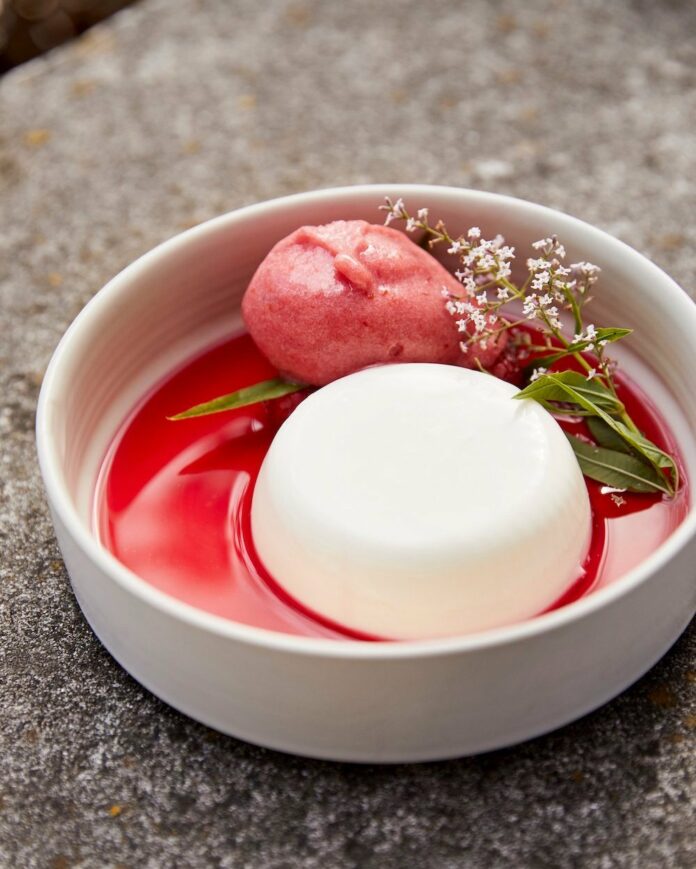
Fruit and cream play back and forth across the palate in this exquisite dessert from chefs Jess Shepherd and Luke Grant, who helm the Good to Gather restaurant at Rozendal Farm.
BUTTERMILK PANNA COTTA RECIPE WITH RASPBERRY SORBET
Recipe by Jess Shepherd and Luke Grant, Good to Gather Restaurant, Rozendal Farm
Serves 8
Ingredients
2 cups cream
½ cup castor sugar
4 leaves gelatin
1 ½ cups buttermilk (or substitute with full cream yoghurt)
500g raspberries (fresh or frozen)
1 cup water
1 cup granulated white sugar
1 TBS Lavender (or other herb-infused) vinegar
fresh fruit, to serve
Instructions
For the panna cotta, place the cream and castor sugar into a small saucepan and heat until just about to boil. Soak the gelatin leaves in cold water to soften (10 minutes). Add the softened gelatin leaves to the hot cream mixture, and stir to dissolve. Pass through a fine sieve into a bowl, and then whisk in the buttermilk.
Divide the mixture into ramekins (about ½ cup for each) and place in the fridge to set, at least 4 hours or overnight.
For the sorbet, put the sugar and water in a saucepan over a low heat and stir until the sugar has dissolved. Raise the heat and simmer for 5 mins, or until the liquid has become a syrup. Set aside to cool. Put the raspberries and vinegar in a food processor and blitz until smooth. Strain through a fine sieve into a bowl and discard the seeds. Combine with the sugar syrup, then freeze according to your ice cream maker’s instructions. Transfer to a shallow container and freeze for 2 hours to set up firm enough for scooping.
When ready to serve, remove the Panna cottas from the fridge and, using a small sharp knife, run the blade around the edge to loosen the panna cotta from the ramekin. Lightly loosen with your fingertips by gently coaxing the panna cotta away from the edge of the ramekin, then turn out onto individual plates.
Using hot water and a dessert spoon, scoop the sorbet into quenelles and place next to the panna cottas.
Serve with fresh berries.
STORY BY LORI COHEN / PHOTOGRAPHY BY WARREN HEATH – BUREAUX / PRODUCTION BY SVEN ALBERDING
Rozendal Farm, in the heart of South Africa’s Cape Winelands, is the magical setting where farmer Nathalie Amman creates biodynamic vinegars. Her organic process, her savvy flavors, and her storybook farm transport us to foodie heaven.
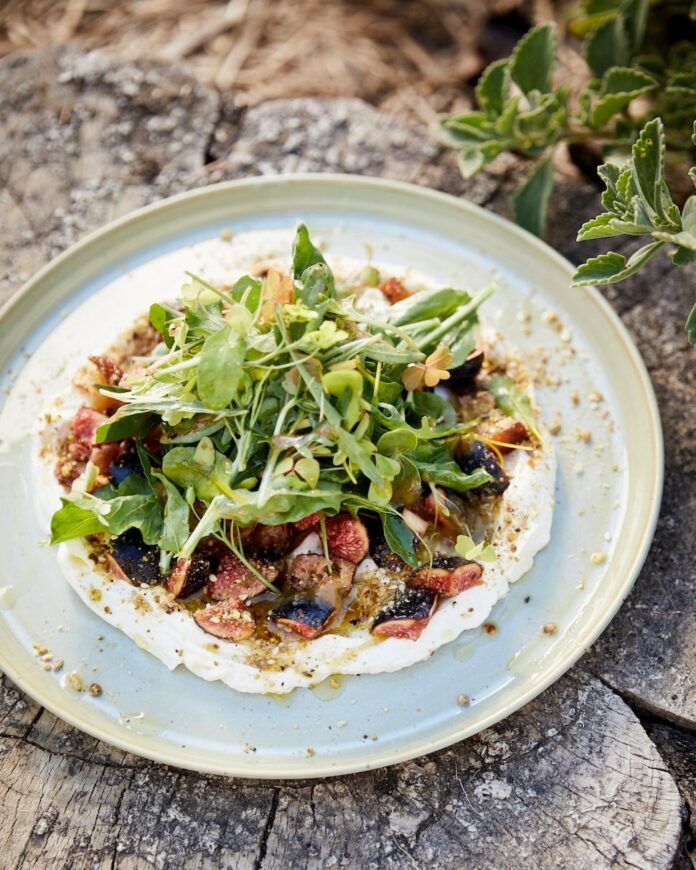
Fig and whipped ricotta, brought alive with the acidity of floral vinegar, meld into a salad that’s a feast for the taste buds as well as the eye.
PURPLE FIG SALAD ON WHIPPED RICOTTA RECIPE
by Jess Shepherd and Luke Grant, Good to Gather Restaurant, Rozendal Farm, South Africa
Ingredients
Serves 2
500g ripe purple figs, cut into quarters
3 tbspn extra-virgin olive oil
1 tbspn Hibiscus or other flower-infused Vinegar
½ tbspn whole-grain mustard
A mix of baby salad leaves and herbs, such as basil, dill or French tarragon
salt and black pepper to taste
1 shallot or small red onion, very thinly sliced
125g ricotta
6 tbspn heavy cream
Zest and juice of 1 lemon
Instructions
In a large bowl, whisk the olive oil, vinegar, and mustard. Season generously with salt and pepper. Add the figs and sliced onion, mix to combine and set aside.
Crumble the ricotta into the bowl of a food processor and whip until creamy, scraping down the sides of the work bowl as needed. Add the heavy cream, lemon zest and juice, and whip until fluffy, about 1 minute, scraping the bowl as needed. Transfer to a bowl and season to taste with salt and pepper.
Spread the whipped ricotta on a serving platter or shallow bowl, distributing it evenly using the back of a spoon. Scatter over the dressed figs and season with freshly cracked black pepper. Add the salad leaves and herbs to the fig bowl to soak up the extra dressing, and place on top of the figs.
Serve with crusty bread on the side.
STORY BY LORI COHEN / PHOTOGRAPHY BY WARREN HEATH – BUREAUX / PRODUCTION BY SVEN ALBERDING
Try some of TABLE Magazine’s Fall farm-to-table recipes:
Rozendal Farm, in the heart of South Africa’s Cape Winelands, is the magical setting where farmer Nathalie Amman creates biodynamic vinegars. Her organic process, her savvy flavors, and her storybook farm transport us to foodie heaven.
Fig and whipped ricotta, brought alive with the acidity of floral vinegar, meld into a salad that’s a feast for the taste buds as well as the eye.
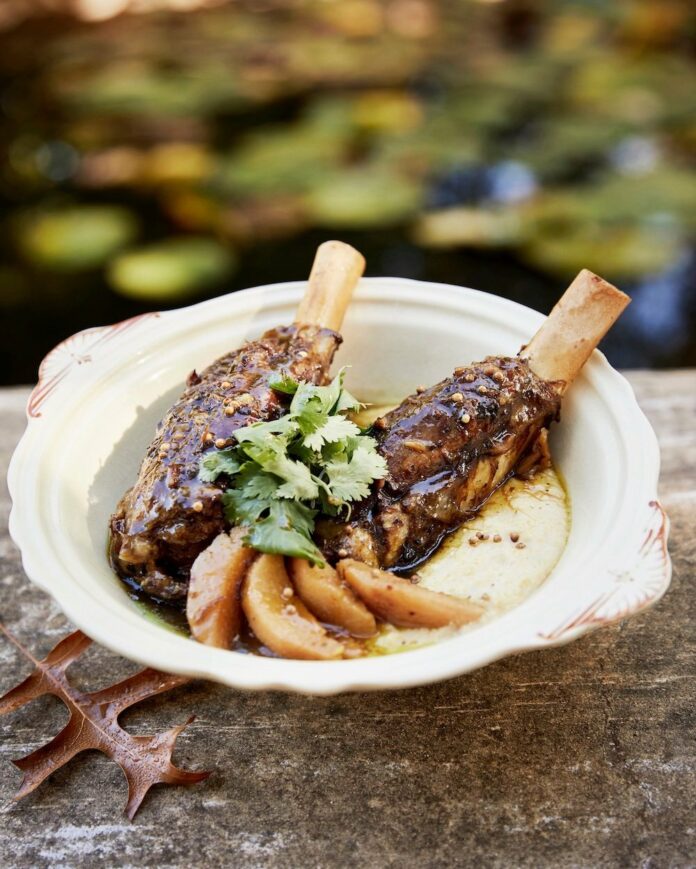
LAMB NECK WITH PICKLED QUINCE RECIPE
by Jess Shepherd and Luke Grant, Good to Gather Restaurant, Rozendal Farm, South Africa
Serves 4
Ingredients
3cm piece fresh ginger
4 cloves, garlic
2 brown onions, sliced
2 quinces, peeled, cored, and cut into wedges
2 tsp cumin powder
1 tsp turmeric
2 tsp crushed coriander seeds
4 lamb shanks
Salt and pepper
3 tbsp vinegar infused with oregano, sage or other culinary herb
4 – 5 cups chicken or beef stock
Squeeze of lemon juice
Picked coriander leaves (for garnish)
Instructions
Heat the oil in a Dutch oven or suitable casserole dish with a lid, and toss in the roughly chopped ginger, garlic and onions. Sweat until golden. Add the spices and cook for a few minutes.
Season the lamb shanks with salt and pepper, and add to the onions and brown evenly.
Turn the heat up a little and deglaze with the red wine vinegar. Turn down the heat, add the quince slices, and pour in the stock. Cover with a lid, and cook in the oven for approximately 3½ hours at 140C until the lamb is very tender, turning over the shanks halfway through the cooking.
When cooked, remove the shanks from the liquid and remove as much fat from the top of the liquid as possible. After the fat has been taken off, return the pan to the stove, and bring it to a boil to reduce the sauce. Season with salt and pepper if necessary.
Add the shanks back to the pot to warm in the sauce. Add a squeeze of lemon to freshen the taste, top with the chopped coriander, and serve.
STORY BY LORI COHEN / PHOTOGRAPHY BY WARREN HEATH – BUREAUX / PRODUCTION BY SVEN ALBERDING
Try some of TABLE Magazine’s Fall farm-to-table recipes:
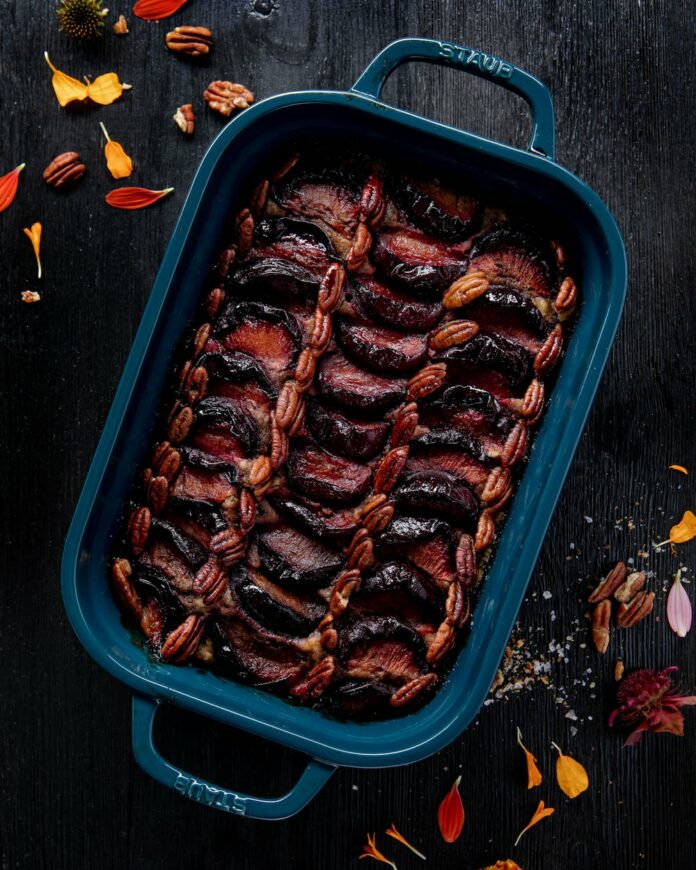
It’s plum season, but any stone fruit works in this easy cake recipe.
ORANGE OLIVE OIL PLUM CAKE RECIPE
Ingredients
1 ¾ c flour
2 tsp baking powder
½ tsp salt
1 tsp ground cardamom
1/3 cup butter (at room temperature)
¼ cup Liokareas Orange-Infused Olive Oil (plus extra for brushing)
½ cup sugar (plus extra for sprinkling)
3 eggs
1 tsp vanilla extract
1 tsp almond extract
6 plums, sliced in sixths (or other stone fruit)
½ cup pecan halves
Instructions
Preheat oven to 350 degrees. Generously grease an 8×10” baking dish.
In a mixing bowl, whisk together dry ingredients.
In another mixing bowl, beat butter, oil and sugar together until fluffy. You will need to scrape the sides of the bowl at least once.
Add sugar and beat until well combined. Scrape the sides of the bowl, and add eggs and extracts. Beat to combine.
Gradually add dry ingredient mixture, scraping the sides of the bowl as needed.
When combined, scrape the batter into the prepared baking dish. Arrange plum slices and pecans. Brush lightly with orange olive oil and sprinkle with sugar.
Bake for 35 minutes. Test with wooden skewer for doneness. Let cool before serving with vanilla ice cream or whipped cream, or just a drizzle of sweetened heavy cream.
RECIPE AND STYLING BY KEITH RECKER / PHOTOGRAPHY BY DAVE BRYCE
Try some of TABLE’s grilled treats along with this delicious cake:
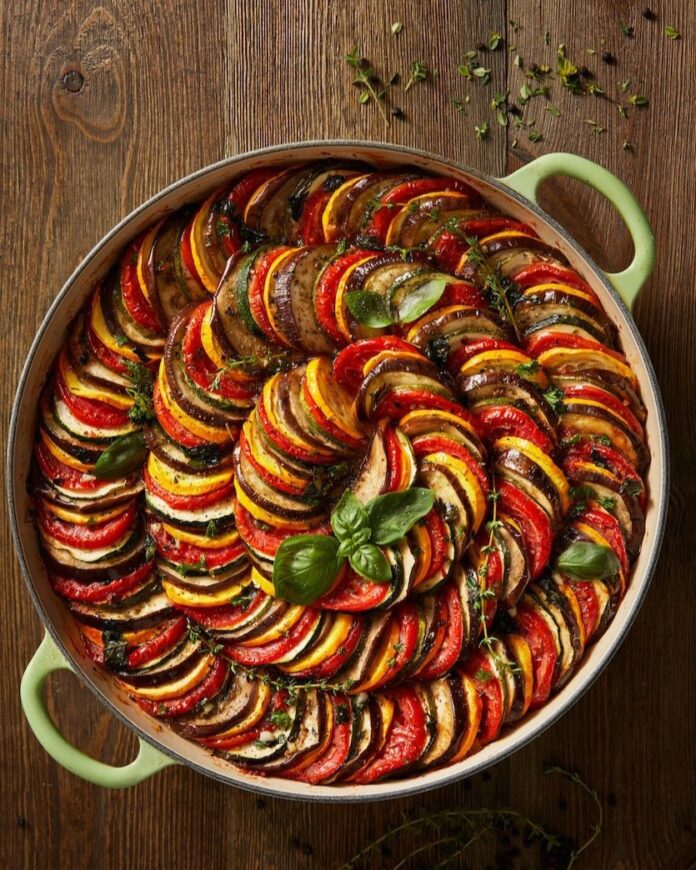
Annette Atwood’s Italian heritage gifted her with a balanced sense of what’s traditional and correct. Her innate good taste leads her to what’s new and worth trying. When she happened upon a camera-ready Spiral Ratatouille recipe, she tried it, tweaked it, and delivered it to our studio for a photo finish. It was not only ready for its close-up, but it was downright booming with bright flavors and inviting textures.
How did Ratatouille Get Its Name?
Yes, Ratatouille is also the name of the classic and heartwarming film about a rat that wants to be a chef and gets into various hijinks to achieve his culinary dreams. But, thankfully for your health, there are no rats in an actual spiral ratatouille dish. The name “ratatouille” comes from the French word “ratatouiller,” which means “to stir up.” This reflects the usual method of preparation. Traditionally, ratatouille is a Provençal vegetable stew made with ingredients like tomatoes, zucchini, eggplant, bell peppers, and herbs, making it a rare meal that is healthy, upscale, and delicious. In this version, evenly sliced veggies are arranged over a layer of flavorful tomato sauce, making the dish into something that provokes visual delight for the eyes as well as culinary delight for the tastebuds.
Both gorgeous and delicious, this dish checks two boxes essential to hosting a great dinner party.
Ingredients
Scale
2 eggplants, long and narrow
6 plum tomatoes
2 yellow squashes, long and narrow
2 zucchinis, long and narrow
3 tbsp olive oil
1 medium yellow onion, diced
4 cloves garlic, minced
2 red bell pepper, diced
1 Cubanelle pepper, ribs and seeds removed, diced
28 oz can San Marzano crushed tomatoes
10 fresh basil leaves, chopped
Salt and pepper to taste
10 fresh basil leaves, chopped
1 tsp garlic, minced
2 tbsp chopped fresh parsley
2 tsp fresh thyme
Salt and pepper to taste
4 tbsp olive oil
¼ tsp red pepper flakes
Instructions
Preheat the oven to 350 degrees. With a sharp knife or a mandolin, slice the eggplant, tomatoes, squash, and zucchini into 1/8-inch discs.
In a cast-iron skillet, heat the oil. Add onion, garlic, and peppers. Cook until tender. Add the crushed tomatoes, basil, salt, and pepper. Stir for a minute or two until bubbling. Decant sauce into a large round braising pan with lid.
Starting at the outer edge of the braising pan, place vegetable slices in a spiral, in a regular, repetitive sequence: eggplant, tomato, squash, zucchini.
Once the surface is covered with the vegetable spiral: in a small bowl, stir together basil, garlic, parsley, thyme, salt, pepper, olive oil, and red pepper flakes. Brush over the vegetable slices.
Place lid on the braising pan and place in oven for 50 minutes. Uncover and let roast for another 15 minutes, or until vegetables are tender but not overdone. Then you have your spiral ratatouille!
if ( unit && ( ‘metric’ === unit || ‘usc’ === unit ) ) {
document.querySelector( ‘.tasty-recipes-convert-button[data-unit-type=”‘ + unit + ‘”]’ ).click();
}
Many of us take a break from cooking during the peak-heat of summer. But once things get a little crisp outside, the impetus to ignite the stove cannot be ignored. Try six easy-peasy recipes full of flavorful fall farmers’ market ingredients, all based on farm produce brought to us by Buy Fresh, Buy Local of Western PA.
Prepare this hearty meal the day before a big hike, and just warm it up when you get home. Stout is its secret ingredient, giving it a rich umami flavor. Serve it with buttered slices of country bread. Parma Sausage in the Strip is a good place to procure the brats.
Producer and philanthropist Henry Simonds brings the garden to the table, especially at the end of the season.
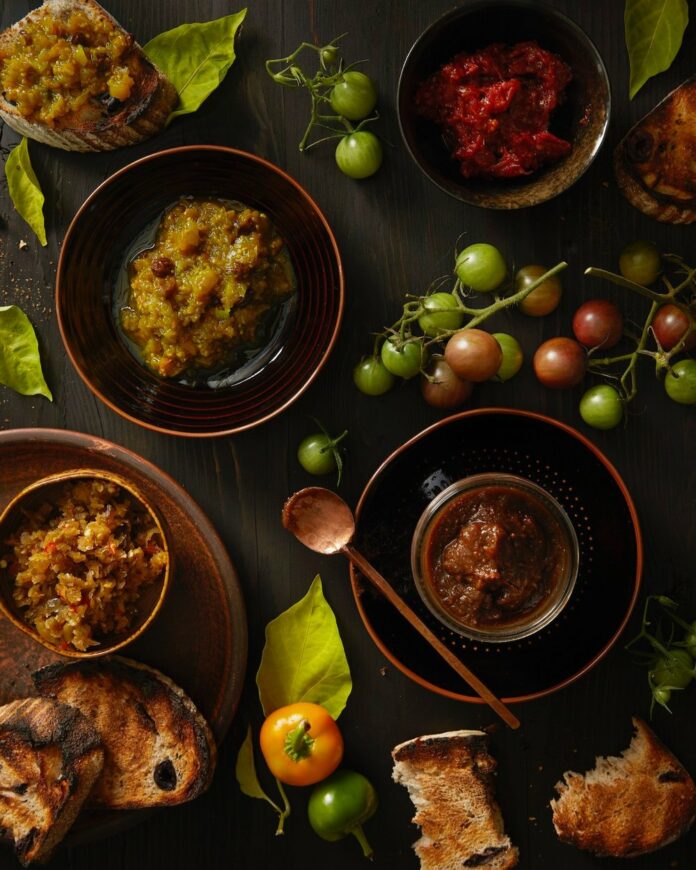
With invention and inspiration, producer and philanthropist Henry Simonds plunders his fall vegetable patch for ingredients. Because every bruised windfall tomato and too-ripe pepper is good enough for jams and relishes, he regularly conjures up cauldrons of wizard-level end-of-season goodness for use with bread and butter, on a cheeseboard, or as a condiment with the Sunday roast.
Good Intentions Fig Jam
This jam was a way to use up produce that was showing signs of turning, so Henry rescued it and had to remove any mold or bad spots. “Sometimes we have good intentions to use things when they are fresh but lose focus and have to do the right thing by them later,” he comments.
1 delicata squash
1 tsp olive oil
1 container Black Mission figs, approximately 8
2 tbsp unsalted sweet cream butter
1 clementine
1 green apple, cored and seeded
1 handful perilla leaves and buds
1 cup old red wine
1 cup water, enough to cover the mixture
¼ cup light brown sugar or maple sugar (I used Paul Family Farms Maple Sugar)
1 tsp ground ginger, or to taste
1 tsp whole clove tops or ¼ tsp ground clove
More zest of clementine
½ lemon
Cinnamon, nutmeg, other fall spices, optional to taste
1. Half the squash and remove seeds and guts, cutting away any discolored sections.
2. Cut into strips and place on baking sheet or pan outer skin down.
3. Brush or spray with light olive oil and place in the oven at 425 degrees until browned (some blackened toasting is okay and adds caramelization).
4. When ready, remove squash and let cool until it can be handled, then scoop out meat with a spoon or knife and set aside. (Skins are good for compost.)
5. Wash figs, remove stems and any moldy or discolored spots on the surface.
6. Heat a pot or Dutch oven on medium-high and melt butter (don’t let it burn!).
7. Add the figs and squash and stir to cover and simmer.
8. Zest the clementine (it does not produce a lot but adds nice flavor) and set aside.
9. Peel and remove pith from clementine and de-seed if any, then add to pot, mashing it a bit to release the juice and pulp.
10. Chop the apple and add to pot.
11. Snip or chiffonade the perilla (you can substitute tarragon if you have it or pineapple basil or pineapple sage, etc.) and add to pot.
12. Stir it all together, than add the red wine, 1 cup of water enough to cover mixture, ¼ cup brown sugar. Bring to a boil, making sure that the sugar is dissolved into liquid.
13. Turn down and simmer until apple is soft.
14. Remove from heat and let cool enough to handle, then blend all the contents in a blender or Vitamix.
15. Quickly rinse the pot or Dutch oven to get out any residue, then return to stove top.
16. Force blended contents through a wide-gauge sieve or strainer into a pot to remove any remaining seeds or hard chunks.
17. Return to simmer, adding ground ginger, clove tops or ground clove, clementine zest and set of ½ a lemon.
18. Serve or store in fridge or process in jars for shelf storage.
Green Tomato Chutney
This recipe comes in handy in July when Henry harvests early tomatoes before going away for summer vacation. He adds, “It is also good in fall when the tomatoes no longer seem to ripen or when you decide to cut back your tomato bushes to improve ripening.”
8 cups green tomatoes, any variety or size—cherry, Roma, grape
1 large orange pepper (or red or yellow to contrast with tomatoes)
1/2 cup white wine vinegar (Substitute cider, white distilled, or rice. Avoid red or balsamic as it will make the chutney brownish in color.)
1 cup white sugar
1 dash ground cinnamon
1 dash ground nutmeg
1. Wash and clean tomatoes, removing stems and woody piths. Chop in food processor (or by hand for a lot of messy work).
2. Process in batches and add each to pot or Dutch oven when desired size is met. (Note: Vary how finely you chop each batch to make for a smooth and chunky chutney.
3. Bring tomatoes to a boil and then simmer on medium-low.
4. Remove stems and seeds from peppers and rinse under cold water to get all the seeds out. (No biggie if you don’t.)
5. Dice peppers or chop lightly then process in Cuisinart to desired thickness. Add to simmering tomatoes.
6. Mix onion, lemon juice, raisins, tarragon, mixed leafy herbs, sea salt, ground turmeric, and ginger into tomato-pepper blend and bring back to a boil.
7. Reduce heat to simmer.
8. Stir in vinegar and sugar and simmer until dissolved and absorbed. (Note: Taste-test throughout, adding vinegar, sugar, salt, and spices.)
9. Stir and simmer until desired thickness is reached (approx. 210-215 degrees on candy thermometer).
10. Remove from heat and let cool. Serve or store in fridge or process in jars.
Hot Pepper Relish
A refreshing bite of spice is made rather nice with sugar and spice. All you need is a simple bit of grilled or roasted chicken, and this condiment’s magic is revealed.
5 hot Italian peppers with seeds
3 jalapeños with seeds
1 sweet Italian yellow pepper, with or without seeds
1 sweet Italian red pepper, with or without seeds
1 green bell pepper, cored and seeded
2 small purple peppers, cored and seeded
3 garlic cloves
1/2 sweet white or yellow medium onion
1 tbsp kosher or sea salt
3/4 cup vinegar, white, white wine, or apple cider
1/2 cup sugar
1/4 tsp ground mustard seed
1/2 tsp celery seeds
1. Chop pepper and dice in food processor or by hand to your size preference––make sure not to liquify and blend.
2. Dice or chop finely in food processor the garlic cloves, onion, and sea salt.
3. Mix with pepper mixture.
4. Place mixture in layers in a medium-to-large strainer over a bowl, sprinkling salt over each.
5. Layer as you go to draw out excess water. Cover with a cloth.
6. Allow to sit 1 hour to overnight (in fridge if later).
7. Mix the vinegar, sugar, ground mustard seeds, and celery seeds with pepper-onion mixture in a pot or Dutch oven.
8. Bring to boil, then simmer until liquid has evaporated and been absorbed into relish.
9. Season to taste with any spices, additional, salt, sugar, or honey to your liking.
10. Serve or store in fridge or process in jars for shelf storage.
Pennerfepple Jam
Dense and rich, with chewy bits of fennel stem stewed in for texture, this will transform a ham dinner into a something ready for primetime. When that ham goes into syndication as sandwiches, the jam keeps it fresh and entertaining.
1 bunch fennel shoots
1 green apple
3 green peppers, stemmed and deseeded
1 tsp ginger, to taste
1 cup sugar (more or less to taste)
1-2 tbsp green vermouth
1/4 cup cider vinegar to taste
1 purple pepper, thinly sliced and diced
1 tbsp fennel fronds, chopped or snipped with kitchen shears
1 chiffonade of perilla and mint leaves (substitute tarragon or pineapple basil or the like)
Pinch of salt
Pinch of grains of paradise or ground black pepper
1/2 tbsp mescal or bourbon
1. Thinly slice and dice fennel, peeling woody parts to reveal softer center before chopping.
2. Core and dice apple.
3. Thinly slice and dice green peppers.
4. Mix 2/3 peppers and remaining fennel and apple in pot or Dutch oven and cover with water.
5. Bring to a boil, then add ginger, sugar, green vermouth, and ¼ cup cider vinegar.
6. Continue to boil until sugar is dissolved. Reduce heat to low boil or simmer, stirring and scraping bottom to avoid burning and caramelization.
7. After 10-15 minutes, add remaining 1/3 green peppers, purple pepper, fennel fronds, perilla and mint leaves, pinch of salt, Grains of Paradise, and mescal or bourbon.
8. Stir and continue to simmer until temp reaches 215 degrees on a candy thermometer or to desired consistency.
9. Let cool and serve or store in fridge or process in jars for shelf storage.
Fresh, summery flavors come forward in this easy-to-make dish.
Attention all dessert lovers: stock up on the ingredients for this recipe, close the blinds, and then make two of these confections. You’ll want to hide one in the freezer so that you can surreptitiously slice off a bit when your sweet tooth strikes. Once that’s taken care of, throw open the drapes and call in the family to share the other one because this recipe strikes gold: the layers of naturally sweet corn, gooey caramel, crisp honeycomb candy… all resting atop the gingerbread crust… will dazzle and please all concerned.
What is a Semifreddo?
Semifreddo quite literally means “half-cold” or “half-frozen” in Italian. It is a luxurious, frozen dessert that’s usually uniquely smooth and creamy all without an ice cream machine. It’s sort os like a frozen mousse or very soft ice cream. Its characteristic lightness comes from the whipped cream and whipped egg yolks which are fold together before freezing. Our innovative Sweet Corn Semifreddo recipe embraces this elegant Italian tradition, transforming the unexpected sweetness of pureed corn kernels, rich cream, and a balanced touch of sugar into a refreshing treat for the season.
2 cups sweet corn kernels, pureed with a little water
For the gingersnap pie crust:
1 bag store-bought gingersnaps (food-processed is fine)
3 tbsp melted butter
½ cup sugar
Pinch salt
1 tbsp flour
For the honeycomb candy:
40 g honey
1/3 cup corn syrup or glucose
200 g sugar
2 ½ tbsp water
1 tbsp baking soda, sifted
For the caramel drizzle:
1 cup sugar
¼ cup water
6 tbsp unsalted butter
½ cup cream
1 tsp vanilla
Pinch of salt
For the whipped cream:
1 cup cream
2 tbsp sugar
Instructions
Whip cream until soft peaks form and set aside in the refrigerator.
Fill a large pot with about 2 inches of water; bring water to a boil. Rest a metal bowl on the rim of the pot.
Combine egg yolks with ½ cup sugar and whisk in the bowl, tempering yolks until thick and lighter in color, about double in volume. Remove from heat. Cover with plastic and set aside.
In another metal bowl, combine ¼ cup of sugar with whites and whisk over simmering water until light and fluffy; whisk until thick and silky, about 5 minutes or less. Set aside to cool.
Gently fold corn puree with whipped cream until combined and set aside; gently fold egg yolk and white mixtures together until combined; add both mixtures folding gently until combined.
Pour over pie crust and freeze at least overnight or 3 days ahead before serving.
Add garnishes before serving and allow semifreddo to sit at room temperature at least 10-15 minutes before serving; option to serve crust as a topping instead if no pie mold is available: just bake like streusel and use as topping.
For the gingersnap pie crust:
Preheat oven to 350 degrees.
Combine all ingredients in food processor and blend until combined, like coarse sand.
Press onto pie mold or tart pan. Bake for 10-12 minutes until set; let cool and set before using. Refrigerate or freeze for at least 30 minutes.
For the honeycomb candy:
Combine all ingredients except baking soda and bring to a boil; reduce to simmer and cook until sugar caramelizes to light golden brown, about 15-20 minutes.
Turn off the heat and whisk in baking soda; be careful as it will quickly fizz out and bubble, so work fast to transfer onto a prepared tray.
Let cool and break when cold. Store in airtight containers.
For the caramel drizzle:
Combine sugar and water, bring to a boil, and reduce to a steady bubble. Do not mix but swirl gently if needed and adjust position of the pot. Cook until caramelized and deep golden brown, about 15-18 minutes.
Add butter until melted; be careful as it will rapidly boil and could overflow or burn; keep whisking and add cream until combined.
Remove from heat and whisk vanilla and pinch of salt, let cool before serving or to allow to thicken.
For the whipped cream:
Whisk until soft peaks form.
Recipes and Styling by Rafe Vencio Story by Keith Recker Photography by Dave Bryce
Fresh, summery flavors come forward in this easy-to-make dish.
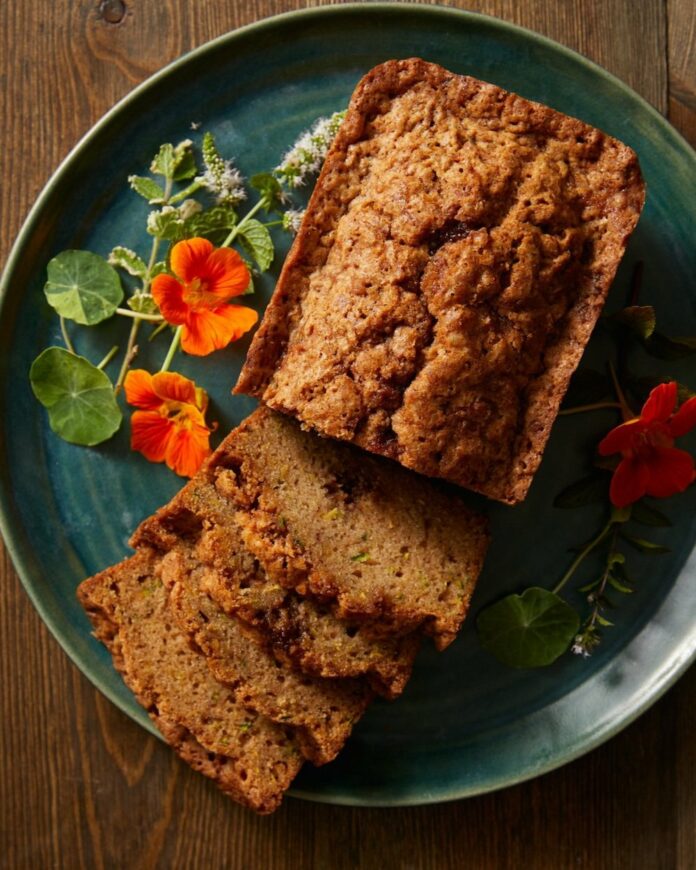
This quick-bread recipe appears at most Recker family gatherings, and it does not last long. Its delicious sweetness and dense texture make it irresistible. For decades, Brooke Recker has kept the recipe as a top-secret sort of thing. Unless she likes you and you ask very nicely for it. Now that the cat’s out of the bag, she suggests you follow the recipe, slather it with room-temperature butter from a local farm, and enjoy every bite.
BROOKE’S ZUCCHINI BREAD RECIPE
Ingredients
3 cups flour
2 cups sugar
1 tsp cinnamon
1 tsp baking soda
1 tsp salt
1 cup vegetable oil
3 eggs
1 tbsp vanilla extract
2 cups grated zucchini
1 cup brown sugar
1 tsp cinnamon
2 tbsp cold butter
Instructions
1. Grease two loaf pans. Preheat oven to 325 degrees.
2. In a large mixing bowl, whisk dry ingredients together.
3. Add oil, eggs, and vanilla and stir to combine.
4. Add zucchini and stir until combined.
5. Pour into greased loaf pans.
6. In a medium-sized mixing bowl, combine brown sugar, cinnamon, and cold butter with a fork until combined coarsely. Use half of the mixture to sprinkle in a line running down the center of each loaf.
7. Bake for 75 minutes. Check for doneness with wooden skewer.
STORY AND STYLING BY KEITH RECKER / PHOTOGRAPHY BY DAVE BRYCE / PLATTER BY FRANK DEFABO, FD CERAMICS
Try some of TABLE’s grilled treats along with Brooke’s Zucchini Bread:
Quince jelly is an old farmstead treat that was considered a luxury because of its many cups of sugar.
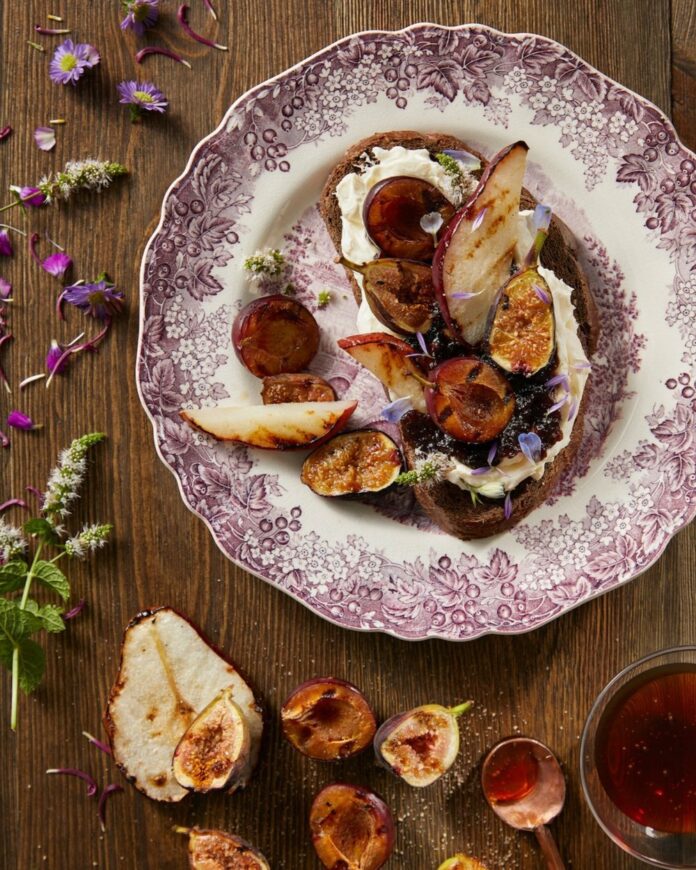
Quince was Eileen Croskey’s late father-in-law’s favorite jelly. “His old farmstead, like most in Western Pennsylvania, had a quince tree. Everything that was grown was made the most of. Nothing was wasted. Quince jelly was quite the treat because of its tartness and because of the amount of sugar used. It was a bit of a luxury,” she says when asked about the jelly’s backstory. The recipe yields a gleaming, amber-brown jelly whose sweet-and-tart taste is exquisite as part of a cream cheese sandwich on pumpernickel toast. You can add slices of grilled pear or plum, and even a scattering of sprouts or a bit of fresh radicchio.
QUINCE JELLY RECIPE
5 cups of fresh quince, peeled, cored, and cubed into 1/2 pieces
1/2 cup water
¼ cup lemon juice
1 package pectin
7 ½ cups sugar
9 pint canning jars (you’ll have a little left over)
(Note: Preparing the quince cubes is not easy because the fruit is tough…but persevere!)
1. Place quince cubes and water in a heavy saucepan and bring to a boil. Stir occasionally, especially as the water cooks down.
2. When the quince reaches the consistency of applesauce, it is ready. You may need to add a dash of water here and there if the water cooks away too quickly.
3. Add lemon juice and pectin and bring to a rolling boil.
4. Stir in sugar. Boil for 4 minutes, stirring continuously.
5. Pour into sterilized canning jars and seal. When cool, place in fridge for safekeeping.
STORY BY KEITH RECKER / STYLING BY ANNA CALABRESE / PHOTOGRAPHY BY DAVE BRYCE
Try some of TABLE’s grilled treats after you’ve had a glass of white wine and a a Quince Jelly tartine: