Home Blog Page 296

Diwali Desserts

0
Diwali, India’s five-day festival of light, starts this year on October 24. As it has for over 2,500 years, it celebrates the victory of good over evil with oil lamps and candles, flowers and…desserts. TABLE contributors Nicole Barley and Veda Sankaran discuss the beautiful traditions of this autumn holiday.

Diwali, the five-day festival observed throughout India by Hindus, Sikhs, and Jains, holds a shared symbolism for all who celebrate: “That light overcomes darkness, good overcomes evil, and knowledge overcomes ignorance,” says Veda Sankaran, recipe developer and creator of Jalsa by Veda spice mixes. One of the several origin stories about Diwali is that it commemorates King Rama’s rescue of his kidnapped wife Sita, one of the major storylines in the world’s most ancient epic poem, the Ramayana. When Rama and Sita return home to live happily ever after, the citizens of their land welcome them by lighting tiny oil lamps all over the ancient city of Ayodhya.

The word Diwali is derived from the ancient Sanskrit word deepavali, which translates to “a cluster or line of lamps,” or diyas. Throughout the holiday, these clay oil lamps are still lit around the home.

Sankaran, who is from the state of Tamil Nadu in South India, emphasizes the diversity of celebrations across India depending on language, culture, and region. For example, “Most people know it as Diwali, but I grew up saying, ‘Happy Deepavali!’ she says. “Like most holidays around the world, it’s centered around family and food. New clothing is gifted, food is shared, and in the evening, firecrackers and sparklers are set off.”

Traditions focus on the preparing and sharing of sweets. In South India, “we usually start our meals with the dessert,” says Sankaran, which is why they’re featured here first. She also notes that Indian desserts are often time-consuming to prepare, and her time-saving approach is non-traditional––but just as delicious.

jalsabyveda.com

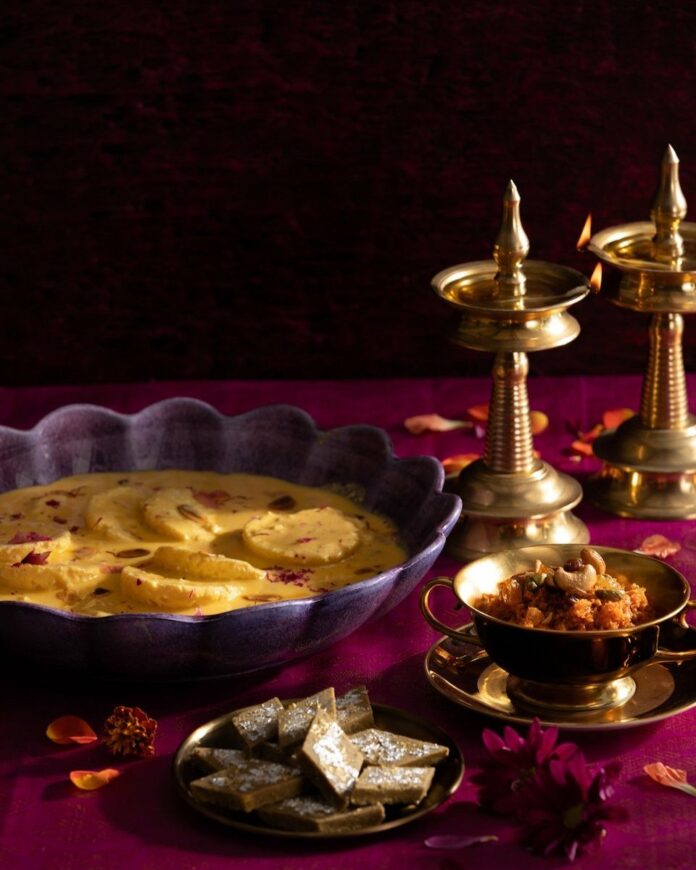
 MANGO RASMALAI RECIPE

A “milky, creamy, sweet” North-Indian specialty featuring tender bites of cheese curds (Sankaran’s version uses baked ricotta) nestled into a sweet-cream sauce blended with mango puree, cardamom, and saffron. Slivered almonds and rose petal garnishes complete the treat.

Ingredients

Neutral oil for greasing muffin tins

2 lb whole milk ricotta cheese, drained

¾ cup sugar

1 tsp crushed cardamom seeds, divided (½ for cheese, ½ for sauce)

1 cup whole milk

2 cups half and half

½ cup sugar

⅓ of a large can mango puree

Sliced almonds to garnish

Dried edible rose petals for garnish

Instructions

1.     Preheat the oven to 350 degrees. Grease a shallow muffin tin with neutral oil.

2.     Mix together the ricotta cheese, sugar, and cardamom. Scoop spoonfuls into the muffin tins, filling it not quite half way. Bake for 25-27 minutes. Take it out of the oven and let it cool slightly. Then, loosen edges with a butter knife and gently lift each piece out and place in a flat container.

3.     While the cheese is baking, heat a heavy-bottomed pan and add the milk, half and half, sugar, and cardamom. Stir until the sugar begins to dissolve and the milk begins to slow-boil. Reduce the heat and simmer for 10 minutes.

4.     Take the milk off the heat and once it’s cooled slightly, spoon in the mango puree a little at a time. Do not add the mango puree all at once as that will make the milk curdle. If by chance it does curdle a little, it will still taste good, it’s more for appearance’s sake that you want to be careful.

5.     Then pour the mango malai over the baked cheese. Cover and place in the refrigerator and let the flavors soak into the cheese. Bring the dessert to room temperature and garnish with the sliced almonds and rose petals before serving.

PISTACHIO BURFI RECIPE

 Many varieties of this fudge-like confection are prepared throughout India, from coconut to cashew. For a quick hack, Sankaran uses pistachio butter rather than ground nuts, mixed with milk powder and sugar syrup. Rolled then pressed into a pan, it is traditionally served cut into diamonds and topped with edible silver and gold foil.

Ingredients

1 tbsp ghee + enough to grease your plate

1 cup water

1/2 cup sugar

6 oz pistachio butter

1/3 cup milk powder

1/2 tsp crushed cardamom powder

Edible gold or silver foil

Instructions

1.     First, use a little ghee to grease a flat plate or tray and set aside.

2.     Next, heat a nonstick skillet on medium heat. Combine the water and sugar in the pan, stirring to dissolve. Continue heating the sugar water and stirring until the syrup becomes tacky and reaches a one-string consistency.

3.     At that stage, lower the heat and stir in the pistachio butter quickly followed by the milk powder and cardamom powder. Place in the ghee and stir to combine everything; it will form a ball which you will quickly have to place on your greased plate.

4.     Use the back of your spoon to flatten onto the plate. Work quickly as it will harden as it cools. Use your hands to press after you initially flatten with the spoon. Be careful as it will be hot. Once it is an even ¼-inch thick, let it cool and set for 2 hours.

5.     Use a sharp knife and grease the blade with ghee before carefully slicing into diamond shapes, greasing your blade between each cut. Decorate with gold or silver foil and serve.

CARROT HALWA RECIPE

 Soft and pudding-like, this halwa features carrots slow-cooked in luscious, sweetened milk. A scrumptious topping of golden raisins, cashews, and pistachios sautéed in ghee adds a textural element.

Ingredients

1 tbsp ghee + 1 tbsp ghee

8 slender carrots, peeled and grated (3 1/2 cups)

3/4 cup whipping cream

1/3 cup water

1/2 cup condensed milk

8-10 cardamom pods, remove outer husk and crush the seeds into a powder

For garnish:

1 tsp ghee

¼ cup cashews

⅛ cup pistachios

⅛ cup of golden raisins

 Instructions

1.     Heat a pan. Add 1 tablespoon of ghee. Place in the grated carrots and cook for about 4 minutes, stirring often.

2.     Then pour in the whipping cream and water. Stir and bring to a boil.

3.     Next, lower heat and simmer for an additional 5 minutes or until carrots become tender and cream evaporates.

4.     At this point add the condensed milk. Cook, stirring occasionally until the condensed milk becomes incorporated and evaporates.

5.     Place in 1 tablespoon ghee and cardamom powder and stir. Cook stirring often until the color of the carrots begins to change and darken. This may take up to 25 minutes. Stay near the stove and monitor so it doesn’t burn.

6.     Once the carrots have softened and darkened in color, remove from the heat and set aside.

7.     Warm a teaspoon of ghee and add cashews and pistachios. Lightly toast the nuts before adding in the raisins. After a few seconds place this garnish on top of the carrot halwa and serve warm.

RECIPES AND STYLING BY VEDA SANKARAN / STORY BY NICOLE BARLEY / PHOTOGRAPHY BY DAVE BRYCE

Try more of Veda’s delicious Diwali dishes:

Onion Bhaji and Dahi Papdi Chaat

Falooda

Chole Bhatura

Don’t miss a single delicious thing:

Subscribe to TABLE Magazine here!
Diwali Chole Bhatura

0
Diwali, India’s five-day festival of light, starts this year on October 24. As it has for over 2,500 years, it celebrates the victory of good over evil with oil lamps and candles, flowers and…desserts. TABLE contributors Nicole Barley and Veda Sankaran discuss the beautiful traditions of this autumn holiday.

Diwali, the five-day festival observed throughout India by Hindus, Sikhs, and Jains, holds a shared symbolism for all who celebrate: “That light overcomes darkness, good overcomes evil, and knowledge overcomes ignorance,” says Veda Sankaran, recipe developer and creator of Jalsa by Veda spice mixes. One of the several origin stories about Diwali is that it commemorates King Rama’s rescue of his kidnapped wife Sita, one of the major storylines in the world’s most ancient epic poem, the Ramayana. When Rama and Sita return home to live happily ever after, the citizens of their land welcome them by lighting tiny oil lamps all over the ancient city of Ayodhya.

The word Diwali is derived from the ancient Sanskrit word deepavali, which translates to “a cluster or line of lamps,” or diyas. Throughout the holiday, these clay oil lamps are still lit around the home.


Sankaran, who is from the state of Tamil Nadu in South India, emphasizes the diversity of celebrations across India depending on language, culture, and region. For example, “Most people know it as Diwali, but I grew up saying, ‘Happy Deepavali!’ she says. “Like most holidays around the world, it’s centered around family and food. New clothing is gifted, food is shared, and in the evening, firecrackers and sparklers are set off.”

Traditions focus on the preparing and sharing of sweets. In South India, “we usually start our meals with the dessert,” says Sankaran, which is why they’re featured here first. She also notes that Indian desserts are often time-consuming to prepare, and her time-saving approach is non-traditional––but just as delicious.

jalsabyveda.com

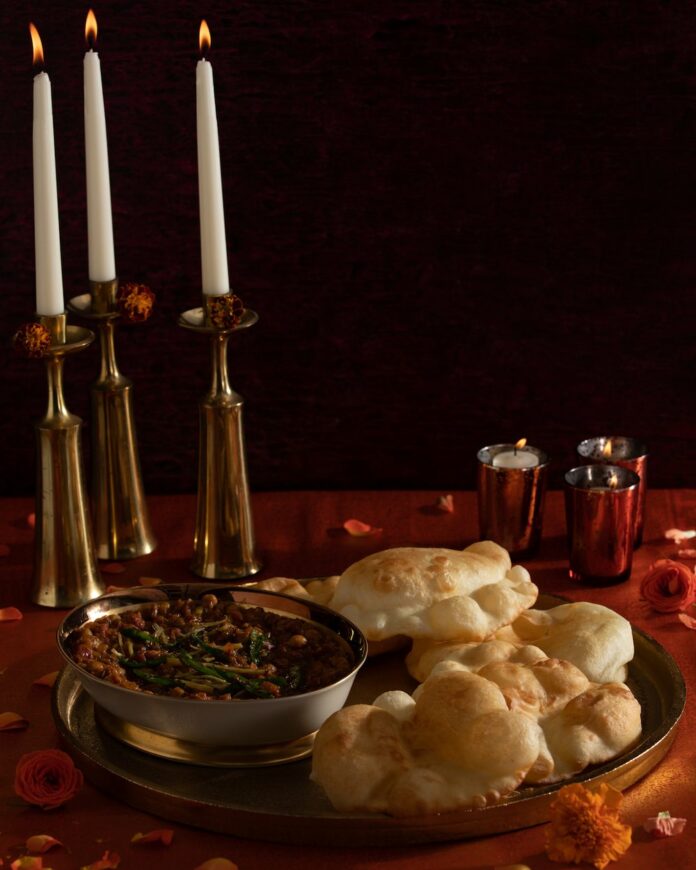
 CHOLE RECIPE

This dish starts with masala made from a bevy of toasted and ground spices: red chili, coriander, cumin, green and black cardamom, bay leaf, cloves, fennel, star anise, black peppercorn, amchur, cinnamon, and turmeric. Sautéed onions, ginger, garlic, green chili, and tomatoes round out the chickpea stew, served with bhatura, a puffy fried bread made from all-purpose flour “with a little semolina added for crispiness.”

Ingredients

For the masala: 

6 red chilis

1 tbsp cumin seeds

2 black cardamom pods

4 green cardamom pods

1 large bay leaf

4 cloves

1 tsp fennel seeds

1 small star anise

1 tbsp black peppercorns

1 2 ½-inch piece cinnamon

6 tsp coriander powder

1 tsp turmeric

1 ½ tsp amchur powder

Dry-roast all the spices except the coriander powder, turmeric and amchur powder. After cooling and finely grinding the spices, stir in the coriander, turmeric, and amchur powders. There will be enough masala to make the chole at least 3 times. Store in an airtight container.

For the chole:

2 tbsp oil

2 green chilies sliced vertically

1 large onion finely chopped

1 tsp grated ginger

1 tsp crushed garlic

1 tbsp ground masala

1 14.5 oz can diced tomatoes

1 15.5 oz can chickpeas

1 cup water

Salt to taste

2 tsp ghee

Instructions

Heat a pan and add 2 tablespoons of oil. Once heated, place in the split green chilies, followed by a little of the chopped onions, the ginger, and garlic. Stir and then add the remaining chopped onions with a little salt.

Cook, stirring occasionally until onions become lightly golden, approximately 4-5 minutes on medium heat. At this stage, add the tablespoon of the ground masala. Stir and within 30 seconds or so, add the chopped tomatoes. Use the side of your spoon to crush the tomatoes.

Cook until tomatoes darken in color and raw masala smell goes away, continuing to crush the tomatoes with your spoon. After 10-12 minutes, place in the chickpeas with 1 cup of water, stir and cover. Lower heat and simmer for 15-20 minutes, occasionally uncovering to stir and smoosh some of the chickpeas. Place in the ghee at the end before removing from the heat, serve with bhatura or chapatis.

Note: To reduce the spiciness, simply reduce the number of red chilis in the masala and reduce or omit the green chili

BHATURA RECIPE

Ingredients

2 cups all-purpose flour

2 tbsp fine semolina

1/2 tsp baking powder

1/4 tsp baking soda

1/2 tsp salt

1 tbsp sugar

2 tbsp oil

4 tbsp room-temperature milk

1/2 cup plain yogurt

Instructions

1.     Add all dry ingredients into a large-mouthed, shallow bowl.

2.     Stir together using your fingers or a fork. Then, pour in the oil, using your fingers to incorporate.

3.     Next, pour the milk in a little at a time to bring the mixture together. Place in the yogurt by the spoonful, working it into the flour between each spoonful to form a dough ball.

4.     Knead the dough for 8-10 minutes until the dough is smooth. Use the heels of your hands to roll and knead. The dough should not be too dry or too sticky.

5.     Cover with a damp paper towel or cloth and place in a warm place for at least an hour or up to 3 hours.

6.     Divide the dough into 8-10 balls depending on what size you want the bhatura to be, cover again, and let sit for 10 more minutes.

7.     When ready to prepare, roll into circles that are not too thick. Don’t roll too many at the same time as the dough will dry out.

8.     Heat oil and place one of the rolled-out dough circles in the oil, spooning the hot oil over it. Use your spoon to lightly press on the dough as this will help the bhatura to puff up. Flip the bhatura over once to evenly cook the other side.

9.     Remove and place on a paper towel-lined plate to drain off any excess oil. Serve immediately.

RECIPES AND STYLING BY VEDA SANKARAN / STORY BY NICOLE BARLEY / PHOTOGRAPHY BY DAVE BRYCE

Try more of Veda’s delicious Diwali dishes:

Onion Bhaji and Dahi Papdi Chaat

Falooda

Diwali Desserts

Don’t miss a single delicious thing:

Subscribe to TABLE Magazine here!
Diwali Falooda

0
Diwali, India’s five-day festival of light, starts this year on October 24. As it has for over 2,500 years, it celebrates the victory of good over evil with oil lamps and candles, flowers and…desserts. TABLE contributors Nicole Barley and Veda Sankaran discuss the beautiful traditions of this autumn holiday.

Diwali, the five-day festival observed throughout India by Hindus, Sikhs, and Jains, holds a shared symbolism for all who celebrate: “That light overcomes darkness, good overcomes evil, and knowledge overcomes ignorance,” says Veda Sankaran, recipe developer and creator of Jalsa by Veda spice mixes. One of the several origin stories about Diwali is that it commemorates King Rama’s rescue of his kidnapped wife Sita, one of the major storylines in the world’s most ancient epic poem, the Ramayana. When Rama and Sita return home to live happily ever after, the citizens of their land welcome them by lighting tiny oil lamps all over the ancient city of Ayodhya.

The word Diwali is derived from the ancient Sanskrit word deepavali, which translates to “a cluster or line of lamps,” or diyas. Throughout the holiday, these clay oil lamps are still lit around the home.

Sankaran, who is from the state of Tamil Nadu in South India, emphasizes the diversity of celebrations across India depending on language, culture, and region. For example, “Most people know it as Diwali, but I grew up saying, ‘Happy Deepavali!’ she says. “Like most holidays around the world, it’s centered around family and food. New clothing is gifted, food is shared, and in the evening, firecrackers and sparklers are set off.”

Traditions focus on the preparing and sharing of sweets. In South India, “we usually start our meals with the dessert,” says Sankaran, which is why they’re featured here first. She also notes that Indian desserts are often time-consuming to prepare, and her time-saving approach is non-traditional––but just as delicious.

jalsabyveda.com

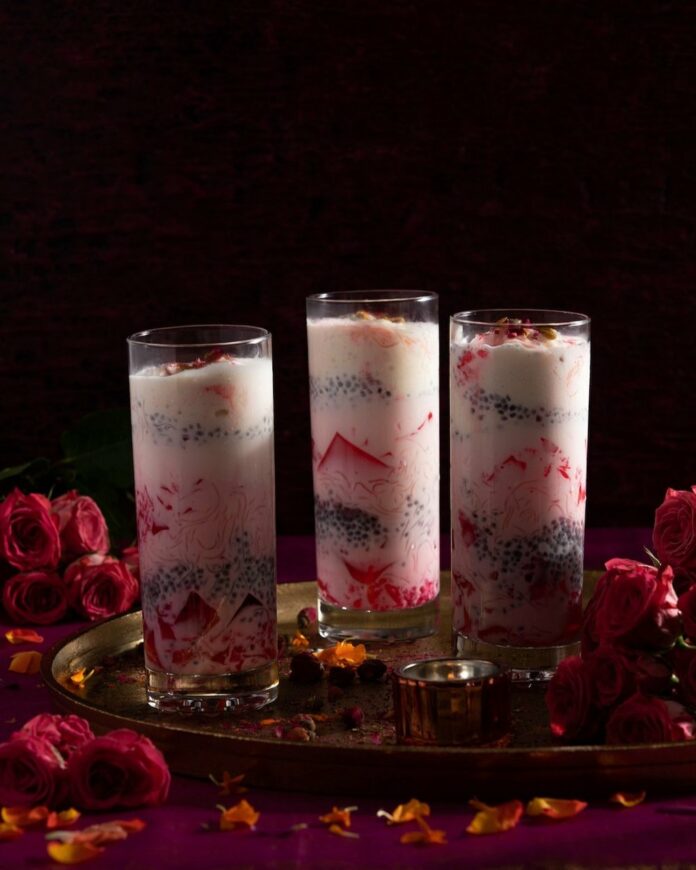
FALOODA RECIPE

This Persian treat, brought to India by the Mughals in the 16th century, can be likened to a milkshake. It’s festive with layers of rose Jell-O, corn sev, soaked basil seeds (or substitute chia seeds for a similar look and texture), rose syrup, milk, and ice cream. Slivered pistachios top it off.

Ingredients

1 packet unflavored gelatin

2 tbsp rose syrup

1 drop of red food color

1 ½ tbsp basil seeds

1 small packet falooda sev (corn vermicelli)

2 cups full-fat milk

4 scoops vanilla ice cream

Slivered pistachios

Edible dried rose petals

Instructions

1.     Follow the directions on the box of unflavored gelatin. Once the gelatin is dissolved, add the rose syrup and red food coloring, stir, and let set in the fridge.

2.     About 30 minutes before you are ready to make the falooda, soak the basil seeds in enough water to generously cover them. They will expand as they soak up the water, so err on the side of more rather than less water as you will be draining the soaked seeds.

3.     As the seeds are soaking, boil the sev following the directions on the package. Drain, then use kitchen shears to cut the thin noodles to about 6 inches long.

4.     To assemble, place cubes or small scoops of rose gelatin in the bottom of a tall glass. Then place some of the soaked basil seeds you’ve drained, followed by some of the sev.

5.     Next, drizzle some rose syrup along the inside of the glass. Pour in some milk, then repeat the layering. Finally add the scoop of ice cream and garnish with slivered pistachios and rose petals.

Note: The rose syrup, basil seeds, and falooda sev can all be found at your nearest Indian grocery store. If you need to substitute, you can use chia seeds instead of basil seeds and regular vermicelli instead of the falooda sev.

RECIPES AND STYLING BY VEDA SANKARAN / STORY BY NICOLE BARLEY / PHOTOGRAPHY BY DAVE BRYCE

Try more of Veda’s delicious Diwali dishes:

Onion Bhaji and Dahi Papdi Chaat

Chole Bhatura

Diwali Desserts

Don’t miss a single delicious thing:

Subscribe to TABLE Magazine here!
Diwali Onion Bhaji and Dahi Papdi Chaat

0
Diwali, India’s five-day festival of light, starts this year on October 24. As it has for over 2,500 years, it celebrates the victory of good over evil with oil lamps and candles, flowers and…desserts. TABLE contributors Nicole Barley and Veda Sankaran discuss the beautiful traditions of this autumn holiday.

Diwali, the five-day festival observed throughout India by Hindus, Sikhs, and Jains, holds a shared symbolism for all who celebrate: “That light overcomes darkness, good overcomes evil, and knowledge overcomes ignorance,” says Veda Sankaran, recipe developer and creator of Jalsa by Veda spice mixes. One of the several origin stories about Diwali is that it commemorates King Rama’s rescue of his kidnapped wife Sita, one of the major storylines in the world’s most ancient epic poem, the Ramayana. When Rama and Sita return home to live happily ever after, the citizens of their land welcome them by lighting tiny oil lamps all over the ancient city of Ayodhya.

The word Diwali is derived from the ancient Sanskrit word deepavali, which translates to “a cluster or line of lamps,” or diyas. Throughout the holiday, these clay oil lamps are still lit around the home.

Sankaran, who is from the state of Tamil Nadu in South India, emphasizes the diversity of celebrations across India depending on language, culture, and region. For example, “Most people know it as Diwali, but I grew up saying, ‘Happy Deepavali!’ she says. “Like most holidays around the world, it’s centered around family and food. New clothing is gifted, food is shared, and in the evening, firecrackers and sparklers are set off.”

Traditions focus on the preparing and sharing of sweets. In South India, “we usually start our meals with the dessert,” says Sankaran, which is why they’re featured here first. She also notes that Indian desserts are often time-consuming to prepare, and her time-saving approach is non-traditional––but just as delicious.

jalsabyveda.com

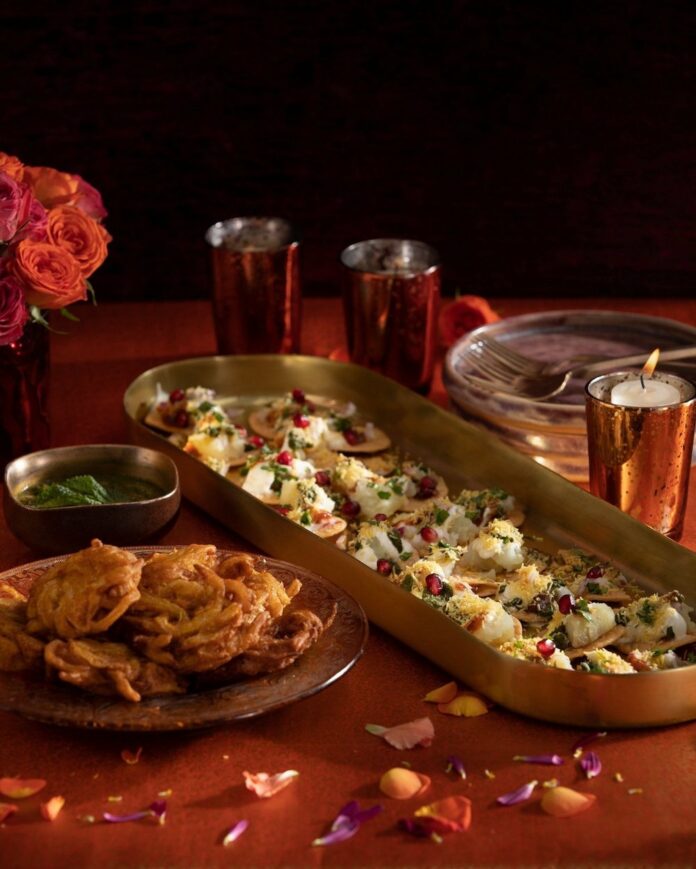
ONION BHAJI RECIPE

These popular deep-fried snacks are similar to veggie fritters or pakoras. Crunchy, salty, rich, and spiced, their chickpea-flour batter is spiked with ginger, cumin, coriander, turmeric, and chili powder. Be sure to have a bright and balancing dipping sauce, like this mint-cilantro chutney.

 Ingredients

2 medium onions, cut in half and thinly sliced (about 3 cups)

2 tsp grated ginger

1 finely chopped green chili

3/4 tsp cumin powder

1/2 tsp Kashmiri chili powder

3/4 tsp coriander powder

1/4 tsp turmeric

3/4 tsp salt

1/2 tsp baking soda

1 tbsp cornstarch

¾ cup besan or chickpea flour

4-5 tbsp water as needed, to bring the batter together

Place the sliced onions in a medium-sized bowl. Add in the grated ginger and finely chopped green chili along with the cumin powder, Kashmiri chili powder, coriander powder, turmeric, and salt. Use a fork to stir and evenly coat the onions with the spices.

Next, add the baking soda, cornstarch, and chickpea flour. Stir to coat the onions and then slowly add 1 tablespoon of water at a time until a thick batter begins to form. Pour in only as much water as needed to bring the batter together.

Heat at least 3 inches of oil to about 350 degrees. Once the oil is hot enough, take a spoonful of the onions and place gently in the oil. You can put 3-4 in at a time as long as there is space between each bhaji.

The temperature of the oil is important to regulate. If the oil is too hot, the center won’t cook while the outside burns. Also, when you place more than one bhaji in the oil the temperature reduces, so you may have to turn up the heat temporarily to raise it; otherwise, it draws in too much oil and you will end up with oily bhaji.

Fry each batch of bhaji for a few minutes on each side, remove, and place on a wire rack to drain. Serve immediately with cilantro-mint chutney.

DAHI PAPDI CHAAT RECIPE

 “Chaat is a very popular street food” that’s “tangy and sweet and spicy.” These snacks always include “something crunchy, something starchy, fresh toppings, and chutneys,” says Sankaran. This recipe starts with deep-fried pooris, a type of crunchy cracker. Next come the toppings: boiled potatoes, chaat masala-infused yogurt, red onion, cilantro, sev (small bits of crunchy chickpea-flour noodles), pomegranate seeds, tamarind-date chutney, and cilantro-mint chutney.

Ingredients

1 boiled potato, peeled and coarsely crushed

½ small red onion, finely chopped

Small handful cilantro, finely chopped

Pomegranate seeds

1 cup plain full-fat yogurt

Chaat masala to taste

25 papdis

Tamarind or tamarind date chutney

Cilantro-mint chutney

Fine sev

Instructions

Prep all the ingredients: boil the potatoes, chop the onion and cilantro, prepare the pomegranate seeds, and stir together the yogurt and chaat masala.

Assemble the chaat by placing the papdis on a large plate. Place a little of the crushed potatoes on top. Next, spoon on the yogurt and then drizzle on the tamarind and cilantro-mint chutneys. Then top this by sprinkling on the sev, followed by the finely chopped red onion and cilantro. Finally top with the pomegranate seeds. Serve immediately.

Note: The papdi, chaat masala, tamarind chutney, cilantro-mint chutney, and sev can all be purchased at your local Indian grocery store. The cilantro-mint chutney recipe for the onion bhaji can be used here if you want a homemade version. The chaat masala I used is from Spicewalla.

RECIPES AND STYLING BY VEDA SANKARAN / STORY BY NICOLE BARLEY / PHOTOGRAPHY BY DAVE BRYCE

Try more of Veda’s delicious Diwali dishes:

Falooda

Chole Bhatura

Diwali Desserts

Don’t miss a single delicious thing:

Subscribe to TABLE Magazine here!
Earl of Darkness Chocolate Tart

0
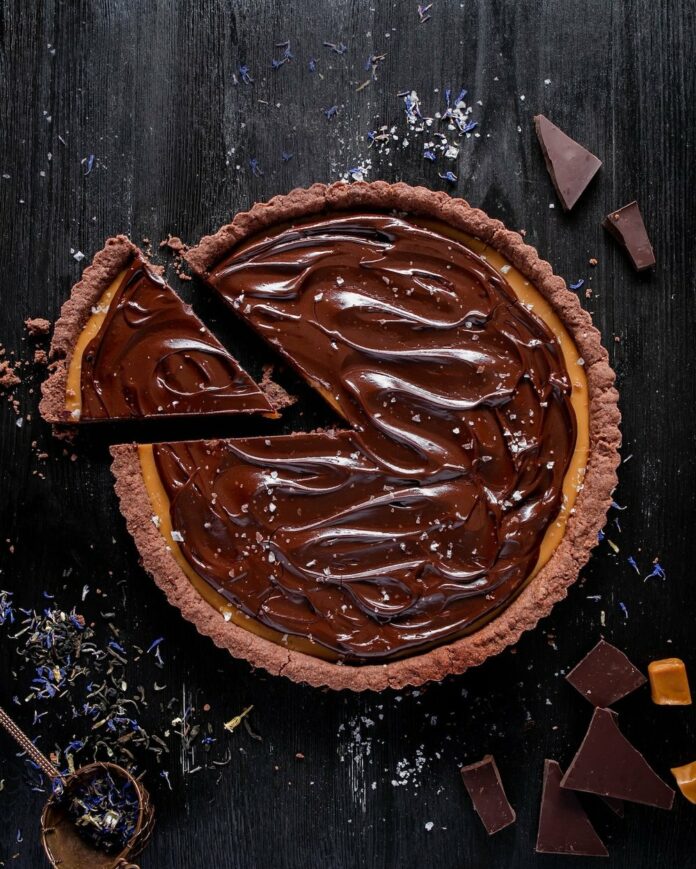
A grown up chocolate dessert recipe rich with dark appeal!

Why should the littles have all the fun at Halloween? Those of us who’ve achieved our age of majority might like a treat that isn’t wrapped in foil or a garish branded wrapper. We might like something hauntingly delicious…and we might even like seconds and thirds if what’s on offer has layers of Earl Grey caramel filling and rich chocolate ganache nested into a cocoa crust and drizzled with honey caramel. The flavors will revisit your mind when you least expect it. But since this specter will simply drive you into the kitchen rather than into madness, you will welcome the experience!

EARL OF DARKNESS CHOCOLATE TART RECIPE

For the crust:

10 tbsp unsalted butter, softened

¼ cup granulated sugar

¼ cup cocoa powder

1 ½ cups all-purpose flour

2 egg yolks

½ tsp sea salt

1 bag dried beans, for blind baking

1. Preheat the oven to 350degrees.

2. In the bowl of a food processor fitted with the blade attachment, add the butter, sugar, cocoa powder, flour, egg yolks, and salt. Pulse until combined and a dough forms (it may not fully form into a ball, but easily pinches together to hold its shape between two fingers).

3. Press the dough evenly into the bottom and up the sides of a 9 ½-10-inch tart plate with a removable bottom.

4. Prick the crust all over with a fork. Crunch up a piece of parchment paper and lay into the tart shell. Fill the shell with baking beans (this process is called blind baking). Bake for 15 minutes with the beansthen remove the tart shell and place the beans into a heatproof bowl. Return the tart shell to the oven for another 2 minutes to gently bake the bottom crust that was covered by the beans. Remove from the oven and transfer to a wire baking rack to cool completely.

For the Earl Grey caramel:

1 1/3 cups granulated sugar

½ cup heavy cream

4 bags of Earl Grey tea

½ cup water

6 tbspunsalted butter, cut into pieces

1/2 tspsea salt

3 tbsp honey

1. Place the sugar and water in a medium saucepan. Swirl around with your finger until the sugar is the consistency of wet sand. Be sure not to get sugar crystals on the side of the pot, they can burn and break the caramel. Just swirl the pan occasionally to help the sugar evenly cook.

2. While the sugar is cooking, microwave the heavy cream for 1½ minutes or until the cream is very hot; steep with 4 Earl Grey tea bags

3. Once the caramel turns blonde in color, remove the pan from the heat and carefully pour the heavy cream into the mixture and whisk to combine: the mixture will sputter, so be sure to hold the whisk with an oven mitt to avoid burning yourself! When you begin whisking, the mixture may seize up, but continue mixing and return the pan to low heat. The cream will soon melt into the caramel and become smooth and creamy.

4. Gently whisk in the butter and the salt. The mixture will bubble. Continue to simmer until thickened, about 2-3 minutes, whisking frequently.The caramel should be glossy and you see nice ribbons of caramel when whisking. To see if the caramel is ready to remove from the heat, dip a metal spoon into the caramel; it should easily coat the back of the spoon nicely. Allow the caramel on the spoon to cool slightly, then carefully run your finger down the center of the caramel on the back of the spoon and the canal in the caramel should be able to hold its shape.

5. Remove from the heat and whisk another 2-3 minutes to allow the caramel to begin cooling. The caramel will continue to thicken as it cools. Whisk in the honey once it’s slightly cooled and allow the caramel to cool for another 20 minutes or so, stirring occasionally, before pouring into the tart shell; this allows the caramel to thicken even more. Pour into the tart shell and refrigerate for an hour or two until set.

For the chocolate ganache:

4 oz dark chocolate, chopped

½ cup heavy cream

Flaky sea salt, for garnishing

1. Place the chocolate in a heat-proof bowl. Heat the cream in a medium saucepan over medium-low heat. Once simmering, pour the cream over the chocolate and allow the chocolate to sit for a couple of minutes, then stir to combine until a smooth ganache forms.

2. Pour over the chilled tart and top with flaky sea salt. Place back into the fridge to set for another hour.

3. When ready to serve, remove the tart from the tart shell, slice,and serve. After slicing, feel free to let the slices sit out at room temperature for 15 minutes or so. Store the tart covered in the fridge for up to 3 days.

RECIPES AND STYLING BY ANNA CALABRESE / STORY BY KEITH RECKCER / PHOTOGRAPHY BY LAURA PETRILLA

Try more of TABLE’s sumptuous sweets:

Homemade Marshmallows

Orange Olive Oil Cake

Saffron Panna Cotta

Don’t miss a single delicious thing:

Subscribe to TABLE Magazine here!
Stuffed Cornish Hens

0
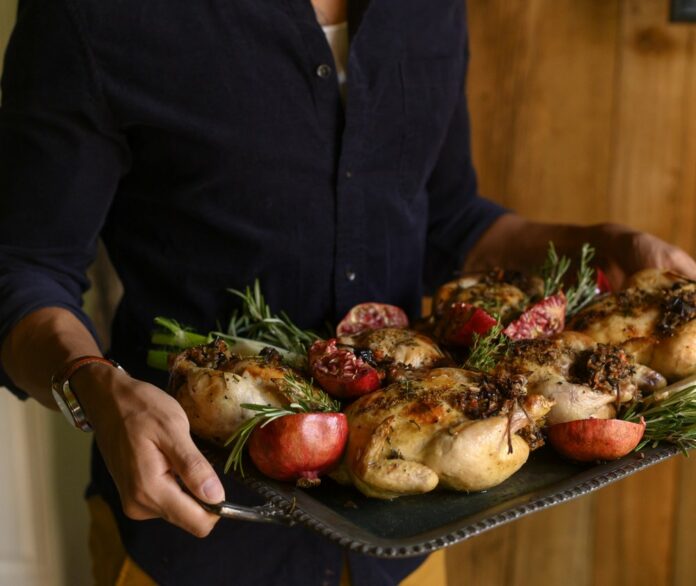
Quelcy Kogel celebrates Friendsgiving with an easy, delicious alternative to turkey.

FRIENDSGIVING CORNISH HENS WITH GLUTEN-FREE WILD RICE STUFFING

Skip the turkey and put something festive on each plate with herb-roasted Cornish hens stuffed with tart cherry, wild rice stuffing, and a pool of homemade gravy.

For the brine:

(Note: This step can be done the night before.)

1 ½ cup kosher salt (or 1 cup table salt)

1 ½ gallons water

8 Cornish hens (about 3 lb each), giblets removed

In a large pot, bucket, or several large mixing bowls, dissolve the salt in the water. Add the hens, cover, and refrigerate for at least 2-3 hours, or overnight. Remove the hens from the brine, rinse them thoroughly, then pat dry. Prick the skin all over the breast and legs with the point of a paring knife.

For the basic wild rice preparation:

(Note: This step can be done in advance, and the rice can be refrigerated until you’re ready to prepare the Cornish hens).

3 cups low-sodium chicken or vegetable broth

1 ½ cups wild rice blend

Bring the broth to a boil in a large saucepan. Stir in the rice, bring to a boil, then reduce heat to low, cover, and simmer until the rice is cooked and fluffy, about 40 minutes. Remove from heat, and fluff with a fork.

For the Wild Rice Stuffing:

4 tbsp unsalted butter

1 cup chopped shallots

½ cup minced carrot

½ cup minced celery

1 tsp grated fresh ginger

1/2 tsp kosher salt

½ tsp black pepper

2 tbsp chopped fresh sage (or a chopped poultry herb mix)

½ cup dried tart cherries

¼ cup chopped parsley

2 tbsp red wine vinegar

Zest of 1 orange

1.     Heat the 4 tablespoons of butter in a medium sauté pan, over medium-high heat. Add the shallots, carrot, celery, and grated ginger. Season with salt and pepper.

2.     Cook the vegetables until softened and starting to brown, 6-8 minutes.

3.     Stir in the chopped sage and cook for 1 minute.

4.     Add the cooked rice, tart cherries, parsley, vinegar, and orange zest. Reduce the heat to low, stir, and cook until the ingredients are evenly mixed, about 1 minute. Remove from heat and set aside (or refrigerate) until ready to stuff and cook the hens.

For the Cornish hens:

8 brined Cornish game hens

10 tbsp Highlands Butter Co.’s Barrel Rested Maple Butter, or unsalted butter, at room temperature

2 tbsp chopped fresh sage

2 tbsp chopped fresh thyme

4 tsp chopped fresh rosemary

Salt and pepper

1.     Adjust the oven rack to the middle position and heat the oven to 400 degrees. Place a wire rack inside a large-rimmed baking sheet (at least 19 x 13 inches). Repeat with a second rack and baking sheet.

2.     Divide the stuffing equally among the hens, spooning about ½ cup stuffing into the cavity of each hen. Tie the legs of each hen together with a 6-inch piece of kitchen twine.

3.     Generously butter the hens, then season with the chopped herbs, salt, and pepper.

4.     Leaving as much space as possible between each hen, arrange them on the prepared rack-lined baking sheets, breast-side down and wings facing out.

5.     Roast until the backs are golden brown, about 25 minutes.

6.     Roast until the hens are golden with some browning and an instant-read thermometer inserted into the stuffed cavity registers about 150 degrees, about 50-60 minutes.

7.     Remove the hens from the oven and let them rest for 20 minutes.

8.     In the meantime, arrange them on a platter, and garnish, and prepare the gravy.

RECIPE, STORY AND STYLING BY QUELCY KOGEL

PHOTOGRAPHY BY JEFF SWENSEN

Follow your cornish hen feast with one of TABLE’s sumptuous sweets:

Earl of Darkness Chocolate Tart

Orange Olive Oil Cake

Saffron Panna Cotta

Don’t miss a single delicious thing:

Subscribe to TABLE Magazine here!
Roasted Radishes with Garlic Scape Butter

0
Many of us take a break from cooking during the peak-heat of summer. But once things get a little crisp outside, the impetus to ignite the stove cannot be ignored. Try six easy-peasy recipes full of flavorful fall farmers’ market ingredients, all based on farm produce brought to us by Buy Fresh, Buy Local of Western PA.

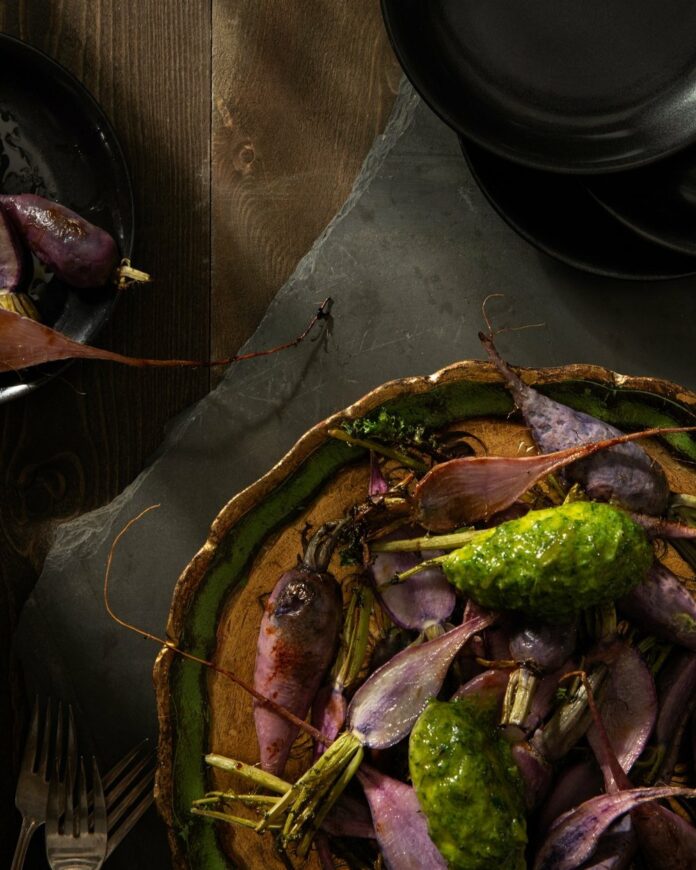
You have to try roasted radishes to appreciate their goodness. A cool-weather staple at most farmers’ markets, they come out of the oven beautifully every time. If you still have garlic scapes in the freezer from last spring, wonderful. If not, substitute with garlic and scallion.  Radishes should be available well into fall at Shenot Farm, and butter is always on offer at Brunton Dairy.

ROASTED RADISHES WITH GARLIC SCAPE BUTTER RECIPE

Ingredients

1 tbsp olive oil

3 garlic scapes, cut into 1-inch pieces (can substitute with 4 cloves of roasted garlic and one roasted scallion)

1 lb butter, softened

¼ cup parsley

1 tbsp fresh chopped dill

Juice of 1 lemon

2 lb radishes, cut in half lengthwise

Sea salt to taste

Instructions

  1. In a saucepan, heat olive oil, add scapes, and lightly sauté.

2. Add to a blender with the rest of the ingredients and blend until smooth.

3. Roast radishes at 400 degrees until brown and crispy on the outside.

4. Serve on a platter and top with butter and sea salt.

RECIPES AND STYLING BY ANNA CALABRESE / PHOTOGRAPHY BY DAVE BRYCE / STORY BY KEITH RECKER / WITH SUPPORT FROM BUY FRESH, BUY LOCAL OF WESTERN PA

Try more of our Fall farm-to-table Great Plates recipes:

Sweet and Sour Red Cabbage

Ham, Beans and Greens

Twice-Baked Butternut Squash with Brie

Cider-Glazed Pork Loin with Roasted Apples and Potatoes

Beer Brat Stew

Don’t miss a single delicious thing:

Subscribe to TABLE Magazine here!
Turkey and Granny Smith Apple Sandwich

0
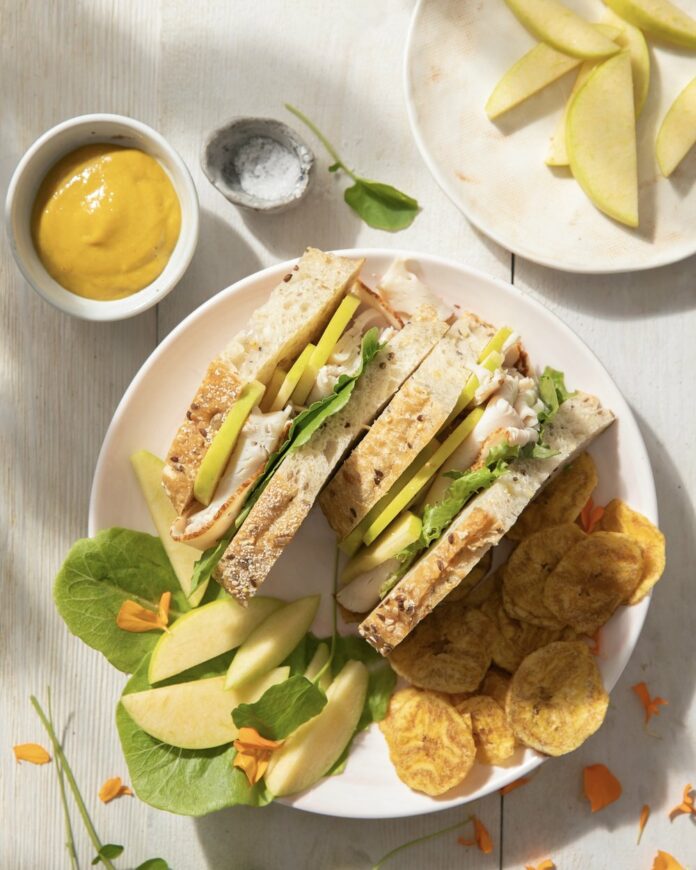
Getting kids started with meal prep often begins by making them comfortable with simple combinations of ingredients. This tasty sandwich is a great segue to bigger things.

Baby steps. Get your kids into the kitchen by first giving them simple tasks. Sandwich construction consists of little prep and few ingredients. Encouraging them to experience pairing different ingredients, like adding apple slices to a sandwich, is a great way to help them learn about creativity and experimentation with food. This is one way that Chef Alekka Sweeney teaches bridging the gap of the youthful flavor palette to one with a more adventurous approach. It seems simple, but you gotta start somewhere.

Alekka Sweeney is a Pittsburgh-based culinary director and baking instructor focused on dining curations and cooking classes. After more than 20 years spent in Chicago, her main goal is to share her culinary and baking skills with all ages and cooking levels. Her kid-friendly recipes are intended to be easy enough to give children some independence in the kitchen, encourage them to explore new flavors, and help them learn to prepare things for the entire family to enjoy.

TURKEY AND GRANNY SMITH APPLE SANDWICH RECIPE

Ingredients

4 oz Turkey Breast, deli style sliced

1 apple, Granny Smith-thinly sliced

1 Tbsp mustard

8 slices whole wheat bread

1/2 C spinach, or any greens-washed and dried

Instructions

Spread mustard on 4 slices of bread.

Add turkey, apple, and spinach to each slice.

Place another piece of bread atop loaded slice.

Serve with plantain chips, carrots or more apple slices.

RECIPE BY ALEKKA SWEENEY / STYLING BY KEITH RECKER / PHOTOGRAPHY BY DAVE BRYCE / STORY BY STAR LALIBERTE

Try some of TABLE’s other kid-friendly recipes:

S’mores Empanadas

Strawberry Pineapple Agua Fresca

Homemade Marshmallows

Quesadilla with Guacamole and Pico de Gallo

Chicken Satay with Cucumber Salad

Peach and Corn Salsa with Tortilla Chips

Chili-Lime Popcorn

Don’t miss a single delicious thing:

Subscribe to TABLE Magazine here!
Chicken Satay with Cucumber Salad

0
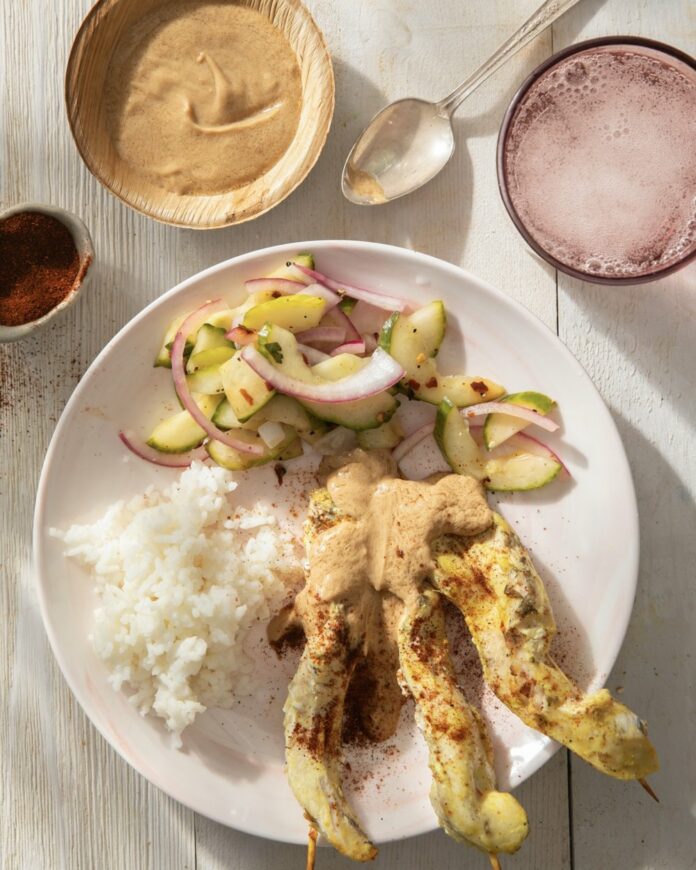
Kids are fascinated with the preparation of chicken satay, and its nutty dipping sauce.

Kids find skewering meat and making a sauce from peanut butter a fascinating thing. The easy preparation of this flavorful dish by TABLE friend Chef Alekka Sweeney makes it a great family activity.

Alekka Sweeney is a Pittsburgh-based culinary director and baking instructor focused on dining curations and cooking classes. After more than 20 years spent in Chicago, her main goal is to share her culinary and baking skills with all ages and cooking levels. Her kid-friendly recipes are intended to be easy enough to give children some independence in the kitchen, encourage them to explore new flavors, and help them learn to prepare things for the entire family to enjoy.

CHICKEN SATAY WITH CUCUMBER SALAD RECIPE

CHICKEN SATAY

Ingredients

1lb. chicken tenders

3 tbsp smooth peanut butter

1 cup coconut milk

1 tbsp soy sauce or tamari

1 tbsphoney

1 tsp mild curry powder

juice of 1 lime

1 garlic clove, crushed

Wooden skewers-soaked in water for 10 min

Instructions

Thread the chicken onto wooden skewers and transfer to a plate while you make the satay sauce.

To make the sauce put the peanut butter, coconut milk, soy sauce, honey, curry powder, lime juice and garlic in a blender and processuntil fully combined and smooth.

Pour half the satay sauce into a saucepan and set aside.

Brush or pour the rest of the sauce onto the chicken skewers so that they are all lightly coated.

Cook the skewers under a medium grill for 10-15 minutes, turning once until they are evenly cooked and lightly browned on each side.

While the chicken is cooking, gently heat the remaining satay sauce in the saucepan on a low heat until warmed through.

Pour the sauce into a bowl and serve with the chicken skewers, rice and cucumber salad.

CUCUMBER SALAD

Ingredients

1 English cucumber-cut in half and seeds removed and cut into half moons

½ red onion-sliced

¼ cup white vinegar

¼ cup water

1 TBSP sugar

1/3 tsp red pepper flakes

Instructions

Toss all ingredientsin a bowl and let sit for 10 minutes before serving.

RECIPE BY ALEKKA SWEENEY / STYLING BY KEITH RECKER / PHOTOGRAPHY BY DAVE BRYCE / STORY BY STAR LALIBERTE

Try some of TABLE’s other kid-friendly recipes:

S’mores Empanadas

Strawberry Pineapple Agua Fresca

Homemade Marshmallows

Quesadilla with Guacamole and Pico de Gallo

Turkey and Granny Smith Apple Sandwich

Peach and Corn Salsa with Tortilla Chips

Chili-Lime Popcorn

Don’t miss a single delicious thing:

Subscribe to TABLE Magazine here!
Peach and Corn Salsa with Tortilla Chips

0
Give the kiddos some freedom in the kitchen with a fun popcorn recipe.

Who doesn’t love salsa?

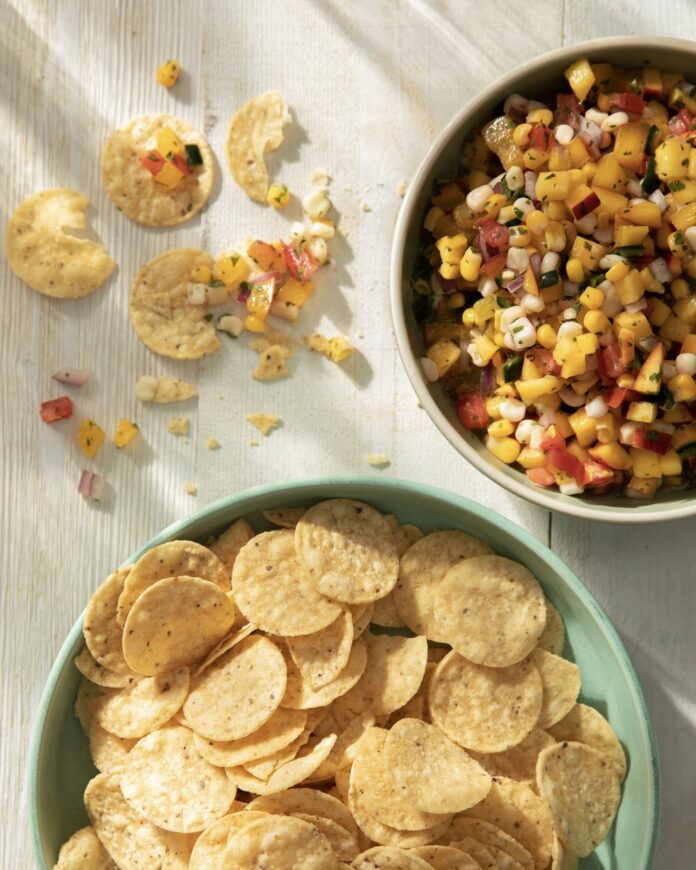
This kid-friendly recipe by TABLE friend Chef Alekka Sweeney is a delicious way to get your kids in the kitchen. Its sweet and spicy flavors are not only deliciously enjoyed as a snack atop tortilla chips, but are also great condiments with grilled fish, chicken, or pork.

Alekka Sweeney is a Pittsburgh-based culinary director and baking instructor focused on dining curations and cooking classes. After more than 20 years spent in Chicago, her main goal is to share her culinary and baking skills with all ages and cooking levels. Her kid-friendly recipes are intended to be easy enough to give children some independence in the kitchen, encourage them to explore new flavors, and help them learn to prepare things for the entire family to enjoy.

Peach and Corn Salsa Recipe with Tortilla Chips

Ingredients

3 medium peaches peeled, pit removed, and chopped
2 ears sweet corn kernels cut off the cob-or 1 small bag frozen, thawed
1 cup cherry or grape tomatoes halved
1/3 cup diced red onion
1 jalapeno minced
¼ cup chopped cilantro
2 tablespoons fresh lime juice
Kosher salt and black pepper to taste
1 bag tortilla chips

Instructions

  1. In a large bowl, combine peaches, corn, tomatoes, red onion, jalapeno, and cilantro.
  2. Add the lime juice and season with salt and pepper.
  3. Gently stir and serve immediatelywith tortilla chips.

Yields 3-4 servings

Recipe by Alekka Sweeny / Styling by Keith Recker / Photography by Dave Bryce / Story by Star Laliberte 

Subscribe to TABLE Magazine’s print edition.

Don't Miss