Home Blog Page 118

How to Make Hibiscus Cocktails: Bright, Floral Drinks from a Pittsburgh Distiller

0
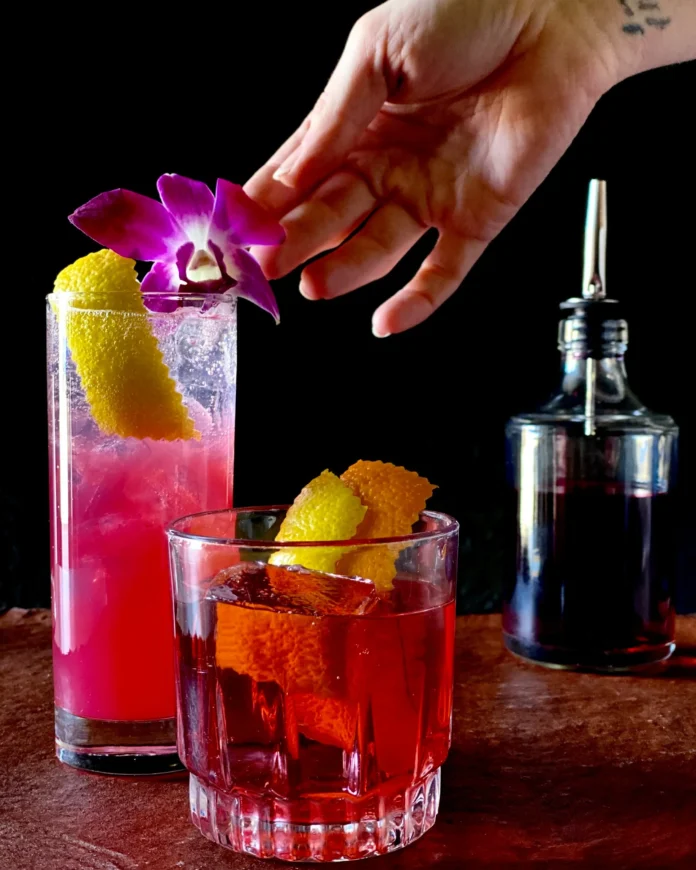
Two Hibiscus cocktails, one in a rocks glass, one in a high ball glass. The later is very pink in color and a white had is putting a pink flower on top.

The phrase “you eat with your eyes first” rings true when looking at cocktails made with Kaitlin Fellers’ hibiscus liqueur. Their vibrant color practically begs to be sipped.

As the deep magenta suggests, the vodka-based spirit, crafted at Lawrenceville Distilling Co. to take the place of Campari, is bright, tart, and floral, made with the same flower – hibiscus – used to flavor the distillery’s batches of absinthe rouge.

In her cocktails, Fellers balances the hibiscus liqueur with bitters, citrus, and herbal syrups. She plays to the floral notes by pairing her spirit with the distillery’s “no-nonsense,” Ginzer American Gin. Her negroni riff showcases a more spirit-forward, herbaceous use of the liquor, while the spritz leans refreshing and fruity.

(For at-home bartenders – because her hibiscus liquor isn’t easily replicated outside of the distillery – Fellers recommends replacing the spirit with Sorel, a true hibiscus liquor tied to the maker’s Caribbean roots, Campari, Aperol, or any bitter orange aperitif lying around in the bar cabinet.)

Print
clock clock iconcutlery cutlery iconflag flag iconfolder folder iconinstagram instagram iconpinterest pinterest iconfacebook facebook iconprint print iconsquares squares iconheart heart iconheart solid heart solid icon

Pretty Spritzin’


  • Author: Kaitlin Fellers

Description

In her cocktails, Fellers balances the hibiscus liqueur with bitters, citrus, and herbal syrups, playing to the floral notes by pairing her spirit with the distillery’s “no-nonsense,” Ginzer American Gin.


Ingredients

Scale
  • 2 dashes Peychaud’s bitters
  • 1 dash Bittermen’s Boston Bitters
  • ½ oz lemongrass syrup
  • ¾  lemon juice
  • ¾ oz Ginzer American Gin
  • 1 ½  oz hibiscus liqueur


Instructions

Shake ingredients and strain into a wine or Collins glass. Top with ice, seltzer, and an orchid garnish. Enjoy!

Print
clock clock iconcutlery cutlery iconflag flag iconfolder folder iconinstagram instagram iconpinterest pinterest iconfacebook facebook iconprint print iconsquares squares iconheart heart iconheart solid heart solid icon

Your Best American Negroni


  • Author: Kaitlin Fellers

Description

Her negroni riff showcases a more spirit-forward, herbaceous use of the liquor, while the spritz leans refreshing and fruity.


Ingredients

Scale
  • 1 oz Ginzer American Gin
  • 1 ¼  oz hibiscus liqueur
  • ¼  sweet vermouth


Instructions

Build the drink in a rocks glass, then stir to combine. Garnish with expressed orange peels.

Recipe by Kaitlin Fellers
Story by Maggie Weaver
Photography and Styling by Keith Recker
Pittsburgh Events: Your Guide to August 4-10

0
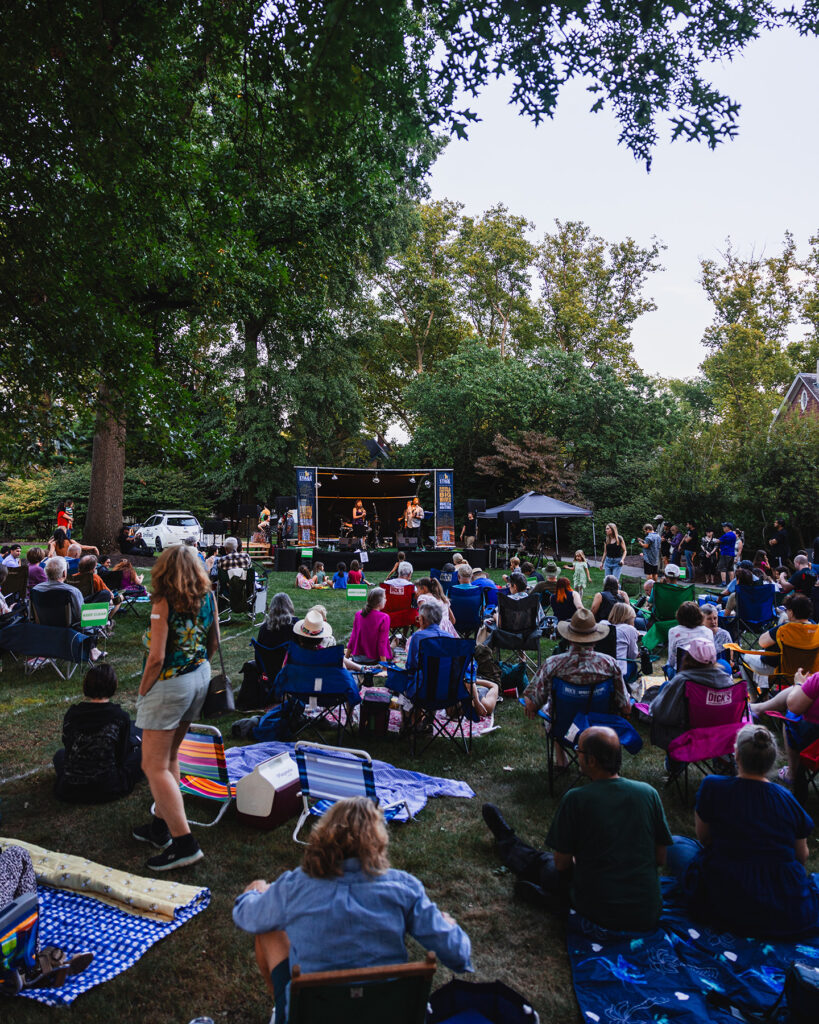
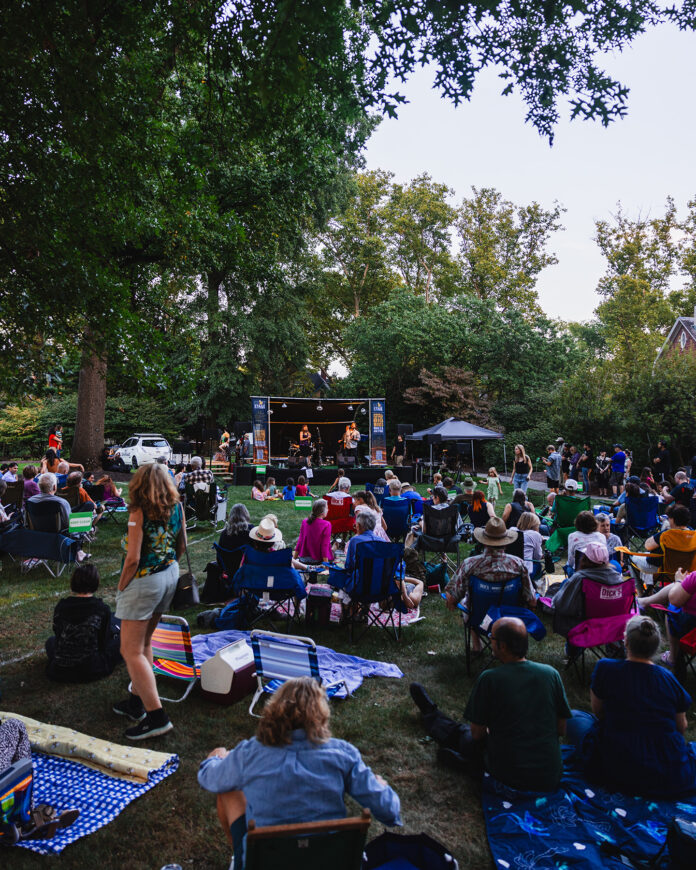
A group of people sit on the lawn at The Frick Pittsburgh.

The kiddos have about one or two weeks of summer vacation left before it’s back to school and back to routine. Make the most of these last free days by taking your whole family out on an adventure. You can head out to listen to live music or visit some animal friends. Plus, after the kids are fast asleep, it’s time for the parents to have fun with brews, exhibits, and creative performances.

Pittsburgh Events Happening August 4-10

A group of people sit on the lawn at The Frick Pittsburgh.
Photo Courtesy of The Frick Pittsburgh

Summer Fridays at the Frick: Klezmer on the Lawn

August 8, The Frick Pittsburgh

The Frick invites guests to kick back and relax to live music on their lawn, featuring Klezmerati, led by Henry Shapiro. This group offers a dynamic and fresh take on Klezmer musical tradition, blending old-world melodies with new energy through an innovative acoustic plectrum guitar. Attendees can enjoy this performance alongside food trucks, artmaking, and family fun.

A man and woman look at an exhibit at the science center.
Photo Courtesy of Carnegie Science Center

21+ Night: Neuro Night 

August 8, Carnegie Science Center

Explore the fascinating science of the brain and mental well-being in an adult-only environment at the Carnegie Science Center. Dive into interactive exhibits, hear from neuroscience experts, and test your perception with magic tricks and optical illusions. Besides the exhibits, dance to a silent disco, laugh at local stand-up comedy, and sip on themed cocktails.

A group of people wait to sample beers at the zoo.
Photo Courtesy of Pittsburgh Zoo and Aquarium

Zoobrew

August 9, Pittsburgh Zoo and Aquarium

Celebrate the wonders of bioluminescence. Attendees can experience the Zoo after hours, marvel at glow-in-the-dark characters from the animal kingdom, and enjoy unlimited samples of craft beers and ciders. Wear your brightest colors for live music, engaging animal visits, and giant yard games as well. 

A woman in a red sweater sitting on a chair performs on stage.
Photo Courtesy of Fleabag

Fleabag

August 10, Pittsburgh Playhouse

The critically acclaimed one-woman show written and performed by Phoebe Waller-Bridge and directed by Vicky Jones, returns to cinemas this summer. This hilarious and provocative play, which inspired the BBC series, offers a raw look into the life of a seemingly self-obsessed woman facing family and love life issues. Captured live from London’s West End in 2019, don’t miss your opportunity to see this original play.

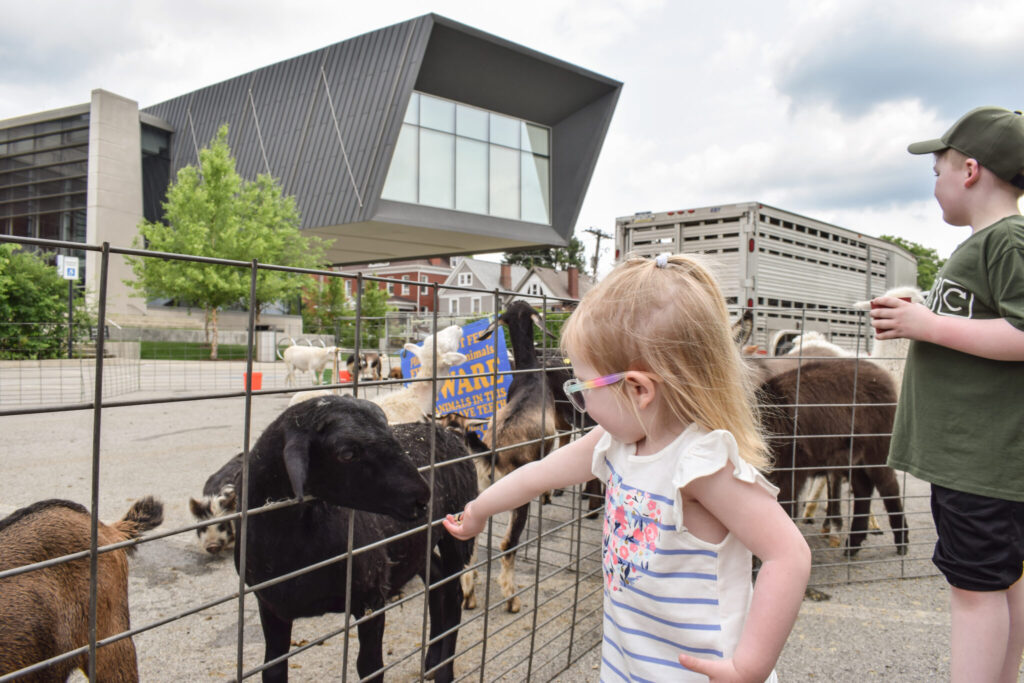
A little girl pets a goat through a fence.
Photo Courtesy of Westmoreland Museum of American Art

Sunday Fun Day: Animal Kingdom

August 10, Westmoreland Museum of American Art

Learn all about the animal kingdom through interactive education sessions and hands-on animal-themed art activities. Besides excitement, learning, and artistic inspiration, check out the Art Maze for free and check out the announcement of Westmoreland County’s America250PA commemorative bell while indulging in food and drink from local vendors.

Find more happenings on our event page!

Story by Kylie Thomas
Featured Photo Courtesy of The Frick Pittsburgh

Subscribe to TABLE Magazine‘s print edition.

Apis Mead & Winery Reaches 11 Years in Carnegie

0
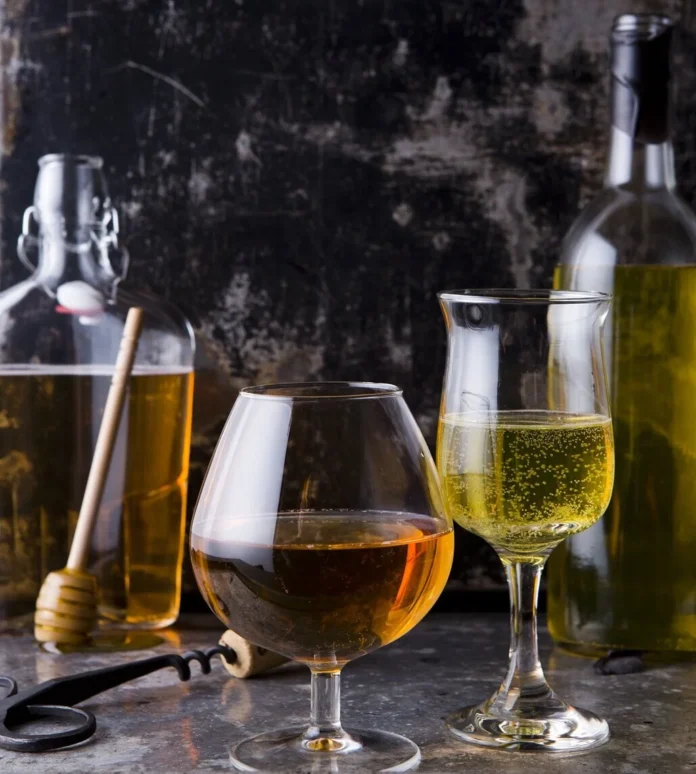
Two glasses of mead sit in front of two bottles of mead at Apis Mead and Winery in Carnegie.

As Apis Mead & Winery celebrates their 11th year anniversary, we’re looking back at this Carnegie staple’s history selling mead and beyond.

Going Back in Time at Apis Mead & Winery in Carnegie

On Main Street, in the downtown of Carnegie, David Cerminara owns Apis Mead & Winery in a former record store. He came from a craft beer background, having previously been the cellar master at Penn Brewery. He opened the business less than a year and a half ago, but had been making mead for 10 years before that. “When I started making mead, there were no American options,” he says. “I developed an idea of what I wanted a meadery to be for people. I was never in one myself before I opened my own.” Since then, he’s visited others, such as Brothers Drake Meadery in Columbus, Ohio. He feels his style of mead is ”more modern than some; lighter, slightly carbonated.”

He sources almost all of his ingredients locally, with rare exceptions. As he points out, “People don’t grow pineapple here.” He sells to dozens of restaurants in the area, doing it all himself, from making the product to delivering it in his truck. He has one employee, Joe Deck, who does the artwork on the walls as well as on the label.

The Special Nature of Mead

One surprise for the first-time mead drinker may be that it’s often fermented dry. Expect the rich flavors of honey, but not necessarily the sweetness. He offers a variety of meads, including a delicious raspberry/blackberry blend, as well as “Lemon Bourbon,” whose citrusy acidity awakens the palate. The name comes from the fact that it is aged in bourbon barrels from Kentucky, used only once before. There is no bourbon in the mead itself.

Not only does Apis have a comfortable, rustic atmosphere in which to sip one of Dave’s creative flavors, it also has a library and game area, where you can read about Pittsburgh-born artist Mary Cassatt, or play Pictionary or Monopoly with your friends. More fun than re-writing Aristotle? Probably.

Apis Mead & Winery, 212 E. Main St., Carnegie.

Story by Philip Real
Photography by Adam Milliron

Subscribe to TABLE Magazine‘s print edition.

Bubbles Beyond Champagne

0
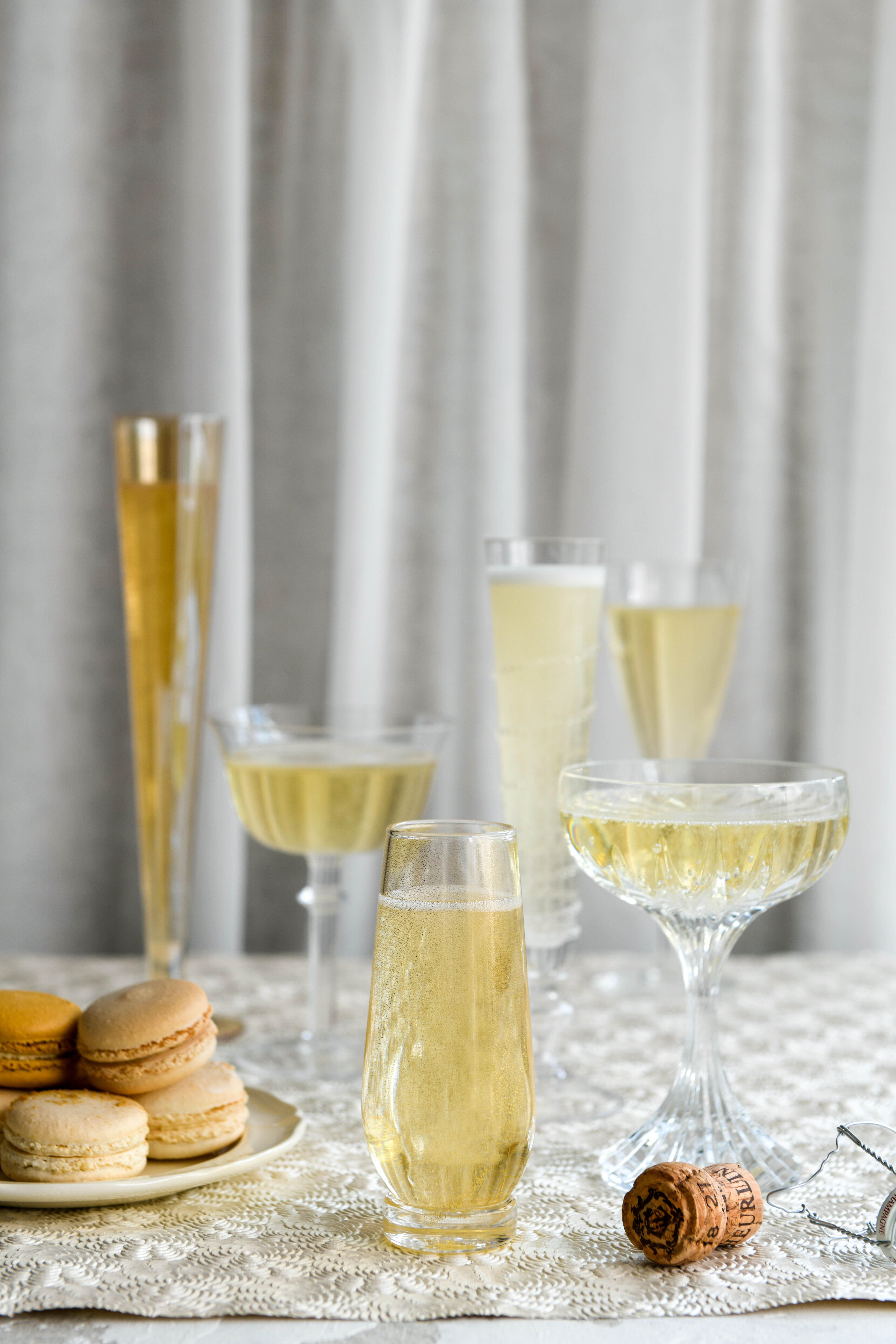
Various glasses of golden bubbly champagne cocktails.

When it’s time to celebrate, a little sparkling wine can do wonders to set the tone. While champagne is the classic, bubbly choice, there is a whole world of lesser-known but exquisitely delicious options out there for the quaffing. But what to choose? Here’s a short guide to a handful of styles to pair with any celebration.

Alcoholic Bubbles to Try Beyond Champagne

For the Adventurous

Pétillant naturel (pét-nat), also known as methode ancestral, is the traditional way of making sparkling wine by bottling it when only partially fermented. This allows it to finish the fermentation process inside the bottle. This ancient method of wine making is used all over the world and is becoming more popular with the rising global profile of natural wines in the global market. This single fermentation can be difficult for wine makers to control. Pét-nat requires a precise hand to bring out the true expression of the wine’s terroir. However when it’s well made, it often produces a wine as unique as the farm it came from.

Pét-nats often offers a softer effervescence, as well as a wider selection of grape varietals to choose from. Because many pét-nats aren’t disgorged (the sediment isn’t filtered out of the bottle after fermentation), they can take on a cloudy appearance. This wine commonly contains naturally-occurring tartrate crystals or “wine diamonds” that settle at the bottom of the bottle. Let them settle and pour away!

This method of wine-making requires fewer steps and less expensive equipment. You can get excellent wines for a low price as well as selections from developing wine regions that may just be breaking into the global wine market.

Many producers of pét-nat are switching over to crown caps (like what you would see on a bottle of beer) because of its increased resistance to damage than cork. This is vital in preserving the wine and carbonation in a more controlled way.

Set a Mediterranean Mood

Prosecco and Cava have long been the go-to’s for affordable but traditional sparkling wines. Prosecco hails from the Prosecco region of northeastern Italy and is made primarily from the Glera grape (although winemakers will sometimes blend in a small percentage of indigenous varietals). If you’re scouting a top quality Prosecco, look for one from Valdobbiadene, a hilly sub-region. 

Cava is Spain’s answer to sparkling wine and is commonly made with Xarel-lo, Macabeo and Parellada grapes. Cava producers use the same fermentation method as champagne. This allows the wine to age “on the lees” (dead yeast cells from the primary fermentation) for a minimum of nine months. The aging on the lees creates a creamy texture and as well as complex flavors such as brioche, almond, or hazelnut. Look for Cava labeled as Reserva and Gran Reserva, which indicate longer periods of aging.

A Little More of Something Sweet

If you’re looking for something to serve with dessert (or as dessert!), consider a moscato d’asti or brachetto d’acqui. While these wines have suffered from a reputation of being cloyingly sweet, many are beautifully-made, highly aromatic delights. Moscato d’asti is made from the Moscato grape and hails from the Piedmont region in northwestern Italy. This sweeter wine is often lower in alcohol (typically around 5 or 6%). It is gently fizzy and bursts with aromas such as white flowers, apricot, peach, rose and lychee. With its perfume-like aroma, it’s the perfect end to any evening.

Branchetto d’Acqui is made from Branchetto grapes from Acqui Terme, also in the Piedmont region, and is a rosé stunner. It’s a frizzante (semi-sparkling) and offers a light fizz with candied fruit notes – an excellent pairing with chocolate.

Story by Celine Roberts
Photography by Erin Kelly
Styling by Keith Recker

Subscribe to TABLE Magazine’s print edition.

Wild Rice with Butternut Squash

0
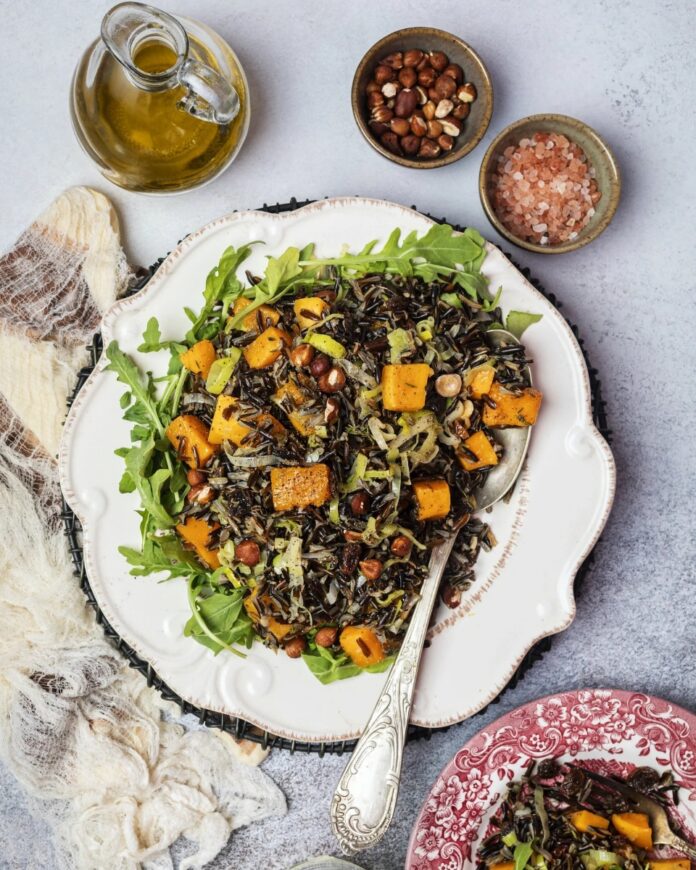
A plate of wild rice with butternut squash, raisins, and hazelnuts, served over a bed of arugula, next to a bottle of olive oil and bowls of salt and hazelnuts.

Healthy, plant-based side dishes like Wild Rice with Butternut Squash, Raisins and Hazelnuts can lighten a meat-centered meal, or they can be fantastic meal in an of themselves. TABLE’s West Coast contributor, Sara Ghedina, tucked into some cold-weather classics which blend the irreverence and freshness of California, where she lives, with the culinary wisdom of Europe, where she was born and raised. Buon appetito!

The Benefits of Going Vegetarian

TABLE contributor Sara Ghedina thinks all of us should turn away from too many animal proteins in our diet and embrace a plant-forward lifestyle! Vegetarian eating, whether you do it every day or just a few days month, offers multiple benefits for your health, the planet, and animal welfare.

Plant-based diets are rich in fiber, vitamins, and antioxidants, reducing the risk of heart disease, diabetes, and certain cancers. Cutting out meat often lowers cholesterol and blood pressure, while promoting a healthy weight.

Environmentally, vegetarianism significantly reduces your carbon footprint, conserving water and land, and decreasing greenhouse gas emissions from livestock farming. Ethically, it aligns with compassion, sparing animals from industrial farming practices.

Additionally, vegetarian meals often showcase creativity, diversity, and global culinary traditions, making it an exciting choice for food lovers. Whether fully vegetarian or mostly plant-based, this shift supports sustainable living and mindful eating. By embracing vegetables, fruits, legumes, and grains, you not only nourish your body but also contribute to a healthier planet and a more humane food system. A vegetarian lifestyle truly benefits your health and the world around you.

Wild Rice with Butternut Squash, Raisins and Hazelnuts Recipe

A vibrant and gorgeous dish, well balanced with complementary flavors and textures – the nuttiness of the rice perfectly pairs with the sweetness of the squash. It’s a great choice for Thanksgiving or any holiday table, and it can be served as a main dish for vegetarians, or as a healthy side dish for the whole family.

To make it even richer and more colorful in taste, add pomegranate seeds for tartness and crumbled feta cheese for creaminess. You could also cook rice in half water and half vegetable stock for an overall stronger taste.

Print
clock clock iconcutlery cutlery iconflag flag iconfolder folder iconinstagram instagram iconpinterest pinterest iconfacebook facebook iconprint print iconsquares squares iconheart heart iconheart solid heart solid icon
A plate of wild rice with butternut squash, raisins, and hazelnuts, served over a bed of arugula, next to a bottle of olive oil and bowls of salt and hazelnuts.

Wild Rice with Butternut Squash


  • Author: Sara Ghedina
  • Yield: Serves 4

Description

A way to get the kiddos eating healthier.


Ingredients

Scale
  • 1 cup wild rice
  • 1 lb butternut squash, peeled and cut in small cubes
  • Salt and black pepper to taste
  • 2 sprigs fresh thyme
  • 4 tbsp extra-virgin olive oil
  • 1 leek, thinly sliced
  • 1/4 cup raisins
  • 1/4 cup toasted hazelnuts, coarsely chopped
  • 1 bunch arugula, washed and rinsed


Instructions

  1. Preheat oven to 350 degrees. Rinse rice. Bring 5 cups of salted water to boil and cook it according to package directions: it will take approximately 40 to 50 minutes. Once it’s cooked, spread rice on a baking sheet to cool and then transfer to a bowl.
  2. Grease a rimmed baking sheet with 2 tablespoons olive oil. Spread squash cubes in a single layer on it and season with salt, black pepper, and thyme. Roast for about 10 minutes: the squash cubes should be tender but firm enough to hold their shape when mixed with the rice. Place in a bowl and set aside.
  3. Heat 2 tablespoons olive oil in a medium skillet, add leek, and sauté until tender, about 5 to 7 minutes.
  4. In a large bowl gently combine rice, butternut squash, and leek. Stir in raisins and hazelnuts, and adjust seasoning if needed.
  5. Lightly drizzle the arugula with some extra-virgin olive oil, fold it in the rice and serve.

Recipe, Styling and Photography by Sara Ghedina

Subscribe to TABLE Magazine’s print edition.

Roasted Eggplant with Anchovy and Almond Crumble

0
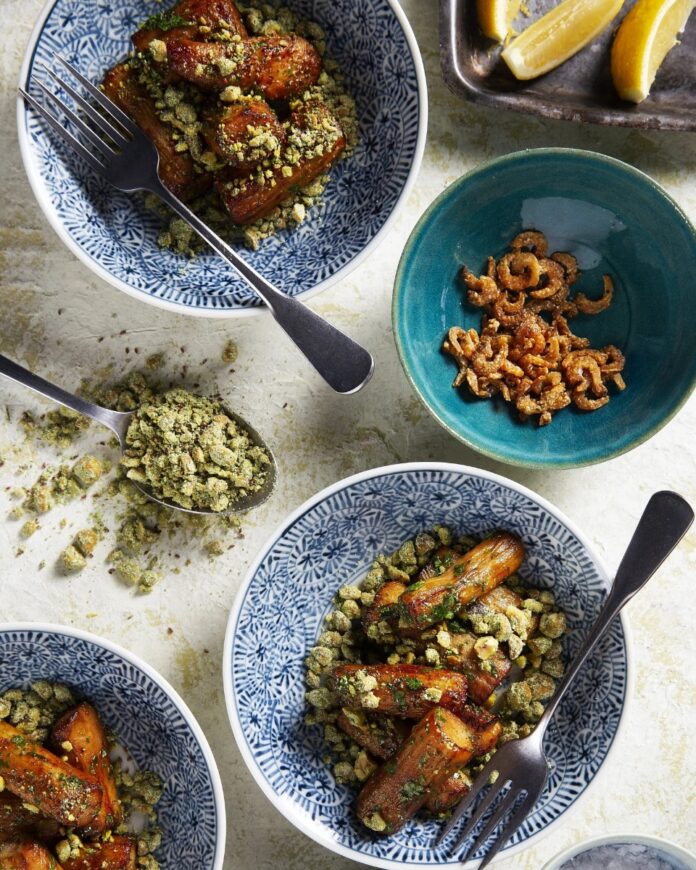
Blue-and-white patterned bowls filled with roasted eggplant, topped with a green crumble, with a separate bowl of dried anchovies.

Chef Curtis Gamble invited TABLE Magazine to spend a day in his kitchen with simple recipes and springtime flavors.

We started our day together with a plate of thinly sliced cucumbers finished with kefir dressing, with shallots, crumbled feta, fresh dill, a sprinkle of Aleppo chile. Chef Gamble had our full attention with this first delicate and delicious plate. “I look for ways to be reductive,” Curtis says, explaning his keep it simple ethos. “Limiting myself to a certain ingredient or idea leads to creativity with texture, salt, fat, and acid. Allowing space and room for flavor to breath is a skill.”

Roasted Eggplant with Anchovy and Almond Crumble Recipe

We moved on to Roasted Eggplant with Anchovy Almond Crumble, shown here. As always when good food hits the table, stories were shared. “I grew up with a single mom, very food insecure. That has had the most impact on the way I like to cook,” Curtis recounts. “Whether my mom was breading off-cuts like chicken livers in seasoned flour and frying them or pulling potatoes and spring onions from our modest garden, we would always eat humble but well-seasoned food. My first real job was as a prep cook at a big-box rib joint, and from there I never turned back. One foot in front of the other took me from culinary school to restaurant after restaurant.”

The Gnocchi alla Romana with Pesto Genovese arrive, along with English peas with soffrito, yogurt and lemon, and a gorgeous asparagus platter. We exclaim that we will never forget these gnocchi, with their earthy crispiness playing off of the vivid, garlicky sauce. Or any of Chef Gamble’s veggie-forward dishes.

Curtis responds, “I appreciate the connections and the memories we facilitate for people, through food and creativity.”

Print
clock clock iconcutlery cutlery iconflag flag iconfolder folder iconinstagram instagram iconpinterest pinterest iconfacebook facebook iconprint print iconsquares squares iconheart heart iconheart solid heart solid icon
Blue-and-white patterned bowls filled with roasted eggplant, topped with a green crumble, with a separate bowl of dried anchovies.

Roasted Eggplant with Anchovy and Almond Crumble


  • Author: Curtis Gamble

Description

A bit of saltiness goes a long way.


Ingredients

Scale

For the eggplant:

  • 4 oz EVOO
  • 2 tbsp miso
  • 4 Japanese eggplants

For the sherry vinaigrette:

  • 2 cups sherry wine
  • 200 g sherry vinegar
  • 100 g brown sugar
  • 10 g thyme, chopped
  • 15 g shallot, minced
  • Salt and pepper, to taste
  • 800 g canola oil

For the anchovy almond crumble:

  • 125 g toasted almonds, chopped
  • 10 g dried anchovies
  • 10 g cress seed
  • Salt and pepper, to taste


Instructions

For the eggplant:

  1. Preheat the oven to 350. In a large mixing bowl combine EVOO and miso to make a bit of a paste. Peel eggplant and roll in mixture as soon as they are peeled to avoid browning.
  2. Transfer them all to a sheet tray and roast until just-roasted and not mush, roughly 45 minutes, but check in 15-minute intervals. Cool completely.

For the sherry vinaigrette:

  1. In a blender combine all ingredients except for oil. Blend and slowly add oil to emulsify.

For the anchovy almond crumble:

  1. Combine all and add salt and pepper to taste.

To finish:

  1. Toss eggplant in sherry vinaigrette and salt and pepper to taste and place in a serving bowl. Top with crumble and serve.

Story and Styling by Keith Recker
Photography by Dave Bryce
Food and Recipe by Chef Curtis Gamble

Subscribe to TABLE Magazine’s print edition.

Mushrooms Rockefeller

0
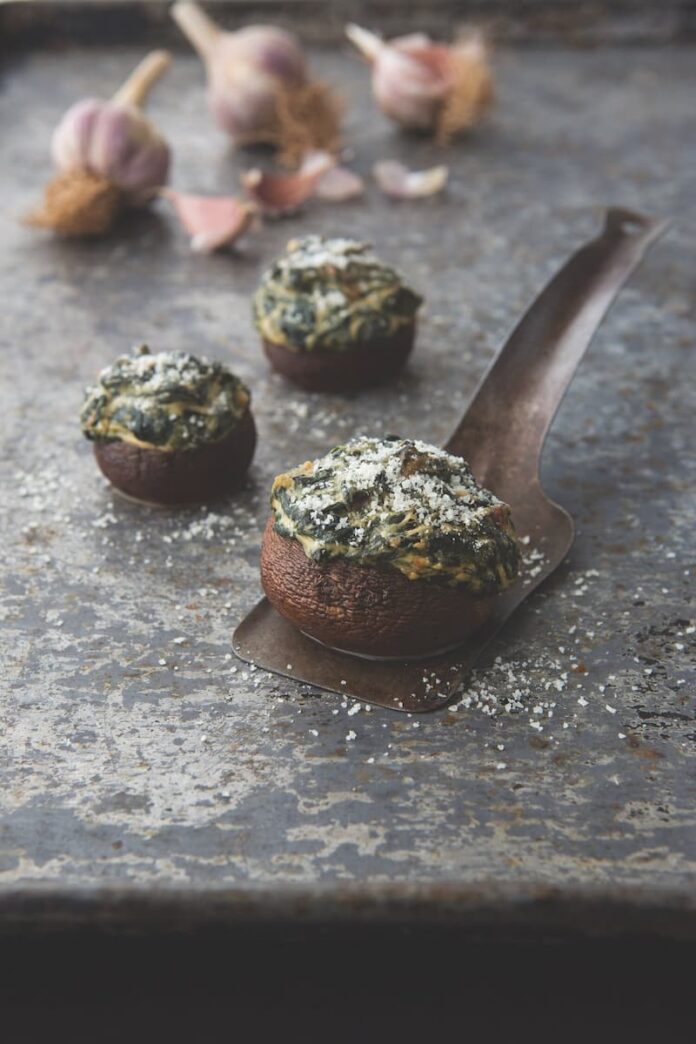
A close-up view of a variety of mushrooms in different shapes and sizes.

Spinach – not Popeye’s stringy canned version, but the fresh, tender leaves that emerge as one of spring’s first seasonal treats – is certainly the superfood our favorite pumped-up cartoon sailor advertised.

Spinach

As an excellent source of iron, magnesium, calcium, potassium, and other minerals, vitamins A, K, B2, B6, E, dietary fiber, protein, and phytonutrients, one cup of this early spring crop adds a low-calorie, massively nutritious punch any time of day, from breakfast through dinner. Some favorite ways to enjoy spinach throughout the day include:

  • Scrambled into eggs with feta and onion
  • Blended into almond milk, banana, and mango smoothie
  • Drizzled with fresh lemon juice, olive oil, and a sprinkle of salt and pepper for a quick salad (top with grilled fish, chicken, or chopped boiled eggs for a satisfying meal)
  • As a replacement for lettuce on sandwiches, burgers, and wraps (think BST instead of BLT)
  • Chopped and stirred into chicken (or any) soup
  • Blended with basil into a nutritious pesto
  • Sautéed in olive oil with grape tomatoes and fresh herbs for a quick and healthful pasta sauce

But, by far, my two favorite ways to enjoy spinach start by simply sautéing fresh garlic in olive oil until soft and adding baby spinach just until wilted. This is a lovely side dish on its own, but also the start of a more decadent creamed version that doubles as the base for Mushrooms Rockefeller.

Mushrooms Rockefeller Recipe

The original Oysters Rockefeller hails from New Orleans’ famed Antoine’s restaurant. Its closely guarded recipe does not include spinach, but many of its endless variations add this healthful green.

Print
clock clock iconcutlery cutlery iconflag flag iconfolder folder iconinstagram instagram iconpinterest pinterest iconfacebook facebook iconprint print iconsquares squares iconheart heart iconheart solid heart solid icon
A close-up view of a variety of mushrooms in different shapes and sizes.

Mushrooms Rockefeller


  • Author: Rhonda Schuldt
  • Yield: Makes 12 1x

Description

If desired, before baking, top with any (or all) of the following to amp up the yummy:

  • Seasoned bread crumbs
  • Grated Parmesan cheese
  • Cooked and crumbled bacon

Ingredients

Scale
  • 2 tbsp butter
  • 1 tbsp olive oil
  • 1 large shallot, finely diced (approximately ¼ cup)
  • 2 tbsp white wine
  • 1 small clove garlic, finely minced
  • 1 ½ lbs fresh baby spinach, roughly chopped
  • 4 oz light (Neufchatel) cream cheese
  • 1/8 cup cream or half and half
  • Dash of freshly grated nutmeg
  • Dash of hot sauce (optional)
  • 1 tsp salt
  • ¼ tsp pepper
  • 1 dozen large mushrooms (such as baby portobello or oyster mushrooms), cleaned and stems removed


Instructions

  1. Preheat oven to 375 degrees.
  2. In a large sauté pan or Dutch oven, heat butter and olive oil over medium heat. Add the shallots and garlic and sauté until transparent. Add fresh spinach and cook until the spinach has wilted and any moisture has evaporated. Remove from pan and set aside.
  3. In the same pan, add the white wine, cream cheese, cream, nutmeg, salt, pepper, and hot sauce. Cook over medium heat until combined and smooth. Stir in wilted spinach until completely coated. Remove from heat and let cool slightly. Adjust seasonings as desired. (Note: creamed spinach mixture can be made one day ahead and refrigerated until ready to use).
  4. Fill the mushroom caps with the spinach mixture. Place the stuffed mushrooms in a shallow baking dish sprayed with nonstick cooking spray and bake, uncovered, for 20 to 25 minutes or until the filling is golden brown and the mushrooms are tender.

Notes

One cup of fresh spinach contains only 27 calories.

Moisture shortens the shelf life of spinach, so refrigerate unwashed spinach in a plastic bag until ready to use.

If you find yourself with an abundance of fresh spinach in season, freeze it for future use. Remove any large ribs, roughly chop, and blanch for 2 minutes in boiling water, chill quickly in ice water and drain well. Portion into zip-top bags, remove as much air as possible before closing, and freeze immediately.

Story and Recipe by By Rhonda Schuldt
Photography by Adam Milliron

Subscribe to TABLE Magazine’s print edition.

The Ichabod Crane Cocktail

0
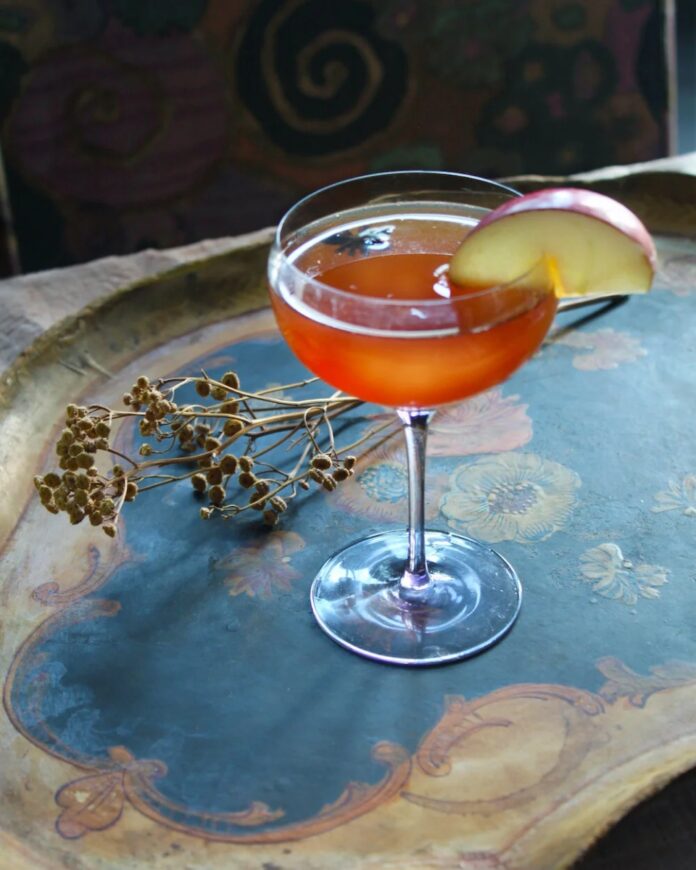
A reddish-orange cocktail in a coupe glass, garnished with a thin apple slice, and resting on a rustic serving tray with dried foliage.

Washington Irving, who wrote the short story “Legend of Sleepy Hollow,” based his fictional character on the Kinderhook Schoolhouse teacher from whom this Ichabod Crane Cocktail gets its name. Its very autumnal apple notes make it perfect for sipping by a cozy fire.

Who Was Ichabod Crane?

Ichabod Crane, Washington Irving’s lanky schoolmaster in The Legend of Sleepy Hollow, is both comical and tragic. Tall, thin, and awkward, he exudes an air of scholarly pride while being notoriously superstitious. Fond of ghost tales, food, and flirtation, he sets his sights on Katrina Van Tassel, hoping to secure her hand—and her wealthy inheritance. Yet, his rival Brom Bones outmatches him in charisma and strength. Ichabod’s fateful encounter with the Headless Horseman blurs myth and reality, leaving his fate ambiguous. More than a character, he embodies America’s early Gothic imagination: equal parts satire, folklore, and haunting mystery.

Enjoy this cocktail while pondering where Ichabod may have disappeared to after his frightening evening in the woods!

Print
clock clock iconcutlery cutlery iconflag flag iconfolder folder iconinstagram instagram iconpinterest pinterest iconfacebook facebook iconprint print iconsquares squares iconheart heart iconheart solid heart solid icon
A reddish-orange cocktail in a coupe glass, garnished with a thin apple slice, and resting on a rustic serving tray with dried foliage.

The Ichabod Crane Cocktail


  • Author: Keith Recker

Description

Get into the spirit with a haunting cocktail. 


Ingredients

Scale


Instructions

  1. Combine ingredients, stir into ice, strain and serve up in a chilled coupe, garnish with star anise and a thin apple wedge

Story by Keith Recker

Photography by Vera Vandenbosch
Styling by Amy Ilias @thelavenderghost

Subscribe to TABLE Magazine’s print edition.

Jack Rose Cocktail

0
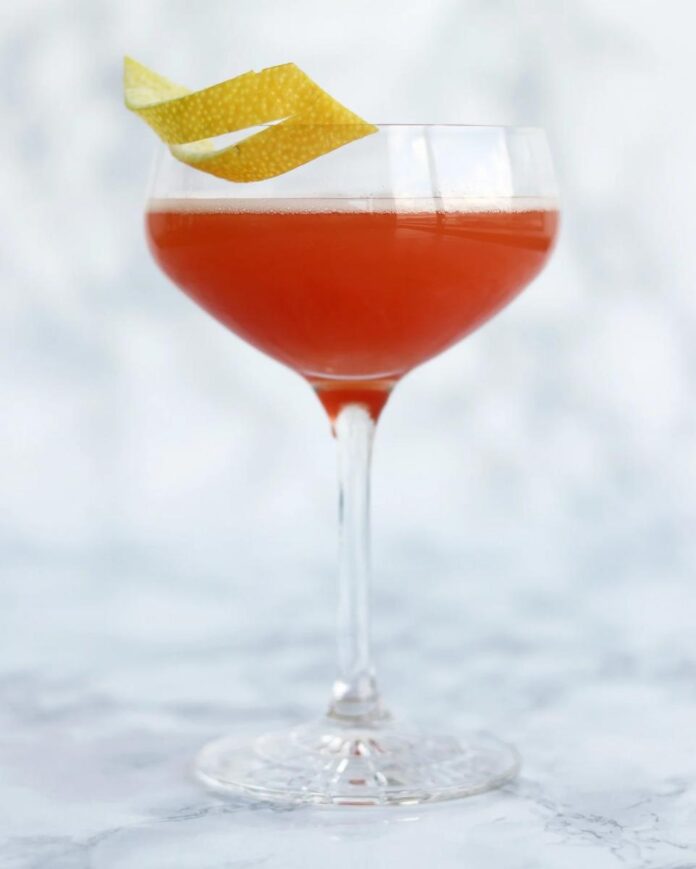
A stemmed glass filled with a pinkish-red Jack Rose cocktail, garnished with a spiral of lemon peel.

A turn-of-the-last-century classic, the Jack Rose brings the flavors of fall apples to a cocktail. As one of the most well-known apple brandy cocktails, this simple drink blends applejack with grenadine and fresh citrus juice. It’s a riff on a traditional sour cocktail.

Where does the Jack Rose Cocktail Get Its Name?

Does the cocktail’s name make you think of Jack and Rose from the Titanic? While that seems logical, there are other more likely sources for this cocktail. The Jack comes from applejack, the starting point of this delicious quaff. Applejack, made from fermenting apples, was one of colonial-era America’s favorite liquors. Rose most likely refers to the rosy pink color of the drink. The pink comes from grenadine, but would originally have been pomegranate syrup.

The cocktail became particularly popular in the early 20th century and is mentioned several times in Ernest Hemingway’s The Sun Also Rises. Many, if not all, of the characters could be accused of having too Many Jack Rose cocktails of an evening.

Jack Rose Cocktail Recipe

Some recipes for the Jack Rose call for lemon juice, some lime; others, a mix of both. Either makes for a delicious cocktail: lime makes the drink a bit more bitter, while the lemon blends nicely into the sweetness of grenadine. Try it any way you like – you can’t go wrong!

Print
clock clock iconcutlery cutlery iconflag flag iconfolder folder iconinstagram instagram iconpinterest pinterest iconfacebook facebook iconprint print iconsquares squares iconheart heart iconheart solid heart solid icon
A stemmed glass filled with a pinkish-red Jack Rose cocktail, garnished with a spiral of lemon peel.

Jack Rose Cocktail


  • Author: Maggie Weaver

Description

The Jack Rose cocktail is a fall classic from the 1900s. 


Ingredients

Scale
  • 2 oz Laird’s Apple Jack
  • 3/4 oz lemon or lime juice
  • ¾ oz grenadine
  • Lemon peel, for garnish


Instructions

For the grenadine:

  1. Combine two cups of pomegranate juice, two cups of sugar, and 1-2 dashes of orange flower water in a saucepan.
  2. Stir until the sugar is fully dissolved, then reduce the heat, cover, and simmer for about 10-15 minutes. When reduced, pour the syrup into an airtight container.

For the cocktail:

  1. Combine apple brandy or Applejack, lemon or lime juice, and grenadine into a shaker.
  2. Shake with ice and strain into a coupe or martini glass. Garnish with a lemon peel and enjoy!

Notes

Note: It’s worth making grenadine at home for this recipe. The homemade syrup is much milder than its storebought counterpart.

Other Apple Cocktail Recipes

Bourbon Apple Smash

A Bourbon Apple Smash cocktail in a glass, next to a caramel-dipped apple.

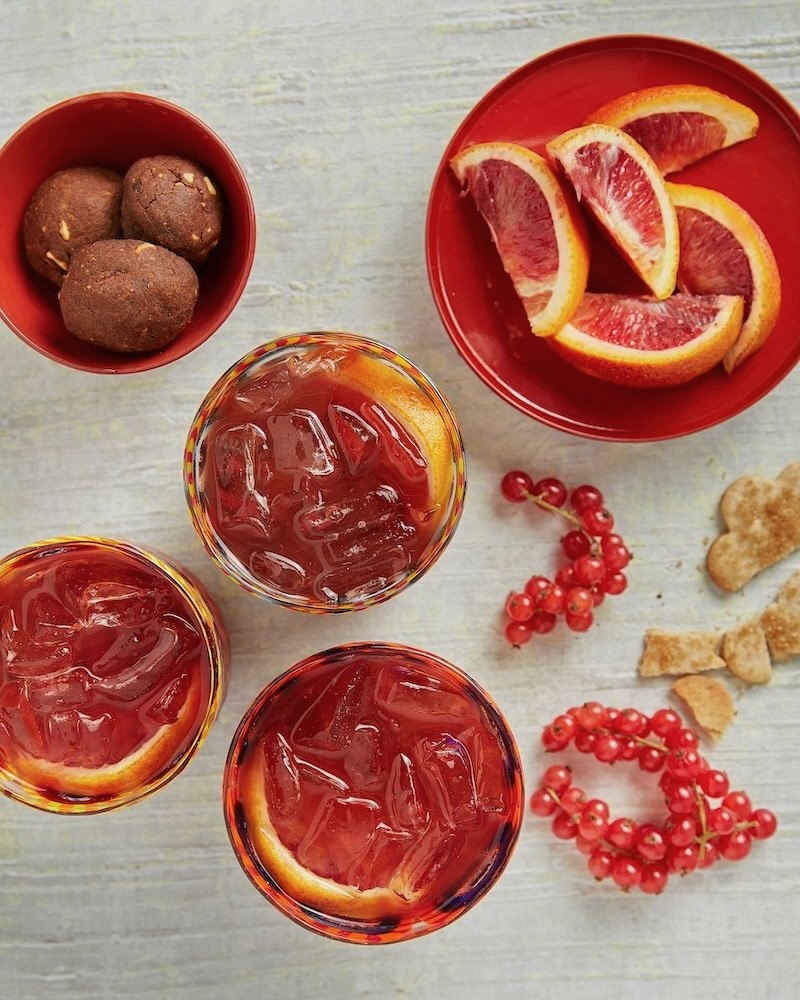
Apple Cider Negroni

An apple cider negroni surrounded by orange peels and other delicious ingredients.

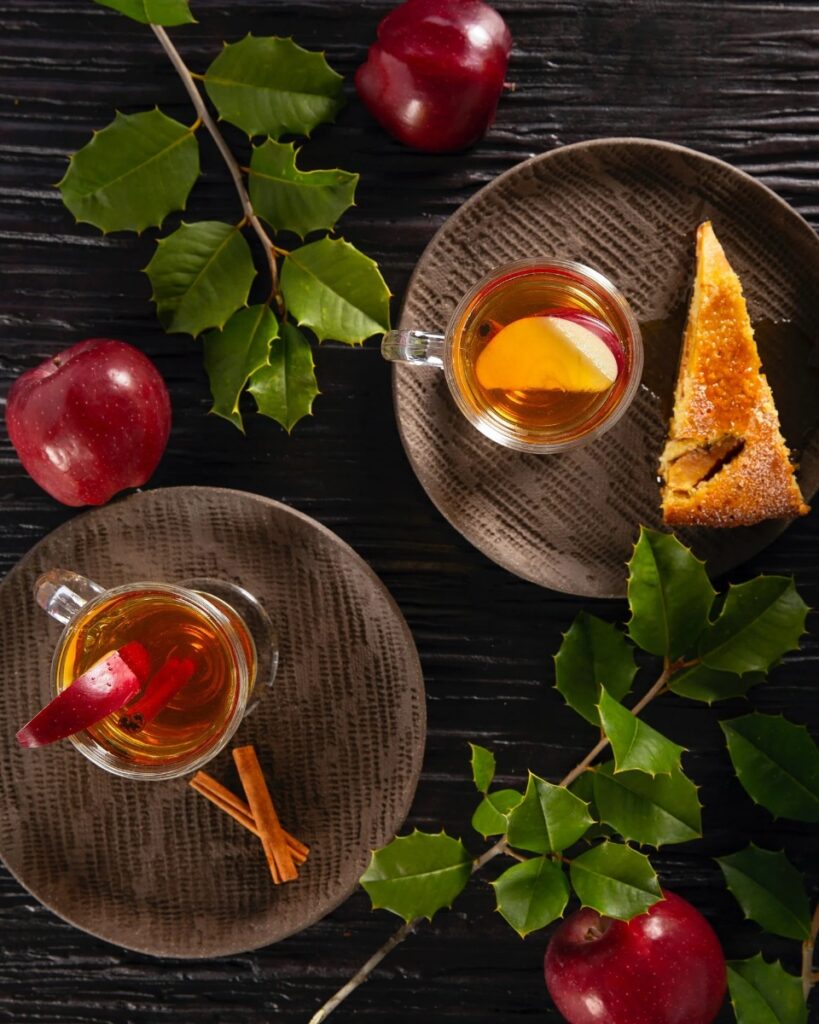
Apple Cinnamon Hot Toddy

A warm Apple Cinnamon Hot Toddy in a clear mug, garnished with an apple slice and a cinnamon stick, served with a slice of cake on a brown plate.

Recipe by Maggie Weaver

Subscribe to TABLE Magazine’s print edition.

Coffee Old Fashioned

0
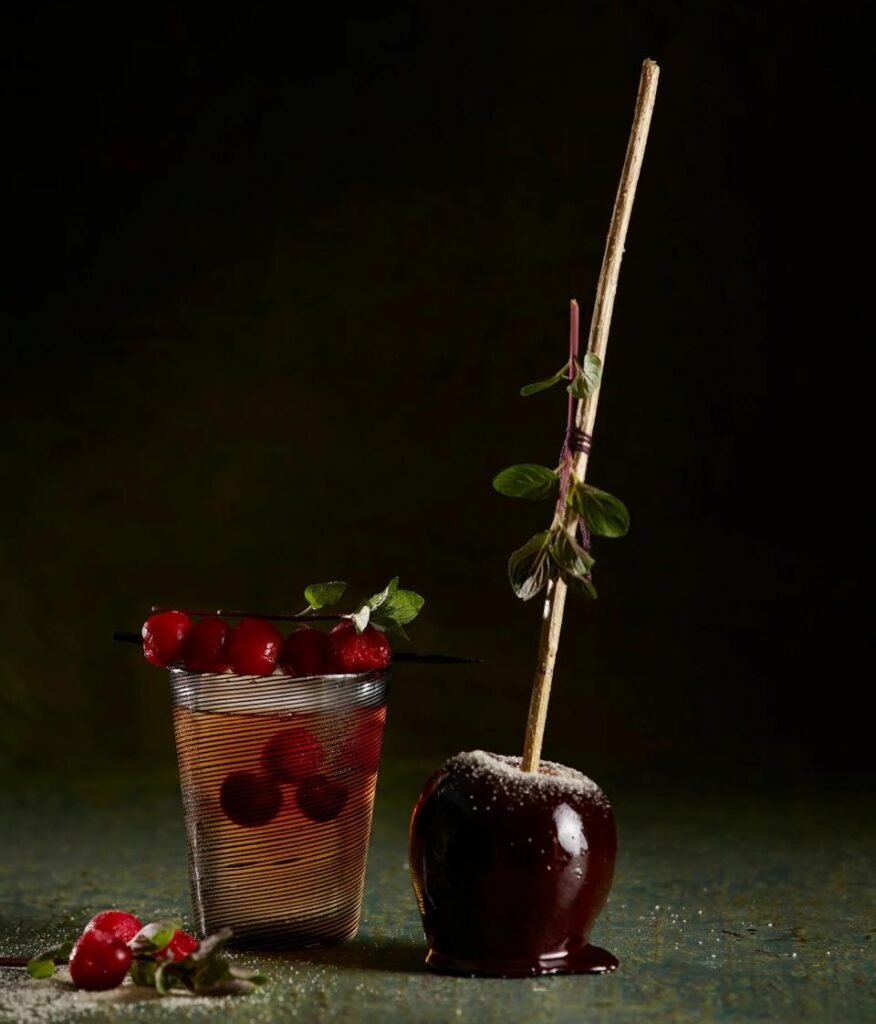
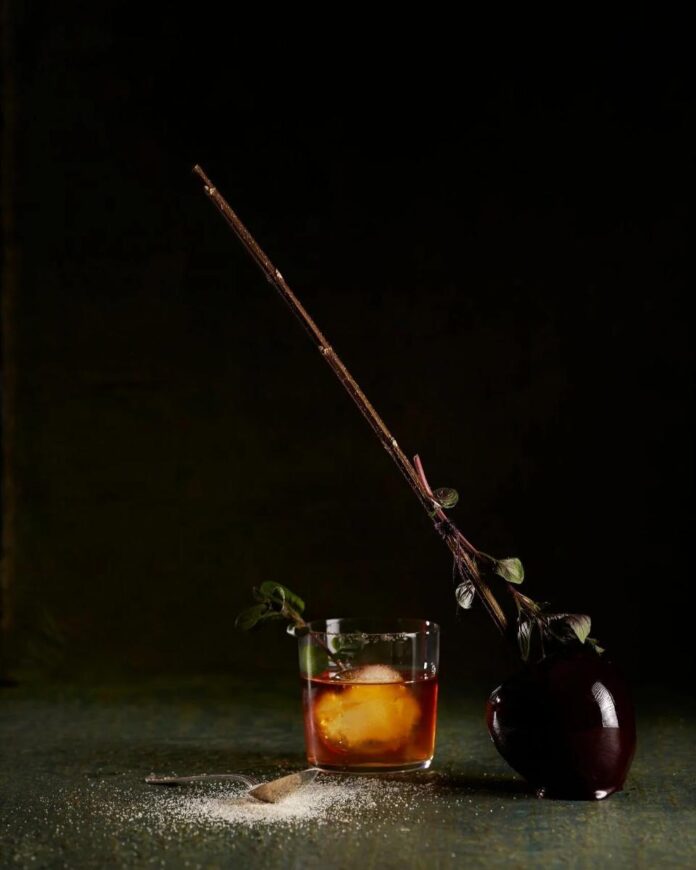
A Coffee Old Fashioned cocktail in a rocks glass with a large ice cube, garnished with a leafy branch, next to a caramel apple on a stick.

Fall is in full swing, which means afternoons are sleepier than ever. Add a jolt of caffeine to your happy hour this week, thanks to this Coffee Old Fashioned featuring Maggie’s Farm Rum’s ever-so-potent coffee liquor.

Perhaps Red Bull and vodka started it all? The combination of buzzy energy and boozy relaxation can fuel a lively night out. The Espresso Martini caps the trend very nicely, and is the #3 drink on most cocktail menus, behind classics like the Margarita and the Moscow Mule. Just for a change, why not try a Coffee Old Fashioned!

Print
clock clock iconcutlery cutlery iconflag flag iconfolder folder iconinstagram instagram iconpinterest pinterest iconfacebook facebook iconprint print iconsquares squares iconheart heart iconheart solid heart solid icon
A Coffee Old Fashioned cocktail in a rocks glass with a large ice cube, garnished with a leafy branch, next to a caramel apple on a stick.

Coffee Old Fashioned


  • Author: Maggie Weaver

Description

Boost your happy hour with a Coffee Old Fashioned!


Ingredients

Scale
  • 2 oz bourbon
  • .5 oz coffee liqueur (We like Maggie’s Farm Rum.)
  • ¼ oz simple syrup
  • 2 dashes Angostura Bitters
  • 1 bourbon-soaked cherry, for garnish


Instructions

For the bourbon-soaked cherries:

  1. Thaw 10 oz. frozen cherries. Combine 1 cup of bourbon and ¼ cup sugar in a saucepan, and simmer until sugar is dissolved.
  2. Place this mixture in a jar with the cherries, seal, and refrigerate.

For the cocktail:

  1. Stir the bourbon, coffee liqueur, simple syrup, and bitters together over ice. Strain into a rocks glass filled with one large cube of ice.
  2. Garnish with a soaked cherry, and enjoy with a candy apple!

Recipe by Maggie Weaver
Photography by Dave Bryce

Subscribe to TABLE Magazine’s print edition.

Don't Miss