Home Blog Page 159

How to Avoid the Increasing Price of Eggs in Pittsburgh

0
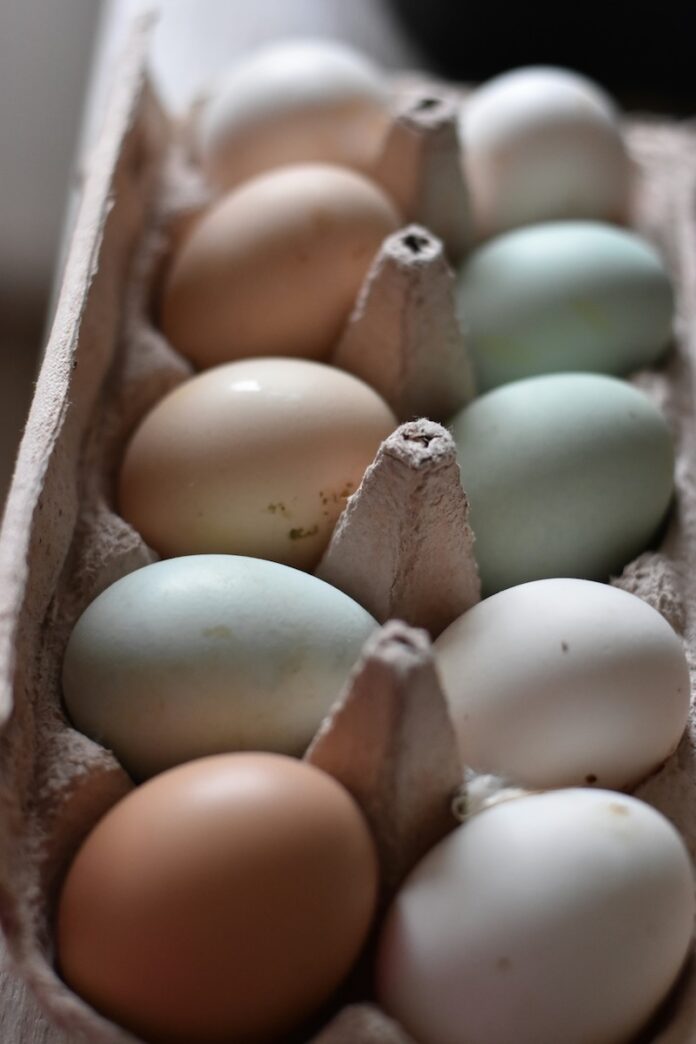
A carton of eggs in white, blue, and brown.

At the beginning of April 2025 in Pittsburgh, prices for a dozen eggs range from $5 to $8 depending on where you shop. With Easter quickly approaching, that’s a problem. Your deviled eggs, hard boiled eggs for coloring, and quiches could cost you a pretty penny by the time you make enough for your whole family. There are solutions though that could help you to save a little money and make you feel a whole lot better about the food you’re eating too. 

How to Avoid the Increasing Price of Eggs in Pittsburgh

Rent the Chicken

If you’ve ever wanted fresh eggs but were worried about the commitment to raising chickens, Rent the Chicken is a way you can experience this without the stress. This program provides you with everything you need from the living space to the feed. You can house 2, 3, or 4 hens that’ll give you anywhere between 8 to 28 eggs per week. Even better, if something unfortunate were to happen and a chicken dies from something other than neglect, the company will replace the chicken for free.

Egg Substitutions

While egg substitutions aren’t quite the same thing as indulging in eggs, they can come in handy in a pinch and work perfectly in recipes that require eggs. Some egg substitutes come in a carton in the store but there are actually other ingredients you can use within recipes too. Applesauce, bananas, chia seeds, silken tofu, and yogurt are just a few of the possible substitutes. 

Market Wagon Egg Delivery

While you could drive to a Pittsburgh farm and purchase directly, sometimes the time investment can seem too high. Instead, get farm fresh eggs delivered by Market Wagon. Here you can choose which local farm you would like to buy from with no subscription requirement. Outside of eggs, you can also order other fresh produce and locally-raised meats. 

CSA Egg Shares

Community Supported Agriculture programs are a way for citizens to support local farms while investing in a share of their land. Pittsburgh Pastures is currently running a CSA program for eggs that guarantees you four dozen eggs per month for six months. This means even in those times where there is a limited supply of eggs, you can rest assured that your dozen will still be available for pickup. 

Coupon Shopping

When worse comes to worst, there are always coupons available that can make your shopping experience at least a bit cheaper. The Krazy Coupon Lady keeps a list of all the coupons you can currently use for eggs and egg substitutes. Every now and then you can even find a coupon where you can get a dozen eggs for a dollar, which right now feels like a miracle. 

Story by Kylie Thomas
Photo Courtesy of Mettfluencer Mett Lifestyle

Subscribe to TABLE Magazine’s print edition.

Why Do Productions Love to Film in Pittsburgh?

0
A film camera sits on a tripod in the middle of a field in the city of Pittsburgh.

The Dark Knight Rises, The Perks of Being a Wallflower, Silence of the Lambs, The Pitt, Adventureland, Mayor of Kingstown… it seems like the list of movies and tv shows filmed in Pittsburgh never ends. With both local and national productions filling the streets of the city, you may be wondering, why Pittsburgh? Could it be for the yellow bridges that stretch across our rivers? The atmosphere of Downtown? Or for our array of sports stadiums? Well, the answer may surprise you. 

Why Do Productions Love to Film in Pittsburgh?

Part of the answer is Pittsburgh’s historic beauty. Set Decoration Buyer Anne Stone has plenty of experience buying materials for sets in the Pittsburgh area. From her time with various productions, she has seen a few environmental reasons for filmmakers to keep coming back. 

“The Pittsburgh area is a feast for the eyes,” says Stone. “We have beautiful old mansions and working class neighborhoods, modern architecture, gritty alleys, rivers, hills, steel mills, bridges, tunnels, open green spaces, and everything one could imagine.  It could be a NYC street or an English manor house. It is hard to find many other places that offer so many great starting points to craft what is scripted.”

Pittsburgh’s History in Film

It’s not just the versatility of the landscape and the cityscape that makes Pittsburgh such a film powerhouse. In fact, the film industry in the city goes all the way back to 1905 with the opening of the world’s first movie theater on Smithfield Street in Downtown. From there, the 1920s kicked off a revolution in major filmmaking as many major studios like Paramount and MGM had offices in the area. Mamie Stein, president of the local International Alliance of Theatrical Stage Employees chapter and set dresser, sees this history as a reason for Pittsburgh’s strength when it comes to filmmaking today. 

“From a practical standpoint, we have an excellent, experienced crew in Pittsburgh,” says Stein. “We have been building the film industry in Pennsylvania for decades. There is an existing infrastructure here to support it along with businesses that understand the industry and are able to provide us with things like lumber and paint.”

All of this may leave you thinking, “Why film in a dark alley in Pittsburgh if you can find that same alley anywhere else?” However, for large productions and small, too, there’s something about the people here and the character of the city that you can’t find anywhere else.

From a Producer’s Point of View

Producer and owner of Huntingdon Studios, LLC, J.T. Andrew looks at filming around the city for a number of different reasons but the people here (whether that’s crew, cast, or anyone he’s working with) definitely come out on top. 

“Whenever I am looking for a location, my first thought is which of the local townships have the friendliest and most accessible government agencies,” explains Andrew. “The elected officials and employees in offices such as the Borough of White Hall where I shot my senior thesis for undergrad, are your go-to whenever you need things such as permits to close pedestrian and vehicular paths. I also like to look for locations that are owned by people who love to talk and connect with other locals. Securing a location can be tricky, especially if you are a student or an independent filmmaker, so oftentimes you need to pitch yourself first.”

This also extends to a national level when looking at why studios at streaming services such as Netflix and Hulu choose to come here as well. 

Filmmakers/producers such as Co-Creator Hugh Dillon of Mayor of Kingstown for Paramount+ have found that Pittsburgh turns out to be as much of a character in the show as any of the stars on the cast list. Dillon actually found locations like Downtown’s Strawberry Way to be integral to his depiction of Kingstown. “So when it comes down to it,” continues Andrew, “the city has personality and locals unlike any other city in our vast country. We are a beautiful Commonwealth and the resources I have at my disposal within it as a producer constantly thrill me, so the attraction is not shocking to me.”

The Pennsylvania Film Tax Credit

Of course when you’re talking about larger-scale projects there’s the question of money. Funding a film is not easy and any cuts you can get, the better. Hiring outside of the filming location, bringing in additional help, and buying extra set pieces can all quickly add up. Thankfully, Pennsylvania puts the arts first with the Creativity in Focus initiative. Executive Director of the Pittsburgh Film Office (PFO), Dawn Keezer sees first hand just what a difference this initiative can make. 

“The Pennsylvania Film Tax Credit Program offers a 25% Tax Credit to films that spend at least 60% of their total production budget in the Commonwealth,” explains Keezer. “This has not only brought in an increasing number of productions to the region – including a record-breaking 11 productions within SWPA (Southwestern Pennsylvania) in 2021 – it has also provided thousands of family-sustaining jobs to Pennsylvania residents and businesses.”

Keezer sees there’s no reason this growth should stop anytime soon. After working with plenty of professionals over the years, she personally finds Pittsburgh to be a city that has everything you need right at your disposal. 

“This region has all of the building blocks to help the film industry thrive: economic endorsement, breathtaking topography, an impressive local crew, and both a supportive community and elected officials that believe in this industry,” says Keezer. “Compared to other major filmmaking cities, the Pittsburgh region is more accessible to both aspiring and veteran filmmakers who want to make an impact and enjoy their craft.”

Supporting the Future of Film in Pittsburgh

Though, if we want to keep this industry thriving in Pittsburgh, we need to be cognizant of how the tax credit needs to shift in order to keep projects cycling through. Stein notes that as it stands, the tax credit only offers $100 million each year, which means the credits run out just as quickly as they are added. Which means it’s up to us to let legislators know what needs to be done to support our fellow citizens and creatives.

“We turn away many projects every year due to the tax credits running out before the fiscal year is over,” says Stein. “If they were to budget $300 million dollars to the program, we could double the film projects coming here as well as the workforce overnight. This money goes back to Pennsylvanians who are holding down full-time jobs with benefits in the film industry, who buy houses here, spend money here, and are paying taxes. It’s such a win all around.”

Story by Kylie Thomas
Photo Courtesy of Denny Müller

Subscribe to TABLE Magazine’s print edition.
All Hearts Cocktail

0
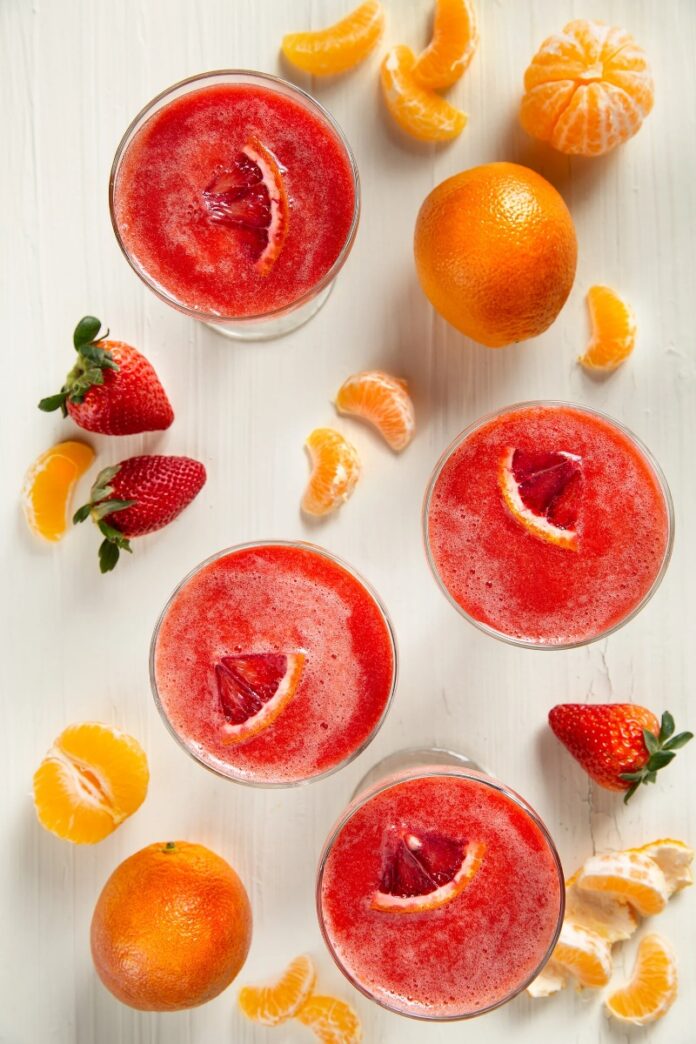
Glasses of a red cocktail garnished with a blood orange slice, surrounded by strawberries, oranges, and mandarin orange slices on a white surface.

What makes a cocktail as delicious as the heart you put into making it? Your choice of vodka has a lot to do with it. “I only use the heart of each run of Boyd & Blair. The flavor from the hearts is delicious and super-concentrated, but the tails smell like a musty dishrag and provide the bite that is experienced when drinking certain vodkas. Most distillers include some amount of tails in an effort to produce more yield. The amount of tails that are added to the final product greatly impact the final flavor profile. I never include any tails in Boyd & Blair, only the hearts.” – Barry Young, co-founder and Master Distiller of Pennsylvania Pure Distilleries.

All Hearts Cocktail Recipe

Print
clock clock iconcutlery cutlery iconflag flag iconfolder folder iconinstagram instagram iconpinterest pinterest iconfacebook facebook iconprint print iconsquares squares iconheart heart iconheart solid heart solid icon
Glasses of a red cocktail garnished with a blood orange slice, surrounded by strawberries, oranges, and mandarin orange slices on a white surface.

All Hearts Cocktail


  • Author: Justin Matase

Description

This bright and refreshing drink combines Boyd & Blair vodka, strawberry puree, and lemon juice, shaken with ice and topped with bubbly Prosecco. Smooth and fruit‑forward, it highlights the pure “hearts” of the vodka for a clean, elegant flavor.


Ingredients

Scale
  • 1 oz Boyd & Blair vodka
  • 1 oz strawberry puree
  • 1/2 oz lemon juice
  • Prosecco


Instructions

  1. Mix Boyd & Blair, strawberry puree, and lemon juice in a cocktail shaker filled with ice and shake well.
  2. Strain into a champagne flute and top with Prosecco.

Recipe by Justin Matase
Photography by Dave Bryce

Subscribe to TABLE Magazine’s print edition.

Whole-Grain Swedish Rye Cookies

0
Heart-shaped and round cookies, some with a pink sugar dusting, arranged on a marble surface to spell out the word "LOVE" with individual letters.

Maybe Valentine’s Day makes you cringe, but I would encourage you to see the holiday as a gentle deadline for sending and showing love to friends, family, and romantic partners. This year, I’m harkening to my elementary school days, when we’d craft mailboxes, position them on our desks, then await the many Valentine’s cards and candy hearts. I’ll be making Whole-Grain Swedish Rye Cookies and gifting them to my dearly beloveds.

I’m putting my updated cookies into real mailboxes. They will go alongside gluten-free almond cakes with a plant-based pink glaze, jam shortbread bars, rose-petal-topped puff pastry, and more!

When it comes to assembling these parcels, start with a cute yet practical container that can be repurposed, and natural beeswax wraps since they’re a gift that can keep giving. If baking is too intimidating, wrap dark-chocolate-covered almonds in recycled paper packages tied with ribbon.

While I’ll be packing a heart-shaped box with extra care to send to my long-distance sweetheart, this activity can easily be geared towards kids (even kiddos with a limited attention span). Want something quick? Have your little sidekick punch cookie-cutter hearts into puff-pastry dough. Sprinkle with a pretty garnish, and voila! Plus, sharing these parcels with a neighbor or someone who needs extra cheer is a good example for your kids. We can always find more ways to connect and to give.

Print
clock clock iconcutlery cutlery iconflag flag iconfolder folder iconinstagram instagram iconpinterest pinterest iconfacebook facebook iconprint print iconsquares squares iconheart heart iconheart solid heart solid icon
Heart-shaped and round cookies, some with a pink sugar dusting, arranged on a marble surface to spell out the word "LOVE" with individual letters.

Whole-Grain Swedish Rye Cookie Recipe


  • Author: Quelcy Kogel
  • Yield: 5–6 dozen small cookies 1x

Description

Reimagines Valentine’s Day as a chance to share love through homemade parcels filled with cookies, cakes, and other sweet treats. The featured recipe, Swedish rye cookies, combines rye and spelt flours with butter, cream cheese, and a fragrant cardamom-sugar topping, creating dozens of lightly golden cookies with a natural pink hue from pitaya powder.


Ingredients

Scale
  • 1 cup rye flour
  • 1 cup spelt flour
  • 1/2 tsp fine grain sea salt
  • 1/2 cup (2 oz) cream cheese, room temperature
  • 1/2 cup unsalted butter, room temperature
  • 1/2 cup fine-grain coconut sugar

For the Topping:

  • 1 egg
  • 1 tsp heavy cream
  • ¼ cup fine natural sugar
  • Cardamom, to taste
  • ½ – 1 teaspoon Pink pitaya powder


Instructions

  1. Line two baking sheets with parchment paper or a Silpat.
  2. In a medium-sized bowl combine the rye flour, spelt flour, and salt. Set aside.
  3. In the bowl of a stand mixer (or by hand), beat the cream cheese until light and fluffy, add the butter, and beat until fluffy, mixing until the two are well combined.
  4. Beat in the sugar and mix until well incorporated.
  5. Add the dry mixture to the butter mixture and stir only long enough to combine the two (the dough should no longer be dusty looking). Turn the dough onto a lightly floured surface, and knead once or twice to bring it together, shape into a ball, flatten, wrap in plastic and chill it in a refrigerator.
  6. Heat your oven to 350°F, and arrange the racks in the top and bottom thirds. When you are ready to roll out your cookies, transfer the dough to a lightly floured work surface. Roll the dough to 1/4-inch thickness, and cut into shapes with the cookie cutter of your choice. Place on the prepared baking sheets an inch apart.
  7. In a small bowl, whisk together the egg and heavy cream. In a small jar with a lid, combine the sugar, a dash of cardamom (use the fragrance to judge your liking of this spice), and the pink pitaya powder. Put the lid on the jar, and shake to combine the sugar mixture. Brush each cookie with the egg wash, and sprinkle with the sugar mixture.
  8. Bake the cookies for 6-7 minutes, until cookies are fragrant, and a bit golden at the edges – avoid over-baking or they will come out on the dry side. Allow to cool.

Notes

Makes 5-6 dozen small cookies. Will vary depending on your cookie cutter. Pink Pitaya is Red Dragon Fruit Powder, a natural, plant-derived way to achieve a bright hue in your culinary creations.

Story, Styling & Photography by Quelcy Kogel

Subscribe to TABLE Magazine’s print edition.
Sweet and Savory Pie for Dinner

0
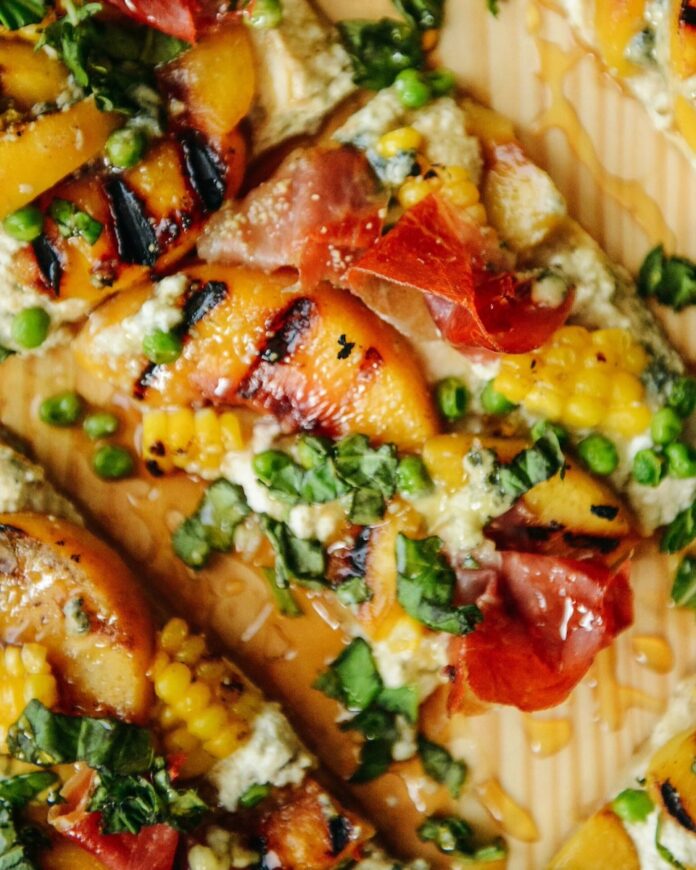
A savory and sweet dinner pie with puff pastry, cheese, corn, sweet peas, prosciutto, and grilled peaches.

Quelcy Kogel has some strong feelings about pie, meaning pie for dinner is totally on the table. In order to make a pie that feels just right for dinner but still reminds us of the dessert pies we love, she bakes up a Sweet and Savory Pie. This recipe uses a puff pastry dough as the base then slathers on top a lemon ricotta mixture, grilled peaches, corn, sweet peas, bleu cheese, and prosciutto. It’s a fun way to get your kiddos to try new foods while still eating their fruits and veggies.

How to Perfectly Grill Peaches for This Sweet and Savory Pie

In order to make your peaches perfectly grilled for the best dinner pie topping, you want to start by halving and pitting your peaches. Then slice them. Preheat your grill (you’re going to want to use an actual grill for those gorgeous grill marks) before adding your slices and leave them on for about 5 minutes. After getting a good char on the one side, do the same for the other side before placing your warm peaches onto the Sweet and Savory Pie.

Print
clock clock iconcutlery cutlery iconflag flag iconfolder folder iconinstagram instagram iconpinterest pinterest iconfacebook facebook iconprint print iconsquares squares iconheart heart iconheart solid heart solid icon
A savory and sweet dinner pie with puff pastry, cheese, corn, sweet peas, prosciutto, and grilled peaches.

Sweet and Savory Pie for Dinner


  • Author: Quelcy Kogel
  • Yield: 9x14-Inch Puff Pastry Tart 1x

Description

Craving pie for dinner? Let yourself delight in layers of puff pastry, cheeses, peaches, corn, sweet peas, and prosciutto.


Ingredients

Scale
  • 1 pack (13.2 oz, measuring 9×14”) frozen puff pastry, thawed
  • Cheese mixture
  • 24 oz sliced peaches, grilled
  • 3 ears of corn, grilled
  • Sweet peas, to taste
  • Bleu cheese, to taste
  • Prosciutto, to taste
  • Honey
  • Chopped basil

For the cheese mixture:

  • 15 oz ricotta
  • Zest of 1 lemon
  • 1 tbsp olive oil
  • Fresh thyme, to taste
  • Crushed black pepper, to taste


Instructions

  1. Preheat the oven to 400 degrees. Line a sheet pan with parchment paper. Unroll the puff pastry into a rectangular and transfer to the sheet pan.
  2. In a food processor, combine the ricotta, lemon zest, olive oil, fresh thyme and black pepper.
  3. Bake for 15 to 20 minutes, until the crust is golden brown, the cheese is melted, and the prosciutto is crispy.
  4. Drizzle with honey, sprinkle with chopped basil, cut, serve and enjoy. Can be enjoyed hot or cold.

Recipe and Photography by Quelcy Kogel

Subscribe to TABLE Magazine‘s print edition.

Everything Bagel Tomato Tartlets

0
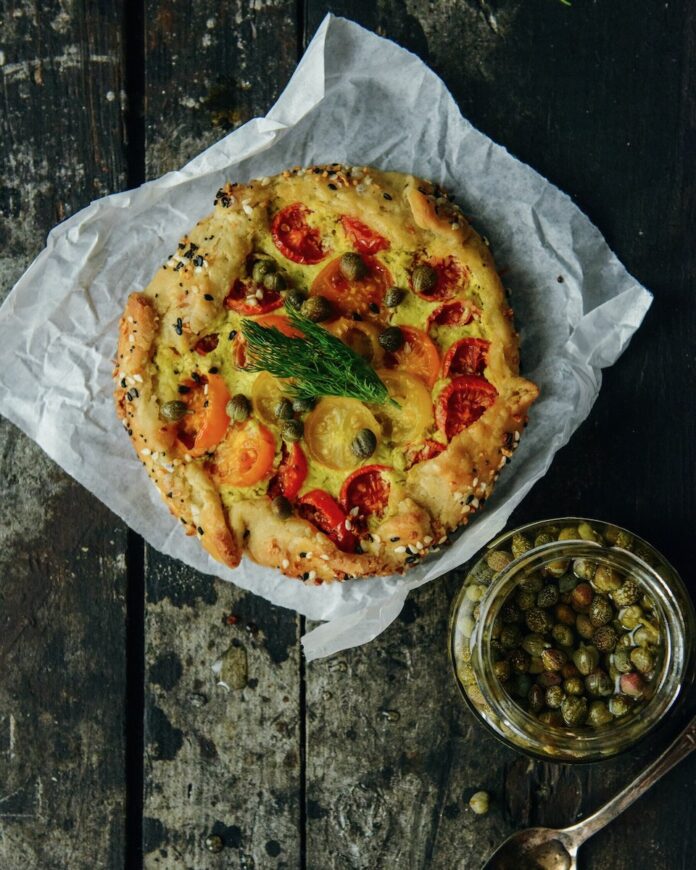
An Everything Bagel Tomato Tartelette sits on a piece of parchment paper with a jar of capers sitting nearby.

If you’re looking to try having pie for brunch or lunch, these Everything Bagel Tomato Tartlets are the perfect individual servings of healthy ingredients. By tartlets, we just mean a smaller, individual portions of a tart with its crunchy outside and gooey inside.

About Quelcy Kogel’s Everything Bagel Tomato Tartlets

Pie is a complicated summer muse. She graces us with the most pleasure when the gardens and trees bear the sweetest, juiciest fruits, but she demands the coldest of butter, the chill of a marble surface, and the lightest of touches. 

In a spirit of devotion, I offer you pies for a full day of summer supplication. These are labors of love. They’re not instantly gratifying (with the exception of one cheat). Pies require careful scheduling to allow for a proper chilling of the crust. Typical instructions are wrought with a long list of stressful don’ts – don’t add too much water, don’t overwork the dough, don’t let the butter warm. Don’t lose your damn mind when the flour and butter refuse to form a ball!

Try these delicious and sanity-instilling Everything Bagel Tomato Tartlets for lunch, a picnic, sliced into small bites to go with cocktails.

Print
clock clock iconcutlery cutlery iconflag flag iconfolder folder iconinstagram instagram iconpinterest pinterest iconfacebook facebook iconprint print iconsquares squares iconheart heart iconheart solid heart solid icon
An Everything Bagel Tomato Tartelette sits on a piece of parchment paper with a jar of capers sitting nearby.

Everything Bagel Tomato Tartlets


  • Author: Quelcy Kogel
  • Yield: 6 Tartelettes 1x

Description

A brunchy treat that also works as an excuse for having pie for lunch.


Ingredients

Scale

For the crust:

  • 1 cup white whole wheat flour or unbleached all-purpose flour
  • 1 cup whole grain millet flour
  • 1/2 tsp sea salt
  • 16 tbsp unsalted butter, chilled and sliced
  • 1 egg, lightly beaten
  • 1 to 2 tbsp vodka, chilled
  • 4 to 5 tbsp water, chilled

For the filling:

  • 8 oz goat cheese
  • 2 egg yolks
  • 1 bunch green onions, chopped (about 1 cup chopped)
  • ⅓ cup chopped dill
  • Zest of 1 lemon
  • 4 vine-ripened tomatoes or a variety of heirloom tomatoes

For the topping:

  • 1 egg, beaten
  • Everything bagel seasoning, to taste

For the garnish:

  • Balsamic reduction
  • Capers
  • Fresh dill


Instructions

  1. In a large bowl, whisk together the flours and salt. Scatter the butter pieces over the top, and work with a pastry blender, or your fingers, to combine, until the mixture resembles gravel, with lots of butter chunks the size of large peas.
  2. Add the lightly beaten egg, and stir into flour mixture with a wooden spoon. Drizzle the vodka into the flour mixture, then the water, 1 tbsp at a time, tossing the dough with a rubber spatula to moisten evenly. Add just enough liquid for the dough to hold together when you give it a squeeze, and add it directly to the dry floury bits that like to hang out on the bottom of the bowl.
  3. Form the dough into a ball, wrap it in plastic or beeswax wrap, and place it in the fridge for 1 hour to firm. Meanwhile, prepare the filling.
  4. Combine the goat cheese, egg yolks, green onions and dill in a food processor, and pulse until smooth. Keep chilled until ready to use.
  5. Preheat the oven to 400 degrees.
  6. Remove the dough from the fridge, and use a bench scraper or a sharp knife to divide the dough evenly into 6 pieces. Roll each piece into a ball, being careful not to overwork the dough. On a lightly floured surface, roll each ball into a 6 to 7-inch circle.
  7. Spoon 1 to 2 tbsp of the filling into the center of the circle. Spread the filling into an even layer, leaving a one-inch border.
  8. Arrange three tomato slices, or an array of cherry tomatoes, evenly over the center of the filling. Fold the dough over the tomatoes in a free-form fashion, pleating the overlaps.
  9. Brush the outer crust with a generous coating of the beaten egg wash, and sprinkle with the Everything Bagel Seasoning.
  10. Bake for 20 minutes, or until golden brown. Let cool before serving. Garnish with a drizzle of balsamic reduction, a spoonful of capers, and a sprig of fresh dill. Enjoy!

Recipe and Photography by Quelcy Kogel

Subscribe to TABLE Magazine‘s print edition.

Homemade Chocolate Cherry Pie Pop Tarts

0
A delicious tomato pie photographed on a white background.

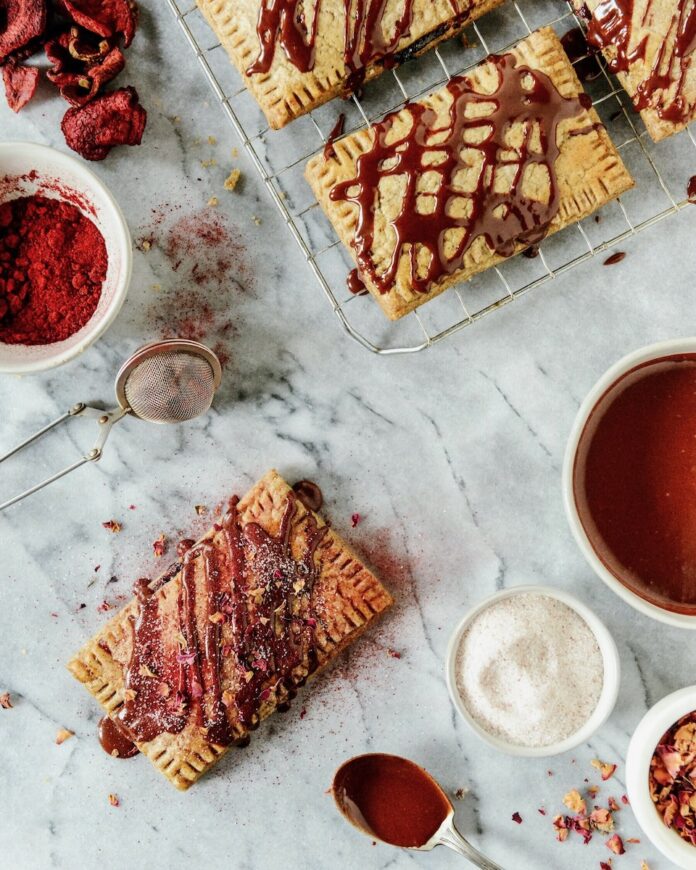
Start your day with the nostalgia of a chocolate-cherry pop tart, but made in your own kitchen. The effort of homemaking it makes the appeal of the processed, commercial version very understandable, but the light sweetness and the flaky, buckwheat and brown-rice flour crust is worth every step. For lunch, take a picnic of these homemade Pop Tart breakfast pies to your favorite shaded tree, and languish in the only time of year when tomatoes taste like anything.

What’s in Real Pop Tarts?

So…this may not come as a shock to you, but pop tarts are not healthy. What’s in them on a basic level is wheat flour, sugar, oil, corn syrup, and dried fruit…but there are also a ton of preservatives and artificial dyes. The laundry list of synthetic ingredients includes elatin, citric acid, xanthan gum, cornstarch, turmeric extract color, soy lecithin, and “artificial colors.” That’s all the more reason to make homemade pop tarts, where you know where all of the ingredients come from. But the process for actually making a pop tart is not a straightforward one, so you can see where all the corners get cut. But it’s fun to try yourself, just for once!

Print
clock clock iconcutlery cutlery iconflag flag iconfolder folder iconinstagram instagram iconpinterest pinterest iconfacebook facebook iconprint print iconsquares squares iconheart heart iconheart solid heart solid icon
A delicious tomato pie photographed on a white background.

Homemade Chocolate Cherry Pie Pop Tarts


  • Author: Quelcy Kogel

Description

Why not have pie for breakfast?


Ingredients

Scale

For the cherry filling:

  • 4 cups cherries, pitted
  • 1/2 cup honey
  • Juice of 1 lemon
  • 1 tsp. vanilla extract
  • Pinch of sea salt
  • 1 tbsp. balsamic vinegar
  • ½ tsp. crushed black pepper

For the crust:

  • 1 cup white whole wheat flour or unbleached all-purpose flour
  • 3/4 cup brown rice flour
  • ¼ cup buckwheat flour
  • 16 tbsp. (2 sticks) unsalted butter, chilled
  • 2 tbsp. chilled vodka
  • 4 to 5 tbsp. cold water
  • 1 egg beaten

For the glaze:

  • 3/4 cup powdered sugar
  • 2 tbsb raw cacao powder
  • 2 tbsp milk or water (I recommend oat milk)
  • 1 tbsp vanilla

For the optional garnish:

  • Freeze-dried strawberries or beets, for garnish
  • Sea salt
  • Dried rose petals


Instructions

For the Cherry Filling

  1. In a medium pot, bring the cherries, honey, and lemon juice to a boil. Boil 8 to 10 minutes or until the mixture has thickened and becomes jam-like.
  2. Stir in the vanilla and a pinch of salt. Let cool.

For the crust:

  1. In a large bowl, whisk together the flours. Scatter the butter pieces over the top, and work with a pastry blender, or your fingers, to combine, until the mixture resembles gravel, with lots of butter chunks the size of large peas.

For assembly: 

  1. Drizzle the vodka into the flour mixture, then the water, 1 tablespoon at a time, tossing the dough with a rubber spatula to moisten evenly.
  2. Add just enough liquid for the dough to hold together when you give it a squeeze, and add it directly to the dry floury bits that like to hang out on the bottom of the bowl.

Working The Dough

  • Knead the dough in the bowl 10 to 20 times to bring it together. Dump the dough onto the counter or a cutting board, and drag portions of the dough across the counter with the heel of your hand (this makes the mixture come together and yields a flakier dough). Gather the dough into a ball (a metal bench scraper helps). Flatten the dough into a disc, wrap it loosely in plastic or beeswax wrap. Chill the dough for 30 minutes. 

For extra-flaky crust:

  1. On a lightly floured surface, roll the chilled dough disk into a rectangle that is about ¼-inch thick. Fold it in thirds like you’re folding a letter, then roll up from a skinny end into a loose spiral.
  2. Gently press to flatten it slightly, and chill for 30 minutes. Optional: For extra, extra flake, repeat this step once more.
 

Shape the Crust:

  1. Remove the dough from the fridge, unwrap it, and place on a lightly floured surface.
  2. Roll it into a rectangle of 1/8-inch thickness. Cut the dough into rectangles. For more uniformity and ease of assembly, it helps to cut a template out of wax paper or cardboard measuring about 3 x 4.75 inches. Gather any scraps and re-roll the dough until you have used it all.

To assemble:

  1. Place a heaping tablespoon of the cherry jam on one half of the rectangle. Lay the other half of the dough over the filling and seal the edges by crimping them with the back of a fork. Place the pop tarts on a parchment-lined baking sheet(s).
  2. Cover the baking sheet(s), and chill in the fridge for 30 to 60 minutes.

To bake:

  1. Preheat the oven to 425 degrees. Brush the tarts with the beaten egg, and bake the pop tarts for 25 to 30 minutes, until the crust is golden brown. Let cool slightly.

For the glaze:

  1. Sift the powdered sugar and cacao into the bowl of a stand mixer. With the mixer on low, slowly stir in the milk and vanilla, a little at a time, to make a smooth, pourable glaze.
  2. Drizzle over the pop tarts, and garnish according to your tastes.

Story, photography, and styling by Quelcy Kogel

Subscribe to TABLE Magazine‘s print edition.

Persian Noodle Soup

0
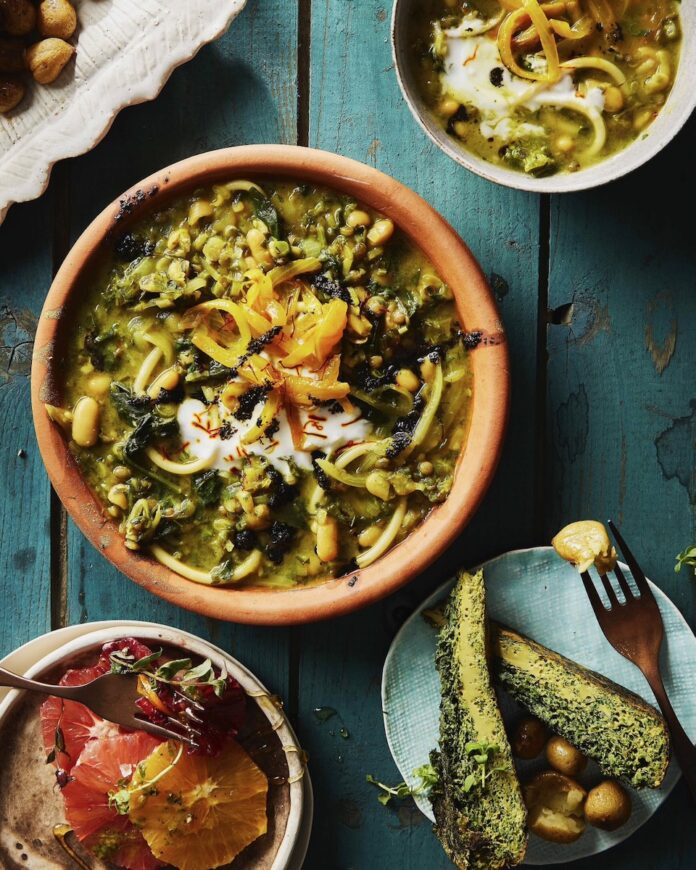
A Persian Noodle Soup sits in a brown bowl on a blue picnic table with three smaller bowls and plates of Persian food sitting around the soup.

Our Persian Noodle Soup by Chef Palak Patel is a vibrant recipe that blends hearty beans, fragrant herbs, and tender greens into a delicious broth. Cannellini and navy beans start the creamy base, while herbs and spices like dried mint, turmeric, and saffron add bold, earthy notes. Chef Palak Patel continues building this dish with sautéed onions, spinach, kale, parsley, and scallions. Finish it all off with fettuccine or bucatini noodles, a dollop of yogurt, and saffron for a mix of fresh, tangy, and a hint of bitterness. If you’re looking to learn more about Persian cuisine, the textures and flavors in this Persian Noodle Soup are a great start to informing yourself on culinary traditions.

What’s Different About a Persian Noodle Soup?

Persian Noodle Soup or Ash Reshteh (which Persians eat for Nowruz, the Persian New Year) sets itself apart from other noodle soups through a combination of ingredients that embody Persian culinary traditions. Unlike soups that prioritize meat or simple vegetables, this recipe prioritizes legumes, such as beans and lentils. These ingredients also contribute to its hearty texture and nutritional richness. Then, an abundance of fresh herbs including parsley and cilantro is essential to building the base of this soup. Plus, the inclusion of saffron, a staple in Persian cooking, adds richness and slight golden hue.

Print
clock clock iconcutlery cutlery iconflag flag iconfolder folder iconinstagram instagram iconpinterest pinterest iconfacebook facebook iconprint print iconsquares squares iconheart heart iconheart solid heart solid icon
A Persian Noodle Soup sits in a brown bowl on a blue picnic table with three smaller bowls and plates of Persian food sitting around the soup.

Persian Noodle Soup


  • Author: Palak Patel
  • Yield: Serves 4

Description

Not only is this soup fulfilling, it’s a great way to incorporate fresh produce into your life.


Ingredients

Scale
  • 1 can cannellini beans, rinsed
  • 1 cup navy beans, rinsed
  • ½ cup grapeseed oil, divided (¼ cup)
  • ¼ cup dried mint
  • ½ tsp ground turmeric
  • ½ medium yellow onion, thinly sliced
  • Saffron threads soaked in 2 tbsp hot water, additional for garnish
  • 3 cups vegetable stock
  • 3 cups (8 ounces) spinach, chopped
  • 2 cups baby kale
  • 1 cup parsley, finely chopped
  • 2 scallions, chopped, separate green and white parts
  • Kosher salt and freshly ground black pepper, to taste
  • 8 oz dried pasta fettuccine or bucatini
  • Yogurt, for garnish


Instructions

  1. Heat a small saucepan over medium heat. Add half the oil (¼ cup) and swirl to coat the bottom of the pan. Stir in the dried mint and remove from the heat. Set aside.
  2. In a medium skillet, heat the remaining ¼ cup of oil over medium-high heat. Add the turmeric, onions and white parts of scallions and cook until softened and golden, 10 to 12 minutes.
  3. Add saffron water and threads, reserving a few for garnish into the vegetable stock, add cannellini beans, navy beans, and scallions, return to a light simmer.
  4. Meanwhile, bring a large pot of salted water to a boil. Add the dried pasta and cook until al dente, 8-10 minutes. Drain the pasta and add to the soup. Turn the heat to medium and cook a few minutes until pasta is completely cooked. Add spinach, kale, and scallion until slightly wilted. Stir in 1 tablespoon of the mint oil and season with kosher salt and freshly ground pepper. Remove from heat and add parsley.
  5. Adjust the seasoning as needed, then divide between bowls. Garnish with the yogurt, mint oil, and remaining saffron water and threads, then serve.

Dive Into More Nowruz, Navrus and Holi Recipes

Beef Short Rib Plov for Navruz

Kuku Sabzi for Nowruz

Thandai, A Traditional Holi Drink

Persian Jeweled Rice

Persian Lamb and Kidney Bean Stew

Kachori Fritters

Red Snapper and Green Split Pea Salad for Nowruz

Recipe by Palak Patel
Styling by Ana Kelly
Photography by Adam Milliron

Subscribe to TABLE Magazine’s print edition.

Persian Jeweled Rice

0
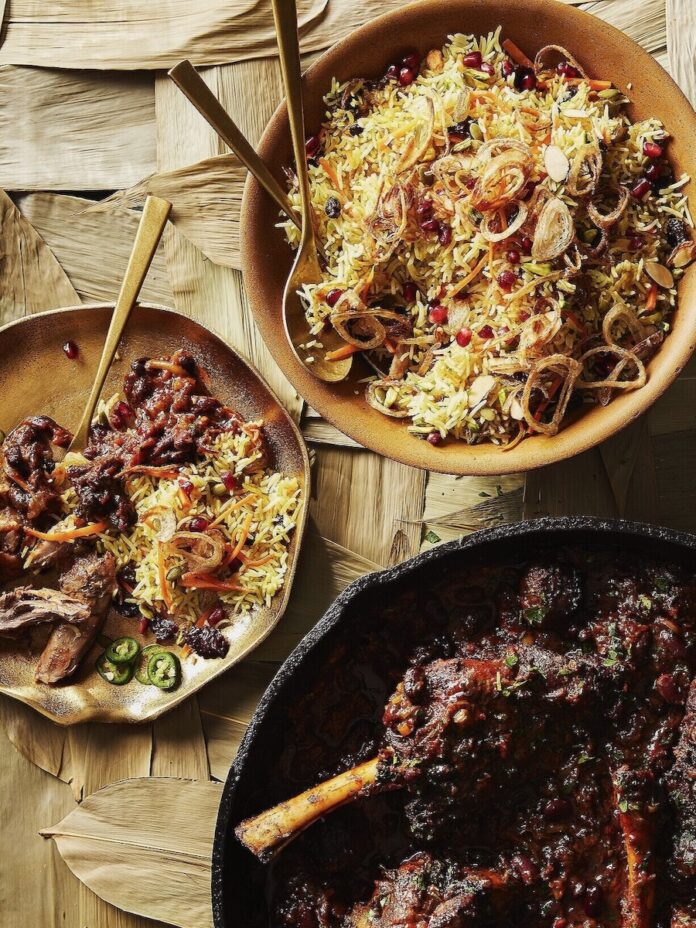
Persian Jeweled rice at a festive Nowruz table, served with chutney and lamb.

This recipe from Chef Palak Patel is part of a series where we delved into springtime traditions from around the world. Persian Jeweled Rice is a dish for Nowruz, a spring celebration that acts as a sort of “new years” in Central Asia. Doesn’t it make more sense to start the new year when the flowers are blooming rather than in the dead of winter? This rice is easy to make and is a great base for a platter of all kinds of decadent Nowruz foods, including Chef Palak’s Persian Lamb and Kidney Bean Stew.

What to Serve with Persian Jeweled Rice

Persian Lamb and Kidney Bean Stew is a great combination with this jeweled rice dish. You can also add a mint and cilantro chutney as a sauce on the side. Or, combine it with some other regional sauces and spices if you have a personal favorite.

Print
clock clock iconcutlery cutlery iconflag flag iconfolder folder iconinstagram instagram iconpinterest pinterest iconfacebook facebook iconprint print iconsquares squares iconheart heart iconheart solid heart solid icon
Persian Jeweled rice at a festive Nowruz table, served with chutney and lamb.

Persian Jeweled Rice


  • Author: Palak Patel

Description

A simple recipe that connects you to a long history!


Ingredients

Scale
  • 2 cups aged basmati rice
  • 1/4 cup slivered almonds
  • 1/4 cup pistachios
  • Kosher salt
  • 2 medium carrots, peeled, cut into matchstick-size pieces
  • 2 tbsp dried tart cherries
  • 1/4 cup dried currants
  • 1/4 cup Persian green raisins
  • ¼ cup dried apricots, chopped
  • 1/4 tsp saffron threads, crushed and soaked in ¼ cup hot water
  • 3 tbsp unsalted butter
  • 4 tbsp olive oil, divided
  • 1 large onion, thinly sliced
  • ¼ tsp ground cinnamon
  • ¼ tsp ground cardamom
  • ¼ tsp ground black pepper
  • ¼ tsp ground turmeric
  • 1 tsp ground cumin


Instructions

  1. Preheat the oven to 350°. Place almonds and pistachios on separate baking sheets and toast until golden brown, 5–8 minutes; let cool. Set nuts aside.
  2. Using a fine-mesh sieve and rinse rice under cold water until water runs clear. Soak rice in cold water for 1 hour up to 24 hours. Drain through a fine-mesh sieve.
  3. In a large pasta pot, add water and bring to a rolling boil, season with salt and gently add rice making sure to not break the grains. Cook rice stirring occasionally until grains have lengthened but are still firm. Drain and rinse under cold water. Spread rice in a thin layer on a baking sheet to cool.
  4. Combine tart cherries, currants and green raisins in a small bowl and cover with hot water; let them soak for 10 minutes. Drain and set aside.
  5. Place saffron in another small bowl and add 1/4 cup hot water; set aside.
  6. Heat butter and 1 tablespoon oil in a large skillet over medium heat. Add onion slices and carrot sticks, season with salt, and cook, stirring often, until soft and beginning to brown. Add spices and 1 tablespoon saffron mixture. Cook, stirring constantly, until fragrant.
  7. Reduce heat to low, add soaked cherries, currants raisins, and apricots and cook, stirring often. Stir in reserved nuts, season with kosher salt. Remove from heat and keep aside.
  8. Heat remaining 3 tablespoons of oil in a large wide heavy pot over medium heat. Add half of rice, spreading evenly; add fruit and half of the nut mixture in a thin layer, then remaining rice, spreading evenly.
  9. Using a spoon, create circular holes in the rice mixture for steam to escape. Drizzle remaining saffron mixture over rice. Place a clean kitchen towel over the pot, fit the lid over the pot. Be sure no steam can escape.
  10. Cook on medium high heat there is steam, 5–8 minutes. Reduce heat to very low or move the pot to a smaller burner and cook without stirring until the rice is tender and the bottom layer of rice is browned, about 20 minutes.
  11. Spoon rice into a serving plate and sprinkle with the remaining toasted nuts.

Dive Into More Nowruz, Navrus and Holi Recipes

Beef Short Rib Plov for Navruz

Persian Noodle Soup

Kuku Sabzi for Nowruz

Thandai, A Traditional Holi Drink

Persian Lamb and Kidney Bean Stew

Kachori Fritters

Red Snapper and Green Split Pea Salad for Nowruz

Recipe by Palak Patel
Styling by Ana Kelly
Photography by Adam Milliron

Subscribe to TABLE Magazine‘s print edition.

Persian Lamb and Kidney Bean Stew

0
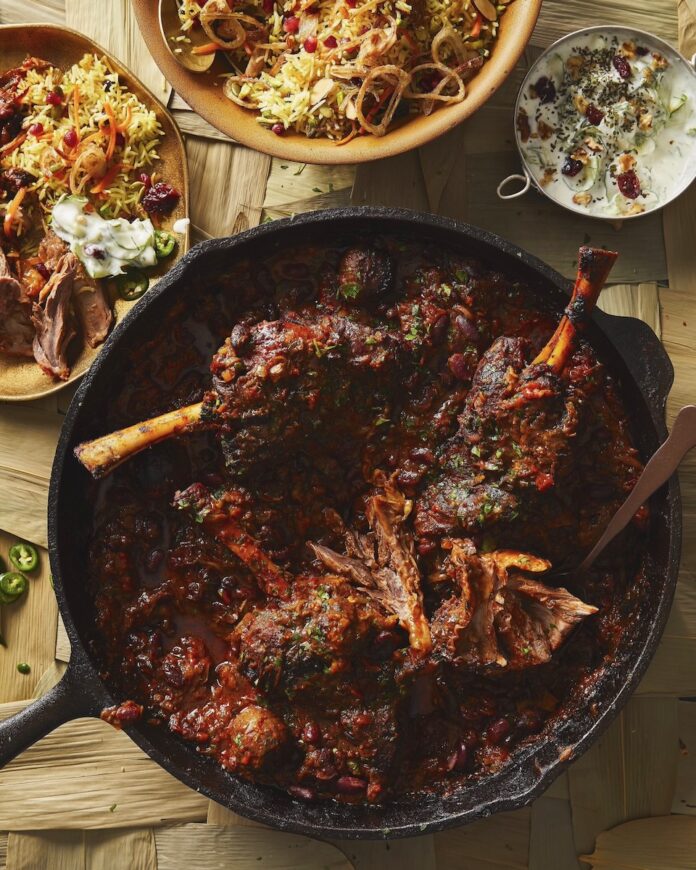
Persian lamb stew for Nowruz, staged with other sides on a light brown table.

Chef Palak Patel researched the spring festivals of India, Iran and Uzbekistan to develop recipes celebrating warm weather. These are some of the most ancient celebrations of humankind, marking the ancient new year…aka the start of spring.

Nowruz in Iran is a time when families prepare hearty and joyful dishes to enjoy together. This Persian Lamb and Kidney Bean Stew is one example of how people celebrate the return of good weather. The dishes are abundant, full of flavor, and very satisfying. Serve this with Persian Jeweled Rice for a bountiful Nowruz spread.

What is Nowruz?

Nowruz is an ancient celebration in the Caucasus, Central Asia, and South Asian regions, all of which have influences from ancient Peria. Nowruz’s roots are in Zoroastrianism, a religion that predates the Abrahamic faiths. It’s a holy day for Baha’i and Shia Muslims, but is often a secular holiday families use to gather together and celebrate what they’re grateful for. One way to celebrate gratitude is through a stew, where all different ingredients come together to make a delicious whole. This Persian Lamb and Kidney Bean Stew is shareable with as many people as you’d like to invite over, celebrating how warmer weather often precipitates togetherness.

Print
clock clock iconcutlery cutlery iconflag flag iconfolder folder iconinstagram instagram iconpinterest pinterest iconfacebook facebook iconprint print iconsquares squares iconheart heart iconheart solid heart solid icon
Persian lamb stew for Nowruz, staged with other sides on a light brown table.

Persian Lamb and Kidney Bean Stew


  • Author: Palak Patel

Description

A hearty stew to share for Nowruz.


Ingredients

Scale
  • 3 lamb shanks (about 3–4 lb total)
  • ¼ cup grapeseed oil or canola
  • 2 medium onions, thinly sliced
  • 3 large carrots, peeled, cut into 1/4-inch-thick rounds
  • 4 garlic cloves, minced
  • 4 dried Omani limes, punctured with a sharp knife
  • ¼ tsp saffron threads
  • 1 tsp ground turmeric
  • 1, 750 ml bottle dry red wine
  • 1, 28 oz can diced tomatoes with juices
  • 1, 14 1/2 oz can low-sodium chicken broth
  • 1, 14 1/2 oz can low-sodium beef broth
  • 3 cans kidney beans, rinsed
  • Kosher salt to taste
  • Freshly ground black pepper
  • 5 tsp chopped fresh rosemary
  • 2 tsp chopped fresh thyme
  • 2 tsp grated lemon peel


Instructions

  1. Sprinkle shanks with kosher salt and fresh pepper. Working in batches, heat two tablespoons of oil in a heavy large pot over medium-high heat. Add shanks to the pot and cook until brown on all sides, about 8 minutes. Transfer shanks to a bowl and rest.
  2. In an extra-large dutch oven, add onions, carrots, and garlic to the pot and sauté until golden, about 10 minutes. Add remaining ingredients. Return shanks to pot, pressing down to submerge. Bring liquids to boil. Reduce heat to medium-low. Cover; simmer until meat is tender, about 1 ½ hour.
  3. Remove the lid and simmer until meat is very tender, about an hour longer.
  4. Transfer shanks to platter; tent with foil. Boil juices in a pot until thickened, about 15 minutes. Season with salt and pepper. Spoon over shanks.

Dive Into More Nowruz, Navrus and Holi Recipes

Beef Short Rib Plov for Navruz

Persian Noodle Soup

Kuku Sabzi for Nowruz

Thandai, A Traditional Holi Drink

Persian Jeweled Rice

Kachori Fritters

Red Snapper and Green Split Pea Salad for Nowruz

Recipe by Palak Patel
Styling by Ana Kelly
Photography by Adam Milliron

Subscribe to TABLE Magazine‘s print edition.

Don't Miss