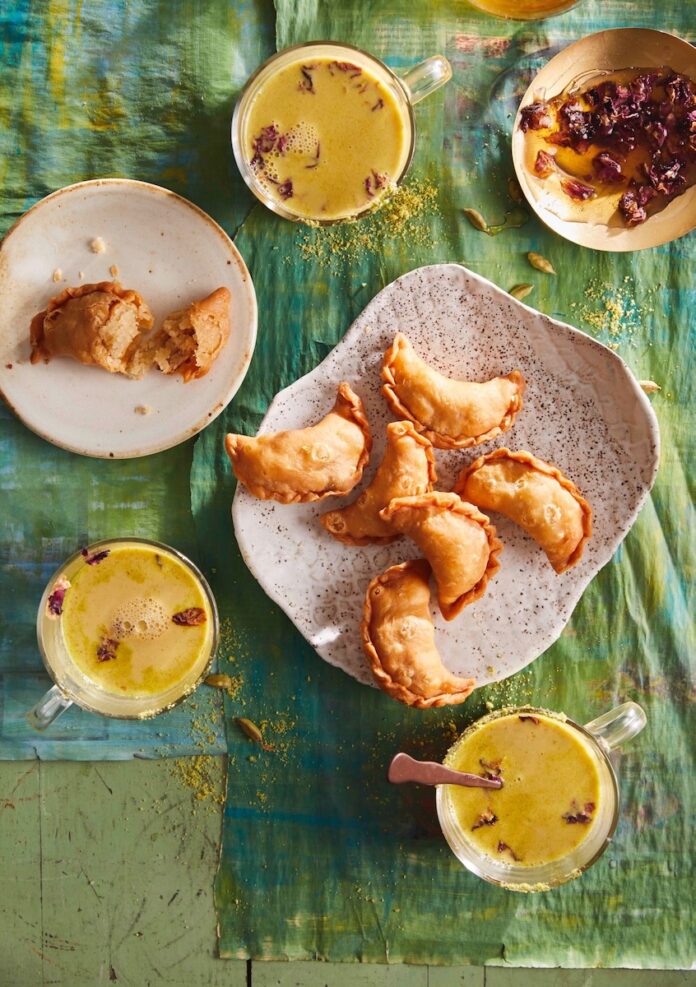
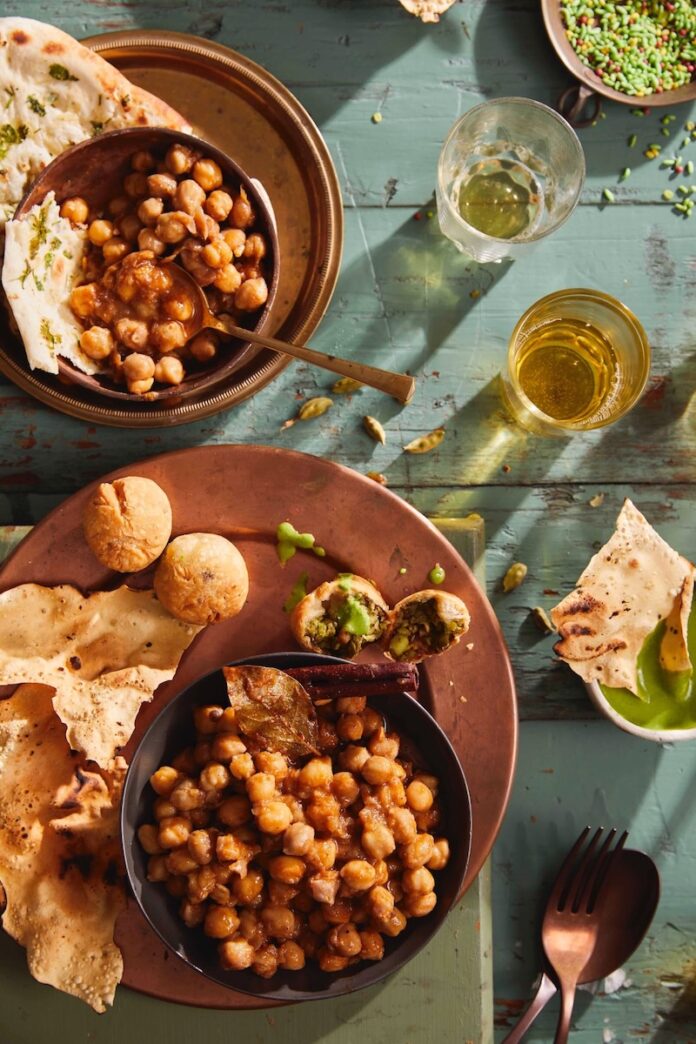
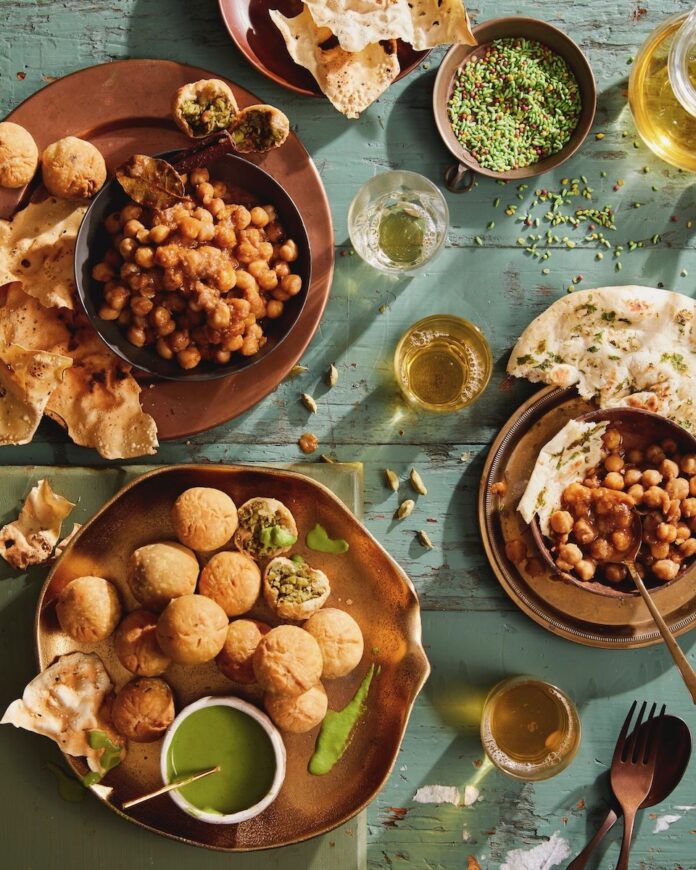
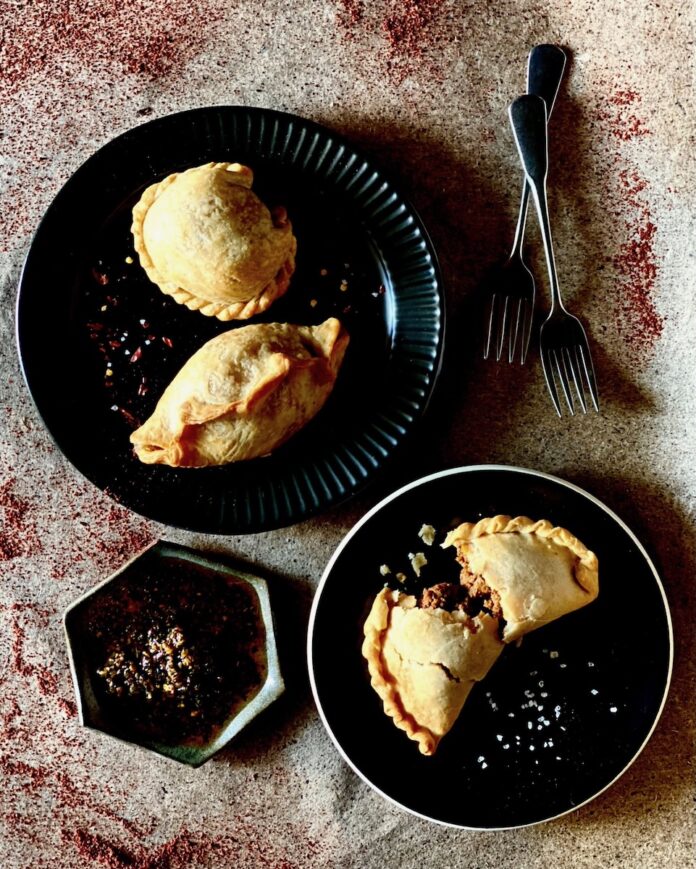
Gujiyas, sweet dumplings made of flour and filled with a decadent filling of dry coconut and almonds, are a must for celebrating Holi. Especially when washed down with a popular Holi staplethandai, a fennel-seed infusion as well as the brightly flavored kachori, round fritters made of peas and edamame. Gujiyas resemble empanadas so they are essentially delicious fried dough envelopes filled with various ingredients. In this case, the filling blends creamy ricotta, sugar, and both coconut and almond flour with aromatic cardamom and nutmeg. Prepare these Sweet Gujiyas ahead of time to have the most delicious Holi celebration this March.
What is Holi?
Take a day where the air is flowing with vibrant colors, laughter is around every street corner, and everyone finds themself in a kaleidoscope of powder. That’s Holi, the Hindu festival of colors, a joyous celebration of the start of spring, the love of community, and also the triumph of good over evil. It’s a time when social barriers dissolve, and people of all ages come together to playfully smear colored powder and water on each other, a symbolic act of washing away negativity and embracing new beginnings. Think of it as a giant, communal expression of pure joy. It’s simply a day to let loose, forgive, and revel in being alive. Plus, it gives the perfect opportunity to enjoy our Sweet Gujiyas.
Celebrate Holi with these bundles of deep fried goodness.
Ingredients
Scale
For the filling:
¼ cup ricotta
¼ cup coconut flour
1 cup almond flour
2 tbsp sugar
¼ tsp cardamom
Pinch nutmeg
For the dough:
1.5 cups all-purpose flour
1/3 cup melted clarified butter
2–4 tbsp of ice water
1/4 tsp sugar
Pinch of salt
Instructions
Blend together flour, sugar, salt and clarified butter in a bowl with your fingertips until mixture resembles coarse meal with some roughly pea-size butter lumps.
Drizzle 2 tbsp of ice water evenly over mixture and gently stir with a fork (or pulse in food processor) until incorporated.
Squeeze a small handful: If it doesn’t hold together, add more ice water, 1/2 tbsp at a time, stirring (or pulsing) until incorporated, then test again. Do not overwork dough or pastry will be tough.
Turn out dough onto a lightly floured surface with the heel of your hand, smear each portion once or twice in a forward motion to help distribute fat. Gather dough together, with a pastry scraper if you have one, and press into a 5-inch disk. Chill, wrapped in plastic wrap, until firm, at least 1 hour.
To make gujiya:
Knead the dough for a minute. Roll out into a circle onto a lightly floured surface 1/8 inch in thickness. Using a pastry cutter or knife cut 3-inch discs.
While filing individual guijyas, keep the remaining dough covered with a damp paper towel.
Place a dough disc on your hand and spoon about 1½ tablespoon of the filling in the middle. Using the dominant hand fold the two edges together pinching the seams making a half-moon shape. Crimp together forming small pleats to seal completely. Or use the back of a fork press firmly on the edges.
Heat oil to 325 degrees. Gently add gujiyas to the oil, turning a few times in between until golden brown and crispy from all sides, use the slotted spoon to remove it.
Place on a wire rack or paper towel-lined plate and let it cool completely before serving.
Holi, the festival of colors, is celebrated in India by 1.25 billion people. This two-day Hindu spring festival symbolizes the victory of good over evil with people tossing colorful powdery pigments at each other in the streets. Chef Palak Patel shares several recipes that play a role in this amazing celebration, including this one for Chana Masala. So gather around with those you love and even invite your neighbors over for a feast that brings about the start of spring and celebrates joy.
What is Chana Masala?
This Indian dish is a staple of celebrating Holi for its warming and cozy vibes but what exactly is it? Chana Masala’s recipe takes chickpeas and slowly simmers them in a tomato-based sauce. In fact, the name literally means chickpeas and a blend of spices. The sauce usually uses fresh tomatoes alongside cumin, coriander, turmeric, and garam masala. Sometimes you’ll even find amchur (dried mango powder) or chilies for a bit of exotic influence. You can eat this dish on its own but including other Holi dishes or sides like naan bread and basmati rice that let the spices shine.
Chickpeas simmered in a savory, spiced tomato sauce just screams comfort food.
Ingredients
Scale
2 tbsp grapeseed or canola oil
1 tsp cumin seeds
1 medium yellow onion, chopped
1 large clove garlic, minced
1 small green serrano pepper, minced
1-inch ginger, peeled and grated
1/4 can tomato puree
1 tsp ground coriander
1 tsp ground turmeric
¼ tsp cayenne pepper
½ tsp sugar
2 cans (14 ounces each) chickpeas, drained and rinsed
½ cup of water
1 tsp garam masala
Kosher salt to taste
Lemon wedges, for garnishing
Fresh cilantro, chopped, for garnishing
Instructions
In a Dutch oven or large saucepan, heat the oil over medium heat and add the cumin seeds. Bloom the seeds in oil for a minute, stirring frequently, the seeds will become a fragrant and medium shade of brown. Reduce the heat carefully to avoid burning the seeds.
Add the onion, garlic, ginger, and serrano pepper. Cook for about five minutes, stirring often. Add the tomato puree and cook for another 10 minutes. Stir in coriander, turmeric, cayenne pepper, salt, and sugar.
Raise the heat to medium-high and add the chickpeas and water. Bring the mixture to a simmer and cook for 10 minutes or longer to allow the flavors to develop about 15 minutes.
Garnish with a lemon wedge and sprinkle with fresh cilantro.
These Kachori fritters, compact packages of peas and edamame, are part of India’s annual Holi festival. Holi celebrates the return of spring and abundance. (You might recognize it as the “festival of colors” where people of all faiths come together to celebrate with colorful dyes and exuberantly joyful music and dance. Chef and Food Network star Palak Patel shares her recipe for Kachori fritters to celebrate the holiday.
What is Kachori?
Kachori is a round, deep fried pastry that can have many different kinds of fillings. People eat it all across South Asia, in India, Bangladesh, and Pakistan, but originally from the Indian province of Rajasthan. You make kachori out of maida, a special kind of wheat flour originating in India, though we used AP flour here to make it easier for US cooks. It’s a convenient travel snack for the many on-the-go professionals in India, as well as a filling (but not overly so) carb refuel on hot days. (The milder spices in it are more suited for a hotter climate). Our take on it has peas and edamame, but feel free to customize it to your liking!
To make the filling, add peas, edamame, coconut, and ginger to a food processor and pulse to a coarse paste and then remove to set aside.
Heat the oil in a saute pan over medium heat. Add pea mixture stirring well, for 4-5 minutes.
Stir in the cumin powder, garam masala, coriander powder, cayenne pepper, cinnamon powder, and turmeric powder, cook for another 5-7 minutes, or to ensure there is no moisture left in the pan but the peas are still brightly colored. Season the mixture with salt, add lime juice, cashews, and cilantro mix well.
Remove from heat and transfer the pea mixture to a bowl and set aside to cool completely.
For the dough and fritters:
To make the pastry dough, add flour into a mixing bowl and make a well in the center. Add the salt and oil to the well, then rub the mixture together using your fingertips and mixed thoroughly.
Add cold water one tablespoon at a time and knead the dough until it is soft to the touch.
Rest the dough for 30 minutes and cover.
When ready to make fritters, take a little oil and rub the dough doll to create a smooth surface.
Pinch a small piece of dough, approximately the size of a small plum, and then using a rolling pin roll into an even circle about 3 inches. Or use a pastry cutter to make an even circle.
Place the filling into the center about a tablespoon. Bring the edges of the circle and pinching tightly around the filling. Seal at the top by closing edges and trim any excess dough with a knife. Roll each ball into a ball using palms of the hands.
Heat oil at 300 and gently lower the kachori fritters into the hot oil using a strainer and gently fry until the pastry is golden brown.
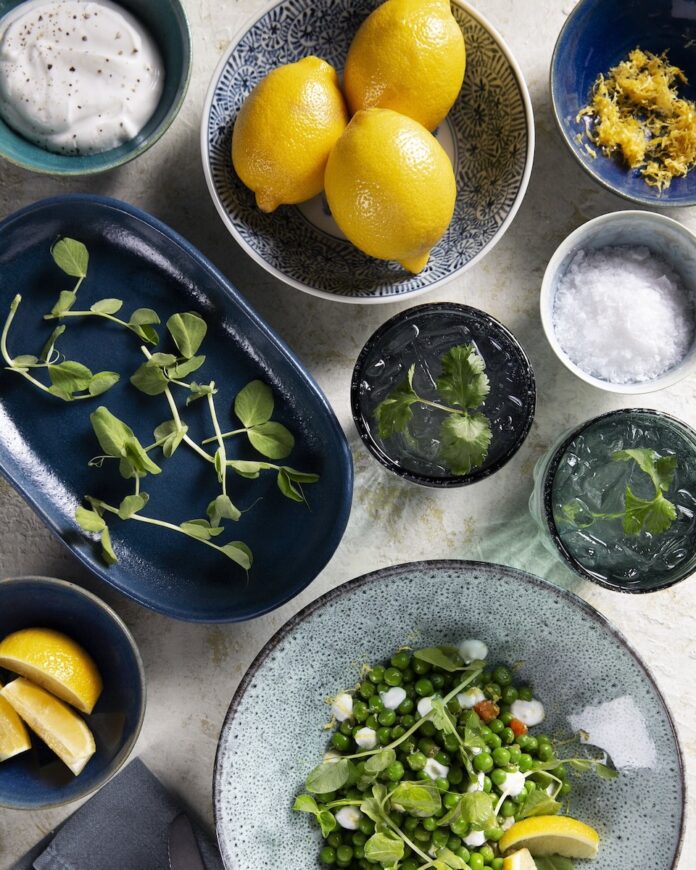
Chef Curtis Gamble dazzled our palate with these English peas with soffritto, yogurt and lemon. They’re shown here with a gorgeous asparagus platter with soft boiled egg, buttermilk dressing, and sourdough croutons tossed in tarragon salsa verde. Maybe pair it with a Sweet Pea cocktail...
What is Soffritto?
The name “soffritto” comes from the Italian verb soffriggere, meaning “to sauté,” referring to the process of cooking the ingredients gently in olive oil or butter. Typically, soffritto is made in Italy from a combination of three key ingredients: onions, carrots, and celery. You finely chop these vegetables and sautée them together until they become tender and aromatic. In some variations, garlic, herbs like bay leaves or thyme, and even pancetta or prosciutto enhance the flavor. Incorporating soffritto into your cooking is an excellent way to add complexity and umami to your meals. Whether you’re making a hearty pasta sauce, a flavorful soup, or this peas with soffritto dish, soffritto is the secret ingredient that can take your cooking to the next level.
In small batches, pulse celery, carrots, onions, and garlic to a fine mince in a food processor. Combine in a narrow pot and cover with olive oil and place over medium low heat.
Gently cook until the olive oil is clean and most of the moisture has cooked off. Cool overnight in the refrigerator.
Spoon several spoonfuls of yogurt on to a serving dish. In a mixing bowl add English peas, soffritto, zest and juice of 2 lemons and extra-virgin olive oil. Salt and pepper to taste and mix well. Spoon over yogurt, top with pea tendrils, and the zest of 2 lemons. Serve.
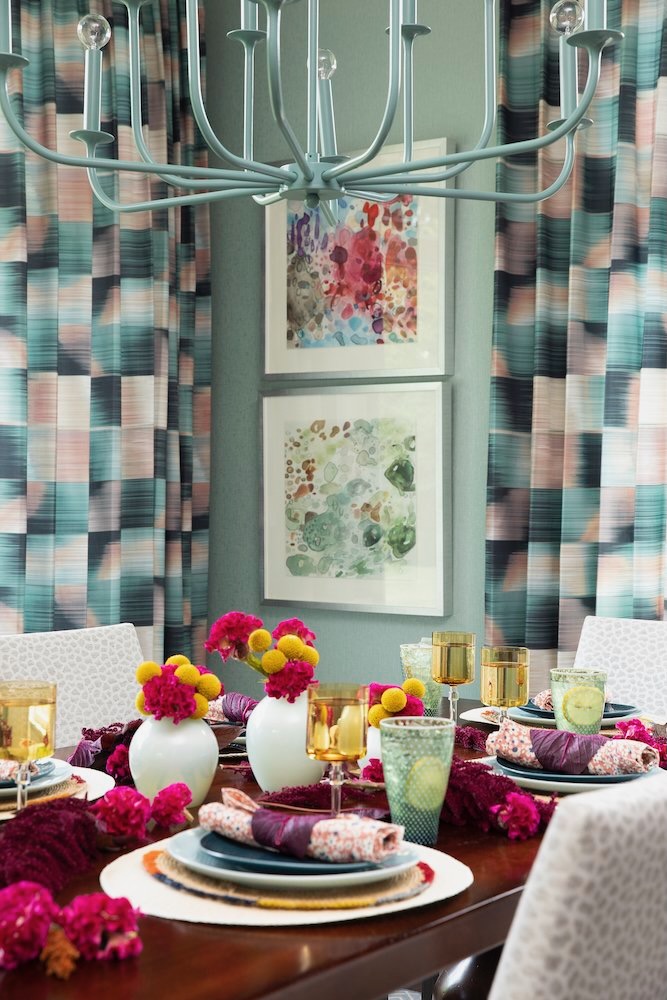
After living in a series of old houses, this Sewickley couple was ready for a refresh and a “simple, pared down design.” It was perfect timing. Their youngest child had left for college and just as they were exploring one-level living, a small ranch-style house nearby went up for sale. Initially, they planned to renovate the single-floor space. But, in order to create the open floor plan they desired, architect Mike Linder determined a new build would be necessary. The owners called on Dion McMullen of Londonbury Homes to build the house and Betsy Wentz of Betsy Wentz Interior Design to bring it to life. “I am very much into minimalism, but needed help making the house look like a home,” says the client.
A new build is essentially a blank slate, so together, they began gathering inspiration, including the client’s love of the beach and the color blue. “Betsy helped me keep a fresh, more modern design without looking too coastal,” she says.
Minimalism with a Twist
The client was also set on all-white countertops, cabinets, and tile. Initially, “I was concerned about how to get a little color and some warmth into the space,” says Wentz. However, “You can do an all-white kitchen and have it be really interesting—you just have to mix up size, texture, color, scale.”
Wentz’s checklist was satisfied in many forms. The island’s base a light blue—Sleepy Hollow by Sherwin Williams—and serves as the room’s anchor. The sink is located in the center of that island, facing outward to the place where family and friends gather. “It’s where you spend the most time in the kitchen,” says Wentz, so positioning the sink centrally is “the number one most functional thing to do.”
Slightly oversized swivel stools surround the island and add an element of scale and “presence to help carry the space.” Their white vinyl upholstery is kid and food-friendly. To ground the area, Wentz installed two custom-colored Urban Electric light fixtures. “They really dressed it up and made it special,” she asaid.
Vibrant rugs bedeck the stained, solid wood plank floor, which runs throughout the entirety of the first floor. It was a beautiful and functional choice—the dark shade helps hide brown pet hair.
Finding Liveliness in White Walls
The stainless-steel stove and hood, ovens, refrigerators, and dishwasher are from Don’s Appliances. “I had every intention of buying a certain brand. But after testing the different models chose something very different,” says the client. “I loved the hands-on, no pressure approach” of Don’s Robinson Experience Center location.
Plenty of natural light and high ceilings bring a spacious feel to the kitchen. The cabinets, painted with White Dove by Benjamin Moore, extend to the ceiling to create a fluid look and are finished with exaggerated crown molding for scale.
Although the designer pushed for an iridescent blue tile on the backsplash, the client was set on white. “So, we had to find a way to give her white with a twist,” says Wentz. The end result is an oversized, subtly textured white subway tile, which lends visual interest to the neutral palette. Instead, that ethereal blue tile borders the nearby fireplace.
A Light, Bright Fresh Feel in the Home
While the kitchen is the heart of this home, design work actually began in the family room. After selecting a “really gorgeous, really soft, medium-bright floral drapery” for the space, ideas for the kitchen and dining room began to flow. “[The drapery] encompassed everything the client wanted the house to feel like—light, bright, fresh,” says Wentz. Not just that. “The family room really afforded me the opportunity to infuse these colors and patterns into the space, which I think made the client more willing to take risks in the kitchen,” she says.
Blue tones abound throughout the home from the custom paint color detailing the island’s light fixtures, to the dining room’s unique chandelier, an old piece lacquered to match. The blue-striped wallpaper in the mudroom offers an element of delight and depth with each walk past the doorway. “It’s just enough to give it a little something,” says Wentz.
On the opposite end of the kitchen, a coffee bar rounds out the floor plan and provides additional serving space for setting out breakfast foods or drinks when entertaining.
“This house has that really great combination of minimalist and transitional. I think those things can definitely live in the same place,” says Wentz.
Story by Nicole Barley Styling by Keith Recker Design by Betsy Wentz Appliances sourced by Don’s Appliances
A magazine ad from 1996 imagines a future where a burger and fries cost $16, a vacation $12,500 and a car $65,000. The ad proclaims “No problem. You’ll eat in. You won’t drive. And you won’t go anywhere.” It now appears we live in a version of that future. The average American’s purchasing power is lower than it used to be. So, in today’s world, what role can buying art have in our lives?
One argument for buying paintings is that unlike the car, burger, or vacation, you’ll have the painting for your whole life. But the main misconception around buying art is that you have to be a member of the ultra-rich to do it. Gallerist Jeffrey Jarzynka of ZYNKA Gallery remembers buying a $2,000 painting—Scott and Shelly at the Cup O’ Joe Coffeehouse by Benjamin Gersch—for the first time. “I thought I was going to die,” he said of how intimidating the purchase was. But now Jarzynka is one of the many professionals in Pittsburgh who help others develop their art collections.
So, You Want to Start Buying Art
Though buying art can seem intimidating, Pittsburgh has a range of more affordable options and a plethora of artists looking to sell. Let’s say you want something for your home that’s not an IKEA canvas and you want to support people in your local community. Where do you start?
Just Look as Much as You Can
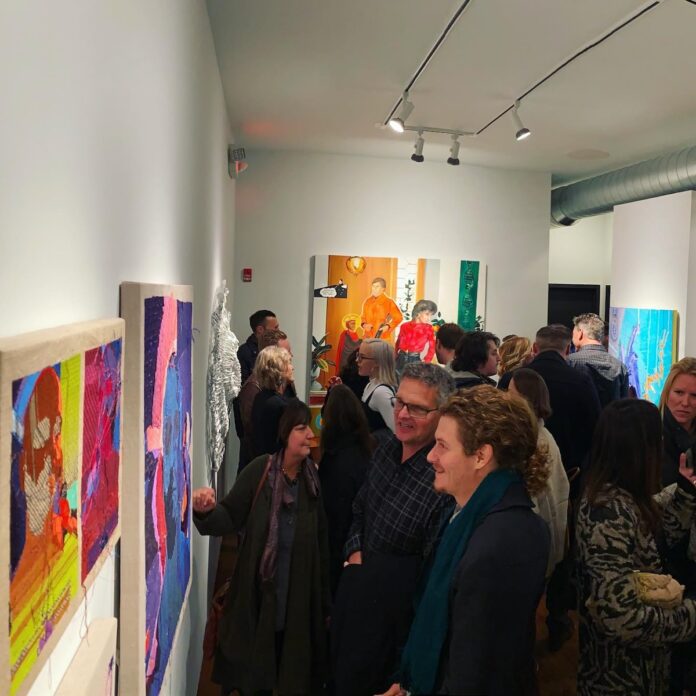
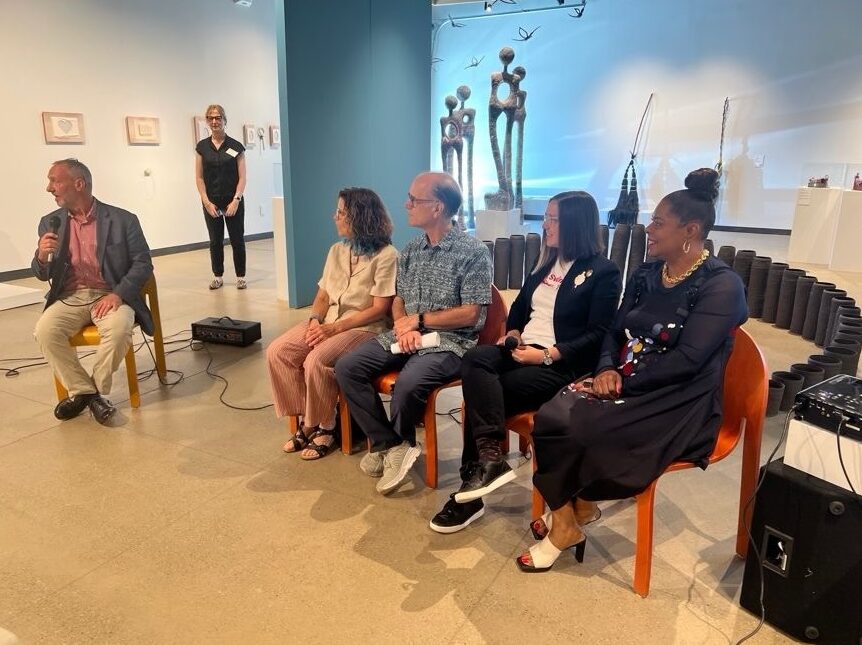
Brian Lang, an independent art advisor who worked for many years as the curator for BNY Mellon, runs a “collecting bootcamp” series of lectures, studio visits, and workshops. “What I tell everybody is regardless of what level you plan to buy at, see as much as you can possibly see and read as much as you can possibly read. You want to go to galleries and museums, as well as artists’ studios,” Lang said.
Institutions like Contemporary Craft, where Lang has had many of his bootcamp lectures, make for a good starting point. “People often think ‘If I don’t buy a Jackson Pollock, then I’m not a collector,'” Lang said.
Brian Lang and a group of panelists.
Jarzynka added that “Art can very much seem like a luxury item, but I don’t see it that way for myself. It’s not a need like water or shelter, but it enhances my living experience. That’s what I hope people get out of it.” For his buyers, he makes digital mockups of how the pieces will look on their walls at home so they can acquaint themselves with seeing it every day.
Find Out What You Like
Margaret Kross, curator of independent gallery Romance, has seen many different levels of collection across her career. She previously worked under Paula Cooper in New York, and chose to start her own space in Pittsburgh. Outside of the gallery, she advises collectors and would-be collectors on how to start buying art or streamline what they already have. “The more you learn, the more you’ll actually realize what you don’t know, but by being open to going down self-directed research holes yourself or by working with an advisor if you like a more collaborative and hand-held process, you can carve out specific areas of interest—that respond to things you care about in the world or that you connect with you on a personal, emotional level,” Kross said.
Jarzynka compared buying art to buying anything else. It’s a way to get to know yourself and your tastes. “Ask yourself ‘What do you react to? Do you like paintings, textiles, glass, bright colors? It’s so important for people to be out and experience it.”
A ”Crop Top” Art Market
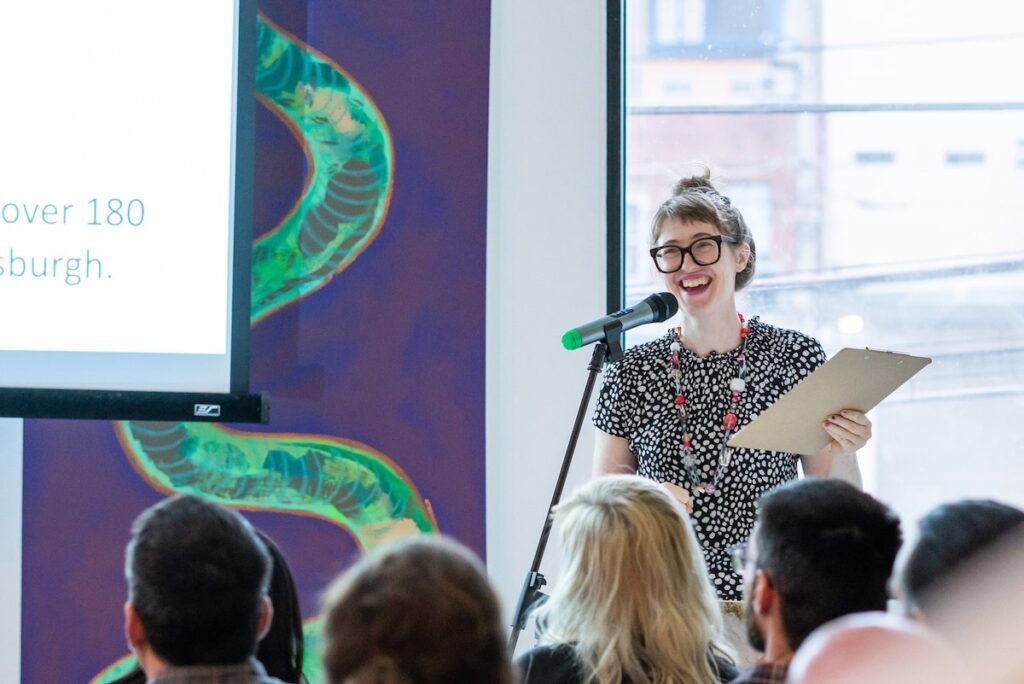
Art consultant Casey Droege runs The Art Supply Co, which serves as an intermediary between artists and businesses looking to buy artwork. Droege said that “If a thriving arts scene is important to you, then I’d encourage you to buy art. If your budget is tight, that might mean buying a $5 postcard. But showing up and encouraging the people involved is a meaningful contribution. Adding some money to that mix is always a welcome bonus.”
Casey Droege addresses an audience about supporting a local arts ecosystem.
Droege noted that the “collecting culture” in Pittsburgh, as she sees it, is a little bit like a crop top outfit. “On the bottom, we’ve got the pants. It’s an area that is ripe with small arts nonprofits, DIY artist spaces and cooperatives, artist-run projects, pop-ups, and some independent galleries,” she said. “On top, we’ve got the crop top. Museums, private/corporate collections, foundations, and universities.” This stymies local artists’ growth, she explained, and can keep collectors from feeling like they have a place to support local artists. Part of her goal with The Art Supply Co is to create a more active middle market. “Let’s get Pittsburgh a full-length t-shirt!” she said.
As an additional plus, buying artwork in Pittsburgh is supporting the economy during a time of overall downturn, Lang noted, given that it doesn’t just support the artist, but also the cultural workers make a living off of the art business. Droege agreed, saying that “Purchasing art is an opportunity to directly support an arts ecosystem including the artist who made the work. You’re supporting the space and the myriads of people involved in that process like framers, art handlers, and photographers.”
Buying Art Starts with Loving Art
Kross added that the work of art’s life doesn’t end when it goes into your collection. A level of care has to go into keeping and maintainng it. “Framing can be expensive, but it’s important,” she said. “Artists care a great deal about it and might even have recommended specifications. Framers are also extremely knowledgeable and can make recommendations within a budget you feel comfortable with.”
In the local market, Jarzynka sees a need for more growth in the “pants” side, too: younger buyers who might not see themselves as “collectors” but are just starting out. He encourages people to follow what really speaks to them. “A lot of my collection was built on traveling and wanting to take home something that wasn’t a traditional souvenir,” he said.
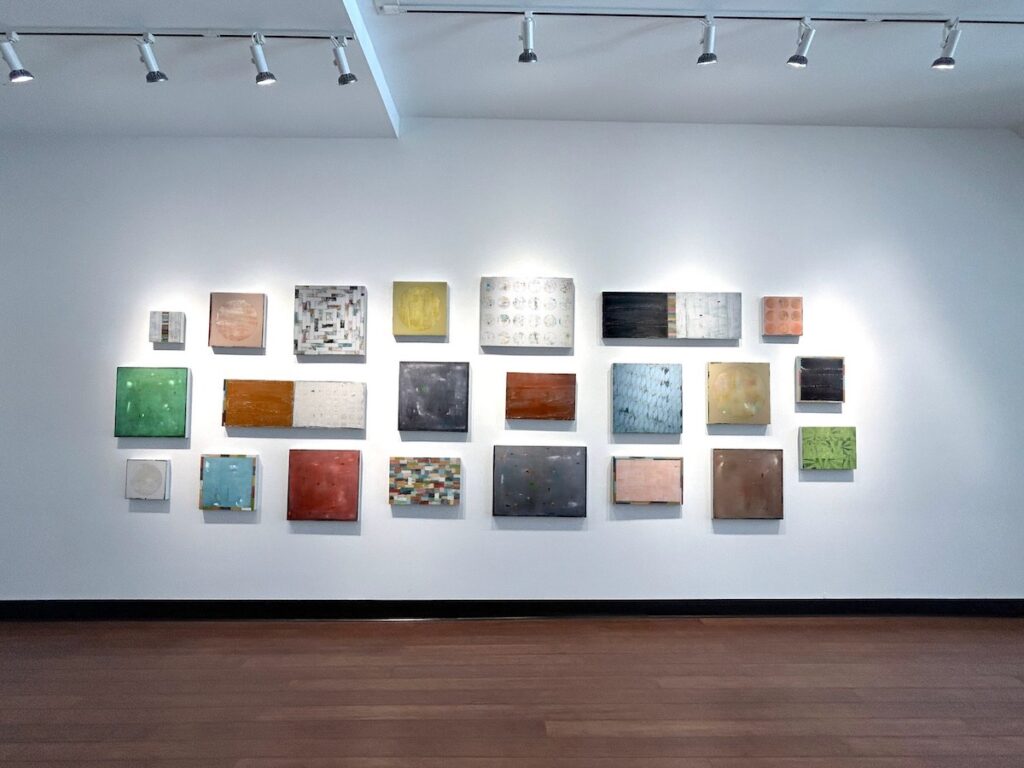
Work by Judy Barie in ZYNKA Gallery.
Collectors like Yvonne Cook, whom Lang featured in his bootcamp lecture series, also help the Pittsburgh art market develop by talking publicly about buying art. Cook frequently posts on social media about art she likes, showing people that “collectors” can also be everyday people in your community. She focuses on work by contemporary Black artists, and her openness about her collecting helps to move away from the image of the collector from an old, extravagantly wealthy white man. A collector starts as an art lover who falls in love with one particular piece.
Works at Every Price Point
“One misconception is that galleries are these incredibly lucrative, exclusive, luxury stores for expensive objects that might buy you clout and social capital,” Kross said. “Of course, this can be true, and art is a financial commitment. But it’s also one of patronage that keeps artists afloat and the places committed to showing their work.” She knows a collector who exclusively buys from benefit auctions, or people that only buy editions or flatfiles to start with. “There are very few exhibition slots in museums for the many amazing artists in the world! [Galleries] are just doing what we can to make it work in an enormous and insane labor of love, both to support artists and to participate in the complex dialogues of our time and the past.”
Lang agreed that people see the price of art and often don’t know what’s behind that. “Many people might go into a gallery and see things that are not within their budget and get discouraged,” he said. “But if you like a piece, ask the gallerist if there are other works available from earlier in the artist’s career, or an edition, or something smaller.” And if you really love a piece, it’s worth saving up for. “Art can add so much for our lives, and artists should be seen as national treasures. Period. They help us all see the world from a different point of view, and bring us together in our shared humanity,” Lang said.
Story by Emma Riva Photo courtesy of ZYNKA Gallery
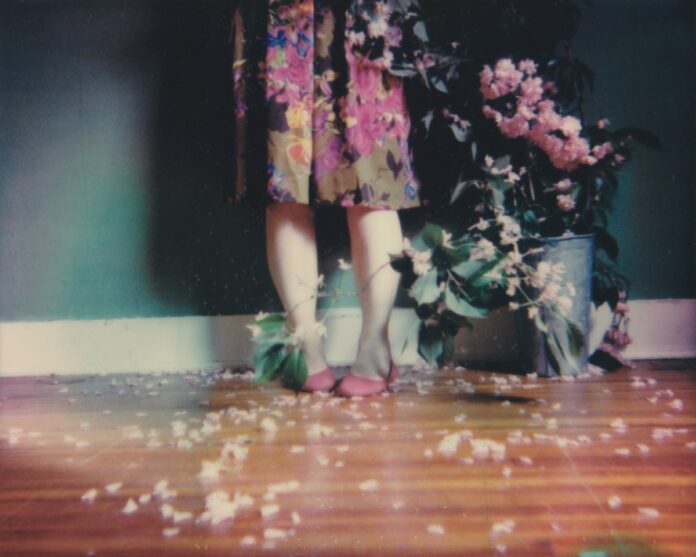
In spring 2020, when the pandemic lockdown began, I wanted to capture on Polaroid film my apple tree blossoming in real-time, but the flowers bloomed for only one week. This left me driving out to Neville Island, where my sister lives on a quiet cul-de-sac along the Ohio River. In her backyard a cherry tree blooms frothy pink tufts of delicious petals which end up covering the grass more than the tree branches. I lucked out with one large branch that had fallen to the ground from a previous day’s storm, placed it carefully in the trunk of my car, and hoped it would survive the pothole-filled ride home after my spring photography session.
Hanami is the Japanese custom of enjoying sakura, or cherry blossoms––a contemplative way to celebrate the end of winter and spring’s onset. The act of photography, particularly with Polaroid film, is also meditative. There are only eight frames in a Polaroid pack, so every shot counts.
Life’s Fleeting Beauty on Film
The film is often finicky, with chemical trails and color shifts, and like nature, imperfect: using it as my primary artistic medium taught me to let go and welcome the unknown. The Spectra film that I used to document life in the COVID-era is discontinued, so each shot is precious, a reminder that once it’s gone, it’s gone, much like the blossoms that I aimed to capture on film.
It all sounds like a big hassle to get a few shots of a bunch of flowers, but such is the life of an artist: we are always chasing that which provides us escape and joy, something that connects us more deeply to the world.
My bedroom-turned studio ended up covered in pink “snow” that stuck to my shoes and clung to my hair–– petals caught in book pages, the cat’s fur, scattered across sheets. It created a mess, a beautiful mess that taught me how to embrace time’s precariousness, and that the journey is just as important as the destination.
We live in an era in which chefs––celebrity, reality show, and fictional––are often presented in mass media as swashbuckling raconteurs, tweezer-wielding technicians, or tattooed and scruffy heartthrobs. One could be forgiven for walking right past the portly guy with rumpled hair smoking a cigarette on the side of the building at 5430 Penn Ave. The droopy-dog countenance and the Crocs might suggest he’s not the culinary genius behind Spork (now One on Spork).
That’s Christian Frangiadis, a classically French-trained, James Beard-nominated, master of reinvention, who with 40-plus years in the industry has done just about everything. And he has no intention of stopping anytime soon. “In terms of food, I’m just always looking to see what I don’t know, and what I can learn next. I have to have some reason to get up and be excited.”
Christian Frangiadis on the Balancing Act of a Chef’s Life
“I could not continue to do this if I weren’t still learning. That is 100% true. Because I’m not the most disciplined person. What would happen is, I would do things badly. If I were trying to replicate the exact same thing that I did last year, it would turn out pretty shitty. I’m just not built that way,” he says.
He returned to Pittsburgh and opened Spork in 2016 with business partner Andy Tepper, first as a neighborhood gastropub. That evolved organically into a destination restaurant focused on charcuterie, house-aged meats, house-made pastas, and tasting menus. It’s now One on Spork, an immersive, 16-seat chef’s tasting counter experience.
A Garden on Penn Avenue
They built a garden on a vacant lot behind the restaurant that boasts hundreds of varieties of fruits, vegetables, herbs, and spices. The garden would be the envy of most restaurants this side of New York’s Blue Hill at Stone Barns. His team traveled to Texas for an extended eating tour of that state’s best barbecue. Spork Pit, down the street from the mothership restaurant, was born just after.
A trip to the rarified air of Noma in Copenhagen inspired them to create a “food lab” at Spork where they preserve and ferment produce from the aforementioned garden to create ingredients––powders, garums, misos, and waters––that put a burst of umami in every dish, helping to satisfy the expectation of a gourmet experience at Spork.
“I don’t want to be stagnant. I don’t want to be the guy doing the stuff that he did five years ago, or 10 years ago. I’m always looking for new things to do in the kitchen, trying to find new flavor profiles, going places and seeing things that are interesting, and trying to incorporate new things into the restaurant. The trick is to take these influences and then you say, Okay, how would I use this? Not how would they use it? But how would I use it? But the creativity should never trump the deliciousness. The deliciousness should always trump the creativity in my mind,” he said.
“[I] just keep just pushing forward because I always said the barometer to me is like, you should be better this month than last month. Because presumably, somewhere along the way, you’re going to find a more efficient way to do something, you’re gonna find a way to make something tasty,” he explained. “Just a tiny bit better. It is definitely an evolution.”
Personal Growth in a Chef’s Journey
The food isn’t the only part of that evolution, however. His approach to the work is, too. “Starting out in the business, I was like a lot of chefs––you go through that period where you’re just extremely narcissistic and egotistical and hard to get along with, and everything’s about you,” he said. “And as I’ve gotten older and mellowed, it’s so much more gratifying mentoring young people, and building a good team. There’s more respect given amongst the staff now and if you’re not doing things that way, it’s probably not going to work. Because honestly, the Millennials don’t want to hear your old war stories. Like, if I say ‘look, you know, when I was 22, I would run through a brick wall for my chef.’ They’d say ‘well then you were an idiot!” he laughed.
“We have probably six or seven incredibly talented people in the kitchen, and equally talented people behind the bar and in service. You get their creativity and passion too, because they all have something to say. What’s been really fun for me is trying to build a team, foster it, get everybody involved, get everybody contributing to the menu and the place and then rewarding people for that. It’s been a lot of fun. Yeah, finding: finding the right staff and finding the right formula.”
His wife, Marilu, whom he met while living in the Caribbean, pointed to an antique crystal double pan balance scale on their kitchen island. “You have to keep it like that,” she said “Balanced.” An apt metaphor for a restaurant, and for life.
NOTE: Spork recently transitioned from a traditional restaurant to a 16-seat, immersive tasting format called One by Spork. Book your spot now and experience Christian Frangiadis’s latest evolution.
I’ve never met an empanada I didn’t like, though this statement is particularly true when talking about Mi Empanada. The year-old Lawrenceville shop has beef, chicken, lamb, ham and cheese, sweet potato and black bean, and more. Owners of the pop-up-turned-storefront, Argentina-native Ivan Gil-Silva and Rachel Jenkins, wrap their fillings in a flaky dough, just golden-brown enough to leave a few crisp crumbs behind with each bite. Thankfully for Pittsburghers, Mi Empanada isn’t the only city shop putting out authentic empanadas, a street food found – with slight differences and variations – across South America, Central America, and the Caribbean. We’ve outlined a few of our favorite spots for empanadas in Pittsburgh, each one showcasing a different culinary tradition.
With two locations in the South Side and Lawrenceville, Cilantro & Ajo serves up authentic Venezuelan empanadas. Try their deep-fried, white corn patty stuffed with anything from chicken to chorizo to sweet plantains and cheese. Wash it down with their traditional brown lemonade.
Many East Enders love Pamela’s, but right upstairs is La Feria, a relaxed Peruvian restaurant with folk art pieces and textiles for sale along with their deliciously crispy empanadas.
You can’t go wrong at Mi Empanada. Order their empanadas hot and to-go or get the take-and-bake frozen option. Whatever you do, don’t miss out on the chimichurri.
Once you cross over the Birmingham Bridge, you’ll turn right towards one of Pittsburgh’s best Mexican restaurants. La Palapa’s empanadas come in ground beef, chorizo and cheese, and the ever-delicious plantain and cheese.
This Venezuelan hole-in-the-wall is tucked away on Cherry Way downtown, but it’s well worth the sleuthing to find it. Their empanada lineup is stacked, Venezuelan-style with toppings like pabellon and “Domino” (Venezuelan queso and black beans).
At this Colombian restaurant, empanadas come in three varieties: chicken, beef, or vegetarian. Find them all wrapped in corn, fried, and stuffed with potatoes, tomatoes, and onions.
Zorros’ traditional Dominican empanadas are made with housemade dough, then fried. Get them with one of the eatery’s 11 flavors: chicken, guava and cheese, mac n’ cheese, and more.
Story by Maggie Weaver Photography & Styling by Keith Recker
With spring come new flowers and plants, and also a chance for new knowledge at spring classes around Pittsburgh. From pig yoga to pasta-making, there’s a new skill for everyone to learn, new people to meet, or just ways to take your mind off your worries. Many of these are also free or low-cost, but even those where there is a higher cost, it’s a worthy investment to learn something new.
Spring into Spring Classes and Workshops in Pittsburgh
Love herbal tea? Worried about microplastics in commercial tea bags? Learn how to plant your own herbs with this spring class at Shiloh Farms where you’ll learn to plant lavender, chamomile, peppermint and other popular herbs for tea.
This free workshop at Assemble will help you learn how to make a seed ball, a compact mass of organic compost that help neglected growing areas blossom. Assemble’s queer craft nights center the LGBT community but are open to anyone who wants a fun way to de-stress and meet new people.
Get your “downward hog” on with this outdoor yoga class surrounded by the adorable rescue pigs at Pigsburgh Squealers. This class is kid-friendly and open to both beginners and experienced yoga practitioners, and also includes a tour of the sanctuary. If you’ve had your eye on a potbelly pig, this might be the class for you…
Spring isn’t just for cleaning out your house, it’s also for cleaning out your brain. A guided sound bath meditation will let you relax into your inner self and reflect on what you’ve been holding onto in your mind and body during the winter months as we transition into springtime.
There’s more overlap between sports fans and art lovers than you would think. This tour of the Charles “Teenie” Harris Archives is led by archivist and contemporary of Harris Charlene Foggle-Barnett. She’ll be talking about the importance of baseball for Black Pittsburghers and how Charles “Teenie” Harris photographed the Pittsburgh Crawfords players throughout his career.
This free gin tasting at Tina’s will leave you with an industry-level knowledge of gin, sponsored by Ginworld. The tasting will highlight the range and spectrum of some of the most outstanding gins without the constraints of their brands, simply the flavors that they impress.
This interactive pasta making class from Debbie of Angelo’s Cucina and Catering will have you mastering gnocchi and focaccia in no time. The class includes glass of wine, hands-on instruction, all measured ingredients for both products, all the products you make to take home, and a dinner of chicken romano and gnocchi with meatball made by the instructor!
Story by Emma Riva Photo courtesy of Pigsburgh Squealers’ Rescue