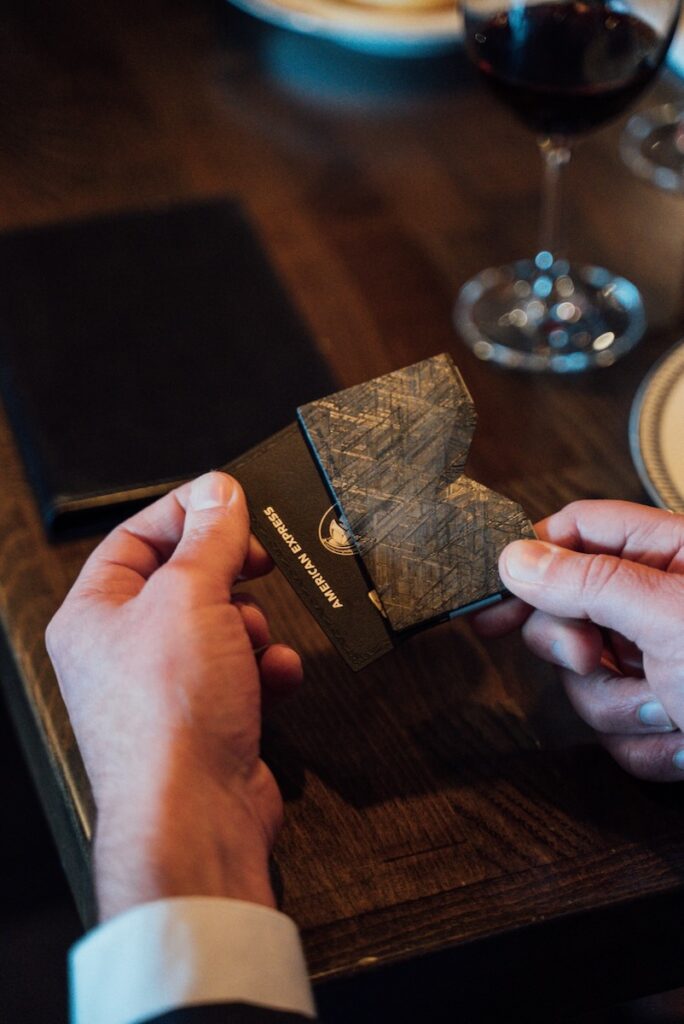
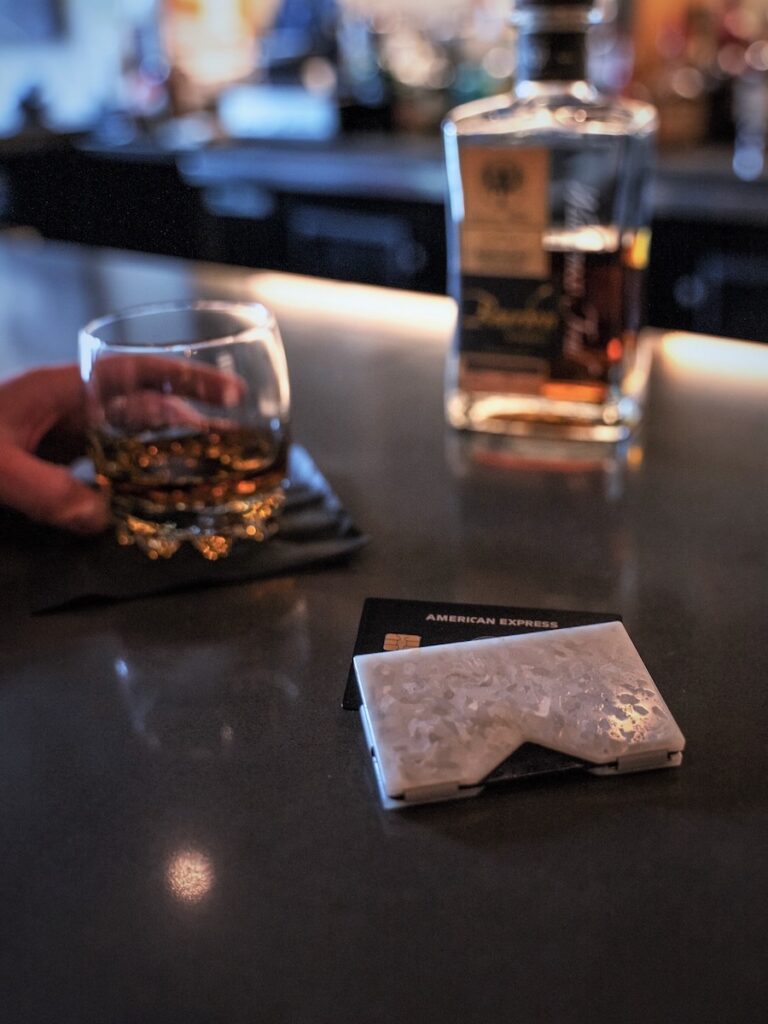
Eduardo Sande, founder of luxury wallet line Bejeti, brings his engineering background to the development of unique and innovative wallets. His products include the world’s first and only wallet crafted from a 4-billion-year-old planetary core (iron meteorite). He shares some thoughts with TABLE Editor in Chief Keith Recker ahead of his exclusive, one-day-only trunk show at Henne Jewelers on May 3, 2025.
Luxury Wallets from Western Pennsylvania
TABLE: What got you started with Bejeti? How was this idea born?
Eduardo Sande: I’ve always had a deep appreciation for American manufacturing and the beauty of rare materials. My background is in chemical engineering and operations, particularly in steel forging and machining. I developed a strong connection to the process of shaping raw materials into something extraordinary.
The idea for Bejeti wasn’t born from a traditional design background. It came from a desire to create something the world had never seen before. A wallet is something people carry every day, yet it’s rarely an opportunity for artistry and innovation. Bejeti is my way of reimagining that—bringing together engineering, design, and materials with deep stories to tell.
Do you make these yourself in your metal shop? If not, where are they made and by whom?
Each Bejeti wallet undergoes a meticulous machining process in our partner’s Pittsburgh-based shop, where we have custom tooling and fixturing dedicated to bringing these designs to life. While I conceptualize and design every wallet, their execution requires an exceptional level of precision carried out by master machinists and metalworkers. We work with a combination of highly skilled artisans and advanced manufacturing techniques to ensure that every piece isn’t just functional. It’s an heirloom object.
Are you the designer?
Yes, I design and conceptualize every Bejeti piece. It all starts with a material that fascinates me—something with history, rarity, or a story. Sometimes it’s a process that pushes the limits of what’s possible. Other times, it’s about reimagining how a material can be experienced in everyday life.
I collaborate with incredible blacksmiths, goldsmiths, and metalsmiths across the U.S., which allows me to experiment and bring together materials in ways that haven’t been done before. Whether it’s shaping a meteorite that has traveled through space for billions of years or working with hand-forged Damascus steel, my goal is always to create something that feels both deeply intentional and entirely unique.
Who’s the customer? How do you see them embracing this concept?
The Bejeti client is someone who values craftsmanship, exclusivity, and materials with a deeper story. Our wallets attract collectors, trendsetters, and those who curate their personal style with intention. They appreciate artistry and innovation over trends.
Please tell me the story of one of the designs—the material, the process, the look.
One of my favorite designs is KOTHAR, made from CopperMai, a material that pushes the limits of traditional Damascus steel. Copper and steel aren’t natural companions in the forging world. Their different melting points and structural properties make them resistant to bonding. That challenge was exactly what drew me in.
I worked with a skilled blacksmith here in the U.S. to develop a forging process exclusively for Bejeti. The goal was to create a fusion of steel and copper—two metals with distinct characteristics—without delaminating or compromising the softer, ancient orange metal. Achieving this required precise temperature control, expert hammering techniques, and an understanding of how these materials behave under extreme conditions.
What’s the end result?
The result is a stunning ripple-forged pattern where the rich, warm glow of copper contrasts against the deep resilience of steel. Every layer tells a story of craftsmanship, precision, and the balance between strength and fluidity. No two patterns are ever the same, making each Kothar wallet a one-of-a-kind piece that blends industrial ingenuity with artistic expression.
Another design that fascinates me is Planetesimal, crafted from iron-nickel meteorite. Holding it, you’re literally touching something that has traveled through space for billions of years—a fragment of the cosmos shaped by forces beyond our world. The meteorite’s Widmanstätten pattern, a natural interlacing of metal crystals, is something that can only form over millions of years in the vacuum of space.
Transforming this ancient material into a wallet is no simple task. It requires careful machining to preserve its unique structure while making it functional. Every piece carries its own cosmic fingerprint—no two are alike. It’s more than just a wallet—it’s a reminder of how vast the universe is, and how incredible it is to carry a piece of that story in your pocket.
Story by Keith Recker Photography courtesy of Bejeti
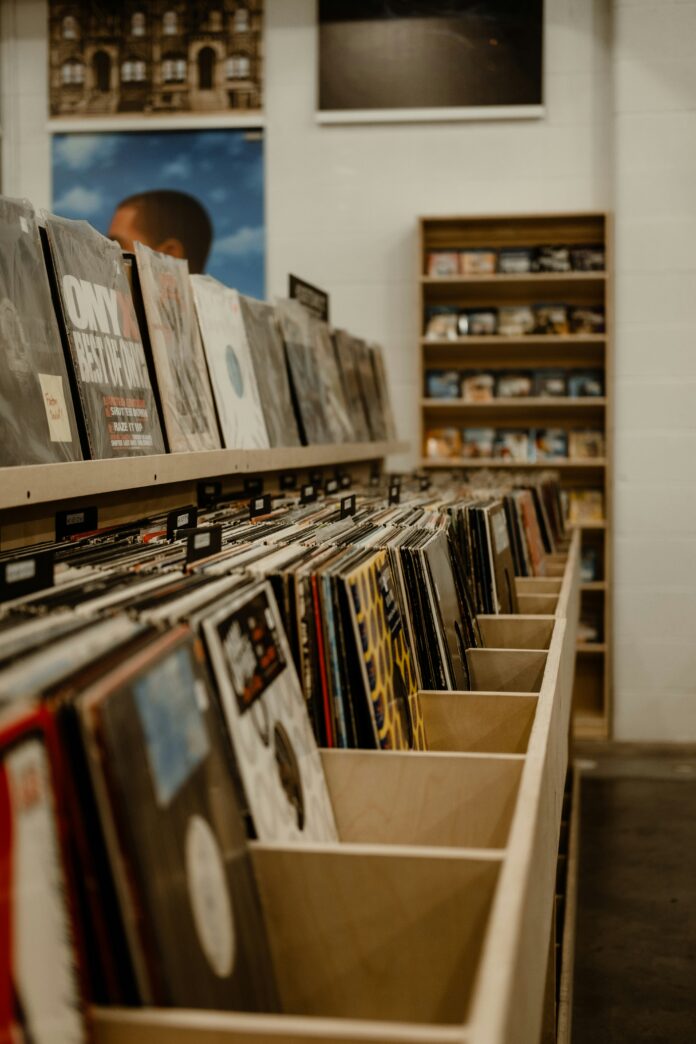
As vinyl records have come back to life in recent years, Record Store Day has become more of a celebration, and Pittsburgh is the destination to be if you want your chance to pick up something special. From 2016 to 2023, record sales went from 13.1 million to 49.6 million and these stats only continue to grow. Therefore, the event known as Record Store Day, a time to pick up exclusive, limited-quantity vinyls from your favorite artists, draws long lines of people each and every year. Think special color variants, demo releases, and live recordings.
Luckily, in Pittsburgh there are at over 10 shops to pick from for your shopping experience, which means smaller crowds and more opportunities to pick up that one record you really want to get. It’s good to call the shops below ahead of time to double check what vinyl they’ll be stocking for Record Store Day. Some shops will get most of the picks while others will only take on a select few. Nevertheless, Record Store Day is about the experience whether that’s browsing the shelves or connecting with other music lovers. It’s a time to share your passion.
Specialty curation is the theme of Vinyl Remains and their selection covers just about every genre you can think of. Over 3,000 records line the walls of the shop but you can also add to this number by bringing in your own vinyl to sell or trade. If you’re looking for something local, you can check out the special case which features Pittsburgh artists. They also post a lot of their new stock on Instagram so you can head in when you see something that interests you.
Record label, distributor, and store combined, Get Hip is run by Pittsburgh’s The Cynics’ bandmembers. Here they import and distribute records from all across Europe, Japan, and America. But, you can also find their own label releases in store as well. You truly never know what special edition vinyl you may find, especially when Record Store Day rolls around. They’ll also be holding deals of their own in celebration like 20% off all used titles, an in-store signing from Blue Ash, and complimentary beverages.
You’ll find a lot more than just vinyl records at Eide’s Entertainment. Inside you’ll find music, movies, magazines, videotapes, comics, and plenty more. If you’re looking for an old relic, Eide’s probably carries it. In fact, this year marks 54 years of service for this store and to celebrate their anniversary, you can shop older Record Store Releases prior to Record Store Day that’ll be on sale from April 1 to April 14. Some of their sales during this time even go up to 70% off.
A space for live music, artistic events, and simply hanging out, The Government Center is the record shop for all music enthusiasts. Browse old used records as well as brand new releases plus you can sell and trade your own vinyl too. If you happen to stop by on Record Store Day you can get a taste of what they’re all about with live music starting at 1 p.m. and going into the evening. But don’t worry, doors open at 8 a.m. so you can get your picks early.
Half coffee shop, half record store. What more could you ask for? Sip on a latte or munch on homemade pastries while you browse new records and local releases at Needle & Bean. But, if you’re looking beyond the records they also carry goodies to help decorate your space at home. Not to mention you can check out live music on various event nights.
Over 40 years of business means plenty of LPs and CDs at Attic Record Store. With constant new picks coming into the store, they promise a selection that spans many genres and decades. If there is a record that you have been searching for, this store is here to help with special orders and wish-lists. They are also willing to buy any collection whether it’s a few new records or boxes of old ones. Plus, keep an eye on their socials because this store gets new Record Store Day drops in throughout the whole year as well.
If you’ve been a college student in Pittsburgh, you’ve probably wandered the shelves at Jerry’s Records in Squirrel Hill. Right on Murray Avenue after shopping the other local businesses, step into rooms of records ranging from old Broadway soundtracks to first pressings. The best part about this store is that shopping is a breeze since the space is carefully separated into different genres and categories. They’ve even recently expanded their musical soundtrack collection and all weekend of Record Store Day they’ll be holding a special $1 sale on LP’s, CD’s, DVD’s, cassette tapes, and VHS.
Rosie’s always has the coolest variants no matter what time of year you head into their shop. They’ve got all the latest finds and even hold listening events for new albums. At this store you can also preorder record store exclusives from individual artists throughout the year. Just be sure to head to their social pages to see what’s coming up next.
This store isn’t just selling records, they’re also showcasing HiFi brands and specialty record pressings on a daily basis. Their staff is happy to help you curate your listening setup or you can simply browse the new and used vinyl they have available. Don’t be afraid to check out their headphones, integrated amplifiers, turntables, cartridges, and phono pre-amps when you stop by for Record Store Day to update your listening experience. They even run an eBay store for those who can’t make it out physically.
While this shop is a little further away than the others, we promise it is worth the drive to experience Preserving Vinyl. And actually, just around the corner is their secondary shop, Preserving Record Shop, so it’s a two for one deal. While each one of these stores is full of vinyls and exclusive band merchandise, you can also catch a show at the concert venue that extends off of the Preserving Record Shop. Record Store Day will actually be your last chance to shop at Preserving Vinyl. The team is packing up their shop and moving to a more expansive venue in Dormont that can support the growth. (Don’t worry though, the record store in the concert venue will always be the same.)
Story by Kylie Thomas Photo Courtesy of Brittany Bendabout
There’s nothing worse than getting out of a concert, play, or just finishing a night out with friends to discover every restaurant around you is closed. Even though the pandemic put a beating to the late night bite scene of Pittsburgh, there are still a few places to grab something to eat that’s not just another cheeseburger from McDonald’s. We’re here to help soothe your cravings with crispy bar food, spicy noodles, cheesy slices, and even delectably sweet treats. After all, who wants to go to bed hungry?
Craving savory noodles and deep-fried crab rangoon? This late-night Thai restaurant is open until 2 a.m. Sunday through Wednesday and till 3 a.m. Thursday through Saturday. Stop in to hang out in one of their wooden bench booths with those you stay up to see sunrise with. They even have a number of Thai desserts on the menu so that you can finish your night with something sweet.
Need to get your taste of comfort food while still keeping the party going? Genoa Pizza and Bar has both a dining room area and a bar space so that you can choose if you want a quiet night in the corner or a lively conversation on a bar stool. Besides their obvious specialty of pizza, they also offer wings, pastas, sandwiches, salads, and plenty of appetizers to share. The best part? They’re open until 2 a.m. every day of the week.
This hidden gem in the more residential side of Oakland is open until 3 a.m., a rarity in Pittsburgh’s dining scene. After a rowdy evening at Hemingway’s or Mario’s, you can head over to Smile for Pad Thai or sushi to sober up for the rest of the night.
This brand-new Yemeni coffeeshop from Dearborn, Michigan just opened its doors in Oakland. One of the things that makes this café so much fun is that even after 10p.m., people are still talking, laughing, and enjoying coffee and snacks, making it a bar-like atmosphere without the alcohol.
If you’ve ever been strolling down East Carson Street late on a Saturday, you probably have already tried Cambod-Ican Kitchen. This spot on the Southside stays open through 3 a.m. Friday and Saturday and 2 a.m. every other day except for Monday. Their Chicken on a Stick has been serving residents and tourists for years. Needless to say, they are always there for you when the drinks hit and your cravings kick in.
With plays and performances keeping you out late in Downtown, City Works is right in the middle of it all in the corner of Market Square. This restaurant is just a short walk from the Cultural District, the Northside, and even PPG Arena. Here you can try their extensive on draft menu or stick to the food menu full of elevated bar-food favorites. Just make sure you get there before closing time at 1 a.m. Friday and Saturday and 12 a.m. any other day.
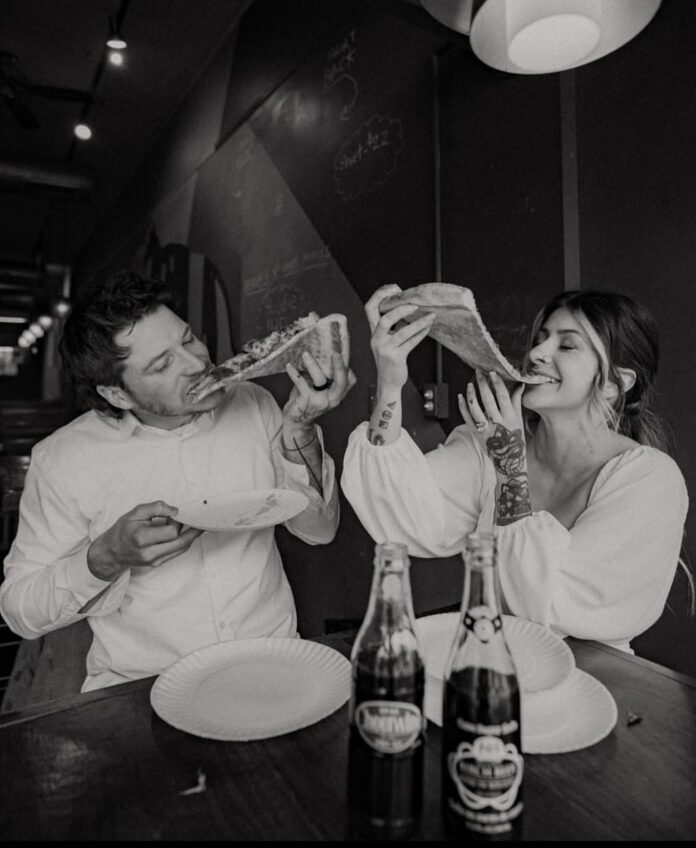
If you are hoping to chow down on a slice of something cheesy and greasy, Fiori’s gigantic New York style slices are just what you need. Grab one slice to-go over their takeout counter or split an entire pizza with your group of friends. We also recommend trying their ranch dressing if you’ve never had it before. Drizzling it all over any of their types of pizza while standing on the sidewalks of the Southside is an experience everyone should have.
You can’t call yourself a true Pittsburgher without a night at the Squirrel Cage! A quintessential Squirrel Hill hangout, Squirrel Hill Cafe is open till 2 a.m. every single night, and for good reason too. Between the low-lit atmosphere, the cozy booths, and friendly staff, you’re sure to have a ball. Plus, their menu covers all the staples like chicken wings, burgers fresh off the grill, dips for sharing, and happy hour specials.
That’s right, this bakery is open till 11 p.m. so you can get your sweet tooth fix. The Butterwood Bake Consortium fills their cases with cakes, pies, and pastries alongside a menu of specialty coffees, teas, and lattes. Bite into Browned Butter Brownies, Cinnamon Pixie Dust Blondies, Tea Cakes, and their lovable Olive Oil Cakes. Or, head toward a good sleep back home with a cup of their Lavender Chamomile tea.
Story by Kylie Thomas Photo Courtesy of Benny Fierro’s
Uzbek food in Pittsburgh is having a moment, thanks to recent Central Asian arrivals to the ‘Burgh. The reasons for a spike in Uzbek immigration are multifaceted, but a wave of new Uzbek neighbors means more opportunities for delicious food. Many came to Pittsburgh to work as truck or rideshare drivers, meaning there’s a demand for restaurants with late hours, big portions, and a casual setup. However, there are now enough Uzbek joints for anyone’s taste, whether you’re looking for upscale or casual.
Pittsburgh’s Uzbek Food Scene is Flourishing. Try These 5 Restaurants to Learn More About Central Asian Cuisine.
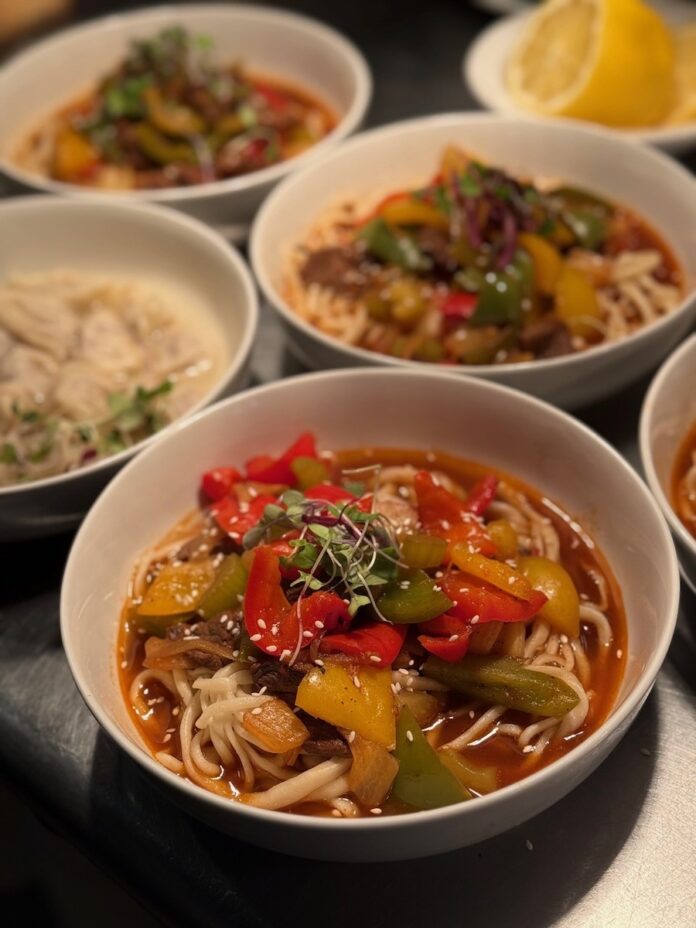
Kavsar is Pittsburgh’s first Uzbek restaurant, open since 2014. During the height of the COVID-19 pandemic, they closed their dining room and became a takeout-only business. But you can now once again dine in at Kavsar and enjoy their cheese bread, borscht, lagman handmade noodles, and manti dumplings. Their interior space is charmingly Silk Road-inspired and it’s an enjoyable night-out spot. The food stands well enough on its own that it maintained takeout-only status for almost five years.
Not far from Kavsar, Chaykhana on the West End has become one of Pittsburgh’s best known Uzbek restaurants. Their menu is casual but creative, embracing the spectrum of Turkish, Chinese, and Arab influences on Uzbek cuisine with dishes like doner, labneh, and dumplings. Its name, Chaykhana, refers to a tea house, and there are pots of tea available to pair with the food. Chaykhana was such a success that owner Sarvar Abdurashidov later opened another restaurant, Piyola.
House of Shish Kebab took a proverbial leaf out of the book on Google-based marketing strategy: their domain name is simply uzbekfood.net. It’s fitting for a no frills-type restaurant like this one, open from 11AM-11PM and serving up steaming platters of plov and somsa for all who come through their doors.
You may think “Uzbek food in a pizza shop?” but rest assured, Pizza Bari is not just pizza. It’s something of an open secret that despite having pizza in the name, Pizza Bari has plov, kebabs, and manti on the menu. (There is also pizza, for the record). Make sure you bring a friend, though, because the portions are huge.
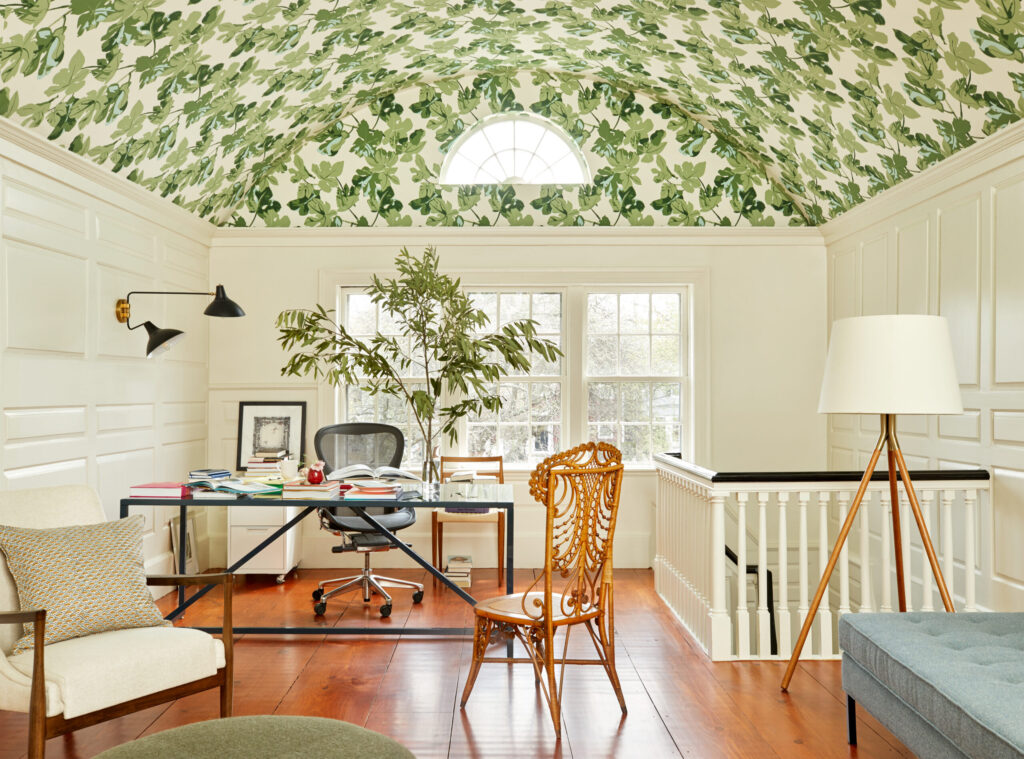
Women have been the driving force behind interior design, thanks to pioneers like Elsie de Wolfe, Candace Wheeler, and Dorothy Draper. They, and others like them, paved the way for contemporary designers. In Pittsburgh, we’re lucky to have world-class interior designers and architects of all stripes. As part of Women’s History Month, TABLE is highlighting Pittsburgh women designers who are redefining the meaning of home.
6 Women Designers Bringing Their Talents to Pittsburgh
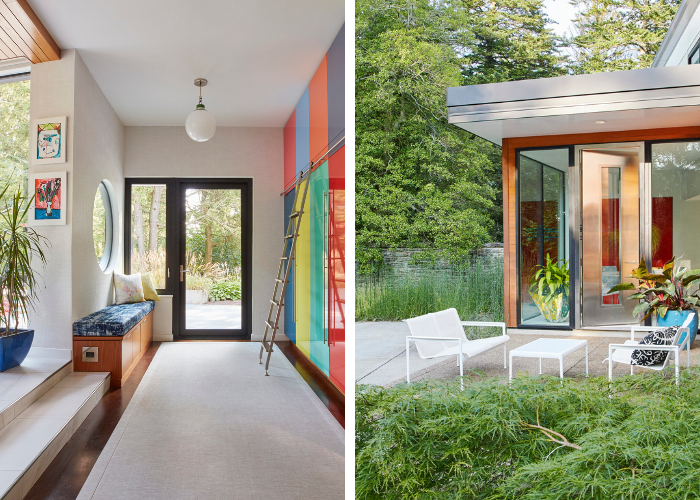
The homes Colleen Simonds designs are for adventurous people who want to live in warm, kind, places. The color schemes she uses bring light and engagement into her spaces, all the while looking lush and downright enviable. She shows us that warmth and the feeling of home needn’t come at the expense of the cool factor. Based in Pittsburgh, Simonds’ work is recognized nationally and has been featured in the New York Times, LUXE, Elle Decor, and Martha Stewart Living.
Brenda Friday
Photo courtesy of Adam Milliron
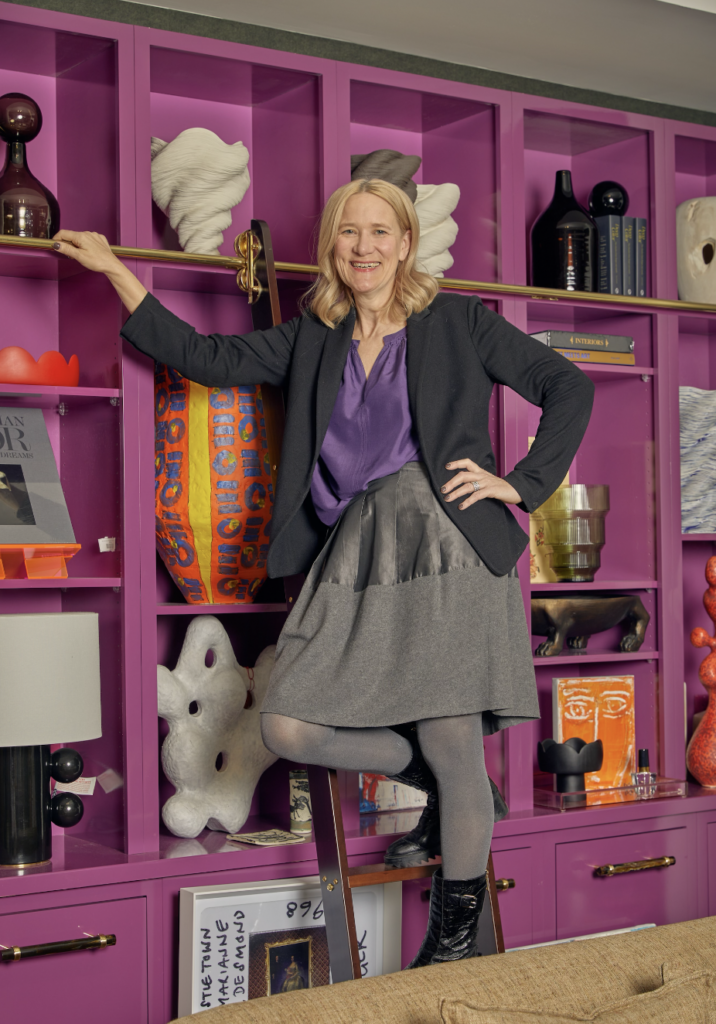
If you love Brenda Friday’s style, you can take it home with you with a visit to her design shop in Lawrenceville, Shoppe B. She stocks work by national and international artists, all of it in alignment with the playful, feminine aesthetic of her interior design projects. Friday loves working one-on-one with people to create their dream homes and being a part of what makes their space special.
Betsy Wentz’s mother had an interior design shop, so she grew up understanding the importance of design in the home. She focuses on happiness—her 2023 book, Design Happy, showcases twelve family homes where she honed in on what makes a happy, welcoming space. She is known for her exuberant sense of play, with color, pattern, and finish creating a stimulating environment.
An “organizer by nature,” Molly Watson brings that spirit to all of her work. Her designs are meticulous, and for her, functionality and beauty aren’t mutually exclusive. “A room for me is complete when it is both beautiful and functional,” she writes on her website. She has a way of making spaces look beautiful, especially kitchens and dining rooms.
While growing up in a military family, Melissa Ewen changed homes many times. She decided that home was something you make yourself, rather than a fixed place. During the COVID-19 pandemic, she realized interior design was a way to express this lifelong interest in the meaning of home. Ewen’s work is clean and concise, respectful of historical context, and carefully thought out.
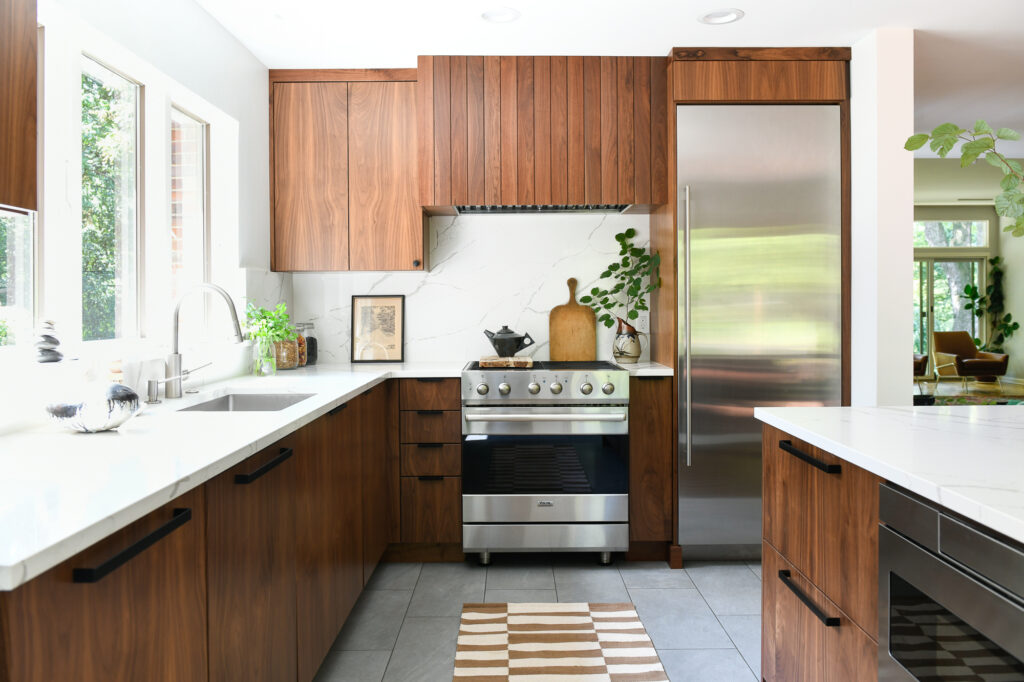
For luxury kitchen, bathroom, and home renovation, Katy Popple is at your service. Her design work draws an earthy feel from her use of wood, even as her eye for pattern and color lifts and delights the viewer. The work always feels high-end and spacious. Popple has a great eye for accents like rugs and colorful decorative objets.
In 1949, a young man from an immigrant Rusyn family in Pittsburgh graduated from the Carnegie Institute of Technology—now Carnegie Mellon University—with a degree in pictorial design. That graduate was Andrew Warhola, who would later re-fashion himself as Andy Warhol. 76 years later, graduates of Carnegie Mellon University’s Master of Fine Arts program have their work displayed in the Andy Warhol Museum, a convergence that Warhol himself probably could never have imagined after leaving his hometown and college years in the rearview mirror. But while Carnegie Mellon builds a new space to house the newly-renamed Institute for Contemporary Art Pittsburgh, the thesis work needed a place to go. Chantal Feitosa-Desouza, Izsys Archer, Max Tristan Watkins, Frankmarlin, and Tingting Cheng are all third-year MFA students whose work makes up Holding Still, Holding On, a group exhibition on The Warhol’s second floor.
Andy Warhol Museum Displays Carnegie Mellon MFA Students’ Work in Holding Still, Holding On
Student-centered exhibitions like Holding Still, Holding On are always interesting windows into what conversations might be happening in contemporary art. If MFA programs are the top echelon, the work that comes out of them can be an indication of what the art world will come to value. Graduate-level artwork also often shows how imaginative artists can be in managing their resources. Notably, Carnegie Mellon made their MFA program tuition-free, making it more accessible and ushering in generations of new talent to Pittsburgh.
Max Tristan Watkins’ work was the most esoteric in concept, but also the most grounded in a physical medium. Watkins created a series of works using goatskin vellum, the paper that Medieval bookmakers used. He created small artist books, palimpsestic two-dimensional work drawing upon source material found in Medieval manuscripts.
“For me where books and bodies collide with each other is what I’m most interested in,” he said. “There’s an erotics to using vellum. You have to shave it and go with the hair when you paint. You have to breathe on the skin to warm it up and use the oil from your own skin if you want to make gold.” He also added “I have an obsession with obsession and with research as a performance or a character. These books make a portrait of me as a person obsessed with books.” Watkins’s work had a strong, coherent concept and showed a clear interest in materials and in learning, and while at Carnegie Mellon, he took a weeklong intensive course in medieval manuscript illumination to better inform his practice.
Filmmaker Chantal Feitosa-Desouza’s documentary work is at home in The Warhol, given that it centers on Schenley High School, which Warhol himself attended. Schenley closed in 2008 and became a luxury apartment complex. For her film, Feitosa-Desouza interviewed graduates of the school, which was one of Pittsburgh’s first public high schools. “I wanted to tell a story about the school closure from the perspective of the people that had to experience it,” she explained.
The ten-minute film, Lightning in a bottle, shows how an asbestos problem and the lack of funding to abate it led eventually to the school shuttering. The film itself has a sort of educational kitsch to it. “I was thinking of the Socratic seminar, like high school English class,” she said. It’s also expertly edited, with composition notebooks, Pinyon Script font, and chalkboard-scratch like sounds. At one point, a carousel of luxury apartment units in Schenley High School plays while their standard answering system “hold music” plays as the audio. Something that was once a site of educational access is reduced to a sound bite, a robot chirping Thank you for calling Schenley Lofts. It’s powerful work.
Typically, museums do not allow visitors to touch their work. Tingting Cheng’s installation, however, is open for anyone to touch, and she encourages it. “I want to welcome people, especially children, to touch it and play with it,” she said. However, the work itself isn’t exactly toy-like, given that on the wall are organ pipes meant to look like reproductions of missiles. Hanging from there are large vinyl cards, meant to look like the playing cards Cheng saw in her childhood in China. Visitors can flip through them and touch at their leisure.
Part of Cheng’s interest in these objects is that she wants to observe how base human desires to collect and gather interact with new technology. She called contemporary people “digital hunter-gatherers” and pointed to the fact that in China, ancient traditions like animistic beliefs seep into modern life in insidious ways. She also saw connections between the post-industrial city she grew up in and Pittsburgh, allowing her to explore her own path along with the concepts in her artwork.
Frankmarlin introduced his work as dealing with “universal emotions” that “we all collectively experience.” One of the interesting tensions in his sculpture and installation was between the universal and the specific—death is universal, but people in different social positions view an image of, say, a casket differently. Frankmarlin got flowers from funeral homes to use as part of his sculptures, and described that process as emotional. “The first time I carried the flowers home I sobbed in my car,” he said. How much was contained in each of those offerings was overwhelming.
Though it focuses on death, there is joy and catharsis in Frankmarlin’s work, as well as a bit of the absurd. One wall label boasts the material list of “a jar with the artist’s fermented urine, large blunts soaked in camphor water, filled with sulfur from a paper-burning ceremony where everyone wrote letters to sadness, sealed with betadine solution.” (It bears reading all the wall descriptions). The concept is deeply felt, and the work was often communal. Frankmarlin re-staged family photographs with friends, allowing friendships to deepen into found family.
Frankmarlin shares part of their space with Izsys Archer, who describes herself as a “space taker-upper.” Archer has made a mixed-media installation, blending sculpture, digital prints, and found objects. “This process of install was very intuitive and improvisational,” she said. “I sat with the work and journaled about it while it was in my studio.” The work itself is a paper-covered set of three walls with a sculpture at its center above a makeshift altar. Archer dedicated it to her mother and to the experience of being a plus-sized Black woman. This piece was her first venture into sculpture, and she approached it with curiosity.
There’s a clear through-line of care as a way of being in Holding Still, Holding On as a whole and in Archer’s work. Archer treats objects from her family history with care. The care and caring between mother, daughter, and as Archer puts it “foremothers” is evident.
All of the students’ work had an element of kitsch to it and a fascination with objects, their meaning, and the care they required. It all spoke to a desire to feel more deeply and to find meaning in ordinary, small things, like trading cards, family photos, or treasured books. It’s a valuable and noble pursuit in today’s world of dramatic excess and austere scarcity. With Carnegie Mellon’s now tuition-free program, Pittsburgh can support its arts ecosystem’s next caretakers.
Story by Emma Riva Photo courtesy of the Andy Warhol Museum, a collaborative photo that the Carnegie Mellon MFA students worked on together
Who, why, what, and where! These are always the first questions surrounding any event. The spectacular Pittsburgh vendors and event venues listed here can help with that last query…and possibly a couple of the others as well. In addition to flexible and diverse event spaces, each one offers years of professional event experience to help you prepare for your celebration.
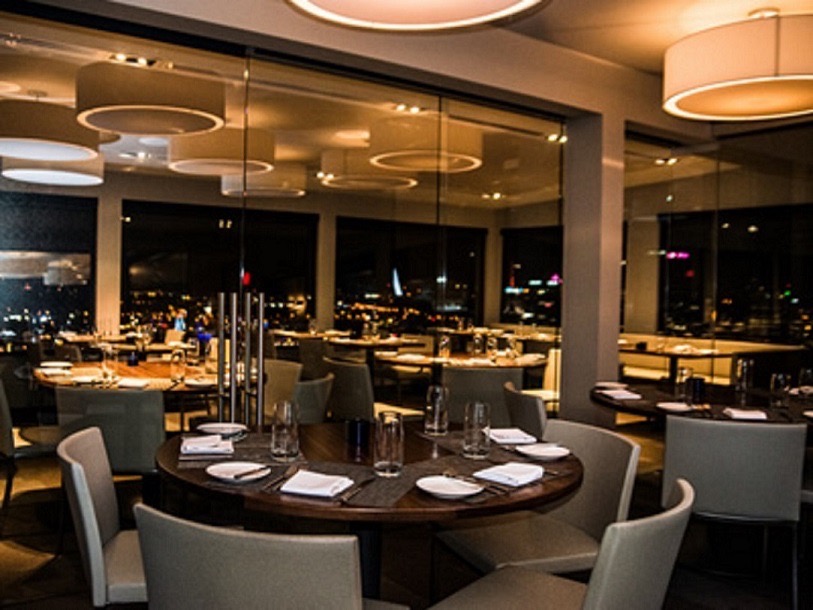
Elevate your next event with breathtaking views of Pittsburgh’s skyline at Altius, a modern restaurant located on Mount Washington. Whether it’s an intimate gathering or a larger celebration, Altius offers a refined atmosphere with exceptional cuisine and impeccable service. Our private dining spaces are perfect for weddings, corporate events, and special occasions.
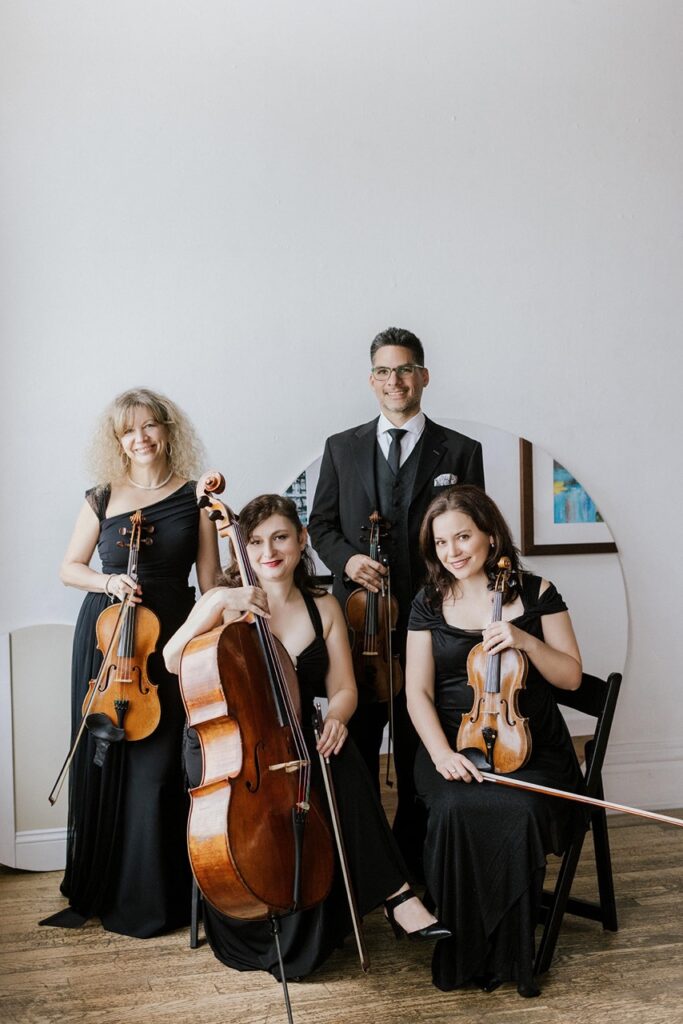
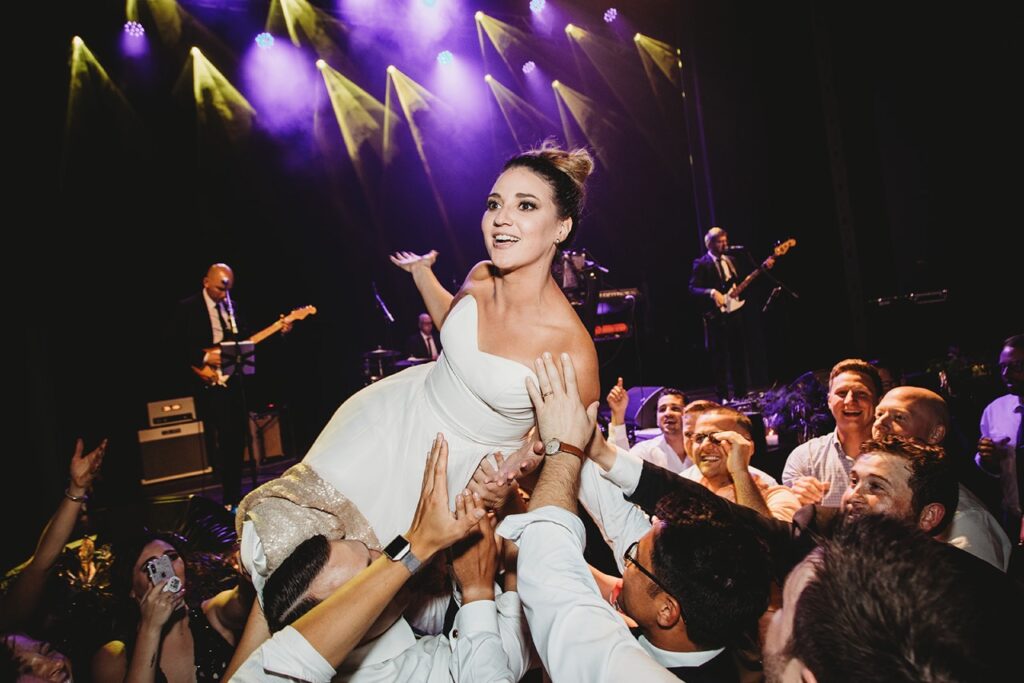
Arev Music Entertainment, headquartered in Pittsburgh, Pennsylvania, is a premier provider of live music services, renowned for its ensembles of exceptionally trained musicians. Their artists have received classical training from prestigious conservatories, ensuring a high level of professionalism and artistry in every performance.
The ensemble’s musicians boast an impressive history of collaborations with world-renowned artists, including Andrea Bocelli, Art Garfunkel, The Beach Boys, The Beatles, Bernadette Peters, Bruce Springsteen, and Chris Botti.
Arev Music Entertainment has graced some of the most esteemed venues in the United States. Notably, they have performed at Heinz Hall in Pittsburgh, Benedum Center and PPG Arena. Additionally, their performances have reached audiences at the Hollywood Bowl in Los Angeles as well as celebrated Canadian, European and South American venues.
With a diverse repertoire spanning classical masterpieces to contemporary hits, Arev Music Entertainment is dedicated to delivering unforgettable musical experiences tailored to the unique preferences of their clients. Their combination of exceptional training, prestigious collaborations, and performances at iconic venues underscores their status as a leading choice for live event music.
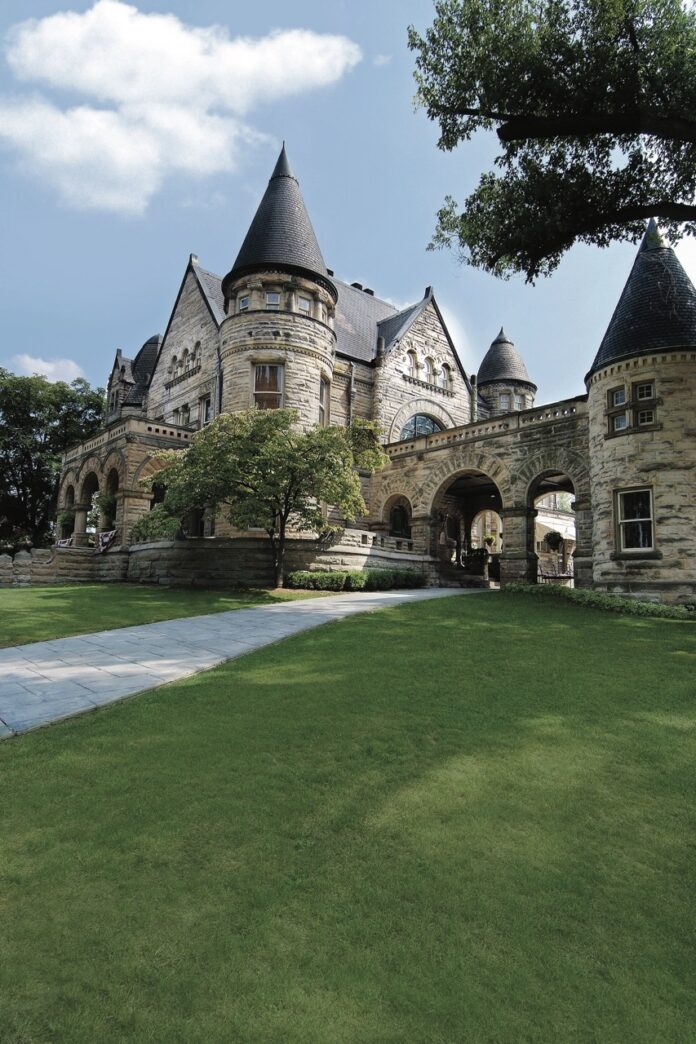
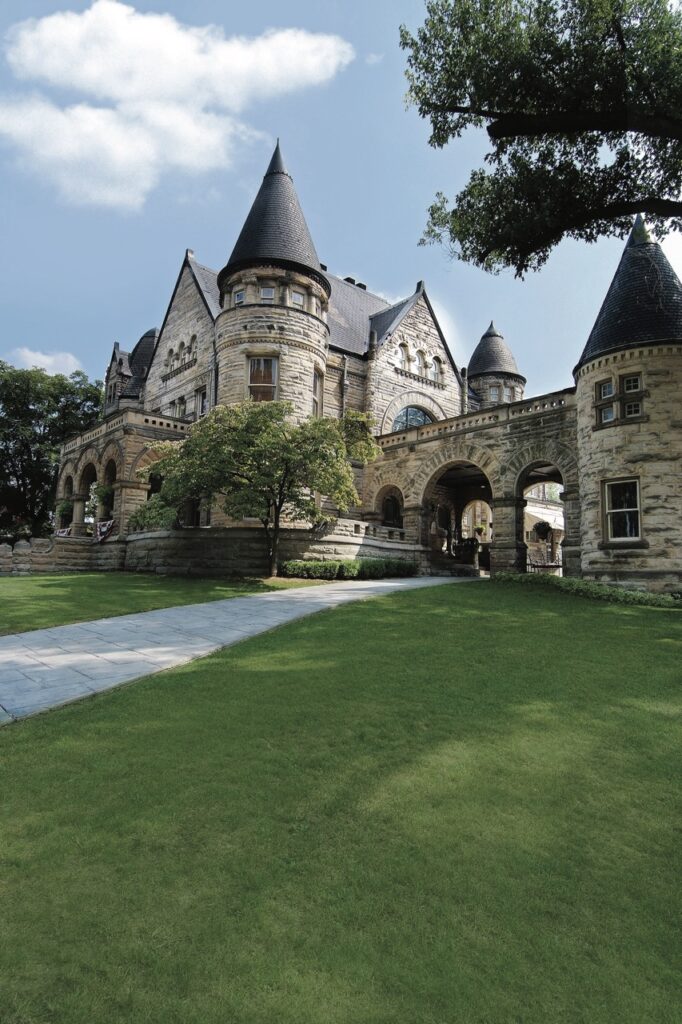
Envision the castle wedding of your dreams at this historic landmark located in Sharon, Pennsylvania, a short drive north of Pittsburgh. Built by steel baron Frank H. Buhl in 1891 as a wedding present for his wife Julia, this venue is sure to provide priceless memories for any couple. With a variety of breathtaking ceremony and reception locations, there is something to exceed everyone’s expectations whether it is an intimate elopement for two or an elegant “Castle for a Day” affair with the utmost in privacy.
The Castle for a Day Package offers the epitome of exclusivity for any couple and their guests. You have complete use of all ten guestrooms, carriage house, elegant greenhouse, and beautiful gardens for twenty overnight guests and up to fifty wedding guests. During the warmer months of May through October the package can include a tented courtyard to accommodate up to 120 guests.
Micro-weddings for under fifty guests are popular year-round with ceremonies in the greenhouse and receptions inside the carriage house. If a more intimate wedding is in your future, Buhl Mansion offers all-inclusive elopement and minimony packages that incorporate officiant, photographer, cake, champagne, flowers and souvenir photo album.
Named one of America’s Top Ten romantic inns and listed on the National Register of Historic Places, Buhl Mansion offers opulent guestrooms with fireplaces and jetted tubs. The full-service spa, with dozens of indulgent spa treatments, provides the ultimate in luxury and pampering and is perfect for bridal showers and bachelorette parties.
While wedding trends come and go, serving incredible food remains one of the best ways to leave a lasting impression. Your menu goes beyond simply satisfying hunger—it tells your love story, brings guests together, and creates cherished memories that will last well beyond the celebration.
As couples increasingly make food a central focus of their weddings, innovative catering ideas are taking the spotlight. Here are three trending concepts to consider for your big day.
Unique Displays that Wow
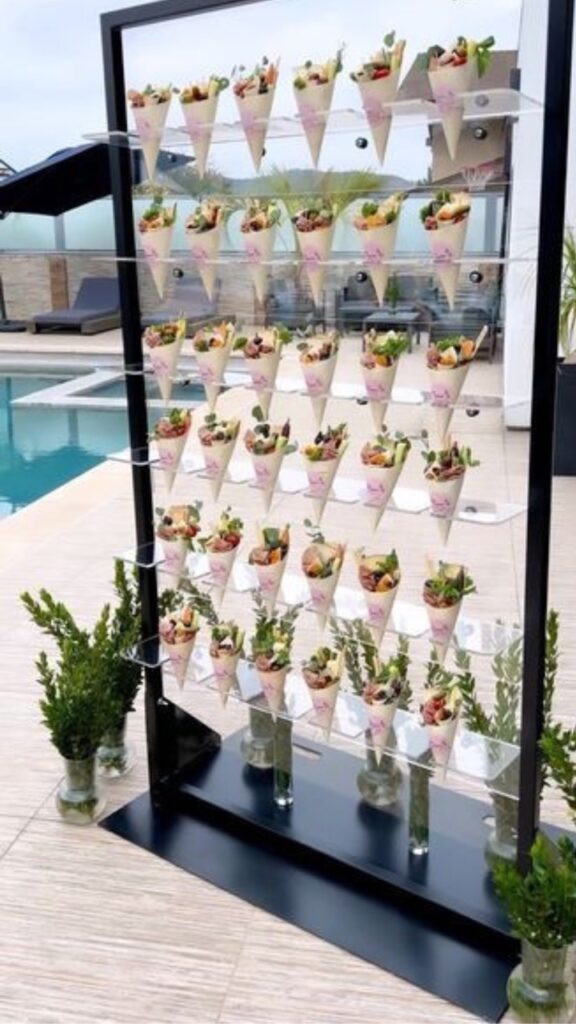
Gone are the days of plain buffet setups. Couples are choosing stunning food displays that double as décor, such as cascading charcuterie boards, donut walls, or desserts served on suspended trays. These not only delight your guests but create photo-worthy moments, too.
Active Food Stations
For a balance between variety and convenience, active food stations are a perfect choice. Picture chefs preparing fresh pasta, customizable taco bars, or live sushi rolling. These stations reduce wait times and encourage mingling while serving delicious, personalized options.
Trending Late-Night Bites
Keep the energy alive with late-night snacks like mini sliders, gourmet pizza, or milkshake shots. These treats refuel guests and add a playful touch.
At Common Plea Catering, we combine timeless quality with fresh ideas to craft unforgettable wedding menus. Let us bring your vision to life—visit thecommonplea.com or call (412) 281-5140 to start planning!
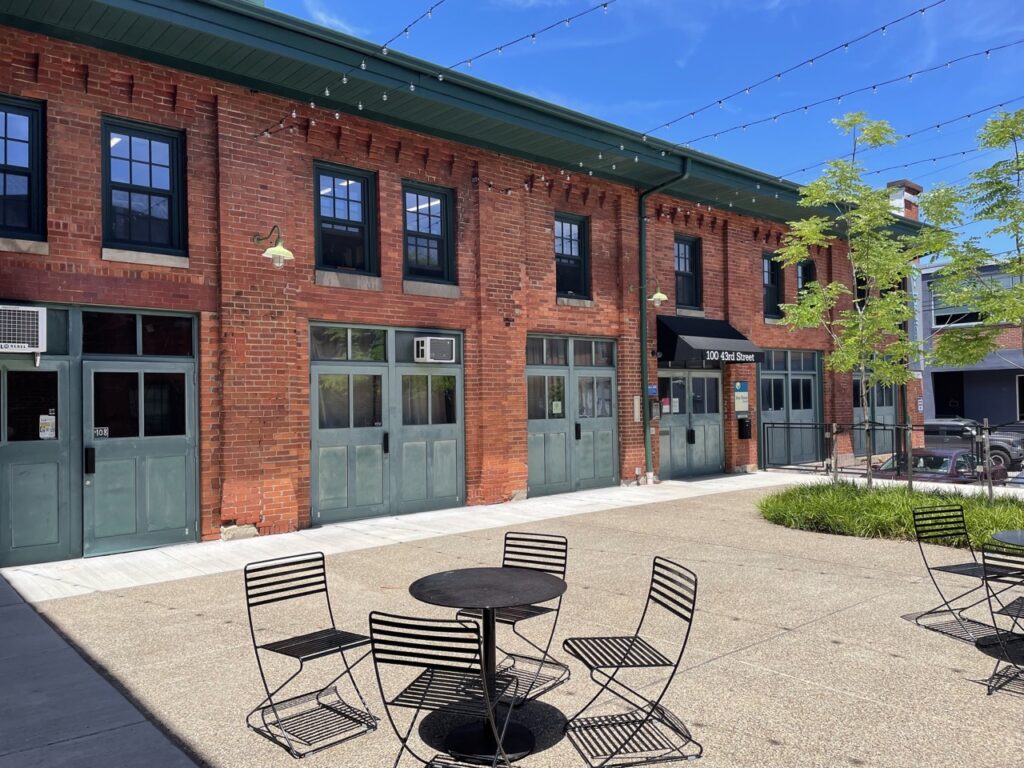
Looking for a unique, industrial space to hold your next event? Look no further than the Ice House Studios. Founded in 1907 as the Consolidated Ice Company, it was transformed by Artists and Cities in the 2000s, and now offers affordable artist studio space. With a 650ft2 studio space for meetings or smaller events and an outdoor courtyard for larger parties under the stars, Ice House Studios fits your group’s needs. With a prime location in Lawrenceville, this industrial chic building is the perfect place for your next event. Find more information by contacting Kara Kimicata (kara@lawrencevillecorp.com).
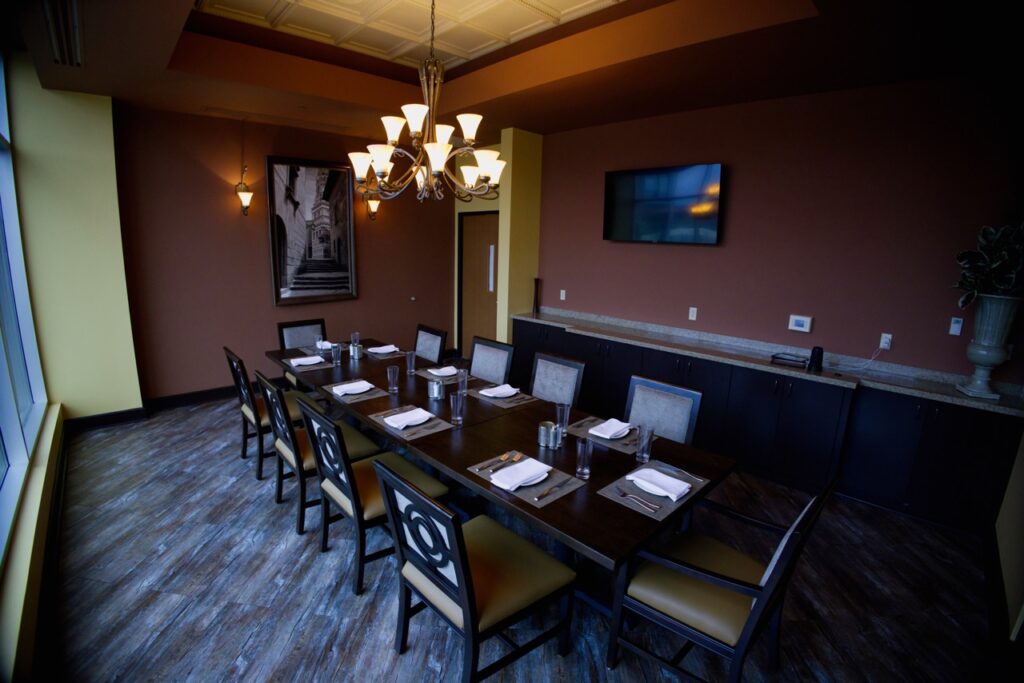
Bistecca’s distinctive event spaces easily accommodate both small and large groups. Sit back, relax, and enjoy exceptional food and service. Our private dining rooms offer scenic views of the racetrack and can accommodate from 10 to 14 guests. A la carte or prefix menus are available, as well as a 42″ TV for presentations or slide shows.
Ideal for larger groups, our 3 VIP luxury suites feature panoramic views of the racetrack, a full-service bar, flat-screen TVs, and audio, making them the perfect setting for race events, cocktail parties, and business gatherings. These rooms are ideal for parties from 18 to 50 guests. Contact the restaurant for more information or to book your next event at Bistecca at 724-503-1513 or info@bisteccapittsburgh.com.
With access to the world’s greatest musical entertainment, full-service event production, state-of-the-art lighting and sound, custom menus, and mixology, this unique venue will exceed expectations. Celebrate your brand or personality in style as guests arrive greeted with your name in lights on the entrance marquee. Host an event in the elegant Music Hall, or in the intimate and stylish VIP Lounge, and make it an event to remember!
Springwood offers a perfect natural setting for wedding ceremonies, receptions, private celebrations, business meetings, corporate and other sponsored events. Sixty acres of wooded Pennsylvania hills, walking trails and meadows make Springwood feel like a remote retreat only minutes from the city of Pittsburgh, Pennsylvania.
Springwood offers two idyllic settings for the event you always imagined.
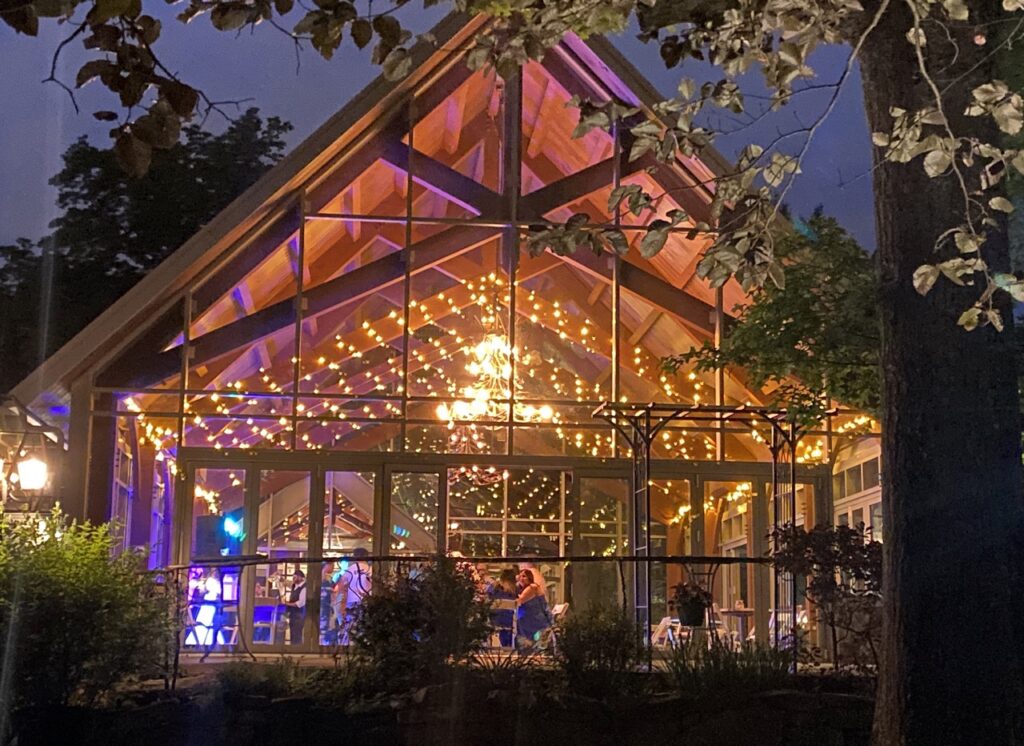
The Springwood MANOR is nestled among magnificent specimen trees and serves as the entry point for an experience filled with wonder and natural beauty. The Manor and its many indoor and outdoor spaces, including the Glass Atrium, the vaulted-ceiling and glass-enclosed Pavilion, gardens and gazebos, will create lasting memories for you and your guests.
A second venue referred to as The Villa at Springwood is an outdoor setting on contiguous property that offers additional celebration areas, including two waterfalls (one of which has a 55-foot drop), ponds, a covered bridge, and an in-ground heated swimming pool. A fully equipped home offers overnight accommodations for up to six guests. Use it for your entire event or to complement your experience at The Springwood Manor.
Whatever your dream event looks like—elegant and refined or natural and rustic—we can create it together. The first step to making your vision a reality is to reach out to info@springwood.org to schedule a time for a visit. Together we’ll explore the grounds where you’ll discover even more picturesque settings, feel yourself relax, and imagine the possibilities. We look forward to welcoming you.
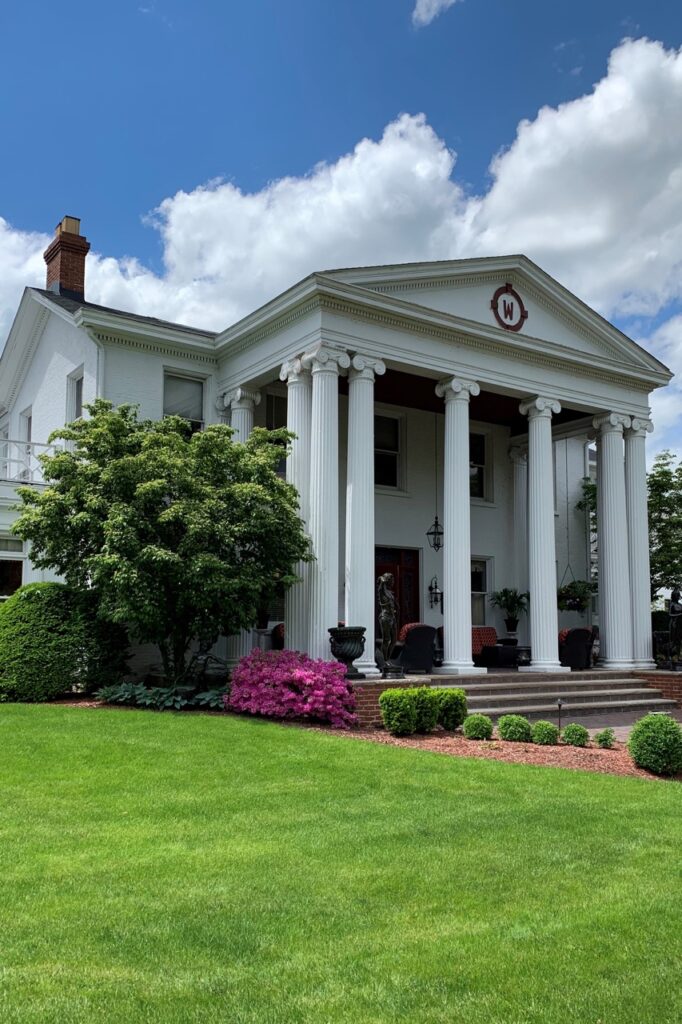
Perfect memories begin with the perfect venue, and what better way to start your life together than at this historic 1854 inn. Tara is the ideal location for elegant and personalized weddings, delightful showers or any host of corporate or social events. Acres of gardens, a picturesque gazebo and the iconic columned veranda offer wonderful backdrops for your special day and lasting memories of a lifetime. Mouthwatering food for your event is prepared by the same chefs that oversee Tara’s award-winning restaurants, and the overnight rooms provide your guests with luxury.
Wedding ceremonies can be held in several picture-perfect locations around the property. The various indoor banquet rooms can hold wedding receptions, bridal showers, meetings or other events from 14-120 guests. During the warmer months of May through October a tented patio overlooking the beautiful gardens and pool area can accommodate up to 150 guests.
Tara offers a chance to enjoy the luxuries of days gone by. This Greek-Revival mansion exudes Civil War-era hospitality with modern day luxuries and amenities. Each of the 27 luxurious guestrooms has a fireplace and jetted or soaking tubs. Overlooking Shenango Lake, the inn has a heated pool, acres of spectacular gardens with walking trails, a billiards room, and sauna. Both casual and fine dining is offered in Ashleys Fine Dining Room or Stonewalls Tavern and the region’s most popular Sunday brunch and holiday buffets are available as well. Tara is in Clark, Pennsylvania, approximately an hour north of Pittsburgh.
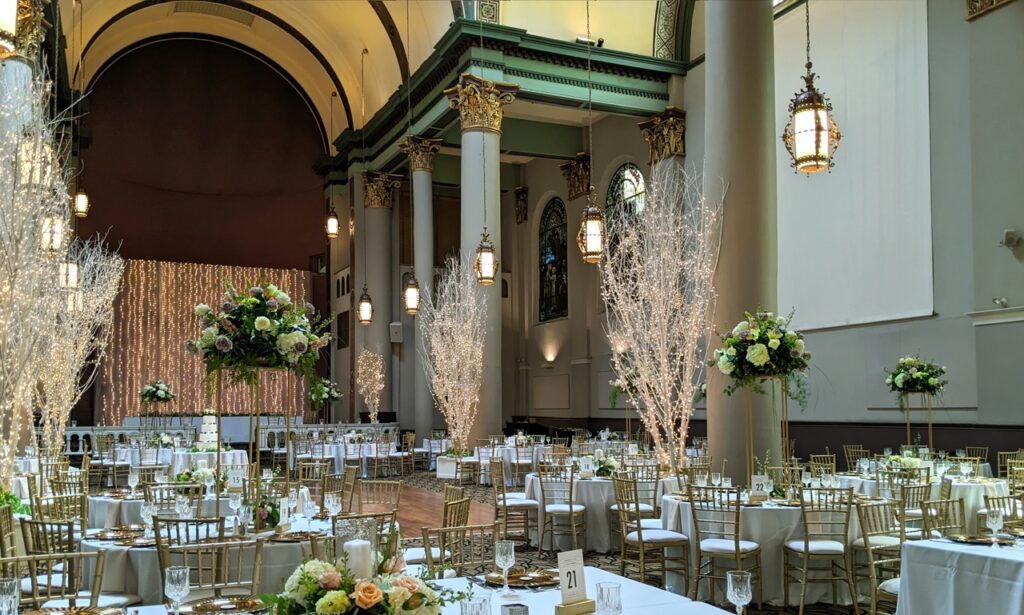
For all the gatherings of your friends, family, and community – weddings, birthdays, anniversaries, and other meaningful milestones – Union Project’s historic Great Hall is the perfect place to celebrate together. Built in the Gothic Revival style in 1903, our building’s breathtaking features have all the charm of our church history but presented in a modern-day secular style, making the space a warm and welcoming venue to all.
Union Project is home to 155 community-restored stained glass windows, 35-foot vaulted ceilings, original woodwork, and more than 3,000 square feet of stunning event space to bring your celebration to life. All of our event rentals include the Great Hall and adjacent prep kitchen, the Negley Ave side lobby and its two restrooms, our tables and chairs, sound system, a projector and two screens, accessible entry, air conditioning, and staff support leading up to and the day of your event.
Union Project is a ceramics community center that values inclusivity, art and artists, collaboration, and joy. Add a ceramics demonstration to your party to support our mission and make your celebration unique and unforgettable for your guests. Contact eventrental@unionproject.org today to learn more and schedule a tour.
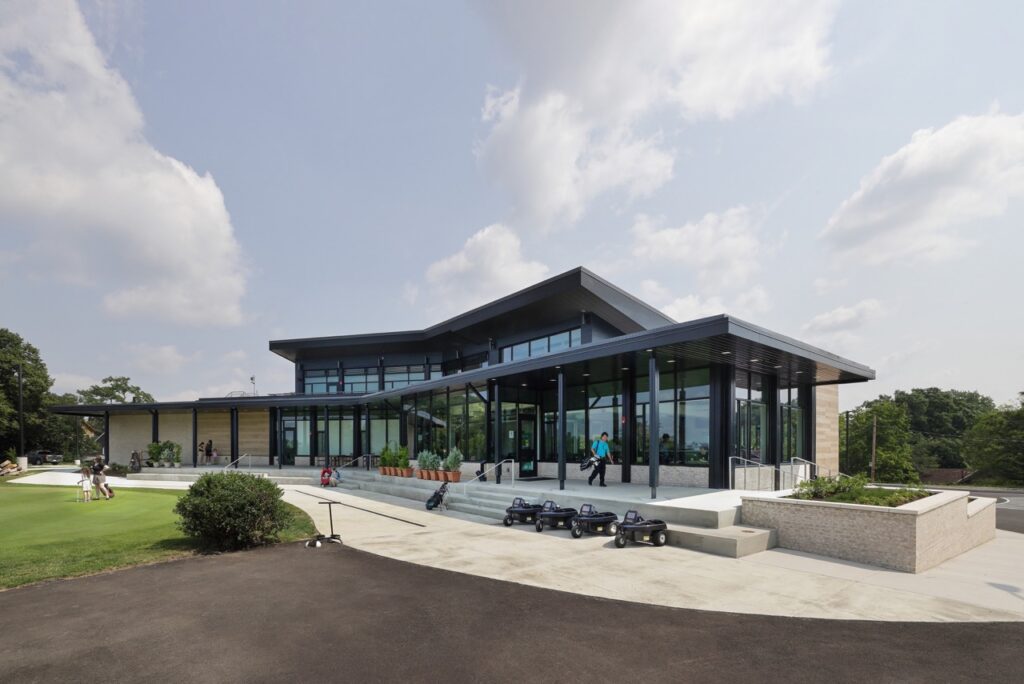
Looking for a distinctive venue with free parking? The Arnold Palmer Learning Center, located at the Bob O’Connor Golf Course in historic Schenley Park, is the perfect space for your next event. This 14,000 sq. ft. state-of-the-art facility features modern amenities and stunning views, making it ideal for meetings, celebrations or corporate gatherings.
Highlights include flexible indoor spaces with floor-to-ceiling windows, a rooftop deck, and unique golf experiences with Trackman simulators, a synthetic putting green, and exclusive access to the Palmer Loop 3-hole course. Additional amenities include a fitness area, conference rooms with tech features like WiFi and HDMI monitors, and a fully stocked golf shop.
From weddings, graduation parties, and family reunions to business meetings, rooftop dinners, or golf-themed events, the Arnold Palmer Learning Center offers versatility, convenience, and free parking for your guests. Rentals also include access to a warming kitchen.
Whether it’s an intimate gathering or a large event, let us help make your day memorable in one of Pittsburgh’s most scenic settings.
Set up a tour for your next special occasion or meeting, contact Liz lcaplan@firstteepittsburgh, 412-622-0108.
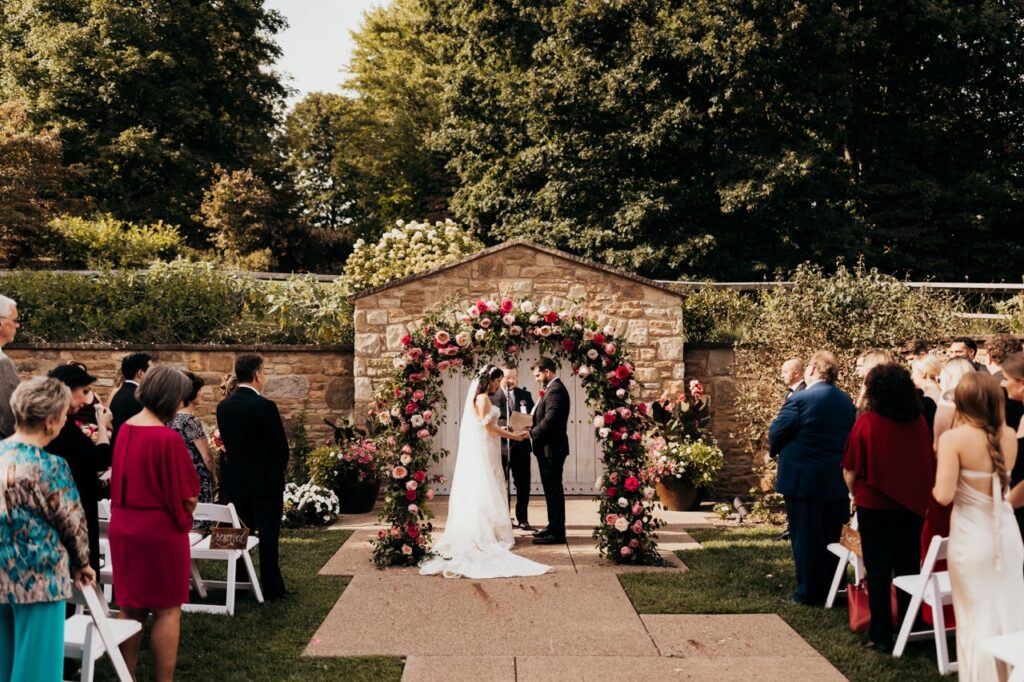
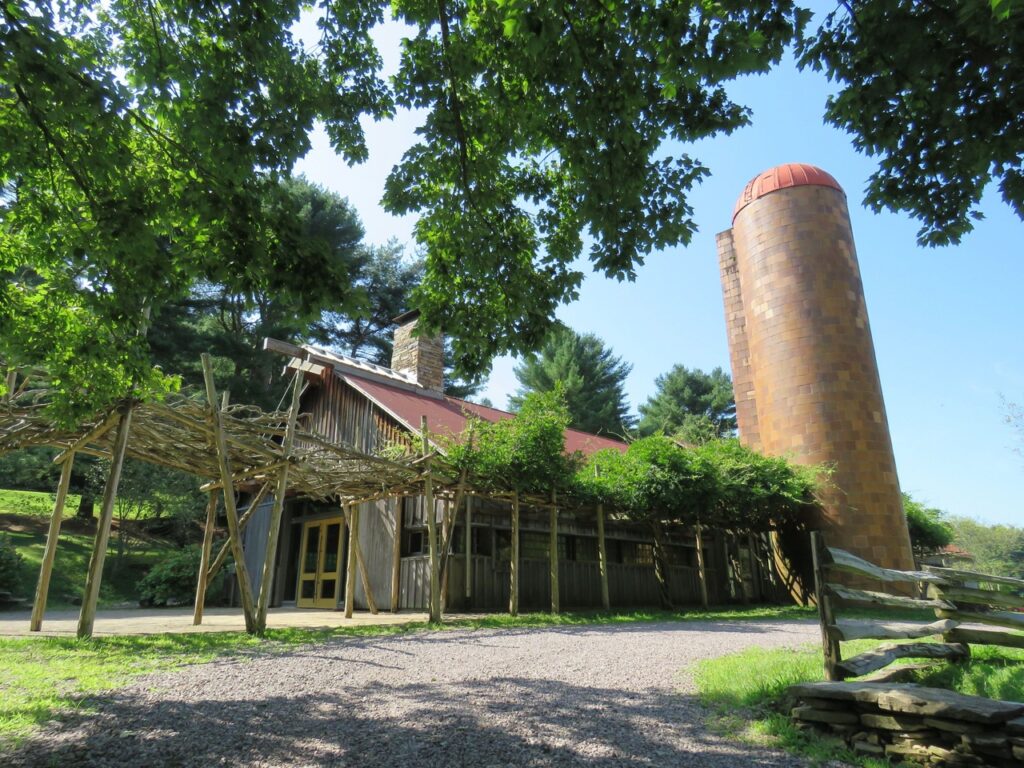
Pittsburgh Botanic Garden’s renovated 1870’s barn offers a charming and rustic setting, perfect for wedding ceremonies, receptions and private events. Along with lush meadows, a peaceful pond and scenic woodlands, our event spaces provide a breathtaking backdrop for you and your guests to make lasting memories.
Whether you’re planning an intimate gathering or a grand celebration, our versatile spaces can be tailored to suit your vision. Davidson Event Center features a wall of windows that frame views of the woodlands, forged iron chandeliers, and retractable doors leading to the abundant florals and greenery of Peirce Celebration Garden.
Learn more about our event spaces and rentals at PittsburghBotanicGarden.org. If you are ready to start planning your special day, please contact the Events Department at (412) 444-4464 or submit a contact form: https://eventup.com/venue/pittsburgh-botanic-garden/.
Nemacolin is a four-season adventure resort stretching across more than 2,200 acres, offering guests and members a getaway like no other. For over 35 years, the resort has established an international reputation for world-class luxury, unforgettable experiences, and immaculate service, all infused with the spirit of Real Life Magic. Here everything is bigger, bolder, and more surprising than imaginable — especially weddings.
Nemacolin beckons with an array of stunning indoor and outdoor wedding venues. Nemacolin’s breathtaking indoor wedding venues include the showstopping Grand Ballroom and elegant Marquis Ballroom. Nemacolin’s outdoor venues include the Panorama Pavilion, which offers views overlooking the lake and grounds, and The Chateau Gardens which boast charming elegance in incredible landscapes.
For the perfect weekend wedding getaway, Nemacolin showcases a range of Forbes Travel Guide’s award-winning accommodations from the grandeur luxury of The Chateau and the modern sophistication of Falling Rock to the elevated luxury of The Grand Lodge, The Homes, and The Estates. With magic all around, Nemacolin comes to life with show-stopping dining and lounges, two Pete Dye-designed championship golf courses, the award-winning Woodlands Spa and Salon, the Holistic Healing Center, and a collection of outdoor activities.
Nemacolin celebrates and inspires with 35,000 square feet of indoor space and 49,000 square feet of outdoor space for special events, bringing the most magical moments to life. Guests can discover the limitless possibilities at Nemacolin with exclusive wedding destination packages where every detail is completely personalized for the special day.
A one-of-a-kind venue, the Carrie Blast Furnaces are a welcoming space for community, social, and corporate events. Work with Rivers of Steel’s team to achieve your vision at this National Historic Landmark!
Embrace the unexpected. Carrie offers spaces—from intimate to outsized—that blend heritage, creativity, and your vision to create a truly unique experience. For 50 or 5,000 guests, make use of these inventive spaces.
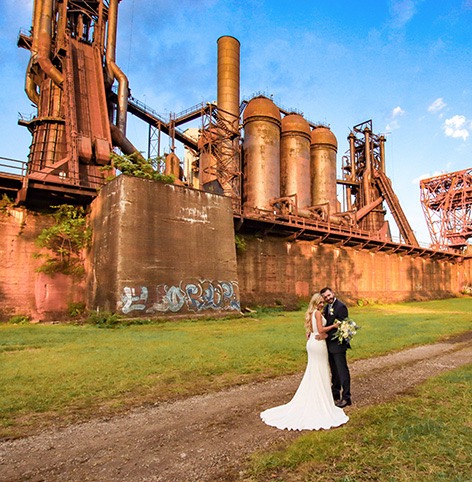
For modern couples, the contrast of grit and grace creates an alluring atmosphere. Areas such as the Carrie Deer Courtyard and the Green Room of the Iron Garden provide charming, yet unconventional, ceremony sites, while the A.C. Power House is a canvas for crafting bespoke receptions. The postindustrial nature of the space offers an authentic backdrop for photographs; a myriad of textures and colors perfectly showcase a unique beauty—the love of a special couple on their wedding day.
With a bit of Hollywood magic, Carrie has been transformed into a shoot location for films and television. Carrie has also inspired music videos, fashion photography, cosplay groups, photography workshops, and an array of other projects for videographers and photographers.
Contact Rivers of Steel today regarding your event. Ask about opportunities at the Pump House, too!
Put the “Wow!” in your next event at the Priory Hotel. The Priory offers a wide spectrum of event spaces, from the spectacular Grand Hall (a renovated former church, seating up to 350) to the elegant Refectory (seating up to 25) to the verdant Courtyard (seating up to 75 outdoors).
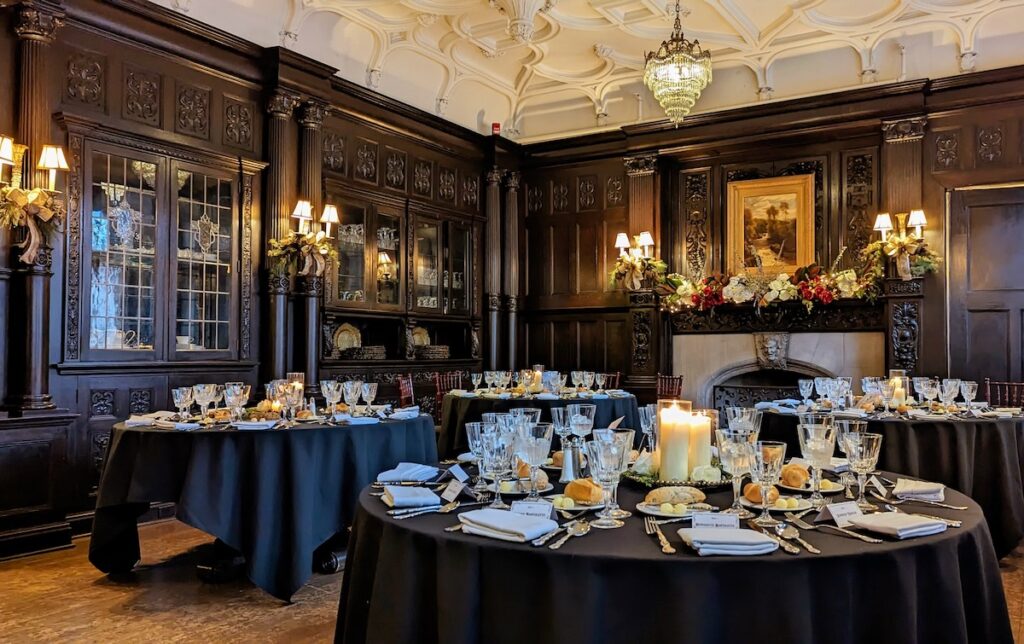
Step into the Gilded Age for your next social or business event at the Mansions on Fifth Hotel. Situated in the heart of Shadyside, the Mansions offers a variety of rooms and looks for groups of 5 to 125. The Mansions also offers full food & beverage and event planning services.
Discover the magic of The Barn at Fallingwater, an enchanted wedding venue nestled in the Laurel Highlands. Minutes from Fallingwater and Ohiopyle State Park, our historic barn offers a serene woodland backdrop for your celebration. Where rustic charm meets natural splendor, create memories surrounded by Western Pennsylvania’s most breathtaking landscapes.
Her focus is ostensibly simple: Objects within the museum shuffled between the Carnegie Library, the Carnegie Museum of Natural History, and the museum of art. In considering their virtues, or possibly their lack thereof, Porras-Kim just asks: Why?
Porras-Kim embodies the role of the artist as a sort of chameleon, trickster, and rabble-rouser. While she works with objects in sterile archival environments, Porras-Kim herself is jocular and warm, qualities that come across in her work. In the letters she writes to museum officials asking them about their archives, she signs each with “Sincerely.” There is a sincerity to the work. What might seem ironic or cold in someone else’s vision is deeply, almost uncomfortably sincere. Porras-Kim does not ask museums to apologize or make floundering acknowledgments. She only asks them—and us—to look.
Sincerely, Gala Porras-Kim
The topic of museums unjustly holding sacred cultural objects is not new. However, Porras-Kim takes these questions beyond human pursuits. In research on objects from Chichén Itzá sitting in Harvard’s Peabody Museum, Porras-Kim writes that “It is clear from documents regarding the provenance of these objects that human laws were used to displace them from their current location at the Peabody. Their owner, the rain, is still around.”
She is not suggesting repatriation. The artist instead envisions the objects as what they are: sacred objects belonging to the Mayan rain god Chaac. She has a radical earnestness you often only see in activists, people like Temple Grandin or Greta Thunberg who espouse the views they do because they simply can’t imagine thinking any other way. But Porras-Kim’s work does not see itself as providing answers, but rather to ask questions.
Part of Porras-Kim’s interrogation involves fakes, like western interpretations of East Asian pottery when that was en vogue or bold-faced forgeries of art objects with nowhere else to go. These things sit in museum archives alongside real sacred objects. Classification numbers and top-line descriptions reveal some truth about the objects, but the viewer begins to sense that the imposition of meaning that shades everything in the collection. Some truth is far, far more complicated than the simple trust we’ve been trained to place in museums and what they share with us. And how they share it.
The Carnegie Museum’s Reflection of Itself
The Carnegie has considered the question of museum ethics in its internal systems. The Egyptian wing of the Natural History Museum, which once held human remains, has changed its presentation and removed those objects. Porras-Kim’s work does not take that low hanging fruit and instead leans into a broader statement. The Carnegie Institute is in a unique position for questions about categorization as two museums and a library under one institutional umbrella.
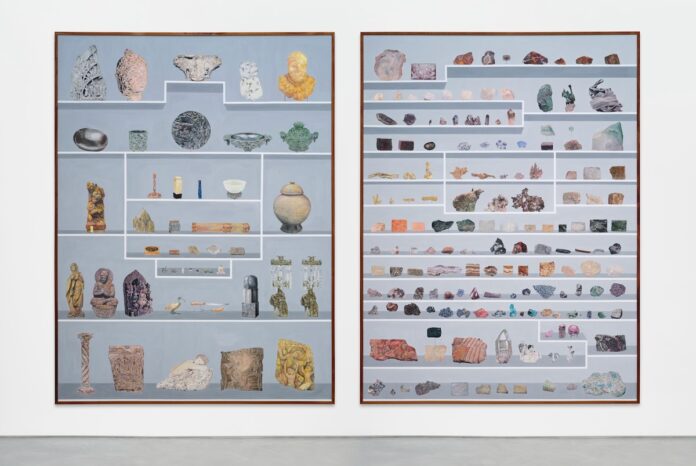
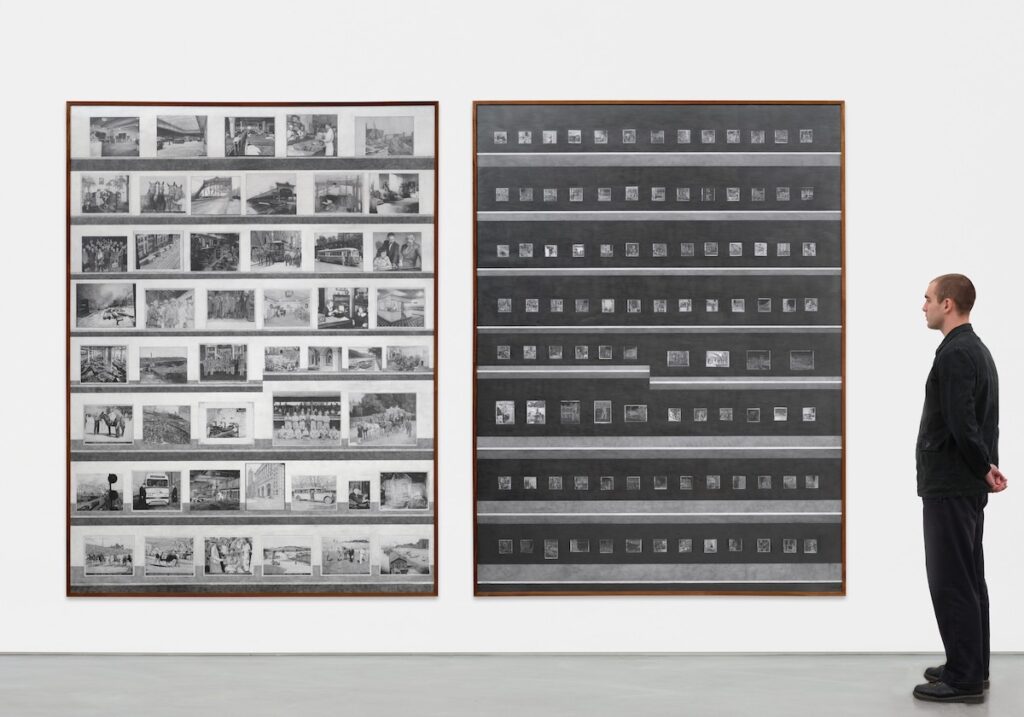
The five large graphite works Porras-Kim produced for the show gesture at just how much of a museum is in its archives. They depict 75 snuff bottles. 147 photographs. 202 mineral objects. There are moments of interest, a tiny jade ibis, a round piece of garnet, an oddly phallic, kitschy statue, a negative of four horses at an Allegheny County Fair. Porras-Kim situates each object on an imaginary shelf, complete with its penciled-in shadow. But you will likely never see any of those objects in their actuality. No one will. All you get is shadows, formless döppelgangers.
Gala Porras-Kim’s graphite work. Courtesy of the Carnegie Museum of Art.
A Small Box of Fleas
The piéce de resistance for Porras-Kim’s concept, though, is Least likely to be on view, a series where Porras-Kim asked museum workers what piece they thought was least likely to be on view in their institutions. The results are illuminating. Though some are obvious, things that are too big or too fragile, others are fascinating and amusing.
A crowd-pleaser Porras-Kim points out is “a small box of fleas” not shown because of “lack of immediate context.” What is the immediate context for showing a small box of fleas? Certain objects create a sort of Möbius strip of bizarre logic. One “least likely” is installation made of hundreds of small, sharp objects that the artist requested have no safety measures around it—therefore no one will ever see it. Similarly, a large fluorescent painting that conservators determine would decay if it sees the light of day will languish forever in an archive. What, then is even the point of a museum having such objects? If museums are gatekeepers, bastions of culture, is culture meant to sit in a vault for eternity?
Another real-time example of Porras-Kim’s concepts within the museum is the Charles “Teenie” Harris photography archive. The Carnegie Museum of Art owns Harris’s entire catalogue and employed a contemporary of his to oversee the archive and contextualize it. The photographs were photojournalism, initially, not artwork. However, to those who knew Harris, his photographs might not be in the same category as, say, an artwork by Keith Haring, a deceased artist they had never met. Objects removed from their context change. In Least likely to be on view, one work by a photojournalist was too personal to show. There’s no indication about what it was. However, it lays bare the processes the Carnegie itself did for Harris’s archive, which now is finally out in the open.
Art is as We Are
There’s a saying that “the world is as you are.” Art, too, is the people who look at it. The flowery figurines and precious snuff bottles Porras-Kim depicts were once valuable to someone. (Will colorful, discarded vapes one day sit along with them in a museum archive?) If we view work with curiosity and openness, we will see more in it. The Carnegie Museum’ of Art’s willingness to engage with its own work is brave, and Porras-Kim’s interrogation of it equally so.
One thing that’s refreshing about Porras-Kim’s approach is that it does not postulate institutional change. Too often, museums put together exhibitions that proclaim change-making and radicalism but do that by…putting art on a wall in a white cube. What a radical act! Nowhere does Porras-Kim call you into a webinar on the changing role of museums or a human-resources sponsored support group. Museums do have a role to play, and a vital one at that, in a changing political landscape. She allows objects in museums to be what they are, just objects. Everything else is up to us. Is the museum a sacred space, an academic institution, a commercial business, a leisure playground, or an educational resource? The answer to all of those questions is yes.
Story by Emma Riva Photo courtesy of the Carnegie Museum of Art
In the not so recent past, it was absurd to think that sitting down without digital distraction would be an anomaly. Even ten years ago, smartphones weren’t as present at every single moment of our lives. I watch television with another tab of social media open on my computer—scrolling on Instagram with Kieran Culkin as Roman Roy’s nasal whine of innuendos in the background. I walk down the street while checking my email or hate-reading essays about celebrity divorces in The Cut. Am I proud of these admissions? No. In fact, saying them out loud makes me feel a little gross. But our reality now is that there are few occasions where you can put down this tiny, hand-held extension of your brain. However, performances of the Pittsburgh Symphony are among them.
I had never been to an orchestra concert before. Lately, I’ve been trying to seek out more experiences that take me out of the constant information stream and get me out of my own head. I had the opportunity to go to the Pittsburgh Symphony Orchestra through a friend. In a world where the lines between public and private and personal and professional are so blurred, there’s real value in putting on your prettiest, most sparkling clothes and walking into a gleaming hall of culture when the lights dim. This is one of the rituals that is healthy for the soul.
A New Voice in Classical Composition
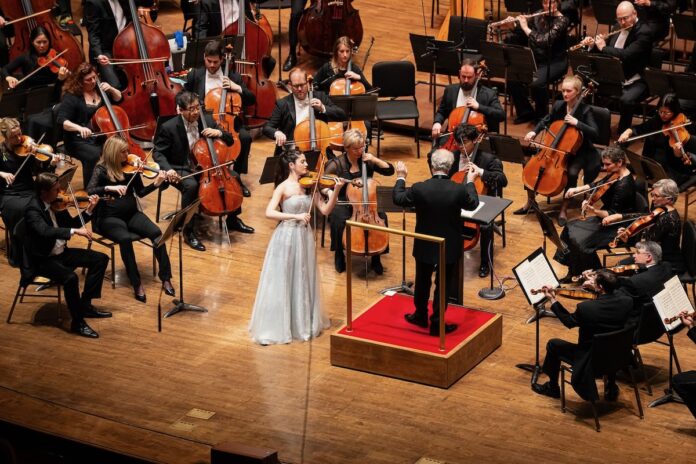
The matinée I attended started with the world premiere of Mt. Lebanon-born composer Hannah Ishizaki’s “Spin.” Ishizaki shared that she was trying to evoke a swirling Viennese waltz and the chaos of electronic music DJs. One of the piece’s most triumphant moments was when Ishizaki managed to combine the sonic efforts of the percussion section and the string section into a womp-womp-womp that almost mirrored the way the walls shake in a nightclub.
But the piece didn’t veer into trying to turn classical into something it isn’t. It still honored the traditions with sweeping string portions and the gentle flutters of flutes and oboes. It was refreshing to start with a piece by a young composer. The work reminds us that even in the hallowed worlds of opera and classical music there is fresh talent.
A Virtuoso’s Take on Mozart
Headliner Emanuel Ax’s piano performance of Mozart’s Piano Concerto No. 5 was exuberant and light. At various moments the keys sounded like falling rain, the thundering hooves of horses, or a heartbeat. My companion told me that Mozart’s early death and his child prodigy status meant he couldnt’t mature as a composer.
Even never having listened to it in a symphony setting, there’s a youthful cadence to Mozart’s music. The Piano Concerto No. 25 was one of Mozart’s favorite compositions, and Ax’s interpretation of it was both spirited and gentle. Ax also projected such a sense of calm while performing, as if he was as lost in the music as the audience was.
Emotions Through Music
The performance concluded with the work of another child prodigy (coincidentally also with a Wolfgang in his name), Erich Wolfgang Korngold. Korngold’s Symphony in F-Sharp Major was tempestuous—it suggested for me the cycles of fighting in a dramatic, unhealthy relationship. The music built up pressure, then released it through crescendos of sound. When I thought it would finish, the strings would build up again, release, and then jerk you back into the blast of horns. It was beautiful and meditative, revealing the places where our brains anticipate music to escalate or de-escalate.
If you’ve never been to an orchestral performance or feel it’s too stuffy, too old, or not for you in some way, it’s worth it if only to focus on something beyond yourself and give your mind some time to wander. Listening to classical music let my inner self wander and expand with what I was hearing. Sure, there were times I thought about what I was going to make for dinner or wondered if someone had texted me back. But true meditation allows your mind to wander freely instead of trying to block the thoughts that come. Listening to classical music freed me up to imagine and daydream based on what I was hearing. I felt connected to something greater than myself, to another time and place. You should, too.
Story by Emma Riva Photo courtesy of the Pittsburgh Symphony
Though there’s a romance to owning a restaurant, but after twenty-five years the team at Girasole have realized some of the biggest learning curves in the industry are unglamorous ones: adapting to new technoloiges, fixing broken HVAC systems, and cleaning up spilled drinks. There are unromantic parts to it. But, luckily, Girasole is a family affair, with a large Italian family ready to help each other at every twist and turn. The family behind Gerasole is Jimmy “Pie” Gerasole, Patti Gerasole, and Gino Gerasole, with assistance from daughter-in-law Jennifer Gerasole and younger brother Vito Gerasole. Together, they’ve managed one of Shadyside’s coziest night out spots for 25 years, tucked away on Copeland Street.
Girasole Celebrates 25 Years in Shadyside
The restaurant’s story began when Gino was working at Viaggio Restaurant. He found them a space for a new business in Shadyside, but decided it was the right spot and the right moment to create a Gerasole family restaurant. His parents agreed and, 25 years later, the rest is history. “The restaurant needs constant attention and has grown in many ways. Girasole has become my home away from home,” Gino said. His wife, Jennifer, helped to open the restaurant as an executive chef, but now works for a restaurant technology sales company after a knee replacement surgery took her out of the kitchen. “The support we have from our customers has built friendships, too,” he said.
25 years is a long time to meet people and build relationships. “We had children come in the restaurant when their parents had just gotten engaged. Or, parents would come there on their first date, then get married, then bring their babies to the restaurant. And now those babies are in their early twenties!” Patti Gerasole remembered.
A Truly Family-Run Restaurant
Each member of the founding family has brought their own unique talents to the team. Patti has been behind much of the restaurant’s décor and design, and some of its traditional Italian-American recipes. Gino is primarily in charge of the wines, and Pie, Patty’s husband, helped give the restaurant its friendly, welcoming ambiance. Gino added that “In an Italian family, you know there are arguments and there are also good times, if it’s hanging with staff members or with Pie or with friends.”
The Gerasole family has also seen a shift in Pittsburgh’s food scene in the time they’ve been open. “People are more adventurous, now,” Jennifer said. “We had crudo on the menu back in 2007 and no one ordered it, but now it’s everywhere.” She sees more room for people to grow and innovate, including members of her own former staff like Dianne DeStefano, co-owner of nearby Lilith with Jamilka Borges.
There’s a beauty in longevity. While it’s easy to see the value in the novelty of the flashiest, newest trend it’s also well-worth it to find longer-term enjoyment. It’s better to enjoy quality food and wine at a slow pace, after all. The Gerasole family has experienced this themselves, and this April, you can celebrate with them.
Toasting to a “Silver Anniversary”
Girasole will be hosting a celebratory wine dinner on April 7 to kick off the festivities, then on April, 13 Patti will be spearheading a “Sunday dinner at Nonna’s” style midday meal. “That’s one of the things I remember most from my childhood,” she said. “We’d have a big 1PM meal after church and it lasted hours.”
On the 14th, Jennifer will be returning to the kitchen, with other former staff members returning as well, for a one-day reunion for service industry veterans. And at the end of the month, Girasole will then have a toast to a silver anniversary with specially selected sparkling wines. You’ll get to say salud to twenty years of great food! “Girasole is the melting pot of Shadyside from your doctors to attorneys and people from across America,” Gino said. “The Gerasole family wouldn’t have it any other way.”