Home Blog Page 181

These Books by Pittsburgh Authors Make Unique Holiday Gifts

0
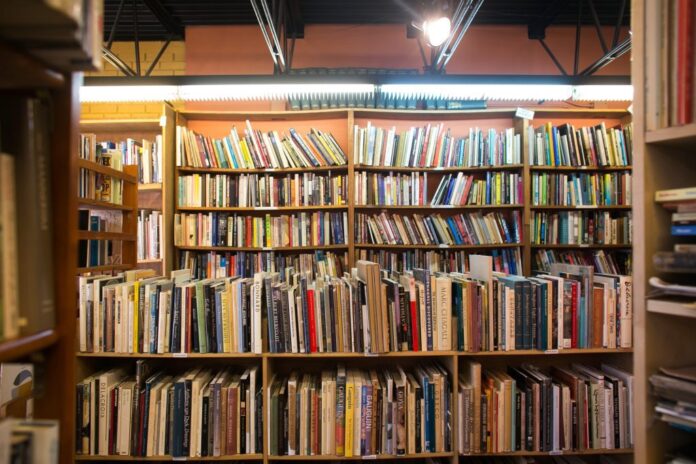
Shelves of books at a used bookstore in Pittsburgh

“Shop local” is a popular refrain during the holiday season, and buying books is no exception. If you’re struggling with what to get the bookworm in your life, consider skipping the BookTok recommendations this year. Pittsburgh has a thriving literary scene and a talented community of local authors, for sale both online and at stores like White Whale or Caliban Books.

These Books by Pittsburgh Authors Make Unique Holiday Gifts

For the Local History Buff…

The cover of Gen X Pittsburgh, a book about the Beehive from a local Pittsburgh author

Gen X Pittsburgh: The Beehive and the ‘90s Scene by Dave Rullo

Dave Rullo’s comprehensive history of Pittsburgh’s first coffeehouse, the Beehive, made a splash last fall when it came out and has continued to be one of the most popular local books. Rullo has the keen, sensitive eye of an insider and interviews people from all over the bohemian scene of the ‘90s and early aughts in Pittsburgh. Know a friend or relative who waxes poetic about the cheap drinks from back in the day? This is the book for them. (Also, rumor has it Rullo is working on a follow-up about the ‘90s club scene…)

For the Foodie…
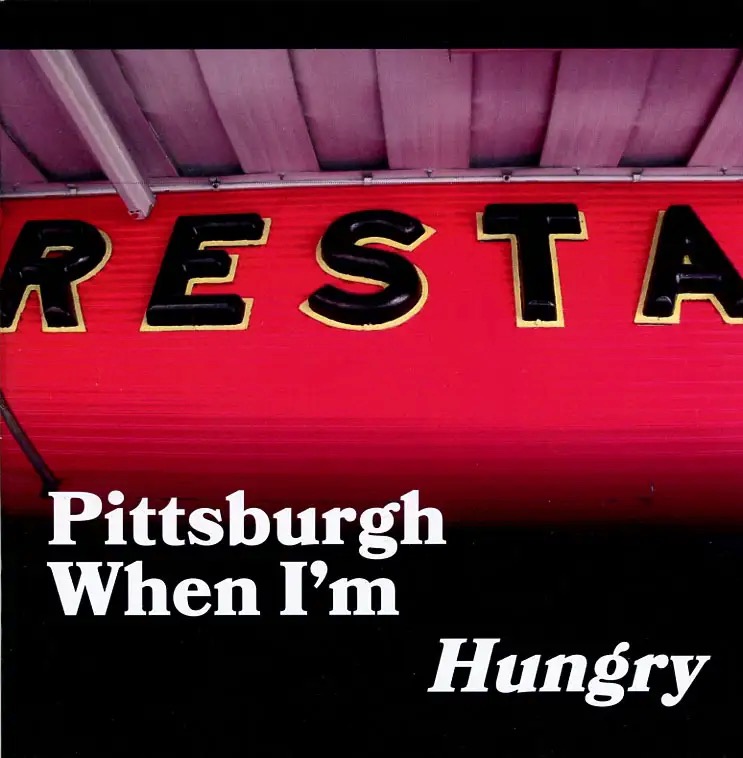
The cover of Pittsburgh When I'm Hungry by Karen Lillis, with the red exterior of a restaurant

Pittsburgh When I’m Hungry by Karen Lillis

Author and photographer Karen Lillis has spent a lot of time in restaurants over her years in the city’s literary scene, traversing Pittsburgh without a car or going to and from readings and bookstores. (You might recognize her from Caliban Books, where she runs Karen’s Book Row, a store-within-a-store focused on feminist fiction). Pittsburgh When I’m Hungry is a book of Lillis’s photography of Pittsburgh restaurants past and present, including the Beehive Coffeehouse, Lombardozzi’s, Lili Cafe, Sandwich Shop, Ritter’s Diner, and many more. 

For Empowering the Girls…

The cover of Homing by Sherrie Flick

Homing: Instincts of a Rustbelt Feminist by Sherrie Flick

Sherrie Flick’s Homing is a multi-faceted collection of essays that touches on both the personal and the political. Flick writes about the South Side Slopes (a welcome addition to the heavily East End-focused Pittsburgh canon), grief, gardening, her father, Andy Warhol, and the toughness and vulnerability she learned from growing up as a young woman in post-industrial Beaver, PA.

For the Late-Night Existential Breakdown…

The cover of Devil's Contract by Ed Simon, grey with a man and a devil having a discussion

Devil’s Contract by Ed Simon

No matter how you voted in 2024, an election year can feel like a Faustian bargain, having to consider ethical choices that weigh heavy on your soul. Pittsburgh author and theologian Ed Simon delves deep into the history of the myth of the “deal with the devil” in an accessible, engaging way.

For the Poetry Lover…
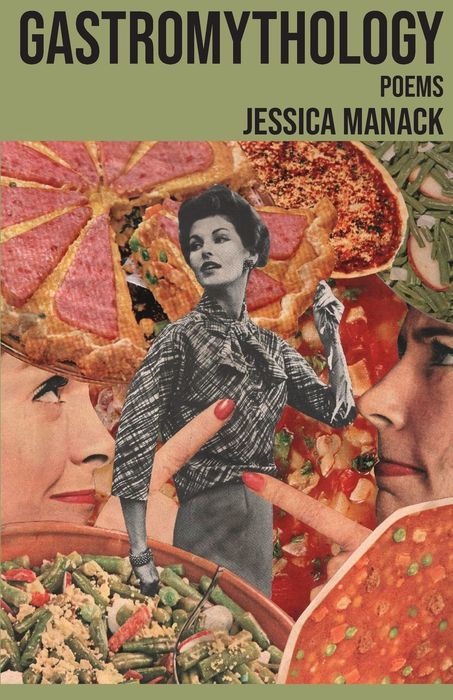
The cover of Gatromythology by Jessica Manack

Gastromythology by Jessica Manack

Jessica Manack’s 2024 poetry release Gastromythology is about what we put into our bodies and consume. As the holidays come and go, this often becomes front and center when we come to January bloated and depressed. Manack explores in thoughtful, provocative verse how decadence and desire intersect. She lands on the idea that perhaps we can find a balance between nourishment and overconsumption.

For Finding Beauty in Everything…

The cover of Keith Recker's Deep Color, a set of pigments on a black background

Deep Color: The Shades That Shape Our Soul by Keith Recker

Our very own editor-in-chief Keith Recker’s Deep Color is on sale for the holidays from Schiffer Books. Recker has spent a lifetime learning how color affects both our inner and outer lives, and Deep Color unpacks each color’s history and influences. The book encourages looking at often taken for granted colors with a deeper, more meditative eye and finding beauty in even the blackest blacks and grayest grays. You’ll never see color the same way again. Special discounts are on offer until Nov 21, 2024.

Story by Emma Riva / Photo courtesy of Caliban Books

Subscribe to TABLE Magazine’s print edition
How to Plan a Standout Holiday Office Party

0
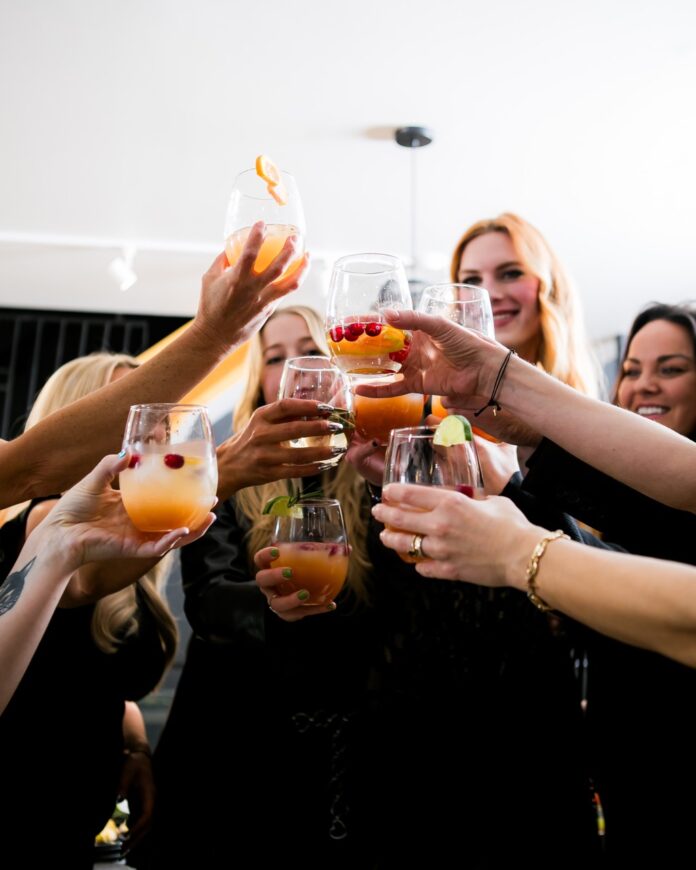
A group of workers at a holiday office party hold their glasses of orange cocktails up to cheers.

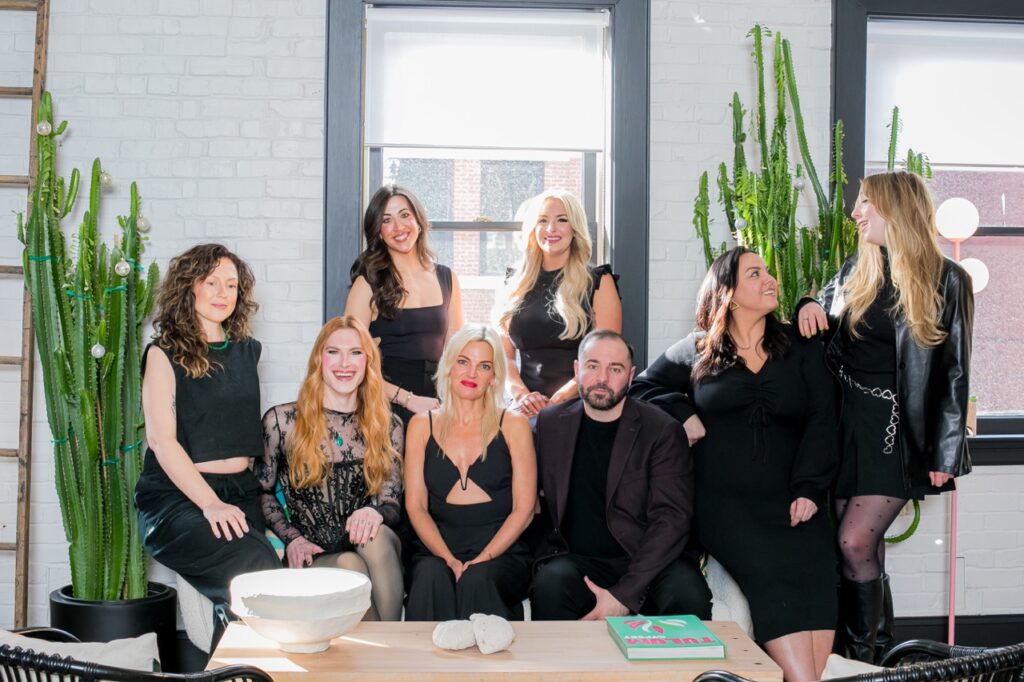
The holiday season is upon us, and with it comes the challenge of creating a memorable office party. You want to balance festive cheer with the demands of a busy work schedule, all the while embracing the group with whom you spend more waking hours than any other. If you’re looking to simplify your party planning while still delivering a standout event, using pre-made food can be a game-changer. Our friends over at Alchemy Dry Cut Lounge helped us host a party that reflected the salon’s sleek and inviting space, streamlined by using grocery store finds and the fine art of re-plating.

A group of coworkers all dressed in black sit in a white office space.

How to Plan a Standout Holiday Office Party

Choose Quality Pre-Made Options

While catering companies can fill up their holiday schedule quickly, grocery stores are always a quick and easy option that can accommodate you no matter the craze of the season.

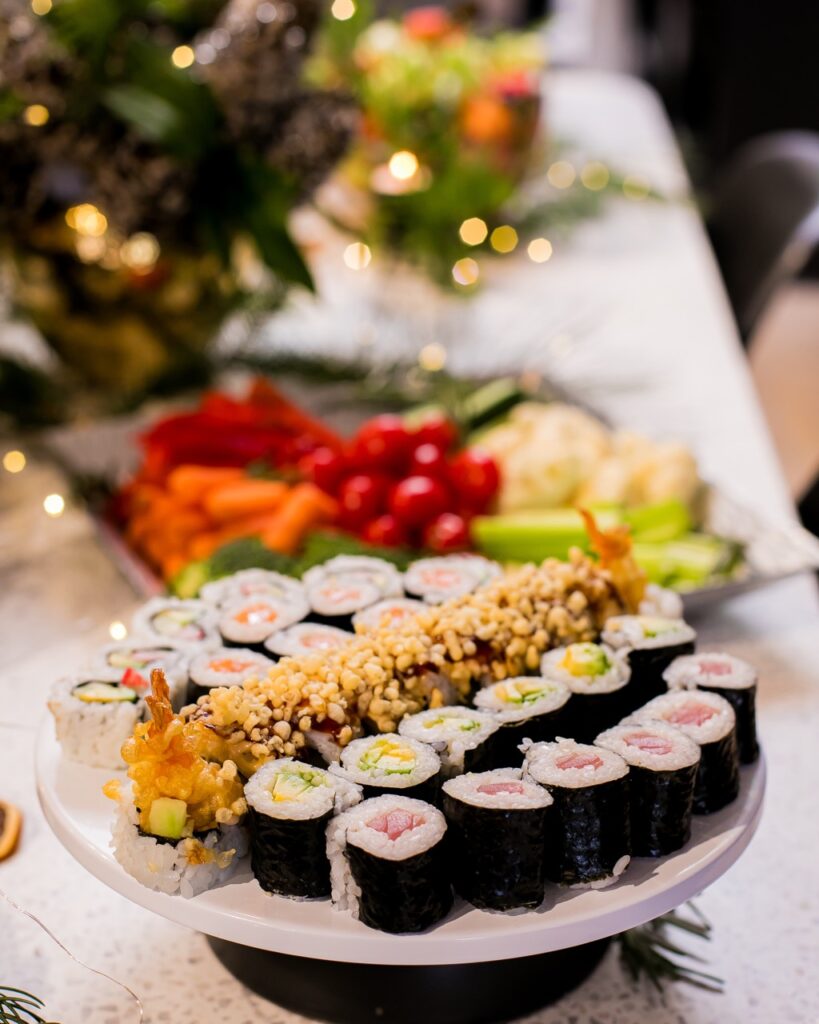
A white place holds an arrangement of 5 different sushi types, each in a line and all sitting amongst a white table with a veggie tray on it.

For this party, we started by selecting high-quality platters and prepared foods from Giant Eagle Market District. They offer a range of reasonably priced festive options that can be a great base for your spread. Dishes we featured at the party included crowd pleasers like a deviled egg platter, caprese salad, and even sushi rolls.

Look for items like artisanal cheeses, charcuterie, seasonal dips, and elegantly presented hors d’oeuvres. Opt for foods that can be easily reheated or served at room temperature without compromising their flavor or presentation.

Looking for some more local flair? Here are some more of our favorite spots for pre-made goods:

A woman with dark hair leans down to grab a skewer from a table.

Chantal’s Cheese Shop

Head here for sophisticated artisan cheese, charcuterie, specialty foods, and even vegan cheeses! Owners Anaïs and Chris always have great recommendations, and love sharing their knowledge with others.

Black Radish Kitchen

No time to pick up the food yourself? No worries here! Black Radish offers catering and delivery so you can focus on other priorities.

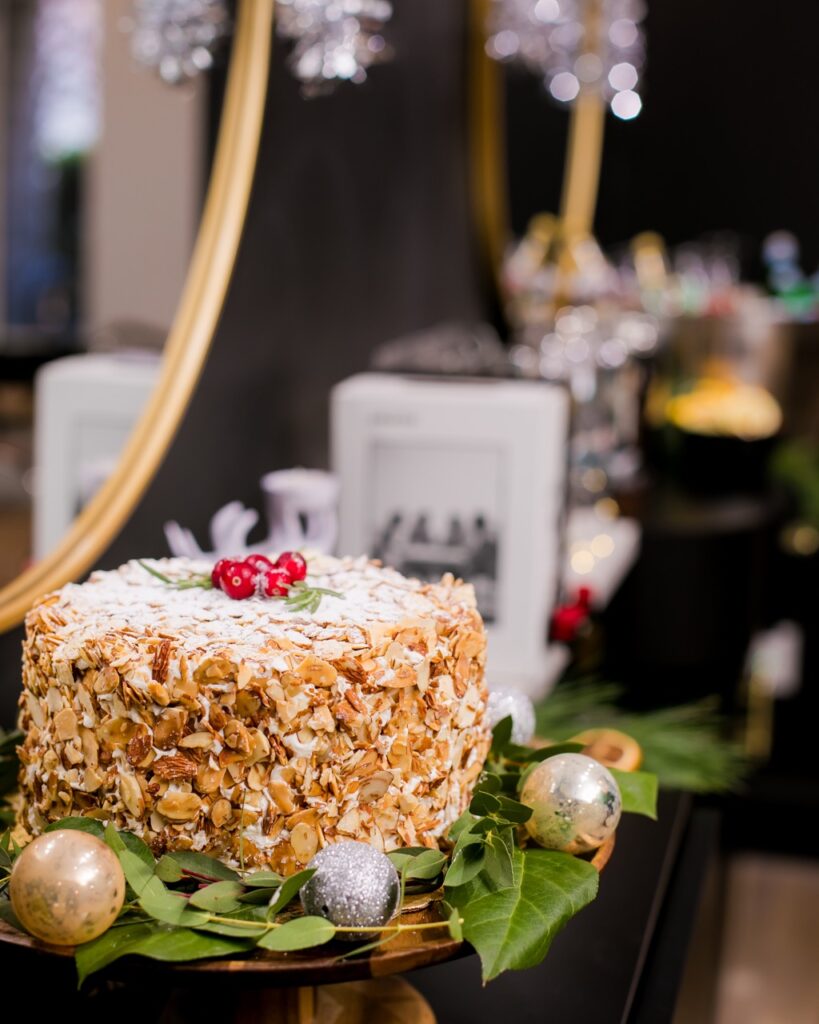
An almond torte cake sits on a black bar with ornaments around them.

Mediterra

A cafe, bakery, and market all in one stop, Mediterra is a wonderful resource for holiday party prep. Their top-notch sweet treats, charcuterie boards, and catered options are not to be missed.

Goat Rodeo Farm & Dairy

Looking for some local farm-to-table options? Goat Rodeo makes a variety of fresh and aged cheeses using traditional techniques at their 130-acre family farm in northern Allegheny County.

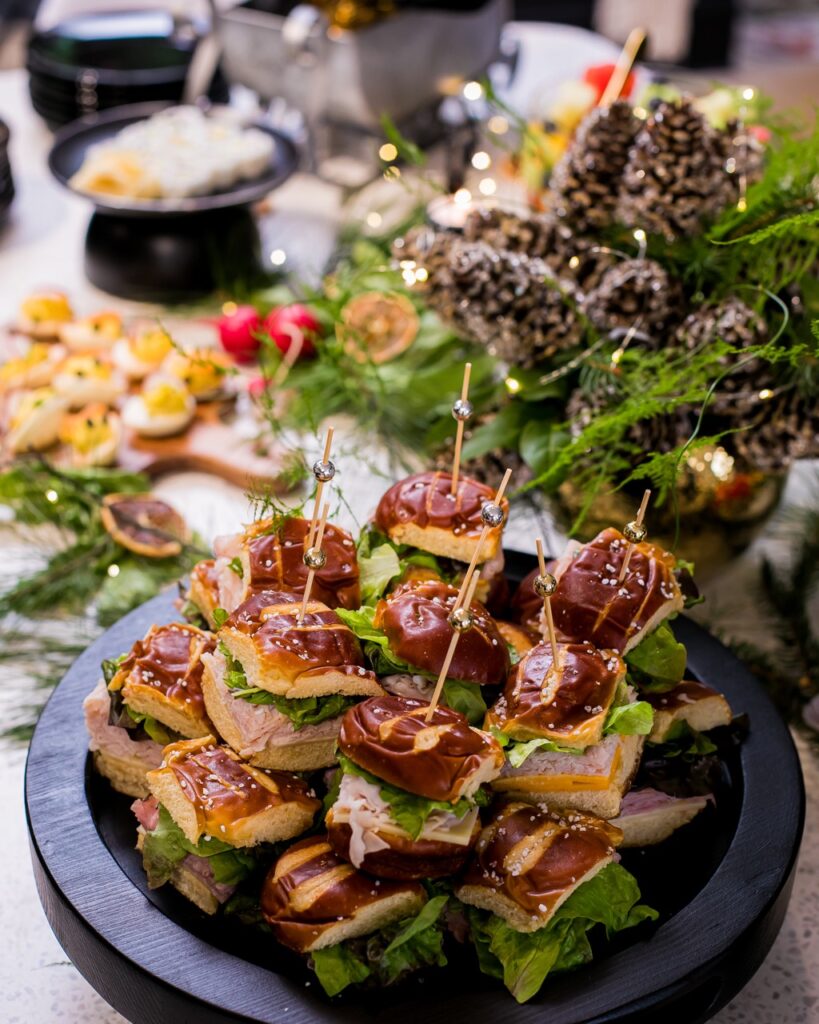
A set of sandwiches on skewers sit on a black platter with deviled eggs and fir trees in the background.

Re-plate with Flair

Re-plating is the key to transforming store-bought food into a presentation worthy of a holiday celebration. Easily elevate them with these tips:

Upgrade the Platter

Transfer pre-made items from their original packaging to attractive serving dishes. Choose platters, bowls, and trays that match the holiday theme and color scheme. Elegant wooden boards, marble slabs, or festive platters can make a big difference.

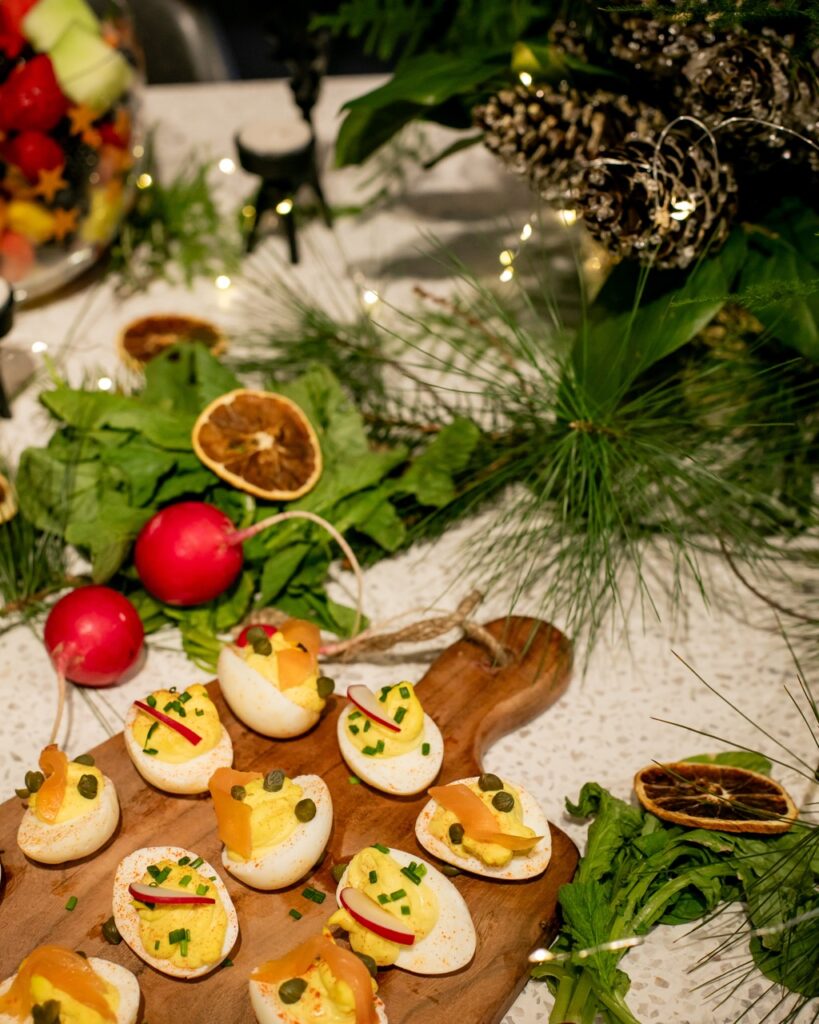
A wooden tray of deviled eggs sit on a white table with greens and citrus slices in the background.

Garnish Creatively

A visit to the grocery store, the Strip, or Restaurant Depot for fresh herbs, edible flowers, and seasonal fruits can add a touch of sophistication to your pre-made dishes. For example, a cheese platter can be easily enhanced with sprigs of rosemary, clusters of grapes, or a sprinkle of nuts.

Create Visual Interest

Arrange items in varying heights and shapes to create visual appeal. Use cake stands, tiered trays, and risers to add dimension to your display. This not only looks more appetizing but also encourages guests to sample a variety of items.

Customize and Personalize the Holiday Office Party

Add a personal touch to your pre-made foods by customizing them to fit your workspace’s tastes and preferences. Our party with Alchemy was fun and open, just like the team that works there. We had a great time putting together these finishing touches.

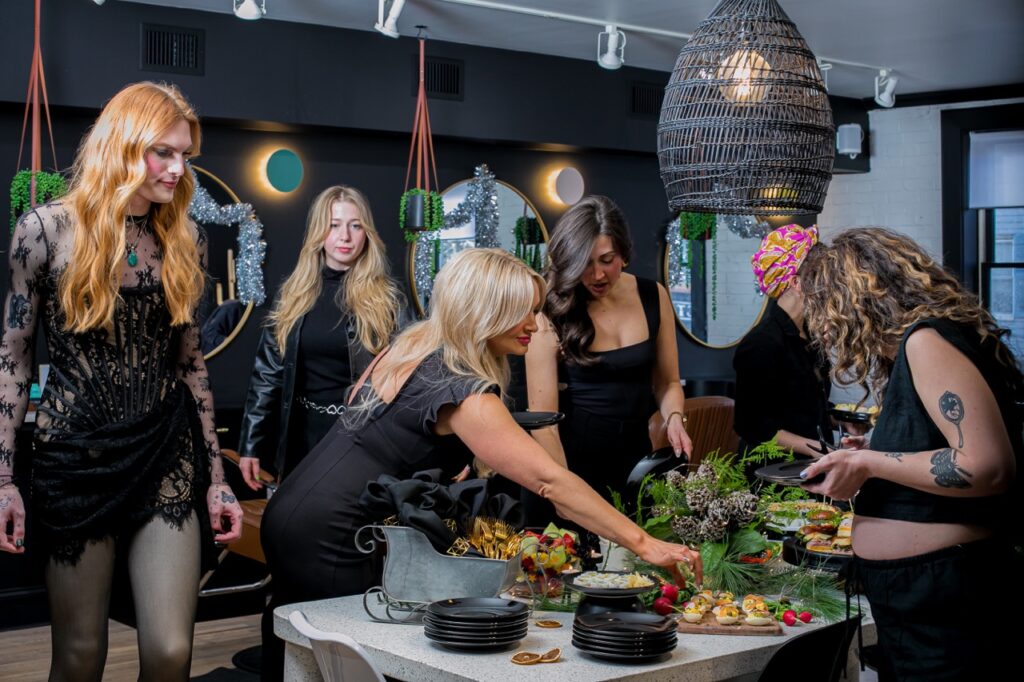
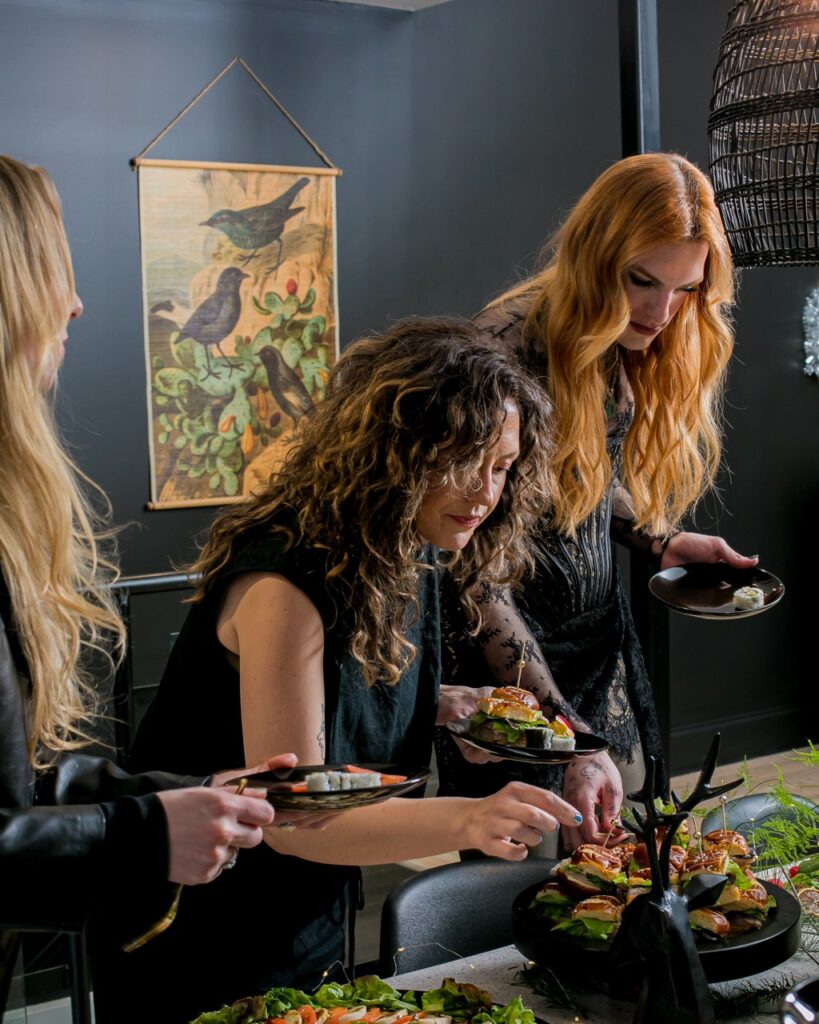
A woman with blonde hair reaches for a piece of food off a table while her coworkers stand behind her, looking on.

Add DIY Elements

Provide a build-your-own station with pre-made components, such as a hot chocolate bar or cocktail making post.

Label with Style

Use elegant name cards or small chalkboard signs to label each dish. This not only helps guests know what they’re eating but also adds a sophisticated touch to your setup.

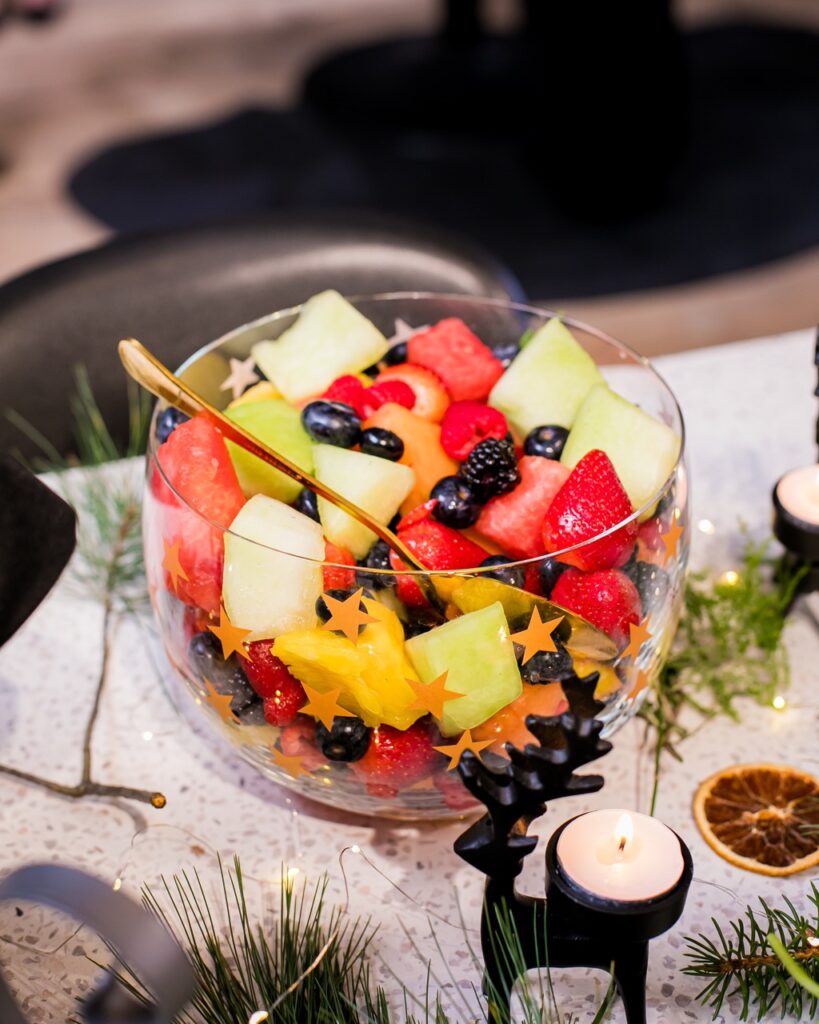
clear glass bowl holds a fruit salad with melon, cantaloupe, strawberries, and blueberries on a white table cloth.

Seasonal Touches

Incorporate holiday-themed decorations and elements into your presentation, such as rustic greenery or festive tableware. We hung holiday streamers and bulbs around each stylist station, giving them a personal flair. Maybe next year the salon will embrace a “decorate your workspace” competition! Each contestant can receive an award at the office party!

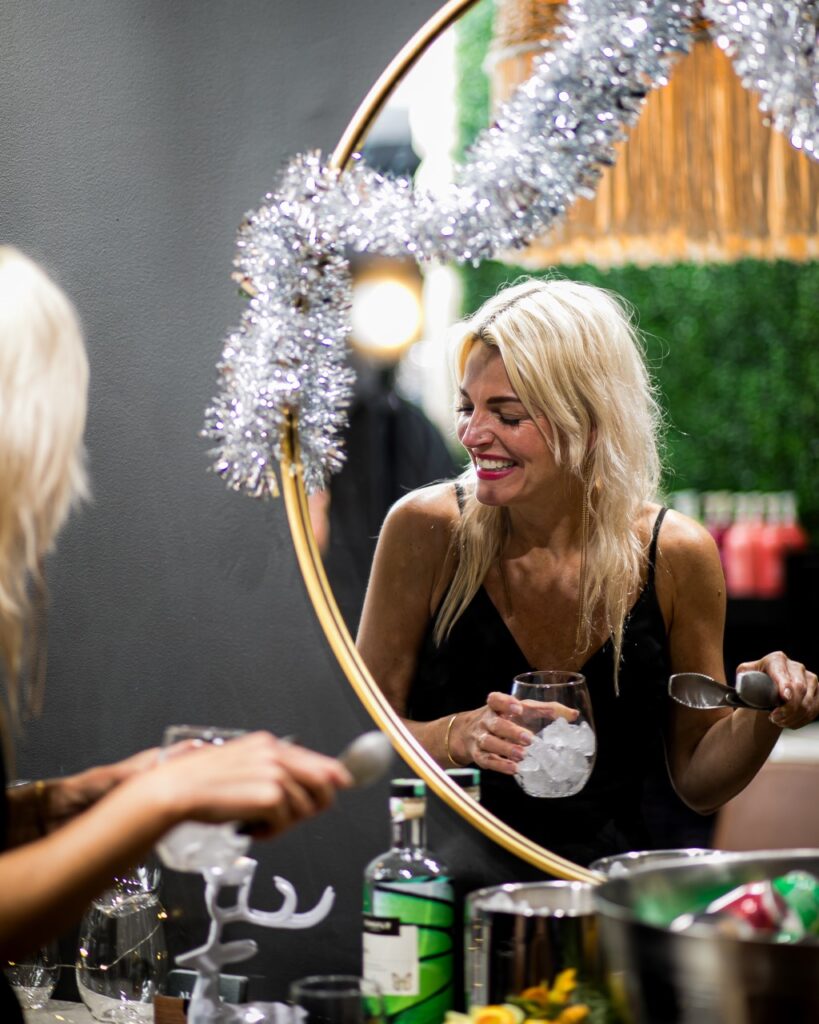
A woman smiles in a mirror with a glass of ice in hand as she mixes herself a cocktail.

Beverage Pairings

Don’t forget about the drinks! Pair your pre-made food with complementary beverages to elevate the overall experience. Heather, the owner of Alchemy, provided the wine, going for Gratsi boxed wine, a sustainable and natural option with panache. Boxed wine has never looked so good!

We also created a non-alcoholic punch for the party so attendees could add their spirit of choice. This gave the beverage options versatility while keeping it simple. Always going local, we went with Kingfly Spirits, a craft distillery located in the Strip District.

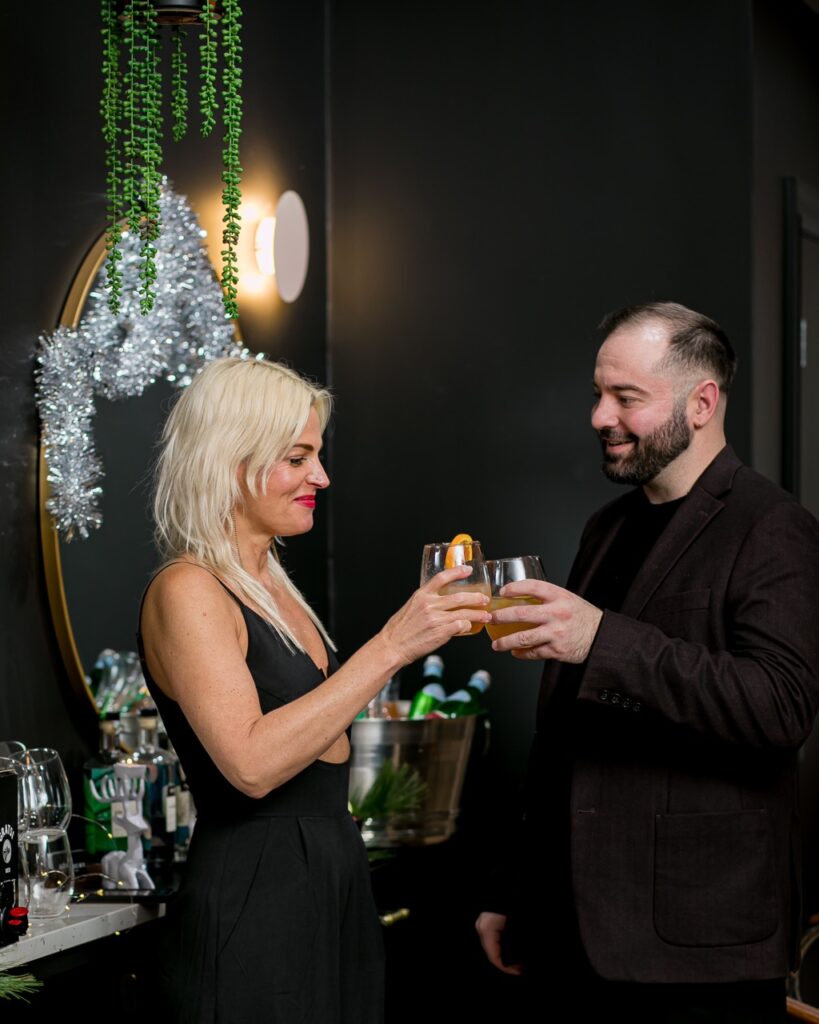
Two workers, a man and woman, in black clothing clink together their orange cocktail glasses at a holiday office party.

Final Touches

Napkins and Flatware

Treat your guests to the lovely feeling of cloth napkins and real flatware. Bring some in from home or go online for affordable options. These simple touches make a world of difference.

Music and Ambiance

Create a warm and inviting atmosphere with holiday-themed music and appropriate lighting, using candles, string lights, or lanterns.

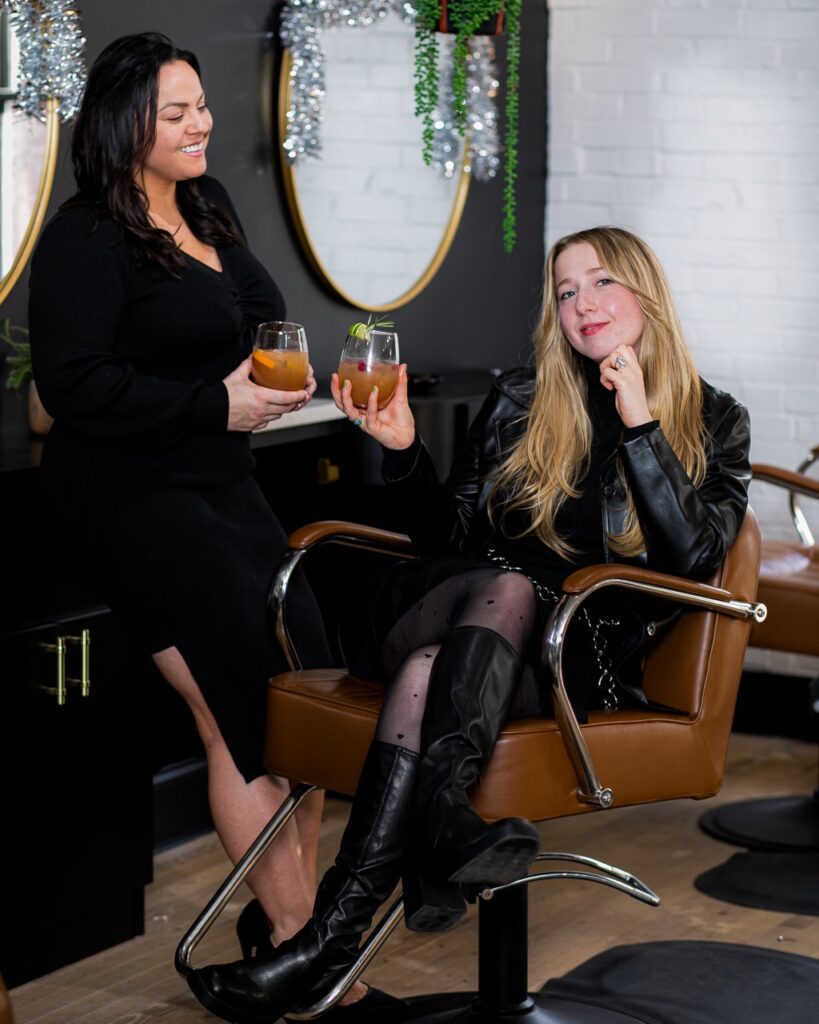
Two women dressed in black cheers their orange cocktails as one with dark hair stands and one with blonde hair sits.

Story by Lindsay Anne Herring 
Styling by Star Laliberte and Lindsay Anne Herring 
Photography by Laura Petrilla 
Shot on location at Alchemy Dry Cut Lounge 

Subscribe to TABLE Magazine’s print edition
Stovetop Flatbread Pizza

0
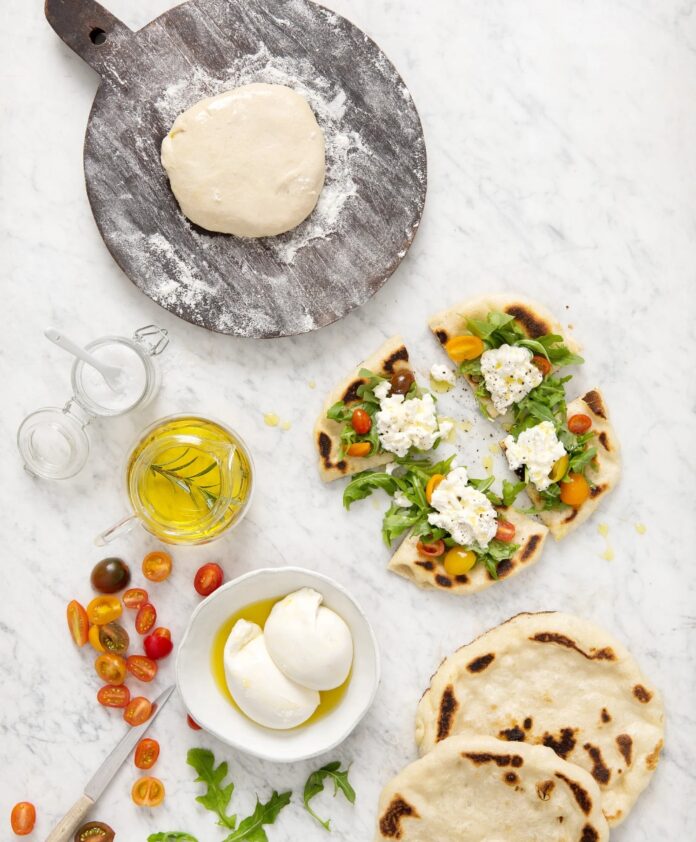
Fresh flatbread pizza topped with burrata cheese, arugula, and cherry tomatoes, alongside a ball of dough on a wooden board, olive oil, and a bowl of fresh burrata on a marble countertop.

Let’s face it, pizza is intimidating to make at home. We wonder how we can ever attain that perfect pizza crust that is both soft and crunchy without our own wood-burning oven, or a pizza stone, or mad dough tossing skills. Here is the answer: flatbread pizza — on a stovetop. Topped with burrata, arugula, and fresh tomatoes, it’s simple, fresh, and full of flavor. You’ll even make your own dough for the crust, allowing for a perfect texture every single time.

Print
clock clock iconcutlery cutlery iconflag flag iconfolder folder iconinstagram instagram iconpinterest pinterest iconfacebook facebook iconprint print iconsquares squares iconheart heart iconheart solid heart solid icon
Fresh flatbread pizza topped with burrata cheese, arugula, and cherry tomatoes, alongside a ball of dough on a wooden board, olive oil, and a bowl of fresh burrata on a marble countertop.

Stovetop Flatbread Pizza


  • Author: Sam DiBattista

Description

This stovetop flatbread is soft, fluffy, and golden brown, making it an easy alternative to pizza.


Ingredients

Scale
  • 1/2 oz active dry yeast
  • 2 tsp kosher salt
  • 4 cups unbleached all-purpose flour, plus extra for working it
  • Olive oil

For the toppings:

  • Arugula
  • Grape tomatoes
  • Burrata
  • Sea salt flakes
  • Good olive oil
  • Ground black pepper


Instructions

  1. Pour 1 1/2 cups warm water into a large bowl, sprinkle with dry yeast let stand until foamy, 5 to 6 minutes.
  2. Stir the salt into yeast and water mixture. Add flour and stir to achieve a sticky dough.
  3. Place dough into an oiled bowl. Brush a light coating of oil on top of the dough. Cover bowl with slightly damp towel. Place the bowl in a warm place until doubled in size.
  4. Turn dough on to floured worktable. Knead gently before dividing into equally sized balls. Place balls on an oiled tray. Cover with cellophane until a second rise, about 50 percent in size.
  5. Place a heavy pan over a burner on high. Use a lid to stretch the dough; then lay flatbread dough in the bottom of the pan. Cover with lid. Brown one side, flip it over, and cook until the other side is brown.

Notes

The lid creates a little steam, making the dough light and fluffy.

Recipe by Sam DiBattista, Vivo Kitchen
Styling by Quelcy Kogel
Photography by Adam Milliron

Subscribe to TABLE Magazine’s print edition.

A Family Style Dinner with Justin Severino of Morcilla

0
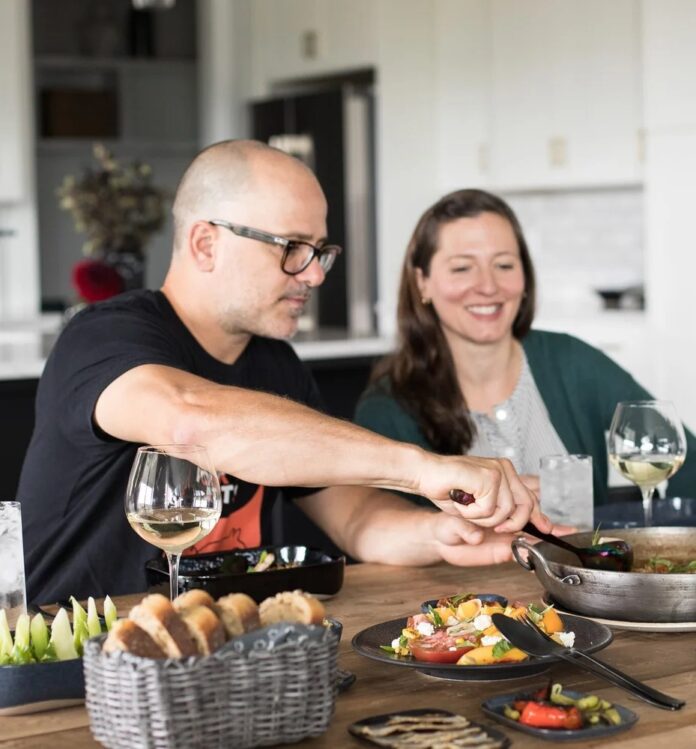
Chef Justin Severino, wearing glasses and a black shirt, sits at a wooden table with his wife, Hilary Prescott Severino, smiling in the background, as they share a family-style meal featuring wine, bread, and a colorful tomato and peach salad.

Family meals have been part of Justin Severino’s life for as long as he can remember. The co-owner of Morcilla says that his parents have a big table at their house in Ohio and, “They have always been all about ‘bring your friends in the house for dinner.’”

Now he’s a parent. He’s taken to preparing a monthly brunch for his wife and business partner, Hilary Prescott Severino, and a few of her friends who have kids around the same age as their daughter, Franny. Since the COVID-19 outbreak, Severino has also been preparing a weekly wing night for his pals.

A Family Style Dinner with Justin Severino of Morcilla

“Getting together and sharing simple things with people, that’s what food is all about to me,” he says.

Of course, that doesn’t preclude cooking a more elaborate feast from time to time. For example, he’s laid out a spread celebrating the peak of Western Pennsylvania late-summer produce: Gazpacho, Tomato and Peach Salad with Corn Vinaigrette and Basil, Broccoli with Romesco and, of course, charcuterie. Severino caps the meal with cider-braised chicken paella. The dish is a specialty of Asturias, the autonomous region in Spain whose cuisine inspired Morcilla’s menu.

Severino says that the best way to prepare for a dinner party is to keep your freezer and pantry stocked with ingredients that’ll speed the flow of preparing a meal. If you’re making meatballs, for example, make heaps. Feed some of them to your guests and then freeze the rest to have them on hand for later use.

His other piece of advice is one passed through generations: “Cook from your heart. Cook what you want to eat and share it the best that you can.”

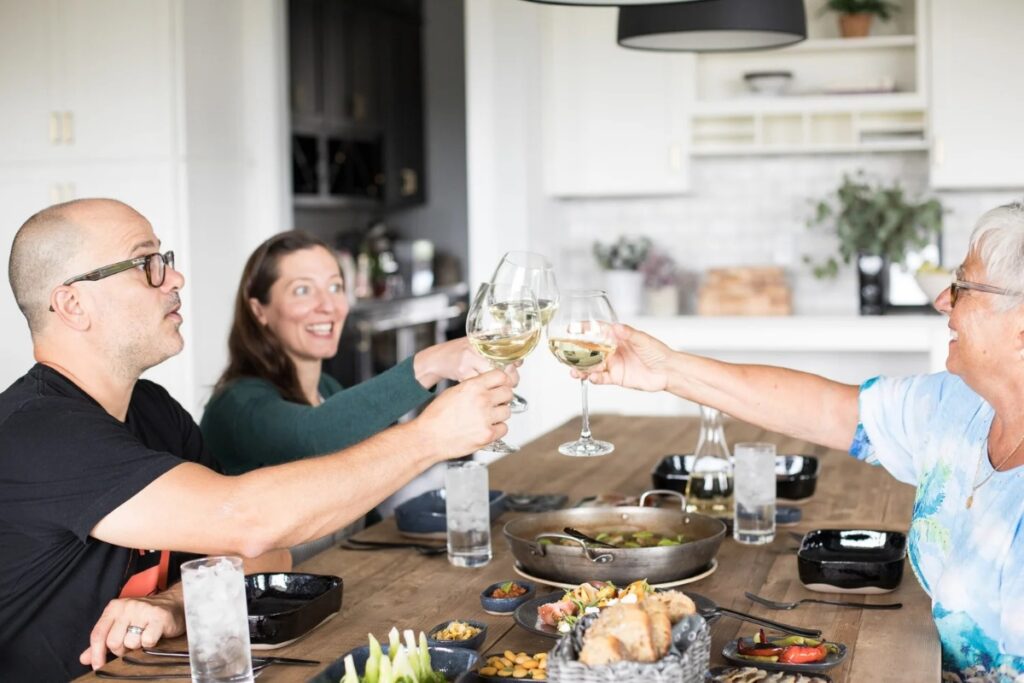
Justin Severino, his wife Hilary Prescott Severino, and an older woman toast with glasses of white wine at a brightly lit dinner table set with a paella pan and plates of charcuterie and fresh vegetables.

PA Wine Recommendations

We start with Justin’s gazpacho, and Tomato and Peach Salad. The medium acidity and crisp fruit of Pinot Gris will play well with the acid/spice level of the gazpacho. It will also do well with the sweetness and acidity of the peach and tomato salad.

Unoaked Chardonnay will add a zippy freshness to the smoky overtones of the Arroz con pitu de caleya.

Story by Hal B. Klein
Styling by Rafael Vencio
Photography by Dave Bryce
Wine Pairings by Alexandra Cherniavsky for PA Wines
Dinnerware by Merci x Serax, Jars/Crate & Barrel, and FD Ceramics
Flowers by Pisarcik Flower Farm
Produce by East End Food Co-op

Subscribe to TABLE Magazine’s print edition.

Weisshouse Owner Cyd Mello Talks Turning a Pittsburgh Storefront Into a Home

0
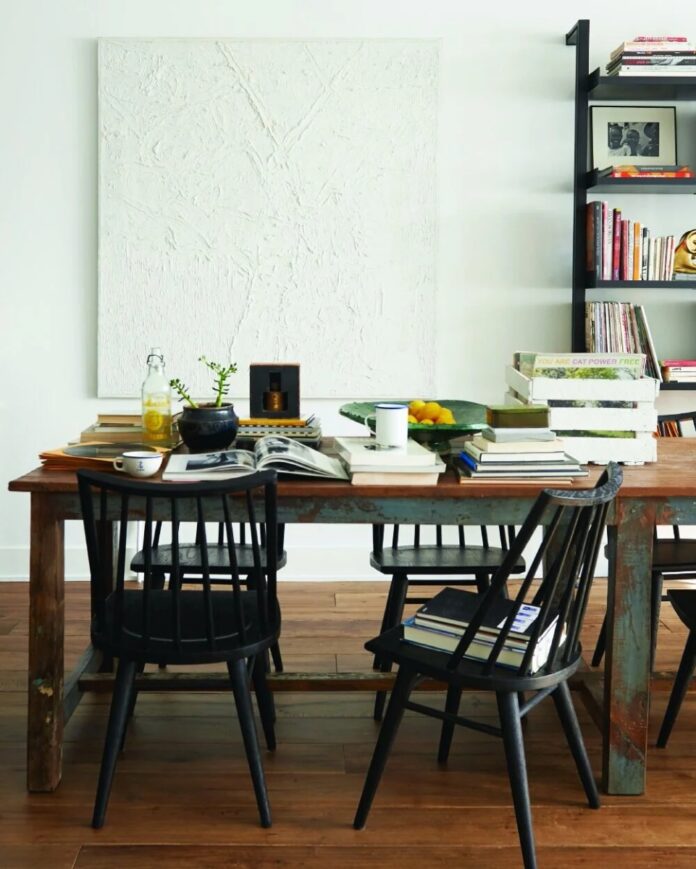
A modern dining area featuring a light wood rectangular table, black spindle chairs, and a black metal and glass shelving unit displaying woven baskets and decor, contrasting against white walls.

When home renovation is a family affair, anything is possible. That’s how it went with Cyd and Neal Mello’s recent (and substantial) re-do of an old Pittsburgh storefront. Their project resulted in the transformation of a neglected space into a warm, functional family home. TABLE Magazine editor-in-chief Keith Recker had a talk with Cyd of Weisshouse about the process and the results.

Making a Home Out of a Pittsburgh Storefront with Cyd Mello of Weisshouse

Keith Recker: What sparked your interest in the building you renovated? It’s not every day that a storefront becomes a beautiful family home!

Cyd Mello: We immediately recognized the timeless character within the structure. We were drawn to the raw framework of the first floor as an entirely open space with 13’ ceilings. The original storefront façade had large front windows that let in ample light. We took the opportunity to install larger, frosted windows with black mullions that create an interesting architectural element. The new windows stay true to the storefront history and keep the interior bright and airy.

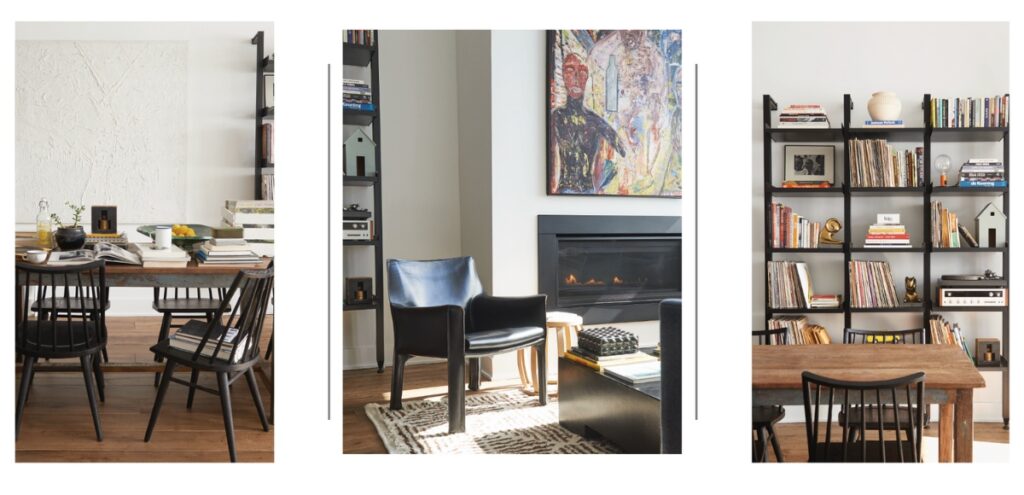
A stylish, modern living room with a black leather armchair, a low black coffee table, a graphic patterned rug, and a fireplace, featuring abstract art above the mantel in a renovated storefront home.

Also, my love of design was fated from an early age growing up in a close Pittsburgh family full of artists and interior designers. First, I studied at Parsons School of Design and worked in the fashion industry. Then I transitioned to interiors with my mother Stacy Weiss at Weisshouse. Naturally, wanted to create a space of my own.

We love the central location. We’re at the end of Highland Park/beginning of Morningside. This puts us at equal distance to Weisshouse and Mello & Sons – my husband’s vintage shop. The neighborhood is very family-friendly and close to a park with a baseball field. That’s a plus when you have two boys.

We could see through the neglected state of the storefront space and saw that we were dealing with a true diamond in the rough.

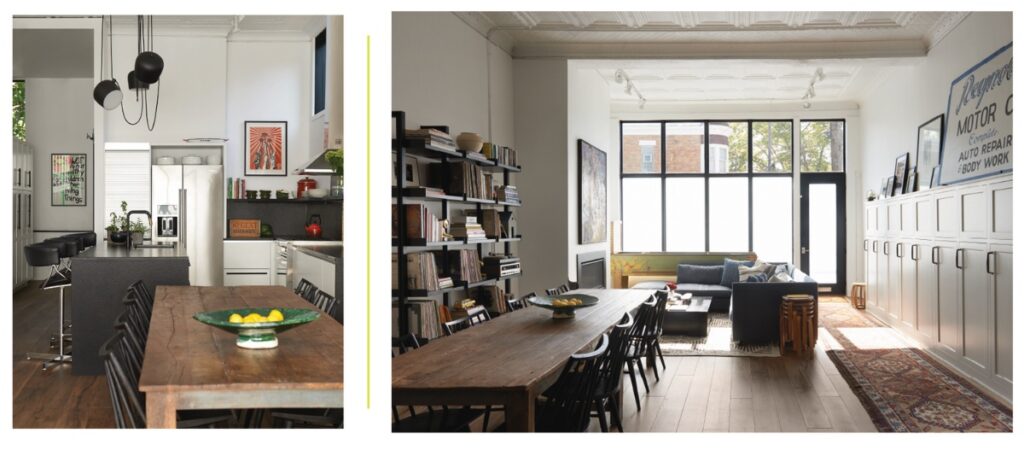
A renovated Pittsburgh storefront interior featuring an open kitchen, a long wooden dining table with black chairs, and a bright living area with tall frosted windows and original pressed tin ceilings.

KR: What was your goal with the renovation? What sort of family life did you need the house to support?

CM: The goal of this renovation was to revitalize a forgotten structure with modern updates and contemporary designs. With no existing kitchen or powder room, we were excited to be working with such a blank slate and have so much freedom to configure the massive open floor plan into a layout that would best suit our lifestyle. It was important for us to design a space that was creative, inventive, and accommodating for a family of four with two growing boys.

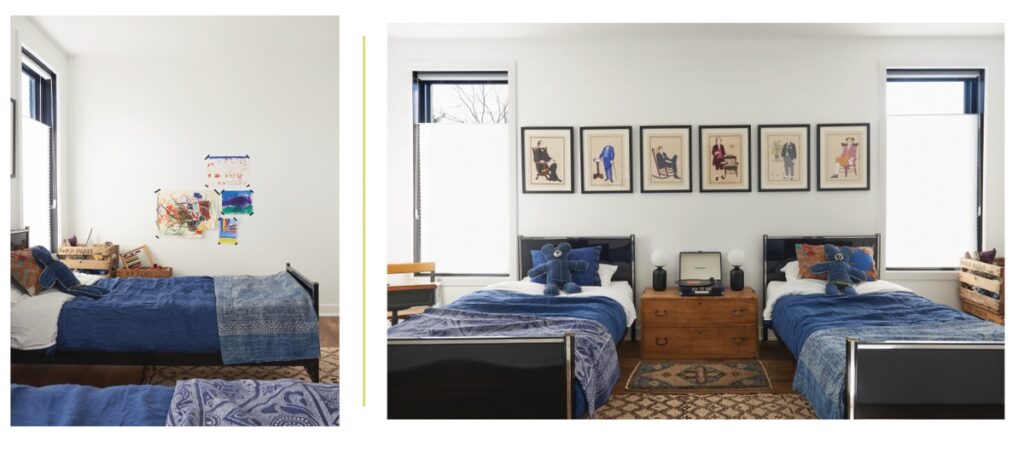
A simple space with a single bed and abstract children's artwork on the left, and a shared bedroom with two black beds, an antique dresser, and framed artwork on the right.

KR: What parts of the house are really successful in achieving those goals? Where do you spend the most time? Where do you feel happiest?

CM: The configuration allows for us to be in the kitchen or doing laundry while staying actively involved with the boys while working on an art project on the dining table or a puzzle in the living room. Coming from Brooklyn, we lived in loft apartments and in the back of our vintage store, so we are used to being together all in one space. Our first floor has the feel of a Brooklyn loft. It offers a direct line of sight from the kitchen to the front living area, allowing our family to be together while still offering ample space for each of us to tackle our own tasks, like assembling the best Lego castle on our large vintage farm table.

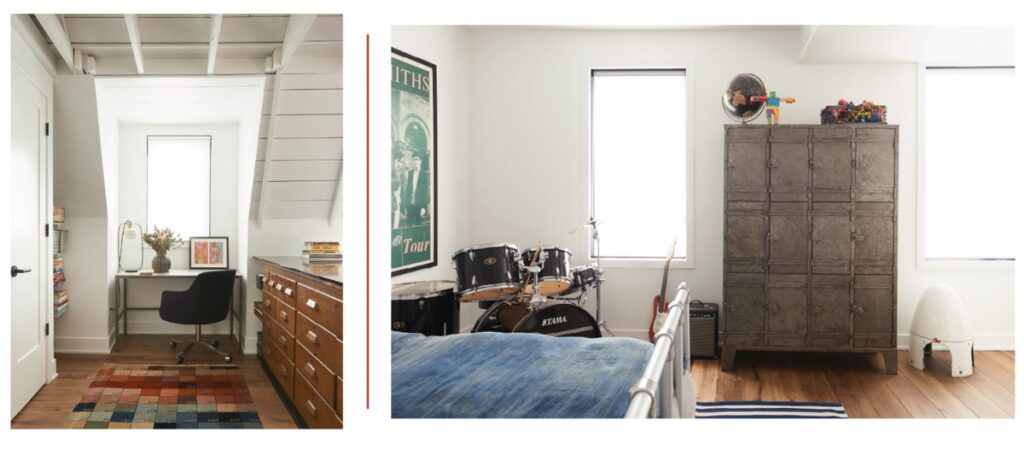
A collage showing two rooms in a renovated Pittsburgh storefront home: a cozy attic office nook with a desk and colorful rug next to long wooden drawers, and a modern boy's bedroom with a drum set, vintage metal wardrobe, and contemporary artwork.

KR: The house is filled (but not overfilled) with interesting objects and art. Could you pick two of your favorites, and share their stories with us?

CM: The clean lines and modern framework of the house really allow our collection of art and vintage objects to stand out.

The house is filled with artwork, many by my grandfather Jack Weiss and my father Karl Mullen whose images have adorned every home I have lived in. A favorite is a piece by my dad that hangs above the fireplace. Jack and my grandmother Andy Weiss actually purchased the painting after it won Best Painting at Three Rivers Arts Festival in 1988 and they recently left it to me after his passing. Not only is it a brilliant figurative work of art, but I always admired that my grandfather valued it given his style was linear and modern. It’s also very specific to the work my dad was creating in my early childhood, so it holds a lot of good memories.

Another favorite is my husband’s vintage Beacon blanket collection. Neal’s vintage career began in the 90’s when he worked for Ralph Lauren where he fell in love with original beacon blankets and has been collecting them ever since. Although they are treasured and becoming harder to find, we use them all the time. I love having the unique color combinations and graphic patterns layered throughout our home.

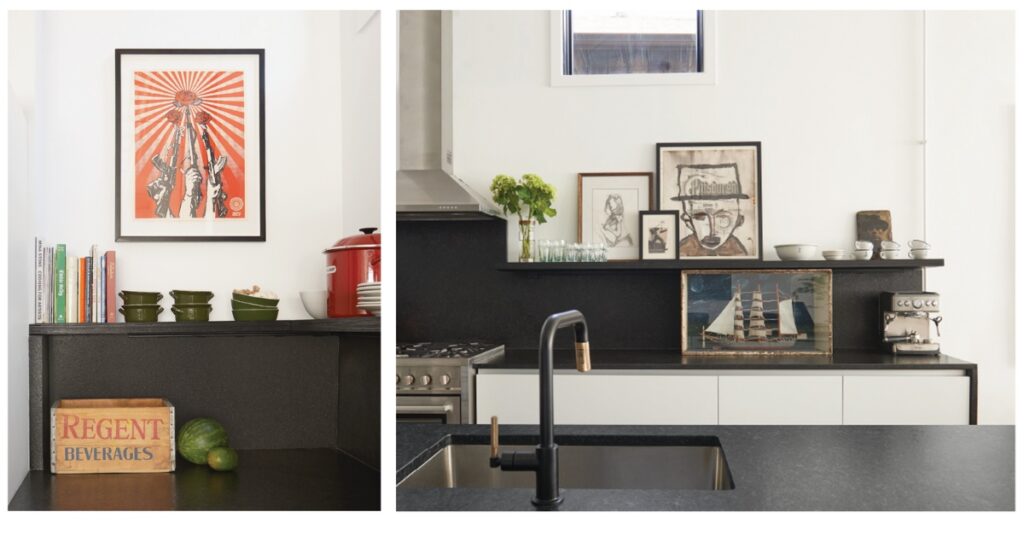
A modern kitchen counter with a black sink and faucet, featuring a curated display of framed art including a ship painting, small bowls, a toaster, and fresh greenery on a black floating shelf against a white wall.

KR: You’re part of the Weisshouse family. What’s the favorite item that came into the house from the store?

CM: Working at Weisshouse, I am inspired daily by our vast collection of different objects, rugs, and furnishings. When designing a room, my mom always taught me to start with the rug, but there are so many it was hard to choose! I ended up selecting all vintage rugs as they work with any design and never go out of style.

Another favorite from Weisshouse is a big, deep, down-filled, Faro sectional. Although we have so many sofa frames in the showroom, this was always my objet de désir. It’s the perfect family movie night sectional without compromising on design. The low and deep slim profile with boxy pillows maintains a chic 1970s modern silhouette. The hardest part was choosing a fabric as I was fully aware of all the endless possibilities. I am still very happy with my choice of a denim Sunbrella fabric. Even though it’s designed as outdoor fabric, the technology today still allows it to be soft and feel like a linen blend.

Honorable mention has to go to the sculptural kitchen lighting by Flos. It really draws attention to the original pressed tin ceilings, the only original element preserved in the redesign.

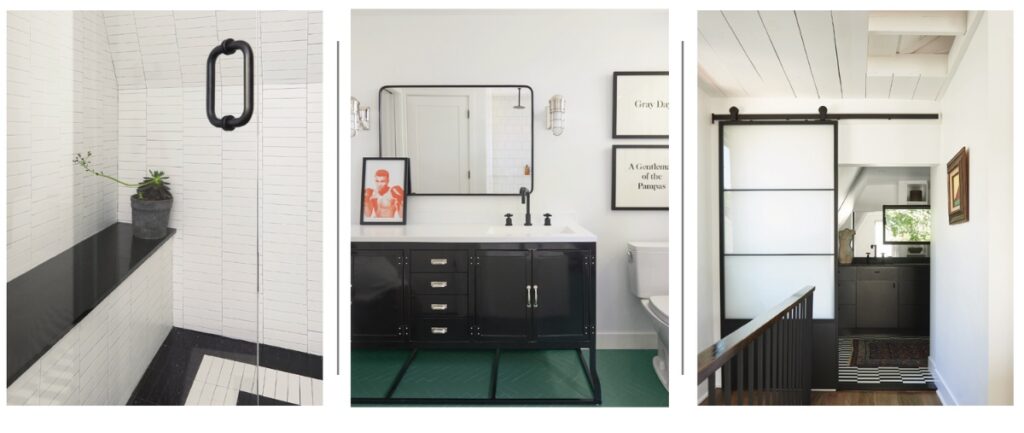
A three-panel collage showcasing a modern black and white bathroom renovation with a tiled shower bench, a black vanity with a white sink and green floor tiles, and a sliding glass barn door leading to a loft.

KR: What are the most important lessons you learned from this renovation project? Any advice you’d offer a TABLE reader embarking on a similar adventure?

CM: If you’re doing a gut renovation, you need a fantastic contractor.

Will Carpenter of Carpenter Construction saw every detail through to the end. I love working with my mom, but it was a great experience and learning opportunity to work with Will, my stepdad.

After the demo, we met with the electrician who asked where we wanted to place the light switches. I didn’t realize we would be making those decisions so early on. It was a challenge to imagine our daily lives surrounded by demoed walls in a place where I had spent so little time. Thinking about light switches in walls that didn’t yet exist was new for me, but with the help of architect Michael Greybrook, I was able to visualize it on paper.

Luckily, I had a lot of expert advice within my family. But even with the pros helping, there are a million decisions to make. The options are endless, so it helps to finalize as many details as you can in the beginning and keep building upon what you have already committed to. The process can be daunting at times but with the right people working on a great design, your project eventually comes to life.

Story by Keith Recker
Photography by Studio Lithe

Subscribe to TABLE Magazine’s print edition.

Frzy’s Gratitude Feast

0
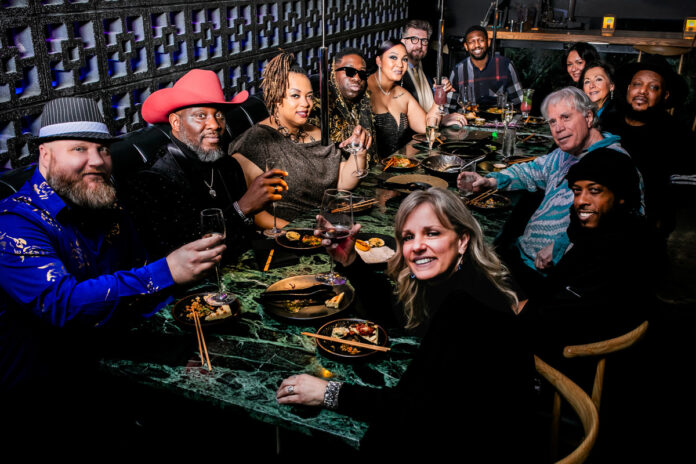
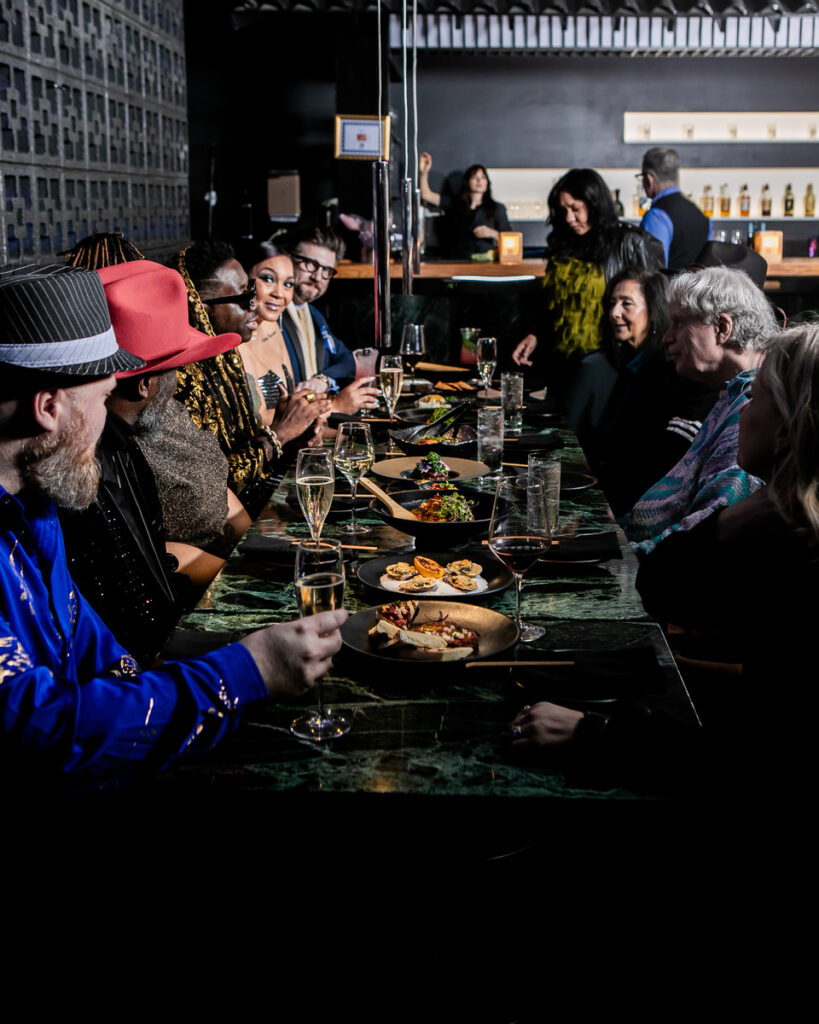
A group photo of 12 people sitting around a large dining table surrounded by hanging string lights and potted plants. They are smiling and laughing while holding drinks and conversing with each other.

Emmy Award-winning rapper Harvey “Frzy” Daniels gathered 12 special people who have played a role in his success for a celebratory dinner at Cobra. At this happening Bloomfield spot known for Wagyu BBQ and karaoke, the group mingled in the lounge area before sitting down to dinner at a long table set up in the bar. Frzy invited folks from various parts of his career, many of whom had never before met each other. In fact, many call him by different monikers — from his given name to Frzy to “Free” (short for “Freestyle”).

Frzy’s Gratitude Feast

Cobra house managers Collin McNamee and Catherine McGough took care of the group with some serious TLC, while bartender Whitney Meyer served wine, bubbly and mocktails. Chef Sorcha Murnane created a scrumptious feast, ranging from fresh seafood and karaage (fried chicken) to pork belly with broccolini, ube cornbread and, for the finale, bananas foster and Tres Leches Cake.

Emmy Award-winning rapper Harvey “Frzy” Daniels.

Frzy explains the significance of the evening. “Hearing ‘thank you’ and ‘I’m proud of you’ and encouragement, to me, goes a long way,” he says. “A lot of people don’t say it; they assume you know.” These days, his list of those to acknowledge for their endless support and faith in him proves long.

A group of people standing around each other at a party.

Growing up, he didn’t often hear “I’m proud of you” or “you’re going to be great.” He had to pull himself up on his own, without the help of a big artist to sign him or much money to show appreciation along the way. “I paid for a lot of my opportunities with ‘thank you,’” he says. In fact, he still prefers to lead first with gratitude. “It’s worth more than anything in the world.”

A bowl of food with chopsticks on a table

A Native Son of Pittsburgh

Frzy feels great pride for having been born and raised here, and it’s crucial that people know he’s a son of Pittsburgh — “representing what we do and where we come from.” “This city is built on legacies. Every story that’s told in this city is based on a person,” he says, referencing folks from the steel workers and Steelers players to legends like Roberto Clemento and Mr. Rogers. “Growing up,” he adds, “I knew if the city was going to lift me up, I had to be one of them.” If there was anywhere he felt guaranteed to make it, Pittsburgh was the place.

A group of people sitting around a table eating food.

The Menu

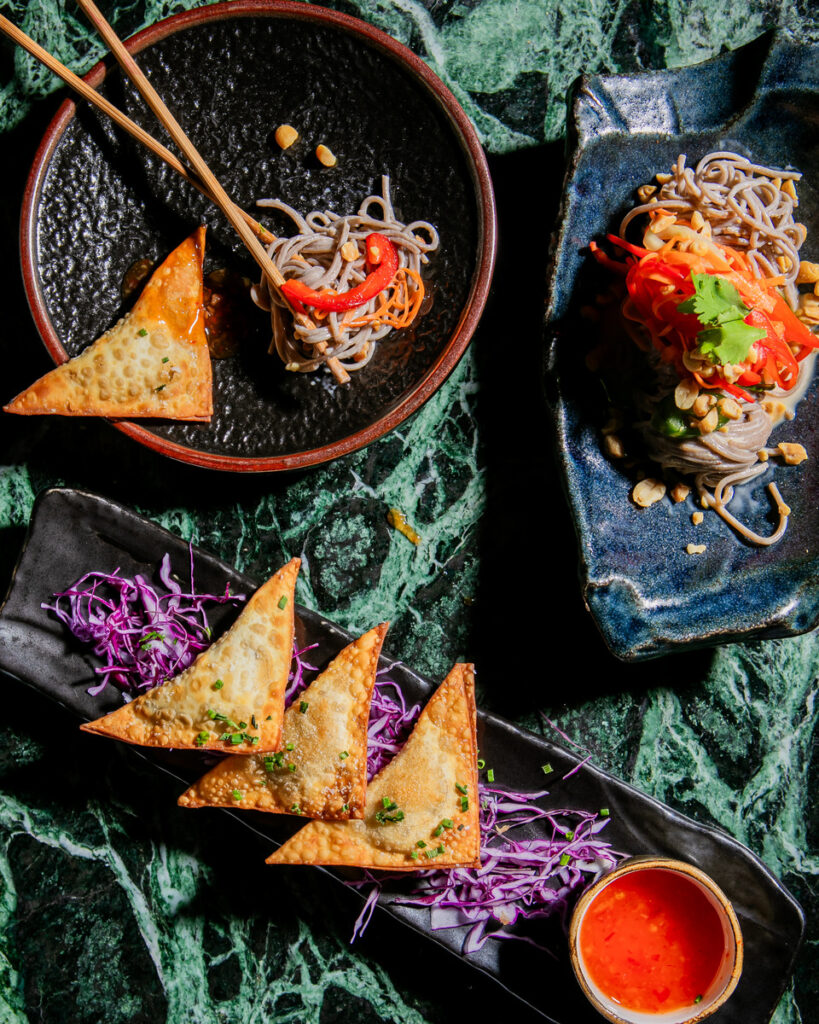
When writing the menu for this jubilant event, Cobra Executive Chef Sorcha Murnane felt inspired by the following themes. Luxury, the passage of time and celebration. The lobster dish and oysters Rockefeller proved a shoutout to old-school New York hotel culture. Other dishes leaned into the venue’s Asian-inflected point of view. “The cold soba noodle salad is sharp and acidic on top with all of the pickled veggies, but also earthy from the buckwheat noodle and the tahini vinaigrette is silky and supple,” the chef comments.

A close-up of a wine bottle, placed on a bed of crushed ice.

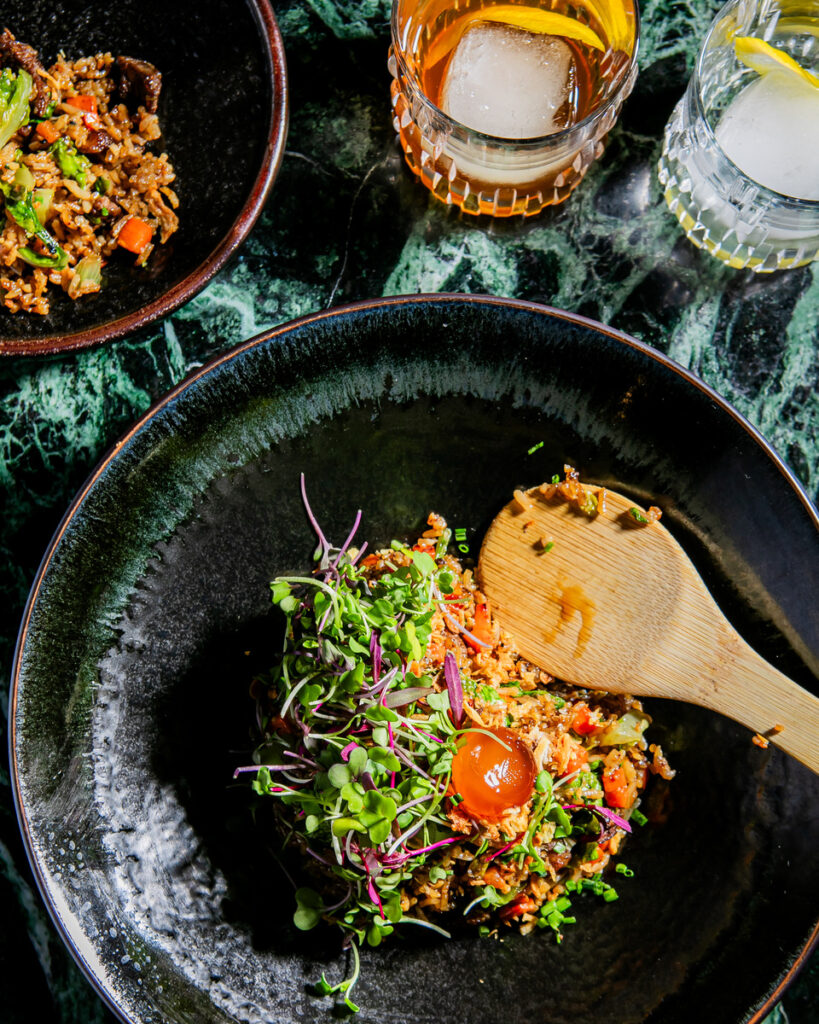
Murnane also wanted to pay homage to Cobra as a staple of celebration by serving some of the venue’s incredible, best-known dishes. “The Wagyu fried rice is something we make with a lot of love and care,” they say. “We butcher everything in-house, and we use the trim from our Wagyu cuts to flavor the fried rice. We take great care to season the dish with the perfect amount of tamari and oyster sauce not to overpower the beef.” This culinary talent recently began topping the rice with a soy-cured egg yolk to add an extra layer of umami to the dish. “I always hope that people remember our fried rice as the best version they’ve ever had,” they say.

Three colorful mocktail cocktails with tropical drinks in the foreground and background.

A Unique Event Space

Cobra is a unique place that holds space for different people and communities, according to Murnane. “It’s interesting and interactive dining,” they share. “It’s a local bar where people come to have a burger and a chat and nightlife space. People make great memories with friends bonding over karaoke. It’s playful and sexy.”

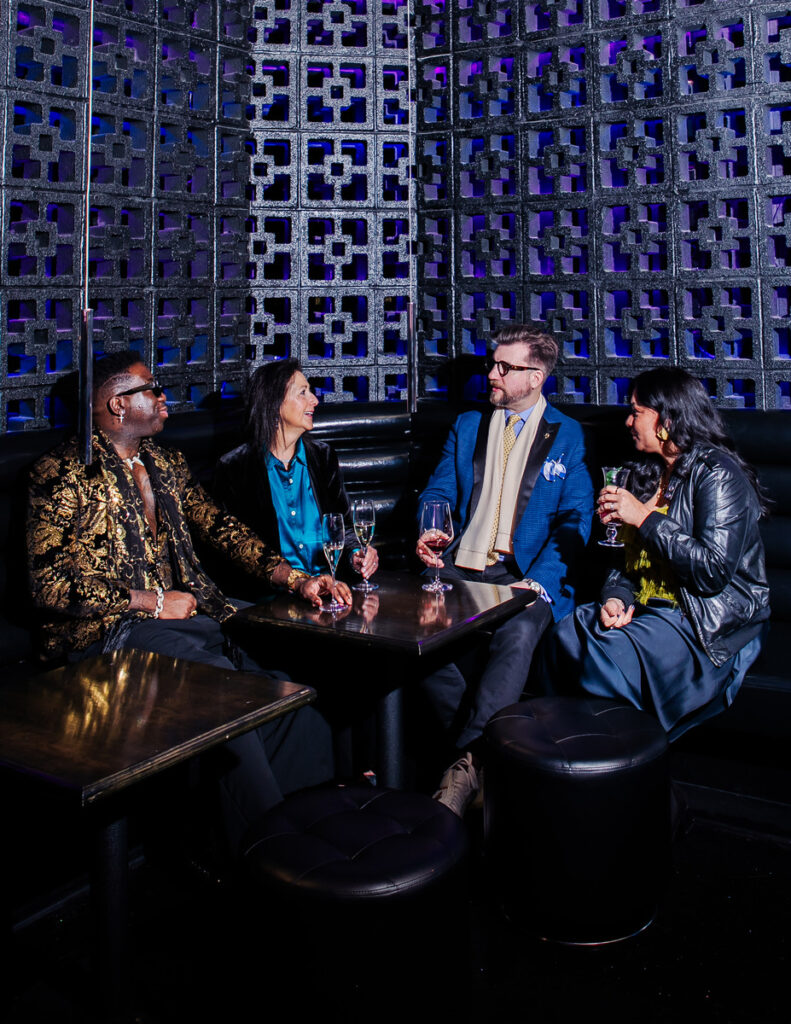
Three people sitting around a table with drinks, in a room with a geometric patterned wall in the background.

Ultimately, Murnane thinks Cobra was a great choice for this photo shoot and festive feast. “Because the space has sexy lighting, luxurious food and a focus on celebrating,” they say. “It’s also a space that has such a rich DJ culture. How could any music artist resist?”

A bowl of food with a wooden spoon in it.

Additionally, this type of friendly neighborhood hangout seems ideal for a proud Pittsburgher who, no matter how far he may roam, remembers where he came from. Though he travels a good amount, Frzy’s happily here more often than not. Whenever he tells Siri to take him “home,” she always knows to point him toward Pittsburgh.

Guest List (in no particular order)

Angela Tuulaupua

Personal assistant and best friend who’s been there to assist in his journey as an artist and growth as a man, mentor and icon. One part of Team Frzy, who’s really been the MVP since they met and deserves to have her jersey number retired.

Three people seated at a table enjoying drinks and food.

Gina Pferdehirt

Publicist and one of Frzy’s closest friends, mentors and allies. She’s helped guide him to make his dreams come true and to become the type of person/artist the press love to support. The other half of Team Frzy who deserves to be in the Hall of Fame and have her jersey hanging from the rafters.

A person in a black outfit with a black head covering and red bracelet looking thoughtful or contemplative.

Jeff Cobbs (DJ Chevy)

Frzy’s first DJ and hip hop mentor. Cobbs took Frzy by the hand from battling on the street corners in East Liberty and showed him he could be the best the city has ever seen. Has been by his side ever since, from the stage to the studio to the home.

A person seated at a table wearing a black outfit including a hat and sunglasses.

Sherrod Evers

Owner of Studio 84 and a big reason why Frzy became the third rapper in history to win an Emmy Award. He was the mastermind behind connecting Darrin Grant, the producer of his award-winning track “It’s a Beautiful Day.” The track was recorded and mixed in his studio.

A close-up photograph of a pointed-toe low-heel black slip-on shoe.

Ashley Coccia

Singer/ Songwriter/Producer/Mother and also the first producer/artist to sign Frzy’s “Freestyle” to a label she co-owned called Kolab. She helped Frzy learn how to write full songs and structure them in the beginning of his career. Further, she also taught him to turn his freestyle ability into lyrical genius. The song that Ki Ki Brown played on the radio to introduce Frzy to the world was written/recorded and mixed with Ashley.

Ki Ki Brown

Legendary DJ on Pittsburgh’s hip hop station WAMO 107.3. Also the first DJ to ever play Frzy on the radio when WAMO was 106 Jamz. She believed in his talent and introduced Frzy (“Freestyle” at that time) to the Pittsburgh hip hop scene.

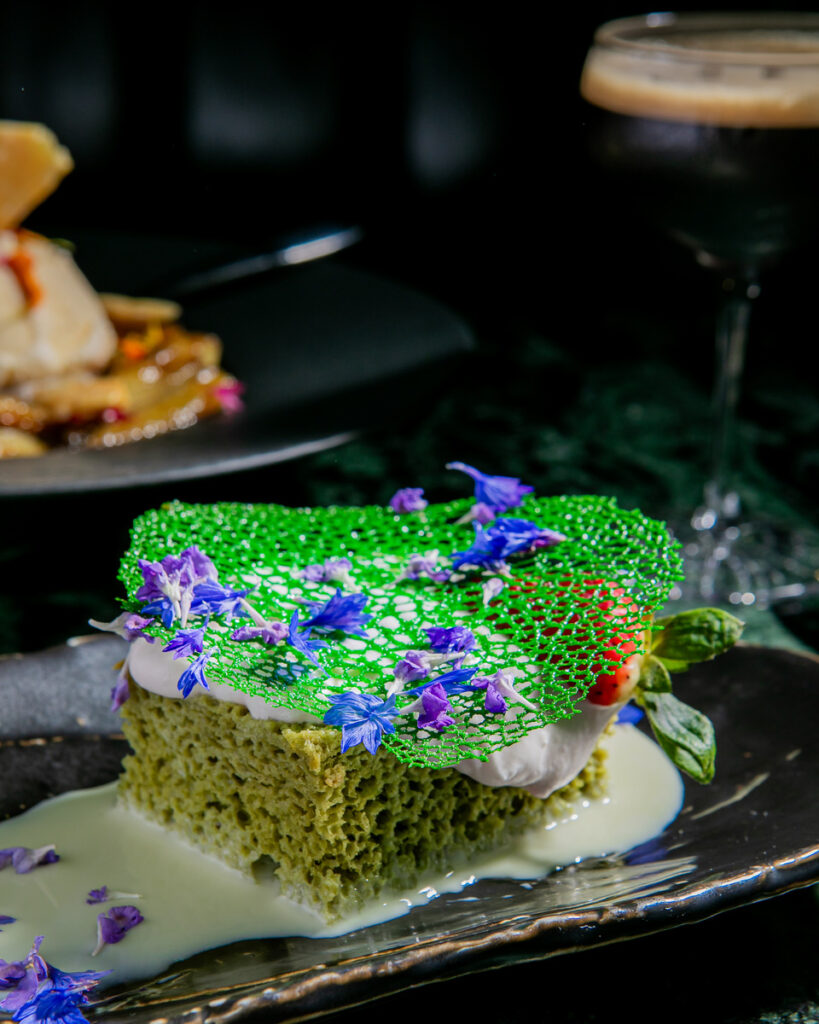
A close-up photograph of a green cake with white frosting and small blue flowers on top.

Christian Kriegeskotte

Classical composer and music producer who wrote all of Frzy’s historic and groundbreaking shows with The Pittsburgh Symphony Orchestra. Christian helped not only create the show but also the soundtrack to one of the biggest moments in Frzy’s career. On top of having only a few months to write 12 classical compositions from scratch, he also found time to become a brother and mentor.

Matt Firek

Studio owner of Fire K Studios and one of Frzy’s best friends. Matt’s allowed Frzy to turn his studio into his second home. This bond is a key ingredient in Frzy’s success, and along with it Matt’s recording and mixing, staying late nights and early mornings with him, believing in him in ways no one ever has. Matt has a special gift of knowing when to hit the “record” button to capture moments that become hit songs and albums.

Three Asian-style dishes arranged on a dark textured surface.

Melanie Taylor

One-half of the Bubba Show on 100.7 Star (representing Bubba at the dinner, too). Now close friends and among the first people to celebrate Frzy’s Emmy. The duo has also become big brother and sister to him, supporting every song, every video and every win. They are the number one source of Frzy news and love.

Akil Esoon

Rapper/writer/producer for major labels around the world, and the first rapper Frzy ever looked up to. Back when he was learning how to hone his skills at the legendary Shadow Lounge, Akil helped Frzy sharpen his tongue. He supported him and was a positive black role model and artist.

A group of people seated around a long dining table enjoying a meal together. The table is set with plates of food, glasses of wine, and other dining utensils in a warmly lit dining establishment.

Riccardo Schulz

Professor and Studio Engineer at CMU School of Music. He’s the one who saw potential in Frzy during CMU’s Arts Greenhouse project. He selected Frzy out of 15 young artists at the age of 18. Then, he took him under his wing and taught him about recording on a professional level. Schulz became like a father figure (who shares the same birthday).

Brandin Jones

Frzy’s best friend since middle school, and also his first hype man and fan. From traveling the world together during shows to playing video games all night, Brandin (AKA Hollywood) has been not his Day 1 but his Day 0.

Story by Corinne Whiting / Styling by Keith Recker / Photography by Laura Petrilla

Subscribe to TABLE Magazine‘s print edition.

Dining Out for the Win at Rivers Casino

0
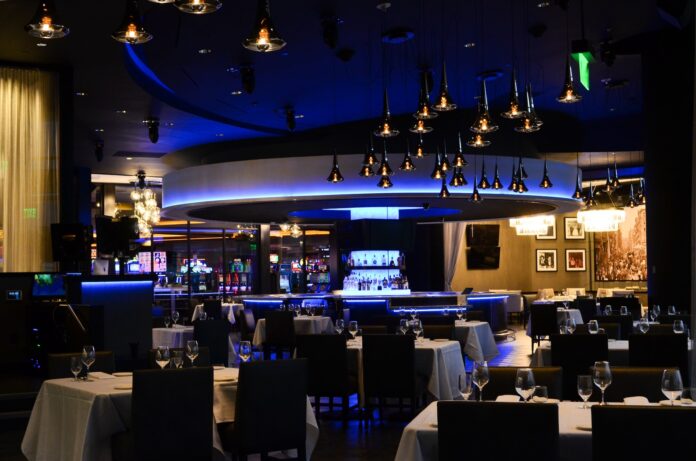
An dimly lit, elegant dining space at Rivers Casino with a round bar in the foreground that is highlighted with glowing blue lights.

Tables are set with holiday specials at Rivers Casino Pittsburgh.

There’s always something to be thankful for at Rivers Casino on the North Shore. Specifically, expertly prepared gourmet cuisine at multiple restaurants all around our gaming floor.

As we usher in another year-end holiday season, everyone’s leaving a winner. Wheelhouse Bar & Grill and Martorano’s Prime are serving up delicious autumnal and winter fare.

It will make you forget all about your aunt’s famous casserole—and no kitchen clean up—we’ve got you covered!

Dining Out for the Win at Rivers Casino

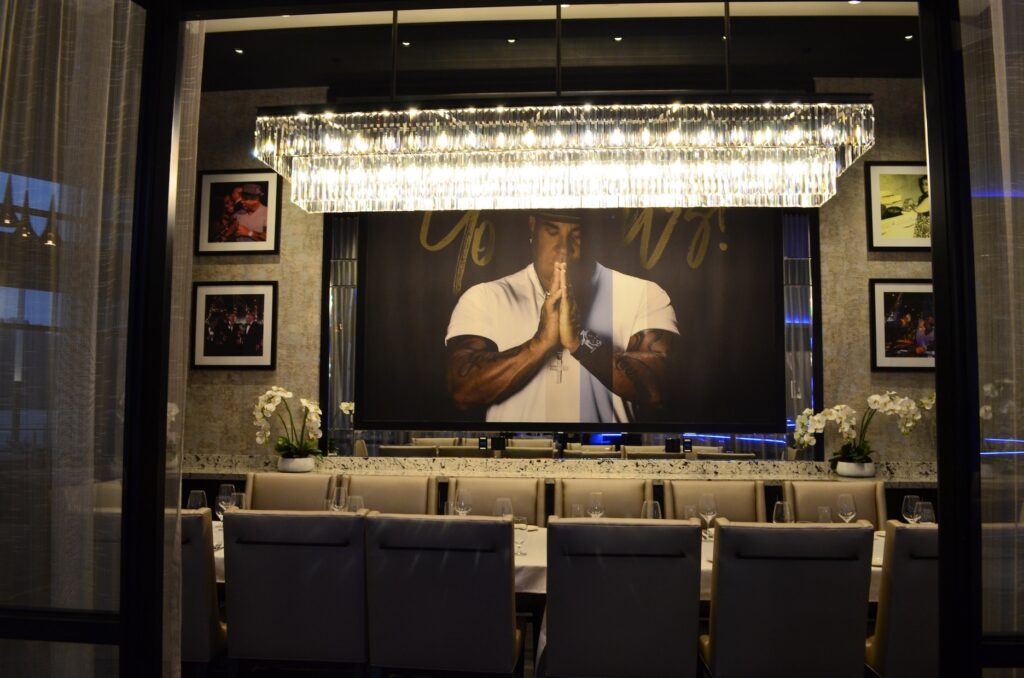
A long dining table at Rivers Casino with a rectangular chandelier above, sitting in front of a backdrop of a man in a white short sleeved shirt with tattooed arms and his hands pressed together in front of his face.

Wheelhouse Bar & Grill — Christmas Day Dining

From 11 a.m. to 9 p.m.

Celebrate the most wonderful time of the year with the most flavorful food on the North Shore. At Wheelhouse this Christmas, Rivers’ masterful chefs are kicking off the yuletide festivities with an Asian salmon cake starter, featuring orange rice and a savory “Wheelhouse Asian Glaze.”

For the main course, guests can indulge in either the pretzel-encrusted chicken, served with beer cheese, cheddar jack, spätzle and caramelized onion, or an equally enticing honey mustard-glazed ham steak.

To top off your experience, Wheelhouse’s chefs have collaborated to bring guests an innovative, sweet holiday hybrid … gingerbread tiramisu. This delightful dessert combines gingerbread lady fingers, mascarpone cheese and coffee syrup—and can only be found at Rivers Casino on Christmas Day, Wednesday, Dec. 25.

Wheelhouse Bar & Grill — New Year’s Eve Dining

From 11 a.m. to midnight

Ring in the exciting year ahead with a fittingly epic feast at Wheelhouse Bar & Grill.

This New Year’s Eve, Wheelhouse is cooking up dishes so delicious, you’ll forget what year you’re in! The upcoming holiday’s menu features our savory French bread steak and mushroom as well as a succulent 14-ounce prime rib as the main course.

Join us for a night of unbelievably tasty cuisine that will create food-fueled memories to cherish into the new year.

Martorano’s Prime — New Year’s Eve Dinner

From 5 p.m. to midnight

Nothing sets a festive tone for the upcoming year more than spending the final moments of 2024 enjoying a fine dining experience at Rivers Casino’s award-winning Italian-American steakhouse, Martorano’s Prime.

Whether it’s Steve’s “Famous Meatball and Martorano Salad” (with hand-rolled, fresh ricotta and pecorino Romano cheese) or an eight-ounce Sinatra-style filet with shrimp, you’re in for an unforgettable culinary ending to the year.

A holiday menu of delectable indulgence awaits … make your NYE reservation now at OpenTable.com.

For more information about all holiday dining specials, please visit RiversCasino.com/Pittsburgh.

Story and Photography courtesy of Rivers Casino

Subscribe to TABLE Magazine‘s print edition.

Across the Table from Merrie O’Donnell, “The Merrie Chef”

0
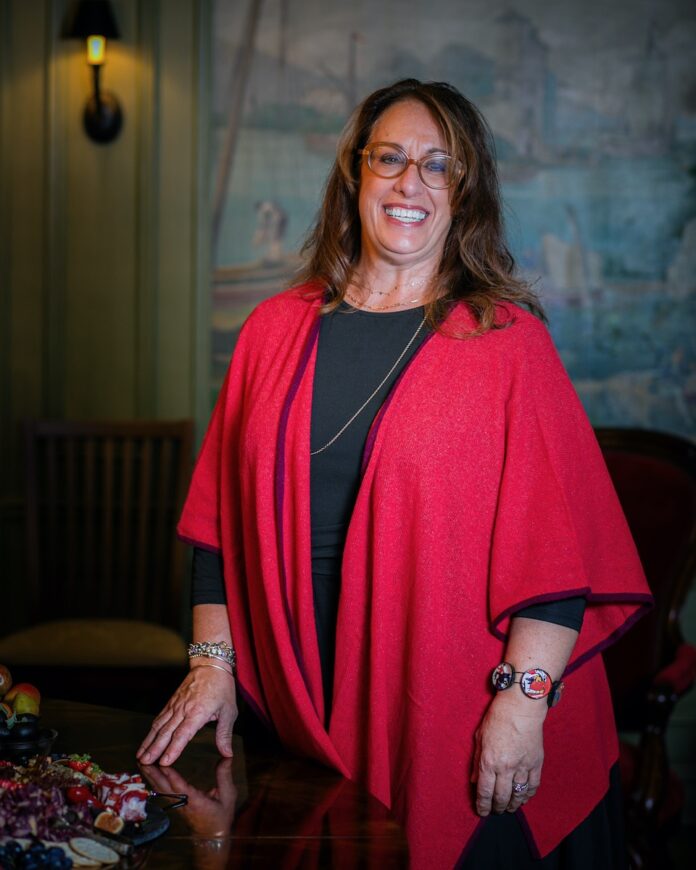
Merrie O'Donnell, a joyful-looking woman in a red shawl, smiles at the camera

Merrie O’Donnell, a.k.a.“the Merrie Chef,” admits she may not always recall your name upon a first meeting, but she’ll certainly remember what you ate. This comes as no surprise once you learn about the culinary talent’s impressively vast and varied resume—and her infectious passion for food. 

We meet in the morning at De Fer Coffee & Tea in the Strip. The “Merrie Chef” admits she woke up craving radish butter. She kindly brings along a box of scrumptious scones, tied up with ribbon like a special gift. (Two of the pastries are a delightful maple-pecan flavor. The others feature roasted leeks, garlic, herbs and brown sugar.)

Across the Table from Merrie O’Donnell, the “Merrie Chef”

O’Donnell, a personal chef who runs a catering business, makes a weekly voyage to the Strip to stock up on goods. As a proud member of the Pennsylvania Film Industry Association (PAFIA), she’s also a food stylist who makes edible creations for on-set shoots—and works with individual TV and film actors, crew members and craft services to provide meals. 

After our coffee chat, she plans to visit her go-to purveyors. Regularly in her rotation: Restaurant Depot, Lotus Food Company, Wholey’s, Penn Avenue Fish Company and Pennsylvania Macaroni Company (who she credits for recently introducing her to a triple cream she could gush about all afternoon). When making the rounds O’Donnell likes to play with what’s in season, and she loves asking the staff behind each counter, “What are you eating right now?” 

O’Donnell’s winding career path has taken unexpected turns. Yet she lives by the motto: “Every experience, you have to take something from it.” Another one of her mantras? “You have to have fun in life.” This translates to time spent in her basement, state-certified, commercial kitchen, where she regularly pumps tunes from LCD Soundsystem, Slightly Stoopid, and Ben Harper.

How the Merrie Chef Began

She attended college in New Hampshire and grad school in California. She got a master’s degree in psychology and afterward worked with adults with disabilities. Her husband’s work then took them to Northern Nevada (Elko), about seven hours north of Vegas. After the couple attended sushi school in 2004, they opened a restaurant specializing in sushi, Asian fusion and northern Italian fare. 

When they sold the restaurant in 2013, she started The Merrie Chef, a catering business that featured beef plus produce from local farms and ranches. Long before it was a buzzing trend, O’Donnell worked with neighboring farmers and food purveyors. “It’s what you should do,” she says. “You have to support each other.” O’Donnell fed everyone from touring musicians, cowboy poets to folks at regional ranches and gold mines. She also prepared food for politicians marching along the campaign trail, including: Hillary Clinton, John McCain and the Obamas.

From Food to Film

O’Donnell, her husband and their two kids moved back to Pittsburgh in 2016. Becoming part of the city’s booming film scene seemed natural. Her husband, son and a very good friend all work in the industry. “Pittsburgh and the surrounding areas have such a diverse landscape. It allows for a multitude of different films and TV shows to be produced here,” she shares, “The Film Tax Credit is important to PAFIA and keeping film and TV production in Pittsburgh.”

She regularly works with folks who have special dietary restrictions, a challenge she happily takes on. And when working in film and TV, the food needs to look and taste good since an actor might have to endure countless takes—and bites. “I may spend a great amount of time creating food for a scene that doesn’t end up in the show,” she says, “You never know how it’s going to turn out until it’s on the big screen.”

For a bakery scene in the most recent Tom Hanks flick, A Man Called Otto, she made sugar-free semlor, Swedish pastries. “It had great screen time, which doesn’t always happen,” she says. And for a banquet sequence in the Netflix series, The Chair, she created a lavish buffet. “The character eating the quiche had strict dietary needs. So, it was a small feat to make 100 gluten-free mini quiches for the scene,” she says. 

Savory Sustainability: Use Everything

Whatever O’Donnell creates these days—from breakfast towers to her wildly popular caramel-chocolate apples to appetizers like mini-crab cakes or dishes like chicken, coconut curry—she aims to make a good product, and then elevate it. She grows her own herbs, peppers, tomatoes and, recently, edible flowers (nasturtium leaves and feverfew appear on smoked-beef crostini; violas and pansies on sabayon). 

Being environmentally conscious is incredibly important to O’Donnell, too. Almost everything she uses is compostable, and she pushes catering clients to use their own dishware/silverware.

She lives by a use-everything philosophy. Leftover berries from a charcuterie board recently got transformed into tasty preserves.  

O’Donnell views her job as the Merrie Chef like continuing education, adding, “I never claim to be a know-it-all.” She makes it a point to constantly read, listing magazines like TABLE, Food & Wine, and Bon Appetit.

After a full day of cooking, O’Donnell often prefers a simple dinner. She enjoys cheese, olives, fruit and perhaps some killer, rosemary-fig crackers. However, one thing in her house is mandatory—the tradition of a family dinner savored together every Sunday evening. 

Story by Corinne Whiting / Photography by Laura Petrilla

Subscribe to TABLE Magazine’s print edition
International Chefs Bring Their Talents to Pittsburgh

0
A man sits at a diner table in Coriander, a Pittsburgh restaurant, smiling at the camera

Between 1870 and 1920, the population of Pittsburgh expanded sevenfold with a boom of immigration from southern and Eastern Europe. Often fleeing economic scarcity and upheaval at home, unskilled immigrants found jobs in construction, mining, steel mills, and factories. They introduced new traditions, languages, and cultures to the city, creating a wonderfully diverse society with their presence. Today’s new Pittsburghers enrich us with their cultures, their languages…and their food. Could the samosa be the new pierogi, or fried rice the new spätzle? Why not! What these international chefs serve up is delicious.

International Chefs Bring Their Talents to Pittsburgh

Taiwanese Bistro Café 33

1711 Shady Avenue, Squirrel Hill

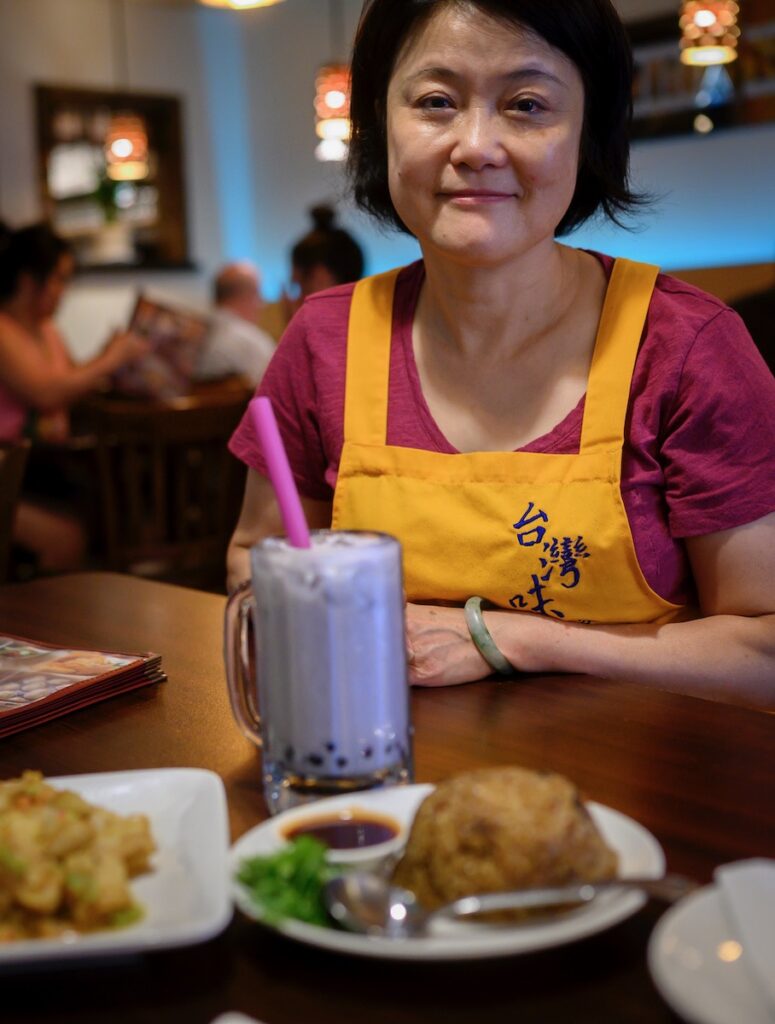
Jenny Tao beams at the camera from in front of a table of bubble tea and snacks

Jenny and Asan Tao arrived in Pittsburgh around 1995, by way of Taiwan and then New York City, where they stayed for ten years before heading up to Vermont, and then, down here. “A friend invited us to come,” she says. “And we thought, ‘Well, maybe we can stay.’”

So, they did. The restaurant came next. Not immediately, but the idea for a restaurant of their own was always in the back of their minds. While in New York, they worked in the industry. While in Vermont, they partnered with friends to open a restaurant. “But this place,” she says. “This is 100% by ourselves.”

Café 33 Keeps It Simple

Café 33 is Jenny and Asan’s heartfelt approach to food; a little of this, a little of that, in an endless quest for perfection, creating fresh versions of what’s already on the menu. Better versions, she’ll tell you. “Most of the recipes are from my childhood,” she says. She grew up in Taidong, Taiwan, a rural farm community tucked at the foot of the mountains, where families would grow peppers and chives in the garden and butcher a chicken or duck fresh for New Year’s. “Country,” she says. “There were no more than 10 houses around. Here, let me show you pictures. See how green it is? That’s the rice right when it’s planted. After it’s been cut, it’s all golden.”

Jenny’s always enjoyed cooking. “I like to eat,” she laughs. “See how skinny Asan is? He likes to cook but doesn’t like to eat.” It’s fresh vegetables and light sauces. Spice that is just spicy enough. Nothing heavy. Nothing excessive. “I feel it’s good. I love all of this. So, for you, it’s good, too. I wanted to make food that was not expensive. Not fancy. Simple,” she says. “Life has to be simple. And simple is good.”

Khalil’s

4757 Baum Boulevard, Oakland

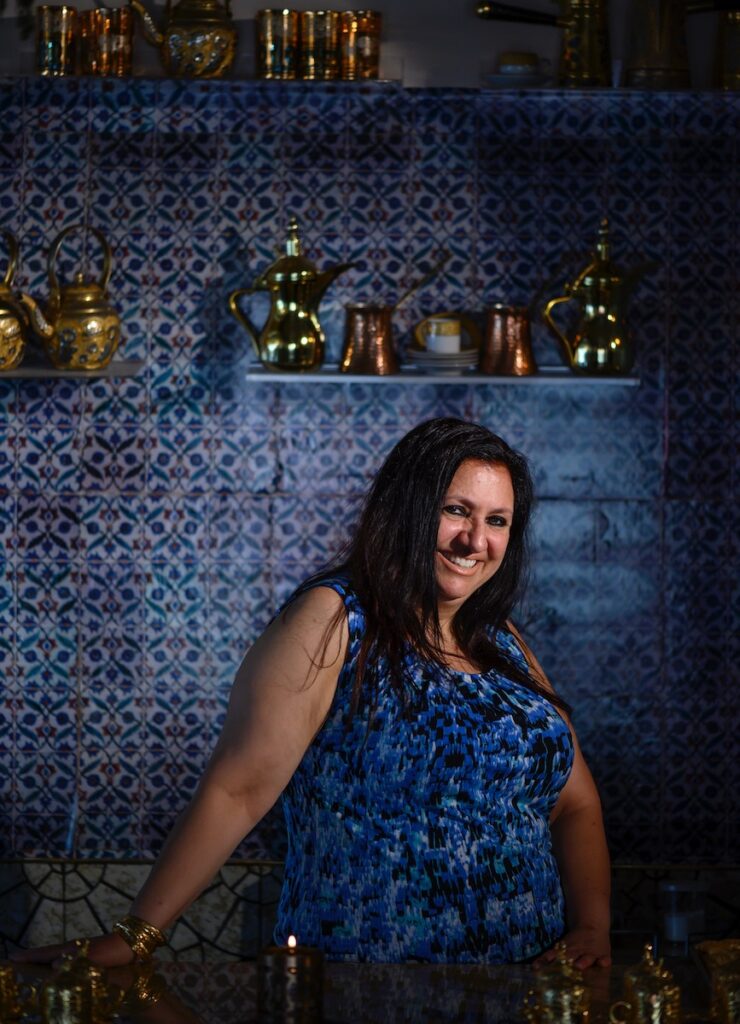
The owner of Khalil's, a smiling Middle Eastern woman in a blue shirt, poses for a camera

What they’re serving on your plate is a spiritual thing. A love thing. “This isn’t just a restaurant where we serve food,” says Dalel Khalil.  “We feed the body, yes, but we also feed the soul. We have customers today who still talk about the hospitality our parents showed them 40 years ago.”

It was 1972 when Mikhail and Agnes Khalil opened their first namesake restaurant on Semple Street in Oakland. And the whole idea of a restaurant wasn’t really a lifelong goal or ultimate plan or anything other than a simple, humble desire to feed hungry people. To talk with them. Come in! Sit down! How are you, honey? Everything good?

Mikhail had grown up in western Syria, in the Wadi al-Nasara region. Agnes’s family had immigrated to America in the early 1900s with her father taking a job in Pittsburgh to work in the steel mills. “Their marriage was kind of an arranged thing,” says Dalel. “Afterwards, my dad joined her in America and worked as a laborer, building bridges and tunnels. He didn’t wake up one day and say, ‘I want to be a chef.’ But he was very spiritual, and he gave generously, always feeding the hungry. He believed that God should be the center of everything that you do, and when someone sees you, they should be seeing the love of Christ.”  

Khalil’s is a Legacy of Hospitality

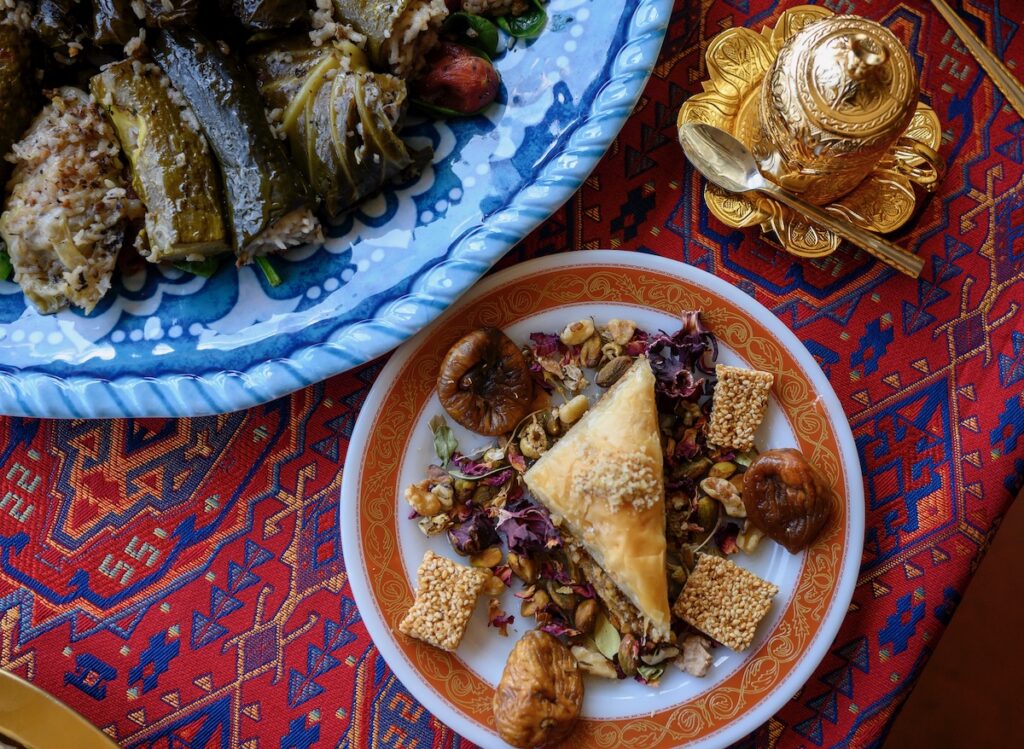
A plate of baklava and dolmas from Khalil's restaurant on a red tablecloth

All five of their children—Dalel, Leila, Michael, Zelfa, and Tami—grew up working here, with Dalel, Leila, and Michael still involved in the daily operations.

“My parent’s legacy is one of kindness, giving, loving…and they also shared a profound, beautiful love of our Syrian culture,” says Dalel. “The restaurant was just a vehicle for all of that, which is what we’re carrying on.”

“We can’t just be existing and roaming the earth,” says Leila. “We have to be giving.”

“But by the way,” Dalel laughs. “We also serve shish kebob.”

Coriander Indian Grill

2201 Murray Avenue, Squirrel Hill

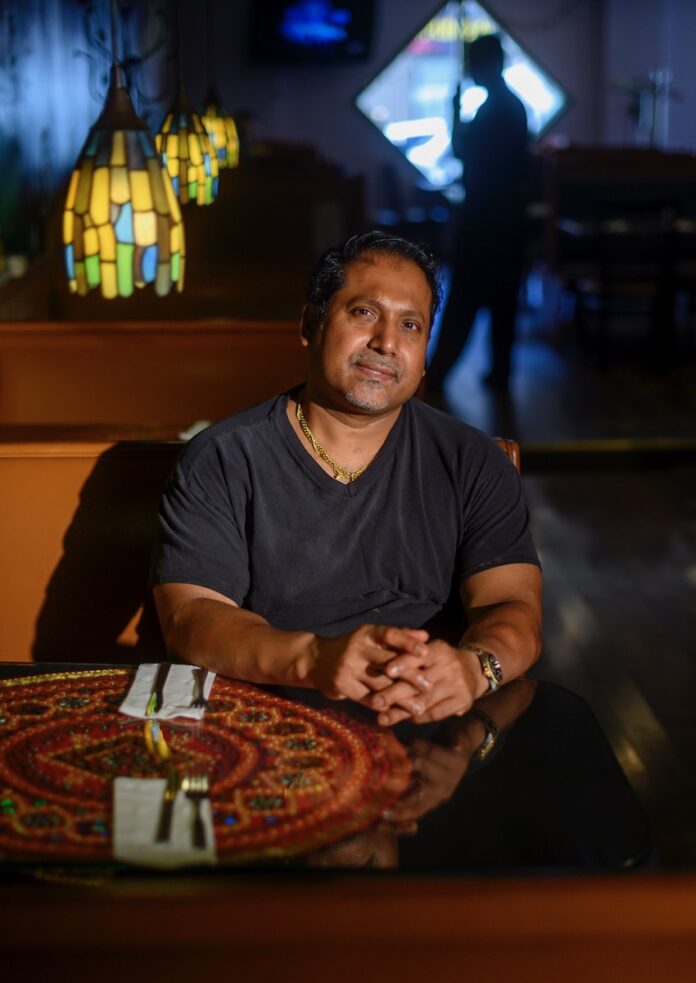
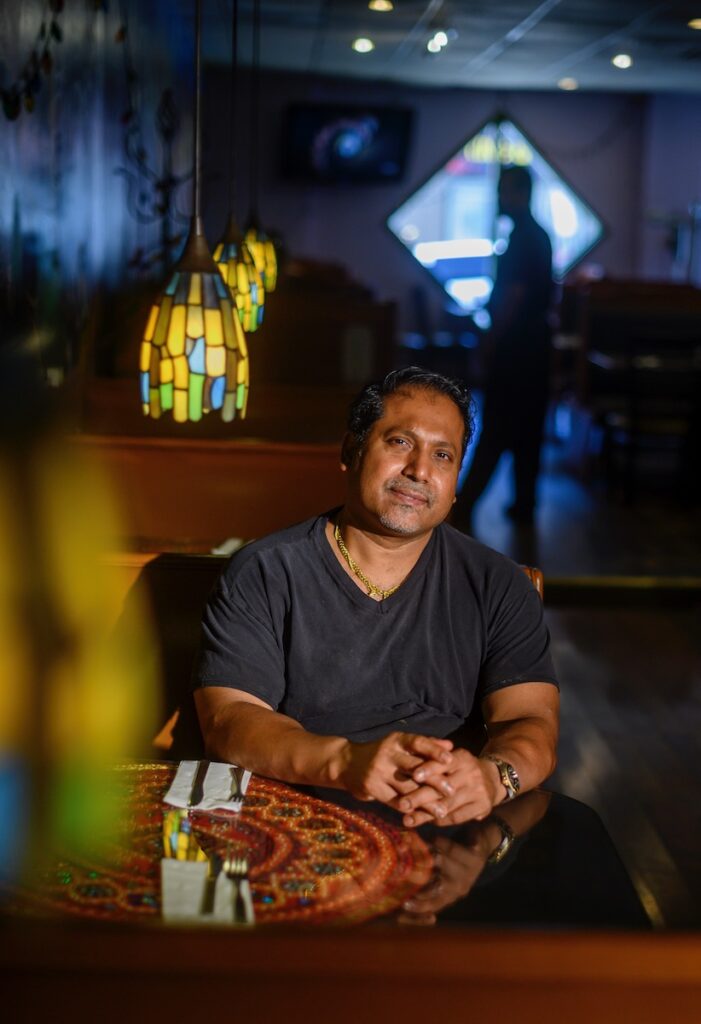
The owner of Coriander sits at a table in his restaurant, smiling

It’s not like Victor Barboza grew up wanting to be a chef. He never even liked to cook, really. He was never interested in the kitchen, if he’s being honest.

“My mom was a good cook. My sisters cooked for us. Wife was a good cook. I learned from her. But no, we never went into the kitchen. Maybe it was a man thing. Now I love it because it gave me something,” he says.

Victor was born in Mumbai, India, his parents having originated from Goa. “I was the first one to come to Pittsburgh. I came for a job in 2001. And then I opened my own place after working at an Indian restaurant in Oakland.”

Coriander Focuses on Quality

A dish of South Indian seafood fries in a pan on a grill

That place, Coriander, didn’t exactly materialize overnight. “It was tough,” he says. “But it came true. It was rough in the beginning…no one wants to give you anything. You have to put in everything from your pocket.”

Victor started learning how to cook in small increments. Learning how to make the sauces. Learning how to bake the bread. How to prep the ingredients. “Now, I love to make the food.”

Coriander’s menu is a fusion of regional Indian cuisine, each with its distinct flavor and style. Seafood and hints of coconut speak of the south, while fish, chicken, and lamb cooked in savory curries and tandoori epitomize the north.   

“I do not advertise, nothing. Our quality of food is excellent. I find the best products. I use the best products. But I buy everything fresh. The canned thing…you can always tell. Even the chickpeas, you can tell it is from the can,” he says. “But I never thought I’d be here in Pittsburgh, cooking. It’s funny how life turns out.”  

Story by Kate Benz / Photography by Jeff Swensen

Subscribe to TABLE Magazine’s print edition
Eugene Macki Brings a Sense of Place to the Mattress Factory

0
In a land-based work by Eugene Macki, a man stands in a foggy, grey desert plain

Something that makes working in the Mattress Factory special is how new things come out for artists during the installation process. Eugene Macki, a British-born mixed media artist, will be debuting Reification in a passageway-like space on the fourth floor of the Mattress Factory main building starting November 16. “That [it looked like a passageway] was my initial thought when I first visited, and the idea of movement sparked an interest. During the installation of the show, the character of the space became even more apparent to me,” Macki told TABLE. They had never been to Pittsburgh prior to their site visit in January 2024, but since then they’ve been installing in the space on and off during the year.

Eugene Macki Brings a Sense of Place to the Mattress Factory

Macki’s work draws from the mystery of archaeological sites, where we relate to the ancient past as something to discover and uncover, when in reality they’ve been where they are for thousand of years.  “This particular work for the Mattress Factory draws from the Terracotta Army of China and archaeological sites in Greece,” Macki explained. For the exhibition, they created over two hundred rubber-coated sculptures buried in a landscape of thousands of cut cardboard pieces.

“In 2023, I traveled to Athens for a research trip. Monuments were my main focus, but the physical remains of past human activities had a profound impact on me. Each site I visited triggered a particular sense of place,” they told TABLE. “While thinking about my exhibition, I wanted to capture similar emotions. To create a site where beneath the surface lies stories and secrets. […] This site is waiting to be discovered.”

What is Reification?

The word “reification,” which is the title of the installation, has a murky meaning, easily veering into the sort of art-speak so many people find fault perplexing. Technically, it means “The process of regarding or treating an abstraction as if it had concrete or material existence.” But it can have larger consequences. If you think putting a roof over a homeless person’s head means they now have a “home,” just because they have a physical place to stay, you’ve reified a complex idea and avoided engaging with the complexity of what a home really means. (A social support network, access to resources, stability, safety, and health).

Macki’s work engages with this concept by using time-based media and “land work” to play with the abstract and the concrete. Where do our minds go when we see an abstract work of art? How do we visually relate to abtract installation work, which is often falls into a kind of uncanny valley of objects? Perhaps the title Reification can refer to trying to find meaning or concreteness in the unfamiliar as you dig through cardboard pieces to find

Searching for the Unknown

I was struck by an interview in Maake Magazine where Andreana Donahue asked them “Can you walk us through your overall process? How would you describe your approach to manipulating materials? What about decision-making and editing?” A standard art writer question, filling in the context with easily digestible ideas about what artmaking is. But Macki’s response was: “If I have answers to these questions, I would not be able to create. At least create the kind of works I am trying to create.” Macki is comfortable with not-knowing as a generative state, something that maybe all artists need to become comfortable with.

Even on their website, you can find that sense of not-knowing—if you click on their “art practice” tab, it leads you to a webpage instructing you to click a box that then bounces you to a random exhibition project of Macki’s. It’s clear that they find a sense of playfulness in not trying to reify the abstract. On what they hope people take away from Reification, Macki said that “My desire is for viewers to have an experience they have never had before. I hope that they will return and their emotions will intensify and overwhelm during every visit.”

Story by Emma Riva / Photo of earlier work by Eugene Macki, courtesy of The Mattress Factory

Subscribe to TABLE Magazine’s print edition.

Don't Miss