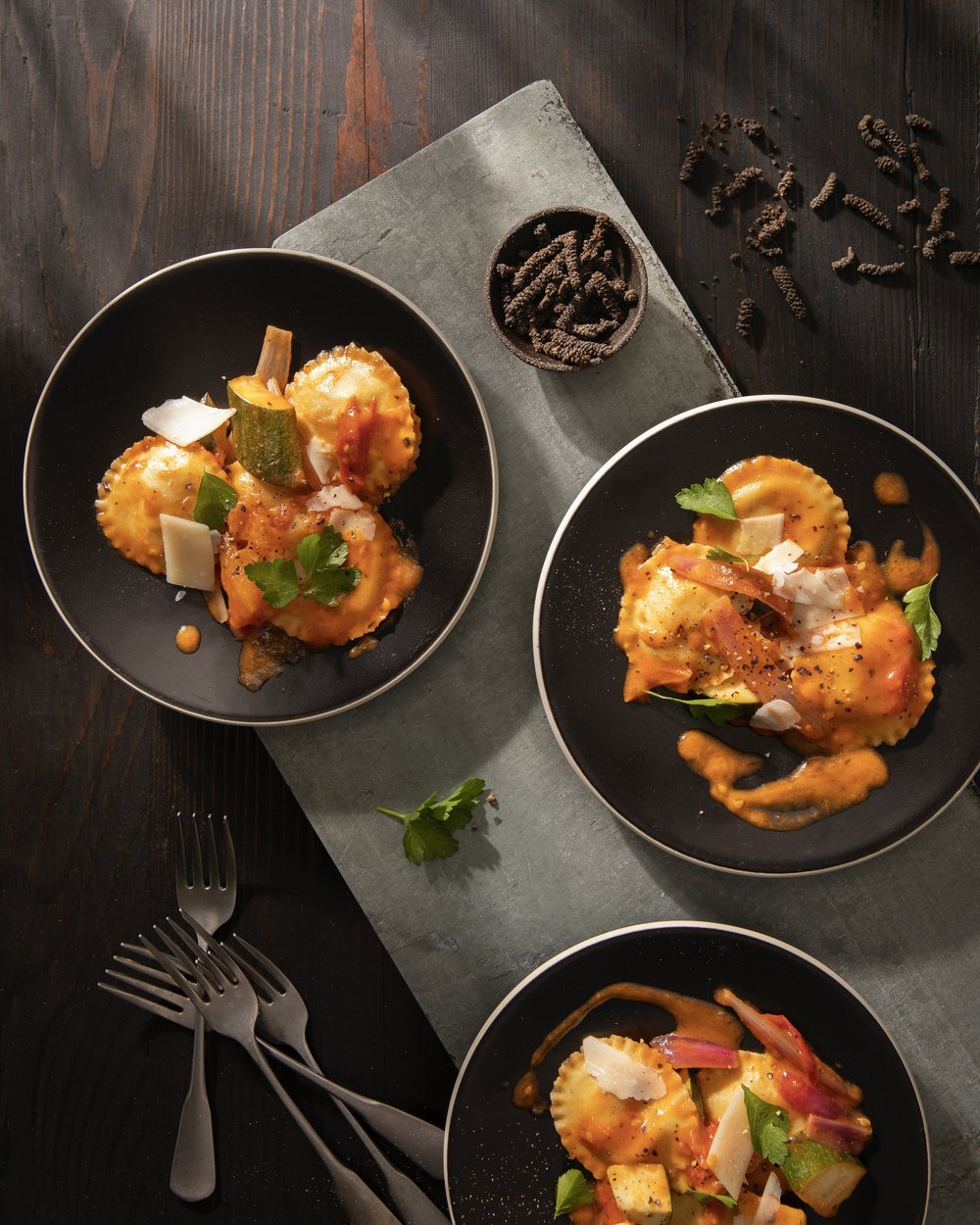
Behold, we bring you Penne all’ Arrabbiata, a “pantry dish” perfect for last-minute entertaining or a late-night craving. We’ve created four pasta dishes for TABLE readers inspired by Stanley Tucci’s television travel series Searching for Italy. We recommend that you enjoy this dish with a Rosato of Sangiovese, a pitch-perfect rosé from Toscana, or Bardolino, a delicate red that balances well with the heat of this version of the dish, which is made with chili-infused olive oil.
Cooking the Italian Way: A Mix of Old and New
As you prepare your dish, picture this: Imagine a young American arriving to start a job in Rome. He knows little Italian and has arrived completely unprepared for life outside the office. He steps into a mom-and-pop grocery shop hoping to find something edible and becomes an eyewitness to a conflagration of epic proportions.
The elderly proprietress is engaged in finger-pointing, chest-beating, top-of-the-lungs argument with a customer about whether one CAN or CANNOT eat penne all’arrabbiata at room temperature on a hot summer evening. The prim, pale rose housecoat of the lady behind the counter shakes with rage: NO! Absolutely not. It is incorrect. A sacrilege.
The customer shifts the bags of wine and bread she’s bought at the neighboring bakery and enoteca so that she can signal her total dismissal of that prudish idea: NO! That is an old idea even for you. I’ve known you for 40 years and I didn’t think you were this old. Let’s hope the salami I need to buy from you is fresher.
This provokes a laugh from the other customers, but it does not settle the argument, which continues at lower volume but not calmer emotion over the slicing, weighing, wrapping, and checking out. And into the street afterward.
The young fellow realizes he is in an entirely new place, where food is not a matter of tradition or convenience. It is religion, to pursue with fervor and precision… even if it means that you have to defend what’s right. This is why Italian food is so good. It’s about commitment to what’s truly the best way to do things.
About Penne all’ Arrabbiata
Like the attitude of the shopkeeper above, penne all’arrabbiata is a dish of righteous anger. Penne all’arrabbiata gets its name from the Italian word “arrabbiata,” which means “angry.” The dish is known for its spicy tomato sauce, typically made with garlic, tomatoes, and red chili peppers. The heat from the chili peppers is said to evoke a sense of “anger” or intensity, hence the name.
Check out our other Stanley Tucci Inspired Recipes:
In honor and shameless infatuation, we’ve created four pasta dishes for TABLE readers inspired by the Stanley Tucci television travel series Searching for Italy. This week we bring you Stanley Tucci Inspired Bucatini all’ Amatriciana. This dish is very similar to our recipe for Penne all’ Arrabbiata with the exception of one key ingredient, guanciale, heavenly cured pork cheek that adds a smokey and crispy element to each bite. We recommend an inky Chianti Classico or Rosso di Montalcino to enjoy this beautifully simple and heartwarming dish.
6 ounces of guanciale, pancetta, or bacon, cut into strips
2 tbsps olive oil
1 tsp red pepper flake
3/4 cup onion, minced
2 cloves garlic, minced
1 canned whole peeled tomatoes
1/2 cup Pecorino Romano
12 ounces of bucatini or spaghetti
Salt and pepper, to taste
Instructions
In a sauté pan over medium-low heat, add olive oil, onion, garlic, and guanciale (or pancetta or bacon). Add the pepper flake when the guanciale lightly crisps and browns. Crush the tomatoes in a separate bowl before adding them and all their juices to the pan and simmer low until the sauce reduces slightly and thickens.
Cook the dried pasta in nicely salted water, like the sea, until al dente. Add the pasta to the sauce directly from its water, adding a touch of the starchy salty water in the process to help the sauce stick to the pasta. Toss the sauce and pasta until covered evenly. Turn off the heat. Add the Pecorino Romano and gently fold it into the pasta.
if ( unit && ( ‘metric’ === unit || ‘usc’ === unit ) ) {
document.querySelector( ‘.tasty-recipes-convert-button[data-unit-type=”‘ + unit + ‘”]’ ).click();
}
Story by Gabe Gomez
Prop styling by Keith Recker Photography by Dave Bryce
Food styling by Veda Sankaran
Fabric by Found and Foraged Fibers Wine pairing by Adam Knoerzer
It all starts with a board. Wooden, metal, or stainless steel, maybe sporting ornate handles or fitted with grooves, dips, and valleys, crafted for holding sweet jellies and savory jams. Then comes the cheese: gouda, manchego, or brie, whatever you fancy. Meats fill in the open space, swirled into roses and rivers trailing around piles of nuts, grapes, and dried fruit. And, there you have it – the perfect, crowd-pleasing, present-at-every-event appetizer. A cheeseboard.
As a Greatestarticle once said, to make a fantastic cheese board is to know adulthood. But designing the perfect, paired board is not as easy as it sounds; there are textures and flavors to pair, along with the challenge of choosing cheese and meats to please even the pickiest eaters.
If you’re planning on crafting a charcuterie board this holiday season, keep reading. We chatted with a few of Pittsburgh’s cheese experts to get the lowdown on cheeseboard do’s and don’ts.
Photo courtesy of Blanket & Board.
THE DO’S
Colleen Peddycord and Tierra Thorne, the friends behind Blanket & Board, Pittsburgh’s premiere picnic service, follow a simple formula when crafting a cheeseboard. “We always include a baguette or crackers, at least three cheeses, grapes, berries, jam, pickles, and salami. We think it’s important to include one of each taste: sweet, savory, and salty,” explains Colleen.
The Blanket & Board team emphasizes it’s important to have options for everyone. Bring in a few different kinds of cheeses onto each board, thinking about texture and taste. Cover the basics with something approachable, and grab something adventurous to cater to your exploratory eaters. Mix a soft brie, a firm cheddar, a semi-soft fontina, and a crumbly bleu.
Texture comes into play with pairings, too. Stone-ground mustard, fresh and dried fruits, pretzels, jams, and jellies add a bit of depth to every board while adding flavor elements to the cheeses.
THE DON’TS
Tierra stresses the importance of cutting. It’s unappealing visually, she says, but it also makes it difficult to eat if guests have to get through a block of cheese to fill their plate. Slice every cheese, pull apart your meats, and make everything accessible.
But that’s it. Cheeseboards are for experimentation, Colleen and Tierra say. You can’t do much wrong with some good cheese and fresh fruits, so don’t overthink it.
Looking for local goods for your board? Check out these Pittsburgh purveyors:
This year has seen great shifts in education, from primary schools to higher education. Read these messages from Pittsburgh institutions to find out what the future holds.
Picking the right school isn’t easy. Every student is different and weeding through the options to find a school that will give you and your child the most rewarding educational experience can be filled with pressure.
As a parent, it’s important to know your options. From public to charter to private, different schools offer a variety of teaching styles, content, and opportunities. Add to that list Pittsburgh’s wide array of specialized magnet and charter schools designed to attract students with an interest in a specific subject, like the arts or the environment. Learn what’s available to you, and with options in mind, begin your selection process. We recommend you write down five things that are most important to you when picking a school, and use them as criteria to help score each of your candidates.
You might add to that list a handful of specific factors that are important for your child’s chances of success. What teaching style best suits your child? What level of athletic teams and facilities would help your child thrive? Does the school have an articulated program to help socialize kids and limit bullying and other negatives? How does a school help a child who is challenged, or challenge a child who is ahead of the class?
Once you’ve narrowed the field to two or three choices, an in-person visit is a must. That way you can, face-to-face, gather and confirm information on curriculum, approach to learning, discipline policies, safety, facilities, and more. Observe a class, talk to other parents, or go to a PTA meeting – they won’t kick you out! You’ll definitely emerge with a sense of the personality of a school – with how policies and practices become realities.
When you’ve made your choice, the application process is all that remains between you and your child’s journey towards learning, and most schools try to make that process as straightforward as possible. Good luck, and let the learning begin!
ENVIRONMENTAL CHARTER SCHOOL
As the world changes and becomes increasingly more complex, society will need global citizens that are equipped with skills that allow them to be flexible thinkers, creative problem solvers, and effective leaders. At ECS, students experience a multi-disciplinary, “out-the-door” learning approach rooted in real-world problems that build active, engaged, and empathetic citizens. Through the dedication of faculty and staff, student to teacher relationships are foundational in the classroom and connect families to ECS’s mission to educate each student to high academic standards using innovative curricula that will foster knowledge, love of, and respect for the environment and preserve it for future generations.
The exploration of diverse perspectives and the integration of the UN Sustainable Development Goals in ECS’s curriculum builds and supports systems thinking, social growth, and dexterity in analysis. ECS’s campuses are nestled in the East End of Pittsburgh and allows for a unique mix of urban environments with locations close to bus and bike routes and two campuses residing near Frick Park. ECS is dedicated to providing a unique academic space and a place for all students to flourish and thrive while encouraging them to take a deep dive into the examination of the built, social, and natural environments.
-Jon McCann, Founding Principal and CEO
LEARNING AND GROWING TOGETHER AT THE JCC’S EARLY CHILDHOOD DEVELOPMENT CENTER
Educators are more than teachers at the Jewish Community Center of Greater Pittsburgh’s Early Childhood Development Center (ECDC). ECDC cultivates a welcoming and inclusive environment in which our educators, together with the children, learn and grow.
ECDC is a year-round early learning center for children ages 6 weeks to 5 years old. ECDC programs are housed in dedicated, fully secured wings of the JCCs in Squirrel Hill and the South Hills. ECDC makes use of facilities in the entire JCC campus including indoor heated pools, full-size gymnasiums and outdoor playgrounds.
ECDC’s approach to early learning is inspired by the ideas and practices developed in Reggio Emilia, Italy, for the education of young children. This program is based on the principles of respect, responsibility and community through exploration and discovery in a supportive and enriching environment.
“Children are engaged in long-term investigations throughout the year,” said Liza Baron, ECDC Director. “We prioritize the social and emotional development of each child in our care.” ECDC educators make the difference. ECDC’s talented and dedicated staff is committed to ensuring each child’s happiness, safety and growth. The JCC supports its educators in many ways, providing competitive wages, fitnessmembership, health insurance, paid time off, employee discounts on tuition and classes, and professional development opportunities.
Join the ECDC family today, and start being the difference tomorrow.
For more information andto apply, go to JCCPGH.org.
PA CYBER’S POLYTECHNIC ACADEMY
PA Cyber is a public online charter school that serves students in kindergarten through twelfth grade across Pennsylvania. My colleagues and I work to ensure every student who comes to our school can succeed in achieving their goals, whatever they may be. We recognized early on that technical fields are a significant area for career growth, and we created the PA Cyber Polytechnic Academy to encompass our STEM offerings. We have made hands-on and project-based learning accessible to all our students through in-person and virtual learning opportunities, such as classes, clubs, and summer programs, where participants learn by doing. Partnerships with colleges and educational groups enable us to offer diverse and modern programs. We introduced our Polytechnic Mobile Lab last year, which brings hands-on learning to our ten offices statewide.
Oakland Catholic High School is the only all girls Catholic school in this region. The integration of a rigorous academic program within a faith-based, value-focused community provides the young women of Oakland Catholic with the challenges and support necessary to become competent, ethical, global leaders of tomorrow.An all girls’ educational environment isn’t about the absence of boys, but rather the presence and value of girls, and the importance of their development at this crucial age when they discover their gifts, talents, and aspirations. We believe that the best way to fully develop academic excellence, leadership potential, ethical decision-making, and spiritual growth in young women is to create an atmosphere that caters to their specific goals, needs, and learning styles. A member school of the National Coalition of Girls’ Schools, Oakland Catholic draws on the extensive body of research and resources available that supports the value of single-gender education at the high school level.
Located in the cultural, educational, technological, and medical hub of the city, Oakland Catholic High School is proud to call the dynamic urban landscape of the Oakland neighborhood its campus and its home. Students are within walking distance of attending lectures on Carnegie Mellon University’s campus, studying with classmates at the main branch of the Carnegie Library, or attending a chemistry lab on the University of Pittsburgh’s campus.
First Officer Peyton R. Start (’19) makes his office in the sky each day, but he will always consider CCBC his home. Start discovered that his dream of flying could be reality when he enrolled in CCBC’s High School Aviation Academy at the age of 17. He was a junior in the Peters Township School District, and itwas at that moment when he formed a lifelong network of friends and colleagues. “I keep in touch with former flight instructors, mentors, and peers. They are still a part of my day-to-day life.”
CCBC recently visited Peyton at Vee Neal Aviation Air Elite’s hangar at the Arnold Palmer Regional Airport in Latrobe.
It was immediately apparent that Start is where he belongs. Opening the passenger door to the Cessna Citation CJ3 jet that would be his work space for the coming week, Start walked through a preflight checklist. “Being a CCBC alum makes me feel like I am part of a larger legacy, and I am finally part of a team that I have been working my whole life to join.”
During his junior and senior years in high school, Peyton attended high school classes in the morning and then drove each afternoon to CCBC’s Aviation Sciences Center at the Beaver County Airport, where he completed college coursework and start logging flight hours. When he graduated from high school, the future pilot had already completed half of his Professional Pilot Associate Degree. He continued at CCBC and graduated in 2019.
Following graduation, Peyton immediately transitioned into his bachelor’s degree coursework at Southern Illinois University (SIU). Through an easy access degree completion program, the University flies SIU instructors to CCBC each Saturday to provide instruction in aviation management, allowing students to complete the next leg of their journey without ever leaving Beaver County. This opportunity permitted Start to earn his credentials, fast track his career, and be hired as a private, professional pilot at the age of 20.
Living his passion every day, the first officer now enjoys his time flying clients across the continent, never knowing where the next call will take him. When Peyton learned about the new campaign to grow the James M. Johnson School of Aviation Sciences, he smiled. “I’m excited for the new generation of pilots who will train using the best technology possible and learn receiving the best instruction available.”When asked what he shares with others about CCBC, Start replied, “They welcome everyone back. CCBC is for more than just current students. It’s always the place where our aviation family can land.
Sephardi: Cooking the History, Hélène Jawhara Piñer’s 2021 cookbook, delves deep into Jewish history to illuminate dishes that were once prepared in times fraught with anti-Semitism: food was a way to reveal and preserve Jewish identity. This recipe for Maqrūt and Neulas Encanonadas is excerpted from the book with the author’s kind permission.
Maqrūt is another type of fried honey pastry typical to Jews and Muslims from Morocco, and this recipe dates back to thirteenth-century al-Andalus. These tasty pastries flavored with honey and dates are now associated with the holidays: Muslims eat maqrūṭ when breaking the fast of Ramadan, and Sephardim of Morocco and France eat them for Rosh Hashana. This Jewish holiday corresponds to the Jewish New Year, and in celebration, Sephardim traditionally eat sweet dishes like apples dipped in honey or dates. Maqrūṭ is also eaten for Hanukkah.
Maqrūt: Fried Diamonds with Dates and Walnuts Recipe
INGREDIENTS
2 ½ cups (400 g) medium semolina
1/2 tsp salt
1/3 cup (80 g) melted butter
5 oz (150 g) dates (or date paste)
3 tbsp of orange blossom water
1/2 tsp ground cinnamon
6 tbsp neutral oil
1 tbsp walnuts, finely chopped
1/2 cup (120 ml) of water with 1 tsp orange blossom water
Neutral oil (not olive oil)
1 cup honey (340 g) (with 1 tsp orange blossom water optional)
Toasted sesame seeds to decorate
INSTRUCTIONS
Mix semolina, salt, and butter in a large bowl until the fat is absorbed.
Meanwhile, prepare the date filling: carefully chop the dates and put them in a saucepan. Add the orange blossom water, cinnamon, and neutral oil. Cook over medium heat for about 5 minutes. Add the chopped walnuts. Mix and set aside in the fridge for 2 hours.
Then, mix the ½ cup water flavored with orange blossom water with the semolina and butter with your fingertips.
Divide the dough into 4 parts, and make rolls about 1 inch (2-3 cm) in diameter and 9 inches long (20 cm).
With your index finger (or a knife), make a slit length-wise in the center of each roll without cutting through it.
Roll a little date paste and put it in the slit.
Close the edges of the dough over the date paste and seal. All the stuffing needs to be covered. Prepare all the long rolls in the same way.
Take the rolls and flatten them until they are 0.4 inches (1 cm) thick. Cut into lozenges about 1.5 inches long (2.5 cm). Take a knife and draw marks like a star.
Pour some neutral oil into a frying pan until 1.5 inches deep (3 cm). Heat over medium heat.
Fry the first side of the maqrūṭ for 2-3 minutes, then fry the other side for another 2 minutes.
Pour the honey and blossom water into a saucepan.
Once hot (not boiling), immerse the maqrūṭ carefully into the warm honey for at least 3 minutes.
Be careful when you take them out, as they will be soft.
Line a plate with baking parchment and put the fried maqrūṭ over it. Sprinkle immediately with toasted sesame seeds.
Neulas Encanonandas: Brik Pastry Rolls with Almonds And Honey Recipe
In Le Roman d’Esther, written in the fourteenth century by Crescas du Caylar, a Jewish physician from southern France, there is a mention of a banquet held by King Ahasuerus in honor of the third year of his reign. Crescas mentions a dish called neulas encanonadas: a pastry confection in the shape of cigars. Another reference to the dish comes from the Spanish city of Almazan, where conversos were reported to the Inquisition tribunal for preparing rollillos (rolls) during Semana Santa, a feast whose dates coincide with Pessah.
INGREDIENTS
2 cups (230 g) ground almonds
1/2 cup (110 g) sugar
1/8 tsp bitter almond essence
1/4 tsp orange blossom water
1 egg
15 brick pastry sheets (round)
1 cup (340 g) honey
1/4to 1/2 cup (35 g to 70 g) sesame seeds (preferably toasted)
neutral oil (for frying)
INSTRUCTIONS
Combine the ground almonds, sugar, bitter almond essence, orange blossom water, and egg in a bowl. Chill for 15 minutes.
Take the brick pastry sheets and cut them in half down the middle, using a knife. Place one half so that the round side is to the left.
Heat the oil in a saucepan over medium heat.
Pour the honey into another saucepan and heat it over low heat (it must never boil).
Prepare a tray for the rolls and a small plate with sesame seeds.
Take the almond mix out of the refrigerator. Take the equivalent of 1 tbsp of dough and roll it into a ball. Then, shape it into a sausage.
Place it a finger’s width away from the edge and start rolling the pastry sheet tightly.
Then, fold the two edges of the sheet inward. Continue rolling to the end, keeping the edges in. Do the same for all pastry sheet halves until you run out of the almond mix.
Fry the rolls in the oil for about 3 minutes, turning them.
Take each out of the oil and soak it in the hot honey for 3 minutes. Take out the honey and coat with the sesame seeds. Cover all sides. Place the rolls on the tray and serve.
Eggplants and Sephardim have become a true culinary love story. There are so many eggplant dishes consumed by Sephardic Jews from Spain, Portugal, Turkey, Morocco, and more. Nowadays, eggplant dishes are traditionally prepared to break the fast in Jewish communities.
Also called sfenğ, this fried pastry is common among Jews and Muslims especially in Morocco and Israel. It is also calledesponja (“sponge”) in Spanish, a word derived from the Arabic term sjenğ of the same meaning. The recipe dates back to the thirteenth century, when this and similar dishes were popular in al-Andalus.
Piñer’s Tortitas de Acelga recipe combines some of the main ingredients of Sephardic cuisine from Spain: Swiss chard, eggs, garlic, and olive oil. This perfect Passover dish uses chickpea flour.
Sephardi: Cooking the History, Hélène Jawhara Piñer’s 2021 cookbook, delves deep into Jewish history to illuminate dishes that were once prepared in times fraught with anti-Semitism: food was a way to reveal and preserve Jewish identity. This recipe for Tortitas de Acelga is excerpted from the book with the author’s kind permission. We served the tortitas with sour cream, a fresh endive salad (not shown here), and melon spiced with salt and Aleppo pepper.
Piñer’s Tortitas de Acelga recipe combines some of the main ingredients of Sephardic cuisine from Spain: Swiss chard, eggs, garlic, and olive oil. It is made with chickpea flour, a perfect dish for Passover.
Tortitas de Acela: Chickpea Flour Croquettes with Swiss Chard Recipe
INGREDIENTS
1 bunch of Swiss chard
1 garlic clove, crushed
1/2 tsp baking powder
1 egg
1 saffron strand (or ⅛ tsp yellow food coloring)
1/2 tsp salt
2 ¾ cups (250 g) chickpea flour
1 ¼ cup (250 ml) water
Neutral oil for frying
INSTRUCTIONS
Wash the chard and separate the green leaves only (the stalks can be used for another dish). Boil some salted water and cook them for 4 minutes. Drain and rinse them with cold water to keep them green, and squeeze them to remove all the water.
Mix the crushed garlic, baking powder, egg, saffron, and salt in a bowl with a spoon.
Finely cut the chard with a knife. Add it to the bowl, followed by the chickpea flour.
Finally, pour in the water little by little. The preparation must remain thick.
Heat the oil over medium heat in a frying pan.
Take a spoonful of the mixture, and with two spoons, form small croquettes. Fry for 2 minutes on each side. Put them on a paper towel before serving.
Eggplants and Sephardim have become a true culinary love story. There are so many eggplant dishes consumed by Sephardic Jews from Spain, Portugal, Turkey, Morocco, and more. Nowadays, eggplant dishes are traditionally prepared to break the fast in Jewish communities.
Also called sfenğ, this fried pastry is common among Jews and Muslims especially in Morocco and Israel. It is also calledesponja (“sponge”) in Spanish, a word derived from the Arabic term sjenğ of the same meaning. The recipe dates back to the thirteenth century, when this and similar dishes were popular in al-Andalus.
Maqrūt is another type of fried honey pastry typical to Jews and Muslims from Morocco, and this recipe dates back to thirteenth-century al-Andalus. These tasty pastries flavored with honey and dates are now associated with the holidays: Muslims eat maqrūṭ when breaking the fast of Ramadan, and Sephardim of Morocco and France eat them for Rosh Hashana.
Sephardi: Cooking the History, Hélène Jawhara Piñer’s 2021 cookbook, delves deep into Jewish history to illuminate dishes that were once prepared in times fraught with anti-Semitism: food was a way to reveal and preserve Jewish identity. This recipe for Sweet Fried Eggplants is excerpted from the book with the author’s kind permission.
Eggplants and Sephardim have become a true culinary love story. There are so many eggplant dishes consumed by Sephardic Jews from Spain, Portugal, Turkey, Morocco, and more, that a single book would not be enough to present. One interesting story about this is from Juan de León (aka Salomón Machorro): In 1646, while imprisoned in Mexico, he would ask the jailers for “two honeyed dishes” to break the fast, which he observed with his fellow prisoner Francisco Botello on Mondays, Wednesdays, and Fridays. This would have been an eggplant-based dish very similar to the one below.
Nowadays, eggplant dishes are traditionally prepared to break the fast in Jewish communities: here, I propose a sweet dish I particularly like and still eat in Andalusia.
Sweet Fried Eggplants Recipe
INGREDIENTS
2 medium eggplants
2 tsp salt
1/2 cup (100 g) olive oil for frying
1 tsp salt
1/8 cup (20 g) honey
INSTRUCTIONS
Wash the eggplants. Cut them into slices a finger wide. Sprinkle them with salt and let them drain for 20 minutes.
Pour the olive oil into a frying pan and heat over medium-high heat.
Coat the eggplants in the flour and tap them on the edge of a plate (not with your fingers) to remove excess. Place the eggplant slices in the pan without overlapping them. Fry for 5 minutes over medium heat without moving them so that they brown.
Gently turn them over and cook for 5 minutes on the other side.
Place the fried slices on a large plate. Add a little salt if necessary, and pour a drizzle of honey over it.
Also called sfenğ, this fried pastry is common among Jews and Muslims especially in Morocco and Israel. It is also calledesponja (“sponge”) in Spanish, a word derived from the Arabic term sjenğ of the same meaning. The recipe dates back to the thirteenth century, when this and similar dishes were popular in al-Andalus.
Piñer’s Tortitas de Acelga recipe combines some of the main ingredients of Sephardic cuisine from Spain: Swiss chard, eggs, garlic, and olive oil. This perfect Passover dish uses chickpea flour.
Maqrūt is another type of fried honey pastry typical to Jews and Muslims from Morocco, and this recipe dates back to thirteenth-century al-Andalus. These tasty pastries flavored with honey and dates are now associated with the holidays: Muslims eat maqrūṭ when breaking the fast of Ramadan, and Sephardim of Morocco and France eat them for Rosh Hashana.
The Pisarcik Flower Farm, an early bloomer in a cresting wave of family-run flower farms, brings local blossoms and plants to homes, gardens, and special events.
Roses, daffodils, daisies. Poppies, marigolds, buttercups. From Shakespeare and Wordsworth to Kurt Cobain and Katy Perry, poets and songsters have chronicled the role of flowers in the circle of life. Whether simple wildflowers in a Mason jar, cascading blossoms in a bridal bouquet, or a basket of blooms to cheer a friend, flowers speak.
Some people enjoy floral design; others don’t have the time or talent. Either way, Pisarcik Flower Farm in Valencia, PA can help. Founded in 1990 by Elaine and Tom Pisarcik, the twenty-acre working farm grows and sells more than 100 varieties of specialty flowers. Buy the flowers and arrange them yourself or they’ll happily do it for you.
Daliahs, zinnias and other blooms at Pisarcik Flower Farm.
Elaine, who grew up on a farm just down the road, still helps manage Pisarcik in partnership with her children, Mary Winget, Elizabeth Robinson, and David.
“When [my parents] bought the farm, they decided to start with flowers because flowers require less acreage,” says Mary, the eldest of seven. “They had four kids then, and I think [Mom] was looking for a way to work from home.” Like Elaine, Mary now brings her children, Ella, 4, and Griffin, 1 ½, to work. Her sister, Becky, is shop manager, and other siblings and family members pitch in.
Statice and echinacea in full flower at Pisarcik Flower Farm.
The family is proud of the farm’s longevity. “Flower farms are trendy now,” Mary says, “but we were at the start of the American floral revolution, where people decided to grow and buy locally instead of importing from Europe.” Pisarcik Flower Farm encourages not only shopping locally but shopping seasonally. Return visitors often find new flowers in the mix. “Every year we try something new, and if it works out, we add it to the next season’s offerings,” Mary says.
In spring and summer, the greenhouses and floral studio offer blooms such as tulips, anemones, ranunculus and peonies. In the fall, you’ll find sunflowers, zinnias, dahlias, mums, and other favorites. Take home an armful of cut flowers or select one of their whimsical garden-style bouquets.
“We were at the start of the American floral revolution, where people decided to grow and buy locally instead of importing from abroad.” The Pisarcki family, Pisarcik Flower Farm.
Enjoy growing your own flowers? Bulbs or flats of annuals as well as hanging baskets and house plants are available for purchase. Planning a small destination celebration? Order an “Elopement Package”—the flowers will be a surprise—to take with you. Want to design centerpieces or learn how to press flowers? Register for a seasonal workshop. New this past spring was goat yoga, which paired devotees with the farm’s new “kids,” who weren’t big enough yet to tame the grass.
One thing you can’t do is pick your own flowers. That’s because workers are in the fields harvesting flowers every day, April through October. It’s a demanding schedule, as they stock the shop, prepare for farmers’ markets (Saturdays in Sewickley and Ligonier, Thursdays in Pittsburgh’s Market Square), and design for weddings, where they provide everything from bouquets and boutonnieres to centerpieces and cake toppers.
In November, preparation begins for the annual Holiday Open House the weekend after Thanksgiving, where shoppers stock up on everything evergreen. From January to March, they prep, plant, and finish construction projects. Then in April sales begin again.
Good thing the Pisarcik family loves their work, because there is little downtime in this flower farm’s circle of life.
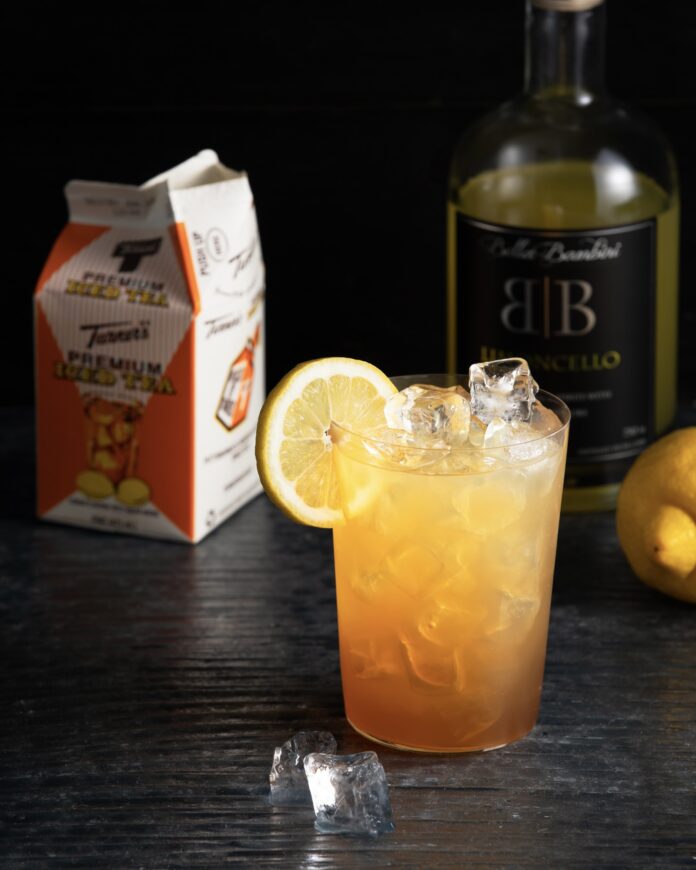
When the days seem gloomy, and your mood follows suit, it’s perhaps time to indulge in a pleasurable, mood-lifting new cocktail. We’re thinking something classy, something warm, something that reminds us of simpler times and keeps us satisfied long after our meals over. Enter Banana Walnut Old Fashioned.
Lucky for us, Chef Jessica Lewis knows exactly what it is we’re craving: festive gatherings, clinking glasses with friends, and something sweet to remind us of home. The magic touch? A signature piece of her deliciously moist in-house banana bread.
Why is This Cocktail Called an “Old-Fashioned?”
The “old-fashioned” became a specific drink because it represents a traditional way of making drinks, harking back to the early 19th century. The term emerged in the late 1800s when bartenders would make cocktails in a straightforward manner, using a spirit, sugar, bitters, and water. When newer, more elaborate cocktails became popular, patrons began requesting their drinks “the old-fashioned way.” This request eventually gave rise to the name we know today. It reflects a return to simpler, classic flavors and methods.
Recipe by Chef Jessica Lewis Photography by Brittany Spinelli
You can feel the season shift, ever so slowly, from full summer into the crispness of fall, arguably Pittsburgh’s finest season. Snuggle into it with a few wardrobe updates that ward off the chill and bring out the best in you!
All looks included here are brought to you by our local boutiques. Support them and the life they bring to our region’s Main Streets.
They need us: If we want those walks up and down our streets to be satisfying, we need to invest in them with our purchases and our support!
LARRIMOR’S
It’s a pleasure to button yourself into this soft, great-looking Canali cashmere peacoat. The turtleneck underneath, also by Canali, stands on its own in both casual and dressy occasions.larrimors.com
KRISTI BOUTIQUE
Clare V. thrives as a crowd favorite at Kristi Boutique thanks to its functional yet stylish, day-ready yet night-worthy pieces. This fall, try a leather Mirabel crossbody bag with quirky coral resin shortie strap. kristiboutique.com
HENNE JEWELERS
Win every race with this collection of equestrian-themed jewelry. Both the sterling silver and diamond necklace and the 36-Inch braided brown leather tassel and Tahitian pearl dangler are stunners, as are the leather and sterling bracelets. The bracelet with the sterling buckle doubles as a choker. hennejewelers.com
CARABELLA
Go a little wild with Lisa Todd’s animal print crewneck, made mod with a burst of neon at zipper, wrist, and hem. Pair with leather, suede, or denim. carabellaoakmont.com
LARRIMOR’S
TBe prepared! When the chill comes, this Canali one-button shawl collar cable knit sweater will distinguish you whether you wear it with jeans and a t-shirt, or, as shown, with shirt, tie, and gray stretch flannel pants.larrimors.com
RUE BOUTIQUE
The Frank + Eileen collection exudes casual, comfortable, livable style. This cotton voile garment can be worn open as a duster over pants and a t short, or buttoned up and flowing as a dress. Chosen from the line by Rue Boutique for the Fall 2022 season, this dress will remain in your wardrobe for a very long time. rueboutique.com
ONE BRILLIANT
In this look, the “more is more” opulence of Joseph Ribkoff is pared down to beautiful lines emphasized with a touch of shine. onebrilliant.com
MADELEINE GEORGE
The curving stitch lines of this effortlessly chic Beruka leather jacket by the Canadian leather masters at Lamarque make it uniquely stylish. madeleine-george.com
ROBERT HALLET GOLDSMITH
Making jewelry in Oakmont since 1980, Robert and Kyle Hallett know how to forge beautiful jewelry from start to finish. The pendant shown here is ample evidence, with its artisanal gleam enhanced by three colors of gemstone. roberthallet.com
OTTO FINN
At left, cast-off pieces of vintage kantha textiles make these Junko pants into responsible one-of-a-kind clothing. Their generously cut leg and drop-crotch give the wearer pure freedom of movement, and they’re named after barrier-breaking female mountain climber Junko Tabei. At right, Nikki overalls are sturdy enough for workwear and comfortable enough to relax in. All locally made right here in Pittsburgh. (Photography by Tara Bennett) ottofinn.com