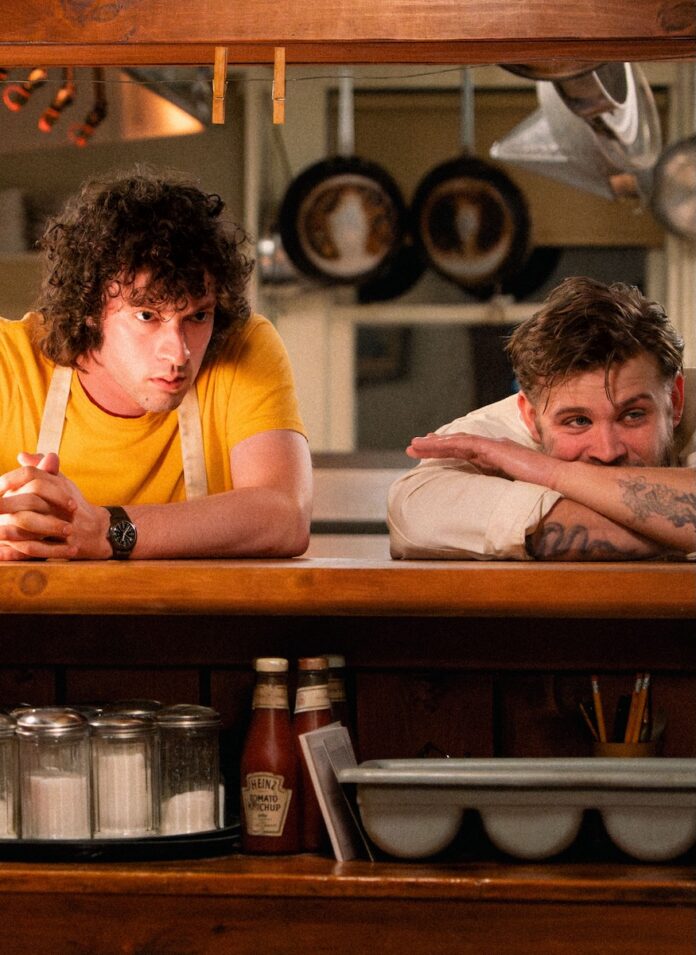
Long before the globetrotting television series and rapturously received book tours, chef and writer Anthony Bourdain cut his teeth working in kitchens — often amid considerable chaos. These experiences formed the basis for his bestselling book, Kitchen Confidential; now, those vivid scenes have been dramatized (and slightly fictionalized) in a narrative biopic that feels like a superhero’s origin story.
New Movie Tony Depicts an Idyllic, If Somewhat Clichéd, Summer for Young Anthony Bourdain
We meet Anthony Bourdain (Dominic Sessa) — Tony, he insists — as he’s angling for a prestigious writing fellowship. He’s a freshman at Vassar who insists on introducing himself as a writer, despite the fact that he never seems to write much of anything. Assured of his impending ascension to literary glory, he flirts with a pretty classmate (Emilia Jones) and bristles at his condescending parents.
When he learns that he wasn’t selected for the fellowship, he spontaneously decamps for Cape Cod, where his would-be paramour is spending her summer. Finding her attached to a studly pizza maker, he gets drunk and causes a scene at a hole-in-the-wall seafood joint, only to be taken in by the restaurant’s wizened chef (Antonio Banderas). Reluctantly, the chef gives Bourdain a job washing dishes.
Many of the incidents depicted in Tony come from the pages of Kitchen Confidential, though some are borrowed from other stretches of Bourdain’s life — and others are pure fiction. The story is the film’s greatest weakness; it reduces its subject’s life to a juvenile running-after-the-girl plot, a disservice to the messier realities of life Bourdain was all too happy to depict truthfully. Even the role of drugs in Tony is presented as a side note, if an ominous one.
Fine Performances and Strong Atmosphere Elevate a Bland Dish
Sessa, who has clearly studied Bourdain’s mannerisms, finds a quiet and confused earnestness in the character. Banderas, playing a largely invented remix of one of Bourdain’s actual mentors, gives the film’s best performance.
Disappointingly, Tony has very little to say; for a movie about a writer, there isn’t much meaning to be gleaned from the words on the page. There’s some accidental meaning in the quiet moments, however. As Bourdain dries out on windswept beaches and studies the maneuvers of his mentor, there is real beauty to be found. Tony may not have settled on a point, but it almost stumbles into something undefinable when it takes a moment to breathe.
We’re Still Doing Insidious, and More Movies to Watch This Weekend
Improbably, the horror series Insidious soldiers on, with a sixth installment out this weekend. Insidious: Out of the Further(out of ideas would be more apt) repeats plot lines and jump scares from the previous 15 years of the franchise, introducing a new protagonist (Amelia Eve) plagued by extra-dimensional demons and struggling to protect her precocious daughter. Series regular Lin Shaye returns, despite the fact that her character perished five movies ago, but her earnestness can’t add much to a fundamentally soporific story. Fortunately for us, the horror genre has long since moved on from this brand of melodramatic nonsense. Don’t get your spooky season off on the wrong foot: skip Insidious.
Meanwhile, Jason Statham has to hurt people on a boat. That’s either all you’ll need to know to buy a ticket … or all you’ll need to know to go back to blissful ignorance of Mutiny, a new action flick from director Jean-François Richet. There’s some sort of revenge plot (isn’t there always?), but the important note is that Richet previously directed the surprisingly enjoyable throwback shoot-’em-up Plane, which may bode well enough for Mutiny. (Although it really should’ve been called Boat.)
Go See a Comedy and Releases You May Have Missed
A supremely funny quartet stars in Spa Weekend: Anna Faris (who really did quite well in the understandably underseen Scary Movie reboot), Isla Fisher, Leslie Mann and Michelle Buteau. While those names and a paper-thin premise — hijinks ensure when four friends go off on, you guessed it, a spa retreat — might not get you to run to the cinema, it’ll probably be an enjoyable streaming pick in a few months. Jon Lucas and Scott Moore, who wrote and directed the Bad Momsfilms, are at the helm.
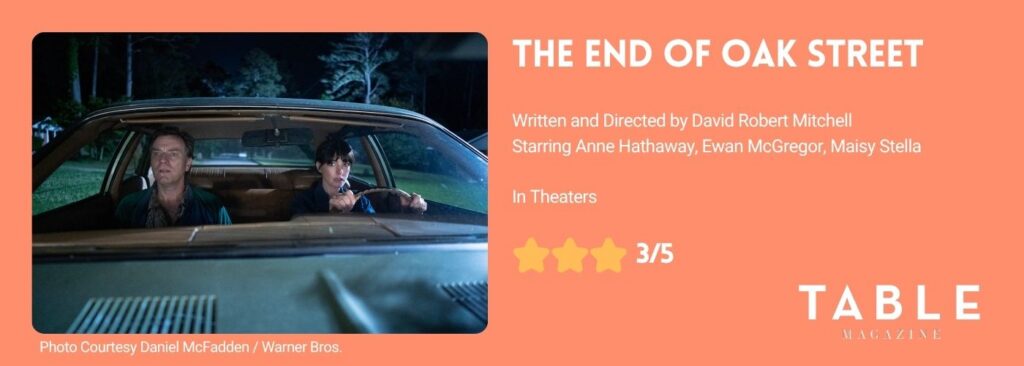
Will this be the weekend that Spider-Man: Brand New Dayfinally vacates the top spot at the box office? Maybe, depending on how many people are interested in a sixth Insidious movie. (Tony will be more of a boutique hit.) If you’re among the few remaining people not to have accompanied Peter Parker on his latest adventure, here’s our review. Positive word-of-mouth should keep The End of Oak Street, which we reviewed last week, in cinemas for a while; it’s a bit more shocking than you’d expect, but it’s a good time. And don’t forget, even if Spidey is the champ, it’s still the year of Odysseus (or at least Anne Hathaway).
Sean Collier is the editor-in-chief of Shady Ave and the arts and culture editor of TABLE Magazine. Before joining the TABLE Media team, he spent nearly 15 years as a writer, editor and columnist at Pittsburgh Magazine. As the in-house film critic for the top-rated WDVE Morning Show since 2009, he’s been Pittsburgh’s most widely heard voice on movies for nearly two decades. A Pittsburgh native, Sean has since 2020 appeared weekly on KDKA-TV’s popular Pittsburgh Today Livetalk show. He’s the co-founder of Vigilance Theater Group and an active stand-up comedian and event host. He can be found on Instagram and Twitter at @seancollierpgh.
Story by Sean Collier Photos Courtesy of Seacia Pavao / A24
This month, South Park Theatre presents the farce Boeing Boeingat its intimate and inviting South Hills theater. The performance is delightful; the experience of visiting the theater is even better.
Flying the Friendly Skies to the Swinging Sixties in South Park Theatre’s Production of Boeing Boeing
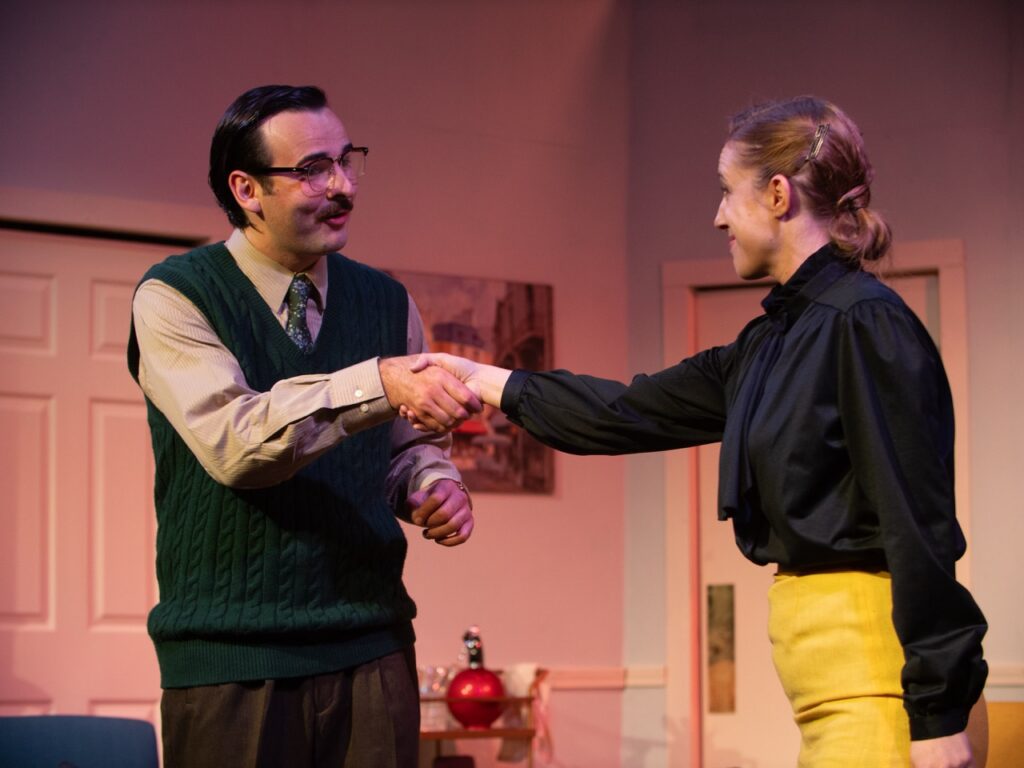
Boeing Boeing, a 1960 comedy originally by French playwright Marc Camoletti, has been adapted into dozens of languages and performed tens of thousands of times, including runs and revivals on both Broadway and the West End and film versions in English, Hindi, Telugu and more. It’s a modern — or at least mid-century modern — update on the British farces from earlier in the 20th century; think romantic schemes, people in the wrong bedrooms and side characters grabbing glasses of whiskey for comfort.
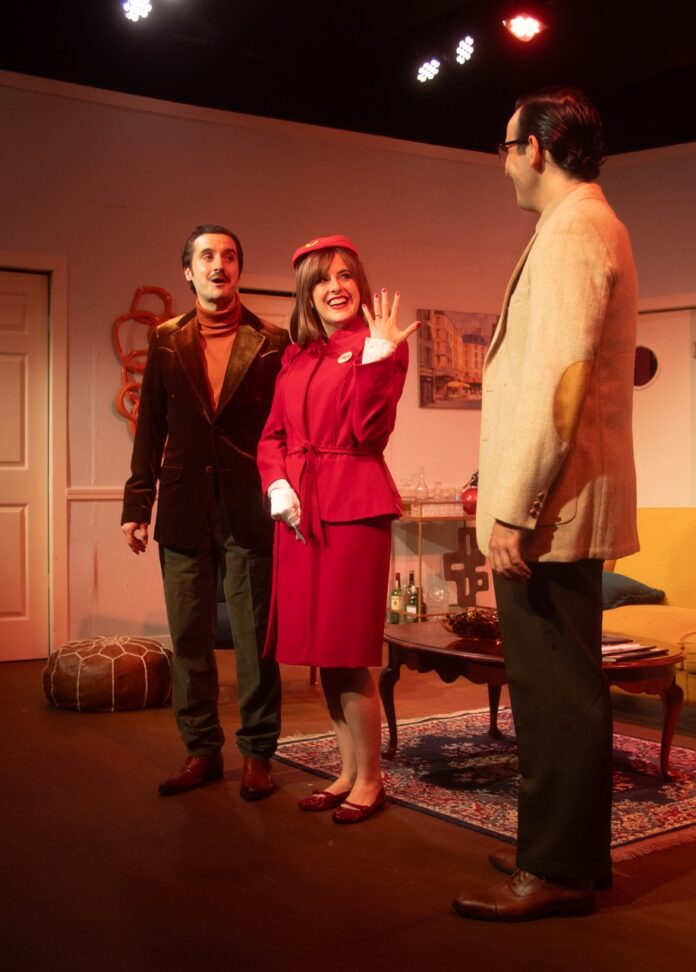
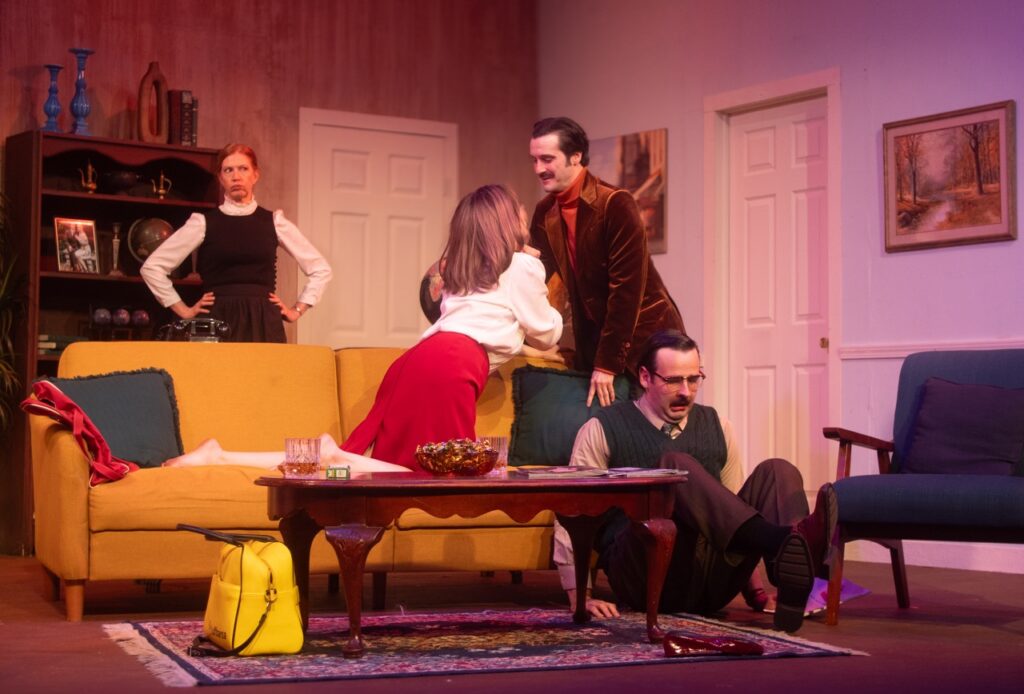
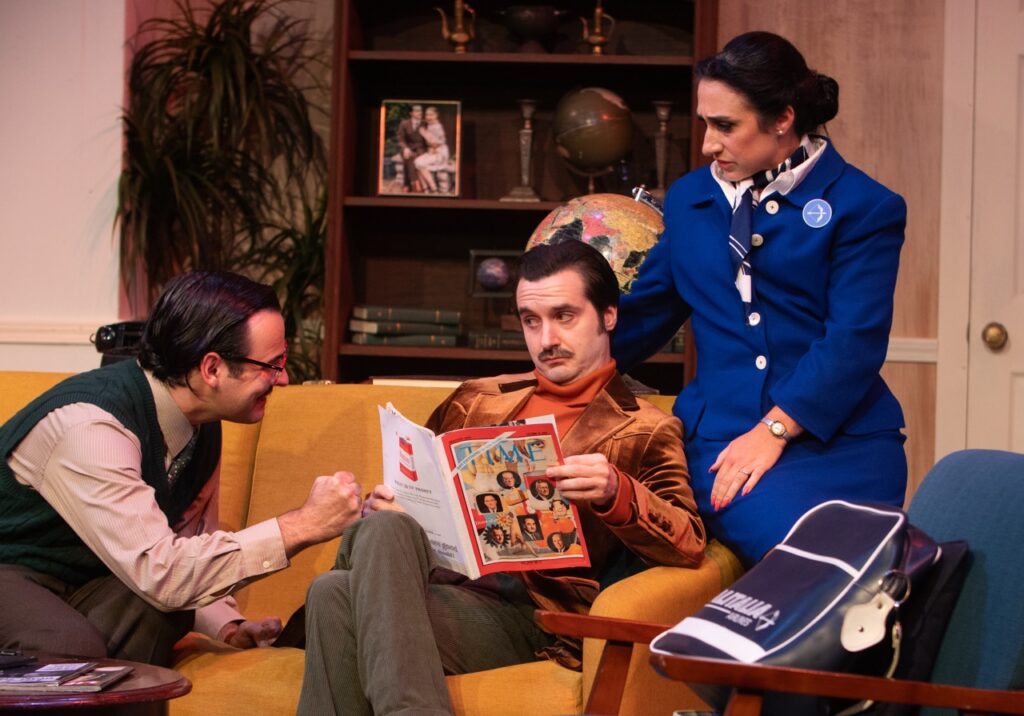
In Boeing Boeing, though, all the bedrooms are correct … depending on what day of the week it is. Bernard (Johnny Terreri) is an American playboy with a posh Parisian apartment and a meticulously organized love life. He’s engaged to three flight attendants — Gretchen (the uproarious Jess Uhler), Gabriella (the commanding Amanda Weber) and Gloria (the unflappable Carina Iannarelli) — and manages to keep them in blissful ignorance of one another due to the differing schedules of their respective airlines.
When an old school chum (Brent Feitl, who exhibits impressive vocal acrobatics) shows up, Bernard is eager to show off his practiced polygamy (with the considerable aid of his righteously exasperated maid, played by Stacey Rosleck). Unfortunately, Gloria’s flight is cancelled — and both Gretchen and Gabriella are upgraded to faster planes with dramatically changed routes. Thus begins a histrionic and charming series of near misses and absurd developments, complete with a deeply unexpected conclusion.
South Park Theatre Enhances the Charm and Whimsy
Director Jeanie Cygrymus keeps Boeing Boeing fresh and brisk, aided by a fully committed cast; the trio of fiancées bring considerable energy and power to the proceedings. It’s a consistently engaging and often hilarious production — the exact sort of light and lively entertainment that makes for a rejuvenating night at the theater.
The performance is aided considerably by South Park Theatre. Loyal audiences have, of course, known about the organization’s charms for decades; if you’re visiting for the first time, though, it’s like discovering a magical secret. The theater sits in the heart of sprawling South Park — the county park itself — at the well-traveled intersection of Brownsville Road and Corrigan Drive. Yet you’d be forgiven for not having noticed it; it seems to grow out of the landscape itself, a humble and natural structure that houses a surprising, cozy performance space.
You’ll arrive and walk through the theater’s beautifully maintained garden, mingle with a happy (and packed) crowd then spend the next few hours laughing. When the show ends, you’ll be surrounded by a gorgeous county park. It’d be an idyllic late summer evening no matter what was on the stage; the fine performance is a very welcome bonus.
Know Before You Go
Several performances of Boeing Boeing have already sold out; grab your tickets now. They’re available online via South Park Theatre’s website. Showtimes are 7:30 p.m. on Thursdays, Fridays and Saturdays and 2 p.m. on Sundays.
Parking is available on-site, but is somewhat spread out; arrive early for a nearby spot. Showing up well in advance of showtime is a good idea anyway; you can grab a soft drink or glass of house wine from the small concession stand and linger in the garden for a bit before the show begins.
The show runs about 2 hours and 15 minutes total, including one 15-minute intermission.
Keep in mind that speed limits in Allegheny County parks are strictly enforced — and almost always 25 miles per hour. Don’t sully your evening with a speeding ticket.
While You’re in the South Hills
Looking for a pint or a plate before the show? Spoonwood Brewing Co. is just about a 10-minute drive from the theater. Local favorite Chinese joint Rice Inn isn’t far, either. If you don’t mind a bit of a longer drive between your meal and your seat, it’s about 20 minutes to the heart of Mt. Lebanon; try Iovino’s Neighborhood Brasserie or F&F Pizzeria.
If you’d like a post-show drink — and you’re headed North — stop at the Saloon of Mt. Lebanon, a longtime community staple that’s open until at least 12:30 a.m. every night of the week.
Looking for more to do around Pittsburgh? Check out our guide for endless things to do around the city.
About the Author
Sean Collier is the editor-in-chief of Shady Ave and the arts and culture editor of TABLE Magazine. Before joining the TABLE Media team, he spent nearly 15 years as a writer, editor and columnist at Pittsburgh Magazine. As the in-house film critic for the top-rated WDVE Morning Show since 2009, he’s been Pittsburgh’s most widely heard voice on movies for nearly two decades. A Pittsburgh native, Sean has since 2020 appeared weekly on KDKA-TV’s popular Pittsburgh Today Livetalk show. He’s the co-founder of Vigilance Theater Group and an active stand-up comedian and event host. He can be found on Instagram and Twitter at @seancollierpgh.
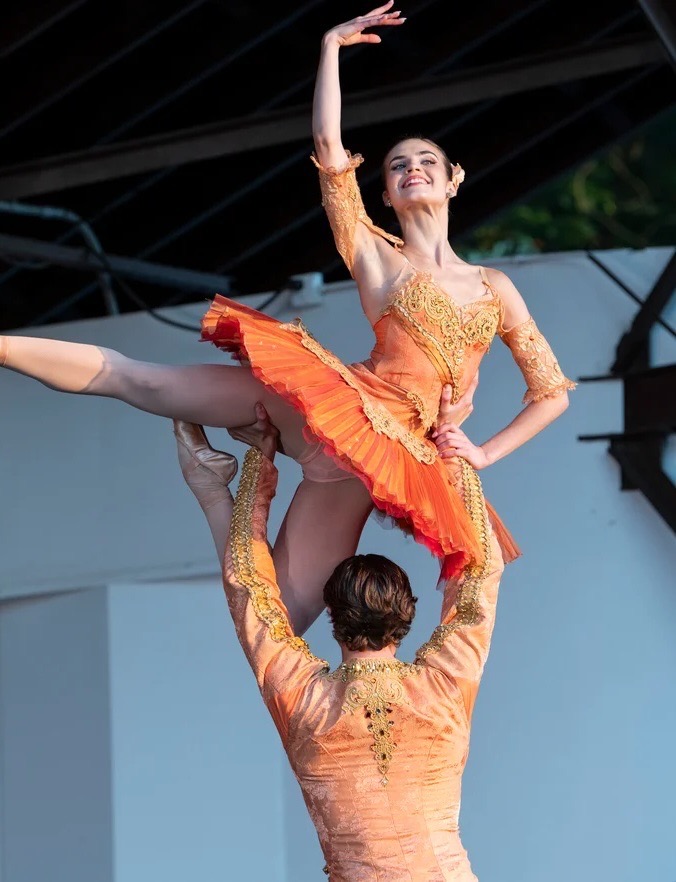
Pittsburgh Ballet Theatre’s radically reimagined Nutcracker won’t debut until 2027, but fans can catch an exclusive sneak peek at one of its most demanding dances August 23 at Hartwood Acres. At the Pittsburgh Ballet Theatre’s alfresco Ballet Under the Stars performance Sunday evening, the Sugar Plum Fairy and the Nutcracker Prince will take on a completely reworked Grand Pas de Deux, now a fast-moving duet with acrobatic lifts and intricate steps that keep both dancers in constant motion.
Pittsburgh Ballet Theatre’s Ballet Under the Stars Gives a First Look at the New Nutcracker and More
“Both musically and choreographically, it’s the most difficult dance in the new Nutcracker,” says choreographer Trey McIntyre, who collaborated with PBT artistic director Adam W. McKinney on reconceptualizing the ballet. “It requires the company’s strongest dancers.”
In May, when PBT revealed the plot of its overhauled Nutcracker, the Pittsburgh-coded details immediately stood out. While still set to Tchaikovsky’s score, PBT’s revamp features dancing pierogies, baseball players, geodes from the Carnegie Museum of Natural History, and a steelworker who arrives on a girder. Instead of a sleigh, the Duquesne Incline will transport characters to the Cloud Kingdom. True to Pittsburgh’s turn-of-the-century industrial roots, Marie’s father is a Westinghouse engineer and her mother is a physician in the Hill District.
But for McKinney, the challenge was far bigger than just giving the ballet a Pittsburgh-based identity. It was how to make sense of a ballet that he admits is “very confusing.”
From the moment the Nutcracker premiered in Russia in 1892, the surreal details and murky plot have left plenty of questions dangling: After a Christmas Eve party, a young girl named Marie falls asleep—or does she?—then wakes up and finds herself battling an army of rats and mice. But why isn’t it the Nutcracker thwarting the vermin? Who was he before he became a wooden soldier? Why do Act I and Act II seem so different? And what’s with all the anthropomorphic sweets?
Turning a Classic Into Something New
McKinney had already worked with someone who could wrestle with those kinds of questions. In 2024, he paired up with McIntyre to stage the choreographer’s edgy version of Peter Pan, complete with acrobatic flying scenes and punk costumes. “Trey’s such a master of storytelling, and he does that so beautifully through choreography,” says McKinney.
McIntyre was game—he’d dealt with the ballet’s strangeness before, performing in around 42 Nutcracker shows a season at Houston Ballet, and knew intimately that the plot was “kind of odd.” But when he began creating PBT’s version, he deliberately stopped watching other productions. “I didn’t want to see any more Nutcrackers,” he says. “I wanted to get all of that out of my system.”
At PBT, his job wasn’t to explain away the dream logic of the ballet, but to give the audience a way into it. “It’s important to me that the audience isn’t just left scratching their heads and not knowing what’s going on,” he says. “There has to be a doorway through to every moment.”
Remaking the Nutcracker from the Inside Out
Their first move was to give Marie a past. In PBT’s new production, the ballet opens in the 1950s, with an older Marie sitting with her granddaughter and remembering the Christmas Eve in 1906 when she first encountered the Nutcracker Prince. That shift makes memory part of the plot—and gives McKinney and McIntyre a way to build context around characters who have traditionally appeared with little explanation.
They also found ways to thread Pittsburgh through Marie’s recollections. Triplet sisters—Roberta Bridges, Rachel Bridges, and Andy Bridges—reappear in Act II as dancing bridges, emerging from Marie’s “imagination and re-imagination of self and place,” says McKinney. The siblings’ names are nods to Roberto Clemente, Rachel Carson, and Andy Warhol, as well as to Pittsburgh’s bridges.
But PBT’s new Nutcracker ultimately hinges on something more personal: the idea that the stories we tell about our lives become part of the lives themselves. “We keep rewriting the story every time that we tell it,” McIntyre says.
That idea repositions Marie’s role in the ballet. She is no longer the passive girl who watches strange Christmas-y adventures happening around her—she becomes the person whose perspective helps create them. “With this Nutcracker, we’re trying to answer the question: How do our perceptions create our realities?”says McKinney. McIntyre arrives at the same place. “It’s our point of view that determines our reality,” he says. “It’s the way that we look at things that make it what it is.”
Sunday’s performance at Hartwood Acres offers a glimpse of what that new reality looks like in motion—though the costumes aren’t quite finished. “We haven’t made those yet,” says McKinney. “We’re shopping for fabric this week in New York City.”
Know Before You Go to Ballet Under the Stars
Ballet Under The Stars will be held Sunday, August 23, at 7:30 p.m. at Hartwood Acres, Middle Road Concert Area, 4000 Middle Road, Allison Park. Admission is free.
Family fun activities start at 5:30 pm, and include face painting, dance demonstrations, crafts, and balloon art.
Bring your own seating.
Dinner and drinks are available at on-site food and beverage trucks.
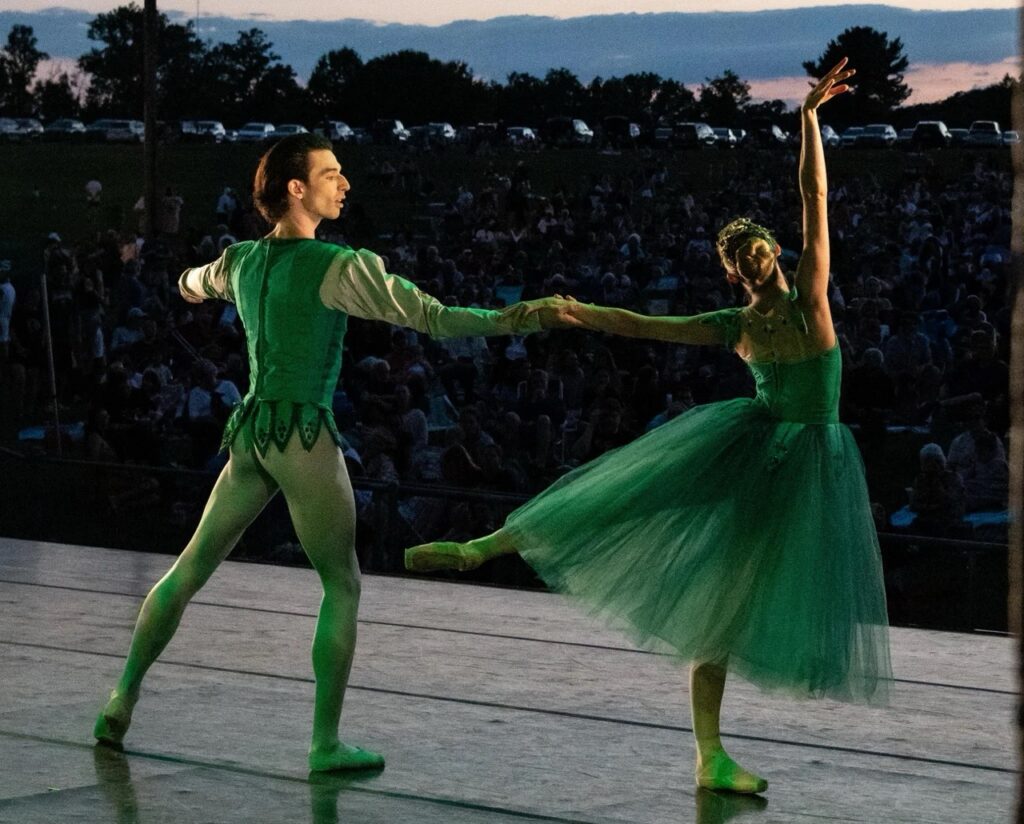
In addition to the Nutcracker sneak peek, the evening will also include a mix of classical and contemporary works. Performances include a Giselle Pas de Deux, and excerpts from The Sleeping Beauty and Alice in Wonderland.
Looking for more to do this weekend? Check out our event calendar to see what’s happening through August 23. Plus while you wait for the new Nutcracker, try these recipes inspired by the ballet.
We may have finally arrived at the cozy moment many of us have been waiting for: When it’s finally time to don our sweaters, hoodies and layers. Still, though, we’ll spend time outside — just with added comfort. This week’s lineup includes outdoor music, movies and things that go bump in the night (it is spooky season, after all). And, just in case you’re looking for more events beyond what’s below, we have your guide to things to do in Pittsburgh any time of year.
Events in Pittsburgh This Week
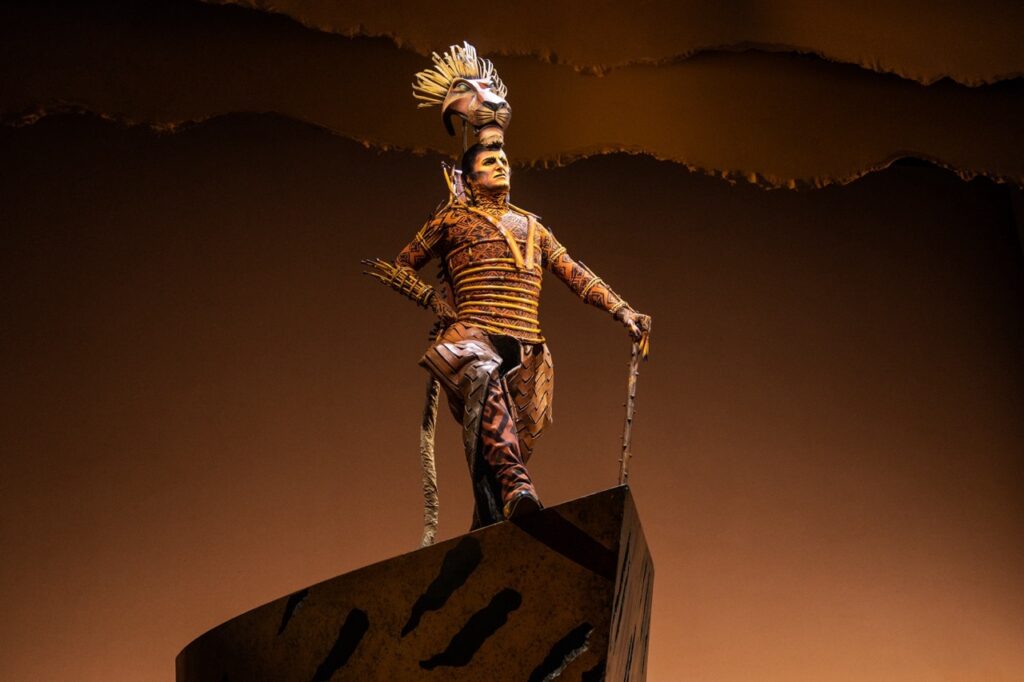
Peter Hargrave As Scar, The Lion King North American Tour | Photo By Matthew Murphy
After nearly 30 years, it’s easy to forget how revolutionary The Lion King was upon its 1997 debut. Director Julie Taymor’s original production cast aside the trappings of ’80s and ’90s musical theater in favor of inventive and gorgeous puppetry, soaring voices and a lush focus on light and color. The show also boasts some of Disney’s best songs — hiring Elton John and Tim Rice will do that — and an easily captivating story. Even if you’ve seen it before, go again; it’s a stirring experience.
What to Know: Even with 24 performances, shows are selling out, so act now if you don’t already have your tickets. Arrive early to avoid the crowds at the door. And remember the paradox of the Benedum: Downstairs level always has shorter lines at the bar, while the promenade always has shorter lines for the restroom.
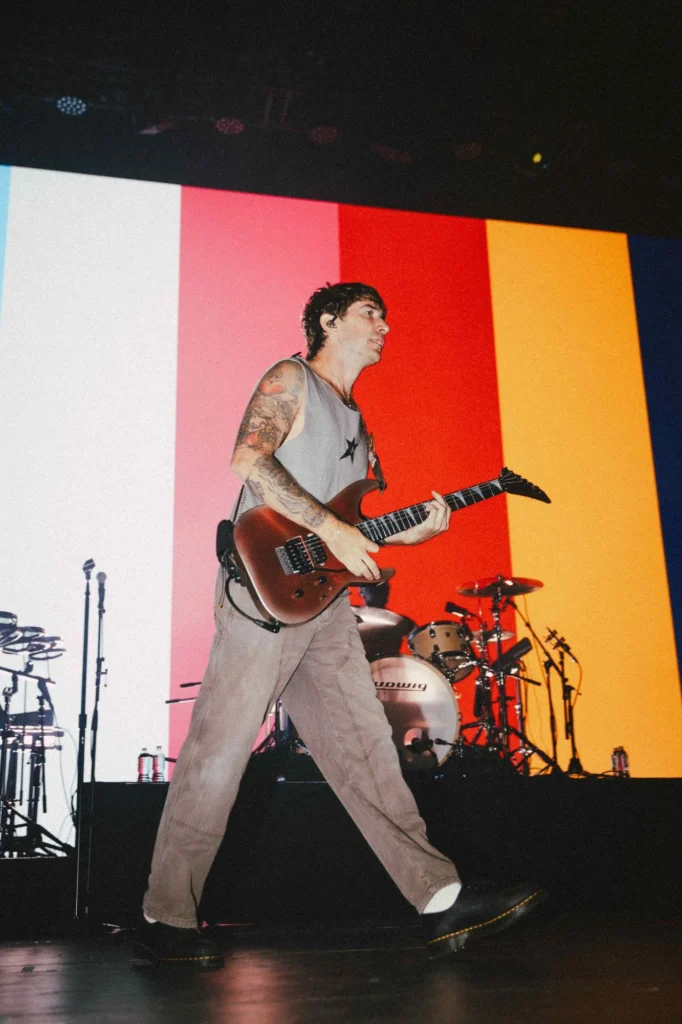
Even the Recording Academy can’t figure out what genre Turnstile is in. Last year, the band was nominated as a rock band, an alternative band and a metal band … for the same music. Other songs on their hit album Never Enough are more cleanly categorized as punk or pop. In brief: You can’t categorize it, but you can definitely rock out to it. The band returns to Pittsburgh this Tuesday for a headlining set at Stage AE; it’s their first area appearance since opening for blink-182 at PPG Paints Arena in 2023.
What to Know: Turnstile’s tour hasn’t kicked off yet, so we can’t guess at set times — but there are four acts on the bill, so it’s a safe bet there will be some distance between the time doors open (5:00 p.m.) and the time the headliners take the stage. If you’re determined to know the schedule, call the Stage AE box office on the day of the show.
Through May 2, 2027, Westmoreland Museum of American Art
In an era where billions of images from around the world are in our pockets at all times, how can we still appreciate remarkable landscapes? At the risk of a simple answer: Through the eyes of a gifted artist. Majestic Lands gathers more than 40 landscapes by the preeminent photographer and environmentalist Ansel Adams, taking the viewer to remarkable vistas throughout the United States. The exhibit is “presented in dialogue,” as the museum puts it, with Victoria Sambunaris: Altered Lands, a series depicting human incursion into the natural landscape.
What to Know: While admission to the rest of the Westmoreland Museum is free, these exhibits are ticketed. Stop by the museum’s front desk to grab a ticket on arrival; $10 gets you into both Majestic and Altered Lands. Plus, check out the Play Ball! art of baseball exhibit while you’re there. Making the trip to Greensburg for the exhibition? Add a dinner reservation at J. Corks, a lovely and inviting elevated-American spot known for excellent service.
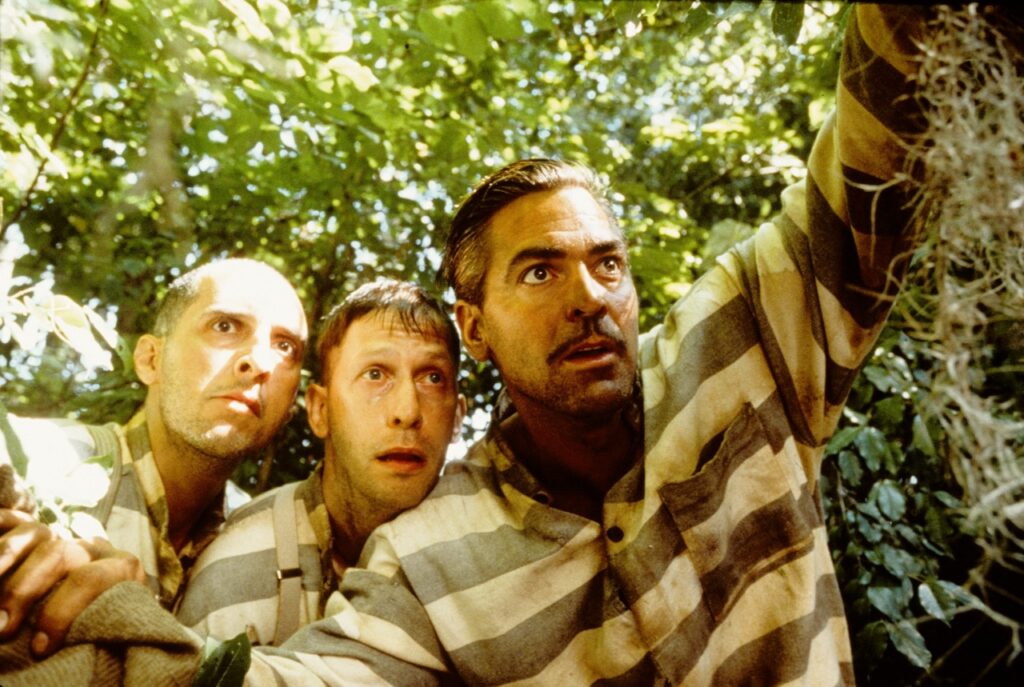
It’s folly to try to rank the best films by the Coen Brothers. The prolific and distinctive filmmaking duo has proven adept at so many different genres — the modern noir of Fargo, the pure comedy of The Big Lebowski, even westerns such as True Grit — that any attempt to declare their finest work will inevitably be met by strong disagreement. So don’t think of the four-film lineup for Row House’s Coen Brothers week as a ranking; rather, it’s just a collection of four very good movies. See The Big Lebowski, No County For Old Men, Blood Simple and O Brother, Where Art Thou? throughout the week at the Lawrenceville cinema.
What to Know: You won’t lack for pre-show drink options in Lawrenceville, but one of the best is under your feet. Sister business Bierport Lawrenceville sits underneath Row House and boasts a formidable draft list; you can even take your brew into the theater, if you’d like. It’s the perfect place for a post-film movie discussion. But, there are plenty more places to grab a bite and explore in the Lawrenceville area, too.
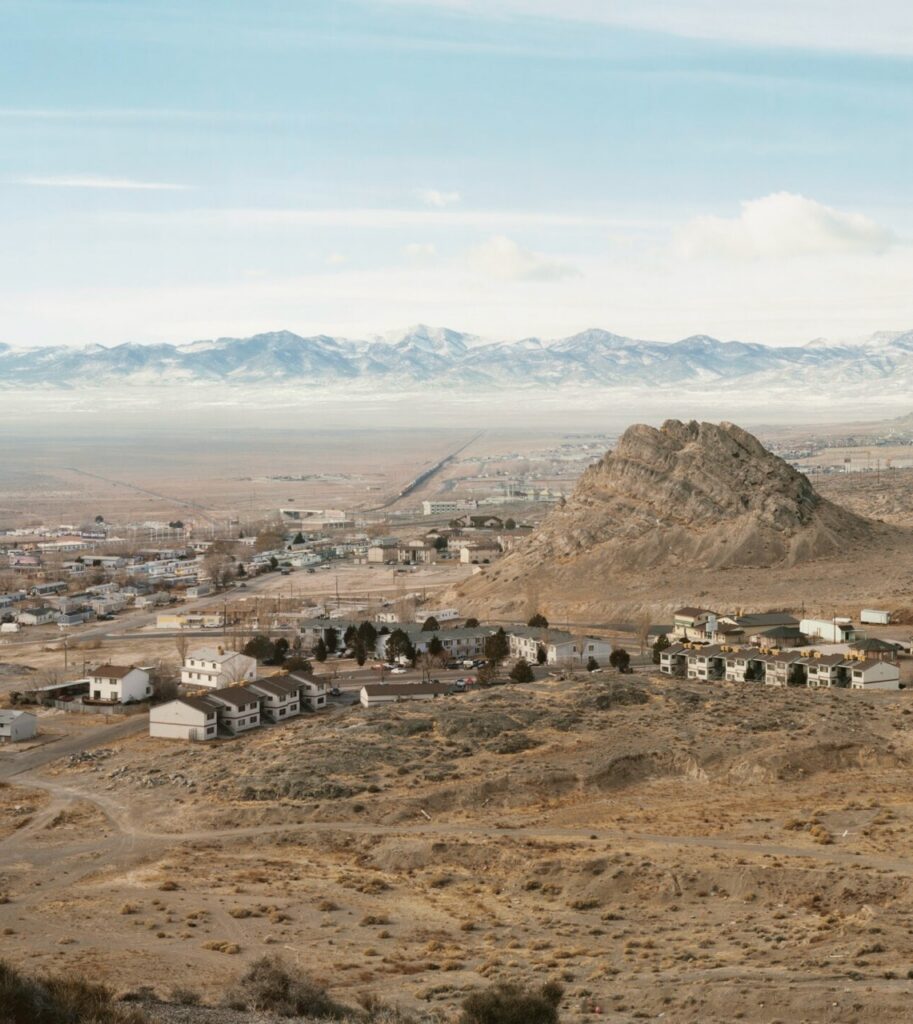
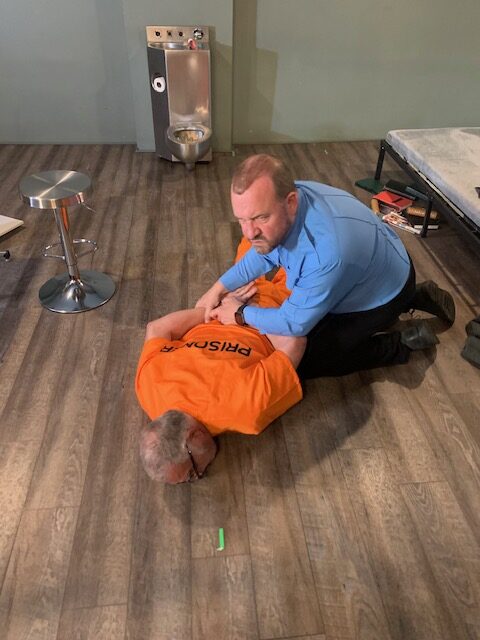
The late congressman Jim Traficant was a folk hero, then a pariah, in nearby Youngstown. Once seen as a champion of the working class and a powerful rising star in Washington, Traficant was convicted of taking bribes from figures in organized crime. Even more than a decade after his death — alone, on his farm, in a tractor accident — debates about his life and crimes continue. Iron Horse Theatre Company, normally found in Ambridge, heads to East Liberty’s Kelly-Strayhorn Theater with a world-premiere play about Traficant, finding the disgraced politician in solitary confinement, considering how he got there.
What to Know: Trapped will be performed Thursdays, Fridays and Saturdays at 7:30 p.m., plus a 2:00 p.m. matinee on Sunday, September 20. Make a night of it with dinner reservations at nearby Garabino’s.
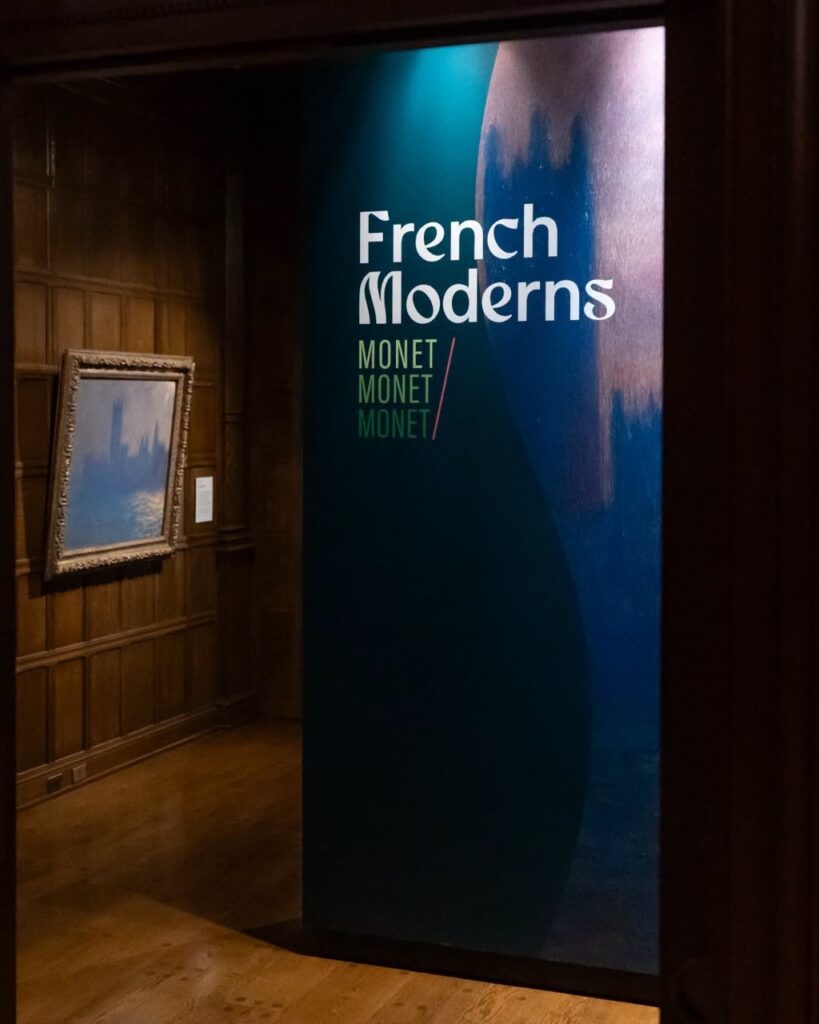
For art aficionados, the story behind the curation and composition of an exhibition is often nearly as fascinating as the work itself. Even when an exhibit comes to a museum as an existing package — as is the case with French Moderns, the vibrant and illuminating survey currently on display at the Frick Pittsburgh — there’s a world of decisions and considerations between crates packed with masterpieces and a finished product. At this talk with Dawn Reid Brean, the Frick’s chief curator, you’ll hear about the behind-the-scenes process — with a cocktail (or mocktail) in hand.
What to Know: This is a ticketed event; grab your admission on the Frick’s website to avoid a possible sellout. The talk begins at 6 p.m., after standard operating hours for the exhibition itself (10 a.m.-5 p.m.), so you’ll have to arrive earlier in the day if you want to see the show before you hear about it — then pass the time with a lovely walk through the grounds.
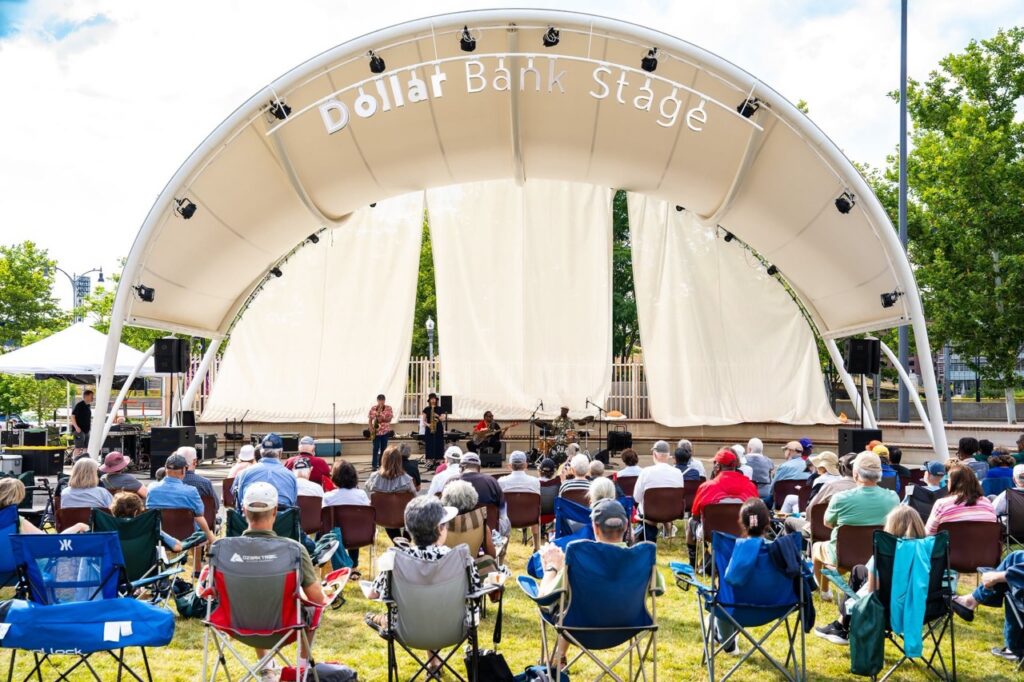
Speaking of Arts Landing, earlier this week, several of Pittsburgh’s finest arts organizations will unite to preview a season of performance — and it’ll happen under the evening sky at Arts Landing. Pittsburgh Opera (with support from the Pittsburgh Opera Orchestra), Pittsburgh Ballet Theatre and Confluence Theater of Pittsburgh — the new organization resulting from the merger of the former Pittsburgh CLO and Pittsburgh Public Theatre — will offer performances and previews of upcoming shows at an event dubbed A Landing Ovation.
What to Know: This event is free, but advance registration is requested — and all registered attendees will be entered to win tickets to upcoming shows from all three organizations. The show is scheduled to begin at 6 p.m. Thursday; in the event of rain, come back at the same time Friday.
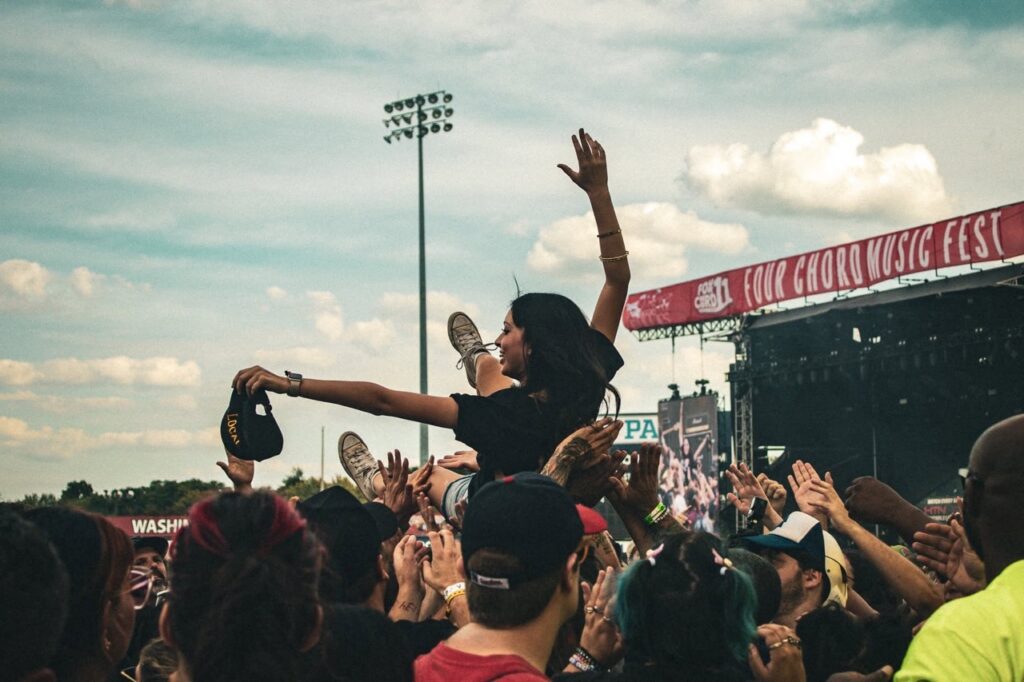
If you’re between the ages of 30 and 45, you may well have had a formative experience at the Vans Warped Tour. From the ’90s until the tail end of the ’10s, the annual concert tour brought punk, pop, metal and more to parking lots and amphitheaters from coast to coast. Like most of the package tours of the era, Warped has converted into a series of destination festivals — but if you want to experience that atmosphere again (with some considerations for the fact that we’re not teens anymore), get a ticket to the annual Four Chord Music Fest, a Pittsburgh-made marathon of the sounds that drew us all to the Warped Tour when we were teens. The lineup includes Knocked Loose, Pierce the Veil, Motion City Soundtrack, Mayday Parade, State Champs and many more.
What to Know: The event relocates this year to F.N.B. Stadium, the Station Square home of the Pittsburgh Riverhounds. That’ll put parking at a premium, so either arrive early and go for the garage across from the Sheraton or (better yet) utilize rideshare or public transportation. And wear sunscreen — it’s a long day out under the sun.
Select Fridays-Sundays Through November 1, Kennywood
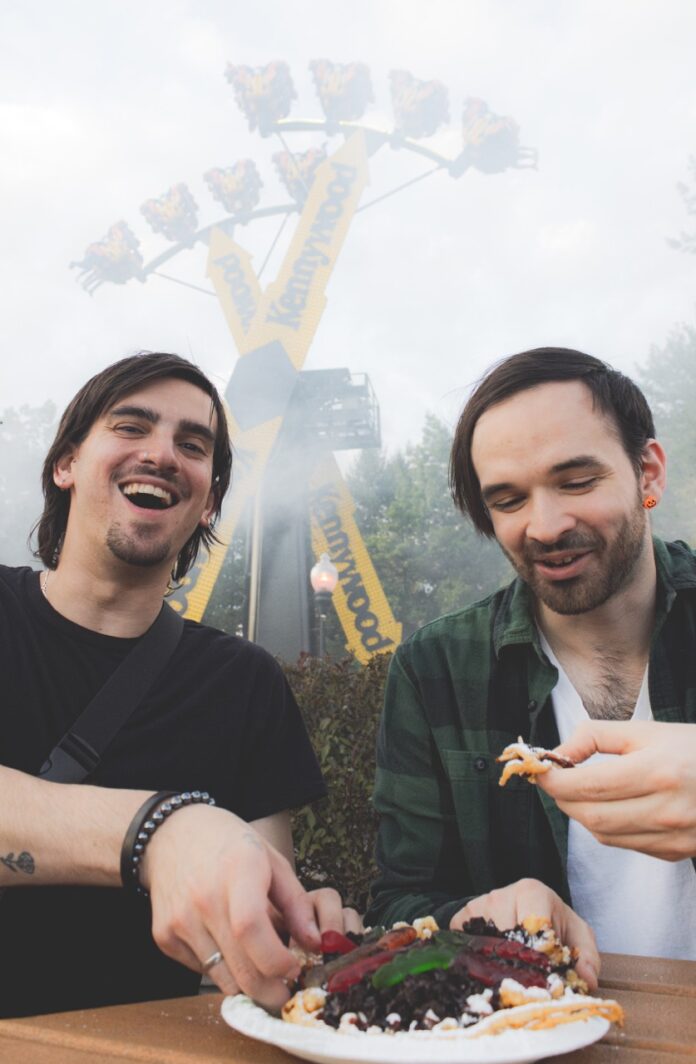
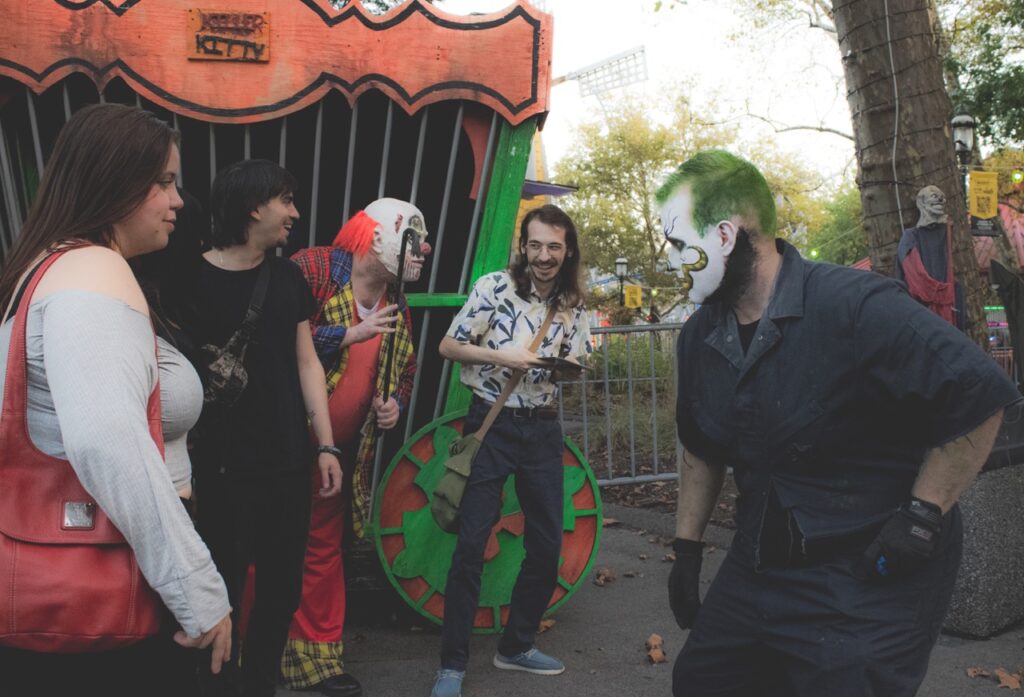
Kennywood’s annual autumnal celebration is two events in one — and both seem to expand every year. During the day, Phantom Fall Fest is an inviting and family-friendly festival packed with rides, trick-or-treating, photo ops and fall flavors; this year, the park has added a tasting experience (on Saturdays and Sundays), featuring signature food offerings including a potato and kielbasa skillet and hot-apple dumplings. At night, the park turns into a proper haunted attraction, with a bevy of haunted walk-through attractions and more ghouls roaming the walkways. Pick your poison and choose the daytime merriment or the nighttime frights — or, better yet, make it a long day and go for both. See what all is in store with our guide to Phantom Fall Fest.
What to Know: It’s weekends only from here on out. Kennywood will open its gates from 6-11 p.m. Fridays, noon-11 p.m. Saturdays and noon-10 p.m. Sundays through November 1 (before taking a week or so off and returning with its Holiday Lights programming). If you’ve got little ones who are a bit too scared for haunted attractions, arrive early on a Saturday or Sunday and head out by around dinnertime; there won’t be jump scares that early.
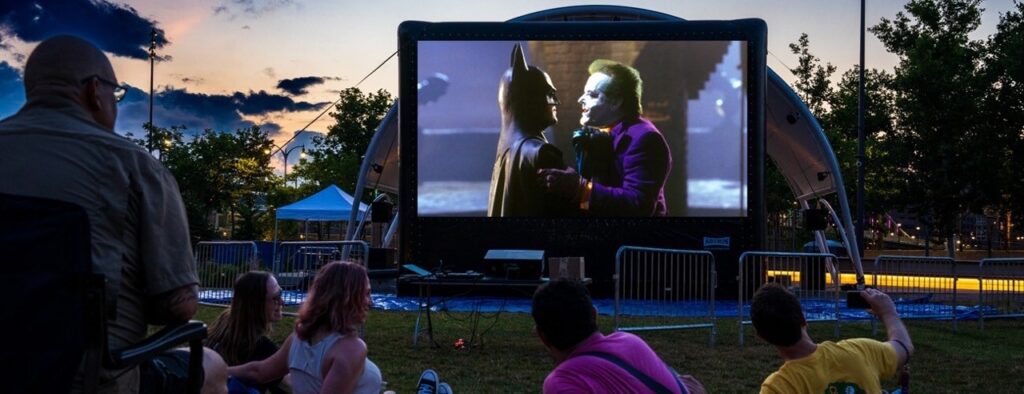
Yes — our Batman. The best Batman. The Michael KeatonBatman.Christopher Nolan’s Dark Knight Rises may have been filmed here, but our love for local favorite Keaton under the cowl makes Tim Burton’s 1989 film the flick of choice for Pittsburgh fans of the caped crusader. And — with respect to Nolan — Burton’s film remains the best film about the character, owing in large part to the perfect turn given by Jack Nicholson as the Joker. (And, unlike many Batman flicks, it’s actually fun.) You can see it for free at Arts Landing as part of the Great Lawn Movie Nights series.
What to Know: The film will be projected on a screen in front of the stage; bring a blanket or lawn chairs and snacks (no alcohol, please). The listed start time is 7:30 p.m., but that may fluctuate slightly based on the sunset. Arrive early and stake out a spot relatively close to the screen; Downtown noise may interfere with the sound if you’re farther away.
Pittsburgh Events Happening September 28-October 4
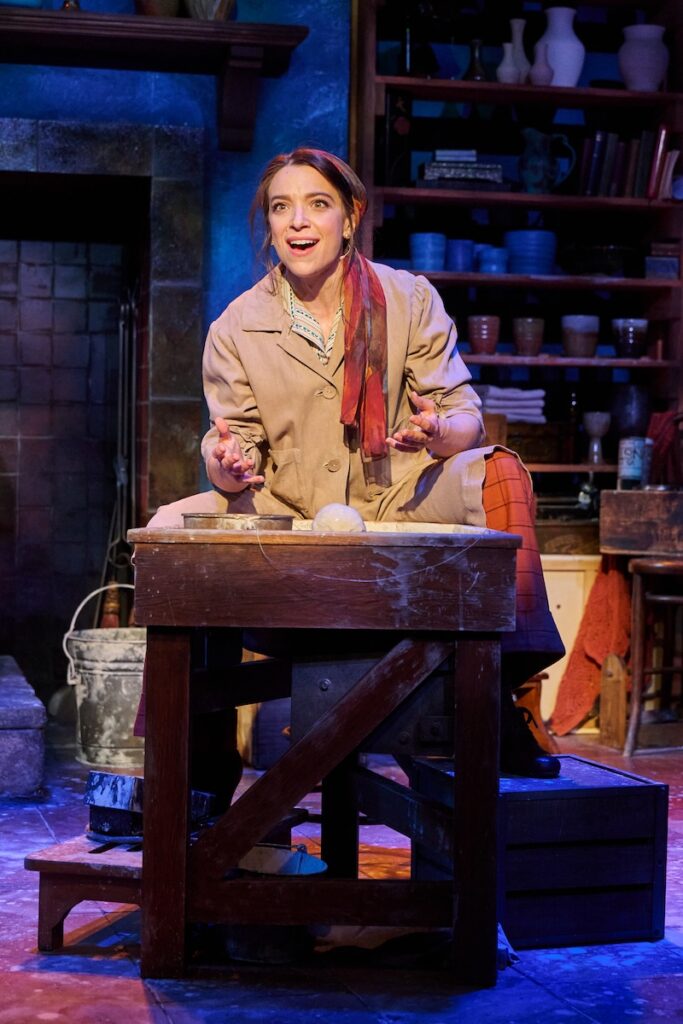
The new musical In Clay arrives in Pittsburgh after a sold-out run at the Signature Theatre in Washington, D.C., where critic Nicole Hertvik called it “a triumph of intention and execution … every collaborator is working at the top of their game, and the result is a piece of theater that feels both intimate and quietly expansive.” A one-woman show about 20th century French ceramicist Marie-Berthe Cazin, In Clay features a jazz-age score and some true multidisciplinary talent from star Alex Finke — who actually throws clay and creates ceramics onstage while performing.
What to Know:City Theatre has a small parking lot (for $10) at 1317 Bingham Street, a short walk from the theater. It can fill up on busy nights, though — and navigating street parking in the South Side is for experts only. Getting a rideshare is a good option, and it gets even better if you make a reservation at Dish and dine before the meal. (You can easily walk from Dish to City Theatre — and you’ll need to walk off the pasta-and-wine fog.)
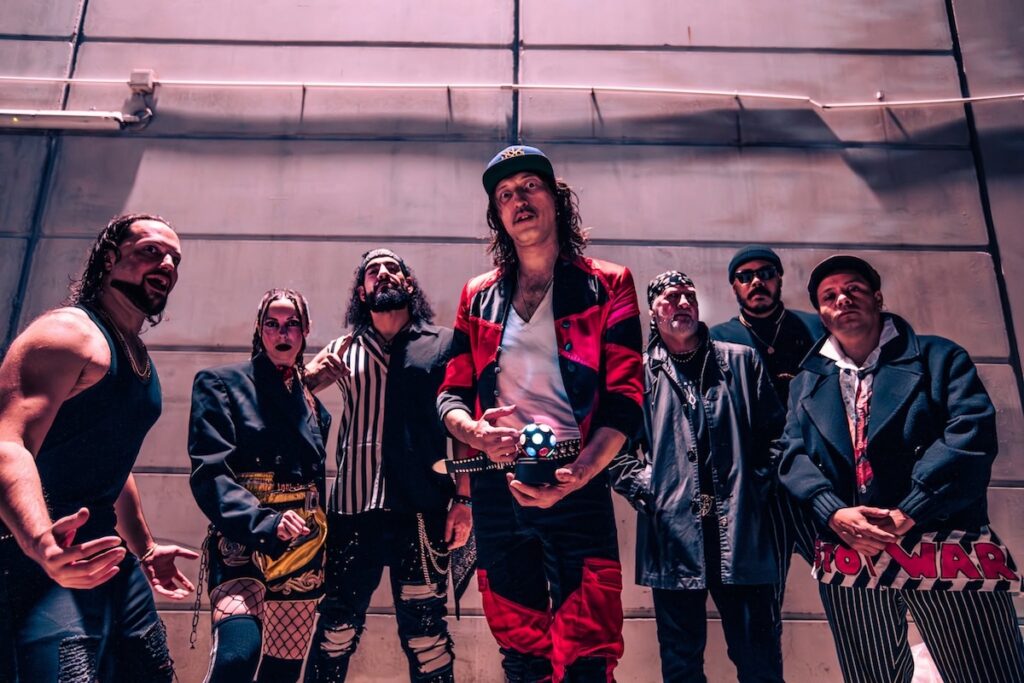
The origin of the band Gogol Bordello is punk boilerplate — a group of hungry young musicians met on the Lower East Side of Manhattan. The genesis of the group, however, stretches all over the world, as the group has always attracted members rooted in global music traditions. That includes Ukrainian-born frontman Eugene Hütz, whose songs have taken on new meaning in recent years as he has returned to his war-torn homeland — and defiantly flown the banner for “Immigrant Punk” in the United States and beyond. Hütz and company return to Pittsburgh with special guests That Handsome Devil and Pons.
What to Know: Unless you really love standing front and center, always buy a Balcony Upgrade at Mr. Smalls. The premium ticket gets you a guaranteed seat on the second or third tier of the venue, as well as dedicated food and drink stations; these areas are always 21+, as well, while the main floor is frequently all-ages. You’ll need both a show ticket and a Balcony Upgrade, usually purchased separately. You can always stop by Poetry Lounge on North Avenue if you’re in need of a drink before or after the show.
September 28-October 3, Citizens Live at the Wylie
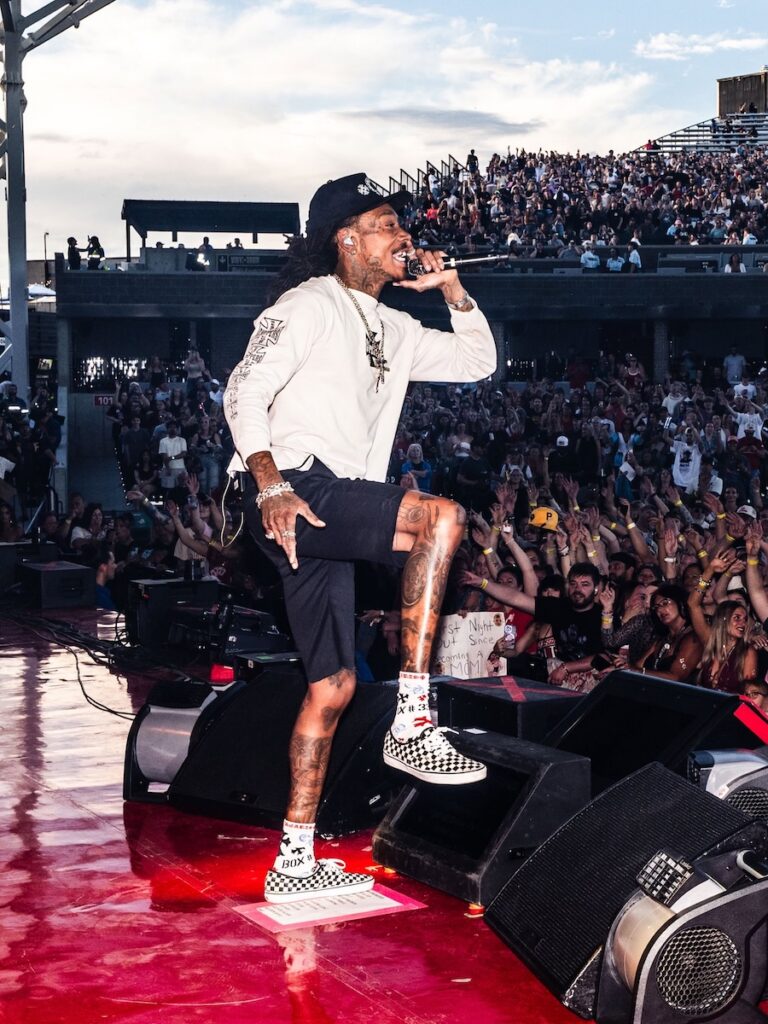
After more than a year of anticipation, Pittsburgh’s newest concert venue finally opens its doors. Citizens Live at the Wylie aims to fill a gap in the city’s halls — in short, it’s bigger than Stage AE but smaller than an arena — and attract more touring bands to the Golden Triangle. And while quite a few big names are coming to the Wylie soon (Sting, GloRilla, Jack White, Goose and more), things are kicking off with some local favorites. The opening show, dubbed “Soundcheck on Wylie Avenue,” will feature Donnie Iris and the Cruisers and NASH.V.ILL. Friday, Wiz Khalifa will play a homecoming show; Saturday, classic-rock favorites Styx, who gave Pittsburgh its unofficial modern anthem, Renegade, will take the stage. As a sign of how loaded this calendar is likely to be, that’s not even all that’s coming this week: Role Model plays the Wylie on Thursday, and Foster the People rolls in on Sunday.
What to Know: Look, the place isn’t open yet, so we can’t tell you for sure where to park, how to approach or what to eat and drink once you’re inside. Assume that you’ll park like you do at nearby PPG Paints Arena — either pay handsomely to pre-reserve a spot in one of the stadium lots, or opt for a Downtown lot and either walk or take the subway a few blocks to the bottom of the Hill. If you’re looking for a pre-show meal, consider reservations at Ritual House or another Downtown restaurant.
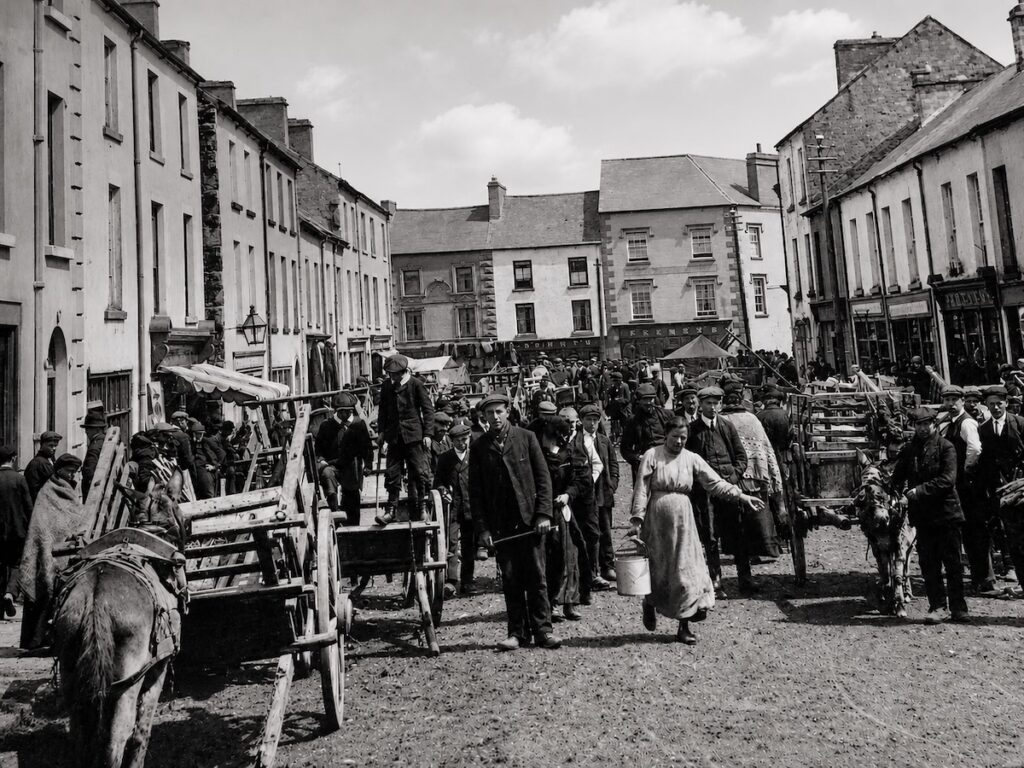
An essential part of the Irish experience is coming and going — mostly going. The Irish diaspora is famously much larger than the actual population of Ireland, owing to continuous cycles of emigration throughout the 19th and 20th centuries. The new documentary All Our Yesterdays explores that by looking at the stories and documents of the humble town of Swinford in County Mayo, tracing its history — and that of its country — across 250 years. The film’s director, Breege Rowley, will discuss the film in person at two screenings at the Harris Theater; the film also has a local connection, as narrator Nora McBurney is based in Pittsburgh today.
What to Know: Buy advance tickets at trustarts.org; capacity at the Harris is fairly tight, and major events tend to sell out. Thursday’s show starts at 7:00 p.m., and Saturday’s is a 2:00 p.m. matinee; unlike major multiplexes, the Harris doesn’t load your experience with pre-show trailers and ads, so be sure to arrive on time. And don’t forget to explore all the amazing food and drink options Downtown has to offer while you’re in the Cultural District.
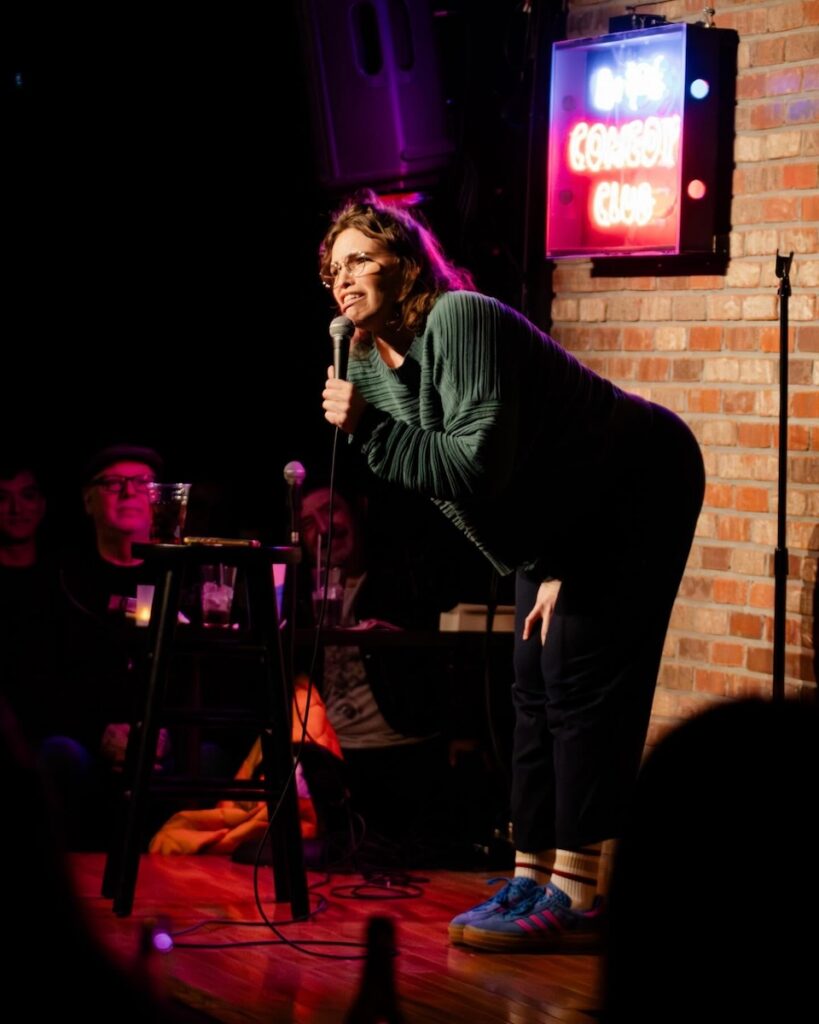
Here’s a bit of Beth Stelling’s material that will play well in Pittsburgh: “I’m originally from Ohio,” she said. “A lot of people in Ohio don’t realize that you can just put all of your things into a bag — and then leave. We made it out!” That’ll play well in one of the city’s most yinzer-coded venues, as Stelling plays Bottlerocket Social Hall for two nights. The acclaimed comic has specials on Netflix, YouTube and HBO Max, so you’ll have time to brush up before her shows.
What to Know: Speaking of dinner reservations: Pair your evening at Bottlerocket with a table at Alla Famiglia, if you want to be very full and very happy. (If you’re just looking for a snack, Bottlerocket is known for surprisingly tasty hot dogs.) Parking is at a premium in Allentown, so this is another time to consider a rideshare which also allows you to explore the rest of the Hilltop while you’re there.
Sean Collier is the editor-in-chief of Shady Ave and the arts and culture editor of TABLE Magazine. Before joining the TABLE Media team, he spent nearly 15 years as a writer, editor and columnist at Pittsburgh Magazine. As the in-house film critic for the top-rated WDVE Morning Show since 2009, he’s been Pittsburgh’s most widely heard voice on movies for nearly two decades. A Pittsburgh native, Sean has since 2020 appeared weekly on KDKA-TV’s popular Pittsburgh Today Livetalk show. He’s the co-founder of Vigilance Theater Group and an active stand-up comedian and event host. He can be found on Instagram and Twitter at @seancollierpgh.
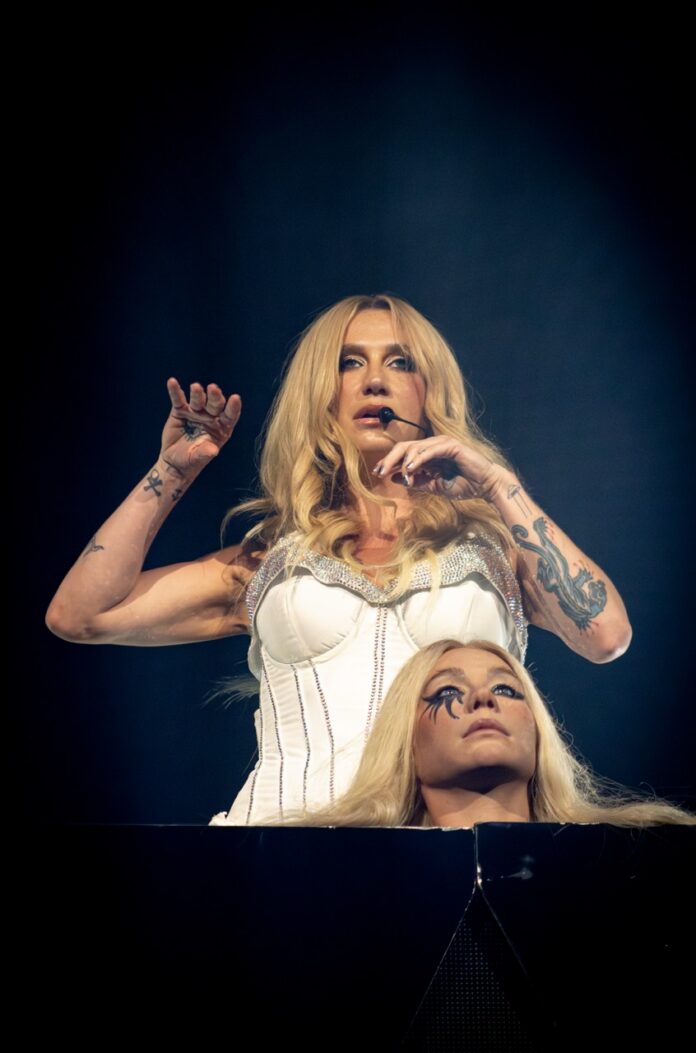
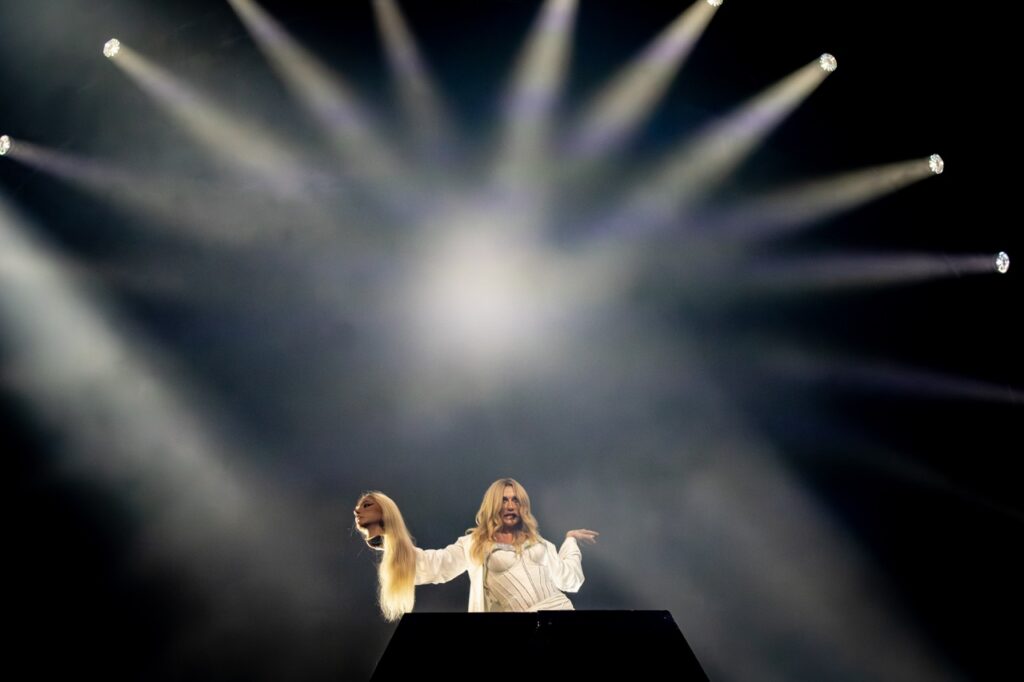
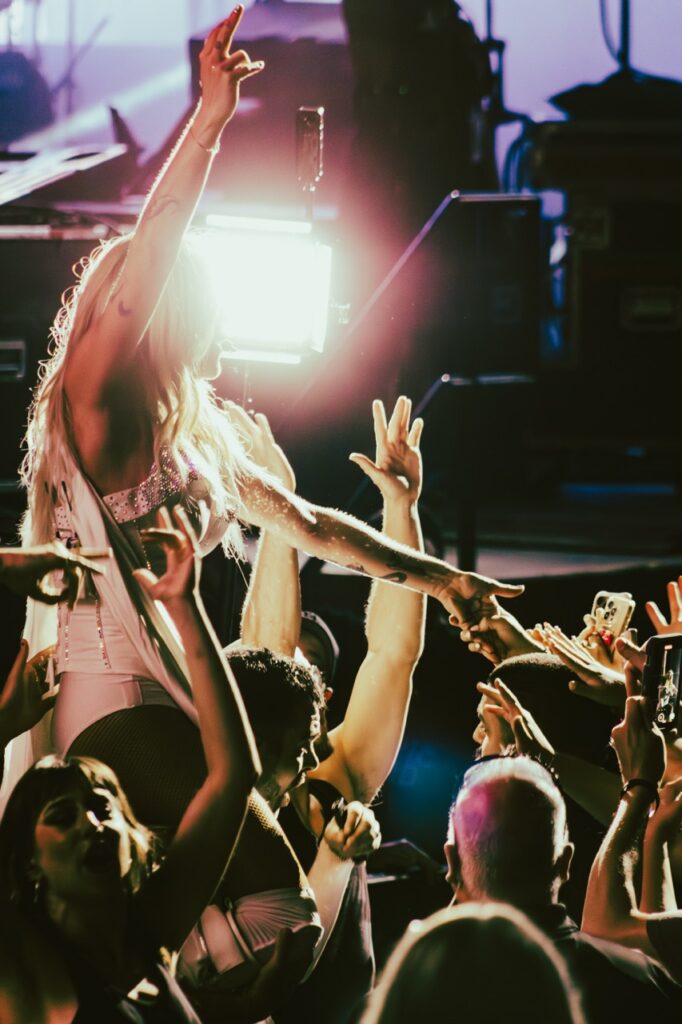
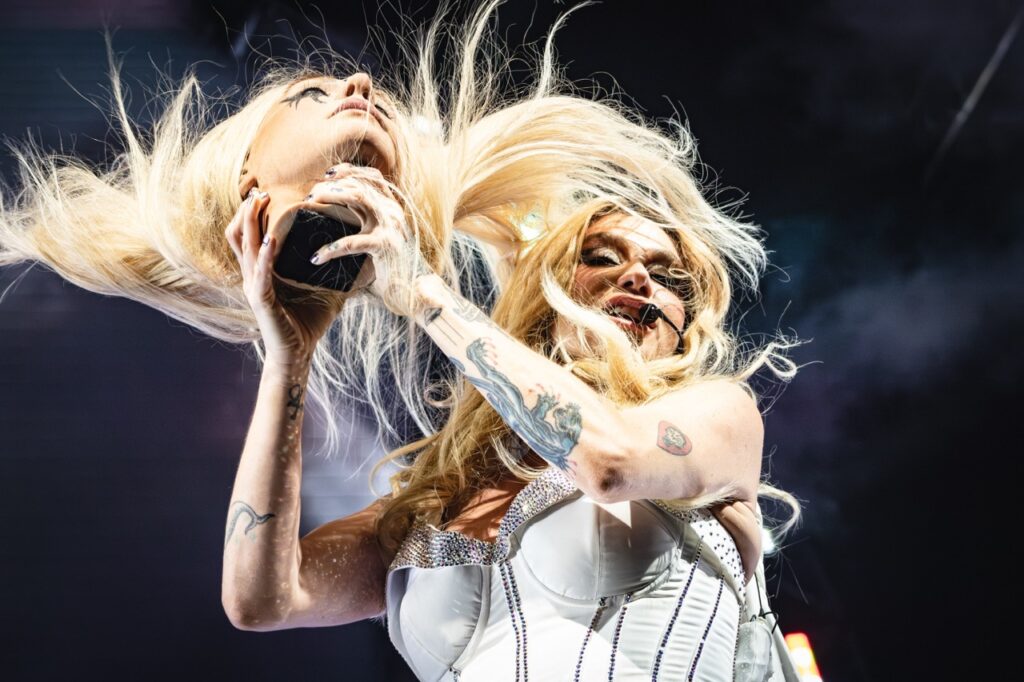
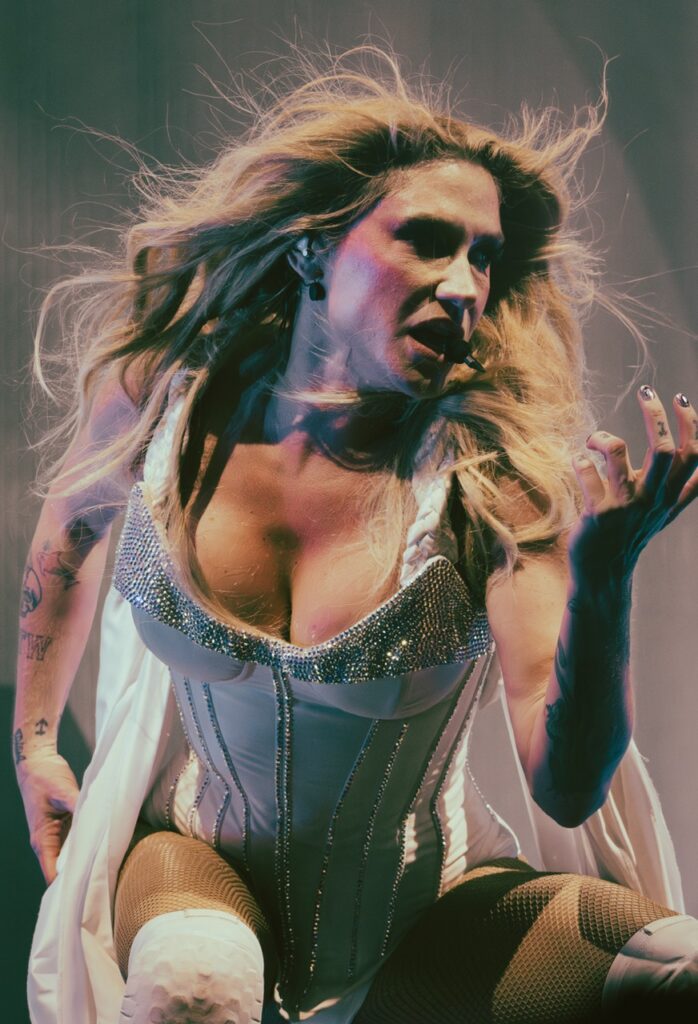
Animals and party girls, tonight we’re going har-har-har, ha-ha-hard because your queen of pop is coming back to Pittsburgh as Kesha takes the stage at The Pavilion at Star Lake on August 25. Get ready to throw it back (your body and the music) to 2010 and live out all the songs that carried you through your teen years like TiK ToK, Die Young, and Blow. Since entering her independent artist era, Kesha has been able to embrace her art again (both new and old) in a way that’s true to herself; sexy, confident, and truly free. Come ready in your fishnets, glitter, ripped clothes, or even with your nips out because at a Kesha concert, We R Who We R.
But, before you find yourself at the venue gates, come prepared with everything you need to know before you go to see Kesha at Star Lake. From the bag policy and setlist to the best way to deal with the venue’s terrible parking situation, we’ve got you covered so you can make the most of the night like we’re gonna Die Young.
Seeing Kesha at The Pavilion at Star Lake? Here’s Everything to Know From Parking to the Setlist, Bag Policy, and More
Parking
Since the concert is taking place at The Pavilion at Star Lake, parking is something you’ll want to plan for ahead of time. The venue has a reputation for difficult traffic flow, largely because there’s essentially a single main route for getting in and out.
The good news is that standard parking doesn’t cost anything. You can arrive, find a spot, and head into the venue without paying an additional parking fee. However, if you’re willing to spend a little extra, upgrading your parking could save you a significant amount of time when the show ends.
The Premium Parking Pass puts you near the exit and prioritizes your section, making it much easier to get on the road once the concert is over. Instead of sitting through the worst of the post-show traffic, you’ll have a more direct route out of the property. Another option is an Early Tailgate pass, which allows you to enter before the general parking lots open and gives you a better chance at landing a spot closer to the venue.
Not interested in paying for an upgrade? Your best bet is to arrive with an exit strategy in mind. If you can snag a space near the turn-off from the main road, you may have a longer walk to the gates, including a hill, but getting back to your car afterward can be considerably easier. The farther-out areas tend to fill up later, and those are often the spots where drivers face the biggest delays when everyone is trying to leave at once.
A.D.A Parking
The Pavilion at Star Lake also offers accessible parking for guests with ADA or handicap permits. These spaces are available on a first-come, first-served basis, so arriving early is recommended if you want the most convenient parking location.
Guests who arrive early can typically find accessible parking just to the right of the left-side entrance gate. If those spaces have already filled, you may be directed to the parking area closer to the main road. From there, golf cart transportation is available to take guests to the main entrance.
Keep in mind that the golf cart service can become especially busy after the concert, and wait times may be longer as crowds head toward their vehicles.
Overall Tips
At the end of the day, you’re going to have to accept one thing when visiting Star Lake: traffic is part of the experience. Whether you’re arriving before the show or trying to leave afterward, there’s a good chance you’ll spend some time sitting in your car. Rather than letting the wait ruin your night, come prepared to make it as comfortable as possible.
Pack some snacks and drinks so you have something to enjoy while traffic slowly moves. Some concertgoers even turn the parking lot into a mini tailgate, breaking out portable grills and cooking up food while they wait. And since it’s a Kesha concert, who knows, you might just see a dance battle break out as the party keeps going after the show.
Though bringing a deck of cards can also help pass the time, and if you’ve been on your feet all day, catching a quick nap in the car might not be a bad idea either.
Most importantly, be patient. The traffic eventually moves, even if you’re still sitting there well after midnight.
Pro tip: Before heading into the venue, make a quick note of your parking row and the gate you used to enter. This small step can save you a major headache later. Once it’s dark, thousands of people are heading in the same direction, and after a few drinks, finding your car can suddenly become a lot harder than you expected.
Rideshare and Transportation
The one way to avoid most of the traffic of Star Lake is to take advantage of rideshare apps like Uber and Lyft. The venue has a specific drop-off and pick-up lane for rideshare guests just a short walk down then up the hill to the gates.
Purchasing Tickets
Good news party Animals, Kesha’s show at Star Lake still has plenty of official tickets available on Live Nation and at afford prices, too. You can always opt for general admission lawn tickets that are $40 a piece but for the same price you can also nab seats inside the back of the pavilion. For just a little more at $54.50 per ticket, you can sit up to row K in the pavilion on the side sections or up to row EE in the center section. If you happen to feel up to splurging a little, there are still tickets available for the front three sections of seating as well as the general admission PIT right at the front of the stage. PIT tickets will run you $158 while the front sections (one, two, and three) cost $122 for a ticket.
Kesha also has two VIP options still available for this tour. The first is an Early Entry VIP Experience that gets you a PIT ticket or close reserved seat, VIP-only tour poster, a Kesha merch bundle, and early entrance to the venue for $273.90 to $310.50 depending on your seat. The second option gets you up close to Kesha ahead of time in an intimate setting with a VIP Soundcheck Experience for $426.40 to $463. With this VIP pass you get the same choice between PIT or reserved seating as well as a look at Kesha’s traveling exhibit featuring outfits and memorabilia, two concessions tickets, a VIP-only tour poster signed by Kesha, a merch bundle, early entry, and access to her private soundcheck before the show.
Bag Policy
When it comes to what you can bring into Star Lake, the venue has a fairly strict bag policy. Guests may carry a small clutch, wristlet, or fanny pack, provided it measures no more than 6” x 9”. Clear plastic bags are also permitted, as long as they stay within the 12” x 12” x 6” size limit.
There are several other items you can bring with you as well. Nonprofessional cameras are allowed, along with food packed inside a plastic zip-top bag. Guests can also bring either a sealed water bottle up to one gallon in size or an empty plastic bottle. Blankets are permitted, and umbrellas are allowed as long as they are less than 3 feet in diameter.
As always, it’s a good idea to double-check the venue’s current policies before heading to the show, since prohibited items and bag requirements can change from event to event.
Door and Show Times
Kesha: The Freedom Tour kicks off on August 25 at The Pavilion at Star Lake at 7 p.m. with opener Erika Jayne before Chromeo hits the stage around 7:50 p.m. and then Kesha around 9 p.m. But, if you want to make the best of your concert experience, you’ll want to arrive closer to when doors open at 5:30 p.m.
For those looking to tailgate, you can purchase an Early Tailgate Parking Pass for $20 that gets you into the parking lots at least an hour ahead of time. This way you get one of the best parking spots in the venue with easy access to be able to leave after and you have plenty of time to pre-game.
Or, if you plan on arriving with everyone else, purchase an AAA Fast Lane Pass for $12 that lets you skip the line to get through the gates. As soon as you zoom through you can take your time getting concessions and drinks, picking out a spot on the lawn, or hunting down a spot on the barricade.
Who’s Opening for Kesha?
It’s no surprise Kesha picked two powerhouses to join her on tour. Her first opener at Star Lake will be pop-star Erika Jayne who reminds us of Kesha in the best ways. She’s provocative, hyper-fem, campy, and a party diva at her core. Even if you haven’t heard her music before, you probably recognize Erika’s name, or at least her attitude, from The Real Housewives of Beverly Hills.
Her music embraces the same 2010’s dance-club vibes as Kesha’s so as long as you’re a Kesha fan, you’re sure to enjoy Erika too. Songs like XXPEN$IVE, Bounce, and How Many F**ks? welcome you to a realm where it’s okay to get a little sloppy, a little freaky, and you’re invited to enjoy life to the fullest. It’s that genre of electro-pop that leans on the raunchy side but in a fun and entertaining way. After all, we are at a Kesha concert.
After Erika and before Kesha, you’ll hear from electro-funk duo Chromeo, another integral group of the 2010’s with a retro style. Made up of vocalist Dave 1 and P-Thugg who takes care of the keyboards/synth, Chromeo have been pushing out music since 2002, creating their own brand of disco-inspired dance music that sounds like the 1980s and ’90s had a baby with a robot. Even one of their newer songs, Lost and Found, sounds fresh out of a different era where everything is simply groovy. Their sound is actually the perfect warm-up for Kesha because it gets you moving without wearing you out too soon. Basically these two charming but goofy guys are going to take you to the nightclub for a little boogie before your main star takes the stage.
The Setlist
Whether you’re here for 2010 Kesha, 2026 Kesha, or every era in between, you’ll be happy to hear the setlist for her Freedom Tour covers it all.
The mix of songs here carries a purpose since Kesha’s show takes you through her own journey of rediscovering herself after her musical autonomy was stripped away. Throughout the choreography and even in between songs, you’ll catch peaks into Kesha’s, life whether she’s giving up herself for stardom, or taking a hold of the darkness in her life and rising above it.
Pro tip: Since we are in the age of 2026 though, be prepared to scream “F*ck P Diddy” instead of “Like P Diddy.” (We don’t support abusers in this house.)
Navigating the Venue
One of the first things to know before arriving at The Pavilion at Star Lake is that the venue operates completely cash-free. There are reverse ATMs available if you need to convert cash to a card, but it’s easiest to arrive with a debit or credit card ready to use. This applies throughout the venue, including the merchandise stands.
The venue also has three main entrances: East, West, and South. Choosing the right gate can make getting to your seats a little more convenient. The East entrance is generally the most useful for guests parked or seated on the left side of the venue. If you have lawn tickets, the West gate is a good choice since it brings you out near the top of the lawn area. Guests parked or seated on the right side will typically find the South entrance more convenient.
That said, you aren’t locked into one section of the venue once you enter. Walking paths around the hill and between the lawn and pavilion seating make it relatively easy to get from one side to the other.
You also won’t have to go far to find the essentials. Restrooms are located throughout the property, including areas on both sides of the venue and farther up the hill. Wherever you’re spending the night, food, bathrooms, and other amenities should be within a reasonable walk.
Tips for General Admission Lawn and More
If you need to rent a lawn chair or blanket, or you’re interested in changing or upgrading your seating, look for the rental huts located throughout the venue. You’ll find them on the left and right sides, as well as farther up the hill. Food and drink stands are also nearby, making it easy to grab something to eat or drink without going too far from your spot.
For guests with lawn tickets, arriving around the time the gates open is your best bet if you want to choose from the available spots. That said, there really aren’t many bad places to sit on the lawn. The natural slope gives you a better view over the people sitting in front of you while still allowing those behind you to see the stage. If you want to mark your place, bring a blanket and get comfortable on the grass while you wait for the show to start.
One thing to keep in mind is that Star Lake has fairly steep inclines throughout much of the property. If you’re attending with someone who uses a wheelchair, take your time navigating the venue and don’t hesitate to ask staff for assistance. For an easier route, consider entering through the East or South gates instead of tackling the larger hill.
What to Eat and Drink
Star Lake offers the classic concert food you’d expect, but there’s also a surprisingly wide selection of options spread throughout the venue. Along the outer loop, you’ll find everything from burgers and crispy chicken to pizza, Bavarian-style food, dumplings, and tacos. There are also plenty of grab-and-go snacks and frozen treats for anyone looking for something quick.
The drink selection is just as varied, with bottled water, coffee, cocktails, non-alcoholic beverages, shaved ice, and frozen drinks available at different locations. Whether you’re feeding a picky child or looking for something a little more elevated, there should be an option that works. Depending on the bar, wine may also be available for guests who prefer it.
Keep in mind that concession lines can vary quite a bit from one location to another. If one stand has a huge crowd, it may be worth walking to another part of the venue before committing to the wait. Each area has its own mix of food and beverage options, so exploring a little can pay off.
For those who just want a quick drink, mobile beverage carts are also stationed throughout the grounds. These vendors carry options such as water, beer, and seltzers, making it easy to grab something without waiting in a full concession line.
For more information on The Pavilion at Star Lake, check out our venue guide for insider tips and tricks.
If you’re coming into the area early or staying through the next day, we suggest you ‘wake up in the morning’ and grab one of Pittsburgh’s best espresso martinis to celebrate in true Kesha fashion?
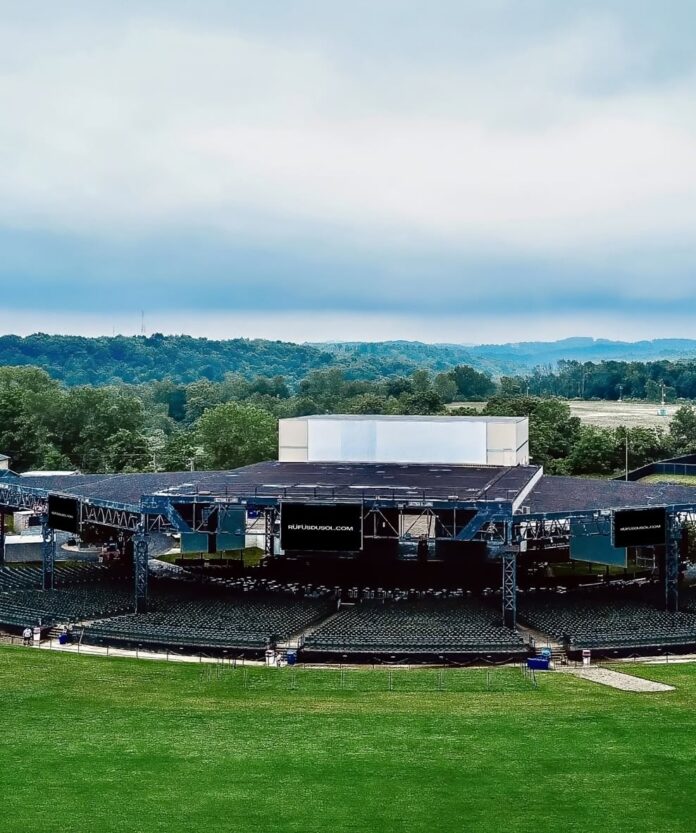
Tucked into the rolling hills of Burgettstown about 30 miles west of Pittsburgh, The Pavilion at Star Lake has been a summer-concert destination since Billy Joel was the opening act in 1990. It’s a classic outdoor amphitheater, with a covered pavilion up front, a big grassy hill behind it, and crowds that come from across Pennsylvania, Ohio and West Virginia. The next time you’re headed to The Pavilion at Star Lake for a concert, be sure to refer to this guide for the bag policy, parking information, and other tips that’ll make your evening the best it can be.
One thing to note: Besides the alfresco music, The Pavilion at Star Lake is famous for its traffic. There’s one main way in and out, so the rule is simple: arrive early and expect to stick around for a while afterward. Do that, and Star Lake is one of the best places in the area to catch a show.
The Pavilion at Star Lake: Bag Policy, Parking & Visitor Guide
Best Seats in the House
You have plenty of different options for choosing where to sit when it comes to a 23,000 capacity venue and each comes with their own pros and cons.
The PIT (or orchestra) is right up against the stage. If you want to be in the thick of things, this is the spot, though it may come with a higher price tag.
The reserved sections one through nine sit under the pavilion roof, with clear sight-lines and shelter from the weather. On a night with rain in the forecast, covered seats are worth the extra money.
Roughly 16,000 of the venue’s spots are general-admission grass. They’re the best value and the most social, but two things can trip up first-timers: The pavilion roof’s support beams jut into parts of the lawn and can block the stage outright, so stand where you plan to sit and check your sightline before spreading out your blanket. Also, the hill is on a real incline, and strollers are not allowed. For lawn seats, arrive by the time the gates open if you want a good patch of grass.
How to Get to Star Lake
Nearly everyone arrives via US-22 and PA-18, both of which can clog badly on show nights. We always recommend leaving much earlier than you think you need to. Regulars show up hours ahead to beat the surge, and Hanover Township police recommend carpooling. On the way out, plan on anywhere from 40 minutes to more than an hour just to clear the lot. One way to make the exit easier is to buy a Premier or Reserved parking pass, which offers easier entry and a faster exit and can be especially useful for a big show.
Pro tip: The venue sometimes posts alternate routes on its social media accounts, so check before you leave.
Bag Policy
Star Lake follows the standard Live Nation clear-bag policy.
Must be a clear plastic bag no bigger than 12 by 12 by 6 inches, or a small clutch, wristlet, or fanny pack no bigger than 6 by 9 inches.
You can bring food in one clear, one-gallon Ziploc bag per person, along with an empty reusable plastic water bottle to fill inside or a factory-sealed plastic water bottle up to one gallon. No metal or glass bottles.
No outside alcohol, weapons or strollers are permitted, and outside lawn chairs are prohibited. You can rent lawn chairs inside instead for most shows.
All bags are subject to search at the gate.
Where to Eat and Drink at the Venue
Of course, concession stands throughout the venue serve concert classics including cheeseburgers, hot dogs, nachos, pretzels, popcorn, and candy. But, located all around the outside circle of the venue, you can choose from Mosh Burger, Rebel Hen Crispy Chicken, Ziggy’s Magic Pizza Shop, Koko’s Bavarian, Jade Lane Dumplings, Tacos Del Centro, frozen ice cream treats, and snacks as a grab-and-go option. Then, refresh yourself with Liquid Death Mountain Water, Jolene Coffee, Shaker Cup Cocktails, non-alcoholic Riffreshers, ColdRush Shaved Ice, as well as Subzero Frozen Drinks. There really is something for everyone from picky kids to adults who prefer the finer things in life. We’ve even seen wine available at certain stands.
Bring a valid ID: You’ll need to show it every time you buy alcohol.
The Pavilion is cashless, but Cash-to-Card booths are available in the plazas, and Guest Services can exchange bills for a card dollar-for-dollar with no fee.
You’re allowed to bring your own food in a single, clear, one-gallon Ziploc bag, one per person.
Insider Tips and Tricks
Make sure your phone is fully charged before you arrive, it handles everything from mobile ticketing to payments to parking directions.
You can also pick up and buy tickets at Will Call on site.
Once you’re in, there’s no in-and-out re-entry.
You can’t bring your own lawn chair, but you can rent one inside at the rental huts for most shows. Blankets and seat upgrades are also available for rent or purchase.
Bring an empty reusable plastic water bottle to fill for free at the water stations. Metal bottles and glass are banned.
If rain threatens, pack a poncho. Golf umbrellas and metal-tipped umbrellas aren’t allowed. And if the weather is nice, aerosol sunscreen is prohibited, so bring lotion instead.
Parking at Star Lake
General-admission parking is free with your ticket, and lots generally open two hours before gate time. But, there are other options to make your night as seamless and as personalized as possible.
You can pay for a pass to get in even earlier for tailgating.
Premier and Reserved parking are available for every show and are the easiest way to speed up your exit. Buy them in advance through Live Nation rather than on-site.
Tailgating is allowed in the lots, but no glass bottles, fire pits, open flames, generators or deep fryers.
Alternate Transportation
There are no direct public-transit routes to Star Lake, so your realistic options are a taxi or rideshare from Pittsburgh or a nearby town, along with occasional event shuttles. Check the event page for shuttle information. Be warned that getting a ride home while 20,000 people spill out of the venue at once can be tough and pricey.
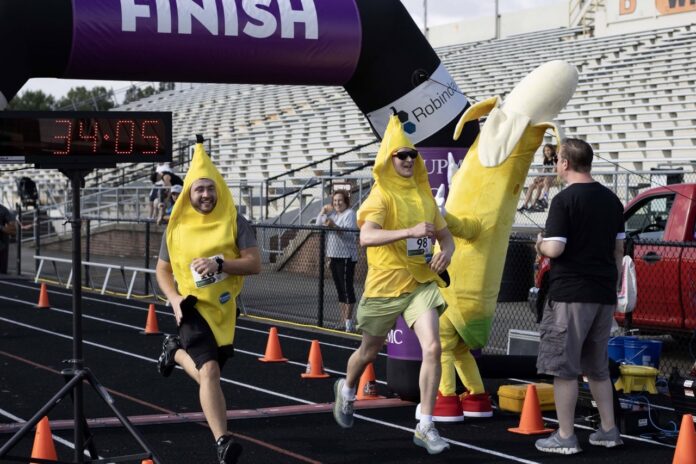
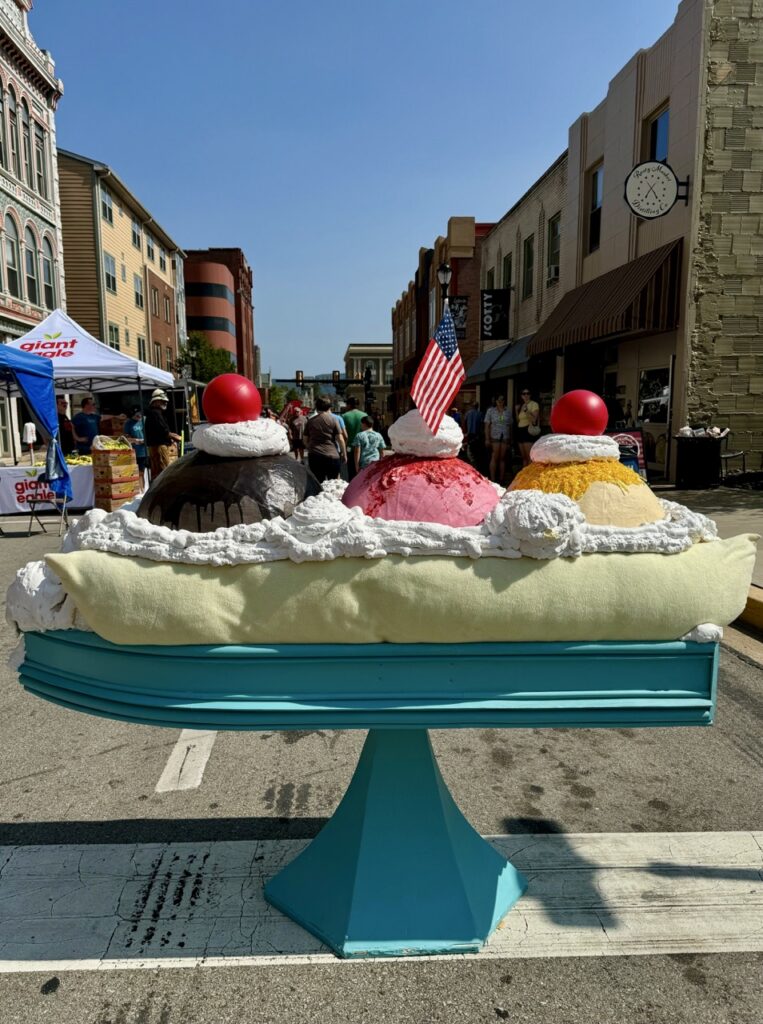
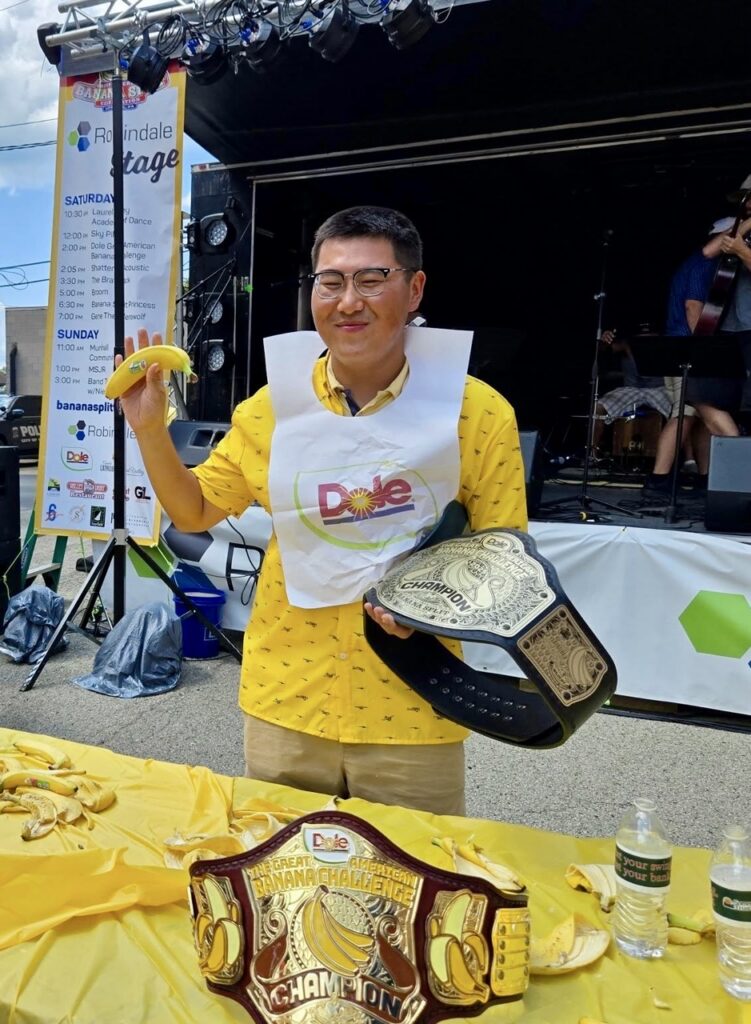
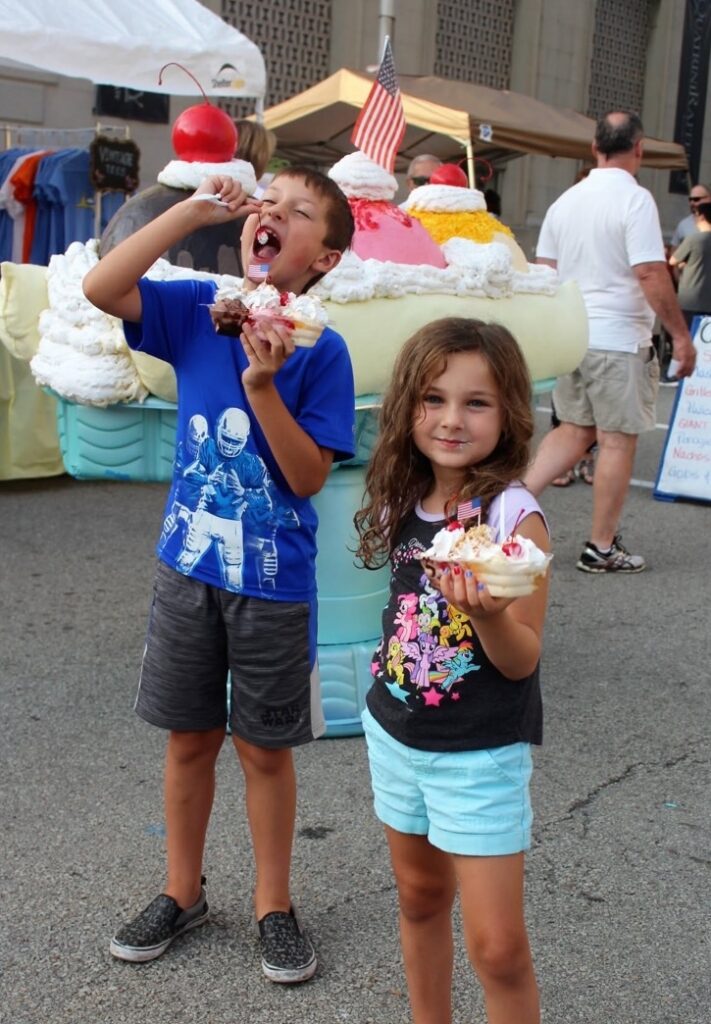
In Latrobe, the historic town about 40 miles east of Pittsburgh, the banana split isn’t just a dessert. It’s a civic identity—and the excuse for a full-blown hometown extravaganza. At the Great American Banana Split Celebration, which kicks off Saturday, banana-costumed runners will race in a 5K, home bakers will vie for top honors with their most ambitious banana-based pastries, food and drink vendors will serve up endless variations on the classic split, the newly crowned Banana Split Princess will meet-and-greet her subjects, crowds will snap selfies beside an oversize banana split sculpture crafted from body pillows and spray foam insulation, and the winner of the banana-eating contest will hoist aloft a hand-painted, 24-karat-gold-plated championship belt worthy of the WWE.
Why such a fuss over a frozen dessert that’s a staple of scoop shops everywhere?
“The draw is nostalgia, community, civic pride, and small-town identity,” says Briana Tomack, president and CEO of the Greater Latrobe-Laurel Valley Chamber of Commerce, which has been producing the event since 2013. “Plus it’s fun.”
How Latrobe Became the Birthplace of the Banana Split
Latrobe traces its banana split lineage back to 1904, when David “Doc” Strickler, a 23-year-old soda jerk working at Latrobe’s Tassel Pharmacy, concocted the dessert with a sliced banana, three scoops of ice cream, sugar syrups, whipped cream, nuts, and cherries. Priced at 10 cents, it cost twice as much as the other sundaes on the menu, but students at nearby Saint Vincent College went crazy for it, and carried the recipe back to soda shops in their far-flung hometowns. From there, the banana split spread beyond Pennsylvania and became an American classic—and gave Latrobe a claim to dessert fame it has been promoting for more than a century.
Photo by Kathleen Renda
Latrobe Puts Its Banana Split History On Display
Over the years, Latrobe’s banana split birthright found its way onto everything from candles to stainless steel tumblers—and, thanks to local artist and Latrobe native Jodee Harris, into a giant sculpture she hand-crafted in her living room using papier-mâché, brown house paint, pillows, paper towels, and an assist from her husband. Now one of the weekend’s most-recognized and most-photographed attractions, the colossal confection will be positioned in a prime spot near the merchandise booth, which Harris will help staff during the weekend.
“People try to stand their kids on the banana split,” says Harris. “I spend half the time saying, ‘Please don’t touch that.’ ”
The Banana Eating Contest Winner Earns a Championship Belt
The weekend’s banana eating contest may be the only sporting event in the country where the training regimen involves peeling. The fruit-gobbling showdown originally started as a banana-cream-pie-eating contest, but when Dole returned as a sponsor in 2023, pies gave way to whole bananas. Last year, Saint Vincent College student Leo Sun ate 11½ bananas in 125 seconds, but whether the reigning champ will return to defend his title in 2026 is still a mystery. “I’m not sure if he graduated,” says Tomack. “But if he’s still around, we hope he’ll be there.”
Lazarchik’s design features a bunch of bananas front-and-center and is crafted in brown leather—“it’s inspired by the color of a ripe banana,” he says—with space to engrave the name of each year’s champ. On Saturday morning before the competition starts, Lazarchik walks around downtown with the gold-plated, hand-painted belt, using it to drum up interest in the contest and recruit contestants. “The belt definitely grabs attention,” says Lazarchik.
Honoring the Banana Split History
Getting people excited about banana splits comes naturally to Lazarchik. His father Tom, a pharmacist, was the last owner of the iconic drugstore where Strickler invented the dessert. The elder Lazarchik, who owned the store from 1965 until its closure in 2000, was a lifelong booster for Latrobe as the originator of the banana split, offering free promotional pamphlets to customers and selling themed key chains. His enthusiasm was exceeded only by Joseph “Ice Cream Joe” Greubel, owner of the local Valley Dairy restaurant and ice cream parlor. An enthusiastic champion of the banana split and Latrobe’s place in culinary history, Greubel lobbied hard to secure official recognition of the dessert by the Pennsylvania Historical and Museum Commission. His campaigning proved successful, and in a 2013 unveiling ceremony attended by native son Arnold Palmer, Latrobe erected its official historical marker as the birthplace of the banana split.
Flash-forward to 2026, and the weekend celebration of the triple-scoop sundae now attracts tens of thousands of visitors to Latrobe. The street party stretches across six-plus blocks of downtown, and features more than 100 vendors, performers, and activities. The weekend kicks off Friday night with the Yellow Tie Gala, a fundraiser where attendees don semi-formal or yellow attire, sip cocktails, and dig into banana splits.
Lazarchik, who has been involved in the planning and promotion of the celebration from its earliest years, has watched the modest banana-split evangelism of his father’s era grow into something neither of them could have imagined. “If my late father could attend the celebration he’d be very surprised,” he says. “And very proud.”
What To Know Before You Go
The Great American Banana Split Celebration takes place at 811 Ligonier Street, Latrobe. Admission is free.
The hours are Saturday, August 22, 10 a.m. – 8 p.m. and Sunday, August 23, 10 a.m. – 4 p.m.
Free parking is available in non-reserved spaces throughout Latrobe during the event, including on-street spaces, surface lots, and the downtown parking garage.
The Yellow Tie Gala is from 6 p.m. to 9 p.m. on Friday, August 21, at the Latrobe Art Center.
The 5K Banana Run is Saturday, August 22. Registration opens at 7 a.m., and the race starts at 9 a.m. at Latrobe Memorial Stadium.
The banana-eating contest is Saturday, August 22 at 2 p.m., at the Robindale Main Stage.
The theme of this week in Pittsburgh might be “old-fashioned fun.” Annual traditions like A Fair in the Park and the North Shore rib festival mark the beginning of autumn; Kacey Musgraves brings her thoughtful and wistful version of country to PPG Paints Arena; local icons pay tribute to Bob Dylan in a free, outdoor concert; and a new musical with vintage vibes opens at Little Lake. It’s a good week for some late-summer nostalgia.
Grab Tickets to These Pittsburgh Events September 7-13
Monday, September 7, Also September 3-6, Acrisure Stadium
There are many different markers that signify the end of summer and the beginning of fall: back-to-school, the arrival of Halloween decorations, the sudden invasion of Pumpkin Spice. In Pittsburgh, though, many observe the changing of the seasons by devouring ribs on the North Shore. The annual Kickoff & Rib Festival, always surrounding the first home Pitt football game of the year, brings a bevy of barbecue to Acrisure Stadium and surrounding environs, alongside family activities and live music. On Labor Day, a full day of BBQ & Blues kicks off early with a charity run/walk; sweat a bit and you’ll feel better about the food you’re about to devour.
Kacey Musgraves has an impressive trophy case. The singer-songwriter has won seven Country Music Association awards, four from the Academy of Country Music and an impressive eight Grammys — including an Album of the Year selection for her 2018 release Golden Hour, a rarity for a country artist. Musgraves returns to Pittsburgh for a midweek gig at PPG Paints Arena; expect to hear most of her latest album, Middle of Nowhere, and at least one surprising cover of a country classic.
Wednesday, September 9, Also September 7-13, Throughout Pittsburgh
The annual Britsburgh Festival brings an Anglophile flair to the Steel City — but also highlights the many ways in which Pittsburgh already has sturdy English roots. On Wednesday, a walking tour of the South Side will highlight the places and stories that link Britain and Pittsburgh; the week also features a keg tapping with East End Brewing, afternoon tea at the Mansions on Fifth, live music and comedy, a celebratory night at the pitch with the Pittsburgh Riverhounds and much more.
Thursday, September 10, Continues Through September 27, Little Lake Theater
The musical Big Fish — based on the film of the same name by Tim Burton, which was in turn based on the novel by Daniel Wallace — is a stirring tale about the way we write and rewrite our own stories, turning life into a magical fable. It’s a perfect show for the idyllic, inviting grounds of Little Lake; arrive early to gaze at the water (yes, there’s an actual lake near the theater).
Friday, September 11, Continues Through September 24, Lindsay Theater
New documentaries have all but disappeared from local cinemas in recent years; fortunately, the Lindsay Theater is here to deliver new, nonfiction features to audiences. Among the selections in this year’s Documentary Series: No Country for Mothers, about the challenges facing mothers in the United States; A Life Illuminated, a journey to the bottom of the sea; Two Strangers Trying Not to Kill Each Other, a look at life and aging; Mary Oliver: Saved By the Beauty of the World, an intimate portrait of the lauded poet; and Forever Young: A Bob Dylan Tribute, a local feature capturing the Bob Dylan tribute shows from Joe Grushecky and Billy Price. (See Sunday for more on those concerts.) That’s just a few of the films in the lineup, and all are worth a look.
Saturday, September 12, Also September 11 & 13, Mellon Park
Find the perfect piece of decor for your home — or, in all likelihood, a thousand other great finds — at A Fair in the Park, the annual gathering of artists, crafters and vendors benefitting the Craftsmen’s Guild of Pittsburgh. It’s free to attend this daylong event, so stroll through Mellon Park whether you’re looking to buy or merely browse. A lineup of live music, presented by Calliope House, will round out the festivities.
After you’ve seen Forever Young in the Lindsay’s Documentary Series, come see the songs of Bob Dylan live and in person. Pittsburgh rock icons Billy Price and Joe Grushecky will revive their tribute to Dylan for a free, outdoor concert in Allegheny Commons Park West on the North Side. Grushecky and Price are world-class musicians worth seeing anytime they’re on stage; getting the rare chance to see them play the music of Bob Dylan is a can’t-miss event. The music starts at 7 p.m.
Tickets to Pittsburgh Events August 31-September 6
Monday, August 31, Also Select Dates From August 25-September 13, Outdoors at August Wilson House
Pittsburgh Playwrights Theatre Company presents this world-premiere drama from playwright a.k. payne — and it’ll happen in August Wilson’s backyard. BURNBABYBURN! is a time-traveling journey through its protagonist’s personal history, told through generations of photographs and encounters with bygone ancestors. Playwrights will stage the show, which is directed by Monteze Freeland, in the backyard performance space behind Wilson’s childhood home; it’s a resonant and surprisingly lovely space for affecting theater. (There’s one indoor performance scheduled at the nearby Madison Arts Center, too.)
Aria412 has a great host venue for its evenings of music: Hop Farm Brewing Co., the excellent Butler Street brewery. That means that their shows feature not only beautiful pieces of music … but also top-notch draft beer. It’s a powerful combination. Aria412 will premiere The Deadline, a new chamber opera from company members Matt Gillespie and Kip Soteres, in a program that will also feature other iconic pieces about people running out of time. But don’t let the focus on evaporating timelines stress you out — at this show, your only responsibilities are to listen and sip.
Speaking of song and suds: the timeless movie musical The Sound of Music will be paired, appropriately, with beers from Von Trapp Brewing at this one-night-only Row House Lawrenceville screening. This is no mere naming coincidence: The Vermont-based Von Trapp Brewing was founded by Johannes von Trapp, youngest son of Sound of Music subjects Maria and Captain Von Trapp. Enjoy a beer or two as you hum along — and try not to get weepy to Edelweiss.
Calliope House, Pittsburgh’s storied folk music society, presents its shows in a wide variety of spaces — large halls, basement venues and frequently under the night sky. This Thursday night, Pennsylvanian acoustic ensemble Tiger Maple String Band will perform with Calliope on the outdoor stage at Schenley Plaza in Oakland; expect fast fiddling, Appalachian melodies and sweet harmonies. No tickets are required for Calliope’s Schenley Plaza shows, though a suggested tip of $15 supports both the organization and the band; you can even make your donation online. Think of it as passing the virtual hat.
Here’s another outdoor show — though it’ll be anything but acoustic. Reb Beach is one of the most virtuosic guitarists in heavy-metal history, with long stints as the lead guitarist for bands including Winger, Whitesnake and Dokken. He’s a native of Western Pennsylvania who still makes his home in Oakmont, when he’s not on the road with one of those bands or performing under his own name. Expect hits from throughout his career when he takes the stage Friday night at South Park; also expect for much more than shredding, as Beach easily transitions between genres and sounds.
Saturday, September 5, Also Friday, September 4, Pittsburgh Improv
Marlon Wayans probably should be an Oscar nominee. His commanding, villainous turn in the 2023 horror movie Him might well have been recognized with a Best Supporting Actor nod — and yet the Academy is often reluctant to recognize performers who have been in more broad comedies, as Wayans certainly has (including a return to his own Scary Movie franchise this year, which you an read our review for). As good as Wayans is on screen, however, he’s even better as a stand-up comedian. See him take the mic for two shows on Friday and three more on Saturday.
Sunday, September 6, Also Select Dates Through October 11, Highland Park + Other Parks
In the waning days of each summer, Pittsburgh Shakespeare in the Parks takes a looping journey through some of the city’s loveliest spots for a rousing round of comedy (or, somewhat less frequently, drama). This year’s selection is the mischievous and uproarious Merry Wives of Windsor, and the road show will begin with two weekends in Highland Park. Future stops are planned for Frick Park, Hazelwood Green, Riverview Park and Westinghouse Park.
Get Tickets to the Hottest Events in Pittsburgh August 24-30
If you made a mixtape solely featuring these three acts, it’d be an irresistible collection of hits: Waterfalls, Shoop, My Lovin’, No Scrubs, Push It, Giving Him Something He Can Feel and dozens more. Expect Salt-n-Pepa and En Vogue to team up on the 1993 hit Whatta Man, as they did during an electric Rock and Roll Hall of Fame induction performance — and expect TLC to pay ample tribute to their bygone partner, Lisa “Left Eye” Lopez, in between vocal fireworks.
Pyrotechnic vocalist, soulful songwriter and fierce activist Kesha has been generating irresistible anthems for more than 15 years, from the inescapable dirty pop of Tik Tok to boisterous R&B anthems such as Woman. There’s remarkable range in her catalogue — look up her Dolly Parton collaboration, Old Flames (Can’t Hold a Candle to You), or her cover of Bob Dylan’s Don’t Think Twice, It’s Alright — and her concerts are joyous occasions. She’ll be joined on the Star Lake stage by Chromeo and Erika Jayne.
Wednesday, August 26, Also Daily August 21-27, Row House
In the past 15 years, filmmaker Darren Aronofsky’s films have been … singular. You might even call them curious. And, yes, you can call some of them bad. (Let’s never reopen the Mother! debate.) But The Wrestler and Black Swan, his unofficially linked duology about performers putting their bodies and souls on the line, is unimpeachable; Black Swan, in fact, is one of the greatest films of the 2010s. Natalie Portman, who won an Oscar for the role, stars as a fragile ballerina pushed to madness by the demands of her permission, preparing for a Swan Lake that’s infecting her mind. It’ll play at Row House as part of a week dubbed “The Show Must Go On,” also featuring Phantom of the Paradise, All That Jazz, Inside Llewyn Davis and Cabaret.
Here’s a much different movie — but one probably targeting the same audience, MPAA rating aside. The 1993 family baseball comedy The Sandlot, about a group of misfit teen ballplayers and their request to retrieve an autographed treasure from a monstrous neighborhood pooch, is a Millennial cultural touchstone. (You’re killin’ me, Smalls.) It’s also the sort of movie that would never be made for kids today, loaded with bad behavior, bad language and general mischief. Should you take the kids? Sure — it’ll make them feel like they’re getting away with something. But you’re going for your own nostalgic evening under the stars. The Sandlot will be screened outdoors at North Shore Plaza.
When a big gathering fills the South Side Works, it shows what this space — removed from East Carson Street, a stone’s throw from the river, self-contained yet expansive — has the potential to be. At Music on the Lawn, live music (starting at 6:30 p.m.) will be accompanied by a cash bar from The Speckled Egg, food from area vendors and more — including giant lawn games from the folks at Pins Mechanical, the sprawling bowling/arcade complex nearby. It’s a very different (and, dare we say, better) version of a night out on the South Side. But, you can always hit up a traditional South Side night out after.
Saturday, August 29, Also Aug. 27, 28, 30, The Overlook
Even the best Broadway spectacular doesn’t have a backdrop this grand. Pittsburgh Musical Theater’s annual Broadway at the Overlook debut brings a musical theater revue to the city’s West End Overlook Park, with the skyline framing the performers as the sun sets. Expect tunes from the company’s upcoming season — Miss Saigon, Matilda the Musical, Million Dollar Quartet and more — from a roster of bravura performers. The shows kick off at 7 p.m.; arrive early (and bring your own chair) for the best seats in the house. Want to elevate your pre-show meal? Skip the cheese tray and get take-out from Subba Asian Restaurant on the North Side before you cross the West End Bridge.
Head to Zelienople for a one-of-a-kind dining opportunity, as chefs from Della Terra present a five-course meal inspired by the work of painter Nicole Renee Ryan. The JL Shorr Gallery, where Ryan’s work can be seen, will be on hand to talk art — and Della Terra’s chefs will introduce each course, explaining how individual works by Ryan inspired the creation of these one-night-only dishes. It’s a delicious and engaging collision of art and cuisine.
Sean Collier is the editor-in-chief of Shady Ave and the arts and culture editor of TABLE Magazine. Before joining the TABLE Media team, he spent nearly 15 years as a writer, editor and columnist at Pittsburgh Magazine. As the in-house film critic for the top-rated WDVE Morning Show since 2009, he’s been Pittsburgh’s most widely heard voice on movies for nearly two decades. A Pittsburgh native, Sean has since 2020 appeared weekly on KDKA-TV’s popular Pittsburgh Today Livetalk show. He’s the co-founder of Vigilance Theater Group and an active stand-up comedian and event host. He can be found on Instagram and Twitter at @seancollierpgh.
Story by Sean Collier Photo Courtesy of Britsburgh
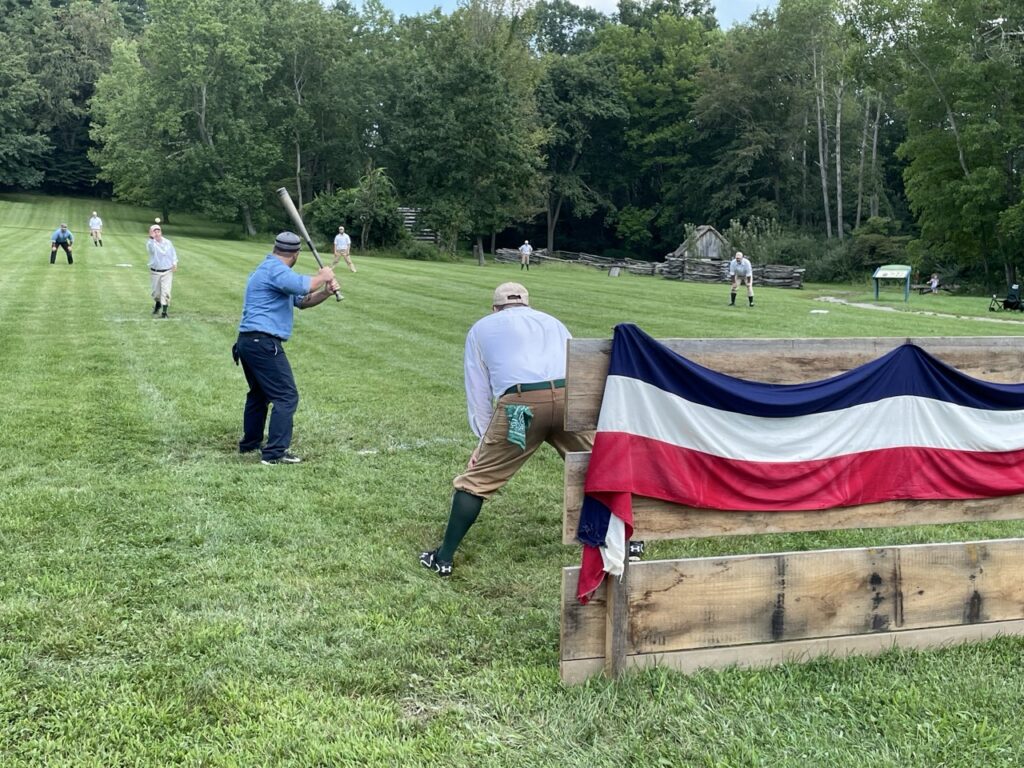
In the town of Avella, about 38 miles west of Pittsburgh at the Meadowcroft Rockshelter and Historic Village, two baseball teams will take the field on August 22 for a Saturday doubleheader. Bats will swing during warmups and the crowd will settle in for what looks like a perfectly ordinary afternoon of baseball. But this is Meadowcroft’s annual Vintage Base Ball game—yes, it’s two words—played according to 1860s rules. Once the game starts, it will be obvious just how strange America’s pastime used to be.
Facing off will be the Addison Mountain Stars and the Somerset Frosty Sons of Thunder, regional teams that spend summer weekends recreating baseball as it was played long before it was standardized, professionalized, and monetized. Suiting up for the Mountain Stars will be Jayson “Rookie” Bell, 52, of Plum, wearing a uniform styled after the woolen pantaloons and jerseys worn in the 19th century, including a gray flannel boxcap.
Bringing Back Vintage Base Ball
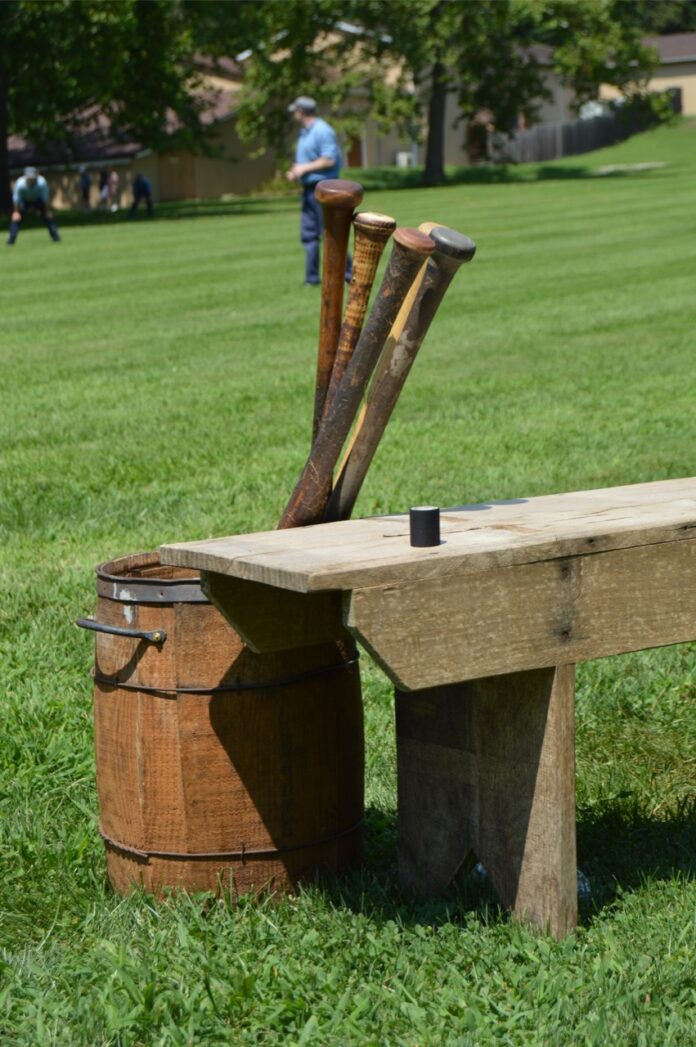
Bell, who has been a vintage base ball enthusiast for almost a decade, crafts period-inspired equipment in the offseason while watching Steelers games. For the roughly six-ounce baseballs, he creates an inner core with rubber bands, winds it with acrylic yarn, then stitches on a leather cover with a needle and string. He also makes bats on a lathe. “I love the game and I love talking to people about it,” says Bell. “It actually turned me into a history buff.”
Pittsburgh has no shortage of baseball history. The city’s first recorded game took place on the North Side in 1857, when teams from Pittsburgh and Allegheny City squared off, and by the early 20th century the game had become a popular pastime among coal miners around Avella. That long local backstory is part of what makes Meadowcroft such a natural place to rewind the game to the 1860s, when baseball hadn’t quite become baseball yet.
Here are the oddities to watch for during the doubleheader.
6 Strange Rules and Customs of 1860s Vintage Base Ball
1. Gloves? Not in This Game
Modern baseball fans will instantly notice what the players aren’t wearing: gloves. Fielders catch and throw barehanded, and while the handmade baseballs are slightly softer than modern versions, they’re still hard enough to hurt. Broken, twisted, and dislocated fingers are part of keeping the game historically accurate.
2. One Bounce Still Counts As an Out
In modern baseball, a batter is out if a fielder catches a batted ball before it hits the ground. In 1860s base ball, if the ball bounces once and is then caught, the batter is still out. David Scofield, director of Meadowcroft, calls it his favorite rule, and he has seen it lead to some seriously strange plays. In 2017, a Frosty Son hit a fly ball into left field, where it got stuck in a sycamore tree. A half-dozen opposing Mountain Stars players gathered underneath and waited for the ball to come down. When it finally did, a Mountain Star caught it—and the batter was out.
3. The Pitcher Isn’t Trying to Strike Out the Batter
In 1860s base ball, the pitcher’s job was to give the batter a hittable ball to get the action started. The pitcher threw underhand, and the batter could even request a high or low pitch—if the batter liked the ball at belt height, the pitcher tried to put it there.
4. The Pitcher Is Only 45 Feet Away
In modern baseball, the pitcher stands 60 feet, 6 inches from home plate. At Meadowcroft, he’s just 45 feet away. Bell says the distance can make pitching nerve-racking because a hard-hit ball can come screaming right back at you.
5. A Fielder Can Let the Ball Drop
In modern baseball, the infield fly rule keeps a fielder from deliberately dropping an easy pop-up to turn it into a cheap double play. There’s no such rule in 1860s base ball, so a fielder can let a routine fly ball bounce, scoop it up, and go hunting for confused runners who thought they were safe. Scofield says a fielder who knows what he’s doing can turn one lazy fly ball into a double- or even triple-play—the kind of move that would get a player booed out of a modern ballpark.
6. No, You Can’t Throw the Ball at a Runner
Some early versions of base ball allowed “soaking”—a fielder could hit a runner with the ball to get him out. Meadowcroft doesn’t play by that rule, so don’t expect players to start winging balls at each other.
What To Know Before You Go
Enter 401 Meadowcroft Road, Avella, for GPS directions to Meadowcroft.
Admission is $15 for adults, $14 for seniors, $7 for children and students with a valid ID. History Center members and children under 5 can enter for free. Active duty or retired service members receive a $2 discount.
There are no bleachers or seating, so bring a lawn chair or a blanket.
Concessions include classics like hot dogs, popcorn, peanuts, and root beer floats.
And for baseball enthusiasts looking for more to do after the game, head to The Westmoreland Museum of American Art to view a special collection of painted baseballs.
Story by Tom Davidson Photography by David Scofield
Anne Hathaway and Ewan McGregor in The End of Oak Street Find Themselves in a Jurassic Quark
While Hathaway’s 2026 roles share little in common, The End of Oak Street has one similarity to her turn in The Odyssey: an absent husband. In Oak Street, that’s merely metaphorical. Greg Platt (Ewan McGregor) is distant, drinking and evasive; Denise (Anne Hathaway), his wife and a wannabe author, is thinking of leaving him. The kids — recent high-school grad Audrey (Maisy Stella) and anxious teen Brian (Christian Convery) — absolutely know that the parents aren’t getting along.
The home is breaking, if not quite broken; suddenly, though, the neighborhood falls apart. Or, rather, it travels through time: The Platts are shaken from their beds by what appears to be a serious thunderstorm, only to discover that their immediate surroundings now seem to be located in the middle of a prehistoric jungle. In spurts, at least, this calms down the bickering; family drama tends to take a back seat when you’re running from megafauna.
It’s a Mess, But Who Can Say No to Thrilling Dinosaur Action?
Nits could certainly be picked; these characters are defined in the broadest of strokes, and nearly every moment of suspense is the result of someone not noticing several tons of beast directly behind them. The conclusion, too, is badly fumbled.
Those complaints ignore a fundamental rule, however: A movie about famous people running from dinosaurs is always good. (We will set certain Jurassic Parksequels aside for the purposes of this argument.) Hathaway, McGregor and Stella all commit fully, throwing themselves into the absurdity with determination; Hathaway even manages to find a bit of humanity amid the mayhem. It really is her year.
The End of Oak Street isn’t the equal of writer/director David Robert Mitchell’s masterpiece, the 2014 horror film It Follows, but there’s more than enough here to entertain. We only get so many big-screen dinosaurs; it’s best not to be too picky about them.
More Mysteries in Rose of Nevada, Plus More in Cinemas This Weekend
Rose of Nevada, a beguiling and atmospheric drama from British director Mark Jenkin, is just as high-concept as The End of Oak Street — but don’t expect much in the way of visual effects. In a hardscrabble Cornish fishing village, a small craft missing for 30 years unexpectedly returns; there’s no crew, and it seems that the vessel simply blinked out of the ’90s and into the present day. A mysterious captain (Francis Magee) appears and recruits a new crew (Callum Turner and George MacKay); after their maiden voyage, however, the modern men find themselves thrust back into the ’90s, where the villagers mistake them for the missing sailors. The otherworldly trappings dictate the confused, desperate emotion of the film, but the visuals tell the story: rust-covered ships, overgrown landscapes and decaying buildings.
It’s a meditative and somber film that will reward attentive, rapt viewing — and MacKay, best known as the lead in the war drama 1917, carries it with barely a word. Those in need of action (or explanation) may not be satisfied, but curious viewers will be richly rewarded.
For the younger set — the much younger set — there’s big news, though parents may well take it as an opportunity for an in-theater nap. PAW Patrol: The Dino Movie, the third big-screen caper for the canine law-enforcement team, makes its U.S. debut this weekend after rolling out globally. These movies aren’t particularly good, but that is hardly the point.
Plus a Look Back at Summer’s Films
The year’s box-office king will continue its reign this weekend, as Spider-Man: Brand New Dayis expected to cruise to a third straight victory. If the gargantuan returns are any indication, the entire population of the United States has already seen it — but if you’re still on the fence, here’s our review.The End of Oak Street is expected to duke it out with Odysseus for second place, as The Odyssey continues its own stellar run; needless to say, we’re fans, you can read our review here. And what happened to last week’s highest-profile release, the romcom One Night Only? Messy online discourse and mediocre business — it debuted in third place last weekend and should drop like a stone. If you’re curious, read our review,but it’s not likely to convince you to buy a ticket.