Home Blog Page 147

Your Must-See 2025 Pittsburgh Theater Performances

0
Two men stand on a Pittsburgh stage, playing out a theater performance with one in a black leather jacket and grey hair and the other in a bowling type shirt and bald head.

When there are so many theater performances in Pittsburgh, it can be hard to choose which to buy tickets for first. Thankfully, Patrick Jordan is here to help with his top 7 must-see theater productions of 2025.

At the helm of barebones productions since 2003, Patrick Jordan focuses on three interdependent key elements of theater: the plays, the artists, and the audience. Even as this tripartite focus informs his work, it also makes him constantly curious about what’s happening in live theater. He shares some key productions, both his own and those of colleagues, which TABLE readers should put in their 2025 bucket lists.

The Top 7 Pittsburgh Theater Performances of 2025

The Shark is Broken by barebones productions

Barebones Black Box Theater in Braddock, May 30-June 15

We kicked off our 22nd Season with an excellent one-man piece, written and performed by Jay Sefton, that broached some heavy topics. True to barebones form, we’re turning the season on its ear with a hilarious piece celebrating movie history. To celebrate the 50th anniversary of the first summer blockbuster, The Shark is Broken is a hysterical and touching look behind the scenes on the “Orca” with your favorite three cast members during the making of Jaws. I’m also performing in this one – and let me tell you, the sideburns alone might be worth coming out for. We’re also doing some pretty amazing collabs with our neighbors at Braddock Public House for this – stay tuned to our socials for those!

The Seagull by Quantum Theatre

Chatham’s Outdoor Pond, July 24-August 17

Quantum’s founder Karla Boos creates dynamic experiences for Pittsburgh audiences. Joanie Schultz is adapting Anton Chekov’s The Seagull for this production staged at Chatham’s Outdoor Pond. As an actor, one of my most memorable Pittsburgh theatre experiences was performing in Quantum’s outdoor production of Cymbeline. Every night is different in an ever-changing environment, and it’s as exciting for the actors as it is for the audience. This production of The Seagull also features one of my favorite actors, Phoebe Lloyd, who recently brought down the house as Fianna Devlin in barebones’ recent production in Crocodile Fever.

Two Trains Running by Pittsburgh Playwrights

Madison Arts Center, August 9–30

There’s no place I would rather see August Wilson plays performed than at Pittsburgh Playwrights and under the care of Mark Southers. What Mark and his team are doing to preserve this legacy is remarkable. Set in the ’60s, Two Trains Running is one of my favorite August Wilson works. Without giving too much away, the main character’s restaurant is becomes a target for demolition by the city in the name of urban renewal. It’s eerily reminiscent of issues people are facing today and that’s why Wilson’s work will always stand the test of time.

Midnight Radio in the Dark by Bricolage Production Company

Wilkinsburg, September

barebones and Bricolage have collaborated since day one on so many creative projects – we’ve performed in each other’s shows, helped build each other’s sets, and worked together in a way that’s rare and special for two theatre companies in the same small city. Needless to say, this company and everyone in it have a special place in my heart. I performed in some of their first Midnight Radio productions and most recently hosted them at our theater in Braddock when they brought back Midnight Radio Die Hard N’At this past holiday season. It’s some of the most fun you can have on or off the stage. Midnight Radio in the Dark is a new format and I can’t wait to see what Jeff and Tami have up their sleeves!

Another Kind of Silence 

City Theatre, September 20–October 12

City Theatre is known for producing great new works. I am really looking forward to this rolling world premiere that is kicking off in Pittsburgh. The play is bilingual – English and American Sign Language – and will feature both a hearing and Deaf cast and creative team. Giving visibility and voice to artists of all backgrounds is something I am passionate about and this production will deliver that experience to artists and audiences alike. The play is described as, “An epic journey of language, desire, and dreaming”… I am ready to get on board!

Dracula by Pittsburgh Ballet Theater

Benedum Center, October 31-November 2

The PBT has been knocking it out of the park with their season selections the past few years. They have incredible and diverse programming for every age, but I have to say I am really looking forward to their Dracula ballet, just in time for Halloween. You know I love dark pieces and this production is based on Bram Stoker’s classic story. The costuming alone will be worth the price of admission. Luckily, we also have incredible world class dancers that bring the drama to every piece they endeavor. I have to give a shout out to the legendary and wonderful arts champion Lou Castelli for opening up the world of ballet to so many of us, just by being a part of this storied and respected company.

God Of Carnage by barebones productions

Barebones Black Box Theater in Braddock, November 2025

Some of my favorite Pittsburgh-based actors have signed on for this one and it’s going to be explosive. The Tony-Award winning play begins with a playground altercation between eleven-year-old boys that brings together two sets of Brooklyn parents for a meeting to resolve the matter. At first, diplomatic niceties are observed, but as the meeting progresses and the rum flows, tensions emerge and the gloves come off. This work has the barebones signature viscerality and it will leave you wrung out, in the best possible way.

Story by Patrick Jordan, barebones productions
Photo Courtesy of barebones productions

Subscribe to TABLE Magazine‘s print edition.

How Pittsburgh Ballet Theatre Brings The Wizard of Oz To Life

0
Two Pittsburgh Ballet Theatre artists perform The Wizard of Oz.

Pittsburgh Ballet Theatre Artistic Director Adam W. McKinney often hands out chocolate on opening night of performances. “Because ballet is a non-speaking art form, communicating in other ways and bringing people together is key. Ballet is difficult to do when one is alone. I want to help people participate in this beautiful art making practice. It’s about making people feel welcome and that ballet is for them,” McKinney said. This May’s production of The Wizard of Oz is no exception. McKinney stepped into his director role in 2023 and has so far helped PBT balance family-friendly ballets, classics, and more contemporary works.

The Wizard of Oz is a relatively contemporary ballet, originally staged in 2018. It comes to Pittsburgh in a year when people have more familiarity with the plot The Wizard of Oz than they might on average, given that Wicked was 2024’s hugely popular box office hit, with a sequel coming out this fall. However, that was serendipitous—the reasoning behind doing The Wizard of Oz this year was a celebration of Pittsburgh Ballet Theatre’s “Emerald Year” at 55. Earlier in the season, the ballet performed a contemporary showcase titled Spring Mix: 5 for 55 as an additional celebration. McKinney selected The Wizard of Oz for its thematic relevance, simple plot, and the technical prowess required of the dancers.

How Pittsburgh Ballet Theatre Brings The Wizard of Oz To Life

The ballet interpretation follows the 1939 film plot almost exactly, so it’s easy to piece together what’s happening. Choreographer Septime Webre, Artistic Director of the Hong Kong Ballet, brought with him a stager from the original performance who’s danced it before to help the PBT artists rehearse. PBT has also performed Peter Pan in 2007 and his Cinderella in 2009 and 2013.

During rehearsals, Webre noted that he wanted the artists to perform “big, photographic movements.” At one point, he laughed to himself that there are certain steps he felt silly choreographing because of how exaggerated they are, but the PBT artists did them with such conviction and grace that it elevated them. The Cowardly Lion and the Tin Man in particular have complex, stylized choreography that toes the line between gracefulness and physical comedy.

There’s “a lot of dancing in this ballet,” McKinney explained, with many large group scenes and highly technical steps. At one moment, the artist playing Dorothy has to step over the backs of three other cast members as if they’re stairs. At another time, a group of artists does a Ziegfield Follies-esque choreography in the Emerald City, with a matching jazzy moment in the score. There’s also a balance of masculine and feminine roles, with both dynamic, strength-focused choreography and more delicate pirouettes.

The ballet has two alternating casts, and McKinney had to make decisions about who would grow best in which role. One PBT artist got to learn puppetry in order to be the hands behind Toto, portrayed by a prop that moves around with lifelike nimbleness. One of the apprentice artists in the cast will be receiving a promotion due to his work in The Wizard of Oz, a testament to the way cast members have grown during the rehearsal process.

Conveying Emotions Through Music and Dance

McKinney noted that The Wizard of Oz touches on universal emotions conveyed through dance—“friendship,” “connection,” “community,” “fear of danger,” “the power of story,” and…“the joy of living in Kansas.” McKinney is a born-and-raised Midwesterner and showed me the sweet, homey rhythm of the musical motif used for the scenes in Kansas in the ballet.

“The music for this ballet beautifully connotes the story through orchestration, melody, and polyphony,” McKinney said. He noted that not all ballets have original scores—i.e., music tailor-made for the ballet rather than an existing classical music score—so a production like this lets audiences experience something entirely new. “When ballet and dance are performed to live music, the experience is richer and it brings more people into the present moment. It’s a win-win when this can happen with the PBT Orchestra,” he added.

Ballet Has Many Entry Points, The Wizard of Oz is One

McKinney sees his role as Artistic Director as a curatorial one, and a ballet like The Wizard of Oz hits many of the beats he wants both audiences and performers to experience. “I want to share the talent of our artists and the talent of the PBT orchestra,” he said. “Ballet has many entry points. I love looking out into an audience and seeing this actualized swath of the Pittsburgh population.”

The Wizard of Oz has performances two weekends May 9 through May 18, with a special performance on May 11 for Mother’s Day. McKinney is excited to share it with audiences of all levels of ballet knowledge. “People care deeply about Pittsburgh ballet Theatre. We have a great responsibility to maintain the highest standards of ballet of classical work, but there are also opportunities to expand the lexicon of ballet,” he said.

Story by Emma Riva
Photo courtesy of Pittsburgh Ballet Theatre

Subscribe to TABLE Magazine‘s print edition.
Salmon with Dill Butter Sauce and English Peas

0
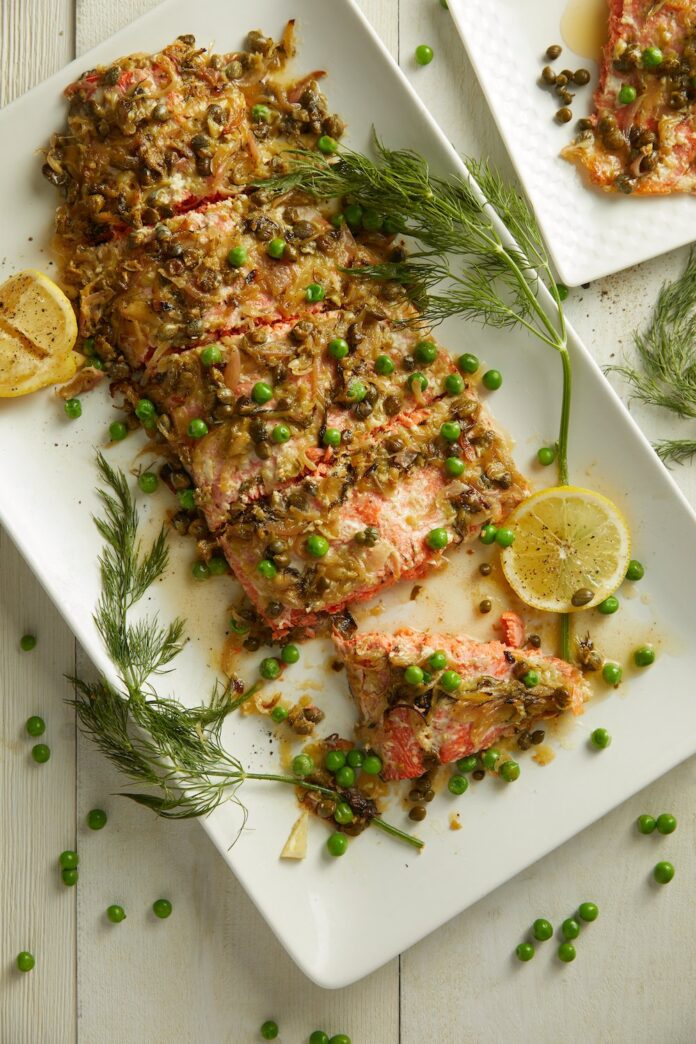
Salmon with Dill Butter Sauce and English Peas served on a white tray with herbs and lemons

This dish features flaky, perfectly cooked salmon served alongside tender, sweet English peas, generously drizzled with a brightening dill butter sauce. We’re infusing a rich, buttery sauce with the fresh, slightly tangy notes of dill. It’s a way to dress up your salmon while still letting the natural flavors come through. The sweet, springtime flavor of the English peas as a side complements both the fish and the sauce, adding a touch of seasonality. Every aspect is to balance the flavors and textures, making for a sophisticated yet still comforting meal.

Can I Use Frozen Peas in This Recipe?

If it’s outside of English peas season or you can’t find fresh ones at your local grocer, frozen peas are a perfectly suitable option. Frozen vegetables usually get frozen shortly after harvesting for preservation, so you’ll still get your dose of vitamins and minerals. When it comes to achieving the best flavor and texture, stick to cooking according to your package instructions. But, if you do want a slightly brighter green and crisper texture, you can blanch the frozen peas. Simply cook in boiling water for a minute or two, then immediately plunge them into ice water to stop the cooking process.

Print
clock clock iconcutlery cutlery iconflag flag iconfolder folder iconinstagram instagram iconpinterest pinterest iconfacebook facebook iconprint print iconsquares squares iconheart heart iconheart solid heart solid icon
Salmon with Dill Butter Sauce and English Peas served on a white tray with herbs and lemons

Salmon with Dill Butter Sauce and English Peas


  • Author: Veda Sankaran

Description

The Dill Butter Sauce adds a bit of earthy freshness.


Ingredients

Scale
  • 10 oz English peas boiled for 90 seconds and then placed in cold water bath
  • 1 tbsp + 7 tbsp unsalted butter
  • 5 large cloves of garlic, finely minced
  • ½ cup thinly sliced shallots
  • ½ lemon, juice
  • 4 sprigs of dill fronds
  • 2 tbsp capers with juice
  • Salt
  • 1 ¼ lb sockeye salmon fillet


Instructions

  1. Preheat the oven to 425 degrees.
  2. To make the butter sauce, melt a tablespoon of butter in a small saucepan and add the garlic followed by shallots, and sauté until softened and very lightly golden.
  3. Place in the remaining 7 tbsps of butter. Once melted, pour in the fresh lemon juice and add the dill fronds, capers, and salt. Adjust seasoning to taste.
  4. Place the salmon on a parchment-lined baking sheet. Cover with the butter sauce. Bake for approximately 20 minutes or until the fish flakes easily. Right before serving, place the peas on top of and around the fish.

Recipe by Veda Sankaran
Photography by Dave Bryce

Subscribe to TABLE Magazine’s print edition.

Spinach Soup with Cashew Cream

0
A bowl of spinach soup on a blue background.

This Spinach Soup with Cashew Cream is the perfect choice for a weeknight dinner when you’re looking for something a little healthier but still filling and flavorful. It’s full of vibrat, leafy greens with the silky texture of cashew cream, combining nourishing earthy flavor with a velvety mouthful. Whether you’re looking for a light meal or a hearty appetizer, this recipe is a fantastic way to incorporate more greens into your diet while enjoying a rich and creamy bowl of goodness. You can customize it to make it vegan, or add different kind of stock.

Health Benefits of Cashew Cream

Cashew cream is a creamy, nutrient-packed substitute that’s becoming a go-to ingredient for those looking to make healthier choices in their diets. Made from blending raw cashews with water, cashew cream is rich in healthy fats, vitamins, and minerals, making it an excellent addition to plant-based meals. But what truly sets cashew cream apart as a healthy alternative is its versatility and impressive nutritional profile.

One of the main benefits of cashew cream is its healthy fat content. Cashews are high in unsaturated fats, particularly monounsaturated fats, which are known to promote heart health by helping to lower bad cholesterol levels. These fats also support brain function, contribute to healthy skin, and help your body absorb essential nutrients. This Spinach Soup with Cashew Cream uses it for its textural qualities within the soup, adding more body.

Print
clock clock iconcutlery cutlery iconflag flag iconfolder folder iconinstagram instagram iconpinterest pinterest iconfacebook facebook iconprint print iconsquares squares iconheart heart iconheart solid heart solid icon
A bowl of spinach soup on a blue background.

Spinach Soup with Cashew Cream


  • Author: Veda Sankaran

Description

A healthy and hearty vegan soup.


Ingredients

Scale

For the soup:

  • 2 tbsp neutral oil
  • ½ yellow onion, finely chopped
  • ½ Serrano minced green chili (optional)
  • 1 tbsp minced garlic
  • 2 tsp grated ginger
  • 1 tsp roasted cumin powder
  • 2 tbsp neutral oil
  • 16 oz baby spinach
  • 1 ½ cup vegetable broth (or chicken broth)
  • ¼  cup coconut milk
  • juice of ½ lime
  • salt to taste

For the cashew cream: 

  • ½ cup raw cashews
  • enough boiling water to cover the cashews
  • 1 cup boiling water


Instructions

For the cashew cream: 

  1. Place the cashews in a heat safe bowl and pour enough boiling water to cover them. Let sit for 15 minutes, then drain the water.
  2. Add the softened cashews into a small blender container along with as much water as necessary to blend into a smooth paste.
  3. Place the cashew paste into a bowl and then slowly pour in 1 cup boiling water, stirring until it reaches the consistency of milk.

For the soup: 

  1. Heat a pot and add the oil. Once it is hot enough, place in the onions, green chilies if you are using, garlic, and ginger. Sprinkle on a little salt and the roasted cumin powder. Sauté, stirring occasionally, until the onions become lightly golden.
  2. At this stage, add the spinach, stirring to combine with the onions. Once the spinach wilts, pour in the broth, coconut milk, and lime juice.
  3. Stir and simmer together for 3 minutes. Taste and adjust the salt. Take off the heat and cool, before blitzing in a regular blender or with an immersion blender until smooth.
  4. Place the blended soup back into the pot along with the cashew milk. Stir and simmer to warm the soup. Serve warm garnished with toasted cashews.

Recipe and Styling by Veda Sankaran
Photography by Dave Bryce

Subscribe to TABLE Magazine‘s print edition.

Lamb Lettuce Cup

0
Three lettuce cups with lamb on a yellow plate, staged on a black background.

In our 2021 Lamb Fest cooking competition, the winning dish was the lamb lettuce cup by Chris Bonfili and Cory Hughes, two all-star chefs. Braised Elysian Fields lamb shoulder melded with yam, pomegranate seeds, curry aioli and the crunchy, gently bitter contrast of iceberg lettuce. Judge Hal B. Klein proclaimed this the winner. These were bites to remember, and we hope you enjoy it too!

What Kind of Lettuce Should You Use for Your Lettuce Cups?

Though maybe you’re used to seeing lettuce at the store or in sandwiches, there are many different kinds of lettuce. The four main types of lettuce in the Western world are looseleaf, romaine, crisphead, and butterhead. Iceberg lettuce, also called crisphead, is the most popular variety, typically what you see in a salad. For a lettuce cup, iceberg will be best because it will be the firmest base for your lamb to sit in. You don’t want wilted or flimsy lettuce for a recipe like this where the meat needs to balance in the cup-like shape. For another way to use lettuce, try our Wilted Lettuce Salad.

Print
clock clock iconcutlery cutlery iconflag flag iconfolder folder iconinstagram instagram iconpinterest pinterest iconfacebook facebook iconprint print iconsquares squares iconheart heart iconheart solid heart solid icon
Three lettuce cups with lamb on a yellow plate, staged on a black background.

Lamb Lettuce Cup


  • Author: Chris Bonfili & Cory Hughes

Description

A fun way to eat your vegetables!


Ingredients

Scale

For the lamb:

  • 3 lb Elysian Fields lamb shoulder
  • 2 sprigs rosemary
  • 2–3 tbsp olive oil
  • 4 cups mirepoix (portion: ½ onion, ¼ carrot, ¼ celery)
  • 2 tbsp tomato paste
  • ¼ cup Pinot noir
  • 2 qt lamb stock (sub with chicken or light beef stock)

For the curry aioli:

  • ½ cup Duke’s mayonnaise
  • 1 tbsp yellow curry powder + add more to taste
  • ½ lime, juiced


Instructions

To prepare the lamb:

  1. Season the lamb shoulder with salt, pepper, and minced rosemary.
  2. Take a roasting pan and add about 2-3 tablespoons olive oil. Heat on medium-high heat until the oil starts to lightly smoke. Add the lamb shoulder and sear on all sides until golden brown. Pull the lamb out and reserve.
  3. In the same pot you just cooked the lamb in, add the onions and carrots in the roasting pot. Cook until soft. Add the tomato paste and stir for around 1-2 minutes until fully melted and coating the mirepoix. Deglaze with the Pinot noir and cook until the flame goes out.
  4. Add the celery and stir for 15 seconds. Place the lamb back in the roasting pan and cover with the stock. Heat it until just below simmering. Lay a piece of waxed parchment paper on top of the lamb and cover with foil.
  5. Bake at 350 degrees for 3 hours. Check with a fork to make sure the meat is falling apart. If not, let it go another 15-20 minutes. Place the entire roasting pan in the refrigerator in the liquid (or it will dry out) and let cool overnight.
  6. The next day, heat it until lightly simmering. Strain the stock through a colander and reserve the liquid. Pull the lamb pieces apart and reserve. Reduce the lamb stock in a saucepot until it’s thick enough to coat the back of a spoon. Add the lamb pieces back in and hold.

To prepare the lettuce: 

  1. Pull apart into lettuce wrap-sized pieces.

To prepare the pomegranate:

  1. Cut in half and smack the rounded edge with the side of your knife.
  2. The pomegranate seeds will fall out. Collect them in a bowl with any pomegranate juice you can squeeze out.

To prepare the yam:

  1. Peel and dice the yam.
  2. Roast at 350 degrees for about 20 minutes until soft enough to eat but hard enough to maintain its shape.

For the Curry Aioli:

Take a sheet tray and line it with waxed parchment paper.

In a skillet, melt the butter. Add the almonds, sugar, syrup and stir until combined. Keep stirring over medium heat until a caramel color is achieved. Pour the batter on the wax paper and cool overnight at room temperature. The next daybreak the brittle into small edible-sized pieces.

To assemble:

  1. With the picked lamb and reduced stock, keep warm on a stove.
  2. Take your lettuce cup and add the hot braised lamb with au jus and put about 2 tablespoons’ worth of lamb in your cup. Add 4 pomegranate seeds, 1 tablespoon of Curry Aioli and a pinky-sized piece of brittle crumbled on top. Serve and enjoy.

Recipe by Chris Bonfili and Cory Hughes
Styling by Ana Kelly
Photography by Laura Petrilla

Subscribe to TABLE Magazine‘s print edition.
Lamb Laab

0
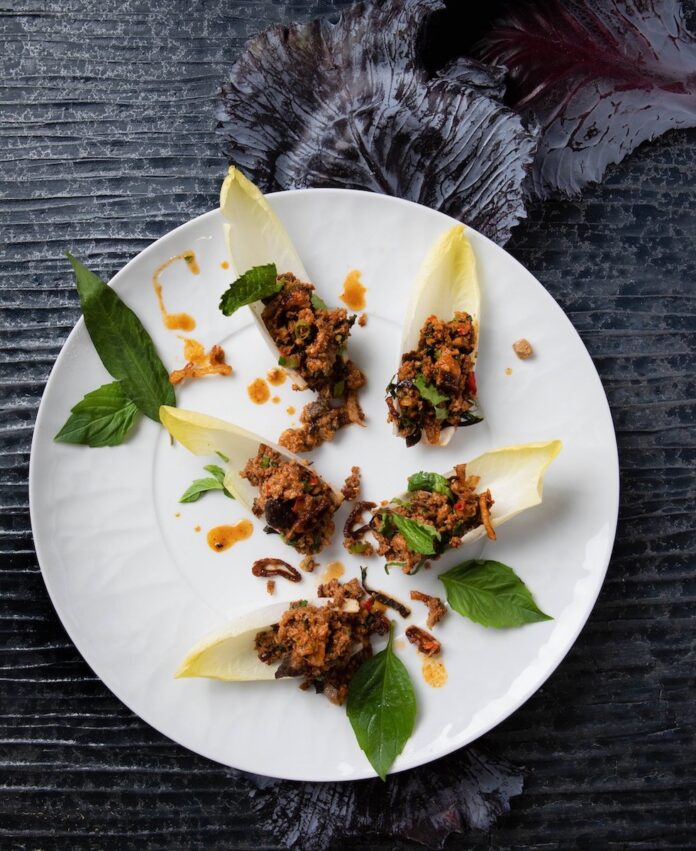
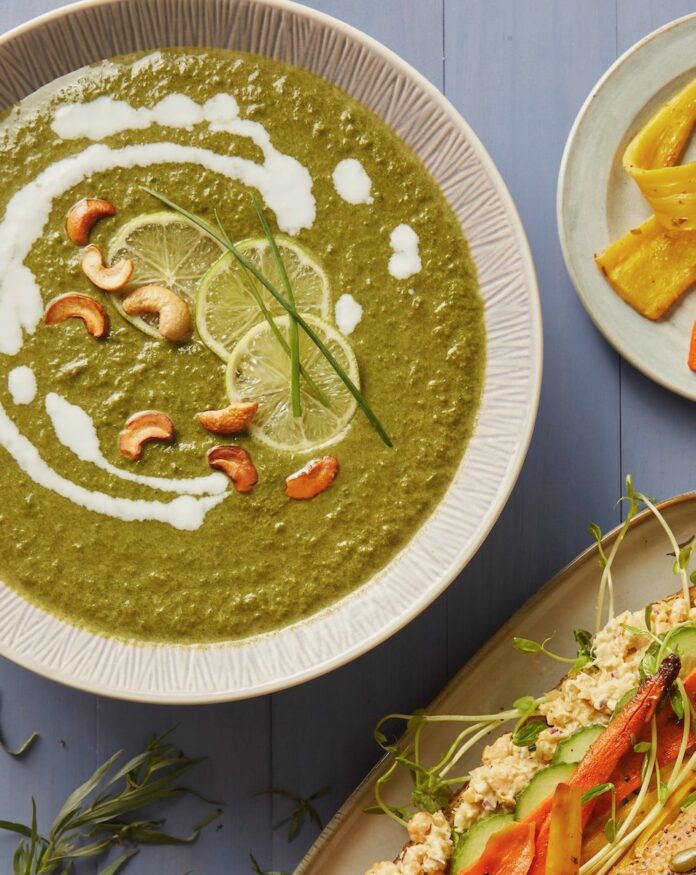
Lamb laab on a white plate on a black background.

Isaac William DeBoer and Don Mahaney created this nose-to-tail Thai lamb laab dish elegantly served in spears of Belgian endive. The flavor profile here traced a path to northern Thailand and Laos, with an earthier, drier, and spicier version of laab than most of us are familiar with. It was memorable, unique and 100% delicious. Why not pair it with our Thai Getaway cocktail for the full experience?

Why Lamb Laab?

This dish allowed the chefs to use every part of the lamb. The lean meat was ground, the offal was poached and sliced, fatty cuts like the belly were prepared confit and fried, the fat was rendered for oil to stir-fry the laab, and the bones were grilled for stock to make the dressing. In short, nothing was wasted for this dish.

Print
clock clock iconcutlery cutlery iconflag flag iconfolder folder iconinstagram instagram iconpinterest pinterest iconfacebook facebook iconprint print iconsquares squares iconheart heart iconheart solid heart solid icon
Lamb laab on a white plate on a black background.

Lamb Laab


  • Author: Don Mahaney & Isaac William DeBoer

Description

Use every part of the lamb for this recipe!


Ingredients

Scale

For the lamb:

  • 4 oz ground lamb meat
  • 1 oz laab paste
  • 1 tbsp sliced Thai chili (adjustable according to your heat preference)
  • ¼ cup chopped herbs (we prefer green onion, cilantro, and mint)
  • 3 oz pork or lamb stock
  • 1 oz neutral oil or rendered pork or lamb fat
  • Thai fish sauce or kosher salt, to taste
  • Fried shallot (usually available at your local Asian grocer)
  • For the laab paste:
  • 15 g guajillo chilies, stemmed, deseeded
  • 15 g morita chilies, stemmed, deseeded
  • 8 g makhwaen or szechuan peppercorn in a pinch
  • 6 g coriander seed
  • 3 g fennel seed
  • 4 g black peppercorn
  • 1 g cumin
  • 2 g fresh grated nutmeg
  • 4 cloves
  • 2 pods black cardamom, shelled, pith discarded
  • 1–2 star anise


Instructions

For the lamb:

  1. In a small bowl, mix together ground lamb, laab paste, Thai chili, half of the chopped herbs, and 1 ounce of the stock until a fairly homogenous mass is concocted.
  2. In a wok or large skillet, heat oil or fat until smoking. Add your meat mixture and begin breaking apart the meat, avoiding any and all lumps of ground lamb sticking together. Once the mixture has become mostly cooked through, add the remaining stock and allow it to cook down, becoming a dressing to the finished salad. Taste for seasoning. Either fish sauce or salt is appropriate. It is important to note that a bit of liquid should pool at the bottom of the plate, making perfect fodder for your sticky rice*.
  3. Move laab to plate and finish with remainder of chopped herbs and chopped shallot.
  4. Serve with a mixture of fresh herbs such as Thai basil, rau ram, cilantro, garlic chive, shiso, and wedges of green cabbage.

For the laab paste:

  1. Grill garlic and shallot over charcoal or open flame until the skin is well-charred and flesh is tender. Grill galangal until charred and fragrant.
  2. Alternatively, peel garlic and shallots and wrap all three ingredients in foil and roast in an aluminum foil envelope at 400 degrees for 20-30 minutes until the garlic and shallot are well-roasted and tender and galangal is fragrant.
  3. Run garlic, shallot, and galangal in food processor until a fine paste is achieved. Mix in spice blend and season with nam pla raa until fairly salty.

Recipe by Isaac William DeBoer & Don Mahaney
Styling by Ana Kelly
Photography by Laura Petrilla

Subscribe to TABLE Magazine‘s print edition.

Lamb Croquettes

0
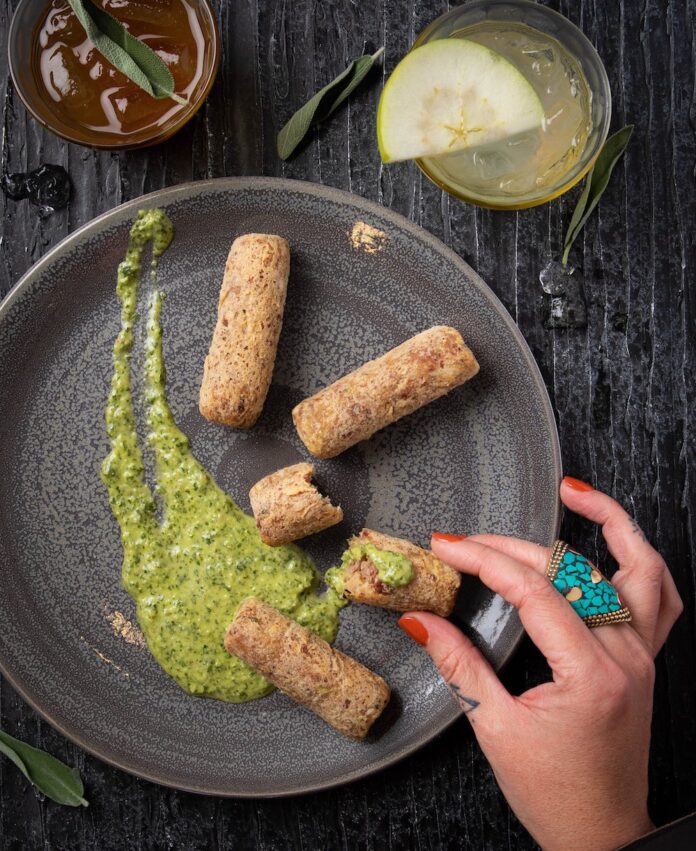
A woman with a ring on her finger picks up a log of Lamb Croquettes off of a grey plate with a green sauce smeared across it.

This Lamb Croquette recipe was born when Joey Hilty of The Vandal and Keyla Nogueira Cook of Mercearia Brasil joined forces for our Lamb Fest competition. “Both of us thought of making coxinha (chicken croquettes), a popular street food in Brazilian cuisine, so we decided to do a lamb version,” recalls Keyla. “Due to my dietary restrictions with gluten, we decided to use yuca, one of my staple ingredients, as the base instead of flour. Along with Joey’s special sauce it became a great combination of flavors and texture.” The line at their booth proved them right: the combo was compelling indeed.

What are Croquettes?

Croquettes are a delicious way of transforming leftovers or simple ingredients into a mouthwatering deep fried log. The base is a thick, creamy binder, usually a béchamel, which lets you add in whatever flavors you desire. In the case of these Lamb Croquettes ground lamb is finely minced and mixed into the béchamel. We continue to build on the rich, savory flavor of the lamb with aromatic herbs like fennel alongside garlic and onion. After chilling the mixture to firm it up, we shape individual portions into cylinders or ovals, then meticulously coat in breadcrumbs, creating a crispy exterior that contrasts the tender, flavorful inside.

Print
clock clock iconcutlery cutlery iconflag flag iconfolder folder iconinstagram instagram iconpinterest pinterest iconfacebook facebook iconprint print iconsquares squares iconheart heart iconheart solid heart solid icon
A woman with a ring on her finger picks up a log of Lamb Croquettes off of a grey plate with a green sauce smeared across it.

Lamb Croquettes


  • Author: Joey Hilty and Keyla Nogueira Cook

Description

These deep friend bundles of lamb and spices are the perfect balance of crispy and tender.


Ingredients

Scale

For the ground lamb mixture:

  • 1 lb ground lamb
  • 1 tbsp chopped onions
  • 1 tsp minced garlic
  • 1 tsp fennel
  • 1 tbsp kosher salt
  • 1 tsp black pepper
  • 1 tsp chili pepper flakes
  • 1 lime
  • 2 tbsp olive oil

For the yuca:

  • 1 lb ground lamb
  • 2 lb cooked yuca
  • 1 tbsp kosher salt
  • 1 cup chopped green onions
  • 1 tsp turmeric
  • 1 tbsp chili peppers
  • 2 cups all-purpose gluten-free flour
  • 6 cups of oil for frying the croquettes


Instructions

  1. In a mixing bowl, mix all the ingredients for the lamb and let it rest for 10 minutes.
  2. In a large and hot skillet cook the lamb until well-done.
  3. Cook frozen yuca in a large pot with enough water to cover it and 1 tablespoon of kosher salt. Let it cook until it’s falling apart.
  4. Around 30 minutes after it starts boiling, drain the water and carefully remove the yuca strings (it can be easily done with a fork).
  5. In a KitchenAid bowl, add cooked lamb and yuca. Add the salt, green onions, turmeric, and chili peppers. Mix on high speed until it forms a dough.
  6. Divide the mixture into 24 pieces and roll each piece into even-sized log shapes. Roll them in the all-purpose flour.
  7. When the oil is heated to 360 degrees, carefully drop them in several batches into the oil. Fry for about 3-4 minutes each side or until crispy and golden brown.
  8. Transfer to a wire rack or paper towel. Best served warm.

Recipe by Joey Hilty and Keyla Nogueira Cook
Styling by Ana Kelly
Photography by Laura Petrilla

Subscribe to TABLE Magazine’s print edition.

Lamb Sausage

0
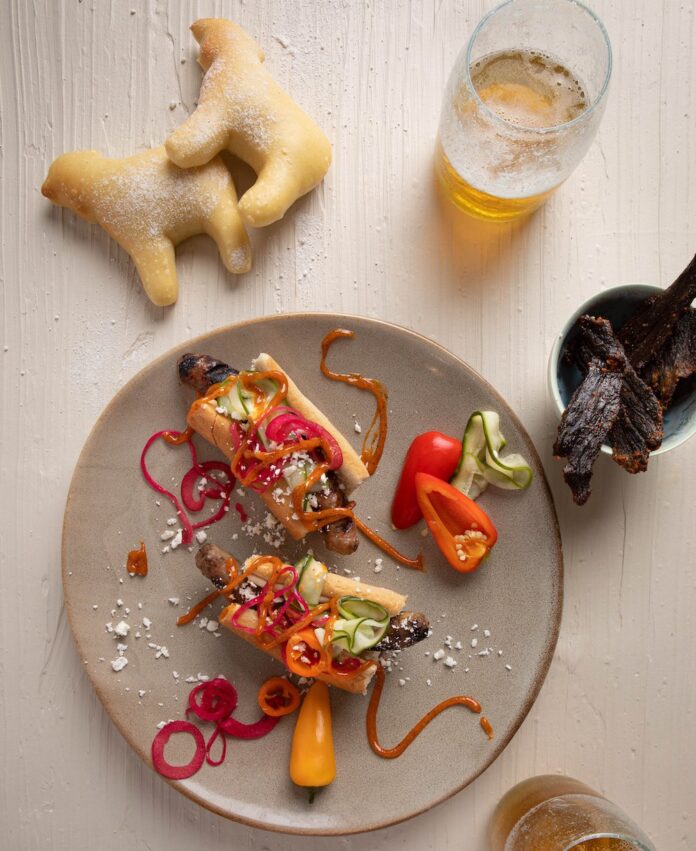
Two small hot dogs made out of lamb sausage sit with relish toppings on a grey plate as lamb donuts sit nearby.

The sweetness of life “up on the mountain” at Nemacolin inspired the team to create the best hot dog ever (Lamb Sausage) for our Lamb Fest competition. They devised a classic flavor profile featuring lamb, of course, with garlic, rosemary, and red wine. The results, a “complete eat” of fatty sausage on a toasted slider bun with crispy, sweet, and acidic cucumber and onion, topped with smoked harissa aioli. As a bonus for all the folks who admired these dogs (many of them two and three times), the team also sizzled up a batch of lamb-shaped lamb-fat donuts. Simply divine!

Tips for Using a Meat Grinder to Make Lamb Sausage

When crafting homemade lamb sausages with a meat grinder you first want to start with clean equipment. Make sure all your items, including the grinder, plates, and stuffer, are thoroughly cleaned and chilled to stop bacterial growth and fat smearing. If you find grinding to be the hard part, you can partially freeze your meat and fat before grinding to achieve a cleaner cut and better texture. We recommend starting with a coarse grind as you can always refine after if it’s necessary. If you happen to have a sausage stuffer attachment, it’s going to be a life saver for filling the casing. But, with some time and patience you can fill by hand if needed. Just remember not to overfill the casings, leaving room for twisting and linking.

Print
clock clock iconcutlery cutlery iconflag flag iconfolder folder iconinstagram instagram iconpinterest pinterest iconfacebook facebook iconprint print iconsquares squares iconheart heart iconheart solid heart solid icon
Two small hot dogs made out of lamb sausage sit with relish toppings on a grey plate as lamb donuts sit nearby.

Lamb Sausage


  • Author: Nemacolin

Description

Sausage made from lamb provides the perfect balance of fat and flavor.


Ingredients

Scale
  • 2 ¼ lb fatty lamb shoulder
  • ½ lb lamb fat or pork fat
  • 1/4 cup fresh rosemary, chopped
  • 1 ½ tsp kosher salt
  • 3 cloves garlic, finely chopped
  • 1 tsp freshly ground black pepper
  • ½ cup red wine, chilled


Instructions

  1. Cut the lamb shoulder and fat into small pieces that will easily fit into your grinder, removing any sinew from the meat as you go.
  2. In a large bowl combine the meat and fat with the rosemary, salt, garlic, and pepper. Stir to mix. Cover and refrigerate 4-6 hours or overnight.
  3. Before grinding, place the bowl from your stand mixer and meat grinder in the refrigerator for 2 hours.
  4. Remove the meat mixture, bowl, meat grinder, and wine from the refrigerator. Using the finest grind on your grinder, grind the meat mixture into the chilled bowl.
  5. Alternate pushing the pieces of fat and meat through the grinder to ensure that the fat doesn’t stick inside.
  6. Using the paddle attachment on your stand mixer, mix the ground meat on low speed, adding the cold red wine. The mixture will come together in about 2 minutes and be sticky.
  7. Take about 1 tablespoon and form a small patty. Fry it in a skillet. Taste and adjust the seasoning, adding more salt if desired. If you plan on stuffing the sausage into casings, refrigerate it for 2 hours.
  8. Otherwise, you can simply shape and wrap the sausages in plastic wrap for later use. If you’re stuffing the sausages, proceed to the next step.
  9. While the sausage meat is chilling, soak the casings in warm water for 1 hour.
  10. Rinse the casings in cold water, then run water through them, by slipping one end of the casing over the tap and gently turn on the water to let it flow through the casing.
  11. Place the casings in a fine-mesh sieve to drain. You want them to be moist when you fill them.
  12. Attach the sausage stuffer to the grinder, and push the damp sausage casing over the tube until about 4 inches is hanging from the end, and tie a knot in this piece. (If it’s your first time at making sausage, ask a friend to help you with this step.)
  13. Add the chilled mixture to the grinder on low speed, and slowly stuff the sausage casings, trying to minimize the air pockets in the casings. As the sausage enters the casing, it should slowly slide off the tube.
  14. Once all the mixture is used up, ease any remaining casing off the tube.
  15. Roll the sausage on a damp surface to distribute the filling as evenly as possible, then form the sausage into links by twisting the casings at 6-inch intervals.
  16. Twist each link in the opposite direction to prevent them from unwinding.
  17. Cover the sausages and refrigerate for up to 3 days. We served our sausage sous vide at 145 degrees for 1 hour and then griddled to create a moist interior and crispy outside.

Recipe by Nemacolin
Styling by Ana Kelly
Photography by Laura Petrilla

Subscribe to TABLE Magazine’s print edition.

Lamb Shoulder

0
Two small tacos on green plantains hold a braised lamb shoulder with cilantro on top.

Roger Li of Umami and The Parlor Dim Sum and Julio Peraza of Torogoz Contemporary Latin Cookery, took a multicultural approach to their Lamb Shoulder as a part of our Lamb Fest competition. Roger braised delicious lamb shoulder with Asian ingredients such as fermented bean cubes, sesame oil, and soy sauce to infuse a rich umami impact into the meat. Julio plated the delicious, tender results with a fantastic El Salvadoran salsa verde, grated onions and a sprinkle of fresh sprouts…all on one of his tender, fresh, and soft tortillas.

How to Select the Perfect Lamb Shoulder

You have two main choices when choosing lamb shoulder. There is a bone-in shoulder and a boneless cut, each of which has its advantages. A bone-in cut is going to carry more depth of flavor. It’s great for braising and slow-cooking if you have the extra time to spare. However, a boneless cut means easier preparation and a faster cooking time. Basically, if you want to make this recipe the best it can be, go with the bone-in cut. If speed is what you need, boneless is the way to go.

Print
clock clock iconcutlery cutlery iconflag flag iconfolder folder iconinstagram instagram iconpinterest pinterest iconfacebook facebook iconprint print iconsquares squares iconheart heart iconheart solid heart solid icon
Two small tacos on green plantains hold a braised lamb shoulder with cilantro on top.

Lamb Shoulder


  • Author: Roger Li and Julio Peraza

Description

Trust us, the process is worth the wait on this one.


Ingredients

Scale
  • 10 lb lamb shoulder
  • 1 cup fermented bean cubes
  • 1 cup chu hou sauce
  • 1 cup soy sauce
  • 2 qt water
  • 2 tbsp salt
  • 2 tbsp sugar
  • 1 tbsp white pepper
  • 1/2 cup sesame oil


Instructions

  1. Braise lamb for 1 hour, then separate meat and reduce the sauce.
  2. Once reduced, mix the sauce in with braised lamb.
  3. Serve on fresh soft tacos.

Recipe by Roger Li and Julia Peraza
Styling by Ana Kelly
Photography by Laura Petrilla

Subscribe to TABLE Magazine’s print edition.

Lamb Terrine with Butternut Squash Purée

0
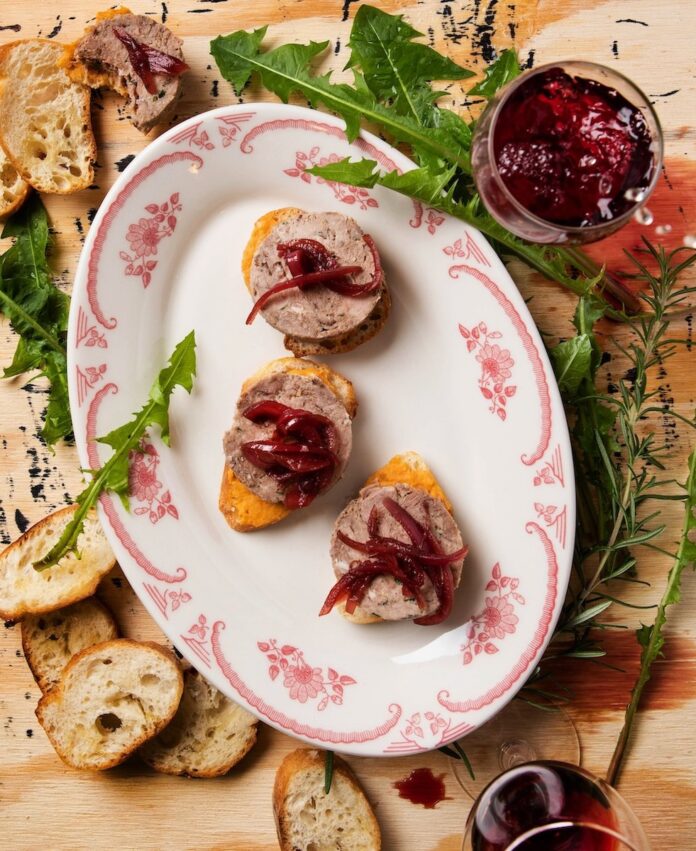
A lamb terrine staged on a floral plate.

Nothing says spring like Lamb Terrine. The chef teams who competed for the top prize at TABLE Magazine’s Lamb Fest in 2021 brought their experience, their imagination, and their talents to the festival last October. The results…nine fantastic variations on deliciousness. Each entry was unique in its flavor profile, in its textures, and in its presentation. It was a tough choice, but the many hundreds of attendees voted their taste buds. Guest Judge Hal B. Klein supervised the count and announced the verdict. And the rest is lamb history.

About This Lamb Terrine

Chris O’Brien of Hyeholde huddled up with Stephen Felder and Cara Del Signore of the now-closed Stagioni to brainstorm their original Lamb Fest entry. They braised Elysian Fields lamb shoulder until tender, and then worked the fork-pulled meat into a classic charcuterie which was tender, moist, and as flavorful as something you’d be dazzled to find at a market in France. Served on a slice of baguette with squash puree and pickled onions, this dish took us on a Transatlantic voyage to the South of France without leaving Lamb Fest. But if you weren’t lucky enough to be there, you can make the Lamb Terrine at home as an appetizer.

Print
clock clock iconcutlery cutlery iconflag flag iconfolder folder iconinstagram instagram iconpinterest pinterest iconfacebook facebook iconprint print iconsquares squares iconheart heart iconheart solid heart solid icon
A lamb terrine staged on a floral plate.

Lamb Terrine with Butternut Squash Purée


  • Author: Chris O’Brien

Description

A delightful appetizer.


Ingredients

  • Elysian Fields lamb shoulder
  • Blended oil
  • Red wine
  • Butternut squash (See purée instructions below)
  • Sweet onions (See purée instructions below)
  • Fresh herbs (rosemary, chives, parsley)
  • Tamari
  • Whole-grain mustard
  • Roasted garlic
  • Sea salt and black pepper
  • Gelatin
  • Lamb stock


Instructions

For the terrine:

  1. Season shoulder with salt and pepper, then sear lamb shoulder with blended oil in a roasting pan.
  2. Remove shoulder from pan. Deglaze with red wine. Place shoulder back in pan and cover with lamb stock. Cover and braise in oven at 400 degrees for 3-3 ½ hours.
  3. Remove shoulder from stock and let cool enough to pick lamb meat from bone keeping intact big chunks of meat.
  4. Reduce stock until fortified.
  5. Season lamb meat with fresh chopped herbs, tamari, whole grain mustard, roasted garlic, and sea salt and pepper to taste.
  6. Add gelatin sheets to fortified stock. Add just enough gelatin-fortified stock to lamb meat mixture to make slightly wet. Place pulled lamb while it is still warm on plastic wrap, form into cylinder and roll tightly and tie at both ends. Poke tiny pin holes throughout wrapped lamb cylinder. Tie a knot at one end with butcher twine to hang lamb terrine in refrigerator overnight. Remove from refrigerator and slice, carefully removing plastic wrap as you slice.
  7. Finish with sea salt. Serve on a slice of Mediterra baguette slathered with Roasted Butterbut Squash Puree. Sprinkle with Onions Agrodolce.

For the butternut squash purée with sweet onions

  1. Cut butternut squash in half. Remove seeds. Rub with a dash of olive oil and sprinkle lightly with salt. Roast in oven at 325 degrees until fork tender.
  2. When the squash is cool enough to handle, scoop the flesh out of the shell and place in food processor. Add ground Espelette pepper, which is sweet and gently spicy, as well as Calabrian chili flakes, which are fiery I character. Tailor how much of each to your tastebuds.  Puree until smooth.
  3. For Onions Agrodolce, slice 2 onions and put them in a pot with just enough red wine vinegar to cover. Bring to a boil, reduce to simmer, and simmer until onions are soft. Strain the vinegar and measure. Add 25% of sugar by weight as well as a few pinches of hibiscus flowers. Simmer until thickened and strain over the reserved onions. Allow to cool and adjust seasoning as needed.

Recipe by Chris O’Brien, Stephen Felder and Cara Del Signore
Styling by Ana Kelly
Photography by Laura Petrilla

Subscribe to TABLE Magazine‘s print edition.
Don't Miss