Home Blog Page 16

Tempura Asparagus

0
A green plate of lightly fried asparagus tempura with slices of lemon around it.

Asparagus gets the tempura treatment here, resulting in golden spears of goodness. Serve with lemon wedges to squeeze over and tarragon aioli for dunking. This sort of finger food is marvelous for cocktail hour, as a starter, or even as a side dish along with a simply prepared seafood spritzed with lemon and pepper. Try a Spanish Albariño here as a sipping accompaniment. The combination of acidity and salinity both contrasts and supports fried food.

Print
clock clock iconcutlery cutlery iconflag flag iconfolder folder iconinstagram instagram iconpinterest pinterest iconfacebook facebook iconprint print iconsquares squares iconheart heart iconheart solid heart solid icon
A green plate of lightly fried asparagus tempura with slices of lemon around it.

Tempura Asparagus


  • Author: Cheryl Alters Jamison
  • Yield: Serves 6 or more 1x

Description

Lightly battered and fried to deliciousness.


Ingredients

Scale

For the tarragon aioli: 

  • ½ cup mayonnaise
  • 2 tsp extra-virgin olive oil
  • 1 tsp Dijon mustard
  • 1 small garlic clove, minced
  • 1 tbsp minced fresh tarragon or 1½ tsp dried tarragon

For the tempura:  

  • Vegetable oil or rice bran oil for deep-frying
  • 2 lb asparagus spears, trimmed of tough stems
  • 2 cups all-purpose flour
  • 2 cups ice water
  • 2 medium egg yolks
  • Lemon wedges, for garnish


Instructions

For the tarragon aioli: 

  1. Stir the ingredients together in a small bowl. Cover and chill until serving time.

For the tempura:  

  1. Pour at least 3 inches of oil into a large sturdy pot suitable for deep-frying and broad enough for the asparagus spears.
  2. Place the asparagus on a plate near your frying pot. Arrange a rack with paper towels under the rack for draining the asparagus. Also nearby, have a broad shallow dish with 3/4 cup of the flour, a large bowl for mixing the batter (which needs to be done at the last minute), and a long-handled “spider” strainer and tongs for retrieving the asparagus.
  3. Just before you are ready to serve the tempura, heat the oil to 375 degrees.
  4. While the oil heats, mix the batter, first whisking together the ice water and egg yolks. Mix them vigorously until frothy. Whisk in the remaining 1¼ cups of the flour, just until lightly blended. Don’t worry about a few streaks or lumps of flour. You don’t want to overwork the batter.
  5. Dredge the asparagus in the shallow dish of flour, a few spears at a time, then dip in the batter and slip into the oil one at a time. Repeat with remaining asparagus and batter, adding as many as you can to the oil without crowding or dropping the oil temperature. Cook the asparagus for 3 to 4 minutes, turning as needed, until golden.
  6. Serve right away with the aioli and lemons to squeeze over the tempura.

Recipes and Story by Cheryl Alters Jamison 
Styling by Keith Recker 
Preparation by Jackie Page 
Photography by Dave Bryce

Subscribe to TABLE Magazine‘s print edition.

Shaved Asparagus Salad 

0
A plate full of shaved asparagus and croutons with a salad dressing container in the bottom left corner.

Shaving asparagus super thin is a great way to enjoy it raw. This Shaved Asparagus Salad is especially gorgeous when you can find green and purple spears. Add white ones too, if you find them. Lemon contributes brightness, and rustic croutons and almonds both add texture. If you’d like, feta crumbles could be scattered over it too. A buttery, nutty, full-bodied Meursault would pair well here. Its notable palate presence will stand up to the vinaigrette as well as to the earthy crunch of raw asparagus.

Print
clock clock iconcutlery cutlery iconflag flag iconfolder folder iconinstagram instagram iconpinterest pinterest iconfacebook facebook iconprint print iconsquares squares iconheart heart iconheart solid heart solid icon
A plate full of shaved asparagus and croutons with a salad dressing container in the bottom left corner.

Shaved Asparagus Salad 


  • Author: Cheryl Alters Jamison

Description

Let asparagus show you how a salad is done right!


Ingredients

Scale

For the croutons: 

  • 4 to 6 oz ciabatta or peasant bread, torn in bite size pieces
  • 2 tbsp extra-virgin olive oil

For the lemon-mustard vinaigrette: 

  • 1 tbsp white vinegar
  • 1 medium shallot, minced
  • 2 tsp Dijon mustard
  • ¼ cup extra-virgin olive oil
  • ¼ cup vegetable oil
  • Zest of 1 lemon with 2 tbsp juice
  • Kosher salt and fresh-ground black pepper

For the asparagus:

  • 2 lb fat asparagus
  • Handful or 2 of arugula leaves
  • 1/3 cup sliced almonds, toasted in a dry skillet


Instructions

For the croutons: 

  1. Preheat oven to 350 degrees. 
  2. Combine the bread pieces with the oil and arrange on a small baking sheet in a single layer. Bake for about 10 minutes, stirring once, until golden brown and crunchy. Let cool on the baking sheet. 

For the lemon-mustard vinaigrette: 

  1. Combine the vinegar and shallot in a small bowl. Let sit 5 to 10 minutes, for the shallot’s flavor to mellow a bit.  
  2. Stir in the mustard. Whisk in the oil in a steady stream, then add one-half of the lemon zest (reserve the rest to garnish the salad) and the lemon juice and whisk to combine. Season with salt and pepper. 

For the asparagus:  

  1. Snap or cut off the woody stems. Run a vegetable peeler the length of each spear, making as many shavings as possible.
  2. Pile up the asparagus shavings neatly on a platter or individual plates. Tuck a few arugula leaves around the edges.
  3. Drizzle with about two-thirds of the dressing. Scatter with almonds, remaining lemon zest, and croutons.
  4. Serve right away with additional dressing, if you wish. 

Recipes and Story by Cheryl Alters Jamison 
Styling by Keith Recker 
Preparation by Jackie Page 
Photography by Dave Bryce

Subscribe to TABLE Magazine‘s print edition.

The Food Trends Defining 2026: Comfort Cooking, New Proteins, GLP-1 Diets, and Smarter Grocery Spending

0
An uncooked chicken sits on a cutting board.

In 2026, the way we eat feels both inventive and deeply familiar. For instance, comfort food is no longer an indulgence but rather a strategy. These recipes are built to soothe, nourish, and stretch the grocery budget in an era of grocery inflation. At the same time, high-quality proteins are moving from novelty to necessity, shaped by climate awareness and shifting dietary needs as processed foods meet their match. GLP-1 medications are quietly influencing not only the social sphere but the cooking world with extra virgin olive oil possibly becoming a solution.

Through it all though is a renewed sense for simple, high-quality ingredients that center around flavor, health, and tradition. Together, these shifts reveal that 2026 food trends are defined less by restriction or excess this year, and more so by resilience, intention, and pleasure in eating.

Food trends are not just about what’s new and hot. They’re actually a reflection of how we want to live right now. This year’s trends reflect a collective craving for food that feels intentional whether that’s for comfort food, flavors that travel without excess, and techniques that honor tradition while embracing innovation. Climate-aware sourcing as well as playful nostalgia and globally inspired comfort showcases our curiosity in 2026 and zest to better out world one step at a time. Engaging with these trends (no matter if you cook, host, shop or dine) is a way to stay up-to-date with the current state of our world while also lending a helping hand to your neighbors and locals alike. We invite you to savor those moments when food feels both expressive and deeply human.

Comfort Food

Flat-lay image of chicken and dumplings in small bowls on a weathered table.

Comfort food is called that for a reason. Whether it’s a warming bowl of stew, a juicy burger, or a casserole in a hot pan, we crave comfort food when times are hard and stress is heavy. In a year like 2026, comfort foods are a must when tensions rise across the globe and your own personal battles take hold. We’ll see a rise in recipes that bring nostalgia and remind us of better times like our childhood.

Beat Grocery Inflation with Budget-Friendly Recipes

A chicken fajita skillet with slices chicken, limes, and peppers. Then there are small bowls of pico, sour cream, and onions.

One of the scariest parts of entering a New Year is not knowing what is going to happen to the prices of everyday groceries. Will milk end up a nearly five dollars a gallon again? Will eggs reach into the double digits? Well, what we do know is that chicken, beans, canned fish, and pasta are all staying at a low cost, and if they see an increase, it will be far lower than other foods. This means we’re loading up on recipes that utilize these ingredients in a variety of ways to infuse different cultural flavors into your dinner.

Feeding a Family in the Shifting Economy

A woman grocery shops in a store with a basket on her arm.

Families are likely to feel the biggest impact of the shifting economy of 2026. Whenever you’re feeding more than just yourself and your partner, it’s difficult to come up with larger portions at an accessible price, while maintaining nutrition for young minds and bodies. In order to save more than a dime in 2026, we recommend taking tips from a real mom who spends each day feeding three wonderful children and a hungry hubby. As author Katrina Tomacchio says, “It’s [saving money] about identifying the habits that quietly cost families the most and learning how to replace them with smarter strategies.”

High Quality Protein and Analog Dining

A chunk of marbled meat on a dark marble table with coarse salt all over the table.

You’re used to eating ground beef, chicken, and fish but did you know there are high-quality protein options that are better for you? Local beef, tinned fish, duck, pork, and quail are just a few of the selections that are shining in 2026. Chef Maxine Sharf points out, “I think there’s been a real shift toward people caring more about the quality and sourcing of their food, especially animal proteins… I’ve definitely seen more interest in high-quality beef recipes.” Cooking these meats at home is also a great way to take advantage of the analog age. In a world of chaos, analog media and ways of living help us to slow down and savor what we have. It’s hands-on, it’s tactile, and it’s essential to 2026.

Dietary Health

Mottahedeh's Tobacco Leaf Dinnerware: Prawn and Noodle Lettuce Wrap Dish

2026 is about being the best you that you can be. To help you feel just as good, you can follow a diet plan that takes your life and needs into consideration. Maybe you’re looking to cut out some meat, but not all. Or, maybe you’re thinking about giving keto a try but don’t know where to start. Each of these guides is designed to make starting a new diet as simple and as encouraging as possible. Remember as you dive in, there’s no “right” way to diet. It’s most important to listen to your body and supply it with what it needs.

Food as Medicine: Extra Virgin Olive Oil and GLP-1

A bottle of olive oil sits on a table with olives around it.

In the New Year, we’re exploring the concept of Food as Medicine. This applies not only for diets but also for specific ingredients that can support a healthy lifestyle. You’ve probably heard a lot about GLP-1 in recent months and its ability to help you lose weight. Nasser Abufarha, founder and director of Canaan Palestine, explains, “With more GLP-1 in your system you’ll feel full for longer, have improved glucose tolerance, have an increase in cardiovascular health, and your digestive process will slow so your body can absorb more of the vitamins and nutrients you ingest.”  But, before you go running for a shot, give extra virgin olive oil a chance. Olive oil naturally encourages your body to increase GLP-1 secretion without weekly injections. It’s also the reason you see olive oil used in the Mediterranean diet to lower the risk of cardiovascular disease.

Food as Medicine: How to Cook, Sip, and Soothe with Ginger

Ginger chopped up sits on a cutting board with sliced lemon and a cup of tea.

You’ve probably used ginger can soothe a sore throat or a cold but there are plenty of other reasons to use ginger as well. In a year where taking care of ourselves takes priority, ginger can become a best friend for its support with nausea, inflammation, pain, gas, boating, and so much more. As author Kristen Palmer explains, “Its use in Southeast Asia and traditional systems of medicine dates back thousands of years, and modern research is rapidly catching up.” The best part is there are so many ways to use ginger besides just dropping it into a glass of hot water. Take our advice and see how ginger can shake up your life.

Keep working on taking care of yourself in 2026 with our Healthy Dessert Recipes for Your Dietary Needs. After all, everyone deserves a treat every now and then!

Story by Kylie Thomas

Subscribe to TABLE Magazine‘s print edition.
Pittsburgh Menu Highlights from Hungry Jess: March 2026

0
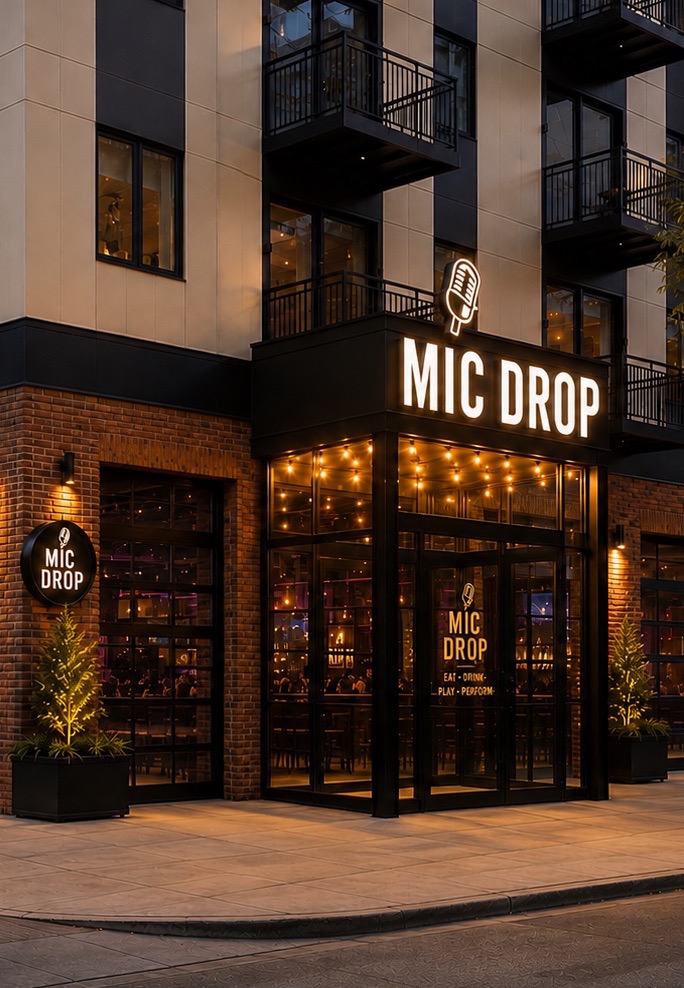
A menu for Alberta's lays on a table by a purse and wine glasses.

March, we’re ready for you! Cheers to seeing glimpses of spring on the horizon and celebrating bright flavors in the process.

If you’re reading this, I’m manifesting that the worst of the brutal winter is behind us. Fortunately, this means the sun sets later, the days are less grey, and it sets the tone for exploring the city’s current dining scene. I don’t know about you, but I tend to be a happier version of myself knowing we have more sunlight in the day.

This month, I’m focusing on restaurants in Pittsburgh that transport you. No, I don’t mean I want you to feel far away from Pittsburgh, but more so, being able to celebrate our beautifully diverse cuisine landscape that we’re so lucky to have in the Steel City. Read that one more time!

From tiki cocktails to a collision of concepts crafted into a single dumpling, I want this article to get you excited, inspired, and, dare I say, influenced to try something new this month.

Hungry Jess Shares What’s Hot on Pittsburgh Restaurant Menus This March 2026

Hidden Harbor

1708 Shady Ave, Squirrel Hill 

Hungry Jess Approved Order: Man O’War mocktail, rotating tacos, Pupu Platter. 

I don’t believe I could craft a better description than what’s on their website: “Tucked away in Pittsburgh’s eclectic Squirrel Hill neighborhood, Hidden Harbor offers shelter from life’s stormy seas with an array of tropical cocktails & island eats, served in the Aloha spirit.” I truly couldn’t have said it better myself! 

With a menu that also doubles as a work of art, it also contains an endless array of tropical cocktails meant to appeal to everyone, from bright and bracing to dark and dangerous. If you’re a rum fan, this is the spot for you. 

On my last visit, my cocktail came in a tiki head and came with a pearl bracelet… yes, I still have it. And it was non-alcoholic. 

A white plate full of dumplings in a red sauce.
The Parlor Dim Sum

The Parlor Dim Sum

4401 Butler St, Lawrenceville 

Hungry Jess Approved Order: Rotating Juicy Dumplings, Cha Siu Bao, Congee 

While planning this article, I knew The Parlor would be at the top of my list of places to include. In full transparency, this spot is another client of mine, but it is truly one of my favorite places in Pittsburgh, regardless. Working with Chef and Owner Roger Li has been a highlight, and also seeing his creativity come to life through every dish is inspiring. 

A black table with Asian-style dishes all over it like dumplings, noodles, and prawns.
The Parlor Dim Sum

While it’s hard for me to pinpoint just a few dishes to order, one dish definitely stands out to talk about: the Juicy Dumplings. Not to be confused with any other style of dumpling, these are designed to reflect the epitome of Chef Li’s skills: honoring tradition, with his own flair. And, since I’m in charge of posting the weekly, rotating flavors, I more often than not influence my next visit with every post. 

Recent flavors have included Korean Beef BBQ, Pork Katsu with curry broth, Chicken Tom Yum… I am salivating just typing about them. 

A Pittsburgh pizza sits on a white table with pepperoni on it.
Alberta’s Pizzeria

Alberta’s Pizzeria

917 Western Ave, North Side

Hungry Jess Approved Order: Caesar salad, Zucchini Frites, Jabroni (ask for a side of arugula for an extra vegetable)  

This is one of my favorite spots I’ve tried so far in 2026. As I said in the recent Best Pittsburgh Pizza Round-Up: “…really cozy energy, moody lighting, an awesome staff, great cocktails and wine. For the pizza, I was pleasantly surprised and impressed: crispy crust, depth of flavor, and a wide array of classic yet elevated topping options. Grab a friend and split everything.” 

A basket of fries sits below a bowl of a caesar salad.
Alberta’s Pizzeria

Emphasis on this being an amazing spot for a GNO moment. Or first date. Or a solo moment at the bar! I already look forward to heading back and trying every pizza on the menu… I mean it. 

They do super fun weeknight specials on Tuesdays and Wednesdays, which they drop day-of on their Instagram page. Be sure you’re following before planning your visit!

A white plate full of french fries and two sliders with a side of red sauce.
Soju

Soju

4923 Penn Ave, Garfield

Hungry Jess Approved Order: Killer Tofu, Kimchi Caesar Salad, Spicy Chicken Sandwich

Soju is by far one of the places I daydream about the most… and then tell everyone about as a result. One of the many things I love about Soju is that there are zero frills: no reservations, call for takeout, and know that the wait is worth every second. 

The Killer Tofu may be the best tofu dish I’ve ever had: saucy, crispy, and you’ll want to dip everything into the remaining saucy goodness. 

Two bowls, one full of crispy tofu, the other full of a salad.
Soju

Chef and Owner, Simon Chough, also weaves in traditional dishes into both the staple menu and daily specials. The Gimbap, Kimchijeon, and BiBimBap are just a few to note. If you’re a soju drinker, this is also the spot for you (and there also may be a cocktail they serve in a can).  

I’m already daydreaming about a very near future solo visit to Soju… proof that my own writing easily influences me. 

What’s currently on your own hot list? Send me a note to jess@hungryjessbigcity.com!

Plus, learn more about Jess’ opinion on Pittsburgh pizza in her best of the best round-up.

Story and Photos by Jess Iacullo (Hungry Jess)

Subscribe to TABLE Magazine‘s print edition.

The 59th Carnegie International Reveals Its Exhibition Roster 

0
A woman with short black hair in a white muscle top stands in front of a wood backdrop.
Artist Ginger Takahashi Brooks is part of this year’s Carnegie International.

Plus, get a sneak peak of Artist Ginger Takahashi Brooks‘ (pictured above) Carnegie International project. 

Carnegie Museum of Art has announced the full scope of the 59th Carnegie International: a roster of 61 artists and collectives, 36 newly commissioned projects, more than 35 public programs, and partnerships with over 16 organizations across Pittsburgh. The exhibition, titled If the word we, will open May 2, 2026, and remain on view through January 3, 2027.  

What’s the Theme of This Year’s Carnegie International?

The title comes from a commissioned essay by writer Haytham el-Wardany and proposes “we” not as a stable collective but as a space for listening. In a press briefing, curators Ryan Inouye, Danielle A. Jackson, and Liz Park spoke about resisting the pull of a singular theme, emphasizing instead a methodology built through extended exchange with artists and thought partners over several years. 

That emphasis on relation, exchange, and listening is familiar territory for the Carnegie International, which has long framed itself as a platform for expansive inquiry. Carnegie Museum of Art Director Eric Crosby reflected on the exhibition’s origins in 1896, when Andrew Carnegie imagined the museum as a place where an international assembly of contemporary art might serve an educational function. Each International, Crosby noted, opens “onto a changed world,” offering an opportunity to rethink not only what the museum presents, but how it operates.  

Who and What You Can Expect to See at the 59th Carnegie International Exhibition

What distinguishes this edition is not simply its scale—though the numbers are significant—but how insistently the exhibition positions programming as a primary site to produce meaning. The Carnegie International team views programming not as something that will happen around the exhibition’s 247-day run, but as one of the ways the exhibition itself is taking form. 

That framing came into sharp focus during remarks by Dana Bishop-Root, Director of Education and Public Programs, who characterized the museum’s approach as a shift “from the idea that people need the museum to the practice of a museum that needs people.” In this model, publics do not arrive empty-handed; they bring lived experience, research, feeling, and political context into relation with the work on view. “We make meaning together,” Bishop-Root said. 

For the International, Bishop-Root emphasized, this mindset is foundational. They developed the programming alongside curatorial research and artist commissions rather than layered on after the fact. Several of the museum’s core initiatives—including its free outdoor summer series, Inside Out, and its annual film program—are getting a new upgrade through the lens of If the word we. Rather than guiding audiences toward a fixed interpretation, these programs are structured to offer multiple points of entry and return. 

A Look at the Process

The team organized the exhibition programming around a set of frameworks to give the International rhythm over its eight-month run. One strand, ChoreoPublics, focuses on how publics are formed through movement, sound, and participation, rethinking mediation as something embodied and relational rather than instructional. Two others, scores and swells, structure how the exhibition unfolds over time. 

Scores extend artists’ practices into the public realm through prompts that circulate among partner organizations and audiences, forming what Bishop-Root described as an “ungovernable curriculum.” Swells mark periods of heightened activity—opening weekend in May, a performance-centered moment in August, and a fall convergence around the Pittsburgh Art Book Fair—designed to “give national and international visitors clear moments to travel to Pittsburgh for deeper engagement, and invite our local public to return to the exhibition and our partner sites again and again.” Together, these approaches frame programming as a key site of experimentation in this edition of the International. 

Interweaving Into Pittsburgh’s Landscape

This emphasis on repetition, return, and duration aligns with the curators’ description of the International as a living archive rather than a fixed statement. Many participating artists work through performance, sound, immersion, and collective practice, and several projects will unfold over time rather than presenting as completed objects. Offsite works at four partner institutions across the city—The Children’s Museum of Pittsburgh, Mattress Factory, the Kamin Science Center, and Thelma Lovette YMCA—will further extend the exhibition’s footprint into Pittsburgh’s social and institutional fabric.  

At the same time, the museum’s language invites reflection on how ideas like openness and collaboration take shape in practice. These terms carry different meanings depending on how people enact them, and their implications often emerge over time. The curators spoke frequently about listening as a guiding principle, underscoring a desire to remain responsive as projects develop. In that light, If the word we frames the museum as a space for gathering, learning, and shared responsibility. Whether that orientation yields clarity or raises new questions will become clearer as these structures appear over time. 

What’s the Point of it All?

The 59th Carnegie International is the newest edition of an exhibition that has historically sparked debate about institutional responsibility and curatorial authority. As this iteration arrives, it has set its orientation toward relation: between artists and place, between publics and institutions, between process and outcome. 

What is clear from the announcement is that the museum is investing heavily in programming as a form of cultural labor rather than supplementary service. “Collective experience” is positioned as a site where the exhibition’s questions are contested and lived. The International’s shape will not arrive all at once. It will gather through workshops, performances, publications, and encounters that stretch across the city and the calendar. 

For audiences, the exhibition emphasizes ways of engaging that extend beyond a single visit; it may be less something to see than something to move with. For the institution, it sets a high bar: to ensure that the values articulated—listening, collaboration, shared responsibility—are borne out in form and practice alike. In that sense, If the word we does not propose an answer so much as a grammar shaped one shaped by relation, proximity, and the difficulty of speaking collectively. 

Story by Shawn Simmons
Photography by Laura Petrilla

Subscribe to TABLE Magazine‘s print edition.

Ginger Brooks Takahashi Prepares a Multi-sensory Installation for the 59th Carnegie International

0
Ginger Brooks Takahashi sits in a wood chair in her studio with a painting above her.

Whenever you head to view the artists of the 59th Carnegie International, take a look for Ginger Brooks Takahashi’s exhibit.

The air in Ginger Brooks Takahashi’s studio carries a faint vegetal sweetness. The scent, drawn from the seeds of Perilla frutescens, is difficult to pin down: I discern notes that recall toasted sesame oil, damp soil after rain, or the sharp edge of a leaf crushed between fingers. As preparations intensify for the 59th Carnegie International, opening May 2026, Brooks Takahashi is testing scent distillations and thinking about how a living plant might tell a much larger story. 

Ginger Brooks Takahashi looks over her work.

Ginger Brooks Takahashi Creates an Indoors-Outdoors Exhibition for the Carnegie International

Brooks Takahashi’s contribution to the exhibition, Perilla Peoples Garden, will unfold both outdoors and indoors. Beginning in May, a garden of Perilla frutescens—known as shiso in Japanese and kkaennip in Korean—will take root on the Forbes Avenue side of Carnegie Museum of Art, occupying the former site of Yvan Pestalozzi’s Lozziwurm. When the exhibition opens, the plants will be just at the start of their growing season. By late summer, they’ll be lush and fully grown; by early fall, their seeds will be harvested. The work changes with time, insisting on return. 

A person holds an illustration of a sprout.

“I grew up with perilla,” Brooks Takahashi says, noting that no matter how often her family moved, there was always space reserved for it in their garden. Her interest lies in perilla’s movement across continents and cultures, and in how diasporic communities relate to it differently. Shared between Japanese and Korean cuisines, the plant carries what she calls an “irreplaceable flavor” anchored in memory. 

Something Different Behind Closed Doors

Inside the museum, Perilla Peoples Garden takes on a different register. Brooks Takahashi has been working closely with herbarium sheets from Carnegie Museum of Natural History, encountering specimens grown in China, Japan, and even Pittsburgh, despite the plant not being native to the region. Some samples are more than a century old. Notably absent, she points out, are specimens from Korea, an omission that shaped her reading of the collection. 

Hands hold up a plant tree print.

Inspired by these materials, Brooks Takahashi is producing a series of works on paper that hover between categories: part print, part collage, part something else entirely. Running handmade sheets through a letterpress, she adheres fragments of text drawn from inflammatory rhetoric around migration and immigration. The language deliberately aligns with how certain plants are marked as “invasive.” In Pennsylvania, perilla carries that classification. “I’m interested in exploring those edges,” the artist says. 

How Brooks Takahashi Creates a Multi-sensory Experience

Sound and scent further complicate the experience. Audio recordings—interviews with seed savers, farmers, and others with close relationships to the plant—will weave through the gallery while the perilla distillations infuse the space. Encountered through scent and sound, the exhibit will unfold gradually and unevenly for each visitor. 

ginger Brooks Takahashi smells a jar of seeds.

Community has long been central to Brooks Takahashi’s practice, and Perilla Peoples Garden extends that commitment. Her studio is on the first floor of (___) [Blankspace], a Wilkinsburg project space run by artist Joey Behrens, with a print shop that has supported her ongoing material experiments. She also points to her work with the Neighborhood Print Shop at the Braddock Carnegie Library and with General Sisters as formative sites where making is inseparable from community. 

Food-based workshops scheduled throughout the installation’s run further extend this emphasis on gathering. Liz Park, the Richard Armstrong Curator of Contemporary Art at Carnegie Museum of Art and Kathe and Jim Patrinos Co-Curator of the 59th Carnegie International, notes that these moments echo the exhibition’s broader commitment to occasions to think carefully about how people come together and how artworks “find their own publics.” For Park, Brooks Takahashi’s project offers a space for rest as well as connection. 

Various jars of seeds and distillates sit on a counter.

Cultural Impact at the Core

The project also brushes up against histories that remain underexamined, including the colonial relationship between Japan and Korea. For the artist, these questions are shaped by family history and also by years of teaching and research that continue to unfold through her practice. “Through making the work, I am doing the research,” she says. 

More than a decade in the making, Perilla Peoples Garden brings Takahashi’s longstanding interests—land, memory, migration, and embodied knowledge—into sharp focus. That it will unfold in Pittsburgh, where she lives and works, feels especially meaningful. As the perilla grows, so too does an invitation: to slow down, to gather, and to consider how histories, much like plants, take root in unexpected places. 

Hands hold up paintings of leaves with frowny faces.

Story by Shawn Simmons
Photography by Laura Petrilla

Subscribe to TABLE Magazine‘s print edition.
The Tomacchios Say “I Do” (Again) in a Vow Renewal Ceremony

0
A couple sitting in a private booth at The Vandal in Pittsburgh, sharing a romantic candlelit dinner during their wedding renewal celebration.

Getting married three times to the same partner signifies joy and commitment.

Technically, I’ve been married three times.

A woman and man in a pink dress and suit hold an aperol spritz and espresso martini.

An Intimate Vow Renewal Ceremony in Honor of the Tomacchio’s Love

There was no divorce, no heartbreak, no new partner. Just one marriage, renewed, and a shared belief that love is reason enough to gather beautifully and celebrate often.

The first wedding was impulsive. After six years of dating, we decided we were done waiting. On the steps of a New Hampshire city hall one Thursday afternoon after work, we exchanged rings with only our parents present. There were no invitations, no advance warning, just a simple text asking friends if they wanted to meet for drinks.

Bride and Groom sitting on the candlelit Grand Staircase of the Allegheny County Courthouse for their wedding renewal.

Later, tucked into a seaside bar, our wedding night unfolded over briny oysters, ice-cold martinis and seashell-shaped fine chocolates. It was deliciously unplanned and lacking all the traditional pomp and circumstance; perfect for who we were at 27.

The First Renewal

Exactly one year later, “I do” became spectacle as we renewed our vows for our one-year wedding anniversary. In Las Vegas, 50 friends and family joined us for a 10-day celebration steeped in Roaring Twenties glamour: gilded decor, velvet drapes, jazz bands and nights that stretched longer than our stamina allowed. It was over-the-top, theatrical and entirely unforgettable. That night, we looked at each other and said, “Wouldn’t it be so fun to do this again?” And just like that, the idea was born: we would renew often and revel in all the ways we’d grown together.

One More Promise

By April 2025, our renewal in Pittsburgh carried a different weight. With a decade of marriage behind us and three little children at home, the celebration became a reflection not just of our love, but of the life we’d built. We wanted something romantic without being fussy, meaningful without being heavy and intentional in every detail. Of utmost importance was the food and drink, given our backgrounds in hospitality.

With the help of Wanderlust Weddings and Events, one of the many event planners in Pittsburgh, and an incredible team of Pittsburgh vendors, that vision came to life. It mattered to us that we honored our past celebrations, but in ways that felt fresh and allowed us to shed pieces we’d outgrown, while keeping what still resonated. The planning itself became part of the ritual: a rehearsal in intentional love.

Intimacy at Its Finest

This time, the celebration was intentionally private. Early in the process, my husband Anthony admitted his least favorite part of our Vegas ceremony had been the crowd. “I barely got a moment alone with you,” he said. We realized that a performance wasn’t the point.

Bride and Groom exchanging vows on the Grand Staircase of the Allegheny County Courthouse in Pittsburgh.

We chose to keep both the ceremony and dinner entirely private. No guests, no audience, only us, and the wedding staff who brought the evening to life. The beauty was in creating moments that belonged only to us. We exchanged vows on The Grand Staircase of the Allegheny County Courthouse, its Romanesque Revival architecture glowing under soft candlelight, cloaked in lush spring florals expertly arranged by Gold Dust Floral, who also did the wedding of Sarah Thomas and Tyler Haak. Magnolias were deliberately woven into the arrangements, the namesake of our youngest child. Subtle details nodded to the past: borrowed lines from our original vows, the familiar palette of blush, mauve, gold, and cream. The date even coincided with the 100th anniversary of The Great Gatsby, the original theme of our Vegas wedding. It felt less like repetition and more like continuity.

I wore a delicate blush chiffon ballgown embroidered with spring florals, while Anthony wore a pink linen suit, a quiet wink to Gatsby himself courtesy of the bridal and suit shops across Pittsburgh.

Making the Vow Renewal a Party

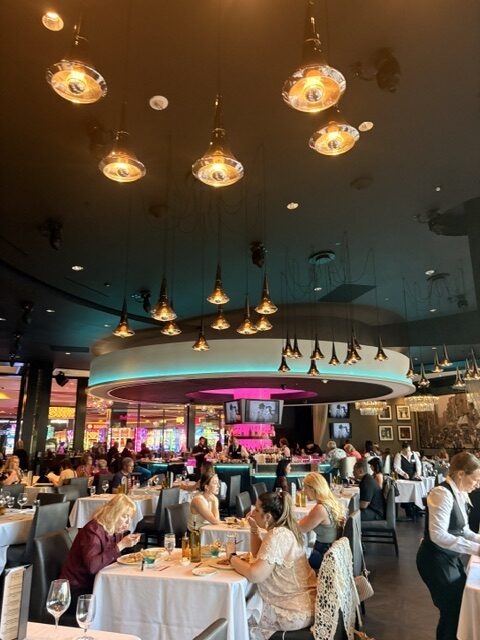
Dinner followed at our favorite Pittsburgh restaurant, The Vandal. With the space closed for the night, we shared a single booth, candlelight glowing low as courses arrived one by one. Oysters, of course, another breadcrumb from the past. We talked, laughed, reflected and let the meaning of the day settle in without distraction, truly savoring every moment.

A woman dance and sings with her hand up and sunglasses on.

Later, 40 friends joined us for an incredible celebration. Lights dimmed and a disco ball sparkling in the corner, the space was reborn as a dance floor. Small plates circulated, and late-night burgers and fries grounded the glamour. A millennial playlist curated by DJ Cake had us sweating within minutes, and karaoke microphones made the rounds, coaxing out everyone’s inner party animal. It was joyful and unpretentious, and proof that intimacy and excitement can coexist beautifully.

Groom Anthony and his wife cutting a tiered wedding cake adorned with orange and pink roses during their high-energy Pittsburgh reception.

The night ended the same way it had in Vegas years earlier: sitting on a curb in our wedding attire, feeding each other pizza and toasting with champagne. This time, the champagne was non-alcoholic, a quiet reflection of how much we’ve grown, and a reminder that the rituals still matter, even as the details evolve.

A man in a pink suit feeds his wife in a dress pizza.

Saying “I do” three times might seem whimsical. But for us, it is an art — one that deepens with time and intention. As our friend who officiated said with a smile, she’ll see us again in another 10 years. Because we may not know where life will take us, but we know we’ll always be together, celebrating.

A wooden wedding sign on a gold easel featuring an F. Scott Fitzgerald quote from The Great Gatsby.

Pittsburgh Businesses Who Made it Possible

A woman tattoos a persons arm.

Story by Katrina Tomacchio
Photos Courtesy of Rachel Rowland Photography

Subscribe to TABLE Magazine‘s print edition.
Selecta’s Pittsburgh Concert Calendar for February/March 2026

0
A man stands in a big puffy jacket against a black wall.
RAKIM

Fresh from keeping the crowd moving at TABLE Magazine’s annual Cocktail Shake-Off, Selecta shares his list of can’t-miss concerts coming to Pittsburgh in late February and March.

Pittsburgh Concert Calendar February/March 2026

Lyndsey Smith w/ NASH.V.ILL

February 20, Pittsburgh Winery

Mercy! A night of truly captivating voices coupled with top-notch musicianship. Smith is back from a stint in NOLA to bless the ’Burgh with her amalgamation of all things soulful as well as sultry. Her presence wins the crowd over prior to the belting of a single, solitary (booming) note. NASH.V.ILL, the perfect complement of a quartet, is led by guitar luminary Byron Nash (hence the band name) and lead vocalist Jacquea Mae. Jacquea has the kind of voice that doesn’t require amplification.

Gary Bartz

February 24, City Winery

My social media accounts have one quote listed that succinctly sums up my musical mindset: “Music Is My Sanctuary.” That phrase is comes from the legendary saxophonist Gary Bartz’ 1977 masterpiece of a tune. Bartz has a Pittsburgh connection since he played with the Hill District’s very own Art Blakey & His Jazz Messengers. At 85, he’s still going strong on both the touring and academic circuit, moving from city to city while holding down a teaching residency at Oberlin College. Don’t miss this interdisciplinary great in the most cozy of settings.

Delana Flowers

February 26, City of Asylum at Alphabet City

I’ve borne witness to Flowers’ rising career trajectory over the past two decades — from spoken word at the beloved, bygone melting pot of a venue, The Shadow Lounge, to her beautifully interwoven gospel, neo-soul and jazz stylings all across the city in various ensembles. In Delana Flowers Quartet Gives Flowers to Ernest McCarty, her 4-piece honors Pittsburgh transplant Ernest McCarty, a former Errol Garner collaborator who directed and co-wrote Dinah! Queen of the Blues about the life of Dinah Washington. We lost McCarty back in December at 84; this show, which will feature Washington’s music, is Flowers’ way of paying homage to one of her musical mentors.

Endea Owens & the Cookout w/ Michael Mayo

February 28, MCG Jazz Hall

I was introduced to both Owens and Mayo through their respective NPR Tiny Desk offerings — only to be re-introduced to them, in the flesh, at the ’24 and ’25 Pittsburgh International Jazz Festivals. Owens’ bass work two years back (she’s affectionately known as “thebassbae”) was masterful — and she’s a graduate of the prestigious Julliard School. Mayo performed at the festival last year, bringing an almost vocalese-esque approach to his original compositions. His educational background isn’t shabby, either; a decade ago, he was accepted to the Thelonious Monk Institute of Jazz at UCLA, also one of only three vocalists accepted at that juncture. These two bright stars shine together; the night will surely be a showcase of their ever-evolving bodies of work.

Rakim

March 14, City Winery

This one is a no-brainer: my G.O.A.T. MC. This man single-handedly changed the lyrical game upon his entry into what was still a relatively new genre in the mid-’80s. Rakim introduced a causal flow that was relaxed yet in-your-face at the same time. Quite the dichotomy of cadence and diction. Rakim released four stellar LPs with his partner Eric B. before embarking on his own solo venture in the late ’90s. It sounds cliche to give anyone the descriptor “a rapper’s rapper,” but ask his contemporaries and you will find how very spot-on that designation is.

A woman sits on a stool and holds herself in a black sweater.
Meshell Ndegeocello

Meshell Ndegeocello

March 28, City Winery

A master of bass, guitar, drums and keyboards — and she has vocal chops for days! I’d say that classifies Ndegeocello as almost a Prince Rogers Nelson level multi-instrumentalist. (She certainly packs as much musical might in an equally small frame.) Her career has now spanned the greater part of four decades. Never one to be pigeonholed into a singular sound, her discography has consistently approached new levels of experiment with very little regard to fitting in a box. My favorite work of hers is the 2018 collection of covers Ventriloquism, on which she tackled selections from a vast array of artists. She makes every track her own, both in the recording studio and in her stage show; watch in awe as she sits back in the pocket and eloquently lets each member of the band take front and center while simultaneously orchestrating the overall groove.

Story by By James Scoglietti
Photos Courtesy City Winery Pittsburgh

Subscribe to TABLE Magazine‘s print edition.
Asparagus Tart 

0
A rectangular Asparagus Tart with stalks of asparagus lined on top of the pastry.

Puff pastry always makes it look as if the cook worked extra hard, even though it is far from hard to prepare if you start with sheets of store-bought pastry. This buttery Asparagus Tart can be sliced into small squares as an appetizer. Accompanied by a fresh green salad, it also makes a fine main dish. Consider pairing it with a bottle of Italian Pecorino. Its bright acidity will contrast well with buttery puff pastry, while its sophisticated hints of jasmine or acacia will play nicely with the savory quality of the asparagus.

Print
clock clock iconcutlery cutlery iconflag flag iconfolder folder iconinstagram instagram iconpinterest pinterest iconfacebook facebook iconprint print iconsquares squares iconheart heart iconheart solid heart solid icon
A rectangular Asparagus Tart with stalks of asparagus lined on top of the pastry.

Asparagus Tart 


  • Author: Cheryl Alters Jamison
  • Yield: Makes a 10– X 14-tart, serving 6 as a light main dish, 8 or more as an appetizer 1x

Description

Test this tarts versatility as an appetizer or main dish.


Ingredients

Scale
  • 1 sheet store-bought puff pastry, preferably an all-butter version such as DuFour
  • 16 to 20 thin to medium-thick asparagus spears
  • About 1 tbsp extra-virgin olive oil
  • 6 oz (about 1½ cups) shredded Fontina cheese
  • Flaky salt and coarse-ground black pepper
  • Fresh dill sprigs and/or snipped chives, optional


Instructions

  1. Preheat the oven to 400 degrees.
  2. Line a baking sheet with parchment paper.
  3. Roll out the puff pastry sheet on a floured surface into a 10- X 14-inch rectangle. Trim uneven edges. Transfer the pastry to the baking sheet. Score the pastry on all 4 sides 1 inch in from the edge. Slice down into, but not all the way through, the pastry. Using a fork, dock (poke holes in it) the dough inside the marked rectangle at 1-inch intervals. This will help the pastry stay flat in its initial baking.
  4. Par-bake the pastry for 12 to 14 minutes, until it has begun to color and rise a bit.
  5. Toss asparagus with oil to coat lightly.
  6. Remove the pastry crust from the oven. Sprinkle the cheese evenly over the tart. Arrange the spears snugly side by side, arranging as many as will fit neatly in a single layer. Sprinkle with salt and pepper.
  7. Return the tart to the oven and continue baking 15 to 20 minutes, until pastry crust is nicely browned and crisp and asparagus spears are tender. Scatter with dill or chives, if you wish. Slide the tart off the baking sheet and onto a baking rack to cool briefly. Serve warm or at room temperature, cut into squares.

Recipes and Story by Cheryl Alters Jamison 
Styling by Keith Recker 
Preparation by Jackie Page 
Photography by Dave Bryce

Subscribe to TABLE Magazine‘s print edition.

Recipes for Adding Spring Mushrooms to Your Weekly Meal Plan

0
A green bowl on a green table holds cheesy grits inside mixed with small blossoms and springtime mushrooms with uncooked mushrooms all around the bowl.

Enoki, oyster, morels, hen of the woods, and chanterelles are mushrooms you can find during the spring season. Each one of these miraculous treats of nature provides a different flavor, texture, and umami profile to every recipe they combine into. While it may be easiest to run to the grocery store and grab the first white mushrooms you see, we recommend exploring what this unique world of fungi has to offer. Maybe you’ll use a handful of different wild mushrooms for your stock or you’ll hone in on a specific type to fill a taco shell. (Use a reputable guide to help with species identification.) No matter your choice, you’ll find comfort in enjoying all Mother Earth provides.

Spring Mushroom Recipes

Mushroom Stock

A stock pot with a variety of mushrooms and vegetables in a brown stock, with a wooden spoon in the upper left corner and some pepper and seasonings on a plate in the upper right corner.

Though we’re heading out of winter soup season, a mushroom stock is great to save for cooking beef, casseroles, and so much more. The key to this recipe is using a variety of mushrooms available year-round and in spring like button, crimini, oyster, and shiitake.

Mushrooms Rockefeller

A close-up view of a variety of mushrooms in different shapes and sizes.

Mushroom caps full of a spinach mixture featuring plenty of seasonings, cream cheese, garlic, shallot, and a dash of hot sauce. These little decadent treats only get more delicious when you top them with seasoned breadcrumbs, Parmesan cheese, or crumbled bacon.

Cheesy Grits with Springtime Mushrooms

A green bowl on a green table holds cheesy grits inside mixed with small blossoms and springtime mushrooms with uncooked mushrooms all around the bowl.

Morel, hen of the woods, and brick cap mushrooms are all spring varieties that have their moment for but a season before going away. Take advantage of their unique nuances with a bowl full of Cheesy Grits that also incorporates chive and thyme blossoms on top.

Crispy Mushroom Bundles with Spicy Mayo

Various crispy mushroom bundles sit on a brown plate beside a small bowl of spicy mayo beside two green cups and two forks.

Little bundles of enoki or seafood mushrooms are best found in cooler weather whenever it’s the early days of spring. We’re frying these crispy mushrooms and wrapping them with a piece of nori before dipping them into a homemade spicy siracha mayonnaise.

Buttered Mushroom Tartine

Buttered Mushroom Tartine on two separate plates with mushrooms in one plate and a dip sauce in another

Whenever it comes to cooking with mushrooms, its best to let these gems shine. Our Buttered Mushroom Tartine showcases button mushrooms at their best with a blend of pistachio pesto, balsamic vinegar, goat cheese, as well as fontina cheese all on a slice of lightly toasted bread.

Smoked Mushroom Vegetarian Tacos With Creamy Chipotle Sauce

Vegetarian mushroom tacos on a plate.

Vegetarian tacos don’t have to rely on cauliflower or tofu. Instead, let your favorite variety of spring mushrooms take over and layer on pico de gallo as well as a creamy chipolte sauce. Then, finish with whatever else your heart desires and a squeeze of lime over top of it all.

Rabbit Confit with Chanterelle Mushrooms and Eggplant Compote

Rabbit Confit with Chanterelle Mushrooms and Eggplant Compote on an orange plate with two dishes of sauces at the top of the plate

Looking for a luxurious way to upgrade chanterelle mushrooms? A rabbit confit provides the perfect base for buttery mushrooms and a savory eggplant compote. We even give you a step-by-step process for assembling your dinner plates. Go the extra mile by garnishing the dish with wild watercress or wild arugula.

Story by Kylie Thomas

Subscribe to TABLE Magazine‘s print edition.