Home Blog Page 167

The Most Beautiful Pittsburgh Concert Venues

0

There are tons of concert and show venues in the city of Pittsburgh and each has its own element that makes it special. But, whenever it comes to deciding which venue is the best, the beauty and design of a space may influence how your experience plays out. All of the venues below have pushed the boundaries of what a traditional venue offers: they’re old churches or historical landmarks or even just cool places to hangout. After all, the entertainment may be the main act, but the atmosphere around you helps make it memorable. 

Most Beautiful Pittsburgh Concert Venues

Mr. Smalls Theatre

An old church made into a concert venue with high arching ceilings and stained glass windows? Consider us there! Mr. Smalls Theatre in Millvale actually has two separate concert areas (the Funhouse and the Theatre) as well as a cafe with food and beverage options. While the Funhouse has more of an underground, basement vibe to it, the Theatre space includes a large open dance floor and seating around the upper balcony. No matter what concert or show you’re seeing at this venue, the atmosphere is sure to add another layer to your unforgettable time. 

Benedum Center

Built in 1928 as a movie palace, the Benedum Center is one of the historical and cultural landmarks of the city, presenting Broadway shows, local productions, and so much more. Over 90 original crystal chandeliers, torchieres and sconces adorn the ceilings and walls of the theater. As you head to your seat, you’ll pass marble walls, large mirrors, and plenty of red velvet. Plus, the main chandelier that lights up the theater’s ceiling is something you just have to see in person for its pure beauty.

Preserving Underground

This New Kensington venue is worth the drive just to explore the building. Preserving Underground is not only another church turned concert venue but also a record shop and a DIY event space. It’s great to be able to browse through tons of vintage and new vinyls from all your favorite artists before admiring the stained glass arches of the main stage. Just be sure to also stop by their merch room where you can purchase old concert and band merchandise that the store has been collecting for years. You never know what you might discover at this three-in-one venue.

Carnegie Music Hall

Inside the Carnegie Museums of Pittsburgh in Oakland you’ll find a wide open theater with rounded rings of seats, providing a perfect view for all. The stunning marble arch above the stage contains careful gold etchings and the seats provide comfort with a velvet covering, putting you back into the golden age of theater. The hall came about in 1895 and its architecture is still mostly the same and for good reason. Here you’ll usually view concerts from local symphonic artists and interesting speaker sessions. 

Greer Cabaret Theater

This is THE late-night entertainment venue to make your night out feel like an exclusive experience. This cabaret-like, intimate space in the Cultural District features neon lights along the walls and ceiling. Elegantly outlining the architectural and acoustical elects of the space, they focus your eye on the nearly rectangular stage. In addition to banquettes along the walls, the floor also holds small tables with close seating and a small lamp on each. Needless to say this is the spot you come to when you want to sit back, relax, and enjoy a cocktail while watching unique entertainment. It all feels somehow modern but also antique at the same time. 

PNC Park

While you’re probably used to seeing the Pirates play baseball at this river-side venue, their outdoor concerts are just as much of a special experience. Imagine looking over a large, laser-lit stage that sits in front of the beautiful Pittsburgh skyline with acoustics that make just about any seat a winner. Not to mention that this outdoor venue allows you a chance to see fireworks, pyrotechnics, and other visual accompaniments that you wouldn’t get to experience indoors.

Story by Kylie Thomas
Photo Courtesy of Mr. Smalls Theatre

Subscribe to TABLE Magazine‘s print edition.
The Pittsburgh Drag Community Strengthens in Times of Crisis

0
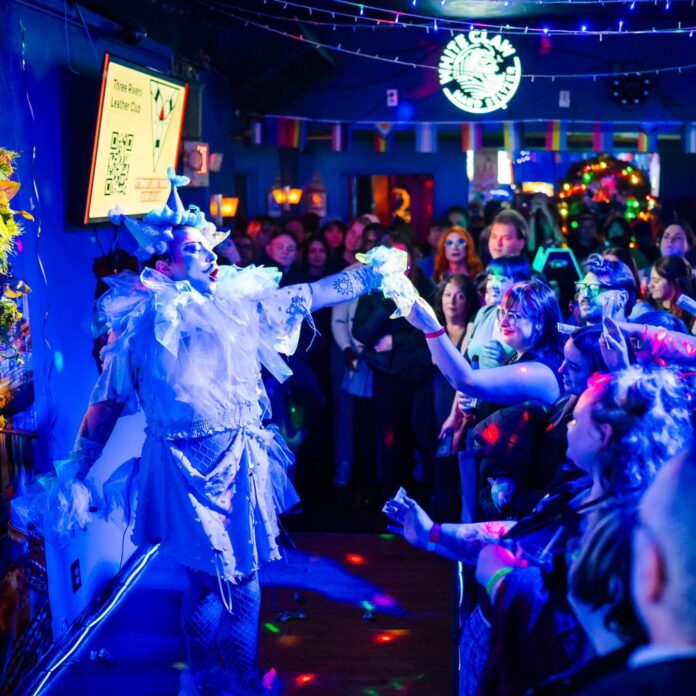
A drag performer in Pittsburgh dances on stage, taking a dollar bill from a person standing off stage in the audience.

With lip-syncing, death-drops, and plenty of flair, drag performers in Pittsburgh have been wow-ing audiences for decades. In fact, the first Miss Pittsburgh came about all the way back in 1977 when Dawn Montgomery graced the stage with her theatrical makeup and passionate choreography. But, with laws on the rise to censor or stop these public performances altogether and laws already in action that expel transgender persons on the basis of gender ideology, drag is yet again in the same vulnerable space it held when decades ago. Even though there is much to fear about the future of drag and the queer community in general, the Pittsburgh community is not letting these changes take away their right and passion to perform. 

The Pittsburgh Drag Community Today

In a city as large as Pittsburgh, it’s no surprise that we have over 200 drag performers–from veterans in the field to up and coming performers who have just taken the stage for the first time. Drag show producer and performer Joemygosh (Mrs. Blue Moon 2024) is one of many in the community who started off in a less-than-welcoming environment. Joemygosh and their drag partner Jaxa Froot (Mr. Blue Moon 2024) both hail from a small town in West Virginia where watching RuPaul’s Drag Race and practicing in their bedrooms were their only way to engage with their art. Eventually, the two were able to propel their practice forward in Pittsburgh. They’ve now created a space where all are welcome to try their hand at drag. 

“As a producer as well as a performer, we run an open stage, so for a lot of the new entertainers we’re some of the first people that they meet,” explains Joemygosh. “It’s really important to make sure that everyone feels included when they come in, that they feel supported, and that they have somewhere that they can go for community.”

Luis Mendoza is another performer and producer with a similar background of loving drag and wanting to bring it further into his life. For him, it’s the accessibility to drag and the queer community that keeps his fire going. After watching shows in the city for many years and bonding with performers in the area, it just made sense to him to lend a helping hand, especially when it comes to bringing drag shows to new venues. 

Accessibility for All

“I’ve hosted two shows so far and I try to have them free to the public,” says Mendoza. “You want to be able to get to anybody out there who can see it. As a minority person, I come from a background where I didn’t go camping ever in my life until I was in my twenties because it was just something I didn’t have access to. So any chance that I can to let people in on what they’re missing with drag is really cool.”

It’s that accessibility that allows people all over the world to find out who they truly are. After performing for around six years, owner of S&S Productions and recently crowned Miss P Town, Luna Skye, tries to take that accessibility a step further when it comes to working with venues in the Pittsburgh area. Things aren’t as simple as going in and putting on a show. There needs to be respect and understanding in what is occurring. 

“Some of our venues get email, saying that it’s crazy that they’re doing drag shows but it’s up to the venues to really show their support and to stand behind us,” says Luna Skye. “They can’t just use us as a money grab to have a good brunch and make food sales one morning. We have to see the support within it as well. Making sure that your venue is treating you the way that you deserve to be treated is always super important to making drag a lasting art.”

The Importance of Drag in Today’s World

That’s exactly what these performers, hosts, and producers are looking to do: make drag an art available to people today as well as to those that will come after them. While this may sound simple since drag in the United States has been around since at least 1867 with competitions in Harlem, there are still laws, personal ideologies, and religious reasoning that puts accessibility to drag at risk. In a time where presidents look to censor drag and call queer art pornography, it’s more important than ever to embrace self-expression and “gay joy.”

“It’s super important to hold the drag shows, especially now more than possibly ever,” explains Luna Skye. “Queer joy never ends. It’s never going to go anywhere. We’re going to love and support each other like we already have and do and will continue to do. Anytime I’m given the opportunity to be on a microphone, especially at a drag brunch where much of the audience may be straight, I’m going to speak and spread awareness of what the queer community is going through.”

Depending on what news sources you surround yourself with, you may not realize that queer rights are already being taken away just one month into the new administration. Queer and transgender lives are slowly (honestly, not so slowly) being ripped away by fearmongering tactics that look to stop the community in its tracks.

What Drag Does for the Community

If one good thing has come from this time, it’s that drag performers and the LGBTQIA+ community are angry and they’re more ready than ever to be loud and proud. 

“Putting on drag shows lets us present the expression of diverse persons and show them right to their face that these people do exist,” says Mendoza. “They’re rolling back a lot of different initiatives on DEI (diversity, equity, and inclusivity), literally removing labels, and just trying to just get rid of us in general. We’re going to see them strip artistic expressions away bit by bit. Plus, art is literally meant for expressing yourself and in turn seeing all sides of art, even if you don’t agree with it.”

Joemygosh notes that it’s this ability to be yourself that actually ends up saving lives rather than ruining them. These public drag shows have not only become a safe haven for the performers but also for the attendees and even the employees that work at the venues. It showcases a place to be yourself and encourages those in the space to let their pride out, no matter who they may be.

“As a producer, you want to make sure that people see themselves in the performances at your shows,” says Joemygosh. “Pittsburgh drag has always been rebellious, punk, and camp since the very beginning. We want to keep it going because it’s so much more harmful to try to pretend to be something that you’re not than to maybe face repercussions for what you are.”

The Future of Drag in Pittsburgh

So what does this all mean for the future of the Pittsburgh drag community? Even with current politics looming, there is still hope for this city that has become a staple of the drag world. After hailing famous visiting performers like Alaska and Sharon Needles, there’s only more to come, including Lydia B Kollins who is on the current season of Rupaul’s Drag Race.

“I think Pittsburgh right now is really on an upwards path of respecting, highlighting, and supporting each other,” says Luna Skye. “Everyone is sharing each other’s flyers, going out to each other’s shows, and just having a good time. So, Pittsburgh’s on a huge uplift within its queer community. It has helped us to realize, especially in times like these, that if we don’t band together now and show how strong we are, then it’s just gonna take longer for us to get to where we all want to be.” 

Story by Kylie Thomas
Photo Courtesy of Joemygosh

Subscribe to TABLE Magazine‘s print edition.
Archival Disruptor Gala Porras-Kim Debuts New Work at Carnegie Museum of Art

0
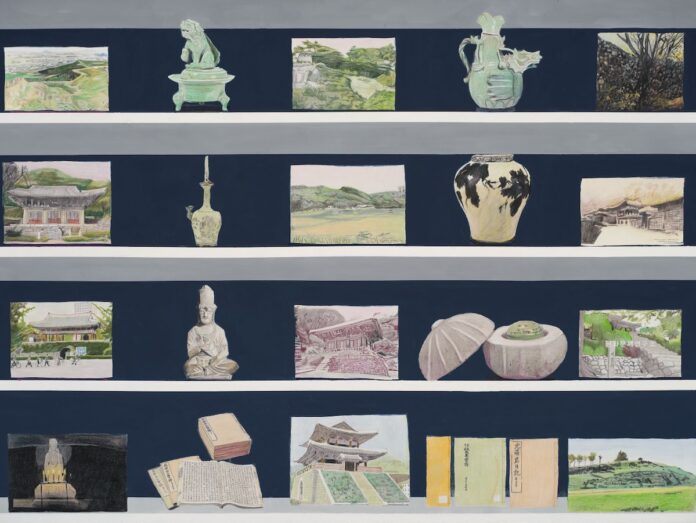
A collection of objects hand-drawn by Gala Porras-Kim

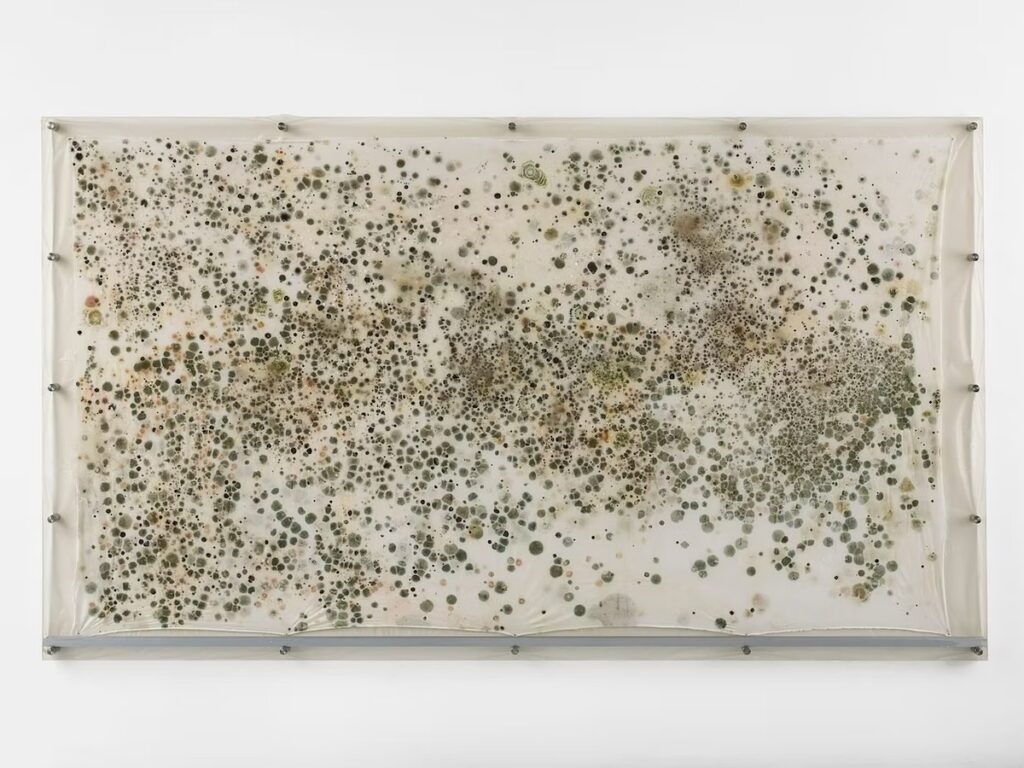
“Is that…mold?” I turned to my boyfriend with a mixture of incredulity and delight at what I saw on the wall of Cleveland’s Museum of Contemporary Art. Mold does not typically inspire such a response. Taupe spores propagated into soft shapes, indistinguishable from light splashes of watercolor on a swath of muslin. For this piece, Out of an instance of expiration comes a perennial showing, Colombian artist Gala Porras-Kim extracted mold spores from the British museum. She then placed them on a sheet and brought them to MoCa Cleveland.

One of the destructive elements against which museum curators fight mightily was brought front and center as something that the curators here were responsible for protecting and preserving. I couldn’t stop talking about “the mold piece” for a week straight.

If you look at enough contemporary art, you can get somewhat numb to its tropes. Oh, great, another way to juxtapose the archive as liberation with the deconstruction of preconceived hierarchy of cultural values and assumptions of artistic worth. Blah. Back to doomscrolling. However, Porras-Kim’s work elicits a real, disruptive reaction, which in the current contemporary art landscape is worth its weight in gold.

Archival Disruptor Gala Porras-Kim to Debut New Work at Carnegie Museum of Art

In the full show at moCa, A Hand in Nature, Porras-Kim showed an ability to work both big and small. The pieces she makes call to mind both the overwhelming sublimity of ancient structures and the granular bureaucracy of the archives that hold them. I was hooked on her vision. It was a wry take on the ethics of museum collections combined with a deeply felt interest in objects. She created enormous paintings that imagined what the world looked like from the inside of a stone monolith. I rarely see single-artist museum shows that show such a wide variety of mediums in such a cohesive way. Then, less than a week later, I learned Porras-Kim would be coming to Pittsburgh’s Carnegie Museum of Art for a show in their Forum Gallery.

A piece of muslin with...mold? on it, by Gala Porras-Kim. Yes, it's really art.
Gala Porras-Kim’s Out of an instance of expiration comes of a perennial showing (2023), in its “completed” form. Does it really look so different from some abstract expressionist paintings?

Porras-Kim’s subject matter is not a new one. Many artists have questioned the institutions that hold their work. The Carnegie has done this themselves with Amie Siegel’s Panorama in 2023. What sets Porras-Kim apart is her bold, earnest, and curious approach.

Art Can Be Both Beautiful and Provocative

In A Hand in Nature, she presented many of her paintings with letters she wrote to museums in Mexico, the United Kingdom, and South Korea asking the curators to consider the ritual nature of the objects they hold. Perhaps it sounds a little supernatural, but one gets the sense that Porras-Kim can feel the objects’ souls. The most talented artists are attuned to medium—a painter should love and wrestle with paint, a sculptor should know stone intimately. Porras-Kim is gifted at multimedia, participatory, and time-based work.

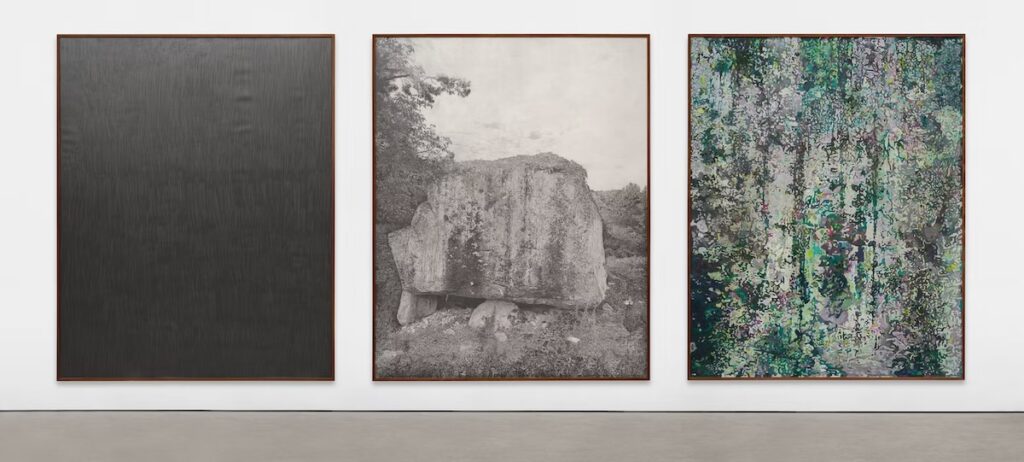
A triptich of three large paintings, one black, one graphite grey, and one green.
The Weight of a Patina of Time (2023), a series of works Porras-Kim made about the “dolmen,” a type of stone monolith marking graves in South Korea. The series imagines three perspectives, one from the inside of the rock, one looking at it from afar, and one on its surface.

Gala Porras-Kim Takes the Carnegie

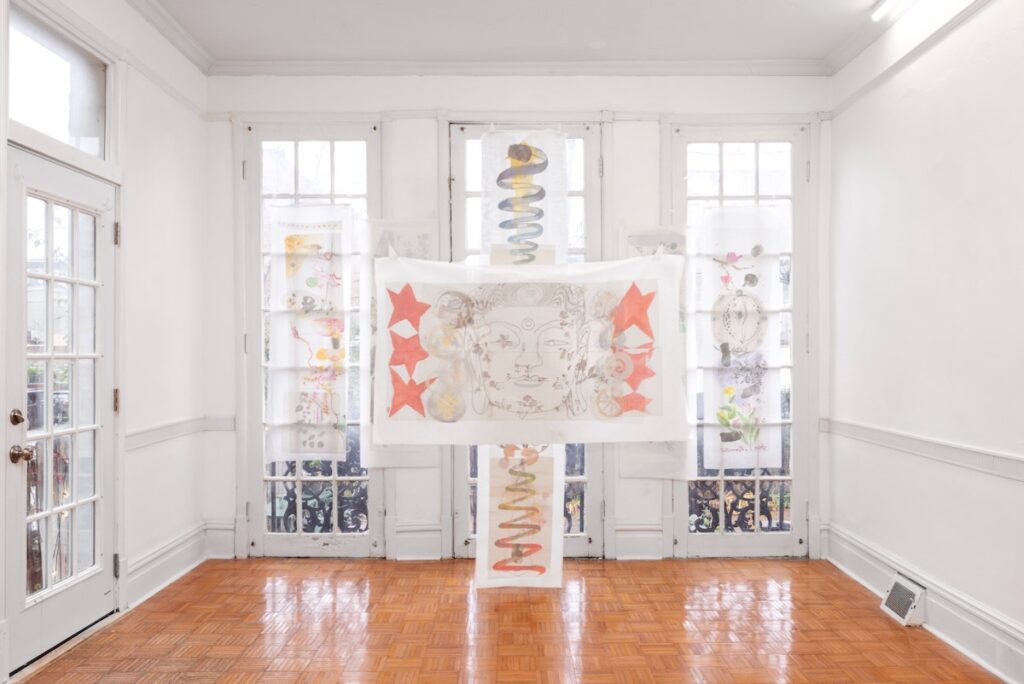
The reflection at the threshold of a categorical division, opening on February 27, will see Porras-Kim using objects from the archives of the Carnegie Library, Carnegie Museum of Natural History, and Carnegie Museum of Art. The Carnegie holds a deep, meticulous archive of work from the three institutions within it.

So, Porras-Kim has had the opportunity to dive into a plethora of museum items. “Some of the works are about how the collection moves between different parts of the Carnegie and how choices were made over objects and where they are situated today (library, CMOA or CNMH),” Porras-Kim told TABLE.

Art and Objects

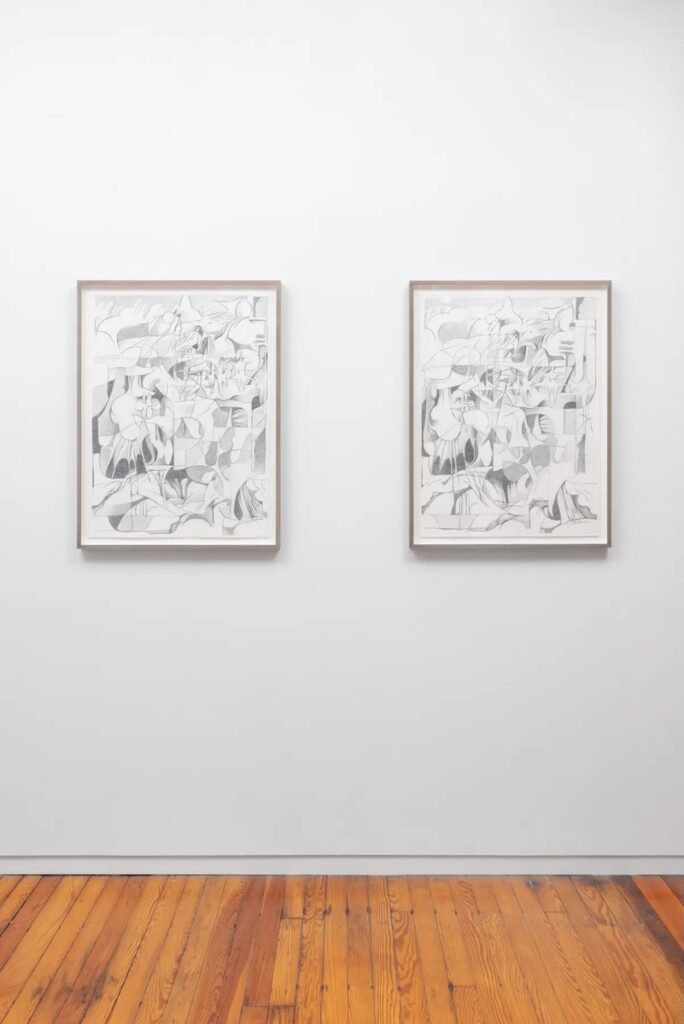
The work in The reflection at the threshold of a categorical division looks at identical or similar objects across the three institutions, some designated as “art” and simply “objects.” Porras-Kim created several large-scale two-dimensional works like The Weight of the Patina of Time, using graphite and colored pencils to depict snuff bottles, ivory sculptures, and gems.

Porras-Kim’s father is a historian. So, she spent much of her childhood getting to look at the archival materials her father was pouring through. She often found herself making pencil drawings based on what she saw. “I drew a grey blob that I marked ‘dinosaur poop.’ These days, I feel like I do basically the same thing,” she remembered.

She noted that “the taxonomy of these things dictate the choreography of how people interact with them.” In the center of the Forum, she placed a sculpture made of windows from the Metropolitan Museum of Art. The window was taken out as part of an ongoing restoration in the Met, and they offered it to Porras-Kim. In the Carnegie, she placed it in the center of the Forum, where the light hits it.

Engaging with the Collection

One of the traps that plague many shows dealing with both what’s in the archive as well as the rules governing that archive, is a sort of over-analysis where there’s little consideration of the actual work. Porras-Kim’s work does the opposite. It asks us to step back from “academic word salad” to really feel and think for a moment, based on the physical reality of what’s in front of us. For example: How does it make any sense for a museum to have bodily remains in its collection? Is it acceptable to display objects of religious reverence in a white cube, deprived of the environment that sheltered them and provided greater meaning?

For The reflection at the threshold of a categorical division Porras-Kim also took a survey of museum workers around the country to ask what the “least likely to be on view” element of their collections was. She then generated images of those objects, with a letter accompanying it asking why these particular objects weren’t on view. “There could be infinite taxonomies. The mold has its own way of looking at the hierarchy of the world,” Porras-Kim said.”These new taxonomies are additive.”

What Art Can Be

Art shouldn’t just be for insiders, and it shouldn’t just confirm your existing belief system. It should in fact encourage you to think differently about what you see. Porras-Kim’s work recontextualizes the objects. It’s worth seeing, even if you think art isn’t “for you.” Porras-Kim’s work pushes the boundaries of what art is in the first place. The winter is drab, the news cycle is depressing. NASA announced a city-killing asteroid has a 3.1% chance of hitting earth in seven years. Art should provoke something in you. It can be a question, a twinge of confusion, or a moment of awe at what’s in front you. Life is short. Let objects make you feel something, whatever institutional label they’re under.

Story by Emma Riva
Cover image: 530 national treasures (detail), 2023
, colored pencil and flashe on paper, Courtesy of the artist.

Subscribe to TABLE Magazine‘s print edition.
Pittsburgh Professionals Share The Best Coffeeshops for Remote Working

0
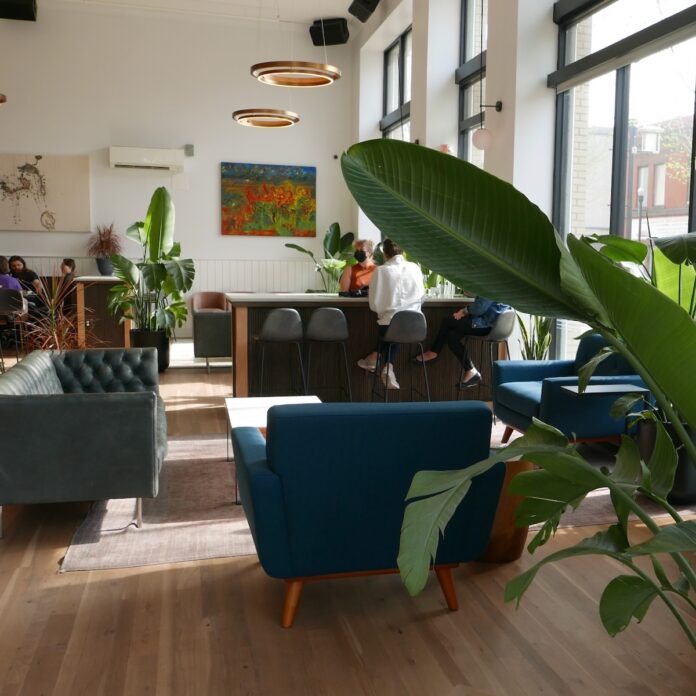
The interior of Margaux, a popular spot for remote working.

In the post-COVID world, people with laptops in coffeeshops are everywhere. For people in the creative sector who work even partially remotely, the coffeeshop is a cubicle, a meeting room, and a break room all in one. We asked Pittsburgh professionals where they go to take early morning meetings, start their workday, and plug away throughout the day—coffeeshops that have good, hearty food that will impress anyone you take there. A good remote-work or professional meeting spot has to be a little more unique than a Starbucks but can’t be too eclectic. You also need to be able to have a conversation there without it being obtrusive, and there needs to be a plethora of outlets.

Pittsburgh Professionals Share 7 Coffeeshops for Remote Working

KLVN

This was by far the most popular answer for one of the best coffee shops with food, good ambiance for talking with colleagues or clients, and a lowkey but professional vibe. Plus, for the parents out there, there’s a nearby daycare for you if you need it.

Margaux

Margaux is both a café and a wine bar, so you can get your morning muesli and croissant, park yourself there to work on personal projects or take calls through their slow hours, and then have a glass of French wine by night. It’s hugely popular among young professionals for its versatility. Its pink mood lighting definitely doesn’t hurt either.

YINZ Coffee

YINZ has cafés all over the city, but their north side location is uniquely cozy, looking out onto Allegheny Commons. Its wide windows make it a picturesque place for a morning coffee to get some things done, take calls, or get ready for the day.

Redstart Roasters

For anyone who cares about sustainability (which should be all of us), Redstart Roasters is a great option. They focus on sustainable “bird-friendly” agriculture in their coffee, plus their branding has cute birds on the bags.  While you’re at it, bring a cup from the Refillery with you to reduce waste.

Ghost Coffee Collab

A newcomer to Uptown, this is an outpost of Bloomfield’s Trace Brewing, in a historic building. The energy is chill, and since it’s a newer business, it’s a great opportunity to show your colleagues or clients somewhere they haven’t been before.

Happenstance

Another new opening in Lower Lawrenceville that, like Margaux, also serves both coffee and wine throughout the day.  You can also order pizza and a breakfast burger, a rarity at most cafés. Why not stay the whole day and get a pulled-pork mac and cheese for dinner too?

Ka-Fair

In Morningside, Ka-Fair is a great place to sit down and take a meeting early in the morning, as they open at 7AM. It gets its name from the Thai word for coffee and also serves up homemade baked goods—a great way to start the day.

Story by Emma Riva
Photo courtesy of Margaux

Subscribe to TABLE Magazine‘s print edition.
Pittsburgh is Craft: Celebrating the City’s Makers

0
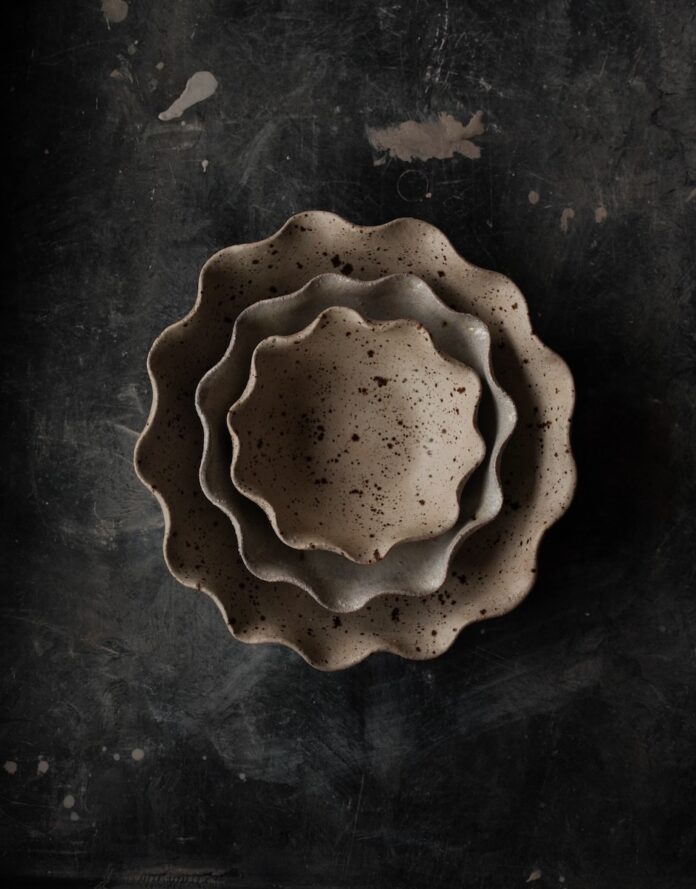
A grey bowl by Elise Birnbaum on a black background.
Elise Birnbaum is is one of many accomplished practitioners of craft who live and work in Pittsburgh.

Pittsburgh—celebrated for its legacy arts institutions, thriving artistic talent, and industrial ingenuity—is poised to become a national and international destination for craft. The city and the surrounding Appalachian region boast a strong historical tradition of craft. This vibrant ecosystem elevates the craft tradition, rooted in ceramics, glass, fiber, metal, and wood. Today, Pittsburgh’s craft community has an unprecedented opportunity to shine and establish itself as a global hub for craft excellence.

Why Craft? Why Pittsburgh?

Craft—the meticulous transformation of materials into functional and artistic creations—has deep roots in Pittsburgh’s history and culture. The city’s industrial past laid the groundwork for an enduring appreciation of skill, technique, and craftsmanship. Today, that legacy is carried forward by institutions like Contemporary Craft. Under the leadership of Rachel Saul Rearick, Contemporary Craft has broadened its programmatic offerings and is set to expand its physical footprint in 2025.

“I whole-heartedly believe in the statement that Pittsburgh IS Craft,” says Rearick.”Historically, this city created materials and products that quite literally shaped the world. Today, artists live and work here using the same materials. And places like Contemporary Craft and the Pittsburgh Glass Center invite artists from all over the world to work in our facilities and engage with the region.”

Similarly, the Pittsburgh Glass Center, under the leadership of Heather McElwee, recently completed a transformative capital campaign, resulting in a significant expansion of its facilities and programming.

Extending Outside the City

These institutions are just the beginning. Pittsburgh’s location in Western Pennsylvania further strengthens its position as a craft hub. To the South East in Fayette County, Touchstone Center for Crafts stands as a serene retreat offering workshops and residencies for artists across the craft spectrum. Additionally, Pittsburgh is conveniently situated within a day’s drive of major metropolitan areas like New York City, Washington, D.C., and Chicago—creating opportunities to attract visitors, artists, and collectors from these markets and even more broadly. Its accessibility allows for the seamless exchange of ideas, materials, and markets, making it an ideal crossroads for craft enthusiasts and professionals.

The region’s craft assets extend beyond institutional support. Universities such as Carnegie Mellon University and the University of Pittsburgh offer programs that integrate traditional craft techniques with cutting-edge technology, fostering innovation and attracting new talent. Additionally, PennWest University, with its Edinboro branch, carries a legacy of more than 100 years of craft-based education, offering robust programs in ceramics, metalworking, and other traditional arts. Greater Pittsburgh is also home to numerous independent studios and galleries. These places provide spaces for artisans to further refine their practices, showcase their work, and engage with the community.

Pittsburgh’s geographic location and rich craft ecosystem create the perfect conditions for the city to emerge as a premier destination for craft. By leveraging its industrial heritage, investing in its institutions, and promoting its accessibility, Pittsburgh has the potential to solidify its reputation as a global hub for craft excellence.

A Vision for the Future

Pittsburgh’s craft community has all the components to make the region a global destination for craft: regional history, skilled artisans, strong institutional support, world-class facilities for making, and a deep appreciation for tradition combined with innovation. However, to truly solidify this claim, it will take collective action and investment from individuals, businesses, and philanthropic organizations.

Individual Support

Business Engagement

  • Corporate Partnerships: Companies can commission custom works from local artisans, enhancing their brand identity while supporting the craft community. 
  • Workplace Programs: Businesses can sponsor team-building workshops or events that connect employees with craft, fostering creativity and collaboration.

Philanthropic Investment

  • Fund Expansion: Support the growth of institutions like Contemporary Craft and the Pittsburgh Glass Center through donations or endowments.
  • Create Opportunities: Establish scholarships and grants for emerging craft artists to study, innovate, and showcase their work.

Craft as a Catalyst for Cultural Tourism

Beyond the intrinsic value of craft, elevating Pittsburgh as a craft destination could have profound economic and cultural benefits. Cultural tourists spend more and stay longer than the average visitor. By investing in craft, Pittsburgh could attract visitors from around the globe. Visitors ould feel the draw the promise of unique, high-quality experiences in a city where art and industry converge.

Take Oaxaca, Mexico, as an example, which has become a global destination for craft tourism. Its annual Guelaguetza Festival, along with markets and workshops, draws tens of thousands of visitors each year. In 2022 alone, the festival generated an estimated $45 million in economic activity for the region.

Imagine a future where Pittsburgh hosts an annual international craft festival, drawing artisans, collectors, and enthusiasts from every corner of the globe. Picture a robust network of craft trails guiding visitors through studios, workshops, and galleries across the region. Envision a time when Pittsburgh’s name is synonymous with craft excellence. The city could leverage its industrial roots and creative ingenuity to create an economic and cultural renaissance akin to what Oaxaca has achieved. With strategic investment and community collaboration, Pittsburgh could transform its craft sector into a beacon of global recognition and local pride.

Call to Action

Pittsburgh has the potential to lead a craft renaissance, but it will require collaboration, vision, and commitment. As the CEO of the Greater Pittsburgh Arts Council, I urge every individual, business, and philanthropist to join this movement. Together, we can craft a future where Pittsburgh’s artisans are celebrated, its institutions thrive, and its reputation as a global hub for craft is firmly established.

Let’s make it happen. The tools are in our hands.

Story by Patrick Fisher, Greater Pittsburgh Arts Council
Photo of work by Elise Birnbaum

Subscribe to TABLE Magazine‘s print edition.
Meet 4 Local Artists Thriving in Pittsburgh’s Arts Community

0
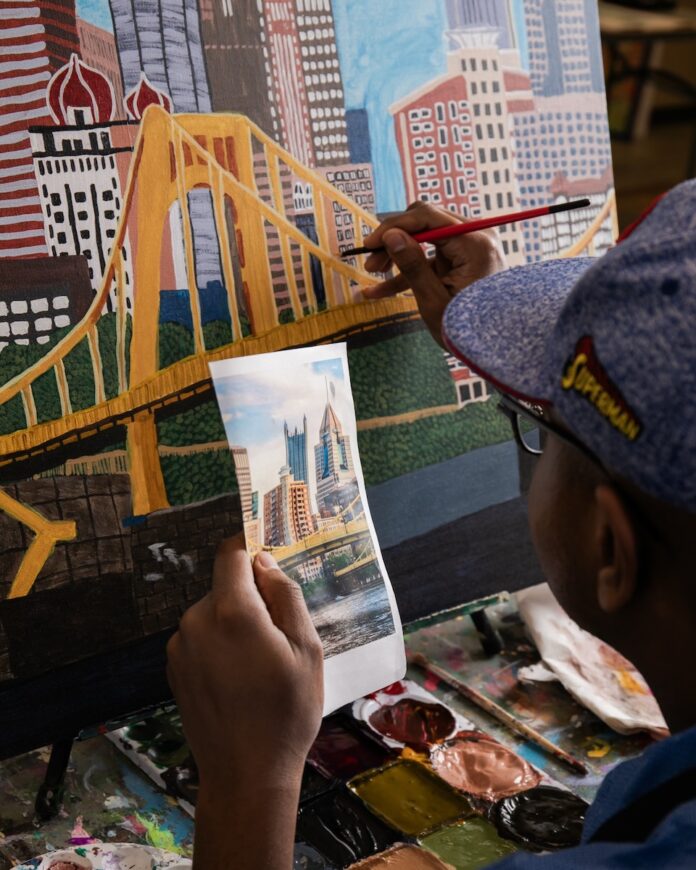
Artist Darian Johnson at work in his studio.

Supporting living artists is a powerful statement about what we value as a society. There are many talented artists working in Pittsburgh eager to share their work—it’s just a matter of knowing where to look. Engaging with living artists signals a commitment to fostering creativity and recognizing the benefits of art in our daily lives. It’s an affirmation that we value the voices and visions of those who interpret and document contemporary issues. By purchasing their art, attending their exhibitions, and engaging with their projects, we directly support their artistic practices. Here are four contemporary artists living and working in Allegheny County whose practices you can help nourish.

4 Local, Living Pittsburgh Artists Whose Work You Can Support

Ashley Jones

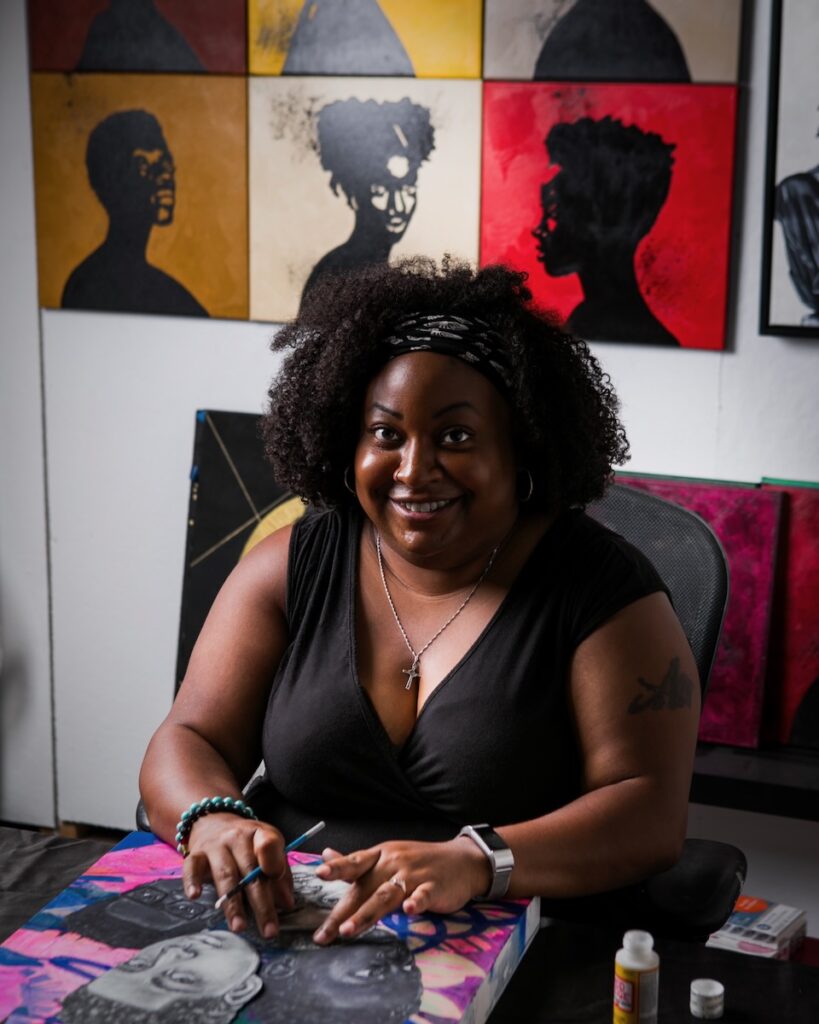
Artist Ashley Jones sits in her studio, surrounded by her portraits.

Ashley Jones maintains a studio at Radiant Hall’s Homewood location. In addition to being a working artist, Ashley is also an art educator. Currently she serves as an art faculty member at St. Edmund’s Academy in Pittsburgh and she previously served as Assistant Professor of Fine Arts and Gallery Director at Indiana University of Pennsylvania.

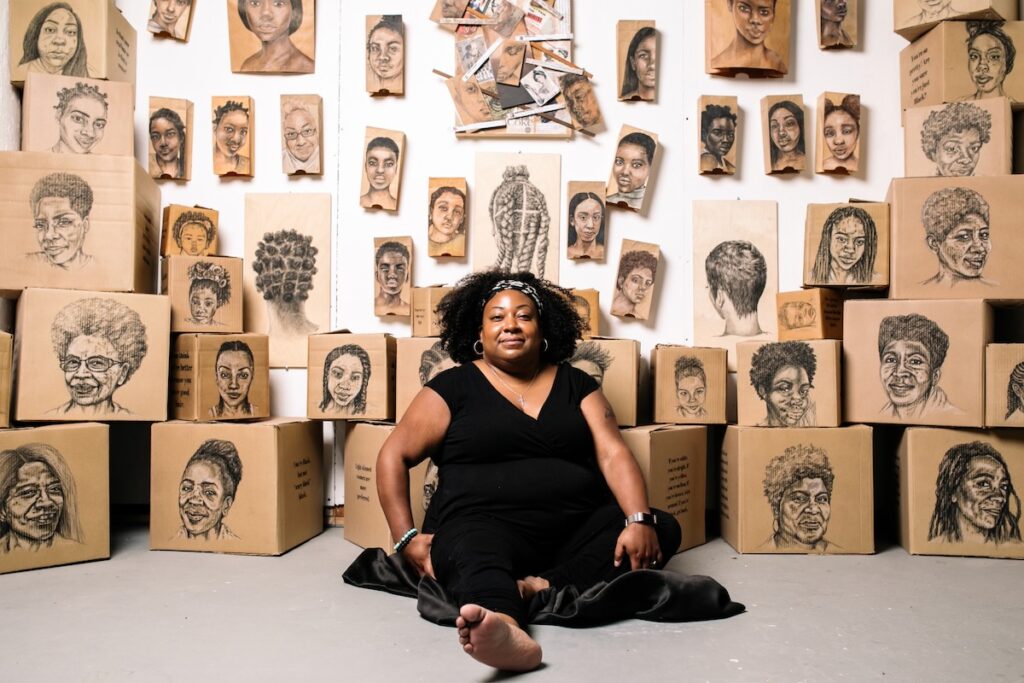
Ashley Jones sits in front of her "brown paper bag" series.

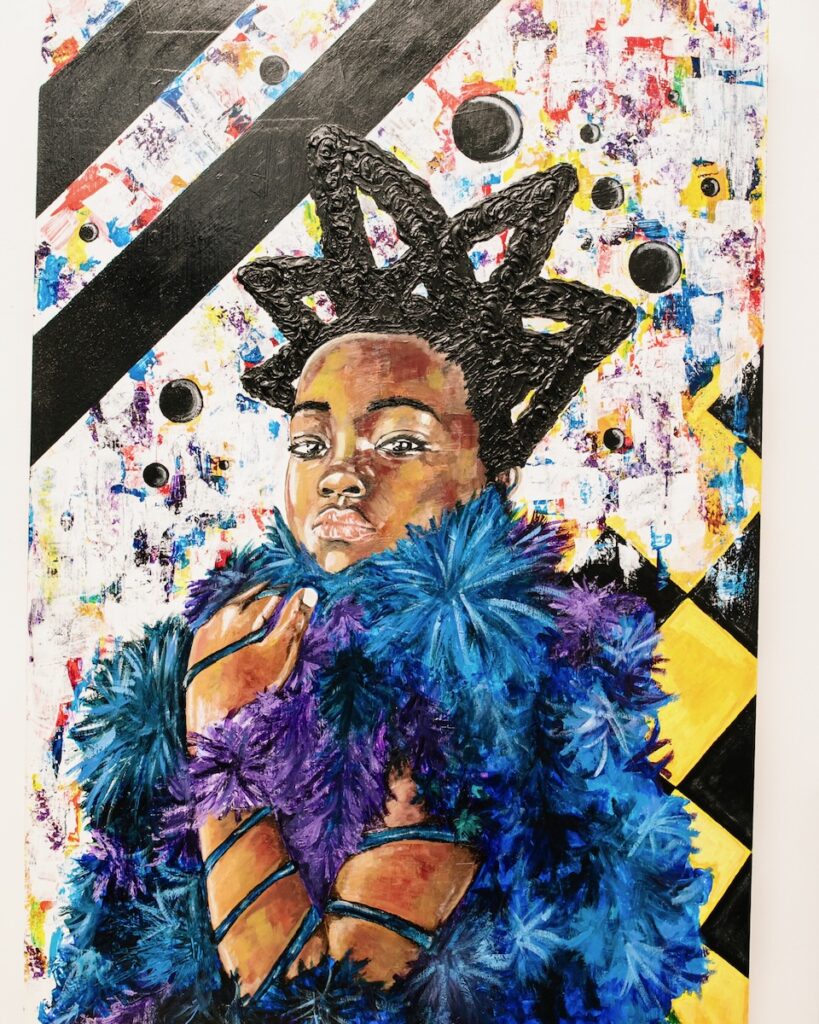
Ashley’s work is an exploration into the histories and contemporary challenges of Black identity in America, which she has pursued across several projects. The body of work she may be most recognized for is Colorism: Looking Outside the Brown Paper Bag, through which she has created 3,192 portraits on wooden panels, cardboard boxes, and brown paper bags. This body of work has been Ashley’s effort to confront the history and present-day practice of colorism among African American women. The body of work consists of three sub-series, Hair Identity, Stop Putting Me in a Box, and The Brown Paper Bag Test.

Through her collective body of work, and by creating portraits of individuals she has met through her career as an artist, Ashley aims to honor and tell the stories of people who have often been ignored and marginalized, while also offering a different visual perspective of Black life.

Parker Donaldson

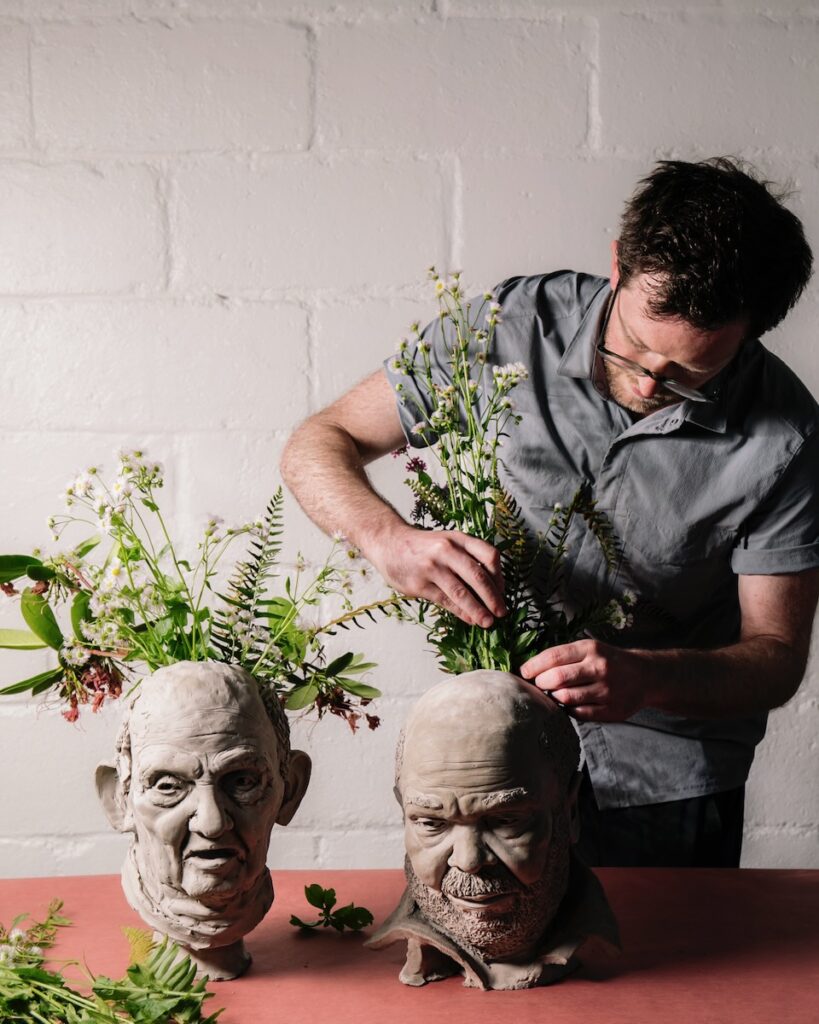
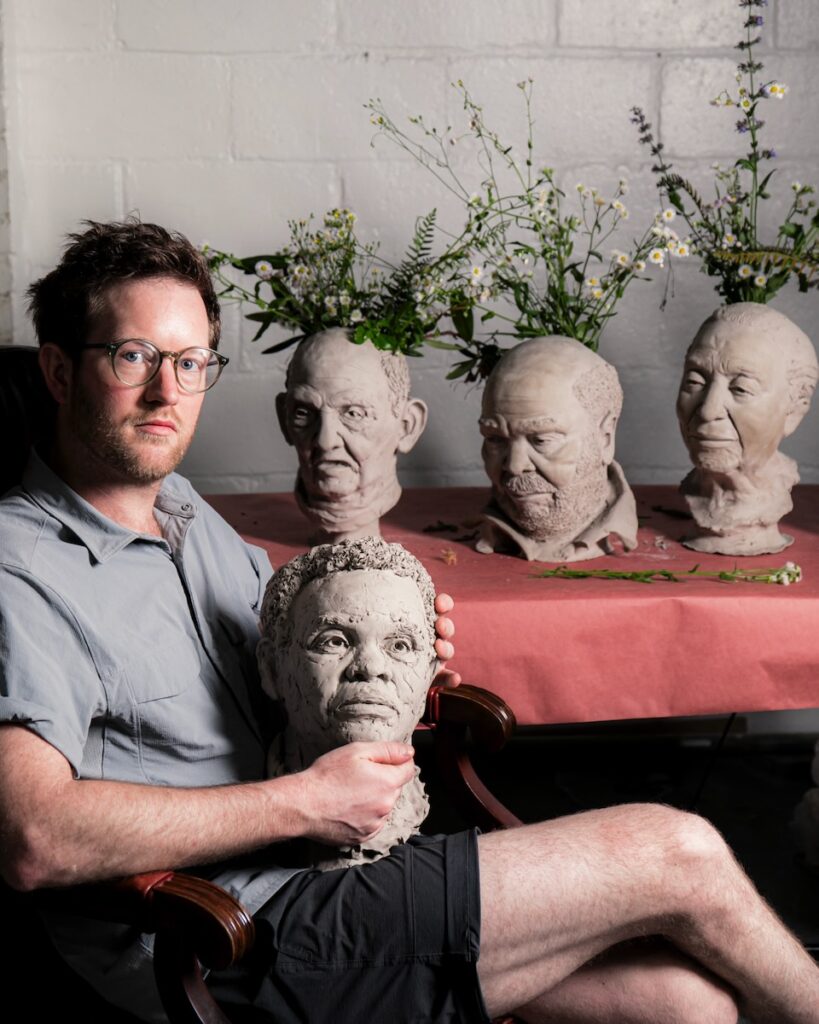
Educated as a portrait sculptor, Parker Donaldson’s practice evolved to include physical and multi-sensory conceptual media installations. His current body of work includes a series of six hand-formed busts of individuals that Parker met while visiting a local senior living facility. The series will expand to include another six.

A through-line in Parker’s conceptual work is his exploration of ideas rooted in the social and cultural past, juxtaposed in context to the present moment. Parker is curious about how our access and ability to re-experience moments from the past affects our sense of temporality and whether nostalgia creates dislocation within time.

Originally from Pittsburgh, Parker moved to South Africa and obtained his BFA in sculpture from the University of Cape Town in 2020. While attending the University of Cape Town, Parker also met his wife, fellow artist Akudzwe Elsie Chiwa. Parker has also spent time living and working in Atlanta and Nashville.

Darian Johnson

Darian Johnson holds a piece of his wok in his home studio.

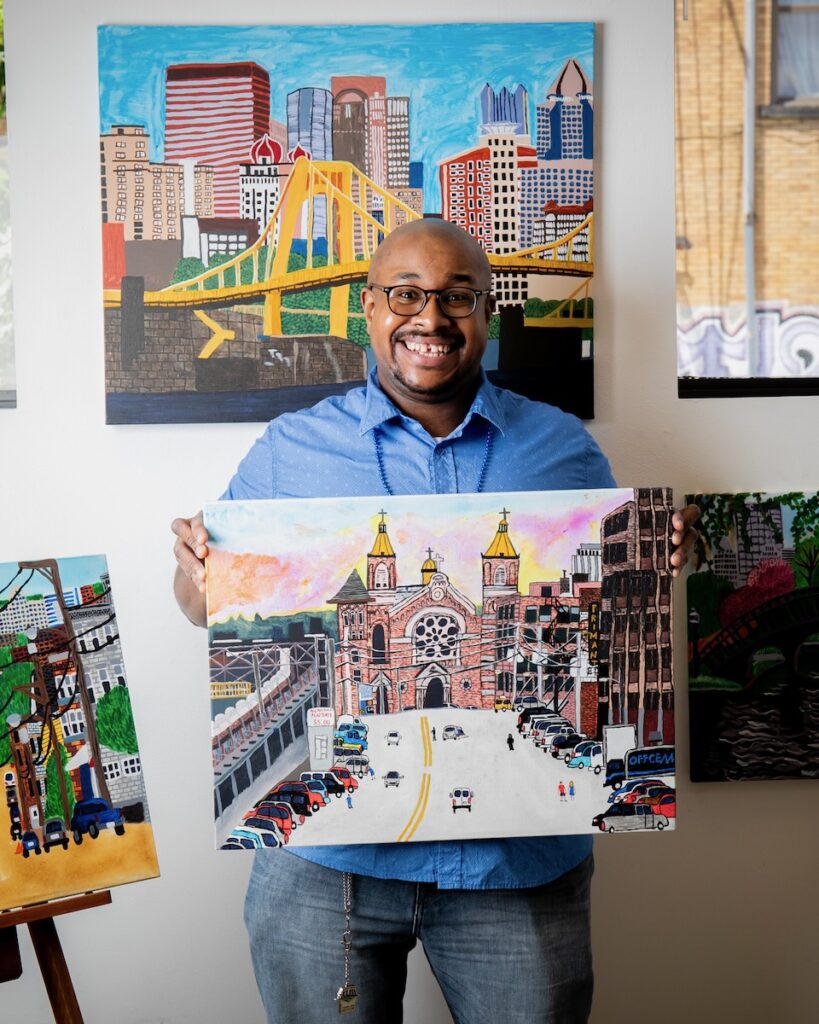
Darian Johnson is a painter, sculptor, and illustrator. He demonstrated a propensity for creative expression since childhood. In 2017, Darian began working with VaultArt Studio, where he received guidance and mentorship to further develop his artistry.

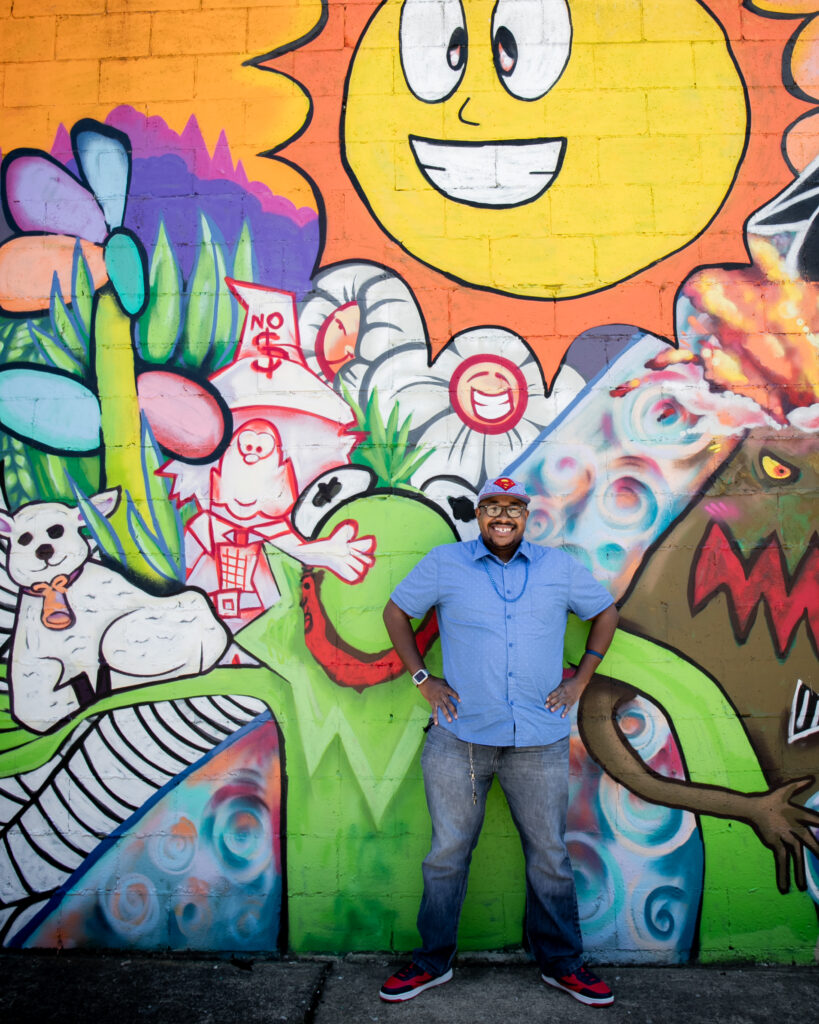
Darian Johnson in front of the mural at Vault Art Studio on Penn Avenue.

It was after working with VaultArt Studio that Darian developed his unique identity as a painter, which includes recreating iconic Pittsburgh cityscapes and renderings of 80s and 90s pop culture painted through the lens of nostalgia and surrealism. A vivid color palette also unites Darian’s bodies of work.

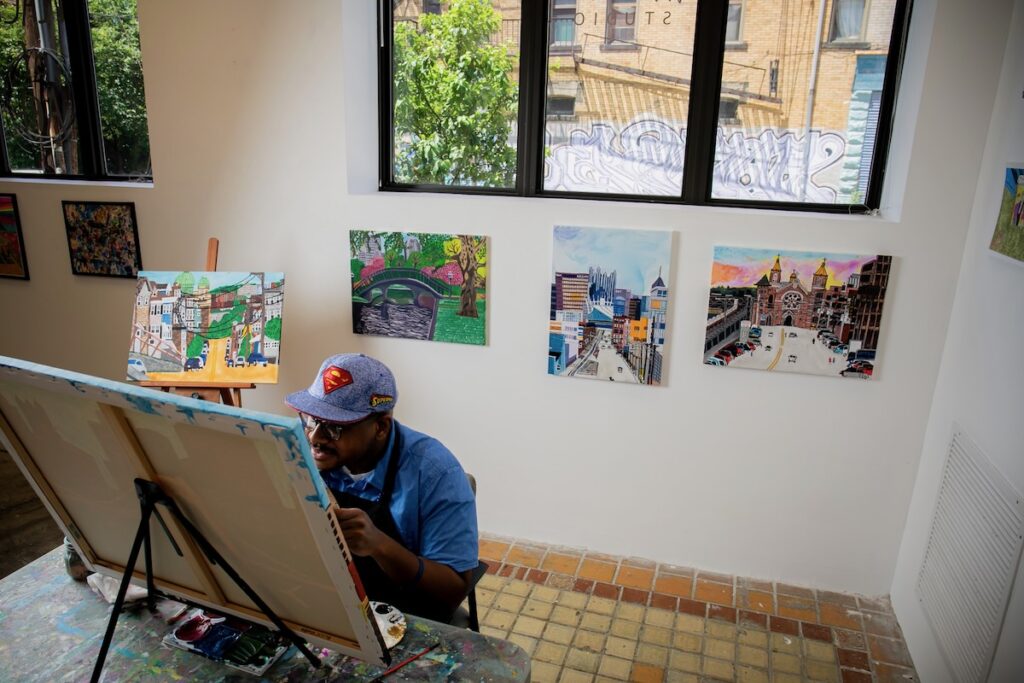
Darian Johnson faces his easel as light comes in through the window.

Darian’s work is routinely on display as part of Unblurred, a monthly art crawl hosted along the Penn Avenue Arts and Business District. He also was part of a group exhibition this year at 820 Gallery, which coincided with the Three Rivers Arts Festival. Through these exhibitions, Darian has cultivated a devout group of collectors, both locally and internationally.

La Vispera

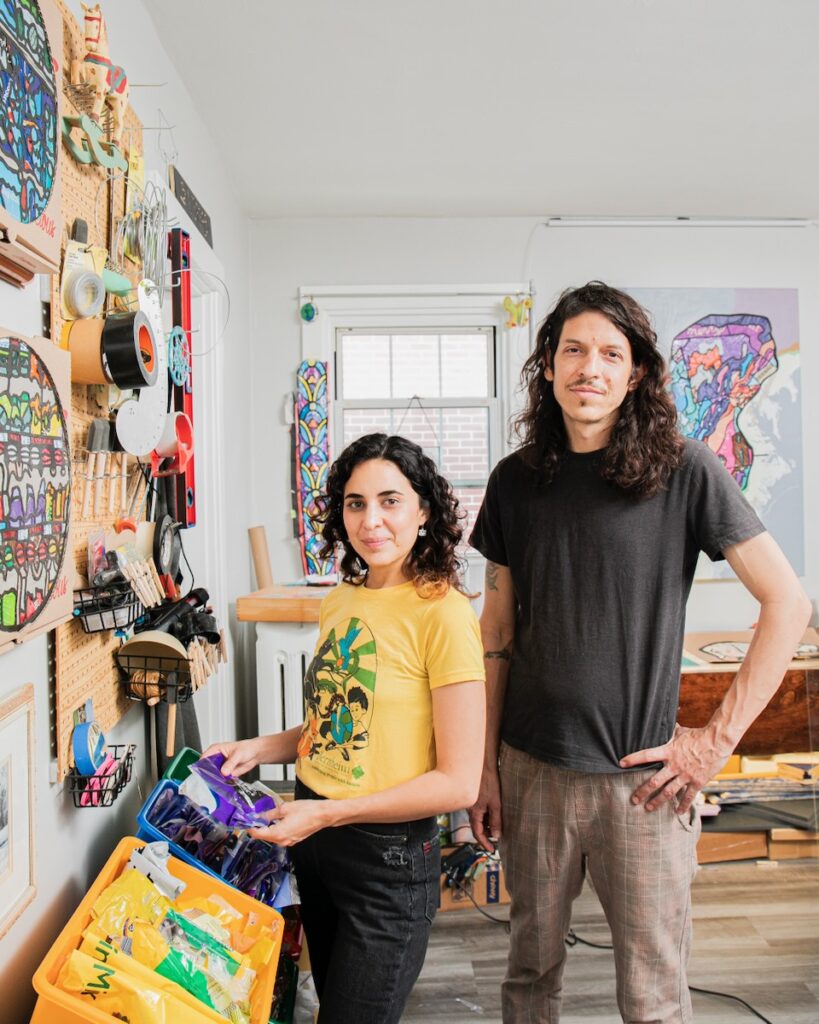
Alejandro and Kelly stand in their studio, demonstrating their stained glass creations

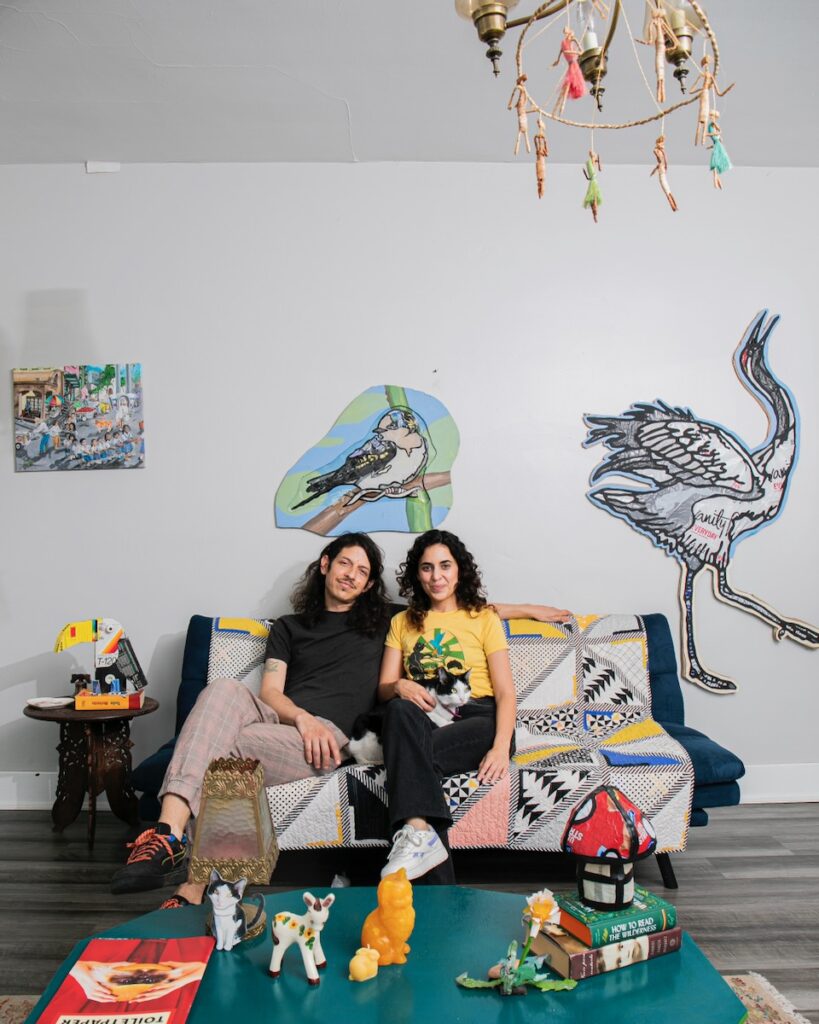
La Vispera is an artist collective consisting of Kelly Jimenez and Alejandro Franco. The collective was born through their shared affinity and passion to create works that examine and address the global ecological crisis. Originally from Colombia, in addition to Pennsylvania, Kelly and Alejandro have lived in Florida and Missouri.

La Vispera‘s current body of work centers around single-use plastics, which they use to compose figurative and abstracted compositions reminiscent of stained glass. Their process was born out of necessity, combined with curiosity, after they moved from Miami to St. Louis without any studio equipment or art supplies. They noticed that packaging material of all sorts was abundant and began intercepting materials that were otherwise en route to the landfill. The artists took these transient and problematic materials and decided to give them new significance. By spending time and effort to recover an undervalued material through labor, La Vispera hopes to make an allegory of the efforts we need to make to preserve a healthy ecosystem.

La Vispera is currently participating in an artist residency program administered by the Children’s Museum of Pittsburgh, which will culminate in the creation and installation of an interactive museum experience.

Story by Patrick Fisher, CEO, Greater Pittsburgh Arts Council
Photography by Laura Petrilla

Subscribe to TABLE Magazine‘s print edition.
Pittsburgh’s Newest Gallerists Share What Drew Them to the City

0
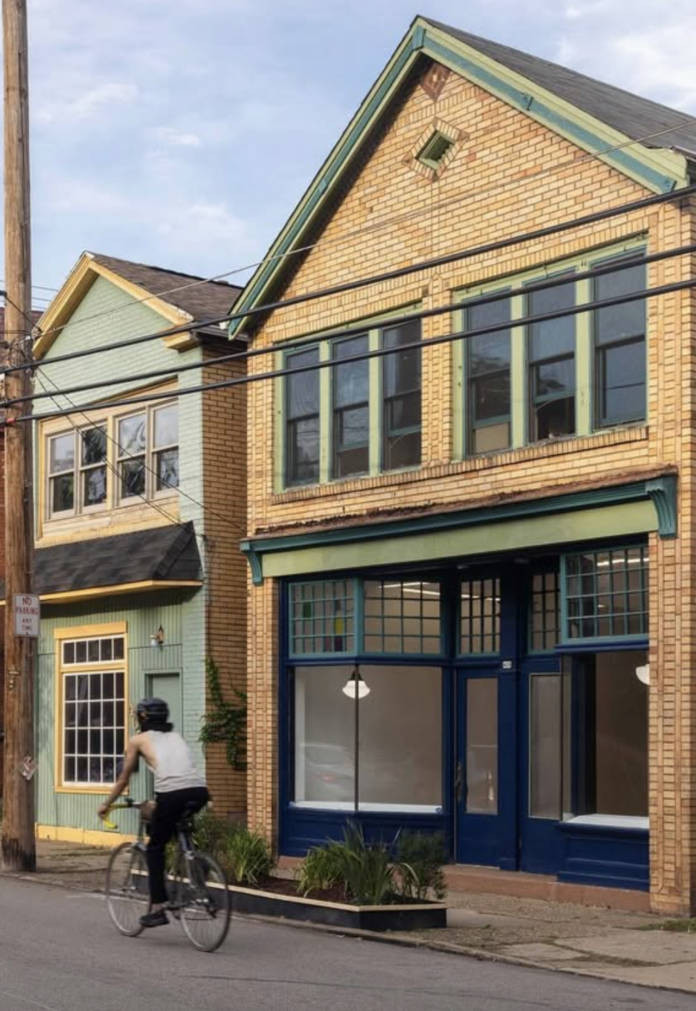
The exterior of a storefront in Regent Square, housing the gallery April April.
April April's exterior. Photo by Chris Uhren

When we talk about galleries in Pittsburgh, it’s tempting to follow deep-seated Pittsburghese habits and talk about what used to be. Oh, it used to be a hub of collecting, when the Fricks and Carnegies bought up gleaming hordes of the world’s greatest paintings. Among artists, sometimes this train of thought becomes that Pittsburgh used to be cheap and fun in the days of the Beehive and Electric Banana, before corporate and tech came in.

While there’s some reality to that, one of life’s universal truths is that everyone wants to like something before it was cool. In the 2020s, some major city gallerists are making the trajectory I did as a writer: the reverse of moving to the Big Apple to chase your dreams. Some of the Pittsburgh’s newest galleries are newcomers trying to uplift regional artists while still bringing in new talent. Some are the creations of native Pittsburghers.

Pittsburgh’s Newest Gallerists Share What Drew Them to the City

There’s been a sort of chain reaction of galleries popping up in Pittsburgh, and the domino begins with Lexi Bishop. Bishop ran Here, a small contemporary art gallery in Mexican War Streets, from 2020 to 2023.

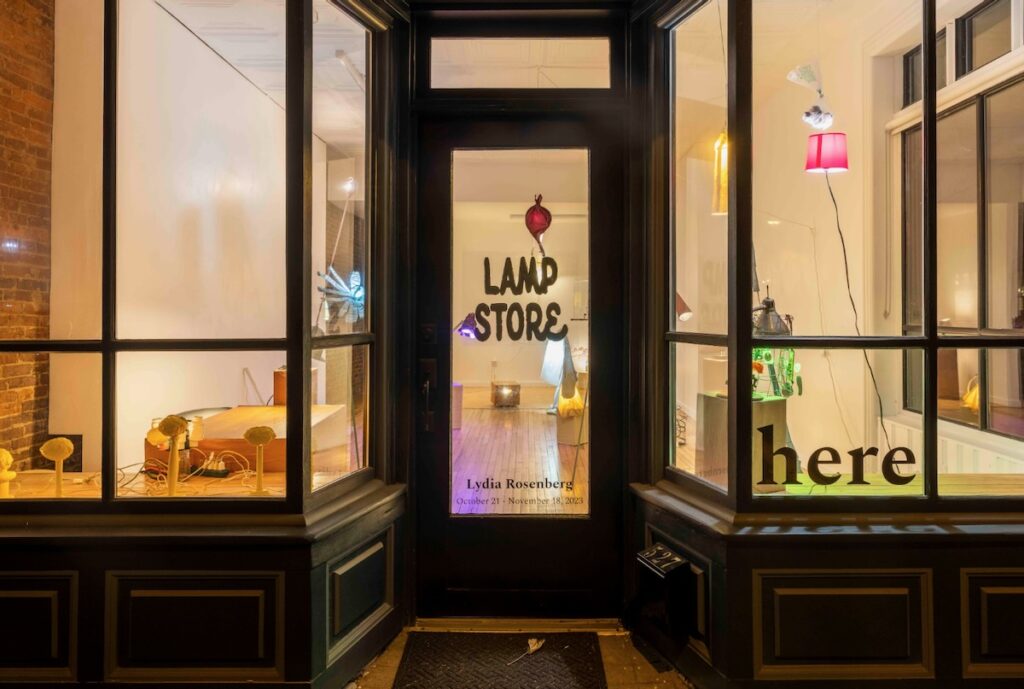
Bishop frequently brought in out-of-towners, something that allowed what can at times feel like a cloistered arts community to broaden what they are looking at. Some of Here’s most memorable shows were the beautiful undulations of Canadian painter Kizi Spielmann-Rose’s No Fixed Itinerary, the quiet dignity of New York-based Andrea M. Smith’s Praying for Wings, and the gallery’s finale, the cozy quirkiness of Lydia Rosenberg’s Lamp Store. (Coincidentally, a review of Lamp Store was my first piece in TABLE. Time flies!)

The exterior of here gallery in Pittsburgh, lit by night.
Lydia Rosenberg’s show, lit up at night. Photo by Chris Uhren.

Prior to founding Here, Bishop was Associate Director of Nino Mier Gallery’s Los Angeles outpost and then went on to work at Christie’s Auction House in New York. She came to Pittsburgh with her then-partner and started Here, which closed its doors in 2023 due to not recouping money spent on art fairs and her own changing professional interests. Bishop is not done with the art world, though, as she is now working on a project archiving Pittsburgh’s art history and imagines one day reopening the gallery in Garfield.

To be clear: Bishop by no means “discovered” art in Pittsburgh. There’s a robust arts community and a bedrock of non-profit galleries like Bunker Projects and Silver Eye Center for Photography. Even without the presence of any galleries at all, Pittsburgh would always have makers and creative people. But Here changed the conversation, providing a link between Pittsburgh’s art scene and the wider art world.

Romance: A Pittsburgh Homecoming

Margaret Kross, who now runs Romance, an apartment gallery in Shadyside, grew up in Pittsburgh, so it wasn’t news to her that there could be art here. But she knew Bishop and respected what she did. After working at Paula Cooper Gallery and then moving on to help run the emerging artists program at the Whitney, Kross found herself wanting to return to the world of operating a gallery.

A white set of French doors in Margaret Kross's gallery Romance, which screens over them by Emilia Wang
Work by Emilia Wang. Photo by Chris Uhren.

When she moved back to her hometown, she decided to run the gallery out of her own apartment. She enjoys the intimacy it provides and the close relationships with both artists and viewers she gets, even if it means you look at what kind of soap she has in her personal bathroom. “I believe deeply in the role of museums bringing art to a wider audience, but I also think the experience of seeing art in a context outside of the white cube is a very special one,” she said.

It’s been exciting to see Kross’s curatorial vision develop. Chinese artist Emilia Wang’s Heaven Potato, on display in December and January, felt like the gallery coming into its own. Wang’s show of Japanese scrolls and multimedia sculptures was an ambitious concept that fully delivered in scale and scope, making use of the unique lighting Kross has to offer from her French doors. Kross has also found creative ways to use a small side room and her basement—the most group recent exhibition saw a full-room installation from Craig Jun Li in her basement, bathing it in macabre scarlet light.   

Romance just completed its first art fair, NADA Miami, in 2024. Kross is optimistic about the gallery’s future. She pointed to the fact that Carnegie Mellon’s graduate art school eliminated its tuition and the development of the former Miller ICA—Carnegie Mellon’s art museum—into ICA Pittsburgh will create more support for visual art in the city. 

“The support for the arts here I think has a lot of room to grow. I would love to see more artists be able to live and thrive here and have more connectivity in the conversation here to broader dialogues,” Kross said. “I hope that Romance being here will contribute to that. It’s not because the local is provincial that I believe this connectivity is needed – rather, I think that’s a stereotype that needs to go by the wayside. Bringing in more national and international dialogues will let people see that Pittsburgh isn’t so siloed.”

April April: The New Kid on the Block  

Lucas Regazzi and Patrick Bova ran a successful art program out of their apartment in central Brooklyn but craved a simpler, slower pace of life. They knew Kross and Bishop from shared professional circles and wondered if they could move their gallery, April April, to Pittsburgh.  In September of 2024, they did just that, packing up their car and moving to a storefront in Regent Square. The street April April sits on feels like a Hayao Miyazaki movie with cobblestoned streets, overgrowth, and quaint historic homes.

Bova and Regazzi are an affable and friendly couple, often seen with their puppy, Dewy. They have a real enthusiasm for Pittsburgh and the local community that comes through in the way they speak about it. “So many reasons for us why we came to Pittsburgh! Zero regrets,” Bova said. “Pittsburgh truly feels like home.”  Like Kross, they live in their gallery space, but their apartment is in the back. Their space was once a family-run store, where the owners lived behind it.

Two works by Paul Peng on a white wall.
Work by Paul Peng. Photo by Chris Uhren.

An Exciting Time for Pittsburgh Galleries

Bova and Regazzi’s debut show, Paul Peng: Intentions, opened to a full house, and set off their curatorial program with a show both zany and absurd as it was sensual and delicate. They also brought their catalogue to NADA Miami and other small fairs like Art Toronto, where Regazzi is from. “Pittsburgh has been so welcoming to us and our program — grateful and humbling. The curiosity from folks has been nothing short of energizing!” Bova said. Their decision to kick off their programming with Peng, a local artist and Carnegie Mellon graduate with many connections in the DIY side of the art scene, came from visiting his studio while they were still in New York. Since that opening, they’ve shown Hong Kong-born Marisa Kriangwiwat Holmes and a group show with three high-caliber international artists, Kai Jenrette, Cyrilla Mozenter, and Irene Avaalaaqiaq Tiktaalaaq.

To anyone with ambitions of running a gallery in Pittsburgh, Bishop offered this advice: “Engaging with the community is the single most important thing you can do. Work with, not against, the existing art community. Be intentional about your program and who you show. Less is more.” So, keep the support going and attend an opening at Romance or April April for your next night out—after all, looking at art is free, and in a world where so many people are lonely, galleries provide a necessary community gathering for shared experience. Pittsburgh is better for its artists. In this new boom, let’s keep the energy going.

Story by Emma Riva
Cover photo by Chris Uhren

Subscribe to TABLE Magazine‘s print edition.
Where to Find Pittsburgh’s Best Paczki

0
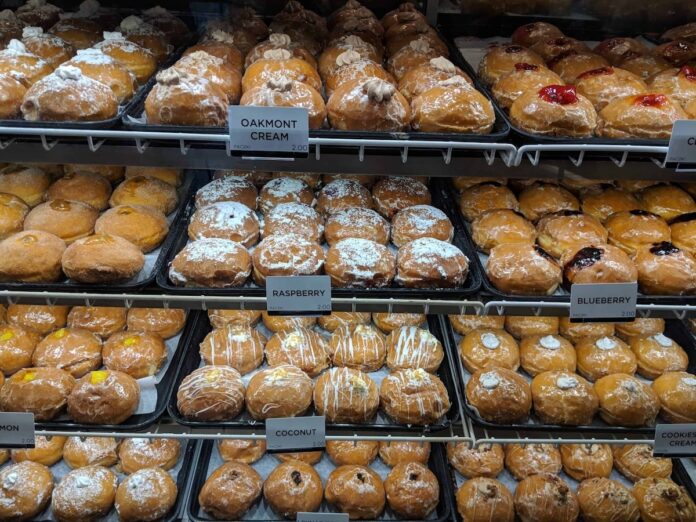
An overwhelming assortment of paczki at Oakmont Bakery

I don’t know about you, but every time I type the word paczki, I have to look up the spelling and subsequently realize I had been spelling it wrong. These Polish pre-Lenten baked delicacies, pronounced “punch-key,” are one of Pittsburgh’s most popular baked goods. And once you eat one, you’ll be so keen to ask for more that you’ll never forget their spelling again.

Traditionally, Catholics eat them on Fat Tuesday and Fat Thursday, the sort of carbs and liquor free-for-alls before Lent starts, to get that one last taste of sugary delight before abstaining through Easter. (Also, on a more logistical level, it’s a way to use up all of those ingredients before they go bad for a month). Fat Tuesday falls on March 4 this year, and Fat Thursday on February 27. My partner once joked to me that  “I stopped drinking, I stopped smoking – but the one thing I can indulge in is paczki.” So, even if you’re skipping the Mardi Gras celebrations, Paczki is the Ohio Valley’s vice. Treat yourself to one this spring from these Pittsburgh bakeries.

Where to Find Pittsburgh’s Best Paczki

Oakmont Bakery

1 Sweet Street

What other bakery in Pittsburgh has its own customized street address? You know Oakmont Bakery means business before you even walk in there. They start their paczki production on January 6 and serve them all the way through Easter, so if you’re being, shall we say, a bit loose in your observance of Lent, you can still get your paczki fix all winter.

Potomac Bakery

300 Mt. Lebanon Blvd

Potomac Bakery kicked off their paczki service on January 13 and has a variety of savory fruit fillings so you feel like you’re getting a little bit of health benefit in all that sugar and deep-fried dough.  

Polska Laska

1100 N Canal Street

Though availability is limited, Pittsburgh’s newest Polish food hotspot also will be offering pacszki. Polska Laska in Sharpsburg has their take on this delicious treat on a first-come, first-serve basis. They open at 11AM, so get there early!

Kretchmar’s

664 Third Street

You might remember Kretchmar’s as a contestant in our Burnt Almond Torte tasting. But they don’t just do cakes—they also have some of Pittsburgh’s best paczki, making it well worth the drive out to Beaver to get them.  

Party Cake Shop

706 Brookline Blvd

People who are serious about paczki swear by Party Cake in the South Hills for their authenticity and uniqueness. They started serving paczki in late January and will have them through Fat Tuesday, so go while you can and stock up!

S&D Polish Deli

2204 Penn Avenue

S&D is your one-stop shop for all things Polish, including paczki. They’re first-come-first-serve, so hurry up to the counter and get yours. Beyond the traditional plain, strawberry, and cream S&D is offering rose hip, lemon, apricot, raspberry, and even Nutella paczkis.

Story by Emma Riva
Photo courtesy of Oakmont Bakery

Subscribe to TABLE Magazine’s print edition

Csilla Thackray’s Titusz to Bring Hungarian Heritage to Lawrenceville

0
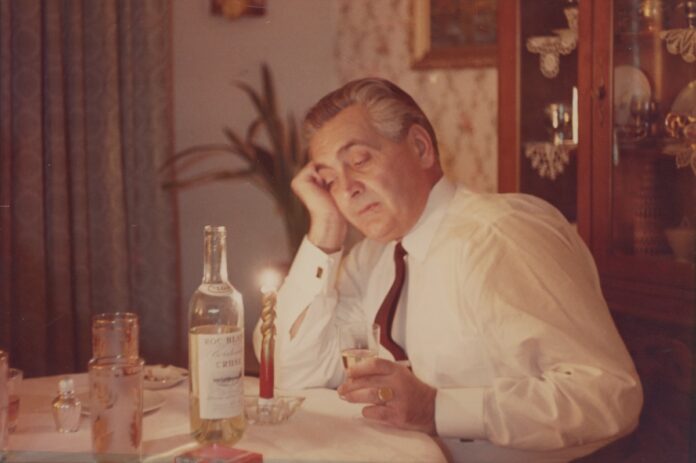
Csilla Thackray's Hungarian great-grandfather sits at a table, looking pensive.

The “crossover” is a tried-and-true crowd pleaser. Think monster movies like Godzilla vs. Kong or Alien vs. Predator which despite their campiness, draw in audiences from both franchises. Or, more recently Abbott Elementary and Always Sunny in Philadelphia’s collaborative episode where the two shows set in Philadelphia brought the characters together for shared bizarre hijinks. Pittsburgh’s restaurant scene is getting something of a “crossover” of some of the most talented and beloved people in the business in the form of Chef Csilla Thackray’s Titusz, an Austro-Hungarian restaurant in the former Merchant Oyster Co space in Lawrenceville.

Here’s the cast and their credits. Titusz has Dom Branduzzi (the man behind Grapperia), Chef Roger Li (Umami, The Parlor, Nanban), and Thackray’s husband, Sean Rosenkrans of Allegheny Wine Mixer. Oh, and the branding is Sarah Laponte of Fet-Fisk.  It’s a crossover worthy of a blockbuster Marvel movie.

Titusz (pronounced tee-toos), has been a long time coming. When Merchant Oyster Co closed its doors in 2024, Thackray saw an opportunity. She observed in Li and Branduzzi a real desire to preserve the character in the restaurants they owned when the pair bought Allegheny Wine Mixer. “They let Allegheny Wine Mixer just be its own weird little self,” she said. “I thought ‘these people would be good to work with.’”

Thackray herself has a star-studded culinary resumé. She’s worked at Bar Marco, opened The Vandal with Chef Joey Hilty, and was Executive Chef at Churchview Farm. Now, she works in the kitchen at Fet-Fisk helping to consult on their culinary processes—“It’s Nik [Forsberg]’s baby, I just help take care of it,” she explained. She and Forsberg bonded over a shared interest in local produce and fermentation, which she hopes to incorporate into Titusz.

A Family Affair

The restaurant gets its name from Thackray’s great-grandfather, a larger-than-life figure who loved opera and sang it, too. He’s pictured in Titusz’s social media branding, sitting dignified with a glass of white wine. Titusz is a deeply personal project, borne out of Thackray’s interest in her heritage and closeness with her Hungarian-born grandmother, who came to Pittsburgh on a refugee sponsorship from a Hungarian church in Hazelwood. “She was in a displaced person’s camp after the Russians invaded, but then came to Pittsburgh, and married this little Italian hairdresser. She threw beautiful parties and cooked incredible food,” Thackray remembered.

Thackray’s grandfather is pictured in the Titusz’s social media branding, sitting with his dignity and a glass of white wine. For the visuals, Laponte was even able to take Thackray’s great-grandmother’s handwriting from her passport and digitally create a logo.

What’s on the Menu at Titusz

What about the actual food? Thackray will have traditional staples like paprikash and stuffed cabbage but plans to incorporate her interest in produce and fermentation to make sure the menu has a balance to it, as well. “I want it to be the intersection of comfort and luxury, approachable food with an eye towards well-cared for hospitality. Great wine, great ambiance bringing that whole picture together with a touch of nostalgia but nothing that feels like you’ve stepped into a time machine,” she said. They’re also planning to hold a tasting menu once a week, with Central European wines curated by Rosenkrans.

For people who might be skeptical of the carb and meat heavy Central European fare, Thackray noted that “A huge part of my career is working with local farmers. So, part the beauty of this is combining that with the dishes I like. I’ve worked with the food long enough to keep it from becoming this ultra-heavy, gut-busting meal.” The positive response to her Hungarian dinner series at Churchview Farms was part of what inspired her to bring Titusz to life. “I realized I wanted to explore my heritage more in my cooking,” she said. “Hungarians have been through a lot as a people. This will be an homage to what my family went through.” She projects Titusz to open in the fall 2025, but time will tell the logistics of opening. Regardless, with Thackray’s vision, I already want to make a reservation.

Story by Emma Riva
Photo courtesy of Sarah Laponte & Csilla Thackray

Subscribe to TABLE Magazine’s print edition.
Plan a Night Out with Pittsburgh’s Spring Theater Performances

0
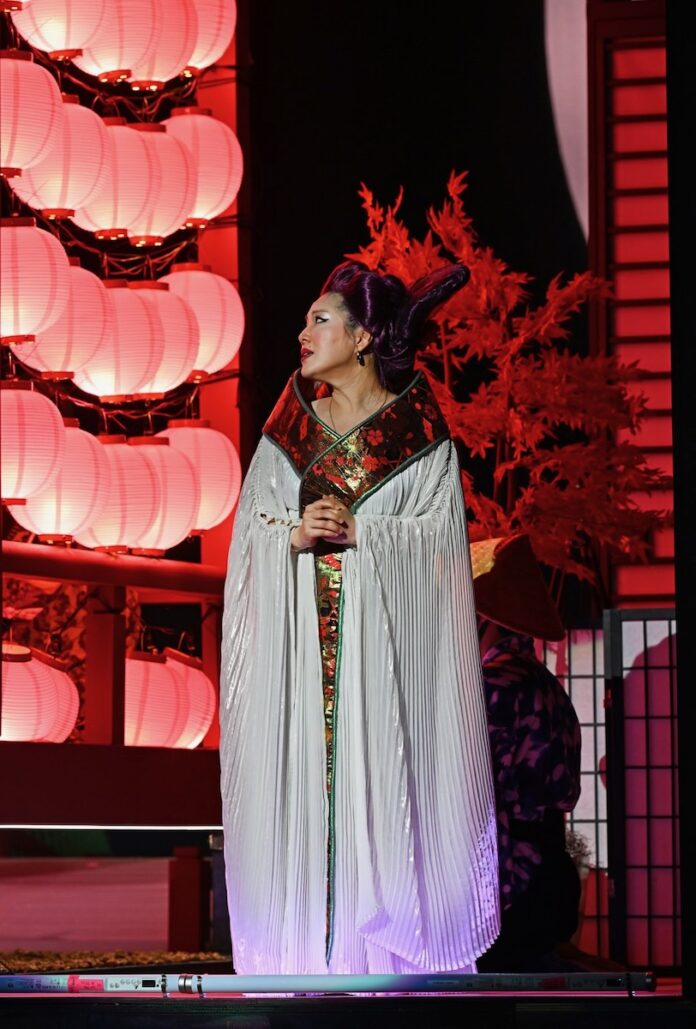
A woman dressed in the costume for Cho-Cho San in Madama Butterfly on a red opera stage

As the warmer temperatures of spring slowly creep in, Pittsburgh’s theater performances also heat up. Get tickets while you can for the season’s newest performances from the world-class cultural institutions our city has to offer. Whether you’re looking to stimulate your mind with a play, feel the exuberance of a musical, or experience a sultry night at the opera, you’ll be able to find something to warm your spirit up as the first flowers start to grow in the ground.

Plan a Night Out with Pittsburgh’s Spring Theater Performances

Kimberly Akimbo

Benedum Theater, March 4-March 6

Kimberly Akimbo is the tale of a young woman with a condition that ages her rapidly, making her appear elderly when she’s really only sixteen years old. This Tony Award-winning musical will be downtown at the Benedum Center for one weekend only, making a great date night or family night out.

Birthday Candles

City Theatre, March 8-March 30

City Theatre is also feeling the existential weight of aging this spring, as Noah Haidle’s Birthday Candles follows a woman’s life one birthday party at a time. The play asks viewers to reflect on how birthdays are a marker of not just how much things change, but also how much they stay the same.

Lang Lang with the PSO

Pittsburgh Symphony Orchestra, March 19

The New York Times called pianist Lang Lang “the hottest artist on the classical music planet,” and now he’s coming to Heinz Hall once again to perform the Grieg Piano Concerto for Pittsburgh audiences.

Who’s Afraid of Virginia Woolf?

Pittsburgh Public Theater, March 19-April 6

Edward Albee’s high-intensity marital drama is a must-see whenever it’s performed, but particularly in a time when social and political discourse feels so full of strife. Who’s Afraid of Virginia Woolf? Is a masterclass in how pent-up resentment eventually explodes and how hidden grudges and tragedies always come out in the end.  

Madama Butterfly

Pittsburgh Opera, March 22-30

Puccini’s Madama Butterly is a classic opera, but this production in collaboration with the Cincinnati Opera and Utah Opera uses an all-Japanese cast and all-Japanese production team to update its vision of East Asia. The set design also uses futuristic, science fiction-esque aesthetics to highlight the dreamlike nature of operatic performances and reinvent the setting.

Spring Mix: 5 for 55

Pittsburgh Ballet Theatre, April 4-6

At the August Wilson African American Cultural Center, the Pittsburgh Ballet Theatre will have some of their most seasoned artists perform both classical and contemporary choreography. This “Spring Mix” event in honor of the ballet’s 55th anniversary will showcase ballet’s versatility through the ages.

9 to 5

Little Lake Theatre, April 10-27

Dolly Parton turned 9-5 daily grind into a rollicking musical number in the title track for this workplace comedy musical. Take some time away from the struggles of the work day, sit back in your chair, and enjoy the musical adaptation of the 1980 film that inspired Dolly’s hit.

Story by Emma Riva
Photo by Philip Groshong, courtesy of the Cincinnati Opera

Subscribe to TABLE Magazine’s print edition.
Don't Miss