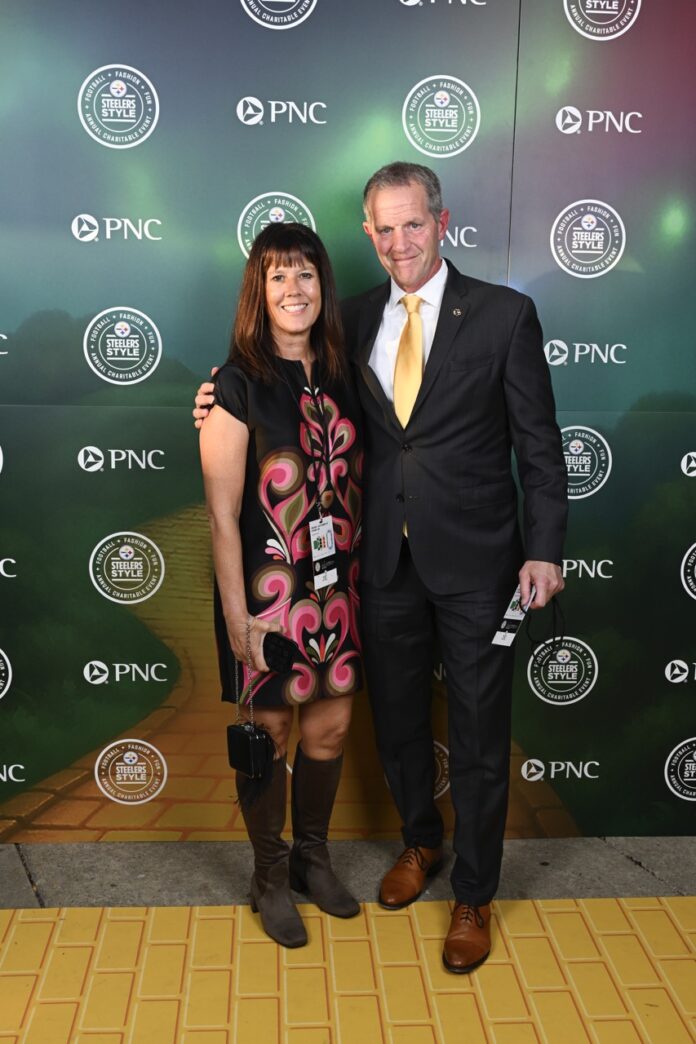
The annual Steelers Style event once again brought together the worlds of Pittsburgh football and high-end fashion for a spectacular evening of charity and glamour on Friday, October 10, 2025.
This highly anticipated fashion show featured current players, team personnel, and their families taking to the runway to showcase the season’s latest fashion trends. Each outfit comes pieced together from local and national retailers.
More than just a glamorous spectacle, the event served as a major fundraiser for Steelers Charities. Proceeds to this a 5013C go towards supporting vital regional organizations, including the UPMC Sports Medicine Concussion Program, Cancer Bridges (which offers crucial support for those impacted by cancer), and the Chuck Noll Foundation for Brain Injury Research.
Attendees saw a unique display of style and community spirit with fun to be had all down the runway. After all, it’s an event celebrating the players’ commitment to critical health and wellness causes even off the field.
Steelers Style 2025 at Stage AE on October 10
TJ and Dani Watt
Lynn Collins and UPMC’s Dr. Micky Collins
Mike and Kiya Tomlin and Greta and Art Rooney II
Artist Cody Sabol
Emcee KDKA’s Bob Pompeani
Co-hosts Missi Matthews and Bill Crawford
Bill Crawford, DeShon Elliott, DK Metcalf and Missi Matthews (Elliott and Metcalf were co-captains for the event)
Models
Calvin and Sheree Anderson (Winners of the SWAG Award)
In the past decade, the number of craft breweries in the United States has more than doubled. According to the Brewers Association, the trade group that represents the interests of small and independent brewers around the United States, more than 80% of American adults live within ten miles of a craft brewery.
However, not everyone is on board the craft beer train. Kaylee Laird is one of these people.
Guests Left to Right: Wivina Chmura, Ethan Chmura, Dominique Clark-Enos, Kaylee Laird, Lisa Sheffler, Noa Alxndr, Keith Recker, Justin Matase, Star Laliberte, and Neil Glausier
Learning to Love Beer with Burghers Brewing’s Neil Glausier
“I’ve never, ever been a beer drinker,” she says. “When I was first introduced to beer, it was in college, and everyone was just drinking watery beer wherever they could get it. I know there are so many different types of beer, but I’ve never taken the time to explore.
Laird prefers wine; during the pandemic, she passed her WSET 2, a robust course for wine enthusiasts, and earned certifications in Spanish and Italian wines from the Wine Scholar Guild.
Lisa Sheffler is another Pittsburgher who hasn’t traditionally enjoyed beer. A nurse who runs the @itsgoudafooda Instagram account, she’ll go with almost any beverage other than beer. Like Laird, Sheffler’s decision comes down to taste.
“Macro beers, to me, taste like sadness,” she says. “I’ll drink them if they’re the only thing available, but it’s never enjoyable.”
Recently, both Laird and Sheffler served as two of eight participants on a panel of “skeptics” who, at best, preferred not to drink beer—and at worst, professed outright disdain for it. It fell to Neil Glausier, co-owner and brewmaster at Pittsburgh’s Burghers Brewing, to educate this panel about the brewing industry, and to see if he could help guide them toward a beer they might enjoy.
“Everybody loves the craft beer environment,” Glausier says. “They like the culture. But craft beer itself, for a casual drinker, is trickier. People are used to big brands. They know what they’re going to get. But craft beer is a wide open field.”
For Glausier, the difference between someone who says they like craft beer and someone who says they don’t often comes down to education–there are so many beer styles, and even people who say they don’t like “beer” might only be thinking about one narrow definition.
So, how does one quickly educate eight skeptics who don’t know a lager from an ale, and who may have even spoken the words, “I hate beer”?
A food and beer pairing class, of course.
A Beer Pairing Class for the Hoppy Haters Out There
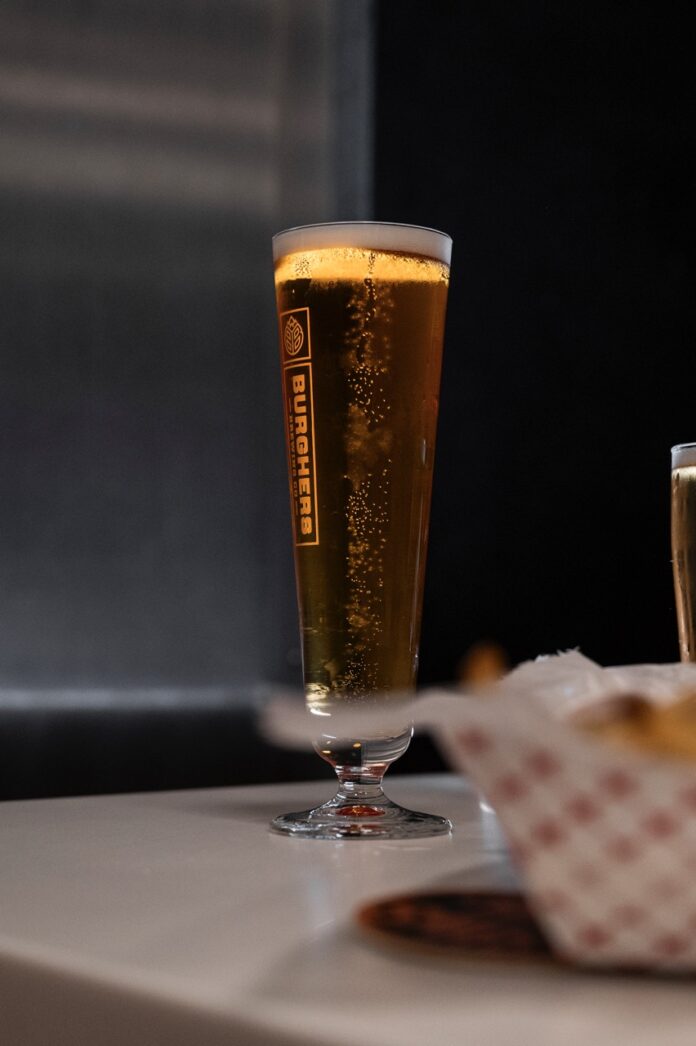
The panel recently met for this class at Burghers’ new 14,000-square-foot production brewery and restaurant in the Millvale neighborhood of Pittsburgh, where Glausier started them off with a hopped seltzer called Hop Pop. Just like a wine lover who drinks Prosecco between glasses, or a coffee aficionado who has a little sparkling water before consuming espresso, the Hop Pop served as a palate cleanser. It received unanimous approval from the panel.
Then, Glausier took his audience’s food orders.
For pairings, Glausier used a methodology known as “the three Cs,” which stand for complement, contrast, and cut. While food and beer pairings can be both an art and science, the three Cs provide a basic framework.
How to Pick the Perfect Beer
“If we want to complement, we want to pair the flavor notes,” Glausier says. “The flavors aren’t competing with each other. A standard, very easy-drinking Kolsch, like our Nubbel, will pair well with French Fries—or our Polish Hill burger, which features a pierogi and sautéed onions. Because the food is overwhelming, we don’t want to throw a whole lot of adjacent things in there that will take away from it.”
Then, Glausier Explains Contrast:
“The Oakland burger has a bit of a tangy heat,” he says. “I went with our oatmeal stout, Oat Black Water, because the large, chocolate ganache and bright hoppy notes of the beer contrast with a very savory burger.”
Finally, He Explains Cut:
“Our Maggie’s Farm burger has horseradish and jalapeño, and Maggie’s Farm spiced rum sauce,” he says. “Lots of umami. Since there’s so much going on, I want to cut those flavors. I paired that with a hazy pale ale called Knob and Tube. That beer was made with Cascade hops from Sandy Lake, Pennsylvania, and has notes of very bright citrus. Think navel orange and grapefruit.”
Using AATMF When Tasting
When the beers came, Glausier taught his skeptics about a methodology called AATMF—an acronym that stands for appearance, aroma, taste, mouthfeel, and finish.
“AATMF is a way to evaluate a beer once you get it in your hand,” Glausier says. “What does it look like? How does it smell? What does it taste like? Is it chewy? Light? Crisp? Does it last on the tongue? Is it dry? Clean? Do I enjoy it?”
When Glausier is evaluating a beer, he also thinks about the ABV—also known as “alcohol by volume.”
“ABV is where the party is,” Glausier says. “An average beer might be 5%. So if you see something that’s 12% and you’re trying to have sushi or salad, you’re probably not going to have a good time. A 12% beer is something I’d want to drink with something more filling.”
With their newfound beer education, Glausier let the skeptics order their own beers based on the flavor profiles they thought they might like. Each of them found a beer they say they plan to order again.
How Did It Go?
“I got the Mexican War Streets Burger, which Neil paired with a Mexican Lager,” Laird says. “I liked the beer and felt it went well with the food. As a wine person, it irks me when people say, ‘All red wine tastes the same.’ But before this, I would’ve said the same thing about beer!”
Sheffler, who had the pierogi-topped Polish Hill burger paired with a Kolsch, had a similar experience. “I enjoyed my beer, and I think I would try more!” she says. “Before this, I always knew there were all sorts of different styles—but I never thought about them in more depth. The passion behind Neil’s presentation made me interested in exploring that, and I’d be willing to explore them with more willingness than I have before.”
Trying Beer at Breweries Around Pittsburgh
If you want to explore Pittsburgh’s breweries, you’re in luck.
“We have a very privileged beer scene,” Glausier says. “We have something like forty breweries within a county’s reach—and they’re making some of the best beer in the nation. You can be in another place that has an equal density of breweries where there are only one or two that you can write home about. But in Pittsburgh, so many breweries are knocking it out of the park.”
Some of Pittsburgh’s breweries make a broad array of styles, while others focus on something specific. Or, as Glausier says, “You can get a masterclass in IPA in one neighborhood, go to another, and get a masterclass in English beer.”
The best way to learn more about craft beer is to visit a local brewery and try one. And if you think beer isn’t for you, head to Burghers’ new location and ask for Glausier—he’ll help you find something you like!
Get your costumes ready, because trick-or-treating is a classic tradition every family looks forward to. This year, the fun extends far beyond Pittsburgh neighborhood doorsteps, with tons of safe, festive, and spooky trick or treating events happening all across the region. From local community celebrations to special museum haunts and themed events, we’re making sure you and your little ghouls don’t miss a single chance to fill those pumpkin buckets all the way to the brim.
Pittsburgh Trick or Treating Events Besides Halloween Day
Saturdays, October 18-25 and Sundays, October 19-26, Pittsburgh Zoo and Aquarium
What’s better than being able to get some candy and be able to see exotic animals too? The Pittsburgh Zoo and Aquarium offers a Halloween experience that includes trick or treating, a costume contest, and Halloween parade with your regular ticket.
Not only are Sundays a day for no scare tours through the Castle Blood haunted house but they’re also a chance to get some candy too. All are invited to head through the trick or treat stops throughout the whole experience.
For those kiddos who need a little extra care and quiet when it comes to Halloween, Carnegie Museums makes sure there’s a space for all. Calming spaces featuring ear plugs, sunglasses, fidget toys, and other accessories are available all along the trick or treating route.
All residents are welcome to the Penn Hills Library for free trick or treating. For free, kids can come in costume and gather candy from around the library. Plus, there will be music, games, and other surprises.
Rather than going door-to-door, go trunk-to-trunk at the South Park Wave Pool Parking Lot. Participants will dress their car trunks up in fun decor and hand out candy to all who come. You’ll have two hours to hit them all from 2 p.m. to 4 p.m.
The classic cars of Pittsburgh along with The Pittsburgh Cars ‘N’ Coffee Club are decking out their trunks for an afternoon of trick or treating. Parents can take the opportunity to check out Lamborghinis, Porsches, Ferraris, McLarens, Mercedes-Benzs, and other cars in the process.
October 26, Hartwood Acres Park Amphitheater Parking Lot
Take in one last chance to get some candy before the big day on the 31. All through the amphitheater parking lot your little one can spot spider webs, skeletons, jack o’ lanterns, and much more while trunk or treating. You could even sign up to hand out candy yourself!
Story by Kylie Thomas Photo Courtesy of Katie Long
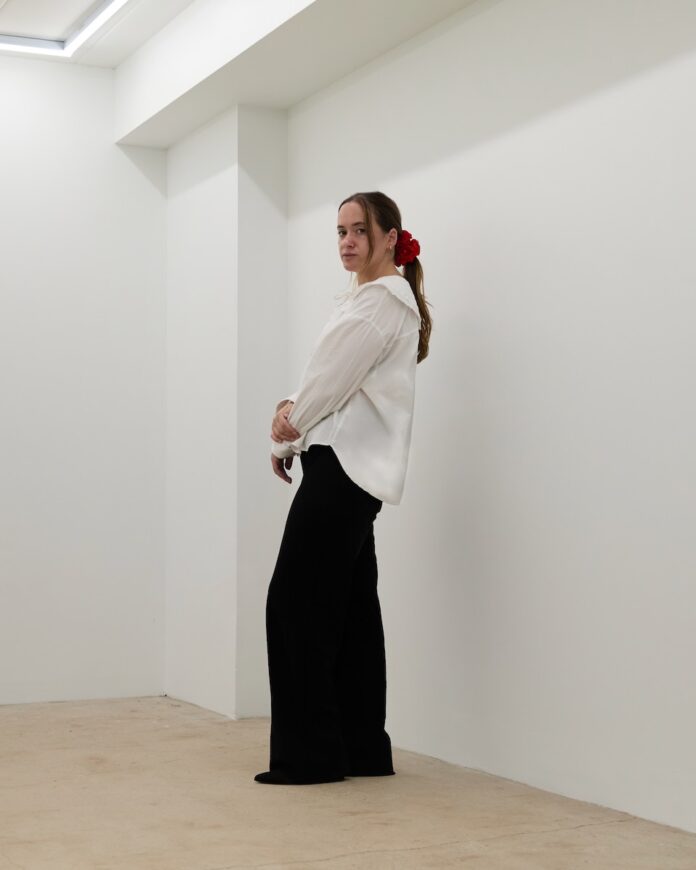
When I meet Margaret Kross in her gallery, Romance, she’s surrounded by spirals, wheels, and the faint hum of fluorescent lights leftover from the space’s former life as a cardiology office. “There’s a sort of psychological weight to this place,” she says. “You can feel its history.”
Creating a Home for Artists at ROMANCE, an Art Gallery
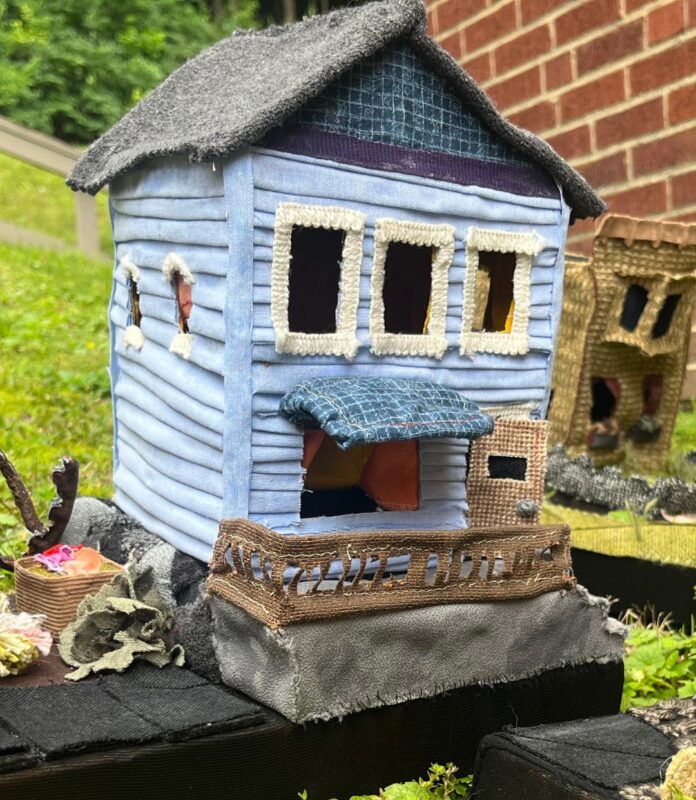
Born and raised in Pittsburgh, Kross returned in 2023 after a decade in New York working for major galleries like Paula Cooper, and on the Whitney Museum’s curatorial team. The first exhibition in her new space in North Oakland, Fourth River, meditated on Rust Belt mythology and defunct visions of American progress. The title, drawn from the city’s underground aquifer, served as a metaphor for invisible currents: what flows beneath industry, beneath the stories cities tell about themselves.
That sensibility—romantic, critical, slightly melancholic—threads through all of Kross’s curatorial projects. “I’ve always been interested in intimacy, love, sentimentality,” she says. “Things that might be dismissed as trite in the context of contemporary art.” It’s fitting, then, that the first iteration of Romance began in the basement of her apartment in 2023 (yes, complete with a Pittsburgh potty). “It started as something small, intimate, and always a bit chaotic,” she recalls. Eventually expanding into her living room, she quickly realized that it was time for a change.
In searching for a new space, Kross toured a few buildings with white cube setups around the city. None felt right. “It felt like I was trying to make the program feel too buttoned up,” she says. The cardiologist’s office—a true, untouched time capsule from the ‘90s—was something else entirely. “There was a kind of poetry to landing here, reckoning with its history, and making it work,” she reflects. “You take a place with connotations of fear and anxiety, and you think about how it might become something else—something about care and connection.”
A New Exhibition: Machine Turn Quickly
That ethos resonates through Romance’s current exhibition, Machine Turn Quickly, featuring artists Hunter Foster and Ang Ziqi Zhang. The show centers the wheel as a symbol of technology and time, a tool of creation and control that has both enabled and exhausted human labor.
In the gallery, Foster’s coiled canvases radiate in safety orange and camouflage green, their surfaces vibrating with circular motion. Zhang’s works, by contrast, move inward, spiraling toward hidden centers. Together, their visual languages evoke both the rhythm of machinery and the slow, psychic time of dreams. A small book, designed as a tear-off calendar, compiles fragments of their shared research and serves as a physical invitation to slow down, to handle time page by page.
Kross notes that the show asks an enormous question: “What does it mean to make art right now? Hunter and Ang aren’t offering a solution. They’re asking us to pause, to recognize that time itself has become a kind of tool—and maybe we can use it differently.”
The Growing Challenges Artists Face in Today’s Age
That question—how to make and show art right now—has defined Kross’s trajectory since she returned to Pittsburgh. In a city increasingly branded by corporatized health care and “AI Avenue,” the gallery stands as a reminder that care, emotion, and slowness are still radical values. Kross situates her gallery within a larger local ecosystem. “There are so many boons here,” she says, listing just a few of the spaces and organizations she admires: april april, Bunker Projects, Associated Artists of Pittsburgh, Brew House Arts, etc. She sees reciprocal support as the pulse of Pittsburgh’s art network: “It’s not about competition. It’s about conversation.”
Her enthusiasm for the city’s growing contemporary art scene extends beyond its borders. She recalls showing at an art fair, Art-O-Rama in Marseille, a port city whose industrial past mirrors Pittsburgh’s. “People were genuinely excited to hear about what’s happening here,” she says. “There’s a sense of curiosity about the city, and a recognition that something meaningful is taking shape.”
Beyond ROMANCE
Outside of the gallery, Kross continues to write for international art publications while advising local collectors. For now, she’s simply enjoying having some physical separation between work and life. She has some ambitious opportunities in the coming year, including a Curatorial Spotlight at NADA Miami during Art Basel, debut exhibitions in the U.S. of Tasneem Sarkez and the artist faith****, and a major art fair in New York this spring.
But Romance, as its name suggests, remains a deeply personal endeavor: “When I think about the serendipity of this space, the heart doctor, the machinery of care… it all connects,” Kross says. Romance, then, is about a kind of healing, about making art and community that keep the pulse going.
Machine Turn Quickly is open through November 12 at Romance (155 N. Craig Street, Suite 110). Gallery hours are Fridays and Sundays 1-5pm and by appointment.
Story by Shawn Simmons Headshot Courtesy of Michael Parente Gallery Photos Courtesy of Romance
That weird time between Halloween and Thanksgiving leaves everyone in some sort of limbo. Snap out of that lull and get out of the house with these events in Pittsburgh from November 3-9. This particular week is for those who appreciate the finer things in life, whether that’s a star-studded musical, professional crafting showcase, sophisticated taste test, or admiration for local artists. We believe what you pick to make time for this week shows where your heart lies the most!
Alicia Keys grew up in the New York neighborhood west of Times Square known as Hell’s Kitchen, and this is her story. Hell’s Kitchen is a 90s-inspired musical that speaks to the journey of finding where you belong, discovering your passion, and then ultimately leads to a mother and daughter learning to love and understand each other.
This high-energy crafting showdown hosted by the Pittsburgh Center for Creative Reuse gives participants 30 minutes to transform a mystery bag of crafting materials into something in the theme of Dreams & Nightmares. The top three creators will then compete in a five-minute craft blitz, with the audience deciding who takes home each prize.
Anaïs Saint-André Loughran, owner of Chantal’s Cheese Shop in Pittsburgh’s Bloomfield neighborhood, is here to make you a master cheesemonger. Guests will taste five selected cheeses paired with five Iron City whiskeys. Learn what elements make these two suit each other so well together.
The cookie table is a staple of Western PA and for good reason too. To celebrate this delicious tradition, the city’s bakers gather to compete for the chance to win Pittsburgh’s favorite cookie contest. Hosted by Rick Sebak, enjoy light appetizers, drinks, raffles, as well as the chance to taste tables full of different cookies (and even get to take a few home).
THAW, Inc. celebrates the beauty, strength, and creativity of African American women in a showcase of art and music. Walk through various works of art from local African American women creators. You’ll even get a chance to speak with the artists themselves. Plus, enjoy an assortment of hors d’oeuvres included with your ticket as you listen to the award-winning musical ensemble of Dennis Garner & Tempo-Noir.
The Pittsburgh Airport enters a sleek, new era, featuring a sparkly look and intuitive features that promise to make for a more user-friendly experience all around. (While we’re certainly excited, we do admit to an unexpected pang of nostalgia for a few distinctive quirks to which we’ll soon say goodbye.) With local anticipation growing by the week, Allegheny County Airport Authority CEO Christina Cassotis promises, “The new terminal will definitely be open by Thanksgiving.”
New Amenities at the Pittsburgh Airport
No doubt, many of the stats dazzle. The new terminal will feature 12 security lanes with 400 lineal yards of switchback queueing space (quadrupling the current set-up’s capacity), nearly 6,000 new parking spaces (including 2,300 covered) and 15 new local and national concessions, including Yinzer favorites like Mineo’s Pizza. The state-of-the-art baggage handling system decreases the distance luggage travels on conveyor belts from eight to three miles. This cuts down passengers’ post-flight waiting time. There are also approximately four miles of new roadways to connect I-376 with the new terminal.
A 1,300-foot, dual-level terminal bridge connects visitors directly to the departures, arrivals and ground transportation levels at the new terminal building. Yet one of the best parts of the spaces? Nods to Pittsburgh abound within the modern design, from the yellow “bridge” that connects those who’ve passed through security to the airside terminal, plus a “Fort Pitt Tunnel” replica and elevators with incline-related names.
Photo by Jason Boone.
All the Details of Pittsburgh’s New Airport
The departure hall proves a feast for the eyes. Its soaring, rolling ceilings bedazzle with 4,500 constellation lights. 100,000 square feet of glass, sourced from the State College area, lets in natural light and extra heat in colder months. (About 90% of materials and services have come from local businesses.) Three airport entrances funnel travelers toward all gates in an intuitive manner, thanks to clear sight-lines and a logical pathway. Guests now see planes right after passing through security. This creates a calming effect and proximity to aviation that was lacking in the old design.
Of the 32 tree-like ceiling support columns, no two are exactly the same, much like nature itself. Distinctive leaf imprints in the floor, scattered beneath twelve of the tree columns, represent trees indigenous to western Pennsylvania, too.
Tour guide Jeff Martinelli estimates he’s now shown off the new terminal more than 270 times. The response is overwhelmingly positive. After working in customer service for more than 20 years, he loves when “wow” is the first word out of a visitor’s mouth upon ogling the new space. He personally thinks that they’ve “hit a home run” with signage and intuitive way-finding. He says that this should make the terminal more efficient for all.
Njaimeh Njie (Bathroom Walls in the new terminal).
Easing Trips for All
But beyond beauty, the airport’s terminal and renovations to existing facilities have been designed for all who travel. Passengers with special needs have been a priority in the planning process. Access is more universal thanks to bright signage and shorter distances to traverse once at the airport. Dedicated spaces — some new, some refreshed — are many! There are nursing rooms for new moms. Those with autism will enjoy the Presley’s Place Sensory Sensitivity Room, which is a blueprint for such spaces all over the world. For senior travelers or those who have physical needs, adult changing rooms are available. Passengers will appreciate new seating with outlets at many gates, as well as remodeled bathrooms.
Four alfresco terraces — two before security and two after — offer access to the outdoors. They feature walking paths plus grass and shrubbery irrigated by stormwater shed from the building. Also, a roomy lounge area placed directly in front of security brings a sense of tranquility to those pausing for emotional goodbyes.
Honoring Pittsburgh Artists
Installing public art was a top priority at the new terminal. More than 80 percent of art and cultural installations come from local artists. Of course there are bigger names celebrated here, too — thanks to works like the 500-pound Alexander Calder mobile Pittsburgh that reigns over the new landside terminal. (Made for the Carnegie International in 1958, the work has seen three different Pittsburgh airport terminals since 1959.)
CEO Christina Cassotis made public art a priority at the new terminal. She sees art as a way to improve the travel experience and to instantly connect visitors to Pittsburgh’s culture. Among the 15 new local artists, some are from Carnegie Mellon University — five professors and two alumni.
For example, there’s Assistant Professor of Art and Social Practice at CMU’s School of Art Alisha B. Wormsley. The airport asked Wormsley to design a work for the new international corridor. Her entire installation, Portals, consists of two major components: an Orrery (an apparatus showing the relative positions and motions of bodies in the solar system) — which hangs on the ceiling “like an elaborate map of our galaxy told from the migrant populations coming to our city,” and a Butterfly Nebula (a nursery for new stars) — installed on the wall and made using objects from the airport’s lost and found.
“Through these two components, Portals aligns interplanetary travel with travel from people around the Earth to Pittsburgh,” she explains. “The artwork positions the airport as a nebula for travel in and out of worlds.”
Alisha Wormsley’s Butterfly Nebula which features objects sourced from the airport’s lost and found.
How Travel Influences Our Lives
Within her sources of inspiration, Wormsley tapped into a lifetime of traveling to and also from this city. “I have been fortunate enough to be able to travel all over the world. That interest and desire started being raised in Pittsburgh and going to the different museums in the city and meeting people in the city, who are from around the world, different parts of the world, and just amazed that we could all converge and meet in this one place,” she says. She’s also stirred by science fiction — and thinking about the ways in which we interact with the ancient past and the distant future.
“I also think we are in a time when coming together from different places is being criminalized,” she says, “and I feel very differently about that. I think it’s one of the most beautiful ways that we learn and grow as human beings.”
Wormsley finds it incredibly exciting to have a permanent artwork on display in her own city. “I am really proud to be from the place that I am from and the communities that I’m in,” she says, “and I hope that this gives folks something to think about, to feel, to criticize and to love —— all the things.”
Story by Corinne Whiting Photos Courtesy of Allegheny County Airport Authority
Diwali, the five-day festival observed throughout India by Hindus, Sikhs, and Jains, holds a shared symbolism for all who celebrate: “That light overcomes darkness, good overcomes evil, and knowledge overcomes ignorance,” says Veda Sankaran, the developer of these recipes. One of the several origin stories about Diwali is that it commemorates King Rama’s rescue of his kidnapped wife Sita, one of the major storylines in the world’s most ancient epic poem, the Ramayana. When Rama and Sita return home to live happily ever after, the citizens of their land welcome them by lighting tiny oil lamps all over the ancient city of Ayodhya.
The word Diwali comes from the ancient Sanskrit word deepavali, which translates to “a cluster or line of lamps,” or diyas. Throughout the holiday, these clay oil lamps are still lit around the home.
Sankaran, who is from the state of Tamil Nadu in South India, emphasizes the diversity of celebrations across India depending on language, culture, and region. For example, “Most people know it as Diwali, but I grew up saying, ‘Happy Deepavali!’ she says. “Like most holidays around the world, it’s centered around family and food. New clothing is gifted, food is shared, and in the evening, firecrackers and sparklers are set off.”
Diwali Recipes from India
Traditions focus on the preparing and sharing of sweets. In South India, “we usually start our meals with the dessert,” says Sankaran, which is why they’re featured here first. She also notes that Indian desserts are often time-consuming to prepare, and her time-saving approach is non-traditional––but just as delicious.
Mango Rasmalai, Pistachio Burfi, and Carrot Halwa are three dessert recipes that are a must for Diwali. These specialities create a tender cheese curd dish in a decadent mango puree, a fudge-like confection that utilizes pistachio butter, and a pudding-esc dish that cooks carrots in sweetened milk.
Some may not think of breakfast but Chole Bhatura is there to start your Diwali with a kick. This dish starts with masala made from scratch. Then you mix sautéed onions, ginger, garlic, green chili, and tomatoes to round out the chickpea stew. Finish it all off with bhatura, a puffy fried bread made from all-purpose flour.
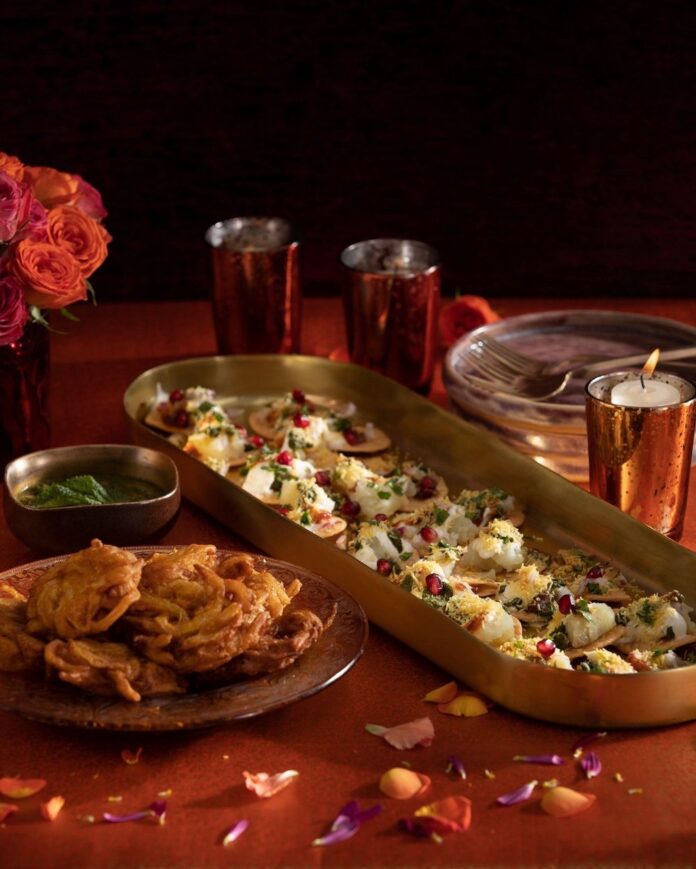
These two appetizer recipes are perfect sharable staters. Onion Bhaji are deep-fried snacks similar to veggie fritters or pakoras. They’re firm, salty, rich, and spiced. Chaat on the other hand is a very popular street food that’s tangy, sweet, and spicy. It derives from a crunchy cracker then adds on toppings.
Falooda is a refreshing and vibrant way to enjoy Diwali. This Persian treat, brought to India by the Mughals in the 16th century, is actually similar to a thicker milkshake. It’s layers consist of a rose Jell-O, corn sev, soaked basil seeds, rose syrup, milk, and ice cream.
Story by Nicole Barley Recipes and Styling by Veda Sankaran Photography by Dave Bryce
As the crisp autumn air FINALLY settles over Pittsburgh (those 80+ degree days felt like they would never end), the city comes alive with events for all ages from October 27 to November 2. Whether you choose to take in the last of the Halloween scares with various parties or wish to take advantage of some simple downtime, we promise there’s something that’s worth leaving the house for. After all, once November 2 hits, we’ll officially be switching over to holiday mode!
Get ready to sip, paint, and compete in the Hallo-week Costume Contest! This spooky-chic night at The Urban Tap in Shadyside combines creative fun, cozy vibes, and festive flair. Your ticket includes two specialty cocktails (mocktails and espresso bar options available), a small paint-by-numbers canvas, a spooky charcuterie cup, exclusive treats, and automatic entry into the costume contest. Enjoy local vendors, a trick-or-treat bar, and drinks all night.
Learn the fundamentals of woodworking in this beginner-friendly workshop. Students will explore core woodshop machines, safety procedures, and the lumber milling process—turning rough-sawn boards into dimensional lumber. Participants will gain confidence using the studio space and tools, and will create sample pieces demonstrating their new skills. This course is an excellent introduction before taking other project-based workshops.
Celebrate Halloween at Heinz Hall with costumes, candy, and the return of Bugs Bunny at the Symphony! The Pittsburgh Symphony Orchestra brings classic Looney Tunes to life with live music perfectly synced to beloved cartoons on the big screen. Festivities kick off Friday with special Halloween fun before the show, making this the perfect outing for families and friends alike.
Step into an evening of decadence, disguise, and dark delight at Black Dog Winery’s Halloween masquerade. Enjoy live music from Cover 2-Acoustic Show for their Black Dog debut, costume contests, and hauntingly crafted cocktails in a setting made for mystery. Each ticket includes a complimentary glass of wine and sharable snacks.
Celebrate spooky season at Hops & Hex, a night of haunted fun for the adults hosted by The Pittsburgh Creative. Guests can shop local vendors, get a tiny tattoo, enjoy close-up magic, and even enter to win the costume contest. With eerie local lore woven into the evening, this witchy gathering offers a playful mix of shopping, entertainment, and Halloween vibes all while sipping on your favorites at Trace Brewing.
Story by Kylie Thomas Featured Photo Courtesy of Trace Brewing
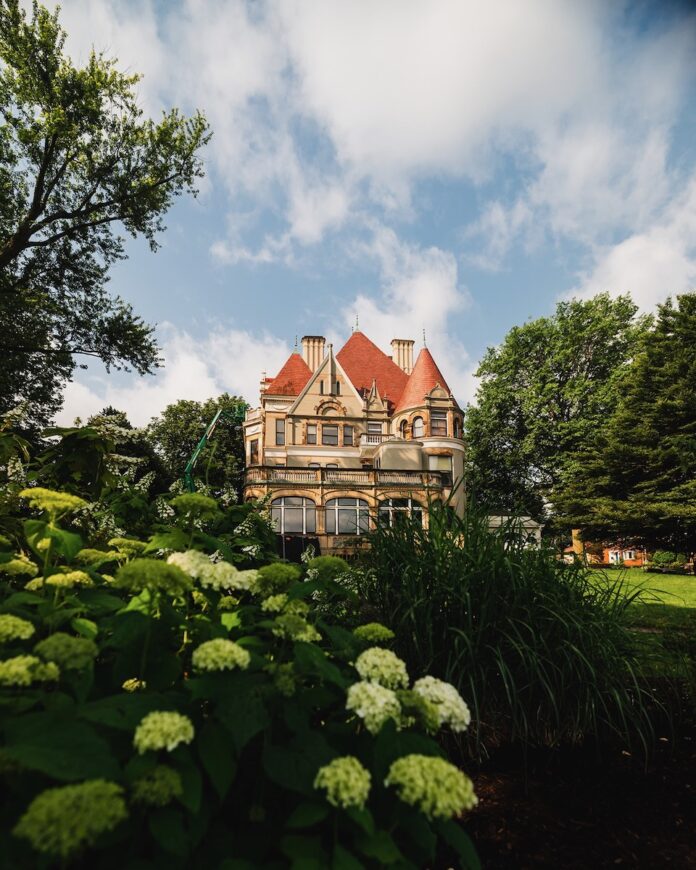
A guide pulls a rope from its hook and leads you up red velvet stairs into the unknown. This isn’t a speakeasy or a hot new club—it’s the upper floors of Henry Clay Frick’s estate, Clayton, on the grounds of The Frick Pittsburgh. The third and fourth floors of Clayton have never been seen by the public before, and as of fall 2025, visitors can be among the first to see these parts of the Frick family residence. Rather than the curation of the lower floors, which freezes Clayton in time to educate visitors about its history, the upstairs floors show the home as a living, dynamic archive.
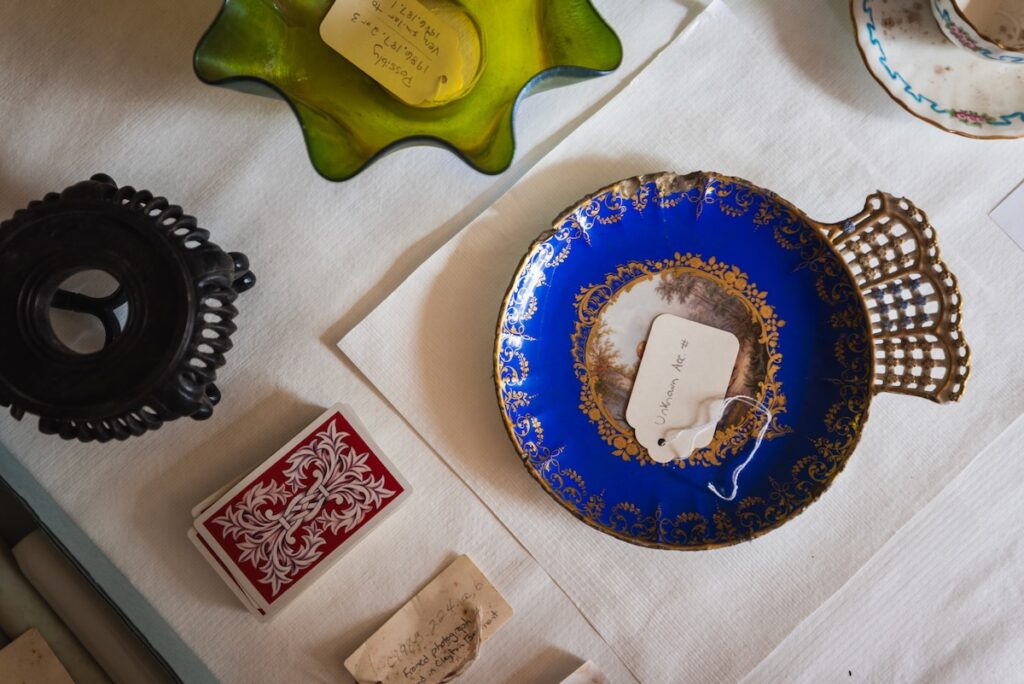
As you walk into the rooms on the third floor, you’ll find a plethora of broken plates and “mystery objects” marked with accession numbers. It’s a delight for any lover of tchotchkes and trinkets, with playing cards, candle sticks, Polaroids of objects throughout the home, and a mother-of-pearl inlaid card game score counter. “Part of the fun of this tour is getting to see how these rooms are used in the present day,” Collections and Exhibitions Assistant Bella Hanley explained.
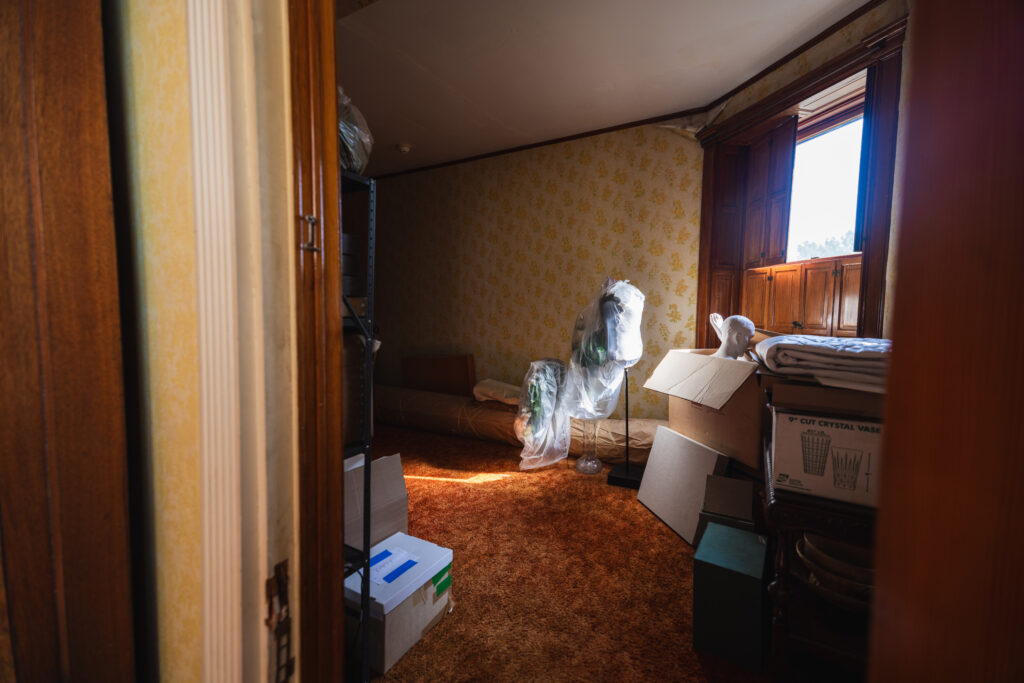
It’s an unconventional choice to allow visitors behind the curtain, so to speak, and into the museum staff’s workspace. Viewing the upstairs floors also allows visitors to see that Clayton was occupied—and renovated—well into the ‘70s and ‘80s. The sewing room or caretakers’ room has fluorescent orange walls and ‘70s shag carpet. A mannequin’s white plastic foot sticks out of a cardboard box, and one corner is entire full of bright scarlet pointsettias. Hanley noted that not even tour guides got to go upstairs until recently.
The Frick Opens Up Never-Before Seen Floors of Clayton
The upstairs tour continues Gilded, Not Golden’s theme of highlighting not just the Frick family but their staff, through the chauffeur’s room and the governess’s room. But it also provides an even more intimate look into Frick family life. One of the most frequently-asked questions on the Gilded, Not Golden tour is where Childs Frick’s room was. The answer is the third floor, where you can see images of Childs’ room decked out with guns, swords, and Princeton University merch. Just a typical Gilded Age man, obviously. But what remains is now its high ceilings, stained with water damage, and wide bay windows. “We’re constantly fighting against the elements,” Hanley said. “We look at structural problems one step at a time.”
Image of collection items on the table in the Yellow Room on the 3rd floor of Clayton. Seth Culp-Ressler/The Frick Pittsburgh
Another Side of Helen Clay Frick’s Vision
One might wonder, to put it in the crudest terms, what can be gained by seeing a bunch of boxes and water-damaged ceilings. But it lays bare the fact that just as the tour highlights the laborers in the Frick family, contemporary laborers are behind the preservation of the objects and the museum experience as a whole. Museums don’t simply appear out of thin air and an archive as rich as the Frick’s requires constant stewardship.
Seeing more parts of Clayton allows you to see Helen’s Clay Frick’s life evolve as the daughter of the home to its curator. By the time she passed, Helen had four homes she’d inherited from her family, and trainloads of items arrived in Pittsburgh for the conservators of Clayton. Helen remained unmarried her whole life, and her love for her family homes made me wonder if real estate functioned as something for her to care for and nurture in lieu of a traditional marriage. Upstairs, we see Helen’s handwriting on one of her father’s suitcases, simple curlicues that read “papa.”
A striking moment in the tour is seeing a panel in the chartreuse walls of Helen’s schoolroom that opens to dark wooden beams. It felt like a metaphor for the Gilded Age itself, a shiny exterior with darkness underneath. But it also represented, to me, that looking closely at historical spaces like Clayton reveals so much more than meets the eye. There’s always more to learn, even behind the prettiest of walls.
The Frick in Constant Evolution
The opening of the upstairs is just one of the ways the Frick’s team has taken what could easily be a stodgy, stuck-in-the-past site and committed to evolving it. Some of that is their top-notch community engagement and consistent listening to visitor feedback. “People said ‘I’d pay anything to see what’s up there,’” Hanley said. “So, we decided to test that out.” The upcoming tours, which open in November, will have 16 slots a week available to view the upper floors.
Image of a former caretaker space on the 3rd floor of Clayton. Seth Culp-Ressler/The Frick Pittsburgh
I feel now, after visiting Clayton multiple times and seeing a wide range of exhibitions at the Frick, a deeper connection to Helen. While her brother dug up dinosaur bones and started his own family, Helen was at her father’s right hand, a woman of shrewd intelligence at a time a woman’s intelligence wasn’t likely to get her as far as a man’s. Her views on art and society at large leaned more conservatively, and by Hanley’s own admission “a lot of what we do today would have Helen rolling in her grave.” But she wanted people to get to see her family home and enjoy it, even if it’s accompanied by a museum showing modern art that wasn’t to her taste. By both honoring Helen’s memory and transcending her vision, the Frick moves its programming into the future.
Story by Emma Riva Photo Courtesy of The Frick Pittsburgh
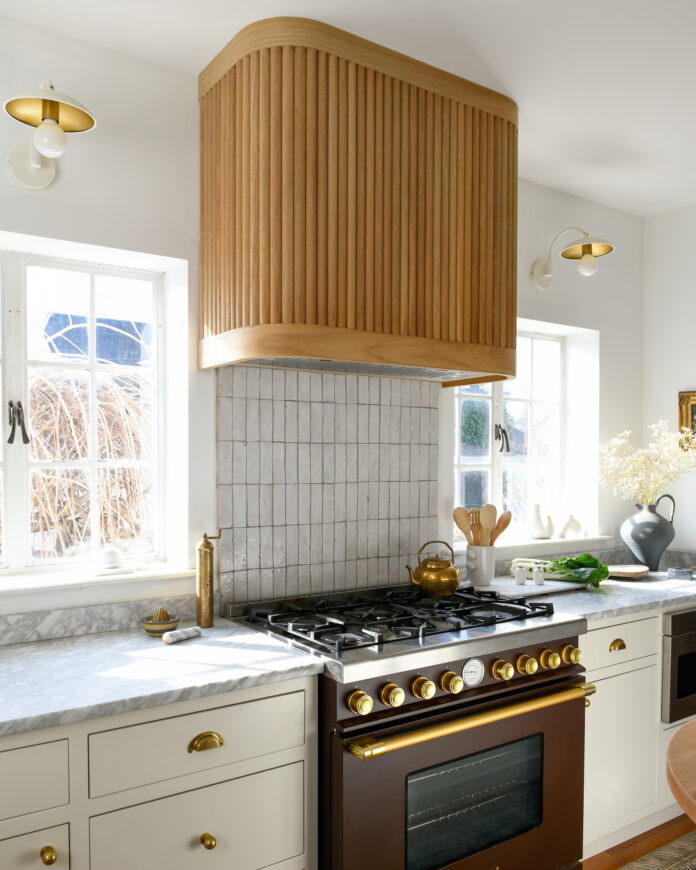
The kitchen cements its role as the heart of the modern home, serving as a space for social gathering as well as for cooking. The shift towards modern design has fueled a massive demand for kitchen remodels which prioritize clean lines, minimal clutter, open-concept layouts, and high-tech functionality. Whether you’re planning a complete gut renovation or simply looking for inspiration to achieve a sleek, contemporary feel, get ready to explore the elements that make modern style both beautiful and practical.
Tolga Sevdik, co-owner and COO of the Richard DeShantz restaurant group, looked for a home kitchen renovation that would serve as a sanctuary of peace and order, a huge contrast to the ten noisy, professional kitchens he manages. We’re checking out his modern, European-style kitchen blending contemporary home design and functional efficiency.
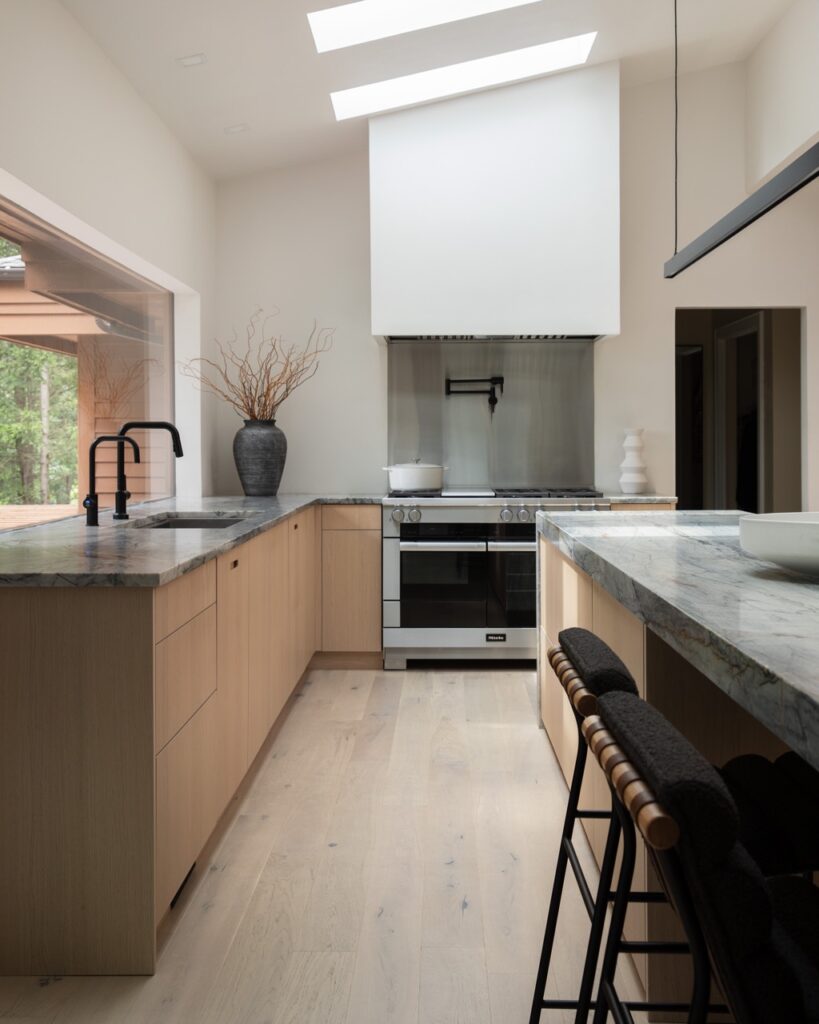
Could you imagine turning your sunroom into a kitchen? Pittsburgh’s Allegheny Millwork take advantage existing natural light from skylights and a large sliding door to create an airy, appealing space. They also highlight texture and classic, clean lines through utilizing white oak veneer cabinetry and a custom plaster range hood.
Head inside the personal kitchen redesign of certified kitchen and bath designer April Spagnolo. Spagnolo makes her kitchen work by grounding the entire design with the stone selection first. She chooses a beautiful natural quartzite for the island. The final design is a harmonious blend of wood, metal, and stone.
A Fox Chapel midcentury home gets a practical upgrade from designer Katy Popple that also restores the space’s authenticity. Popple’s design anchors the new space with walnut cabinetry, which she deems the “be-all of midcentury kitchens.” The design is highly functional, integrating modern conveniences like freezer and microwave drawers within the island.