In the heart of the Steel City, a special kind of magic happens when businesses care not just about products, but about passion and genuine connection. We’re shining a spotlight on Pittsburgh’s true local legends—the innovative trailblazers who go beyond the transaction. One of these is La Storia, who is making their move into Shadyside.
La Storia Design Company Stylizes Shadyside
Founded by Maria Diven and Tia Nitsopoulos—creative partners with complementary backgrounds in interior architecture and industrial engineering—La Storia is both a design studio and a thoughtfully curated boutique. The name translates to “the story” in Italian, and storytelling is the soul of their approach. Every project begins with a conversation and ends with a space that reflects the people who live, work, or gather there. Their design philosophy gets its roots in timeless elegance and quiet luxury—classic details balanced with a modern, livable sensibility. Maria leads with nearly two decades of design experience and an academic career shaping the next generation of designers. Tia brings business insight and a meticulous eye for beauty.
The boutique, furnishings, finishes, and objects are selected with care—pieces that honor craftsmanship, celebrate global artisans, and carry the kind of character that can’t be mass-produced. Every texture, every form, every material tells a story. At La Storia, design isn’t just visual—it’s emotional. It’s how your story comes to life, beautifully and intentionally.
Story by TABLE Magazine Staff Photography by Laura Petrilla
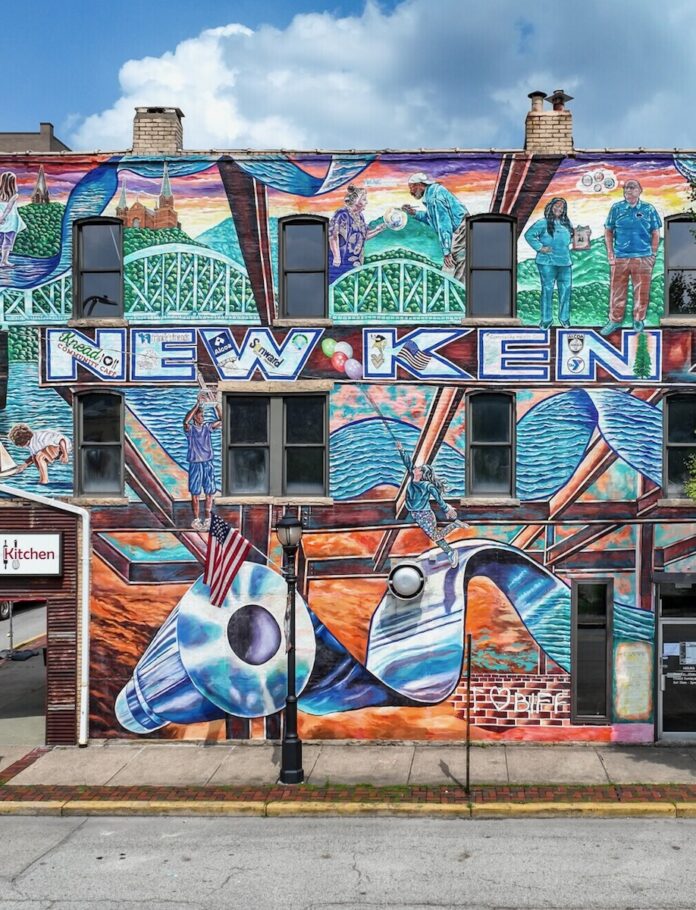
So, the town became “New” Kensington, now better known as New Ken to the people who live in and love it. It’s no secret that New Kensington has fallen on hard times over the years—deindustrialization hit New Ken hard, as it did much of Pittsburgh. It’s a small town with a big heart, full of sunbaked brick buildings on the shore of the Allegheny River, right over the line of Westmoreland County. People talk to you at the bus stops and the coffeeshops, and walking around with a local means no one escapes a greeting and a chitchat. I visited on a summer day, the kind of day that makes towns in the Alle-Kiski Valley feel like they’re frozen in time, a long, sunny, quiet afternoon stretching over forever.
What’s New in New Kensington?
Local small businesses are spearheading a revitalization effort in New Kensington. What makes this revitalization special is that it isn’t led by big developers or new industry, but instead directly by the people of the community. New Kensington’s buildings show the grandeur of its past as an aluminum production hub (and, many say, as the center of Pittsburgh’s mafia). But its present comes from the people working hard to create a thriving local economy, particularly on the business district in Fifth Avenue.
Sweet Tillies, at the Forefront of New Kensington’s Bakery Boom
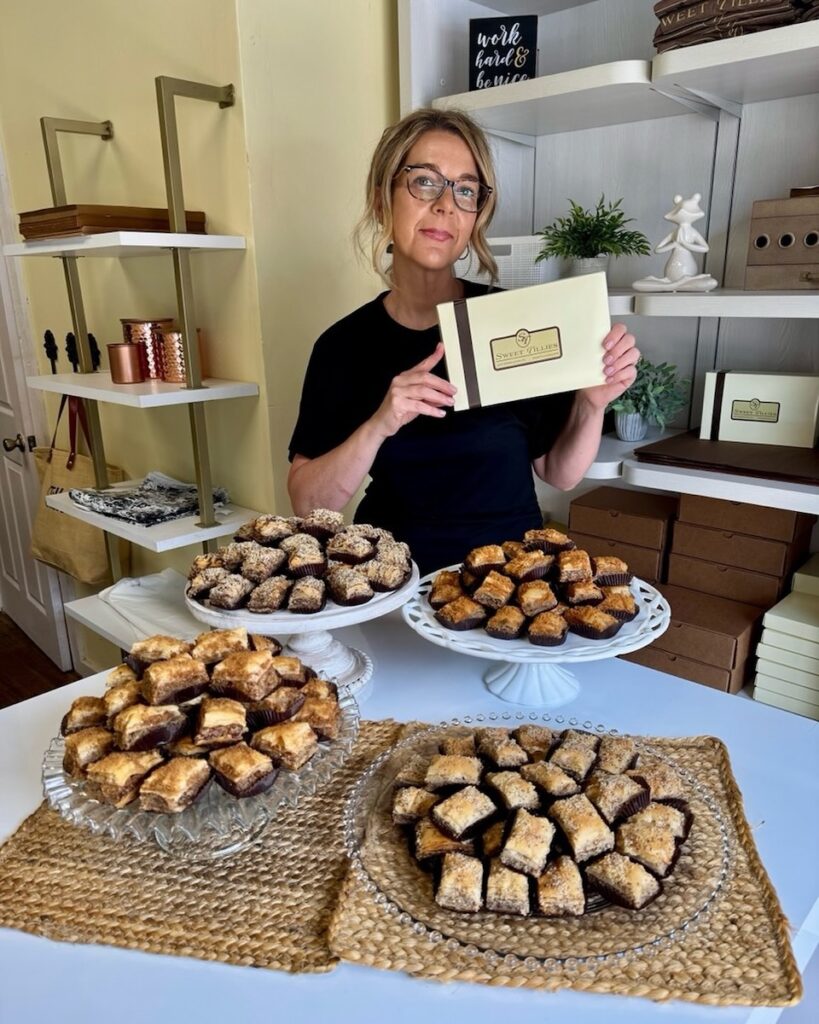
Amy Johnson at Sweet Tillies. Courtesy of Amy Johnson.
Amy Johnson, who runs bakery Sweet Tillies, grew up in the once-booming New Ken but rarely went downtown in more recent years. “I never came down here because there was nothing to come down to anymore,” she said. “My landlord, Mike [Macalnas] could look at the buildings and appreciate the beauty, but my emotions never let me get there.” Macalnas runs Olde Town Overhall, a revitalization program aimed at helping small business owners get their foot in the door in downtown New Kensington. Macalnas’ slogan is “Don’t wait—create your own main street!” The call resonated with Johnson.
How she started Sweet Tillies is straight out of a Hallmark movie. In 2020, Johnson worked in the HR department at UPMC. “I was feeling real heavy in life. When I met Mike, I started this place,” she explained. Johnson learned how to make baklava (which she pronounces as “bakla-wah,” Syrian-style) from her grandmother, Matilda. Johnson’s middle name is Matilda, so she was “Little Tillie,” inspiring the name of the bakery. “I didn’t see a lot of people doing flavors of baklava,” she said. Her baklava come in amaretto, chocolate peanut butter, Biscoff cookie butter, and apricot ginger, among others.
Foot traffic has increased measurably in the five years she’s been open. “When I started, business was more online orders, but now it’s about 60% walk-in, 40% online,” Johnson said.Very few people actually follow the plot of leaving the corporate world to move back to their hometown and start a bakery based on their family traditions, but Johnson is proof that New Kensington is where that fairytale could come true.
Why Start a Business in New Kensington? Why Not?
Cones ready to be filled with Penn State Creamery Ice Cream. Courtesy of Lucky Duck Candy Company.
Just down the street, Mark and Mandy Simon had just opened their business less than a week from our conversation. New Ken residents filtered in and out of Lucky Duck Candy Company all afternoon. When asked why start a business in New Kensington, Mark Simon gave a succinct answer: “Why not?”
The Simons opened a smoke shop, Glass on Fifth, several years prior, but knew they wanted to expand into something else eventually. “People would come in and say ‘thanks for opening a shop here, but there’s nothing for the kids,” Simon remembered. “I’ve always wanted to own a candy store since I was a kid. In one word, candy brings happiness. And that’s what New Ken deserves, something to be proud of.”
Simon grew up in Erie and always found the small but walkable town to be where he wanted to live. The businesses he runs with his wife are his way of investing in New Kensington’s community. “We make adults happy at the smoke shop and kids happy here,” he said, gesturing at the whimsical pastel décor of Lucky Duck.
Though there seems to be a high demand of bakeries and candy shops in New Kensington—along with Sweet Tillies and Lucky Duck, there’s also Wildflower Bakery, Evanly Bakes, and Sweet Alchemy—and that’s not all you can get downtown. A quick drive south will take you to Jillian’s, a trendy fine dining hub with hyper-local produce. Common Oven, out of Strange Roots brewery, offers fresh, homemade pizza you can enjoy on an outdoor patio along with delicious local beers.
Making an Impact Through Fair Trade
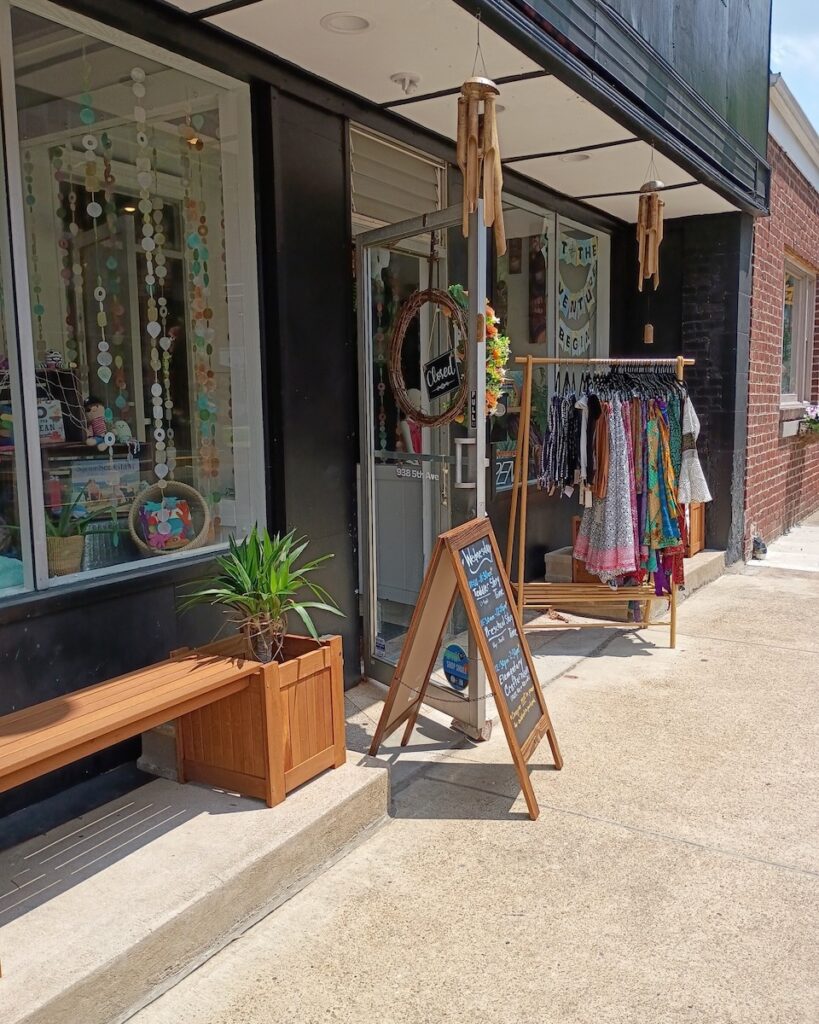
The storefront of Ethical Hope. Courtesy of Ethical Hope.
If you’re looking to buy clothes, there’s also a fair-trade store, Ethical Hope, right in downtown New Kensington. Owner Meredith Hedeen taught in local juvenile detention centers but felt the work wasn’t making the impact . “I wasn’t allowed to see them as a whole person. How can I get mad at this kid for not getting an A on this test when she’s taking care of her infant brother?” Hedeen recalled. “It’s been really cool to see people locally react to the idea that they can do something about these issues.”
Specifically, she wanted to start a store that focused not just on fair trade but on supporting victims of trafficking—something people don’t’ realize happens in their own community to children without support systems. Beyond soaps and sundresses, she now offers an educational space for local families to bring their children for workshops and play sessions.
“We’ve always been saying somebody needs to come in. We’ve kinda been watching, and we’re really glad to be a part of it,” Hedeen said.
Fridays on Fifth, New Kensington’s Newest Festival
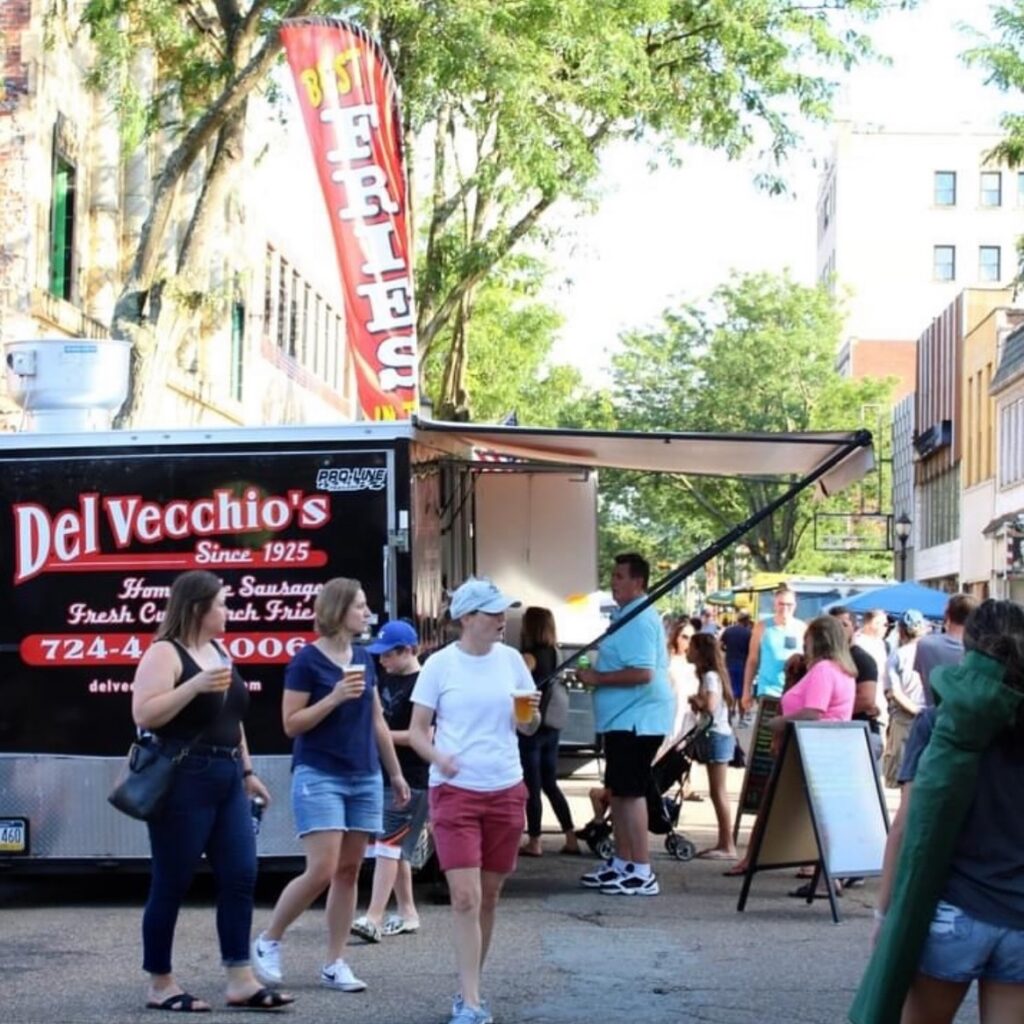
Tony and Nicole Vigilante helped to create “Fridays on Fifth,” a monthly local business crawl on Fifth Avenue. Fridays on Fifth is the fourth Friday of every month and incorporates food trucks from around Pittsburgh. Next time you’re wondering what to do on a Friday night, the food truck festival is a great low-cost option that will allow you to explore what might be a new part of Pittsburgh to you.
Festivalgoers at Fridays on Fifth. Courtesy of Tony and Nicole Vigilante.
“It brings in thousands and is helping change the perception of the city,” Vigilante said. “People enjoy two breweries, a winery, axe throwing, a coffee shop, a record shop/concert venue, as well as various shops. This makes us proud that we are playing our part and excited about what is to come.” Vigilante also serves as solicitor for the city and school district.
In addition, Nicole recently opened a vintage home décor shop, Trovo, right beside locally-beloved coffeeshop Steel Cup. Both hope to be a part of the city’s future. “We are pretty invested here,” Vigilante said. “We both grew up here and know it has so much potential.”
Story by Emma Riva Photo courtesy of Tamarck Foundation, mural by Bernie Wilke
Adventure is the theme of this next week in Pittsburgh. The city encourages you to get out and about this week of July 14-20. Each event will take you on your own journey. Whether you’re going to the race track, trying a new way to dine, becoming one with your inner self, or skipping through a field of flowers, you’ll find something exciting awaiting you.
The Pittsburgh Vintage Grand Prix is set to kick off its 43rd year with the annual Tune-Up Party. This popular race week event transforms the streets of SouthSide Works into an automotive festival. Hundreds of diverse vehicles, including race cars, exotics, antiques, and show cars, will gather for a spectacular display. Plus, you can celebrate the start of the racing festivities with music, food, and plenty of horsepower. It’s the perfect way to get revved up for the main event from July 19-20.
Prepare to have your perception of food completely transformed with a blindfold over your eyes to intensify your focus on the the senses of taste and smell. It all turns every bite into an extraordinary tasting adventure, well beyond the usual experience of taste. This intimate experience features a secret three-course menu including appetizer, main, and dessert that you will uncover through sensory exploration. Choose your preferred menu from meat, seafood, or vegan, and get ready to break from routine.
Immerse yourself in an evening of tranquility and rejuvenation with YOGAMOTIF. This event invites you to discover the profound peace found in mindful movement and deep stillness. Through a blend of guided meditation and gentle practices, participants will explore the rhythm of rest within themselves. This all helps to foster inner calm and renewed energy. All levels of yogis are welcome to nourish the mind, body, and spirit.
Experience a thrilling week of automobile-themed festivities in Schenley Park. Thousands of vehicles from around the globe will be on display at the Caliente Pizza sponsored International Car Show, featuring special exhibits for Lotus and Mazda Miata. Witness over 100 vintage racers in qualifying sessions on Saturday, leading up to Sunday’s Helltown Brewing Winners Circle Races. This family-friendly event has something for car enthusiasts of all ages.
Bask in the colors of summer at Freedom Farms’ annual Wildflower Festival. This celebration of nature’s beauty offers families tractor rides to full-blooming flower fields, where they can pick sunflowers, zinnias, snapdragons, and gomphrena. Beyond the blooms, the festival features an animal barn, pony rides, swings, a sunflower maze, a corn pit, and a hay mountain. Why not spend the day relaxing on the farm?
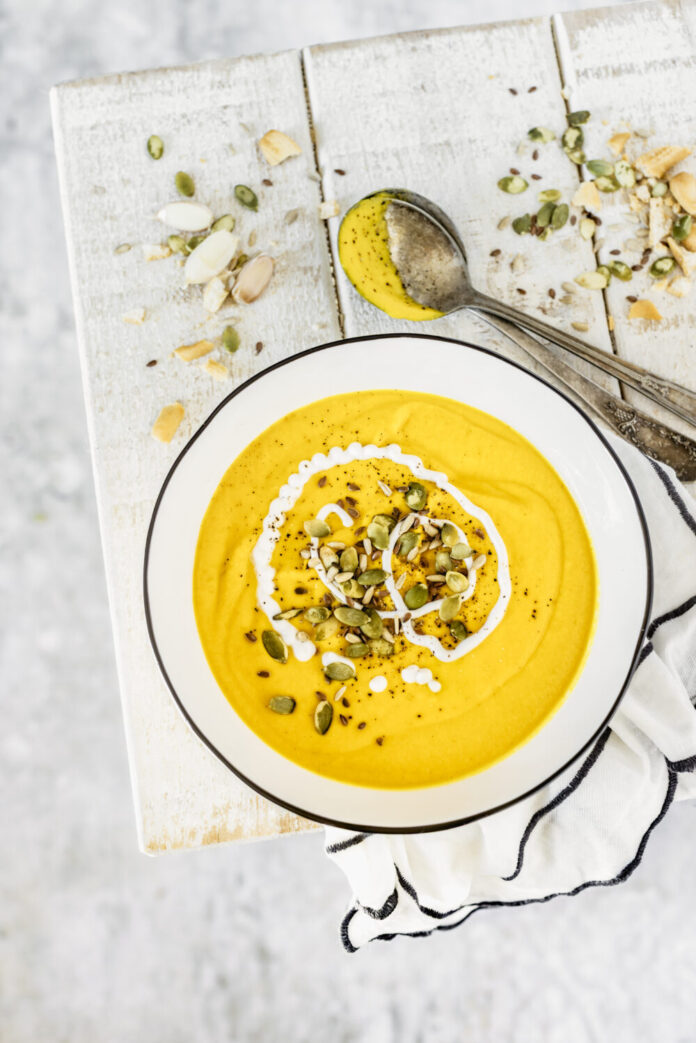
Creamy and refreshing, this Carrot, Bell Pepper and Coconut Milk Soup is reminiscent of Thai cuisine and comes with a very intense aroma that is sure to win you over. The sweetness of carrots and bell peppers is balanced by the tanginess of lime juice and apple cider vinegar, while ginger provides the right amount of spiciness. It is meant to be served cold, but it works just as well when it’s warmed up.
Why Use Coconut Milk in Soup?
The use of Coconut milk allows for a rich and silky soup without a drop of cream. Its natural sweetness creates flavor harmony, perfectly balancing chili, lime, garlic, and ginger for that crave-worthy sweet-salty-spicy-sour combo.
Additionally, the healthy fats provide a nutrient boost, making soups more satisfying and energizing. It’s perfect for those following a vegan diet.
Creamy and refreshing, this soup is reminiscent of Thai cuisine.
Ingredients
Scale
1 lb carrots, peeled and ends removed
1 yellow bell pepper
1 thick slice day-old country bread, cut in bite-size pieces (about 1 cup)
1/2 red onion
2 garlic cloves
2 tbsp coconut oil
2 tbsp apple cider vinegar
Juice of 1 lime
1 tsp turmeric
1 tbsp grated ginger
3/4 cup coconut milk
1 to 3 cups of water
Salt and pepper to taste
Instructions
Clean the bell pepper, discard the seeds and the white parts, and cut it in chunks. Slice the carrots and set them aside.
In a small bowl, soak the bread with the apple cider vinegar to soften it.
Heat the coconut oil in a large pan, slice the onion and the garlic cloves, and sauté them for a few minutes until golden. Add carrots and cook for 5 minutes, then add the bell pepper, season with salt and pepper and cook for another 12-15 minutes until all vegetables are tender. Add some water if necessary to avoid burning. Remove from heat and let it cool off.
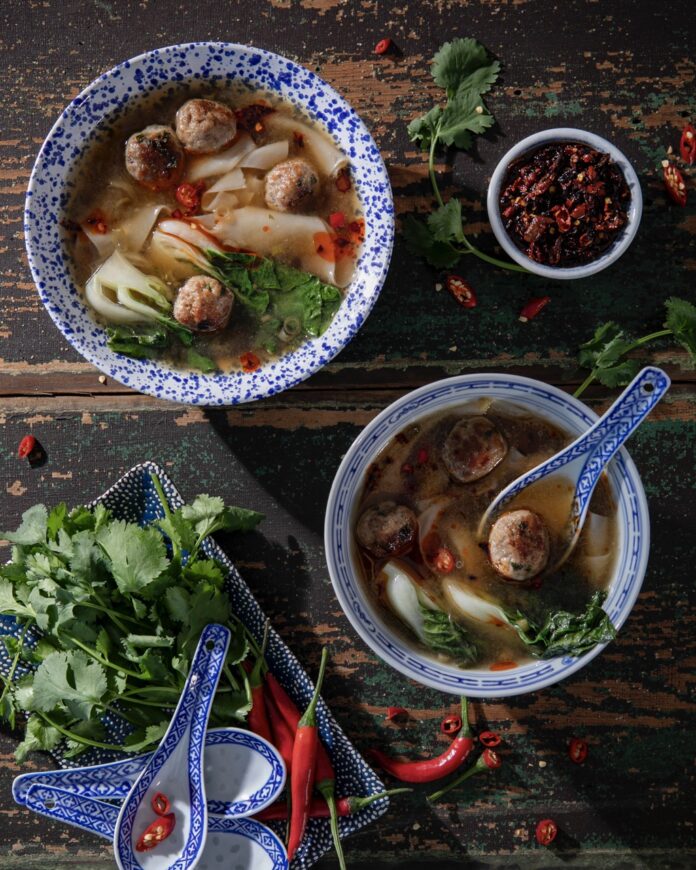
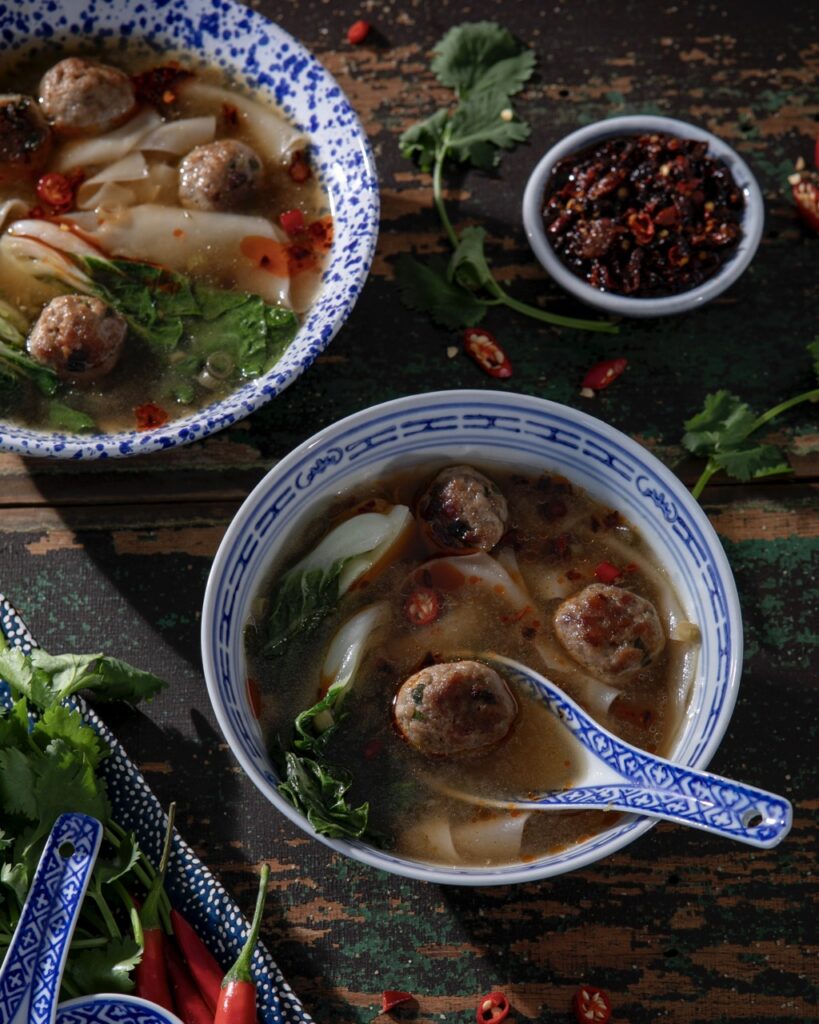
Don’t you wish you could have Pork Wonton Soup at the ready instead of having to go to your local Chinese restaurant? Our Quick and Easy Pork Wonton Soup makes this comforting dish a breeze, taking advantage of pre-made chicken stock as well as simple, store-bought wonton wrappers. Other than the pork filling which takes some mixing, this recipe is effortless, allowing you to create a rich, umami-infused soup in around 30 minutes.
Can You Exchange the Pork Filling in This Wonton Soup for Something Else?
Yes, you can absolutely switch up the pork filling to suit your dietary needs and preferences. Try using ground turkey, ground beef, ground lamb, tofu, or even beans as a vegan option. You just want to make sure your ball is dense and sticky enough to stay together as it gets cooked in the savory broth. If you’d prefer, you can leave out the pork balls altogether and focus on adding in other fresh vegetables of your choosing. Ingredients from your local farmers market like carrots, bean sprouts, and mushrooms all make great additions to this wonton soup recipe.
Wonton soup doesn’t have to be a big ordeal. Make this easy recipe for a quick and fulfilling dinner.
Ingredients
Scale
2 qt chicken stock
1 bunch green onions, thinly sliced
1 garlic clove, thinly sliced
2 tsp ground ginger
2 tbsp soy sauce
1 1/2 tsp rice vinegar
1 tbsp brown sugar
1 tsp kosher salt
1 lb ground pork
2 tsp toasted sesame oil
2 tsp cornstarch
3 heads baby bok choy, roughly chopped
20 wonton wrappers, cut into quarters
Chili crunch for garnish
Instructions
Place chicken stock in a large saucepan over medium-high heat. Cut white parts of green onions into 1-inch pieces and add to broth. Add garlic clove and 1 teaspoon ginger. Add 1 tablespoon soy sauce, vinegar, brown sugar and 1/2 teaspoon salt. Bring mixture to a boil, stirring occasionally.
Place pork in a bowl. Finely slice remaining green parts of green onions and add to the bowl. Add remaining soy sauce, ginger, salt, sesame oil, and cornstarch to the bowl and mix until well combined.
Form the pork mixture into 1-inch balls and add to broth. Reduce heat to a simmer; cook 5 minutes or until the pork is fully cooked. Add wonton wrapper and box chop and simmer for 8 minutes, stirring occasionally. You want the boy chop to be tender and for the wontons to be fully cooked.
Garnish with green onion and chili crunch.
Recipe and Styling by Anna Franklin Photography by Laura Petrilla
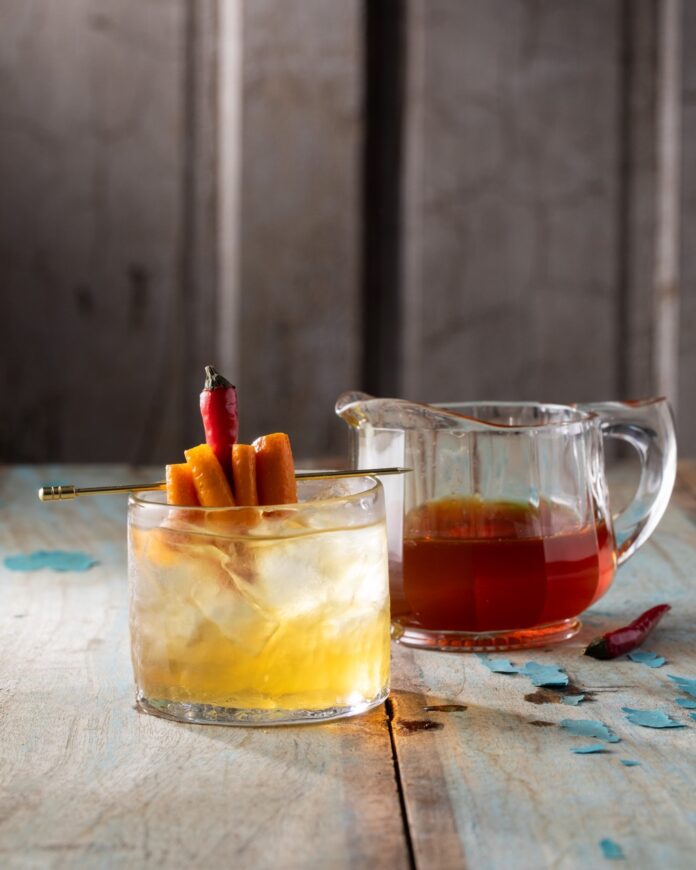
The hot honey trend that has swept the internet has everyone going out to buy a bottle of Mike’s Hot Honey. Most drizzle this bottle of goodness on sandwiches and pizza, but we’re here to prove there’s so much more you can do with hot honey. Enter, the Hot Honey Old Fashioned, a classy yet flavorful upgrade to this traditional cocktail. Just four ingredients (one of which is a garnish) stir into a cocktail that carries the bold depth of bourbon along with the sweet and spicy taste of hot honey as well as a few dashes of orange bitters.
What are Bitters, Anyways?
No matter the Old Fashioned recipe, you’ll add a few dashes of bitters to your glass. By the name, we know this extraction has a bit of a bitter nature, but what exactly are bitters? Bitters are simply a concentrated infusion of botanicals, roots, herbs, spices, and fruits. They come in various flavors but for this recipe we used orange bitters. Orange bitters have a little sweetness from the citrus but still offer up hints of cardamon, anise, caraway seed, and coriander.
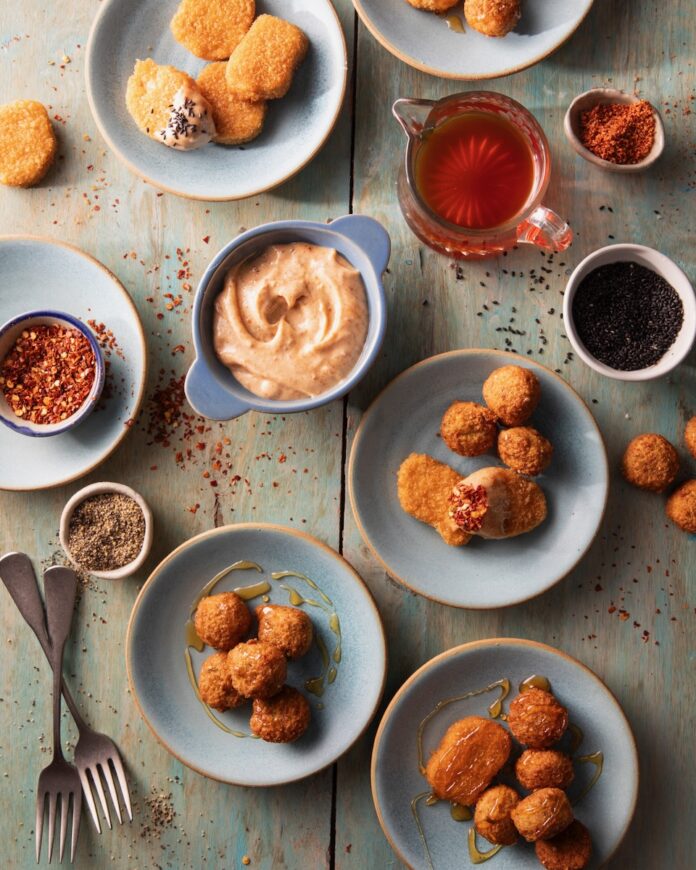
Aioli is the best for slathering on top of burgers and sandwiches or for dipping your favorite appetizers. But what if you could make creamy aioli even more delectable? Ground harissa and hot honey infuse your garlicky aioli with a helping of heat. The coolness of the mayo along with the sweetness of honey temper the spice down to the perfect level. It still packs a bit of a kick but it does not overwhelm the senses. Who knows how you’ll use this Hot Honey Aioli with Harissa, but when you find a great combination, then keep us in the loop!
What is Harissa in This Hot Honey Aioli?
This finely ground, North African red powder is our little secret to enhancing the flavors of the Hot Honey Aioli. Harissa powder blends smoked chilis with various spices like cumin, coriander, paprika, and caraway seeds. You can also get harissa in paste and sauce form, as well as dried and ground. In our case, we use it to replace chili paste with a rich flavor. You can make your own harissa at home but we wouldn’t blame you for taking the easy way and picking up a jar at the store.
If ‘regenerative travel’ sounds like an oxymoron, then it’s time for a visit to Playa Viva on the west coast of Mexico. It’s a resort where luxury and a serious commitment to the environment sit together comfortably. Julia Platt Leonard takes us on a tour.
A Trip to Playa Viva on the West Coast of Mexico
You could go to Playa Viva and spend your days lazing on a sun lounger under a palm tree, gazing at crystal white sands and an azure Pacific Ocean. To sustain energy for leafing through the stack of books you brought with you, you’d join other guests for farm-to-table meals, held communally three times a day.
An afternoon foray to the bar for their signature basil margarita wouldn’t be a bad idea, so you could toast another glorious sunset. If you can muster the energy, a short amble down the beach would reward you with a deep tissue massage in a beachside bungalow, as you’re serenaded by the lapping waves of the ocean.
But if that’s all you did,you’d miss out on what makes Playa Viva, well, Playa Viva. While some other beach resorts hermetically seal guests away from surrounding villages and life – Playa Viva not only welcomes that life in, but invites you to journey out to experience it. That could mean a dawn visit to the turtle sanctuary to watch as staff and volunteers release hours-old turtles back into the ocean. Or an ATV ride up the mountain to visit with the Gutierrez family who grow cacao and coffee. The air is cool and the hospitality warm as they prepare you an early lunch of the best black beans you’ve ever tasted, along with tortillas cooked before your eyes.
Baby turtles from the turtle sanctuary at Playa Viva take their first strokes after being released into the water.
Explore the Coast While Leaving Time for Yourself
Other excursions provide a glimpse not only into coastal life but also the work Playa Viva is doing to protect it, like safeguarding the vitality of the watershed which flows from the Sierra Madre mountains down to the ocean. Hop on the farm truck for a tour with Permaculture Manager Amanda Harris. She’s responsible for the 200 acres of land that comprise Playa Viva and helps ensure it’s a healthy ecosystem. She’s smart, passionate, and funny. And if you keep your eyes peeled, you’ll probably spot the lettuce growing that you’ll eat later that day.
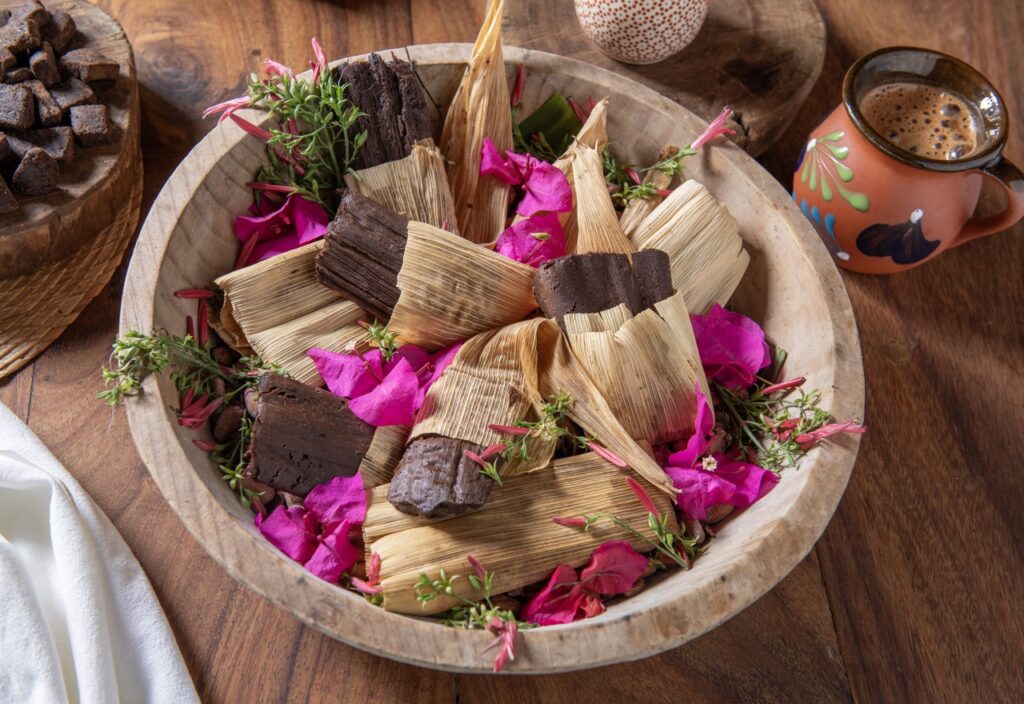
Chocolate tamales using 70% pure cacao chocolate from the Gutierrez farm in the Sierras.
But whether you’re hoping for a day fishing or touring a Pacific wetland, don’t schedule anything until you arrive. Why wait? Playa Viva co-founder David Leventhal says it’s to allow time for what he calls the “Playa Valium” to kick in. “I think our lives are over-scheduled as it is, and there’s something about arriving and letting go and feeling like you can do nothing and that’s okay,” he told me.
An Emphasis on Rest
And he’s right. I arrived dressed for cold climes in black and wool, squinting to see so much sun in winter. A host welcomed me, offered a cool drink, and took me and fellow guests on a tour. I shed the black quickly but it took longer to stash my cell phone and computer. Eventually, my breathing grew slower and deeper.
Morning yoga to waken your senses and limber your body.
Morning yoga classes in an oceanside shala (the Sanskrit word for “home”) helped limber up my body and calm my chattering mind. Staff and guests sit together for meals (perfect for the solo traveller) so soon you’re on a first name basis and sharing life stories. It’s luxury but on a decidedly human scale and as they like to say, without the guilt.
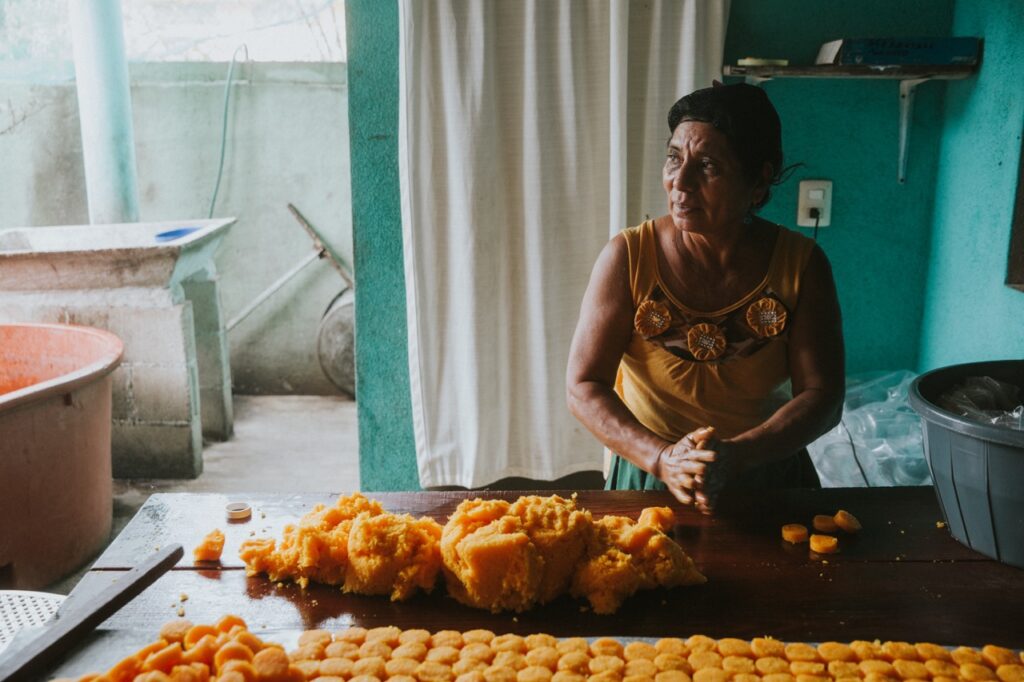
Making coconut candies by hand at the nearby village of Juluchuca.
Rest and Rejuvenate at Playa Viva at a Real Vacation
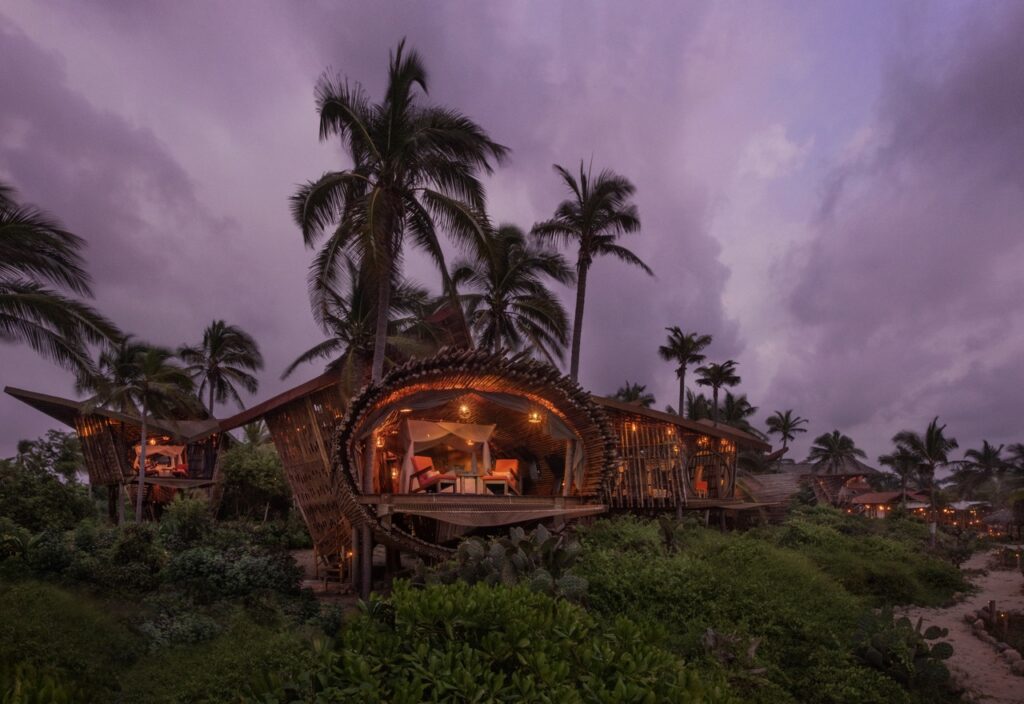
It’s all part of Playa Viva’s reputation as a regenerative travel destination and if that sounds too good to be true (and trust me, it did to me, too), it’s not. Leventhal gets as excited taking guests on an impromptu tour to show how grey water is used to irrigate the gardens and a peek at their solar powered electrical room (they’re 100% off-grid), as he does showing off the latest bamboo-constructed treehouse with lofty ceilings and jaw-dropping ocean views.
The sound of crashing waves lulls you to sleep at a Playa Viva treehouse.
And that’s the thing about Playa Viva – it proves that luxury travel doesn’t have to take a toll on the planet. “You can have so much richness and still be immersed in nature,” Leventhal says. It’s all about small choices like cooking with seasonal ingredients grown on their own farm or by neighboring farmers, to beds made up with organic sheets that invite you to rest after a long day. It’s staying at a place that cares as much about its community as it does about its guests. And a place that leaves you feeling good rather than guilty when you check out.
Leventhal likes to share what a guest once said to him: “You check all my boxes … even boxes I didn’t know I had.”
Story by Julia Platt Leonard Photography Courtesy of Playa Viva
Direct flights to London make a trip to the British capital an easy choice for your next holiday. While some still bemoan British food, Julia Platt Leonard says that reputation is undeserved. She shares some of her favorite restaurants to help get your travel planning started.
When I broke the news to family and friends in the late ‘90s that my husband and I were moving to London, the first words out of their mouths weren’t “We’ll miss you” but “What about the food?” Yes, the city was dripping in art, awash in culture, and mainland Europe just a civilized Eurostar train ride away. But the food? People shook their heads in disbelief, wondering what a woman who thinks about dinner while washing up the breakfast dishes would do.
London’s Cuisine
The truth? The food was good and kept getting better over the quarter of a century we lived there. Stalwarts like The River Café (opened in 1987) went from strength to strength while a raft of new restaurants blossomed, garnering kudos and Michelin stars with equal abandon. In fact, in 2024, London garnered more Michelin stars than New York, claiming the Top Five spot worldwide. Take that Big Apple.
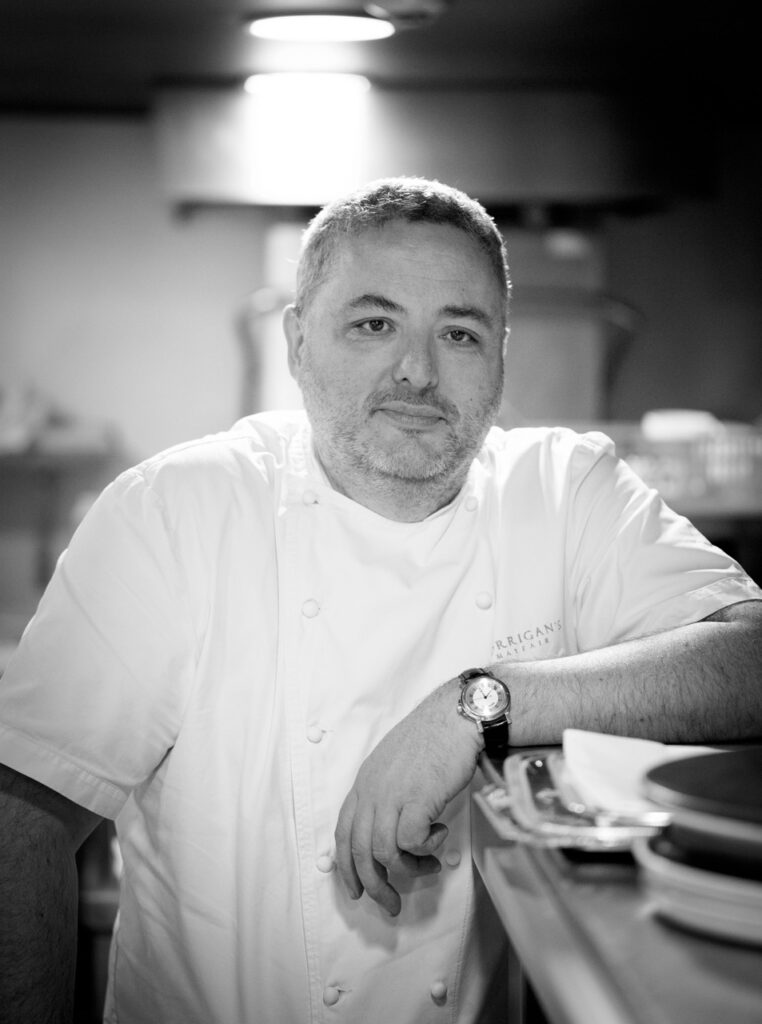
And yes, you could take out a second (or third) mortgage and dine in three-star-style with Alain Ducasse at The Dorchester or with Hélène Darroze at The Connaught, but the beauty of Britain is that you don’t need to. Some of my favorite spots – ones that hold a place in both my heart and my stomach – are secret gems just waiting for you.
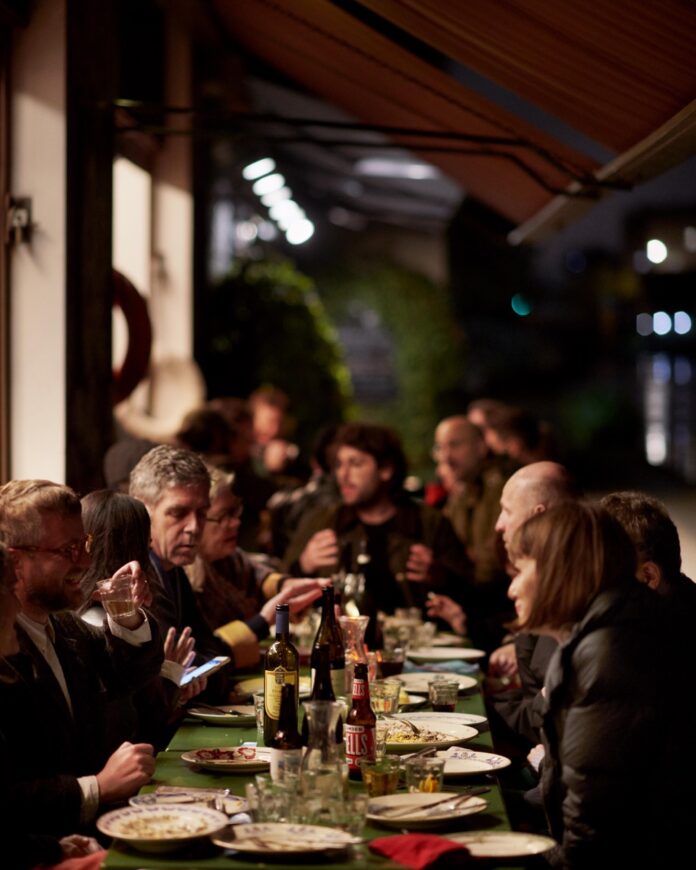
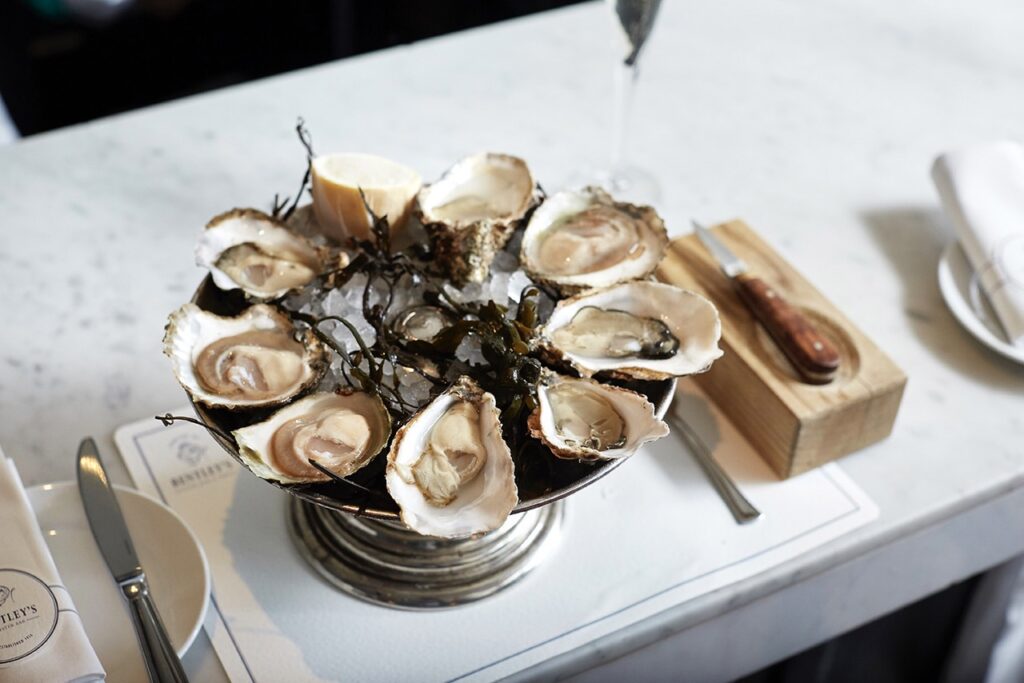
My last meal? A seat at the Oyster Bar at Bentley’s. My imminent demise would be softened by the thrill of watching the white jacket-clad staff shucking oysters while carrying on witty banter and filling your champagne glass at the same time. Lobster bisque, tuna tartare, a platter of fruit de mar, and superlative thick cut chips (fries to you and me). It’s simply joyous.
Chef and restauranteur Asma Khan is known and respected as much for her commitment to social justice as for the food she lovingly serves at Darjeeling Express. Her all-female kitchen brigade turns out show-stopping Indian dishes, with recipes that draw on Khan’s heritage and her early days as a supper club host. There is an à la carte menu for lunch but the real fun is the evening Royal Thali – a multi-course feast served up with sides like Aloo Bonde (spiced potato balls infused with turmeric and curry leaves and fried in chickpea batter) and a slow cooked and tangy tamarind dal.
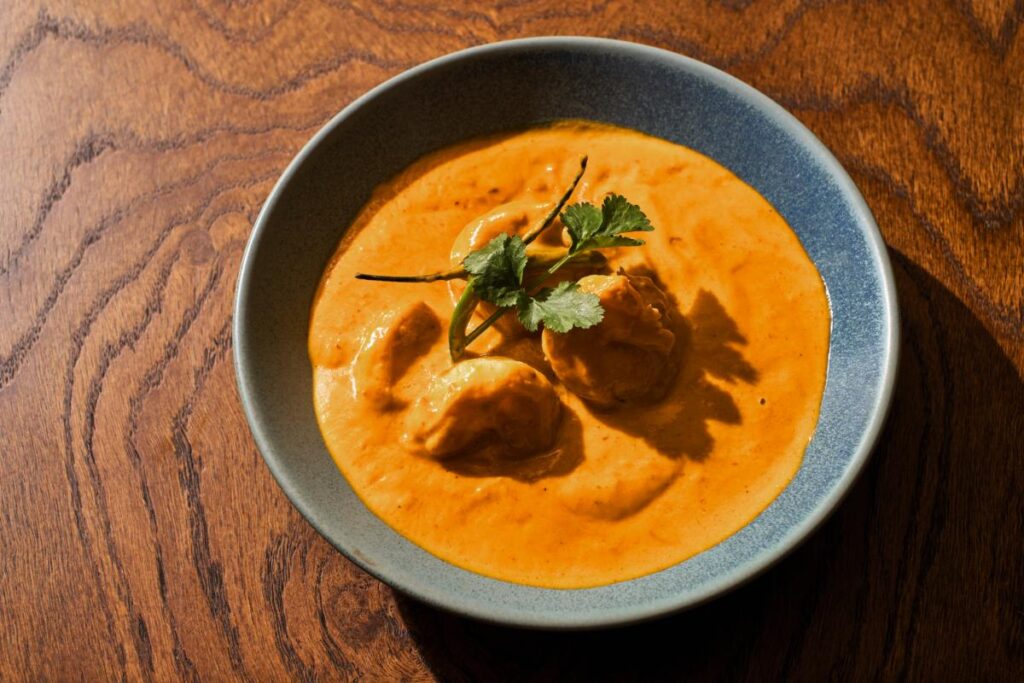
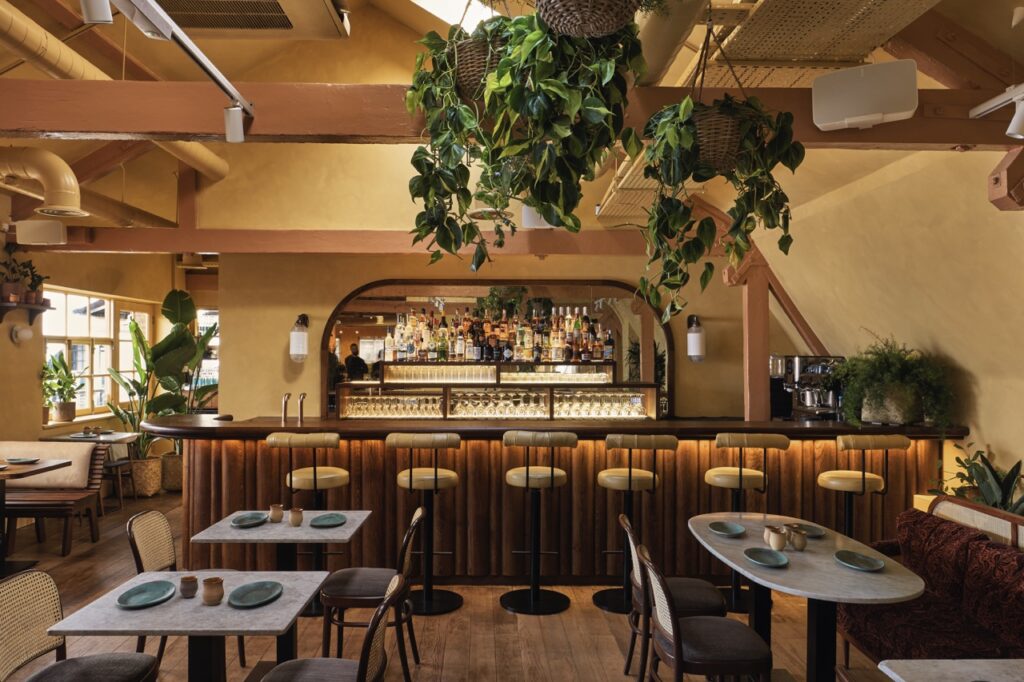
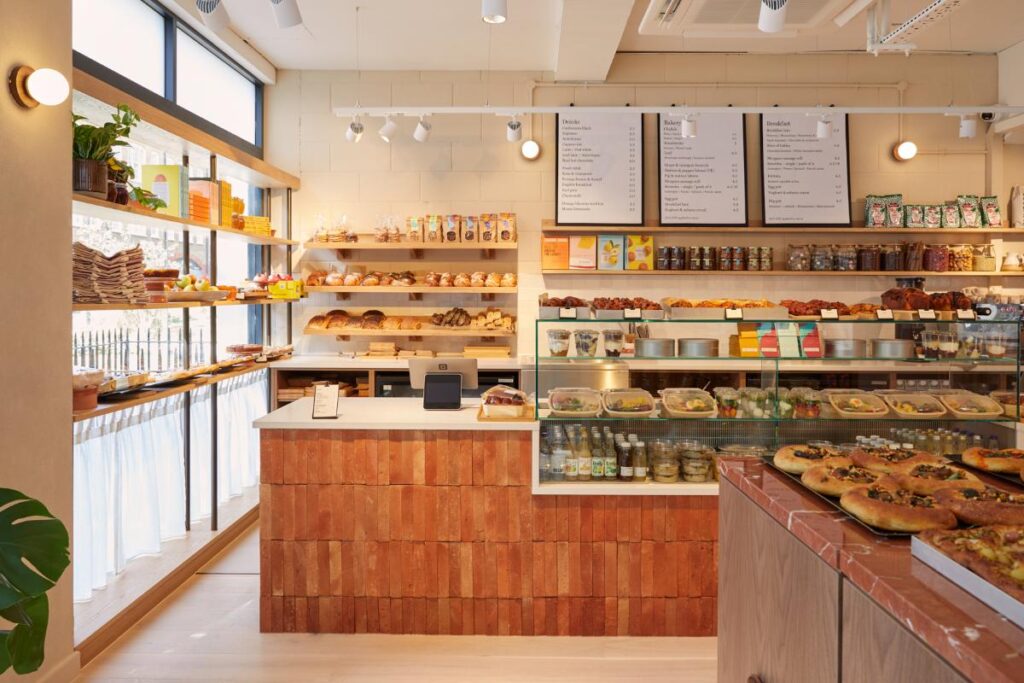
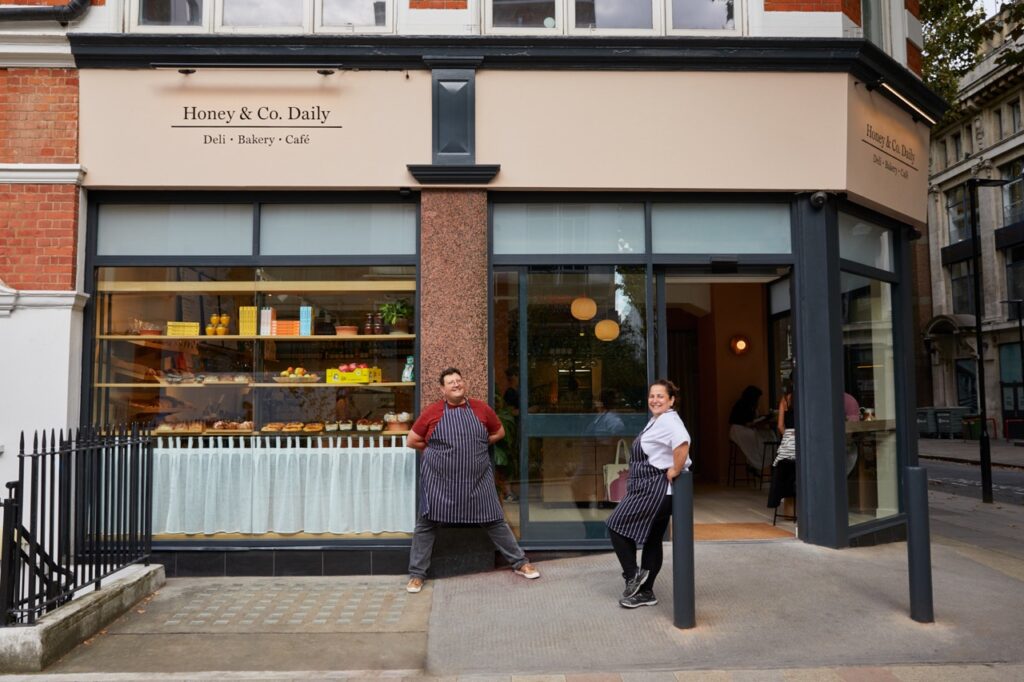
I’m convinced that the happiest food is created by happy people – food that makes you smile, that invites sharing, and encourages lingering conversations around the table. That’s the magic that Itamar Srulovich and Sarit Packer – the dynamo husband and wife team behind Honey & Co. – conjure up. The menu is Middle Eastern-inspired with dishes like Yemeni falafel with lemony cabbage salad and tahini or their consummate creamy hummus with marinated chile garlic chickpeas, that begs to be shared. My favorite location (there are four plus a new event space) is Honey & Co. Daily, which combines a bakery-cum-deli in front with a sit-down restaurant in back.
The cooking is straightforward at Straker’s – nothing tricky or clever – but done with such skill and an eye to letting the seasonal ingredients take center stage. No wonder Chef Thomas Straker chose Food You Want to Eat as the title for his cookbook which is out this year. The flatbread with mussels and chile is ridiculously good but there’s honestly not a weak dish on the menu. Come with friends who are as greedy as you are and be ready to share and over-order. You’ll eat it all, I promise.
Dining at Towpath, located on Regent’s Canal in Hackney East London, is like receiving an invitation to dine at someone’s home, if that someone just happens to be a phenomenal chef. It’s quirky and unpretentious, with a changing menu that looks to the seasons for inspiration like a crimson-hued plate of beetroot, rainbow chard, braised lentils, anchovy and soft-boiled egg. There are no reservations, so just show up and plan on lingering.
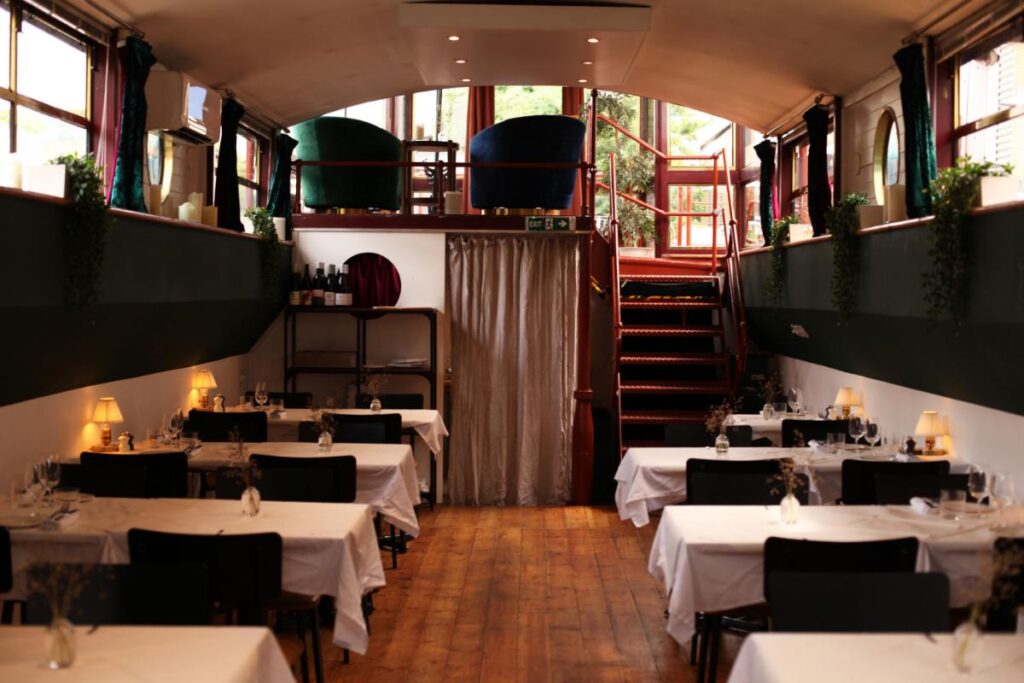
Another reminder that London is belongs with water, whether it’s the River Thames or the canals that criss-cross the city, is Caravel, housed in a Dutch barge in Islington. The floating restaurant and cocktail bar is the inspiration of brothers Lorcan and Fin Spiteri. Sip an Earl Grey Martini while you peruse the menu. The sesame prawn toast with chile jam is a must and the pastas are sublime. But really you won’t go wrong with any dish on this perfectly crafted and executed menu.
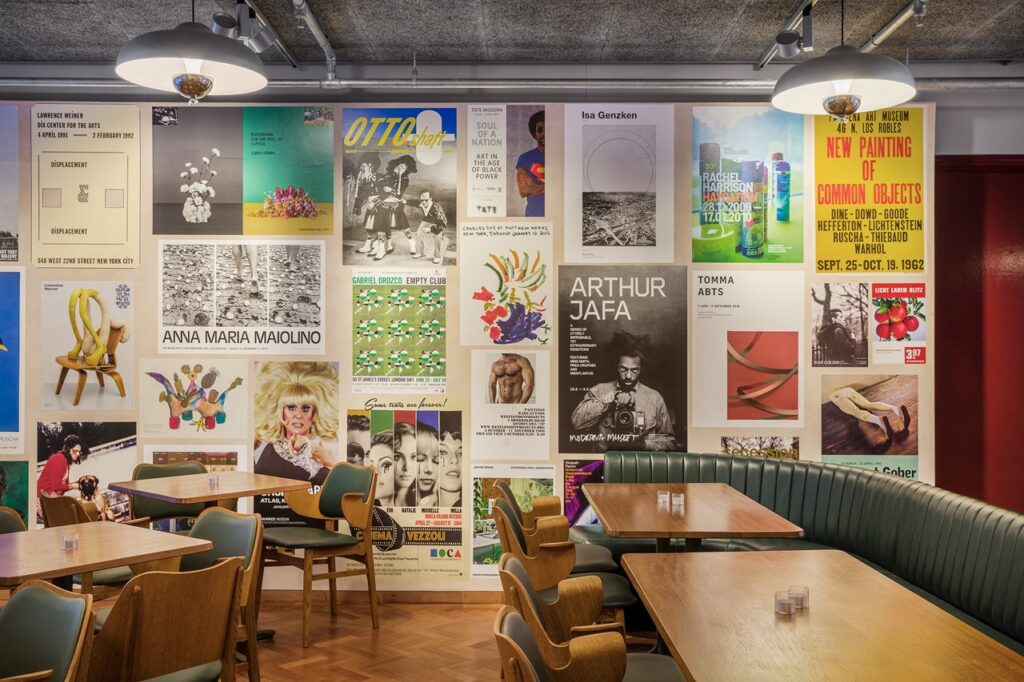
Situated between the Strand and the Thames, Toklas serves up Mediterranean fare where vegetables are the stars and meat and fish shine in best supporting roles. This is casual dining with an open kitchen, poster-lined walls, and Scandi furniture. Go for dishes like the fried feta with honey and chile or slow grilled carrots with labneh, pistachio and sumac. It’s also the perfect spot for pre-theater dining.
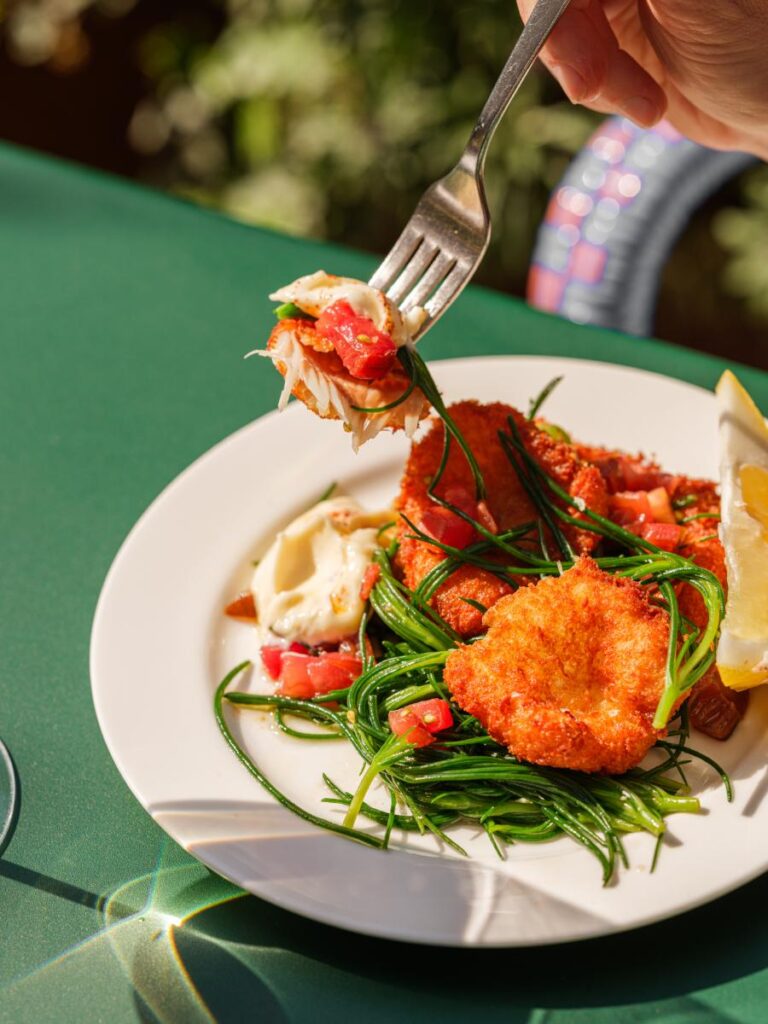
Cloth is a new breed of British restaurants that is firmly rooted in the past. Tucked into a slip of a street under the shadow of St. Bartholomew the Great Church, Cloth serves up the very best of British produce, meat, and fish in simple preparations that let the ingredients sing. It’s truly rooted in the seasons – imagine fried courgette flower, filled with a mix of Dorset crab, and ‘Nduja or grilled monkfish with curried leeks, Monk’s Beard (also known as agrete or barba di frate) and cider. Sharing? Get the Hereford ribeye with confit garlic and anchovy and call it a day.
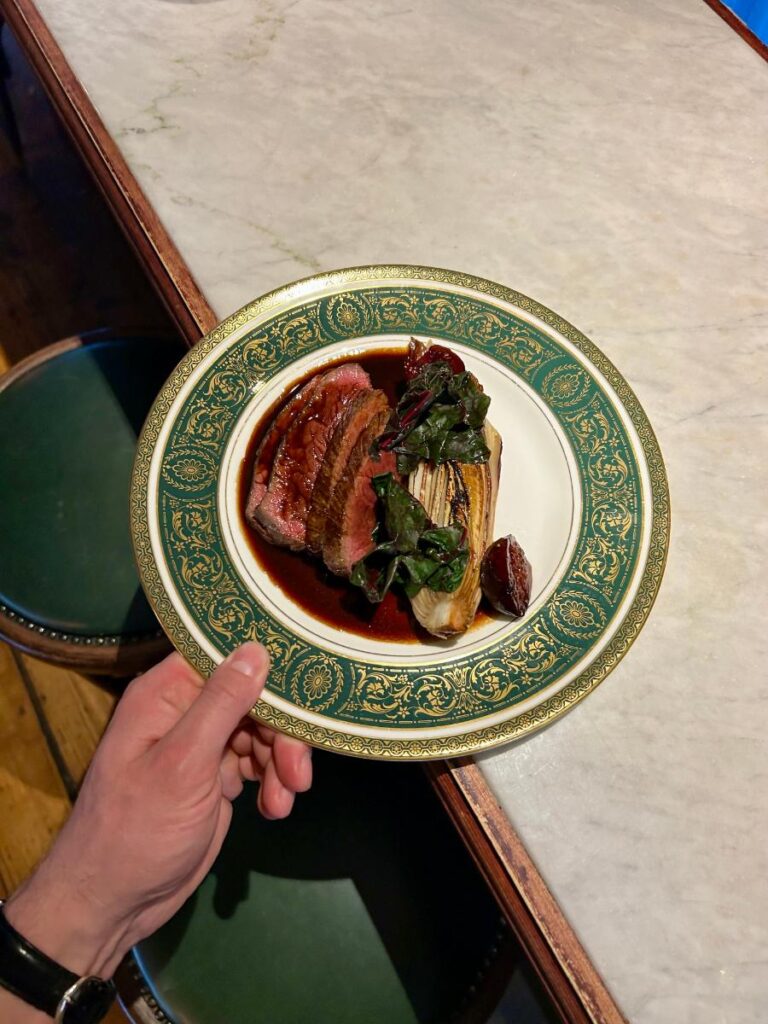
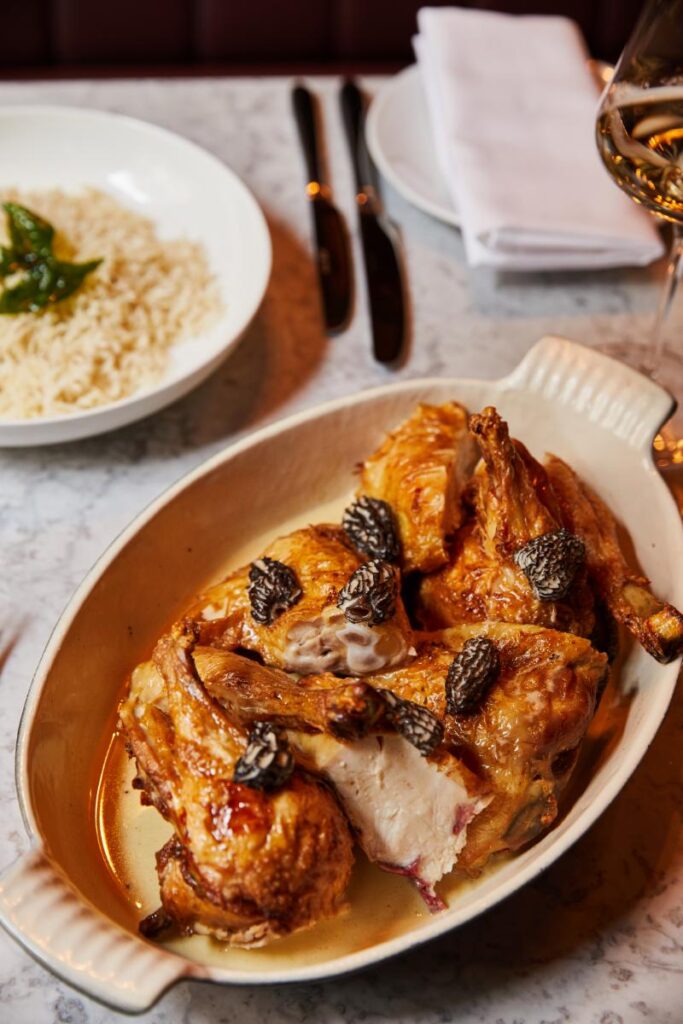
There are three Noble Rot restaurants, and you won’t go wrong with any of them. All under the helm of Executive Chef Stephen Harris (of The Sportsman in Whitstable fame), the food is what Noble Rot calls ‘Franglais’ with a wink and a nod. Each restaurant has a different menu and while I love all three, the Soho location – housed in the former Gay Hussar restaurant on Greek Street – has a special place in my heart. Go with a friend or two and share the roast chicken with morels and Vin Jaune sauce. Feel free to give your plate an extra wipe with a piece of bread. And for value you can’t beat their two or three course set lunch menu.
French Food in London
Recently, the best French food I’ve had hasn’t been in Paris, but in London … unpretentious bistro fare served by waitstaff who nod approvingly when you order the tete de veau or pig’s head terrine. There are places that feel both timeless and timely, feeding our need for something both comforting and classic.
Located upstairs from the Three Compasses Pub in Farrington, Bouchon Racine serves food so en pointe that I could weep with joy. It’s the size of a postage stamp but that’s all to the better as it allows you to ogle what’s on your fellow diners’ plates. A changing menu is handwritten on a blackboard and brought to your table by enthusiastic waitstaff, along with bread and proper French butter. Rarely a dessert person, I succumb with glee to Chef Henry Harris’ crème caramel. It is rhapsodic.
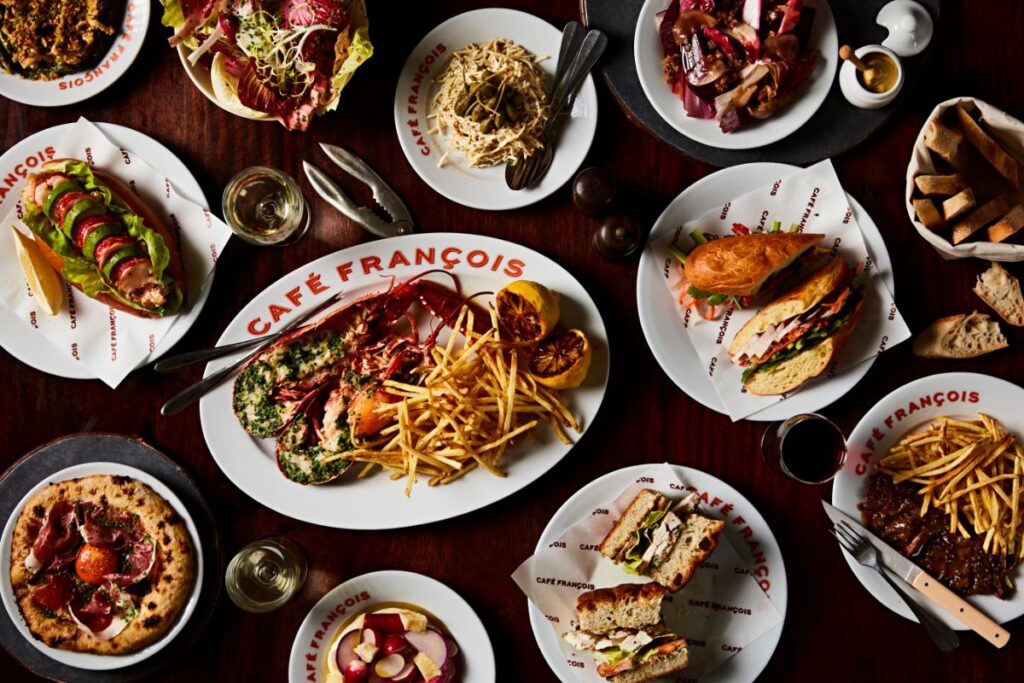
Café Francois is at home in London’s historic Borough Market. While the vibe is young and trendy, the menu is rooted in stalwart French bistro fare favorites, like soft pillowy puffs of Comte gougeres; thick slices of brioche, spread with Café de Paris butter and then topped with salty anchovies (sublime); or Jamon de Bayonne which comes with or without celeriac remolade (silly question). Their steak frites will restore your faith in humanity.
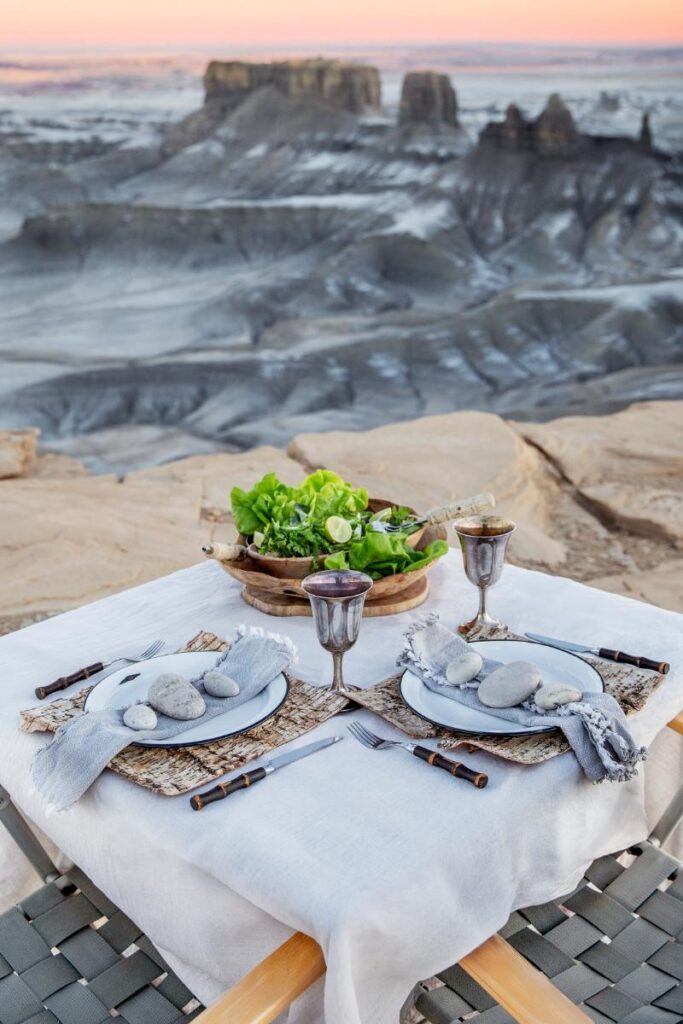
Most of us reach a point where pitching a tent in a nondescript campground and eating rehydrated food just doesn’t cut it. Creating a personalized experience that’s both pleasurable and aesthetically elevated — plus having delicious food and drink to sustain you — requires advance planning — and some shopping. Guest Editor Stephen Treffinger and veteran glamper and photographer Ashley Hafstead lead the way.
The Opposite of Roughing It, Glamping Tips
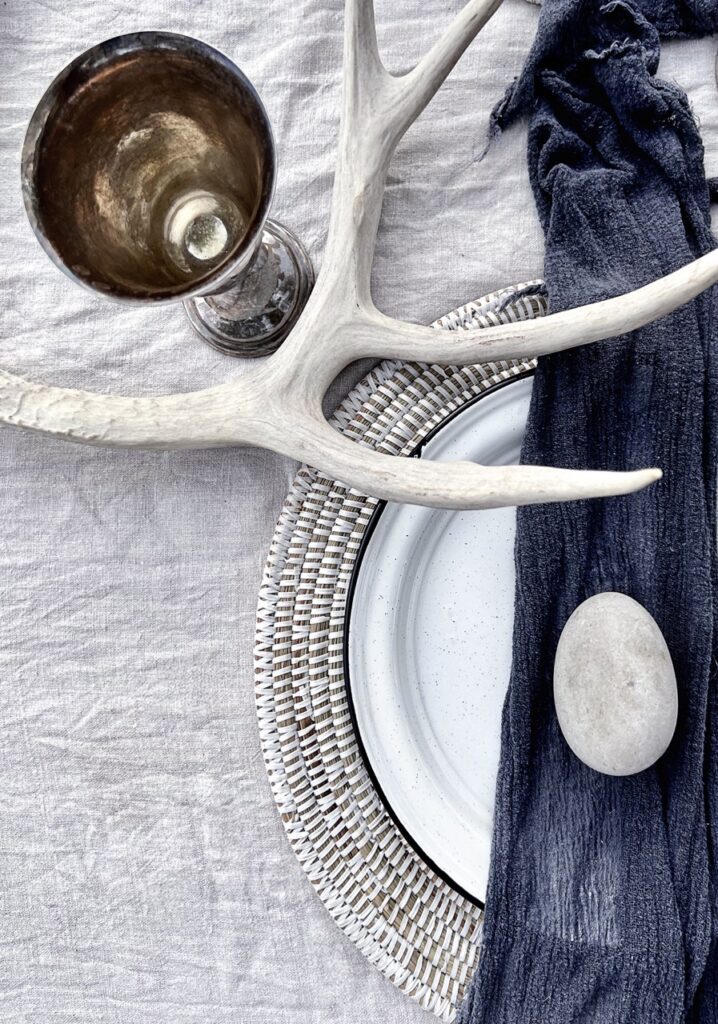
Living the good life doesn’t just happen. You have to make it happen. You must plan and organize. And shop. Just how much spiffy gear you schlep is a matter of preference, but having the right tools is the difference between having a run of the mill experience and one that is legendary.
Ashley Hafstead is a master of glamping, having spent years refining what she brings along for outings with her husband, her family, and friends. “I have found that since I’ve gotten older, I like to up the ante a bit,” she says. She finds that a few creature-comforts help elevate the time away from home and makes everyone (including herself) feel taken care of.
Must-Have Supplies for Glamping
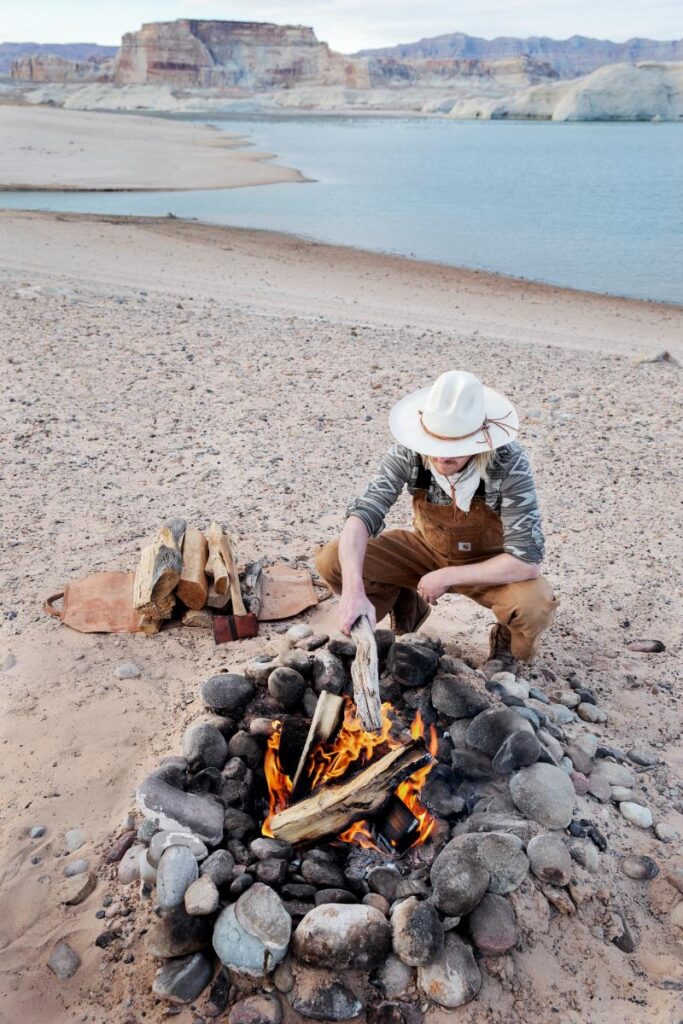
To get away from crowds and enjoy the most epic views and experiences, she and her husband prefer what’s known as “dispersed campsites”. These have no facilities and you must bring everything with you. (That includes a portable toilet.) In general, these spots are reachable by 4×4, and you typically go where there’s an existing fire ring. “It’s about protecting the land and leaving the least impact as possible.” They use the onX Offroad app to locate 4×4 roads, and carefully research the spot where they’ll end up, sharing info with a family member back home for safety. (They also have a GPS with an SOS function.)
Although she sometimes uses a ground tent, Ashley prefers an elevated model that affixes to the roof of their vehicle. It sets up quickly, as does the rest of the camp, which includes a multi-function table, chairs, stove, and more. Set up takes about half an hour. “We’ve got it very dialed in, for sure.”
How to Enjoy Your Time Glamping
Hiking and taking in the views is part of the daily activity, but the couple also enjoys all manner of games, including cribbage, Monopoly, rummy, and backgammon. Both carry books for quiet time, but good conversation is a priority. “A lot of the places we go don’t have cell service, so it’s a really great time to disconnect and just talk.”
Things need to do double duty, and this includes some versatile cow hides and sheepskins. The former can be used as a ground cover when swimming — it wicks away water and doesn’t get wet — plus it can act a barrier on damp ground; the latter is comfy to sit or lay down on. When it’s cold, Ashley lines the chairs with them to ward off the chill, or brings them into the tent to keep their feet toasty.
Cooking Tips
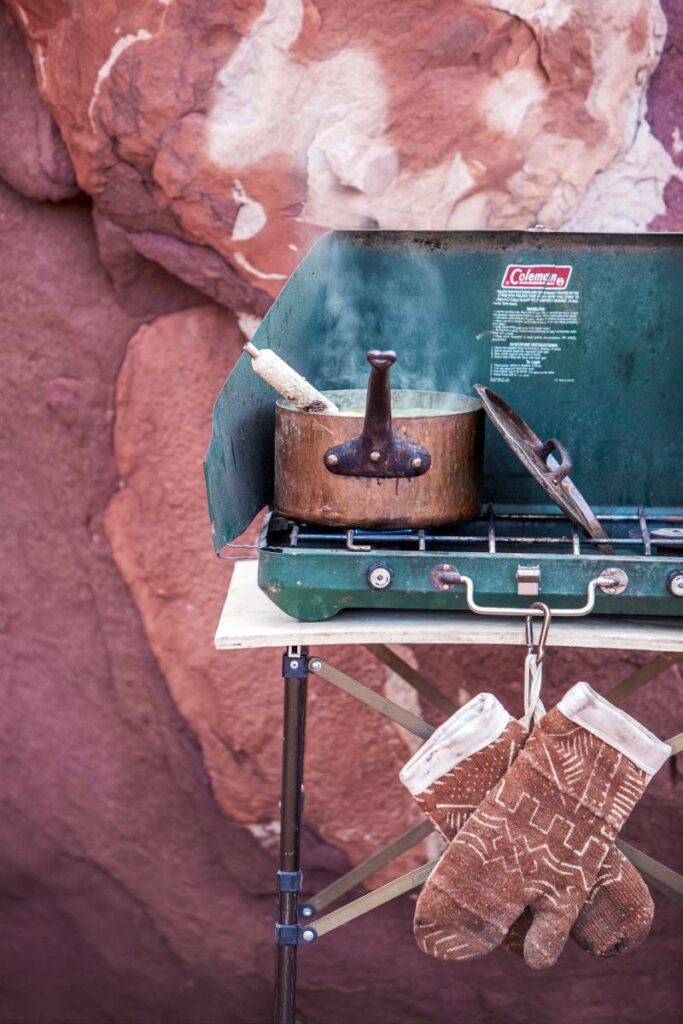
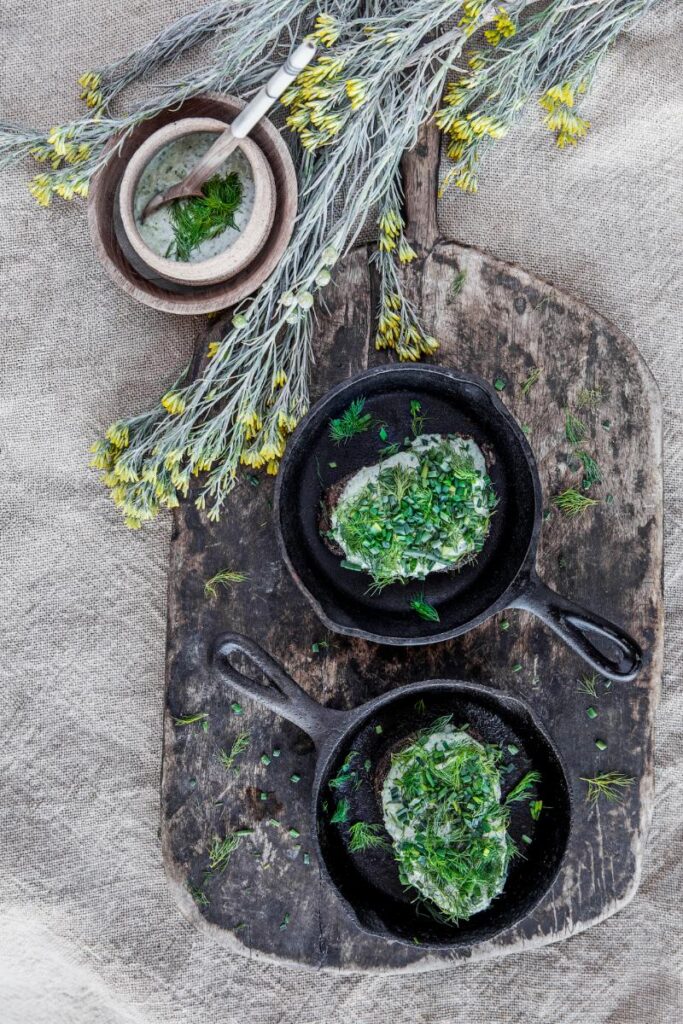
Careful planning yields meals that are waaaaay beyond the usual camping fare. “We eat like kings and queens when we’re out there — maybe even better than we eat at home.” To save on time, she preps nearly everything at home: making soups, pre-chopping ingredients, and organizing it all in Ziploc bags and other containers. Then it’s only a matter of heating up a cast iron skillet on the camp stove and doing the cooking. Meals can include flank steak, herbed tomatoes with burrata, melted brie with herbs, white wine, and grapes, or arugula salad with peaches, quinoa, Tajín, jalapeños, and corn.
All things considered, Ashley’s approach makes the idea of roughing it seem highly overrated.
Glamping Gear
You can bring as little — or as much — stuff as you wish. At a minimum, you will need typical camping gear, but the items below help elevate the trip from camping to glamping.
A lightweight and portable tent for two. Perfect for backpacking and cycling adventurers.
Find Your Place in the Wilderness in Moab, Utah
This Eastern Utah area is home to several justifiably famous campsite, as well as popular attractions that are worth a visit.
Camping with beautiful views: The Ledges Campground; Highway 128 corridor along the Colorado River; Dubinky Well Road; Gemini Bridges. Bring cash for camp fees, pit toilet, no running water, trash and recycling in some campgrounds. As above, pack it in, and pack it out. Bring a 4×4 vehicle with high clearance.
Camping with facilities: Arches National Park and Canyonlands National Park. Make reservations ahead of time for both.
While You’re in Moab
Arches National Park. Make a timed reservation via nps.gov. If you can arrive one hour prior to sunrise, you can skip the reservation. But whatever you do, go: 2,000 natural stone arches, in addition to pinnacles, fins, spires, and balancing rocks make this spot legendary.
Canyonlands National Park. One of four zones of this park, the Island in the Sky mesa soars 1,000 feet over the surrounding terrain. One of its features, Mesa Arch, is best viewed at sunrise.
Dead Horse Point State Park. Canyons, high desert woodlands and a network of trails beckon visitors to this Utah State Park.
Wilson Arch. Just a five-minute hike off highway 191, this natural arch spans 91-feet with a 46-foot high gap.
The opposite of roughing it, including a splash through Onion Creek, near Moab, UT.
La Sal Mountain Loop. You’ll enjoy incredible views across Moab Valley and Canyonlands National Park. The elevation may help you cool off a bit, as well.
Explore 4×4 trails near Moab. First, download the OnX Offroad map app, which gives location and in-depth descriptions of trails, complete with difficulty rating. Second … get your 4×4 vehicle with high clearance ready. Try Hurrah Pass; Onion Creek/Fisher Towers; Long Canyon; and Potash Road and Shafer Switchbacks.
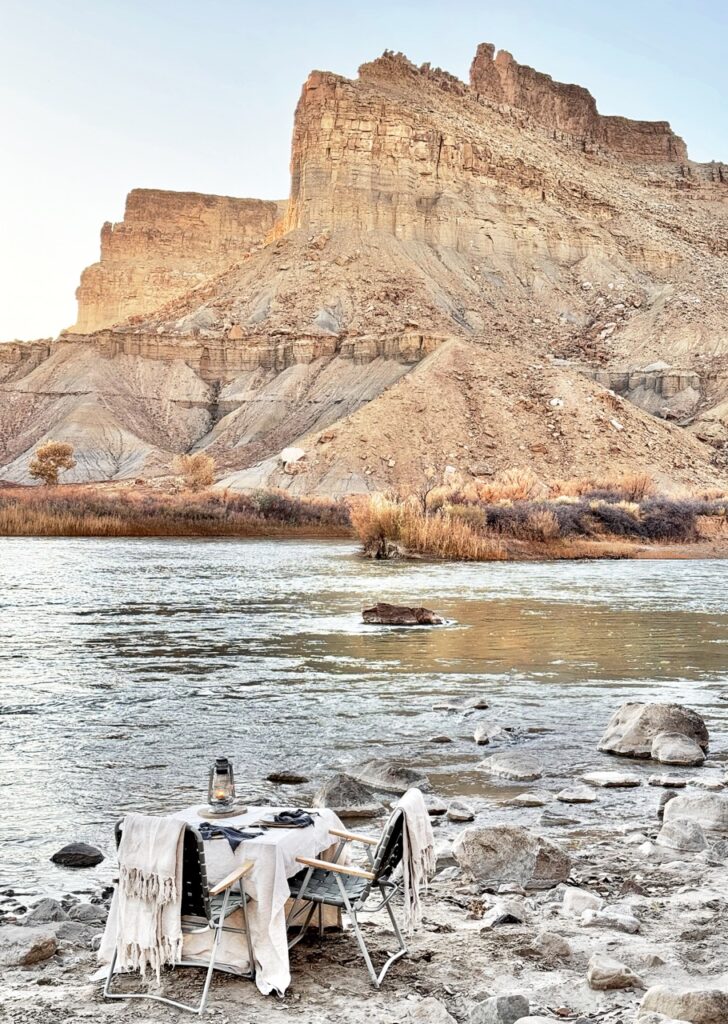
By the waters of Green River, UT.
Story by Stephen Treffinger Photography by Ashley Hafstead