Home Blog Page 154

Spring Chicken with Fava Shoot Pesto

0
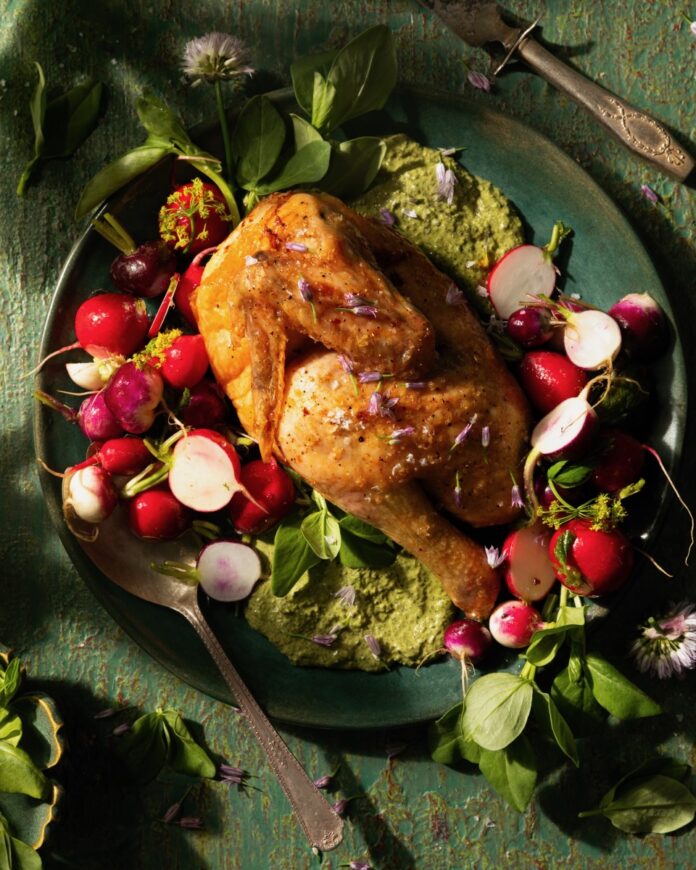
A green plate on a green surface plates spring chicken with a fava shoot pesto and half-cut radishes.

The proverbial spring chicken is young and tender. Follow the recipe here to roast it tenderly and crisp up its skin in the final moments. Along the way, fresh pesto and roasted radishes make their way into the process, bringing in their variously herbaceous, garlicky, and bittersweet flavors. The sum is much greater than the parts; you’ll delight with each bite of fava shoot pesto-covered meat and veg. Serve with a side of Cheesy Grits with Springtime Mushrooms and sips of your favorite dry, sparkling wine.

What Does Fava Shoot Pesto Taste Like?

Fava shoot pesto is a bright, herbaceous pesto that has a subtle sweetness and a nutty undertone. The fava bean shoots themselves contribute the fresh, green or earthy taste that’s reminiscent of peas or young spinach. The addition of pecans lends a richer, more mellow nuttiness compared to the sharper bite of pine nuts in classic pesto. The lemon zest finishes things off with a citrus lift, cutting through the richness of the butter, olive oil, and garlic. Basically, fava shoot pesto is going to be less pungent and more delicate than traditional basil pesto.

Print
clock clock iconcutlery cutlery iconflag flag iconfolder folder iconinstagram instagram iconpinterest pinterest iconfacebook facebook iconprint print iconsquares squares iconheart heart iconheart solid heart solid icon
A green plate on a green surface plates spring chicken with a fava shoot pesto and half-cut radishes.

Spring Chicken with Fava Shoot Pesto


  • Author: Anna Franklin

Description

This recipe screams springtime with fresh ingredients from chicken to pesto.


Ingredients

Scale
  • 1/2 chicken
  • 3 tbsp softened butter
  • Salt and pepper to taste
  • 2 cups whole radishes

For the pesto: 

  • 1/2 stick butter, softened
  • 1/2 cup fava shoots (or basil) (Save extra for garnish)
  • 1/4 cup pecans
  • 1 tsp salt
  • Zest of one lemon
  • 1 small clove of garlic
  • 1/4 cup extra virgin olive oil


Instructions

  1. Pat the chicken dry with paper towels and rub with softened butter. Season with salt and pepper and roast in the oven at 350 degrees until the inside of the chicken is 165 degrees.
  2. Set oven to broil and broil for 5 minutes until the skin gets extra crispy.
  3. While the chicken is roasting, combine all the pesto ingredients in a food processor and blend until you get a smooth, thick pesto. Season with salt and pepper to taste.
  4. Halfway through roasting, add the 2 cups of radishes to the roasting pan.
  5. Once chicken is fully cooked, transfer the chicken and radishes to a serving platter and serve with pesto. Garnish with fresh fava or basil shoots.

Recipe and Styling Anna Franklin
Photography by Dave Bryce

Subscribe to TABLE Magazine’s print edition.

Cheesy Grits with Springtime Mushrooms

0
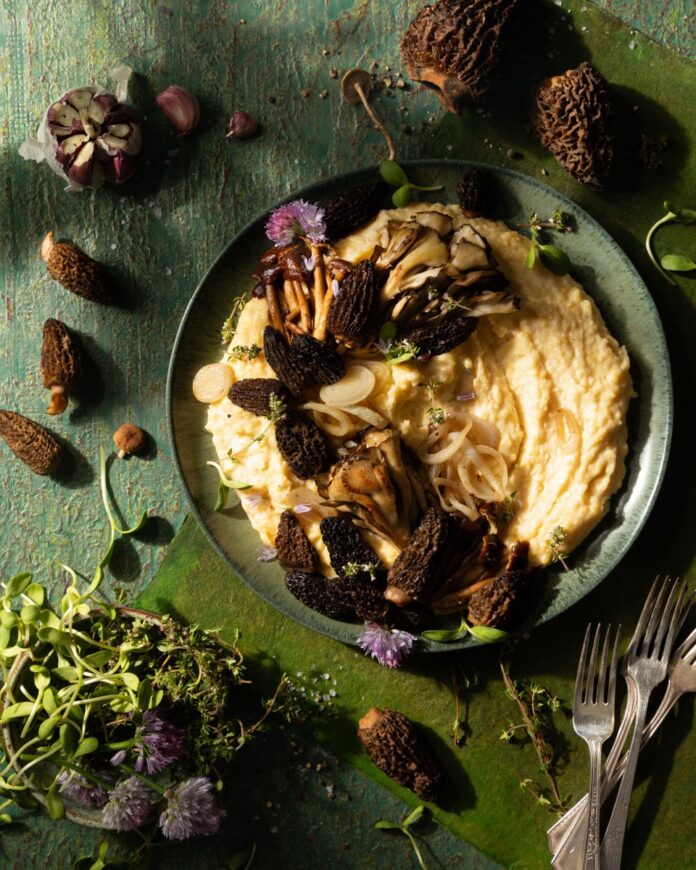
A green bowl on a green table holds cheesy grits inside mixed with small blossoms and springtime mushrooms with uncooked mushrooms all around the bowl.

Yes, summer may be near, but with some chilly evenings remaining on the calendar for a few weeks to come you’re going to want a dish that brings you joy. Warm yourself up with a plate of Cheesy Grits brought to life with plenty of shredded cheese and the complex and wonderful umami of sautéed mushrooms. Plus, flowering herbs and chive blossoms complete this beautiful and oh-so-satisfying dish.

What Are the Different Types of Mushrooms in Our Cheesy Grits?

Morel Mushrooms: A honeycomb-like structure builds the outside of morel mushrooms. It’s a little earthy and a little nutty with a firm, meaty texture, making it a great replacement for bacon in regular grits.

Hen of the Woods Mushrooms: Also known as grifola frondosa or maitake, the hen of the woods mushroom follows in the footsteps of the morel mushroom. Other than a slight spice, it’s also a nutty and meaty variety of mushroom.

Brick Cap Mushrooms: This type of mushrooms has an endless list of names but what you need to know about it is that they grow in clusters. Besides their unique clump-shape, they’re often mild, maybe slightly bitter in taste.

Print
clock clock iconcutlery cutlery iconflag flag iconfolder folder iconinstagram instagram iconpinterest pinterest iconfacebook facebook iconprint print iconsquares squares iconheart heart iconheart solid heart solid icon
A green bowl on a green table holds cheesy grits inside mixed with small blossoms and springtime mushrooms with uncooked mushrooms all around the bowl.

Cheesy Grits with Springtime Mushrooms


  • Author: Anna Franklin

Description

Comforting and warming, this dish will remind you of home.


Ingredients

Scale
  • 1 tbsp butter
  • 2 cloves garlic, minced
  • 1 qt chicken stock
  • 1 cup coarse cornmeal
  • 1/2 cup shredded cheese of your choice
  • 1/4 cup heavy cream
  • 5 tbsp butter, divided
  • Salt to taste
  • 2 cups fresh morel mushrooms
  • 1 cup hen of the woods mushrooms
  • 1 cup brick cap mushrooms
  • Flowering thyme
  • Chive blossoms


Instructions

  1. In a large saucepan, sauté garlic in one tablespoon of butter until fragrant.
  2. Add chicken stock to the pot and bring to a boil, then add the cornmeal, stirring away any clumps that may form.
  3. Simmer for about 30 minutes or until the cornmeal is thick and creamy.
  4. Remove from the stovetop and add Wild Rosemary cheese, heavy cream, 3 tbsp of butter and salt to taste. Stir until the cheese and butter is completely melted.
  5. In a large sauté pan, sauté all the mushrooms with 1 tbsp of butter and season with salt and pepper. You can add other herbs and spices to this step if you’d like, but let the flavors of the mushrooms be the star of the show!
  6. Serve the sautéed mushrooms on top of a bed of cheesy grits and garnish with flowering thyme and chive blossoms.

Recipe and Styling Anna Franklin
Photography by Dave Bryce

Subscribe to TABLE Magazine’s print edition.

Dandelion Artichoke Dip 

0
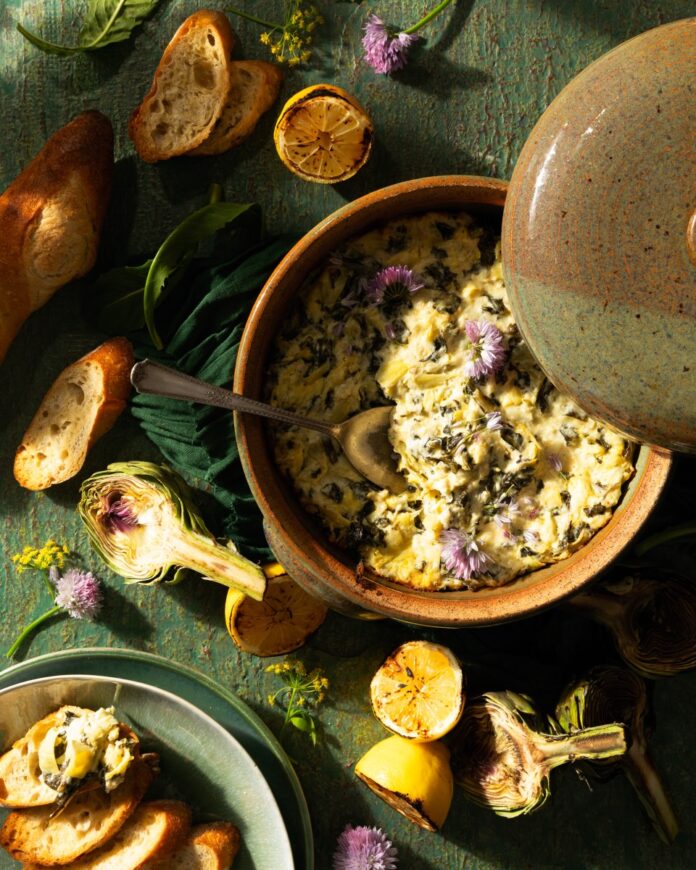
A brown bowl full of Dandelion Artichoke Dip with a spoon in it and crusty bread laying around the dish.

Everyone at TABLE loves the fresh, bitter appeal of springtime dandelion greens, especially in an artichoke dip. This recipe wilts them with shallots and garlic, and mellows them with mozzarella, mayonnaise, parmesan, and canned artichokes. After a quick bake in the oven, spread the bubbly dip directly onto crisps and crackers. Or, try this Dandelion Artichoke Dip as a spread on your favorite lunchtime sandwich or wrap. Just be sure to sip a lovely white wine and let your mind wander in the process… perhaps all the way to summer, since it’s right around the corner.

What Are Dandelion Greens?

Dandelion greens are the leafy part (not the stem!) of the common dandelion plant you see growing outside. Some see it as a weed but in many cultures it’s actually a valuable food source. These greens show off distinctive, serrated edges and carry a slightly bitter, peppery flavor, which intensifies as the plant matures. The best part of indulging in dandelion greens is that they include vitamins A, C, and K, as well as calcium and iron. You can eat these leaves raw such as in salads or sauté and steam them to add to soups and stews.

Print
clock clock iconcutlery cutlery iconflag flag iconfolder folder iconinstagram instagram iconpinterest pinterest iconfacebook facebook iconprint print iconsquares squares iconheart heart iconheart solid heart solid icon
A brown bowl full of Dandelion Artichoke Dip with a spoon in it and crusty bread laying around the dish.

Dandelion Artichoke Dip 


  • Author: Anna Franklin

Description

You’ll want to have this dip available at your next picnic.


Ingredients

Scale
  • 1 shallot, minced
  • 2 cloves garlic, minced
  • 1 tbsp butter
  • 1 block cream cheese
  • 1 cup grated mozzarella cheese
  • 2 cans artichokes
  • 2 cups Italian dandelion greens, chopped
  • 1 cup mayonnaise
  • 1/2 cup finely grated parmesan cheese


Instructions

  1. In a sauté pan, sweat the minced shallot and garlic with 1 tbsp butter, until translucent. Try not to brown. Remove from pan and set aside.
  2. In the same pan, add dandelion greens and sauté until just wilted. Set aside.
  3. In a large mixing bowl, add all of the ingredients together and mix with a paddle attachment for about 2 minutes, or until all the ingredients are evenly mixed together.
  4. Transfer to a baking dish and bake at 350 degrees for about 30 minutes, or until the dip is bubbling around the edges. Serve with crusty bread.

Recipe and Styling Anna Franklin
Photography by Dave Bryce

Subscribe to TABLE Magazine’s print edition.

Beet Gravlax

0
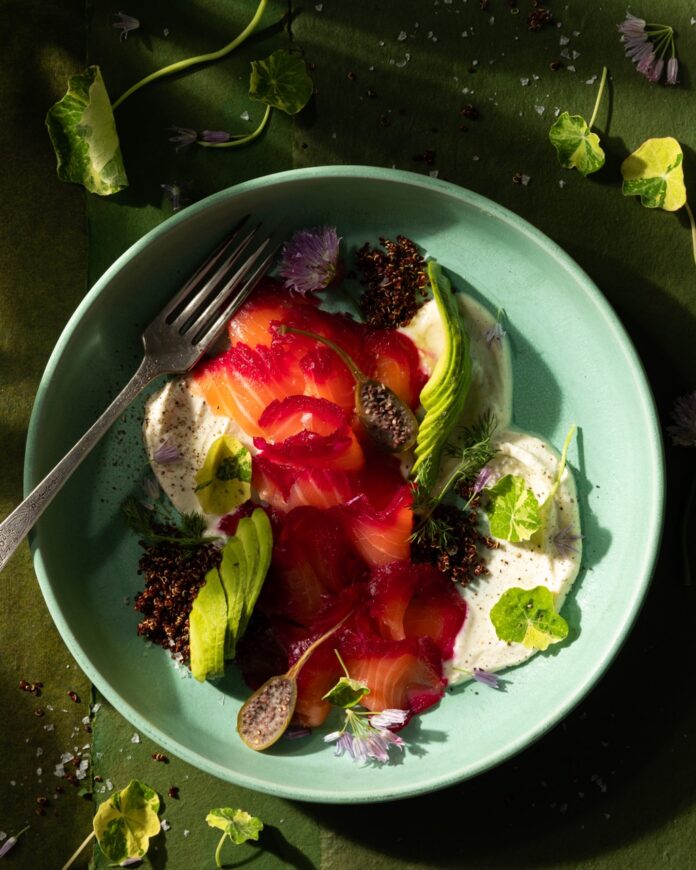
Thinly sliced salmon and beets to made a Beet Gravlax in a teal bowl surrounded by greens.

For this Beet Gravlax, head to your favorite purveyor of seafood and pick up a gorgeous piece of salmon. Then head to your local farmer’s market to stock up on fresh beets and other goodies. Before heading home, stop in at a local distiller for a lovely bottle of gin. When you get back to the kitchen, sip alight gin and tonic while you prepare this easy-to-make recipe for gravlax – a kind of cured salmon. 48 hours later, plate your salmon with spicy microgreens, fresh yogurt, and slices of toasted bread. Share it with friends around the brunch table or keep it all to yourself. We won’t say a word

What is Gravlax?

Gravlax is a Nordic dish that uses a cured salmon in a fairly simple yet still elegant preparation. You cure fresh salmon fillets with a mixture of salt, sugar, and often other spices like pepper or juniper berries. This curing process, which typically lasts for several days, draws out moisture and results in a firm, silky texture featuring a delicate, savory taste. Unlike smoked salmon, gravlax is not cooked or smoked, relying solely on the curing process to preserve and flavor the fish.

Print
clock clock iconcutlery cutlery iconflag flag iconfolder folder iconinstagram instagram iconpinterest pinterest iconfacebook facebook iconprint print iconsquares squares iconheart heart iconheart solid heart solid icon
Thinly sliced salmon and beets to made a Beet Gravlax in a teal bowl surrounded by greens.

Beet Gravlax


  • Author: Anna Franklin

Description

Who knew curing could be such a delicious process?


Ingredients

Scale
  • 1 lb salmon, boneless and skinless
  • 3 medium-sized fresh beets, peeled and grated
  • 1/2 cup Kosher salt, not table salt
  • 1/4 cup sugar
  • 2 tbsp locally distilled gin
  • 1 tsp lemon zest
  • 2 tsp black peppercorns
  • 1 tsp juniper berries (optional)
  • 1 tsp coriander seeds


Instructions

  1. Begin by peeling and dicing 3 medium sized beets. This should yield around 7 oz of beets.
  2. Place chopped beets, salt, sugar, coriander, black peppercorns, lemon zest, and gin, into a food processor. Pulse until soupy but still thick and somewhat chunky.
  3. On a sheet pan, place a long piece of plastic wrap vertically. Place another long piece of plastic wrap horizontally.
  4. Pour about ⅓ of the mixture onto the plastic wrap and use a rubber spatula to spread it across. It should be evenly distributed and thick enough to not see through it.
  5. Pour another ⅓ – ½ of the curing mixture onto the exposed skin side of the salmon and, again, use the rubber spatula to spread it. Be liberal in your use of the curing mixture and make sure all of the salmon is covered.
  6. Wrap the salmon in the plastic wrap as you would a burrito. First wrap one horizontal side, then tuck in both vertical sides, then the other horizontal side. Take another long piece of plastic wrap and giving it a second wrap to prevent excess leakage.
  7. Place the salmon flat in the refrigerator in a container or sheet pan. Wait 48 hours or more.
  8. When ready to serve, slice thinly with a sharp knife.
  9. Plate with fresh yogurt or sour cream, fresh avocado slices, quinoa, capers, chive flowers, and fresh, spicy microgreens like nasturtiums.

Recipe and Styling by Anna Franklin
Photography by Dave Bryce

Subscribe to TABLE Magazine’s print edition.

Your 2025 Astrological New Year Horoscope

0
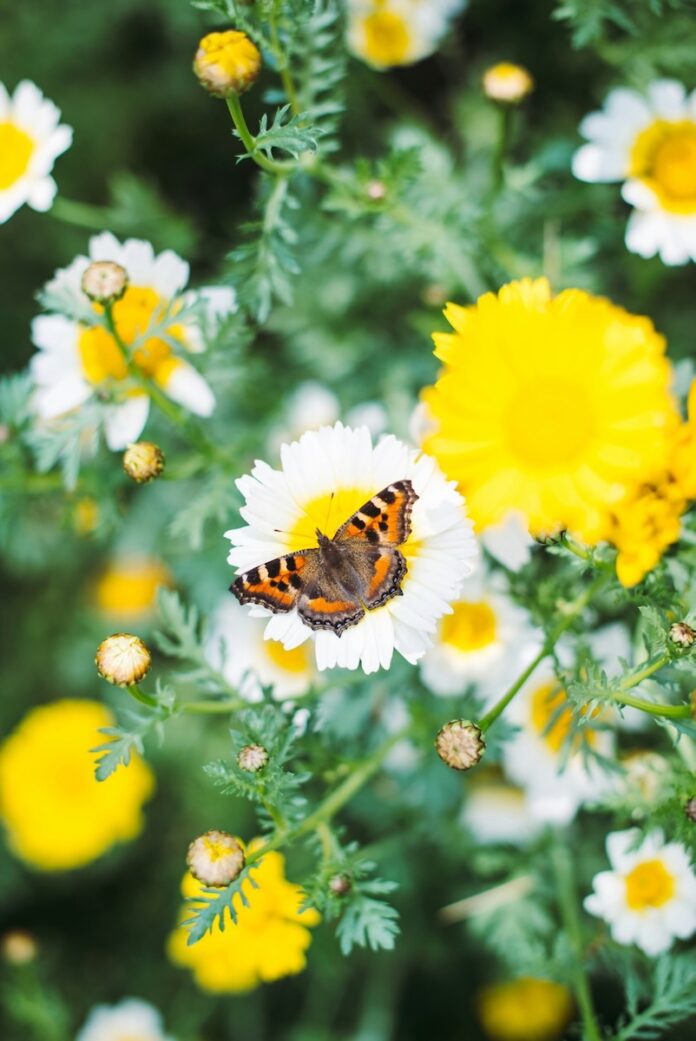
White and yellow spring flowers scatter around a field as an orange and black butterfly sits on one of the flowers.

The astrological new year for 2025 begins at the Sun’s ingress into zodiacal or tropical Aries – the spring equinox in the northern hemisphere – which typically occurs around March 20, bringing out a new horoscope. At one precise moment, the Sun crosses the celestial equator from south to north, and in the northern hemisphere, daylight hours begin to exceed nighttime hours. This symbol of annual renewal has been recognized for millennia, with many cultures still celebrating it as the start of their civil or cultural calendars, from the Persian Nowruz to the traditional Hindu solar new year.

How the Spring Equinox or Astrological is Used

Historically these astrological charts (much like horoscopes) were of great importance in both state and personal matters. Because the Sun naturally signified leaders and sovereignty, its ingress into each sign – particularly Aries – provided crucial indicators of how world powers might move throughout the following year. For instance, Renaissance astrologers would cast the Aries ingress chart for the year a leader assumed power, whether that be a monarch, pope, or head of state, to forecast potential challenges and opportunities during their reign.

While the planetary positions of the spring equinox are identical worldwide (after all, the Sun enters Aries at the same instant whether you’re in Tokyo or Toronto), their interpretation changes based on location. Think of it like this: just as the same sunset looks different depending on where you’re standing, the astrological meaning shifts based on your vantage point on Earth.

Calculating Spring Equinox Horoscopes

When we calculate these charts for a specific place, we can see which planets are rising on the horizon, setting in the west, directly overhead, or at the lowest point beneath our feet. These four power points – called angles by astrologers – act like spotlights, highlighting which planetary themes will take center stage in that location for the coming season.

This local perspective tells the story. While everyone worldwide experiences the same planetary dance, each city, state, or country gets its own unique version of the story. It’s similar to how a global weather pattern affects different regions in distinct ways – the same cosmic weather creates different effects depending on where you’re standing on Earth.

Your 2025 Astrological New Year Horoscope

Aries

This spring brings a period of deep personal reflection, dear Aries, though you may find yourself navigating some internal confusion about your direction. With Venus and Mercury retrograde in your first house, you’re being asked to reconsider your approach to self-expression and personal goals – and while this might feel uncomfortable for your typically forward-moving nature, it’s a necessary pause. Pay particular attention to advice or guidance that comes your way, but be discerning about which counsel you take to heart. The opposition between the Moon and Jupiter suggests that while opportunities may seem abundant, not all promises will manifest as presented.

Taurus

Your communication house is activated this spring, cautious
Taurus, with important developments in how you connect with both your immediate circle and broader networks. Mars in your third house forms a harmonious aspect with Saturn, suggesting that patient, strategic communication could help you forge important alliances. However, with Mars moving slowly, resist any urge to force conversations or push for immediate responses. While opportunities may seem promising, I’d wait until after the summer solstice before making major financial commitments – Jupiter’s upcoming sign change promises more stable ground for money matters. Focus instead on strengthening your community connections and letting relationships develop at their natural pace.

Gemini

Your relationship axis is in the spotlight this spring,
thoughtful Gemini, with the Moon opposing Jupiter across your houses of self and partnership. While this typically suggests some tension between personal needs and relationship dynamics, there’s real potential for growth and understanding here. Be mindful though – people around you may be showing their most accommodating faces rather than their sincere selves. You might find yourself surrounded by those eager to adapt to your needs, but consider whether that serves either of you in the long run. Take time to appreciate genuine connections, even if they come with occasional friction.

Cancer

You’re feeling a strong push to break through barriers this season, Cancer the Crab, especially those that have been blocking your path to seeing things more clearly. With Mars in your first house forming a harmonious aspect with Saturn, you have access to the discipline and drive to get where you’re trying to go. Your career might feel a bit foggy with Mercury and Venus retrograde overhead, but the Moon’s supportive aspect suggests that steady effort will see you through any uncertainty. Intuition combined with consistent work is your best compass now. While the path forward may not be crystal clear, persistence will serve you well in this period of recalibration.

Leo

This spring arrives with expansive opportunities, Leo the Lion, particularly in broadening your personal horizons through travel, study, or new cultural experiences. While there might be some minor social tensions with the Moon and Jupiter forming an opposition across your houses of friendship and creativity, these are more like passing clouds than storms – so treat them with a bit of care and you shouldn’t have much drama. Mars and Saturn’s harmonious positioning suggests you’re somewhat sheltered from this season’s more challenging aspects. Take advantage of this relatively smooth sailing to pursue what interests you most – you’re getting a green light for tackling big life goals!

Virgo

You’re entering a particularly introspective season, discreet Virgo, with both the Sun and Moon in more contemplative parts of your chart. This private time serves a purpose – especially with Jupiter at the top of your chart intimating some interesting professional opportunities on the horizon. The Moon’s opposition to Jupiter hints at some competition in your career, so use this period of reflection to strengthen your position with intention. Undoubtedly, some will be rushing forward with this season’s impulsive energy. Play to your strengths; plan, consider, act. Consider how you can round out your skillset without drawing too much attention to the process.

Libra

Your mental and spiritual horizons are expanding this season, Libra the Balance, with noted opportunities for growth through travel, education, or international connections. While romance might seem appealing, the current retrogrades in your 7th house of others suggest waiting before making any decisive moves in matters of the heart. The Moon’s suggesting you’ll be expected to balance big-picture thinking with attention to your immediate environment. With Mars and Saturn forming a productive aspect between your house of advancement and labor, steady effort now could lead to significant recognition by early summer – just be patient with the process.

Scorpio

You’ve been putting in considerable effort behind the scenes, Scorpio the bold, with three planets highlighting your 6th house of hard (and often thankless) work. While recognition for these efforts might seem delayed, don’t get caught up in self-pity. The current planetary picture suggests avoiding new financial entanglements until after the summer solstice – any deals made now might not favor your interests. Instead, focus on personal development projects, particularly those that allow you to recharge while you grow. With Mars and Saturn in productive configuration across your 5th and 9th houses, keep the grind in motion, but remember that these houses are also about finding joy and fun where you are.

Sagittarius

Others seem to be demanding much of your attention this season, free-spirited Sagittarius, but remember to keep some energy in reserve for yourself. While your generous nature often puts others first, spring’s astrology suggests a need to balance outward focus with what’s sustainable. There’s quite a bit of delight available to you right now, but accessing it requires being selective about where you direct your time. Keep watch for romantic opportunities as the season progresses – the middle of spring looks particularly promising for matters of the heart. The tricky Mercury-Venus retrogrades in your 5th house advise taking things slow, though, and knowing the difference between fun and commitment.

Capricorn

You’re heading somewhere significant this season, steadfast Capricorn, but it might feel like your wheels have been spinning in the mud. With Mars and Saturn forming a productive trine between your partnership and communication houses, you have some enviable tools for progress – you just need to find better traction. The Moon’s connection to retrograde Mercury and Venus suggests a period of review or return, particularly around home and family matters. What needs to be revisited or reconsidered before you can move forward with confidence? Are you letting the day-today slip to the side?

Aquarius

Your social life is in focus this spring, gregarious Aquarius, with some minor disappointments possible in friendships or creative projects – but don’t let these small setbacks discourage you, because they seem to be borne of simple misunderstanding or misalignment. Nothing you can’t get back on track! Professional
opportunities are on the horizon, though they’ll require significant effort and careful resource management. Mars rules your 10th house, while Saturn’s placement indicates a period of intense activity that could lead to advancement, especially if you pace yourself wisely. Look to those closest to you for guidance; the Sun’s position indicates that valuable advice is available from your immediate circle.

Pisces

Your professional life takes center stage this season, twin fish of Pisces, with potential promotions or financial opportunities taking up a great deal of your field of vision – though they may face temporary delays or disruptions. If you can anticipate minor disappointments, they don’t have to derail you – so keep a practical, temperate spirit about you. Mars in your creative 5th house forms a harmonious triangle with Saturn, suggesting this is an excellent time to develop enjoyable, sustainable systems for achieving your goals (although Saturn involved always makes the process feel more laborious in doing than it will be in hindsight!). Focus on building structures and support groups that propel both your ambitions and the joy you get out of creative expression.

Looking for another horoscope? Check out your Lunar Eclipse in Virgo March 2025 horoscope here.

Bio

Wade Caves, based in Brooklyn, NY, is an astrological consultant and educator specializing in problem-solving applications of astrology. He teaches astrological divination and astronomy at the School of Traditional Astrology. Wade also publishes his work on world astrology through Skyscript’s In Mundo publishing desk and hosts the World Astrology Summit, a conference dedicated to the advancement of astrology for global problem-solving. Website: wadecaves.com • skyscript.co.uk/inmundo. Email: hello@wadecaves.com.

Story by Wade Caves
Photo Courtesy of Charlotte Harrison

Subscribe to TABLE Magazine’s print edition.
Get a Deeper Look at Fallingwater with a New Book Release

0
The cover of Fallingwater's new book featuring the outside of the museum and the famous waterfall.

Frank Lloyd Wright and the Kaufmann family envisioned living in harmony with the natural world. Fallingwater realized their shared dream, and a new book published by Rizzoli launches on April 1 to help us experience it as they did.

Get a Deeper Look at Fallingwater with a New Book Release

Fallingwater: Living With and In Art, edited by Justin Gunther and Scott W. Perkins and also featuring photography by frequent TABLE Magazine contributor Dave Bryce, makes the most famous house of the 20th century ours. Its intimate views of Wright’s masterpiece make us feel as if we are walking through the house at our own pace, through the daylight hours and into the evening, and across the seasons. We feel as Edgar Sr., Liliane, and Edgar Jr. must have felt when they were in residence: comfortably seated, drink in hand, we contemplate the beauty of nature framed by every window.

Yes, the house is grand. It cantilevers over the stream and waterfall that drew the Kaufmann family to the site, incorporating itself into the verticality of rocks, trees, and the famous waterfall. Seen in its entirety from the unofficial best viewing site across the stream, the house seems as mammoth as a mansion. Inside, however, the spaces are intimate. The book shows the house’s tender sense of shelter, emphasized by the naturally irregular textures of rock walls and massive flagstone floors, and also the finely crafted details throughout. This delicate “insideness” is extended outdoors through a number of terraces, expanses of windows, and even an elegant stair from the living room down to a plunge pool and the stream below. The ease inside embraces the gentle wildness outside… which is exactly what Wright intended.

Order a copy at your favorite bookseller. Fall into Fallingwater. And then go visit the house to enrich the visuals with the perceptions of your other four senses.

Story by Keith Recker
Cover Photography by Dave Bryce

Subscribe to TABLE Magazine’s print edition.
Spring Overture Bee’s Knees Variation Cocktail

0
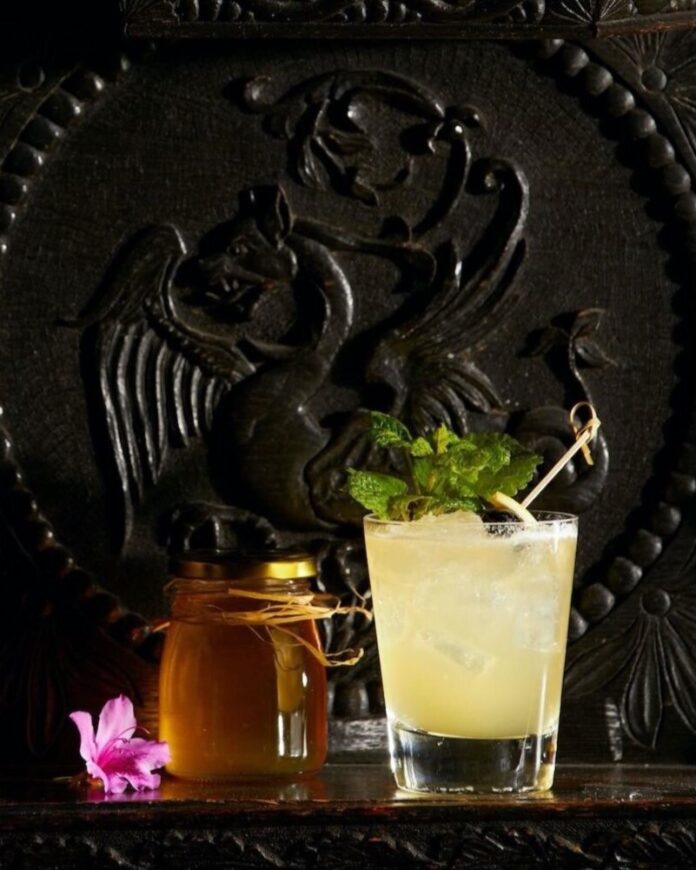
A bee's knees cocktail on a black background.

Bartender Dan Ball of Pittsburgh-based fine dining staple Hyeholde takes a different approach to the classic Bee’s Knees, subbing out gin for the mix of sweet whiskeys, Tullamore DEW Irish Whiskey and Kinsey Single Hive Honey Whiskey. The result is a delicious springtime cocktail that has a fuller, sweeter body as opposed to an ordinary Bee’s Knees.

What is a Bee’s Knees Cocktail?

The name “Bee’s Knees” itself is an old slang term from the 1920s, meaning something is super cool—just like this timeless drink. It’s a classic cocktail that comes out of the Prohibition Era, typically made with a combination of gin, honey, and lemon. Bartenders had to get creative with how they presented things, because the “bootleg” liquor was often low-quality. The gin probably was not exactly top-shelf, so the honey and lemon would mask the lower-quality taste. However, Dan’s variation uses honey whiskey and honey syrup to make a more complex version, because, thankfully, liquor standards have evolved since Prohibition.

Print
clock clock iconcutlery cutlery iconflag flag iconfolder folder iconinstagram instagram iconpinterest pinterest iconfacebook facebook iconprint print iconsquares squares iconheart heart iconheart solid heart solid icon
A bee's knees cocktail on a black background.

Spring Overture Bee’s Knees Variation Cocktail


  • Author: Dan Ball

Ingredients

Scale
  • 1 ½ oz Tullamore DEW Irish Whiskey
  • 1 ½ oz Kinsey Single Hive Honey Whiskey
  • ½ oz honey syrup (honey and water)
  • ½ oz fresh lemon
  • 3–4 drops of absinthe


Instructions

To make the syrup:

  1. Combine equal parts honey and water in a saucepan, and heat until honey is dissolved.
  2. Store in an airtight container.

For the cocktail: 

  1. Combine all ingredients together in a shaker, then shake and strain into a rocks glass filled with ice.
  2. Garnish with a lemon wedge, a sprig of lemon balm, and enjoy!

Recipe by Dan Ball
Styling by Keith Recker
Photography by Dave Bryce

Subscribe to TABLE Magazine‘s print edition.

Platypus Raspberry Ginger Cocktail

0
A red cocktail on a black background from Dan Ball of Hyeholde.

Dan Ball, bartender from Pittsburgh’s fine dining spot Hyeholde, brings simple, bold flavors to this ginger cocktail, the Platypus. Like the quirky mammal that doesn’t quite fit into any one category with its furry body, webbed feet, and adorable duck bill, this cocktail mixes disparate elements together to create a unique whole. It’s the perfect spring cocktail, with a hint of spice from the Domaine de Canton Ginger Liqueur and a botanical body from Hendrick’s Gin. For another warm weather cocktail from Hyeholde, try their Porch Rocker Summer Spritz.

About Hendrick’s Gin

Hendrick’s is one of the most unique gins out there. Brand representative Vance Henderson described Hendricks’s strategy as “to zig when other brands zag.” Hendrick’s rose and cucumber as botanicals in gin as opposed to the traditional juniper. While gin’s center is juniper and most tend to use similar pinier herbs, Hendrick’s pairs well with the raspberry and ginger in this cocktail recipe because of its less herby, springier botanicals. The combination of lemon, raspberry, gin, and ginger and a little mint garnish is perfect for springtime on the porch.

Print
clock clock iconcutlery cutlery iconflag flag iconfolder folder iconinstagram instagram iconpinterest pinterest iconfacebook facebook iconprint print iconsquares squares iconheart heart iconheart solid heart solid icon
A red cocktail on a black background from Dan Ball of Hyeholde.

Platypus Raspberry Ginger Cocktail


  • Author: Dan Ball

Ingredients

Scale
  • 1 ½ oz Hendrick’s Gin
  • ½ oz Domaine de Canton Ginger liqueur
  • 2 oz raspberry syrup
  • 1 oz fresh lemon juice


Instructions

  1. Shake all ingredients together, then pour into a tall glass with ice.
  2. Garnish with fresh raspberries and mint.

Recipe by Dan Ball
Styling by Keith Recker
Photography by Dave Bryce

Subscribe to TABLE Magazine‘s print edition.

The Best Bottles of Tequila Blanco

0
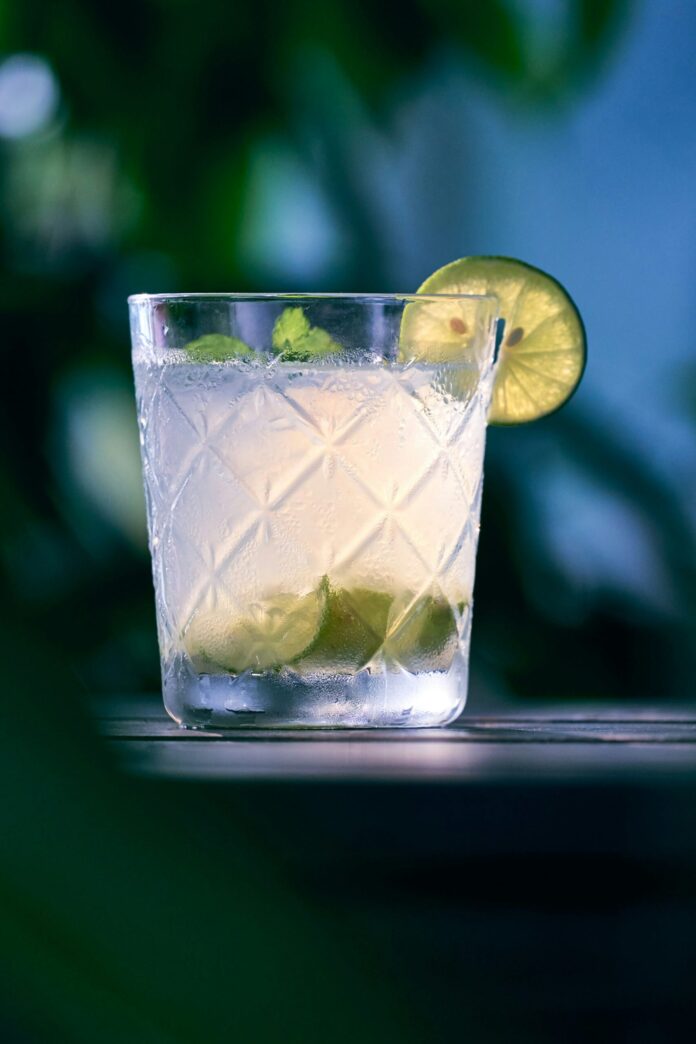
A glass of tequila blanco sits on a table with a wedge of lime inside and a garnish of lime and mint.

TABLE Editor at Large Gabe Gomez sketches out a path toward tequila blanco connoisseurship. The first step: enough with the shots. Instead, sip thoughtfully and find the nuances. Your new favorite bottle is surely on the horizon.

Lamentably, one of the most common ways drinkers enjoy straight tequila is by doing a shot accompanied by a dash of salt and a wedge of lime, presumably to mask any semblance of taste or nuance in exchange for a quick buzz. While a few shots of mid-tier tequila can elevate a fun night into an epic one, it’s time to reconsider how one should enjoy tequila. Our recommendation is to appreciate it neat or on the rocks, sipped and savored.  

Unlike reposado or añejo, blanco tequilas are unaged, offering a bright and confident flavor profile. Each sip of blanco tequila reveals its origins, note by note. Blancos are often best enjoyed on the rocks with a gentle twist of lime. This undefinitive list of handmade blanco tequilas are additive-free and made from pure, natural ingredients with no artificial flavors or colors, making them perfect for summer sipping, whether lounging by the pool, hosting a barbecue, or simply slowing down. 

Best Bottles of Tequila Blanco to Buy

Siete Leguas, Blanco 

Named after Pancho Villa’s horse, Siete Leguas has produced artisanal tequila since 1952. Their Blanco variant offers a crisp, clean taste with hints of citrus and herbs. Ideal for sipping, this tequila provides a smooth and refreshing experience. This is perfect for those new to tequila wanting to start at the top!

Tequila Ocho, Plata 

Inspired by terroir concepts from winemaking, Tequila Ocho Plata is a high-quality, artisanal tequila made from carefully selected blue agave. It boasts a rich, complex flavor with fruit, vanilla, and pepper notes. This tequila is excellent, too, for sipping slowly to appreciate its depth and character fully.  

Lalo Blanco 

Lalo Tequila emphasizes pure, natural flavors in their singular Blanco offering. Floral and citrus undertones deliver a beautifully fresh, slightly sweet taste. This easy-to-drink tequila is ideal for those who want to enjoy the true essence of agave.  

Amatiteña Tequila, Blanco Origen 

Amatiteña Tequila Blanco Origen captures the essence of the Jalisco region in Mexico. It features a smooth, balanced flavor with notes of earthy agave, citrus, and a hint of pepper. This tequila is ideal for those looking to explore authentic Mexican spirits. Originating from Amatitán, Jalisco, a UNESCO World Heritage site, this single-estate tequila is made using traditional artisanal methods dating back to the early 19th century.

Volcan, Still Strength Blanco 

Still Strength Blanco is an uncut, higher-proof tequila that retains the full flavor of the blue agave plant. Despite its higher alcohol content, it offers a surprisingly smooth taste with complex layers of fruit, spice, and herbal notes. This tequila is excellent for those seeking a more intense and robust flavor.  Made with spring and deep well water, it has a balanced minerality and a touch of black pepper for an added kick.

For more, check out the rest of our liquor education series:

Wondering what to cook to go with your drink? Try our food education series:

Story by Gabe Gomez
Photo Courtesy of Dmitry Dreyer

Subscribe to TABLE Magazine‘s print edition.

Pea Pasta Primavera

0
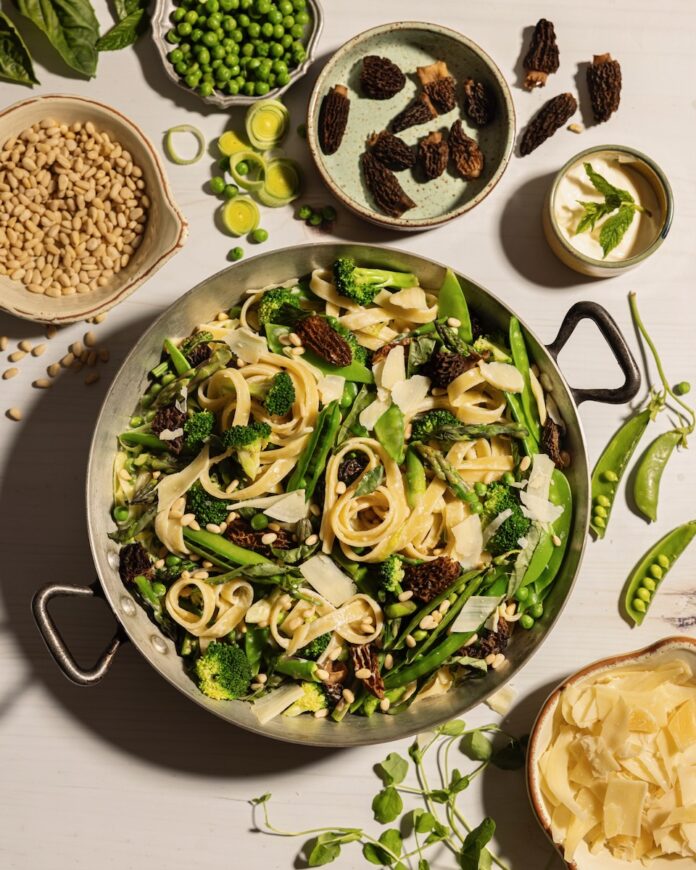
In a large steel pot sits a Pea Pasta Primavera with peas and other ingredients surrounding the pot on a white table.

Manhattan’s legendary Le Cirque restaurant invented this Pea Pasta Primavera back in the mid-1970s. It’s refreshingly retro, both elegant and easy to assemble, at least after you lightly cook the vegetables, which can also be done ahead. A chilled Viognier or Sancerre would pair well with this delicious pasta. Be sure to invite some friends over because you’re definitely going to have some leftovers.

What is Pasta Primavera?

Pasta primavera is a light but nutritious pasta dish that celebrates the fresh flavors of spring vegetables. Typically, it features seasonal produce like asparagus, peas, zucchini, carrots, and bell peppers, though we put extra emphasis on the peas in our recipe. All these delicious veggies get lightly sautéed and tossed with pasta in a simple sauce. This particular sauce can range from a light olive oil and garlic dressing to a creamy tomato or vegetable broth-based sauce. Often, you’ll see fresh herbs like basil, parsley, or oregano as an extra layer of flavor. The dish really is a fresh, colorful, and healthy approach to pasta, so it’s great as a weeknight dinner or special warm weather meal.

Print
clock clock iconcutlery cutlery iconflag flag iconfolder folder iconinstagram instagram iconpinterest pinterest iconfacebook facebook iconprint print iconsquares squares iconheart heart iconheart solid heart solid icon
In a large steel pot sits a Pea Pasta Primavera with peas and other ingredients surrounding the pot on a white table.

Pea Pasta Primavera


  • Author: Cheryl Alters Jamison
  • Yield: Serves 8

Description

The colors and textures of this pasta dish make it appealing to the eye and the stomach.


Ingredients

Scale
  • 2½ lbs mixed spring vegetables, such as sugar snap-pea pods, snow peas, small broccoli florets, and pencil-thin asparagus, cut into 2– to 3-inch lengths
  • ¼ cup olive oil
  • 1 small leek, cut in thin matchsticks
  • 1 garlic clove, minced
  • 6 oz small morel mushrooms, halved, or button mushrooms, sliced thin
  • 1 cup (8 oz) crème fraîche
  • 1 cup (8 oz) mascarpone cheese
  • 1 lb fettucine (a mix of plain fettucine with either a spinach or tomato variety adds even more color)
  • Salt
  • 1 cup fresh shelled peas
  • ½ cup freshly grated Parmesan cheese
  • ¼ cup minced fresh basil
  • ½ cup pine nuts


Instructions

  1. Prepare a large bowl about half full of icy cold water and reserve it.
  2. Over boiling water, steam each of the mixed vegetables separately just until tender. Each will cook only briefly, but the cooking times will vary a bit.
  3. When cooked, plunge each vegetable into the bowl of cold water and let it sit, adding a handful of ice cubes each time you add a new vegetable.
  4. When all the vegetables have been steamed and chilled, drain them well and set them aside at room temperature. These steps can be taken earlier in the day that you plan to serve the pasta, refrigerating the vegetables in the meantime. Let them return to room temperature before proceeding.
  5. Warm the oil in a large saucepan over medium heat. Add the leek and sauté until soft, about 5 minutes. Stir in the garlic and mushrooms, and cook until the mushrooms are limp, about 5 additional minutes.
  6. Stir in the crème fraîche and mascarpone, and when they’ve melted into a smooth sauce, remove the pan from the heat. (The sauce can be made ahead, covered, and refrigerated. Reheat before proceeding.)
  7. Cook the pasta in boiling salted water according to the package directions. Drain it and immediately toss it together in a large bowl with the sauce. When the pasta is well coated, mix it with the steamed vegetables, and the shelled peas (which will cook lightly from the residual heat). Arrange the pasta on a large platter or shallow serving bowl, and scatter with parmesan, basil, and pine nuts. Serve warm.

Story and Recipe by Cheryl Alters Jamison
Styling by Julia Platt Leonard
Photography by Tira Howard

Subscribe to TABLE Magazine’s print edition.
Don't Miss